
THE VOICE OF INTERNATIONAL LITHUANIA

|
VilNews has its own Google archive! Type a word in the above search box to find any article.
You can also follow us on Facebook. We have two different pages. Click to open and join.
 Click on the buttons to open and read each of VilNews' 18 sub-sections Click on the buttons to open and read each of VilNews' 18 sub-sections  |

|


Featured
- Posted by - (7) Comment
Two new
VilNews editors!
Today, we are pleased to announce that VilNews has got two new skilled Associate Editors, Dalia Cidzikaite and Daiva Repečkaitė. We can say with certainty that they are going to mean a lot for our worldwide, online e-publication and the accompanying wonderful network of global readers with Lithuania in their hearts. Please welcome them! See also our Section 2 and Section 3.
Associate Editor
DALIA CIDZIKAITE
 Dalia is the former editor in chief of the Chicago-based Lithuanian newspaper Draugas. She holds a PhD from the University of Illinois at Chicago. She is the board member of the journal Lituanus, Santara-Šviesa Federation, also the member of the Lithuanian American Community, Inc. Archives Committee and Association for the Advancement of Baltic Studies. Dalia is the author of a book The Other in Lithuanian Prose (Vilnius: Lietuvių literatūros ir tautosakos institutas, 2007). She was born
and grew up in Vilnius.
dalia.cidzikaite@VilNews.com
Associate Editor
DAIVA REPEČKAITĖ
 Daiva is a former journalist of Atgimimas weekly, the Baltic correspondent of the Equal Times, and a freelance reporter. She has published articles in IQ magazine, news sites Delfi, lrytas.lt and Bernardinai.lt, as well as Cafe Babel, Göteborgske Spionen and Grads.co.uk. In 2008 she won the European Young Journalist Award "Enlarge your vision" in the Lithuanian language category and later was awarded a Japan Foundation grant for young researchers and journalists. In addition to Lithuanian and English, she speaks German, Russian and Hebrew, as well as some Swedish, French and Japanese.
daiva.repeckaite@VilNews.com
- Bookmark :
- Digg
- del.icio.us
- Stumbleupon
- Redit it

- Posted by - (0) Comment
LITHUANIA’S BEST RESTAURANTS
TripAdvisor chooses Druskos Namai
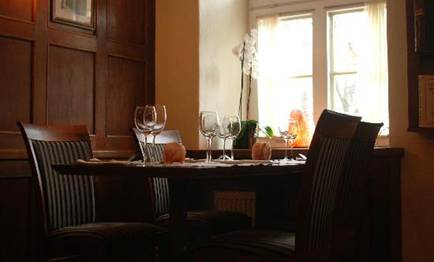
TripAdvisor.com has selected Lithuania’s best restaurants.
Druskos Namai in Užupis, Vilnius, tops the list!
TripAdvisor is a travel website that assists customers in gathering travel information, posting reviews and opinions of travel related content and engaging in interactive travel forums. TripAdvisor was an early adopter of user-generated content. The website services are free to users, who provide most of the content, and the website is supported by an advertising business model.
THE DRUSKOS NAMAI PHILOSOPHY
We prepare our food in accordance with the principles of modern European cuisine using the best quality Lithuanian products.Preference is given to products supplied by farms located close to Vilnius. Menu changes often - dishes of depends on what kind of fresh produce on a daily basis we receive from manufacturers and what's available at the time of the year.
- Bookmark :
- Digg
- del.icio.us
- Stumbleupon
- Redit it

- Posted by - (0) Comment
Searching for the Holy Grail?
Come to Vilnius!
Forget Rosslyn Chapel in Scotland. Forget the Louvre Museum in Paris. If you're among the millions who have read Dan Brown's book 'The Da Vinci Code', you have probably also made some reflections on how the Holy Grail disappeared, virtually without a trace, after Leonardo da Vinci died in 1519. In that case I will now give you some hints and clues that you can begin to investigate.
- Bookmark :
- Digg
- del.icio.us
- Stumbleupon
- Redit it

- Posted by - (0) Comment
NEW!!
VilNews section 7:
VILNEWS E-SHOP FOR
LITHUANIAN PRODUCTS
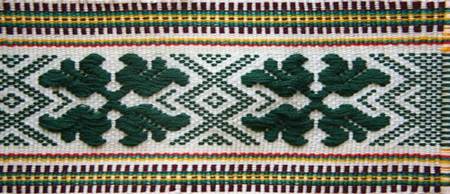
We in VilNews want you who read us to feel connected to Lithuania, wherever in the world you live. We have now decided to expand our offerings to include various Lithuanian products that we think many can enjoy and benefit from.Lithuanian music, literature, art, linen, food-related products and more are now for sale via our VilNews E-Shop. Welcome to what we hope will bring you even closer to Lithuanian traditions and specialties!
- Bookmark :
- Digg
- del.icio.us
- Stumbleupon
- Redit it

- Posted by - (0) Comment
While we shelled
beans with him
an interview of Myra Sklarew
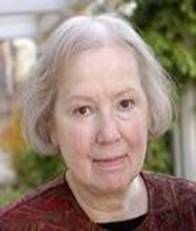
By Ellen Cassedy
ellen@ellencassedy.com
Myra Sklarew is the author of numerous books of poetry, including The Witness Trees, a powerful account of how she forged – and is still forging – a connection to her Jewish heritage in Lithuania. VilNews correspondent Ellen Cassedy spoke with Sklarew in Washington, D.C.
Myra, you have visited Lithuania twelve times in 18 years. What first drew you to the land of your ancestors?
In 1993, it occurred to me that with the end of the Soviet occupation, I could walk freely. I went with no knowledge. I didn’t know a soul and didn’t know the language. I just started walking.

Let’s listen to how you put it in The Witness Trees, your book-length poem with a Yiddish translation by the noted late Yiddish poet David Wolpe (a member of your Lithuanian Jewish family who immigrated to South Africa):
I wanted to go there
by feel, to see if Lithuania would tell me
its secrets, to see if I would
recognize myself in Lithuania, to marry the myth
of who I am with the myth of place. To find more
than the signs of the dead. To find evidence
of the lives of those I have come from.
- Bookmark :
- Digg
- del.icio.us
- Stumbleupon
- Redit it

- Posted by - (1) Comment
While we shelled beans with him
an interview of Myra Sklarew
by Ellen Cassedy
Myra Sklarew is the author of numerous books of poetry, including The Witness Trees, a powerful account of how she forged – and is still forging – a connection to her Jewish heritage in Lithuania. VilNews correspondent Ellen Cassedy spoke with Sklarew in Washington, D.C.
Myra, you have visited Lithuania twelve times in 18 years. What first drew you to the land of your ancestors?
In 1993, it occurred to me that with the end of the Soviet occupation, I could walk freely. I went with no knowledge. I didn’t know a soul and didn’t know the language. I just started walking.
Let’s listen to how you put it in The Witness Trees, your book-length poem with a Yiddish translation by the noted late Yiddish poet David Wolpe (a member of your Lithuanian Jewish family who immigrated to South Africa):
I wanted to go there
by feel, to see if Lithuania would tell me
its secrets, to see if I would
recognize myself in Lithuania, to marry the myth
of who I am with the myth of place. To find more
than the signs of the dead. To find evidence
of the lives of those I have come from.
Your family lived in the Kedainiai region?
Yes – in the town of Kedainiai itself, and also in 15 different villages, including tiny hamlets that are not even on the map. I was most curious about these little villages.
In Datnuva, where my family was once more than half the town, an elderly woman called out to me – she cried out – as we drove in. She looked very intently at my face and told me I looked exactly like someone she once knew. It turned out she’d known my whole family. I visited with her every year and took my granddaughter to meet her and her family.
Do you have advice for others who are considering a visit?
The most important things happen by happenstance, by walking. Save time to walk in the villages your family came from. Take chances, take risks. Don’t be afraid to talk to elderly people on the street. Remarkable guides and friends have made this possible for me.
Once on a very cold day in October, my guide and I came upon an elderly man shelling dried beans to store for winter. We sat down beside him, and while we shelled beans with him we asked – “How do you feel about Jewish people? What happened when the Jews were taken away? What did your children make of it?”
September 25, you plan to go to Kedainiai to attend a commemorative event at the site where more than two thousand Jews were shot in the summer of 1941 – including dozens of your own family members. New plaques will be unveiled, listing names of the victims. Why do you want to be there?
If you want to love where you come from, you can’t omit the sorrow. I never cease to discover things in Lithuania. There are lessons I am still learning about the cruelty we’re all capable of, and lessons about other ways of behaving. I always try to visit people who rescued Jews during the Holocaust, to figure out how they had the courage.
I’m particularly touched that not only Jewish descendants but the people of Kedainiai today, especially the Kedainiai Regional Museum, will bring this new memorial into being.
These lines from The Witness Trees (Dora Teitelboim Center for Yiddish Culture/Cornwall Books: 2000) speak eloquently about what you’ve found in Lithuania – and why you will continue to go back. Thank you for sharing your story with us.
Here in America, if you rise early enough, in the dark,
if you go out of doors, you can smell autumn
though it is still August. Here and there, leaves are beginning
to fall, a few under the dogwood tree, oak leaves, poplar. And just
after dusk, when the earth passes through the dust stream of old
comets, if you look up you will see
meteor showers, the Perseids. Are these burning songs
striking at our atmosphere, like the hearts
of those who met their deaths untimely in Lithuania?
I tell you, once we have found our dead, though we cannot hear their
answering voices among the sounds of this world, we will tear
open the skin of the earth
to admit them. We will not lose them again.

Ellen Cassedy traces her Jewish family roots to Rokiskis and Siauliai. Her book, We Are Here: Memories of the Lithuanian Holocaust, will be published in March of 2012. She lives in Washington, D.C. Visit her website at www.ellencassedy.com.
- Bookmark :
- Digg
- del.icio.us
- Stumbleupon
- Redit it
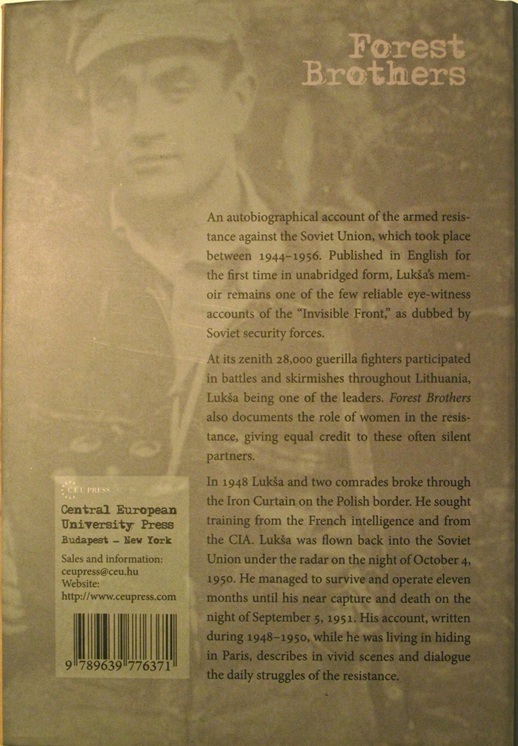
Back cover of Laima Vince’s book
“Forest Brothers: The Account Of An Anti-Soviet Freedom Fighter - Juozas Lukša.”
I have travelled in several former Warsaw Pact countries. In Hungary I met a person who participated in their 1956 uproar. In Slovakia and the Czech Republic I talked to people about their ‘Prague Spring’ of 1968. The people I talked to were rightfully proud of the uproars their countries performed against the mighty USSR, but when I asked them about the revolts that took place here in Lithuania and the other two Baltic states during the period of 1944-53, they all lacked concrete answers and knowledge. “We simply didn’t know,” they told me...
And they are not alone. I believe very few in the entire world have ever heard about the guerrilla war that took place here in the very centre of Europe after World War II, even if the number of victims in fact can be compared to the Vietnam War (1960-75).
It has been estimated that the losses of the Lithuanian partisan war’ amounted to 70,000 Soviet soldiers and 22,000 Lithuanian ‘Forest Brothers’, making this war one of the longest and bloodiest guerrilla wars in the history of the world.
For comparison, the United States lost 58,000 soldiers in Vietnam.
The outcome of this uneven war became an extremely sad and gruesome chapter in Lithuania’s history. Some 132,000 individuals were captured and deported to the Arctic areas of Siberia, 70% of them children and women, and more than 50,000 of these fine people died under the extremely harsh conditions up north, never able to return to their homeland alive.
During the same period, another 200,000 people were thrown into prisons. Over 150,000 of them were sent to the Gulags, the USSR’s concentration camps. These mass deportations continued until the death of Josef Stalin in 1953, but many prisoners remained in the camps also during the time of Nikita Khrushchev.
In a book by Anatol Marchenko published in Germany in 1973, he tells about his experiences from Soviet prisons and concentration camps in the early 1960s. One of his stories is about three Lithuanian prisoners who tried to escape from the convoy in a forest. Two of them were quickly caught, then shot many times in the legs, then ordered to get up which they could not do, then kicked and trampled by guards, then bitten and torn up by police dogs and only then stabbed to death with bayonets. All this with witty remarks by the officer, of the kind; "Now, free Lithuania, crawl, you'll get your independence straight off!"
This is one of thousand stories you can read in many now available books about the Soviet horrors. From 1917 to 1991, politics in the USSR started and finished with the Communist Party; it was the only game in town.
What passed for elections were a contest between members of the same political party - no candidates other than communists were allowed to run. The people who ruled the country were dictators; some more brutal than others. The Communist Party owned everything - land, factories, housing, and farms. The masses went about their daily lives under the direction of the Party. They were told where to live, where to work, and where to travel. There was very little freedom of choice in anything. The ideal behind this system was that everyone lived and worked for the good of the community.
But, the power of the Soviet Union, under the domination of Russia, was built on sand not rock. Under communism, individuals learned to lie back and do nothing and the idea of everything being owned by the community instead of individuals meant that nobody felt responsible for upkeep and maintenance; or as it is expressed in a Spanish proverb: "The cow of many is well milked and badly fed."
But even if there existed both humor and good days for people during those years, the extreme sufferings the USSR meant for this part of Europe should never be forgotten, and the Lithuanian partisan war is certainly one of the most important stories to tell our posterities along with the stories about Czechoslovakia in 1968 and Hungary in 1956.
I suggest you to read the books of Laima Vince (Forest Brothers: The Account Of An Anti-Soviet Freedom Fighter -Juozas Lukša), Ruta Sepetys (Between shades of gray) and Antanas Sileika (Underground).
Have a look at their web pages:
LAIMA VINCE – http://www.laimavince.com/forestbrothers.html
RUTA SEPETYS – http://www.betweenshadesofgray.com/
ANTANAS SILEIKA – http://antanassileika.ca/
Aage Myhre,
Editor-in-Chief
- Bookmark :
- Digg
- del.icio.us
- Stumbleupon
- Redit it
- Posted by - (1) Comment
Antanas Sileika
Stories from behind
the iron curtain
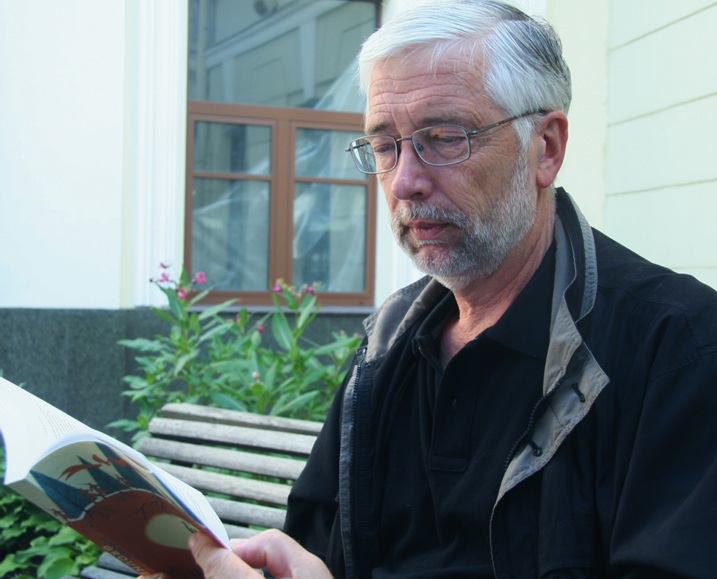
I sit outside and drink coffee with Antanas Sileika this beautiful summer
morning in Vilnius, as he tells me about his latest novel, Underground.
By Aage Myhre
aage.myhre@VilNews.com
I sit outside and drink coffee with Antanas Sileika this beautiful summer morning in Vilnius. The award-winning Canadian-Lithuanian writer is visiting the country his parents fled during the Second World War. He is here to promote his latest book, Underground, which probably also comes in Lithuanian edition this autumn. The novel, which can be bought through Amazon Canada, tells the problematic love story of Luke and Elena, two members of the Lithuanian partisan revolt against the Soviet Union in the middle of the 1940s.
His visit to the fatherland has also another purpose, namely to gather information for his next book, and he tells me that the new novel will have the early 1920's as backdrop, the years when Lithuania just had begun to re-develop the country after more than 100 years of occupation by Tsar Russia.
But this summer morning, we focus on the period after World War II. The below 5-chapter essay speaks for itself…
|
Below an essay Antanas Sileika has written about himself, his novel, |
1) Love and Loss Among the Ruins
In 1946, Winston Churchill’s created a powerful metaphor when he said that an “Iron Curtain” had descended over Eastern Europe, and that political metaphor seemed to hold longer than most, until 1991, when the Soviet Union collapsed and the captive republics flew away like birds escaping from an unlatched cage.
So much for the curtain. Or so it seemed.
The metaphor of the iron curtain actually remained as strong as ever for almost twenty years longer because we in the West remained ignorant of the stories that had unfolded behind it, what it meant to live there. It was only after 1991 that memoirists began to write and historians began to work in the newly opened archives both in Russia and among the various former Soviet republics.
It’s only now that their stories are coming out.
In Western Europe and North America, we laid down our arms after WW2 and set about making a baby boom, and then building the suburban houses to put the children in. Later, we filled those houses with televisions and refrigerators with the help of Mad Men who told us what brands to purchase. We built garages for our cars and paved roads for them to drive upon.
But in Eastern Europe, particularly in the Baltics and Ukraine and to a certain extent in Poland, terror set in. Farmers were dispossessed of their land, businesses were taken away, and teachers, policemen, journalists and former government bureaucrats were shipped out to the gulag where many of them died of hunger or exposure.
An underground resistance sprang up by 1944 and it fought the Soviets for another nine years. At first, pitched battles took place in forests and swamps. Whole towns were seized by the partisans. The fight eventually settled down into a guerilla war during which the partisans owned the countryside by night.
And they fought while waiting for the West, believing that if the war was started because of Poland, surely the West would not forget that country or the others nearby.
For those interested in the history of the period, the last decade and a half have been illuminating, beginning with the appearance of Norman Davies’s Europe, followed by the late Tony Judt’s Postwar, and culminating in the recent Bloodlands, by Timothy Snyder. And there are many more histories now on the subject of Eastern Europe, so many that there is a danger of narratives in collision, particularly for the way the Holocaust fits in among the other crimes of that time.
But I’m not interested in the facts themselves. I’m interested in what they mean, and I am interested in the lives of people under great stress during those times.
In 1942, in the film Casablanca, Humphrey Bogart said to Ingrid Bergman as he sacrificed himself by giving up his flight to safety to another, more worthy man, “I’m no good at being noble, but it doesn’t take much to see that the problems of three little people don’t amount to a hill of beans in this crazy world.”
That was what people believed then. We don’t believe that any more. In our time, we believe the personal is more important than the political.
I take this insight and then I wonder: what was it like to be in love under impossible political conditions behind the newly-created iron curtain in the forties and early fifties?
Although the revelations about Eastern Europe are new, I wanted to tell a very old story of a man who goes to war and after much killing, and nearly being killed himself, wants nothing but to return to the women he loves, the woman he made promises to.
It’s the story of a man who wants to go home, even if that place is no longer the home he left.
I’m interested in a story of love and the loss of it among the ruins.
* * * * * *
2) John Le Carre Territory
I did not set out in my writing life intending to write about the postwar period and I did particularly did not want to write about Lithuania. My parents came from that part of the world and they gave me the language, but English is still my strongest language and I have been an anglophile since my childhood, when I imagined myself Sherlock Holmes, or someone slightly more complex, like Lord Jim. I imagined myself a character out of Kipling, an inhabitant of the British Commonwealth whose pink-coloured countries dominated the maps of the world that were found in schoolrooms into the sixties.
On top of that, in the sixties and seventies, everyone was loose left and I was too, and I found the anti-Soviets of that time, including my parents, embarrassing for their squareness. In my callow youth, I imagined the people with right attitudes about the world did not wear bad suits, or have funny accents.
But against my intentions, I was eventually lured into fascination with the stories of Eastern Europe in general and Lithuania in particular. After all, if one can see the universe in a grain of sand, one can see the whole world through the events in a small country.
The language, one of the gifts of my deceased parents, gave me a window into the happenings on the other side of the iron curtain. At the same time, life in Canada gave me the distance to reflect on the happenings from afar. And the stories that came out of there were so dramatic, so compelling, that I would have been a fool to look somewhere else for my material.
Eastern Europe is John le Carre territory. The British masterminded spy missions into postwar Lithuania, running a former German torpedo boat off Sweden in order to dump spies on the Lithuanian beaches. As late as 1953, Estonians, Latvians, and Lithuanians took their small arms and their radios and their cyanide tablets from the British handlers at MI6 and went inland to decipher the enigma of Soviet intentions.
A good quarter of the men the British used were actually double agents, and they sold out the rest to the KGB. Kim Philby, the English turncoat who spied for the Soviets, might have been involved. These doomed operations are exquisitely described in Liutas Mockunas’s Pavarges Herojus (luckily, I can read Lithuanian and have access to this title).
And the true-life stories are more varied than the grey of Le Carre. They even have tragicomic moments. For example, the British/Lithuanian agent, Anicetas Dukevicius, was promised ten pounds a week in pay by MI6. He was captured and imprisoned by the KGB on a mission inside Lithuania in 1953, but he was not executed. After Lithuania’s independence in 1991, he apparently went to the British embassy to ask for back pay plus accumulated interest. I don’t know if he received it.
The Americans were slow to get started, but they played in this game as well. In 1951, they sent Juozas Luksa and his fellow partisans into Lithuania in a low-flying plane from which they parachuted. He, too, was betrayed a year later, and lured into a trap and shot.
He had left behind him a wife in Paris who did not receive certain news of his death for six years. Four decades later, she published “Laiskai Mylimosioms”, a collection of their love letters.
As if all these stories were not compelling enough to get my fingers tapping on the keyboard, there’s also a personal element to the stories above. Because Lithuania, with only three million inhabitants, is such a small country, there are fewer degrees of separation among people, more coincidences.
Adolfas Ramanauskas, the man who wrote the most dramatic stories of anti-Soviet resistance and then was captured in 1956, tortured for a year and executed, had worked in an office with my mother and probably sat in the lunchroom with her. A paternal uncle of mine was a farmer who supported the partisans, and he was exiled to the gulag and died there for his trouble.
These stories, and not just the personal ones, are irresistible for their drama and pathos. Why would I bother to look anywhere else?
* * * *
3) The Past is Slippery
I once asked an audience at a talk at the Goethe Institute in Toronto if Germans were opposed to historical novels in the same way that some Canadian critics are. They looked at me as if I were a fool. What German writer could leave history unexamined? For that matter, what European could live ignorant of the past?
I have often heard it said that Europeans remember everything and learn nothing, but if that is true, it is also true most Canadians remember nothing and learn nothing.
The past is complicated. The past is slippery. We think one thing of it now and another thing of it tomorrow. Is it because we have changed or the past has changed? In her recent history, The Ghosts of Europe, Anna Porter quotes Faulkner who said, “The Past is never dead. It’s not even past.”
Some people believe all history is polemic, but I am not of that school. I believe the truth is down there somewhere among the shards of the past, and some of us need to be patient archeologists, piecing the shards together until they form a recognizable whole. That is the job of both the archeologist and the historian.
The job of the historical novelist is somewhat different. We writers in the past have to decide not only what the object was, but also the importance of it, the meaning of it. The writer of historical fiction imagines into the past. What was it like to be there? What did it mean to love then, and did it mean something different from what it means now?
The British historian and art critic, Simon Schama, says that the greatcoat buttons of six generations of soldiers can be found in certain parts of Eastern Europe. In my last visit to Merkine, a small town in South-East Lithuania, I saw monuments to German soldiers who fell in WW1, to Red Army soldiers who fought the Germans in 1944, to Red partisans who were killed in the forest and to Lithuanian partisans who fought the Reds until they were annihilated in the fifties.
Each one of these monuments represents a narrative, a version of history. If I add to the monuments above those alarming highway signs found throughout Lithuania, like tourist indicators, that point the way to the many sites where the Jews were massacred in the Holocaust, then we have layer and layer of sediment in our archeology of the past.
The patient sifter of the past might find one narrative or another, or he might find that one narrative collides with another. The Soviets saved what remained of the Jews of Eastern Europe, but the Soviets were the enemies of non-Jewish farmers, business owners, teachers, and lawyers and bureaucrats of the old order. Therefore each group remembers them differently.
What is the correct interpretation? We still need to struggle with the past.
* * * * *
4) The Minefield in Historical Fiction
Mine is an old-fashioned view of literature. I believe it has to be about something important, something moving, something illuminating about the human condition. Otherwise, I’d rather watch movies or read the New Yorker, skipping the fiction.
Which is not to say that a good thriller, a family melodrama, or a comic confection does not have its place.
Historical writing is arguably harder to write than fiction about the present.
First, there’s the problem of language. I’m always wondering if certain words can be used in a historical setting. When did we adopt the words deck, porch, and verandah, and which is the appropriate word for the period I am writing in? How do I make my characters speak as if they were in the past when the actual way people spoke in the past is intrusive in contemporary writing? How do I do this without sounding stiff or corny? I read the word scoot in a piece of historical writing and it feels too modern. But I cringe if I read words such as these: don (a cloak), lo (and it came to pass), behold (thine enemies). Language is a minefield in historical writing (mine fields were in use in sixteenth century Europe, earlier in China - thank God for Wikipedia and damn the way it wastes my time).
Second, there’s the problem of the way people thought then. If characters in the past were racists or sexists, or homophobic or anti-Semitic, should I “correct” their attitudes by introducing a forward-thinking character who points out the error? That’s much, much too corny. On the other hand, to depict the sins of the past straight up feels wrong too.
Third, there is the danger of using our superior knowledge to condescend to the past. Everyone in the past was somewhat less informed than any of us because we know how things turned out and characters in the past did not. We know that the Molotov - Ribbentrop pact split Eastern Europe between Germany and the Soviet Union, but at the time, the Baltics, Poles and Ukrainians did not. People in the past always seem slightly dumb (as we will appear to those who know how our current political turmoil in North Africa will play out in the long run.)
Fourth, fifth and sixth, there are the dangers of nostalgia, kitsch, and excessive enthusiasm for obsolete technologies (Who really needs to know how to use a scythe properly when harvesting wheat?).
As any historian knows, there are surprises in the past, and the same is true of writing historical fiction. I’m not religious, but it only occurred to me much later that “Underground”, the title of my novel, has meaning beyond the physical and the political. People kept burying their supposed dead in the novel, as well as their stories and feelings, but these kept returning, breaking back out of the clay in the novel, rising again and again. Sometimes, the obvious only becomes clear after the fact. I was writing about resurrection, it seems, but in a social sense, fired by memory and determination.
The dead soldiers, partisans, and victims were rising up from beneath their monuments.
* * * * *
5) Forever Stories
It’s not so much old stories that I look for in historical fiction as the forever stories.
A man flees a burning city and tries to find a new life. A woman chooses to kill to avenge her brother. Another woman, a long time ago, stands before her husband inside the breached walls of Troy and begs him not to go out to meet the Greeks who will surely kill him and make her a widow and a slave and her son an orphan. But her husband responds that no man escapes his fate; he must go out into battle, where he promises he will not give up his life so easily.
A few short years ago, as a parent, I stood before a young man and beseeched him not to go to war in Afghanistan, but nothing I said could stop him, and if his particular fate was luckier than that of many other soldiers, my anguish before the outcome was surely an echo of what Andromache said to her husband, Hector, in the Iliad.
This was a forever moment, one that was historical and forever present. The best of historical fiction gives us these kinds of moments:
Mark Helprin did it for adventure in A Soldier of the Great War; Annabel Lyon did it for Aristotle’s thought in The Golden Mean; Wayne Johnston did it for mixed motivations in Joey Smallwood in The Colony of Unrequited Dreams; Nino Ricci did it for a reconsideration of Jesus Christ in Testament.
Sometimes writers need to be explorers of the human heart, and sometimes explorers of geography; sometimes they need to be chroniclers of manners; they need to be the best craftsmen they can with the evasive and even fugitive meanings of language.
So why shouldn’t they be time travelers as well?
|
Antanas Sileika (Antanas Šileika) is a Canadian novelist and critic. He was born in Weston, Ontario - the son of Lithuanian-born parents. After completing an English degree at the University of Toronto, he moved to Paris for two years and there married his wife, Snaige Sileika (nee Valiunas), an art student at the Ecole des Beaux-Arts. While in Paris, he studied French, taught English in Versailles, and worked as part of the editorial collective of the expatriate literary journal, Paris Voices, run from the upstairs room of the bookstore, Shakespeare and Company. Upon his return to Canada in 1979, Antanas began teaching at Humber College and working as a co-editor of the Canadian literary journal, Descant, where he remained until 1988. After writing for newspapers and magazines, Antanas Sileika published his first novel, Dinner at the End of the World (1994): a speculative story set in the aftermath of global warming. His second book, a collection of linked short stories, Buying On Time (1997) was nominated for both the City of Toronto Book Award and the Stephen Leacock Award for Humour, and was serialized on CBC Radio's Between the Covers. The book traces the lives of a family of immigrants to a Canadian suburb between the fifties and seventies. Some of these stories were anthologized in Dreaming Home, Canadian Short Stories, and the Penguin Anthology of Canadian Humour. Antanas Sileika appears occasionally on Canadian television and radio as a free-lance broadcaster. His third book, Woman in Bronze (2004), compared the seasonal life of a young man in Czarist Lithuania with his subsequent attempts to succeed as a prominent sculptor in Paris in the twenties. His latest novel, Underground was released by Thomas Allen & Son in spring of 2011. The new novel is a love story set in the underground resistance to the Soviet Union in the late 1940s. He is the director for the Humber School for Writers in Toronto, Canada, and is a past winner of a National Magazine Award. |
- Bookmark :
- Digg
- del.icio.us
- Stumbleupon
- Redit it
- Posted by - (1) Comment
Underground:
A Novel by Antanas Sileika
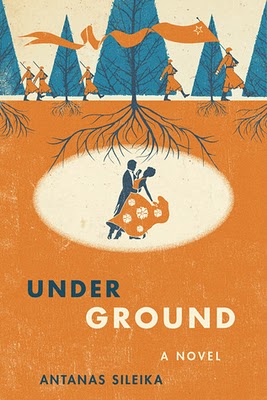
Book review by DONNA BAILEY NURSE
in Canadian ‘The Globe & Mail’ http://www.theglobeandmail.com
“How are we going to survive unless we turn our hearts to stone?” a comrade warns the hero of Antanas Sileika’s
Underground. The question is an example of the elegant thinking that characterizes this rare and compelling chronicle of Lithuanian partisans and their violent struggle against Soviet occupation. Sileika’s third novel follows the military career of Lukas Petronis, whose bravery and commitment to the cause elevate him to legendary status within the resistance movement. Despite his heroism, Lukas keeps his heart from growing hard by falling in love with Elena, the sister of a partisan.
Underground, by Antanas Sileika, Thomas Allen, 305 pages, $24.95 Buy from: Amazon.ca Chapters Indigo
The story begins in 1944 with the Germans in retreat from Lithuania. With their departure, the dream of an education seems viable again, and Lukas and his younger brother, Vincentas, abandon the family farm on the edge of the Jewish Pine Forest for university in the city. Lukas studies literature while his brother enrolls at the nearby seminary. The buildings are dilapidated and the resources limited, but Lukas exhilarates in learning and the lively company of the students.
Unfortunately, the good times don’t last. The Russians have returned; and for the third time in a half-dozen years, Lithuania finds itself an occupied nation. Cattle cars rumble across the tracks – did they ever really stop? – packed with men, women and children exiled to Siberia. The secret police hound those citizens who remain; torture is commonplace, as is execution. Farmers must hand over to the government impossible portions of their modest crops.
Fed up with feeling powerless, Lukas and Vincentas head into the forest to join the freedom fighters. Whereas Vincentas’s spiritual, otherworldly nature could never adapt to harsh partisan life, Lukas takes to it easily. He turns out to be fearless, an excellent shot. In addition, his composition skills are put to good use. He is given the job of gathering international news and writing articles for the resistance papers.
From its opening lines, the novel strikes a haunting note. Some of this has to do with a ghostly presence: the hundreds of thousands dead, more than half of them Jews; a vast Jewish nation disappeared. The strange winter woodland setting also contributes to the tone. A formal military force, 30,000 strong, is scattered throughout the forests where the Russians fear to tread. Fighters reside in lean-tos or deep bunkers. Larger units emerge to engage the army in significant battles, while smaller groups ambush government officials and target organizations. It is in the woods that Lukas meets Elena, the sister of a comrade. The two eventually marry, but only after they massacre several Russian bureaucrats at their engagement party. They become folk heroes.
Sileika evokes the couple’s relationship with tender realism. His depiction of Elena, one of only a few female characters, also impresses. While she possesses curly brown hair and soulful eyes, it is her inner loveliness and determined nature that attract both Lukas and the reader.
We encounter Elena mostly through conversation, and through Lukas’s eyes. It would be nice to know her a little better, to get inside her head. Though dialogue in the novel is generally strong, spoken word never completely conveys a character’s thoughts and motivations.
Sileika’s portrayal of Vincentas suffers from a similar weakness: We see him mostly from Lukas’s perspective. That’s too bad, as Vincentas, who dreams of becoming a priest, represents a major theme in the novel: He embodies the deep-rooted presence of religion in the culture. Government disapproval means priests live in fear for their lives. Nevertheless, ordinary people cling to their prayer books, refer to their beliefs and continue to embrace the sacraments.
The debate surrounding partisan tactics derives from the Bible. “Harden not your hearts,” reads Hebrews 3:8. In one dark, ironic passage, Vincentas encourages a group of students to love one another: “How can you love the country if you don’t love the people in it?” He recoils from killing the enemy, preferring the path of passive resistance.
After a deadly grenade attack, a grief-stricken Lukas is sent away to the West to heal and to drum up support for the movement. The West is an important character in the story. The partisans expect anti-communist America to save them. In Stockholm, Lukas is infuriated by the unruffled neutrality of the Swedes. Blatant British self-interest equally aggrieves him. In Paris, his political sentiments seem out of fashion. Lukas cannot understand why Western governments worry about placating Stalin when Lithuanian people are being brutalized. Déjà vu all over again.
This story picks up speed as it goes along, hurtling into the future and an unanticipated conclusion. On occasion the prose is a little wooden, but often, too, it is full of poetry and wisdom gorgeously expressed. In addition, Sileika elucidates the socio-political context of occupied Lithuania with astounding ease. He gives us a brilliant, highly accessible military history, one that remains largely repressed – underground – in the East and in the West.
Donna Bailey Nurse is a Toronto editor and writer and a frequent contributor to Globe Books.
Here are some review highlights:
How are we going to survive unless we turn our hearts to stone?” a comrade warns the hero of Antanas Sileika’s Underground. The question is an example of the elegant thinking that characterizes this rare and compelling chronicle … From its opening lines, the novel strikes a haunting note … This story picks up speed as it goes along, hurtling into the future and an unanticipated conclusion.
- Toronto Globe and Mail
Sileika’s novel is a gripping tale, and the fate of Lukas – how long his luck runs – engages the reader to the last page.
- National Post
Sileika writes with a spare style that suits the action sequences as well as the rare moments of tenderness or humour. Entertaining and sometimes shocking, the book describes a little-known period of European history that has been kept underground far too long.
- Montreal Gazette
Sileika vividly brings this little-known (to us) and very sad chapter of European history alive…..
- Toronto Star
… the drama is exciting, haunting and instructional in turn. It opens with an explosive scene of startling violence, moves through episodes of mounting tension and dread, and concludes in a kind of lyricism.
- Edmonton Journal
- Bookmark :
- Digg
- del.icio.us
- Stumbleupon
- Redit it
Eva Stachniak interviews Antanas Sileika
- Posted by - (1) Comment
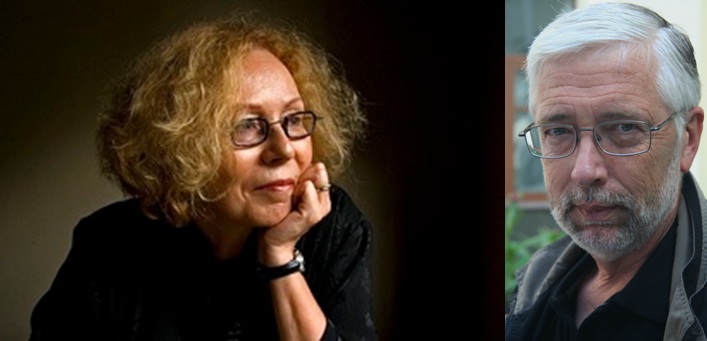
Eva Stachniak is a Canadian and Polish novelist and short story writer. Her new novel "The Winter Palace" based on the life of Catherine the Great will be published in the fall of 2011. Her web site is: http://www.evastachniak.com
By Eva Stachniak
Antanas Sileika, a Canadian novelist and critic, a son of Lithuanian-born parents, is the author of two novels and one collection of linked short stories Buying on Time (nominated for both the City of Toronto Book Award and the Stephen Leacock Award for Humour). Underground, his newest novel, was published in March of 2011 by Thomas Allen. In the words of its publisher Underground “explores the narrow range of options open to men and women in desperate situations, when history crashes into personal desires and private life.” For me Underground is also one of the still rare Canadian novels which delve into the stories from behind the former Iron Curtain, a tempting topic of conversation with its author.
E.S. “Underground” begins with the poetic evocation of the borderline that “weaves around the middle of Europe.” How significant is this borderline for you, a Canadian writer with Lithuanian roots?
A.S.: The borderline at the center of Europe has been critical for me for most of my life. I felt for decades until the late eighties that I did not exist at all because I came from a place that did not exist at all.
In effect, there were two borderlines in Europe - first there were countries such as Poland and Hungary, which existed in the "other" Europe, and then there were places such as the Baltics or Ukraine which did not seem to exist at all. They were on no map of the time (unless the map displayed Soviet provinces). In my childhood, this was extremely confusing because my parents were filled with the melancholy of loss that their generation of refugees suffered from. Yet the site of their loss existed only in stories that they told, and these stories were a cross between fairy tales and the Aeneid, as if they had fled from burning Troy.
In my adolescence, I was embarrassed by my origins because I came from a pre-multicultural generation, one whose ethnicity was complicated by invisibility. But in my first year of university I underwent some kind of dramatic transformation and I refused to answer to the name "Tony", which I had used until then. Everyone had to call me "Antanas."
In my youth, the strongest resonance I ever found in my reading came from English translations of Czeslaw Milosz, whose Issa Valley and Native Realm I read and reread. Since the collapse of the Soviet Union, I have become more and more interested in the region that the historian Timothy Snyder calls, in his new book, Bloodlands. It's no accident that these bloodlands cover the approximate geography of the old Polish-Lithuanian Commonwealth at its height.
I am fascinated about what Snyder, and others such as Norman Davies and the late Tony Judt have to say about this place, and I have discovered that the richness of stories I have at my disposal, rising out of my ability to read and speak Lithuanian, is huge. There is no other part of the world I want to write about any longer. A writer is somewhat merciless, and I can see that this region has had the most dramatic history in the twentieth century. What a source of material! And in the old days, no one in the West as interested, but now they are. Much remains to be told about the other side of Europe.
E.S.: From the Lithuanian perspective The Underground is a haunting tale of doomed love, tragic choices forced by history, and ultimate sacrifice. From the Canadian perspective it is also a story of a legacy that arrives at our doorstep and demands that we do something with it. Your publisher calls it and “untold story of the battle that continued long after Second World War.” When did you become aware of this particular “untold story” and how?
A.S.: Some of the early partisan material appeared long ago in the fifties, in particular the story of Juozas Luksa who fought, fled through Poland to Paris, married, and flew back into Lithuania with the help of the CIA in 1950, and was betrayed and killed in 1951. His story is the rough superstructure of my novel. But to be aware of a story is not the same as to know it.
The partisan story was complex and long, with boats sent in through the Baltic by the British, double-agents infiltrated into the movement, and many, many terrible personal stories, some of whose details I introduced into my novel. This information has only appeared over the last twenty years after the collapse of the Soviet Union, the opening of archives, and the publication of many memoirs. I learned, for example, that the Lithuanian equivalent of Dr. Seuss, a major children's writer named Kostas Kubilinskas, had betrayed and shot partisans because he wanted to ingratiate himself with the rulers. I think again of Czeslaw Milosz - Kubilinskas could have been a character out of Captive Mind. The particular grotesquerie of WW2 and afterwards is especially acute in the east, and this is a perspective I wanted to introduce here, in Canada, where we look at the war and postwar through a Churchillian framework of fighting the good war and winning it.
I am trying to enlarge our sense of that event and the postwar, to make more complex the good versus evil picture of stories such as Saving Private Ryan. I am trying to do something like showing the scene on the bridge at the beginning of the film, Katyn, in which you have civilians fleeing from two attackers. That event was something we were aware of in Canada before the film, but the film made us know it.
In America in particular, people are encouraged to think of their destinies as if they were masters of them, but Europe, and Eastern Europe in particular, teaches that your personal destiny exists at the whim of history, which might just as easily crush you as elevate you. That's a little pessimistic. Also, I have to admit that somewhat against my will, a certain theme of resurrection has crept in. Memory is a seed that may bloom again as a weed or a flower. Sometimes the dead do rise again, or if not the dead themselves, those who remember them.
E.S.:This is not your first novel that evokes the lands beyond the Iron Curtain. Woman in Bronze also dipped into the same well. Was writing of these two novels very different? And if yes, how so?
A.S.: One novel led to the next novel, but the story begins before that. In 1997, after I wrote a collection of stories called Buying on Time about immigrants in the Canadian suburbs, I realized I had found a method of writing about the twentieth century through a strange kind of window, Lithuania was far enough away to be remote - very remote from me in my everyday life - but dramatic things happened there as they happen everywhere in the world. And I had access to that world because I had some of the language (I read it and speak it passably well but cannot write it without many errors). I decided that if all the universe can be seen in a handful of dust, then I can deal with the twentieth century through a trilogy of works of fiction seen through my window into Lithuania. I know about that place, but I am not of that place. I am close and I am far.
The first book, as I mentioned, spoke of the suburban experience and the birth of consumer culture. The second, Woman in Bronze, attempted to speak to certain aspects of modernity. I was interested in how one creates morality in the absence of God, or how one creates a modern image that has moral weight, or seriousness within it. One has a choice in the twentieth century - does a modern artist create sensation and novelty, the golden calf that Moses finds when he comes down from the mountain, or does he create an icon in a different way, a symbol of a new reality, a new morality, or a new way of thinking?
There are also contradictions in modernity. I was struck that modern images were very often created by "primitive" people - Constantine Brancusi was the first to take sculpture into pure abstraction, and he used Romanian folk motifs to do it. Jazz dance came to us from the poor train conductor's daughter, Josephine Baker.
That describes the first two books - now let's move to Underground. If one is to speak of the twentieth century, one must speak of war. I struggled with this for a long time, trying to write war stories or holocaust stories. But none of this felt true to me - I was repeating what we already knew and had read about or seen in movies. Instead, I thought I would write about what we did not know, at least in the west: the war after the war, the grinding partisan war that dragged on for many years after the war ended in the west. And in all these three works I am comparing one life and another, measuring loss and gain.
E.S.: Toward the end of the novel Lukas and other characters are very bitter about being forgotten, swept under the carpet of post-war history. There are so many betrayals in the novel, including the hovering betrayal from Kim Philby and others like him. When I closed your novel I wanted to think about Luke Zolynas. I wanted to know what he makes out of this story of a half brother he now has to acknowledge. I wanted to know what impact this discovery will have on him… Can you speculate on this a bit, in the best tradition of gossiping on our characters???
A.S.: I think Luke Zolynas is a stand-in for me and others like me who only become aware of the past accidentally, because there are things in the past other generations have wanted to hide. In my own case, I stumbled across some family surprises while doing research for this novel. I discovered, dramatically, that one of my late uncles strangled his lover and threw her body down a drainage well in 1931, and then hoped to use acid to dissolve the body with material from a laboratory set up to make bombs to kill the Lithuanian president. Nobody had ever told me about this. He died in Chicago in 1952. As well, the photograph that was in the magazine article was not of my uncle, but, mistakenly, of my father. The historian told me it was my father's prison photo. Prison? My father never told me about that. It turns out he too was trying to overthrow the Lithuanian president (who came to power in a coup in 1926). The past holds all kinds of surprises, good and bad, but most of us walk over the past like barbarians walking over the ruins of Rome. On the other hand, you might consider the past a trap, and you might consider forgetting to be absolutely necessary for us to live out lives. Many Canadian writers despise historical novels. I think of Milan Kundera's Book of Laughter and Forgetting. Perhaps if you cannot forget, there can be no laughter.
But as for me, I have belonged to a transition generation. I was the only one of my three brothers born here, but I still feel as if I am the survivor of the shipwreck that was my parents' lives upended by WW2. I belong nowhere. My job is to consider my parents' past in Lithuania and my children's future here. Obsession with the past only leads to problems, but I cannot seem to let those problems go. Luke Zolynas will find his life become more complicated. He will find that the past as he understood it was sand, not stone. He will find this new information not so much redemptive as complicating, including a whole new set of relatives who will look upon him as the lucky one. But there will be some happiness too. He and his half brother survived because of the actions of their father, whose own life was tragic but whose children's lives became somewhat normal, even if one son was luckier than the other.
E.S.: This is a question I find very important, for I struggle with the same issue myself. You write in English while most of the events you write about happen in Lithuanian. You have to give your characters an English voice, English expressions. Since language always shapes the way you can tell a story what were some of your victories and some of your frustrations in this process?
A.S.: My difficulties with writing about Lithuania in English come in various ways. First comes the problem of ignorance of the place. I must tread very quickly and clearly over background information because English speakers who have no difficulty distinguishing Irish North and south, Scottish, English and Welsh and all the tensions among them cannot tell the difference among a Russian, Soviet, Byelorussian, Pole, Ukrainian, and Lithuanian, to name just a few. To them, all except Poles were Soviets and all Soviets were Russians. Most people I know think Prussians are types of Russians. Therefore I must compress very, very quickly and move the story forward. No professorial paragraphs on history are permitted. And yet I must give some background, so I tend to do it in a fairy-tale way. In my last book, I have paragraphs about a mythical "Rainy Land" and in this one the voice occasionally rises high to look at the Atlantic Charter or Yalta, but I hope to make that voice lyrical or ironic - certainly not professorial.
The next problem looks simple, but isn't, and that's the problem of Lithuanian names, in particular men's names, almost all of which end in –as: Antanas, Juozas, Kazimieras, Jonas, Petras, etc. This uniformity is boring, but I hate to make all the above into Anthony, Joseph, Kazimir, John, and Peter. Therefore I take an uneven approach. In this novel, Lukas is easily understandable to the English ear, although it was practically never used as a first name in Lithuanian. I stuck with the code name Lakstingala because I thought is sounded like something out of Lord of the Rings. Women's names are a little easier, but not much.
When it comes to atmosphere, I rely a lot on food, but Lithuanian food is very simple and not evocative to most people. In this book, I used black currant as the flavour of home - the flavour is mildly exotic here. My English tends to be as simple as possible in this novel. I don't like mixing in the odd foreign word, as they do in movies - ("Hey, tovarich, let's escape this camp together."). But diction is very hard to get right. No one can "scoot" in my novel, nor "take a hike", nor "beat it". It is very hard to comb out the modern turns of phrase and the particularly American ones and still sound fluid. One critic claimed my last novel sounded stiff, whereas I was trying to make the English limpid. Lithuanian is more romantic at times, more sentimental and by turns much rougher than English is. I need to "translate" this language into some semblance of English that sounds real, yet is not an imitation of English lords or Chicago gangsters speaking. It's a real struggle!
E.S.: There are also the complications of telling a story from an external, "other" point of view...the conflict between the romantic national myth and attempt to see a more universal story in it.
A.S.: The superstructure of my novel follows the true story of Juozas Luksa, who fought, went out to Paris, fell in love and married, and returned to fight for Lithuania, which he called, as a metaphor, his "first wife." This is the most romantic of Lithuanian true stories: the man who gave up peace to fight for his country. But when I came to the story, I realized we live in different times. We no longer believe in big causes as much as small ones. Therefore in my novel, Lukas goes back not to the metaphor of his first wife, but to his actual first wife. And before that, he went into the partisans not because of his patriotism but because of his useless, frightened brother, in order to protect him. It all becomes personal in my novel. Real Lithuanian patriots are going to hate me for this change to an iconic story.
As to the issue of complex stories, yes, modern stories are complex, and we realize that more clearly about the past now too. But there is a danger of revisionism through claims of complexity. One might say, for example, that a man died for his country because he had no life worth living and thus he identified with nation more than he should have. This is exactly the kind of thing Jews must worry about in further developments in thought about the Holocaust. The next thing you know, we'll be sympathizing with Nazis, and that would be a mistake. That would be a sort of revisionism. We should not vote in favour of complexity merely because it suits our times. On the other hand, in Marijampole, I spoke with a partisan museum director who said to me, "I know what you novelists do. You make everyone seem sympathetic. But please, do not make slayers into sympathetic characters. They are the ones who killed the partisans." But I could not follow his direction. The slayer who walks above the bunker where Elena is almost killed does not like his life and wishes he could do something else. He has been forced into becoming a slayer. I had to make him more complex than a simple enemy.
E.S.: In Polish literature Lukas’s generation was called the Columbus generation, those whose youth was shaped by WWII, the Nazis and the Soviets, the doomed battles, the breakdown of values they were brought up in. Bitter, tragic, they had to find humanity in a cruel, ruthless world filled with brutality and betrayal. What do they have to tell us that is still important?
A.S.: That generation can be further splintered into sub-groups. One of them includes many of the postwar partisans who only came of military age in 1944 -1948, meaning they were born in 1925 - 1929, too young to have acted during the war but old enough to have seen everything and been formed by it. I am incredibly impressed by those who fought because they were trying to push back in spite of the horrors they had seen. But I am more touched by the generations before them, the aspiring artists, engineers, teachers; the newlyweds, those expecting to retire and enjoy life, those who lived and loved in their circle of family and clan. They were like us because we have dreams too. But their dreams were destroyed by the crush of history on the aspirations of individuals.
We who live here, and especially those with not much Eastern European background, are easy moralizers about the past because we are either ignorant or we have not been tested. That generation is an example of what might happen to us under the same circumstances - some would be broken and some would survive. Some would be lucky and others not. We need to remember the indifference of history, which is a little like the elements that might sweep us away. We need a little humility. The good times always come to an end - war or drought, ecological disaster or disease. How will we face the next disaster?
One final lesson is the lesson of love. What impressed me were wives who waited years to reconnect with husbands, parents who searched for their children, men and women who went to hell to save the ones they cared for - all the small personal impulses during the apocalypse. Somehow love survived - not always, not undamaged, but sometimes.
As a child I remember long, boring afternoons at a shop on Roncesvalles where my mother had fabric measured out, filled out forms, and paid outrageous duty to make up packages for her relatives. She knew we were lucky. She was trying to do something to compensate for some of the bad luck that had fallen on the shoulders of the ones she loved.
E. S.: Thank you.
Eva Stachniak’s newest novel The Winter Palace, set at the court of Elizabeth Petrovna and Catherine the Great will be published by Doubleday (Canada) and Bantam Books (U.S.) in September of 2011.
- Bookmark :
- Digg
- del.icio.us
- Stumbleupon
- Redit it
The Lithuanian language – past, present, future
- Posted by - (9) Comment
Vin Karnila, Associate editor
vin.karnila@VilNews.com
There are many articles written about the Lithuanian language. Some of them focus on the Indo-European / Old Sanskrit origins of the language, some delve into the complexities of the language and some are written for the understanding of the linguists. What attracted my attention to this article was that this is one of the best articles I have come across that gives a clear and easy to understand report on how the Lithuanian language evolved into what it is today.
This article was written by Giedrius Subačius, who is a member of the Institute of the Lithuanian Language located in Vilnius. The Institute of the Lithuanian Language itself is something to take note of. The institute holds the high status of a state research institution of the Republic of Lithuania. It is the center for scientific research of the Lithuanian language. Currently it has over 100 employees with over 70 of them taking research positions.
The main activities of which are the following:
1. Lexicology, lexicography, and research into the grammatical structure of the Lithuanian language;
2. Research into the history and dialects of the Lithuanian language, and sociolinguistic research;
3. Research into the operation of the Lithuanian language in society, and into terminology;
4. Research into Lithuanian onomastics.
The main work of the Institute of the Lithuanian Language:
1. The preparation of the Dictionary of the Lithuanian Language (in 20 volumes) and its computerised version, the accumulation of a computerised database of the Lithuanian lexicon.
2. The preparation of the Dictionary of the Standard Lithuanian Language.
3. The compilation of an academic grammar of the Lithuanian language, research into the evolution of Lithuanian syntax.
4. The gathering of data on and research into Lithuanian dialects, the preparation of an atlas of European languages.
5. The evolution and development of the written Lithuanian language, and the compilation of a database of old Lithuanian writings.
6. The analysis of the development of the norms and terminology of the Lithuanian language, and the compilation of a database of linguistic phenomena and their assessment.
7. The preparation of an etymological dictionary of Lithuanian toponyms, and research into toponyms and personal names in Lithuania.
Quite impressive!!!
For more information about the Institute of the Lithuanian Language please visit
http://www.lki.lt/LKI_EN/

So now let us share with you this very interesting and informative article written by a person from an institution that is highly qualified in this subject.
The Lithuanian Language
By Giedrius Subačius
Due to their similar political situations 20th historical development in the 20th century, the three Baltic States - Estonia, Latvia and. Lithuania - are often treated as sisters, and referred to as Baltic countries. This name is even applied to the entire region. But professional linguists have always pointed out that this is not an appropriate designation. The term Balt was coined in the 19th century by the German linguist Ferdinand Nesselman to name one of the branches of the Indo-European languages spoken on the eastern shores of the Baltic Sea. Linguists had already known Indo-European groups such as Germanic, Romance and Slavic; now they discovered another group of Indo-European languages, the Baltic languages. Since then, in linguistics, the term has been applied only in reference to the true Baltic languages: the living Lithuanian and Latvian languages, and dead languages such as Curonian, Semigallian, Selonian, Yotvingian and Galindan. For the Balts, the early 13th century was when they emerged from oblivion to enter European history and become permanent participants in it. This was the time when the two German orders, the Teutonic and the Livonian Order, first appeared on the territories inhabited by the Balts and slowly settled in the areas of the old Prussian and Latvian tribes. It was the time when the pre-Christian Lithuanian state emerged, capable of defending itself against the militant neighbouring orders. The present-day Lithuanian nation was formed mainly from the Lithuanian and Samogitian tribes, but included Semigallians, Curonians, Sudovians and Yotvingians. The Lithuanian state, which emerged in the middle of the 13th century, has retained to this day these lands as the core of its territory, although the history of Lithuanianstatehood has been very volatile. In the 13th to the 16th centuries it stretched over large areas inhabited not only by Balts but also by Slavs. From the mid-16th century to the end of the 18th century it was in a union with Poland. From the end of the 18th century to the early 20th century the Russian Empire occupied it. From 1944 to 1990 it was occupied by the Soviet Union. Since 1990, Lithuania has again been a democratic independent republic, like Latvia and Estonia.
Lithuanians make up about 80 per cent of the population of Lithuania. This means that more than three million people (perhaps three and a half million) consider Lithuanian to be their mother tongue. It is spoken by the autochthon Lithuanian populations in some border areas of Poland and Belarus, and by numerous Lithuanian émigrés in other countries. The largest émigré groups are to be found in the United States.
People have long been curious to know what makes languages similar, and why people speak different languages in different countries. Linguistic similarity could be evidence of a tribal or national affinity, or even prove the place closest to God. For instance, during the Renaissance one similarity theory held that Lithuanian was simply a debased Latin, and we know that Latin was the most sacred language in the Catholic world. Genealogical studies of languages took on a scientific approach only in the 19th century. Traditionally, it was based on the history of sounds: that is, it was a history of the spoken language, which people learn in some mysterious way in early childhood without any apparent effort, as if the sounds of the language overwhelmed them like a swollen river.
Latvian is the only living language with sounds and endings similar to those of Lithuanian, but a Latvian and a Lithuanian who do not speak each other's tongue cannot communicate, unlike a Dane who can communicate with a Norwegian, an Italian who can communicate with a Spaniard, or a Ukrainian who can communicate with a Russian. A Lithuanian and a Latvian can only recognise a few words in each other's speech, and this is not enough to hold a conversation. Therefore, we can say that Lithuanian is a language that cannot be understood by a speaker of any other language who has not learnt it. More than that, even users of different Lithuanian dialects (such as Samogitians and Aukštaitians) cannot understand each other unless they communicate in standard Lithuanian, which they, have to learn.
Since the 19th century, when the similarity between Lithuanian and Sanskrit was discovered, Lithuanians have taken a particular pride in their mother tongue as the oldest living Indo-European language. To this day, to some Lithuanians their understanding of their nationality is based on their linguistic identity. It is no surprise then that they proudly quote the French linguist Antoine Meillet, who said, that anyone who wanted to hear old Indo-European should go and listen to a Lithuanian farmer. The 19th century maxim - the older the language the better - is still alive in Lithuania.
The history of sounds explains how the Lithuanian word sūnus and the German Sohn, English son, and Polish syn are not loanwords from one language to another, but have the same origin. The same is true of the Lithuanian duktė, German Tochter, English daughter, and Polish corka.
This genealogical history of sounds is like a biological science: tracing DNA sequences is like tracing and reconstructing sound sequences. Thus, we can say that throughout the centuries, the changes in Lithuanian "DNA sequences" have been less numerous than in other languages, and that is the reason why it is considered to be a very old language.
The social history of the Lithuanian language can be considered in the context of its relations and contacts with other languages. For a number of centuries, contacts were especially close with two living languages, German and Polish (in addition to Latin and the East Slavic written languages).
Lithuanian has come into contact also with Yiddish, Russian and other languages, but these contacts have left fewer traces.
Lithuanian culture in East Prussia was strongly influenced by German culture. From the 16th century until the middle of the 20th century, East Prussia produced a large number of Lithuanian books: translations of the Bible, psalm books, grammars, dictionaries and primers, including the first Lithuanian translation of the Bible (by Jonas Bretkūnas [Bretke] in around 1590-1602) and the first Lithuanian grammar (by Danielius Kleinas in 1653). In all of these activities, Lithuanian was in close contact with German. The first Lithuanian manuscript of the Bible was mostly a translation of Luther's translation; the second Lithuanian grammar was written and published in German (in 1654); a large number of psalms in the 16th century were translated from the German; and all or almost all of the bilingual dictionaries (there were no monolingual Lithuanian dictionaries) known since the 17th century were either German-Lithuanian or Lithuanian-German.
At the time that Lithuania formed a commonwealth (federation) with Poland (1569 to 1795) and when it was occupied by the Russian Empire (1795 to 1914), the Lithuanian language in Lithuania proper was under the influence of the Polish language. In the middle Ages, Lithuanian dukes and gentry spoke Lithuanian; but during the Renaissance they switched to Polish. Gradually, Polish became the language of culture. It is for this reason that nowadays Lithuanians sometimes take more pride in their, older dukes, who spoke Lithuanian, and cannot fully accept the later ones who could not. The dominance of the Polish language meant the introduction and use of Polish letters: the digraphs sz and cz for š is and č respectively in modern Lithuanian, and the letters 1, z, i and s.
At the end of the 19th century, however, neither of the two written traditions (Prussian or Polish) would form the foundations of modern standard Lithuanian. The national movement wanted to standardize the language in such a way that it would be different from other languages in the area. The Lithuanians rejected the Polish letter 1, refused, to accept the German and Polish w, and replaced cz and sz with the Czech č and š. In the end, standard Lithuanian became established in Lithuania; while in East Prussia the language has disappeared, together with German, to give way to Russian in the newly emerged Kaliningrad Region. Still, some elements of the writing from East Prussia were transferred into standard Lithuanian, such as the letter ė, the use of the letters i and y, and the majority of the case endings.
It is interesting that these letters became an, integral part of the spelling at the same time as the, Lithuanian (or Latin) letters were prohibited by the Russian authorities. The late development of standard Lithuanian has been responsible for some of its modern features. For instance, ą, ę, į, ų, ė, č, š, ž, ū are relatively new additions to the Latin alphabet.
Modern though they are, all these additions to the Latin alphabet are a nuisance to foreigners. These diacritical marks, or accents, to them are like background noise in a recording of music, or a spot of fat on a clean tablecloth: an unavoidable nuisance, to be ignored in order to avoid irritation. Foreigners have to study long and hard to understand why in Lithuanian dictionaries the word cinikas (a cynic) comes before čekistas (a Chekist).
Another problem is that with the advent of the Internet the old Latin alphabet, which has been preserved and used in almost its original form by the English language, is seen as the most modem alphabet.
It is true that, in the last few years, the developers of universal fonts, Internet browsers and e-mail programs have made great efforts to show more respect to these letters, to make them convenient to use and safe against discrimination in any way.
Lithuanians are always pleasantly surprised and glad to meet a foreigner who has learnt some of their language and is familiar with their special letters. It is gratifying to hear a foreigner speaking Lithuanian, because that is not a skill commonly found beyond the country's borders, and Lithuanian has never been widely taught as a foreign language.
To a person who is familiar with old Indo-European languages such as Latin or Ancient Greek, Lithuanian grammar will come more easily than to a person who can speak modem "English, Spanish, Italian, French or German. Due to the old features of Lithuanian grammar, most foreign students find it a very difficult language to learn. It is frustrating to have to learn five declensions, each with seven cases, both in the singular and the plural. The very concept of an ending is difficult to grasp if a person speaks only English. Some learners are frustrated by the mobile stress in different forms of the same word, which sometimes outwits even the native speakers.
On the other hand, the late development of standard Lithuanian offers certain advantages to learners of it. Even native speakers believe that the pronunciation is almost entirely consistent with the spelling: that is, that the words are pronounced exactly as they are spelt. One letter usually corresponds to one sound. In this respect, Lithuanian is more modern than French or English, where the same letters do not always represent the same sound.
Due to the structural peculiarities of their language, Lithuanians themselves experience various difficulties in learning other ones. For example, they find it difficult to master the use of articles in English, German, Italian, and French, because in Lithuanian there are none. The concept is rendered by other means, such as definite or indefinite adjectives: The White House is Baltieji Rūmai: The word order in a Lithuanian sentence is quite free, and is a convenient means to express a variety of nuances. Therefore, when learning English or German, Lithuanians are inclined to 'improve' the syntactic constructions of these languages by 'liberating' the word order.
Everybody knows that Lithuanian has a variety of colourful swearwords: for example, rupūžė! (toad), rupūs miltai! (coarse flour), kad tave sutrauktų) (I wish you were contracted). But when a Lithuanian is truly angry, a foreigner may be surprised to hear Russian or English swearwords escaping his lips. In the speech of town dwellers, probably the most popular Lithuanian swearword is velnias! (Devil), but in a Catholic country the reasons for its being a swearword should be evident.
In contrast to Soviet times, the Lithuanian Constitution stipulates that "the Lithuanian language is the official language of the Republic of Lithuania.” This means that it must be used in all areas of public life. The country has a National Commission for the Lithuanian Language, responsible for monitoring and correcting the use of it. It even has the right to impose fines for certain mistakes in public advertisements. On the other hand, efforts are still being made to preserve the languages of minorities, Russian, Polish, Belarusian, etc.
What do Lithuanians think is the future of their language? Some believe that with the disappearance of Soviet unifying policies, the area of use of the language has expanded and they are happy about this. They are also aware of the dangers posed to the survival of the language by the country's integration into Europe. On the other hand, the number of Lithuanians learning foreign languages is constantly increasing, because everybody understands that Lithuanian alone is not sufficient for effective communication in the world.
- Bookmark :
- Digg
- del.icio.us
- Stumbleupon
- Redit it
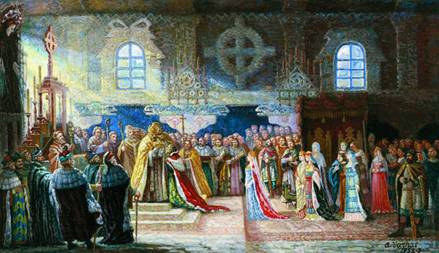
Coronation of King Mindaugas (Adomas Varnas, 1952 m.)
6 July is Lithuania’s State Day and a national holiday. On this day, Lithuanians honour the coronation of Mindaugas, who became the first and only king of a unified Lithuania in 1253.
By Tomas Venclova, historian
The first Lithuanian ruler, Mindaugas (ca. 1200 – fall 1263), is wreathed in mystery and ambiguity―almost as much as St. Christopher on Vilnius’ coat of arms. His rise occurred at a time when Lithuania first confronted the German knights, the so-called Knights of the Teutonic Order. Like most founders and unifiers of nations, Mindaugas probably was not a very attractive character. He did away with the majority of his opponents (among them, quite a few of his relatives), adopted Christianity, was crowned King by the Pope, but then broke with Christianity after his wife’s death―in any case, that is what the Teutonic Knights claimed. His wife’s sister, who was married to Grand Duke Daumantas, came to the funeral. According to the story, “The king shamelessly violated the law, robbing the woman of her honor by force and keeping her as his wedded wife.” Daumantas killed Mindaugas and fled to the Russian city of Pskov, where he adopted the Orthodox Christian faith. He became a famous ruler and was later canonized. Meanwhile, for a good half-century the Lithuanian state disappeared from history: what happened during this time is beyond reliable historical knowledge.
What is clear is that there were no longer any kings, only grand dukes. (After the First World War an attempt was made to restore the old monarchy. When the German Prince von Urach was called to the throne, he intended to call himself Mindaugas II. But the idea never went beyond this operetta-like plan.) Historians, relying less on documents than on patriotism, have been trying to prove that the story of Mindaugas is connected with Vilnius: he was said to have been crowned and murdered in this settlement. In any case, he is credited with having built the first cathedral, whose Romanesque ruins can be found in the vaulted cellars of the present-day Cathedral. When Daumantas took revenge against Mindaugas, they say, the cathedral again became a pagan place of worship. Ardent supporters of this tale have even found twelve stone steps and the sacrificial altar of the cult site.
Admittedly, like most stories from that period, this one has a touch of the absurd. Still, Mindaugas became the symbol of the threatened state. Not long ago, a memorial to him was erected at the mouth of the Vilnia. A somewhat naïve play* portrays him as the first Lithuanian patriot. It influenced the generation that subsequently took to the barricades for the liberation of the country from Communism. Nevertheless, the true founder of the city was not Mindaugas, but Gediminas, a ruler who came to power after this “blank” period in the history of Vilnius.
- Bookmark :
- Digg
- del.icio.us
- Stumbleupon
- Redit it
The Molotov – Ribbentrop Pact
- Posted by - (2) Comment
|
Part 2 of 2: |
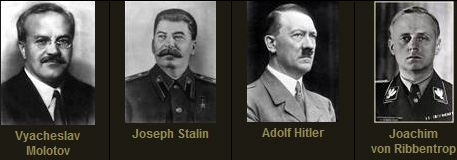
Dear readers,
While assembling the material for this article I found that continuously, instead of adhering to the task of organizing and formatting the text and the copies of the documents, I would be drawn to the translations of the documents. I would find myself over and over and over again reading the translations and as I did the emotions of disgust, repulsion and anger would begin to grow as I read the agreement between two powerful countries, led by two deranged mad men, presented in a contractual format as if they were documenting an agreement for the use of land which includes a right of way, which was in fact an agreement on the control of lands that were not theirs and the control of the free people that owned these lands and who’s land was their home.
While I understand nothing written in the cryptic alphabet of the Russian language and very little of written German, I would also find myself, for time on, end staring at the copies of the actual documents. Over and over I would look at these documents and realize that it was these very documents, that with a mere stroke of a pen that resulted in millions of innocent lives being lost and millions of more lives being changed forever.
Dear readers, we would be very interested to hear of your thoughts after reading these documents and their translations.
Su pagarbe
Vincas Karnila
Associate Editor
Note from Saulius Sužiedėlis: Some frames of the microfilm copies of the German-Soviet pacts housed in the National Archives in Washington, D.C. are not in the best condition. The German and Russian-language facsimiles of the German-Soviet Nonaggression Pact of 23 August 1939 and the Secret Supplementary Protocol presented here were published in Jan Szembek, Diariusz i teki (London: Polish Research Centre, 1972), iv, 752-760. The other texts are from the National Archives, T-120, Records of the German Foreign Office.
The German text of the Treaty of Nonaggression between Germany and the USSR, 23 August 1939, signed by Joachim von Ribbentrop and Vyacheslav Molotov.
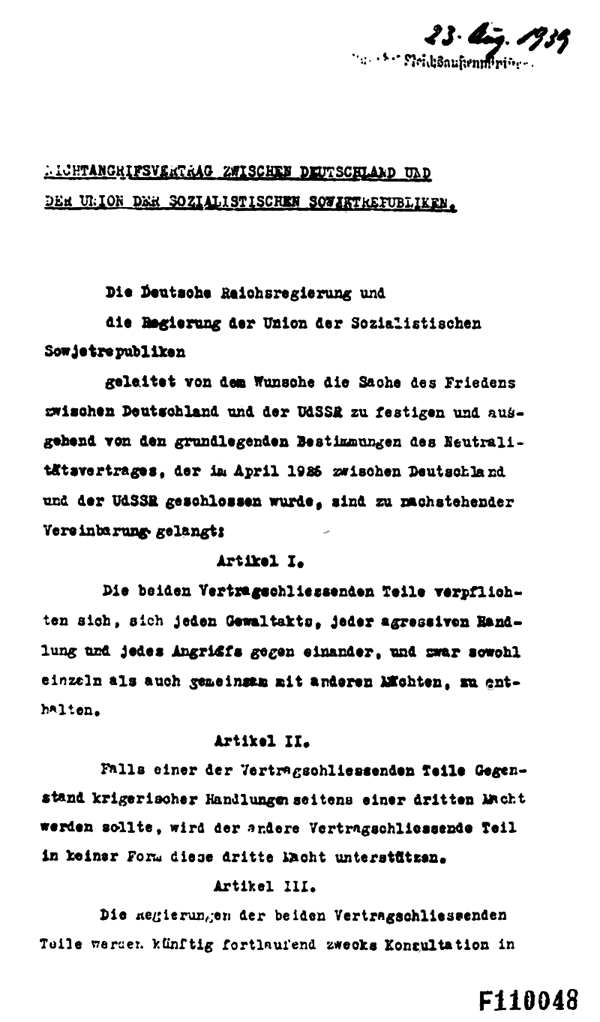
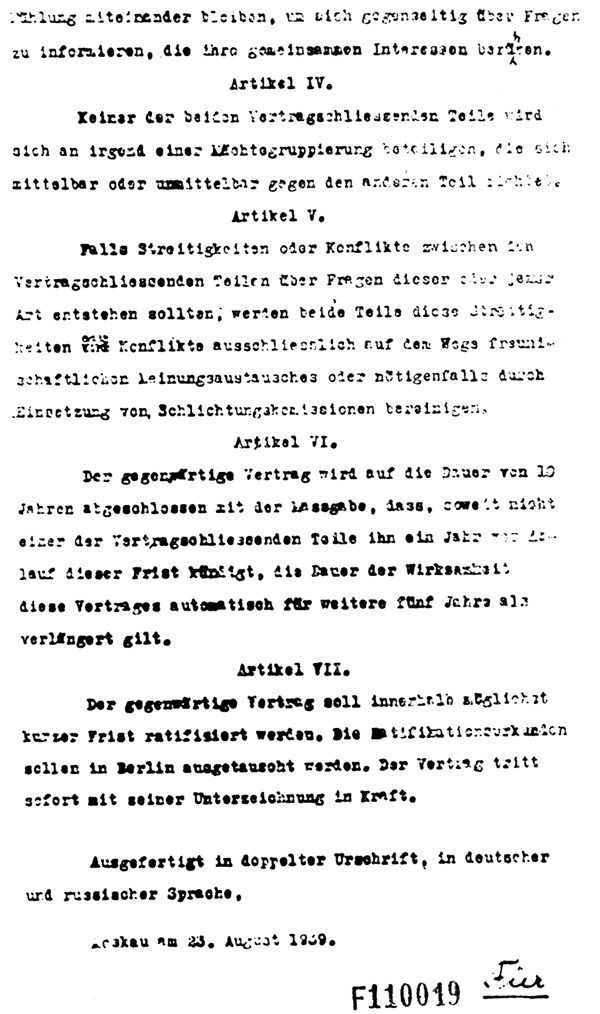
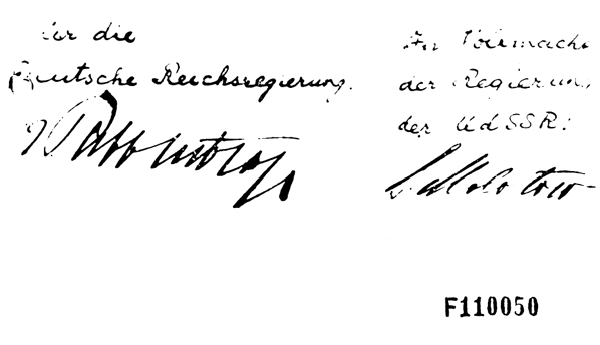
The German text of the Supplementary Secret Protocol, 23 August 1939, signed by Joachim von Ribbentrop and Vyacheslav Molotov.
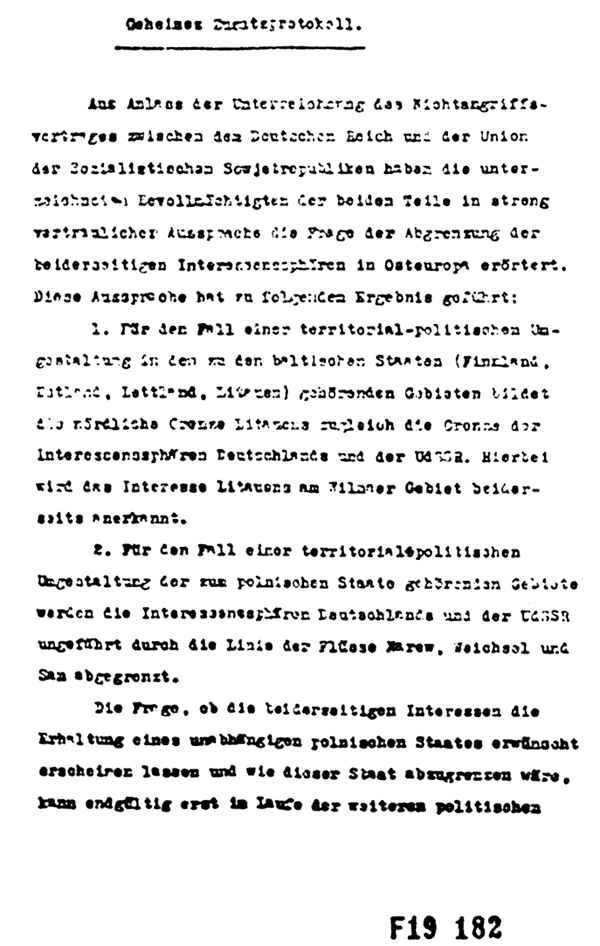
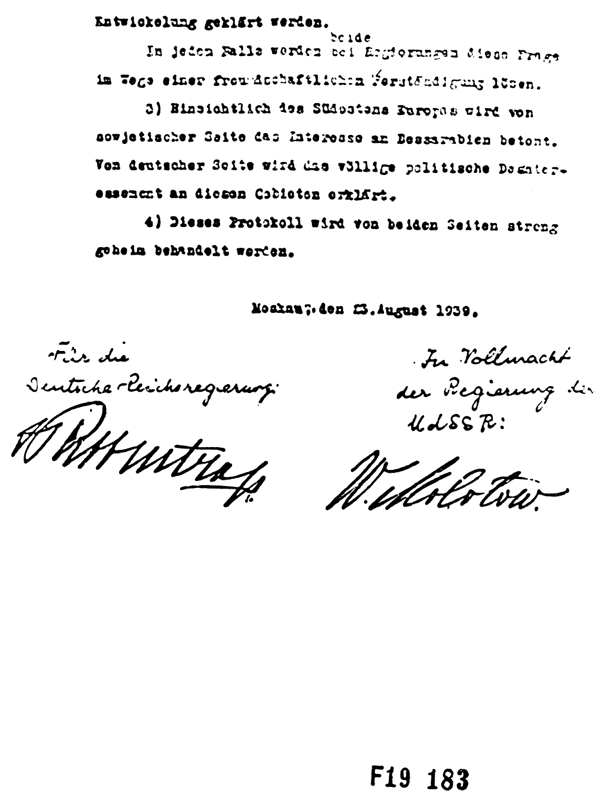
The Russian text of the Treaty of Nonaggression Between Germany and the Soviet Union, 23 August 1939, signed by Joachim von Ribbentrop and Vyacheslav Molotov.
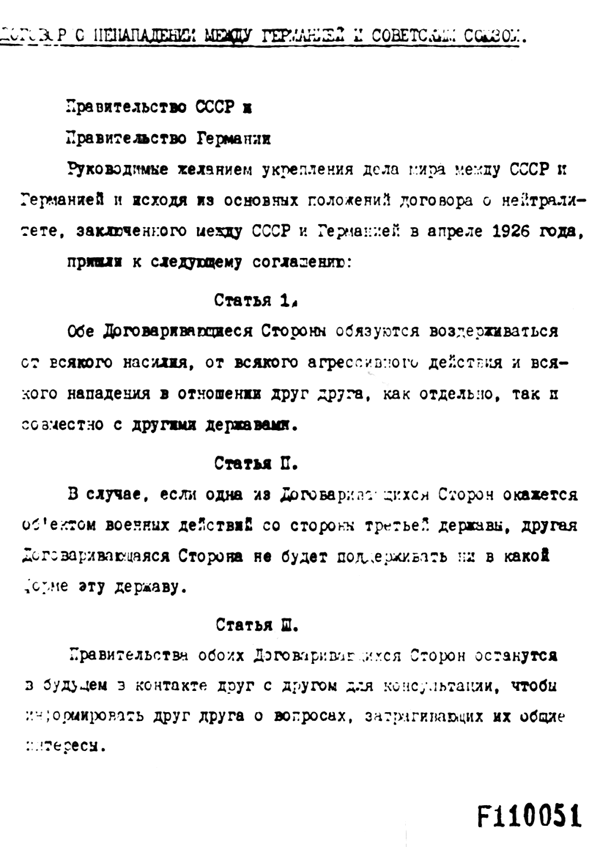
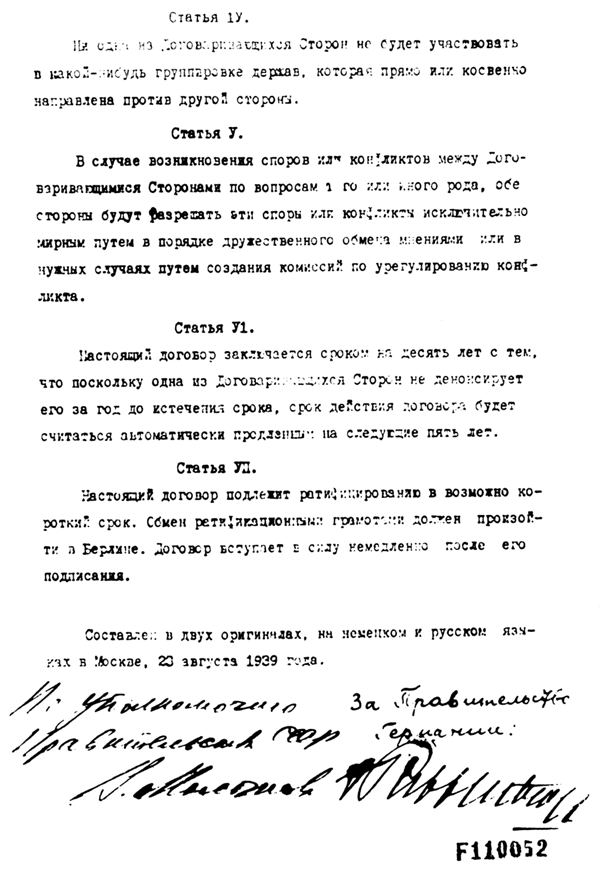
The Russian text of the Supplementary Secret Protocol, 23 August 1939, signed by Joachim von Ribbentrop and Vyacheslav Molotov.
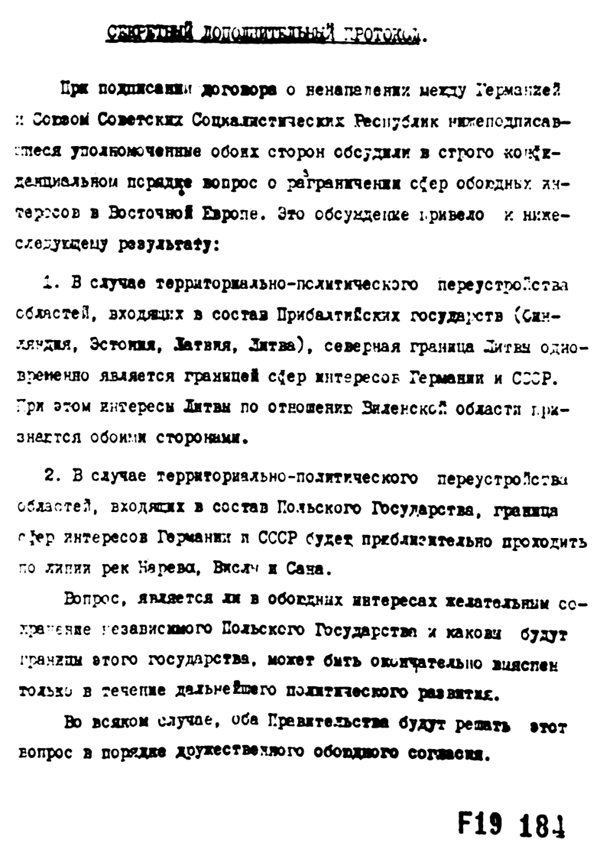
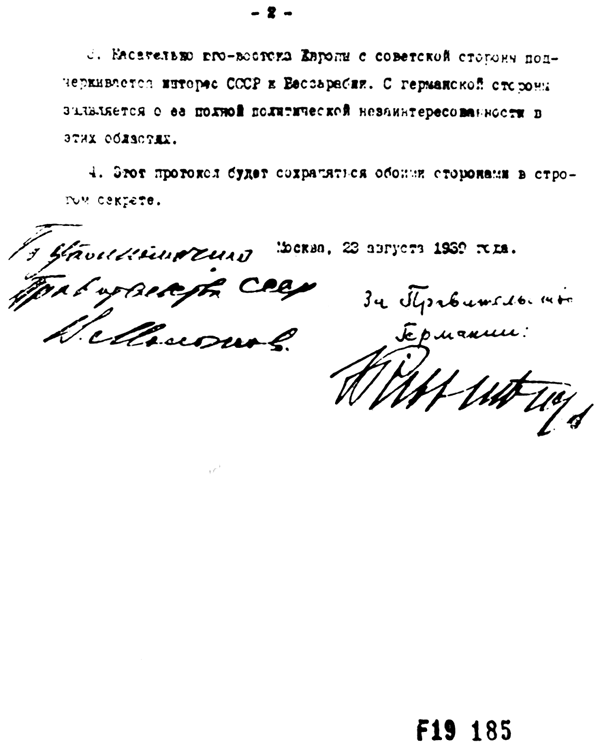
Source: Jan Szembek, Diariusz i Teki (London: Polish Research Centre, 1972), IV, 752-760 as provided by the British Foreign and Commonwealth Office Library.
THE DOCUMENTS IN TRANSLATION:
TEXTS OF TREATIES AND CORRESPONDENCE 1939-1941
- Treaty of Nonaggression Between Germany and the Union of Soviet Socialist Republics and the Secret Additional Protocol, 23 August 1939.
- Secret Additional Protocol of 28 September 1939 Amending the Secret Agreement of 23 August 1939.
- German-Soviet Boundary and Friendship Treaty of 28 September 1939; Confidential Protocols Concerning Repatriation and Political Subjugation of Poland; Declaration of the German Reich and the Government of the USSR.
- German-Soviet Protocol of 10 January 1941 Concerning Transfer of the Rights to the Suwalki Strip to the USSR.
GERMAN CORRESPONDENCE ON THE PACT, OCTOBER 1939
- The German Foreign Minister Ribbentrop, to the German Ambassador in Moscow, Schulenberg.
- The German Minister in Kaunas Informed of the Secret Protocol; Zechlin Reports on Lithuanian Reaction.
- Ribbentrop Tells German Envoys in the Baltic About the Secret Protocol.
EDITOR'S NOTE: The English-language translations of the German and Russian documents presented are taken from the following sources with only slight adaptations: Raymond Janes Sontag and James Stuart Beddie, ed. Nazi-Soviet Relations: Documents from the Archives of the German Foreign Office (Washington, D.C.: Dept. of State, 1948), 76-78, 105-107; Paul R. Sweet et. al, ed., Documents on German Foreign Policy 1918-1945: From the Archives of the German Foreign Ministry. (Washington: Dept. of State, 1949-1964), Series D, Vol. VIII (1954), 166; Vol. XI (1960), 1068. The three documents of October 1939 are from the German Foreign Office files, from Documents, Vol. VIII, 214-215, 238. These and other documents are conveniently assembled in Bronis J. Kasias, ed. The USSR-German Aggression Against Lithuania (New York: Robert Speller and Sons, 1973).
Treaty of Nonaggression Between Germany and the Union of Soviet Socialist Republics
The Government of the German Reich and the Government of the Union of Soviet Socialist Republics desirous of strengthening the cause of peace between Germany and the U.S.S.R., and proceeding from the fundamental provisions of the Neutrality Agreement concluded in April 1926 between Germany and the U.S.S.R., have reached the following agreement:
Article I
Both High Contracting Parties obligate themselves to desist from any act of violence, any aggressive action, and any attack on each other either individually or jointly with other powers.
Article II
Should one of the High Contracting Parties become the object of belligerent action by a third power, the other High Contracting Party shall in no manner lend its support to this third power.
Article III
The Governments of the two High Contracting Parties shall in the future maintain continual contact with one another for the purpose of consultation in order to exchange information on problems affecting their common interests.
Article IV
Neither of the two High Contracting Parties shall participate in any grouping of powers whatsoever that is directly or indirectly aimed at the other party.
Article V
Should disputes or conflicts arise between the High Contracting Parties over problems of one kind or another, both parties shall settle these disputes or conflicts exclusively through friendly exchange of opinion or, if necessary, through the establishment of arbitration commissions.
Article VI
The present treaty is concluded for a period of ten years, with the proviso that, in so far as one of the High Contracting Parties does not denounce it one year prior to the expiration of this period, the validity of this treaty shall automatically be extended for another five years.
Article VII
The present treaty shall be ratified within the shortest possible time. The ratifications shall be exchanged in Berlin. The agreement shall enter into force as soon as it is signed.
Done in duplicate, in the German and Russian languages.
Moscow, August 23, 1939.
For the Government
of the German Reich:
V. Ribbentrop
With full power of the
Government of the U.S.S.R.:
V. Molotov
Secret Additional Protocol
On the occasion of the signature of the Nonaggression Pact between the German Reich and the Union of Soviet Socialist Republics the undersigned plenipotentiaries of each of the two parties discussed in strictly confidential conversations the question of the boundary of their respective spheres of influence in Eastern Europe. These conversations led to the following conclusions:
1. In the event of a territorial and political rearrangement in the areas belonging to the Baltic States (Finland, Estonia, Latvia, Lithuania), the northern boundary of Lithuania shall represent the boundary of the spheres of influence of Germany and the U.S.S.R. In this connection the interest of Lithuania in the Vilnius area is recognized by each party.
2. In the event of a territorial and political rearrangement of the areas belonging to the Polish state the spheres of influence of Germany and the U.S.S.R. shall be bounded approximately by the line of the rivers Narew, Vistula, and San.
The question of whether the interests of both parties make desirable the maintenance of an independent Polish state and how such a state should be bounded can only be definitely determined in the course of further political developments. In any event both Governments will resolve this question by means of a friendly agreement.
3. With regard to Southeastern Europe attention is called by the Soviet side to its interest in Bessarabia. The German side declares its complete political disinterestedness in the areas.
4. This protocol shall be treated by both parties as strictly secret.
Moscow, August 23, 1939.
For the Government
of the German Reich:
V. Ribbentrop
With full power of the
Government of the U.S.S.R.:
V. Molotov
Secret Additional Protocol of 28 September 1939
The undersigned plenipotentiaries declare the agreement of the Government of the German Reich and the Government of the U.S.S.R. upon the following:
The Secret Additional Protocol signed on August 23,1939, shall be amended in item 1 to the effect that the territory of the Lithuanian state falls to the sphere of influence of the U.S.S.R., while, on the other hand, the province of Lublin and parts of the province of Warsaw fall to the sphere of influence of Germany (cf. the map attached to the Boundary and Friendship Treaty signed today). As soon as the Government of the U.S.S.R. shall take special measures on Lithuanian territory to protect its interests, the present German-Lithuanian border, for the purpose of a natural and simple boundary delineation, shall be rectified in such a way that the Lithuanian territory situated to the southwest of the line marked on the attached map falls to Germany.
Further it is declared that the economic agreements now in force between Germany and Lithuania shall not be affected by the measures of the Soviet Union referred to above.
Moscow, September 28, 1939
For the Government
of the German Reich:
V. Ribbentrop
With full power of the
Government of the U.S.S.R.:
V. Molotov
German-Soviet Boundary and Friendship Treaty of September 28, 1939
The Government of the German Reich and the Government of the U.S.S.R. consider it exclusively their task, after the collapse of the former Polish state, to re-establish peace and order in these territories and to assure to the peoples living there a peaceful life in keeping with their national character. To this end, they have agreed upon the following:
Article I
The Government of the German Reich and the Government of the U.S.S.R. determine as the boundary of the respective national interests in the territory of the former Polish state the line marked on the attached map, which shall be described in more detail in a supplementary protocol.
Article II
Both parties recognize the boundary of the respective national interests established in Article 1 as definitive and shall reject any interference of third powers in this settlement.
Article III
The necessary reorganization of public administration will be effected in the areas west of the line specified in 1 by the Government of the German Reich, in the areas east of the line by the Government of the U.S.S.R.
Article IV
The Government of the German Reich and the Government the U.S.S.R. regard this settlement as a firm foundation for a progressive development of the friendly relations between their peoples.
Article V
This treaty shall be ratified and the ratifications shall be exchanged in Berlin as soon as possible. The treaty becomes effective upon signature.
Done in duplicate, in the German and Russian languages.
Moscow, September 28, 1939
For the Government
of the German Reich:
V. Ribbentrop
With full power of the
Government of the U.S.S.R.:
V. Molotov
Confidential Protocol
The Government of the U.S.S.R. shall place no obstacles in the way of Reich nationals and other persons of German descent residing in the territories under its jurisdiction, if they desire to migrate to Germany or to the territories under German jurisdiction. It agrees that such removals shall be carried out by agents of the Government of the Reich in cooperation with the competent local authorities and that the property rights of the emigrants shall be protected.
A corresponding obligation is assumed by the Government of the German Reich in respect to the persons of Ukrainian or Belorussian descent residing in the territories under its jurisdiction.
Moscow, September 28, 1939
For the Government
of the German Reich:
V. Ribbentrop
With full power of the
Government of the U.S.S.R.:
V. Molotov
Secret Additional Protocol
The undersigned plenipotentiaries, on concluding the German-Russian Boundary and Friendship Treaty, have declared their agreement upon the following:
Both parties will tolerate no Polish agitation in their territories which affects the territories of the other party. They will suppress in their territories all beginnings of such agitation and inform each other concerning suitable measures for this purpose.
Moscow, September 28, 1939
For the Government
of the German Reich:
V. Ribbentrop
With full power of the
Government of the U.S.S.R.:
V. Molotov
German-Soviet Secret Protocol
The German Ambassador, Count von der Schulenburg, Plenipotentiary of the Government of the German Reich, on the one hand, and the Chairman of the Council of People's Commissars of the U.S.S.R., V.M. Molotov, Plenipotentiary of the Government of the U.S.S.R., on the other hand, have agreed upon the following:
1. The Government of the German Reich renounces its claim to the strip of Lithuanian territory which is mentioned in the Secret Additional Protocol of September 28, 1939, and which has been marked on the map attached to this Protocol;
2. The Government of the Union of Soviet Socialist Republics is prepared to compensate the Government of the German Reich for the territory mentioned in Point 1 of this Protocol by paying 7,500,000 gold dollars or 31,500,000 million reichsmarks to Germany.
The amount of 31,5 million Reichsmarks will be paid by the Government of the U.S.S.R. in the following manner: one-eight, that is, 3,937,500 Reichsmarks, in nonferrous metal deliveries within three months after the signing of this Protocol, the remaining seven-eights, or 27,562,500 Reichsmarks in gold by deduction from the German gold payments which Germany is to make by February 11, 1941, in accordance with the correspondence exchanged between the Chairman of the German Economic Delegation, Dr. Schnurre, and the People's Commissar for Foreign Trade of the U.S.S.R., A.I. Mikoyan, in connection with the "Agreement of January 10,1941, concerning reciprocal deliveries in the second treaty period on the basis of the Economic Agreement between the German Reich and the Union of Soviet Socialist Republics of February 11, 1940."
3. This Protocol has been executed in two originals in the German language and two originals in the Russian language and shall become effective immediately upon signature.
Moscow, January 10, 1941.
For the Government
of the German Reich:
Schulenburg (Seal)
By authority of the
Government of the U.S.S.R.:
V. Molotov (Seal)
From the German Foreign Minister, Ribbentrop, to the German Ambassador in Moscow, Schulenburg
Telegram
Very urgent
Strictly secret
No. 497 of October 4
Berlin, October 5, 1939—3:43 a.m.
Received Moscow, October 5, 1939—11:55 a.m.
Referring to today's telephonic communication from the Ambassador.
The Legation in Kaunas is being instructed as follows:
1) Solely for your personal information, I am apprising you of the following: At the time of the signing of the German-Russian Nonagression Pact on August 23, a strictly secret delimitation of the respective spheres of influence in Eastern Europe was also undertaken. In accordance therewith, Lithuania was to belong to the German sphere of influence, while in the territory of the former Polish state, the so-called four-river line, Pissa-Narew-Vistula-San, was to constitute the border. Even then I demanded that the district of Vilnius go to Lithuania, to which the Soviet Government consented. At the negotiations concerning the Boundary and Friendship Treaty on September 28, the settlement was amended to the extent that Lithuania, including the Vilnius area, was included in the Russian sphere of influence, for which in turn, in the Polish area, the province of Lublin and large portions of the province of Warsaw, including the pocket of territory of Suwalki, fell within the German sphere of influence. Since, by the inclusion of the Suwalki tract in the German sphere of influence a difficulty in drawing the border line resulted, we agreed that in case the Soviets should take special measures in Lithuania, a small strip of territory in the southwest of Lithuania, accurately marked on the map, should fall to Germany.
2) Today Count von der Schulenburg reports that Molotov, contrary to our own intentions, notified the Lithuanian Foreign Minister last night of the confidential arrangement. Please now, on your part, inform the Lithuanian Government, orally and in strict confidence, of the matter, as follows:
As early as at the signing of the German-Soviet Nonagression Pact of August 23, in order to avoid complications in Eastern Europe, conversations were held between ourselves and the Soviet Government concerning the delimitation of German and Soviet spheres of influence. In these conversations I had recommended restoring the Vilnius district to Lithuania, to which the Soviet Government gave me its consent. In the negotiations concerning the Boundary and Friendship Treaty of September 28, as is apparent from the German-Soviet boundary demarcation which is published, the pocket of territory of Suwalki jutting out between Germany and Lithuania had fallen to Germany. As this created an intricate and impractical boundary, I had reserved for Germany a border correction in this area, whereby a small strip of Lithuanian territory would fall to Germany. The award of Vilnius to Lithuania was maintained in these negotiations also. You are now authorized to make it known to the Lithuanian Government that the Reich Government does not consider the question of this border revision timely at this moment. We make the proviso, however, that the Lithuanian Government treat this matter as strictly confidential. End of instruction for Kaunas.
I request you to inform Mr. Molotov of our communication to the Lithuanian Government. Further, please request of him, as already indicated in the preceding telegram, that the border strip of Lithuanian territory involved be left free in the event of a possible posting of Soviet trrops in Lithuania and also that it be left to Germany to determine the date of the implementing of the agreement concerning the cession to Germany of the territory involved. Both of these points at issue should be set forth in a secret exchange of letters between yourself and Molotov.
Ribbentrop
From the German Minister in Kaunas, Zechlin, to the German Foreign Office
Telegram
Most urgent
No. 175 of October 5
Kaunas, October 5, (1939)—7:55 p.m.
Received October 5—10:30 p.m.
With reference to telegram No. 252 of October 5 (4)
[Deputy Prime Minister Kazys] Bizauskas sent for me today even before I could ask for an appointment with the Foreign Minister as instructed in telegram No. 252; he first made excuses for Mr. Urbšys, who was completely occupied today with continuous discussions in the Cabinet and therefore unfortunately could not speak with me himself. He then informed me that Molotov had told Urbšys that Germany had laid claim to a strip of Lithuanian territory, the limits of which included the city and district of Naumiestis and continued on past the vicinity of Mariampolė. This had made a deep and painful impression on Lithuania, and Urbšys had flown back to Kaunas partly because of this information, which he had not wished to transmit by telephone.
The Lithuanian Government has instructed Škirpa to make inquiries in Berlin.
I told him that in the Moscow discussions on the delimitation of the German and Soviet spheres of interest, the Reich Foreign Minister had advocated giving the Vilnius area to Lithuania and had also obtained the Soviet Government's agreement in the matter. While Lithuania had the prospect of such a great increase in territory a difficult and impracticable boundary in the vicinity of the Suwalki tip had come into existence because of the German-Soviet border division. Therefore the idea of a small border rectification at the German-Lithuanian frontier had also emerged in the course of these negotiations; but I could inform him that the German Government did not consider the question pressing. Bizauskas received this information with visible relief and asked me to transmit the thanks of the Lithuanian Government on his score to the Reich Government. Furthermore he asked on his part that the matter be kept strictly secret, which I promised him.
I might add that since the fixing of the German-Soviet frontier became known, political quarters here have had great hopes of obtaining the Suwalki tip from Germany.
Zechlin
From the German Foreign Minister, Ribbentrop, to the German Ministers in Tallinn, Riga and Helsinki
Telegram
Most Urgent
(1) To Talinn, N. 257
(2) To Riga, No. 328
(3) To Helskin, No. 318
Berlin, October 7, 1939
Exclusively for the Minister personally.
Supplementing our telegrams No. 241 to (1), No. 303 to (2) and No. 305 to (3), I am communicating the following to you in strict secrecy and for your personal information only:
During the Moscow negotiations with the Soviet Government the question of delimiting the spheres of interest of both countries in Eastern Europe was discussed in strict confidence, not only with reference to the area of the former Polish state, but also with reference to the countries of Lithuania, Latvia, Estonia, and Finland. At the same time the delimitation of the spheres of interest was agreed upon for the eventuality of a territorial and political reorganization in these areas. The borderline fixed for this purpose for the territory of the former Polish state is the line designated in article 1 of the German-Soviet Boundary and Friendship Treaty of September 28 and publicly announced. Otherwise, the line is identical with the German-Lithuanian frontier. Thus it follows that Lithuania, Latvia, Estonia, and Finland do not belong to the German sphere of interest in the sense indicated above.
You are requested to refrain, as heretofore, from any explanations on this subject.
The Foreign Minister
We would like to thank Lituanus for their kind permission to share this article with you.
LITUANUS
LITHUANIAN QUARTERLY JOURNAL OF ARTS AND SCIENCES
Volume 35 - Spring 1989
Editor of this issue: Saulius Sužiedėlis
THE MOLOTOV - RIBBENTROP PACT: THE DOCUMENTS
http://www.lituanus.org
- Bookmark :
- Digg
- del.icio.us
- Stumbleupon
- Redit it
 Dalia Grybauskaite, President of the Republic of Lithuania |
 Regina Narusiene, President of the World Lithuanian Community |
REGINA NARUSIENE: “The majority, I believe, are disappointed and discouraged with the present president’s seemingly unfriendly view toward Lithuanian-Americans and others abroad.”
The Baltic Times writes that Lithuanian President Grybauskaite is supposedly “disappointed by Lithuanian emigres’ inability to attract U.S.-based investments to Lithuania.” The newspaper refers to a WikiLeaks document.
According to WikiLeaks, Grybauskaite emphasizes that most prominent U.S. Lithuanian emigres, instead of focusing on developing U.S.- Lithuanian business ties, prefer providing political advice to the Lithuanian authorities, which may not be that necessary nowadays.
In a response to The Baltic Times, Regina Narusiene, President of the World Lithuanian Community, says that “The majority of Lithuanian-Americans are disappointed with Grybauskaite.”
“How do Lithuanian-Americans’ views generally differ on the former U.S.-much-linked President Valdas Adamkus and his successor, Dalia Grybauskaite? Which is favored?,” the newspaper asks Narusiene.
And she answers: “There are different points of view. Some favor President Adamkus, but the majority, I believe, are disappointed and discouraged with the present president’s seemingly unfriendly view toward Lithuanian Americans and others abroad.”
“There is the tendency of some Lithuanian politicians to think that “Lithuania belongs to the Lithuanians.” By that they mean those living in Lithuania only. The people of Lithuania have a more favorable view of Lithuanians living abroad.”
“The Lithuanians abroad have brought many investments to Lithuania. However, I want to emphasize, Lithuania has been having a difficult time setting an investment climate competitive with other countries.”
“Collaboration can have different meanings. Our private ties with the country after independence never diminished, but, in fact, intensified. Economic ties are different. A great deal of money is sent to Lithuania by Lithuanians abroad, especially to their family and friends. I believe an amount equal to about 20 percent of Lithuania’s annual national budget. Some firms have located in Lithuania, but Lithuania has to maintain an inviting environment for investment, which they are developing. Cultural collaboration, however, I admit, has been weak. There is a Lithuanian opera in Chicago that has been collaborating with the Lithuanian National Opera and Ballet Theater. We have participated in the Dance Festivals in Lithuania and sent works of art to Lithuania. Some of the entertainers from Lithuania have come to us to entertain, but working out joint programs has been difficult.”
“Can you think of any cases when Lithuanian emigres cut off their ties with the Motherland because of the lack of the political will to adopt a dual-citizenship law?,” Baltic Times asks.
“There are a number of new emigres who have simply said, “I can do better and live more securely abroad. If they do not want us, then why bother.” Unfortunately, these are well educated young people that Lithuania cannot afford to lose. In several instances, the taking away of Lithuanian citizenship has forced some to keep foreign citizenship so as not to lose their means of support, their pension.”
Ref: http://www.baltictimes.com/news/articles/28875/
* * *
Around half of all Lithuanians in the world live outside their home country. They represent a human resource Lithuania desperately needs to get the country back on its feet again after 50 years of bloody wars, genocides, deportations, Soviet opression and now two decades with much muddle and confusion instead of professional focus on collaboration and team work among its own populations here and abroad.
I suggest that the president now reaches out and invites all Lithuanians, and friends of this country around the world, to a close and constructive cooperation. A continued conflict is truly meaningless and devastating.
Aage Myhre, Editor-in-Chief
Lithuania would benefit significantly by availing itself of the expertise and knowledge found in the Diaspora communities
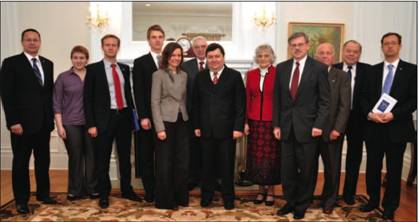
Lithuanian American Council (LAC) Delegation in Conference at Lithuania’s Embassy (LE) in Washington, D.C. with Ambassador Žygimantas Pavilionis, and Emanuelis Zingeris from the Lithuanian Parliament
A delegation representing the Lithuanian American Council (LAC) was recently received at the Lithuanian Embassy in Washington D.C., where it met with the Chairman of the Foreign Affairs Committee of the Lithuania’s Parliament, Emanuelis Zingeris and Lithuania’s Ambassador to the United States, Zygimantas Pavilionis.
In the course of the meeting LAC representatives expressed their concern on a wide range of topics including Lithuania’s developing energy policy, the country’s image in the international community, emigration issues and their demographic impact, the prospect of maintaining citizenship rights of recent immigrants, ongoing cooperation between organizations of the Diaspora and Lithuania, and minority issues in Lithuania. LAC representatives suggested that Lithuania would benefit significantly by availing itself of the expertise and knowledge found in the Diaspora communities in developing energy and security policies and a host of other areas such as environmental issues, ecology, medicine, economic development, and the promotion of improved interactions between the government and the people through non-governmental organizations.
- Bookmark :
- Digg
- del.icio.us
- Stumbleupon
- Redit it
- Posted by - (7) Comment
|
Cover of the book by Dr. Alfonsas Eidintas, “President of Lithuania: Prisoner of the gulag (A biography of Alexander Stulginskis).” Aleksandras Stulginskis, the first constitutional president after Lithuania had declared its renewed independence on 16 February 1918, was kidnapped at his home by Stalinist forces in June 1941 and deported to a Siberian Gulag. After he was released from the inhuman captivity, he was still for years forced to live in Siberia’s deep forests, until 1956.
Lithuania’s President Aleksandras Stulginskis built this Siberian log cabin by his How could it be that a former head of state of a free and independent country could be kidnapped in his own home and taken around half the globe to imprisonment in a labour camp where cruelty and inhumanity were the principal characteristics? How could it be that the rest of the world chose to ignore such an assault against a splendid leader who proudly had been fighting for democracy and independence in a nation that before the Second World War was fully on par with its neighbours in Scandinavia and Northern Europe, both economically and as an independent state? Just think of what would have been the reactions from the international community if one of the other state leaders from the 1920s had become victims of such a cruel abuse? I have below listed some of the state leaders who ruled at the time of President Stulginskis, many of them surely also knew him personally. Why didn’t his many 'friends' among leaders of all those nations around the world react and protest? One can perhaps understand that the war made it difficult to stand up and condemn the atrocities that happened in Stalin's mighty Soviet Union, but why were there no reactions after the war? In my opinion, President Stulginskis’ sad fate as a prisoner in Siberia through 15 long years, until 1956, is still too little known, and I think it’s high time we start spreading the story of Stulginskis throughout the world. Then his sufferings would not have been in vain, after all! The same applies for the 13 years he lived after he had come back to Lithuania, a period when the once proud president was subjected to increasingly humiliating abuse from the Lithuanian SSR.
Stulginskis passed away in Kaunas in 1969, after having experienced nearly 30 years of humiliating and unjust assaults in Siberia and in his once proud homeland Lithuania. It is today 92 years since Stulginskis, together with the other brave leaders of those days, became one of the signatories of Lithuania's declaration of independence. And in only 10 days it is exactly 125 years since this political lion was born (26 February 1885). President Aleksandras Stulginskis should not be forgotten. Aage Myhre
President
In May of 1920 Stulginskis was elected Chairman of the Constituent Seimas and Aleksandras Stulginskis was born in the village of Kutaliai of the Kaltinenai Rural District of the then Taurage District on 26 February 1885 into the family of a land tenant. He studied at the elementary school in Kaltinenai, the Liepaja gymnasium, and the Samogitian Theological Seminary in Kaunas. After graduating from the latter, he continued his studies in philosophy and theology at the University of Innsbruck (Austria). But upon making a decision not to be ordained as a priest, he entered the agronomy institute in Halle (Germany), and after graduating from it in 1913 started to work in Lithuania as an agronomist. He wrote many articles for the then Lithuanian press, mostly on the problems of the development of agriculture; from 1914 he edited the Viensedis (The Isolated Farm) periodical publication. When the Germans occupied Lithuania, he left for Vilnius and here joined the activity of Lithuanian organizations, and was elected to the Lithuanian Relief Committee, where he organized education courses for elementary school teachers. For quite a lengthy period headed the Rytas (Morning) Education Society, managed gardens in a Vilnius suburb that supplied orphanages with vegetables and potatoes. In 1918 he started publishing the newspaper Ukininkas (The Farmer), Ukininko kalendorius (The Farmer's Calendar).
In memory of the 40 years since Stulginskis’ passing away, 2009. Stulginskis was one of the founders of the Christian Democratic Party. In 1917 he was elected Chairman of the Central Committee of the Party. In 1917 together with other Lithuanian patriots he appealed with a memorandum to the President of the United States W. Wilson for the recognition of Lithuania's independence. He was one of the organizers of the Lithuanian conference of Vilnius, a participant In it, and was elected to the Council of Lithuania(later the State Council). On 16 February 1918 he signed the Independence Act. With the war nearing the end and with Lithuanian refugees returning from Russia, Stulginskis headed the state commission for their affairs. Stulginskis spoke for an independent, democratic Lithuania and criticized severely those who agreed for Lithuania to become a monarchic state. Stulginskis organized the defence of Lithuania against the Bolshevists and Poles, and founded a Lithuanian army. In M. Slezevicius' government he served as a minister without a portfolio. In P. Dovydaitis' cabinet of ministers A. Stulginskis served as a Deputy Prime Minister and Minister for Internal Affairs, afterwards Minister of Agriculture and State Wealth, and was one of the incorporators of the Ukio (Economic) Bank. In May of 1920 he was elected Chairman of the Constituent Seimas and President of the State, reelected President at the First (21 December 1922) and the Second (19 June 1923) Seimas, holding post of the President uninterruptedly until 7 June 1926, when Dr. Kazys Grinius was elected President. In 1925-1930 Stulginskis was in charge of the Lithuanian Scout Brotherhood.
Lithuania’s Presidential Palace in Kaunas (1920 – 1940) When the Bolsheviks occupied Vilnius in January 1919, the Government and ministries were moved to Kaunas. It was in the provisional capital that the State Council established the President's institution on 4 April 1919, and elected Antanas Smetona the first President of Lithuania. On 1 September 1919, President Smetona and his office moved to a building specially designated as the Presidential Palace, currently the Historical Presidential Palace in Kaunas. It was here President Stulginskis held office from 1922 till 1926. After the coup d'etat of 17 December 1926, Stulginskis was elected Chairman of the Fourth Seimas and held this post until 12 April 1927 when A. Smetona dissolved the Seimas. Then Stulginskis bought an estate in Jokubavas, in the Kretinga Rural District, and started to run it. At his leisure he wrote articles to the XX amzius (The 20th Century), Ukininkas and other periodical publications. In 1938 he took part in the first World Lithuanian Congress in Kaunas, where he delivered a speech demanding the observance of the democratic principles in Lithuania. The first year of the Soviet occupation he spent at his estate in Jokubavas. In June, 1941 he and his wife were arrested (their daughter Aldona evaded the arrest). The former President was deported to the camps in the Krasnoyarsk Territory, and his wife was exiled to the Komi Republic. Only in 1952, in the camp, Stulginskis' case was completed – and he was sentenced to the 25 years in Soviet camps. But after Stalin's death, due to Stulginskis' daring attempts he and his wife were allowed to return to Lithuania at the end of 1956. They resided in Kaunas. Lithuania’s highly respected pre-war president and democracy builder, Aleksandras Stulginskis passed away on 22 September 1969. He was buried in the Aukstoji Panemune cemetery In Kaunas. Grave of President Aleksandras Stulginskis and his wife Ona (Kaunas).
|
||||||||||||||||||||||||||
|
16 February – Lithuania’s Independence Day |
||||||||||||||||||||||||||
|
Members of the Council of Lithuania in 1917 From left to right Sitting: J. Vileišis, dr. J. Šaulys, kun. J. Staugaitis, St. Narutavičius, dr. J. Basanavičius, Standing: K. Bizauskas, J. Vailokaitis, Donatas Malinauskas, kun. Vl. Mironas, M. Biržiška, The Act of Independence of Lithuania (Lithuanian: Lietuvos Nepriklausomybės Aktas) or Act of February 16 was signed by theCouncil of Lithuania on February 16, 1918, proclaiming the restoration of an independent State of Lithuania, governed by democraticprinciples, with Vilnius as its capital. The Act was signed by all twenty representatives, chaired by Jonas Basanavičius. The Act of February 16 was the end result of a series of resolutions on the issue, including one issued by the Vilnius Conference and the Act of January 8. The path to the Act was long and complex because the German Empire exerted pressure on the Council to form an alliance. The Council had to carefully maneuver between the Germans, whose troops were present in Lithuania, and the demands of the Lithuanian people. The immediate effects of the announcement of Lithuania's re-establishment of independence were limited. Publication of the Act was prohibited by the German authorities, and the text was distributed and printed illegally. The work of the Council was hindered, and Germans remained in control over Lithuania. The situation changed only when Germany lost World War I in the fall of 1918. In November 1918 the first Cabinet of Lithuania was formed, and the Council of Lithuania gained control over the territory of Lithuania. Independent Lithuania, although it would soon be battling the Wars of Independence, became a reality. While the Act's original document has been lost, its legacy continues. The laconic Act is the legal basis for the existence of modern Lithuania, both during the interwar period and since 1990. The Act formulated the basic constitutional principles that were and still are followed by all Constitutions of Lithuania. The Act itself was a key element in the foundation of Lithuania's re-establishment of independence in 1990. Lithuania, breaking away from the Soviet Union, stressed that it was simply re-establishing the independent state that existed between the world wars and that the Act never lost its legal power. (Wikipedia)
|
||||||||||||||||||||||||||
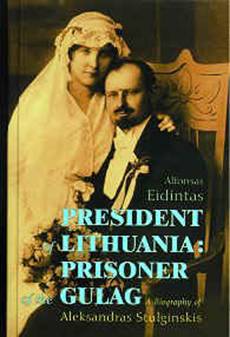
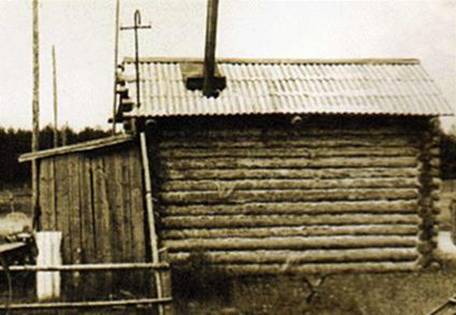
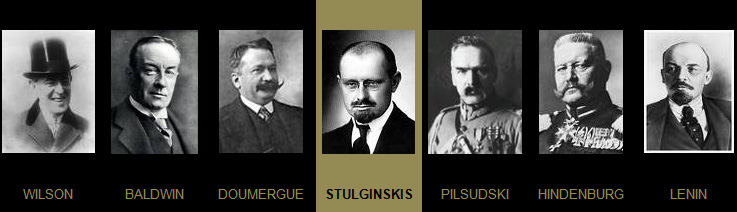
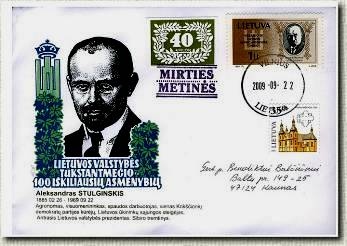
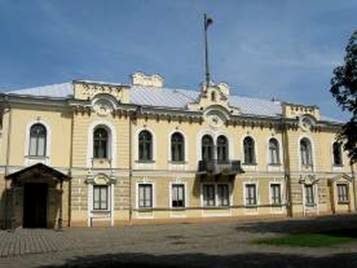

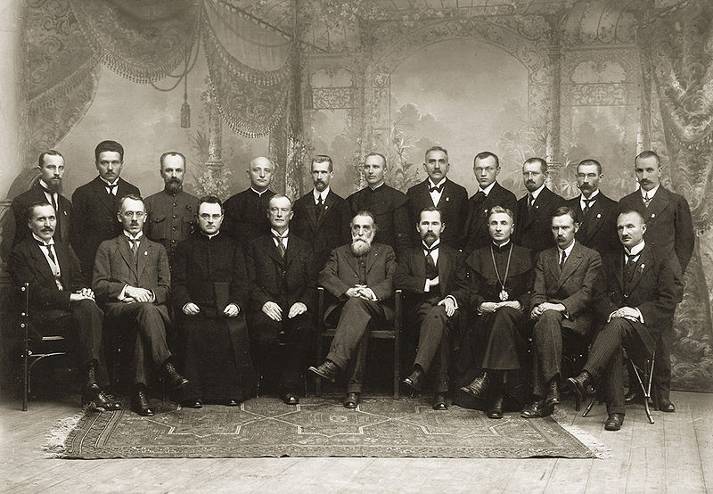
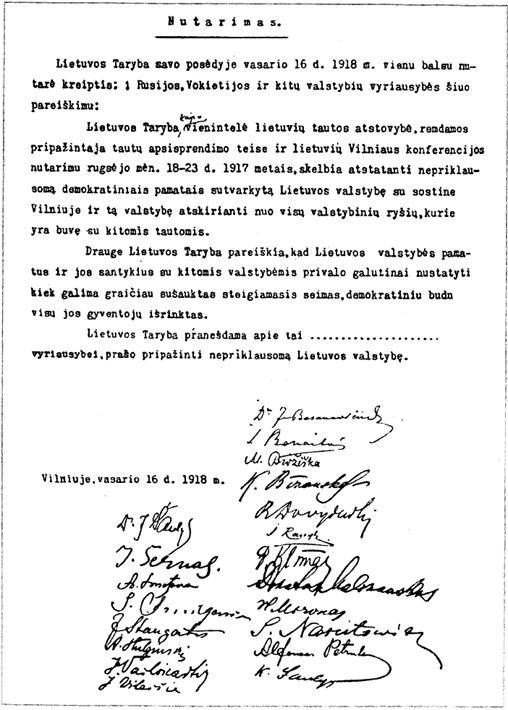
- Bookmark :
- Digg
- del.icio.us
- Stumbleupon
- Redit it
Best-selling author Ruta Sepetys interviewed by Ellen Cassedy
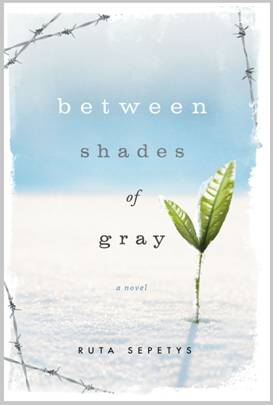
Ruta Sepetys’ novel “Between shades of Gray” tells the story of the Soviet deportations of 1941. More at www.betweenshadesofgray.com
June 14 marks the 70th anniversary of mass deportation of Lithuanians to Siberia. On this date in 1941, as Nazi Germany prepared to invade Lithuania, Soviet authorities loaded tens of thousands of people – men, women and children – into cattle cars and transported them into exile. Some were sentenced to death; some died under harsh conditions of forced labor; some survived. With Stalin’s death in 1953, the Siberian camps began to empty out. But it was many years before the stories of the exile were openly told.
Author Ruta Sepetys
A new novel, Between Shades of Gray (Philomel/Penguin), brings the story of the 1941 deportations into vivid focus. It will be published in Lithuania under the name Tarp pilku debesu (Alma Littera), and in 23 other countries.
VilNews correspondent Ellen Cassedy interviewed author Ruta Sepetys Washington, D.C.
Growing up in America as the daughter of a Lithuanian refugee, you didn’t know that members of your own extended family were among the deported. How did you find out?
I visited Lithuania several years ago and met with some family members for the first time. They told me that after my grandfather left Lithuania in 1940 with his wife and son (my father), officials came looking for him. When they couldn’t find him, they deported other members of the family.
And once you learned what had happened…
I became passionate about telling the story. I went back to Lithuania and met with survivors, psychologists, historians, and government officials. Everyone I met had a connection to Siberia.
As a member of the second generation after the deportations, did you feel you had a special role to play?
Yes. I asked questions that the previous generation might find inappropriate. I wanted to get at the truth. I wanted to know.
Were these events difficult for people to talk about?
Sometimes, yes. At first I thought I would write the story as non-fiction, but people’s hands were trembling as they talked to me. “You can’t use my name,” they said. They wanted to talk, but not on the record. I wanted the story to be personal. I wanted characters that readers could root for, cry for. So I created Lina, the 15-year-old heroine of the book.
As the book opens, Lina is a lively teenage girl looking forward to summer vacation. Then the secret police arrive to take her and her mother and brother to Siberia. Lina’s efforts to survive in both body and soul make for a harrowing tale, but also, I found, an uplifting one.
What struck you about the survivors you met?
Their capacity for forgiveness. It seemed that those who suffered the worst found the most forgiveness. It was such a gift to meet with these people.
What does the title mean?
Over and over, survivors told me that what they went through was complex, not black and white. Not all of the NKVD officers were bad, for example. Some helped the prisoners with small acts of kindness, which made them feel human again and gave them strength.
Your book is winning great acclaim. You’re making two European tours. Why do you think people are open to hearing this story now, when in the past they might not have been?
People gravitate toward stories about the human spirit, about characters who are beautiful in their imperfection. Maybe people find something of themselves in these characters.
I hope we can use this story to study a tragic part of history and create more protection for the Baltics. Examining history creates hope for a more just future.
My own Jewish family suffered from the crimes of the Nazi era in Lithuania. How do you think the two eras should be examined today?
I think the crimes of Hitler and the crimes of Stalin should be studied and acknowledged separately, but I hope people will be open to conversations where both parts of history are examined and discussed respectfully. I hope we can celebrate our braveries and console our regrets together.
Last words?
For many years, Lithuania tried to get this story out there in the world, but our story was lost.
I wrote the book, but it’s not my story. The story belongs to Lithuania and the Baltics. I’m honored to tell it.
Read more about Between Shades of Gray at www.betweenshadesofgray.com.
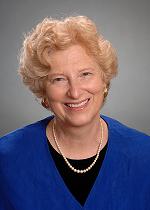 |
Ellen Cassedy |
- Bookmark :
- Digg
- del.icio.us
- Stumbleupon
- Redit it

OPINIONS
Have your say. Send to:
editor@VilNews.com
Ph. D., Chicago
A wave of unity sweeps the international Lithuanian community on March 11th every year as Lithuanians celebrated the anniversary of the Lithuanian Parliament's declaration of independence from the Soviet Union in 1990. However, the sense of national unity engendered by the celebration could be short-lived.
Human beings have a strong tendency to overgeneralize and succumb to stereotypical us-them distinctions that can shatter even the strongest bonds. We need only search the internet to find examples of divisive thinking at work:
- "Those who fled Lithuania during World II were cowards -- and now they come back, flaunt their wealth, and tell us 'true Lithuanians' how to live."
- "Lithuanians who work abroad have abandoned their homeland and should be deprived of their Lithuanian citizenship."


In Lithuania Christmas Eve is a family event and the New Year's Eve a great party with friends!
Lithuanian say "Kaip sutiksi naujus metus, taip juos ir praleisi" (the way you'll meet the new year is the way you will spend it). So everyone is trying to spend New Year's Eve with friend and have as much fun as possible.
Lithuanian New Year's traditions are very similar to those in other countries, and actually were similar since many years ago. Also, the traditional Lithuanian New Years Eve party was very similar to other big celebrations throughout the year.
The New Year's Eve table is quite similar to the Christmas Eve table, but without straws under the tablecloth, and now including meat dishes. A tradition that definitely hasn't changes is that everybody is trying not to fell asleep before midnight. It was said that if you oversleep the midnight point you will be lazy all the upcoming year. People were also trying to get up early on the first day of the new year, because waking up late also meant a very lazy and unfortunate year.
During the New Year celebration people were dancing, singing, playing games and doing magic to guess the future. People didn't drink much of alcohol, especially was that the case for women.
Here are some advices from elders:
- During the New Year, be very nice and listen to relatives - what you are during New Year Eve, you will be throughout the year.
- During to the New Year Eve, try not to fall, because if this happens, next year you will be unhappy.
- If in the start of the New Year, the first news are good - then the year will be successful. If not - the year will be problematic.
* If New Year's night is cold and starry - look forward to a good summer!
* If the during New Year Eve trees are covered with frost - then it will be a good year. If it is wet weather on New Year's Eve, one can expect a year where many will die and dangerous epidemics occur.
* If the first day of the new year is snowy - the upcoming year will see many young people die. If the night is snowy - mostly old people will die.
* If the New Year time is cold - then Easter will be warm.
* If during New Year there are a lot of birds in your homestead - then all year around there will be many guests and the year will be fun.
Christmas greetings
from Vilnius
and epic battle for the
future
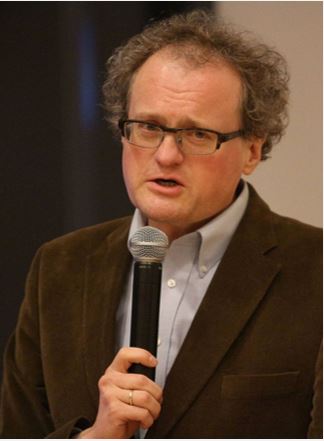
Philosopher, political theorist, historian of
ideas, social analyst, and political
commentator
Ukraine was and continues to be perceived by the EU political class as a sort of grey zone with its immense potential and possibilities for the future, yet deeply embedded and trapped in No Man's Land with all of its troubled past, post-Soviet traumas, ambiguities, insecurities, corruption, social divisions, and despair. Why worry for what has yet to emerge as a new actor of world history in terms of nation-building, European identity, and deeper commitments to transparency and free market economy?
Right? Wrong. No matter how troubled Ukraine's economic and political reality could be, the country has already passed the point of no return. Even if Vladimir Putin retains his leverage of power to blackmail Ukraine and the West in terms of Ukraine's zero chances to accede to NATO due to the problems of territorial integrity, occupation and annexation of Crimea, and mayhem or a frozen conflict in the Donbas region, Ukraine will never return to Russia's zone of influence. It could be deprived of the chances to join NATO or the EU in the coming years or decades, yet there are no forces on earth to make present Ukraine part of the Eurasia project fostered by Putin.
want to learn about the
new, scary propaganda
war between Russia,
The West and the
Baltic States!
believe their government
is corrupt
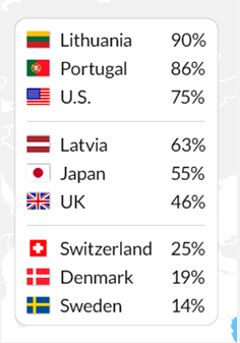
students say no to
bribes for doctors
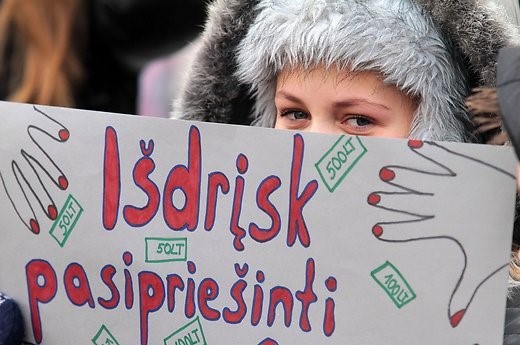
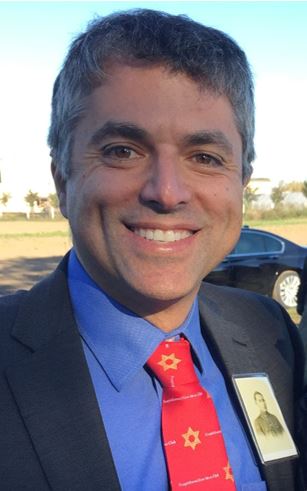
During Soviet times, government was administered for the people in control, not for the local population, court decisions were decreed, they were not the administration of justice, and academia was the domain of ideologues. 25 years of freedom and openness should have put those bad experiences behind Lithuania, but that is not so.
Today, it is a matter of expectation that court pronouncements will be governed by ideological dictates. Few, if any Lithuanians expect real justice to be effected. For foreign companies, doing business in Lithuania is almost impossible in a situation where business people do not expect rule of law, so, surely Government would be a refuge of competence?
Lithuanian Government has not emerged from Soviet styles. In an attempt to devolve power, Lithuania has created a myriad of fiefdoms of power, each speaking in the name of the Government, each its own centralized power base of ideology.

Chepstow, Wales
Doesn't that sound suspiciously like Lithuania? Ah, but I didn't mention the mountains of Snowdonia, which would give the game away.
I'm talking about Wales, that part of the UK which Lithuanians used to call "Valija", but later named "Velsas" (why?). Wales, the nation which has welcomed two Lithuanian heads of state to its shores - firstly Professor Vytautas Landsbergis, who has paid several visits and, more recently, President Dalia Grybauskaitė who attended the 2014 NATO summit which was held in Newport, South Wales.
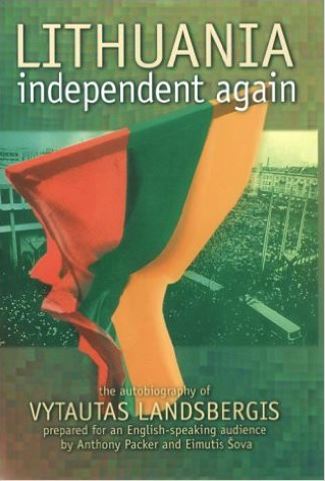
ENGLISH VERSION OF THE
AUTOBIOGRAPHY OF VYTAUTAS LANDSBERGIS.
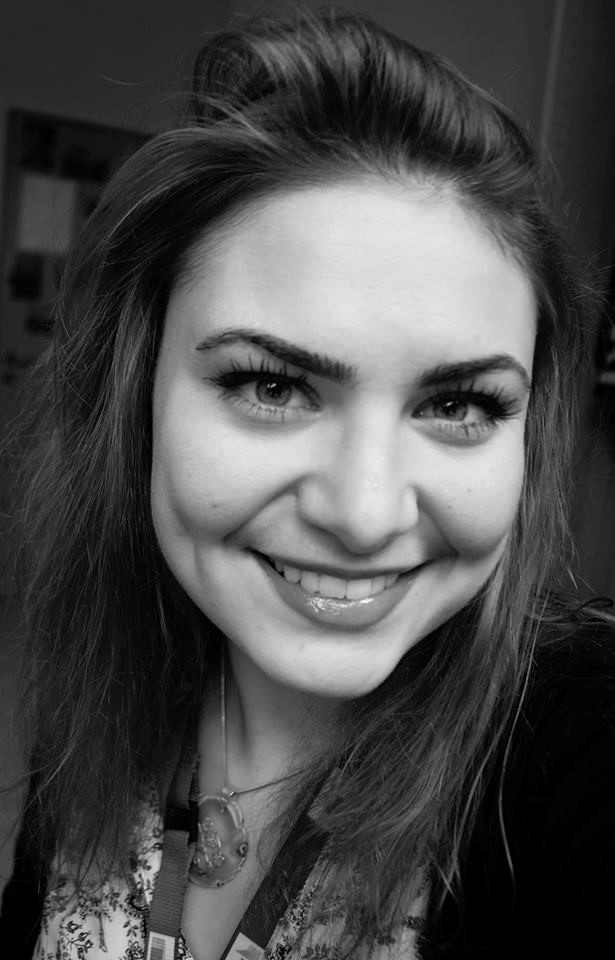
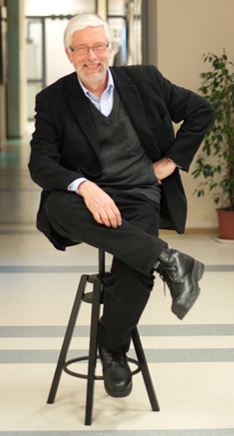
Although Lithuanian activities have thinned over the decades as that postwar generation died out, the Lithuanian Martyrs' parish hall is crowded with many, many hundreds of visitors who come to the Lithuanian cemetery for All Souls' Day. Similarly, the Franciscan parish has standing room only for Christmas Eve mass.
Although I am firmly embedded in the literary culture of Canada, my themes are usually Lithuanian, and I'll be in Kaunas and Vilnius in mid-November 2015 to give talks about the Lithuanian translations of my novels and short stories, which I write in English.
If you have the Lithuanian language, come by to one of the talks listed in the links below. And if you don't, you can read more about my work at
www.anatanassileika.com
http://www.vdu.lt/lt/rasytojas-antanas-sileika-pristatys-savo-kuryba/ https://leu.lt/lt/lf/lf_naujienos/kvieciame-i-rasytojo-59hc.html
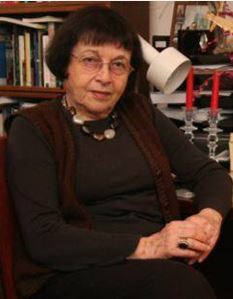
"My love and best wishes to all. As long as VilNews exists, there is hope for the future,"" she writes.
Irena Veisaite means very much for our publication, and we do hereby thank her for the support and wise commitment she always shows.
You can read our interview with her
Facing a new reality
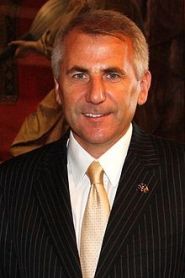
Dear readers of VilNews,
For a number of years, the EU and Russia had assumed the existence of a strategic partnership, based on the convergence of values, economic integration and increasingly open markets and a modernisation agenda for society.
Our agenda was positive and ambitious. We looked at Russia as a country ready to converge with "European values", a country likely to embrace both the basic principles of democratic government and a liberal concept of the world order. It was believed this would bring our relations to a new level, covering the whole spectrum of the EU's strategic relationship with Russia.
The likelihood of Putin
invading Lithuania
.jpg "lithuania today")
Founding Director at Summer Literary Seminars
Are all Lithuanian energy
problems now resolved?
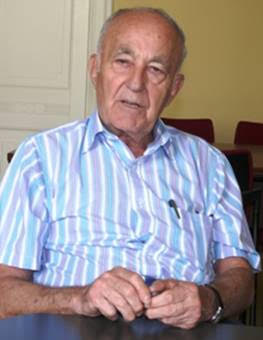
Lithuania as a country does not have significant energy resources. Energy consuming infrastructure after WWII was small and totally supported by energy imports from Russia.
First nuclear reactor begins power generation at Ignalina in 1983, the second reactor in 1987. Iganlina generates enough electricity to cover Lithuania's needs and about 50%.for export. As, prerequisite for membership in EU, Ignalina ceases all nuclear power generation in 2009
The Klaipėda Sea terminal begins Russia's oil export operations in 1959 and imports in 1994.
Mazeikiu Nafta (current ORLEAN Lietuva) begins operation of oil refinery in 1980.
Have Lithuanian ties across
the Baltic Sea become
stronger in recent years?
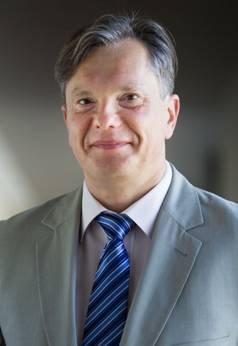
The two decades that have passed since regaining Lithuania's independence can be described as a "building boom". From the wreckage of a captive Soviet republic, a generation of Lithuanians have built a modern European state, and are now helping construct a Nordic-Baltic community replete with institutions intended to promote political coordination and foster a trans-Baltic regional identity. Indeed, a "Nordic-Baltic community" - I will explain later in my text the meaning of this catch-phrase.
Since the restoration of Lithuania's independence 25 years ago, we have continuously felt a strong support from Nordic countries. Nordics in particular were among the countries supporting Lithuania's and Baltic States' striving towards independence. Take example of Iceland, country which recognized Lithuania in February of 1991, well in advance of other countries. Yet another example - Swedish Ambassador was the first ambassador accredited to Lithuania in 1991. The other countries followed suit. When we restored our statehood, Nordic Countries became champions in promoting Baltic integration into Euro-Atlantic institutions. To large degree thanks Nordic Countries, massive transformations occurred in Lithuania since then, Lithuania became fully-fledged member of the EU and NATO, and we joined the Eurozone on 1 January 2015.
Have you heard about the
South African "Pencil Test"?
But that is exactly what happened to me when I came back from South Africa. I will tell you how.
VilNews e-magazine is published in Vilnius, Lithuania. Editor-in-Chief: Mr. Aage Myhre. Inquires to the editors: editor@VilNews.com.
Code of Ethics: See Section 2 – about VilNews. VilNews is not responsible for content on external links/web pages.
HOW TO ADVERTISE IN VILNEWS.
All content is copyrighted © 2011. UAB ‘VilNews’.