
THE VOICE OF INTERNATIONAL LITHUANIA

|
VilNews has its own Google archive! Type a word in the above search box to find any article.
You can also follow us on Facebook. We have two different pages. Click to open and join.
 Click on the buttons to open and read each of VilNews' 18 sub-sections Click on the buttons to open and read each of VilNews' 18 sub-sections  |

|


Featured sub-section
|
|
When we first posted the recipe for Kugelis 26 February we had no idea that it would result in so many responses and Emails. It seems that what is in question is the origin of Kugelis. Some say that the origin of Lithuanian Kugelis is from Kugel which is a very popular traditional dish of the Jewish Faith with the only difference being that Kugelis is with meat and Kugel is without. To compound the issue there is the very old traditional Lithuanian dish called Bulvių Plokštainis whose recipe is absolutely identical to Kugelis. We would like to highlight this recipe for a number of reasons. One reason is that no matter what you call it or where it came from it is a delicious and easy to make dish. The other reason is that we think it would be very interesting to find out from our dear readers any input they could share in regards to the origin of these three dishes – Kugel, Kuglis and Bulvių Plokštainis |
- Bookmark :
- Digg
- del.icio.us
- Stumbleupon
- Redit it

Spring in Vilnius!
- Posted by - (5) Comment
|
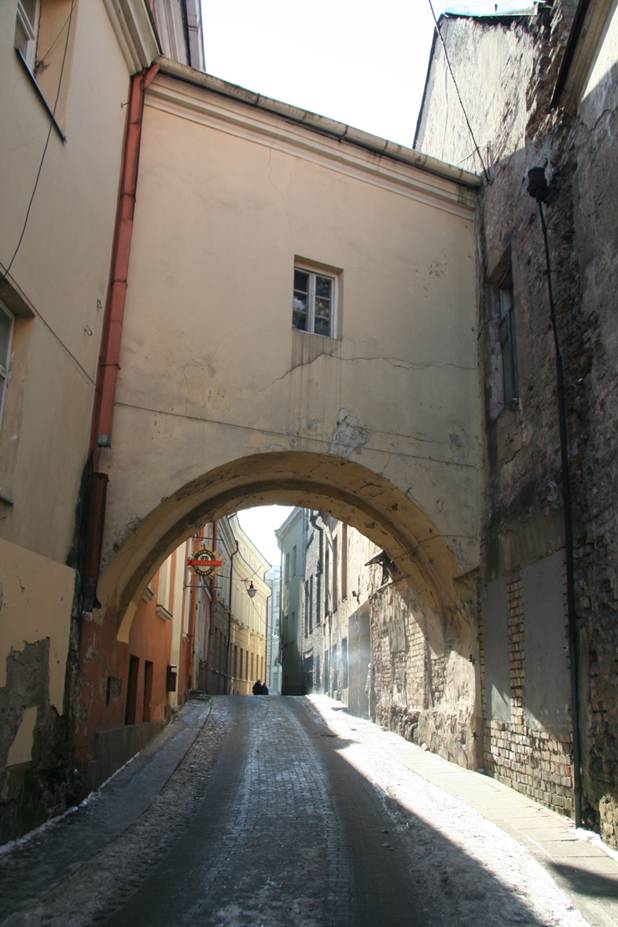
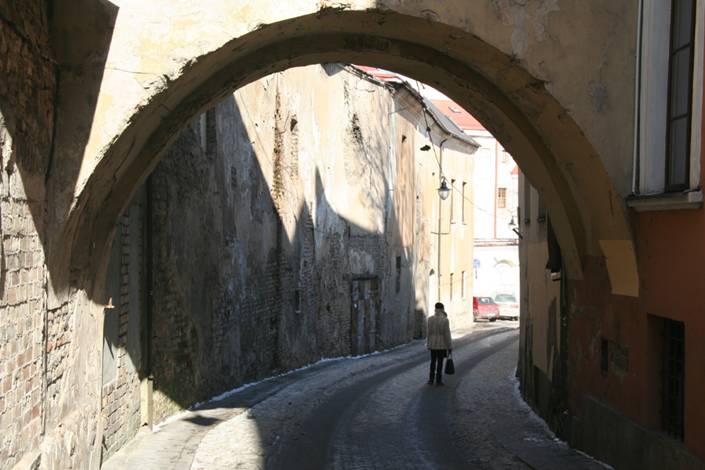
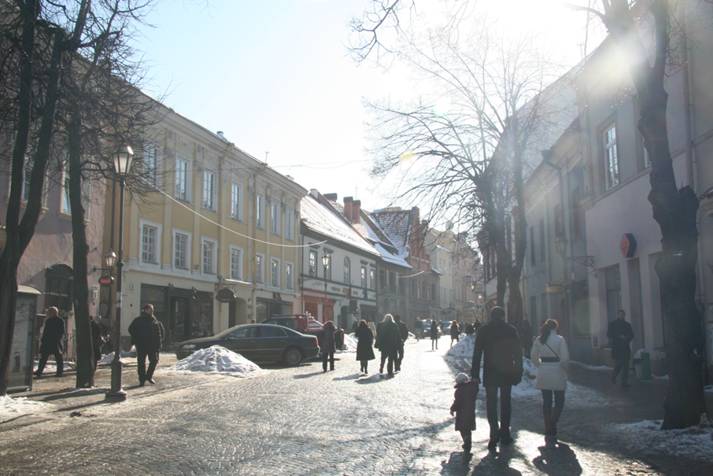
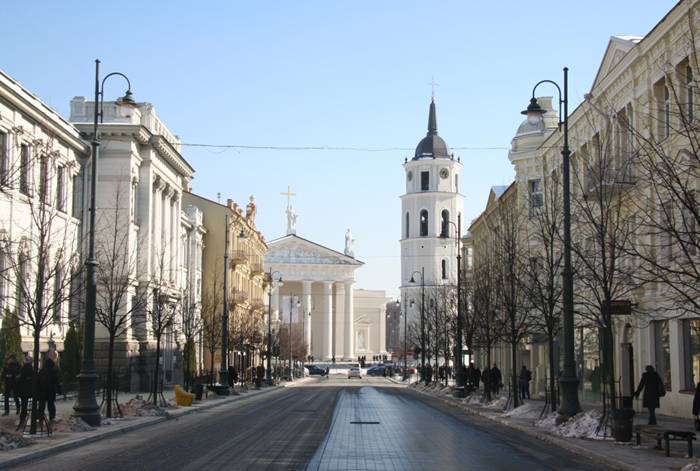
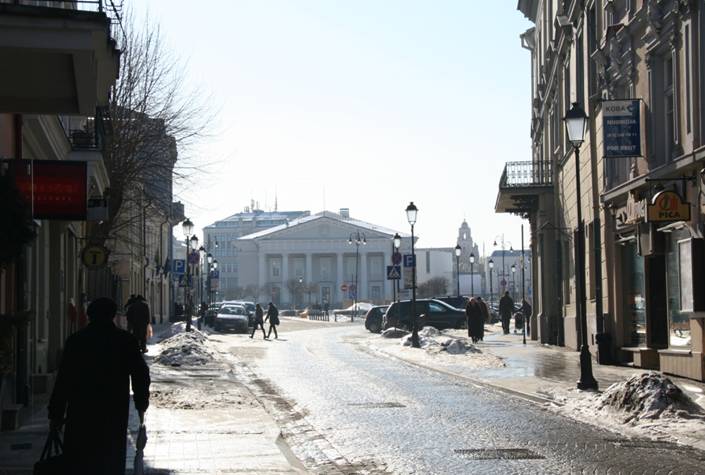
I just grabbed my camera today, this first day of March. Because I wanted to share with you, dear readers, what Vilnius looks like today. Still snow and ice many places, but the melting process is now obvious. Spring is here!
Photos: Aage Myhre
|
|
|
|
|
- Bookmark :
- Digg
- del.icio.us
- Stumbleupon
- Redit it

Lithuania is the place to visit in 2011!
- Posted by - (1) Comment
|
Text: Giedre Paliusytė
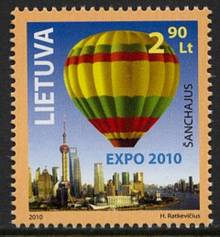
Lithuania is a beautiful country, situated at the western end of the East European Plain, on the endless white sand southern shores of the Baltic Sea. Though Lithuania is small. It is, for example, almost 148 times smaller than China and has only 3,5 million inhabitants – which is almost 444 times less than China. Still Lithuania has amazingly much to offer... Everything is possible here! You can spend your time actively or find a place to relax in untouched nature; choose from a plethora of cultural events, explore the cities-open air museums and much more! Why did I compare Lithuania to China? In 2010 Lithuania took part in the global exhibition Expo in China, Shanghai. Over 5 million people visited Lithuania’s Pavilion. For many of them it was the first acquaintance with this unknown, far away country which the exhibition visitors found definitely worth visiting! A hot air balloon was chosen as the symbol for Lithuania’s pavilion. Visitors of the exhibition were invited to take an impressive virtual flight... But Lithuania itself is nothing but hot air!
RECOMMENDED WEB PAGES ABOUT LITHUANIA: http://www.travel.lt/index.php?lang=2 http://en.wikipedia.org/wiki/Lithuania RECOMMENDED VIDEOS ABOUT LITHUANIA: http://www.youtube.com/watch?v=jkyANEiQrBs http://www.youtube.com/watch?v=hxSjew7ZEFA http://www.youtube.com/watch?v=Fm5lG6DmNxo |
|
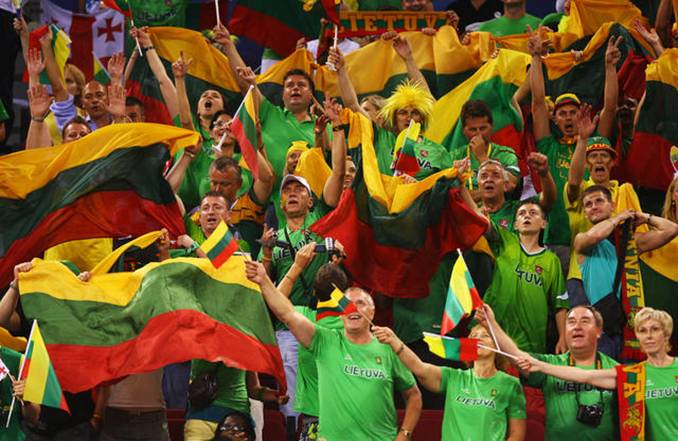
Reasons to visit us in 2011? The European Basketball Championship 2011 will be held right here, In Lithuania!!!
For a large part of Lithuanians Basketball is more than a game, we can even hear people calling it our “second religion”. Lithuanians know how to support their teams and how to celebrate victories. If you are not sworn enemies with this a game, you probably know that one of the most important events for Lithuania this year will be the European Basketball Championship 2011. Lithuania will be hosting the European Basketball Championship for the second time in countries history - the first was a tumultuous 1939. Host cities will be Alytus, Klaipeda, Kaunas, Siauliai, Panevezys and Vilnius. First tickets will go trade in March 2011. For more information about the European Basketball Championship of 2011 please see FIBA EUROPE.
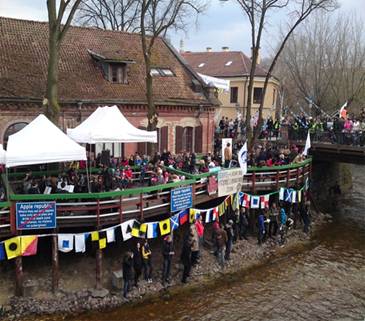
An independent republic in the middle of the city!
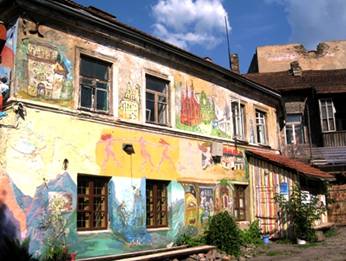
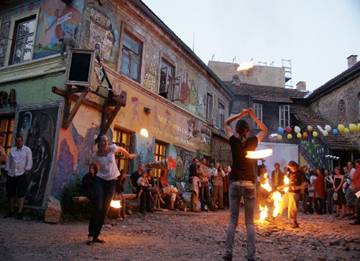
The (un)official Independence Day of Republic of Užupis is a celebration for everyone! Almost fourteen years ago a district of Vilnius Old Town Užupis started celebrating its Independence Day. This year on April 1st we will again be able to spend a day partying, observing and learning to make traditional handicrafts, exploring the district that has its own president, a constitution and is one of the coziest parts of Vilnius, the UNESCO-listed capital of Lithuania.
Užupis is often being compared to Montmartre in Paris, or Freetown Christiania in Copenhagen because of its artistic atmosphere, events and people who living and creating there.
International Hanseatic in Kaunas May 19th 22nd
From May 19 to 22 International Hanseatic days will rock the Kaunas city. Guests from about 100 cities in Europe will come to contribute to the feast and celebrate together. More than 100 different events will take place and all of them will all be for free!
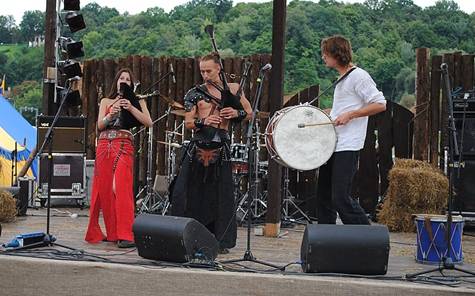
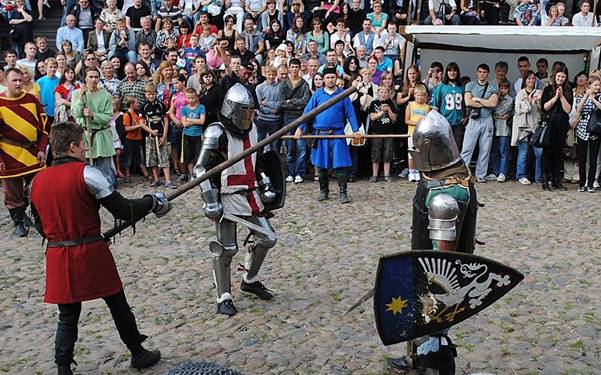
Most Lithuanians are very much interested in their history old customs and traditions, they want to keep them and demonstrate them to their friends and guests from other countries on numerous occasions. For more information please see: http://www.hanzakaunas.lt/ |

|
|
||||||||||||||||||||||
VILNIUS – LITHUANIA’S VIBRANT CAPITAL
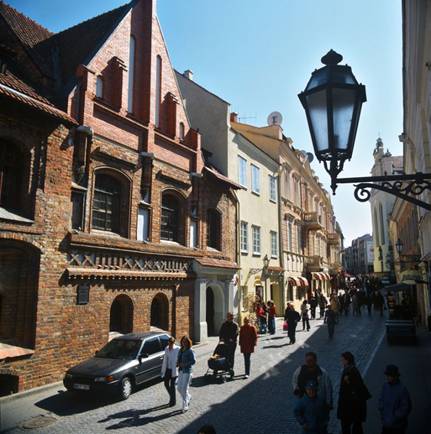
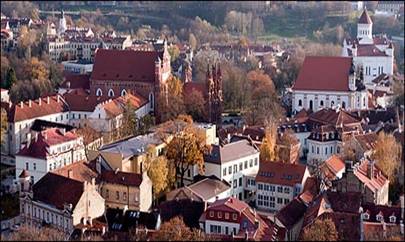
Vilnius is a city full of color, with a historic centre registered in the Cultural Heritage of UNESCO, and for a good reason. The countless Baroque churches, narrow cobblestone streets, impressive squares and some unusual sites such as the statue of Frank Zappa, a statue of a giant egg or of a mermaid, artistic districts, mysterious legends and true stories gives it the right to be called the most funky destination in Northern Europe!
Vilnius Old Town’s Pilies gatve (Tower St.), The street is filled with life, people and music year around!
The capital of Lithuania – Vilnius, is a place where history, culture and new tendencies in culture and politics can be felt. A medieval castle and the centre of the city and the remains of the defensive wall reminds us of the XIII century when pagan Lithuania had to withstand direct campaigns of Teutonic Knights. The Cathedral of Vilnius– is the main Roman Catholic Cathedral of Lithuania and also is the place where the movement for independence from the Soviet Union began in 1989. The Old Town of Vilnius is a World Heritage site where you can find architecture examples of Gothic, Renaissance, Baroque and Modern architecture. Lithuania is an Independent country since 2004 a member of European Union and NATO.
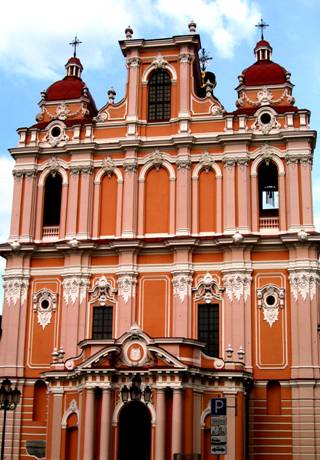
In 1994, the Old Town of Vilnius was included in UNESCO World Cultural Heritage. It is one of the largest (comprising around 360 ha) and most scenic old towns in Europe, founded by Grand Duke Gediminas in 1323 (you can see the last existing tower of the former fortress with his name on the hilltop at the street end).
Vilnius’ light-coloured manors and church towers remind one of the of the old rich Italian cities such as Rome and Florence. Vilnius is the most northward capital-city having inherited the architecture styles of the Mediterranean, and is sometimes referred to as the world’s most Italian city outside Italy.
Vilnius of the 14th and 17th centuries is considered the major European cultural and educational centre of Western civilisation that reached farthest into the East. The Old Town of the capital reflects the apogee of the city grandeur and beauty of this period, while the rapidly growing Vilnius of today, with its around 600,000 inhabitants, is found among the world’s 20 most remarkable cities - that should not be missed by any world traveller.
THE VILNIUS CHURCHES AND SHRINES – DON’T MISS THEM!
|
|
|
|
|
|
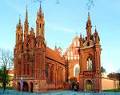
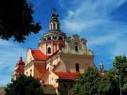
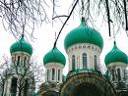
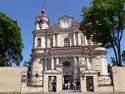
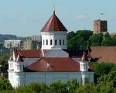
VILNIUS CHURCHES
Vilnius Cathedral (top), St. Anne’s and Bernardines’ Churches, St. Casimir’s Church, the Romanov Church,
The St. Peter and Paul Church, The Orthodox church of Holy Mother of God
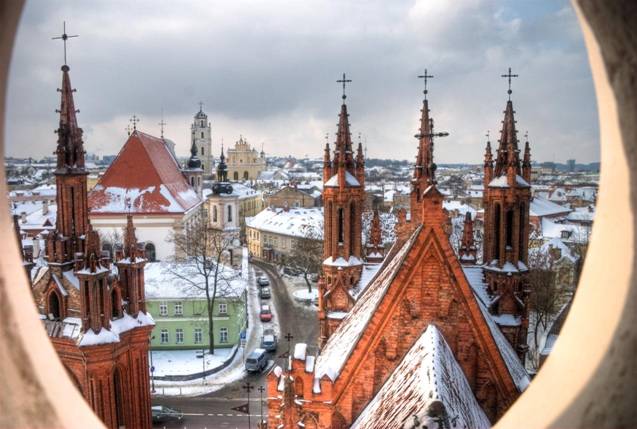
The St. Peter and Paul Church, The Orthodox church of Holy Mother of God
Vilnius has been known as the city of churches since the Middle Ages, several dozen of them can be found in the Old Town alone. Almost every style of architecture can be found in the churches and shrines of many religions in the city: gothic, renaissance, baroque and classicism. The Cathedral of Vilnius (top picture), from which we invite you to start the tour, is the most important piece of 18th century classical architecture.
These are the churches and shrines you simply have to see while visiting Vilnius:
| - The Vilnius Cathedral - St. Anne's and Bernadines' Churches - The Church of St.Michael - The Orthodox Church of St. Paraskeva - Sts. John‘s Church - The Temple of God‘s Mercifulness - The Church of the Holy Spirit - The Great Vilnius Synagogue Place |
- The Evangelical Lutheran Church - The Church of St.Michael the Archangel - St. Casimir‘s Church - The Church of the Holy Trinity - The Church of the Holy Spirit - The Church of St. Teresa - The Gate of Dawn - The St. Peter and Paul Church |
LITHUANIAN SCIENCE, CULTURE AND MORE…
|
|
|
|
When Vilnius University (above) opened its doors in 1579 this became another strong manifestation of Lithuania’s strong position as a leading nation for fine intellectualism in Eastern and Central Europe. Vilnius University is the oldest and largest Lithuanian higher education institution, an active participant in international scientific and academic activities and boasts many prominent scientists, professors and graduates. Let the amazing University Library be your starting point for a study of Lithuania’s many roles within science and intellectual development fields… |
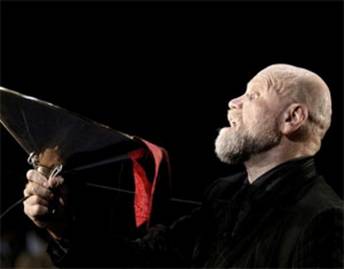
Eimuntas Nekrosius is one of the best theatre directors in Lithuania. I Chose him to represent countries rich cultural life. I believe you will be surprised seeing what a variety this country has to offer – with several well-known professional symphonic and chamber orchestras, choirs, opera singers, ballet dancers and artists within many fields. Cultural events take place all year around; marvellous summer festivals of classical music, theatre, cinema and poetry performances by many Lithuanian and foreign artists, and much, much more. Lithuania is also widely known as a jazz country, famous for its several international jazz festivals organized by jazz performers and fans in several cities. |

TRAKAI – LITHUANIA’S MEDIEVAL CAPITAL
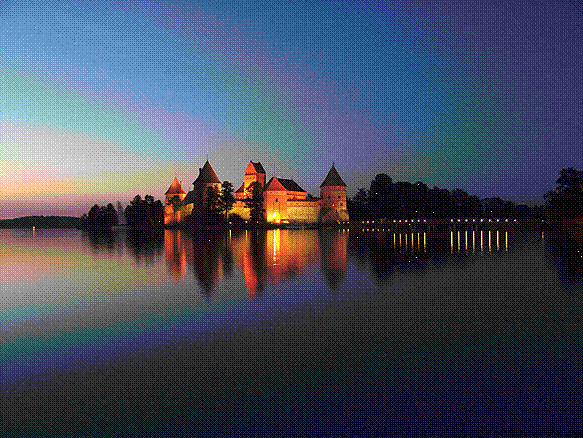
You can’t leave Lithuania without visiting Trakai! It is located in one of Lithuania’s picturesque lake districts, just 30 km from Vilnius. Trakai was the administrative, economic and defensive centre of the Grand Duchy of Lithuania at the beginning of the 14th c. The majestic Gothic castle on an island on Galve Lake is the only castle surrounded by water in Eastern and Central Europe. Inside the castle, there is the Trakai Historic Museum where visitors can see old armament collections as well as other historic exhibits. Also worthwhile seeing is the Karaim quarter with its restaurants originating from the Black Sea area!
DRUSKININKAI AND GRUTAS PARK (LENIN’S NEW HOME)
|
|
|
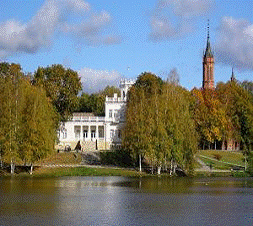
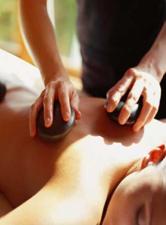
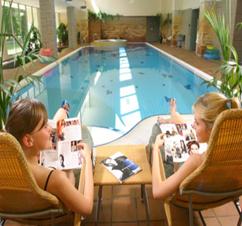
ABOVE LEFT: DRUSKININKAI IS LITHUANIA’S SPA CAPITAL
Druskininkai is Lithuania’s spa capital since the 19th century. This is the place you simply have to go to if you need any sort of treatment for your soul or body. Thousands of others, from around the globe, are already cured!
For more information see http://info.druskininkai.lt/
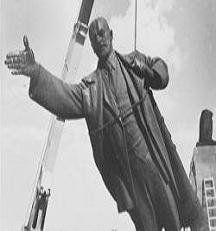
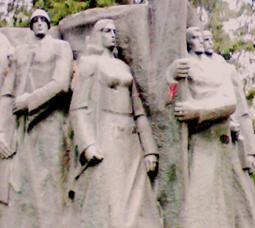
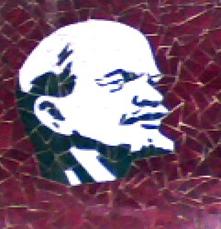
MEETING LENIN FACE-TO-FACE
The Grutas Park in Druskininkai includes statues of Lenin and many other Soviet leaders, all removed from their former official locations in the wake of Lithuania’s regained freedom in 1990 – 1991. We got them, didn’t we?
At the gate to Grutas Park you will be met by Soviet militiamen and soldiers. Well inside the park you will meet them face to face – the individuals Lithuanians and many around the world learned to hate for their cruel, gruesome behaviour to innocent people. You may also feel as if you are in a Siberian concentration camp in the section of the Park that is surrounded by a moat and barbed wire fences with watch-towers. The atmosphere of a Soviet canteen permeates
the park café where the food is served in metal bowls. The aluminium cutlery is a popular souvenir.
For more information see http://www.grutoparkas.lt/
KAUNAS – LITHUANIA’S PRE-WAR CAPITAL
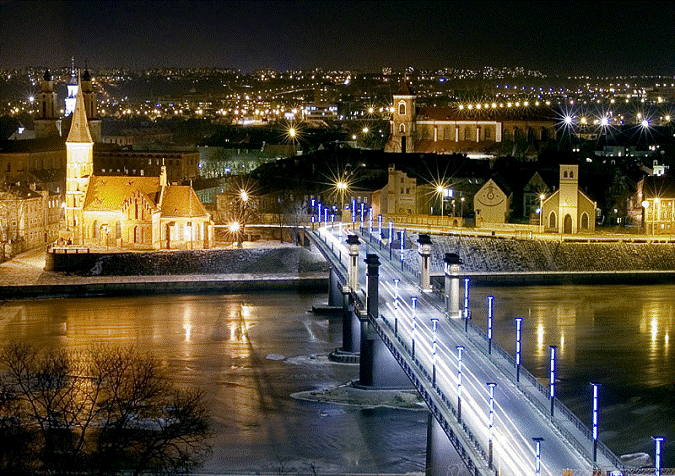
Kaunas Old Town is an amazingly lively and attractive place to be. Have you been there?
Kaunas is the second largest city in Lithuania, with a population of around 415,000. Kaunas was founded in the 12th century and owes its existence to its favourable geographic position at the confluence of Lithuania’s two biggest rivers, the Nemunas and the Neris, 100 km from Vilnius and 200 km from the port city Klaipeda. Kaunas was the capital of Lithuania between 1st and 2nd World War, when Vilnius was occupied by Poland. Kaunas enjoys a remarkable Old Town which is a concentration of ancient architectural monuments: the remnants of the 13th century Castle, the Cathedral, the Jesuit and St. Trinity Churches as well as the Old Town Hall, nicknamed the "White Swan" for its charming architecture. The Old Town Hall Square, the most important architectural accent of the Old Town, is reminiscent of the Middle Ages with the early Gothic Vytautas Church and the late Gothic Perkunas House not far away. The Old Town squares and buildings of the surrounding streets are brisk with numerous restaurants, bars and cafes as well as art galleries and Lithuanian folk art souvenir shops, popular among tourists.
LITHUANIAN LANDSCAPES – NEMUNAS RIVER
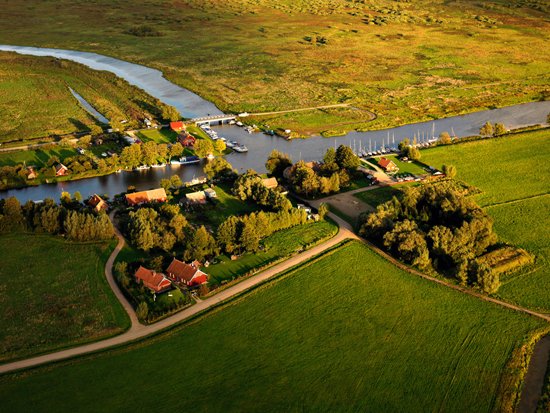
Mingė often nicknamed Lithuanian Venice is a unique fishermen's village where the main "road" is the river!
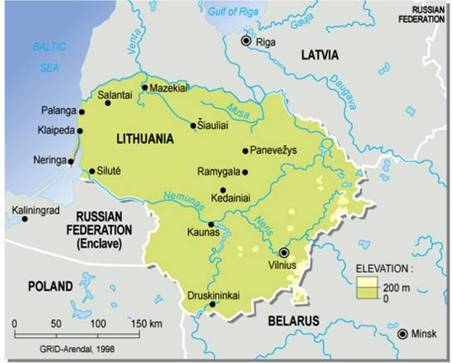
Lithuania has a diverse landscape - three hilly uplands, and three lowlands plains. The highest point is Juozapine Hill, not far from Vilnius; it rises to 293.6 meters above sea level. There are over 4,000 lakes and 722 rivers in this country. The longest river is the Nemunas (above), which is 937 km long totally whereas its length through Lithuania is 457 km.
But these are only the hard facts. The Lithuanian countryside is so much more than just facts. It is only when you begin your walk through the woods here, as you slowly float down one of the rivers in a canoe or a raft, when you sit down at one of the many amazing lakes, or when you first put your foot down in the Baltic Sea’s salty water that you really understand that this country is different. It is now, in the year of 2010, that you will have the great opportunity of feeling close to Lithuania's highly inspirational nature. Why wait?
SIAULIAI – THE HILL OF CROSSES
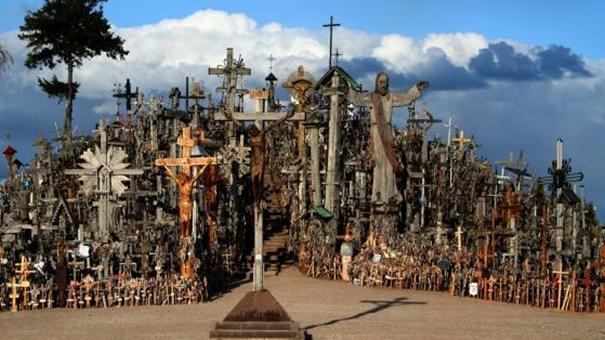
The Hill of Crosses near Siauliai city in North Lithuania is a most unique historic site where, except for some intervals, people have been continuously building crosses since the 19th century, asking for celestial help or paying back for it.
Today, there are over 200,000 crosses that have been counted on the site including fine artefacts by local folk artists as well as plain wooden crosses. ]At the Hill of Crosses, one can also see pope John Paul’s II cross made by a Lithuanian folk artist and built during the pope’s visit to Lituania in 1993.
There is a place in Lithuania, which is named “Hill of croses”. Why this place is so popular? Because in one place here you can find thousand of croses. This hill is a symbol of faith. Every year here are coming a lot of people and leaving at least a small cross in token of hopes and dreams, which comes true.
PALANGA – THE LIVELY BALTIC SEA RESORT
You can be at the Baltic Sea’s most attractive beaches only a few minutes after landing at Palanga Airport!
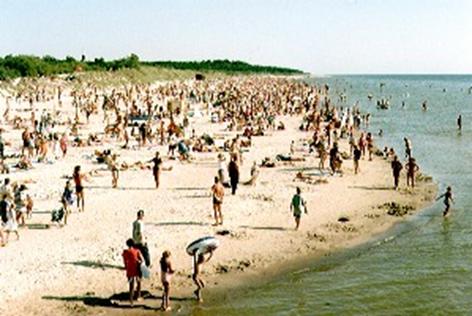 If you want to have a calm holiday at an empty beach, then don't expect to find this in Palanga during the mid-summer months. Here, the beaches are always crowded, even in the evenings. If you like crowds of vibrant people at the beach, music, rhythms, games; then Palanga is for you. Though, at the end of the summer and in September, when the weather is still summer-like, the beach is less crowded and you can enjoy a much calmer atmosphere.
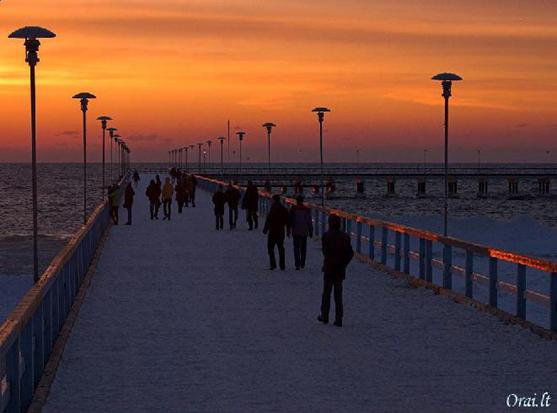 There are, however, a lot of other beaches nearby that are much less crowded also during the summer months, if that would be more to your preference. After all, Lithuania has the very top beaches of the Baltic Sea and Nordic area, with around 100 km soft, white sand beaches, all around 50 m wide and with the clear blue sea waves constantly rolling softly in… Did I mention that the country is called Lithuania?
KLAIPEDA – THE HANSEATIC SEAPORT CITY
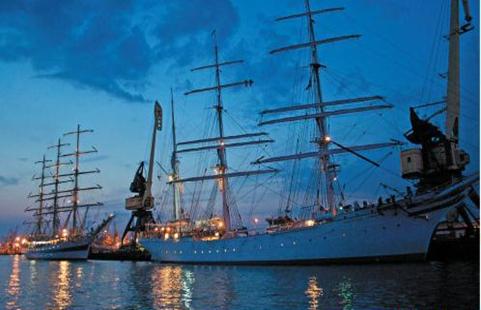 Klaipėda city (population around 200,000) is the northernmost ice-free port of the Baltic Sea; an outstandingly important sea port and commercial centre since the 13th century. The 1st of August 1252 is considered to be the date Klaipėda was founded. In 1257 the city was granted the Lübeck City Rights
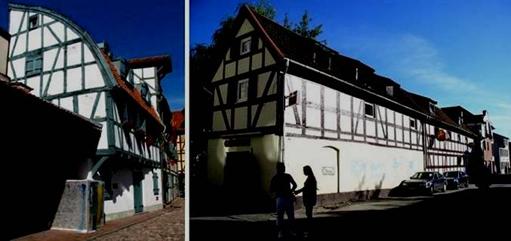
By its old architecture this seaport city is close to the Nordic Countries and Germany; the Hanseatic styles and league. Some of the buildings that have survived in the cosy Old Town have a pronounced Fachwerk style.
Klaipėda cherishes nice marine traditions; it has hosted the Sea Festival on the last weekend of July every year since 1934,
an event that includes a number of performances of artistic companies and craftsmen’s fairs. The festival attracts many participants and guests not only from Lithuania but from abroad, too. The Kopgalis Fort complex, built in the 19th century, houses the Maritime Museum with an attractive exposition of marine nature and the history of navigation. These unique structures also accommodate a rich Aquarium and a Dolphinarium hosting shows of trained dolphins and Californian sea lions, which attract many spectators.
THE CURONIAN SPIT AND NERINGA
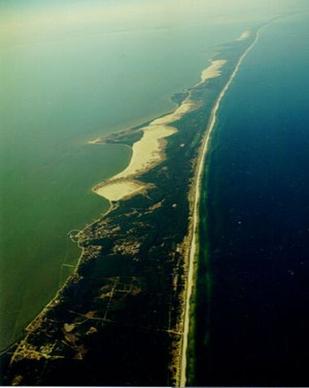
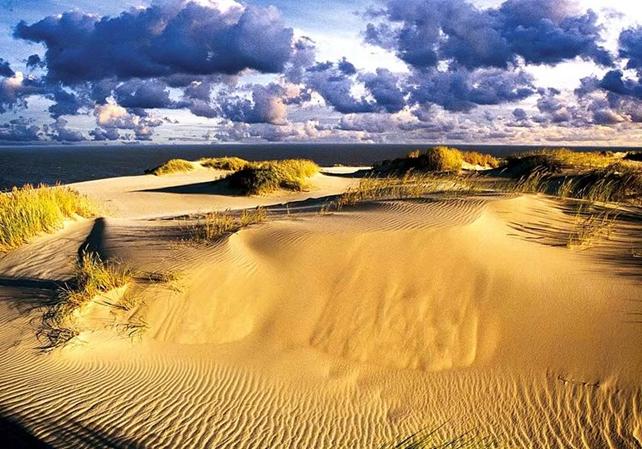
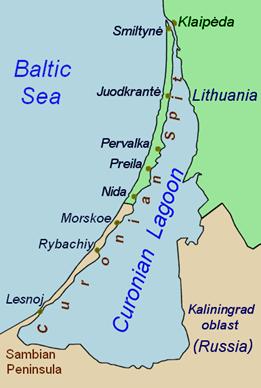
The Curonian Spit (Neringa) is a long and narrow sand peninsula that separates the Curonian Lagoon from the Baltic Sea. This natural wonder, listed as a UNESCO World Heritage site, still exists today solely due to human efforts to counter the natural erosion process. The Neringa landscape is truly unique, dominated by picturesque sand dunes and pristine beaches. The area has a distinct ethnographic flavour, characterised by wooden fishermen cottages and the local
speciality of smoked fish. Those looking for a quiet seaside vacation in picturesque surroundings will most definitely not be disappointed.
The huge sand dunes of the Curonian spit are the largest in North Europe.
You reach them by ferry from Klaipeda (takes only 10 min).
NIDA – THE FORMER FISHERMEN’S VILLAGE
|
|
|
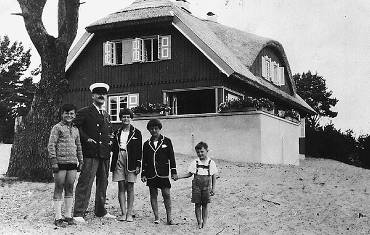
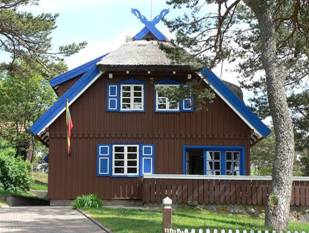
The Nida home of the German writer Thomas Mann, today the Thomas Mann Museum.
The quiet resort village of Nida is based at the Curonian Spit near the Kaliningrad border, less than one hour’s drive from Klaipeda. With a beautiful Baltic Sea beach on the west side, the large Curonian Lagoon on the east side and the largest sand dunes of Northern Europe on the southern side, this is a truly unique place for a relaxed vacation. You should spend one or two weeks in a self catering Fisherman's cottage or a few days in a guest house or hotel. Take it easy!
"I have never visited anywhere that had such a relaxing effect on me as the view from the sun clock on the Great Dune
in Nida. The silky-smooth lagoon to one side of the golden spit and the sparkling waves of the Baltic Sea to the other side was breath-takingly beautiful. We did lots of walking, running and cycling including a walk along the Baltic Sea beach from west of Preila back to Nida”.
- The Barrett Family
THE CURONIAN LAGOON
|
The Curonian Lagoon is separated from the Baltic Sea by the Curonian Spit. Its surface area is 1,619 square kilometres. The Nemunas River supplies about 90% of its inflows; its watershed consists of 100,450 square kilometres in Lithuania, Belarus, and the Kaliningrad Oblast. At the northern end of the Spit, there is a passage to the Baltic Sea, and the place was chosen by the Teutonic Knights in 1252 to found Memelburg castle and the city of Memel. The Lagoon, formed about 7,000 years BC, is classified as brackish. Water depths average is 3.8 meters. |
|
- Bookmark :
- Digg
- del.icio.us
- Stumbleupon
- Redit it

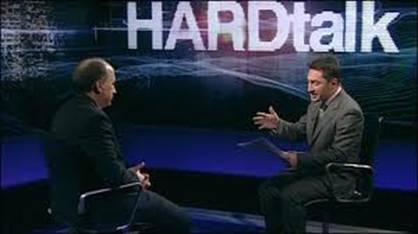
Lithuania has become one of the biggest victims of the global economic crisis. The economy has shrunk dramatically and the hangover from Soviet rule continues to cast a long shadow over domestic politics and foreign affairs. Still, in a recent Hard Talk session with the BBC, Prime Minister Andrius Kubilius insisted that the country's economy is stabilising.
Most analyst believe that, in 2011, Lithuania’s GDP growth will be about 3 percent; exports will rise approximately 11 percent, while the average salary will go up 3 percent. The high unemployment rate will, however, remain one of the biggest problems. It will probably go down a bit, but it will remain high overall – about 16 percent. An unemployment decrease should be related to laying a general foundation for economic growth. It is very important not to adopt what at first sight seems attractive, but, at the end of the day could be situation-worsening decisions; this could be, for example, not to increase the minimum wage. The shadow economy will also remain a burning head ache for the government, and a very bright scenario for 2011 is therefore not likely.
Text: Torben Pedersen
Moderate optimism for 2011….,still a number of challenges to be addressed.
For the year 2011, she foresees record highs in Lithuanian exports, approximately 12 percent growth which, however, is a slower gain compared to last year. “Trends in exports will remain positive, as all our major export markets - Poland, Latvia, Russia and the Commonwealth of Independent States (CIS) - will grow faster this year than in 2010. Besides, the upcoming European Basketball Championship will prompt a positive impulse to service exports as well,” the Swedbank chief analyst maintained.
However, according to her, the labor market will recover slowly, both in creating new jobs and in salary growth. “In the new year, we predict job creation for 40,000 people, mostly in the private sector, which will decrease the current unemployment rate by 2 percent, to 15.5 percent. However, a slow salary increase, considering the speed of inflation and, consequently, price rises, will not be tangible,” Vrubliauskiene emphasized to The Baltic Times. She sets the inflation rate at 2 percent in 2011. As for household income this year, she sees it similar to the previous year’s level. “However, consumption recovery will be further induced by a slower savings rate due to the reduced savings interest rates. Lithuanian households have saved nearly 2 billion litas (579.7 million euros) over the two year crisis. Since unemployment risk is lessening and consumer trust is growing, household consumption will grow approximately 1 percent, particularly for non-primary necessity articles,” Vrubliauskiene pointed out.
In the short- and medium-term, she foresees the biggest domestic risk being related to the condition of the state’s finances and slowly proceeding structural reforms. “Though this year the budget deficit can be decreased up to 6 percent of GDP, it will surpass the 3 percent GDP level set by the Maastricht criteria and will be higher than the needed balanced budget level,” Vrubliauskiene said.
“Let’s do what we have done best for centuries – agricultural products”
Bronius Markauskas, chairman of Lithuania’s Chamber of Agriculture, is convinced that Lithuania ought to pursue what it has done best for centuries – grow agricultural products, produce food products and export them. “In 20 years, EU and world experts predict that food products, due to several important reasons, such as climate change, world population increase, economic growth and higher food product demand in Asia and Africa, will become strategic commodities. Will Lithuania take advantage of the developments and increase its agriculture product output? The positive response lies upon several conditions – whether Lithuania will have sufficiently high and stable procurement prices of agriculture production, proper general EU agriculture policies after the financial period is over in 2013, and the bureaucratic load decreasing for farmers,” Markauskas said.
He admits that agriculture production prices are very hard to predict. “In recent years, food provisions were getting more expensive in world markets. I reckon this year will be more stable in many senses. However, in the long term, food provision demand and, therefore, their prices should be increasing. As far as post-2013 European agriculture is concerned, we still have many unanswered questions. The European Commission has not made up its mind as to agricultural financing after 2013. Likely, we will find out about its decisions in the midst of next year. They will have a long-lasting effect not only for Lithuanian farmers, but for all EU farmers as well,” Markauskas asserted.
Despite brighter general assessments for Lithuania’s economy, “its very bright scenario for 2011 is unlikely.”
Vytautas Zukauskas, expert at the Lithuanian Free Market Institute (LFMI), says that, despite brighter general assessments for Lithuania’s economy, “its very bright scenario for 2011 is unlikely.” According to LFMI, in 2011, GDP growth will be about 3 percent; exports will rise approximately 11 percent, while the average salary will go up 3 percent. LFMI’s expert asserts the high unemployment rate will be one of the biggest problems for Lithuania this year. “It will go down a bit, but it will remain high overall – about 16 percent. An unemployment decrease should be related to laying a general foundation for economic growth. It is very important not to adopt what at first sight seems attractive, but, at the end of the day could be situation-worsening decisions; this could be, for example, not to increase the minimum wage,” Zukauskas said.
He emphasizes that the shadow economy will remain a burning problem in 2011. “Its share in the gross domestic product will reach approximately 27 percent this year. At least 36 percent of all households will do a part of their work activity in the shadows. Thus, the shadow economy scenery will not be much different from what we saw in 2010. We have to admit that the shadow economy, for a good many people, remains as an alternative to poverty and unemployment. Due to its vast spread during the crisis years, Lithuania has avoided major social unrest. It is the state’s concern to pull its inhabitants out from the shadows,” Zukauskas contended.
He claims that export growth will be one of the very few buoyant indicators in the Lithuanian economy in 2011. However, he cautions, it will affect positively only some enterprises. “It makes sense to take advantage of export possibilities; however, it cannot be a foundation for Lithuania’s economic recovery and growth,” the expert warned.
Zukauskas maintains that the state sector’s deficit and debt will be a burdensome issue in 2011. “The downturn has exposed a lack of flexibility in the public sector. It is estimated that in 2011, the state’s debt will make up 40 percent of GDP, while in 2008 it comprised only 16 percent. In comparison with other EU states, Lithuania’s debt is not very high. However, we should have in mind that, even during the double-digit GDP growth years during the economic boom, Lithuania was not capable of decreasing its debt. Since 1998 it has been constantly growing in Lithuania. Thus, it purports that Lithuanian officials are not good at managing it. Likely, with the recovery spreading, politicians may not be willing to handle it in 2011 either,” Zukauskas asserted.
Asked about euro introduction prospects, he answered, “The euro future will depend on how quick most economic hardship-stricken countries will be able to recover and see their economies growing.”
“2011 will be a bit better than 2010”
Gitanas Nauseda, advisor to SEB Bank’s president, and a notable financial analyst in the country, predicts that 2011 will be a bit better than the last year. However, he cautions, not to be excessive with expectations. “For 2010, we expected faster GDP growth, to be exact, about 4 percent, and domestic market recovery; however, expectations have failed. Domestic consumption was impeded not only by fundamental reasons, such as a high unemployment rate and salary decrease, but also by the pessimistic expectations that reflected the population’s tensions and uncertainty about the future. However, in 2011, the situation should improve, but slowly,” Nauseda said.
Asked about loan market prospects, he replied, “Crediting directly depends on client solvency.” The analyst contends that if the circle of clients, being able and willing to use financial services, does not expand considerably this year, it will be difficult for banks to enliven the market. “In the last months of 2010, there were observed tentative loan portfolio growth trends, which have become a good introduction to 2011. I think that credit resources should not get very expensive this year, as the European Central Bank will try not to stifle the frail economic recovery and will go ahead with a ‘cheap money’ policy. However, in the second half of 2011, EURIBOR interest rates will likely go up, counting in a possible base interest rate increase in 2012,” Nauseda predicted.
As for euro introduction in Lithuania, the analyst anticipates “it can be introduced in 2014 at best.” He warns that “In order to achieve this, it is necessary to decrease the fiscal deficit to 3 percent of GDP in 2012 and keep up a modest inflation, not allowing it to exceed that which is set by the Maastricht criteria. Considering that elections to the Seimas will take place in 2012, it will not be simple to follow strict fiscal discipline, as pressure for the ruling coalition to implement its given social promises, such as pension restoration to the pre-crisis level, will only increase.” Nauseda expects that exports in 2011 will keep growing, particularly to eastern markets and neighboring countries Latvia and Poland. However, he warns, it is important not to give up the positions that have been seized in Western markets in 2010.
“SEB Bank’s analysts see 2011 in a considerably brighter light than 2010”
Julita Varanauskiene, a SEB Bank analyst, says that households’ financial life started to return to normal in 2010. “Starting with the second half of 2010, there appeared more positive news for households – very slowly, but assuredly salaries began to grow, new jobs numbers started to increase, fractionally. Public polls also speak about lower pessimism,” Varanauskiene said. She says that SEB Bank’s analysts see this year in a considerably brighter light than last year. “According to the analysts, in 2011, unemployment will fall from 17.5 percent to 16 percent, while the average salary should increase by 3.5 percent. Therefore, household income will rise slowly and, likely, it will be easier to find a job this year. Increasing prices will diminish the positive effect of a larger income, though. Our analysts envisage price increases in the commodity and service basket by 2 percent in 2011. Due to a higher excise tax for fuel, energy resources may get more expensive in 2011. It also can be a result of increasing oil and gas prices in international markets. Therefore, prices of some commodities, including food products, may go up,” Varanauskiene guesses.
Viewing the data of 2010, she emphasizes that in some market sectors, for example, in the pharmaceutical industry, salaries have already increased by 14 percent, while in the computer, electronic and optics industries average pay has gone up by 12 percent. “Certainly, the crisis has been over in some market sectors. The trend will likely prevail in the new year,” Varanauskiene expected.
“Economic trends in Western and Eastern markets being served by Lithuanian haulers are favorable”
Algimantas Kondrusevicius, president of Lithuania’s National Road Carriers’ Association, asserts that economic trends in Western and Eastern markets being served by Lithuanian haulers are favorable. “However, our carriers frequently encounter with neighboring countries administrative hurdles. With the newly adopted order, load declaration procedures should be shortened to 5-10 minutes, facilitating our carriers’ work. However, in the domestic haulage market, I do not see much optimism. Due to the increased excise tax for diesel, load haulage and passenger transport will become more expensive for all. Therefore, other merchandise and services will jump in price as well in 2011,” Kondrusevicius predicts.
Public opinion polls show returning optimism to Lithuanian households, which can probably be considered as the most anticipated sign for a better year and life.
- Bookmark :
- Digg
- del.icio.us
- Stumbleupon
- Redit it

Inadequate financial markets
- Posted by - (24) Comment
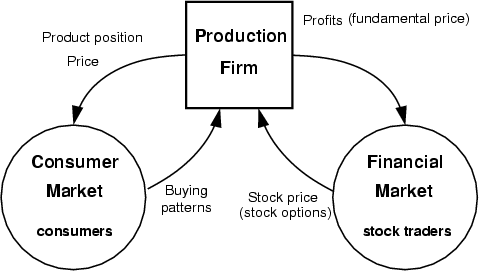
The Integrated Markets Model.
Consumers purchase products, and financial traders trade shares. Production firms link the consumer and financial markets, by selling products to consumers and offering their shares in the financial market.
Despite some progress in developing the domestic financial markets over the last two decades, the overall liquidity of the markets remain inadequate for any large scale development in Lithuania. At the same time, the corporate debt market remains negligible. Overall, among the potential factors hindering development of the securities markets in Lithuania are the small size of the domestic market, lack of institutional investors (pension funds, mutual funds etc.), prohibition of issuing debt securities denominated in foreign currencies domestically and a poor investment culture. For the above reasons the Lithuanian financial markets provide only limited resources for the private sector. For example, the value of private...
- Bookmark :
- Digg
- del.icio.us
- Stumbleupon
- Redit it

You are in linen and amber land!
- Posted by - (2) Comment
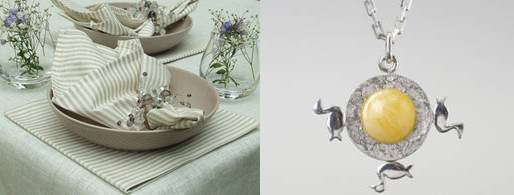
Traditional Lithuanian handicrafts, such as artistic linen, ceramic or amber articles, can make beautiful decorations for your home or great gifts. Many tend to think that amber and linen products are just souvenirs, but here in Lithuania you will find these two materials used also in very exclusive jewellery, fashionable outfits and much more. There are linen and amber shops at all tourist routes and shopping malls, but probably the best time for such shopping is in the beginning of March, when the traditional Kaziukas fair is held in Vilnius. The fair is also famous for its verbos traditional ornately beautiful Palm Sunday arrangements of dried plants.
- Bookmark :
- Digg
- del.icio.us
- Stumbleupon
- Redit it
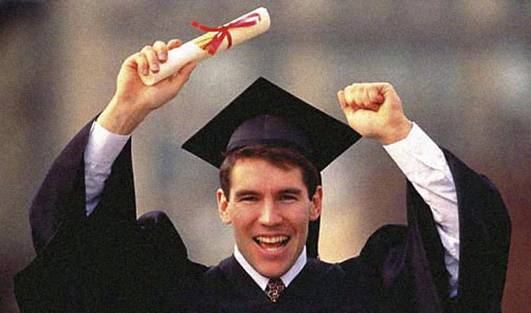
Many reforms are needed in Lithuanian higher education. Changes in the elementary and secondary levels are not considered here. By and large, these sectors, though delinquent in teachers’ salaries and school infrastructure, do prepare students reasonably well for their futures with rigorous and disciplined instruction. The need for change is noted by visiting volunteer groups from the U. S. and Canada, working with Lithuania’s teachers on continuing education programs. Students who complete the elementary and secondary levels do well when studying abroad, but are short changed in their higher education. We propose urgent reforms and major changes to this postsecondary level. Reforms in higher education must give serious priority to four areas: adequate financial resources; curricular changes to create a better system for imparting knowledge; outreach, wider service areas and new learning centres; and productivity and excellence in creating and imparting new knowledge in school and on the job
Text: Olga Medvedeva
To write about the higher education reform in Lithuania… - why me?!
That was my first reaction to the request to look into how the higher education (HE) reform is going on and to write about it.
I have always tried to avoid giving opinion about something I don’t think I know well enough. Indeed, there are people who study all the figures and ratios about HE: numbers of students by age, by type of studies, by future qualification, the labour market supply & demand, investment and outcome (in whatever units of measurement), trends in demography and vectors of migration, intra- and extra- factors etc. They diagnose the state of things and recommend what is to be reformed, transformed or introduced…
On the second thought, isn’t education one of the areas we are all involved in? First as students, then as parents, then just as common people who do care what specialists treat them in hospitals, design houses, set prices or calculate taxes? And as citizens, who are concerned about lots of university graduates leaving Lithuania in search of a job elsewhere…
A few facts about the HE reform in Lithuania:
Lithuania has switched over to the European model of higher education that makes a clear distinction between university and non-university studies; it is divided into undergraduate, graduate and post graduate studies. The common time- and workload framework allows for a bigger mobility of students and comparability of degrees. At present there are 21 universities (state and private) and 27 colleges in Lithuania; the country is well above the EU average by the proportion of students per 1000 to the total population aged 20-29 ( LT- 73.21; EU-52,8). The changes in the legal status and governance of universities have granted rights to engage in business activities: purchase and sell property, set up companies, get loans. The most disputable innovations of the reform are changes in financing: the notorious “student basket”, which includes teachers’ salaries, costs of study materials and scholarships, has caused a real commotion in universities’ hunt for potential students with their full baskets. The more students are admitted, the more finance a university or college gets…
No reform would be true to its name if it were not challenged and questioned at each step. Almost 50 HE institutions in Lithuania - is it just enough or too many? In 2009-2010 45,6 % of the emigrants from Lithuania were of the age of 20-39, how many of them carried away their university diplomas and educated brains?
Tertiary education “…equally accessible to all, on the basis of capacity,…” –shouldn’t there be more weight given to measuring or assessing capacity? Otherwise, we face an eternal clash between quantity and quality. With no intent to hurt anyone’s feeling, let me remind you Ezra Pound’s words about education:
“Real education must ultimately be limited to men who insist on knowing–the rest is mere sheep-herding”.
When going to universities in other countries rather than in Lithuania, most young people justify their choice by the reasonable prices for a better quality there… Quality is a complex concept; it is probably more complicated to define and assess “quality” in education than in the production of tangible things. But one cannot start wondering about quality when you see that financing per student in Lithuania is approximately 2 times less than the EU average, not to speak about Sweden, Finland or Denmark. And why do many university lecturers feel awkward when their peers from Belgium or Ireland talk about salaries? Is it because they are paid adequately for their lower-quality work?
My reflections on the changes in HE in Lithuania are fragmentary and subjective. Though formally “a teacher “, I believe in Shaw’s interpretation of teaching: “I am ….only a fellow traveler of whom you asked the way. I pointed ahead – ahead of myself as well as of you”.
- Bookmark :
- Digg
- del.icio.us
- Stumbleupon
- Redit it
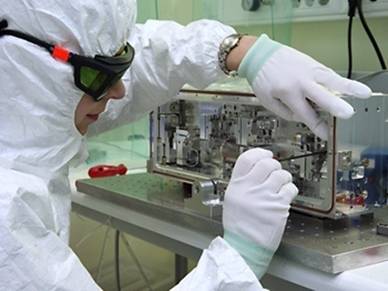
The French daily “Le Monde” has recently published an article about Lithuania’s world-leading laser manufacturers. According to “Le Monde”, Lithuania is the biggest exporter of femtosecond lasers in the world. The Lithuanian laser technologies producer UAB “Šviesos konversija” only holds 80% of the global market of femtosecond lasers. A country of 3.5 million people, Lithuania, has about 15 laser producers, employing about 300 laser specialists, half of which are engineers and doctors of sciences. Lithuania’s laser sector grows about 15-20 % annually, which is twice faster than the whole economy of the country. The Lithuanian laser production is demanded by the best scientific laboratories in Europe and the US.
Read more...- Bookmark :
- Digg
- del.icio.us
- Stumbleupon
- Redit it
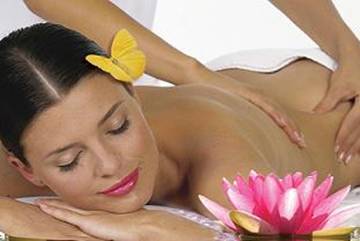
The most famous Lithuanian SPA town – Druskininkai in Southern Lithuania, famous for its mineral water and remarkably nice environs, is only one of several SPA spots in this country! We invite you to indulge yourself in an outstanding exotic SPA treatments and dive into the sea of SPA pleasures. Massage masters will reveal you the ancient secrets of relaxation, while aromatic bathtubs and various baths will help you to regain your strengths after a hard working day. SPA treatments revive your skin, pamper your body and calm your spirit.
Druskininkai
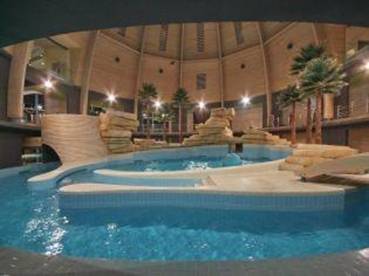
Druskininkai SPA
Druskininkai is a year-round international resort offering mineral bath, mud and climate therapies.
Mineral waters of different mineralization, similar to the well-known European mineral waters, and cure mud are found in the resort. Nature also endowed Druskininkai with mild climate, many lakes and beautiful parks and groves, where the guests can find their peace. Since 1794 the small town that has rapidly grown into an attractive tourist center offering all the benefits of a carefree and safe vacation.
Druskininkai offers a wide variety of health treatment services: herbal, bubble, honey and other baths, massages, krio- and magnet therapy, various health care, beauty and weight loss packages, etc.
Here are several worth-seeing sights: soviet sculptures museum “Gruto parkas”, woodcarvers’ parks, etc. Visit one of the largest Aqua-parks in Europe and 70-level adventure park ONE.
Birštonas
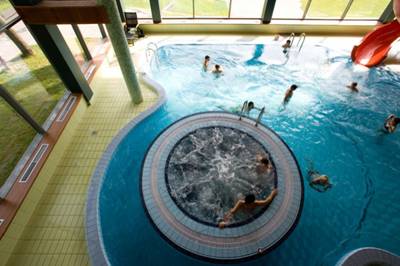
Tulpė Medical SPA in Birstonas
The resort of Birstonas was founded in 1846. At the turn of the 19th-20th centuries, the first patients not only from Lithuania but also from the major cities of Russia and Poland used to come to the sanatoriums that applied the mineral water and curative mud procedures. Birstonas has two perfect specialized rehabilitation sanatoriums for treatment and recreation that provide treatment for various illnesses by applying the latest methods as well mineral water and curative mud, where one can recover from the mental or physical fatigue as well. Another factor, which significantly attributes to the treatment quality and health recovery in Birstonas, is the air of this resort, surrounded by forests and the loops of the Nemunas river, which is especially mild and saturated with phytoncides and light negative ions having the effect of a huge inhalator on a human body.
The resort boasts beautiful environment: houses scattered among trees, elegant villas constructed in late 19th-20th centuries, the neo-Gothic church with its tower rising towards the sky, the buvette of mineral water, the monument to Vytautas the Great, the Hill of Songs, and artificial lakes. The resort town is surrounded by the scenery environs approached by a great many special roads and paths for pedestrians and cyclists, riders and horse-drawn carriages. The lovers of water entertainments are offered to rent a canoe at the Sport Centre and try the bends of the Nemunas. Impressive panoramas of nature open from the high banks of the Nemunas and hill-forts. The Bird Watching Site is established in the area of the Nemunas islands. But you can enjoy the most beautiful loops of the Nemunas only from an air balloon or a plane taking off from Pociūnai Airport. Birstonas is developing into a winter resort as well. The downhill skiing track is equipped here. One can also go skiing as well as ride on horse-driven sleigh through snow-covered forests.
The resort often hosts concerts, poetry evenings and sport events. Birstonas is a perfect place for conferences and seminars where the fatigue of intensive activities will be quickly removed with the help of relaxing procedures or spending free time in harmonious and pure nature. The biggest Lithuanian river, the Nemunas, which wings spectacularly in the middle of the country as it flows towards the sea, has formed three loops. The structure of the landscape of this region is one of the most peculiar in Lithuania. Birstonas, one of the most beautiful resorts of Lithuania, is situated in the south of the country.It has been famous for its curative waters, sanatoria and beautiful nature since the olden times. The Nemunas River surrounds the resort on all sides and forms a unique loop there.
- Bookmark :
- Digg
- del.icio.us
- Stumbleupon
- Redit it
- Posted by - (1) Comment
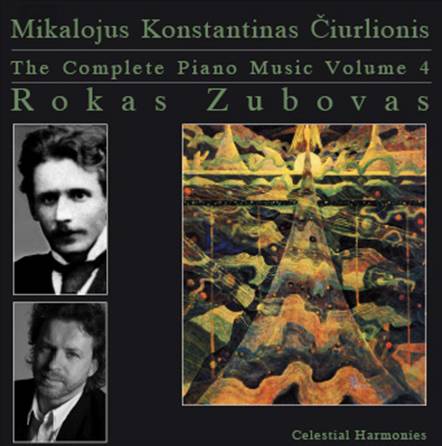
M. K. Čiurlionis great grandson, Rokas Zubovas:
Music of Čiurlionis makes you grow
Text: Indre Lauciute
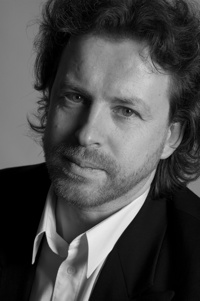
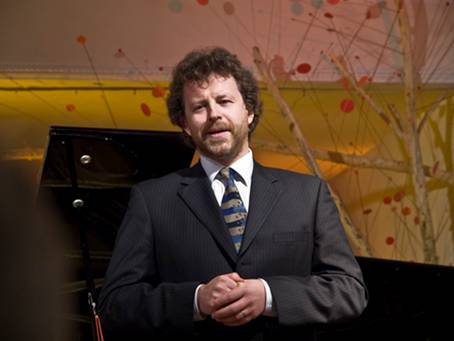
Rokas Zubovas. A world famous pianist.
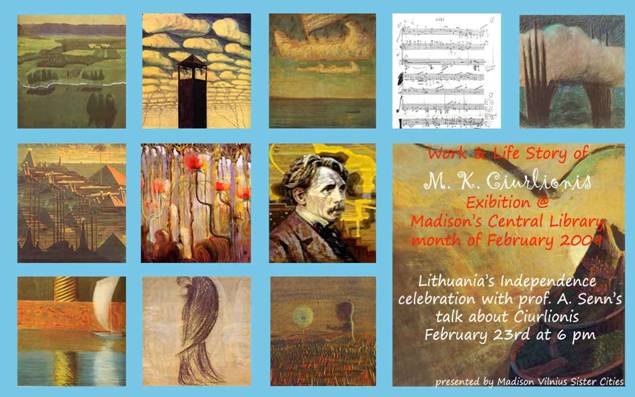
2011 is a special year with regards to the famous Lithuanian national composer, artist and cultural activist Mikalojus Konstantinas Čiurlionis. He died exactly 100 years ago. In April.
Naturally, this year is extraordinary special to his great-grandson, the world famous Lithuanian piano player, Rokas Zubovas.
We met Rokas, and simply asked him: Why? What is so catchy and special about the music of your great grandfather that you can’t tear yourself off from spending almost every day with him and his art, as well as the memory of him, continuously studying and playing his music?
Rokas Zubovas;
“Last year I spent much more time with M.K. Ciurlionis’ music than ever before. All these tasks regarding Ciurlionis music I used to do before fade compared to the tasks I accomplished in 2010. In order to record seven hours of live music, one has to spend 8-9 hours every day continuously playing his notes. Of course, going so deep into his music I’ve discovered new experiences and grasped fresh ideas. Just imagine you’re holding the notes and feeling them not just intellectually, theoretically, but also physically at the same time. Such immersion into his music gave me something that I can’t even describe and express in words yet, but the thing I’m sure about is that I’ve changed and I am different now.”
“Last year was extraordinary because of trying to concentrate on one subject. The last time I had such an experience was 20 years ago, when I was studying in the United States; then I had to choose and determine my priorities. At that time I experienced that when you concentrate on the most important things in your life, you realize you’ve been surrounded by so many worthless things, although they seemed to be so important and amusing. And then you get surprised - you just don’t miss them at all.”
“I could describe the year 2010 using one phrase I heard from a priest in a church a few years ago: “Christmas comes to everyone in a very different time and separate.” This means, that the miracle of Christmas is very autonomic and personal. The last year I could call as my time for Christmas. I understood and discovered many things that I couldn’t before. By living with Ciurlionis music and playing his notes I achieved a better understanding of why did he write the music the way he did. When I hold the notes of such a composer, the feeling of the music is somehow more sensitive.”
I think one could be jealous of such a Christmas. I didn’t find my Christmas yet. It seems that last year was really remarkable for you. What other discoveries did you make in 2010?
“One of the precious and important things that I found for myself is the polyphonic music of Ciurlionis. It explains his late music really well or reveals why and what he was seeking in his studies.”
Another area that I didn’t pay enough of attention to - all his study is about the grey hour. I think it’s a subject that most of us never think about or at least didn’t ever before. One hundred years ago when there was no electricity yet, people used to outlive the dusk hour specifically. I mean the time when there’s no daylight anymore, but it’s still not dark enough to light oil lamps. That hour was perceived as the time for concentration, visions, recollections, dreams and stories. This period of the time is special, because you can’t trust your eyes - you can’t see the real objects anymore, just the shapes and shadows. Maybe that’s the source and the reason, why the reincarnation theme is so strong in the music and paintings of Ciurlionis. Those shapes just disappear in his music.”
“In addition, one of the most important goals that I achieved last year is that I’ve already launched a website about Ciurlionis. I already received some letters from the Netherlands, England and Japan, concerning the same question: where to get the notes of Ciurlionis? I’m delighted that there are more and more people who are searching for Ciurlionis and now they have this point where they can get it - the website”.
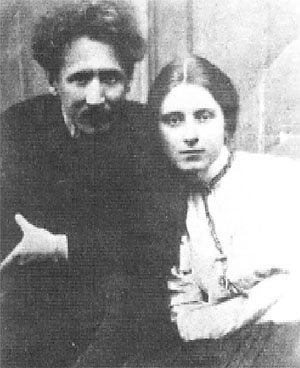
Čiurlionis and Sofija Kymantaitė-Čiurlionienė in 1908
Preparing for our interview I found out that Ciurlionis is popular even on social networking pages, such as facebook. In specialized pages for classical music and forums, people are discussing about his music and asking each other “who is he?”
“One year ago I had a dream. I want, that one day a man would wake up in Kenya and find out that 2011 is 100th anniversary of the death of M.K.Ciurlionis; one could google about it easily and find representative information concerning all one’s questions on the website I’ve launched. I’ve experienced that it is possible to find some letters or information about paintings of Ciurlionis in libraries and museums, but sadly not the music. It seems that music is such a peculiar area which exists only when it is being played.”
“Besides, I was shocked. Ciurlionis is such a big figure for all our history of music and has been dead for one hundred year already, but we still haven’t recorded all his music. That was also one of the reasons why I decided to take this big mission - to record all his notes. Everything is already done, and my goal is to send two DVD copies to city libraries, gymnasiums, music schools and schools of higher education.”
I’ve heard that the state of Lithuania doesn’t support your project the way it should. Does it mean that your work is considered to be as an underground activity?
“Recording Ciurlionis’ music is a must do thing. I remember the famous phrase of John F. Kennedy: “Don’t ask what your country can do for you. Ask instead what you can do for your country.” I like this phrase, but I still see one objection in it. It’s implying that a man has to do something for his state. I think that a state, Lithuania, is what we are. I am of the same importance as a prime minister of Lithuania, or some other famous and important politician. Why should I let, that the face of Lithuania would be built just by them? I am equal with the minister or any other Lithuanian you could meet on the street. Lithuania is not just somebody alone, it’s all the people. That’s why I don’t consider that the things I do are just for Lithuania. I think that Lithuania is doing this.”
“Despite daily topics about the lack of money, I think that every project could be started with saying: “There’s no money”. If we always give everything to the hands of money, then we just kill a human in ourselves. We give up ourselves to money because we think it is ruling everything. It doesn’t. It’s just us. There are so many people that live without being controlled by money. Let’s follow them.”
This year is special. What are the special events that will make people be interested in Ciurlionis?
“There are many events planned. It is really sad that the national program of Ciurlionis is structured not in the way I would be satisfied – money is given to the more bureaucratic things, but anyway, that’s the way it is.”
“Art is alive just when it is relevant. It has to influence people - otherwise it doesn’t exist. I’m very happy, that in Lombardia, in Italy there is an exhibition of Ciurlionis displayed at the moment. And approximately 10,000 children will have the possibility to participate in the project called “Ciurlioniada”. That’s a big investment in the future because a lot of children will know about Ciurlionis. That is informal learning and it doesn’t matter if a kid won’t remember the name of Lithuanian artists anymore but still, he would already have been trying to copy an angel from his paintings or a zodiac sign. They will have some understanding. That’s impressive. I would be very happy if Lithuanian children would have such a possibility - to touch the sense of Ciurlionis art.”
“Nevertheless, I’m very happy, because this year there will be two different exhibitions of Ciurlionis displayed in Vilnius - one in spring, and the other one in autumn. The first one will be devoted for sensational experiencing of Ciurlionis music and the second one - for musicology subjects. These conferences are going to last four days and attract many guests from all over the world.”
“One of the biggest accents I’m excited about is the conference in Finland in winter. This conference is organized by the Finnish Musician’s Union and is the biggest annual event for all the Finnish musicologists attending the symposium. One evening is devoted to Ciurlionis, and I think that’s the best way to spread the information that we could dream about. Imagine that suddenly the whole Finnish musicology community will be touched with a tiny colour of Ciurlionis and people will become aware that he exists at all. They are precisely the people who can carry the message about his music. But why don’t we do this? Why don’t we look for the ways the message about Ciurlionis could spread as a water-colour painting.”
Are you the only pioneer, initiator doing something about the works of Ciurlionis?
“There are more people doing something about it. Lately I’ve been talking to the students of the music academy, who want to make a music festival in Druskininkai this summer. There would be three colossal scenes with different kinds of music, such as jazz, classics and alternative music. There would also be an area for tents and paintings of Ciurlionis would be exhibited under the night sky by using lasers and there would be a direct broadcast on facebook and youtube. These are a few of the many amazing youthful ideas that could attract other young people to the knowledge of Ciurlionis. I hope it will work. It would be a great accent on Ciurlionis for this year.”
“There will be more and more people doing something related to Ciurlionis. I have no doubt because there are people who love Ciurlionis music. We just need ideas (not money) to start doing something. Nowadays we understand art differently. When we adapt Ciurlionis music to the changing world, a man can hear that the melodies are acceptable and touching. That’s why they adapt so easily. As I’ve mentioned already, the art of Ciurlionis is catchy. Usually, if someone hears and experiences the art of Ciurlionis, he stays connected with it. For this reason the sound of Ciurlionis spreads in the world. It seems, that there’s love shining from the inside of his art, and it spreads.”
How long have you lived with the music of Ciurlionis?
“It all started in my childhood, of course. When I was accepted to the music school of “Naujalis” in Kaunas, it was somehow always natural to think, that if there’s a need to play Ciurlionis, me as a great-grandson, would the best fit. So I got used to being related with the name of Ciurlionis since my primary classes. I don’t even remember what I used to play but obviously, it was already Ciurlionis. As I remember, even the first big concerts of mine were also shaped by Ciurlionis music. To sum up, it would be almost 35 years.”
“Almost all the time I used to have an internal prejudice that to some extent, I am as an advocate of him. I used to feel that everyone expects me to be the one who has to carry the message about Ciurlionis. That is my mission. I used to ignore it.”
“But once, when I was playing in United States, a perception came. I understood, that being a part of Ciurlionis, I should accept it as a blessing and it’s a gift to have the possibility to touch his notes and share them with others. I realized that his music is so great that I could exist or not but still his music would exist hundreds of years after my death. And if I touch it and spread it, it’s just a blessing for me and I should just embrace and appreciate it. I take it as a present to myself and every time I’m affected by his music I find something special for myself to grow.”
“True art can be the one that doesn’t have neither the bottom nor the top. If the painting is good, then every time you look at it you can find something different. It’s the same with a good movie or a book. But nowadays we have this fast food industry. If you ate a hamburger, you know that you can get the same later. There’s just massive production which is the same. Ciurlionis was living in that time and culture that is inexhaustible.”
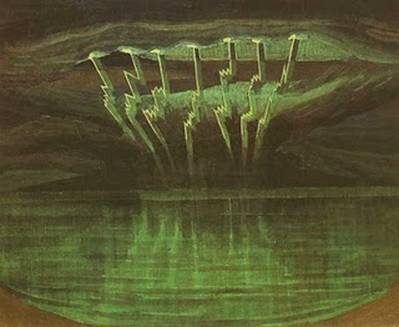
M.K. Ciurlionis - Lightning Flashes
Could you be called as a missioner who’s like Prometheus carrying the torch?
“I don’t consider myself to be like this. Some people say that if I’ve recorded Ciurlionis music, then there’s no use to do that anymore for at least a few decades. No. The more interpretations of Ciurlionis, the better to the music. The music of Beethoven exists not because everyone plays it in the same manner but because of different variations and interpretations. When everyone plays it in different ways, then appears a line that combines everything into one. Tradition doesn’t occur out of one thing, tradition is born out of what is different. Among these different options you can find one common denominator that unites them all. There always has to be a dominator. To copy and to be the same is just boring and I don’t see any sense in it. That’s why I encourage to play Ciurlionis music and to interpret it in freestyle. I’m not perfect. No one is. I just do it the way I can.”
“Let’s allow Ciurlionis to be played in the manner of jazz, pop way of music or to be transformed into something different. Why not? When people will see him in this manner then they will try to find who he really is and will come to his music. And these people will be the ones who makes him famous.”
“Everyone has this basic thought that Ciurlionis is something “good”. Heritage, in other words. It’s kind of a basic thinking that you’ve learned at school and don’t analyze anymore. When we place something into a box then it’s already conserved and no one is touching that unless to clean the dust. The thing is that music is alive just when you hear it, not when it’s placed on some shelf. No one is interested in old authentic music from old, let’s say 1936, because for us it’s too boring. We have to transcribe it and adapt it the way we could understand it and to make it relevant. The same with Ciurlionis. We have to clean the dust and take care about his music but at the same time adapt it to our ears.”
How big is the difference between understanding the music of Ciurlionis and the nowadays lives we’re living?
“Ciurlionis was living in at time when art had the function that’s already forgotten. The art was as a medium among the human and all these mysterious unintelligible phenomenons - the nature and the human. I’m absolutely convinced that art appeared as an explanation of the things that we can’t understand by mind. When we don’t find the way how to make an explanation for anything, then we create our own explanation system through the paintings, music or mythology. It explains to us how we should live and why the things are the way they are. We don’t understand but we don’t need to, we feel. It’s the same about the music. The role of it is to explain our feelings. When you dive in and loose yourself in music then you feel how the world of your emotions becomes pure. But why? Because of the harmony you get. We don’t think about our world of emotions too much but with music we’re able to harmonize it end then continue living. When Ciurlionis was still alive, this role of the music was still important and the artists used to create trying to create a model to explain the world.”
What has changed nowadays?
“Well, partially I think it’s our fault. We don’t believe in such anymore.”
Why so?
“I think today’s artists do not believe they are creating some kind of explanation of the world or creating some model for it. Still there’re many artists who believe in it but most of the artists don’t even come to such idea.”
So why do they create then?
“The phenomenon of 20th century is originality. Ancient art existed through copying. The position of the artist in the 19th century was like this: if you want to become a painter, first year don’t use paper, viper or anything because anyway, you won’t create anything valuable. It would be just a waist of expensive material. Just refine your arm. You do this, then find out the artist you admire the most and start copying him. Do this till you’re able to copy him perfectly. When you already reach this level, when you’ll be able to make the ideal copy, then you’ll understand what is wrong in his painting. You’ll experience who you are. When you’ll see this disagreement among you and your beloved artist, you’ll find out that this disagreement is you.”
„Nowadays this way of thinking has lost its sense. Quite often I see so many artists that try to make an impression by any means, anyhow. The goal is to make an impression to as many people as possible and after on everyone forgets it. No one cares about it anymore but does this impression explain anything and is there any deeper meaning? There’s nothing. Just a façade”.
“Let’s remember such a phenomenon as cinema. Almost 30 years ago such directors as I.Bergman, R.Fellini or W.Allen used to figure on the covers of magazines and newspapers. They were representing the time, it was pulsing. Nowadays the cinema revolves around the question of how much money did this or that movie earn and for sure you always have suggestions, which is the most expensive and that’s why it’s worth seeing. What does it have to deal with the harmony or the art I’m talking about? Nothing. Everything is just a façade.”
“When we pass from sensuous things to sensual things, then the art stops it’s function. We want to sell ourselves for a high price but you can just see that people come to the concerts with empty eyes and leave like this. Just made one more tic in their “to do list”. “
“We could say that’s because of the market. That’s the reason why we act like this. But no, still every person wares its soul and cares around his sacred mark and where to fulfill it. And finds it. Art is used to be considered as a source of satiation. But art is not like this anymore. People discover other sources for that: a small kitty, taking care of the children, flowers, practicing yoga. There happens that somehow these small things appear that satiates a man and there’s always be the desire of fullness. As long as we are humans, the desire will last.”
- Bookmark :
- Digg
- del.icio.us
- Stumbleupon
- Redit it
The unorthodox music professor
- Posted by - (0) Comment
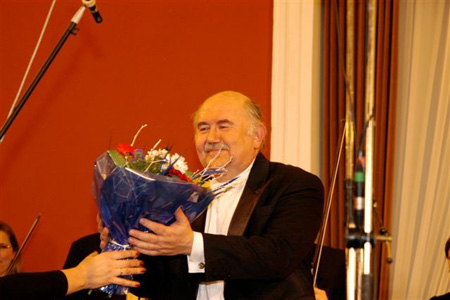
Text: Aage Myhre
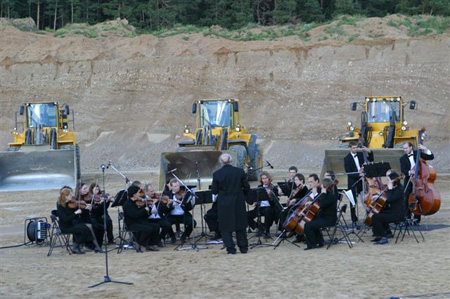
Here he is, the professor who is conducting music and music festivals more energetically than anybody else, and who treats the very term music in an anything but traditional manner, for example when he conducts an acrobatic plane, doing its loops according to Bach’s “Ave Maria”, or when he conducts a complete “orchestra” of bulldozers and excavators.
- Bulldozer conduction is very sexual, says the professor, gesticulating and emphasizing the importance of his words, in his so typical manner - full of humor, intensity and warm enthusiasm.
Donatas Katkus was born in Kaunas 68 years ago, where his mother, an amateur actress, raised him alone. The professor was the outcome of a hectic love affair, and he never met his own father.
-But, says the professor, I do not complain, because I am a very young and very nice man, and I am just happy my mother did not take the veil in a Belgian nunnery, as she planned to do before the war started.
|
“The cultural life in Vilnius is in fact so attractive and extensive that there is no need to go anywhere else. You are never alone in Vilnius!” |
Life is easy
Professor Katkus is widely known for his excellent mood. The laughter and the good story is never far away, always told with great immersion and sometimes also with aloud gesticulation in order to make himself fully understood, like when he told me about the concert, where he conducted a small plane to make its loops to the music of “Ave Maria”.
Everybody in the restaurant stopped talking when the professor started his demonstration of how this event had been performed, using his arms to follow the loops, and his voice to indicate how the plane engine had been increasing its number of revolutions on its way up to highest octaves, into a decrescendo of sound and movement when the plane turned its nose down again.
- I am an actor by nature, and I do not take life too seriously, says the professor.
Forest brothers
But life was not always easy for Donatas Katkus. He can still well remember the summer day in his mother’s native village in the year 1949, when KGB suddenly appeared with a young, white-shirted man they had arrested. After one hour they re-appeared, and then the young forest brother’s shirt was totally soaked with blood. They would put the dead body of forest brothers at show for two weeks in the center of the village square in order to observe the reactions of the people watching the gruesome show so they could find out the relatives of the diseased and to demonstrate how dangerous it was to fight for the freedom of our country, says the professor with a sad glance.
Family in Siberia
- Many from the family of my wife were deported to Vorkuta and the Siberian tundra, and I know stories of how they had to build their houses from frozen human bodies because no other building materials were available.
- But I know that they had their music, and I tend to think that the Lithuanian folk songs very much contributed to their survival, he tells, and the eyes of the professor start shining again.
Fear is terrible
- How was it to work during the Soviet period?
- Well, for people like me, working with culture, it was not too bad. But it was terrible always to feel fear, always having to look back over the shoulder in case somebody should be listening. Vilnius was a true province during those years, as everything international was supposed to take place in Moscow, and only at the end of the period it was possible to get impulses through Warsaw and later also directly from the West. My personal “breakthrough” came when I, as a young man, was chosen to participate in a competition in the Belgian city of Liege, where our Vilnius String Quartette won the first price.
One of the greatest achievements of Professor Katkus was to start and develop the Vilnius String Quartet, where he played his main instrument, the viola. – I have been playing in the quartet for 29 years, and it is still doing well today, so I am rather proud of that, he says.
St. Christopher
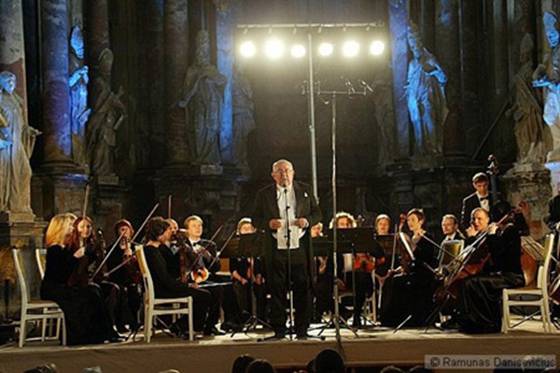
The St. Christopher has come to play the main role in the life of Professor Katkus, first when in 1994 he founded the St. Christopher Chamber Orchestra, and in 1995 when he started the now so famous St. Christopher Summer Festival, which also this year was very successfully concluded, with its 36 concerts in different Vilnius venues during the months of July and August.
The saint’s name derives from a 3rd century legend, and the name means “Christ-bearer”. St. Christopher is the patron Saint of Vilnius and is featured on the coat of arms of the city. Due to the old legend, St. Christopher has become the saint of people who carry certain loads on their shoulders. The name seems to fit for the professor…
Money is crazy
Professor Katkus admits that it has been a very hard job to collect all the money needed for his summer festival. – This year, for example, he says, when it was only one week till the opening, I was still lacking 70,000 litas.
- But you did not get a heart attach?
- Look, I get several heart attacks in every festival, but do the festivals become inferior because of this? It’s so crazy always to have to think about money, which in fact is SOOO small a part of reality, so I prefer to remain happy whatever happens!
Advice to foreigners
- What is your advice to foreigners living in or visiting Vilnius?
- My advice is to take advantage of the fantastic musical life we have here in this rather small city, including two symphony orchestras, two chamber orchestras, two string quartets and a Music Academy with concerts almost every day! Both our Opera and our National Philharmonic are of fantastic level, and there are also a number of good pop and jazz concerts around in town. The cultural life in Vilnius is in fact so attractive and extensive that there is no need to go anywhere else. You are never alone in Vilnius!
Especially when the St. Christopher Summer Festival is in full swing in July and August.
- Bookmark :
- Digg
- del.icio.us
- Stumbleupon
- Redit it
(Lithuanian Jews)
Well, if you didn’t, please see what Monika Bončkutė, a journalist at Lithuania’s leading newspaper, Lietuvos Rytas, wrote last year:

Monika Bončkutė
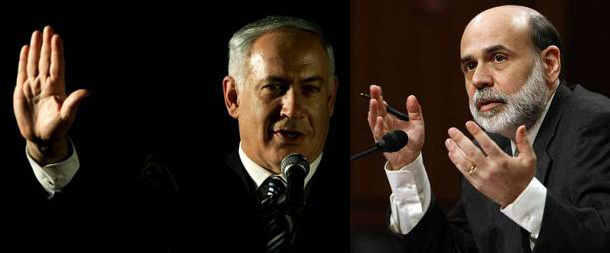
What do Ben Bernanke, the head of the Federal Reserve leading the United States to economic recovery; one of the most-famous American singers of all time, Bob Dylan; the rocker Pink; British comedian Sacha Baron Cohen and French philosopher Emmanuel Levinas all have in common?
All these people have roots in Lithuania. As do hundreds of thousands, or perhaps even millions, of Jews around the world, whose parents were driven from our country by the Tsar’s restrictions, fellow Lithuanians withdrawn into a closed farming culture and the mass murder organized by the Nazis in World War II.
What would Lithuania look like now as we enter the second decade of the 21st century, if almost all Lithuanian Jews had not been exterminated during the last century, and instead of 50 years of the artificial “friendship of nations” promulgated by the Soviets, our parents and grandparents had lived as true citizens of the free world?
What would the map of Lithuanian politics, economics, art and pop culture look like if Jews today comprised seven percent of the Lithuanian population as they did before World War II? Maybe we would have had, finally, a Nobel Prize winner, world-renowned actors and actresses and highly capable businesspeople and politicians.
Who knows, Sacha Baron Cohen might have made “Borat” in Lithuania, and Binyamin Netanyahu would now be prime minister of Lithuania, and would now be preparing a plan for the improvement of our country’s economic situation and solving complicated relations with Russia instead of tackling the problem of peace between Israelis and Palestinians.
Last year we marked Lithuania’s millennium, this year we will celebrate twenty years since the re-establishment of Lithuanian Independence. So far we have spent in total around 60 million litas for the government to create Lithuania’s image [improve and propagate country’s image abroad], but the only thing we are really known for is probably that two Lithuanians have made it on the United Kingdom’s most wanted list.
Perhaps now that the first decade of the 21st century has passed, a decade of terrorism, war and economic crisis Time magazine recently said was “sent from hell,” it would be a good time to learn from the mistakes of history and to start to build Lithuania’s image and civil society upon foundations of tolerance and inclusiveness?
I bet money that a video clip presenting Lithuania as the land of the parents and grandparents of world famous artists, scientists and politicians would be much more successful than some guy named Jonas making clown faces and pushing boring facts about Lithuania in the form of a deck of cards on the screen, telling the world how well Mazeikiu Oil is doing.
Of course, it needs to be told to a society dripping with anti-Semitism and intolerance in general that the most famous people from Lithuania and those who have achieved the most in the world are Jews. Jews who call themselves Litvaks coming from the territories of the former Grand Duchy of Lithuania who immigrated to Western Europe and the US did not spend their time idly.
Jascha Heifetz, the wunderkind born in Vilnius, used to play for the picky audience in Kaunas when he was seven, until he entered the US and became one of the most famous violinists in the world, ever.
The Howard brothers, fathers of Vaudeville and comedy in America, known as “The Three Stooges” also have Lithuanian roots. As does American composer Philip Glass. This grandchild of Lithuanian Jews is one of the most famous composers of the end of the 20th century and works with some of the most famous artists in the world, including Canadian singer and descendant of Lithuanian Jews Leonard Cohen.
You could continue this list indefinitely, because in every country in the West, wherever there is a moderate-sized Jewish community, you will find those who say they come from Lithuania.
Ben Bernanke, whose grandfather registered as Jonas Bernanke at the Immigration Registration Center at Ellis Island in New York, was Time magazine’s man of the year last year. A Time editorial claimed that if not for the chairman of the Federal Reserve, there would be a much worse economic situation in America and the world right now.
Incidentally, this was probably the first time the Lithuanian origin of the US “finance czar” was mentioned in the press. Only in the issue of Time dedicated to Bernanke was it noted that the grandparents of the head of the Federal Reserve Bank survived pogroms in Lithuania.
Before the anti-Semites open their filthy mouths, I would like to remind them that practically every head of a Hollywood studio, many actors and actresses and Nobel Prize winners of all fields are of Jewish origin. But they speak English, and are understood first as Americans. Does America benefit from this? Undoubtedly.
Try to picture the film industry without Harrison Ford, Gwyneth Partlow, Sarah Jessica Parker or Zack Efron.
What if Americans had slaughtered Jews as the Nazis did in our country with the help of Lithuanians? It’s possible that the US would even now not have one of its most influential cultural icons, Hollywood.
As if it weren’t enough that the contribution of Lithuanian Jews and their descendants was not appropriately recognized when Independence was restored [1990-1991], recently anti-Semitism has only been gaining ground in Lithuania.
In 1991, 10% of respondents said they didn’t view Jews favourably, i.e., four times less than now. According to results of a survey conducted by the Pew Research centre, in 2009 some 37 percent of Lithuanian residents said they viewed Jews negatively.
Viewed from outside, this appears totally incomprehensible and unjustified. Currently just under 3,500 Jews live in Lithuania, so the possibility that the 3.5 million people living in the country, mainly “pure” Lithuanians, are personally acquainted with even one Jewish family is quite small.
Our forefathers looked askew at Jews because they were farmers shut in to their own world, while many Jews were merchants. For them, Jews were probably the most foreign group of people. But at least they met Jews at the store or when Jews came calling with their goods at their farms.
But now, self-respecting citizens of the independent Lithuanian state that belongs to international organizations, many of whom have never during their life even had a beer with a Jew, never mind any deeper acquaintance, feel themselves entitled to judge negatively the entire Jewish people.
And now for a bit of statistics: 92% of Americans believe that diversity is good for society. Only 51% of Lithuanians share this view. This is also one of the lowest indicators for the value of diversity in Europe.
Will we be able, in 2010, to draw the interest of the world as a country of pure-blooded, blue-blooded Lithuanians, not just for surrendering our most creative and intelligent members during occupations, wars or through stupidity, but also for the stubborn persistence of our fear of diversity?
The translated version of this article was found at the web site www.HolocaustInTheBaltics.com,
and extracted from the page "BOLD CITIZENS SPEAK" www.holocaustinthebaltics.com/132423.html
This page features several Lithuanian citizens who have spoken up for the country's Jewish minority.
- Bookmark :
- Digg
- del.icio.us
- Stumbleupon
- Redit it
Lithuania in a world perspective
- Posted by - (0) Comment
A reader who responded to one of our VilNews issues last year argued that our publication had begun to go in the footsteps of local Lithuanian media in describing Lithuania in a rather negative way. I can well understand such a reaction, but it must also be said that unfortunately there has been a relatively large number of cases and circumstances in this country that deserve to be described in quite critical terms.
The bad
• The Lithuanian people, especially the weakest groups, are very hard hit by the economic crisis that continues to affect much of the world. The country's pensioners and other disadvantaged groups continue to live under very miserable conditions, and one must be allowed to make critical remarks on how this country's authorities have acted in the handling of the crisis. It seems to me that Lithuania's government has been more concerned with finding their own solutions, trying to ‘reinvent the wheel' rather than to learn from what other nations have made with regard to stimulus packages, lowered interest rates, etc. in these times of crisis, which in my view unnecessarily sets Lithuania several years back in time compared to many other countries. Fortunately, it appears that the immediate panic that came to characterize both the government and the banks in 2008-2010, seems to be slowly taken over by more mature attitudes now in 2011.
• There has still been far too little done for increased foreign investments in Lithuania, even if there were some good efforts made during 2010. Also the country's own industry has largely had to fend for themselves without the kind of facilitation and support one sees taking place in countries frequently compared with Lithuania.
• The country has been constantly ill-placed on Transparency International's statistics on corruption and transparency over many years, compared with other European countries, a situation which clearly has hindered economic growth and a better society for its own citizens. That corruption and bribery is still a part of the country's 'culture' in business and public institutions is nothing less than a big shame!
• The country's press must, unfortunately, largely be described as underdeveloped, with too much emphasis on celebrity and scandal reviews, and too little emphasis on constructive and investigative journalism that focuses on corruption and other undesirable conditions that continue to hold this country down. But many would also say that the media focus too much on the negative, too little on all the positive things going on here.
• A huge proportion of Lithuania's population has emigrated in recent years, including many of those with higher education, and one can rightly ask what is done to create new jobs and make necessary provisions to keep these groups remain in their home country.
• One of Lithuania's most prominent human resources is undoubtedly the country's large diasporas around the globe, groups of people and their descendants who left their mother country because of war, difficult economic conditions, political persecution, etc. These diaspora groups are in my view too little listened to or consulted from the Lithuanian authorities, which is very sad for a nation that so desperately needs all possible support and assistance from the hundreds of thousands who still have Lithuania in their hearts.
• When Lithuania's Constitutional Court in November 2006 ruled that the country's Law on Citizenship should be interpreted in disfavour of dual citizenship for large groups of Lithuanians and their descendants having citizenships in other countries, this became the start of a still heated debate around the world, as many within the country's numerous diaspora groups felt that their country of origin did not want them back or did not want to appreciate them as full Lithuanians. Many felt that the Court's decision in its interpretation of the law was more influenced by hidden motives and intentions rather than common sense. As previously stated, Lithuania desperately needs goodwill from all of its huge diasporas, and should be more eager than most other countries to allow dual citizenship. Lithuania’s welcome-back-door must be kept constantly open, never closed. We need everyone who is ready to contribute and make an effort for the mother country.
• The Lithuanian school system, especially at higher levels, is still dominated by Soviet-era thinking and there is good reason to ask what has been done the last 20 years to make it more conducive to more advanced and modern education, research and collaboration between education, businesses and government.
• Health Service has major and serious deficiencies, and also suffers under the fact that many of the nation's doctors and nurses have emigrated to Western countries.
• The focus on travel and tourism has largely been unsuccessful, partly because of the disproportionately high airport taxes (the good news is that this was finally understood and these taxes were drastically lowered in 2010), under-developed ports for ferries and other ships in the Baltic Sea city of Klaipeda, poorly developed infrastructure and promotional activities, as well as little support to hotels and other tourist industries.
• Vilnius as European Capital of Culture in 2009, must also be described as a flop due to the fact that the number of visitors to the city was sharply down instead of up as expected, not least because of the unstructured and poor planning, and as several flights were cancelled due to FlyLAL's bankruptcy, too high airport charges and poor decisions by authorities. The planned main symbol of the year of culture, the re-created royal palace at the cathedral in Vilnius that should have been completed in all its glory during the culture year, still stands there as a ghostlike skeleton surrounded by construction cranes.
• The statistics for suicide and violent crime in Lithuania is sad reading, and the country is among those on the very bottom of all these statistics compared to the rest of Europe.
• Lithuanians make up for a disproportionate share of criminal gangs in Western Europe and the United States, something which increasingly creates major problems for the police and the judiciary in many countries and also leads to frequent negative headlines about Lithuania in the Western media.
• Lithuania is still suffering under a lot of pending historic "dirt", for example with regard to its dealings with the Holocaust and the fact that relatively many Lithuanians collaborated with the Nazis in the extermination of the Jews here. There was also an extensive collaboration between the KGB and senior Lithuanian politicians through the Soviet time, and it is still missing a wide clarification of what actually took place in the post-war partisan war. Reconciliation must be the obvious target, but based on all the facts laid on the table in a most scientific, objective way so that whatever might have been of injustice or illegal actions come to light and can be reacted to. A firm and fair treatment of these historical conditions will provide Lithuania great honour both domestically and from the international community.
• Participation in voluntary organizations is record low in Lithuania compared to other EU countries, and it seems that people in this country has relatively little liking for and willingness to teamwork and to work jointly with others within their neighbourhoods, local communities or on a national level. Is it perhaps selfishness, greed and mistrust of other people behind this?
The good
But, then, there is so very much positive that can be said about this country that many of us have become so fond of during the years after the liberation from the Soviet Union in 1990/91.
Lithuania has in many areas undergone an admirable growth for several years until the economical crisis started, which I recently saw very nicely symbolized by the many great new buildings that have shot up in the outskirts of Vilnius since I first came the same road into town in November 1990 on tour from my native Norway. Vilnius was by then a city that I experienced as sad, dark and worn, but is now a modern metropolis on a European level. An important part of this picture is the incredibly beautiful Old Town in Vilnius, which has now been renovated and re-emerged as one of Europe's finest and most attractive tourist magnets.
Also, coastal areas have undergone phenomenal change for the better. A summer stroll through the newly renovated Palanga city or at Europe's largest sand dunes in Nida are good experiences fully on par with what one finds in other countries' tourism destinations. The spa-town Druskininkai in South Lithuania has similarly undergone great improvements, and stands today as one of Europe's most attractive for anyone who wants to 'recharge the batteries' and at the same time enjoy the truly wonderful sceneries of Lithuania’s forest and lake landscapes.
It pleases me very much every time I visit my in-laws lush garden outside Vilnius. The practice of garden-towns is still alive and well here, and represents, in my opinion some of the closest you can get to this country's soul. Worth a visit!
Let me also mention the fantastic cultural life that so much characterizes this country. Music festivals that mark the cities and towns every summer. Most professional theatre, ballet and singing performances that fill the country's many stages throughout the winter months. Art exhibitions of all kinds, and spontaneous performances of various theatre and music groups in courtyards, squares, settlements and villages across the country. One needs never get bored in Lithuania!
And, let me share with you what two late statistics say about Lithuania:
According to the “2010 Quality of Life Index” published by the “International Living” magazine http://www1.internationalliving.com/qofl2010/, Lithuania is among the 25 best countries in the world to live in, with better quality of life than most other countries of Central and Eastern Europe (even ahead of some West-European countries).
Vilnius can boast of the cleanest air in Europe according to the „Economist Intelligence Unit“ and „Siemens“ in a research study called “An Index of Green European Cities” in which 30 cities-capitals of Europe were participating. http://www.vilnius-tourism.lt/topic.php?tid=84&aid=2304
Conclusion
It is my hope that Lithuania's authorities, businesses and people in general seriously start to cope with the still remaining problems and negative conditions, so that we can put behind us the negative features and once again see and experience a Lithuania with similar positive guts, profile and multi-cultural constellations that this country was once so famous for.
The initial question was what we can do to improve Lithuania's reputation to the rest of our world.
Many would probably say that what we need is more positive attention in international media. And, in fact, over the years there have been spent large sums on advertising Lithuania and Vilnius on CNN and in other media. It has been printed countless brochures, and it has repeatedly been created commissions that should propose new logos, new slogans, new profiles and new ideas for international promotion of Lithuania. But I hardly exaggerate when I say that the usefulness of all this has been extremely limited.
My answer to the question would therefore rather be to open up for a broad process with the aim to overcome, and actively improve the problem areas I have outlined in my bullet points above. I believe this would be a far better starting point and professional platform for improving Lithuania's reputation. Such a process would in itself attract attention and recognition in international media, as well as among leaders and ordinary people around the world.
Nothing gives better reputation for a nation than when the country’s authorities and citizens join forces into a positive and determined development process based on openness, fairness, honesty, genuine concern for fellow human beings, true respect for law and order, hard work, and attempted professionalism on all levels.
Lithuania has the historical and contemporary power to again become a leading, prominent example nation for other developing countries and many others around the world. Let’s take the opportunity.
PS:
I am fully aware that I have embarked into a minefield by writing the above comments, but after living in Lithuania more or less continuously for 20 years now, I feel that I have some background to indicate an ever-so-small number of perceptions. Giving advice to others, however, is always a risk sport. To be a bit critical is even more risky. I have no roots in or from Lithuania, but I have my 'branches' here, and I would so dearly like my descendants and all other Lithuanians again to feel pride when they tell of their Lithuanian background. Therefore, I have written this, and I hope it will be well received as a constructive contribution with the best intentions and wishes for a brightest possible future in and for Lithuania.
- Bookmark :
- Digg
- del.icio.us
- Stumbleupon
- Redit it
Some awful Lithuanian statistics
- Posted by - (1) Comment
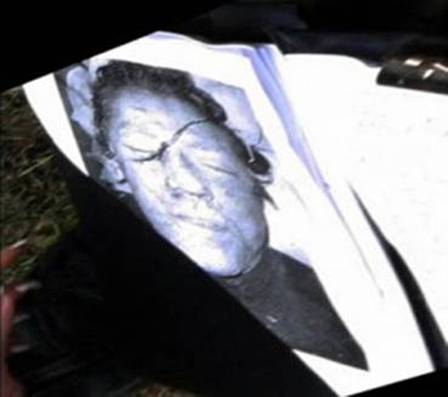
Text: Diana Koval
According to some publications, Lithuania has been named the EU murder capital. According to the Eurostat agency Lithuania saw an average 8.76 murders per 100,000 heads of population every year during the period 2002-8. However, this information, which showed up in various world media publications seem to be not completely up to date.
Death rate in Lithuania is among the highest in Europe. The only “good” news is that Lithuania finally stopped being the “murder capital”. According to Eurostat, in 2009 deaths due to homicide and assaults got the highest rate in Latvia (5.9 person of 100.000), while Lithuania stays behind on the 2nd place with death rate 5.6 person. Unfortunately, due to other causes such as suicide (31.5 of 100.000 comparing to Greece’s 3.0), ischemic heart diseases (305.1 comparing to Netherlands’ 42.8) and various accidents (68.2 comparing to Germany’s 14.6) Lithuania has the highest death rates in EU.
Statistics Department of Lithuania recently claimed that every day approximately 100 people are being born and 115 are dying (among them 1-due to transport accidents, 3 – committed suicide)
Lithuania still has the highest rate of death due to suicide in Europe, which was 31.5 of 100.000 inhabitants and then goes Hungary (21.8) and Latvia (20.7). Majority of them are being committed in urban area - Vilnius and Kaunas counties. People are killing themselves from various psychological reasons, desperation, bullying at school, depression, unemployment, and finance debts.
One of the biggest problems that Lithuania faces today is violence against women. Statistics claims that 63% of all women in Lithuania suffered from physical and/or psychological violence, whereas world average is 33%. According to Police department in 2009 there were approx. 42.000 police calls due to family conflicts and more than 8.000 of them were women who suffered from their husbands, partners or even from their children domestic disputes. Yet statistics are just the tip of the iceberg so one may wonder what the true numbers of such incidents are. The majority of people are more likely to think that domestic violence is a private family matter. Although there are laws prohibiting family violence, sometimes they aren’t as effective as they should be.
Another topic that needs consideration is incredibly high unemployment rates. According to Eurostat in November, 2010 unemployment rate in EU was 9.6% while Lithuania’s was 18.3%. Higher rates were registered only in Spain (20.6%), while in Netherlands unemployment rates were just 4.4 %. By January 2011, about 311.300 job seekers were registered by the Lithuanian Labour Exchange which is 14.4% of people of working age. Mindaugas Petras Balašaitis (Head of Lithuanian Labour Exchange) considers the situation at the state job market as very unusual: the unemployment growth slows down but somehow there is lack of qualified employees on Lithuanian job market (due to emigration, which is another deep problem for a country).
Furthermore, voluntarism rates in Lithuania are also incredibly low. Only 2% of population volunteered for some organizations comparing to Sweden’s 90%.
However, the situation in other Baltic states (especially Latvia) is also difficult. After the proclamation of Independence in 1991 Lithuanian society confronted sudden changes which were difficult to deal with. Psychologists claim that uncertainty and insecurity, worsening economic situation as well as rapid changes are the main reasons of this complicated status in Lithuania. Still it is merely (and mainly) a question of time when things will start improving.
- Bookmark :
- Digg
- del.icio.us
- Stumbleupon
- Redit it
- Posted by - (7) Comment
1941- 1953:
300 000 Lithuanians were deported to merciless inhumanity in Siberia...
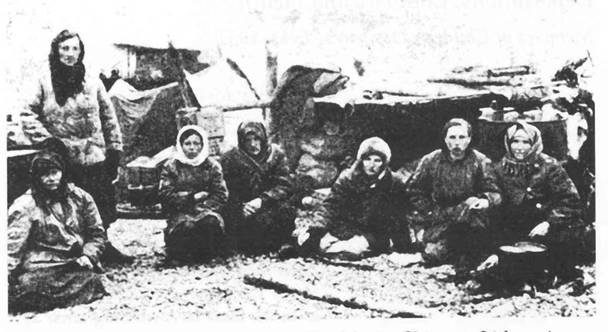
From Lietuviai Sibire / Lithuanians in Siberia,
Chicago: Lithuanian Press, Inc. 1981, Dust jacket cover
During the period 1941-1953, some 132,000 Lithuanians were deported to remote areas of the USSR, in Siberia, the Arctic Circle areas and Central Asia. They were not allowed to leave the remote villages they were brought to. More than 70 percent of the deportees were women and children. Around 50,000 of the deportees were not able to return to Lithuania ever again.
During the same period, another 200,000 people were thrown into prisons in Lithuania and elsewhere in the Soviet Union. Some 150,000 of them were sent to the Gulags, Soviet Russia‘s concentration camps, situated mostly in Siberia.
Altogether, approximately 600,000 prisoners were deported from the Soviet occupied Baltic States - Lithuania, Latvia, and Estonia. There were some 10 million inhabitants in all three Baltic States on the eve of the Soviet occupation. Proportionately, the number of Baltic prisoners would have been equal to a loss of 20 million people in the United States or 5 million in Great Britain.
In October and November of 1940, the Soviet Russia ordered that “anti-Soviet elements” should be listed and reported on. This term included a wide spectrum of people:
1. Members of non-communist parties, including heretical communists;
2. Members of patriotic and religious organizations;
3. Former police and prison officials;
4. Former officers of tsarist and other armies;
5. Former officers of the Lithuanian and Polish armies;
6. Former volunteers who had joined anti-Soviet armies in 1918-1919;
7. Citizens of foreign states, representatives and employees of foreign firms, and employees of foreign embassies.
8. Those who corresponded with foreign countries or consulates of foreign countries as well as philatelists and those who know the Esperanto language;
9. Former high level officials;
10. Red Cross employees and émigrés from Poland;
11. Clergymen of all religions;
12. Bankers, members of aristocratic families and rich farmers.
Mass deportations continued until the death of Josef Stalin in 1953. In 1956, Soviet leader Nikita Khrushchev decided that deportees should be released. In the late 1950s, the survivors started to returning to Lithuania.
Life was not easy for those who survived and returned to Soviet occupied Lithuania, many were placed in an impossible situation as the government required them to register with the local municipality or face renewed deportation. In order to register, they needed an employer, but no one would have courage to give a work to former deportee. Many were forced to live and work illegally for many years – in their own home-country.
Russia, which officially proclaimed inheritance of all international rights and obligations of the USSR, shows no will to pay compensation to any of them.
The Russian State has still not asked for forgiveness for the Soviet terror in the occupied Baltic States.
Virtually no one has been called to account for what was done, and the West has paid little attention to the horrors of the Soviet times. Maybe it’s time?
“Soviet fascism killed many more people than the Germans, and the lies of Soviet fascism were mostly more severe than those of German fascism,” says Felix Krasavin, a former Soviet-time political prisoner.
During the Nazi and Soviet Russian occupations, including 200,000 Holocaust victims, the losses of the population of Lithuania amounted to 33 percent of the total number of the country's population in 1940. Lithuania lost 1 million people to deportations, executions, incarceration, the murder of the political opposition and forced emigration.
- Bookmark :
- Digg
- del.icio.us
- Stumbleupon
- Redit it

OPINIONS
Have your say. Send to:
editor@VilNews.com
Ph. D., Chicago
A wave of unity sweeps the international Lithuanian community on March 11th every year as Lithuanians celebrated the anniversary of the Lithuanian Parliament's declaration of independence from the Soviet Union in 1990. However, the sense of national unity engendered by the celebration could be short-lived.
Human beings have a strong tendency to overgeneralize and succumb to stereotypical us-them distinctions that can shatter even the strongest bonds. We need only search the internet to find examples of divisive thinking at work:
- "Those who fled Lithuania during World II were cowards -- and now they come back, flaunt their wealth, and tell us 'true Lithuanians' how to live."
- "Lithuanians who work abroad have abandoned their homeland and should be deprived of their Lithuanian citizenship."

In Lithuania Christmas Eve is a family event and the New Year's Eve a great party with friends!
Lithuanian say "Kaip sutiksi naujus metus, taip juos ir praleisi" (the way you'll meet the new year is the way you will spend it). So everyone is trying to spend New Year's Eve with friend and have as much fun as possible.
Lithuanian New Year's traditions are very similar to those in other countries, and actually were similar since many years ago. Also, the traditional Lithuanian New Years Eve party was very similar to other big celebrations throughout the year.
The New Year's Eve table is quite similar to the Christmas Eve table, but without straws under the tablecloth, and now including meat dishes. A tradition that definitely hasn't changes is that everybody is trying not to fell asleep before midnight. It was said that if you oversleep the midnight point you will be lazy all the upcoming year. People were also trying to get up early on the first day of the new year, because waking up late also meant a very lazy and unfortunate year.
During the New Year celebration people were dancing, singing, playing games and doing magic to guess the future. People didn't drink much of alcohol, especially was that the case for women.
Here are some advices from elders:
- During the New Year, be very nice and listen to relatives - what you are during New Year Eve, you will be throughout the year.
- During to the New Year Eve, try not to fall, because if this happens, next year you will be unhappy.
- If in the start of the New Year, the first news are good - then the year will be successful. If not - the year will be problematic.
* If New Year's night is cold and starry - look forward to a good summer!
* If the during New Year Eve trees are covered with frost - then it will be a good year. If it is wet weather on New Year's Eve, one can expect a year where many will die and dangerous epidemics occur.
* If the first day of the new year is snowy - the upcoming year will see many young people die. If the night is snowy - mostly old people will die.
* If the New Year time is cold - then Easter will be warm.
* If during New Year there are a lot of birds in your homestead - then all year around there will be many guests and the year will be fun.
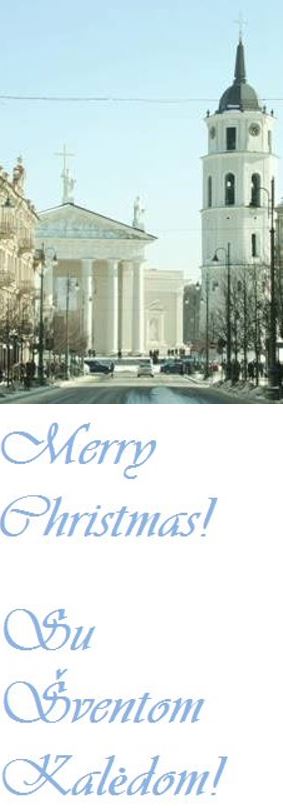
Christmas greetings
from Vilnius
and epic battle for the
future
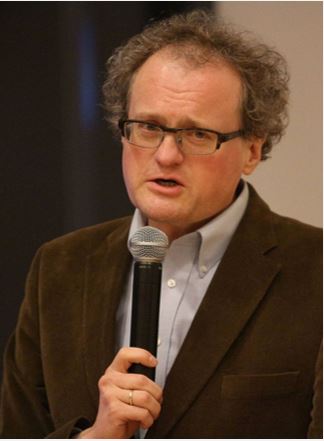
Philosopher, political theorist, historian of
ideas, social analyst, and political
commentator
Ukraine was and continues to be perceived by the EU political class as a sort of grey zone with its immense potential and possibilities for the future, yet deeply embedded and trapped in No Man's Land with all of its troubled past, post-Soviet traumas, ambiguities, insecurities, corruption, social divisions, and despair. Why worry for what has yet to emerge as a new actor of world history in terms of nation-building, European identity, and deeper commitments to transparency and free market economy?
Right? Wrong. No matter how troubled Ukraine's economic and political reality could be, the country has already passed the point of no return. Even if Vladimir Putin retains his leverage of power to blackmail Ukraine and the West in terms of Ukraine's zero chances to accede to NATO due to the problems of territorial integrity, occupation and annexation of Crimea, and mayhem or a frozen conflict in the Donbas region, Ukraine will never return to Russia's zone of influence. It could be deprived of the chances to join NATO or the EU in the coming years or decades, yet there are no forces on earth to make present Ukraine part of the Eurasia project fostered by Putin.
want to learn about the
new, scary propaganda
war between Russia,
The West and the
Baltic States!
believe their government
is corrupt
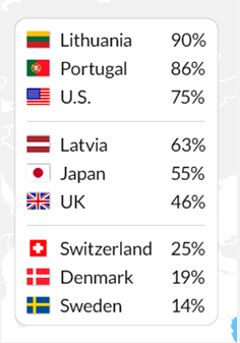
students say no to
bribes for doctors
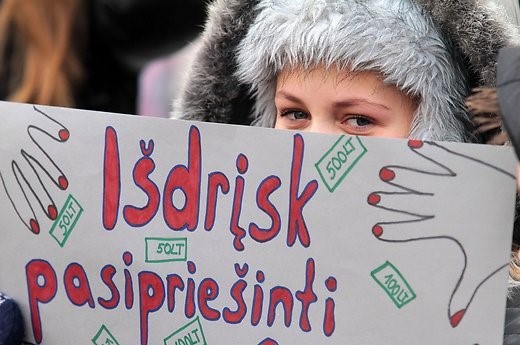
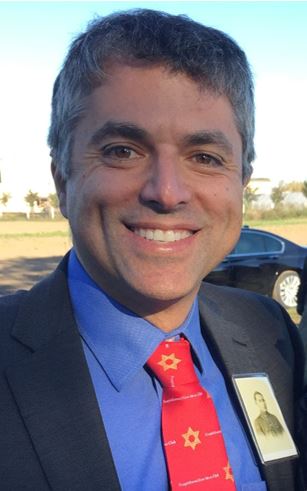
During Soviet times, government was administered for the people in control, not for the local population, court decisions were decreed, they were not the administration of justice, and academia was the domain of ideologues. 25 years of freedom and openness should have put those bad experiences behind Lithuania, but that is not so.
Today, it is a matter of expectation that court pronouncements will be governed by ideological dictates. Few, if any Lithuanians expect real justice to be effected. For foreign companies, doing business in Lithuania is almost impossible in a situation where business people do not expect rule of law, so, surely Government would be a refuge of competence?
Lithuanian Government has not emerged from Soviet styles. In an attempt to devolve power, Lithuania has created a myriad of fiefdoms of power, each speaking in the name of the Government, each its own centralized power base of ideology.
Chepstow, Wales
Doesn't that sound suspiciously like Lithuania? Ah, but I didn't mention the mountains of Snowdonia, which would give the game away.
I'm talking about Wales, that part of the UK which Lithuanians used to call "Valija", but later named "Velsas" (why?). Wales, the nation which has welcomed two Lithuanian heads of state to its shores - firstly Professor Vytautas Landsbergis, who has paid several visits and, more recently, President Dalia Grybauskaitė who attended the 2014 NATO summit which was held in Newport, South Wales.
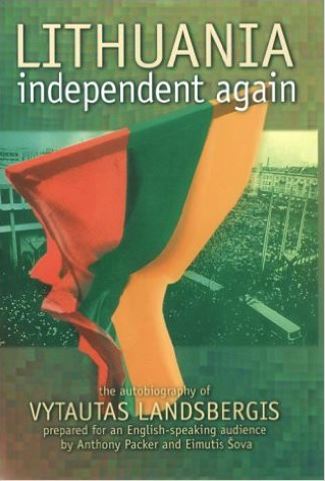
ENGLISH VERSION OF THE
AUTOBIOGRAPHY OF VYTAUTAS LANDSBERGIS.
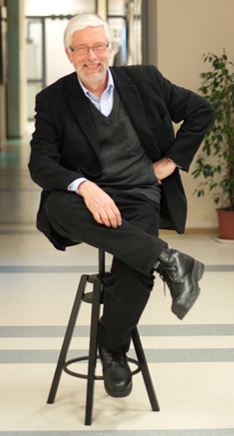
Although Lithuanian activities have thinned over the decades as that postwar generation died out, the Lithuanian Martyrs' parish hall is crowded with many, many hundreds of visitors who come to the Lithuanian cemetery for All Souls' Day. Similarly, the Franciscan parish has standing room only for Christmas Eve mass.
Although I am firmly embedded in the literary culture of Canada, my themes are usually Lithuanian, and I'll be in Kaunas and Vilnius in mid-November 2015 to give talks about the Lithuanian translations of my novels and short stories, which I write in English.
If you have the Lithuanian language, come by to one of the talks listed in the links below. And if you don't, you can read more about my work at
www.anatanassileika.com
http://www.vdu.lt/lt/rasytojas-antanas-sileika-pristatys-savo-kuryba/ https://leu.lt/lt/lf/lf_naujienos/kvieciame-i-rasytojo-59hc.html
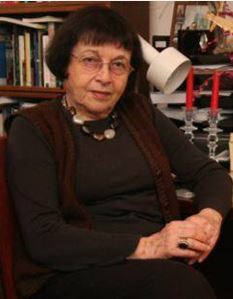
"My love and best wishes to all. As long as VilNews exists, there is hope for the future,"" she writes.
Irena Veisaite means very much for our publication, and we do hereby thank her for the support and wise commitment she always shows.
You can read our interview with her
Facing a new reality
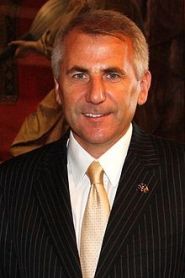
Dear readers of VilNews,
For a number of years, the EU and Russia had assumed the existence of a strategic partnership, based on the convergence of values, economic integration and increasingly open markets and a modernisation agenda for society.
Our agenda was positive and ambitious. We looked at Russia as a country ready to converge with "European values", a country likely to embrace both the basic principles of democratic government and a liberal concept of the world order. It was believed this would bring our relations to a new level, covering the whole spectrum of the EU's strategic relationship with Russia.
The likelihood of Putin
invading Lithuania
.jpg "lithuania today")
Founding Director at Summer Literary Seminars
Are all Lithuanian energy
problems now resolved?
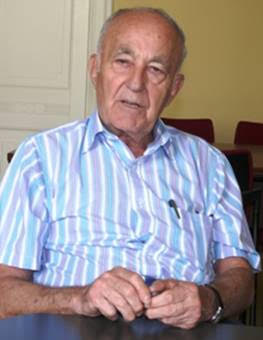
Lithuania as a country does not have significant energy resources. Energy consuming infrastructure after WWII was small and totally supported by energy imports from Russia.
First nuclear reactor begins power generation at Ignalina in 1983, the second reactor in 1987. Iganlina generates enough electricity to cover Lithuania's needs and about 50%.for export. As, prerequisite for membership in EU, Ignalina ceases all nuclear power generation in 2009
The Klaipėda Sea terminal begins Russia's oil export operations in 1959 and imports in 1994.
Mazeikiu Nafta (current ORLEAN Lietuva) begins operation of oil refinery in 1980.
Have Lithuanian ties across
the Baltic Sea become
stronger in recent years?
The two decades that have passed since regaining Lithuania's independence can be described as a "building boom". From the wreckage of a captive Soviet republic, a generation of Lithuanians have built a modern European state, and are now helping construct a Nordic-Baltic community replete with institutions intended to promote political coordination and foster a trans-Baltic regional identity. Indeed, a "Nordic-Baltic community" - I will explain later in my text the meaning of this catch-phrase.
Since the restoration of Lithuania's independence 25 years ago, we have continuously felt a strong support from Nordic countries. Nordics in particular were among the countries supporting Lithuania's and Baltic States' striving towards independence. Take example of Iceland, country which recognized Lithuania in February of 1991, well in advance of other countries. Yet another example - Swedish Ambassador was the first ambassador accredited to Lithuania in 1991. The other countries followed suit. When we restored our statehood, Nordic Countries became champions in promoting Baltic integration into Euro-Atlantic institutions. To large degree thanks Nordic Countries, massive transformations occurred in Lithuania since then, Lithuania became fully-fledged member of the EU and NATO, and we joined the Eurozone on 1 January 2015.
Have you heard about the
South African "Pencil Test"?
But that is exactly what happened to me when I came back from South Africa. I will tell you how.
VilNews e-magazine is published in Vilnius, Lithuania. Editor-in-Chief: Mr. Aage Myhre. Inquires to the editors: editor@VilNews.com.
Code of Ethics: See Section 2 – about VilNews. VilNews is not responsible for content on external links/web pages.
HOW TO ADVERTISE IN VILNEWS.
All content is copyrighted © 2011. UAB ‘VilNews’.