
THE VOICE OF INTERNATIONAL LITHUANIA

|
VilNews has its own Google archive! Type a word in the above search box to find any article.
You can also follow us on Facebook. We have two different pages. Click to open and join.
 Click on the buttons to open and read each of VilNews' 18 sub-sections Click on the buttons to open and read each of VilNews' 18 sub-sections  |

|


Blog archive
- Posted by - (3) Comment
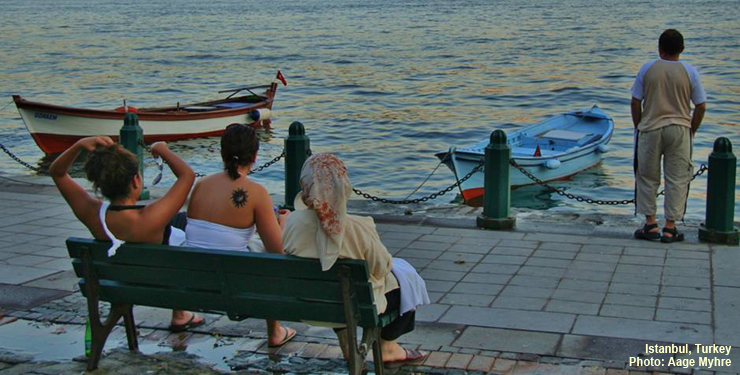
EXPLORING EUROPE (10 of 10)
Turkey, where Europe meets Asia
Tour guide, writer and photographer: Aage Myhre
aage.myhre@VilNews.com
|
Today we publish the last travel report
|
Today’s journey:
|
|
“Peace in the homeland, peace in the world” - Mustafa Kemal Atatürk (1881-1938) Turkey's prominent leader and reformer during the interwar years
|
|

|
|
The Vikings arrived in Istanbul in year 860, I am in Hotel Conrad in Istanbul. The view from the terrace outside my hotel room is amazing. I look down at the beautiful city I've learned to like so well. The boats on the Bosporus Strait bustle frantically back and forth between the Asian and the European side. Large ships are heading towards the Black Sea. Others to the Mediterranean Sea. It must have been quite a sight to see the armada of Viking ships sailing in here in the year 860. The Vikings came to plunder. They had travelled far; starting from the Baltic Sea, following the rivers through Russia, then ruled by a Viking, Rurik. They came here through the Caspian Sea and the Black Sea. |
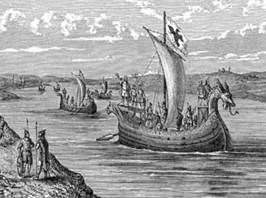
From there it was only a short distance through the Bosporus Strait until Istanbul, or Miklagard (‘The Great City’) as they named the city – at that time the capital of the Eastern Roman Empire, with hundreds of thousands of residents and colossal treasures the Vikings had never seen before.
Huge walls met them when they sailed in here from the Black Sea and docked in the harbour of the Golden Horn. The huge wealth made contemporary Istanbul a tempting prey for the Vikings, but the size made them chose to go into service of the emperor instead of trying to conquer the city. He appointed them to a guard of mercenaries, known as 'The Varings.' Their most famous chief was Harald Hardrada (1015 - 1066), half brother to the Norwegian king Olav who was killed in the famous Battle of Stiklestad outside Trondheim in the year 1030. Harald became king of Norway in the year 1046. During the seven years he was here in Miklagard, he had a comet career and was named the top-commander of the The Varings. From Constantinople he led a total of 18 major battles around the Mediterranean Sea, such as against Sicily and North Africa. He conquered no less than 80 cities.
The Viking era in Istanbul came to an end after 344 years(!) here on the banks of the Bosporus, in 1204, when the Crusaders conquered the city.
From my terrace I look over to the mosque that was once the world’s largest church building, Hagia Sophia (Holy Wisdom Church). It was completed in the year 537. On one of the pillars is written, clearly visible to this day, 'Halvdan was here'. Carved into the pillar-marble in the contemporary Norse language, the Runes, some time at the end of the 800's. Think about it. A Norwegian Viking was behind the world's first graffiti ...
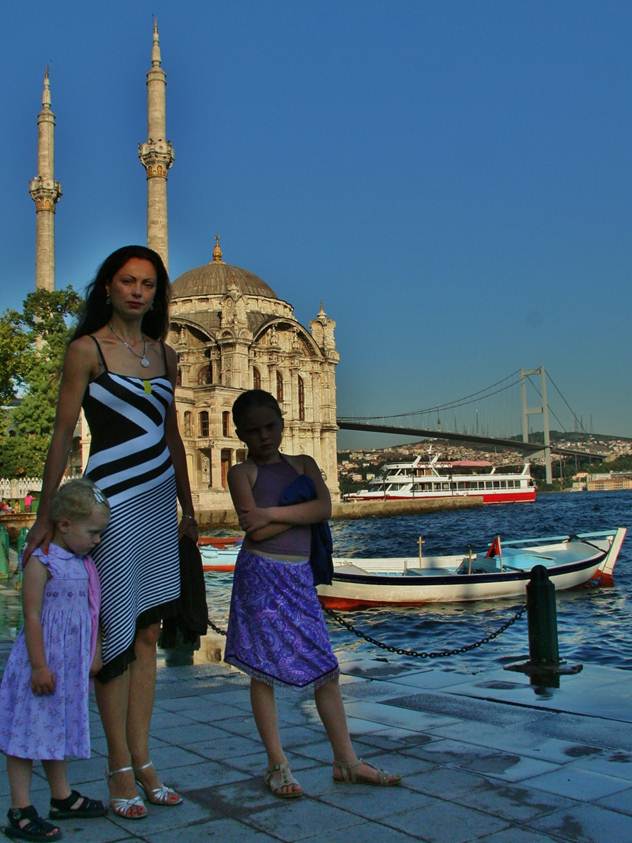
Down at the Bosporus shore I see the lavishly beautiful Dolmabahce Palace. It was there in the palace he died in 1938, Turkey's first president, Mustafa Kemal Ataturk (1881-1938). Founder of the country as a republic and a modern, democratic society, a revolutionary and wise statesman, who more than any other has made Turkey a tolerant nation where the country's many nationalities and religions generally live in peaceful coexistence. Probably also the best guarantor for conflict management in the Middle East. It is said that Turkey is the very barometer of how the state of peace and harmony in the world. Atatürk's famous epigram, "Peace in the home country, peace in the world" still applies.
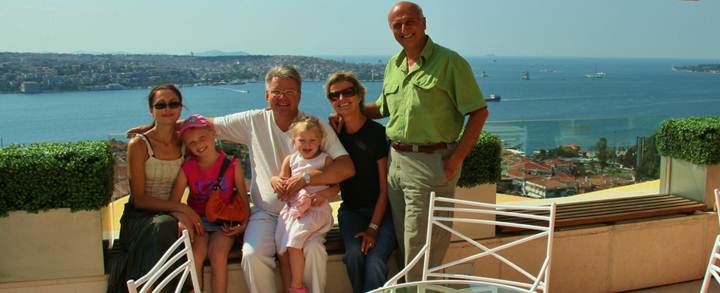
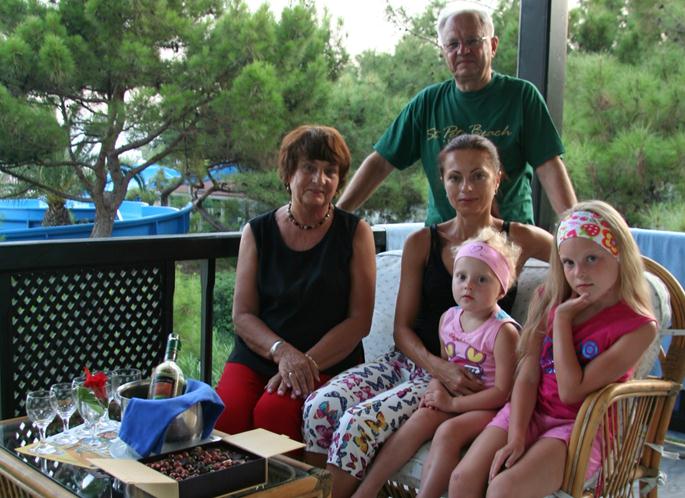
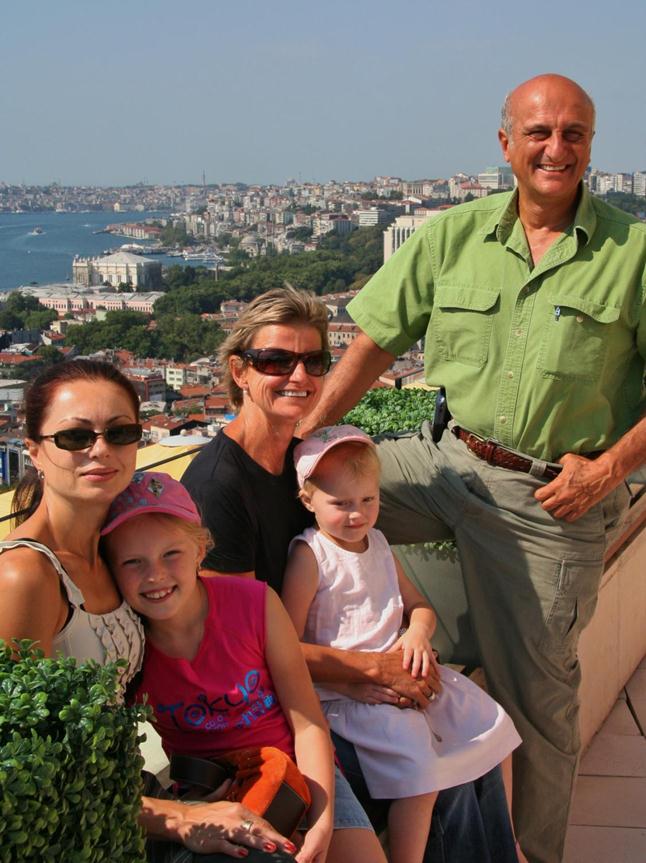
My international family gathered at Hotel Conrad's rooftop in Istanbul. Phenomenal views of the Bosporus and the Asian part of the city. Lithuanian, Iranian, American and Norwegian in perfect harmony!
Istanbul
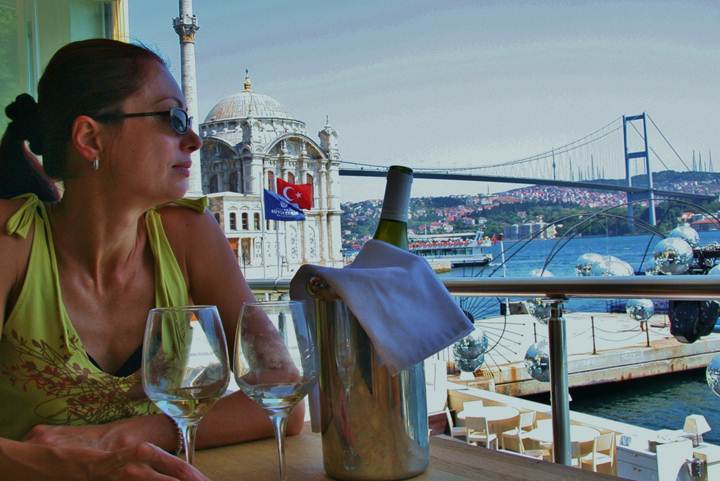
Istanbul is the largest city of Turkey. Istanbul metropolitan province (municipality) had 13.26 million people living in it as of December, 2010, which is 18% of Turkey's population and the 3rd largest metropolitan area in Europe (including the Asian side of the city) after London and Moscow. Istanbul is a megacity, as well as the cultural, economic, and financial centre of Turkey. It is located on the Bosporus Strait and encompasses the natural harbour known as the Golden Horn, in the northwest of the country. It extends both on the European (Thrace) and on the Asian (Anatolia) sides of the Bosporus, and is thereby the only metropolis in the world that is situated on two continents. Istanbul is a designated alpha world city.
During its long history, Istanbul has served as the capital of the Roman Empire (330–395), the Eastern Roman (Byzantine) Empire (395–1204 and 1261–1453), the Latin Empire (1204–1261), and the Ottoman Empire (1453–1922). When the Republic of Turkey was proclaimed on 29 October 1923, Ankara, which had previously served as the headquarters of the Turkish national movement during the Turkish War of Independence, was chosen as the new Turkish State's capital. Istanbul was chosen as a joint European Capital of Culture for 2010 and the European Capital of Sports for 2012. Istanbul is currently bidding to host the 2020 Summer Olympics. The historic areas of the city were added to the UNESCO World Heritage List in 1985. The city covers 39 districts of the Istanbul province
Istanbul is nothing but amazing
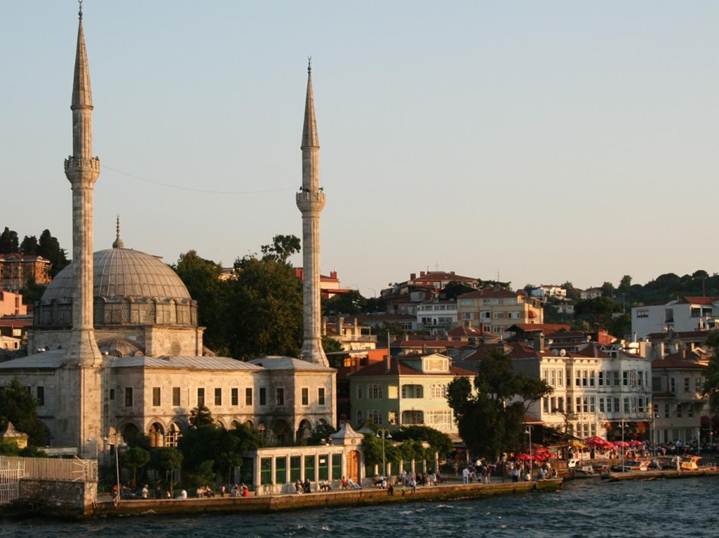
Water and land are living together in great harmony here in Istanbul.
A captivating beautiful, ancient, modern city.
Photo: Aage Myhre
|
Leaving Istanbul It is late afternoon when my plane takes off from Istanbul Ataturk Airport. The flight is set to Antalya in southern Turkey. Soon I gaze down at the impressive mountain massifs that so beautifully characterize this country. I've got a window seat on the left side and look down towards the area where today's capital, Ankara, is located. |
Galatia, in the centre of today’s Turkey, was a
Biblical land of Celts from Ireland and Britain
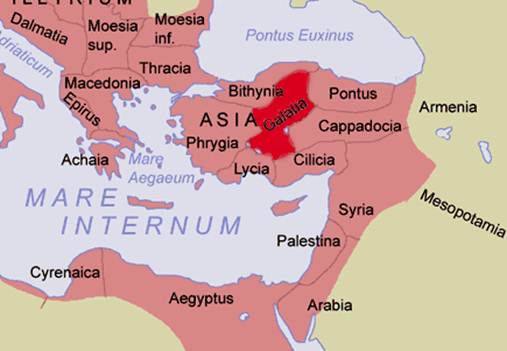
The Roman province Galatia in Asia Minor.
During the time of St. Paul people here spoke Galatian, an extinct Celtic language spoken from the 3rd century BC up to at least the 4th century AD, although ancient sources suggest it was still spoken in the 6th century.
During nine centuries the Galatians lived here in the mountainous areas of Asia Minor. They were Celts who had come all the way from Ireland and Britain to settle.
They were the people Apostle Paul wrote two letters to, both ‘published’ the New Testament of the Holy Bible.
Apostle Paul went on foot from Istanbul to his birthplace Tarsus in southern Turkey, now called Yalvac (Psidian Antioch). It was here in today’s southern Turkey that Paul and Barnabus lived, and from here introduced Christianity to our pagan world. Yalvacs history dates back to 280 BC. In Paul's time the area had a mixture of Jews, Romans and Greeks.
The many people movements through the history of mankind never cease to surprise me. It might well have been that it was through the Galatians that Christianity came to north Europe.
Reaching the Mediterranean Sea
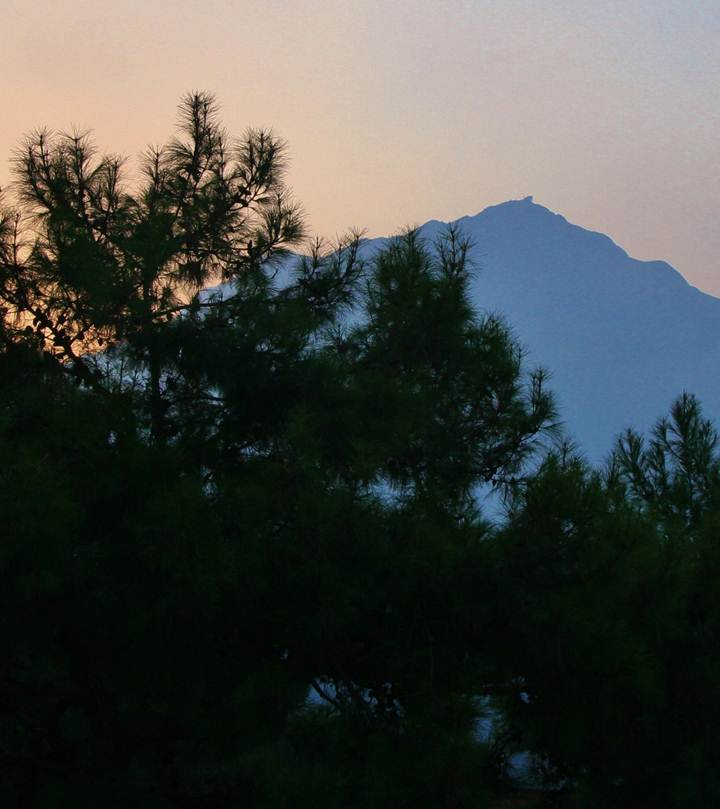
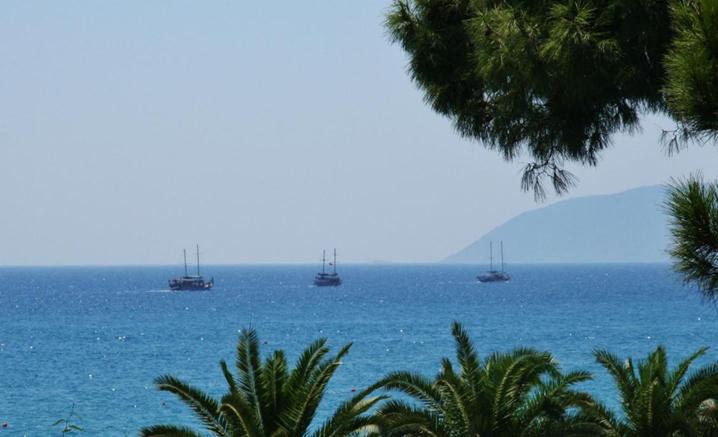
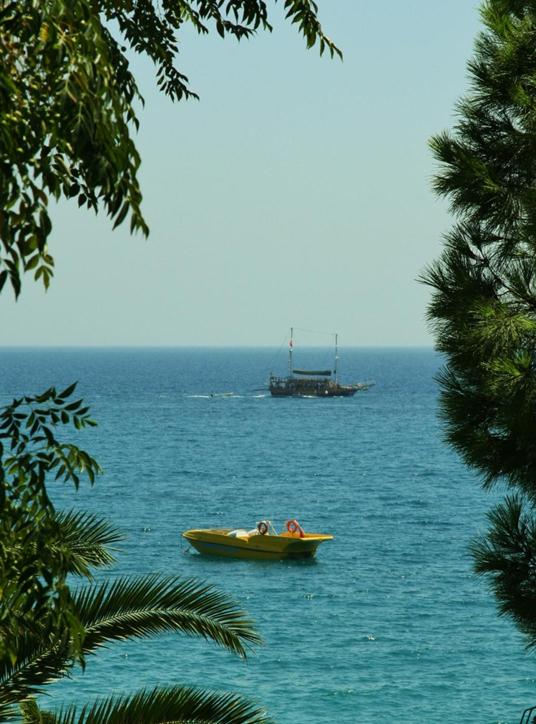
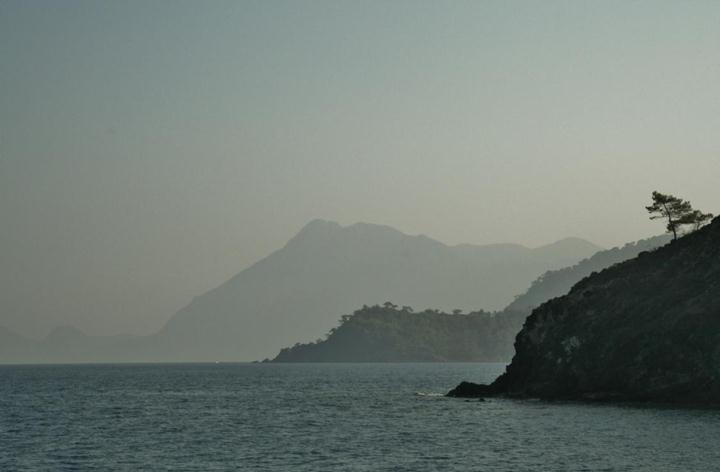
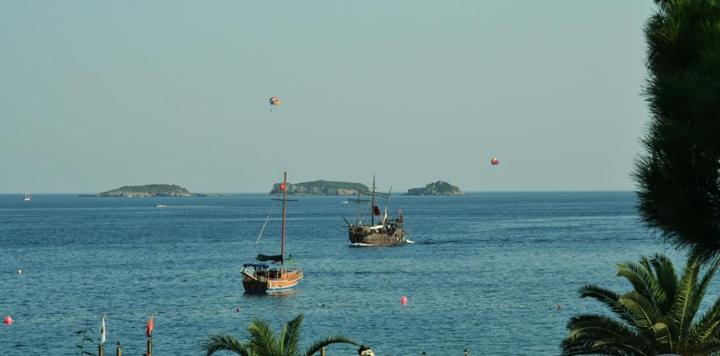
The sun has already disappeared into the evening azure Mediterranean Sea as we slowly descend towards Antalya. I can still easily study the pine-clad Taurus Mountains, sloping down towards the sparkling clear sea outside the irregular coastline of rocky headlands and secluded coves. It is said that Antalya is bathed in sunshine 300 days a year. It is therefore not surprising that this is a tourist paradise with a focus on sunbathing, swimming and water sports. But Antalya also has a large number of historical sites, beautiful mosques and much more scattered in the surrounding landscape characterized by pine forests, olive and citrus trees, palms, avocado and banana plantations.
This is the fascinating backdrop to my visit. I have come to Antalya to participate in the inauguration of a so-called "Religious Garden" which will include a mosque, a church and a synagogue, designed to beautifully symbolize the glorious history of many nationalities and religions living side by side here in Turkey since historic times.
Turkish Prime Minister Recep Tayyip Erdogan, has arrived from Ankara to perform the official opening, and as he opens this complex of Muslim, Christian and Jewish places of worship, he emphasizes that his government will eliminate all remaining obstacles to religious freedom in Turkey.
During the subsequent dinner, the Prime Minister tells us that religious tolerance in Turkey is a legacy from the Ottoman Empire. He cites the regulations that once upon a time were introduced by Mehmet the Conqueror, the sultan who captured Istanbul in 1453, that the Ottoman Empire would always show respect for non-Muslims."Because of this significant historical experience, Turkey is currently a guarantor of peace and brotherhood in this region," concludes Prime Minister Erdogan.
Netherlands’ 'European Affairs Ministers', Atzo Nikolai, and members of the diplomatic community in Ankara and religious leaders representing Turkish, Greek, Armenian and Jewish minorities participate in the ceremony. Applaud the Prime Minister's speech.
"People will be able to freely practice their religion in this Garden of Tolerance. This is a very important message," says AtzoNikolai, and adds: "The EU will continue to encourage reforms in Turkey. It will probably still be frictions sometimes but the reforms Turkey has undertaken are encouraging. "
Leaders of Turkey's non-Muslim minorities support the opening of the new "Garden of Religions", but not without acerbic remarks about legal matters that increasingly restrict their activities. "Catholics are able to practice their religion in Turkey, but has no property rights over their own churches. I hope we will get this right one day," said Father Alphonse Sammut, a representative of the Catholic church in the country.
The Armenian Orthodox Patriarch Mesrob II, emphasizes that non-Muslim places of worship as soon as possible should be opened in all major Turkish cities. "This should be done either by renovating historical sites or to build new ones such as the one here," he says.
That evening I walk along one of the endless, soft Antalya beaches, listening to the lazy waves that slowly wash in from the Mediterranean Sea. A clear, dark sky with billions of twinkling stars arches over me. Almost reflecting the dramatic historical events that have taken place in this area through more than 2000 years. I wonder about tolerance, religious freedom, brotherhood and peace can really begin to grow out from here to neighbouring countries in the Middle East, where war and hatred still dominate...
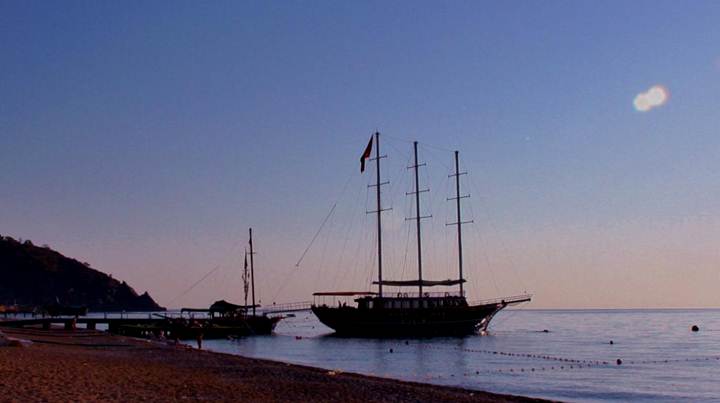
That evening I walk along one of the endless, soft Antalya beaches, listening to the lazy waves that slowly wash in from the Mediterranean Sea.
Photo: Aage Myhre.
The Ottoman Empire
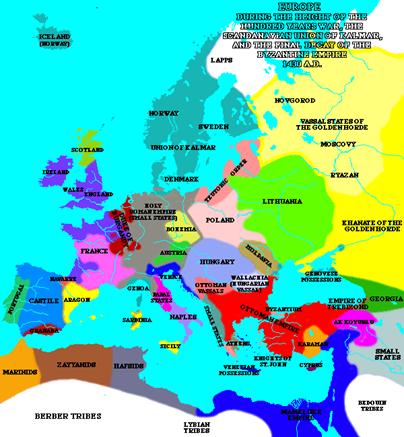
Europe in 1430, when The Grand Duchy of Lithuania and the Ottoman Empire both were leading forces.
The Ottoman Empire was a Turkish empire which lasted from 27 July 1299 to 29 October 1923. Grand Duchy of Lithuania) was a European state from the 12th century until 1795. It was founded by the Lithuanians, one of the polytheistic Baltic tribes from Aukštaitija. The duchy later expanded to include large portions of the former Kievan Rus' and other Slavic lands, covering the territory of present-day Belarus, Latvia, Lithuania and parts of Moldova, Poland, Russia and Ukraine. At its greatest extent in the 15th century, it was the largest state in Europe. It was a multi-ethnic and multi-confessional state with great diversity in languages, religion, and cultural heritage.
The Ottoman Empire was one of the largest and longest lasting empires in history; such that the Ottoman State, its politics, conflicts, and cultural heritage in a vast geography provide one of the longest continuous narratives. During the 16th and 17th centuries, in particular at the height of its power under the reign of Suleiman the Magnificent, the empire became the most powerful state in the world – a multinational, multilingual empire that stretched from the southern borders of the Holy Roman Empire (until the outskirts of Vienna), Royal Hungary (modern Slovakia) and the Polish–Lithuanian Commonwealth in the north to Yemen and Eritrea in the south; from Algeria in the west to Azerbaijan in the east; controlling much of southeast Europe, western Asia, and North Africa. The empire contained 29 provinces and numerous vassal states, some of which were later absorbed into the empire, while others were granted various types of autonomy during the course of centuries.
With Constantinople (present-day Istanbul), and vast control of lands around the Mediterranean basin, the empire was at the center of interactions between the Eastern and Western worlds for six centuries.
After the international recognition of the Grand National Assembly of Turkey (GNA) headquartered in Ankara, by means of the Treaty of Lausanne signed on 24 July 1923, the GNA proclaimed on 29 October 1923 the establishment of the Republic of Turkey as the new Turkish State that succeeded and formally ended the defunct Ottoman Empire, in line with the treaty. The Ottoman Caliphate was abolished on 3 March 1924.
|
|
Turkey
|

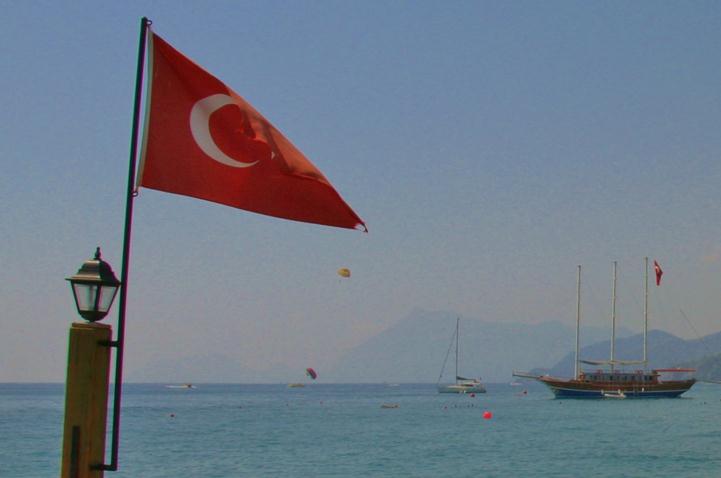
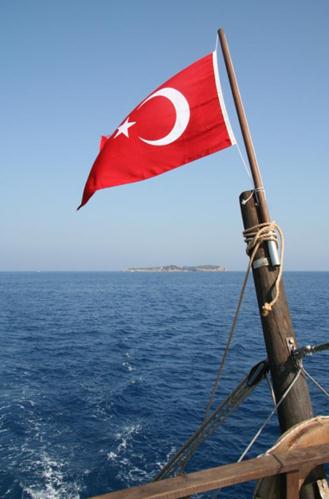
Turkey is a Eurasian country located in Western Asia (mostly in the Anatolian peninsula) and in East Thrace in South-eastern Europe. Turkey is bordered by eight countries: Bulgaria to the northwest; Greece to the west; Georgia to the northeast; Armenia, Azerbaijan (the exclave of Nakhchivan) and Iran to the east; and Iraq and Syria to the southeast. The Mediterranean Sea and Cyprus are to the south; the Aegean Sea is to the west; and the Black Sea is to the north. The Sea of Marmara, the Bosporus and the Dardanelles (which together form the Turkish Straits) demarcate the boundary between East Thrace and Anatolia; they also separate Europe and Asia.
Turkey is one of the six independent Turkic states. The vast majority of the population are Muslims. The country's official language is Turkish, whereas Kurdish and Zazaki languages are spoken by Kurds and Zazas, who constitute 18% of the population.
|
|
Oghuz Turks began migrating into the area now called Turkey (derived from the Medieval Latin Turchia, i.e. "Land of the Turks") in the 11th century. The process was greatly accelerated by the Seljuk victory over the Byzantines at the Battle of Manzikert. Several small beyliks and the Seljuk Sultanate of Rûm ruled Anatolia until the Mongol invasion. Starting from the 13th century, the Ottoman beylik united Anatolia and created an empire encompassing much of South-eastern Europe, Western Asia and North Africa. After the Ottoman Empire collapsed following its defeat in World War I, parts of it were occupied by the victorious Allies. A cadre of young military officers, led by Mustafa Kemal Atatürk and his colleagues, organized a successful resistance to the Allies; in 1923, they would establish the modern Republic of Turkey with Atatürk as its first president. Turkey is a democratic, secular, unitary, constitutional republic with an ancient cultural heritage. Turkey has become increasingly integrated with the West through membership in organisations such as the Council of Europe, NATO, OECD, OSCE and the G-20 major economies. Turkey began full membership negotiations with the European Union in 2005, having been an associate member of the European Economic Community since 1963 and having reached a customs union agreement in 1995. Turkey has also fostered close cultural, political, economic and industrial relations with the Middle East, the Turkic states of Central Asia and the African countries through membership in organisations such as the Turkic Council, Joint Administration of Turkic Arts and Culture, Organisation of Islamic Cooperation and the Economic Cooperation Organisation. |
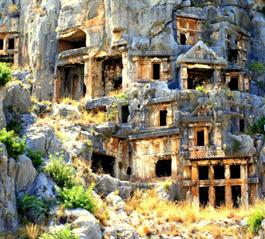
Myra, Turkey – where Santa was born
(sorry Finland...)
St. Nicholas, who later became known as Santa Claus, was a popular bishop at Myra in the 4th century AD, born in Patara between 260 AD and 280, famous for his miracles and known for his kindness. His parents died of the plague and he was left a wealthy young man.
It is said that he was thrown into prison by Emperor Diocletian, perhaps participated in the Council of Nicaea, implored Emperor Constantine for a large tax reduction for Myra which was granted and destroyed Myra's renowned temple of Artemis (among many others). After the death of St. Nicholas, Myra became a rich pilgrimage centre with many new churches built.
|
|
Bari, Italy, where Santa is buried... In 1087 Italian merchants, during the confusion of the Seljuk invasion, stole his body at Myra and transported it to Bari in Italy, which became a pilgrimage centre and where his relics are still preserved today. An oily substance called Manna di S. Nicola, which is highly valued for its medicinal powers, is said to flow from them. St. Nicolas who later became better known as Santa Claus, and Bona Sforza, the Grand Duchess of Lithuania, are both buried in the cathedral of Bari, Basilica di San Nicola. And ironically enough, the relics of the woman who was such a leading symbol of Lithuania's greatness are to be found, not in Lithuania, but in southern Italy along with the remains of the symbol of today's Christmas traditions, a bishop from Myra in today’s southern Turkey.. |
St. Nicholas' cult spread beyond the Byzantine Empire in the 6th -11th centuries, celebrated especially in Holland and the East Church under Russian imperial patronage. He later became the patron saint of Greece and Russia as well as of children, sailors, merchants, scholars, those unjustly imprisoned and travellers.
St. Nicholas was known for his charitable nature and humility. Several legends about him have been based on his kind and giving nature and have led to the development of Santa Claus.
For more information about St. Nicholas, see the website St. Nicholas: Discovering the Truth About Santa Claus.
Myra was a leading city of the Lycian Union and surpassed Xanthos in early Byzantine times to become the capital city of Lycia. Its remains are situated about 1.5 km north of today's Demre, on the Kaş-Finike road. Most of the ancient city is now covered by Demre and alluvial silts, for it is located on the river Demre Cay in a fertile alluvial plain. Today this large plain is almost covered with greenhouses stuffed full of tomatoes. In ancient times this area was probably farmed extensively, for export and trade with the interior of Lycia.
The date of Myra's foundation is unknown. There is no literary mention of it before the 1st century BC, when it is said to be one of the six leading cities of the Lycian Union (the other five were Xanthos, Tlos, Pinara, Patara and Olympos). It is believed to date back much further however, as an outer defensive wall has been dated to the 5th century BC.
The city is well known for its amphitheatre (the largest in Lycia) and the plethora of rock-cut tombs carved in the cliff above the theatre.
Myra once had a great temple of the goddess Artemis Eleuthera (a distinctive form of Cybele, the ancient mother goddess of Anatolia), said to be Lycia's largest and most splendid building. It was built on large grounds with beautiful gardens and had an inner court defined by columns, an altar and a statue of the goddess. Not a trace of it remains today, however, since St. Nicholas (the bishop of Myra in the 4th century AD) in his zeal to stamp out paganism in the region, had the temple of Artemis, along with many other temples, completely destroyed. See more about St. Nicholas below.
In Roman times the emperor Germanicus and his wife Agrippina paid Myra a visit in 18 AD and were honoured with statues of themselves erected in Myra's harbour (Andriace, located 5 km southwest of Myra).
St. Paul changed ships at Myra's port on his way to his trial in Rome, in about 60 AD, after he had been arrested in Jerusalem after being charged with inciting to riot. Andriace was a chief port for Egyptian vessels passing through the area; Egypt was the breadbasket of the Roman Empire and the imperial government had a fleet of grain ships that carried grain to Rome and other parts of the Empire. Andriace was a major trans-shipment point for grain from Alexandria - grain came from the plain near Myra, and was also possibly brought in by boats, to be shipped onwards from Lycia. It is likely that Paul made the trip to Rome on a grain ship as these were often used to transport passengers as well.
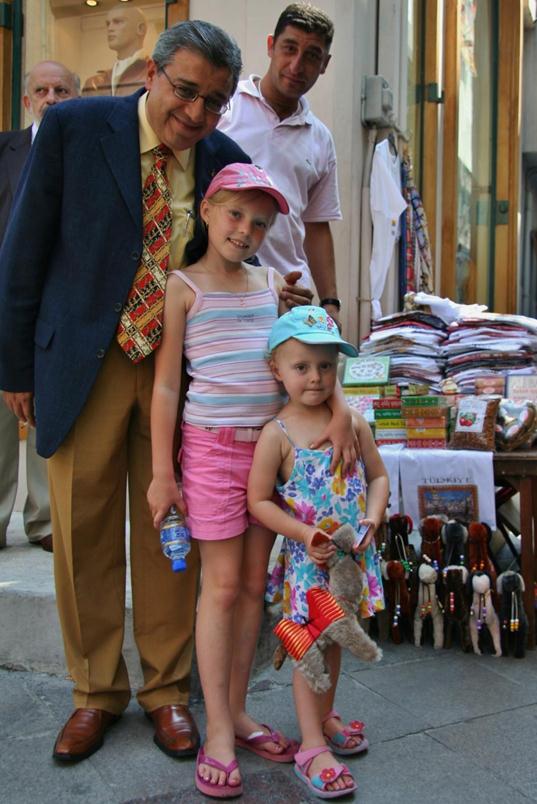
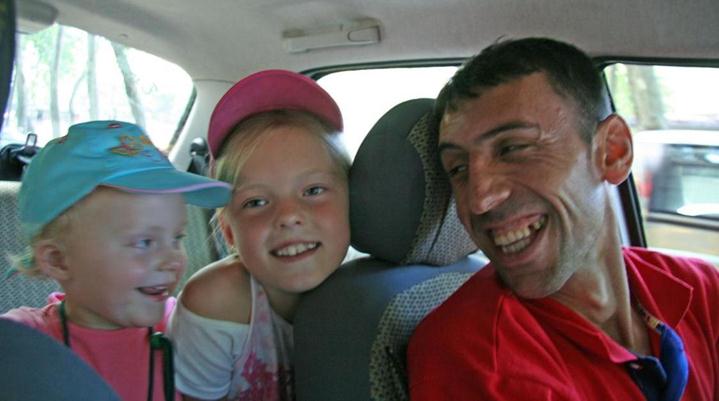
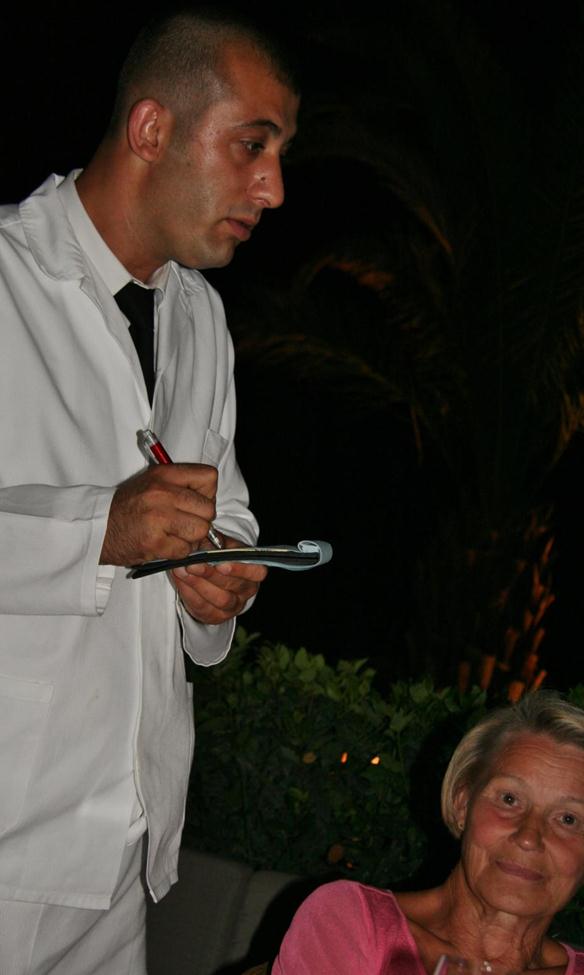
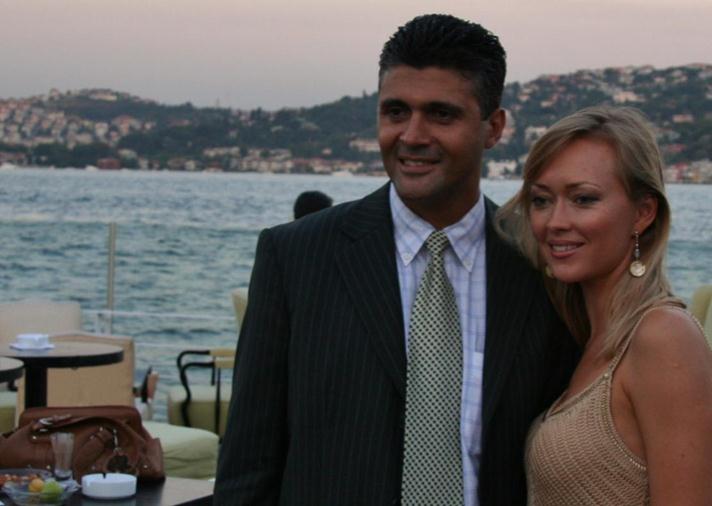
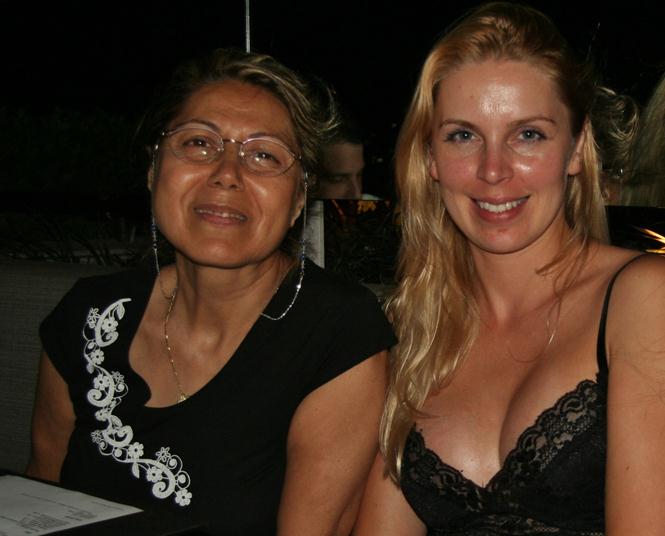
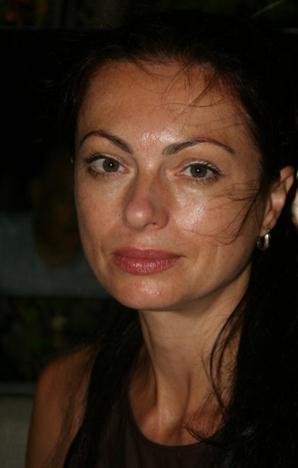
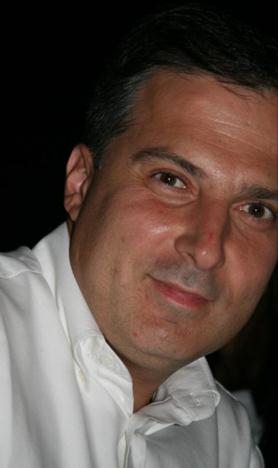
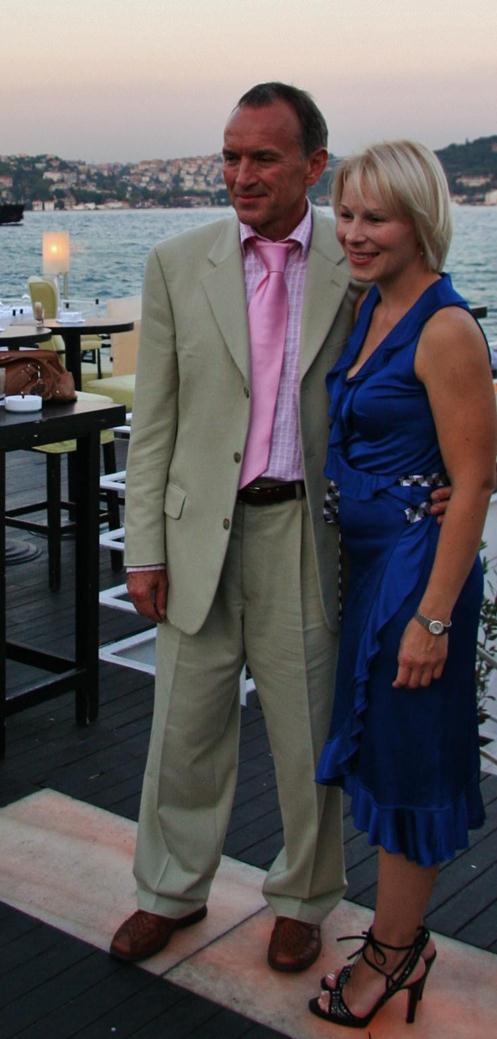
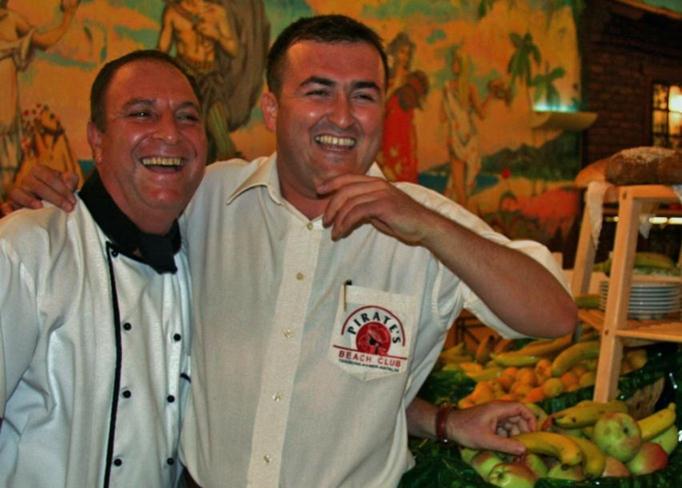
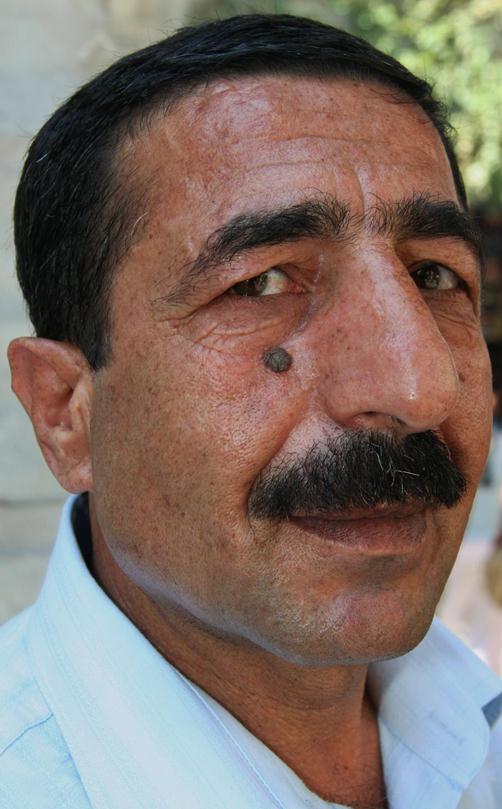
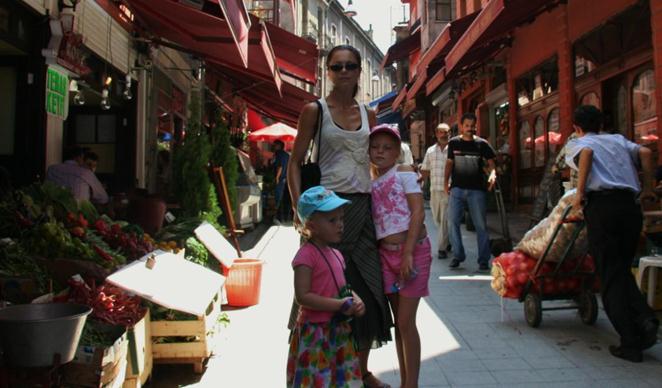
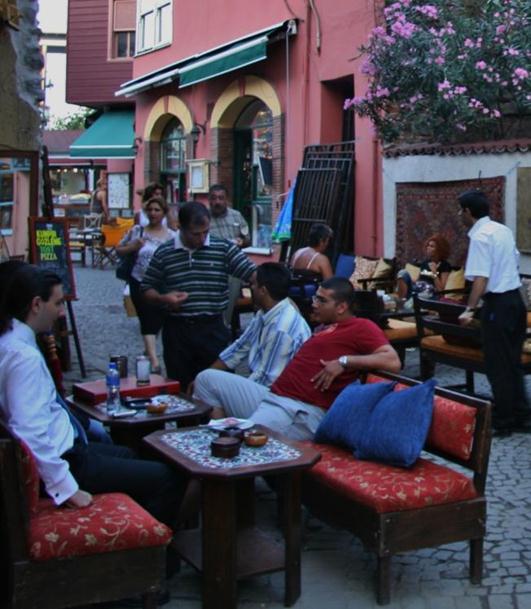
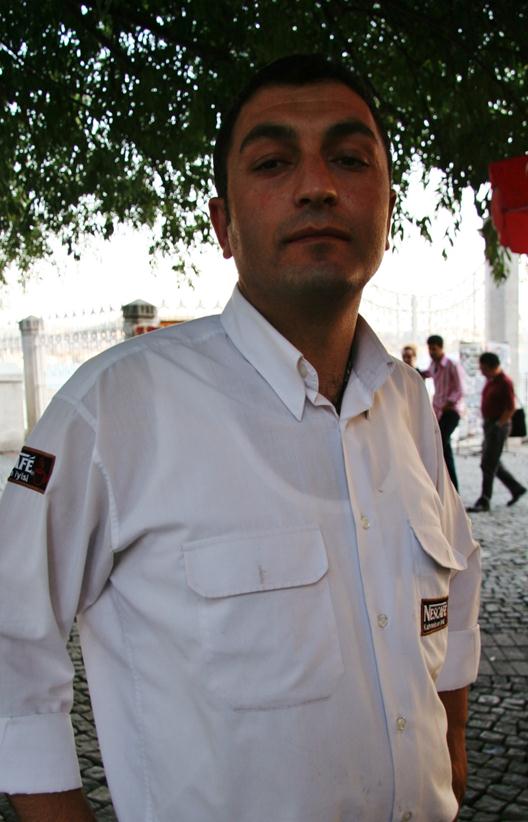
People I’ve met in Turkey
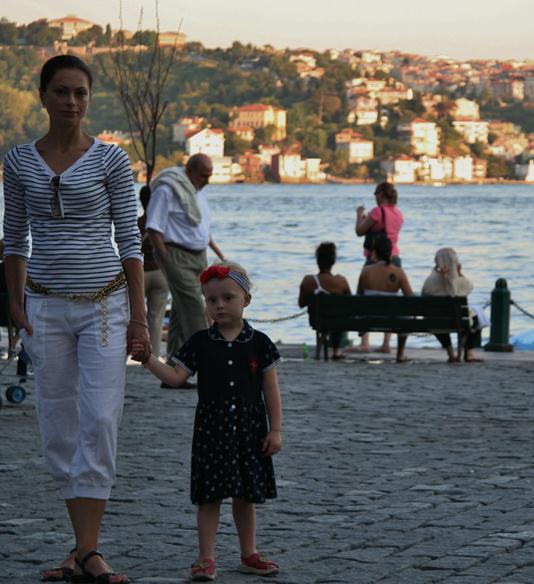
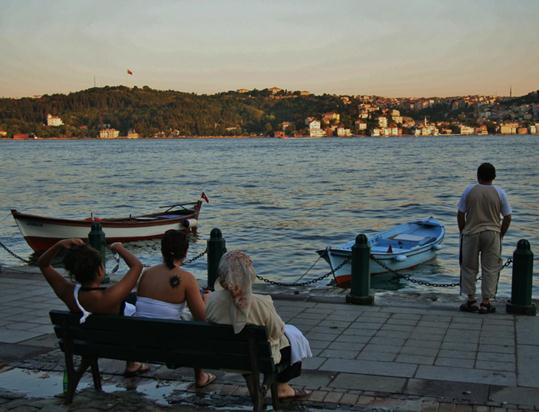
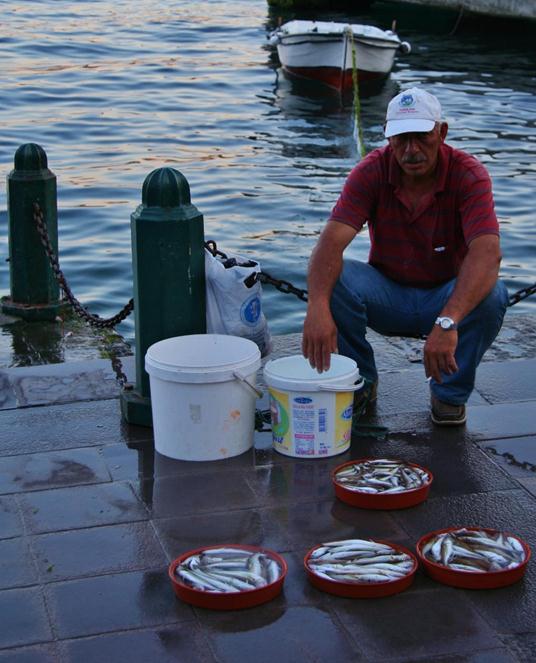
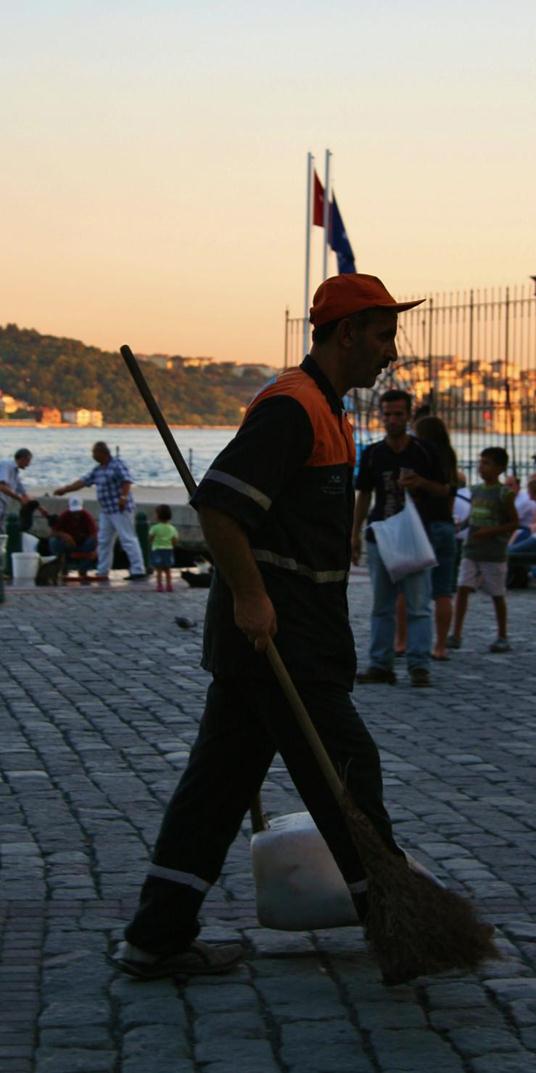
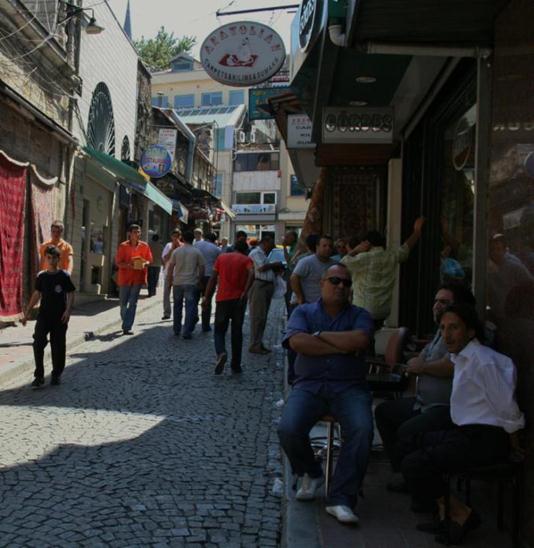
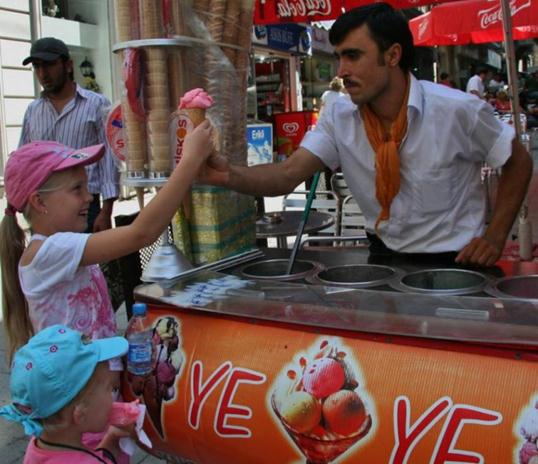
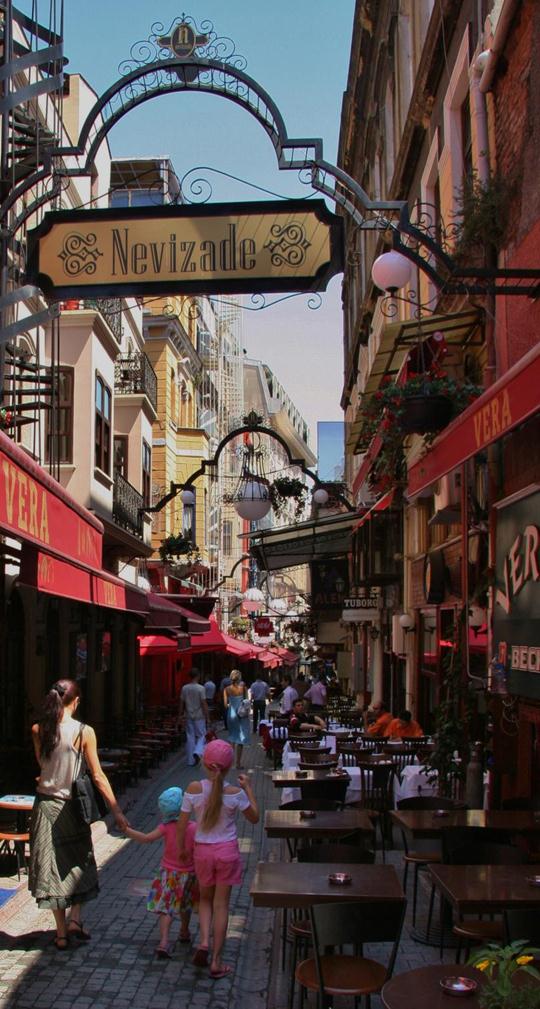
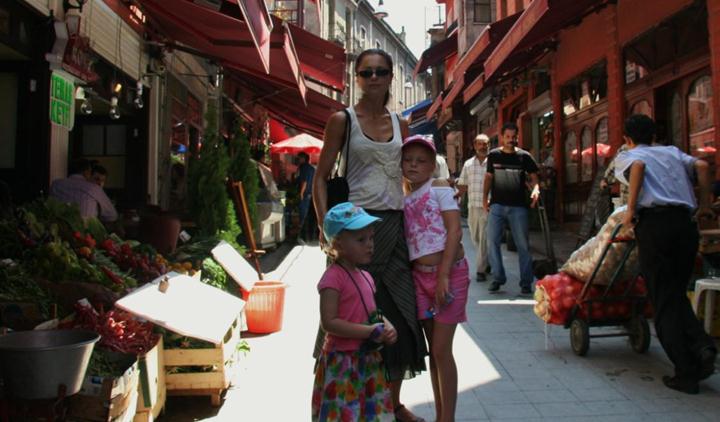
. 
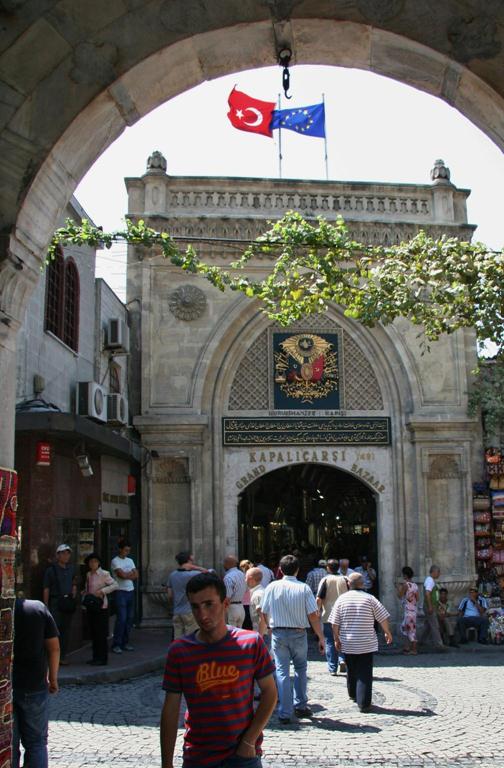
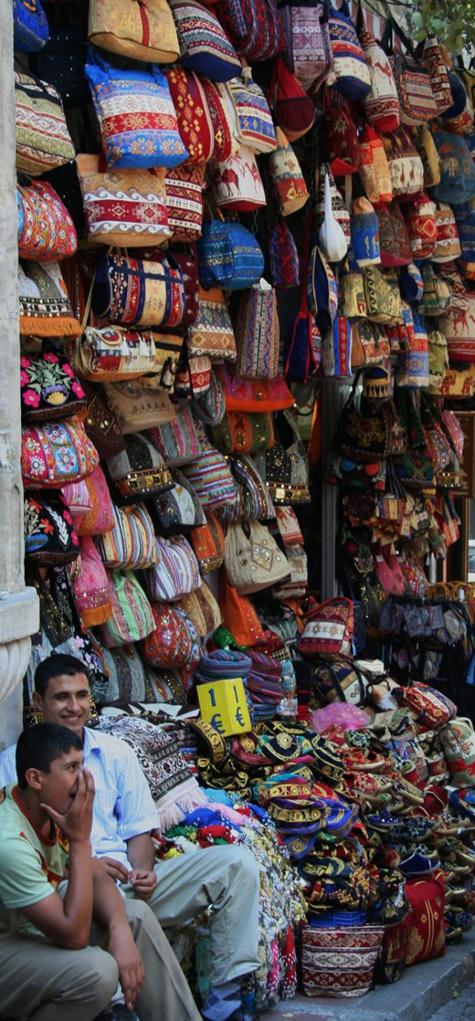
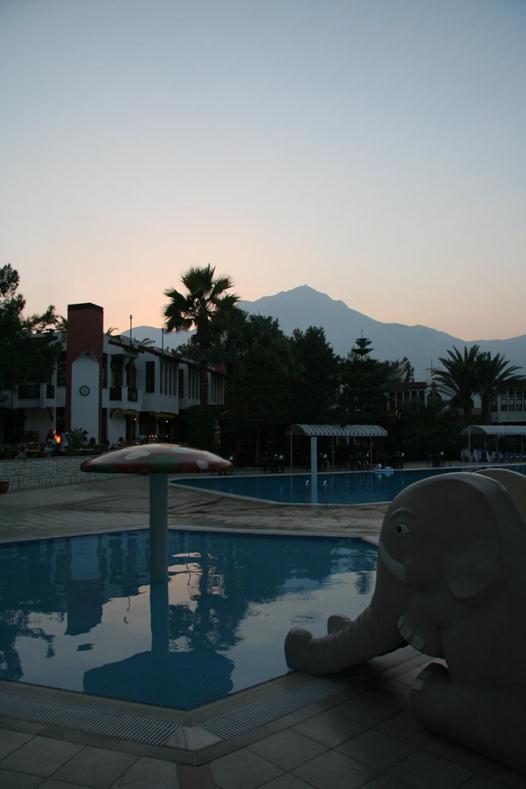
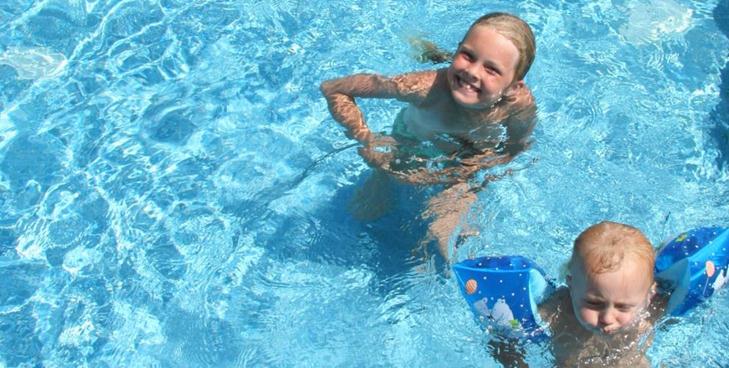
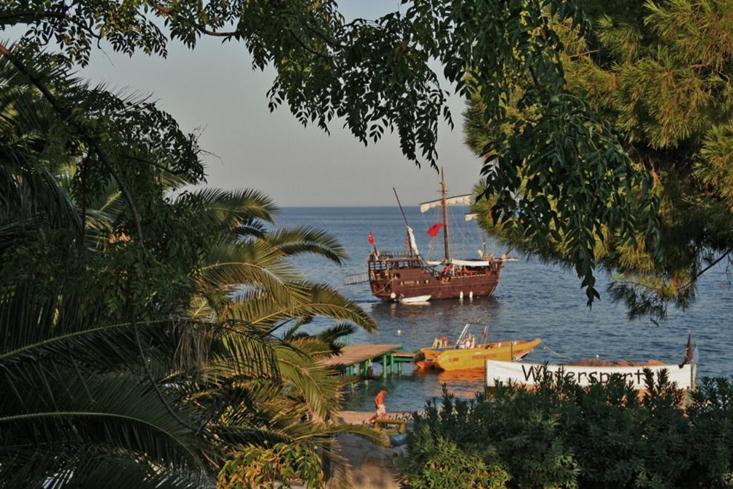
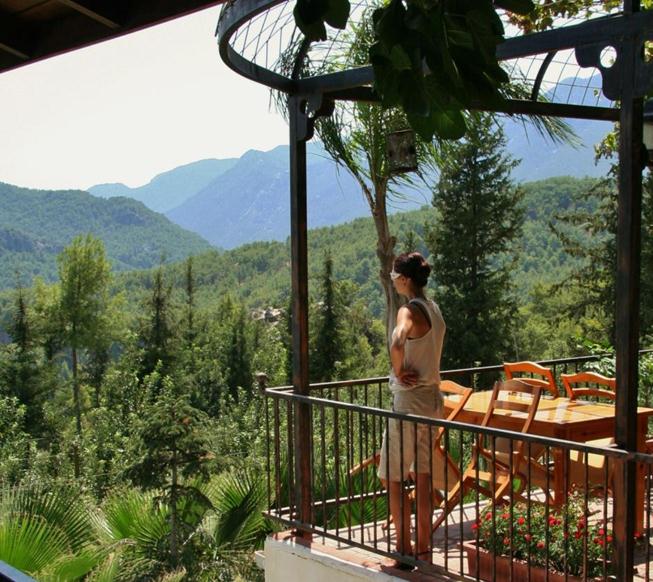
My views of Mediterranean Turkey
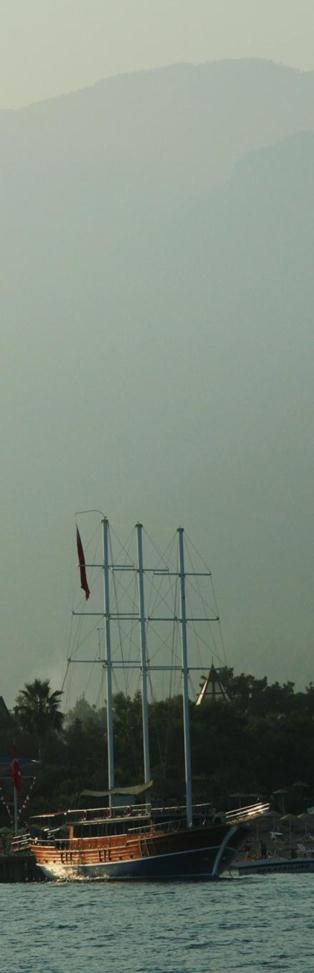
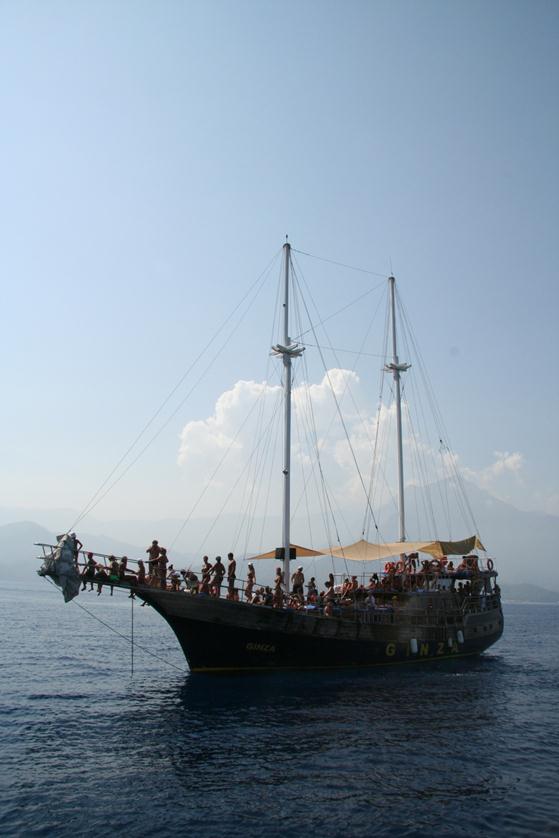
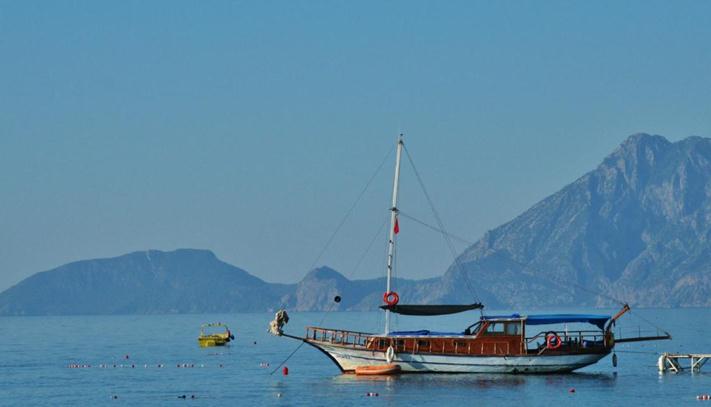
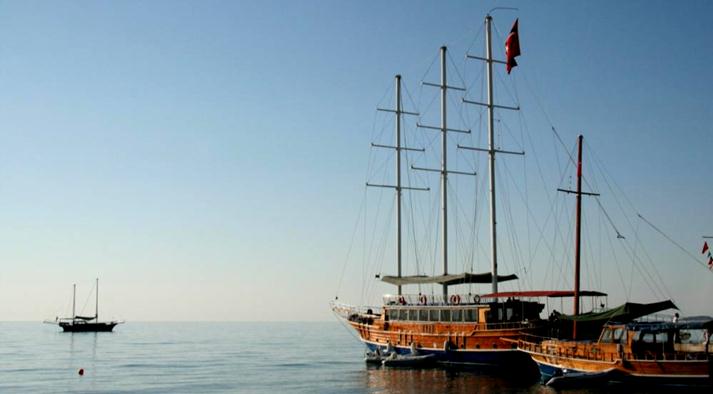
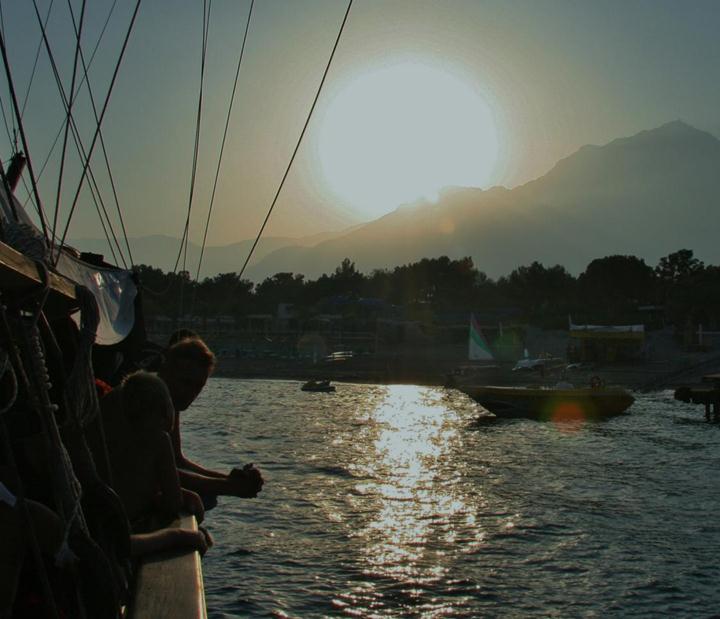
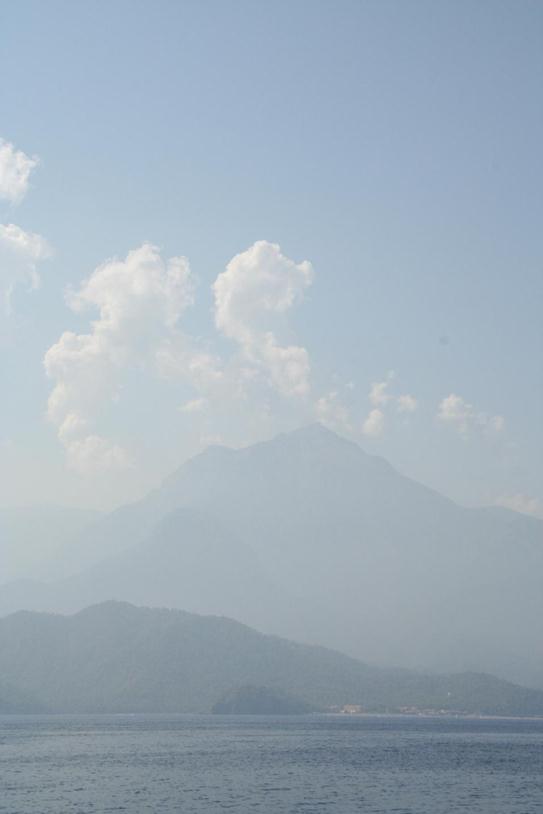
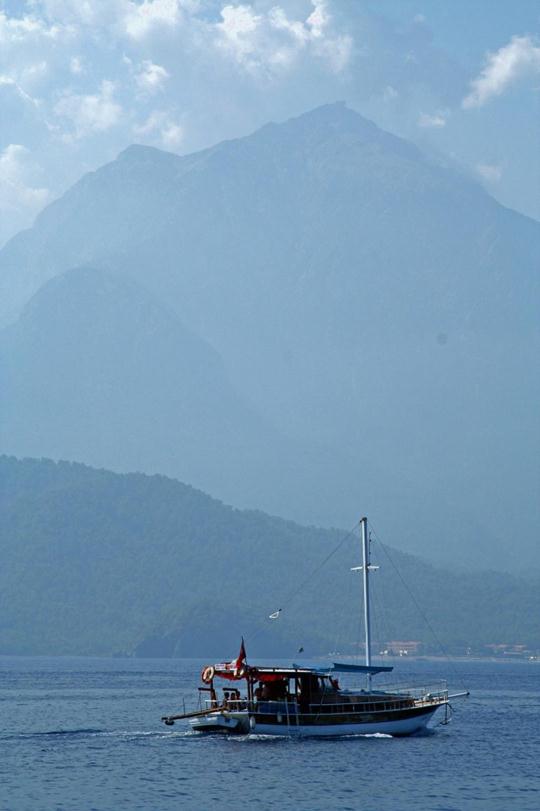
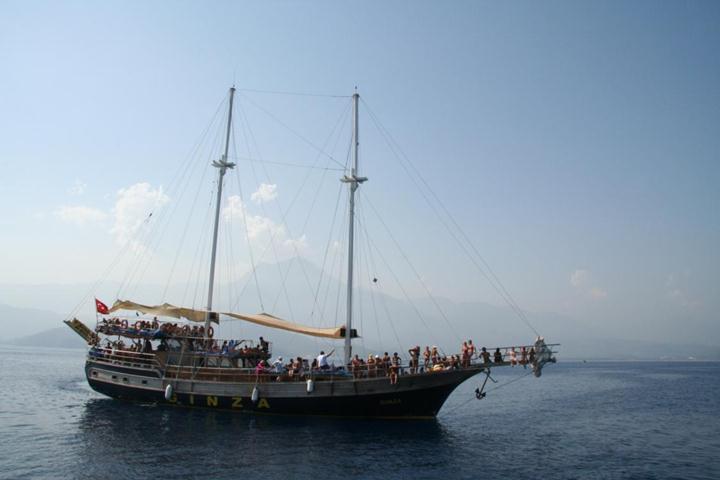
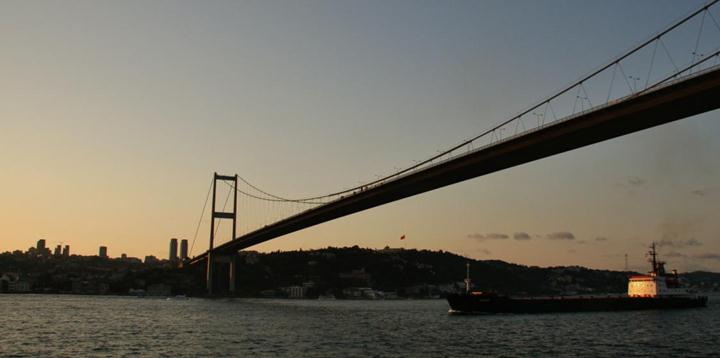
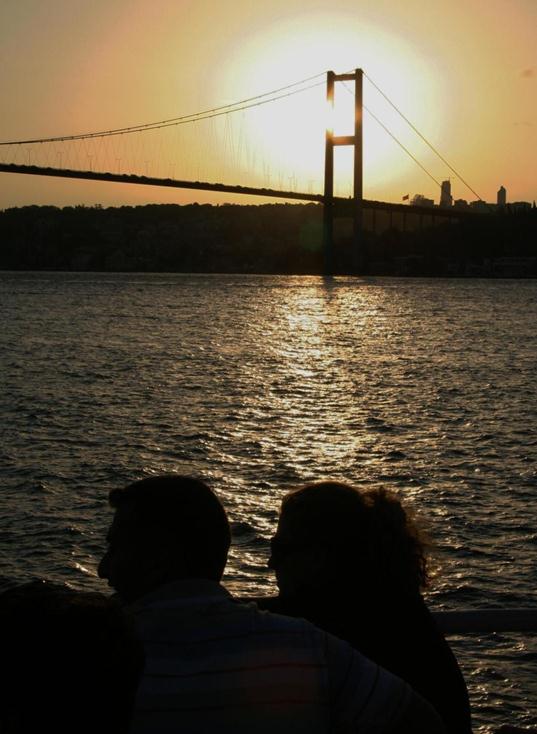
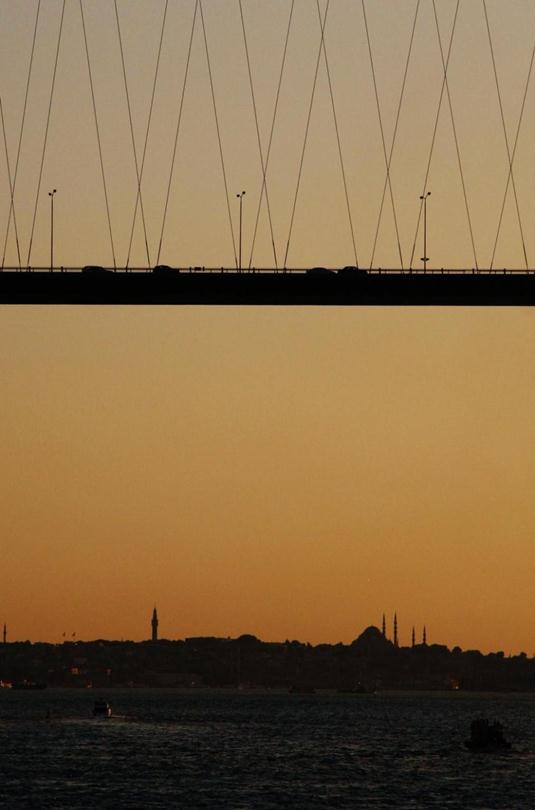
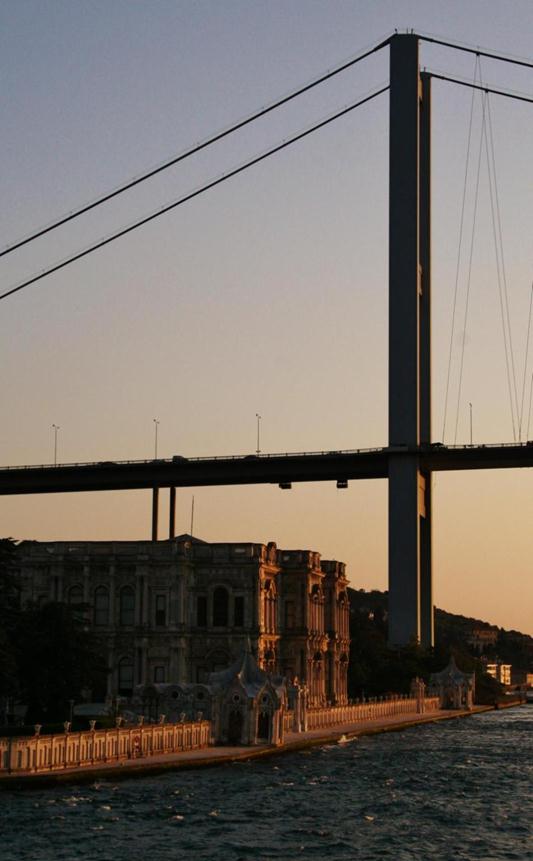
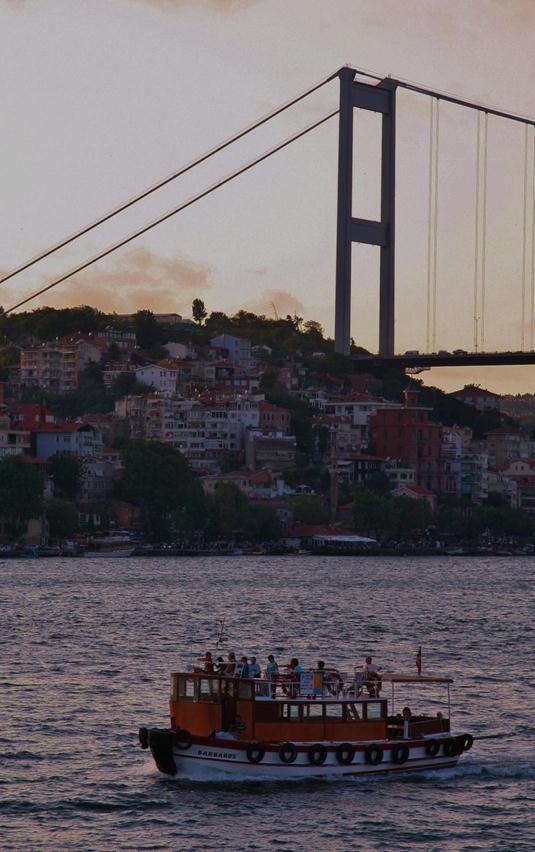
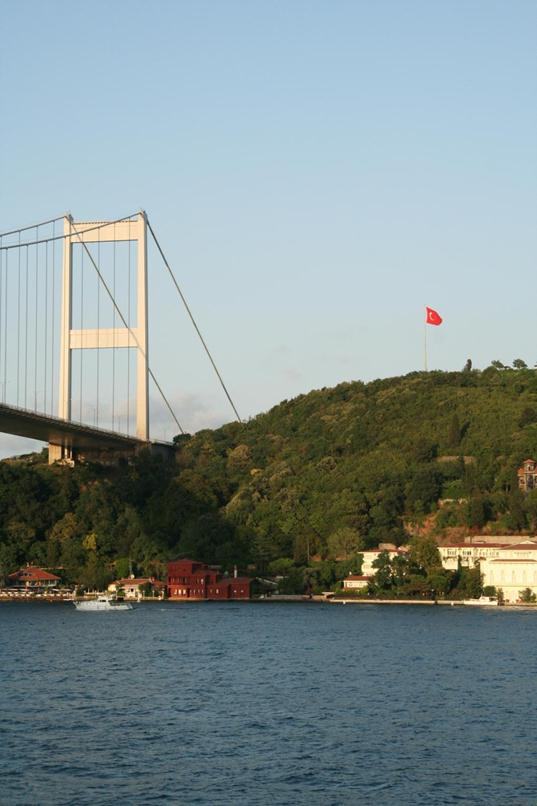
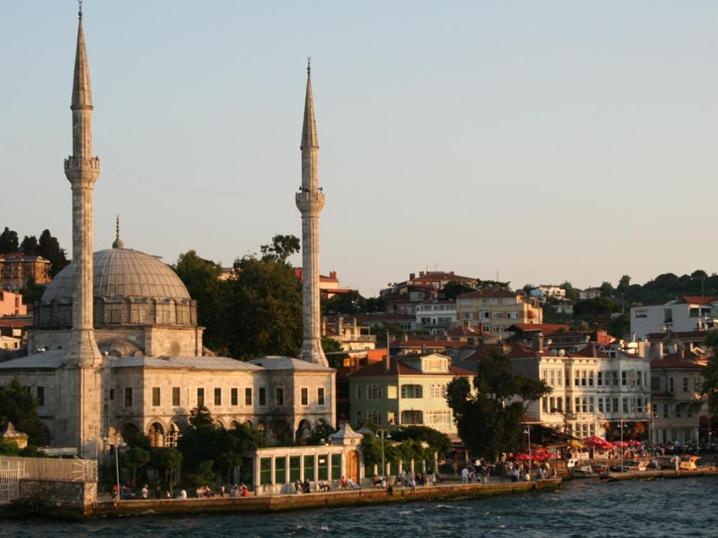
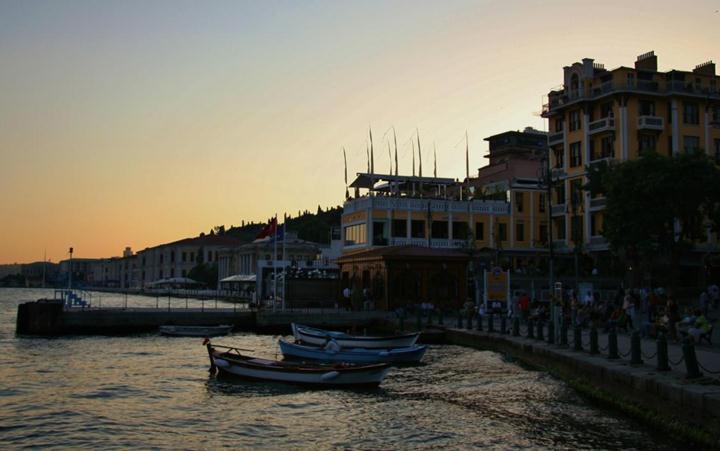
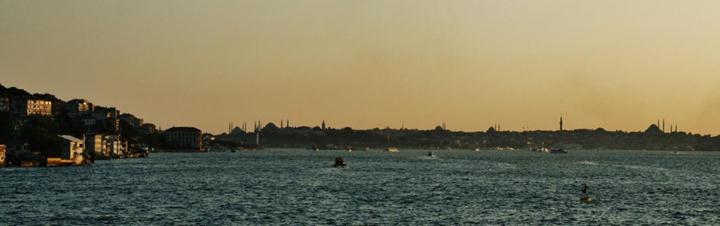
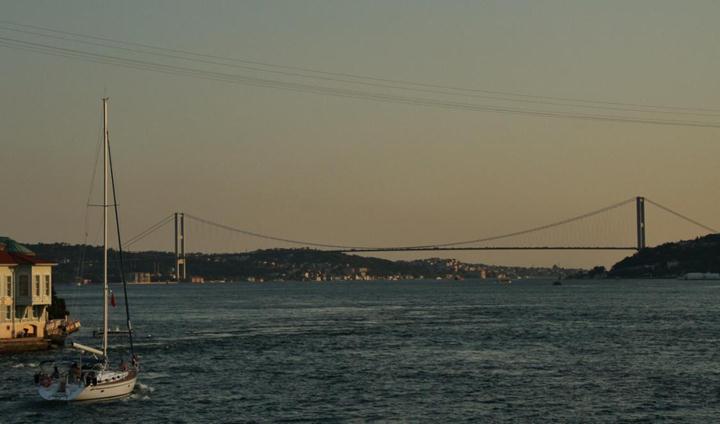
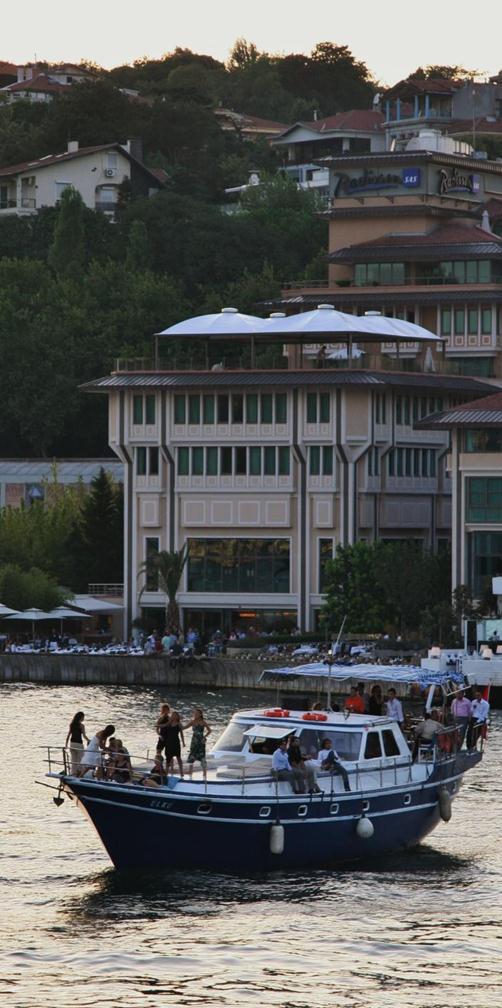
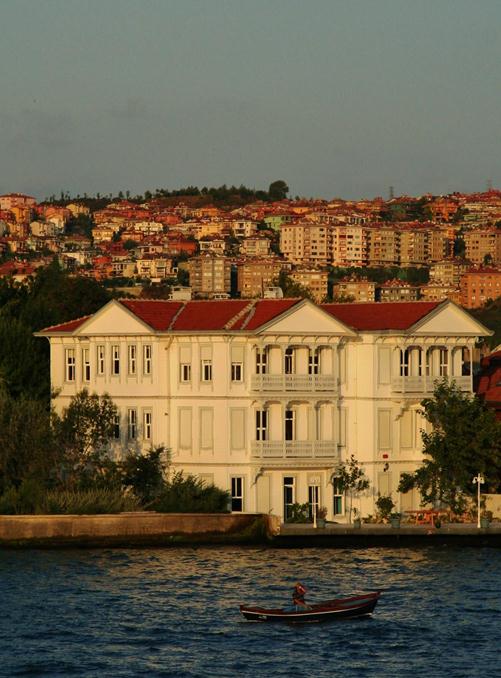
Bosporus – between Asia & Europe
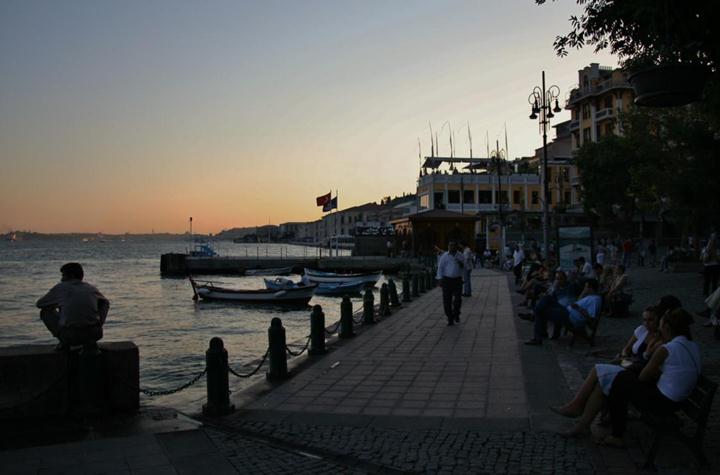
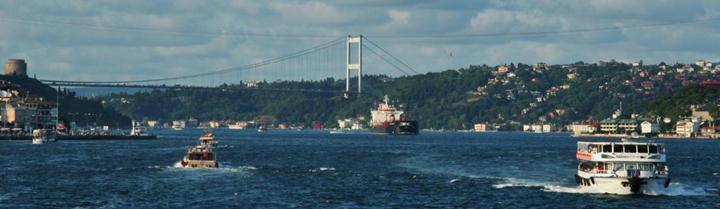
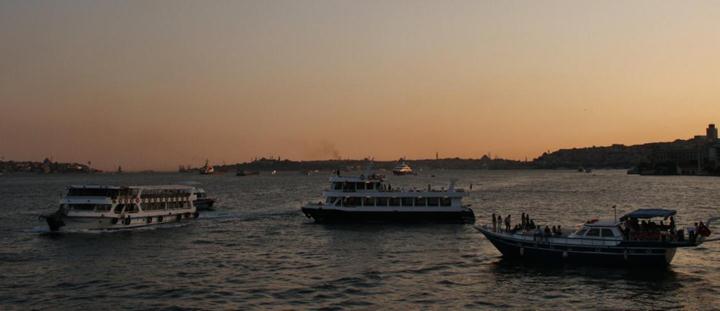
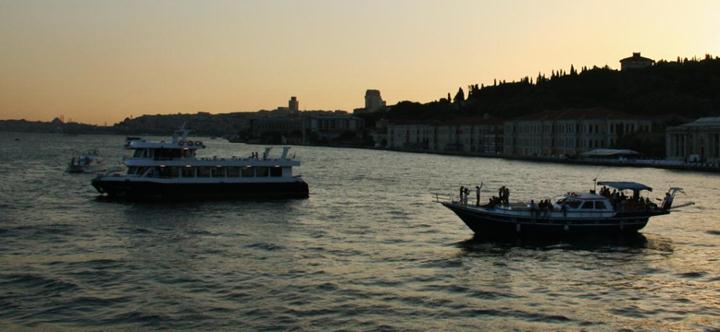
- Bookmark :
- Digg
- del.icio.us
- Stumbleupon
- Redit it

- Posted by - (1) Comment
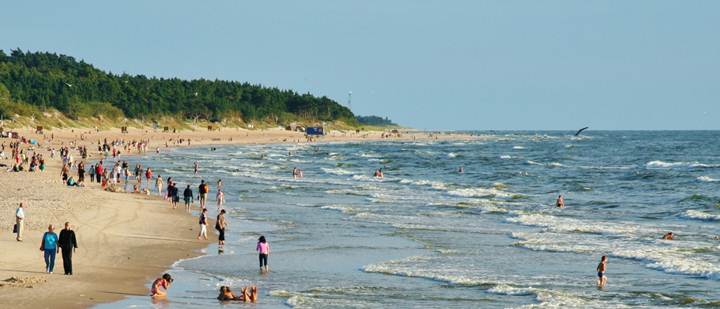
Hanseatic ships from Germany, Scandinavia and other European countries sailed during the 13th – 17th
centuries precisely here, along the endless, white sand beaches that so significantly
characterize the Lithuanian, Latvian and Estonian Baltic Sea coast.
Photo: Aage Myhre


EXPLORING EUROPE (8 of 10)
A Hanseatic route
through the Baltic States
Tour
guide, writer and photographer: Aage Myhre
aage.myhre@VilNews.com
VilNews is on its way around Europe!
Today our
journey starts in the 'Danish city' of
Tallinn, Estonia. We drive from there
|
Today’s tour:

|
|
|
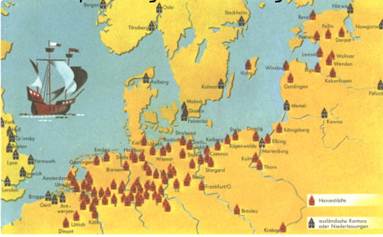
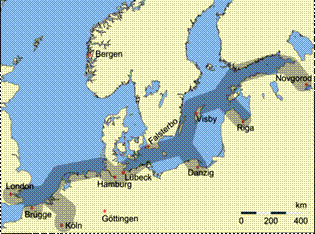
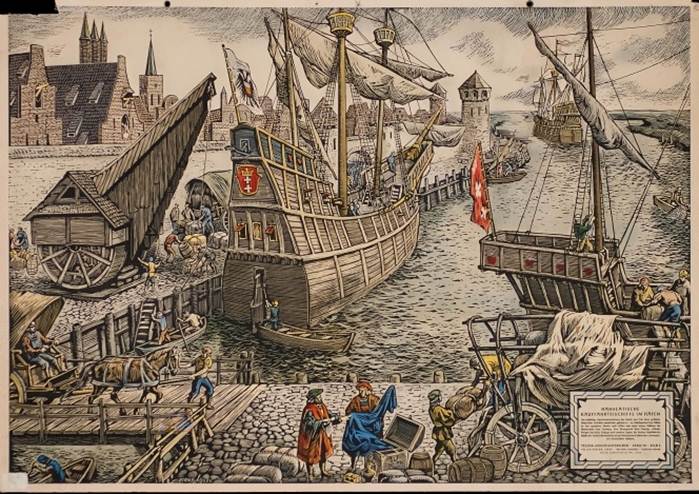
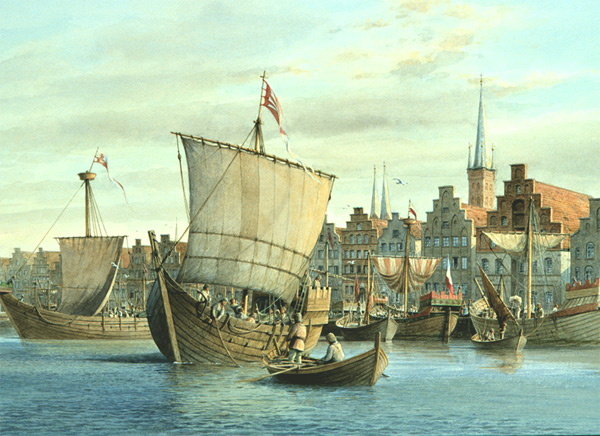
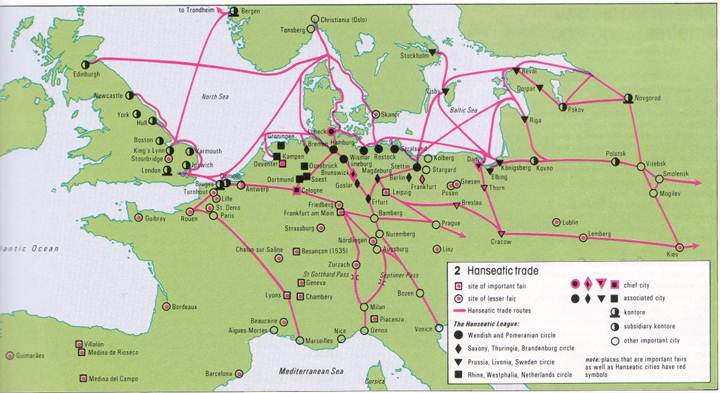
The Hanseatic League was an economic alliance of trading cities and their merchant guilds that dominated trade along the coast of Northern Europe. It stretched from the Baltic to the North Sea and inland during the Late Middle Ages and early modern period (c. 13th–17th centuries).
The League was created to protect commercial interests and privileges granted by foreign rulers in cities and countries the merchants visited. The Hanseatic cities had their own legal system and furnished their own protection and mutual aid. Despite this, the organization was not a city-state, nor can it be called a confederation of city-states; only a very small number of the cities within the league enjoyed autonomy and liberties comparable to those of a free imperial city.
Estonian and Latvian cities reaped huge profits from Hanseatic trade. Their connections to the Hansa were stronger than Lithuanian contacts because there were a large proportion of Germans in Livonia. Lithuania, on the other hand, retained its independence as the Grand Duchy of Lithuania and eventually came under Polish rule. German settlers were unwelcome in Lithuania and local peasants had more control over their own lands and product than in Livonia, where higher profits could be made by Hansamerchants. Nonetheless, the Grand Duchy of Lithuania was an important supplier of agricultural products and forest products from the banks of the Daugava to the Hansathrough the Livonian Hansa port at Riga..
Lübeck in northern Germany became a main base for merchants from Saxony and Westphalia trading eastward and northward. Well before the term Hanse appeared in a document (1267), merchants in different cities began to form guilds or Hansa with the intention of trading with towns overseas, especially in the economically less-developed eastern Baltic. This area was a source of timber, wax, amber, resins, furs, along with rye and wheat brought down on barges from the hinterland to port markets. The towns raised their own armies, with each guild being required to provide levies when needed. The Hanseatic cities came to each other's aid, and commercial ships often had to be used to carry soldiers and their arms.
Lübeck's location on the Baltic provided access for trade with Scandinavia and Kiev Rus, putting it in direct competition with the Scandinavians who had previously controlled most of the Baltic trade routes. A treaty with the Visby Hansa put an end to competition: through this treaty the Lübeck merchants also gained access to the inland Russian port of Novgorod, where they built a trading post or Kontor. Other such alliances formed throughout the Holy Roman Empire. Yet the League never became a closely managed formal organisation. Assemblies of the Hanseatic towns met irregularly in Lübeck for a Hansetag (Hanseatic Diet), from 1356 onwards, but many towns chose not to send representatives and decisions were not binding on individual cities. Over time, the network of alliances grew to include a flexible roster of 70 to 170 cities.
Riga joined the Hanseatic League in 1282, and become the first Hanseatic City in Livonia. Tallinn was the next Livonian city to join the group. In Lithuania, local merchants were subject to the laws of the grand Duchy of Lithuania and were free to conduct trade with Hansa merchants, but the Hansa merchants found it difficult to secure a monopoly on Lithuanian trade. The Grand Duchy of Lithuania was hostile to the Germans after attempts at conquest. Tariffs were exacted at the Lithuanian borders with Poland and Livonia. Hansa merchants were tolerated, if they paid their tariffs, and developed trade routes through Lithuania all the way down to the Bug river where the Ukraine is today.
At the start of the 16th century, the League found itself in a weaker position than it had known for many years. The rising Swedish Empire had taken control of much of the Baltic. Denmark had regained control over its own trade, the Kontor in Novgorod had closed, and the Kontor in Bruges had become effectively moribund. The individual cities which made up the League had also started to put self-interest before their common Hanseatic interests. Finally, the political authority of the German princes had started to grow—and so to constrain the independence of action which the merchants and Hanseatic towns had enjoyed. By the late 16th century, the League had imploded and could no longer deal with its own internal struggles, the social and political changes that accompanied the Protestant Reformation, the rise of Dutch and English merchants, and the incursion of the Ottoman Empire upon its trade routes and upon the Holy Roman Empire itself. Only nine members attended the last formal meeting in 1669 and only three (Lübeck, Hamburg and Bremen) remained as members until its final demise in 1862.
|
|
Estonia
|

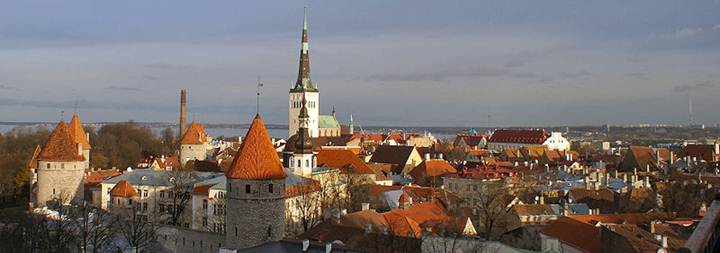
Tallinn,
capital city of Estonia, was the northernmost city of the Hanseatic League.
Photo:
Wikipedia.
Estonia is the northernmost Baltic State. It is bordered to the north by the Gulf of Finland, to the west by the Baltic Sea, to the south by Latvia (343 km), and to the east by Lake Peipsi and the Russian Federation (338.6 km). Across the Baltic Sea lies Sweden in the west and Finland in the north. The territory of Estonia covers 45,227 km2 (17,462 sq mi), and is influenced by a temperate seasonal climate. The Estonians are a Finnic people, and the official language Estonian, is closely related to Finnish.
Estonia is a democratic parliamentary republic divided into 15 counties. The capital and largest city is Tallinn. With a population of 1.34 million, Estonia is one of the least-populous members of the European Union, Eurozone and NATO. Estonia has the highest GDP per person among former Soviet republics. Estonia is listed as a "High-Income Economy" by the World Bank, as an "advanced economy" by the International Monetary Fund and the country is an OECD member. The United Nations lists Estonia as a developed country with a Human Development Index of "Very High". The country is also ranked highly for press freedom, economic freedom, democracy and political freedom and education.
There are seven Hanseatic League towns in Estonia and each summer everyone is welcome to join the Hanseatic Days which recreate the spirit of that era. On Hanseatic days people dress up in medieval clothing, cook medieval food and play medieval games and music. Handmade goods are offered at the medieval market. Masters demonstrate, and apprentices learn, how to make things using leather, wool, rope, cloth, wood, twigs and clay. These sessions are a lot of fun and highly educational – perfect for families.
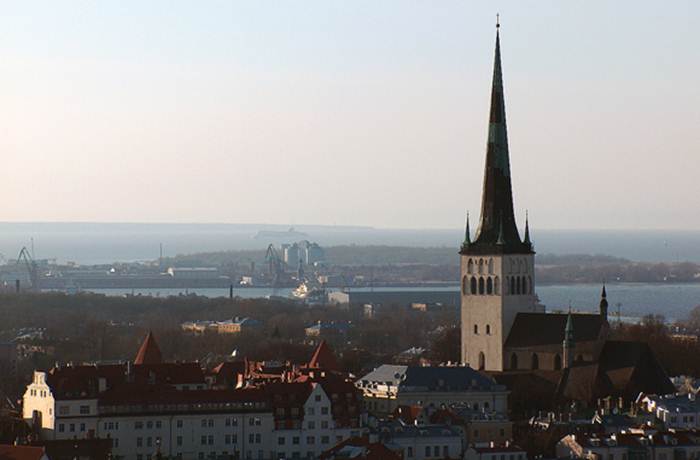
Tallinn’s St. Olaf's church was the tallest building in the
world between 1549 and 1625.
Tallinn – the medieval 'Danish town’ that had the world's first Christmas tree
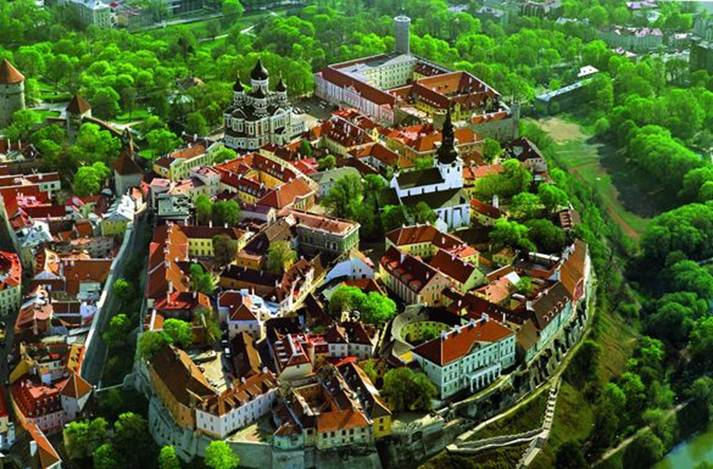
Tallinn
means supposedly ‘The Walled Danish City 'in Estonian.
Photo: Tourism.tallinn.ee.
It
was in 1219 that Danish crusaders, under the command of King Valdemar II (the
victorious), won the crucial battle over Estonia’s pagans. During the last
phase of this battle, says the legend, God gave the Danes the win by letting a
red banner with a white cross fall from the sky, over the hard-pressed
Crusaders. Inspired by this 'divine miracle' the Danes strength came back
and they won the battle. The Danes are thus still ‘in debt’ to Estonia for
its flag, Dannebrog, the world's oldest state flag still in use. The name
Tallinn means supposedly the walled Danish city’. In Estonian, the legacy of
Denmark lives, even today.
In 1285 Tallinn became the northernmost member of the Hanseatic League, which
during the 1300s concerned the Danish kings more and more. The Hanseatic
League power grew, and in 1346 the Danes ‘gave in’ and sold Tallinn, along with
large areas of land in northern Estonia, to the Teutonic Order. The city,
with a population of 8000, was at that time very well entrenched within a
strong city wall with 66 defense towers.
In contrast to other capitals in Europe, Tallinn managed to preserve the
totality and the structures of its medieval and Hanseatic origin. Most of
the cobbled streets are still as they once were. Buildings, dated as far
back as the 11th century, are preserved in their original form.
The City Hall - Town Hall Square - stands still, after seven centuries, as the ancient,
well preserved heart of the city. The City Hall itself, the only intact
Gothic town hall in Northern Europe, is now a museum and concert hall.
The Town Hall Square is also known for something Estonians themselves claim is
a historical fact, that it was here the world's very first Christmas tree was
born. Here Christmas lights were lit already in 1441...
The medieval feeling creeps over me as we walk along the old city wall and its
26 watchtowers. We stop at the narrow Müürivahe Street (near Viru Gate)
where the old wall has been preserved in its original form. Further
medieval I'm hardly ever.
|
|
Latvia
|

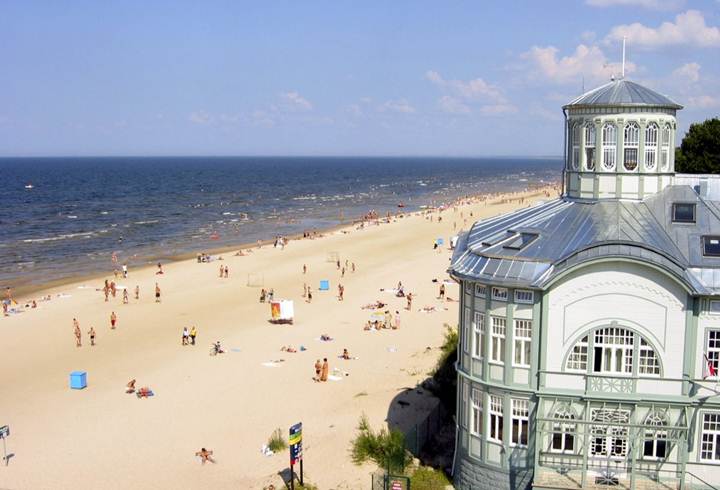
Jūrmala
is a resort town in Latvia, about 25 kilometres west of Riga. Jūrmala is a stretching
32
kilometres (20 mi) along the amazing beaches, with a population of 55,580.
Photo:
Wikipedia.
Latvia is the Baltic State 'in the middle'. It is bordered to the north by Estonia (border length 343 km), to the south by Lithuania (588 km), to the east by the Russian Federation (276 km), to the southeast by Belarus (141 km), and shares maritime borders to the west with Sweden. With 2,067,887 inhabitants and a territory of 64,589 km2 (24,938 sq mi) it is one of the least populous and least densely populated countries of the European Union. The capital of Latvia is Riga. The official language is Latvian and the currency is called Lats (Ls).
The Latvians are a Baltic people, culturally related to the Lithuanians. Together with the Finno-Ugric Livs (or Livonians), the Latvians are the indigenous people of Latvia. Latvian is an Indo-European language and along with Lithuanian the only two surviving members of the Baltic branch. Indigneous minority languages are Latgalian and the nearly extinct Finno-Ugric Livonian language. Latvia and Estonia share a long common history: historical Livonia, times of German, Polish-Lithuanian, Swedish, Russian, Nazi German and Soviet rule, 13th century Christianization and 16th century Protestant Reformation. Both countries are home to a large number of ethnic Russians (26.9% in Latvia and 25.5% in Estonia) of whom some are non-citizens. Latvia is historically predominantly Protestant, except for the region of Latgalia in the southeast which is historically predominantly Roman Catholic.
Latvia is a unitary parliamentary republic and is divided into 118 administrative divisions of which 109 municipalities and 9 cities. There are five planning regions: Courland (Kurzeme), Latgalia (Latgale), Riga (Rīga), Vidzeme and Zemgale. The Republic of Latvia was founded on November 18, 1918. It was occupied and annexed by the Soviet Union between 1940–1941 and 1945–1991 and by Nazi Germany between 1941–1945. The peaceful "Singing Revolution" between 1987 and 1991 and "Baltic Chain" demonstration on August 23, 1989 led to the independence of the Baltic states. Latvia declared the restoration of its de facto independence on August 21, 1991.
Latvia is a member of the United Nations, European Union, Council of Europe, NATO, OSCE, IMF and WTO, and is part of the Schengen Area. It was a member of the League of Nations (1921–1946) and the Baltic Free Trade Area (1994–2004). Latvia is also a member of the Council of the Baltic Sea States and Nordic Investment Bank, and is together with Estonia and Lithuania involved in trilateral Baltic States cooperation and Nordic-Baltic cooperation.
After economic stagnation in the early 1990s, Latvia posted Europe-leading GDP growth figures during 1998–2006. In the global financial crisis of 2008–2010 Latvia was the hardest hit of the European Union member states, with a GDP decline of 26.54% in that period. Commentators noted signs of stabilisation in the Latvian economy by 2010. The United Nations lists Latvia as a country with a Human Development Index (HDI) of "Very High".
Riga – the Hanseatic city that became the world's leading Art Nouveau Centre
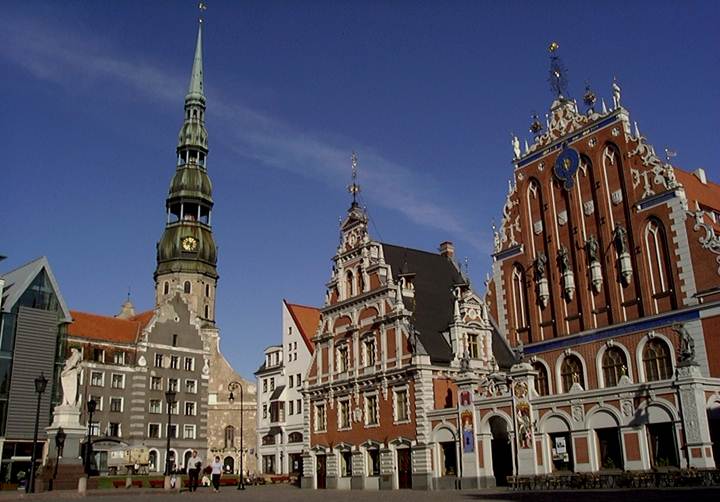
The
Town Hall Square in Riga.
Photo: Rigalatvia.net.
Riga
is the largest Baltic city. Around 700,000 live here. Riga is located
at the mouth of the Daugava River, which has functioned as a trade route since
ancient days. From here the Viking ships sailed up the rivers on their way
to the Caspian Sea and Constantinople, today's Istanbul. Riga's history
goes back to the 2nd century, but began to develop as a centre when the
Viking trade took off in the early Middle Ages. In 1282 Riga became a
member of the Hanseatic League. Hansa was instrumental in giving Riga
economic and political stability, and the town has retained its position as the
energy point of the Baltic Sea's southeastern shore.
Still today is part of the old wall from the 14th century
intact. Most of the wall was originally removed to give the city room for expansion. As
for the other two Baltic capitals, the old town is interesting. Soviet
buildings outside the city centre is just sad stuff. Just a shame you see
them too well when you drive into the old town; where cobbled streets, gabled
houses, churches, shops and restaurants are creating a phenomenally warm, good
atmosphere.
When I first came here to the old town, in January 1991, it was freezing cold
outside. But the Latvians had lit bonfires, many, and made themselves a
human wall around the parliament to prevent the Soviet forces, who stood around,
to come in. It was while I was in Parliament here that I experienced the
Soviet Union's propaganda lies. When I was in the Parliament the 17th
of January 1991, Soviet television reported that their soldiers had taken over
the parliament building. I, and many others, were inside the building, listening
in disbelief as no single Soviet soldier was to see inside.
At the end of the 1800s, many European traders settled in Riga. They left
their distinctive marks on the city, not least by raising many buildings in Art
Nouveau style. This was the original French genre reflecting creative
freedom; classic elements interwoven with flowing lines and decorative shapes
and objects.
Riga is said to contain the largest concentration of Art Nouveau buildings in
the world. And the Art Nouveau architecture in Riga is truly
fascinating. Many buildings have been restored in full glory, as they were
built during the years 1894-1914. There are over 800 Art Nouveau buildings
here, which makes it extremely interesting to walk around the streets
here. I am overwhelmed by these wonders.
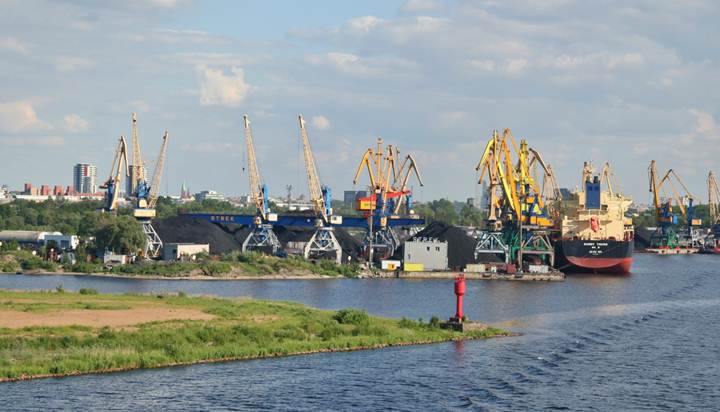
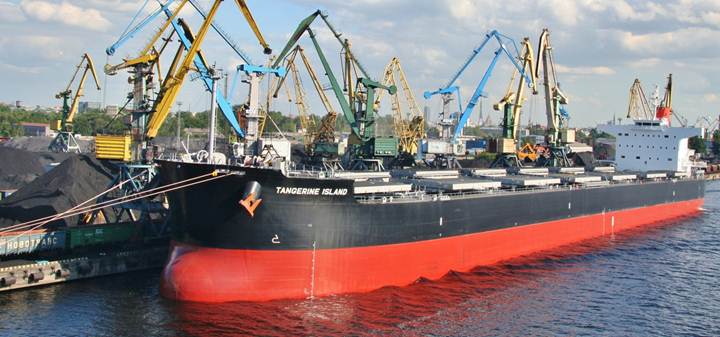
The
Hanseatic Riga Port.
Photos: Aage Myhre.
|
|
Lithuania
|

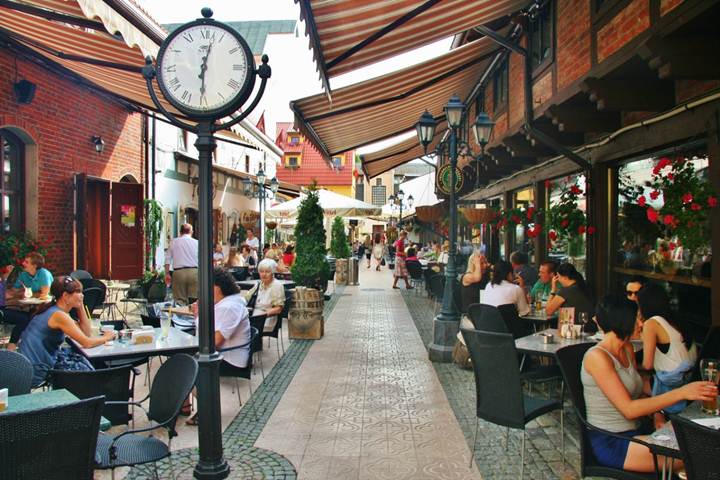
The Friedricho pasažas (Friedrich passageway) is a unique
restaurant complex in
Lithuania’s coastal city Klaipėda.
Photo: Aage Myhre.
Lithuania is the southernmost and largest of the three Baltic states. It is situated along the southeastern shore of the Baltic Sea, whereby to the west lie Sweden and Denmark. It borders Latvia to the north, Belarus to the east and south, Poland to the south, and a Russian exclave (Kaliningrad Oblast) to the southwest. Lithuania has an estimated population of 3.2 million as of 2011, and its capital and largest city is Vilnius. The Lithuanians are a Baltic people, and the official language, Lithuanian, is one of only two living languages (together with Latvian) in the Baltic branch of the Indo-European language family.
For centuries, the southeastern shore of the Baltic Sea was inhabited by various Baltic tribes. In the 1230s the Lithuanian lands were united by Mindaugas, who was crowned as King of the Grand Duchy of Lithuania, the first Lithuanian state, on 6 July 1253. During the 14th - 16th century, Grand Duchy of Lithuania was the largest country in Europe: present-day Belarus, Ukraine, and parts of Poland and Russia were territories of the Grand Duchy of Lithuania. With the Lublin Union of 1569, Lithuania and Poland formed a voluntary two-state union, the Polish–Lithuanian Commonwealth. The Commonwealth lasted more than two centuries, until neighbouring countries systematically dismantled it from 1772 to 1795, with the Russian Empire annexing most of Lithuania's territory.
In the aftermath of World War I, Lithuania's Act of Independence was signed on 16 February 1918, declaring the re-establishment of a sovereign state. Starting in 1940, Lithuania was occupied first by the Soviet Union and then by Nazi Germany. As World War II neared its end in 1944 and the Germans retreated, the Soviet Union reoccupied Lithuania.
On 11 March 1990, the year before the break-up of the Soviet Union, Lithuania became the first Soviet republic to declare independence. Prior to the global financial crisis of 2007–2010, Lithuania had one of the fastest growing economies in the European Union. Lithuania is a member of NATO, the Council of Europe, and the European Union. Lithuania is also a full member of the Schengen Agreement. The United Nations Human Development Index lists Lithuania as a "Very High Human Development" country. In 2011, Lithuania hosted the European men's basketball championship, EuroBasket 2011, and the OSCE Ministerial Council Meeting.
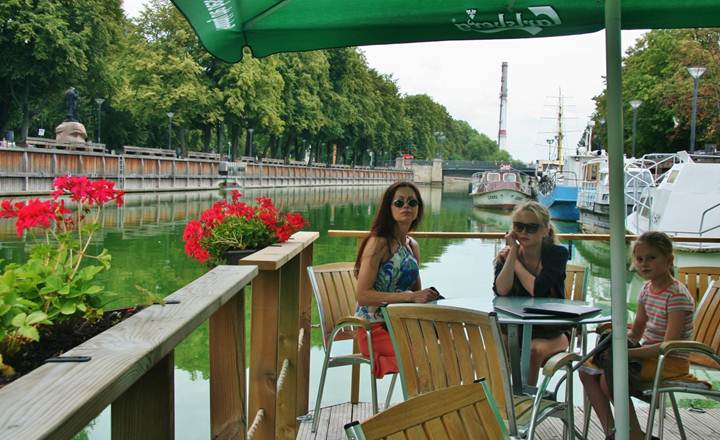
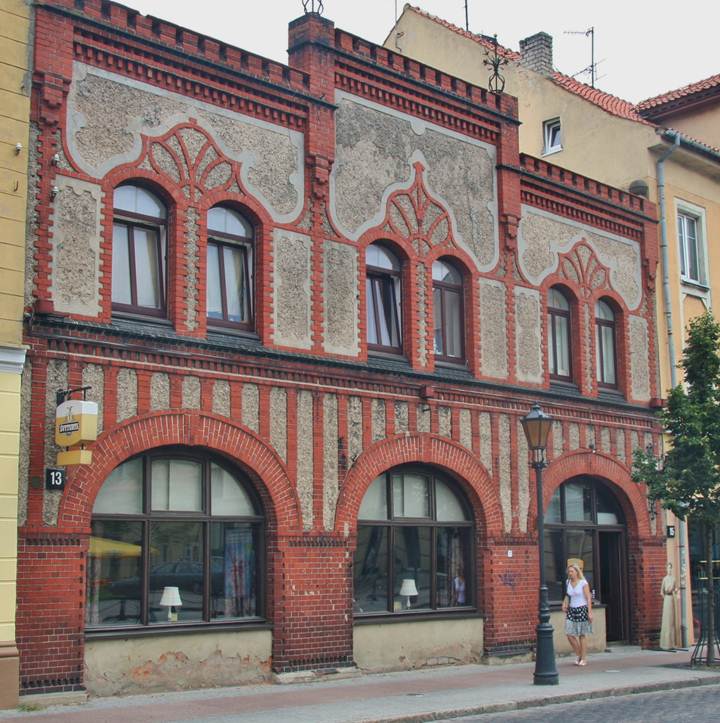
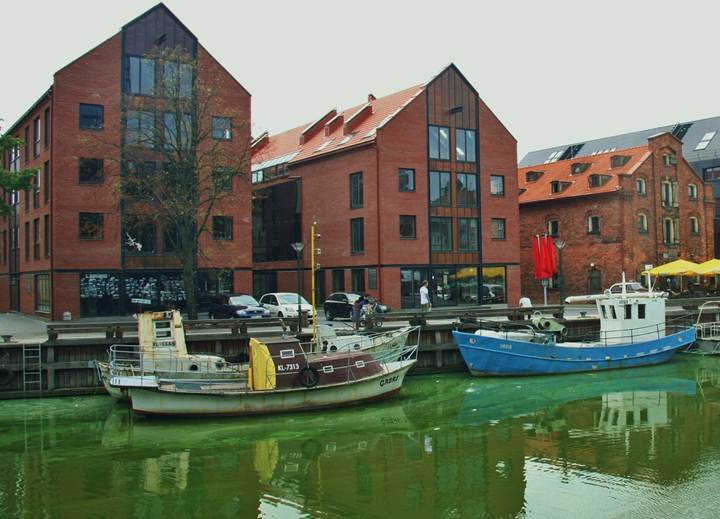
Klaipeda – Lithuania's 'German' port city, at the best Baltic Sea beaches
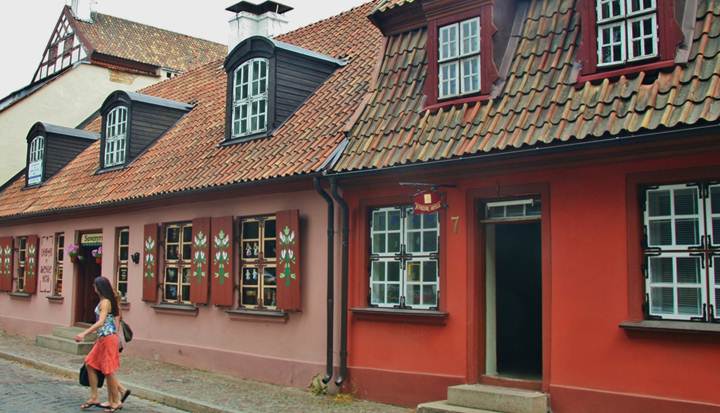
Photo: Aage Myhre.
The
image of the Baltic States as dull, gray and
Soviet like is very much incorrect. This I learned already during my
first visit here in 1990. Still, it surprised me to come to Klaipeda,
a city quite different from the other Lithuanian cities. More German
looking in a way. I soon learned that the Lithuanian port
city once was called Memel and that the area out
here on the Baltic Sea coast some time ago belonged
to Germany.
A trip from Vilnius to Klaipeda takes less than
three hours on the 4-lane motorway. But the difference in
architectural style is as if to drive from Florence to Hamburg....
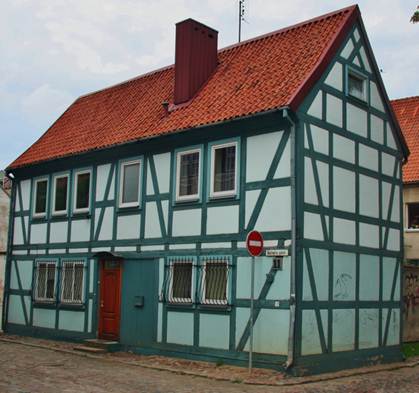
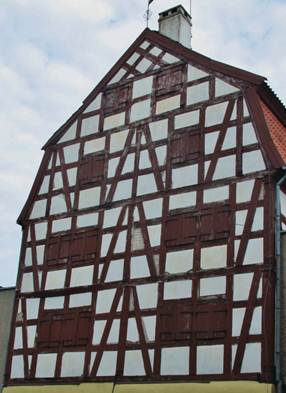
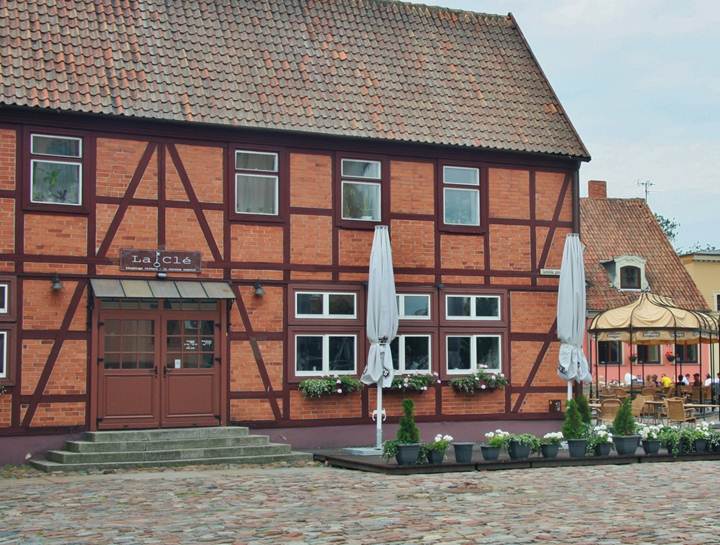
Klaipeda was founded in 1252, and in this old town you
can see many, many buildings that
each tells stories about the life and development
over 700 years. Houses with timber frames and masonry, some
pure brick houses, adorn the
cobblestone streets side by side.
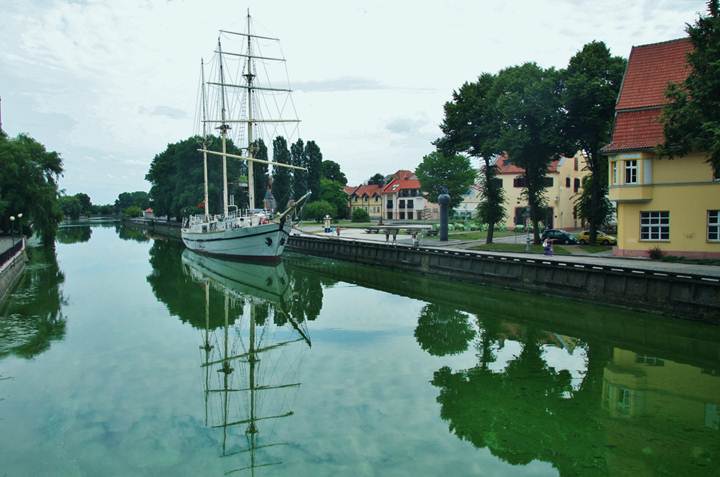
Lithuania's 10 mil-long coast has also the
Baltic Sea's most beautiful sandy beaches. The
two picturesque tourist towns, Nida and Palanga, are located
just a few kilometres away from here.
|
|
|
Photos:
Aage Myhre.
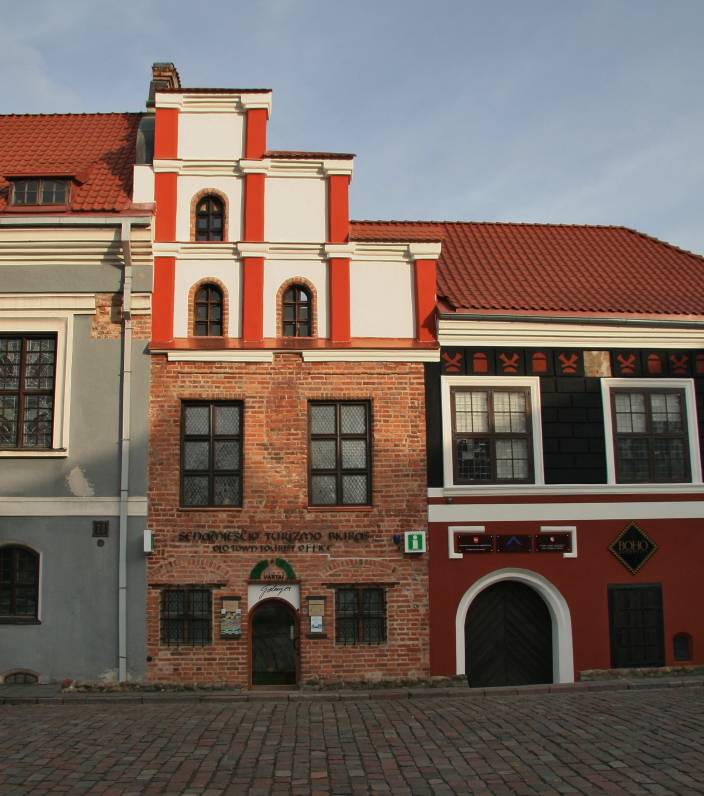
Kaunas – the Hanseatic trading point at the Nemunas River
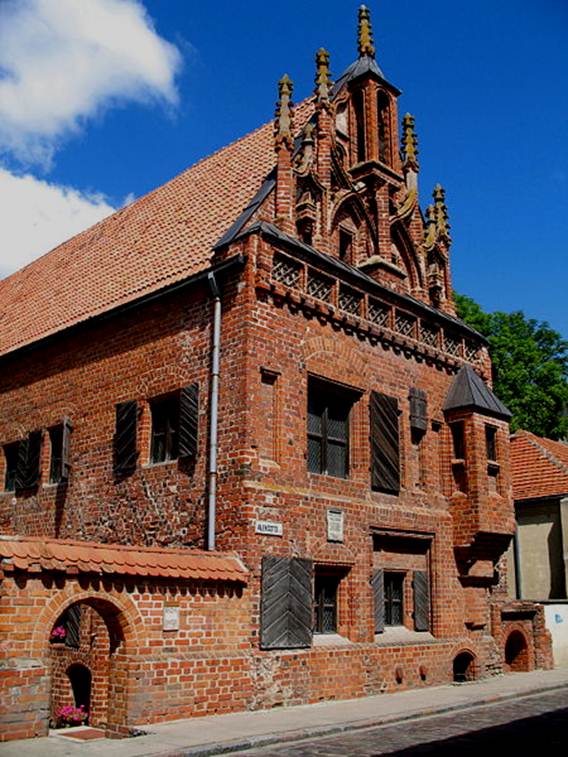
House
of Perkunas (God of thunder and the sky), the most original and archaic
Gothic
secular
building in the Old Town of Kaunas. Originally built by Hanseatic
merchants,
serving as their office from 1440 till 1532.
Since the end of the 14th century, Lithuania's trading relationships with Königsberg and, especially, Danzig, which became the most popular of the Hanseatic towns in Northern and Eastern Europe, got increasingly significant. Lithuania and Danzig started their trading relationships already at the end of the 14th century. During Vytautas' term of office, Lithuania and Danzig maintained regular relationships. The waterway Nemunas (Lithuania’s largest river) - Kaunas Sea - Deimė - Prieglius - Aismarės - Vistula was the way transporting cheap staples from Lithuania to Danzig, which greatly profited the intermediates.
In order to improve accessibility of cheap goods, by the advantageous Nemunas quay the Hanseatic counting-house was established. The main outbound goods were wax, fur, leather, wood, mould, tar, and, since the 15th century, grain. What Kaunas used to receive was other goods, such as salt, which could not be substituted, and also ironware and baize. The office was open till the middle of the 16th century, and these were the most glorious and the most venerable times of Western Europe's city Kaunas.
Kaunas is the sole Lithuanian town that belongs to 'The new Hansa Union' that was established in 1980. It is an organisation of economically and politically active member-cities of the old Hanseatic League that aim for close cooperation. At the moment, the organisation unites more than 170 European towns.
Every year, Kaunas presents itself at the annual event of the union "International Hansa Days" by introducing the heritage of cuisine, folk art, music, theatre, etc. Furthermore, since 2005, at the end of August, Kaunas draws crowds of people from the entire Lithuania, who can admire the unique Kaunas Old Town and lose themselves in the Middle Ages, i.e. try armour, play medieval games, taste the old European dishes, listen to the troubadours' songs, wield a sword, enjoy watching the night's sky coloured by amazing fireworks, and a lot more.
The public institution "Hansa Kaunas" and Kaunas local government that organise the festival already for the fourth time have managed to achieve that the festival be known not only in Lithuania but also outside. Now the event has become the priority of the town and it now has gained its face, traditions and lots of devoted supporters.
The festival has broadened: on the stage one can see not only Lithuanian performers but also guest artists from Germany, Poland, Russia, Latvia, Estonia, Belarus, Norway and Holland. Moreover, three documentary films have already been produced. Financing is increased as more and more supporters are found. Appropriations of both the local government and the Government of the Republic of Lithuania have been increased.
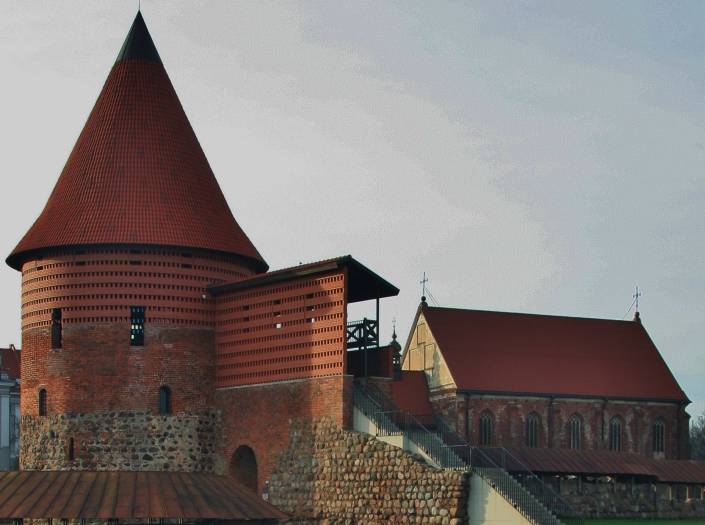
Kaunas castle is the
oldest masonry castle in Lithuania. It was first mentioned in documents in year
1361.
Since
the end of the 14th century, Lithuania's trading relationships with Königsberg
and, especially, Danzig, which became the most popular of the Hanseatic towns
in Northern and Eastern Europe, got increasingly significant. Lithuania and
Danzig started their trading relationships already at the end of the 14th
century.
During
Vytautas' term of office, Lithuania and Danzig maintained regular
relationships. The waterway
Nemunas
(Lithuania’s largest river) - Kaunas Sea - Deimė - Prieglius - Aismarės -
Vistula was the way transporting cheap staples from Lithuania to Danzig, which
greatly profited the intermediates.
Photos: Aage Myhre.
- Bookmark :
- Digg
- del.icio.us
- Stumbleupon
- Redit it

- Posted by - (2) Comment
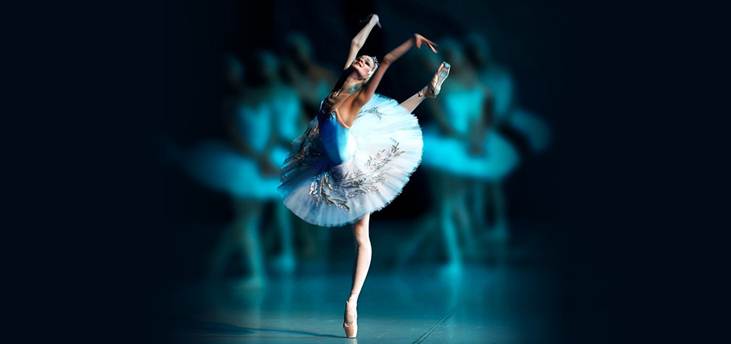
Many tend to think of Russia as a sad and grey country, often forgetting
what a prominent cultural power this nation in fact is.
Photo:
Russianballetschool.es

EXPLORING EUROPE (8 of 10)
From east to west
in European Russia
Tour
guide: Aage Myhre
aage.myhre@VilNews.com
|
VilNews is on its way around Europe!
Our today's journey
begins at the Ural River between Asia and
Europe, where |
To Siberia – probably the only one ever going there voluntary, without a visa
|
It’s January 1992. I have been invited on a trip to Orenburg City on the border to Siberia. Together with two British business leaders that I early in the 1990s helped with contacts in Russia. As a Norwegian I cannot have issued a visa to Russia in Vilnius. But according to the Lithuanians, I can safely travel to Siberia without papers. Soviet rules are still valid. Lithuania and Siberia are both considered to be just regions, months after the termination of the USSR. Orenburg Oblast is home to Orenburg Cossacks at the Ural River, considered the boundary between Europe and Asia...
|
|
I decide to take the chance. Not long after we land in Moscow. Flights from Vilnius still belong to the category domestic, despite the months that have now passed since Lithuania was officially approved as an independent nation, also by Russia. Therefore, no passport control, neither in Vilnius nor on arrival in Moscow. The very long journey around the metropolis, to the other airport, the one that operates flights to the east of Russia, is also fine. Not long after we are smoothly seated in a Yak-42 from the airline Aeroflot. This is a flight I will never forget. There is no food on board, so many of the passengers sit in the aisle to eat food brought along. Not to forget the drinks. The only thing missing is someone lighting a bonfire for cooking or frying food. Passengers have distinctive facial characteristics. Asian, Mongolian. The vodka they generously share with us is very handy in reducing anxiety for what might happen with this incredibly smelly plane...
|
|
|
|
|
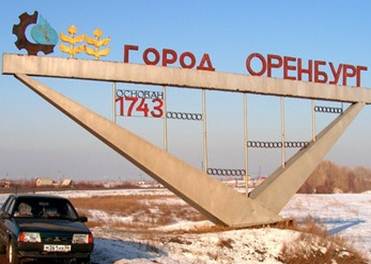
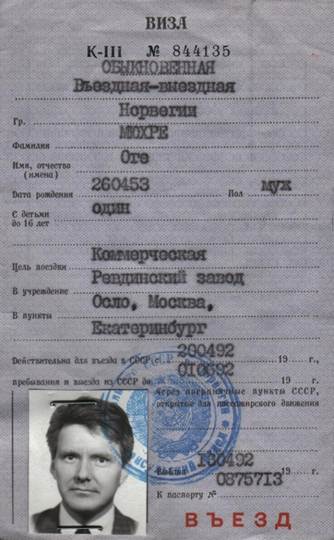
We land in winter dressed Orenburg a late, dark January evening in 1992. Two meters of snow and very cold. We are picked up by our hosts. One car in front, one behind, we in the middle. There is much here in the Russian wilderness that is about security and protection these days. The dacha, the house, which awaits us there, deep in the Ural forests, is brightly lit, surrounded by high barbed wire fences. German Shepherd Dogs barking persistently. I feel uncomfortable. This gives me associations to a concentration camp, to thge Stalin prison camps further east, on Siberia's frozen tundra. The Gulags.
Inside the house two lightly dressed ladies are waiting in the lavishly decorated dacha that soon proves to be a small luxury hotel. Facial expressions of the young ladies are indescribable when they see that I have brought my wife with me. But the food is good. The same is the French cognac and Scotch whisky they serve us, all 'blue label'.
"Only one western delegation has visited the city before you, namely Swedish Volvo," tells our host. This is a fact that has made them nervous about our safety. They say that a whole 'army' surrounded the runway when we landed. All with sharp loaded Kalashnikov machine guns, ready to protect us. Just in case ... Over the next few days we visit the city's mayor and discuss possible business with the hosts. A total abundance of food and fine beverages always available...
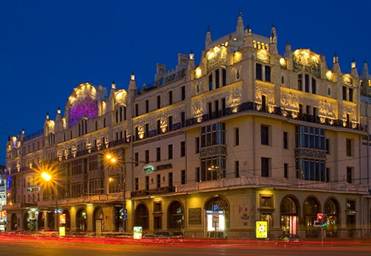
The flight back to Moscow takes place in daytime, in sparkling sun over the endless snow-covered plains and forests west of the Urals. Soon we arrive in Moscow. We check in at the Hotel Metropol right on Red Square. Luxury for $500 per night. But it feels good after the trip to the Siberian gateway. No one checks my papers.
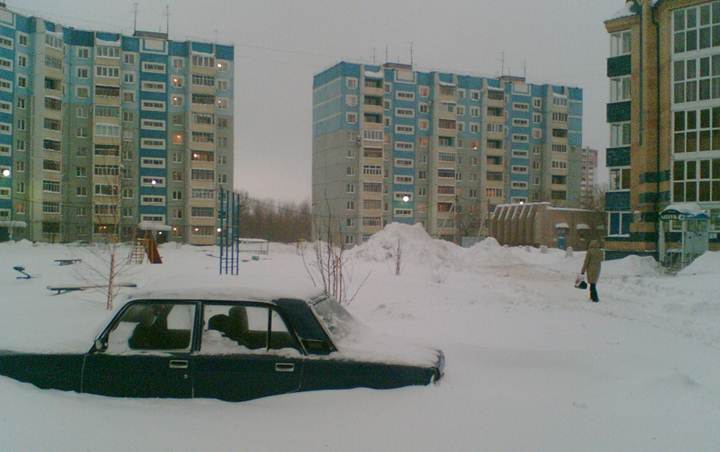
Orenburg
winter.
Photo:
Shamil Kazakbaevin
Moscow is enormous – a city I do not easily become familiar with
About 10 million people live in Moscow. It makes the city to number seven in the world, largest in Europe.
Moscow is enormous. Everything is big here. Inhuman. The outskirts are characterized by gloomy gray block houses from the Soviet era, while the city centre has many historic and newer buildings that really deserve closer acquaintance.
I have tried several times, but there is something about Moscow as a whole that I never feel comfortable with. The greyness. Doldrums. New rich oligarchs in expensive luxury cars, while the majority is living in rather poor conditions.
The often harsh atmosphere of business at any cost. The country Russia drowns in greed, corruption and fraud. Terribly sad, because Russia has so many good aspects and qualities to be proud of.
Moscow is the city with 'rush hour' round the clock. "Russia has two problems: fools and roads", said author Nikolai Gogol nearly two centuries ago. The Russians have a tendency to protest by saying that there are fools all around the world, but when it comes to roads they agree. Today's traffic is Russia's Achilles heel, a disaster that seems to have no salvation.
Moscow's endless traffic jams have become the icon that defines the Russian capital. More than the Lenin Mausoleum, the prostitutes on Leningradskoe Shosse, and unregistered taxi drivers from various Stan Republics offering services from their abandoned car wrecks.
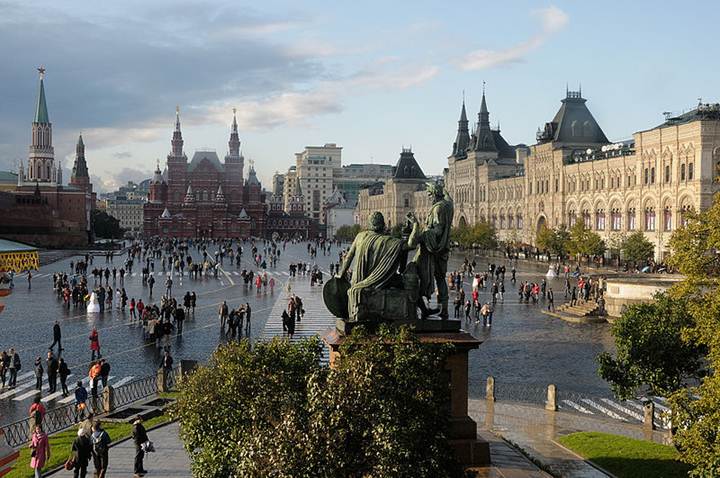
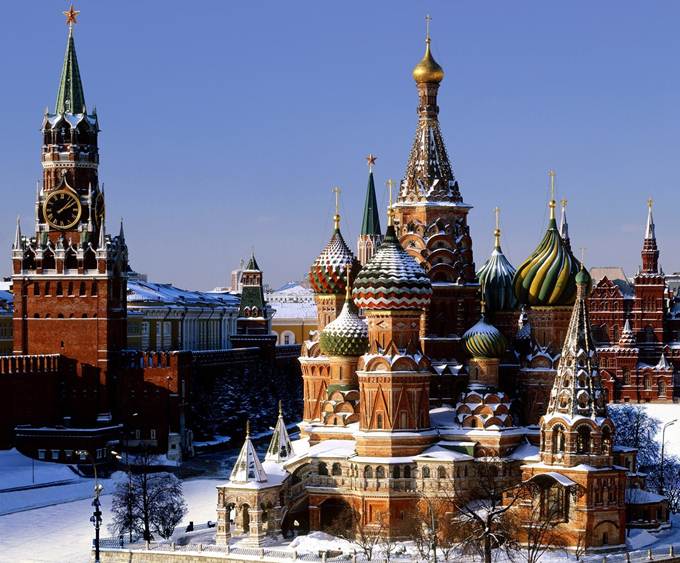
Kremlin
and the Red Square in Moscow.
Photo:
Wikipedia.
|
|
History of Russia |
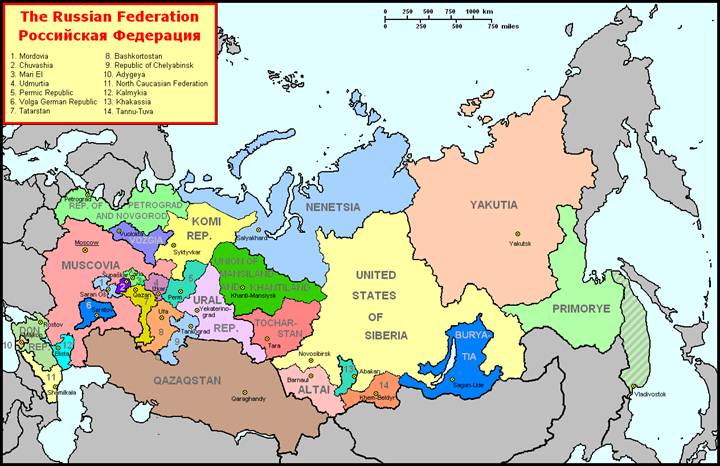
Russia, officially known as both Russia and the Russian Federation, is a country in northern Eurasia. It is a federal semi-presidential republic, comprising 83 federal subjects. From northwest to southeast, Russia shares borders with Norway, Finland, Estonia, Latvia, Lithuania and Poland (both via Kaliningrad Oblast), Belarus, Ukraine, Georgia, Azerbaijan, Kazakhstan, China, Mongolia, and North Korea. It also has maritime borders with Japan by the Sea of Okhotsk, and the United States by the Bering Strait.
At 17,075,400 square kilometres (6,592,800 sq mi), Russia is the largest country in the world, covering more than one eighth of the Earth's inhabited land area. Russia is also the eighth most populous nation with 143 million people. It extends across the whole of northern Asia and 40% of Europe, spanning nine time zones and incorporating a wide range of environments and landforms.
A Viking was the first Russian ruler
|
The history of Russia begins with that of the Eastern Slavs and the Finno-Ugric peoples. The state of Garðaríki ("the realm of towns"), which was centered in Novgorod and included the entire areas inhabited by Ilmen Slavs, Veps and Votes, was established by the Varangian (Viking) chieftain Rurik in 862, often referred to as the beginning of Russian history. Scandinavian Norsemen, called "Vikings" in Western Europe and "Varangians" in the East, combined piracy and trade in their roamings over much of Northern Europe. In the mid-9th century, they began to venture along the waterways from the eastern Baltic Sea to the Black and Caspian Seas. According to the earliest Russian chronicle Rurik was elected ruler before his successors moved south and extended their authority to Kiev, which had been previously dominated by the Khazars. Thus, the first East Slavic state, Kievan Rus', emerged in the 9th century along the Dnieper River valley. A coordinated group of princely states with a common interest in maintaining trade along the river routes, Kievan Rus' controlled the trade route for furs, wax, and slaves between Scandinavia and the Byzantine Empire along the Volkhov and Dnieper Rivers. Kievan Rus', the first united East Slavic state, was founded by Rurik's successor Oleg of Novgorod in 882. The state adopted Christianity from the Byzantine Empire in 988, beginning the synthesis of Byzantine and Slavic cultures that defined Russian culture for the next millennium. Kievan Rus' ultimately disintegrated as a state because of the Mongol invasion of Rus' in 1237–1240. |
|
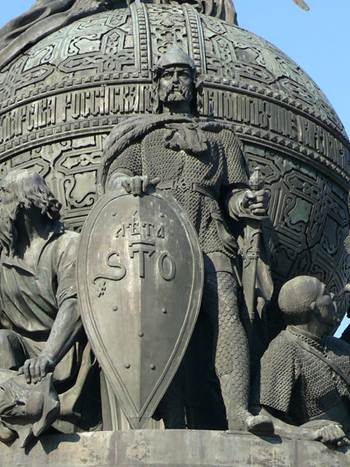
Two tsars competing with the Grand Duchy of Lithuania
During that time a number of regional magnates, in particular Novgorod and Pskov, fought to inherit the cultural and political legacy of Kievan Rus'. After the 13th century, Moscow came to dominate the former cultural centre. In the 15th century, the grand princes of Moscow went on gathering Russian lands to increase the population and wealth under their rule. The most successful practitioner of this process was Ivan III (the Great) who laid the foundations for a Russian national state. Ivan competed with his powerful northwestern rival, the Grand Duchy of Lithuania, for control over some of the semi-independent Upper Principalities in the upper Dnieper and Oka River basins.
The development of the Tsar's autocratic powers reached a peak during the reign (1547–1584) of Ivan IV (the Terrible). He strengthened the position of the monarch to an unprecedented degree, as he ruthlessly subordinated the nobles to his will, exiling or executing many on the slightest provocation. Nevertheless, Ivan is often seen as a farsighted statesman who reformed Russia as he promulgated a new code of laws (Sudebnik of 1550), established the first Russian feudal representative body (Zemsky Sobor), curbed the influence of clergy, and introduced the local self-management in rural regions.
Although his long Livonian War for the control of the Baltic coast and the access to sea trade ultimately proved a costly failure, Ivan managed to annex the Khanates of Kazan, Astrakhan, and Siberia.
By the 18th century, the Grand Duchy of Moscow had become the huge Russian Empire, stretching from the Polish–Lithuanian Commonwealth eastward to the Pacific Ocean. Expansion in the western direction sharpened Russia's awareness of its separation from much of the rest of Europe and shattered the isolation in which the initial stages of expansion had occurred. Successive regimes of the 19th century responded to such pressures with a combination of halfhearted reform and repression. Russian serfdom was abolished in 1861, but its abolition was achieved on terms unfavorable to the peasants and served to increase revolutionary pressures. Between the abolition of serfdom and the beginning of World War I in 1914, the Stolypin reforms, the constitution of 1906 and State Duma introduced notable changes to the economy and politics of Russia, but the tsars were still not willing to relinquish autocratic rule, or share their power.
|
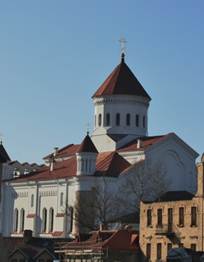
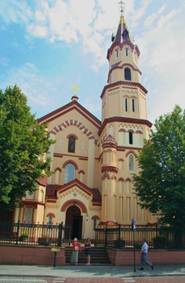
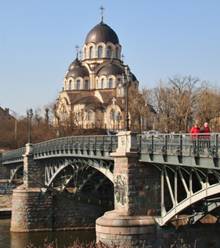
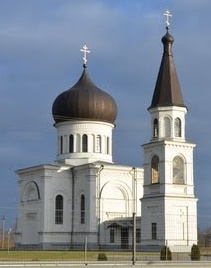
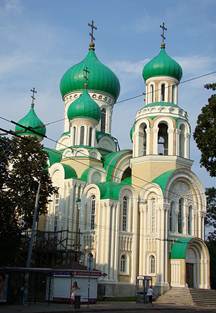
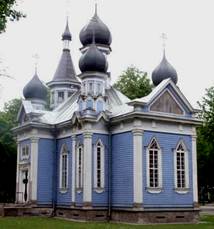
Russian Orthodox churches in Lithuania There are 43 Orthodox churches in Lithuania, with the most interesting being in Vilnius. Vilnius had Orthodox churches since 14th century. But the Orthox faith came to the other parts of Lithuania only after the annexation by the Russian Empire in 1795. Czarist policy of Russification brought large domed churches to the new wide squares and straight avenues, and so even today in Vilnius 19th century districts the Orthodox churches outnumber the Roman Catholic ones. Every major town of the 19th century Lithuania received its own Orthodox church (more than a single one in Vilnius and Kaunas). A minority of these buildings were ceded to the Roman Catholic community after the 1918 independence, but the iconic neo-Byzantine facades and domes remained intact even there. In an Orthodox church you may feel as being suddenly transferred to a land further east because there are usually no Lithuanian words whatsoever. Even signs for tourists are frequently available only in Russian and English. |
||
|
|
|
|
|
.
|
|
|
The Russian revolution in 1917
The Russian Revolution in 1917 was triggered by a combination of economic breakdown, war weariness, and discontent with the autocratic system of government, and it first brought a coalition of liberals and moderate socialists to power, but their failed policies led to seizure of power by the Communist Bolsheviks on 25 October. Between 1922 and 1991, the history of Russia is essentially the history of the Soviet Union, effectively an ideologically based state which was roughly conterminous with the Russian Empire before the Treaty of Brest-Litovsk. The approach to the building of socialism, however, varied over different periods in Soviet history, from the mixed economy and diverse society and culture of the 1920s to the command economy and repressions of the Joseph Stalin era to the "era of stagnation" in the 1980s. From its first years, government in the Soviet Union was based on the one-party rule of the Communists, as the Bolsheviks called themselves, beginning in March 1918. However, by the late 1980s, with the weaknesses of its economic and political structures becoming acute, the Communist leaders embarked on major reforms, which led to the fall of the Soviet Union.
Following the Russian Revolution, Russia became the largest and leading constituent of the Soviet Union, the world's first constitutionally socialist state and a recognized superpower, which played a decisive role in the Allied victory in World War II. The Soviet era saw some of the most significant technological achievements of the 20th century, including the world's first human spaceflight. The Russian Federation was founded following the dissolution of the Soviet Union in 1991, but is recognized as the continuing legal personality of the Soviet state.
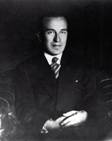
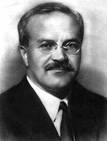
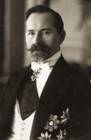
Lithuania and the Soviet Union 1939 – 1940By Vin Karnila, VilNews Associate Editor On 15 June 1940, Soviet Russia invaded Lithuania. This was the beginning of Lithuania's loss of freedom for more than fifty years and the beginning of one of the saddest and most tragic parts of Lithuania's history. There has been much talk and speculation about how this invasion came about and what Lithuania did, or as some would accuse didn't do, to prevent it. To shed clear light on this topic, we would like to share with you parts of the personal memoirs of Juozas Urbšys who was a member of the group that personally met with Vyacheslav Molotov and Stalin. After reading these fascinating and very informative memoirs we are sure you will have a better appreciation for the precarious situation the leaders of the then free Republic of Lithuania were in and what they did to try to protect the lives of the Lithuanian people.
We share these memoirs in 4 parts. Here they are: Part 1: In Moscow
|
Today’s Russia
The history of the Russian Federation is brief, starting from the late 1991. Russia was recognized as the legal successor to the Soviet Union on the international stage. However, Russia has lost its superpower status as it faced serious challenges in its efforts to forge a new post-Soviet political and economic system. Scrapping the socialist central planning and state ownership of property of the Soviet era, Russia attempted to build an economy with elements of market capitalism, with often painful results. Even today Russia shares many continuities of political culture and social structure with its tsarist and Soviet past.
Russia has the world's 11th largest economy by nominal GDP or the 6th largest by purchasing power parity, with the 5th largest nominal military budget. It is one of the five recognized nuclear weapons states and possesses the largest stockpile of weapons of mass destruction. Russia is a great power and a permanent member of the United Nations Security Council, a member of the G8, G20, the Council of Europe, the Asia-Pacific Economic Cooperation, the Shanghai Cooperation Organisation, the Eurasian Economic Community, the Organisation for Security and Cooperation in Europe (OSCE), the World Trade Organisation (WTO), and is the leading member of the Commonwealth of Independent States.
Russia has the world's largest reserves of mineral and energy resources and is the number one natural gas producer as well as number one oil producer globally. Russia has the world's largest forest reserves and its lakes contain approximately one-quarter of the world's fresh water.
Russian-Lithuanian relations
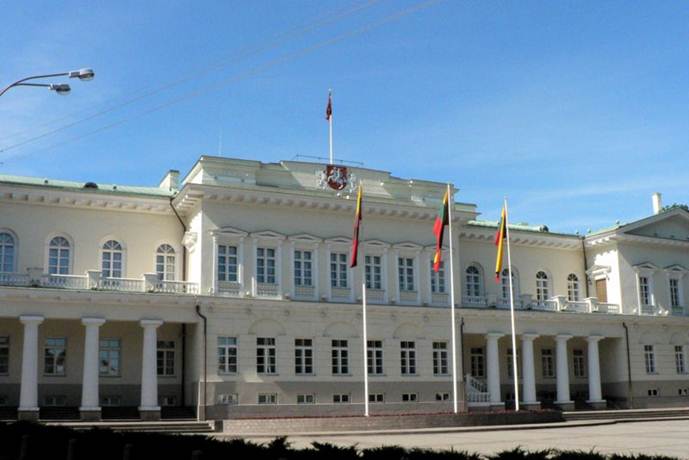
During the course of the 19th century, the Presidential Palace
in Vilnius served as a residence for several Imperial Russian governors, such
as Mikhail Muravyov, nicknamed "The Hangman". In 1812, both the
Russian Tsar Alexander I and the French Emperor Napoleon Bonaparte used the
Palace as their residence. During Napoleon's invasion of Russia, he organized
military operations and Lithuanian army units from the Palace, including five
regiments of infantry, four cavalry regiments, and the National Guard of
Vilnius. He received Lithuanian noblemen, newly appointed officials of the
administration, and other dignitaries in the Palace as well. After Napoleon's
defeat in 1812, the Palace was used for ceremonial proposes; it was here that
then-general Mikhail Kutuzov was awarded Russia's highest military award – the
Order of St. George. During 1824-1834, the Palace was reconstructed by the
prominent St. Petersburg architect Vasily Stasov in the Empire style, under
supervision of Karol Podczaszyński. Stasov's reconstruction of the Palace has
remained to this day.
During the Northern Wars (1655–1661), the Lithuanian territory and economy were devastated by the Swedish army. Before it could fully recover, Lithuania was ravaged during the Great Northern War (1700–1721). The war, plague, and famine caused the deaths of approximately 40% of the country's population.
Foreign powers, especially Russia, became dominant in the domestic politics of the Polish-Lithuanian Commonwealth that had been established in 1569 (Union of Lublin). Numerous factions among the nobility used the Golden Liberties to prevent any reforms. Eventually, the Commonwealth was partitioned in 1772, 1792, and 1795 by the Russian Empire, Prussia, and Habsburg Austria.
The largest area of Lithuanian territory were occupied by the Russian Empire in 1795. After unsuccessful uprisings in 1831 and 1863, the Tsarist authorities implemented a number of Russification policies. They banned the Lithuanian press, closed cultural and educational institutions, and made Lithuania part of a new administrative region called Northwestern Krai. These ruthless Russification policies failed owing to extensive network of book smugglers and secret Lithuanian home schooling.
The Russian domination was rather inconsistent with the direction of Lithuanian history. Russians were Orthodox Christians, Lithuanians were Catholics, Lithuanians used Latin script, as opposed to Russia’s Cyrillic, Lithuanians felt culturally more related to Scandinavians, Poles and Germans, than to Russians, and Lithuania was united by trade routes through the Baltic Sea to Poland, Germany, the Netherlands and Great Britain, rather than through the great rivers and into Russia.
After the Russo-Turkish War (1877–1878), when German diplomats assigned what were seen as Russian spoils of war to Turkey, the relationship between Russia and the German Empire became complicated. The Russian Empire resumed the construction of fortresses at its western borders for defence against a potential invasion from Germany in the West.
On 7 July 1879 the Russian Emperor Alexander II approved of a proposal from the Russian military leadership to build the largest "first-class" defensive structure in the entire state – the 65 km2 (25 sq mi) Kaunas Fortress.
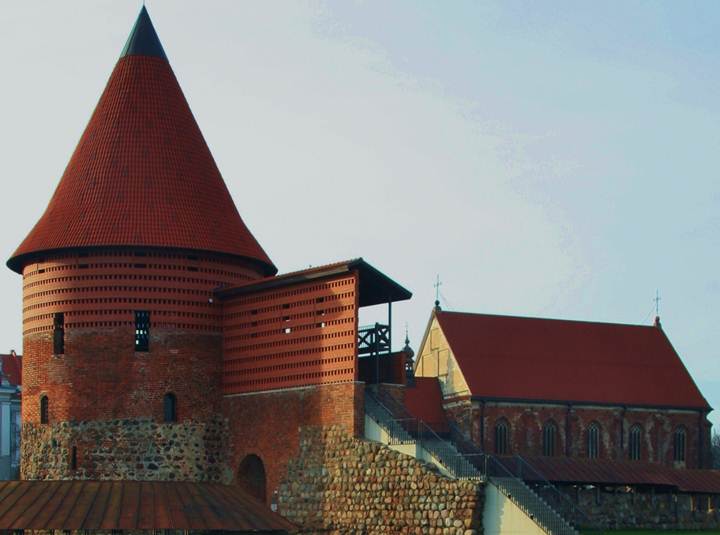
The
Kaunas Fortress was constructed and renovated between 1882 and 1915 to protect
the Russian Empire's western borders, and was designated a
"first-class" fortress in 1887. During World War I, the complex was
the largest defensive structure in the entire state, occupying 65 km2 (25 sq
mi). The fortress was battle-tested in 1915 when Germany attacked the Russian
Empire, and withstood eleven days of assault before capture. After World War I,
the fortress' military importance declined as advances in weaponry rendered it
increasingly obsolete. It was used by various civil institutions and as a
garrison. During World War II, parts of the fortress complex were used by the
governments of Nazi Germany and the Soviet Union for detention, interrogation,
and execution. About 50,000 people were executed there, including more than
30,000 victims of the Holocaust. Some sections have since been restored; the
Ninth Fort houses a museum and memorial devoted to the victims of wartime mass
executions. The complex is the most complete remaining example of a Russian
Empire fortress.
A more organised movement for independence of Lithuania emerged in the 1880s, with their own publications, and exile institutions, mainly in Prussia. The tsar allowed a Lithuanian nationalist congress to convene in Vilnius in 1905, and the congress demanded autonomy from Russia, restoration of previous borders, and restoration of Lithuanian language as language of instruction in schools.
Between 1868 and 1914, approximately 635,000 people, almost 20% of the population, emigrated from Lithuania. Large numbers of Lithuanians went to the United States in 1867–1868 after a famine.
Before any of Lithuania’s demands vs. Russia were met, World War I broke out and Lithuania was occupied by Germany. At the end of the war, Lithuania declared itself independent. The Bolshevik Red Army invaded and installed a puppet government, but by May 1920, Lithuanian and German forces had driven the Russians out. Lithuania was recognised as independent, and remained so until 1940.
In 1939, Germany took control of parts of Lithuania, but let the Soviets take over, in accordance with the Molotov-Ribbentrop Non-Aggression Pact. In 1940, the Soviet Union invaded Lithuania, installed a puppet Communist government, and the Lithuanian SSR was established (the Nazis re-invaded Lithuania for the period 1941-1944).
The Soviets immediately began various russification measures, and deported tens of thousands of ‘suspected’ Lithuanian people, first in 1941, then for the period 1944-1953 and later. The numbers of Lithuanians in Siberia and Central Asia increased dramatically when this large portion of Lithuanians were involuntarily deported into these areas. After de-Stalinization, however, most of them returned home. Some Lithuanian communities in certain regions of Soviet Union were formed during the Soviet occupation; Later, some Lithuanians were relocated to work in other areas of the USSR; some of them chose not to return to Lithuania, even after it became independent.
It is estimated that some 50,000 Lithuanians still live in Russia.
In 1944, Soviet forces "liberated" Lithuania, and Stalin immediately set about eliminating Lithuanian nationalism. Tens of thousands suspected nationalists were killed and several hundred thousand were sent to Gulag prison camps. All in all, during World War II and Stalin's reign of terror, around one third of the Lithuanian population was killed or deported. Lithuanian guerillas continued to fight the Soviets until around 1953.
Collectivisation and careless industrialisation severely damaged Lithuania's economy and ecology. Soviet rule also brought many Russians to Lithuania, with promises of good jobs and housing.
Both in the 1950s and the 1970s, there were political protests in Lithuania, but it was not until Gorbachev came to power in the mid 1980s, that the winds of change began to blow. Gorbachev himself, in 1987 began discussing more openly the possibility of more autonomy for the Baltic States, and in 1988, a popular front was established, under the name "Sajudis".
A strong expression of the Lithuanians’, Latvians’ and Estonians’ commitment to independence from the Soviet Union took place in 1989, when an enormous number of people from the three nationalities joined hands - literally - in a 600 kilometre (400 miles) chain from Tallinn via Riga to Vilnius, facing west towards Europe, and turning their backs at the Soviet Union.
In February 1990, multi-party elections were held, and the Sajudis movement won a majority in the new parliament. In March, they declared Lithuania independent. Gorbachev sent troops and introduced an embargo. An agreement was reached, by which Lithuania agreed to somehow "freeze" the independence declaration.
In the beginning of 1991, many crises between Moscow and Vilnius occurred over military conscripts and other issues, including the fatal Soviet attacks on Lithuania 11-13 January 1991. But the Soviet Union was falling apart, and in the wake of the failed coup in Moscow in August, Lithuanian independence became a reality.
|
Lithuania’s ex-Prime Minister: The West should have no illusions about Russia
“Russia's decision on its leadership change this year has effectively buried any hopes of a renewal of relations with the West,” Lithuania's prime minister Andrius Kubilius told in an interview with Lithuanian Radio in 2011. "No one should have illusions about how Russia will be ruled for decades to come," he said. Lithuania is among Russia's harshest critics in the European Union and NATO. Last year, Prime Minister Vladimir Putin announced that he had decided to reclaim the presidency next year, setting up the possibility that he could rule Russia until 2024. In nominating Putin, his United Russia party also approved his proposal that President Dmitry Medvedev take over Putin's current role as prime minister. "All the restart policies or renewal of relations should now be locked in a deep drawer with a simple note attached: 'Here rest expired and naive dreams,'" Kubilius said. He said Putin's decision was not a surprise. "But it probably surprised someone somewhere in Berlin, Brussels or Washington, where those illusions were alive as some expected Russia would turn into a modern state. Those illusions are over," Kubilius said. Lithuania has most recently locked horns with Russia over natural gas prices. It currently receives 100 percent of its gas from Russia and believes it is paying too much. It has been attempting to negotiate a lower price with Moscow, so far unsuccessfully. Kubilius' conservative government irked Russia earlier this year by using a EU rule that allows member states to split companies that supply and transport natural gas — a direct blow to Russia's state-runGazprom, which owns 37.1 percent of Lithuania's main gas company, Lietuvos Dujos.VILNIUS, Lithuania — Russia's decision on its leadership change next year has effectively buried any hopes of a renewal of relations with the West, Lithuania's prime minister said. "No one should have illusions about how Russia will be ruled for decades to come," Andrius Kubilius told Lithuanian Radio. Lithuania is among Russia's harshest critics in the European Union and NATO. Last autumn, Prime Minister Vladimir Putin announced that he had decided to reclaim the presidency next year, setting up the possibility that he could rule Russia until 2024. In nominating Putin, his United Russia party also approved his proposal that President Dmitry Medvedev take over Putin's current role as prime minister. "All the restart policies or renewal of relations should now be locked in a deep drawer with a simple note attached: 'Here rest expired and naive dreams,'" Kubilius said. He said Putin's decision was not a surprise. "But it probably surprised someone somewhere in Berlin, Brussels or Washington, where those illusions were alive as some expected Russia would turn into a modern state. Those illusions are over," Kubilius said. Lithuania has most recently locked horns with Russia over natural gas prices. It currently receives 100 percent of its gas from Russia and believes it is paying too much. It has been attempting to negotiate a lower price with Moscow, so far unsuccessfully. Kubilius' conservative government irked Russia by using
a EU rule that allows member states to split companies that supply
and transport natural gas — a direct blow to Russia's
state-run Gazprom, which owns 37.1 percent of Lithuania's main gas
company, Lietuvos Dujos. The Moscow Times
|
|
Russia-Lithuania relations should not be held hostage to the past
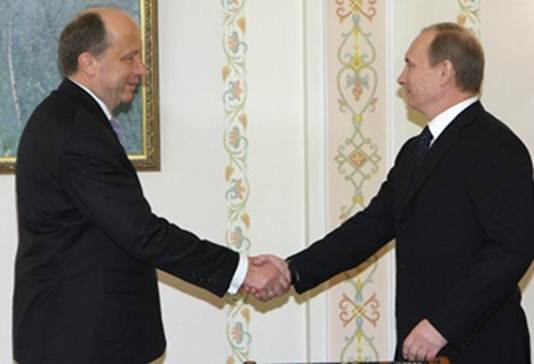
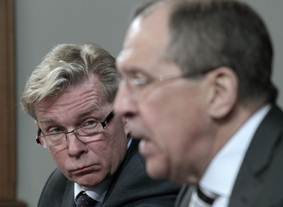
Lithuanian counterpart Audronius Azubalis in 2010.
Relations between Russia and Lithuania should not become a hostage of the past, Russian Foreign Minister Sergei Lavrov said after talks with his Lithuanian counterpart Audronius Azubalis in 2010, ITAR-TASS reported.
“We do not want the historic truth to be forgotten, but we also have a common intention not to make our current relations hostage to the past and hostage to those events for which neither we nor Lithuanian leaders of this day bear responsibility,” he said.
“Assessment of the past events was made long ago – in the last years of the Soviet Union and now by the authorities of modern Russia,” the diplomat said. “We (Russia and Lithuania) have a commission of historians who work rather fruitfully, professionally, without emotions and provoking movements on our common history that had quite a few sad pages.”
“Historians know well what a difficult task it is to do this work. But if we do not go along this difficult path, we will not get the historic truth in its entirety,” Lavrov said. “Therefore we agreed that discrepancies existing in the analysis of our common history – and we do not keep it secret – should remain an object matter for the commission of historians. We would like this work to be activated,” he said.
The Russian diplomat expressed confidence that “it will really help to step up contacts between civil societies of Russia and Lithuania, develop youth contacts and build relations for the future.”
Russkiy Mir Foundation Information Service
|
|
Russia and Three Baltic States
By Arturas JURGELEVICIUS |
|
|
|
The relations between the Baltic States (Lithuania, Latvia and Estonia) and Russia are complicated not only nowadays but in the past as well. The geographical location of the Baltic States makes them strategically important for Russia’s national security as today as in the past. Probably all problems of these countries are laid down in the 20th century’s history. The period was extremely difficult for Europe as well as for Russia, and the consequences are being felt in today’s realities. To solve economic and political disputes between these countries, the historical perspective should be taken into account. Baltic States recklessly seek “Historical justice” As it is mentioned above the Baltic States and Russia confront with each other in diverse sort of issues. Mainly and most probably it is related to the harsh and tricky situation during the World War II. It is possible to say that the source of disputes is Molotov-Ribbentrop pact signed in 1939 by Soviet Union and Germany’s foreign ministers, which was a Treaty of Non-Aggression between Germany and the Soviet Union. Both states pledged neutrality in case of a war and not to support any third part. As it is known now, there were secret protocols dividing northern and Eastern Europe between German and Soviet Union spheres of influence. Accordingly to the pact Poland would have been divided into two halves shared by Hitler and Stalin and the Baltic States would have become under Soviet Union’s dominance. This short glance of the history has not been leaving from the political life of the Baltic States since last 60 years and became permanent object in their relations with Russia. Many believe that Soviet Union did a huge damage to the humanity under the presidency of Stalin. Of course, this view might be debated but it is obvious that the victory of Nazis would have brought much more human devastation and bigger tragedy to the whole Europe. Anyway, official political line of the Baltic States claims that after World War II, Soviet Union and now Russia as legitimate successor of Soviet Union was/is responsible for what happened and have to apologize and reimburse the damage done during that era. As history has shown Soviet Union delegates and even modern Russia’s officials have already done so at least four times. First, Stalin’s cult and crimes were publicly denounced and condemned during the 20th Congress of Communist Party of Soviet Union by speech made by Nikita Khrushchev, the leader of Communist party and the Soviet Union. That is to say that this is the first time after Stalin’s epoch when officials of Soviet Union revealed and criticized the dictatorship of Stalin and faulty policy led by him towards some human and economic activities. Secondly, special Soviet commission under Alexander Nikolaevich Yakovlev, in December 1989, the commission concluded that the protocol had existed and revealed its findings to the Soviet Congress of People's Deputies. As a result, the first democratically elected Congress passed a declaration in December 1989 admitting the existence of the secret protocols, condemning and denouncing them. In 1992, the document itself was declassified only after the dissolution of the Soviet Union. Third, the sovereignty and independence of the Baltic States was recognized by the first democratically elected president of Federation of Russia: B. Yeltsin. He recognized the independence of the Baltic States and invited the rest of the world to do the same. That is to say that by recognizing sovereignty of the Baltic States, Russia automatically rejected the idea of its bid to pretend to restore the influence in this region. Russia recognized all freedoms and respects towards these countries establishing diplomatic and economic relations with Lithuania, Latvia and Estonia. Fourth, during EU-Russia summit in 2008 president V. Putin was asked by an Estonian journalist “why is that so hard to recognize the fact of the occupation of the Baltic states?”. The answer of the president was as following: "<…...>The conspiracy happened in 1939 between Russia and Germany. I believe it was a conspiracy. What can we do now? It was the reality at the time when small countries were involved in the reality of those days. <…> in 1989 the Soviet Congress of People's Deputies declared that Molotov and Ribbentrop pact did not reflect the real will of Soviet people and recognized the illigitimate action taken by them. It was condemned. What more accurate is possible to say about this? What else? How many times can we repeat that? Every year? We think that everything possible is said about that and this question is already closed". As it is seen both Soviet government and the government of modern Russia recognized de facto and de jure the independence and territorial sovereignty of the Baltic states which actually means that all claims to get this territories back is faulty and there is no foundation for such claims. Moreover, it is recognized that conspiracy between two states (Nazi German and Soviet Union) had no legal foundation, it was in conflict with international law and it is absolutely illegitimate. Consequently the destruction of the sovereignty of the Baltic States was condemned and sovereign power of the national states was recognized. The policy of the Baltic States on international stage Despite all these facts Baltic States’ governments are prone to get into open conflicts with Kremlin, criticizing Russian government and even block the EU-Russia negotiations. This took place in 2008 when Lithuanian delegation made the list of demands which must be involved in the negotiations with Russia. Of course, it was not very welcome news for Russia. The Slovenian government, which held the EU's rotating presidency, has heavily criticised Lithuania for not withdrawing its objections to initiate talks on a new partnership pact between the EU and Russia. This action of Lithuania among old member states was accepted negatively and criticized by president of European commission J.M Barroso, who said “Lithuania lost its opportunity to shut up” . This veto did not let to move forward for all 27 members states and stuck for some time. It is worth mentioning the requirements made by Lithuanian officials. In fact there were three main concerns which should be considered as “interests of Lithuania”. First, to restore the supply of the crude oil via Druzhba (Friendship) pipeline which broke down in 2006 and Russian officials said it would take at least several years to restore it. Of course, since Russia is being considered as “aggressor” and seeking to rebuild its power in the Baltic States, it was accepted as political blackmail. At that moment Lithuanian president pointed out that "Today we know that oil will not flow through this pipeline any more", he told during a conference. Meanwhile, Russian technical watchdog Rostekhnadzor said in September that Transneft would need at least another 18 months for repairs, meaning that the pipeline could not be reopened before the end of 2009. Even if this technical problem was politicized and it was being tried to create the image of Russia as an “unreliable partner”, the pipeline was reopened on the same time as technical experts predicted. Second, to solve the conflicts between Georgia and Moldova: it is valuable to stress that it is difficult to unmask the real interests of the Baltic States in Caucasus and Moldova. It is more seen as trials to damage Russian security interests at the same time harming EU foreign policy. Third to encourage Russia to cooperate in criminal cases of the killings in 13th of January 1991 when Omon (Russian special intelligence service) killed the rebellions. Russia commented on it proclaiming that according to the then law Omon protected the interest of Soviet Union and acted accordingly to its constitution. Apparently all these issues might be solved bilaterally, but the Baltic States use Europe Union as an instrument to solve their chronic problems. For example Lithuanian conservative party “Union of homeland” passed “The reimbursement for occupation damage” law in 1999 before going to step down from the ruling government. Anyway this law has been never implemented or at least it has been never trying to be implemented because Russian officials ardently respond to these attempts. After more than a decade of playing a cat with a mouse, newly appointed minister of foreign affairs of Lithuania Audronius Ažubalis retreated and said that, “at first Lithuania should do its homework and estimate what real damage has been done and then deliver the claim“. Unofficially some representatives speak about 25 billion (almost three times more than the annual budget of the country) euro harm. Recently new numbers showed up. Latvia's Foreign Minister Maris Riekstins estimated the losses from Soviet occupation are $18.5 billion. Is money dearer than national pride? But it is not clear how this number is estimated. If we follow this logic, then Russia has the right to claim for compensation for building roads, manufactures, the world biggest nuclear plant in Lithuania (in 2010 it was closed as precondition for membership in EU), harbors, Mazeikiu refinery (Lithuania), hundreds of apartments and dozens of various buildings etc. These initiatives of reimbursements of “losses” might set precedent for other countries which were involved in these historical games. If all 15 former member states of Soviet Union claimed for the compensation for “damage” done during Soviet epoch what would Russia do? There are tremendously huge problems within Russia as well and economic ones. So if Russia would try to reimburse the claims of former member states, it would take many decades of payments at the cost of own Russian citizens. Anyway there is very little chance that these initiatives will come true in the nearest future. It is worth mentioning that former Soviet Union’s states try to use different international organizations to do harm to Moscow. Is it possible to rewrite history? The Organization for Security and Co-operation in Europe (OSCE) at its XVII annual session approved the Vilnius Declaration including 28 resolutions, one of them entitled "Reunification of the Divided Europe", in which Joseph Stalin's regime in the USSR and the Nazi regime in Germany are recognized as equally evil. The resolution aroused a squall of protests in Russia, in the State Duma, as well as among ordinary citizens. In the Russian blogosphere, the OSCE resolution is among the top subjects of discussion. Konstantin Kosachov, chair of the State Duma's Foreign Affairs Committee, claimed that the Federal Assembly would issue an official statement, possibly even in a form of a joint declaration of two houses which is a rare occasion, adding that the reaction is going to be "harsh and operative". Oleg Morozov, First Vice Speaker of the State Duma, claimed that the comparison of Communism and Nazism is disgusting; Gennady Zyuganov, chair of the Communist Party of Russia, characterized the document as "a disgrace of Europe", indicating that equalization of the USSR with the Nazi Germany is loathsome and destructive for Europe itself. What is so offending for the Russian audience in this document? In fact, Russians don't dispute the totalitarian character of Stalin's rule, mostly informed about the order in their country in that time from their grandparents. This fact does not need approval from European neighbors. Russians are rather outraged with the obvious hypocrisy: the document suggests that only the USSR and Germany were the evil states of the XX century, while other Europeans were "warm and fuzzy", never being involved in infringement of human rights, and in military atrocities. But if other Western powers were so impeccable, why did they concede half of Europe to Hitler, leaving Russians alone with the totalitarian adversary? Why did they hesitate for such a long time before establishing the anti-Hitler Coalition? Was it Stalin who paid for this hesitation, or millions of Russian families? Have our Western neighbors really followed the UN Human Rights Declaration since the times of the Crusade? Have all of them condemned Hitler in his cradle? "Our respected partners forget that the subject of totalitarianism is much broader, and that totalitarian regimes existed also in Spain, Portugal, and Greece, and that the European history is far more variable to reduce it to the times of World War II", reminds Mr. Kosachov. Other disputes arise when it comes to the Baltic States. In the last few years, a new idea of rewriting European history appeared. That is to say that the most debatable event of last century is the World War II. The Baltic States claim that the most brutal and humiliating war was initiated not by Germany but also by the Soviet Union. This brings harsh and operative responses from Moscow. In modern politics history is attached to political realities that is to say that by putting blame on Russia as one of the initiator of World War II, western countries want to diminish Russia’s growing influence in Europe and in the world and restore its reputation which they lost after “Munich agreement” in 1938. It is seen how former members and the Baltic States are using international organizations as the instruments to revenge to Russia for so-called “occupation”. This adopted resolution is only a segment of the strategy. By accepting resolution of anti-Russian coalition will have at least some sort of legitimate basics for the claim of the compensation in the future. Concluding historical perspective in the relations between the Baltic States and the Federation of Russia it is important to notice that even professional historians are not able to properly evaluate or interpret the extraordinary events of the 20th century. Any trials of rewriting history or the use of the history for political purpose will be strongly rejected by Moscow and will not bring any neither political nor economic benefits for the Baltic States or any other country in the relations with Russia. As a result all these disputes caused by extraordinary and harsh historical circumstances reflect themselves on economic and political agenda as well. With collapse of Soviet Union, Baltic states always tried to “escape” from Russia’s sphere of influence. Finally they became a part of European Union and NATO in 2004. Notably this happened relatively in a short period of time. Probably that is because Western countries wanted to gain influence over Eastern European countries sooner than it would do Russia and diminish its dominance. As it is seen now, Baltic States started using their opportunities in western organizations in order to widen their own old wounds. Politicized economy It is important to notice that the Baltic States geographically and historically are very connected to Russia. As a result economic ties developed at great extant. However, as tendencies show the Baltic States try to reduce and minimize dependence upon economic sector as well. Immediately after Soviet Union collapse, Lithuania, Latvia and Estonia aimed for integration in Western structure such as European Union and NATO. Anyway, Russia remained the most important trade partner for the Baltic States in the last decade of 20th century. During the whole independence period Estonia has imported more goods from Russia than exported there. The difference between exports and imports started to increase significantly since 1998. Later the difference decreased, but grew again in 2004. Contrary to Estonia, Russia remained the main export market for Latvia also during 1990s. In 1996 exports to Russia comprised nearly 25% of Latvia’s total exports. The share of goods imported from Russia remained slightly smaller, staying near 20%. In 2004, the trade deficit between Latvia and Russia was 8.5 times greater than the deficit of Latvia’s total external trade. The volume of Lithuanian exports to Russia amounted to 3.4 billion LTL (nearly 1 billion euros). Compared to 2004, exports increased almost 44%, which indicates that Lithuanian trade with Russia grew faster than Lithuanian trade in general. Altogether, Lithuania imported goods from Russia in the sum of 11.9 billion litas (3.4 billion euros). Within a year, imports grew 51.3%. In comparison with previous years, Russia’s share in Lithuanian imports has been rising steadily, almost reaching the 1996 level in 2005 (29%). As it is seen Baltic States and Russia have a great trade turnover in general. Anyway the trade balance with Russia always remained negative. That is mainly because Baltic States import oil, gas and other raw materials from Russia. Negative trade balance was emphasized in the recent years mainly due to the growing oil prices. Also this fact could be explained that export to Russia is more difficult than export to Baltic States which apply EU rules because Russia implies many non-tariff barriers such as quotas, strict licensees. Also, the devaluation of rubles in the last decade caused the cheaper Russian export to Baltic states meanwhile the commodities from Baltic region became more costly in Russian market. The same must be said about present economic crisis, when Russian government gradually devaluated rubles to keep its export alive. So these reasons caused deep trade deficit for Baltic countries. Only Lithuania had higher volume of foreign trade with Russia than other Baltic neighbours (Estonian exports to Russia were 155.9 million EUR and imports from Russia 491.4 million EUR in 2003, for Latvia respective figures were 137.5 million EUR and 405.3 million EUR, for Lithuania 548.5 million EUR and 1931.6 million EUR). As it is known now, Russia, Kazakhstan and Belarus have formed the Common Custom Union which came into force on July 1st. This growing custom wall nearby the Baltic States’ borders will affect their economies as well. For example, Lithuanian Ministry of foreign affairs has estimated that national exporters will pay 65 million litas (20 million euro) additional taxes only because of new tax system appeared in the Custom Union. That is to say some industries of the Baltic States might be seriously damaged and probably will get no prerogatives or exceptions from Russian government. Such policies might distance the Baltic States from trade dependence on Russia in the long term, since Baltic States will be forced to search for new markets and make their industries more efficient. On the other hand, these industries will gain big loses in short term. It might be more painful in the light of current economic crises since unemployment rate is one of the highest among the European Union member states. In any case the Baltic States will heavily be depended on Russian natural resources including oil and gas. Countries pay the world price for these recourses even though they are located close by Russian borders. All of three Baltic States get nearly 90% of oil and 100% of gas from Russia. Moreover, the closure of the nuclear plant, built by Soviet, in Lithuania, in 2010 increased the energy dependency upon Russia. As following Lithuania is planning to build new nuclear power plant and in this way to create common energy policy of the Baltic Sea region including the Baltic states, Poland and some of Scandinavian countries. Anyway, the real future of this project seems to be vague. There was an attempt to create some companies responsible of managing and organizing this program but it was disbanded since it did not fulfill the requirements of the European law. Also countries do not agree on the distribution of the electricity among countries which causes the absence of the strategic investors since this project was extremely expensive. As a response to such energy policy Russia has suggested to participate to building up the nuclear power plant in Kaliningrad exclave. However this proposal has not received any serious attention. Russia tries to promote very expensive and important project called Nord Stream which will go under the Baltic bypassing the Baltic States and Poland. Even if it is much more expensive to build pipeline under the sea it is much safer geopolitically for Russia. This might be considered as a response of Russia because of unfriendly posture of Baltic States towards it. NATO between the Baltic States and Russia Baltic States are of geopolitical importance for Europe as well as for Russia. Probably it was one of the reasons why Baltic States were accepted to NATO in 2004. Since then Lithuania, Latvia and Estonia try to integrate into the western structure. Of course, it does not make Russia to be happy at all since NATO is considered to be a threat to Russian national interests. The last spark occurred and NATO announced its plans to do military exercises in the Baltic States. These plans were declared shortly after France selling warship Mistral to Russia. This happened soon after Georgia-Russia military conflict as a symbol of mutual trust between Russia and France and response to Georgian aggression. Anyway, the Baltic States raised their concern about this warship that might be used against them. As a result NATO declared its plans about military exercises in the Baltic States, although NATO claimed there is no link between these two cases. Conclusion The relations between the Baltic States and Russia are sluggish and imply negative tendencies. Since the Soviet Union collapsed, the Baltic States try to “escape” from any aspect of influence of Russia. The main goals of the Baltic States were to integrate into Western structures such as European Union and NATO and these have been accomplished successfully. The fundamental purpose of such policy was to diminish the influence of Russia and by using the international instruments to negotiate with Russia about questions concerning the Baltic States. The main connections with Russia take place within following framework. Historically, the Baltic States demand to recognize the occupation of the Baltic States and reimburse the damage caused during the Soviet period. Russia reckons that it has already admitted the fact and does not see any reason why it should do that. The Baltic States attempt to achieve its “historical justice” in any possible way. Economically the Baltic States try to channel its trade ties with Russia to other markets, although its competitive opportunities and development is not always capable for that. Even if the Baltic States are able to reduce the dependence upon Russia as a trading partner, they still heavily rely on Russian natural resources especially on gas and oil and barely can change that in the foreseeable future. The Baltic States do not present any economic importance for Russia. In terms of national security, the Baltic States use NATO to outweigh the possible Russian intervention despite the fact that neither Russia nor European partners do not claim that there are serious foundations for such intentions. Military exercises just frustrate Moscow and escalate distrust of the Baltic States. As a result Lithuania, Latvia, and Estonia operate in western organizations in order to diminish influence of Russia and use them as a tool in “speechless negotiations” with Russia. Every time when any attempt of such kind is seen, Russia gives strong and operative response. Consequently the foreign policy of Russia towards the Baltic States is obviously reactive than proactive.
|
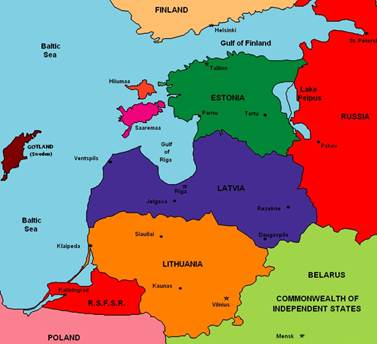
|
The Baltic Kaliningrad By Grant Heard See: http://depts.washington.edu/baltic/papers/kaliningrad.html
From Prussia to Russia: a history of the region
The Kaliningrad exclave lies on the Baltic Sea between Lithuania and Poland. It is today a part of the Russian Federation. Its population is predominately of Russian origin, with many other nationalities of the Former Soviet Union that make up the rest of the population. However, it was not always a Russian province, either politically or culturally. It has been Old Prussian, Lithuanian, German and Russian at one point in time or another. An understanding of the history is needed to best understand the claims that these countries have on the region today.
The Kaliningrad region was originally called the Samland, which was originally inhabited by the Prussian tribes whose language and culture, although has since died out, was similar to Lithuanians and Latvians of today. The Prussians, before the arrival of the Germans, were not Christianized, nor were they highly organized in trade or military. It was when these tribes proved to be difficult to defeat that the Teutonic Knights were called in to take over. They were tempted by the prospect of land and privileges from both the German Empire and the Catholic Church, which included grants to the Teutonic Order of full sovereignty over all the land it would conquer from the Prussians. The Prussians resisted the Teutonic Knights. An early account of the conquest of the Samland comes from the Livonian Rhymed Chronicle, which describes the conquest of Master Anno of the Teutonic Knights as he led the crusaders into the wilderness of the Samland:
The land is almost surrounded, being on the peninsula, by the wild seas, which had been a protection for it. No army had ever invaded there, and on the other sides no one can fight against it because a wild stream, wild and deep, flows along it… A narrow peninsula extends toward Memel, and there the Christians came with their stately army. The Christians rejoiced. They found the great forest of the Samites there. It was wide and thick, not of puny saplings, but trees so large that they served as a bulwark… The Christians came upon it and vowed not to rest till it had been cut in two… Then, when they had cut and slashed through the forest, the army advanced directly into the land. The Samites learned that they were visited by guests who wished to do them harm.
Although this raid was a success, as the crusaders passed deeper into the forest, they were ambushed and all but annihilated. However, the crusaders pressed on, and new attacks were launched, but from Prussia in the south, instead of Livonia to the north. The Teutonic Knights conquered the region and advanced their frontiers from Prussia to the south bank of the Memel River. It was then that Koenigsberg was founded in 1256, named in honor of King Ottokar of Bohemia, who had brought large armies on crusade to Prussia.
Prussians were granted a great deal of rights under the Teutonic Order. Prussians were much more numerous than the Germans, mainly because it was difficult to convince Germans to immigrate to this land because of its harsh, swampy landscape. Thus, the Prussian peasants were treated like German peasants and even lived side by side with each other. In the Samland region, the Prussian language and customs survived until the seventeenth century, being the last region where the Prussian died out. The Prussian culture died out because of Germanization. The Prussian peasants could even rise to the status of freemen. These freemen were allowed to own land and estates. They enjoyed many rights that the Germans did and were even treated like Germans. This helped to facilitate the Germanization of the Prussians. It also helped Prussia to become a country of peasants and landowners, a country in which the rest of the nobility was less important and less elevated above the rest of the population than it was elsewhere. And Koenigsberg was to remain quite autonomous from the rule of higher nobility in the years to come.
Under the Teutonic Order Prussia grew rich, and as the prosperity and freedom of the aristocracy and peasantry grew, the more the people began to feel “dominated” by the Teutonic Order, who was felt to be an alien ruler. So when the Order found itself in a long war with the Duchy of Lithuania and Poland in the fifteenth century, its people were sometimes on the side of the enemy. This is because the Polish had a more liberal form of government where the nobility were becoming much more powerful and the start of republicanism were forming. The Teutonic Order lost a number of battles, including the Battle of Tannenberg, which soon led to the Second Peace of Thorn in 1466. Here the Order lost its independence to Poland. West Prussia, which included the major trading center of Danzig, was given to Poland. However, East Prussia was left to the Order, but only as a Polish feoff. The Order was finally dissolved during the Reformation in 1525 by the last Grand Master of the Order, and he then became ‘Duke of Prussia’, though still under Polish feudal supremacy.
Koenigsberg was one of Prussia’s most important trading centers up till the sixteenth century, second only to the port of Danzig. Some of Koenigsberg’s main export items included rye, corn, hemp malt and waxes, and it had many guilds. The city had about 30-40,000 inhabitants at the time, which was even larger that Berlin. Politically, Koenigsberg was organized on a fairly democratic basis, base on the Third Estate system. Because of their power and privileges, the town did not hesitate to oppose the nobility. This in turn caused struggles between Koenigsberg and the nobility, and helped to prevent Prussia from becoming a noblemen’s republic. Even after the famines and the Plague hit the region during the mid-sixteenth century and their trade had declined, the town still would not relinquish its autonomy. It wasn’t until 1674 that the town finally surrendered much of its autonomy and agreed to pay higher taxes to the nobility when Fredrich William marched several thousand troops by surprise into the city.
In 1701 Koenigsberg became part of the Prussian Empire. The city became the focal point of the unification of the Prussian empire when Fredrick I was crown King of Prussia in Koenigsberg. Under this new rule immigrants flooded into Eastern Prussia, mainly to escape religious prejudice. People from all over Europe, including Jews, were welcomed into the Prussian state. They were then settled in East Prussia to help replace the losses experienced by the plague. There was not the overwhelming harassment and discrimination, either ethnic nor religious, then that would be experienced in the German Reich. This was also a time of the rise of the great Prussian militarism. The military became a powerful force as loyal, professional soldiers replaced mercenaries.
In 1756 Koenigsberg and East Prussia came under the brief rule of Russia, as the Seven Year’s War left the area almost completely defenseless. But this occupation would be short lived as the Prussian army reclaimed the territory after the battle of Zorndorf in 1758. This brief occupation did not bring about radical change in the population. As Sabastian Haffner writes, “the war, in a manner of speaking, passed over the heads of the people; they ducked and let the storm blow over.”
By the nineteenth century, the tide of nationalism swept throughout Prussia. This nationalism helped the great Prussian politician, Otto von Bismarck, to channel power in order to establish the first German Reich by 1871, after a series of wars with Austria, France and Denmark. From this time on Koenigsberg and East Prussia were to be absorbed into Germany, where it would remain as such until 1945.
After World War I, East Prussia was then separated from the German mainland by Poland by the Versailles Treaty, connected only by a corridor through Polish territory. However, prior to World War II, Hitler connected the German mainland with East Prussia. When Poland resisted, Hitler was given an excuse to attack Poland to reconnect the region with Germany. This fact still weighs very heavily on the memory of many Poles and is part of the reason why Poland fears a Russian corridor to Kaliningrad.
Koenigsberg fell to the Red Army in April 1945. The population was completely wiped out of Koenigsberg during the war. All the inhabitants of Koenigsberg were killed by the advancing Soviet Army, deported to other parts of the Soviet Union, or escaped to the German mainland.
Koenigsberg was surrendered to the Soviet Union in 1945 at the Potsdam Conference, when the Western leaders agreed to the Soviet proposal
…That pending the final determination of territorial questions at the peace settlement, the section of the western frontier of the USSR which is adjacent to the Baltic Sea should pass from a point on the eastern shore of the Bay of Danzig to the east, north of Braunsberg-Goldap, to the meeting point of the frontiers of Lithuania, the Polish Republic and East Prussia.
Stalin did not have any historical or legal basis for his desire to control Koenigsberg, but he did present a justification: the territory would be a just compensation for the efforts and losses experienced by the Red Army during World War II and the region was to serve as a vital base for Soviet military power. The strategic view that Koenigsberg served was the Russian Soviet Socialist Republic now possessed an ice-free port located closer to the region of potential confrontation with the West than the Soviet bases before the war and that was much less vulnerable than the Soviet facilities in the Finnish Gulf. Of the other ice-free ports that were acquired by the Soviet Union by the annexation of the Baltic States, Kaliningrad was considered to be superior to the rest.
The town of Koenigsberg was almost completely destroyed by 1944 by the devastating air bombing of the British Royal Air Force. In fact, almost 90% of the buildings were completely destroyed by the British air campaigns. When the red Army arrived, the rural areas surrounding the city suffered great damages. When the Soviet Union claimed the territory, the first order of business was to clear away the rubble that was left and to eradicate the area’s German past and to replace them with a Russian veneer. One method of doing this was to rename the cities and towns that were in the region. Koenigsberg was renamed Kaliningrad after the former president of the Soviet Union, Mikhail Kalinin. Soviet-style architecture and concrete housing blocs then replaced many of the buildings in the city. Today little remains of the features of the former Koenigsberg. However, as Romuald Misiunas and Rein Taagepera have claimed, the bulk of the construction carried out in Kaliningrad dates from the 1970s or later, and by the early 1990s, a lot of destruction still remained outside of the city.
During the Soviet period, the bulk of the economy was centered around the military establishment in the region, even though the fishing industry and paper processing were also important. Kaliningrad was considered one of the most heavily militarized regions in all of Europe during the Cold War. This is why the region was cut off to foreigners and most Soviet citizens until the late 1980s. The region’s population remained isolated from the West because no ships were even allowed to dock in the Kaliningrad port.
AFTER THE FALL
However, when the Soviet Union collapsed, Kaliningrad was faced with a special and complex set of problems. The large military infrastructure was reduced, at first by the perestroika programs of Gorbachev and reduced to even smaller numbers during the Yeltsin administration. The economy was then plunged into the transition from the planned-economy of the Soviet era to the market-based economy of modern Russia. This has brought not only economic hardships but social implications as well.
THE MILITARY INSTITUTION
Since the collapse of the Soviet Union the importance of the Baltic Fleet stationed in Baltysk, Kaliningrad Oblast has become less strategically valuable and its shipping trade has not lived up to expectations. The money that is allotted to the Russian military today dwarfs in comparison to the military-based economy of the Soviet days. During the Soviet Union, the Baltic Sea region had 6 different ports to station its Baltic Fleet forces, but today that number has been reduced to two, in Kaliningrad and in Kronstadt (in the Leningrad Oblast, near St. Petersburg). Of these two, the port in Kaliningrad is the only one that remains ice-free during the winter.
This has caused many politicians to stress the importance of the Kaliningrad region to the military security of the region, while at the same time, has caused some anxiety among its neighbors Poland and Lithuania. In fact, Polish Foreign Minister Bronislaw Geremek, in 1998, said that Kaliningrad “is a threat not only to Poland but also to European security.”
The amount of forces in Kaliningrad is unknown. However, the International Institute for Strategic Studies in London estimates a total number about 20,000 soldiers currently in Kaliningrad, of which 14,500 belong to the ground forces, and the rest to naval and border forces, and the interior troops. There are two Russian submarines, two destroyers, four frigates and 30 other surface ships in the Baltic Sea. It is this military complex in the region that Russia might use to further its image as a superpower and a bargaining chip to mark its influence within the Baltic Sea region.
ECONOMIC TROUBLES AND OUTLOOK
The economic situation also remains a big concern for Russia and its neighbors. The economic conditions are not very good at the moment, but it does have potential for the optimist. At the moment, the income per capita of the region is 83 percent of the federal average, although the cost of living is about the same, while five percent (almost a quarter in certain areas) of the population remains unemployed. In fact, after the economic crash in 1998, the governor declared a state of emergency for the region.
However, the region is among the 5 regions with the Russian Federation with the greatest number of enterprises with foreign capital. Kaliningrad has a Special Economic Zone, which allows foreign countries to produce goods in the region and then transport them to the Russian mainland without having to pay the higher export duties and taxes they usually have to pay to Russia. At the beginning of the decade Kaliningrad had a Free Economic Zone, in which foreign companies and ventures could transport goods free of duties and tariffs, but this was changed in 1996 to the Special Economic Zone when Russia began to lose millions of dollars (and other forms of hard currency from the West) and wanted to bring the oblast under tighter federal control. The federal government has invested almost 1 billion rubles into the program, but it still needs foreign investment to modernize its economy. The Special Economic Zone, in theory, is to help the Kaliningrad region in several ways. First, it eases the problems faced by Kaliningrad in being separated from Russia. Second, it supports a region that is severely lagging behind the rest of the Baltic states economically. Third, it improves European access to Russian markets.
This last point is important because Kaliningrad relies heavily on its trade with foreign countries for its economic need. This was having an adverse effect on the economy of Kaliningrad because many local producers could not compete with the goods that were flooding the market from other countries. In 1999 there were 6,150 registered small enterprises and firms in the oblast, which accounted for only 20 percent of the economic activity of the population of the region, bringing in only about 12 million dollars of taxes. In fact, 80% of Kaliningrad’s consumer goods are imported. Kaliningrad needs to build up its own large scale industry in order to compete with its neighbors Poland and Lithuania, but to do this foreign investment is needed to help build up the region’s industrial infrastructure.
SOCIAL ILLS AND IDENTITY
The hard economic conditions are having an adverse effect on the social conditions of the region. The region is rampant with crime and drugs. In fact, in 1998 a total of 19,491 crimes were committed in the region over the first eleven months, of which 65.8 percent of these crimes were considered “grave” crimes. Kaliningrad has become a transit point for drug smuggling en route from Europe into Russia and vise versa. Additionally, with over 3,000 reported cases of HIV, Kaliningrad has one of the highest AIDS rates in Russia, if not Europe, and this does not account for the unregistered cases of HIV.
The Kaliningrad exclave’s ethnic make-up is unmistakably Russian. Today the population of the Kaliningrad oblast numbers around 927,000 people, of this 683,600, or 78.5%, are ethnic Russians. The other countries that may have possible claim to the territory (Poland, Lithuania and Germany) combined to only about 2% of the population.
After over half a century, many of the local Russians were born and raised in the Kaliningrad region, which gives the region its Russian ethnicity, although with special characteristics. Anna Romanovna, a Kaliningrad resident, says that:
“All these reasons (political situation, economics, and ethnicity) make Kaliningrad looking more like Moscow (relatively, of course), just because it differs from other typical Russian cities in many ways: they don't have border problems which we have with several states between us and the main territory of Russia, it differs ethnically, it looks different because of its specific architecture, etc. But, anyways, it's certainly a Russian city!”
The overwhelming Russian population would make it extremely difficult for any country to acquire the region from Russia.
FOREIGN RELATIONS WITH KALININGRAD’S NEIGHBORS
Although right-wing groups from Lithuania, Poland and Germany have made calls for the incorporation of Kaliningrad into their respective countries, these countries have made it clear that Kaliningrad is a part of the Russian Federation and have not made any meaningful claims to the region. However, rumors still abound and some Kaliningrad residents have their suspicions about Kaliningrad being given to another country. Elena Golovina, a resident of Kaliningrad, said:
“The geographical location of the Kaliningrad region makes different speculations about the enclave's future possible… Some of them speculate about the region being separated from the "coastal" Russia and being autonomous. Others speak in favor of the enclave being integral part of the country. Sometimes we hear rumors from Moscow about our region being sold to Germany in order to cover Russian debts.
I still remember the example of my younger brother when it came time to choose between the English and German languages to study at school (we are offered to choose one of them to be "the main" and the other to be "the bonus one"). My mother insisted on him learning German, because we could not predict the way the things would go.
To best understand the concerns that Kaliningrad has with other countries, we must first look at the relationship that Kaliningrad has with its other neighbors.
POLISH IRRITATION AND CONCERN
Polish and Russian relations have been somewhat cold as of 1999, especially in reference to the Kaliningrad region. Poland and NATO thought that Poland’s accession into NATO was supposed to eliminate an irritant from the mutual relationship with Russia, but in fact has had an almost opposite effect. This cold relationship was dampened even more in an incident in 2000 where Poland expelled nine Russian diplomats from the country for charges of spying on its armed forces. Russia responded by expelling nine Polish diplomats. Another incident happened in February 2000, when anti-Chechen war protestors broke into the Russian consulate in the town of Poznan and vandalized the building.
One of the biggest sore spots has to be the calling for a corridor by the Russians between Belarus and Kaliningrad. Russia would like to build a corridor from Belarus for the transportation of military equipment and troops and goods to the isolated exclave. For many Poles, a Russian corridor through Polish territory sparks many memories of the German connection to East Prussia through the Polish Corridor before the war and the period of Soviet domination during the second half of the Twentieth Century.
There has been a loud outcry from many Polish politicians that no corridor will be built on Polish soil, thereby furthering the mistrust of the two countries.
However, Poland finds it is not in its interest to be anti-Russian, especially with Kaliningrad. Poland has maintained that Kaliningrad is an inseparable part of Russia and has made no claims to the region. For membership into the EU, Poland has to maintain well-defined borders with its neighbors, which it has done. Any dispute with Russia for Kaliningrad will only weaken its plea for admission. Additionally, there is a sense of cooperation between Kaliningrad and Polish officials to help to lessen the amount of smuggling along their mutual border.
LITHUANIAN FRIENDSHIP
Lithuania has recently experienced rather good relations with Russia and the Kaliningrad region. Lithuania’s former Foreign Minister, Vygaudas Usackas, said of Lithuania’s relationship with the Kaliningrad region;
“Following the re-establishment of Lithuania’s independence, Kaliningrad was perceived as a risk and a threat to the stability of the region. Over recent years, Lithuania has been deliberately working to make the Kaliningrad region be seen as an opportunity for regional and European co-operation. Our national interest is to co-operate with neighbors that share the same values. We should like the Kaliningrad region to become an attractive partner for economic and cross-border co-operation and a ‘window of opportunity’ for wider co-operation between Russia and the enlarging EU.”
Like Poland, Lithuania does not have any territorial disputes with Kaliningrad and has been working hard to maintain good relations. At the present time, Lithuania is one of the Kaliningrad region’s largest investors. Twelve percent of Lithuania’s overall trade is with Russia and has invested about 3.9 million dollars and has established 32 new enterprises in the Kaliningrad region within the last year. Lithuania has worked very closely with the EU and the Council of Baltic States to help implement reform in Kaliningrad. It also has implemented a visa-free regime with the citizens of Kaliningrad. Citizens of Kaliningrad and Lithuania are allowed to travel back and forth across each other’s borders and stay in the other country or oblast for a month without the need for a visa. Lithuania has stated that it will not abandon the visa free regime of the Kaliningrad region’s residents, but has maintained that as Lithuania is integrated into the EU it will eventually have to review the issue of the visa free travel with non-EU countries. Lithuania also allows the Russian military to use a corridor that runs through its country to Kaliningrad, but under certain restrictions.
GERMAN INTERESTS
Germany’s relationship with the Kaliningrad region has also been good. Although it has strong historical ties to the region, Germany has maintained that it would not make any claims to retake the region. However, there have been rumors lately about German leaders secretly offering to waive Russia’s debt to Germany in return for economic domination over Kaliningrad. Of course, this is not a deal for the revival of Prussia, which could cause an outcry by many of its neighbors who still remember the horrors of Nazi occupation, but rather a debt-for-equity deal. Even if this rumor turns out to not be true it still shows some of the uncertainty that many have about the future of Kaliningrad.
Germany has been involved in economic ventures in the exclave, although rather hesitant because of the uncertainty of laws and poor infrastructure. One such venture was with the German automobile manufacturer, BMW. In 1999, the German car company BMW created a 25 million dollar joint venture in Kaliningrad. The company has taken over a Soviet naval factory that was first built by the Germans before the war to make U-boats. This will hopefully have a good effect on the economy of Kaliningrad and Russia. The venture employs about three hundred workers, with an average wage of about 3,500 rubles a month (USD $130), and the cars that are produced in Kaliningrad will be sold in Russia with 30% of the cost of each car will stay in Russia. BMW’s strategy focuses on advanced sales and tax breaks. Duties comprise 60% of the price of imported BMWs in Russia. But Kaliningrad, with its special economic zone, grants importers immunity. Moreover, BMW’s Russian partner in Kaliningrad is assembling the cars cheaply. In all, BMW hopes that costs will be about 20% less than BMW cars that are imported into Russia. The success of this venture may create more interest of other companies looking to take advantage of the Russian market. This is one reason why the Russian presidential administration has bought 130 cars from Kaliningrad for about seven million dollars and plans on restraining from taxing the firm until the operation is on firm ground. Of course, this firm is starting small but success could attract other investors that have been wary of venturing into Kaliningrad due to the financial crisis of 1998 and Kaliningrad’s high crime rate and social problems.
Conclusion
The Kaliningrad Oblast is a Russian territory. Although there are other countries that may have possible claim to the area and the region is an integrated part of the Baltic Sea region, the exclave is an inseparable part of the Russian Federation because of its ethnic Russian population, its military forces stationed in the region and economic reliance. However, with its rich history and being the focus of much concern for its neighbors and Western European institution, the Kaliningrad exclave will be a priority for economic and social restructuring.
|

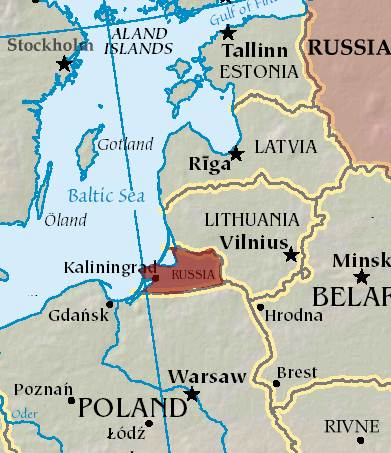
Deportations of Lithuanians to Siberia
The cruel deportations of hundreds of thousand Lithuanians to Siberia during and after World War II is the very saddest chapter in the relations between Russia (USSR) and Lithuania. An exhibition that in 2012 was shown in the famous Balzekas Museum in Chicago showed the true face of these atrocities.
Let us also commend Dr. Audrius Plioplysa marvellous work to collect so many touching letters from some of the exiled Lithuanians.
‘Siberia Exhibition’ in the Balzekas Museum of Lithuanian Culture, Chicago |
|
Location, Contact and Link 6500 S.
Pulaski Road |
|
|
Letters from Lithuanians deported to Siberia
The Balzekas Museum's Hope & Spirit exhibit and programme, commemorating 70 years since the start of Soviet deportations to Siberia (1941-2011), included 157 original handwritten and personal letters from Lithuanian deportees to their relatives living in London, England; Sydney, Australia; Chicago, Illinois; Bogota, Columbia; Toronto, Ontario; and other cities. Among these letters are 20 written by children who were deported. The exhibit included 218 original photographs from Siberia and 71 addressed envelopes. All of these items are extremely rare and of immense historical value and were being presented to the public for the first time in 2011.
|
|
||||
|
Letter examples, presented by the collector, Dr. Audrius Plioplys |
|
|
||
Posted on October 10, 2011
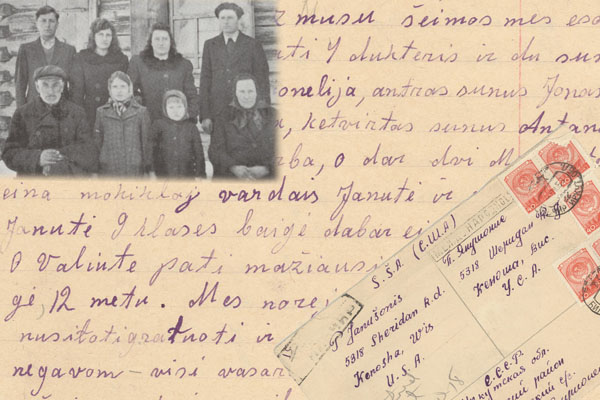
Kazimieras Janusonis with his wife Agota, and 6 children were deported to work in the same collectivized farm in Siberia. The location of the Bilchirsk kolkhoz was in the northerly portion of the Irkutsk region. Agota wrote letters to her brother-in-law, P. Janusonis, who was living in Kenosha, Wisconsin.
She wrote, “We work in the kolkhoz. Our family has 7 members: me, 4 daughters and 2 sons. (She notes 7 family members because when she wrote this letter, her husband had already died–AVP.) The oldest is my daughter Petronelija, then my son Jonas, thirdly my daughter Agota, and fourth, my son Antanas. All 4 work in the kolkhoz. My younger 2 daughters, Janute and Valiute, are students. Janute completed grade 9 and now attends grade 10. Valiute, my youngest, 12 years old, finished grade 4…We did not bring anything with us besides what were able to stuff into one bag. Adequate clothing is very difficult for all of us…Winters are very cold and summers very hot. We are surrounded by mountains and forests. There is little flat ground.”
In another letter she wrote, “We are surrounded by tall mountains which are covered with impenetrable forests. Wild animals live there–polar bears and wolves. We live in a valley near a small stream. We use it’s water because there is no well. Without fur coats, it is not possible to go outside, even for a brief period of time, in the winter. And then, the fur freezes solid as an animal’s horn. Thus, we wear cotton coats. We live with the Buriats (related to the Mongols–AVP).”
Kazimieras Janusonis died in Siberia, shortly after the photograph was taken. After serving 10 years of hard labor on the kolkhoz, Agota and her children were allowed to return to Lithuania. However, they were not allowed to return to their family farm.
On display we have 5 letters and 3 envelopes from the Janusonis family as part of the Hope and Spirit exhibit which I have organized. The exhibit is at the Balzekas Museum of Lithuanian Culture, in Chicago, and has been extended until the end of April, 2012.
Posted in Letters from Siberia
Mother buries her two infants in Siberia
Posted on October 10, 2011
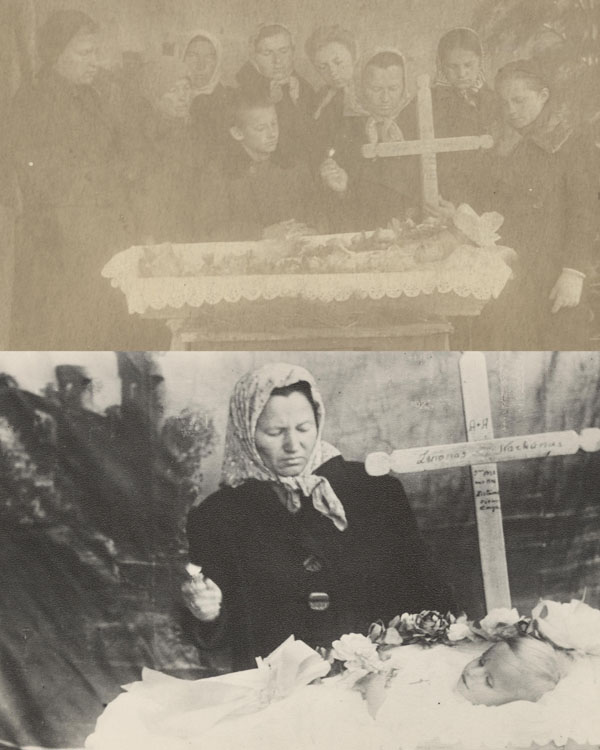
In these two photographs, Veronika Norkunas buries her two young children near the city of Barnaul, in Siberia.
In the top picture, 4 year old, Livija-Liucija Norkunaite is being buried. She was born in Lithuania, and died on September 21, 1941, in Siberia.
In the bottom picture, 16 month old Zenonas Norkunas is being buried. He was born in Lithuania, and died on September 22, 1941, in Siberia.
On one September day, Veronika buried her four year old, and on the next day, her 16 month old.
The pictures were sent to A. Norkunas who was living in Adelaide, Australia.
These young children survived only 3 months after their deportation in June, 1941. They only survived 3 months in Stalin’s new society.
There is no available further information about this Norkunas family.
These two images are from over 230 original deportee photographs from Siberia which are on display in the Hope and Spirit exhibit, which I have organized, at the Balzekas Museum of Lithuanian Culture, in Chicago. Quite literally, due to popular demand, the exhibit has been extended to the end of April, 2012.
Posted in Letters from Siberia
14 months old–deported to Siberia; 14 years old–dead
Posted on October 10, 2011
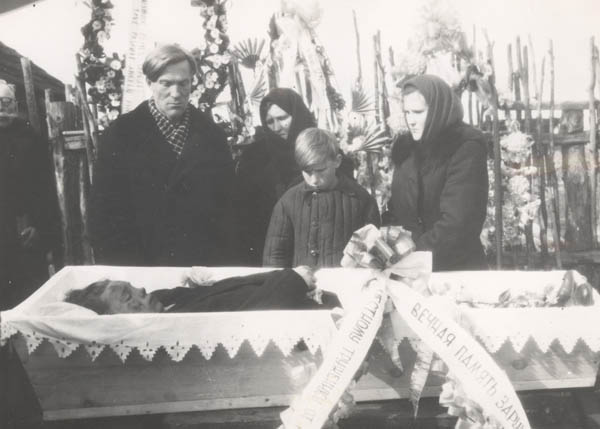
Zigmas Zarunskis was 14 months old when he, with his family, were deported to Siberia. At the age of 14 years, instead of attending school, he was assigned to work as a lumberjack. While chopping trees, a limb fell down on him, killing him. The photograph was mailed to a relative in Jackson Heights, New York. In it, standing from left to right, are Zigmas’ parents, Pranas and Ona, his younger brother Jonas (who was born in Siberia), and his older sister, Zita. No further information is available about the Zarunskis family.
This photograph is one over over 230 which are on display in the Hope and Spirit exhibit, which I have organized, at the Balzekas Museum of Lithuanian Culture, in Chicago. Quite literally, due to popular demand, the exhibit has been extended to the end of April, 2012.
Posted in Letters from Siberia
Posted on September 2, 2011

Konstancija and Jonas Marmas, with their three children, in the Krasnoyarsk Region of Siberia
The Marmas family was deported, from their family farm in Griskabudis to work as lumberjacks for 10 years. The uncle of Jonas Marmas was Dr. Vincas Kudirka, the author of the Lithuanian national anthem. Possibly it was because of this familial relationship that they were deported.
In this letter, written to Alfonsas Lietuvninkas, in Chicago, Mr. Marmas comments about the health care system. Apparently Mr. Lietuvninkas was having health issues. Mr. Marmas writes: “You wrote that health care costs are expensive. For us, from one aspect, it is very good–we do not have to pay for anything. Along with this, there also are no medicines available. It would be better to pay and at least feel that your health is improving, instead of waiting to see if the illness clears or not. What can you do, if that is God’s will?”
He further wrote that during the winters, temperatures were frequently -55 to -60 degrees Centigrade (-75 degrees F) with 5 to 6 feet of snow. During the short summers the temperature would reach 50 degrees Centigrade (120 degrees F), and at night fall to freezing, destroying even the potatoes that were their main food source. There is no further available information about the Marmas family.
The Marmas family letters and photographs are currently on display as part of the Hope and Spirit exhibit which I have organized, at the Balzekas Museum of Lithuanian Culture, in Chicago. This exhibit, and extensive programs, will continue into January 2012.
Posted in Letters from Siberia
10th grade graduation present: 167 hard labor jobs and meningitis
Posted on August 9, 2011

Dobilas Ralys and his mother in Siberia. The letter was written by his sister, Ramune Ralys, and was sent to their uncle, V. Cizinas, in Paterson, New Jersey. In this letter she details some of her own life events upon being exiled to Siberia with her family. She was attending the 7th grade at the time of deportation. In the Krasnoyarsk District’s farm labor camp (kolkhoz) the middle school was located 2 miles away, which she attended until completing grade 10. At that time, she took over the labor tasks of her mother, who was too ill to work.
The Ralys family had been living in Kaunas, where Mr. Ralys worked as a bank accountant. In 1910 and into the 1920′s he wrote general interest articles under the pseudonym of Vargovaikas (Child of Misery). The family was deported to a forced labor camp to serve a 6 year term. Upon returning to Kaunas, the family was allowed to live in the house that they had previously owned, but only in a portion of the basement. Mr. Ralys died within a year of returning to Lithuania. He was 66 years old at the time of deportation.
In this letter, Ramune details some of the tasks that she had to do. “Shoveled snow…worked as a camp cook…collected and burned straw, planted corn, weeded wheat fields, collected silage, transported logs, transported grains, cleaned grains, and so on. In all, I did 167 different jobs.” During September of the second year’s hard labor, she became ill with what appears to have been a form of meningitis/encephalitis. She suffered the entire winter, but was able to return to labor in the spring.
This letter, and several hundred like it, are on display as part of the Hope and Spirit exhibit that I have organized at the Balzekas Museum of Lithuanian Culture in Chicago. The exhibit will continue through mid-January 2012.
Posted in Letters from Siberia
$4 for one egg, $70 for a pound of butter
Posted on July 18, 2011

Morta Abromaviciene, at the age of 67, was deported to Siberia with her husband Stasys, who was 74. Mr. Abromavicius died 3 years later, while Mrs. Abromaviciene was able to serve her prison term in Tinsk, in the Krasnoyarsk District. After 7 years of hard labor, her health was broken–she was so frail and weak that she was transferred to the Tupik sanatorium, in the Shirinsky District of Khakassia, for one year to recover. It was while she was in the sanatorium, that she was able to write letters to one of her daughters, who was living in Chicago.
In the early 1900′s, Mr. and Mrs. Abromavicius had both, independently, traveled to work in the United States. They met in Braddock, Pennsylvania, where they were married in 1906. With their two young daughters they returned to Lithuania in 1913, and bought a small family farm. All totaled, they had 2 daughters and 4 sons. During the war, one son died, and the other children moved to the United States.
When she returned to Lithuania from Siberia, she found all of her farmhouses burned to the ground. She went to the nearby larger city, Marijampole, where she lived and died 10 years later. She was able to survive only because her children continued to send her packages.
In her letters from Siberia she notes that the winters are very cold, with the temperature frequently minus 40 degrees Centigrade (which is exactly minus 40 degrees F).
She is thankful to her children for the packages that she has received, and mentions the items that she needs to obtain. She notes that when packages arrive, the other residents of the sanatorium crowd around as the package is opened. She gives most of the contents to the other residents, keeping only the essential items for herself.
One time, her daughter made an error and sent her $50 in cash (I am changing the actual amounts into what would be current US$ value, given years of inflation). To exchange this currency into rubles, she had to travel to a bank in a distant city. The travel cost was $32, leaving her very little.
In another letter she notes how expensive even the most basic items are. One egg cost $4. One kilogram of butter, $140–which means $70 for one pound of butter!
Why was this family treated like criminals? Landowners, because they might object to Stalin’s new political system, needed to be either exterminated or deported. This was genocide, pure and simple, on the basis of political motives. This happened to the Abromavicius family, and to millions of other families across Eastern Europe.
The letters of Morta Abromaviciene are on display as part of the Hope and Spirit exhibit, which I have organized, at the Balzekas Museum of Lithuanian Culture, 6500 S. Pulaski Rd., Chicago, Illinois. The exhibit has been extended, and will continue until mid-January, 2012.
Posted in Letters from Siberia
- Bookmark :
- Digg
- del.icio.us
- Stumbleupon
- Redit it

- Posted by - (2) Comment
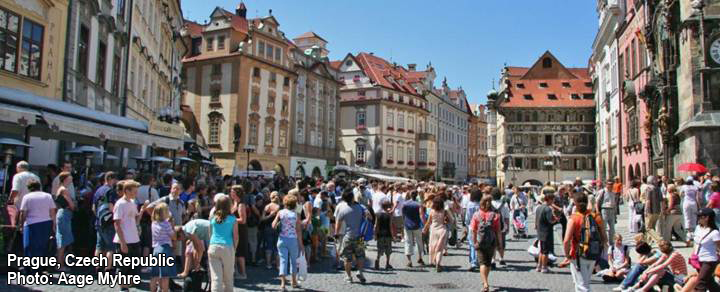
Prague centre is full of life!


EXPLORING EUROPE (7 of 10)
Warsaw, Kraków, Prague,
Bratislava, Budapest
Tour guide, writer and photographer: Aage Myhre
aage.myhre@VilNews.com
VilNews is on its way around Europe!
Our today's journey begins in Warsaw. From there we drive south in Poland,
|
||||||||||||||||||||||
|
Today’s journey:
Today’s journey goes through former Warsaw Pact countries
Poland is a country in Central Europe bordered by Germany to the west; the Czech Republic and Slovakia to the south; Ukraine, Belarus and Lithuania to the east; and the Baltic Sea and Kaliningrad Oblast, a Russian exclave, to the north. The total area of Poland is 312,679 square kilometres (120,726 sq mi), making it the 69th largest country in the world and the 9th largest in Europe. Poland has a population of over 38 million people,[6] which makes it the 34th most populous country in the world and the sixth most populous member of the European Union, being its most populous post-communist member. Poland is a unitary state made up of sixteen voivodeships. Poland is a member of the European Union, NATO, the United Nations, the World Trade Organization, the Organisation for Economic Co-operation and Development (OECD), European Economic Area, International Energy Agency, Council of Europe, Organization for Security and Co-operation in Europe, International Atomic Energy Agency and G6. The establishment of a Polish state is often identified with the adoption of Christianity by its ruler Mieszko I in 966, over the territory similar to that of present-day Poland. The Kingdom of Poland was formed in 1025, and in 1569 it cemented a long association with the Grand Duchy of Lithuania by signing the Union of Lublin, forming the Polish–Lithuanian Commonwealth. The Commonwealth ceased to exist in 1795 as the Polish lands were partitioned among the Kingdom of Prussia, the Russian Empire, and Austria. Poland regained its independence as the Second Polish Republic in 1918. Two decades later, in September 1939, World War II started with the Nazi Germany and the Soviet Union invasion of Poland. Over six million Polish citizens died in the war. Poland reemerged several years later within the Soviet sphere of influence as the People's Republic in existence until 1989. During the Revolutions of 1989, 45-year long communist rule was overthrown and the democratic rule was re-established. That gave foundations to modern Poland, constitutionally known as the "Third Polish Republic". Despite the vast destruction the country experienced in World War II, Poland managed to preserve much of its cultural wealth. There are currently 14 heritage sites inscribed on the UNESCO World Heritage list in Poland. Since the end of the communist period, Poland has achieved a "very high" ranking in terms of human development and standard of living.
Warsaw - the city that rose from the ashes after World War II Warsaw is the post-war bird phoenix. Barely 20% of the city was left after the war’s bombs and fires. Most of Warsaw was in ruins. After the war, under the Communist regime that was installed by the Soviet conquerors, major residential projects were completed in order to solve housing shortage. Mostly through the use of large, prefabricated concrete elements. Gray, dreary suburbs as in the rest of the post-war Eastern Europe. Fortunately, many of the city's historic streets, buildings and churches were restored to their original shapes.
Lublin – the city where Poland and Lithuania signed their 1569 Union Treaty
Kraków - culture at Europe's largest medieval town square Kraków has grown from a Stone Age settlement to become Poland's national academic and artistic centre. Medieval Krakow was surrounded by a 3 km long city wall with 46 towers and seven gates. The current town plan was drawn up in 1257 after the destruction of the city during the Tatar invasion in 1241 Union of Kraków and Vilnius of 1499, also known as the Vilnius Protocol was an important agreement in the Polish-Lithuanian union. So it was indeed these two towns that played key roles during the long partnership between these nations. Krakow was relatively undamaged by WWII, and stands today as one of the most beautiful and genuine Eastern Europe has to offer. In 1978, Karol Wojtyla, archbishop of Krakow, raised by the Vatican as Pope John Paul II, the first Slavic pope ever and the first non-Italian Pope in 455 years.
The Czech Republic is a landlocked country in Central Europe. It has a population of 10.5 million. The country is bordered by Germany to the west, Poland to the north, Austria to the south and Slovakia to the east. Its capital and largest city, at 1.3 million inhabitants, is Prague. It is a pluralist multi-party parliamentary representative democracy, a member of the European Union, NATO, the OECD, the OSCE, the Council of Europe and the Visegrád Group. The Czech state, formerly known as Bohemia, was formed in the late 9th century as a small duchy around Prague, at that time under dominance of the powerful Great Moravian Empire (which reached its greatest territorial extent during the reign of Svatopluk I from the House of Mojmír). After the fall of the Empire in 907, the centre of power was transferred from Moravia to Bohemia, under the Přemyslids. During the rule of Přemyslid dukes/kings and their successors, the Luxembourgs, the country reached its greatest territorial extent (13th–14th century). Life in the country was significantly affected by the Hussite wars, during which it faced economic embargo and crusades from all over Europe. Following the Battle of Mohács in 1526, the Crown of Bohemia was gradually integrated into the Habsburg monarchy as one of its three principal parts alongside the Archduchy of Austria and the Kingdom of Hungary. The Bohemian Revolt (1618–20) led to the further centralization of the monarchy including forced recatholization and Germanization. During radical reforms in the 18th century the Bohemian Crown was even de facto abolished (1749). In the 19th century the Czech lands became the industrial powerhouse of the monarchy and the core of the Republic of Czechoslovakia which was formed in 1918, following the collapse of the Austro-Hungarian empire after World War I. After the Munich Agreement, Polish annexation of Zaolzie and German occupation of Czechoslovakia and the consequent disillusion with the Western response and gratitude for the liberation of the major portion of Czechoslovakia by the Red Army, the Communist Party of Czechoslovakia won the majority in the 1946 elections. In a 1948 coup d'état, Czechoslovakia became a communist-ruled state. In 1968, the increasing dissatisfaction culminated in attempts to reform the communist regime. The events, known as the Prague Spring of 1968, ended with an invasion by the armies of the Warsaw Pact countries (with the exception of Romania); the troops remained in the country until the 1989 Velvet Revolution, when the communist regime collapsed. On 1 January 1993, Czechoslovakia peacefully dissolved into its constituent states, the Czech Republic and the Slovak Republic. The Czech Republic is the first former member of the Comecon to achieve the status of a developed country according to the World Bank. In addition, the country has the highest human development in Central and Eastern Europe, ranking as a "Very High Human Development" nation. It is also ranked as the third most peaceful country in Europe and most democratic and healthy (by infant mortality) country in the region.
My choice is Prague and Václav Havel
Prague has been a political, cultural and economic centre in Europe and especially central Europe through 1100 years. For centuries, during the Renaissance, the city was the permanent seat of the two Holy Roman emperors and thus also the capital of 'The Holy Roman Empire'. Later Prague an important city in the Habsburg monarchy and the Austro-Hungarian Empire. "Prague is like a textbook of styles," I think as I walk around in the Old Town. Here stand a thousand years of architectural gems side by side. Good architecture from the medieval, Renaissance and Baroque. Most of these beautiful buildings are now carefully renovated and restored. 'The city with the golden spire' is one of the nicknames this beautiful city has received. Church steeples and bell towers as far as I can see. The most famous landmark in Prague, the Charles Bridge, has carried people on its curved arches over the Vltava river for hundreds of years. It was commissioned by the Roman Emperor Charles IV in 1357 to replace the old bridge that had been destroyed by a flood in 1342. This part of Prague is now a pedestrian paradise, where all the tourists are wandering around and enjoying the sight of the river, the beautiful architecture and each other. No doubt that Prague is attractive and breathtaking beauty. Probably the number one tourist city in Eastern Europe!
The Slovak Republic (short form: Slovakia) is a landlocked state in Central Europe. It has a population of over five million and an area of about 49,000 square kilometres (19,000 sq mi). Slovakia is bordered by the Czech Republic and Austria to the west, Poland to the north, Ukraine to the east and Hungary to the south. The largest city is the capital, Bratislava, and the second largest is Košice. Slovakia is a member state of the European Union, NATO, United Nations, OECD and WTO among others. The official language is Slovak, a member of the Slavic language family. The Slavs arrived in the territory of present day Slovakia in the 5th and 6th centuries during the migration period. In the course of history, various parts of today's Slovakia belonged to Samo's Empire (the first known political unit of Slavs), Principality of Nitra (as independent polity, as part of Great Moravia and as part of Hungarian Kingdom), Great Moravia, Kingdom of Hungary, the Austro-Hungarian Empire or Habsburg Empire, and Czechoslovakia. A separate Slovak state briefly existed during World War II, during which Slovakia was a dependency of Nazi Germany between 1939–1944. From 1945 Slovakia once again became a part of Czechoslovakia. The present-day Slovakia became an independent state on 1 January 1993 after the peaceful dissolution of Czechoslovakia. Slovakia is a high-income advanced economy with one of the fastest growth rates in the European Union and the OECD. The country joined the European Union in 2004 and the Eurozone on 1 January 2009. Slovakia together with Slovenia and Estonia are the only former Communist nations to be part of the European Union, Eurozone, Schengen Area and NATO simultaneously. The Slovak Republic and the Czech Republic went their separate ways after 1 January 1993, an event sometimes called the Velvet Divorce. Slovakia has remained a close partner with the Czech Republic. Both countries cooperate with Hungary and Poland in the Visegrád Group.
Bratislava – home of Škoda Bratislava is the capital of Slovakia and, with a population of about 431,000, also the country's largest city. Bratislava is in southwestern Slovakia on both banks of the Danube River. Bordering Austria and Hungary, it is the only national capital that borders two independent countries. Bratislava is the political, cultural, and economic centre of Slovakia. It is the seat of the Slovak president, the parliament, and the executive branch of the government. It is home to several universities, museums, theatres, galleries and other important cultural and educational institutions. Many of Slovakia's large businesses and financial institutions also have headquarters there. The history of the city, long known by the German name Preßburg, has been strongly influenced by people of different nations and religions, namely by Austrians, Czechs, Germans, Hungarians, Slovaks, and Jews. The city was the capital of the Kingdom of Hungary, a part of the larger Habsburg Monarchy territories, from 1536 to 1783 and has been home to many Slovak, Hungarian, and German historical figures. More than 60% of all direct foreign investments in Slovakia are located in the Bratislava Region. The car manufacturer Volkswagen was established in Bratislava in 1991 subsequent to acquiring Škoda Auto and has expanded since. Currently, its production focuses on sport utility vehicles, which represent 68% of all production. VW Touareg is finished and Porsche Cayenne and Audi Q7 are partially built there. In recent years service and high-tech oriented businesses are thriving in Bratislava. Many global companies, including IBM, Dell, Lenovo, AT&T, SAP, and Accenture, are building their outsourcing and service centres or have plans to build in near future here.
Hungary is a landlocked country in Central Europe. It is situated in the Carpathian Basin and is bordered by Slovakia to the north, Ukraine and Romania to the east, Serbia and Croatia to the south, Slovenia to the southwest and Austria to the west. The capital and largest city is Budapest. Hungary is a member of the European Union, NATO, the OECD, the Visegrád Group, and is a Schengen state. The official language is Hungarian, also known as Magyar, which is part of the Finno-Ugric group and is the most widely spoken non-Indo-European language in Europe. Following a Celtic (after c. 450 BCE) and a Roman (9 CE – c. 430 CE) period, the foundation of Hungary was laid in the late 9th century by the Hungarian ruler Árpád, whose great-grandson Saint Stephen I was crowned with a crown sent by the pope from Rome in 1000 AD. The Kingdom of Hungary lasted for 946 years, and at various points was regarded as one of the cultural centres of the Western world. After about 150 years of partial Ottoman occupation (1541–1699), Hungary was integrated into the Habsburg Monarchy, and later constituted half of the Austro-Hungarian dual monarchy (1867–1918). A great power until the end of World War I, Hungary lost over 70 percent of its territory, along with one third of its ethnic population, and all its sea ports under the Treaty of Trianon, the terms of which have been considered excessively harsh by many in Hungary. The kingdom was succeeded by a Fascist regime, and then a Communist era (1947–1989) during which Hungary gained widespread international attention during the Revolution of 1956 and the seminal opening of its border with Austria in 1989, thus accelerating the collapse of the Eastern Bloc. The present form of government is a parliamentary republic, which was established in 1989. Today, Hungary is a high-income economy and a regional leader in some respects. Hungary is one of the thirty most popular tourist destinations of the world, attracting 8.6 million tourists a year (2007). The country is home to the largest thermal water cave system and the second largest thermal lake in the world (Lake Hévíz), the largest lake in Central Europe (Lake Balaton), and the largest natural grasslands in Europe. The people of Hungary (the Magyar) have been known as great horsemen for centuries. As invaders crossed or conquered Hungary over the centuries, they brought with them their fine Turkoman (ancestors of today's Akhal-Teke), Iberian (ancestors of Andalusians and Lusitanos), and Arabian horses. These horses were crossed with the hardy little local horses to create a superior mount for the Hungarian cattlemen.
The Hungarian language has Finnish-Siberian origin!
Budapest was founded by the Romans around 89 AD
I am driving into Budapest a hot summer afternoon. We have had a few wonderful days in Hungary’s holiday paradise at Lake Balaton, Central Europe’s largest lake. Drunk good Hungarian wine and enjoyed the delicious water. But now it is the capital that counts. Infinite beautiful Budapest, Buda on one side, Pest on the other side of the slow Danube River which divides the city into two, with its beautiful water surface..
|
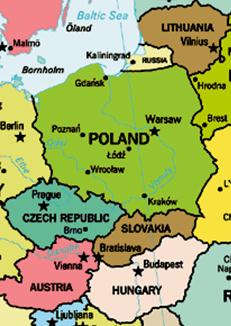

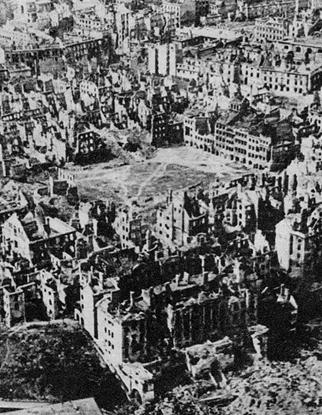
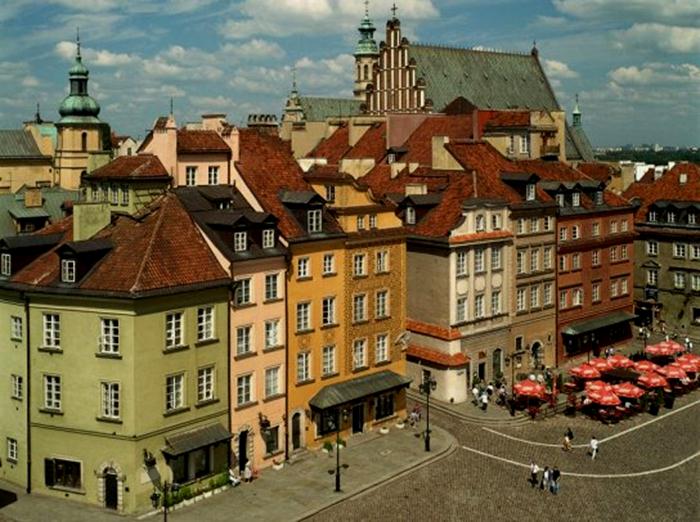
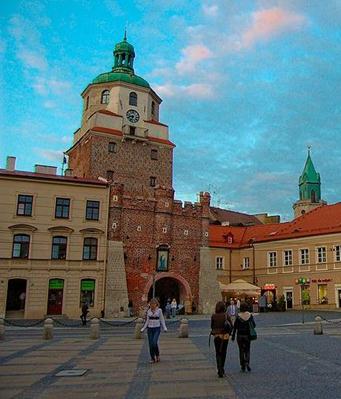
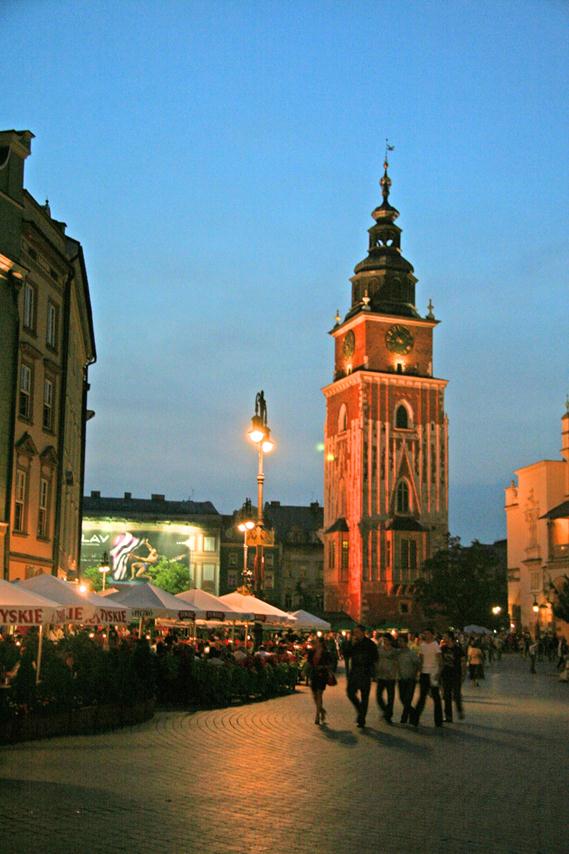
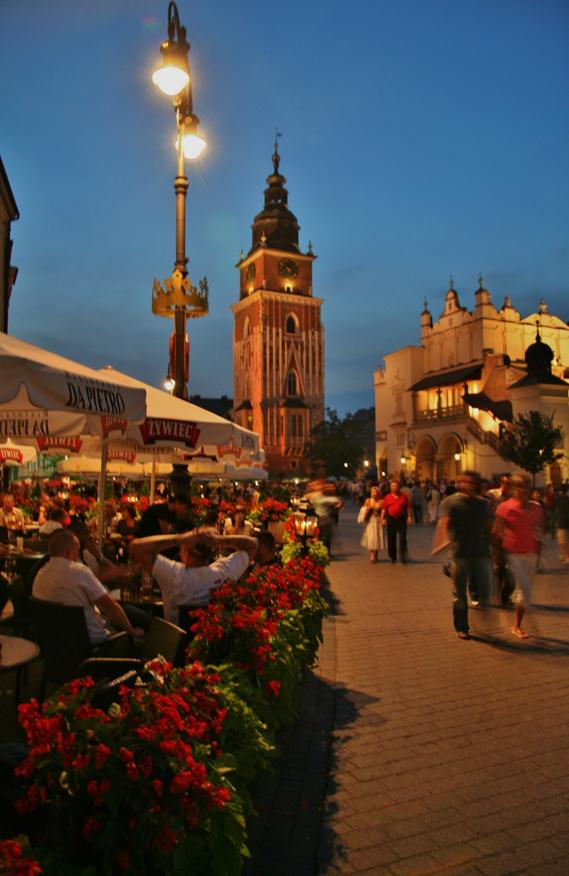
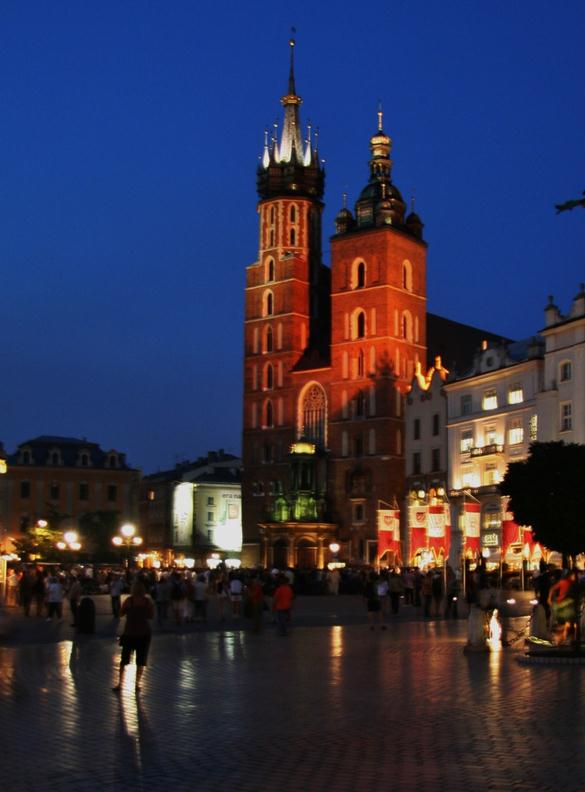
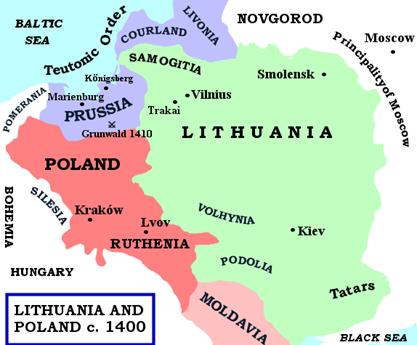

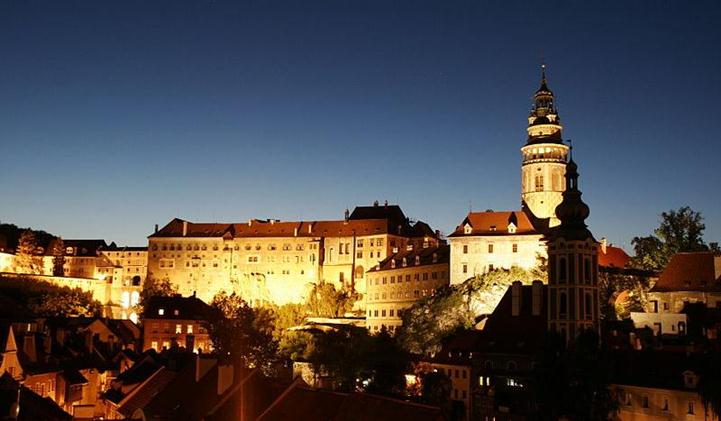
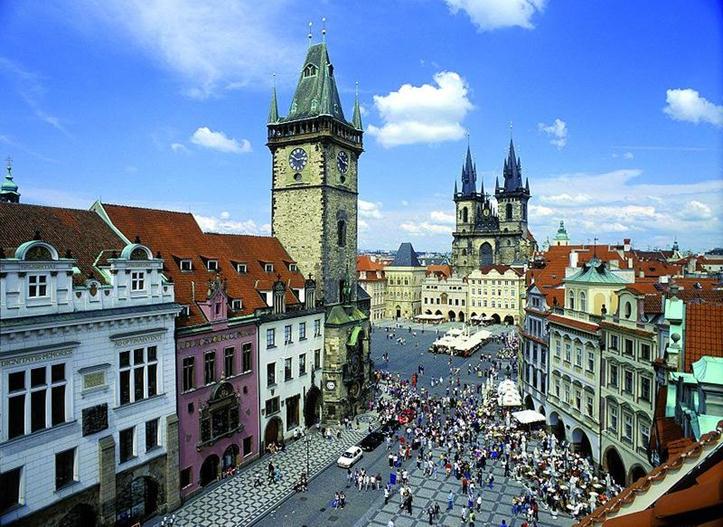
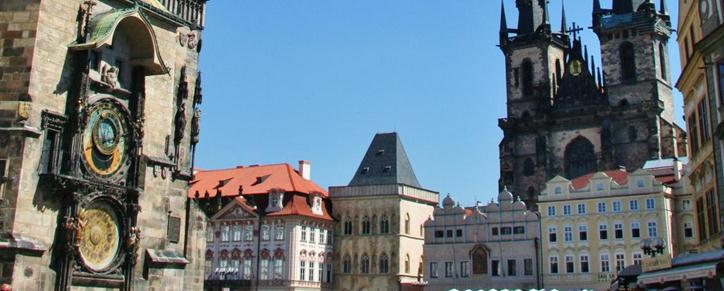
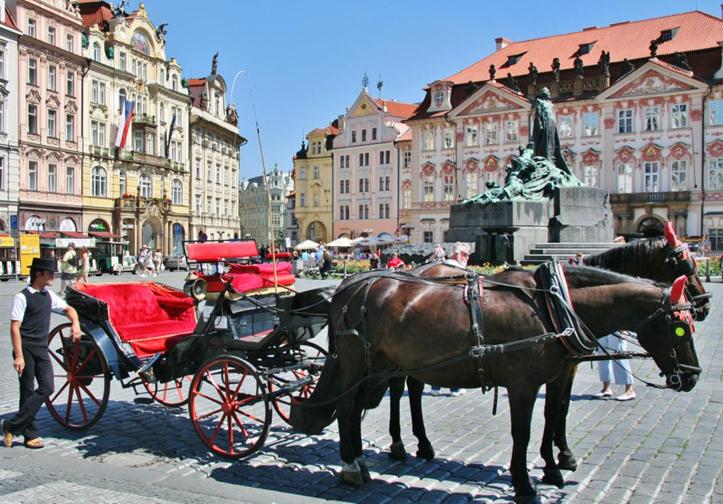
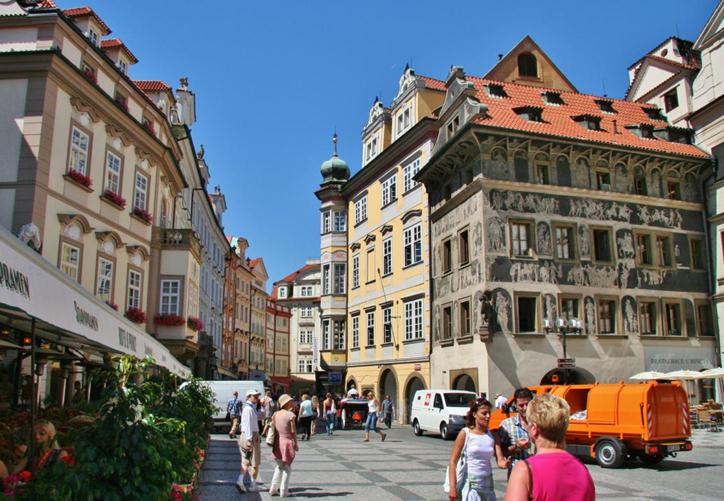
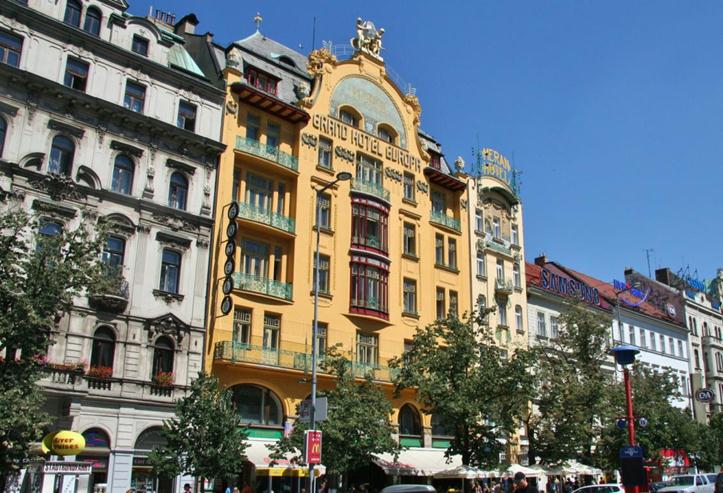



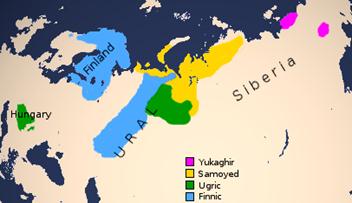
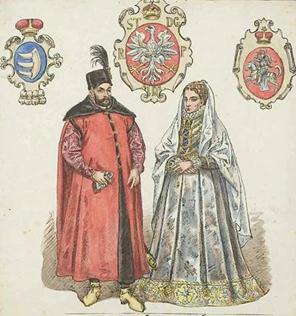
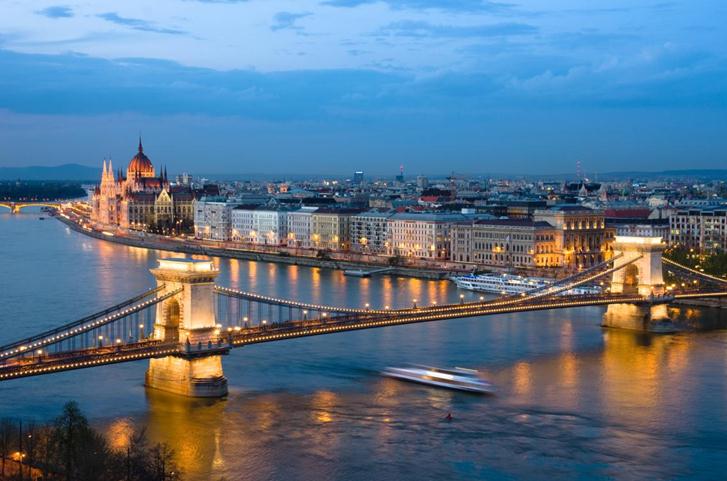
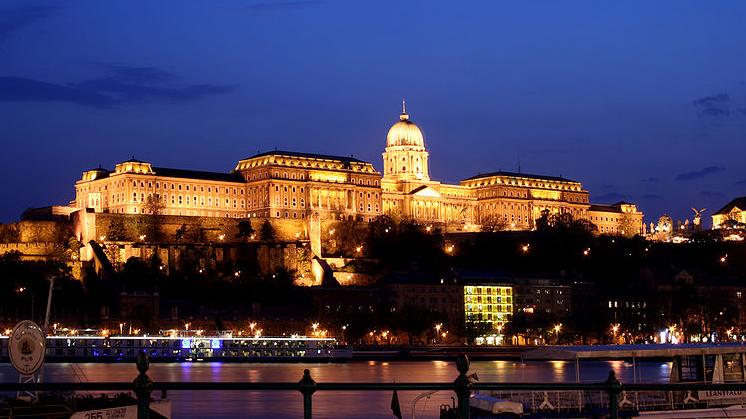
Szeged in South Hungary – where the 1956 revolts started
|
|
Ruszkik, haza! Russians, go home! The 1956 revolution in Hungary gave hope - but ended in disillusionment. This was what Dénes Fejér (78) told me when I met him here in the University Aula in his South-Hungarian hometown Szeged. Mr. Fejér was himself a 23-year old journalist, actively participating when the Hungarian uproar against the Soviet rulers started exactly here 55 years ago. I asked him to confirm that the 1956 revolution in Hungary started here in the University Aula in the Szeged University, “Yes, this is correct,” he says. “55 years ago, on the 16th of October, 1956, students from our Szeged town founded the youth organisation of MEFESZ (Hungarian Student Organisation). This event could be considered as the very first step of the revolution because in Hungary, at that time, after over ten years of Communist post war regime, only state founded and supported organisations could be established in a legal way.”
|
“The Szeged initiative could be seen as the first crack on a dam where water is about to pour through. Of course, you don’t immediately realise when you see a small stream of water; that what follows it is going to overwhelm you. The Communist leadership did not see right away what actually was about to happen, as they did not expect such a massive force appearing in just a few days.”
Dénes Fejér, who was 23 when the revolt started, stands here in the Aula that looks more or less the same as it did in 1956, demonstrating how things started evolving exactly here that October evening 55 years ago.
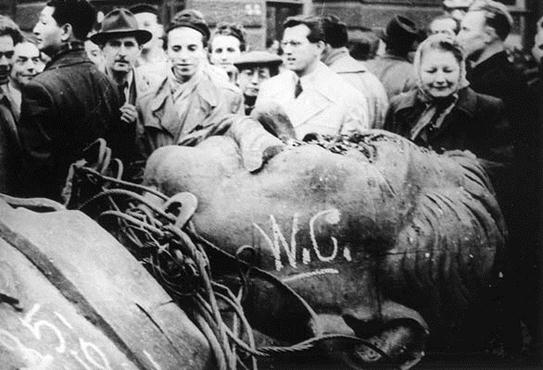
Hungarians gather around the head of the toppled Stalin Monument in Budapest 1956.
I ask Dénes Fejér to explain more about the 1956 revolt that started here in Szeged:
You were yourself present in that Aula meeting, and if I understand you correctly, this meeting became a fateful event (among several other developments in those days) which led inevitably to the outbreak of the revolution. It was the first meeting after World War II where questions were not pre-arranged slogans glorifying the regime, but where - because of the insistence of the audience - everyone was allowed to speak, and raise questions. What would you say were the most significant things happened at that assembly?
For two years after the end of the war in 1945, there was a plural political system in Hungary. Different political parties existed, and in the 1945 general elections the Independent Smallholder and Civil Party received absolute majority with 54% of the votes and the Communist Party only received 17%. Stalin realised that the people of Hungary did not want to embrace its system. The 1947 elections were already fraudulent and the Communist forces won. In 1948 the Social democratic Party was forcibly incorporated into the Communist party. The general wave of terror appeared only after this time. Forced nationalisation was started with businesses, commercial institutions, industrial entities and later, even private property like houses. A terror organisation was created within the Internal Ministry, called the AVO (State Security Authority) which later became an independent entity, having its own rules and methods.
This was the background where the MEFESZ was established, as the very first independent organisation in Communist Hungary. The programme and its demands were summarised in twenty points of the there are a few that are interesting. These included the request for open and free debates, the open trial of guilty Communist functionaries, the abolishment of death penalty in political cases, democratic elections, freedom of speech, and the that the 15th of March, the Commemoration Day of the 1848 Revolution should become an official national day. As you can see, these conditions and demands are natural in a free country but were unknown and unthinkable in a dictatorship. Although not part of the twenty points, another demand was phrased by the participant of the meeting. This was later a key phrase of the revolution: Russians, go home! The most fundamental demand was for the truth, that is to say that the leaders of the country should not lie and should not make the young people and the population lie. Telling the truth in Hungary at that time meant sever prison sentences.
To my knowledge, the assembly started as a rather innocent gathering where the students simply asked: “Why are the Soviet troops still stationed in our country?”, but ended with a the clear demand: “Ruszkik, haza!” - “Russians, go home!” From such a radical manifestation of the demands, you must have known that this was about to become dangerous?
The whole meeting started as a regular Communist youth organisation meeting. The Communist youth leaders gathered before it and reviewed the demands of the MEFESZ leaders, like András Lejtényi. When they learn the radical nature of these, they became frightened and left immediately for higher authority, the Communist party representatives at the university. Then the MEFESZ leaders went to meet the gathered students, read their demands, and the MEFESZ had the day!
“There was a general feeling of freedom among the participants. Fear disappeared. Saying the truth was a standard, normal thing during the event that caused happiness and joy among the audience.”
Didn‘t you realise that, according the Soviet system of those days, your collective name was "Shut up!" Did you not know that the Aula microphones were only for the Party collaborators and that nobody else were supposed to talk?
Nobody thought of ‘Shut up!’ at that time. After the first few words, there was a general feeling of freedom among the participants. Fear disappeared. Saying the truth was a standard, normal thing during the event that caused happiness and joy among the audience. The principle of ‘Shut up!’ had accumulated an amount of pressure in everyone that just erupted then. The age of ‘sober thoughts’ ended and the demand of freedom and truth became prevalent for the university youth.
You were yourself working as a journalist those days, and on the 23rd of October the newspaper “Delmagyarorszag” published your article called “Az igazsag keresesenek utjan”. What was the essence of this article and what reactions did you get?
This article, titled the ways of finding the truth, summarised what I have just explained above. It is very typical that we were not even sure whether the article would appear at all. The official, Communist newspaper Délmagyarország reported the event but left out the most important aspect which was the break of the dam, the shedding of the Communist oppression!
The period of hope to win over the mighty Soviet Union by peaceful measures, however, did not last long, and soon fights started spreading all over Hungary and the revolution began before your eyes. How will you describe this outcome of your efforts from the Aula assembly?
The main fighting happened in Budapest. This was the obvious and visible sign of the revolution. The fighting, the combat on the streets. The AVO, the armed troops and the Soviet soldiers were all surprised that ‘here they shoot back’. It was believed that a demonstration of force with tanks on the street would frighten people and prevent the escalation of the events, thus helping the consolidation of the Communist dictatorship. It didn’t happen like that.
Probably the Hungarian national character contributed to this as well. The courage to start again, to love one’s country, the national tradition of not giving in to slavery.
The revolutionaries of Budapest used bottles filled with petrol against tanks. They had no heavy weapons or anti-tank artillery. They fixed a burning piece of rag on the bottle and tossed it to the moving vehicle. The burning liquid turned the steel monsters into burning coffins. When the Soviet soldiers were abandoning their vehicles, they became easy preys to the weapons of the fighters.
There was an interrelation between the demands of the Szeged students, the fighting in Budapest and the revolutionary state nation-wise. The mental preparation rallied the fighters. The machine guns and the words were equally weapons of the revolution. Words changed things without bloodshed. From the smallest villages in Hungary to any institution or organisation, everyone of them had revolutionary councils. They replaced the very often incompetent previous leadership whose only added value to the system was their loyalty to the oppressing regime. The highest authority in the Communist state, the Central Committee and the Political Committee was simply dismissed. Instead of them reliable and trustworthy people were elected by the population or members of institutions or organisations. With open or secrets ballots. I was elected by a secret ballot to be on the workers’ council of the press in Szeged, and on the city’s revolutionary council.
I think this was the real result of the revolution. Replacing the old, Soviet puppets, the Communist leadership, and raising new, honest people into the power. This was created by the synergy of the students’ wishes and of the fighting in Budapest.
“For those who have never lived in oppression, in fear and in deprivation, for those who, on a daily basis, enjoy freedom and the rights of liberty, they probably don’t really know what freedom means for a prisoner.”
It has been said that something nearly supernatural stirred the hearts, minds and consciousness of the Hungarian people those days. Those shared feelings with friends and strangers must have been very special?
This special, disturbing experience is not difficult to describe for those who lived through it. The beautiful memories must be recalled from the past half-century. For those who have never lived in oppression, in fear and in deprivation, for those who, on a daily basis, enjoy freedom and the rights of liberty, they probably don’t really know what freedom means for a prisoner. I believe that it was this everlasting desire for freedom that prevailed back then. It was as if we were not even walking on the face of the Earth, as if floating in air. The communication changed among people, they were smiling to each other. They were nice, understanding towards each other. We even believed that the ‘guards’, our oppressors could change because they would realise that it is, in fact, better to live like this, free. It is probably also true that the experience of freedom created delusions.
By mid November 1956, it became evident that your revolution was lost. Not only the street fights, but also the lengthy demands of the students, which were fully supported by the whole society, were not going to be met. Instead, more and more of reprisals and arrests happened and an air of bitter disillusionment began to replace the heady days of the victorious revolution. How would you describe these days?
In the first days of November, it became obvious that the revolution had failed. Not in its results, not in its memories, not in its principles but in its survival. It was not our weakness but the overwhelming Soviet military power that defeated it. The twelve days a freedom turned into a totally different direction. In a few days we suddenly had to realise that those who had pretended to be with us till the 4th of November in 1956, turned into bloodthirsty puppets of the occupying forces and lost their human faces, becoming willing executioners.
The new puppet regime with Soviet arms behind it could only gradually strengthen its own position. They were expecting results, agreements, and waiting for their supporters t show once again. This started very slowly with the dismissed Communist leaders and members appearing again and again. Once they were feeling safe, the brutal punishment started.
We were hoping that they might have learnt their lesson, that we could not be treated the same way as we had been treated for nine years before the revolution. This was not the case, they continued everything in much the same way as it had been before. Everything came back, the deportation camps, the beatings, the prisons, the torture. Hungary again became a prison and we again humiliated prisoners.
It took some time before the Soviet rulers of your country were able to close the borders completely, and Austria was very willingly letting thousands of refugees cross into their country. You decided not to leave, why was that?
It became obvious that for those who had participated in the revolution, there was no place in Hungary any more. And many of them indeed left the country. Maybe some left because of fear, some because of adventure or new possibilities. Almost 200.000 people left the country. One of my best friend left who is currently living in New York while I was kept in a Soviet military prison in Eastern Hungary. Another friend of mine, who was briefly arrested with me, was inviting me to go to France.
It had never occurred to me that I could or would leave. Never, for a moment. I knew that I had account for all my activities eventually, and I was hoping that my life would be spared. During the revolution I did not fight, did not kill anyone. In my captivity Major Zokov, the Russian officer was interrogating me about all these things. Ha was trying to convince me that we were counter-revolutionaries while I was trying to convince him that we were revolutionaries. We couldn’t convince each other of course. I do not recall any fear gripping me, when, together with seven of my colleagues, I was transported in an ambulance, escorted by two armed armoured personnel carriers. I was wearing a white shirt and, when we were disembarked at the main square of Csongrád to be taken to the nearby hills, I remember thinking that anyone could easily recognise the white on a corpse, and might be able to inform my mother about my fate. I was not executed, but taken to Debrecen to the Soviet military airfield.
After I was released from prison, I did not want to leave. I couldn’t leave my country. I would not replace Hungary for any other place. I have seen a few peaceful spots in the world where life could be different than here. Once a Hungarian poet has said that for a Hungarian patriot ‘whether your faith may be blessed or cursed, here [ie. in Hungary] you must either live or die’. This is a moral command for me.
Some of your fellow students were executed and the Soviet jails were filling up during the next few months. You were among them arrested, hence it would be interesting to hear your personal story from the time after the revolution was so brutally crushed?
In the spring of 1957 I was arrested again, this time by the Hungarian political police. But before that an interesting episode happened in my life. When I was released from the Soviet prison, in February I returned to Szeged where I was approached by the newly organising Communist party, through two veteran leaders, Vince Bite and Károly Csíszár. I used to know Uncle Vince, since when I was ten to twelve, I used to be his helper in playing bowling at the beach. They told me to become member of the MSZMP [the newly formed Communist party] because I had been selected to be chief editor of the Délmagyarország newspaper. I had three days to consider their offer. I turned it down. Have you given it enough thoughts? Uncle Vince asked me. I have, I told him. Well, I hope you won’t regret it, he answered.
In two months time, I was arrested. I was interned. The whole thing became only a little bit clearer when I was released after one year. The temporary imprisonment that required no court verdict, could be prolonged indefinitely after every six months. When I was released, I was only allowed to do manual labour, only as a non-qualified worker, despite having a university degree with a certificate that allowed me to teach. My driving license was withdrawn, my reserve officer rank of the army was taken away, I did not get a passport, and could not travel abroad. As I recall, it did not really affect me because after finishing secondary school, I went to work on the Tisza bridge and learnt the craftsmanship of carpenters. This enabled me to work with my own two hands, and solved my financial problems.
What was difficult was the social exclusion. When my friends saw me on the streets, they went to the other side. Nobody dared speaking to me, or to be seen in the company of a convicted ‘counter revolutionary’. I was living with my mother and with my elder sister because I had lost my elder brother who had died in Russian captivity in the war.
During the sixties the terror had waned a little bit. I was allowed to teach in elementary school, although only subjects that were practical based, handcrafts. On regular basis a political officer appeared to check on me, and to try to make me work with them as an agent. I refused, and eventually got fed up with it all, and I returned to the construction industry. In the end I became a foreman, then a project manager. I was applying for eight years to the Szeged university law faculty but was always turned down. In the late 80s I was invited to be as chief editor of one of the first independent publishers. This was already the end of the Kádár-regime [János Kádár was the leader of Communist Hungary after 1956, till 1989. The period between 1956 and 1989 was often referred as the Kádár-regime.
“It was only after many years that we learnt that the USA and the Great Britain informed the USSR that they would not oppose their intervention in Hungary.”
The governments of the free world watched your Hungarian Revolution with deep admiration even if none of them seriously considered providing military support, nor condemnation strong enough to stop the brutal actions of the Soviet Union. How do you view the behaviours of the Western countries those days?
The Western world provided enormous help to those almost 200.000 Hungarians who left the country. Those who went not as adventurers were appreciated by their new countries. Among the refugees you can find people who still come back to Hungary and who in fact, have two countries now. They have no roots, and their children have departed from Hungary for good.
The Western influence that we had in the days of the revolution was deceiving. It was only after many years that we learnt that the USA and the Great Britain informed the USSR that they would not oppose their intervention in Hungary.
Radio Free Europe was continuously encouraging the fighters to carry on because they were promised foreign help. This has led me to conclude that if it succeeds, if we had national local government in Szeged, I would suggest to change the name of Roosevelt Square in Szeged (like it was changed from Stalin Square) as I cannot support a liar, a friend of Soviets, even if he had once been the President of the USA.

Roosevelt Square in Szeged. The inscription lauds Franklin for his stand against
Fascism. Dénes Fejér, however, wants to change the name of the square.
“I cannot support a liar, a friend of the Soviets, even if he had been once
President of the USA,” he tells me.

Dangerous undertows erode the stability
of Central and Eastern Europe
An article by Stan Backaitis, Washington DC
- Bookmark :
- Digg
- del.icio.us
- Stumbleupon
- Redit it

- Posted by - (9) Comment
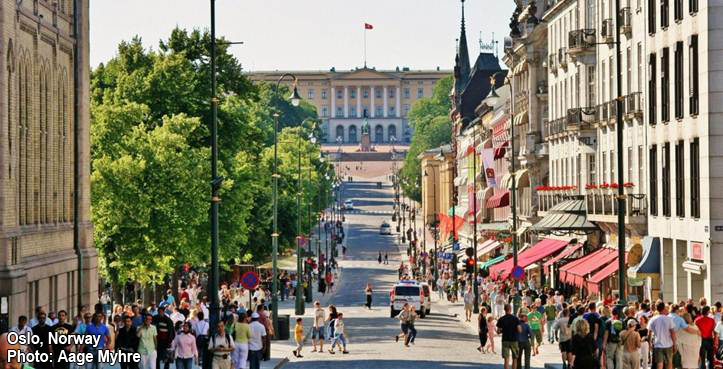


EXPLORING EUROPE (6 of 10)
Scandinavia & Finland
Tour guide, writer and photographer: Aage Myhre
aage.myhre@VilNews.com
VilNews is on its way around Europe!
Today's tour starts in the far north of Norway, and continues south |
|
|
Our today’s journey: |
|
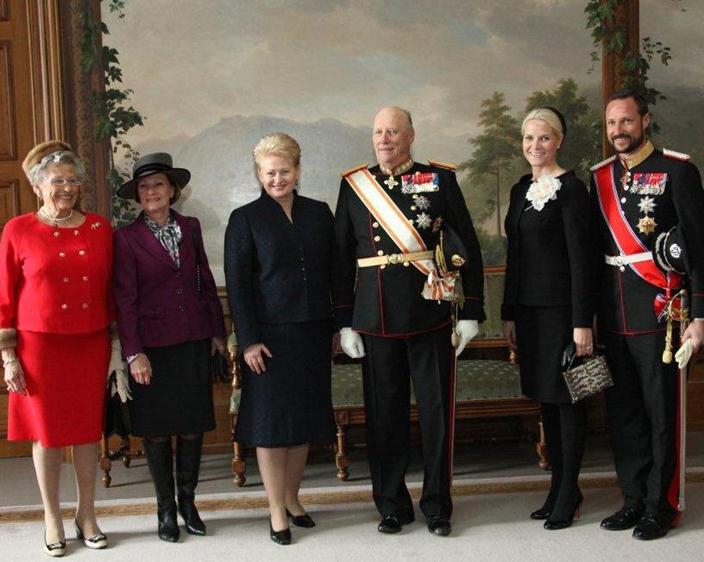
|
|
Norway – oil, fjords, fish & ships |

|
|
Norway, officially the Kingdom of Norway, is a Nordic unitary constitutional monarchy, with King Harald V as its head of state, whose territory comprises the western portion of the Scandinavian Peninsula, Jan Mayen, and the Arctic archipelago of Svalbard. Norway has a total area of 385,252 square kilometres (148,747 sq mi) and a population of about five million. Norway's extensive coastline, facing the North Atlantic Ocean and the Barents Sea, is home to its famous fjords. Two centuries of Viking raids tapered off following the adoption of Christianity by King Olav Tryggvason in 994. A period of civil war ended in the 13th century when Norway expanded its control overseas to parts of the British Isles, Iceland, and Greenland. Norwegian territorial power peaked in 1265, but competition from the Hanseatic League and the spread of the Black Death weakened the country. In 1380, Norway was absorbed into a union with Denmark that lasted more than four centuries. In 1814, Norwegians resisted the cession of their country to Sweden and adopted a new constitution. Sweden then invaded Norway but agreed to let Norway keep its constitution in return for accepting the union under a Swedish king. Rising nationalism throughout the 19th century led to a 1905 referendum granting Norway independence. Discovery of oil and gas in adjacent waters in the late 1960s boosted Norway's economic fortunes. In referenda held in 1972 and 1994, Norway rejected joining the EU. The Sámi people have a certain amount of self-determination and influence over traditional territories through the Sámi Parliament and the Finnmark Act. Although having rejected European Union membership in two referenda, Norway maintains close ties with the union and its member countries, as well as with the United States. Norway remains one of the biggest financial contributors to the United Nations, and participates with UN forces in international missions, notably in Afghanistan, Kosovo, Sudan and Libya. Norway has extensive reserves of petroleum, natural gas, minerals, lumber, seafood, fresh water, and hydropower. On a per-capita basis, it is the world's largest producer of oil and natural gas outside the Middle East, and the petroleum industry accounts for around a quarter of the country's gross domestic product. The country maintains a Nordic welfare model with universal health care, subsidized higher education, and a comprehensive social security system. Norway has the world’s highest human development index ranking. Norway’s merchant fleet is among the biggest in the world. Norwegian companies control approximately 23% of the world's cruise vessels, 19% of the world's gas carriers, 19% of the world's chemical tankers and 10.5% of the world's crude oil tankers. |
|
|
|
|
|
|
|
|
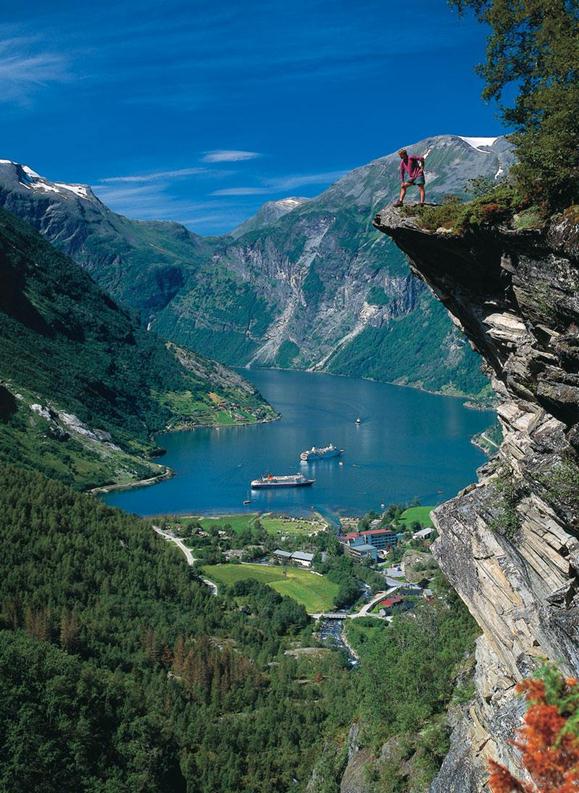
The Geiranger Fjord at Norway’s west-coast is a 15-kilometre (9.3 mi) long branch
of the Storfjord (Great Fjord). The small village of Geiranger is located at the
end of the fjord where the Geirangelva river empties into it.
The fjord is one of Norway's most visited tourist sites.
Photo: www.allempires.net
Our today’s trip starts in the Barents Sea – between Norway and the North Pole
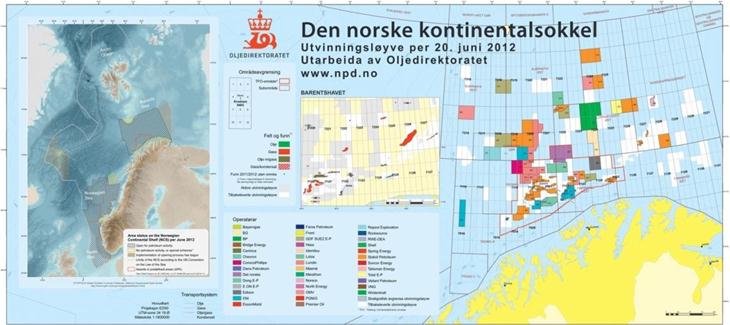
Oil and gas exploration in the Barents Sea began in the 1970s. Discoveries were made on both the Russian and Norwegian sides. The first major producing field is Sn¸hvit in the Norwegian sector. The largest discovery to date is the Shtokman field in the Russian sector. For decades there was a boundary dispute between Norway and Russia, with the Norwegians favouring the Median Line and the Russians favouring a meridian based sector. A compromise treaty announced 27 April 2010 settled the border in the approximate middle of these two stances. Sn¸hvit (Sn¸hvit means Snow White in Norwegian) is the name of a natural gas field situated 140 km (87 mi) northwest of Hammerfest, Europe's northernmost town. The gas from Sn¸hvit is being used for LNG production at Melk¸ya close to Hammerfest. The total costs of field development will be around NOK 34.2 billion ($ 6 billion).
North Cape – on the very top of Norway and Europe
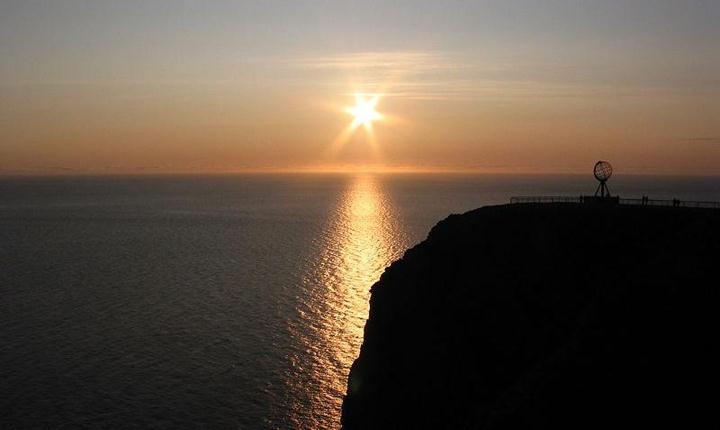
Midnight sun at North Cape, a cape on the island of Mager¸ya in Northern Norway. Its 307 metres (1,007 ft) high, steep cliff is often referred to as the northernmost point of Europe, located at 71°10′21″N 25°47′40″E, 2,102.3 kilometres (1,306.3 mi) from the North Pole.
Finnmark County – where Sámi (Lappish) people and reindeers live…

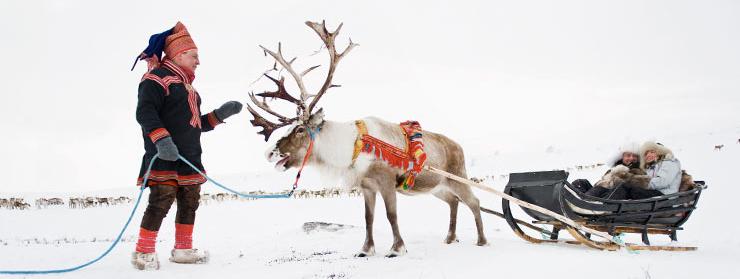
We move from the rough coast, to the inner parts of Finnmark, where many Sámi families are actively
engaged with their reindeer herds year round. The Sami are indigenous people who
came to Norway more than 10 000 years ago.
Troms¸ – the world’s northern light capital…
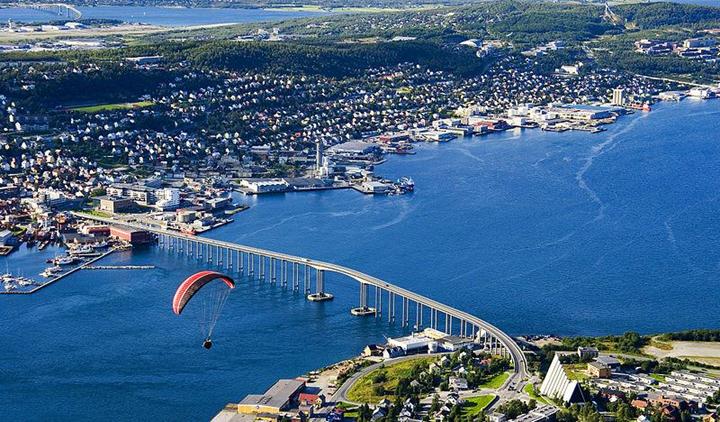
Troms¸ is the capital of North Norway also called the world's northern lights capital.
Here you will also find the world's northernmost university, including an advanced
northern lights observatory. International airport in the city centre!

Welcome to my birthplace Olaheim at the Senja island!
|
|
Here, in the tiny village of Olaheim on the island of Senja in Northern Norway, I grew up in the 1950s. At that time we had neither running water nor electricity in the house. We survived on hunting, fishing and a small farm with one cow and a handful of goats and sheep. No road access to the rest of the world. Today this is a completely different, far more modern community with facilities and standards as the rest of Norway. You are welcome to visit. I'm taking you with me for fishing in the lake right by, or in the ocean off the island. Or how about a trip up in the vast mountains, some of which are a thousand meters high, plummeting straight down into the many Senja fjords? |
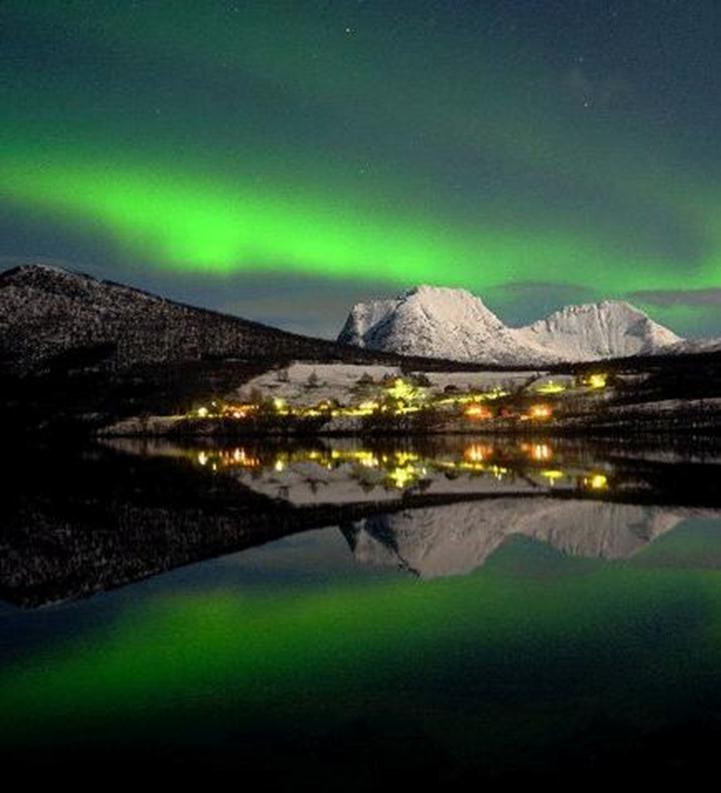
My home place Olahaeim at the island of Senja.
Photo by the world famous Senja photographer Hugo L¸hre.
Lofoten has the world’s best waters for cod fishing
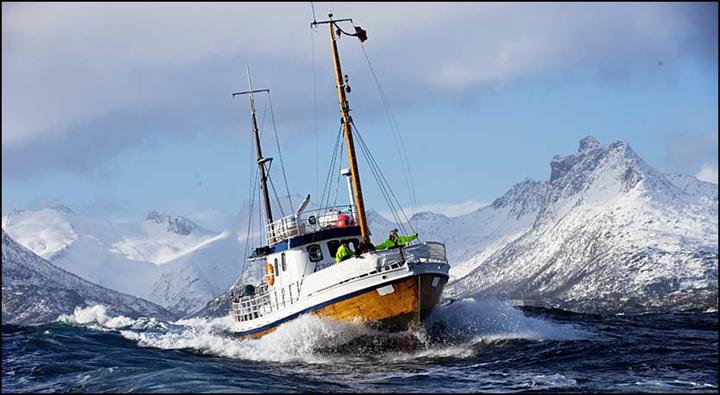
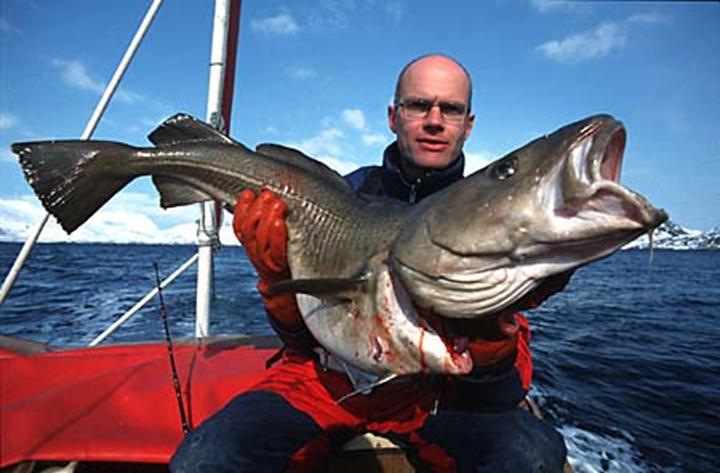
Lofoten is an archipelago and a traditional district in the county of Nordland, North Norway. Though lying within the Arctic Circle, the archipelago experiences one of the world's largest elevated temperature anomalies relative to its high latitude. The islands have for more than 1,000 years been the centre of great cod fisheries, especially in winter, when the cod migrates south from the Barents Sea and gathers in Lofoten to spawn. Bergen in southwestern Norway was for a long time the hub for further export south to large parts of Europe, particularly so when trade was controlled by the Hanseatic League.
|
It is among the indigenous people that the answers are to be found
"The wisdom of the future comes from the north. That’s what our ancestors told us." The Mayan Indian in front of me is talking very seriously. Looking me straight in the eyes. He, a true child of the world's most famous indigenous people. From the south. Me a person with just a hint of Sami blood. From the north. It surprises me that a Mayan Indian speaks like this. I have in a way thought of the Mayas as more indigenous than my own Sami people. But this is what he tells me, saying that his ancestors through the centuries have meant that it is the indigenous peoples of the North who have the answers, the future wisdom. I feel that he is a little off. I think it's more a question of what kind of environment the different indigenous people are living in. That the Mexico City-Indian is less open and sensitive than the Indian from the mountains of Guatemala. That the Sami with snowmobiles have less contact with their inner spiritual lives than the previous reindeer Sami and coastal Sami. That it is less a question about south or north. More about how you manage to keep and maintain your inner power. The indigenous people's ability to 'see' more and deeper than the more modern versions within humanity is a resource that has been little exploited. More mocked and made fun of. Indigenous peoples' close contact with their ‘other dimension’ has often been regarded as ravings. The people of today find it hard to believe that people have qualities that cannot be explained by reason. But perhaps it is rather the understanding of the concept of 'common sense' there is something wrong with? My Sami ancestral religion was shamanistic. The spiritual leader, the shaman or noaidiwas was the 'link' between humans and the spirit world. To establish contact he beat rhythmically on a goavddis, a drum with painted drawings. That way he could he predict the hunting and fishing outcomes, tell people about their physical and spiritual life. Present, past and future. Nature's soul speaking through the shaman. Again. Does not this sound like dreams from primitive people without education and knowledge? I do not see it like that. I have great respect for my ancestors and their ability to live in contact with the spirit world. There are more than 30 indigenous people in the eight nations with territory above the Arctic Circle. Their spiritual qualities have been around for thousands of years. When will present people start listening? Ask for answers? My grandfather, a ‘sj¸same’ (a Sami that does fishing instead of reindeer herding) from Tana in Finnmark, was dead before I was born. But the genes are alive.
|
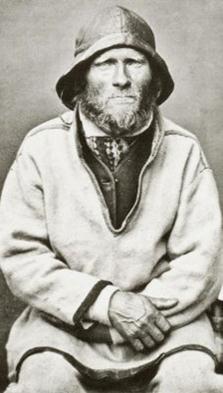
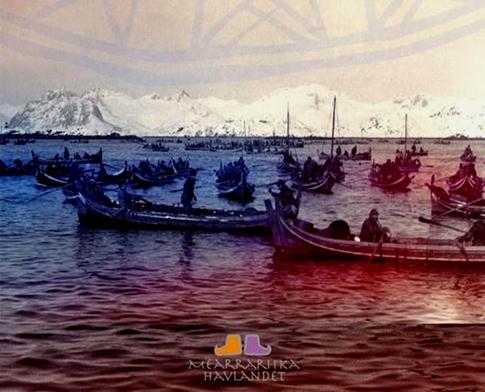
Is Trondheim, where I studied architecture, the most ideal city in the world?
|
|
"Trondheim is the world's most ideal city." This was the conclusion of a U.S. research group that travelled around the world to find the ideal city. The group's report highlighted that Trondheim is a 'mini-city' of adequate size, with wide streets, low buildings, good air, a small, efficient centre core and glorious surroundings. Not bad certificate for the city that was my home for several years... Trondheim is Norway's capital of technology, a lively and historical university town, and home to the Nidarosdomen Cathedral. With a population of about 180,000, Trondheim counts itself as Norway's third largest city. |
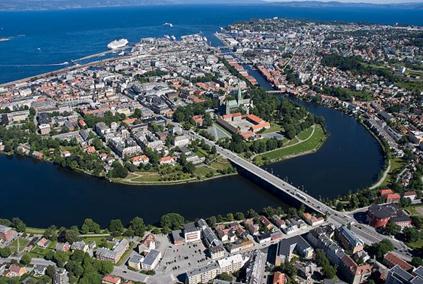
Trondheim is a green, beautiful city in Mid Norway. The city's Old Town, Midtbyen, is located on a peninsula formed by the river Nidelven, before it flows into the Trondheim Fjord and ends its long, wet journey from Selbusj¸en southeast in the county. Scandinavia's largest church, the Nidarosdomen Cathedral is seen in the middle of the picture.
Photo: Aage Hojem, Trondheim Havn.
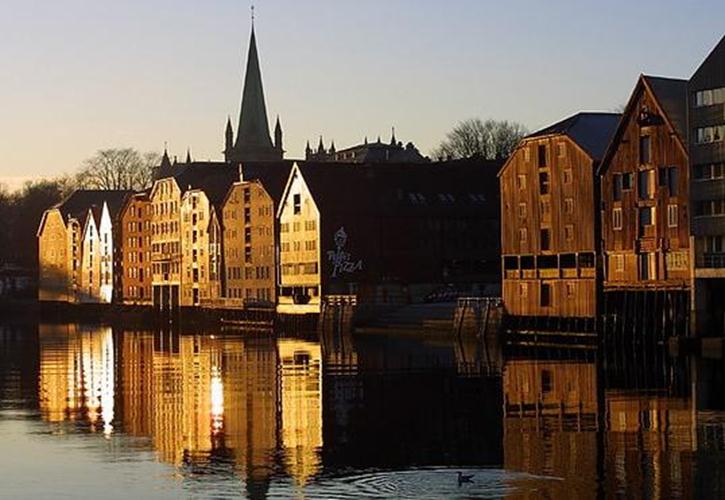
When you visit Trondheim, you will notice the wide meandering loop of the Nid river (Norwegian: Nidelva) round the city centre, with sections of the old warehouses still intact along its shores. The harbour has for a long time been important in Trondheim. A long stretch of the Nidelva River is lined with wooden warehouses mainly from the 19th century. The houses were used for storage and could be reached both from the river, where boats could load and unload cargo, and from the land. Today there is no use for warehouses of this kind so you will find restaurants, real estate agents and other business in these houses.
Foto: Trondheim.no.
Scandinavia’s largest church, the Nidaros Cathedral, is located in Trondheim. The cathedral was built over the burial place of Saint Olaf, who was killed in the Battle of Stiklestad in 1030. It was the cathedral of the Roman Catholic Archdiocese of Nidaros from its establishment in 1152 until its abolition in 1537. Since the Reformation, it has been the cathedral of the Lutheran bishops of Trondheim (or Nidaros) in the Diocese of Nidaros. The architectural style of the cathedral is Romanesque and Gothic. Historically it was an important destination for pilgrims coming from all of Northern Europe. It is the northernmost medieval cathedral in the world.
Oslo – home of the Vikings and the world’s largest sculpture park
The Vigeland Park in Oslo is the world's largest sculpture park made by a single artist, and is one of Norway's most popular tourist attractions. The park is open to visitors all year round. The unique sculpture park is Gustav Vigeland's lifework with more than 200 sculptures in bronze, granite and wrought iron. Vigeland was also in charge of the design and architectural layout of the park. The Vigeland Park was mainly completed between 1939 and 1949. Most of the sculptures are placed in five units along an 850 meter long axis: The Main gate, the Bridge with the Children's playground, the Fountain, the Monolith plateau and the Wheel of Life.
Karl Johans gate is Oslo’s main street. Colourful.
Oslo is a very green city.
The Oslo Viking Ship Museum presents great Viking ship discoveries from Gokstad, Oseberg and Tune as well as other finds from Viking tombs around the Oslo Fjord. The museum displays the world's two best-preserved wooden Viking ships built in the 9th century, as well as small boats, sledges, a cart with exceptional ornamentation, implements, tools, harness, textiles and household utensils.
Some of my Oslo Fjord impressions.
The capital of Norway is also the country’s largest city. It has over 600,000 inhabitants and covers 454 square kilometres, 242 of which are forests. The city is located at the head of the 100-kilometre Oslo Fjord. The fjord’s 40 islands are great for recreation, and many of them can be reached by ferry. Over half of the municipality of Oslo is covered by forests and parks, making Oslo a truly green city, where opportunities for outdoor recreation are always nearby.
Oslo’s climate is milder than its latitude might indicate. Summer temperatures often equal those of cities much further south, yet the winters are usually cold enough to make Oslo a great skiing destination.
The prestigious Nobel Peace Prize is awarded annually on 10 December in Oslo City Hall.
Lithuania, please look to Norway!
|
|
When I came to Lithuania for the first time from my native Norway, more than 20 years ago, this country's political leadership was in the process of drafting the new law book that would be the legal framework for the modern democracy this country was supposed to become after all the years of Soviet occupation. Our small delegation from Norway suggested that one simply could translate our Norwegian legislation, of a free and functioning democracy, but Lithuania's politicians chose not to follow our advice, and used instead many years to develop their own laws. This country's leaders have, for better or worse, an extensive belief in their excellence and ability to reinvent the wheel even when it would have been so much easier to seek advice and help from good neighbours. |
|
Many Norwegian delegations have appeared over the 20 years that have elapsed since that time. They have come and gone without seeing the relationship between Norway and Lithuania thus has become particularly warm or close. In several instances, I know that the Norwegians have travelled back home, headshaking. One example is the delegation that already four years ago came here to give advice on how Lithuania could solve its energy situation after the closure of the Ignalina nuclear power plant. The energy nation Norway was not listened to, and we all know what is now the situation with regard to this country’s energy supplies. Read more at https://vilnews.com/?p=5843
|
|
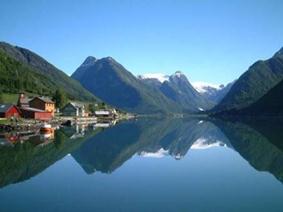
|
|
Denmark – food, culture & energy |

|
|
The countries of Denmark and Greenland, as well as the Faroe Islands, constitute the Kingdom of Denmark. Denmark consists of a large peninsula, Jutland (Jylland) and many islands, most notably Zealand (Sj¿lland), Funen (Fyn), Vendsyssel-Thy (commonly considered a part of Jutland), Lolland, Falster and Bornholm, as well as hundreds of minor islands often referred to as the Danish Archipelago. Denmark has long controlled the approach to the Baltic Sea (dominium maris baltici); before the digging of the Kiel Canal, water passage to the Baltic Sea was possible only through the three channels known as the "Danish straits". Denmark is a constitutional monarchy with a parliamentary system of government. It has a state-level government and local governments in 98 municipalities. Denmark has been a member of the European Union since 1973, although it has not joined the Eurozone. Denmark, with a mixed market economy and a large welfare state, ranks as having the world's highest level of income equality. It has frequently ranked as the happiest and least corrupt country in the world. The national language, Danish, is closely related to Swedish and Norwegian, with which it shares strong cultural and historical ties. Danish cuisine, originating from the peasant population's own local produce, was enhanced by cooking techniques developed in the late 19th century and the wider availability of goods after the Industrial Revolution. The open sandwiches, known as sm¸rrebr¸d, which in their basic form are the usual fare for lunch, can be considered a national speciality when prepared and decorated with a variety of fine ingredients. Hot meals traditionally consist of ground meats, such as frikadeller (meat balls), or of more substantial meat and fish dishes such as fl¿skesteg (roast pork with crackling) or kogt torsk (poached cod) with mustard sauce and trimmings. Denmark is known for its Carlsberg and Tuborg beers and for its akvavit and bitters although imported wine is now gaining popularity. Danish chefs, inspired by continental practices, have in recent years developed an innovative series of gourmet dishes based on high-quality local produce. As a result, Copenhagen and the provinces now have a considerable number of highly acclaimed restaurants, of which several have been awarded Michelin stars. The Noma restaurant in Copenhagen is a two Michelin star restaurant run by chef René Redzepi. The name is an acronym of the two Danish words "nordisk" (Nordic) and "mad" (food), and the restaurant is known for its reinvention and interpretation of the Nordic Cuisine. In both 2010 and 2011, it was ranked as the Best Restaurant in the World.
|
|
|
|
|
|
|
|
|
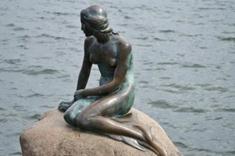
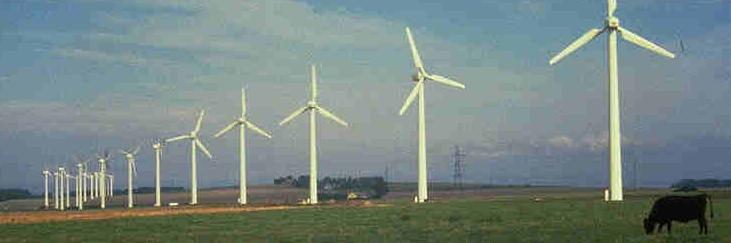
In 1973, during the Yom Kippur war, Denmark was 98% dependent on foreign oil for its power. Today, 40 years later, the country derives 21% of its energy from wind and is a net exporter of energy.
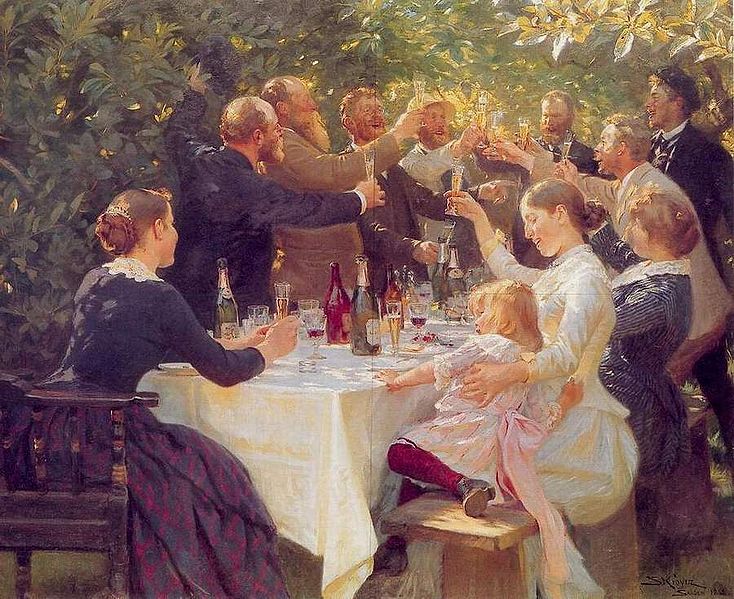
“Hipp Hipp Hurra!” by the Danish/Norwegian painter Peder Kr¸yer (1851-1909), the ringleader of a group of
genre painters who gathered in the Danish fishing and tourist village of Skagen.
Copenhagen – Scandinavia’s cosmopolitan city
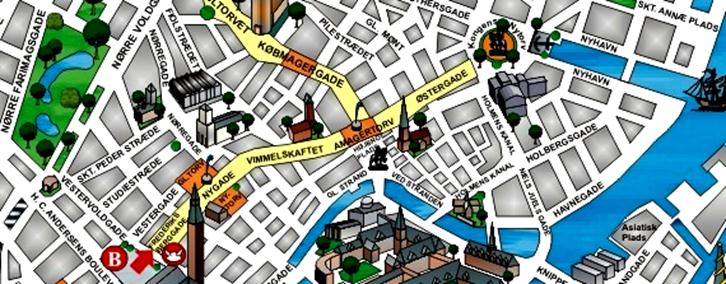
Str¸get 'in Copenhagen is considered the world's oldest and longest pedestrian street.
Photo: Copenhagenet.dk.
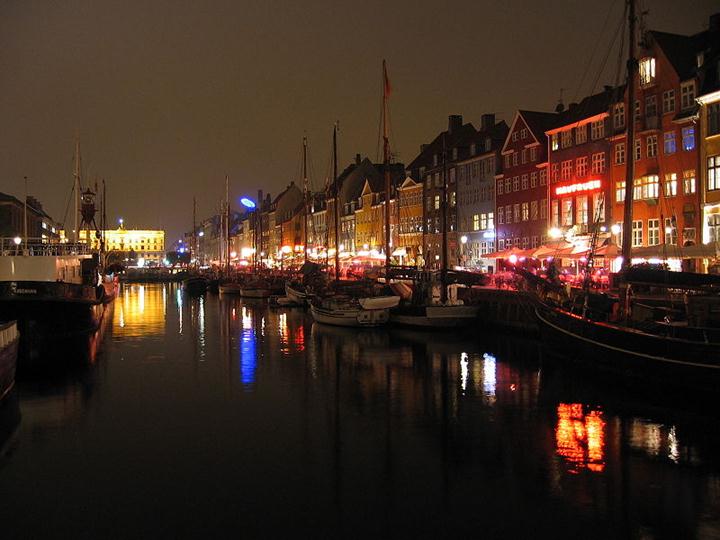
Nyhavn is part of the original Copenhagen Harbour all the way back to the founding of Haven,
as Copenhagen was called in the 12th century.
"I am not an Athenian, or a Greek, but a citizen of the world," said Socrates. That is Copenhagen in a nutshell. My favourite Scandinavian city, a world city where people are more laid-back, where the famous Danish 'grin' is never far away. Where shops are permitted to sell alcohol, and even exhibit the bottles in their windows. Miles away from the Swedish and Norwegian chastity. The old buildings have been standing here for hundreds of years. Copenhagen represents majestic dignity, but has also a fine-meshed network of narrow streets, small squares and architectural details that often dates back to the Middle Ages.
Copenhagen's city council decided in 1962 to establish a car-free pedestrian street from City Hall Square in the west to the Kongens Nytorv in the eastern part of the town. The world's first pedestrian-revolution was called "Str¸get". Not just one street, but a maze of alleyways and historic sites, with a total length of over 3 km, the oldest and longest pedestrian system in the world. Nygaden, Vimmelskaftet and ¨stergade, the main thoroughfare, is winding between the beautiful old buildings. Known, loved shops and restaurants on both sides. The people flow waves back and forth. Day and night. Summer and winter.
This is what I call a vibrant city!
The pubs and restaurants at Gråbr¸dretorv, Kongens Nytorv, and along both quaysides in Nyhavn are as genial as the Danes themselves. Hviids Vinstue at Kongens Nytorv is a must for me when I'm in Copenhagen. With a few drops of ‘Gammel Dansk (Old Danish)'. Then a 'sm¸rrebr¸d’ with herring. Or liver and bacon. A foaming Bajer belongs to the meal. The narrow and dark rooms in Hviids Vinstue have witnessed the dramatic historical events over nearly 300 years. It sits in the walls.
The restaurant St. Gertrud's Kloster experienced as a journey back to medieval times. Narrow basement times and restaurant rooms over several floors. All in spartan monastic style, only lit by candles under the brick-vaults. On Gråbr¸dretorv I have two favourites: The restaurants Peder Oxe and Bof & Ost. Rustic taverns with a relaxed square. Salad Tables and tender beef. Copenhagen at its best.
Copenhagen is the Danish capital and Scandinavian’s largest city. Copenhagen was founded by the Danish bishop Absalon in 1167 - who built a little fortress on a small isle outside of the growing town that today is inhabited with over 1.8 million people and is an international metropolis with the biggest airport in northern Europe. In Copenhagen the Danish parliament is located together with the Royal residence Amalienborg - as the capital became a regal city in 1443.
A Danish king came to Palanga in year 1161, but he was not a tourist
|
|
In 1161 Danish King Valdemar I (“The Great”) led a naval expedition to the Palanga area where a trading post was founded. However, the real purpose of his trip was to personally check the feasibility of this site for such a crusade. The king was wise; it is always better to look before you leap. However, the Danes decided against a Lithuanian crusade. Was it because each side liked the other or because the Lithuanians appeared too tough to fight? Whatever the reason, the Danes launched their crusade further west and north, leaving Lithuania for the German crusaders from Prussia and Latvia to conquer though their attempts would prove futile. Read more at https://vilnews.com/?p=8820
|
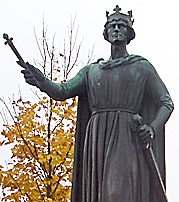
|
|
Sweden – technology & islands |

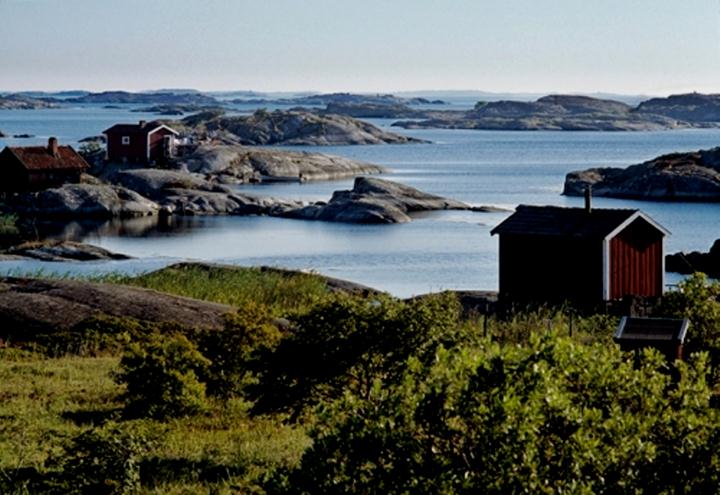
Sweden is the biggest country of Northern Europe and the fifth of whole Europe. With 449,964 sq km (173,732 sq mi) it is almost as big as Spain or France. But it has a completely different shape. The extreme distance from north to south in Sweden is about 1,575 km (about 980 mi). If you turn Sweden around at the southern end, you will see the north end up as south as Naples in Italy. The distance from east to west is only 500 km (about 310 mi).
Almost 9 million people live in this long-shaped country. With such a small population it is not a surprise this vast country is dominated by nature. One of the main facts about Sweden for tourists to remember is that Sweden is not a country for sensation-seekers.
Instead it is perfect for those who love nature, space, clean air, beautiful landscapes and outdoor activities. Great sceneries are among the major tourist attractions.
The more you get to the north the landscape becomes wilder, with ever bigger forests and literally thousands of lakes.
The north (Lapland) is often called the last wilderness in Europe, with high mountains, swamps and wild rivers, treeless highlands and impenetrable birch forests. In this part of Sweden the Saami live, also called the Lapps, one of the last nomad peoples in Europe.
Although at a very northern latitude, Sweden has a moderate climate. It has rainfall in spring, summer and fall, but never very much. In winter there is always snowfall. It is freezing cold then, especially in the northern parts of the country. The summers are sunny with an average temperature of 22°C (71°F). Daylight hours increase in summer and decrease in winter.
Sweden is a monarchy, now ruled by king Carl GustavXVI. In reality his function is purely ceremonial. The country is governed by a democratically chosen parliament. Social-democrats are traditionally the main political force, with the Moderate Party in second place.
The crown or krona is the Swedish currency. Sweden has a tradition of pacifism. It is the only European state that was not involved in any armed conflict for almost 200 years.
Kista - Sweden´s IT Capital
Kista Science Tower.
They call it Wireless Valley, Mobile Valley or the Silicon Valley of the North. Its formal name is Kista Science City, located in north-west Stockholm. It’s where you’ll find many of the world’s foremost ICT* companies, gathered together to take advantage of Sweden’s strong position in mobile communications. Kista Science City is one of the world’s leading high-tech clusters.
The Kista urban area is Sweden’s biggest corporate centre. Here are more companies and employees within a limited space than anywhere else in the country. Of the nearly 28,000 employees in some 750 Kista companies, two-thirds work in the ICT sector. Here is everything from the major international enterprise to the small, entrepreneur owned ICT business. Ericsson has its head office in Kista and is the largest single employer with a staff of more than 9,000.
Kista Science City is located centrally in the Stockholm region, 15 minutes from Central Station on the underground railway and 15 minutes from the main Stockholm airport at Arlanda. It also has the advantage of being close to Sweden’s financial centre in central Stockholm.
Companies and researchers are found along the entire value chain within wireless systems, mobile services and broadband systems - the three strategic areas for Kista Science City.
Stockholm – the city of thousand Islands
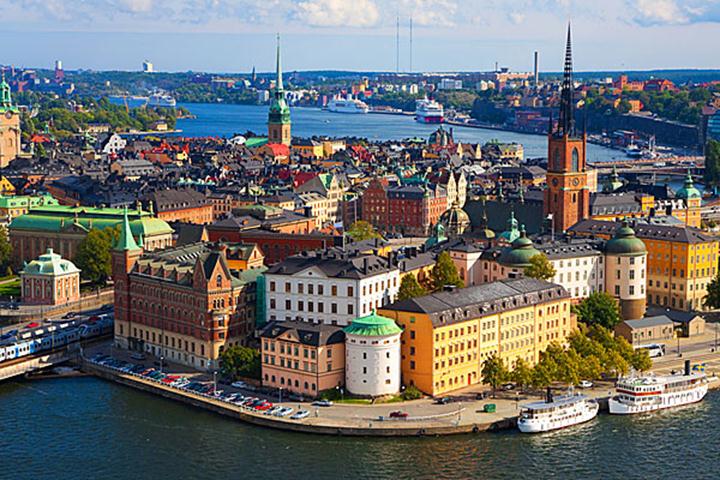
Post-war Stockholm makes me think that architects, urban planners and reform eager politicians too often lack the ability to see connections, physical and in a time perspective. How on earth could a beautiful city like this otherwise be so much destroyed around 1960? The world's worst city destruction ever, it is said, bombings and wars included. The ideas of the Swiss-French architect Le Corbusier, by some called the 20century's foremost, destroyed the good old Stockholm.
Only Gamla Stan and certain enclaves remain. Sweden wished to demonstrate its leading position in the postwar Europe. As the most modern of all cities. They managed. Unfortunately...
From my window here at the Sheraton Hotel, I see the great water-Stockholm. But I also look down on the street where there was once a bustling street life in the Klara district, where bohemian Stockholm once existed.
Fortunately, nature and the many islands of Stockholm is built on such strong force that people failed to do too much damage. I love to stroll through the narrow streets of Gamla Stan out at Riddarholmen. I like Skeppsholmen, Kungsholmen, Djurgården. The waters around the islands are full of small boats. A buzz that makes Stockholm deserve the designation 'Venice of the North'.
Stockholm is the capital of Sweden and the country’s largest city. It is located in the heart of Scandinavia, on Sweden's south east coast, by the Baltic Sea. The city was founded in the early 13th century, and is renowned for its beauty, clean open water, fascinating history, broad variety of arts and culture and its high environmental friendly standards.
The city spreads across 14 islands as it faces proudly out to the Baltic Sea. You can get to just about all of Stockholm’s many wondrous sites on foot, which is the perfect way to see the city. You can also take a boat trip that will give you a different facet of Scandinavia’s largest and probably most beautiful city.
The Stockholm region has a population of more than 2 million, whereas 850 000 live in the very city.
Sweden and Lithuania building power bridge across the Baltic Sea
|
|
In a recent meeting between Lithuanian President Dalia Grybauskaitë and the Swedish Minister for Enterprise and Energy, Maud Olofsson, energy security was the main focus. Sweden/EU is now building the so-called NordBalt power bridge (an underwater electric cable) between Lithuanian and Sweden. The construction of a LNG terminal in Lithuania, and opportunities for closer cooperation within the NB8 framework was also discussed. The President and the Swedish Minister agreed to intensify cooperation towards timely implementation of all EU decisions related to energy security and towards securing proper financing for vital projects. "The power bridge to Sweden will integrate Baltic electricity networks into the Nordic power market and will ensure our country's and region's energy independence and security. It will also contribute to the establishment of the EU internal market without ‘energy islands', which makes Lithuania's energy projects significant for the whole Europe," the President said. |
|
|
Finland – Nokia & thousand lakes |

Finland is called ''the land of a thousand lakes,'' but at last count there were 187,888 of them - more lakes in relation to a country's size than any other. Indeed, with a population of about five million, Finland has one lake for every 26 people. Most of the lakes are in a region that stretches from above Kuopio in the north to Lahti in the south, and from Tampere in the west to Punkaharju and the Russian border in the east.
Finland borders Norway (727km) to the north, Sweden (614km) to the west and Russia (1,313km) to the east, with the Gulf of Finland to the south dividing it and the Baltic state of Estonia. It has a modest national population of just 5.2 million people, with its capital city, Helsinki, home to 10% of that figure.
Since it implemented huge education reforms 40 years ago, Finland's school system has consistently come at the top for the international rankings for education systems.
The mobile phone company Nokia has played an extremely important role for Finland. In 2000, Nokia produced 21 per cent of Finnish exports and paid €1.1-billion or 20 per cent of all corporate tax revenue. Then the smart phone wars began, prompting the rapid loss of market share to Apple’s iPhone and Google’s Android platform. In 2010, Nokia generated 13 per cent of Finnish exports and paid out just €100-million in taxes.
|
|
Finland was part of Sweden for seven hundred years, and through one hundred years governed by Tsarist Russia. The country achieved full independence in 1917 and quickly became more prosperous than Russia. Perhaps this was part of the reason why Stalin in November 1939 decided to attack Finland. He soon found out that the Finns are tough people, with deep knowledge of how the Russians operate. The Winter War was a fight to the death between small Finland and the mighty 'Evil Empire'. Stalin expected to conquer Finland already by the end of 1939, but the Finnish resistance stopped long the numerically superior invasion force. The Finns held out until 13 March 1940, when a peace agreement was signed. During much of the war Finland tried to negotiate through the Swedish government. Most of the inquiries resulted only in stricter Soviet requirements, and the peace was declared, Finland had to cede more land than what was in the original peace plan from the autumn of 1939. |
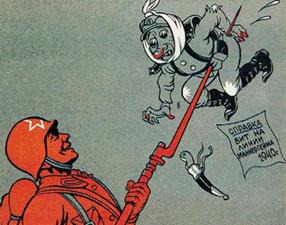
Had the Finnish forces not held out, however, it is likely that the whole Finland would have been occupied. Finland was forced to cede 10% of its territory and 20% of its industrial capacity, mainly forest industry, the Soviet Union. 10% of the population had to flee their homes and properties. The death toll for the Winter War is believed to have been about. 26,000 dead in Finland and the 270,000 on the Soviet side.
|
|
Helsinki and the distinctive Finnish architecture
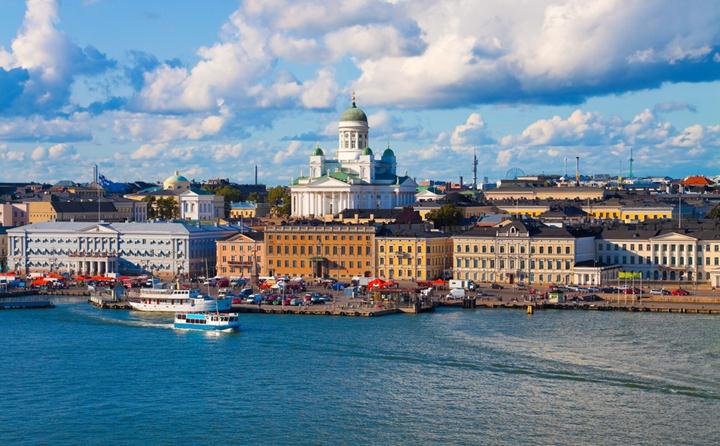
|
Finnish architecture is different, exciting. Modern. Only12 percent of the buildings were built before independence in 1917. The first international breakthrough for Finnish architecture took place at the World Exhibition in Paris in 1900, while national romanticism was still the dominant style. From the 1930s, functionalism was the symbol for the construction of this ambitious nation and in the 1950s, Modernism took over. Since then, Finland has developed its own style, not least to the works of architect AlvarAalto (1898-1976) shows. He designed more than 500 buildings, about 300 of them were built, most of them in Finland, but also some in the U.S., Germany, Italy and France. Aalto's wide design activities ranging from urban planning and architecture to interior and furniture design, glass design (Iittala) and painting. |
|
|
|
One of the most impressive features of the Finnish capital Helsinki, is the seaward approach to the city. The numerous islands and islets are all beautifully green, very neat. Finland leads, also this way. Helsinki was founded by Swedish King Gustav Vasa in 1550. The purpose was, curiously enough, to create a rival to the Hanseatic city of Tallinn. At the beginning of the 1800s the city had still only 4,000 inhabitants. The change came when the Russians captured it in 1808 and Finland became a Grand Duchy under the Russian Tsar. In 1812 the Tsar decided that the Finnish capital was moved here from Turku on the southwest coast, probably because the city was closer to St. Petersburg. A new centre in the Empire style was built up around the Senate Square, with magnificent buildings, such as the Cathedral. |
It's good to come to Helsinki. It is good to wander along the quays. See the huge ferries from Viking or Silja Line. Feel the good smell of the sea. Stroll along the Alexander Street and Mannheim Road. Sitting down with
a cold beer in the park area Pohjoisesplanadi. The town centre here at the park is homogeneous neoclassical. One understands why the city was nicknamed the 'Nordic white city'. But Helsinki is perhaps even more famous for its numerous Art Nouveau buildings (Finnish Art Nouveau) buildings from the early 1900's. These buildings are strongly influenced by the Kalevala, a very popular theme in Finland's national romantic art of that time. The master of Finnish Art Nouveau was the architect Eliel Saarinen (1873-1950), in this city known for his architectural masterpiece, the Helsinki main railway station. One would also not have walk many hundred meters before encountering Alvar Aalto buildings.
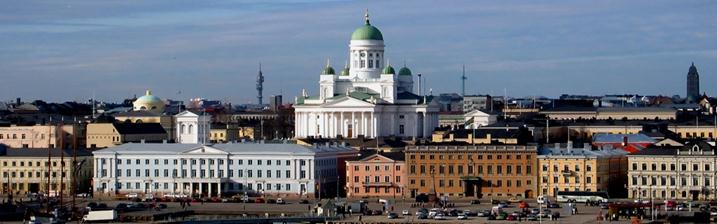
Helsinki’s seafront, with The Cathedral right behind.
Rovaniemi in North Finland claims to be the home of Santa Claus…
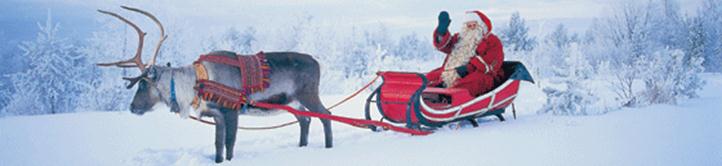
Rovaniemi is the capital of Lapland in Finland, located at the northern Arctic Circle. Lying at the junction of North and South on the border to the Arctic, Rovaniemi has become a modern town, full of life with its own unique characteristics.
There are eight different seasons this far north, each having its own type of daylight, temperature and natural phenomena. The changing seasons offer excellent settings for a whole variety of activities. During the frosty twilight, you can ride a snowmobile through snowy forests or over a frozen river, the Midnight Sun on the other hand, takes you cruising in a boat on the river. Each season offers an opportunity to experience the town in a totally different light.
Although Christmastime comes but once a year, in Rovaniemi you can experience Christmas throughout the year. Rovaniemi, in Finnish Lapland, is the hometown of Santa Claus who can be met on any day of the year at the Santa Claus Office on the Arctic Circle.
|
Lithuania’s best future lies in a Nordic union
New collaboration constellations are forming in our today’s Europe, very much due to the financial crisis. This new approach, between countries that previously were relatively far apart, as well as the so-called G-8 and G-20 alliances between the world's richest countries are examples of how we seem to be moving into a new World Order. Also in good old Europe we are now beginning to develop entirely new constellations. Typical of such constellations is that the largest and richest countries take initiatives to secure their own positions and welfare, while smaller countries often have to put up with playing second fiddle. What the three Baltic States now face is that being members of the EU is not enough. The economic crisis, and partly also questions on defence and security, have led to new forms of cooperation, as the aforementioned , and our small nations far north in Europe are not invited to become active participants. It is therefore my opinion that a tight collaboration with the other Nordic countries is the way to go. Together we are large enough to be heard and our common identity and cultural background is a good basis for cooperation. In the 13th century, an alliance of Northern European towns called the Hanseatic League created what historian Fernand Braudel called a “common civilization created by trading.” Today’s expanded list of Hansa states share Germanic and Scandinavian cultural roots. Germany and the Scandinavian countries have found their niches by selling high-value goods to developed nations, as well as to burgeoning markets in Russia, China, and India.
Widely admired for their generous welfare systems, Denmark, Finland, Norway, Sweden and Germany have liberalized their economies in recent years. They account for six of the top eight countries on the Legatum Prosperity Index and boast some of the world’s highest savings rates (25 percent or more), as well as impressive levels of employment, education, and technological innovation. “In strategies that we are developing for the next twenty years emphasize that it is important for the Baltic States to become more harmonized and catch up with Scandinavian countries. Integration with Nordic countries is an important objective,” said Andrius Kubilius, Lithuania’s prime minister, in a meeting in Tallinn a couple of years ago. I think he is right.
Also worthwhile reading:
|
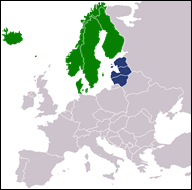
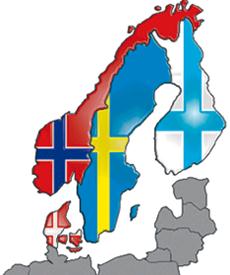

Scandinavian option
for the Baltic States?
Dangerous undertows erode the stability
of Central and Eastern Europe
An article by Stan Backaitis, Washington DC
- Bookmark :
- Digg
- del.icio.us
- Stumbleupon
- Redit it

- Posted by - (4) Comment
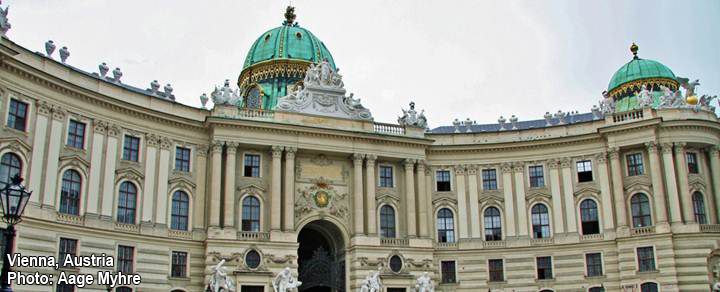


EXPLORING EUROPE (5 of 10)
Authentic Austria – generous Germany
Tour guide, writer and photographer: Aage Myhre
aage.myhre@VilNews.com
|
VilNews is on its way around Europe!
|
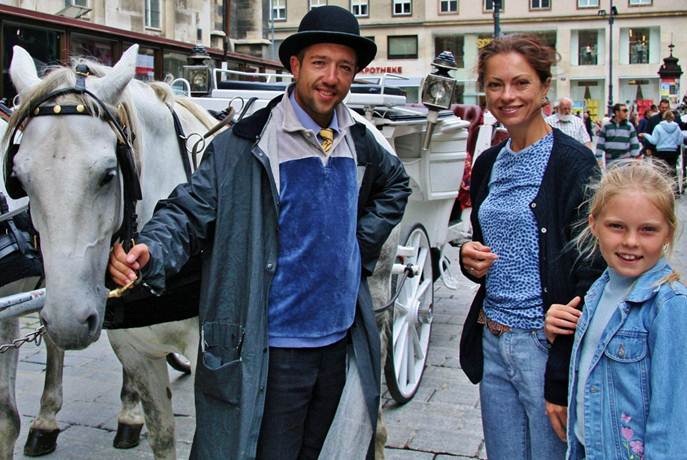
|
|
Authentic Austria |

Austria is a landlocked country of roughly 8.47 million people in Central Europe. It is bordered by the Czech Republic and Germany to the north, Hungary and Slovakia to the east, Slovenia and Italy to the south, and Switzerland and Liechtenstein to the west. The territory of Austria covers 83,855 square kilometres (32,377 sq mi) and has a temperate and alpine climate. Austria's terrain is highly mountainous due to the presence of the Alps; only 32% of the country is below 500 metres (1,640 ft), and its highest point is 3,798 metres (12,461 ft). The majority of the population speak local Austro-Bavarian dialects of German as their native language, and German in its standard form is the country's official language. Other local official languages are Burgenland Croatian, Hungarian and Slovene.
|
The origins of modern-day Austria date back to the time of the Habsburg dynasty when the vast majority of the country was a part of the Holy Roman Empire of the German Nation. During the 17th and 18th centuries, Austria became one of the great powers of Europe and, in response to the coronation of Napoleon I as the Emperor of the French, the Austrian Empire was officially proclaimed in 1804. In 1867, the Austrian Empire was reformed into Austria-Hungary. When the Habsburg (Austro-Hungarian) Empire collapsed in 1918 with the end of World War I, Austria used German Austria („Deutschösterreich”, later „Österreich”) as the state name in an attempt for union with Germany but was forbidden due to the Treaty of Saint Germain. The First Austrian Republic was established in 1919. In the 1938 Anschluss, Austria was occupied and annexed by Nazi Germany. This lasted until the end of World War II in 1945, after which Nazi Germany was occupied by the Allies and Austria's former democratic constitution was restored. In 1955, the Austrian State Treaty re-established Austria as a sovereign state, ending the occupation. In the same year, the Austrian Parliament created the Declaration of Neutrality which declared that the Second Austrian Republic would become permanently neutral. Today, Austria is a parliamentary representative democracy comprising nine federal states. Austria is one of the richest countries in the world, with a nominal per capita GDP of $48,350 (2011 est.). The country has developed a high standard of living and in 2011 was ranked 19th in the world for its Human Development Index. |
|
Vienna - Roof top Sculpture at Hofburg Palace.
Photo: Aage Myhre.
Vienna – home of Sigmund Freud and the Strauss family
At the turn of the 20th century, Vienna, capital of the vast but ailing Austro-Hungarian Empire, reflected on its past with pride and its future with uncertainty. The empire had nurtured Beethoven, Brahms, and Strauss. The city was home to Sigmund Freud (whose father family came from Lithuania!), and considered a world leader in science, philosophy, and research. With 2 million inhabitants, Vienna was one of the most populous and multi-ethnic cities on earth, a melting pot of immigrants from across the empire.
But Vienna seethed with provincial nationalism, socialist ideals, and an odious wave of anti-Semitism. Vienna also nurtured the young Adolf Hitler, and, after his rise to power, played a significant part in supporting the Nazi reign of terror. Vienna is rife with reminders of those dark years.
Though its culture and science still predominate, modern Vienna is, of course, a very different place. In the old town section, the Innere Stadt, throngs of tourists fill the streets, lost in reveries over their fabulous surroundings.
Johann Strauss Sr. "Radetzky March", the last piece at the New Year's Concert
In Vienna 1987, with Austrian Herbert Von Karajan conducting the Vienna Philharmonic Orchestra.
|
Sigmund Freud was a “Lithuanian Jew” Sigmund Freud (1856 – 1939) was an Austrian neurologist who became known as the founding father of psychoanalysis. Freud qualified as a Doctor of Medicine at the University of Vienna in 1881, and then carried out research into cerebral palsy, aphasia and microscopic neuroanatomy at the Vienna General Hospital. He was appointed a University lecturer in neuropathology in 1885 and became a Professor in 1902. His father, Jacob Freud (1815–1896), was a Lithuanian Jew, from Vilnius. Of his father's family Freud wrote, "I believe they lived a long time in Rhenish territory (Cologne), that during the persecution of Jews in the fourteenth or fifteenth century they fled east, and in the nineteenth century returned from Lithuania, through Galicia, to a German-speaking country, Austria" |
|
|
Jews lived in Lithuania since the 14th century. They came at the invitation of the Grand Dukes Mindaugas, Augustus II and Augustus III, who had recognized the utility of the merchants, artisans, and traders as an integral component in the development of the nation. Jews also played important roles in diplomatic missions and defense. Vilnius was the most important Jewish centre, a city that Napoleon in 1812 gave the nickname "Jerusalem of the North". Renowned scientists, teachers, writers, sculptors, and musicians made their homes here. Jewish secular and religious institutions flourished, including “Der Yiddisher Visenshaftlicher Institut” (The Yiddish Scientific Institute) in the 1920s and 1930s, which published countless scientific works. Vilnius was selected to be its headquarters. Albert Einstein, Sigmund Freud, and Marc Chagall were honorary members of the board.
|
|
Vienna is packed with life and culture!
My kids dancing on the grass in front of the Belvedere Palace right in the heart of Vienna.
Photo: Aage Myhre.
Vienna, a city of full of life and history, has cultivated itself through many eras and embodies the very definition of culture: the tending of natural growth. Apart from Vienna’s rich history, the 20th Century alone offers enough ‘culture’ to fill an entire textbook with intricate descriptions. Starting with Freud’s Vienna, which was largely preoccupied with death and dark, unconscious drives, switching to Art Nouveau or the paintings of Gustav Klimt, going through the philosophy of Ludwig Wittgenstein and logical positivism, and finally culminating in Nobel Prize-winning Viennese Elfriede Jelinek, the city offers an abundance of history and inspiration, which only justifies Terry Eagleton’s claim that culture is “one of the two or three most complex words in the English language.”Vienna, among other things, is a place to feel how slowly and gracefully life progresses. Literally overflowing with sidewalk cafes, shadowy landscaped parks, wine bars and pastry shops, it is an ideal place to stop and relax for a while, observe and, in the Viennese cynical fashion, make witty remarks. Here you can savour various samples of the city’s cultural buffet, be it classical music, art, literature or theatre performances. Vienna’s architecture, which is comprised of cutting-edge contemporary buildings, Art Deco, Neo-Classical, Baroque and Rococo pieces, is a significant part of the city’s splendour. Food and drink are also part of Vienna’s allure, with the city offering excellent dining options just around the corner from the most desirable and important sightseeing locations.
This cosmopolitan centre, which incorporates Eastern European, Oriental and Western modes of thinking, has been a melting pot for cultural identities throughout the centuries. Thus, the Viennese represent a peculiar blend of many nationalities and cultural belongings. Vienna started off as a Celtic settlement of the Danube, which was later occupied by the Romans, and eventually evolving into the powerful Austro-Hungarian Empire in more recent times. Being defined by the iron fist of the Habsburg dynasty, the city has always been a vital spot for European history. Vienna has been through wars, occupations, it has been the victor of many battles, and in more recent history, has switched from a monarchy to a republic. Vienna is the world’s most famous music centre. A lot of talented musicians lived and worked here: Mozart, Beethoven, Hayden, Schubert, Brahms and many others. It's also the city of the legendary Vienna Boys' Choir and various musical events, such as the New Year Concert or the Annual Ball in the Vienna Opera House.
Johann Strauss II. Statue in the Vienna City Park.
Photo: Aage Myhre
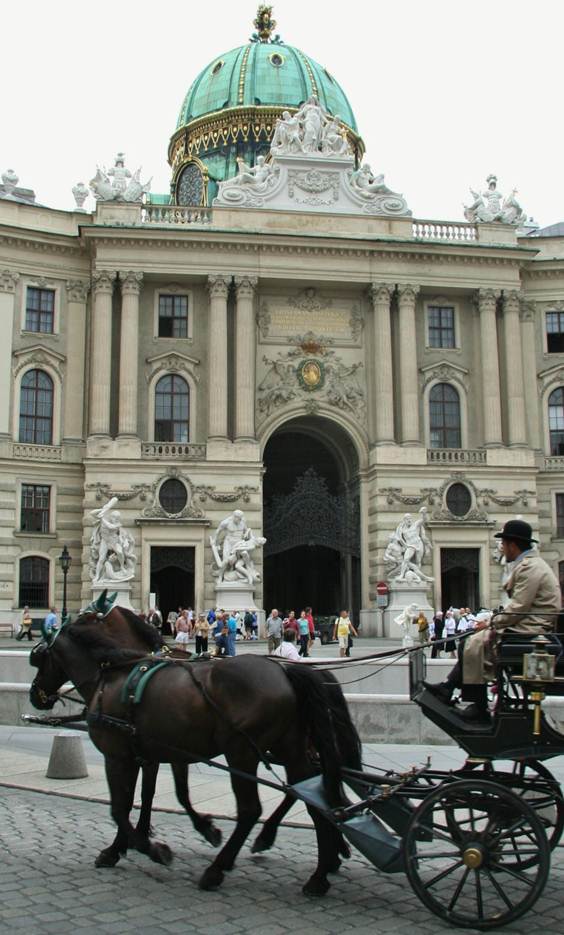
Hofburg Royal Palace, surrounded by Vienna’s typical horse carriages.
Photo: Aage Myhre.
Austrian wining & dining
Photo: Cassandra Myhre.
|
If any European capital knows how to enjoy the good life, it’s Vienna. Compared to most modern urban centers, the pace of life here is slow. Locals linger over pastry and coffee at cafés. Concerts and classical music abound. And chatting with friends at a wine garden is not a special event but a way of life. For many Viennese, the living room is down the street at the neighborhood coffeehouse, which offers light lunches, fresh pastries, a wide selection of newspapers, and “take all the time you want” charm (just beware of the famously grumpy waiters). Each coffeehouse comes with its own individual character. Café Sperl dates from 1880, and is still furnished identically to the day it opened—from the coat tree to the chairs. Café Hawelka has a dark, “brooding Trotsky” atmosphere, paintings by struggling artists (who couldn’t pay for coffee), smoked velvet couches, and a phone that rings for regulars. Mrs. Hawelka died a couple of weeks after Pope John Paul II. Locals suspect the pontiff wanted her much-loved “Buchteln“ (marmalade-filled doughnuts) in heaven. Make it a point to stop by Demel, the ultimate Viennese chocolate shop, filled with Art Nouveau boxes of choco-dreams come true: “Kandierte Veilchen” (candied violet petals), “Katzenzungen” (cats’ tongues), and much more. An impressive cancan of cakes is displayed to tempt you into springing for the 10-euro cake-and-coffee deal (point to the cake you want). You’ll sure to see Sacher torte, the local specialty. Apart from its apricot filling, the recipe seems pretty simple...chocolate on chocolate. You can sit inside the shop, with a view of the cake-making, or outside, with the street action. Fancy shops like this boast on their sign: “K.u.K.” (meaning good enough for the “König und Kaiser” – king and emperor). For another royally good experience, head to the wine gardens. Clustered around the edge of town, mostly in the legendary Vienna Woods, wine-garden restaurants feature cold-cut buffets paired with fine Austrian wines in an old-village atmosphere with strolling musicians. If you visit in fall, try Sturm, the semi-fermented new wine made from the season’s first grape harvest and only available in autumn. Many locals claim that it takes several years of practice to distinguish between Sturm wine and vinegar. The red version is so hearty and fruity that locals say “Eat up!” when toasting with it. |
|
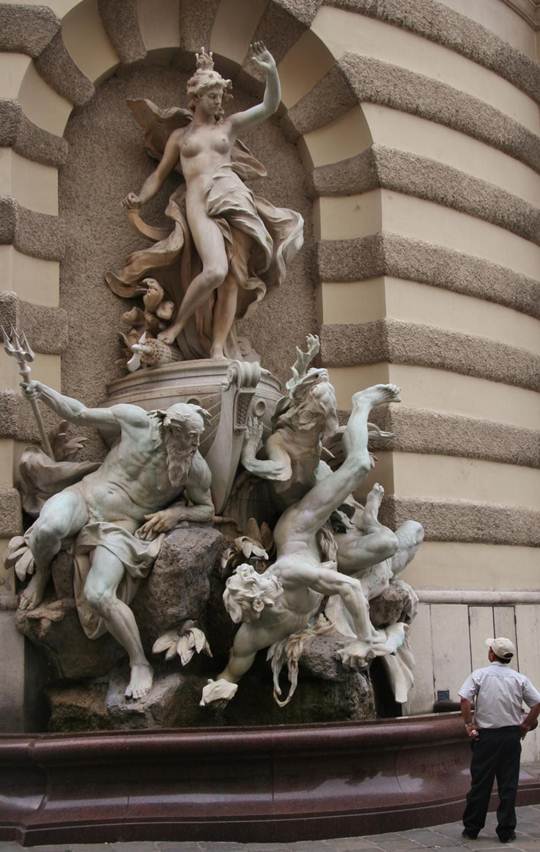
Watching each other... Neptune statue at the Royal Palace Hofburg, Vienna.
Photo: Aage Myhre.
Linz – birthplace of Lithuanian Grand Duchesses
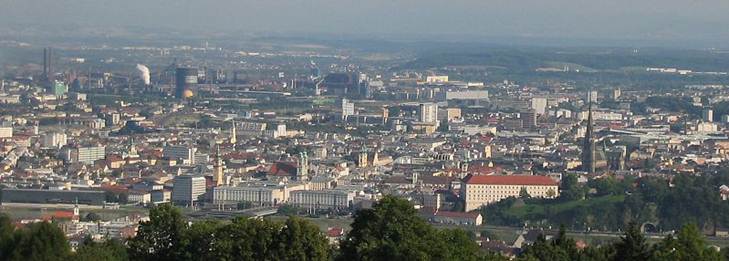
Linz is the third-largest city of Austria and capital of the state of Upper Austria (German: Oberösterreich). It is located in the north centre of Austria, approximately 30 km (19 mi) south of the Czech border, on both sides of the river Danube. The population of the city is 189,367, and that of the Greater Linz conurbation is about 271,000.
|
The golden age of Austrian – Lithuanian relations 15th – 16th centuries
|
||
|
The Lithuanian “Jagiellonian Dynasty” and the Austrian “Habsburg Dynasty” ‘united’ in 1454 when Lithuanian Grand Duke Casimir married Austrian Elizabeth von Habsburg The Jagiellonian dynasty was a royal dynasty originating from the Lithuanian House of Gediminas that reigned over the Grand Duchy of Lithuania, Europe’s largest country in the 14th-16th centuries (present day Lithuania, Belarus, Poland, Ukraine, Latvia, Estonia, parts of Russia (including nowadays Kaliningrad oblast), Hungary, Czech Republic, Slovakia). The Habsburg dynasty was another predominant force in Europe for several hundred years. This house ruled over the Holy Roman Empire, Austria, Hungary, Bohemia, Spain and many other realms in Europe. The Habsburgs were especially powerful and played an exceptional role in the history of Central and Eastern Europe. This Jagiellonian dynasty started with Vladislaus Jagiello, Grand Duke of Lithuania (1377-1401), who later also became King of Poland, marrying Jadvyga,theonly daughter of the last King of Poland of the Andegawen dynasty(1386). In Lithuanian historiography this house is known as Gediminaiciaithat isthe descendants of Gediminas (c.1275-1341), grandfather of Jagiello and Grand Duke of Lithuania (1316-1341). Over five hundredyears ago dynastic relations were a significant part of European politics. They were used to acquire new landsandcement political alliances. Therefore, dynastic contacts between the two most powerful houses in Central Europe were inevitable. When Casimir IV Jagiello, King of Poland and Grand Duke of Lithuania married Elizabeth of Habsburg in 1454 that became the first Habsburg-Jagiellon marriage ever contracted. The copule was a “Dream Team” of the late Middle Ages. Their wedding in 1454 (she was 17, he was 27) trigged off a historical golden era for Poland and Lithuania, which lasted over 100 years and ended in 1572 with the death of their grand-son Sigismund II Augustus. Those were the glorious days of the Jagiellon dynasty Elizabeth von Habsburg (Elzbieta Habsburgaite) was called „Mother of the Jagiellons”, as she gave birth to 12 children, whereof six sons, among them the later Polish-Lithuanian King and Grand Duke Sigismund the Old (1467-1548). The Austro-Lithuanian couple seems to have been successful in practically all their undertakings, not least in politics and in warfare. King Casimir died in 1492, so the marriage lasted for 38 years, which is quite remarkable for those times. In their lifetime and after, Lithuania was the major power in eastern Europe. Historians point out that Casimir and Elizabeth were also renowned for their open-mindedness and tolerance. Cracow was then a rich and splendid royal residence, and its close contacts to Prague and Vienna certainly were of great mutual advantage. The Jagiellon courts were international meeting places of noblemen, intellectuals and artists.
|
|
|
|
|
||
|
Two Austrian sisters married Lithuania’s Grand Duke Sigismund Augustus
|
||
|
The older sister is buried in Vilnius Elisabeth of Austria (1526 – 1545) was the eldest child of Ferdinand I, Holy Roman Emperor and his wife Anna of Bohemia and Hungary. Elisabeth was a member of the House of Habsburg. From an early age Elisabeth was being prepared for her marriage to Sigismund II Augustus (1520-1572), Grand Duke of Lithuania and King of Poland, grandson of Grand Duke Casimir and Elizabeth of Austria. Elisabeth's father had attempted to marry his daughter off to the Lithuanian Grand Duke when she was only one year old. In view of the fact that Elisabeth was the granddaughter of Vladislas II of Hungary, uncle of Sigismund, Pope Clement VII had to give a papal dispensation so the wedding could take place. So 16 year old Elisabeth married 22 year old Sigismund, they married on May 6, 1543 in Wawel, Krakow. Elisabeth's mother-in-law Bona Sforza did not want the wedding to take place because she hated the Habsburgs. The marriage was not happy. Young, inexperienced and shy Elisabeth was not attracted to her husband. The situation deteriorated when Elisabeth was diagnosed with an incurable disease, epilepsy. Throughout the duration of marriage Sigismund betrayed his wife by taking a mistress, Barbora Radvilaitė. At the same time Bona openly showed dislike to Elisabeth. The only person showing sympathy to Elisabeth was her father-in-law Sigismund I the Old. In autumn 1544 the couple moved from Poland to Vilnius, where her husband was heavily involved in an affair with Barbora Radvilaitė. In the spring 1545 Elisabeth's health deteriorated, tormented by her increasingly frequent seizures of epilepsy. At the beginning of June 1545 Sigismund went to Krakow to receive the dowry of Elisabeth, he left his wife alone in Vilnius. On June 15 the young queen died exhausted by many seizures of epilepsy, she was just 19 years old. She was buried on August 24, 1545 in Vilnius Cathedral next to her husband's uncle, a brother of her grandfather, Alexander the Jagiellonian. Her quarrel with Bona Sforza over the Parmesan cheese was commonly known in both Poland and Lithuania.
|
|
|
|
The younger sister is buried in Linz After Elisabeth's death Sigismund remarried to Radvilaitė and after her death he married Elisabeth's younger sister Catherine of Austria (1533 – 1572.. On June 23, 1553, she became the third wife of Sigismund II Augustus. Sigismund had no legitimate children from his three wives Catherine became pregnant and miscarried in October 1554. After the miscarriage, the Grand Duke decided that his marriage was cursed because Catherine was sister of his first wife. He vainly attempted to have the marriage annulled, and in the autumn of 1566, Catherine left Lithuania and lived until her death in 1572 in Linz.
|
|
|
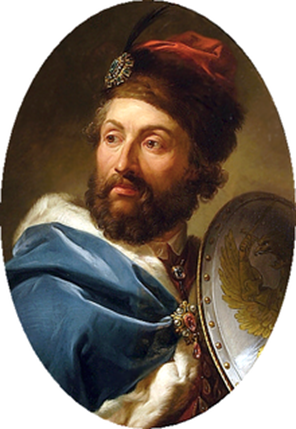
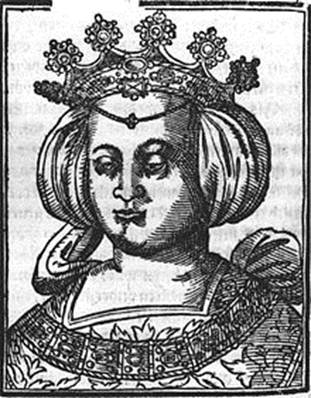
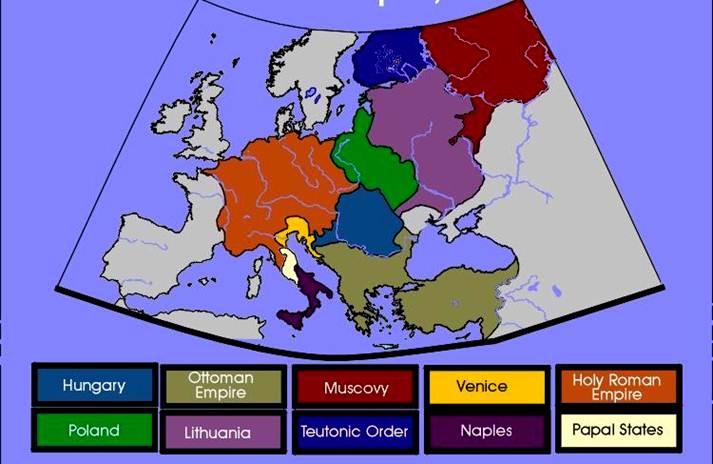
Salzburg – birthplace ofthe world's most prominent composer of all time
View of Salzburg City Centre.
Salzburg is the fourth-largest city in Austria and the capital city of the federal state of Salzburg. The "Old Town" (Altstadt) has internationally renowned baroque architecture and one of the best-preserved city centres north of the Alps. It was listed as a UNESCO World Heritage Site in 1997. The city is noted for its Alpine setting.
Salzburg was the birthplace of 18th-century composer Wolfgang Amadeus Mozart. In the mid-20th century, the city was the setting for parts of the American musical and film The Sound of Music.
The city has three universities. It has a large population of students who add liveliness and energy to the area, and the universities provide culture to the community.
How to recognise, understand and appreciate genius?
A ‘must see’ collage from the film 'Amadeus'.
Salieri, Austria's court composer by then, discusses the time he first met Mozart.
Wolfgang Amadeus Mozart (27 January 1756 – 5 December 1791), was a prolific and influential composer of the Classical era. He composed over 600 works, many acknowledged as pinnacles of symphonic, concertante, chamber, piano, operatic, and choral music. He is among the most enduringly popular of classical composers.
Mozart showed prodigious ability from his earliest childhood in Salzburg. Already competent on keyboard and violin, he composed from the age of five and performed before European royalty. At 17, he was engaged as a court musician in Salzburg, but grew restless and travelled in search of a better position, always composing abundantly. While visiting Vienna in 1781, he was dismissed from his Salzburg position. He chose to stay in the capital, where he achieved fame but little financial security. During his final years in Vienna, he composed many of his best-known symphonies, concertos, and operas, and portions of the Requiem, which was largely unfinished at the time of Mozart's death. The circumstances of his early death have been much mythologized. He was survived by his wife Constanze and two sons.
Mozart learned voraciously from others, and developed a brilliance and maturity of style that encompassed the light and graceful along with the dark and passionate. His influence on subsequent Western art music is profound.
Beethoven wrote his own early compositions in the shadow of Mozart, and Joseph Haydn wrote that "posterity will not see such a talent again in 100 years. Now more than 250 years have passed since Mozart was born...
|
Schloss Leopoldskron in Salzburg – the intellectual Cold War meeting point...
|
|
Earlyin the 1980s, I satin a‘bierstub’inSalzburg.Ifell into conversation withan elderlygentleman and asked whathewas workingwith. He then pulled outa 1000-shillingnote fromhis wallet,pointing tothe picture ofa castle, and said thatwas whereheworked, ascastlemanager.The castle,he said, wasnamed afterCount LeopoldAntonEleutherius vonFirmian(1679-1744). Schloss Leopoldskron is a rococo palace and a national historic monument in a southern district of the city of Salzburg. The palace is located on the lake Leopoldskroner Weiher. Leopoldskron-Moos, an affluent residential area, reaches to the foot of the 1853m high Untersberg and features a number of still working farms as well as a peat-bog. The palace has been home to the Salzburg Global Seminar since 1947. The Salzburg Global Seminar is an American non-profit organization that holds seminars on economics, politics, and other issues for future political, economic, and business leaders from around the world. Its purpose is to "challenge current and future leaders to develop creative ideas for solving global problems." and to "lead the conversation for global change" through seminars held at the Schloss Leopoldskron. The organization was founded in 1947 by three men at Harvard University--Clemens Heller, a graduate student originally from Austria, a college senior named Richard Campbell and a young English instructor named Scott Elledge. "We hope to create at least one small centre in which young Europeans from all countries, and of all political convictions, could meet for a month in concrete work under favourable living conditions," Campbell said of their intentions in January 1947, "and to lay the foundation for a possible permanent centre of intellectual discussion in Europe." The Salzburg Seminar, as it came to be called, was created to be a venue to encourage intellectual exchange among Europeans and Americans and to ameliorate rifts created by World War II.
|
|
|
Generous Germany |

|
|
No big developed country seems to come out of the global recession looking stronger than Germany. Exports are booming and unemployment has fallen to levels last seen in the early 1990s. The government is a stable, though sometimes fractious, coalition of three mainstream parties. Amid the truculence and turmoil around it, Germany appears an oasis of tranquillity. A recent essay published by Bruegel, a Brussels think-tank, explains “why Germany fell out of love with Europe”. Another, from the European Council on Foreign Relations, alleges that Germany is “going global alone”. Jürgen Habermas, Germany’s most distinguished living philosopher, accuses his country of pursuing an “inward-looking national policy”. “How can you not ask Germany questions about its vision of the future of Europe?” wonders Jacques Delors, who was president of the European Commission when the Berlin Wall fell. Even a pacific and prosperous Germany causes international angst... The German question never dies. Instead, like a flu virus, it mutates. On the eve of unification some European leaders worried that it would resume killer form. “We’ve beaten the Germans twice and now they’re back,” said Margaret Thatcher, Britain’s prime minister. Such fears now look comical. But even today’s mild strain causes |
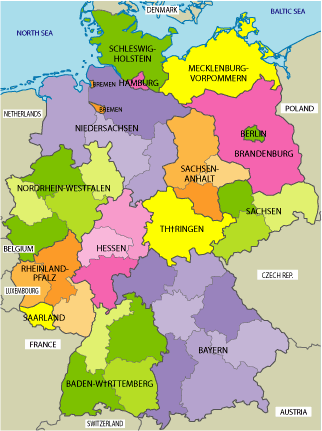
aches and pains, which afflict different regions in different ways. America’s symptoms are mild. Central Europe seems to have acquired immunity. After unification 85% of Poles looked upon Germany as a threat, recalls Eugeniusz Smolar of the Centre for International Relations in Warsaw. Now just a fifth do. It is among Germany’s long-standing west and south European partners that the German question feels debilitating, and where a dangerous flare-up still seems a possibility. Germany’s answer to the question matters not only to them. It will shape Europe, and therefore the world.
Germans have not forgotten that their country was the author of the horrors of the 1930s and 1940s but, says Renate Kocher of Allensbach, a polling firm, they want to “draw a line under the past”. That does not mean ignoring its lessons or neglecting to teach them to the next generation. A new exhibition on “Hitler and the Germans” at the German Historical Museum in Berlin is drawing blockbuster crowds. But Germans are no longer so ready to be put on the moral defensive or to view the Nazi era as the defining episode of their past. Even non-Germans seem willing to move on. Recent books like “Germania” and “The German Genius” suggest that English-language publishing may be entering a post-swastika phase. Germany still atones but now also preaches, usually on the evils of debt, the importance of nurturing industry and the superiority of long-term thinking in enterprise. Others are disposed to listen. “Everyone orients himself towards Germany,” says John Kornblum, a former American ambassador.
Germany is a federal parliamentary republic. The country consists of 16 states while the capital and largest city is Berlin. Germany covers an area of 357,021 km2. With 81.8 million inhabitants, it is the most populous member state and the largest economy in the European Union. It is one of the major political powers of the European continent and a technological leader in many fields.
A region named Germania, inhabited by several Germanic peoples, was documented before AD 100. During the Migration Age, the Germanic tribes expanded southward, and established successor kingdoms throughout much of Europe. Beginning in the 10th century, German territories formed a central part of the Holy Roman Empire. During the 16th century, northern German regions became the centre of the Protestant Reformation while southern and western parts remained dominated by Roman Catholic denominations, with the two factions clashing in the Thirty Years' War, marking the beginning of the Catholic–Protestant divide that has characterized German society ever since. Occupied during the Napoleonic Wars, the rise of Pan-Germanism inside the German Confederation resulted in the unification of most of the German states into the German Empire in 1871 which was Prussian dominated. After the German Revolution of 1918–1919 and the subsequent military surrender in World War I, the Empire was replaced by the Weimar Republic in 1918, and partitioned in the Versailles Treaty. Amidst the Great Depression, the Third Reich was proclaimed in 1933. The latter period was marked by Fascism and the Second World War. After 1945, Germany was divided by allied occupation, and evolved into two states, East Germany and West Germany. In 1990 Germany was reunified.
Germany was a founding member of the European Community in 1957, which became the EU in 1993. It has the world's fourth largest economy by nominal GDP and the fifth largest by purchasing power parity. It is the second largest exporter and third largest importer of goods. The country has developed a very high standard of living and a comprehensive system of social security.
München mag Dich - Munich likes you
We have left Austria behind. We approach Munich, the capital city of Bavaria, Germany. It is located on the River Isar north of the Bavarian Alps. Munich is the third largest city in Germany, behind Berlin and Hamburg. About 1.35 million people live within the city limits. Munich hosted the 1972 Summer Olympics.
The city's motto is "München mag Dich" (Munich likes you). Its native name, München, is derived from the Old High German Munichen, meaning "by the monks' place". The city's name derives from the monks of the Benedictine order who founded the city; hence the monk depicted on the city's coat of arms. Black and gold—the colours of the Holy Roman Empire—have been the city's official colours since the time of Ludwig the Bavarian.
Modern Munich is a financial and publishing hub, and a frequently top-ranked destination for migration and expatriate location in livability rankings. Munich achieved 7th place in frequently quoted Mercer livability rankings in 2010. For economic and social innovation, the city was ranked 15th globally out of 289 cities in 2010, and 5th in Germany by the 2thinknow Innovation Cities Index based on analysis of 162 indicators. In 2010, Monocle ranked Munich as the world's most livable city.
Romantische Strasse and Rothenburg ob der Tauber
Don’t miss The Romantic Road (Romantische Straße) when you are in Bavaria! This a theme route coined by travel agents in the 1950s to describe the 350 kilometres (220 mi) road in southern Germany. In medieval times it used to be a trade route, connecting the centre of Germany with the South. Today this region is thought by many international travellers to possess "quintessentially" German scenery and culture, specifically in towns and cities such as Nördlingen, Dinkelsbühl and Rothenburg ob der Tauber. The route is also known for passing a lot of castles, such as Burg Harburg and the famous Neuschwanstein Castle. The Romantic Road is marked with brown signs along the road.
Rothenburg ob der Tauber is a town at the Romantische Strasse, well known for its
well-preserved medieval old town, a destination for tourists from around the world.
Nuremberg – the romantic city that became venue for the post-war Nazi Trial
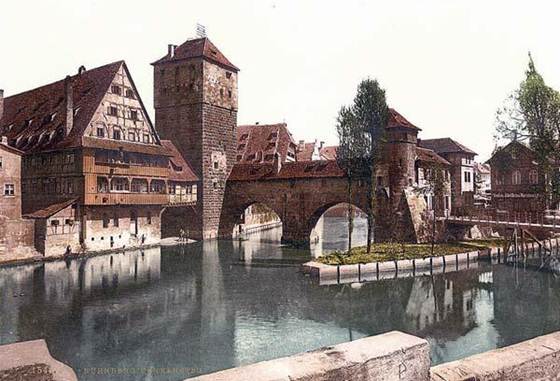
Nuremberg is a beautiful city in the German state of Bavaria, in the administrative region of Middle Franconia. Situated on the Pegnitz river and the Rhine–Main–Danube Canal, it is located about 170 kilometres (110 mi) north of Munich and is Franconia's largest city. The population is 500,000. The "European Metropolitan Area Nuremberg" has 3.5 million inhabitants. Nuremberg is often referred to as having been the 'unofficial capital' of the Holy Roman Empire.
But what a contrast isn’t it, knowing that it was right here the trial against the Nazi leaders took place during the immediate years after World War II...
Nuremberg: Nazis on trial
By Professor Richard Overy
|
|
|
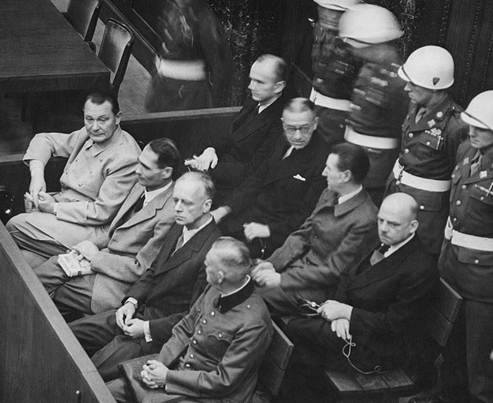
In the aftermath of World War Two the Allies sought to bring the aggressors to justice. How did the surviving Nazi leaders give account for their actions?
In November 1945, in the German city of Nuremberg, the victors of the World War Two began the first international war crimes trial. The choice of the city was significant for it was here that the National Socialist Party held its annual rallies.
Adolf Hitler intended it to be rebuilt as the 'party city'. Now many of the leaders of the party were on trial for their lives, only a short distance from the grand arena where they had been fêted by the German people.
The 21 defendants came from very different backgrounds. Some, like Hitler's chosen successor Hermann Goering, were senior politicians - their responsibility clear.
Others were there because senior party leaders Heinrich Himmler, head of the feared SS, and Joseph Goebbels, head of propaganda - had killed themselves rather than face capture and trial. Their deputies or juniors stood on trial instead of them. But most of them were regarded by the western public, rightly or wrongly, as key playmakers in a system that had brought war to Europe and cost the lives of 50 million people.
This catalogue of sin was difficult for many of the defendants to come to terms with.
The charges laid at their door were extraordinary. They were collectively accused of conspiring to wage war, and committing crimes against peace, crimes against humanity (including the newly defined crime of genocide) and war crimes in the ordinary sense (abuse and murder of prisoners, killing of civilians and so on). This catalogue of sin was difficult for many of the defendants to come to terms with.
One of them, Robert Ley, best known for his role as head of the 'Strength through Joy' movement, which masterminded the Volkswagen car, hanged himself in his cell a few weeks before the trial started, so shamed was he by the accusations of crime. Ley's suicide was the most extreme example of the many ways the defendants responded to the trial.
The reaction of the others covered a very wide spectrum, from confident defiance to full admission of responsibility. In the case of Rudolf Hess, Hitler's former deputy, the reality was almost complete memory loss.
Two prisoners in particular came to represent opposite poles in their reaction to the trials and the accusation of massive crimes. Hermann Goering, the man Hitler chose as his successor in the 1930s and the most flamboyant and ambitious of the party hierarchy, prepared to defend Hitler and the Reich's war policy rather than admit that what had been done was criminal.
On the other hand Albert Speer, the youthful architect who rose to run Germany's armaments effort during the war, accepted from the start the collective responsibility of the defendants for the crimes of which they were accused and tried to distance himself from Hitler's ghostly presence at the tribunal.
Hermann Goering: 'Prisoner Number One'
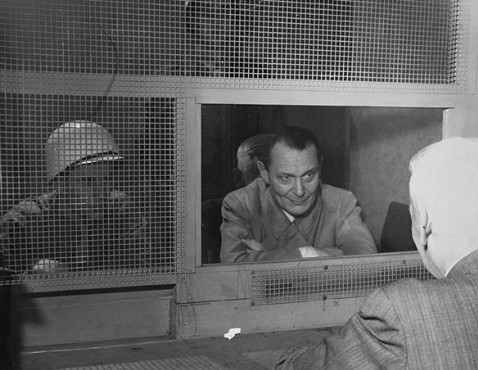
Defendant Hermann Goering consults with his lawyer, Dr. Otto Stahmer, in the
Nuremberg prison at the International Military Tribunal trial of war criminals.
Goering was captured shortly after the end of the war with large quantities of his looted artworks. He thought he could negotiate with the Allies as Germany's most senior politician, but he found himself under arrest, stripped of everything, and held in an improvised prison camp before his transfer to Nuremberg to stand trial.
He was a big personality in every sense. The guards nicknamed him 'Fat Stuff' and bantered with him. He was charming, aloof and confident, and from the start was determined to dominate the other prisoners and make them follow his line of defence.
Goering insisted that everything that they had done was the result of their German patriotism. To defy the court was to protect Germany's reputation and to maintain their loyalty to their dead leader.
From the start Goering was determined to dominate the other prisoners and make them follow his line of defence.
With the start of the trial, Goering assumed at once the informal role as leader and spokesman for the whole cohort of prisoners. He was given the most prominent position in the dock.
When it came to his cross-examination he prepared carefully and in the opening exchanges with the American chief prosecutor Robert Jackson he emerged an easy winner.
So frustrated did Jackson become with Goering's clever, mocking but evasive responses that at the end of the session he threw down the headphones he had been wearing to hear the translated answers and refused to continue.
'If you all handle yourselves half as well as I did,' Goering boasted to the other prisoners, 'you will do all right.' Only after his cross-examination by the more experienced British barrister, Sir David Maxwell-Fyfe, was Goering at last cut down to size.
For the prosecution teams, Goering's domineering role among the prisoner body posed a problem. In mid-February 1946, on the recommendation of the psychologist who monitored prisoner behaviour, Goering was forced to exercise and take his meals on his own.
His isolation allowed the other prisoners to talk freely to each other and in the courtroom. The united front that Goering wanted soon collapsed.
During the long summer months, when he had to listen to the catalogue of crimes and atrocities laid at the door of the system he had served, he became less confident. But he maintained his loyalty to Hitler until the very end, when he finally confessed to the prison psychologist his realisation that in the eyes of the German people Hitler had 'condemned himself'.
Goering was found guilty on all the charges laid against him and condemned to death. He regarded the whole trial as simply a case of victors' justice and had not expected to escape with his life. At the very end he cheated his captors. On 14 October 1946, the night before he was to be executed, he committed suicide with a phial of cyanide either hidden in his cell or smuggled in by a sympathetic guard.
Read the complete BBC article at: http://www.bbc.co.uk/history/worldwars/wwtwo/nuremberg_article_01.shtml
Würzburg – capital of the Franconian white wines
|
|
We have arrived in Würzburg, capital of the Franconian wines. Founded in the 10th century, Würzburg served as the home of powerful prince-bishops for many centuries. It is renowned for the Residence, regarded as one of the finest palaces in Europe and a high point of Baroque art. Würzburg is also home to one of the oldest churches in Germany, built in the 8th century on top of a former pagan shrine. One of its most famous structures, Festung Marienberg, is a fortress which now surrounds the church. Würzburg was the centre of the kingdom known as Franconia. In the 19th century, Napoleon merged Franconia with Bavaria, by which the city is ruled to this day. Würzburg experienced heavy demolition during a 20-minute bombing raid in 1945 which destroyed some 80% of its city buildings. Much of the city has since been rebuilt, though not as painstakingly true to its original architecture as some other historic german communities. Anyone eager to visit this town to study its historic architectural structures should be prepared to see its restored buildings placed next to several post-war modernistic houses. Today Würzburg is a beautiful, historic, and lively city that is often overlooked by foreign visitors. |
Schwarzwald – Germany’s beautiful black forest...
|
|
We drive south-west after Würzburg, to Germany’s Black Forest, a truly attractive, romantic area with mountains, hills and endless forests. I love all the small curved roads, the picturesque villages, the cows, the feeling of warm friendliness... The Black Forest (Schwarzwald) is a wooded mountain range in Baden-Württemberg. It is bordered by the Rhine valley to the west and south. The highest peak is the Feldberg with an elevation of 1,493 metres (4,898 ft). The region is almost rectangular with a length of 200 km (120 mi) and breadth of 60 km (37 mi). Hence it has an area of approximately 12,000 km2 (4,600 sq mi). The name Schwarzwald, i.e. Black Forest, goes back to the Romans who referred to the thickly forested mountains there as Silva Nigra, i.e. "Black Forest," because the dense growth of conifers in the forest blocked out most of the light inside the forest. |
|
|
Freiburg – most sunny in Germany Down to the river Rhine after the mountainous Balck Forest, to Freiburg im Breisgau, a sunny city in Baden-Württemberg in the extreme south-west of the country. It straddles the Dreisam river, at the foot of the Schlossberg. Historically, the city has acted as the hub of the Breisgau region on the western edge of the Black Forest in the Upper Rhine Plain. One of the famous old German university towns, and archiepiscopal seat, Freiburg was incorporated in the early 12th century and developed into a major commercial, intellectual, and ecclesiastical centre of the upper Rhine region. The city is known for its ancient university and its medieval minster, as well as for its high standard of living and advanced environmental practices. The city is situated in the heart of a major wine-growing region and serves as the primary tourist entry point to the scenic beauty of the Black Forest, supposed to be the sunniest and warmest in Germany. |
|
|
Baden Baden – the spa town loved by Romans The German word, 'Baden,' translates as 'baths.' The springs of Baden-Baden were known to the Romans, and the foundation of the town refers to the emperor, Hadrian, with an inscription of somewhat doubtful authenticity. The bath-conscious Roman emperor, Caracalla, once came here to ease his arthritic aches. Baden was also known as Aurelia Aquensis, in honour of Aurelius Severus, during whose reign Baden would seem to have been well known. Fragments of its ancient sculptures are still to be seen, and, in 1847, the well preserved remains of Roman vapour baths were discovered just below the New Castle. |
|
|
Heidelberg – my lively favourite Heidelberg is a lively city, clearly one of my favourites in Germany. The fifth-largest city in the State of Baden-Württemberg after Stuttgart, Mannheim, Karlsruhe and Freiburg im Breisgau, Heidelberg is part of the densely-populated Rhine-Neckar Metropolitan Region. In 2009, over 145,000 people lived in the city. Heidelberg lies on the River Neckar in a steep valley in the Odenwald. A former residence of the Electoral Palatinate, Heidelberg is the location of the University of Heidelberg, well-known far beyond its and Germany's borders. Heidelberg is a popular tourist destination due to its romantic and picturesque cityscape, including Heidelberg Castle and the baroque style Old Town. Amazing place! |
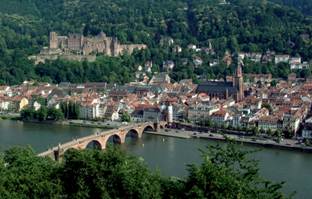
|
The Lithuanian school in the Rennhof Manor, Lampertheim-Hüttenfeld
By that time, however, it was becoming apparent that Lithuania was likely to remain occupied for the foreseeable future. Lithuanian refugees began to leave war-ravaged Germany. Most emigrated to distant countries—foremost among them the United States, Canada, and Australia. In the wake of their departure, most of these schools were shuttered. But approximately 8,000 Lithuanians chose to remain in Germany. In 1950, Germany’s Lithuanian Community established a single high school for Lithuanian students. The high school was founded in Diepholz—the site of a displaced persons camp where many Lithuanians had lived since the end of the war. In 1954, the Lithuanian Community acquired Rennhof Manor House with its twelve-acre park in the town of Lampertheim-Hüttenfeld. The school was relocated there. Throughout Lithuania’s 50-year struggle for independence from Soviet rule, the Lithuanian High School promoted engagement with Lithuania as well as support for dissidents fighting for freedom and human rights behind the Iron Curtain. With the advent of the reform movement Sąjūdis in the mid-1980s, the Lithuanian High School became an increasingly important conduit for ideas and support for reforms that led to Lithuanian independence in 1990. Following the reestablishment of independence, the school continued to serve as a cultural center for Lithuanians in Western Europe and a bridge between Lithuania and the West, providing an opportunity for the children of Lithuanian expatriates to integrate without losing their Lithuanian identity. Receiving full state accreditation in 1999, the Lithuanian High School remains the only full-time Lithuanian educational institution in Western Europe. The Rennhof Manor in Lampertheim-Hüttenfeld has a unique position for Lithuanians, harbouring numerous Lithuanian organizations, which has figured as the centre of Lithuanian émigré community life in Western Europe since 1953. Go to the school’s website to learn more about the school: http://gimnazija.de To learn about other Lithuanian youth activities in Germany, go to: http://www.pljs.org/category/english
|
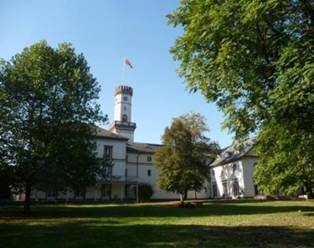
Frankfurt am Main – where EU’s financial decisions are made...
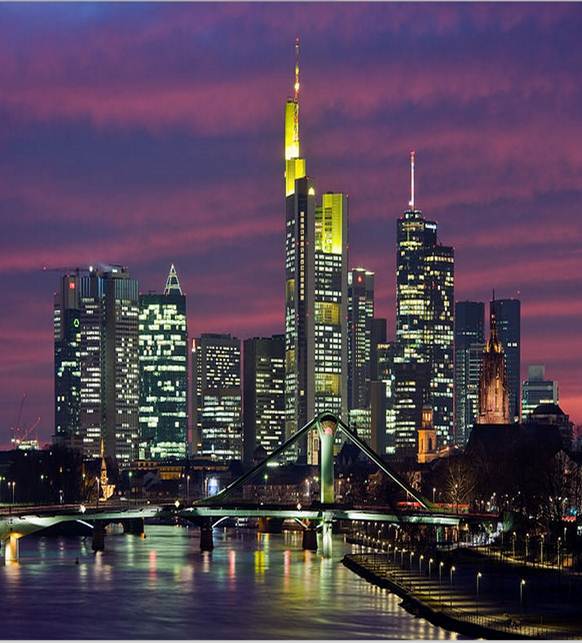
The European Central Bank is the institution of the European Union (EU) that administers the monetary policy of the 17 EU Eurozone member states. It is thus one of the world's most important central banks. The bank was established by the Treaty of Amsterdam in 1998, and is headquartered here in Frankfurt.
Frankfurt am Main, commonly known simply as Frankfurt, is the largest city in the German state of Hesse and the fifth-largest city in Germany, with a 2010 population of almost 700,000. The urban area had an estimated population of 2,300,000 in 2010. The city is at the centre of the larger Frankfurt Rhine-Main Metropolitan Region which has a population of 5,600,000 and is Germany's second-largest metropolitan region.
Frankfurt is the financial and transportation centre of Germany and the largest financial centre in continental Europe. It is seat of the European Central Bank, the German Federal Bank, the Frankfurt Stock Exchange and the Frankfurt Trade Fair, as well as several large commercial banks, e.g. Deutsche Bank, Commerzbank and DZ Bank. Frankfurt Airport is one of the world's busiest international airports, Frankfurt Central Station is one of the largest terminal stations in Europe, and the Frankfurter Kreuz is one of the most heavily used Autobahn interchanges in Europe. Frankfurt lies in the former American Occupation Zone of Germany, and it was formerly the headquarters city of the U.S. Army in Germany.
Frankfurt is considered an alpha world city as listed by the Loughborough University group's 2010 inventory, was ranked 20th among global cities by Foreign Policy's 2010 Global Cities Index and was ranked 6th among global cities for economic and social innovation by the 2thinknow Innovation Cities Index in 2010.
Frankfurt is an international centre for commerce, finance, culture, transport, education, and tourism. According to the Mercer cost of living survey, Frankfurt is Germany’s second most expensive city, and the 48th most expensive in the world. Frankfurt also ranks among the 10 most livable cities in the world according to Mercer Human Resource Consulting.
|
|
Bonn – the post-war capital of West Germany Bonn was the capital of West Germany from 1949 to 1990 and the official seat of government of united Germany from 1990 to 1999. Starting in 1998, many national government institutions were moved from Bonn to Berlin. Roughly half of all government jobs were retained as many government departments remained in Bonn and numerous sub-ministerial level government agencies relocated to the former capital from Berlin and other parts of Germany. Bonn has developed into a hub of international cooperation in particular in the area of environment and sustainable development. Bonn The Poppelsdorfer Schloss (picture), in which there is the “Mineralogisch-Petrologische Museum” today. |
|
|
Cologne – not only perfume Cologne is Germany's fourth-largest city, and is the largest city both in the Germany Federal State of North Rhine-Westphalia and within the Rhine-Ruhr Metropolitan Area, one of the major European metropolitan areas with more than ten million inhabitants. Cologne Cathedral (Kölner Dom) is the city's most famous monument and the Cologne residents' most respected landmark. It is a Gothic church, started in 1248, and completed in 1880. Eau de Cologne, “Water of Cologne”, is a toiletry, a perfume in a style that originated from Cologne. As of today cologne is a blend of extracts, alcohol, and water. Colognes are used by men and women but are generally marketed to men as an alternative to perfume. |
|
|
Bremen – go sailing or fishing! Bremen is a Hanseatic city in north-western Germany. A commercial and industrial city with a major port on the river Weser, Bremen is part of the Bremen-Oldenburg metropolitan area (2.4 million people). Bremen is the second most populous city in North Germany and tenth in Germany. With Bremerhaven right on the mouth the two comprise the state of Bremen. The Bremen Ports are among the most important universal harbours of Europe. The air of a seafaring port bursts from every corner of the busy but young seaport, which offers a range of attractions along miles of waterfront promenades, in generous areas of parkland and on the scenic River Geeste. |
|
|
Hamburg – the cosmopolitan Hansa town Hamburg is the second-largest city in Germany and the seventh-largest city in the European Union. The city is home to over 1.8 million people, while the Hamburg Metropolitan Region has more than 4.3 million inhabitants. Situated on the river Elbe, the port of Hamburg is the third-largest port in Europe and it is among the twenty largest in the world. Hamburg's official name is the Free and Hanseatic City of Hamburg. It reflects Hamburg's history as a member of the medieval Hanseatic League, as a free imperial city of the Holy Roman Empire, and also the fact that Hamburg is a city-state and one of the sixteen States of Germany. Hamburg is a major transport hub in Northern Germany and is one of the most affluent cities in Europe. Wehave arrived at Hamburg, the world's leading Hanseaticcity.This is aremarkable, powerful metropolis that alsoclearly display sits traditional past in contact with the North Sea and Baltic Sea. This is also the place to go for tasty North-European seafood... |
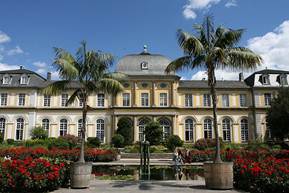
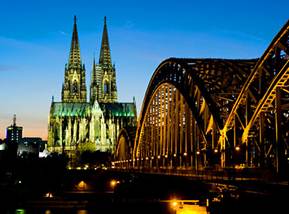
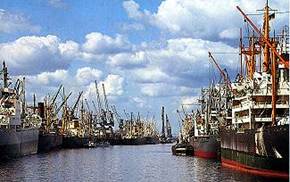
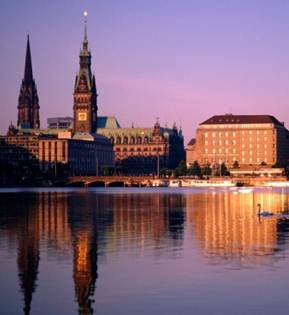
Quedlinburg – where the name Lithuania was first mentioned
|
We leave Hamburg, drive south-east, to Quendlinburg, a small town of about 23,000 inhabitants, near the Harz Mountains in Germany’s western Saxon-Anhalt, virtually the heart of Germany. This town is a treasure which is rapidly evolving into a prime tourist attraction, particularly for non-Germans. And Lithuanians are first in the queue! A rare combination of ancient, medieval and modern historical and artistic treasures are making it a "must" for visitors, much as Rothenburg, Trier, Lübeck and other German historical gems. Unlike the others, such as Aachen, where Charlemagne (Karl der Grosse) held sway over the Franks,Quedlinburg is the birthplace of a Nation. For it was here in 919 A.D. that a Diet of noble ducal peers elected a German King, the Saxon Duke Heinrich, monarch of Germany-everything--, rather than merely a ruler of a local domain such as Bavarian or Rhenish or Hessian lands. And this first hegemony extended for more than three centuries until Germany dissolved into almost 300 tiny city-states, provinces and squabbling communities, only to be reunited in 1871. |
|
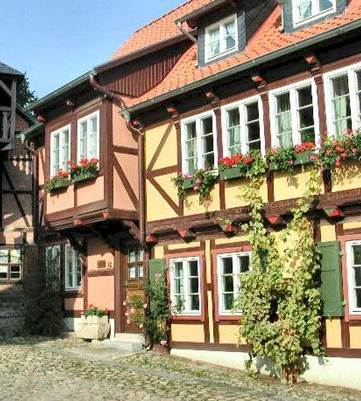
|
The first written occurrence of the name LITHUANIA has been traced to the Annals from Quedlinburg Abbey, dated to 9 March year 1009 "Sanctus Bruno, qui cognominatur Bonifacius, archiepiscopus et monachus, XI suae conversionis anno in confinio Ruscia et Litua a paganis capite plexus, cum suis XVIII, VII. Id. Martii petiit coelos."
The Annals of Quedlinburg were written between 1008 and 1030 in the convent of Quedlinburg Abbey. In recent years a consensus has emerged that the annalist was a woman. The annals are mostly dedicated to the history of the Holy Roman Empire; they also contain the first written mention of the name of Lithuania ("Litua"), dated to 1009. The original document has disappeared, surviving only as a 16th-century copy held in Dresden, but its contents endure as a scholarly resource. The city of Quedlinburg, Germany, was first mentioned in writing in a document dated to 922. Saint Mathilda founded a religious community for women at its abbey, serving as abbess from 966 to 999. The abbey became a premier educational institution for the female nobles of Saxony, and maintained its mission for nearly 900 years. The city served as an imperial palatinate of the Saxon emperors, where Henry the Fowler, the founder of the Ottonian dynasty, was buried. Quedlinburg was situated not far from Magdeburg, the Royal Assembly of the empire, and its annalists could therefore rely on genuine information from the royal house and obtain eyewitness accounts.The city lost some stature under the rule of Henry II, who broke with the tradition of celebrating Easter there; the Annals portray him unfavorably, and demonstrate the extent to which a royal monastery was entitled to criticize its monarch. The Annals open with a chronicle of world history from the time of Adam to the Third Council of Constantinople in 680-681, based on chronicles by Jerome, Isidore, and Bede. The narrative is largely borrowed from multiple older sources until the year 1002, although original reports from as early as 852 are present. Beginning in 993, the narrative begins including events which represent the annalist's own eyewitness testimony concerning events at and around Quedlinburg. The amount of detail increases significantly from 1008 onwards, leading some analysts to conclude that 1008 was the actual date that the Annals were first compiled, although Robert Holzman argues for a start date of 1000. It has been suggested that the annalist temporarily abandoned the project between 1016 and 1021. The exact reasons for this suspension of the work are unknown. Work on the project continued between 1021 and 1030, when its authors were able to report a military victory against Mieszko II. The primary task of the annalists was to record the heritage of the Ottonian dynasty and of Quedlinburg itself. The Annals incorporate the stories of a number of historic and legendary figures such as Attila the Hun, King Dietrich of the Goths, and others. The historian Felice Lifshitz has suggested that amount of saga material integrated into its narrative is without parallel. The Annals of Quedlinburg became an important research source; during the 12th century they were used at least by five contemporary historians. Felice Lifshitz asserts that the Annals of Quedlinburg played a key role in shaping the ways in which influential Germans of the nineteenth and twentieth centuries saw their medieval past. They continue to be analyzed in other contexts: by scholars of Beowulf discussing its use of the term Hugones to mean Franks, by climatologists, and in a book discussing fear of the millennium. The first written occurrence of Lithuania's name has been traced to the Quedlinburg Annals and dated to 9 March 1009.The passage reads: "Sanctus Bruno, qui cognominatur Bonifacius, archiepiscopus et monachus, XI suae conversionis anno in confinio Ruscia et Litua a paganis capite plexus, cum suis XVIII, VII. Id. Martii petiit coelos." "[In 1009] St. Bruno, an archbishop and monk, who was called Boniface, was struck in the head by Pagans during the 11th year of this conversion at the Rus and Lithuanian border, and along with 18 of his followers, entered heaven on March 9th." From other sources that describe Bruno of Querfurt, it is clear that this missionary attempted to Christianize the pagan king Netimer and his subjects. However, Netimer's brother, refusing to accept Christianity, killed Bruno and his followers. The historian Alfredas Bumblauskas has suggested that the story records the first baptismal attempt in the history of Lithuania. Quedlinburg Abbey was a house of secular canonesses in Quedlinburg, Saxony-Anhalt, Germany. It was founded in 936 on the initiative of Saint Mathilda, the widow of Henry the Fowler, as his memorial. For many centuries it enjoyed great prestige and influence. Quedlinburg Abbey was founded on the castle hill of Quedlinburg in the present Saxony-Anhalt in 936 by Otto I, Holy Roman Emperor, at the request of his mother Queen Matilda, later canonised as Saint Matilda, in honour of her late husband, Otto's father, King Henry the Fowler, and as his memorial. Henry was buried here, as was Matilda herself. The "Kaiserlich freie weltliche Reichsstift Quedlinburg" ("Free secular Imperial abbey of Quedlinburg"), as its full style was until its dissolution in 1802, consisted of a proprietary church of the Imperial family to which was attached a college of secular canonesses (Stiftsdamen), a community of the unmarried daughters of the greater nobility and royalty leading a godly life. Thanks to its Imperial connections the new foundation attracted rich endowments and was soon a wealthy and thriving community. Ecclesiastically, the abbess was exempt from the jurisdiction of her diocesan, the Bishop of Halberstadt, and subject to no superior except the Pope. The bishops of Halberstadt were constantly engaged in dispute with the abbesses, as they claimed to have spiritual jurisdiction over the abbey in virtue of subjection of women to men. In her political relations, the abbess was a princess of the Holy Roman Empire, entitled to seat in the College of Princes and a vote at the Diets. During the Reformation the abbey became Protestant, under Abbess Anna II (Countess of Stolberg). After the German Mediatisation of 1803 the abbey was taken over by the Kingdom of Prussia as the Principality of Quedlinburg.
|
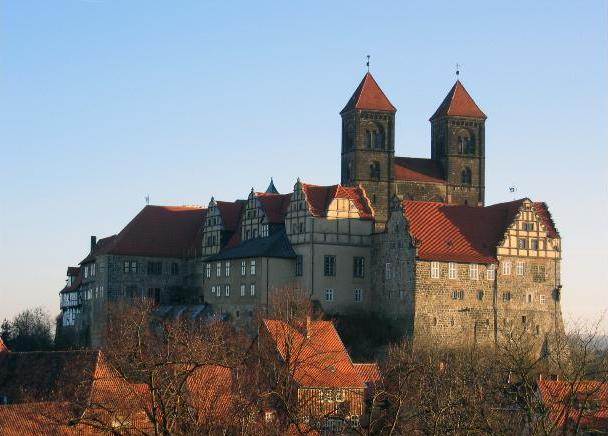
Magdeburg – the city that set rules for Lithuanian towns
|
There is more Lithuanian related history traces here in this area of Germany. We go to Magdeburg, the largest city and the capital city of the Bundesland of Saxony-Anhalt, Germany. Magdeburg is situated on the Elbe River and was one of the most important medieval cities of Europe. Emperor Otto I, the first Holy Roman Emperor, lived for most of his reign in the town and was buried in the cathedral after his death. Magdeburg's version of German town law, known as Magdeburg rights, spread throughout Central and Eastern Europe. The city is also well known for the 1631 Sack of Magdeburg, which hardened Protestant resistance during the Thirty Years' War. Nowadays Magdeburg is a traffic junction as well as an industrial and trading centre, with a population more than 230 000. The production of chemical products, steel, paper and textiles are of particular economic significance, along with Mechanical engineering and plant engineering, Ecotechnology and life-cycle management, Health management and Logistics. Along with ten other cities in Saxony-Anhalt, Saxony and Thuringia, Magdeburg is a member of the Central German Metropolitan Region. |
|
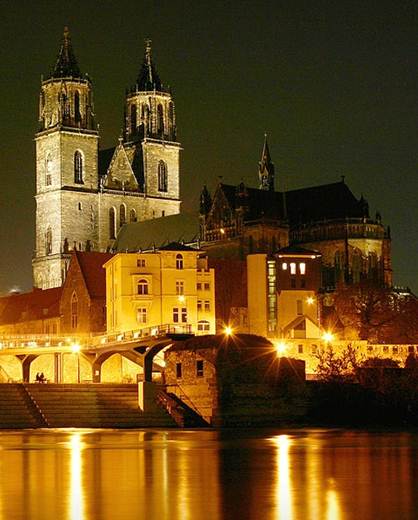
|
Vilnius was granted Magdeburg rights on the 22nd of March 1387 |
||
|
On February 22nd, he ordered all Lithuanians to accept the Catholic faith. Soon thereafter, he also established the first 7 parishes. The christening of Lithuania proved to be a tremendous social upheaval, even though Lithuania with her Pagan faith already exhibited the most important elements of civilisation, including brick architecture and writing. The Pagan Dukes were as advanced, as to go on military manoeuvres bringing a personal office with them. For example, the travelling bag of Skirgaila, which fell into the hands of the Crusaders in 1385, was found to contain "Ruthenian privileges sealed in lead." On the 22nd of March 1387, Jogaila granted Magdeburg Rights to the Lithuanian capital Vilnius. Kaunas was granted Magdeburg Rights by Grand Duke Vytautas the Great in 1408, Trakai in 1409. |
Leipzig
Leipzig is, along with Dresden, one of the two largest cities in the federal state of Saxony, Germany. Both have a population of about 525,000. Leipzig is situated about a hundred miles south of Berlin at the confluence of the Weisse Elster, Pleisse and Parthe rivers at the southerly end of the North German Plain.
Leipzig has always been a trade city, situated during the time of the Holy Roman Empire at the intersection of the Via Regia and Via Imperii, two important trade routes. At one time, Leipzig was one of the major European centres of learning and culture in fields such as music and publishing. After World War II, Leipzig became a major urban centre within the Communist German Democratic Republic but its cultural and economic importance declined.
Leipzig later played a significant role in instigating the fall of communism in Eastern Europe, through events which took place in and around St. Nicholas Church. Since the reunification of Germany, Leipzig has undergone significant change with the restoration of some historical buildings, the demolition of others, and the development of a modern transport infrastructure. Leipzig has many institutions and opportunities for culture and recreation including a football stadium which has hosted some international matches, an opera house and a zoo.
In 2010 Leipzig was included in the top 10 of cities to visit by the New York Times.
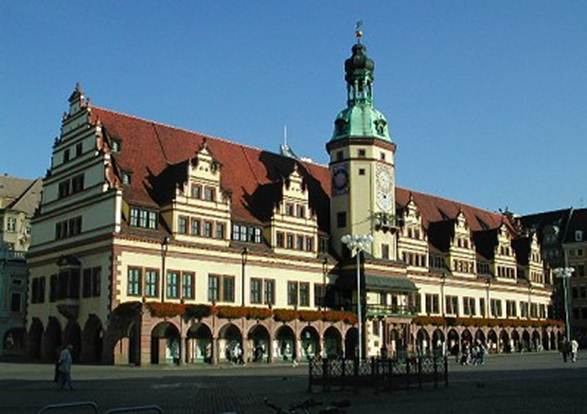
The Old Townhall of Leipzig is one of the most important Renaissance buildings in Germany.
It was constructed in just nine month in 1556/57 under the direction of the Leipzig architect
Hieronymus Lotter.
|
Lithuania’s national painter and composer, Mikolajus K. Čiurlionis, studied here in Leipzig 1901-1902 |
|
|
Čiurlionis studied composition under Professor Carl Reinecke and counterpoint under Salomon Jadassohn at the Leipzig Conservatoire in 1901-1902. As an external student he attended lectures in aesthetics, history and psychology. He listened to his favourite compositions by Handel, Tchaikovsky, Wagner and Liszt at the Gewandhaus and Leipzig Theatre. He studied independently orchestration of Berlioz and R. Strauss compositions at the library of C.F. Peters’ publishing house. During his Leipzig period, he composed the symphonic overtureKęstutis, a string quartet in four movements, canons and fugues including Sanctus and Kyrie for mixed choir. During his vacations he did some drawing.
|
|
|
Dresden Dresden is the capital city of the Free State of Saxony in Germany. It is situated in a valley on the River Elbe, near the Czech border. The Dresden conurbation is part of the Saxon Triangle metropolitan area. Dresden has a long history as the capital and royal residence for the Electors and Kings of Saxony, who for centuries furnished the city with cultural and artistic splendour. The city was known as the Jewel Box, because of its baroque and rococo city centre. A controversial Allied aerial bombing towards the end of World War II killed thousands of civilians and destroyed the entire city. The impact of the bombing and 40 years of urban development during the East German communist era have considerably changed the face of the city. Some restoration work has helped to reconstruct parts of the historic inner city, including the Katholische Hofkirche, the Semper Oper and the Dresdner Frauenkirche. Since the German reunification in 1990, Dresden has regained importance as one of the cultural, educational, political and economic centres of Germany, with a population of more than half a million. Dresden in the 20th century was a leading European centre of art, classical music, culture and science until its complete destruction on 13 February 1945. Being the capital of the German state of Saxony, Dresden had not only garrisons but a whole military borough, the Albertstadt. This military complex, named after Saxon King Albert, was never targeted in the bombing of Dresden. |
|
|
|
|
|
During the final months of World War II, Dresden became a safe haven to some 600,000 refugees, including women, children, and wounded soldiers, with a total population of 1.2 million. Dresden was attacked seven times between 1944 and 1945, and was occupied by the Red Army after German capitulation. The bombing of Dresden by the Royal Air Force and the United States Army Air Force between 13 February and 15 February 1945 remains one of the more controversial Allied actions of the Western European theatre of war. The inner city of Dresden was largely destroyed by 722 RAF and 527 USAAF bombers that dropped 2431.0 tons of high explosive bombs, and 1475.9 tons of incendiaries.The high explosive bombs damaged buildings and exposed their wooden structure, while the incendiaries ignited it. The bombing raid destroyed the 500 year-old Cathedral, along with almost all of the ancient centre of the city. The German Dresden Historians' Commission, in an official 2010 report published after five years of research, concluded there were up to 25,000 civilian casualties, while right-wing groups claim that up to 500,000 people died. |
|
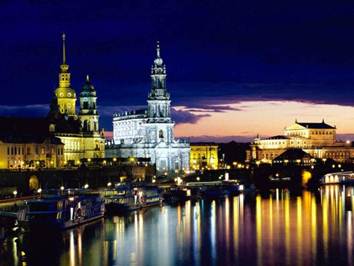
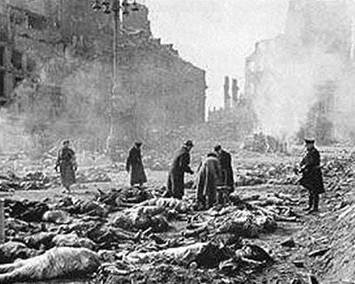
|
Lithuanian war refugees in Germany after World War II
In the summer and autumn of 1944 thousands of Lithuanian refugees left their homeland ahead of the advancing Soviet Army and headed West. The overwhelming majority chose to flee not because they had collaborated with the Germans, and thus feared retribution, but because they had directly experienced the horrors of the first Soviet occupation (1940-41) and did not anticipate that the second occupation would be better. They fled, however, with every hope and intention of returning home after the defeat of Nazi Germany, but by 1951 the majority had emigrated to the Anglo-Saxon countries or to Latin America. At the end of World War II there were approximately 60,000 Lithuanians in Western Europe. From this number nearly 50,000 were refugees who fled in 1944. The remaining 10,000 consisted of individuals who had been liberated from Nazi concentration camps, those who had repatriated to Germany at the beginning of the war, single young men and women who were forcibly taken to Germany for work, and prisoners of war (most were forcibly conscripted into the German Army). Obviously a considerably larger number of Lithuanians left Lithuania in the second half of 1944 than the number mentioned. Many were trapped by the rapidly advancing Red Army in Poland and East Germany. Their actual number and their fate remain unknown. The end of hostilities brought a sense of relief to most of the Europeans, but not to the Lithuanian and other Baltic refugees. Because of the incorporation of the Baltic States into the Soviet Union, their political status was not clear, and many Baits feared and suspected that they were in danger of being forcibly repatriated to the Soviet Union. This sense of uncertainty was evident in the Lithuanian refugee publications, as in the following: "The Lithuanians who had suffered so much do not have a free country to return to. Nor is their present position in any way secure, nor is there a guarantee that the Americans and the English will not betray them to a new slavery." Such fears were not unfounded. Read more at http://www.lituanus.org/1983_2/83_2_03.htm Here some VilNews stories about Lithuanian refugees in post-war Germany: |
|||
|
|
|
|
|
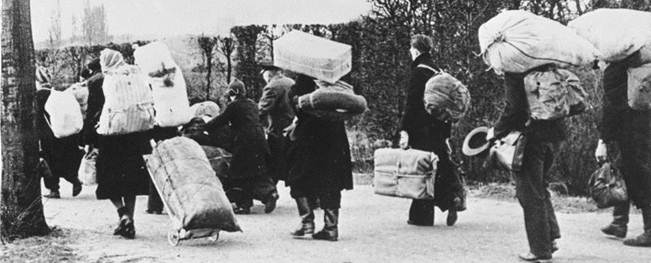
Berlin
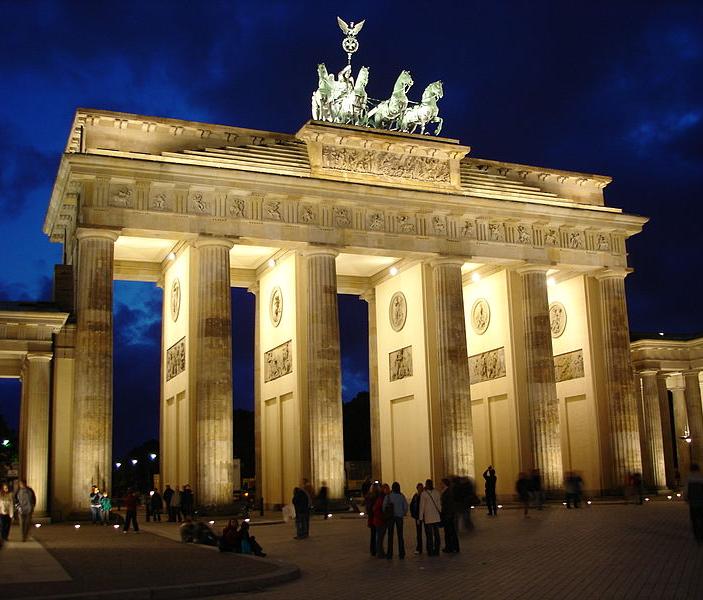
Berlin’s famous Brandenburg Gate.
Berlin is the capital city of Germany and one of the 16 states of Germany. With a population of 3.45 million people, Berlin is Germany's largest city. It is the second most populous city proper and the seventh most populous urban area in the European Union. Located in north-eastern Germany, it is the centre of the Berlin-Brandenburg Metropolitan Region, which has 4.4 million residents from over 190 nations. Located in the European Plains, Berlin is influenced by a temperate seasonal climate. Around one third of the city's area is composed of forests, parks, gardens, rivers and lakes.
First documented in the 13th century, Berlin was the capital of the Kingdom of Prussia (1701–1918), the German Empire (1871–1918), the Weimar Republic (1919–1933) and the Third Reich (1933–1945). Berlin in the 1920s was the third largest municipality in the world. After World War II, the city became divided into East Berlin—the capital of East Germany—and West Berlin, a West German exclave surrounded by the Berlin Wall (1961–1989). Following German reunification in 1990, the city regained its status as the capital of Germany, hosting 147 foreign embassies.
Berlin is a world city of culture, politics, media, and science. Its economy is primarily based on the service sector, encompassing a diverse range of creative industries, media corporations, and convention venues. Berlin also serves as a continental hub for air and rail transport, and is a popular tourist destination. Significant industries include IT, pharmaceuticals, biomedical engineering, biotechnology, electronics, traffic engineering, and renewable energy.
Berlin is home to renowned universities, research institutes, orchestras, museums, and celebrities, as well as host of many sporting events. Its urban settings and historical legacy have made it a popular location for international film productions. The city is well known for its festivals, diverse architecture, nightlife, contemporary arts, public transportation networks and a high quality of living.
Most famous attractions of Berlin

Alexanderplatz
Layer upon layer of Berlin’s urban history is located in Alexanderplatz, interweaving centuries of social, political, and architectural history and repeatedly the subject of public debate and urban design competitions.more»

Berliner Dom
The Berliner Dom (Berlin Cathedral), completed in 1905, is Berlin’s largest and most important Protestant church as well as the sepulchre of the Prussian Hohenzollern dynasty.more»
Friedrichstadt-Palast

Experience Berlin's biggest Show in Europe's largest Show Palace, "Yma - too beautiful to be true". Can you fall in love with a show? Yes, with this one, you can.more»

Brandenburger Tor
The Brandenburg Gate is one of Berlin’s most important monuments – a landmark and symbol all in one with over two hundred years of history.more»

Checkpoint CharlieCheckpoint Charlie, along with Glienicker Brücke (Glienicker Bridge) was the best known border-crossing of Cold War days.more»
|
The fall of the Berlin Wall in 1989
|
||
|
Berlin had been politically divided since the end of World War II, with the eastern portion of the city serving as the capitol of German Democratic Republic. The two parts of the city were physically divided in 1961 with the construction of the Berlin Wall, the most visible expression of the Cold War. When the Berlin Wall was opened on November 9, 1989 it marked for many the symbolic end of that war. To find the cause of the fall of the Berlin Wall, one must look, not in Germany, but in the Soviet Union. The change began when Mikhail Gorbachev came to power in the Soviet Union in 1985. He tried to make changes in the state bureaucracy and in the Communist party by restructuring the economy’s production and distribution system, a plan now known as perestroika. In addition, Gorbachev also allowed for the policy of glasnost, or public criticism of the communist party. Gorbachev’s reform contributed to the breakup of the centralized structure of the USSR. During this time some states such as Latvia, Estonia and Lithuania declared their independence. In 1989, Gorbachev shifted his policies toward the satellite states of the communist block in Eastern Europe, including Germany. In effect, the politics in Germany also began to lead toward the destruction of the wall. In the fall of 1989, there was an antigovernment demonstration in East Germany. In mid-October 1989, the Politburo forced the resignation of Erich Honecker, the leader of the GDR (German Democratic Republic). In this way, Erich Honecker was ousted from office, and others soon followed. By the first week of November, the entire Politburo and all of the members of the East German cabinet resigned.The new Prime minister, Hans Modrow, announced plans to decentralize the economy and an easing of travel restrictions. This allowed the East Germans, from the communist sector, to cross the border into the west, the Allied sector. At this point, East Germany began to reform. Then on November 9, 1989, the leader of the East Berlin communist party, Gunter Schabowski, announced that the border with West Berlin would be opened for "private trips abroad." Masses of people started to use hammers and chisels to knock out pieces of the wall. Shortly thereafter, on November 10, 1989 and later on December 22, 1989 checkpoints were opened at Potsdamer Platz and the Brandenberg Gate. On March 18, 1990, free elections in East Germany took place for the first time in 58 years.By July 1, 1990, the wall tumbled down and Germany was completely united. As a result, a massive emigration from East to West began, which has left economic and emotional scars that can only be healed by the hard work and understanding of generations to come. But on the day that the wall fell will stand out in all of history, as a day when friends and family and an entire nation were reunited, while tears of joy were being shed by all.
The wall came down in 1989
|
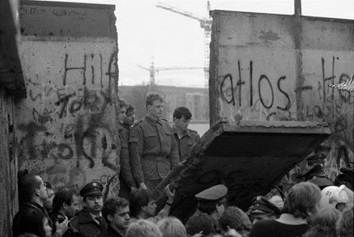
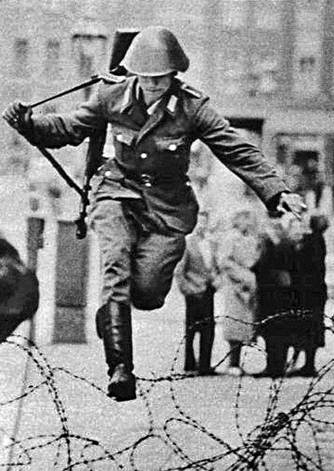
- Bookmark :
- Digg
- del.icio.us
- Stumbleupon
- Redit it
- Posted by - (1) Comment
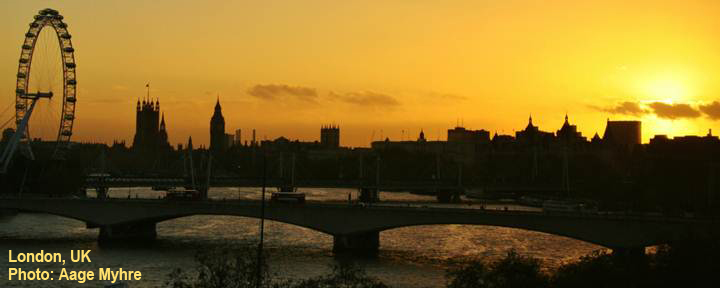


EXPLORING EUROPE (4 of 10)
From Strasbourg to
Benelux and England
Tour guide, writer and photographer: Aage Myhre
aage.myhre@VilNews.com
|
VilNews is on its way around Europe!
|
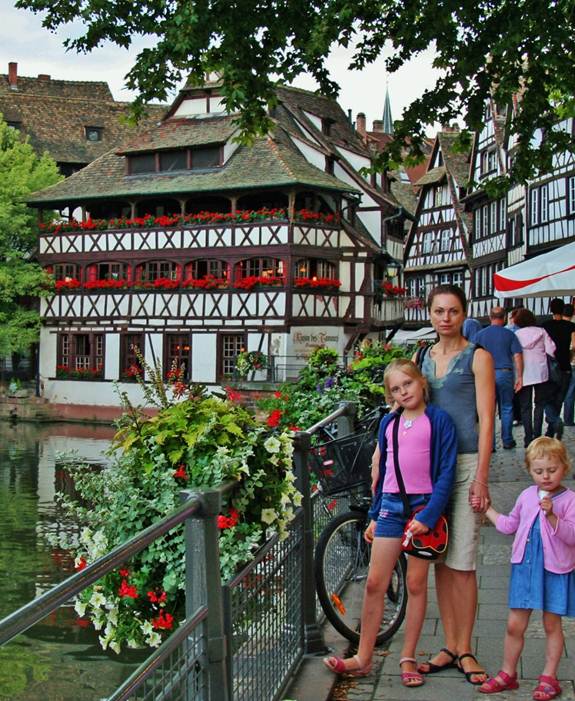
|
|
Strasbourg and Alsace |

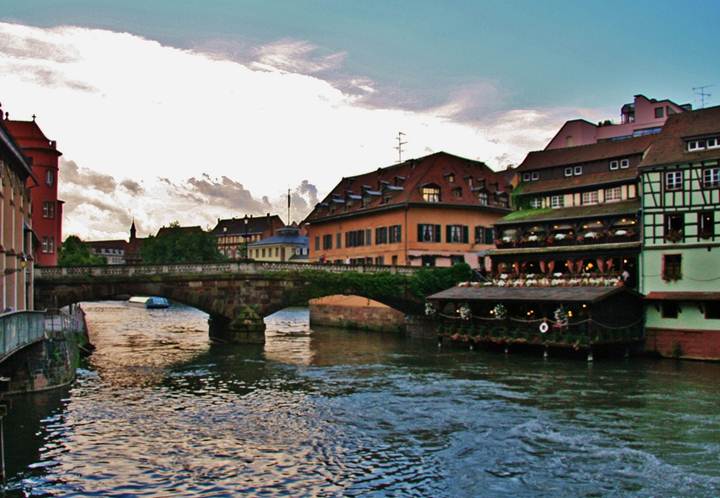
Strasbourg centre is built on an island. Fantastic waterways, excellent riverside restaurants...
Photo: Aage Myhre
Getting to Strasbourg is for me like coming home. It was here I lived one year to study architectural psychology in the 1980s at Université Louis Pasteur, after my architect studies back home in Norway. Strasbourg is an architectural gem, and a city full of life, sounds, smells ... Fantastic food, good wine, good beer. The best of German and French culture in perfect harmony. This is a city I love!
Strasbourg is the capital and principal city of the Alsace region in eastern France and is the official seat of the European Parliament. Located close to the border with Germany, it is the capital of the Bas-Rhin département. The city and the region of Alsace are historically German-speaking, explaining the city's Germanic name. In 2006, the city proper had 272,975 inhabitants and its urban community 467,375 inhabitants. With 638,670 inhabitants in 2006, Strasbourg's metropolitan area (aire urbaine) (only the part of the metropolitan area on French territory) is the ninth largest in France. The transnational Eurodistrict Strasbourg-Ortenau had a population of 884,988 inhabitants in 2008.
Strasbourg is the seat of several European institutions, such as the Council of Europe (with its European Court of Human Rights, its European Directorate for the Quality of Medicines and its European Audiovisual Observatory) and the Eurocorps, as well as the European Parliament and the European Ombudsman of the European Union. The city is the seat of the Central Commission for Navigation on the Rhine.
Strasbourg's historic city centre, the Grande Île (Grand Island), was classified a World Heritage site by UNESCO in 1988, the first time such an honour was placed on an entire city centre. Strasbourg is fused into the Franco-German culture and although violently disputed throughout history, has been a bridge of unity between France and Germany for centuries, especially through the University of Strasbourg, currently the largest in France, and the coexistence of Catholic and Protestant culture.
Economically, Strasbourg is an important centre of manufacturing and engineering, as well as of road, rail, and river communications. The port of Strasbourg is the second largest on the Rhine after Duisburg, Germany. In terms of city rankings, Strasbourg has been ranked third in France and 18th globally for innovation.
The Strasbourg Cathedral is 142 m high
Strasbourg Cathedral or the Cathedral of Our Lady of Strasbourg is a Roman Catholic cathedral. Although considerable parts of it are still in Romanesque architecture, it is widely considered to be among the finest examples of high, or late, Gothic architecture. Erwin von Steinbach is credited for major contributions from 1277 to his death in 1318. At 142 metres (466 feet), it was the world's tallest building from 1647 to 1874, when it was surpassed by St. Nikolai's Church, Hamburg. Today it is the sixth-tallest church in the world. Described by Victor Hugo as a "gigantic and delicate marvel", and by Goethe as a "sublimely towering, wide-spreading tree of God", the cathedral is visible far across the plains of Alsace and can be seen from as far off as the Vosges Mountains or the Black Forest on the other side of the Rhine. Sandstone from the Vosges used in construction gives the cathedral its characteristic pink hue.
The European Parliament is situated in Strasbourg
|
|
|
|
|
Strasbourg is the official seat of the European Parliament. The institution is legally bound to meet there twelve sessions a year lasting about four days each. Other work takes place in Brussels and Luxembourg City. Also all votes of the European Parliament must take place in Strasbourg. "Additional" sessions and committees take place in Brussels. Although de facto a majority of the Parliament's work is now geared to its Brussels site, but it is legally bound to keep Strasbourg as its official home. The Parliament's buildings are located in the Quartier Européen (European Quarter) of the city, which it shares with other European organisations which are separate from the European Union's. Previously the Parliament used to share the same assembly room as the Council of Europe. Today, the principal building is the Louise Weiss building (left), inaugurated in 1999. |
|
|
|
Lithuanian members in the European Parliament – they are there for you!
|
|
Laima Liucija ANDRIKIENĖ |
|
|
Zigmantas BALČYTIS |
|
|
Vilija BLINKEVIČIŪTĖ |
|
|
Leonidas DONSKIS |
|
|
Juozas IMBRASAS |
|
|
Vytautas LANDSBERGIS |
|
|
Radvilė MORKŪNAITĖ-MIKULĖNIENĖ |
|
|
Rolandas PAKSAS |
|
|
Justas Vincas PALECKIS |
|
|
Algirdas SAUDARGAS |
|
|
Valdemar TOMAŠEVSKI |
|
|
Viktor USPASKICH |


Alsace – the land of amazingly aromatic white wines...
The eastern side of the river Rhine south of Strasbourg is German territory. On the western side lies Alsace. My favourite town here is Riquewihr, a romantic little medieval town at the foothills of the Vosges Mountains. This is the village of wine. Not far away are the picturesque towns of Colmar, Ribeauvillé, Hunawihr, Eguisheim and Kaysersberg. Alsace has changed between being German and French five times since the 1800s. The unique combination of history, culture, nature, food and wine makes Alsace one of Europe's most attractive destinations.
The name "Alsace" can be traced back to the Old High German Ali-saz or Elisaz, meaning "foreign domain". An alternative explanation derives it from a Germanic Ell-sass, meaning "seated on the Ill", a river in Alsace. The region was historically part of the Holy Roman Empire. It was gradually annexed by France in the 17th century under kings Louis XIII and Louis XIV and made one of the provinces of France. Alsace is frequently mentioned in conjunction with Lorraine, because German possession of parts of these two régions (as the imperial province Alsace-Lorraine, 1871–1918) was contested in the 19th and 20th centuries, during which Alsace changed hands four times between France and Germany in 75 years. Although the historical language of Alsace is Alsatian, today all Alsatians speak French, the official language of France. About 39% of the adult population, and probably less than 10% of the children, are fluent in Alsatian. There is therefore a substantial bilingual population in contemporary Alsace.
The fantastic Alsace wines, which for historical reasons have a strong Germanic influence, are produced under three different Appellations d'Origine Contrôlées (AOCs): Alsace AOC for white, rosé and red wines, Alsace Grand Cru AOC for white wines from certain classified vineyards and Crémant d'Alsace AOC for sparkling wines. Both dry and sweet white wines are produced, and are often made from aromatic grapes varieties. Along with Austria and Germany, it produces some of the most noted dry Rieslings in the world, but on the export market, Alsace is perhaps even more noted for highly aromatic Gewürztraminer wines.
Riquewihr is the most romantic...
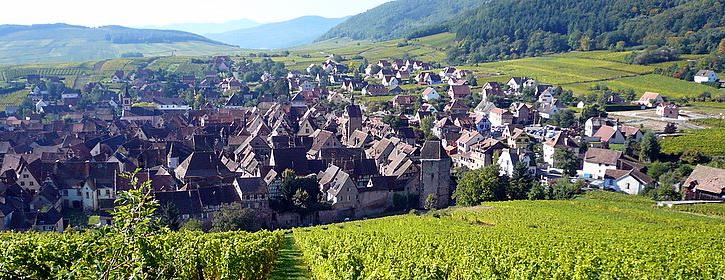
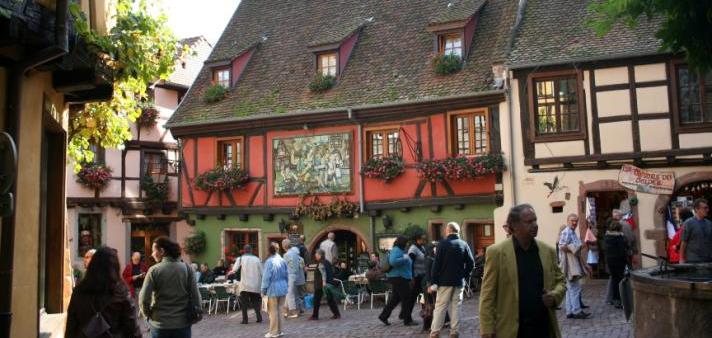
The wine village Riquewihr is the most romantic medieval city in Alsace, hidden among vineyards and the Vosges mountains. Riquewihr looks today more or less as it did in the 16th century.
|
Want to get a taste of Alsace in Vilnius?
|
|
From Choucroute to Madame Tussauds Place Gutenberg is one of my favourite squares in Strasbourg. Here I sit a beautiful autumn day, behind the glass windows of one of the many restaurants around the square. I eat ‘Choucroute (sauerkraut)', an Alsatian specialty consisting of salt pork, sausages, cabbage and potatoes. With a lot of mustard – and a large tankard of beer from the Kronenbourg brewery in the city outskirts, established in 1664. Johann Gutenberg (1398-1468), the man who is credited with the invention of the printing art, lived here in Strasbourg for 10 years. But his first printing press he built after moving from here, back to his hometown Mainz in Germany. Without Gutenberg, Martin Luther hardly been able to implement his reformation plans 150 years later. At least not with such far-reaching effects. |
|
|
|
I had long planned a journey to England. So here I sit. Reading. I find that the very symbol of London, wax queen Marie Tussaud (1761-1850) was born under the name Anna Maria Grosholtz here in Strasbourg. Soon I follow in her footsteps to London where her wax museum had its modest beginnings in 1835. Fun to drive on the other side of the road, I think when we drive up from the ferry port of Dover. We come to London, the city you simply can never get tired of. We visit Cambridge and Oxford. Seeing two of theworld's leading student cities. Watching a student rowing competition. Proceed to the 'Lake District' and to Liverpool. Green, rolling hills outside the car windows. We like the English. But not their food so much. |
|
|
|
Trier – where witches were burned
|
|
|
A common witch-hunting method was ‘swimming’ or ‘ducking’, whereby the accused was tied hand and foot and immersed in deep water. If the accused witch floated, the water (God’s creature) had rejected her and she was deemed guilty; if she sank (and drowned), she was deemed innocent. The accused could also be pricked all over with a sharp instrument (known as “pricking”) in the search for insensitive spots where the Devil had (visibly or invisibly) marked them. Other, more traditional, tortures were also used to elicit confessions and accusations against accomplices, including thumbscrews, leg vices, whipping stocks with iron spikes, scalding lime baths, prayer stools furnished with sharp pegs, racks, and the strappado (hoisting on a pulley to pull the arms from the sockets).Execution by burning, especially the particular form commonly called “burning at the stake” in which the condemned were bound to a large stake surrounded by burning faggots of wood, had a long history as a method of punishment for crimes such as treason and heresy. It was also used as a punishment for witchcraft during this period, although it was actually less common than hanging, pressing or drowning.
|
|
||

The Witch trials of Trier in Germany in the years from 1581 to 1593 was the perhaps biggest witch trial in Europe. The persecutions started in the diocese of Trier in 1581 and reached the city itself in 1587, where it was to lead to the death of about three hundred and sixty eight people, and was as such the perhaps biggest mass-execution in Europe in peace time. This counts only the executed within the city itself, and the real number of executed, counting also the executed in the entire witch hunts within the diocese as a whole, was thereby even larger. The exact number of executed have never been established; 1000 in total have been suggested but not confirmed.
Trier, today a beautiful city in western Germany was historically called in English Treves. The city is located on the banks of the Moselle. It is the oldest city in Germany, founded in or before 16 BC. Trier lies in a valley between low vine-covered hills of ruddy sandstone in the west of the state of Rhineland-Palatinate, near the border with Luxembourg and within the important Mosel wine region.
|
|
Luxembourg – richest in Europe |

Luxembourg is by far the richest country in the European Union in terms of gross domestic product per capita, five times more affluent than Lithuania.
The European Union's statistics office Eurostat says GDP per capita measured in purchasing power standard (PPS) was 283 in Luxembourg in 2010, against the euro zone average of 108 and 58 for Lithuania.
The wealth of Luxembourg is partly due to the large number of people from neighbouring France, Germany and Belgium who work, but do not live in Luxembourg, therefore contributing to GDP but not being counted for the division of the wealth. The Netherlands was the second richest country in the EU, with GDP per capita less than half of Luxembourg's at 134 PPS. Denmark and Austria came in third with 127 PPS.
Central and eastern European countries remained at the bottom of the wealth table -- Romania was second poorest with 45 PPS, Latvia third from the bottom with 52, Lithuania fourth with 58 and the region's biggest country, Poland, fifth poorest with 62 PPS per capita.
GDP per capita in countries outside the EU: United States - 146 PPS, Switzerland - 146 PPS, Norway - 181 PPS.
Luxembourg City.
Photo: Wikipedia.
Luxembourg is a landlocked country, bordered by Belgium, France, and Germany. It has two principal regions: the Oesling in the North as part of the Ardennes massif, and the Gutland ("good country") in the south. Luxembourg has a population of over half a million people in an area of approximately 2,586 square kilometres (998 sq mi). A representative democracy with a constitutional monarch, it is ruled by a grand duke. It is now the world's only remaining sovereign grand duchy. The country has a highly developed economy, with the world's highest GDP (nominal) per capita according to the IMF. Its historic and strategic importance dates back to its founding as a Roman era fortress site and Frankish count's castle site in the Early Middle Ages. It was an important bastion along the Spanish Road when Spain was the principal European power influencing the whole western hemisphere and beyond in the 16th–17th centuries.
Luxembourg is a member of the European Union, NATO, OECD, the United Nations, and Benelux, reflecting the political consensus in favour of economic, political, and military integration. The city of Luxembourg, the largest and capital city, is the seat of several institutions and agencies of the EU.
Luxembourg culture is a mix of Romance Europe and Germanic Europe, borrowing customs from each of the distinct traditions. Luxembourg is a trilingual country; German, French and Luxembourgish are official languages. Although a secular state, Luxembourg is predominantly Roman Catholic.
|
|
The sub-marine Netherlands |

NETHERLAND > Nether – Land, Nether = Neder (Dutch) = Low, Land = Land (Dutch) = Land; = LOWLANDS
Photo: http://www.uwgroup.org/netherlands
The Netherlands is a constituent country of the Kingdom of the Netherlands, located mainly in Europe and with several islands in the Caribbean. The country capital is Amsterdam and the seat of government is The Hague. The Netherlands in its entirety is often referred to as Holland, although North and South Holland are actually only two of its twelve provinces.
The Netherlands is a geographically low-lying country, with about 25% of its area and 21% of its population located below sea level, and 50% of its land lying less than one metre above sea level. This distinct feature contributes to the country's name in many other European languages (e.g. German: Niederlande, French: Les Pays-Bas, Italian: Paesi Bassi and Spanish: Países Bajos, literally mean "(The) Low Countries"). Significant land area has been gained through land reclamation and preserved through an elaborate system of polders and dikes. Much of the Netherlands is formed by the estuary of three important European rivers, which together with their distributaries form the Rhine-Meuse-Scheldt delta. Most of the country is very flat, with the exception of foothills in the far southeast and several low-hill ranges in the central parts.
The Netherlands was one of the first countries to have an elected parliament. Among other affiliations the country is a founding member of the EU, NATO, OECD and WTO. With Belgium and Luxembourg it forms the Benelux economic union. The country is host to the Organization for the Prohibition of Chemical Weapons and five international courts: the Permanent Court of Arbitration, the International Court of Justice, the International Criminal Tribunal for the Former Yugoslavia, the International Criminal Court and the Special Tribunal for Lebanon. The first four are situated in The Hague as is the EU's criminal intelligence agency Europol and judicial co-operation agency Eurojust. This has led to the city being dubbed "the world's legal capital".
Maastricht in southern Netherlands – birthplace of EU and EURO...
|
|
The Maastricht Treaty (formally, the Treaty on European Union or TEU) was signed on 7 February 1992 by the members of the European Community in Maastricht, Netherlands. On 9–10 December 1991, the same city hosted the European Council which drafted the treaty. Upon its entry into force on 1 November 1993 during the Delors Commission, it created the European Union and led to the creation of the single European currency, the euro. Lithuania originally set 1 January 2007 as the target date for joining the euro, as per the Maastricht Treaty, but the application was rejected by the European Commission because inflation was slightly higher (0.1%) than the permitted maximum. Lithuania has later expressed interest in a suggestion from the IMF that countries who aren't able to meet the Maastricht criteria should be able to "partially adopt" the euro, using the currency but not getting a seat at the European Central Bank. |
Amsterdam – canals and red lights…
Photo: http://www.roamintl.com
Amsterdam is an amazing city, filled with impressive architecture and beautiful canals that meander throughout the city. This is the capital of the Netherlands, and is a very popular travel destination for tourists from all over the world. There is literally something for every type of traveller, whether they may have a preference for history and culture, a vibrant night life, or simply the calming charm of an old European city. Amsterdam is the largest city in Netherlands and is considered to be the creative and cultural centre of this region of Europe.
Amsterdam has a population of 783,364 within city limits, an urban population of 1,209,419 and a metropolitan population of 2,158,592. The city is in the province of North Holland in the west of the country. It comprises the northern part of the Randstad, one of the larger conurbations in Europe, with a population of approximately 7 million. Its name is derived from Amstelredamme, indicative of the city's origin: a dam in the river Amstel. Settled as a small fishing village in the late 12th century, Amsterdam became one of the most important ports in the world during the Dutch Golden Age, a result of its innovative developments in trade. During that time, the city was the leading center for finance and diamonds. The Amsterdam Stock Exchange, the oldest stock exchange in the world, is located in the city center. Amsterdam's main attractions, including its historic canals, the Rijksmuseum, the Van Gogh Museum, Stedelijk Museum, Hermitage Amsterdam, Anne Frank House, Amsterdam Museum, its red-light district, and its many cannabis coffee shops draw more than 3.66 million international visitors annually.
Rotterdam – Europe’s largest port
Rotterdam is the second-largest city in the Netherlands and one of the largest ports in the world. Starting as a dam on the Rotte river, built in 1270, Rotterdam has grown into a major international commercial centre. Its strategic location at the Rhine-Meuse-Scheldt delta on the North Sea and at the heart of a massive rail, road, air and inland waterway distribution system extending throughout Europe deliver the reason that Rotterdam is often called the Gateway to Europe.
Located in the Province of South Holland, Rotterdam is found in the west of the Netherlands and at the south end of the Randstad. The population of the city proper was 616,003 in November 2011. The population of the greater Rotterdam area, called "Rotterdam-Rijnmond" or just "Rijnmond", is around 1.3 million people. Rotterdam is one of Europe's most vibrant and multicultural cities. It is known for its university (Erasmus), its cutting-edge architecture, and lively cultural life. A striking riverside setting, Rotterdam's maritime heritage and the Rotterdam Blitz should also be added to the list.
Along the centre of Rotterdam, one can experience the thriving river with lots of traffic, a freeway on water if you wish, connecting its huge, modern port with the hinterland of Europe. The largest port in Europe and still one of the busiest ports in the world, the port of Rotterdam was the world's busiest port from 1962 to 2004, at which point it was surpassed by Shanghai. Rotterdam's commercial and strategic importance is based on its location near the mouth of the Nieuwe Maas (New Meuse), one of the channels in the delta formed by the Rhine and Meuse on the North Sea. These rivers lead directly into the centre of Europe, including the industrial Ruhr region.
Rotterdam is famous for its innovative architecture. Its impressive skyline can be seen from afar, enhancing the city’s imposing appearance characterised by such landmarks as the Euromast observation tower and the swan-like curve of the Erasmus Bridge. Photo: www.trendcocktailcom
|
Erasmus of Rotterdam (1466 – 1536) is quoted as stating; “I congratulate this nation [Lithuania] which now, in sciences, jurisprudence, morals, and religion, and in all that separates us from barbarism, is so flourishing that it can rival the first and most glorious of nations.” Erasmus, a.k.a. Desiderius Erasmus of Rotterdam, (1466 -1536) was a Dutch humanist and theologian. He was born Geert Geertsen in Rotterdam, the Netherlands. Erasmus died in 1536 in Basel, Switzerland. One of the most famous and amusing quotes from the noted scholar and translator Erasmus was, "When I get a little money I buy books; and if any is left I buy food and clothes." The Erasmus Programme (EuRopean Community Action Scheme for the Mobility of University Students), a.k.a. Erasmus Project is a European Union (EU) student exchange programme established in 1987. It forms a major part of the EU Lifelong Learning Programme 2007–2013, and is the operational framework for the European Commission's initiatives in higher education.
|
|
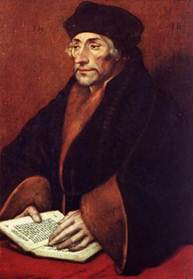
The Hague – the city of justice
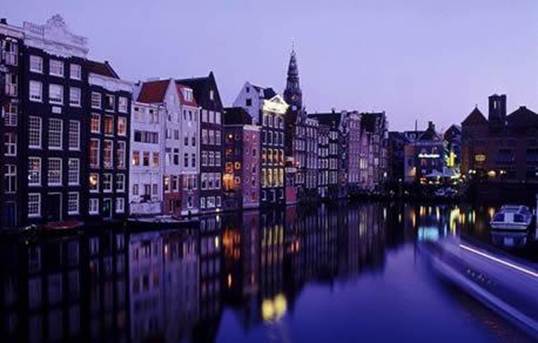
Photo: http://newspaper.li/the-hague/
The Hague is the capital city of the province of South Holland in the Netherlands. With a population of 500,000 inhabitants it is the third largest city of the Netherlands. The Hague is the seat of the Dutch government and parliament, the Supreme Court, and the Council of State, but the city is not the capital of the Netherlands which constitutionally is Amsterdam. Queen Beatrix of the Netherlands lives at Huis ten Bosch and works at Noordeinde Palace in The Hague. All foreign embassies in the Netherlands and 150 international organisations are located in the city, including the International Court of Justice and the International Criminal Court, which makes The Hague one of the major cities hosting the United Nations, along with New York, Vienna and Geneva.
The Hague International Criminal Tribunal for the former Yugoslavia.
|
Radovan Karadžić (born 1945) is a former Bosnian Serb politician. He was detained in the United Nations Detention Unit of Scheveningen, accused of war crimes committed against Bosnian Muslims and Bosnian Croats during the Siege of Sarajevo, as well as ordering the Srebrenica massacre. He was a fugitive from 1996 until July 2008 after having been indicted for war crimes by the International Criminal Tribunal for the former Yugoslavia. The indictment concluded there were reasonable grounds for believing he committed war crimes, including genocide against Bosnian Muslim and Bosnian Croat civilians during the Bosnian War (1992–95). While a fugitive he worked at a private clinic in Belgrade specialising in alternative medicine and psychology under the alias Dr. Dragan David Dabić. He was arrested in Belgrade on 21 July 2008 and brought before Belgrade’s War Crimes Court a few days later. He was extradited to The Hague, and is in the custody of the International Criminal Tribunal for the former Yugoslavia. In August 2008 Karadžić claimed there is a conspiracy against him and refused to enter a plea, therefore the court entered a plea of not guilty on his behalf to all 11 charges. He called the tribunal, chaired by Scottish judge Iain Bonomy, a "court of NATO" disguised as a court of the international community. In 2009, Karadžić filed a Motion challenging the legal validity and legitimacy of the tribunal, claiming that "the UN Security Council lacked the power to establish the ICTY, violated agreements under international law in so doing, and delegated non-existent legislative powers to the ICTY", to which the Prosecution response was that "The Appeals Chamber has already determined the validity of the Tribunal’s creation in previous decisions which constitute established precedent on this issue", therefore dismissing the Motion.
|
|
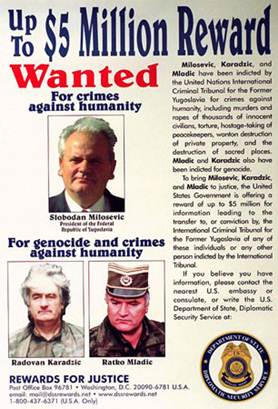
|
|
Belgium – home of EU and NATO |

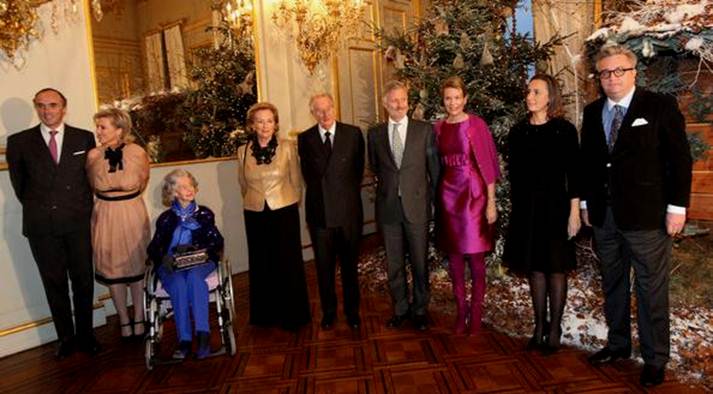
Prince Lorenz of Belgium, Princess Astrid of Belgium, Queen Fabiola of Belgium, Queen Paola of Belgium, King Albert of Belgium, Prince Philippe of Belgium, Princess Mathilde of Belgium, Princess Claire of Belgium and Prince Laurent of Belgium pose in front of a Christmas tree at the Royal Palace on December 16, 2009 in Brussels, Belgium. 15 December 2009 - Photo by Mark Renders/Getty Images Europe.
Belgium, officially the Kingdom of Belgium, is a federal state in Western Europe. It is a founding member of the European Union and hosts the EU's headquarters, and those of several other major international organisations such as NATO.
Belgium covers an area of 30,528 square kilometres (11,787 sq mi), and it has a population of about 11 million people. Straddling the cultural boundary between Germanic and Latin Europe, Belgium is home to two main linguistic groups, the Dutch-speakers, mostly Flemish (about 60%), and the French-speakers, mostly Walloons (about 40%), plus a small group of German-speakers. Belgium's two largest regions are the Dutch-speaking region of Flanders in the north and the French-speaking southern region of Wallonia. The Brussels-Capital Region, officially bilingual, is a mostly French-speaking enclave within the Flemish Region. A German-speaking Community exists in eastern Wallonia. Belgium's linguistic diversity and related political conflicts are reflected in the political history and a complex system of government.
Antwerp – the port city that got famous for diamonds…
|
|
Welcome to Antwerp, the world’s diamond city, and the second largest port city of Europe (after Rotterdam in Holland, a few kilometres away). The Antwerp Diamond Center covers one square mile, housing 1500 diamond companies and 4 diamond bourses. In this highly protected quarter, thousands of highly skilled diamond workers are active to keep up the international quality label ”Cut in Antwerp” based on a tradition of 5 centuries. Millions of diamonds are literally passing through their hands. The Antwerp diamond companies have the best polishers in the world. On 10 November 2011 a new container train route between China, via Klaipeda Sea Port in Lithuania, to Antwerp, opened. On first trip it was transporting computer-aided equipment by transit from the Chongqing city of China via Lithuania to the second-largest port in Europe. |
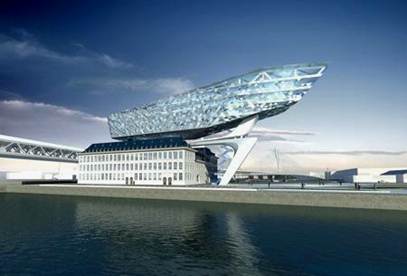
Brussels – the ‘capital’ of Europe
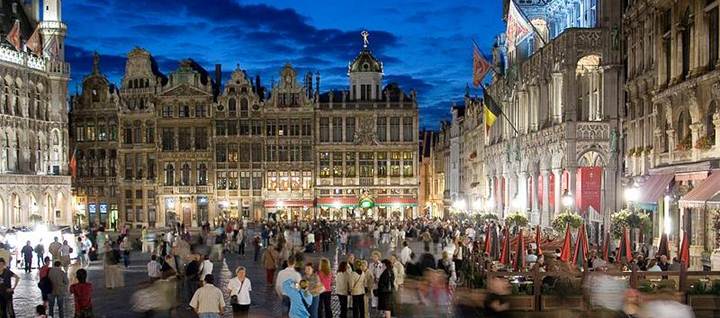
Photo: Wikipedia.
The Grand Place in the centre of Brussels is the lively and very attractive meeting point for any visitor to Europe's most international city! The huge square is surrounded by the city tower and a range of beautiful 300 year old buildings. In the evening, characterised by bright lumination, it is simply ravishing. Some evenings a music and light show is provided with the buildings serving as a canvas. Have a "gaufre de Liège-Luikse wafel" here (Belgian waffle with caramelized sugar)—the best ones are available from the little shops off the northeast corner of the Grand Place...
Brussels is the capital of Belgium and the de facto capital of the European Union (EU). It is also the largest urban area in Belgium, comprising 19 municipalities, including the municipality of the City of Brussels, which is the de jure capital of Belgium, in addition to the seat of the French Community of Belgium and of the Flemish Community. Brussels has grown from a 10th-century fortress town founded by a descendant of Charlemagne into a metropolis of more than one million inhabitants. The metropolitan area has a population of over 1.8 million, making it the largest in Belgium. Since the end of the Second World War, Brussels has been a main centre for international politics. Hosting principal EU institutions as well as the headquarters of the North Atlantic Treaty Organization (NATO), the city has become the polyglot home of numerous international organisations, politicians, diplomats and civil servants. Although historically Dutch-speaking, Brussels became increasingly French-speaking over the 19th and 20th centuries.
|
President Grybauskaitė’s five years in Brussels Dalia Grybauskaitė (born 1 March 1956) is the President of Lithuania, inaugurated on 12 July 2009. Often referred to as the "Iron Lady" or the "Steel Magnolia", Grybauskaitė is Lithuania's first female head of state. Lithuania joined the European Union on 1 May 2004, and Grybauskaitė was named a European Commissioner on the same day. She initially served as European Commissioner for Education and Culture, a position she held until 11 November 2004, when she was named European Commissioner for Financial Programming and the Budget within the José Manuel Barroso-led Commission. |
|
|
In November 2005, Grybauskaitė was named "Commissioner of the Year" in the European Voice Europeans of the Year poll. She was nominated "for her unrelenting efforts to shift EU spending towards areas that would enhance competitiveness such as research and development." She commented: “I don't usually participate in contests, so this is a very pleasant surprise for me. I consider it a distinction not for me personally, but for all the new EU Member States, both small and large, as an acknowledgment of their bringing a new and fresh perspective to the EU. I think that it’s also a prize for having the courage to speak the often difficult truth and to point out the real price of political rhetoric in Europe. As for results, we still have to wait for them. An agreement on the budget for 2007–2013, which Europe really needs, is most important.” As Financial and Budget Commissioner, she strongly criticized the EU budget, stating it was "...not a budget for the 21st century." The majority of the EU budget was spent on agricultural programmes. Grybauskaitė presented a 2008 EU budget in which, for the first time in its history, spending on growth and employment constituted the highest share of the budget, exceeding that of agriculture and natural resources. She frequently criticised the Lithuanian Government, headed by Prime Minister Gediminas Kirkilas, for its lack of response to the approaching financial crisis.
|
|
Calais – Dover
|
|
|
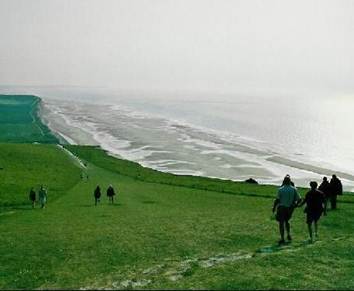
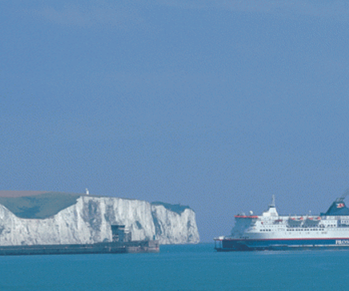
On a clear day you can see the cliffs of Dover (right) from Calais (left).
We have come to the end of our Benelux journey. Now we are standing at the ferryboat port in the French town Calais, trying to see over to the cliffs of Dover on the British side of the busy waters in front of us. The Strait of Dover is the strait at the narrowest part of the English Channel. The shortest distance across the strait is from the South Foreland, 6 kilometres (some 4 miles) northeast of Dover in the county of Kent, England, to Cap Gris Nez, a cape near to Calais in the French département of Pas-de-Calais, France. Between these two points lies the most popular route for cross-channel swimmers as the distance is reduced to 34 km (21 mi). On a clear day, it is possible to see the opposite coastline and shoreline buildings with the naked eye, and the lights of land at night, as in Matthew Arnold's poem "Dover Beach".
|
|
Great Britain is green & glorious |

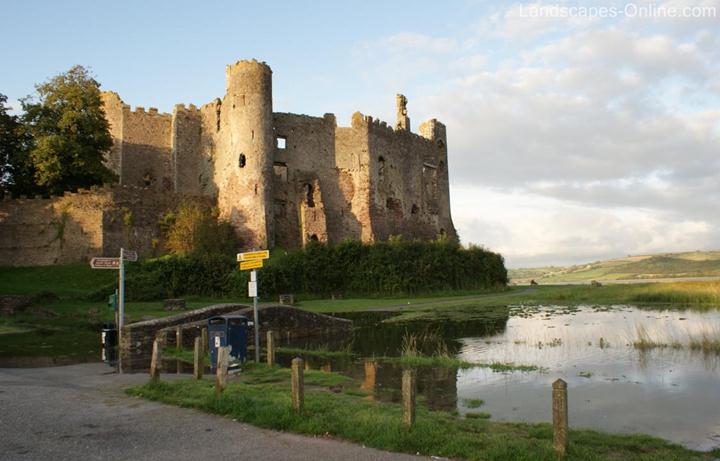
Laugharne Castle in Wales.
Photo: www.landscapes-online.com
|
The United Kingdom The United Kingdom includes the island of Great Britain, the north-eastern part of the island of Ireland and many smaller islands. Northern Ireland is the only part of the UK that shares a land border with another sovereign state—the Republic of Ireland. Apart from this land border the UK is surrounded by the Atlantic Ocean, the North Sea, the English Channel and the Irish Sea. The United Kingdom is a unitary state governed under a constitutional monarchy and a parliamentary system, with its seat of government in the capital city of London. It is a country in its own right and consists of four countries: England, Northern Ireland, Scotland and Wales. There are three devolved national administrations, each with varying powers, situated in Belfast, Cardiff and Edinburgh; the capitals of Northern Ireland, Wales and Scotland respectively. Associated with the UK, but not constitutionally part of it, are three Crown Dependencies. The United Kingdom has fourteen overseas territories. These are remnants of the British Empire which, at its height in 1922, encompassed almost a quarter of the world's land surface and was the largest empire in history. British influence can still be observed in the language, culture and legal systems of many of its former territories. The UK is a developed country and has the world's seventh-largest economy by nominal GDP and seventh-largest economy by purchasing power parity. It was the world's first industrialised country and the world's foremost power during the 19th and early 20th centuries. Queen Elizabeth II is the head of state of the UK as well as of fifteen other independent Commonwealth countries. The monarch itself is symbolic rather than political, and only has "the right to be consulted, the right to encourage, and the right to warn". The United Kingdom has an uncodified constitution, as do only three other countries in the world. The Constitution of the United Kingdom thus consists mostly of a collection of disparate written sources, including statutes, judge-made case law and international treaties, together with constitutional conventions. As there is no technical difference between ordinary statutes and "constitutional law" the UK Parliament can perform "constitutional reform" simply by passing Acts of Parliament and thus has the political power to change or abolish almost any written or unwritten element of the constitution. However, no Parliament can pass laws that future Parliaments cannot change. |
|
|
|
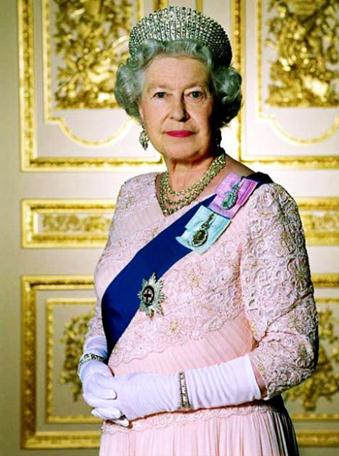
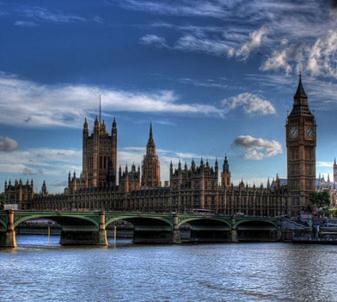
London
|
|
I'm on my way to London from Dover, in my own car. A bit weird to drive on the left side of the road. But London is fantastic, one of my absolute favourite cities in the world. . This is the city to visit for business, culture, shopping and much, much more. The special light. Lavishly decorated stores on Oxford Street. Good smell from every street corner. A pint at The White Lion in Covent Garden... |
Buckingham Palace, the Queen’s home.
River Thames.
Photo: Aage Myhre
London is made up of buildings from many different architectural styles. Most were built after the great fire of1666. Tower of London, Westminster Abbey and some Tudor houses are fine exceptions. The famous architect Christopher Wren (1632-1723), was responsible for many great buildings after the fire. 500 churches, among others. In the 18th and 19 century, known financial institutions grew up, not least the Royal Exchange and Bank of England. From the early 20th century, it is worth mentioning the Old Bailey (criminal court for England andWales). In 1960, the Barbican Estate was erected. Lloyd's 80-century skyscraper and 'the Gerikin' from 2004 are exciting new additions.
A walk in the park next to The Mall, on our way to Buckingham Palace.
The White Lion pub in Covent Garden.
Photos: Aage Myhre.
Trafalger Square and the Nelson's Column that is guarded by four lion statues at its base.
Photo: Aage Myhre.
River Thames.
Photos: Aage Myhre

Lithuanians in the UK
Following Lithuania’s Independence and especially after European Union and NATO membership more and more Lithuanians have chosen to live and work in the United Kingdom. There are more than 100,000 Lithuanians in London and over 200, 000 in the UK. The largest Lithuanian communities can be found in London, Birmingham, Manchester, Nottingham, Bradford, and in Scotland. As a result of this, there are numerous Lithuanian organisations (such as a Lithuanian newspaper, schools and Lithuanian Churches) working in the UK. If you are interested in practicing your Lithuanian or just would like to meet Lithuanians, to know more about our culture and traditions, or even to participate in some cultural events, why not try looking at these two websites:
www.lithuanianembassy.co.uk – this is the Lithuanian Embassy’s page on cultural events in the UK. This is the best place to look for information on various events.
www.headleypark.co.uk - Headley Park estate belongs to the Lithuanian community and is the hub of all cultural activities. So, if you want to experience St. John’s Day, Christmas or any other celebrations Lithuanian style you should contact them and ask for more info. Headley Estate also has a hotel, a Lithuanian food restaurant and a camping site with a lake full of fish nearby which is ideal for a summer weekend break.
www.britanijoslietuviai.co.uk - official website for Lithuanian association in the UK.
www.toplanguagecommunity.com/lithuanian-portal/ - this is a Lithuanian community site for Lithuanian speaking people in London, UK and Ireland. The site is available in both Lithuanian and English.
Lithuanian Communities in the UK
www.jkljs.ahost.lt - Lithuanian Youth Community in the UK
wwww.midlitcom.org - Midlands Lithuanian community
bhamlietuviai.org Lithuanian community in Birmingham
www.manchesteris.org - Lithuanian community in Manchester
www.lithuanianchamber.co.uk - Lithuanian chamber of commerce in the UK
Lithuanian Schools in the UK
www.britanijoslietuviai.co.uk/lituanistines_mokyklos.html
Religious Organisations
Lithuanian church in London:
Londono lietuvių Šv.Kazimiero bažnyčia
21 The Oval, Hackney Road, London E2 9DT. Tel: 020 7739 8735
E-mail: ptverijonas@btinternet.com Website: www.londonas.co.uk
Religious and cultural hub in Nottingham, lead by Lithuanian Marian fathers:
Židinys
Lithuanian Marian Fathers, 16 Hound Road
West Bridgford, Nottingham NG2 6AH. Tel.: 01159821892
Music
Lithuanian folk group, Saduto
www.saduto.com/en/aboutus
Saduto was established in 2005. Group members gather every Friday evening at 8:00pm in St. John‘s church, Stratford, London. Everyone is invited.
Rock group, Vital Mission
Website: www.ferrum.lt/f/grupes/128
Lithuanian Scouts in the UK
The Lithuanian scouts movement in the UK started back in 1948. The first camp was organised in 1950, Darley Moor, Derbyshire.It currently has about 50 members ranging from 8 to 70 years old. They meet every second month and have a camp in Headley Park during summer months.
Lithuanian scouts have their magazine 'Budėkime' which is published three times a year.
Lithuanian Basketball Team in the UK
The Lithuanian basketball team, Gintaras
www.gintaras.co.uk/content/view/4/16/lang,english/
Currently, Lithuanian BC (playing in London Metropolitan Basketball League) is on the top of the Men’s Premier League 2008-2009 table. Results can be viewed here:
www.basketballinlondon.co.uk/london_metropolitan_basketball_league/league_fixtures_&_results/
|
Lithuanian City of London Club is a members-only non-profit organisation established in late 2006 under the honorary patronage of H.E. Vygaudas Usackas, the Ambassador of the Republic of Lithuania. The members of the Club are Lithuanian professionals (or professionals with ties/interests in Lithuania) based in London from a wide array of careers and pursuits, predominantly from the City. The Club members get together for social networking, sporting and charitable events as well as for a wide array of topical discussions with business, political and other leaders from Lithuania and UK to foster professional and intellectual interaction between Club members and Lithuanian society. The Club is also building links with other organisations in the UK and actively participates in a number of initiatives and events in the Lithuanian community in London. Currently the Club unites close to 200 members and partners who get together on a regular basis. LCLC Pub Social drinks are every last Thursday of the month. For more information about the Club and our activities, please email info@litcityclub.co.uk The Club's President: Daumantas Mockus, president@litcityclub.co.uk The Board: Rasa Balsytė, Darius Daubaras, Raminta Dereškevičiūtė, Ieva Šatkutė LCLC Newsletter You are welcome to read the 2nd issue of LCLC’s Newsletter! With this publication, the Club aims to keep members, alumni, friends and other stakeholders abreast of LCLC's latest developments, news and adventures. And there have been aplenty! For those who missed the 1st issue - a small recap.
|
|
|
|
Aer Lingus launched services to Vilnius from its London Gatwick in 2011. Cutting the ribbon in the photo is Dr. Oskaras Jusys, the former Lithuanian ambassador to the UK. |
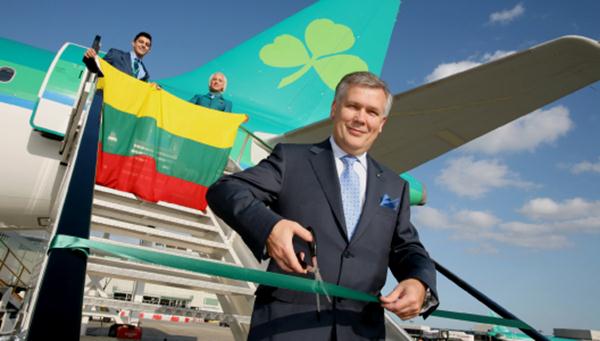
|
Cambridge University is consistently ranked one of the top ten in the world |
||
|
The city of Cambridge is a university town and the administrative centre of the county of Cambridgeshire, England. It lies in East Anglia about 50 miles (80 km) north of London. Cambridge is at the heart of the high-technology centre known as Silicon Fen – a play on Silicon Valley and the fens surrounding the city. Cambridge is well known as the home of the University of Cambridge, which has been consistently ranked one of the top ten universities in the world. The university includes the renowned Cavendish Laboratory, King's College Chapel, and the Cambridge University Library. The Cambridge skyline is dominated by the last two buildings, along with the chimney of Addenbrooke's Hospital in the far south of the city and St John's College Chapel tower in the north. According to the United Kingdom Census 2001, the city's population was 108,863 (including 22,153 students).
|
|
|
|
|
Cambridge University Lithuanian Society [CULS] Cambridge University Lithuanian Society is predominantly Lithuanian, but also welcomes everyone from any background. The society goal is to promote Lithuanian culture as well as to take part in cultural interchange. We have several meetings each term and organise social events for broader audience. We are looking forward to seeing you. www.cu-ls.org/?lang=en
|
|
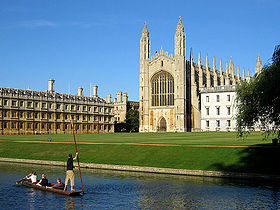

Robin Hood and the Sherwood Forest
When we continue north to the city of Leeds a road sign with the name of Nottingham shows up, I decide
to take a detour into the Sherwood Forest, Robin Hood's famous habitat. Sherwood Forest is a Royal Forest in Nottinghamshire that is famous through its historical association with the legendary outlaw archer who took from the rich and gave to the poor here, right in the heart of medieval England. This very attractive forest lands attracts 500,000 tourists annually, including many from around the world. Visitor numbers have increased significantly since the launch of the BBC's Robin Hood television series in 2006.
The park hosts the annual Robin Hood Festival for a week each summer. This event recreates a medieval atmosphere and features the major characters from the Robin Hood legend. The week's entertainment includes jousters and strolling players, dressed in medieval attire, in addition to a medieval encampment complete with jesters, musicians, rat-catchers, alchemists and fire eaters.
|
The New Adventures of Robin Hood was filmed in Lithuania The New Adventures of Robin Hood is a 1997-1998 live action TV series on Turner Network Television. It was filmed in Vilnius, Lithuania and produced and distributed by Dune Productions, M6, and Warner Bros. International.
|
|
|
|
Robin Hood was a heroic outlaw in English folklore. A highly skilled archer and swordsman, he is known for "robbing from the rich and giving to the poor", assisted by a group of fellow outlaws known as his "Merry Men". Traditionally, Robin Hood and his men are depicted wearing Lincoln green clothes. The origin of the legend is claimed by some to have stemmed from actual outlaws, or from ballads or tales of outlaws. Robin Hood became a popular folk figure in the medieval period continuing through to modern literature, films and television. In the earliest sources, Robin Hood is a yeoman, but he was often later portrayed as an aristocrat wrongfully dispossessed of his lands and made into an outlaw by an unscrupulous sheriff. In popular culture, Robin Hood and his band of Merry men are usually portrayed as living in Sherwood Forest, in Nottinghamshire, where much of the action in the early ballads takes place. So does the very first recorded Robin Hood rhyme, four lines from the early 15th century, beginning: "Robyn hode in scherewode stod." However, the overall picture from the surviving early ballads and other early references suggest that Robin Hood may have been based in the Barnsdale area of what is now South Yorkshire (which borders Nottinghamshire).
|
Leeds has England’s most romantic castle
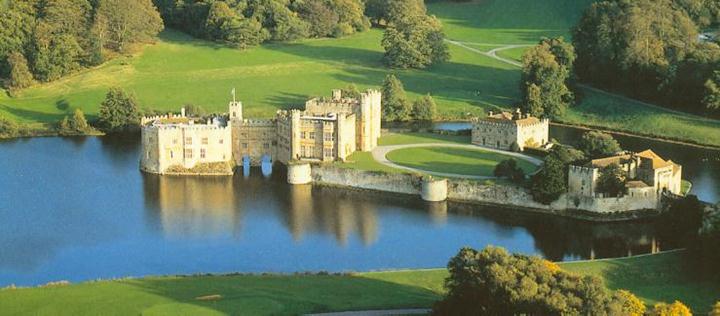
Leeds Castle, acclaimed as the most romantic castle in England.
Photo: www.castles.org.
Our journey north continues. We arrive in Leeds, a city and metropolitan borough in West Yorkshire. In 2001 Leeds' main urban subdivision had a population of 443,247, while the entire city has a population of 798,800 (2011 est.), making it the 30th-most populous city in the European Union. Leeds is the cultural, financial and commercial heart of the West Yorkshire Urban Area, which at the 2001 census had a population of 1.5 million, and the Leeds-Bradford Metropolitan Area, of which Leeds is the integral part, had a population of around 2.3 million, making it the fourth-largest metropolitan area in the United Kingdom. In addition, the Leeds city region, an economic area with Leeds at its core, had a population of 2.9 million. Leeds is the UK's largest centre for business, legal, and financial services outside London, and its office market is the best in Europe for value. Leeds is considered a Gamma World City, alongside cities such as Rotterdam, Phoenix, St. Petersburg and Valencia.
|
|
From Leeds to Lithuania for mushy pea beer My grandparents came from Kowno (now more often known as Kaunas) in Lithuania. I have long wanted to visit Lithuania, and recently I did. Programs and wars have all but erased the culture I tasted as a child in Leeds, and my grandparents knew in Kaunas, but I did manage to see mead being made, and to sample the richly honeyish, herbal result. The old brewery building still stood, a tiny brick tower that may be unique in Lithuania, but would not look out of place in the Black Country. It is at Stakliskes, between Kaunas and Vilnius, the capital. Its product is simply called Lithuanian Mead (Lietuviskas Midus). Read more at: http://www.beerhunter.com/documents/19133-000921.html
|
Manchester hosts the oldest Lithuanian club in the UK
|
From Leeds our trip goes west, to Manchester. Here we find that there is a Lithuanian club with own premises in the city since the end of 1948, though the club as an organization has been in operation since 1925. It is the oldest Lithuanian organization in the UK. Manchester is a city and metropolitan borough in Greater Manchester, England. According to the Office for National Statistics, the 2010 mid-year population estimate for Manchester was 498,800. Manchester began to expand "at an astonishing rate" around the turn of the 19th century, brought on by a boom in textile manufacture during the Industrial Revolution, and resulted in it becoming the world's first industrialised city. An early 19th-century factory building boom transformed Manchester from a township into a major mill town and borough that was granted city status in 1853. In 1894 the Manchester Ship Canal was built, creating the Port of Manchester. The city is notable for its culture, music scene, scientific and engineering output, media links and sporting connections. Manchester's sports clubs include Premier League football teams, Manchester City and Manchester United. Manchester was also the site of the world's first railway station. |
|
Liverpool – birthplace of The Beatles
|
|
We have arrived in Liverpool – at the famous Mersey river and the shores of the Irish Sea on England’s western coast. The popularity of The Beatles, Gerry and the Pacemakers and other groups from the Merseybeat era have made Liverpool famous, and contributes a lot to the city’s status as a tourist destination. Some may say that football also has played a role... Liverpool is a city and metropolitan borough of Merseyside, along the eastern side of the Mersey Estuary. It was founded as a borough in 1207 and was granted city status in 1880. As of 2001 Liverpool had a population of 435,500, and lies at the centre of the wider Liverpool Urban Area, which had a population of 816,216. Historically a part of Lancashire, the urbanisation and expansion of Liverpool were both largely brought about by the city's status as a major port. By the 18th century, trade from the West Indies, Ireland and mainland Europe coupled with close links with the Atlantic Slave Trade furthered the economic expansion of Liverpool. By the early 19th century, 40% of the world's trade passed through Liverpool's docks, contributing to Liverpool's rise as a major city. Inhabitants of Liverpool are referred to as Liverpudlians but are also colloquially known as "Scousers", in reference to the local dish known as "scouse", a form of stew. The word "Scouse" has also become synonymous with the Liverpool accent and dialect. Liverpool's status as a port city has contributed to its diverse population, which, historically, were drawn from a wide range of peoples, cultures, and religions, particularly those from Ireland. The city is also home to the oldest Black African community in the country and the oldest Chinese community in Europe. Several areas of the city centre were granted World Heritage Site status by UNESCO in 2004. Referred to as the Liverpool Maritime Mercantile City, the site comprises six separate locations in the city including the Pier Head, Albert Dock and William Brown Street and includes many of the city's most famous landmarks. Liverpool is the home of two Premier League football clubs, Liverpool F.C. and Everton F.C.. Matches between the two clubs are known as the Merseyside derby. |
|
|
|
Liverpool companies invited to Lithuania |
|
|
Invest Lithuania was last October hosting a seminar at Liverpool Chamber of Commerce to introduce the advantages, opportunities and support available to UK companies interested in developing their business in Lithuania. It was a multi-sector seminar but particularly relevant to those working in IT, bioscience, financial services and manufacturing companies considering investing in R&D. The seminar had a range of high quality speakers who introduced the Lithuanian market, its workforce and its competitive advantage as well as an overview of the support available to UK companies looking to invest in Lithuania. The speakers also gave detailed overviews of particular sectors and shared their experiences of working in Lithuania as well as giving the audience an opportunity to ask questions. This seminar was part of a series run by CC Baltic on behalf of Invest Lithuania, who were also holding seminars in Aberdeen and Teesside. The seminars are directed to companies interested in finding out why Lithuania today is considered one of the best places in Europe to develop business.
|
|
|
Please contact Anatasia Zencika (Anastasia@ccbaltic.eu) or the International Trade Team (export@liverpoolchamber.org.uk) for more information.
|
|
|
The Beatles was discovered and managed by a Lithuanian Jew
Brian Epstein (1934-1967) was the man who discovered the Beatles, and guided them to mega-stardom, making them the most successful musical artists of all time. Without Brian, the Beatles as we came to know them, simply wouldn't have existed. In 1965, both Paul McCartney and George Harrison, on being awarded their M.B.E.s by the Queen, said "M.B.E. stands for Mr. Brian Epstein." Brian Samuel Epstein was an English music entrepreneur, and is best known for being the manager of The Beatles up until his death. In 1961 Brian Epstein saw the new band for the first time at The Cavern Club in Liverpool. After the concert he went to speak to them and offered to manage them. On 10th. December 1961 it was decided that Brian Epstein should be the manager of The Beatles, and a contract was signed on 24th. January, 1962. He secured a record contract for them with EMI, and, on the request of John Lennon, Paul McCartney, and George Harrison, he sacked the drummer Pete Best so that he could be replaced by Ringo Starr. Brian Epstein remained the manager on The Beatles until his death. Epstein paid for The Beatles to record a demo in Decca's studios, which Epstein later persuaded George Martin to listen to, as Decca were not interested in signing the band. Epstein was then offered a contract by Martin on behalf of EMI's small Parlophone label, even though they had previously been rejected by almost every other British record company. Martin later explained that Epstein's enthusiasm and his confidence that The Beatles would one day become internationally famous convinced him to sign them. Epstein died of an accidental drug overdose at his home in London in August 1967. The Beatles' early success has been attributed to Epstein's management and sense of style. McCartney said of Epstein: "If anyone was the Fifth Beatle, it was Brian". Epstein's family were Jewish, his grandfather, Isaac Epstein, was from Lithuania and arrived in England in the 1890s, at the age of eighteen. His grandmother, Dinah, was the daughter of Joseph (who was a draper) and Esther Hyman, who emigrated from Russia to England. Regrettably, the man who did so much for the Beatles has become a comparatively forgotten man since his death. VIDEO: LET IT BE Paul McCartney said he had the idea of "Let It Be" after a dream he had about his mother during the tense period surrounding the sessions for The Beatles (the "White Album"). McCartney explained that his mother—who died of cancer when McCartney was fourteen—was the inspiration for the "Mother Mary" lyric. He later said, "It was great to visit with her again. I felt very blessed to have that dream. So that got me writing 'Let It Be'." He also said in a later interview about the dream that his mother had told him, "It will be all right, just let it be."
|
|
Oxford – the dignified university city We have come to our trip's final destination, to Oxford, home of the second-oldest surviving university in the world and the oldest university in the English-speaking world. Oxford city is the county town of Oxfordshire, and forms a district within the county. It has a population of just under 165,000, of whom 153,900 live within the district boundary. It lies about 50 miles (80 km) north-west of London. The rivers Cherwell and Thames run through Oxford and meet south of the city centre. Oxford has a diverse economic base. Its industries include motor manufacturing, publishing and a large number of information technology and science-based businesses. Buildings in Oxford demonstrate an example of every English architectural period since the arrival of the Saxons, including the iconic, mid-18th century Radcliffe Camera. Oxford is known as the "city of dreaming spires", a term coined by poet Matthew Arnold in reference to the harmonious architecture of Oxford's university buildings.
|
|
||
|
|
|||
|
|
|||
|
|
|||
|
My Oxford friend Mervyn Bedford, a teacher in love with Lithuania
Because I know Aage Myhre and his wife and very much respect what he is trying to do for Lithuania, I offered to write of educational values for VilNews. The Baltic nations have a perfect opportunity to change the map of educational provision in ways that better fit the rapidly changing world of the 21st. century. Education is not about buildings. It is not about systems and organisations. It is not about tests and inspections. It is about people and the relationships between those who want to learn, or need to learn, and those who already know it. For almost 150 years State school systems have imposed a model of teaching and learning that has hardly changed while society has fundamentally changed and, recently, very rapidly. Those changes are racing unseen towards our youngest children. Read Mervyn’s article at https://vilnews.com/?p=979
|
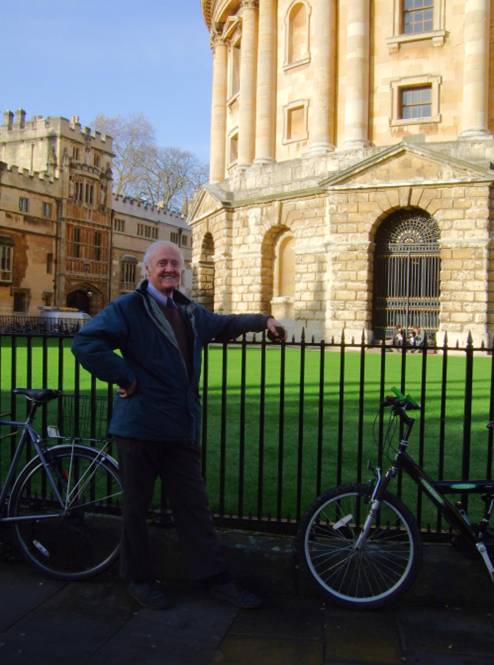
- Bookmark :
- Digg
- del.icio.us
- Stumbleupon
- Redit it
- Posted by - (3) Comment
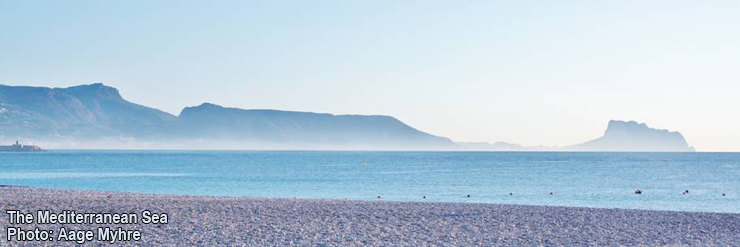
EXPLORING EUROPE (3 of 10)
Along the Riviera
ITALY – FRANCE – MONACO –SPAIN
Tour guide, writer and photographer: Aage Myhre
aage.myhre@VilNews.com
|
We have started our little tour of Europe.
|
Portovenere
Portovenere is a hidden treasure tucked away in the north-western area of Italy, one of my favourite Mediterranean towns, dating back to at least the middle of the first century. The ancient town is a hidden treasure for tourists and even residents of Italy to discover. When people first hear of Portovenere, the natural comparison is matched against the world renowned Portofino, but when visited, the two places are completely different. In fact, it can be said that Portovenere is a much more inspiring experience because of the breathtaking landscape that has been naturally architected by mother nature and mankind together over time, which is rich history. The town, or “comune” as referred to by the Italian government, is located on the provincial coast of La Spezia, in the region of Liguria. Rocky horizons, lush forests and vegetation, completed with bodies of water supplied by the Mediterranean Sea, surround this area.
We start our Riviera trip here. But first we enjoy a wonderful filletto with a rich, deep red Barbera on the boardwalk Restaurant above.
The next day the tour starts, along the Italian Riviera and the French Cote d'Azur. We travel to France's best preserved medieval town, not far from the Spanish border, Carcassonne! Phenomenal dinner, good
Languedoc wines. Next morning, we go to the village of Mary Magdalene and The Holy Grail. Later that day we pass the Pyrenees. After a few hours’ drive of ever new mountain pass, Paradise opens before us when we arrive at Spain’s Costa Blanca, the White Coast. And down there, below us, the the Mediterranean Sea in all its azure-blue splendour.
|
|
Liguria
|

Liguria is a coastal region of north-western Italy, the third smallest of the Italian regions. Its capital is Genoa. It is a popular region with tourists for its beautiful beaches, picturesque little towns, and good food. Liguria borders France to the west, Piedmont to the north, and Emilia-Romagna and Tuscany to the east. It lies on the Ligurian Sea. The narrow strip of land is bordered by the sea, the Alps and the Apennines mountains. Some mountains rise above 2000 m; the watershed line runs at an average altitude of about 1000 m. The winding arched extension goes from Ventimiglia to La Spezia and is one of the smallest regions in Italy. Liguria is just 5,422 square kilometres, or 1.18% of all of Italy. Of this, 3524.08 kilometres are mountainous (65% of the total) and 891.95 square kilometres are hills (35% of the total). Liguria's Natural Reserves cover 12% of the entire region, or 60,000 hectares of land. They are made up of one National Reserve, six large parks, two smaller parks and three nature reserves.
The Cinque Terre is a rugged portion of coast on the Italian Riviera. It is in the Liguria region of Italy, to the west of the city of La Spezia. "The Five Lands" is composed of five villages: Monterosso al Mare, Vernazza, Corniglia, Manarola, and Riomaggiore. Photo: http://www.dycnic.com
Genoa (Genova in Italian)
Money flowed into the Ligurian port city made famous by Columbus and now it's a better place than ever to visit. Genoa has a fascinating aquarium, an interesting port, and a historic center said to be the largest medieval quarter in Europe, with a wealth of churches, palaces, and museums. In 2006, Genoa's Rolli Palaces were added to the list of UNESCO World Heritage Sites. Genoa is famous for pesto (basil, pine nuts, garlic, and parmigiano cheese) usually served overtrenette or trofia pasta cooked with potatoes and green beans. Being a port city, Genoa also has some good seafood dishes such as the fish stewburidda.
Genoa is Italy's principal seaport and is located on the northwest coast of Italy in the region of Liguria, not far from the French border.
Piazza de Ferrari, Genoa.
|
Was Christopher Columbus from Genoa or from Lithuania?
Will Lithuanians be able to add another page to their already epic history? Will the National Lithuanian American Hall of Fame (NLAHF) have yet one more candidate for induction? Daine Jablonskyte-Marquez and Jon Platakis, members of the NLAHF, tracked down historian Manuel Rosa at his job at Duke University, to enlighten us on his 20 plus years of research into the identity of Christopher Columbus. Confidently, and with primary source documents to verify his assertions, Rosa states, “Columbus was a royal prince, son of a Portuguese noble lady and exiled King Wladyslaw III (a direct descendent of one of Europe’s greatest ruling dynasties, Lithuania’s Gedeminian dynasty). He was hiding his identity from the public at large but the courts of Europe knew who he was.” Pointing to documentation in his new book, COLON. La Historia Nunca Contada (COLUMBUS. The Untold Story) recently published in Spain, published May 2012 in Poland, that Columbus’ marriage in 1479 to a Portuguese noblewoman, who was a member of the Portuguese military order of Santiago, required the approval of the King of Portugal, a procedure reserved only for someone of major importance. “This new Portuguese document alone,” stated Rosa, “makes the entirety of Columbus’ Italian history false.” Rosa’s evidence appears irrefutable that Columbus, who had been housed in the palaces of the nobility, had access to royal courts, and married into nobility, could not be, as our history books tell us, the son of a poor weaver from Genoa. So, who was Christopher Columbus, if not a poor weaver’s son from Genoa? Rosa believes that his true identity was Prince Segismundo Henriques which was concealed in order to protect his father. All of Rosa’s evidence points to Wladyslaw III, king of Poland and Lithuania as being the father of Christopher Columbus. Rosa suggests that there is proof the king survived the Battle of Varna in 1444 against the Ottomans and lived in exile on the island of Madeira under the name of “Henrique the German,” married to a Portuguese noblewoman. Is this just another nutty conspiracy theory? Not according to leading historians based at the University of Lisbon, and St. Joseph’s University. Rosa utilized medieval documents and chronicles from multiple kingdoms to cross-reference historical events and personalities, plus ancient genealogy and heraldry. In addition, Rosa’s mastery of Spanish, Italian, and Portuguese, allowed him a more accurate interpretation of these primary source documents. Members of the National Lithuanian American Hall of Fame, lament the fact that there seems to be little interest from American, and our own Lithuanian historians and researchers, to either accept or contradict Rosa’s findings. According to Rosa, he has not yet had any success in finding a U.S. publisher for this history altering book. It appears a certainty that Christopher Columbus was not the poor weaver’s son from Genoa. However, in the near future, it is hoped that Polish authorities will open the tomb of King Wladyslaw II, (Jogaila) the Lithuanian King of Poland, to obtain DNA evidence to prove that Christopher Columbus is a son of Lithuania who hid his royal lineage to protect the secret that his father had survived the Battle of Varna. Read more in VilNews: https://vilnews.com/?page_id=150
|
Ventimiglia
|
Ventimiglia is located on the Italian side, a few kilometers from the border with France, in the province of Imperia. It is divided into two zones: the upper part, medieval, perched right on the river Roia, and the lower part located, between the Roia and the Nervia, on the flat part of the coast. The old centre rises in an imposing position and is easily distinguished for all corners of the plain. The urban structure is characterized by the presence of several clusters of houses, which are built one to each other according to the different time frames of construction: Like in most of the centers of Liguria, due to the lack of space, the houses grow in height. The irregular arrangement of buildings, arches, canopies and religious shrines create always different angles and do not leave space for monotony. |
|
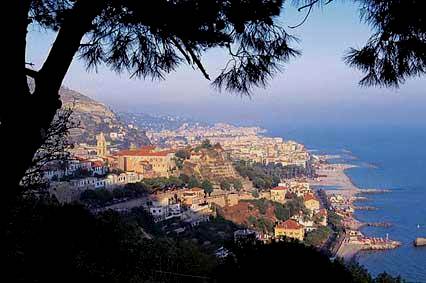
|
|
Monaco
|

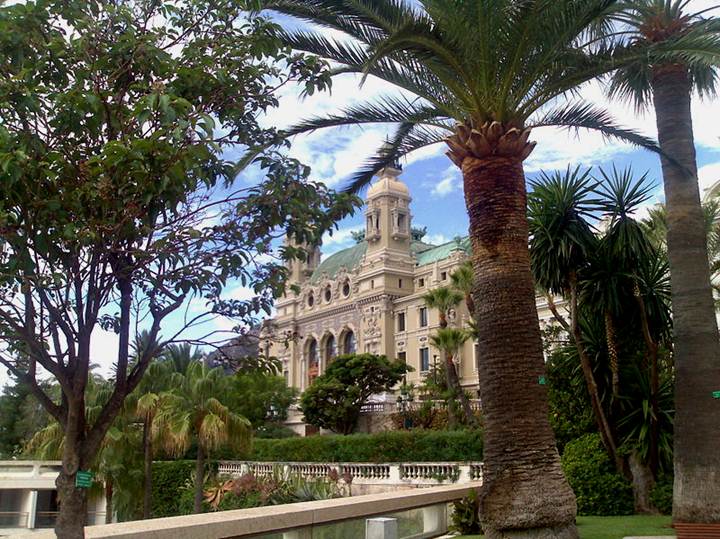
The Monte Carlo Casino.
Photo: Wikipedia.
We have come to Monaco, officially the Principality of Monaco, a sovereign city state on the French Riviera. It is bordered on three sides by its neighbour, France, and its centre is about 16 km (9.9 mi) from Italy. Its area is 1.98 km2 (0.76 sq mi) with a population of 35,986 as of 2011 and is the most densely populated country in the world. Monaco boasts the world's highest GDP nominal per capita at $151,630. Monaco also has the world's highest life expectancy at almost 90 years (CIA estimate, 2011), and the lowest unemployment rate at 0%, with about 40,000 workers who commute from France and Italy each day. After a recent expansion of Port Hercule, Monaco's total area is 2.05 km2 (0.79 sq mi), with new plans to extend the district of Fontvieille, with land reclaimed from the Mediterranean Sea.
Monaco is a principality governed under a form of constitutional monarchy, with Prince Albert II as head of state. The House of Grimaldi has ruled Monaco, with brief interruptions, since 1297. The state's sovereignty was officially recognized by the Franco-Monegasque Treaty of 1861. Despite Monaco's independence and separate foreign policy, its defence is the responsibility of France.
Citizens of Monaco are called Monacans, while Monegasque is the proper term for describing someone who was born in Monaco.
Le Grand Casino de Monte Carlo opened in 1858, and the casino benefited from the tourist traffic the newly built French railway system created. Due to the combination of the casino and the railroads, Monaco finally recovered from the previous half century of economic slump, and the principality's success attracted other businesses. In the years following the casino's opening Monaco founded its Oceanographic Museum and the Monte Carlo Opera House, 46 hotels sprang up and the number of jewellers operating in Monaco increased by nearly 500 percent. By 1869, the casino was making such a vast sum of money that the principality could afford not to collect tax from the Monegasques; a master stroke that was to attract affluent residents from all over Europe.
Today, Société des bains de mer de Monaco which owns Le Grand Casino still operates in the original building the Blancs constructed and has been joined by several other casinos, including Le Casino Café de Paris, the Monte Carlo Bay Casino, the Monte Carlo Sporting Club & Casino (Summer Casino) and the Sun Casino. The most recent addition to the list—the first casino to open in Monte Carlo in 75 years—is the Monte Carlo Bay Casino, which sits on 4 hectares of the Mediterranean Garden and, among other things, offers 145 slot machines.
|
|
Provence
|
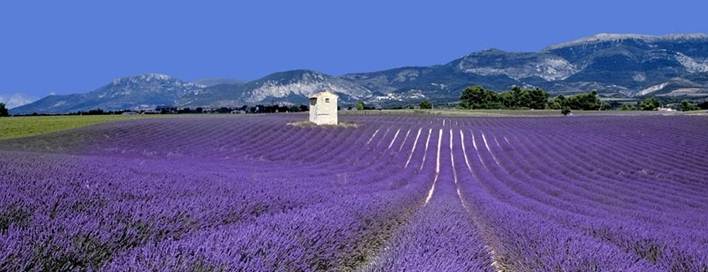
Provence is the south eastern region of France on the Mediterranean adjacent to Italy. It is part of the administrative région of Provence-Alpes-Côte d'Azur. The traditional region of Provence comprises the départements of Var, Vaucluse, Bouches-du-Rhône, Alpes-de-Haute-Provence, Alpes-Maritimes and parts of Hautes-Alpes. The Romans formed this region into their Gallia Transalpina, the first Roman provincia outside the Alps. From thus, it derives its name today.
From the Alpine mountains down to the sand beaches of Saint Tropez, Cannes, Nice, the region is an important destination for tourist offering a favorable climate all year round. Perfumes, rosé wines, jazz and a distinct cuisine, the region has a rich culture, traditions and festivals. The Cannes Film festival, Nice Carnival and the Jazz festival are just a few of the highlights.
Nice
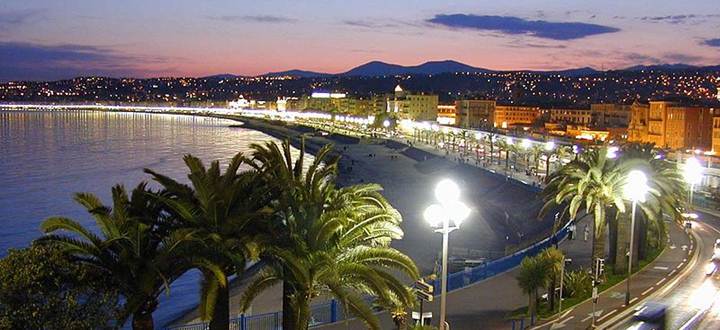
Photo: Wikipedia.
Nice is the fifth most populous city in France, after Paris, Marseille, Lyon and Toulouse, with a population of 348,721 within its administrative limits on a land area of 71.92 km2 (28 sq mi). The urban area of Nice extends beyond the administrative city limits with a population of more than 955,000 on an area of 721 km2 (278 sq mi). Located on the south east coast of France on the Mediterranean Sea, Nice is the second-largest French city on the Mediterranean coast. The city is called Nice la Belle (Nissa La Bella in Niçard), which means Nice the Beautiful, which is also the title of the unofficial anthem of Nice, written by Menica Rondelly in 1912. Nice is the capital of the Alpes Maritimes département and the second biggest city of the Provence-Alpes-Côte d'Azur region after Marseille. The area of today’s Nice is believed to be among the oldest human settlements in Europe. One of the archaeological sites, Terra Amata, displays evidence of a very early use of fire. Around 350 BC, Greeks of Marseille founded a permanent settlement and called it Nikaia, after Nike, the goddess of victory.
Grasse (the world’s perfume capital) and a Lithuanian designer
Juozas Statkevièius (b. 1968 in Kaunas ) - Lithuanian fashion designer, theatre costume designer, hairdressing master, professional model. First Lithuanian designer presented in the magazines Vogue, L'Officiel, Elle, Harper's Bazaar. Has created his own perfume named "Josef Statkus.
Let me suggest that you drive a bit inland after Nice. Go to Grasse, a commune in the Alpes-Maritimes department, atown considered the world's capital of perfume. It obtained two flowers in the Concours des villes et villages fleuris contest and was made "Ville d'Art et d'Histoire" (town of art and history).
The Lithuanian-born designer Juozas Statkevicius, now based in Paris, has been designing fashions and theatre costumes since the 1990s, but first came to international attention after showing a perfume collection in Paris in 2002. His first perfume, titled simply Juozas Statkevicius Eau de Parfum, was launched in 2004.
Cannes
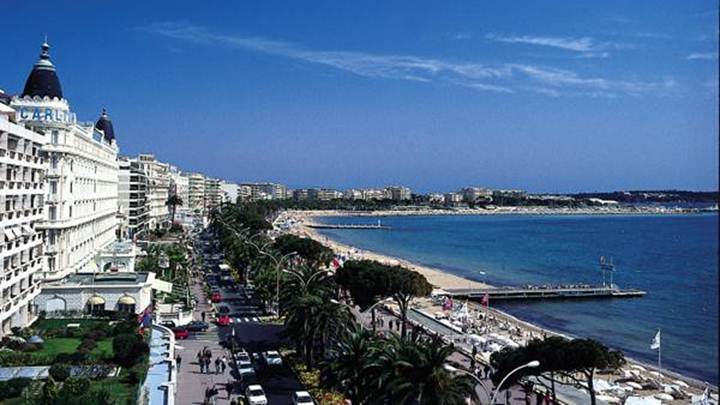
Photo: Wikipedia.
Cannes is one of the best-known cities of the French Riviera, a busy tourist destination and host of the annual Cannes Film Festival. It is a Commune of France in the Alpes-Maritimes department. The city is also famous for its various luxury shops, restaurants, and hotels. This Riviera city on the Cote d'Azur hosts Europe's most famous annual Film Festival, and has long been a playground for sophisticated pleasure seekers. Cannes is noted for beautiful sandy beaches, most of which charge an entry fee to keep out the riff-raft. It's a far cry from the early 19th century, when this was a small fishing and agricultural village. But then the place was discovered by the aristocracy, who built exclusive holiday villas, and it was only a matter of time before Cannes became a seriously classy resort.
Saint-Tropez
|
|
|
|
Saint-Tropez is located on the French Riviera, west of Cannes, and is known today for its famous and extremely wealthy summertime guests. It has been dubbed the 'playground to jetsetters, fashion models, and millionaires', and it is most-enduringly known as the place where the iconic Brigitte Bardot was "discovered" and for its role in the liberation of southern France during World War II. Topless sunbathing is now a usual way for both men and women, from Pampelonne beaches to yachts in the centre of Saint-Tropez port. The Tahiti beach is "clothing-optional", but also nudists are going to private nudist lands, like that in Cap d' Agde. "Modest" clothing is basically seen in Saint-Tropez, because of the end of "illegal taste-era" and stars (but not everyone), that don't want their nude photos, made available next day on colour magazines, by paparazzi. |
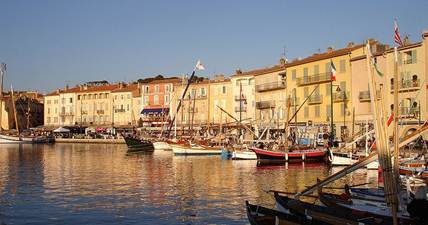
Avignon
|
|
|

Let me suggest that you go a bit inland again, after the luxurious, expensive experiences you had in Saint-Tropez...
Let’s go to Avignon at the bank of the Rhône River, often referred to as the "City of Popes" because of the presence of popes and antipopes from 1309 to 1423 during the Catholic schism, it is currently the largest city and capital of the département of Vaucluse. This is one of the few French cities to have preserved its ramparts, its historic centre, the palace of the popes, Rocher des Doms, and the bridge of Avignon. It was classified a World Heritage Site by UNESCO under the criteria I, II and IV.
The bridge of Avignon, which today is only a half-bridge, has achieved worldwide fame through its commemoration by the song "Sur le pont d'Avignon" ("On the bridge of Avignon"). It goes as follows:
|
|
Languedoc-Roussillon
|

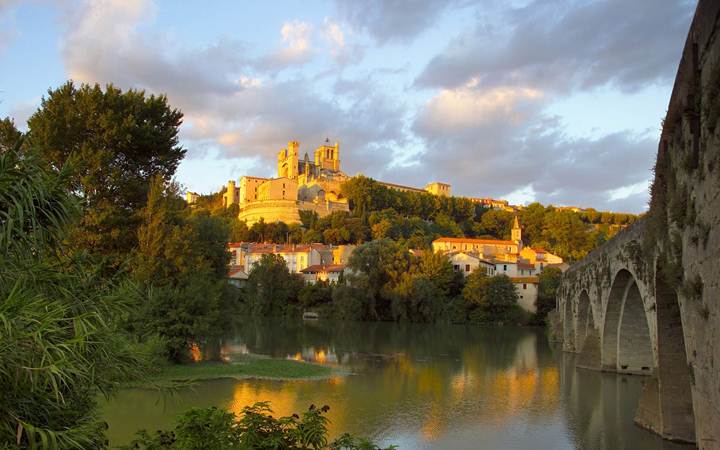
Cathedral of Saint-Nazaire Languedoc-Roussillon.
Photo: http://www.citypictures.org
Languedoc-Roussillon is one of the 27 regions of France. It comprises five departments, and borders the other French regions of Provence-Alpes-Côte d'Azur, Rhône-Alpes, Auvergne, Midi-Pyrénées on the one side, and Spain, Andorra and the Mediterranean sea on the other side.
This region was one of the earliest to be inhabited by humans and, located between the Atlantic Ocean and the Mediterranean, was an extremely important trade route and passage.
The Roman history of Languedoc-Roussillon is long and has left some spectacular traces. The names of towns, the Catalan language, the region’s heady wines and olive-oil dishes all testify to the lasting influence of 400 years of occupation. It is also where the Romanesque art emerged in the early 11th C in its most impressive way ranging from little churches to large, important Cistercian abbeys. This is also a region where the “Cathars”, named after the Greek “katharos” or “pure”, fought the Catholic church of the time in the 13th C; it took many decades to exterminate this movement whose followers believed the visible world to be the work of the devil. Nowadays, many impressive fortresses perched on dizzying heights and the ancient villages still bear witness to a lost religion.
Sète – the Venice of France
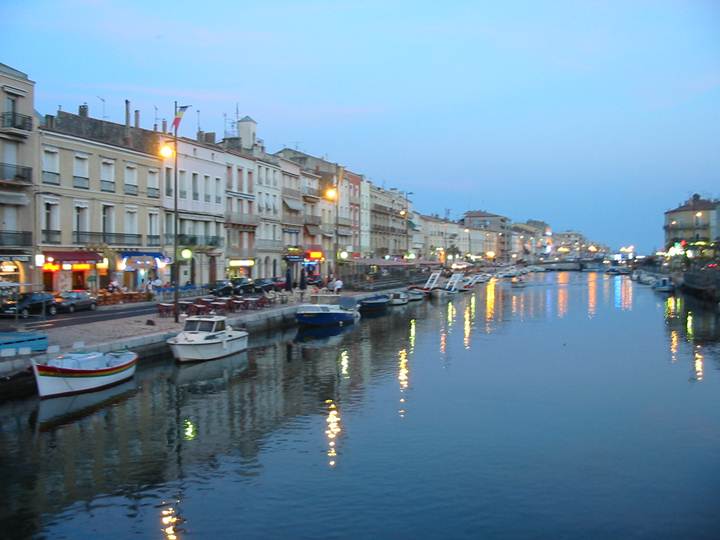
Known as the Venice of Languedoc and the singular island (in Paul Valéry's words), it is a port and a sea-side resort on the Mediterranean Sea with its own very strong cultural identity, traditions, cuisine and dialect. It is also the hometown of artists like Paul Valéry, Jean Vilar and Georges Brassens.
Narbonne
|
|
Narbonne is a charming small city in the Languedoc, with wonderful historic attractions as well as a relaxing beach along the Mediterranean. Until I came to Lithuania I thought this was the city in the world with the most beautiful girls. The heart of Narbonne, once a key port for the Roman Empire, is the dramatic Place de l'Hôtel de Ville. Also be sure to stroll through the village’s old town, where you can’t miss the main attraction: Cathedrale Saint-Just. The most dominant building in this neighbourhood, the 13th century church connects to the Palais des Archevêques, which has an ornately carved 130-meter keep. Narbonne lives up to its part in the deal. The weather never ceases to be perfectly cloudless with good, hot temperatures hovering around 90 to 95 Fahrenheit, (32 to 38 Celsius), low humidity and lots of boisterous, fragrant restaurants serving up mussels steamed in white wine, paella, platters of shellfish on ice, and gallons of chilled wines. |
|
Carcassonne - France’s most genuine Medieval town |
|
|
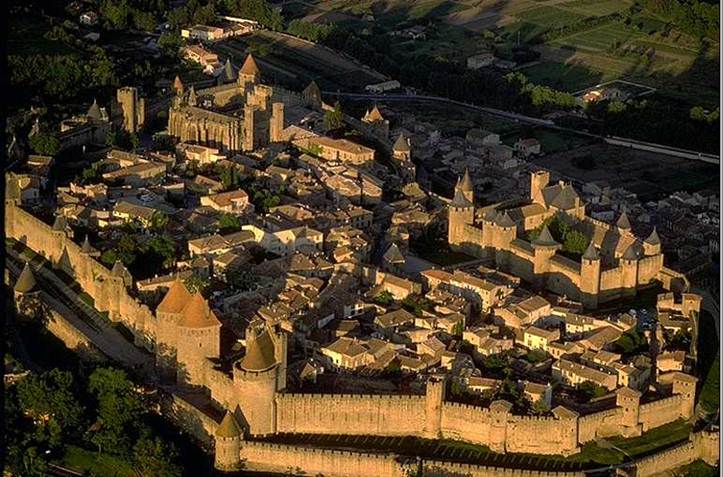
Photo: Wikipedia.
We drive from Languedoc's Riviera to France's best preserved medieval town, not far from the Spanish border.
Carcassonne! Phenomenal dinner, good Languedoc wines. Paté of crispy roasted toasts as starter, quails as main course. Castle towns around Europe are fantastic. The story lives around us Europeans. We are lucky to live and experience such as this...
No matter which direction you are coming from, you can’t miss the imposing silhouette of the City of Carcassonne which is encircled by a huge double row of fortified walls that run almost 2 miles long, accentuated by 56 watchtowers. During the 9th and 10th centuries B.C., the village of Carcas was already a very large and active agglomeration, about a mile south of Carcassonne. Its inhabitants migrated to the present location of Carcassonne around 600 B.C. At that time, the common way to protect a city was to dig a large moat and build a very tall reinforced wood fence all around it. The 3rd century A.D. was a particularly unstable period that saw incessant Barbarian invasions. This is when Carcassonne decided to update its defense mechanisms and solidify its ramparts, building the fortified walls that we can still admire today. Rattled by another period of invasions and insecurity, the inhabitants built a second exterior wall around 1230. It took several thousand soldiers to protect the city back then. The 2000-year-old city of Carcassonne still stands today as the most successful achievement in military architecture of that time in Europe. Nothing has really changed since the 13th century, and if you find yourself in the south of France, you should not miss the chance to be carried back to the heart of the Middle Ages and feel the magic of its glorious past.
|
|
Who were the Cathars? The Cathars were an integral part of Carcassonne history. Catharism was a very active religion in Europe and especially in the area around Carcassonne. The middle of the 12th century was a prosperous period of French history, as well as one of great religious tolerance when Jews, Catholics and Cathars all lived in harmony. Cathars were Christians, but unlike the Roman Catholics, they believed that God had only created spiritual perfection and eternity, not the material world that they saw as the Devil’s creation. Therefore, they led very austere lives, refusing any earthly pleasure. They did not eat any fancy food such as meat. Sex and wealth were banned. |
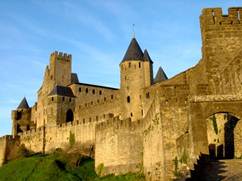
|
A VILLAGE IN LANGUEDOC, SOUTHERN FRANCE Jesus, Mary Magdalene, the “da Vinci Code”, “the Holy Grail” and Vilnius University Library
The village Rennes le Château, 45 km south of Carcassonne, should definitely be part of your Riviera trail. Explore the village and its church which is dedicated to Mary Magdalene and shrouded in mystery. Followers of the Da Vinci code will be fascinated by the history surrounding the whole of this area. Here, many believe, Mary Magdalene came after the death of Christ. And because of her influence, a whole order of fighting men, known as the Knights Templar, were created. In The Holy Blood and the Holy Grail, a book by Michael Baigent, Richard Leigh, and Henry Lincoln from 1982, the authors put forward a hypothesis, that the historical Jesus married Mary Magdalene, had one or more children, and that those children or their descendants emigrated to what is now southern France. Once there, they intermarried with the noble families that would eventually become the Merovingian dynasty, whose special claim to the throne of France is championed today by a secret society called the Priory of Sion. They concluded that the legendary Holy Grail is simultaneously the womb of saint Mary Magdalene and the sacred royal bloodline she gave birth to. The 2003 conspiracy fiction novel The Da Vinci Code by Dan Brown makes reference to this book, also liberally using most of the above claims as key plot elements. Wherever Mary traveled in France, she taught the skill of healing with oils. Few people realize the wisdom that the Magdalene presented to the world in the development of the use of essential oils. She was the mystical woman that anointed Jesus' feet. This demonstrates her skill in the use of essential oils. Biblical references to Mary Magdalene include information that she was one of the women who accompanied Jesus after he healed her of possession by several demons (Luke 8:2, and Mark 16:9). She is also reported to have been one of the women at the foot of the cross (Mark 15:40, Matthew 27:56 and John 19:25), and one of the women to arrive at the tomb at first light on Easter morning (Mark 16:1, Matthew 28:1, Luke 24:10, John 20:1-3). The gospel of John says that she came alone to the tomb and encountered Jesus, at first believing him to be the gardener. She even reached out and embraced him when she recognized him, calling him "Rabboni," an affectionate form of the word Rabbi. Obviously this Mary, called "the Magdalene," was an intimate friend and companion of Jesus. After the crucifixion of Jesus, Mary Magdalene moved to France and lived for several years. Her offspring became the kings of France, known as the Merovingian line. French history states that she was the sister of Lazarus, who sat at the feet of Jesus, absorbing his teachings (Luke 10:28-42), and who later anointed his feet with nard (spikenard, an essential oil) and dried them with her hair (John 11:2 and 12:3). Part of the mystery about Rennes-le-Chateau is centered on the offspring of the Magdalene. The last French king in the Merovingian line was Dagobert II. He and his son Sigebert were supposedly killed. However, the young Sigebert was smuggled into Rennes-le-Chateau by his mother, and there, the whole mystery of the Templars was created to prove the birth rites of the lineage of the Magdalene. Because of this wisdom, alchemy in France became a reality. The Merovingians knew the mysteries that Jesus taught, like changing water into wine. Around 1090, nine priests went to Jerusalem and searched around the temple of Solomon for proof of this lineage, and for a better understanding of the development of alchemy. Out of this search came the birth of the Templars. What they discovered while in Jerusalem is the true wisdom of alchemy. They found the instruments know as the Holy Grail. They learned how to use these instruments to change mind over matter (alchemy). |
|||
|
|
The Pyrenees
|


Some Blonde d'Aquitaine on summer pasture near the Pic du Midi d'Ossau.
Photo: Wikipedia.
The Pyrenees, also spelled Pyrénées, is a range of mountains in southwest Europe that forms a natural border between France and Spain. It separates the Iberian Peninsula from the rest of continental Europe, and extends for about 491 km (305 mi) from the Bay of Biscay (Cap Higuer) to the Mediterranean Sea (Cap de Creus).
For the most part, the main crest forms a massive divider between France and Spain, with the tiny country of Andorra sandwiched in between. Catalonia and Navarre have historically extended on both sides of the mountain range, with small northern portions now in France and much larger southern parts now in Spain.
|
|
Catalonia
|
Catalonia is a part of a nation without state in Spain. Catalonia is also an autonomous community in northeastern Spain, with the official status of a "nationality" of Spain. Catalonia comprises four provinces: Barcelona, Girona, Lleida, and Tarragona. Its capital and largest city is Barcelona. Catalonia covers an area of 32,114 km² and has an official population of 7,535,251. Its borders essentially reflect those of the former Principality of Catalonia. It borders France and Andorra to the north, Aragon to the west, the Valencian Community to the south, and the Mediterranean Sea to the east (580 km coastline). The official languages are Catalan, Spanish and Aranese (Occitan).
Figueres – the home of Salvador Dalí
Dalí in 1972.
Figueres is the capital of the comarca of Alt Empordà, in the province of Girona, Catalonia, just south of the French border. The town is the birthplace of artist Salvador Dalí, and houses the Teatre-Museu Gala Salvador Dalí, a large museum designed by Dalí himself which attracts many visitors. It is also the birthplace of Narcís Monturiol i Estarriol, inventor of the first successful machine-powered submarine. Also born here was Mónica Naranjo, one of the best selling Spanish singers of the 1990s and 2000s.
Salvador Domènec Felipe Jacinto Dalí i Domènech, Marquis de Púbol (May 11, 1904 – January 23, 1989), commonly known as Salvador Dalí, was a prominent Spanish surrealist painter born in Figueres, Spain. Dalí was a skilled draftsman,
best known for the striking and bizarre images in his surrealist work. His painterly skills are often attributed to the influence of Renaissance masters. His best-known work, The Persistence of Memory, was completed in 1931. Dalí's expansive artistic repertoire includes film, sculpture, and photography, in collaboration with a range of artists in a variety of media.
Dalí attributed his "love of everything that is gilded and excessive, my passion for luxury and my love of oriental clothes" to a self-styled "Arab lineage", claiming that his ancestors were descended from the Moors. Dalí was highly imaginative, and also had an affinity for partaking in unusual and grandiose behavior. His eccentric manner and attention-grabbing public actions sometimes drew more attention than his artwork to the dismay of those who held his work in high esteem and to the irritation of his critics.
The Persistence of Memory
Barcelona
Sagrada Família church in Barcelona,
the masterpiece of Antoni Gaudí (1852–1926).
Barcelona is the second largest city in Spain after Madrid, and the capital of Catalonia, with a population of 1,6 million within its administrative limits on a land area of 101.4 km2 (39 sq mi). The urban area of Barcelona extends beyond the administrative city limits with a population of between 4,200,000 and 4,500,000, being the sixth-most populous urban area in the European Union after Paris, London, Ruhr area, Madrid and Milan. About five million people live in the Barcelona metropolitan area. It is also Europe's largest metropolis on the Mediterranean coast.
Barcelona is today one of the world's leading tourist, economic, trade fair/exhibitions and cultural-sports centres, and its influence in commerce, education, entertainment, media, fashion, science, and the arts all contribute to its status as one of the world's major global cities.
The Basílica i Temple Expiatori de la Sagrada Família (Basilica and Expiatory Church of the Holy Family), commonly known as the Sagrada Família, is a large Roman Catholic church in Barcelona, designed by Catalan architect Antoni Gaudí (1852–1926). Although incomplete, the church is a UNESCO World Heritage Site, and in November 2010 was consecrated and proclaimed a minor basilica by Pope Benedict XVI.
Though construction of Sagrada Família had commenced in 1882, Gaudí became involved in 1883, taking over the project and transforming it with his architectural and engineering style—combining Gothic and curvilinear Art Nouveau forms. Gaudí devoted his last years to the project and at the time of his death in 1926, less than a quarter of the project was complete. Sagrada Família's construction progressed slowly as it relied on private donations and was interrupted by the Spanish Civil War—only to resume intermittent progress in the 1950s. Construction passed the mid-point in 2010 with some of the project's greatest challenges remaining and an anticipated completion date of 2026—the centennial of Gaudí's death. The basílica has a long history of dividing the citizens of Barcelona—over the initial possibility it might compete with Barcelona's cathedral, over Gaudí's design itself, over the possibility that work after Gaudí's death disregarded his design, and the recent possibility that an underground tunnel of Spain's high-speed train could disturb its stability.
Describing Sagrada Familia, art Critic Rainer Zerbst said "it is probably impossible to find a church building anything like it in the entire history of art" and Paul Goldberger called it 'the most extraordinary personal interpretation of Gothic architecture since the Middle Ages'.
|
|
Valencia Region
|
The Valencia region in Spain is an extremely beautiful and very fertile area known as La Huerta (Garden of Spain).
The famous Spanish song lyrics of the popular Spanish song Valencia proclaim that Valencia is the 'land of flowers, light and love' and this is very true, because Valencia is indeed full of flowers and well known for the amazing light which Valenciano painter Joaquín Sorolla y Bastida highlights in his paintings. It's also overflowing with romance and passion and as there are many romantic things to do in Valencia it's a popular choice for city breaks and holidays in the sun.
The Valencia Region of Spain is divided into 3 provinces. CASTELLON to the north, VALENCIA in the center and ALICANTE in the south.
These three provinces form the Comunitat Valenciana - Land of Valencia - the city and the provinces are all called Valencia. This lovely region of Spain has over 500 kilometres of stunning coastline which are full of some of the most popular holiday destinations in Europe.
Valencia City
Valencia is the third largest city in Spain after Madrid and Barcelona, and the capital of the autonomous community of Valencia, with a population of 809,267 within its administrative limits on a land area of 134.6 km2 (52 sq mi). It is the 15th most populous municipality in the European Union. The urban area of Valencia extends beyond the administrative city limits with a population of between 1,175,000 and 1,564,145. Between 1,705,742 and 2,300,000 people live in the Valencia metropolitan area.
Altea – the old fishermen’s village at at Costa Blanca
Altea is an old fishermen’s village that has been turned into a tourism magnet the latest year, though still with the original flavours in place.
Benidorm
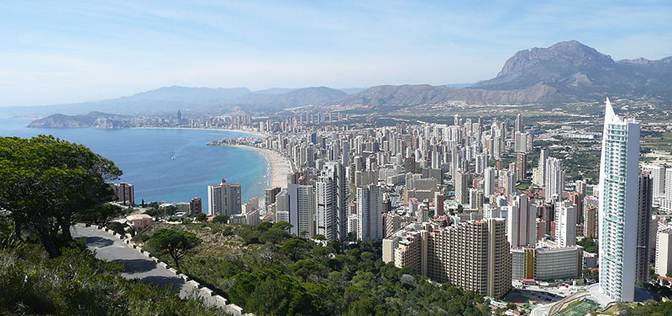
Photo: Wikipedia.
Benidorm is a coastal town and municipality located in the comarca of Marina Baixa, in the province of Alicante.
Prior to the 1960s, Benidorm was a small village. Today it stands out for its hotel industry, beaches and skyscrapers, built as a result of its tourist-oriented economy. According to the 2010 census, Benidorm has a permanent population of 71,198 inhabitants, ranking as the fifth most populous town in the Alicante province. It is one of the most important holiday resorts in Spain, with an area of 38.5 km² and a population density of 1,848.8 inhab/km². Due to the unique skyline formed by its numerous tall hotels and apartment buildings it is sometimes referred to as the "Manhattan of Spain" or "Beniyork", which is unlike any other on the Costa Blanca (White Coast). According to the Urban Age project, Benidorm has the most high-rise buildings per capita in the world. Benidorm itself is dwarfed by the 1406 m tall Puig Campana, which is one of the most impressive mountains of the Costa Blanca.
Alicante
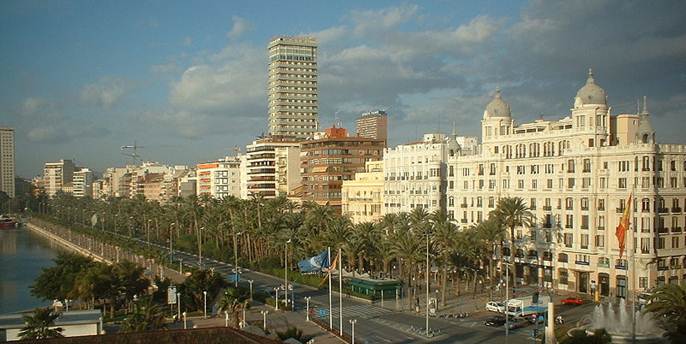
Esplanada and Carbonell House, Alicante.
Photo: Wikipedia.
Alicante is a the capital of the province of Alicante and of the comarca of Alacantí, in the south of the Valencian Community. It is also a historic Mediterranean port. The population of the city of Alicante proper was 334,329, estimated as of 2011, ranking as the second-largest Valencian city. Including nearby municipalities, Alicante conurbation was populated by 462,281 residents.[3] Population of the metropolitan area (including Elche and satellite towns) was 771,061 as of 2011 estimates, ranking as the eighth-largest metropolitan area of Spain.
|
|
|
|
Mediterranean beaches
|

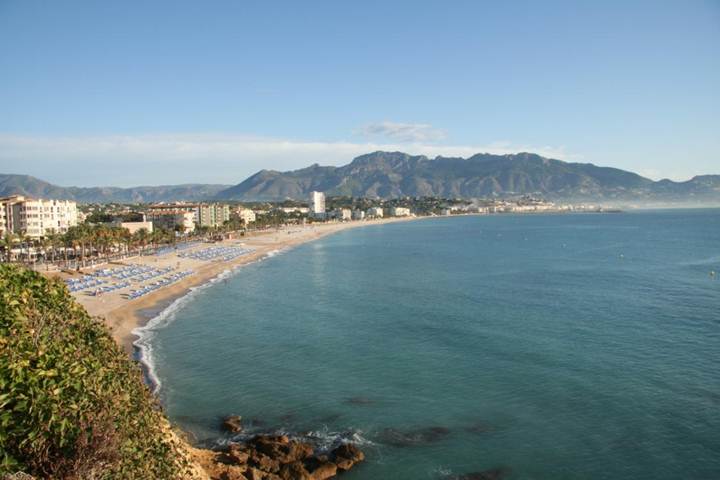
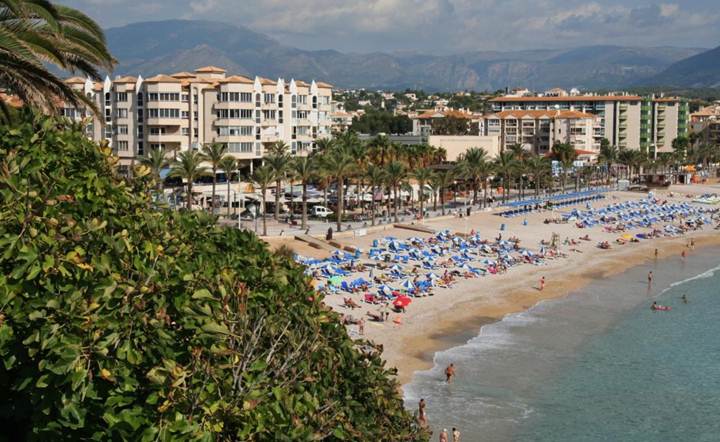
From your very first glimpse, the views of the Mediterranean Sea make a dramatic and lasting impression. The climate in the Mediterranean area is very warm and pleasant, and has very nice hot and dry summers. These are the best conditions for wonderful summer holidays at the beach, but also for a high rate of water evaporation. The Mediterranean Sea looses in this way nearly one meter of its water height every year!
This evaporating water leaves all its salts in the remaining water. This is why you feel a lot lighter when you swim in the Mediterranean than when you swim in the ocean: the water of the Mediterranean contains more salt than the water of the Atlantic (36 to 38 grams per litre in the Mediterranean against 34.9 in the Atlantic).
|
|
|
|
Mediterranean waters
|
The origins of the Mediterranean waters
The origins of this water are:
· a small quantity coming from the rivers and the rain (1200 km3 per year);
· a very small quantity coming from the Black Sea (200 km3 per year);
· most of it comes from the Atlantic Ocean, through the Strait of Gibraltar (35 000 km3 per year).
It has been calculated by scientists that the Mediterranean waters need 100 years to renew themselves totally (through evaporation and water coming in through the Strait of Gibraltar).
The Strait of Gibraltar is not very wide (around 14 km at the narrowest point) and quite shallow (300 m deep). Therefore, there is a very strong current going through the Strait, coming from the Atlantic into the Mediterranean Sea.
Sailing in Mediterranean waters
The Mediterranean- it conjures up images of gorgeous coves, aqua water, cities spreading up hillsides, amazing food and friendly tanned locals. The Mediterranean lives up to its reputation- it is hugely varied, bordered by so many European, Middle Eastern and North African countries, and has an amazing climate.
Where you might go whilst sailing the med depends on what you would like to see or do. The French Riviera is a mecca for those seeking glamour, shopping and the celebrity lifestyle- think Monaco, Nice, St Tropez and Cannes. Here you can take your boat into the marinas and see the glitz and glamour of the cities, or anchor offshore and watch the world go by.
|
|
|
|
Mediterranean living
|
Styles, colours and beauty of living alongside the Mediterranean. The good life…
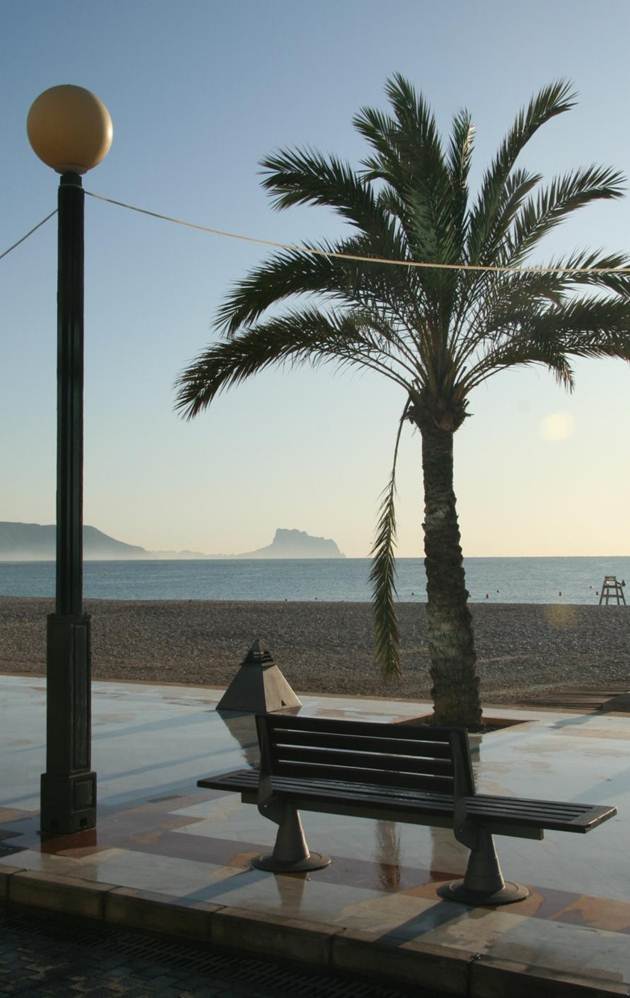
|
|
|
|
Mediterranean food & wines |
The idea of the ‘standard Mediterranean’ ... is a modern construction of food writers and publicists in Western Europe and North America earnestly preaching what is now thought to be a healthy diet to their audiences by invoking a stereotype of the healthy other on the shores of the Mediterranean. Their colleagues in Mediterranean countries are only too willing to perpetuate this myth. The fact of the matter is that the Mediterranean contains varied cultures...
Around 1975, under the impulse of one of those new nutritional directives by which good cooking is too often influenced, the Americans discovered the so-called Mediterranean diet.... The name... even pleased Italian government officials, who made one modification: changing from diet—a word which has always seemed punitive and therefore unpleasant—to Mediterranean cuisine.
Despite this, given the geography, these nation-states have influenced each other over time in both food and culture and the cooking evolved into sharing common principles. Mediterranean cuisine is characterized by its flexibility, its range of ingredients and its many regional variations. The terrain has tended to favour the raising of goats and sheep.
Fish dishes are also common, although today much of the fish is imported since the fisheries of the Mediterranean are weak. Seafood is still prominent in many of the standard recipes.
Olive oil and garlic are widely used in Mediterranean cuisine. It is widely believed that Mediterranean cuisine is particularly healthful; see Mediterranean diet.
Grilled meats, pita bread, hummus, and falafel are very popular forms of the eastern type of the cuisine.
Spain also makes paella, which is rice and mussels or other types of seafood.
|
Paella Paella is an internationally-known rice dish from Spain. It originated in the fields of a region called Valencia in eastern Spain. Today paella is made in every region of Spain, using just about any kind of ingredient that goes well with rice. There are as many versions of paella as there are cooks. It may contain chicken, pork, shellfish, fish, eel, squid, beans, peas, artichokes or peppers. Saffron, the spice that also turns the rice a wonderful golden color is an essential part of the dish.
|
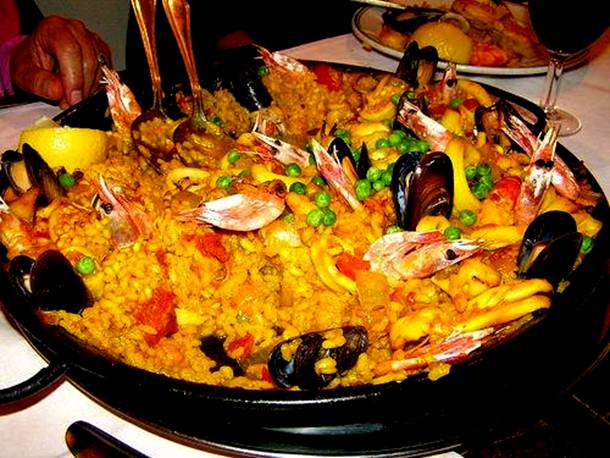
|
A good fish meal in Spain or Italy is often made in Lithuania
Every day, all year round, a truck drives out from the Espersen fish processing plant in the Klaipeda Free Economic Zone, fully loaded with over 20 tonnes of finished fish fillets for the south and west European markets. Not many days later, these fish products are to be found at a restaurant table in Spain, Italy and Greece as delicious dishes prepared by chefs who so often are amazing fish experts and know to appreciate the wonderful ingredients the Baltic Sea and Arctic Ocean have to offer. Because it is from these seas Espersen Lietuva gets its fish raw material, roughly 40 tonnes per day. About 50% of the fish they purchase from the Baltic countries Lithuania, Latvia, Sweden and Denmark, while the remaining half is purchased from Norway, caught in northern Atlantic waters. Some of the fish is purchased fresh, some frozen. Fish products from the plant are eaten at present by people in the UK, Germany, France, Portugal, Spain, Italy and Greece.
|
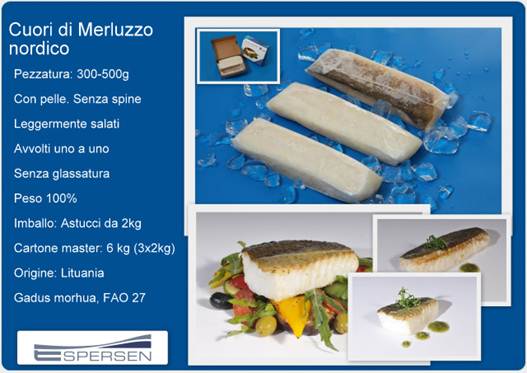
Riviera wines
One of the key elements in the Mediterranean diet -- along with olive oil and bread --
is wine. Wherever the Greeks and later the Romans went in their efforts to conquer the
Mediterranean world, they took along wine and the grapes to produce it.
Even in recent years, wine has continued to play a strong dietary role. Ancel and Margaret Keys, in their 1975 book ``How to Eat Well & Stay Well The Mediterranean Way,'' write: ``... the use of wine at every main meal and as an aperitif now and then means that the average man gets close to 10 percent of his daily calories from alcohol.''
In the south of France, a radical change in direction has led to the planting of classy varietals such as chardonnay, merlot and cabernet in the Languedoc-Roussillon region that stretches along the Mediterranean shore west of the Rhone toward the border with Spain. Many wine shops and restaurant wine lists now carry wines from one or more small producers in the region and two large-scale efforts are producing wines of exceptional value. Look for Fortant de France or Reserve St. Martin, both of which offer cabernet sauvignon, merlot, chardonnay, sauvignon blanc, viognier and syrah.
In Provence, if we include the southern Rhone Valley, a vast selection of red wine ranges from the pricey estate wines of Chateauneuf-du-Pape to small producer and cooperative wines from various ``Cotes'' or ``Coteaux'' appellations with names such as Ventoux, Luberon, Provence, Aix-en-Provence, Baronnies and Rhone or Rhone-Villages. Among the most dependable and widely circulated wines from this area are those from La Vieille Ferme.
Crossing into Italy, one sees a good deal of white Gavi and red Cinqueterre on the Italian Riviera. Wines made to the south, along the west coast, may have charm but most are too ephemeral to export. The white wines of Orvieto are an exception, but the reds don't shine until we reach the southern peninsula. There, in Campania, the aglianico grape makes superior reds and the white fiano and greco di tufo wines stand out. The region's outstanding producer is Mastroberardino, whose labels include Lacryma Christi and Taurasi. In Apulia, to the east, grapes such as primativo, negroamaro and malvasia nera make dark, fruity wines, all too often robbed of character by overcropping. The outstanding red of Basilicata, Aglianico del Vulture, is worth seeking out, however. Most of Calabria's wine is drunk there, but Sicily exports considerable wine to the United States, most notably Corvo.
In Spain, the most important region facing the Mediterranean, is the Penedes in Catalonia. It is the center of the country's sparkling wine industry and also produces very serviceable reds, whites and roses. The region's leading producer of still wines is Torres. To the south, inland from Alicante, some good wines are coming from vineyards at Jumilla.

Languedoc - Roussillon wine, including the vin de pays labeled Vin de Pays d'Oc, is produced in southern France. While "Languedoc" can refer to a specific historic region of France and Northern Catalonia, usage since the 20th century (especially in the context of wine) has primarily referred to the northern part of the Languedoc-Roussillon région of France, an area which spans the Mediterranean coastline from the French border with Spain to the region of Provence. The area has around 700,000 acres (2,800 km2) under vines and is the single biggest wine-producing region in the world, being responsible for more than a third of France's total wine production.
As recently as 2001, the region produced more wine than the entire United States.
- Bookmark :
- Digg
- del.icio.us
- Stumbleupon
- Redit it
- Posted by - (0) Comment
EXPLORING EUROPE (2 of 10)
Switzerland & Italy
Tour guide, writer and photographer:
Editor-in-Chief Aage Myhre aage.myhre@VilNews.com
My daughter Cassandra tries, unsuccessfully,
to fix the leaning tower of Pisa, Italy.
Today we start our little tour of Europe. Over the next few weeks, I invite you on a journey from north to south, from east to west. Some sections will dwell with history. Some with Lithuanian contact points in various countries. I have travelled across here with camera and notepad for nearly 40 years, and hope you will enjoy seeing and reading about some of my experiences. We start today's tour in Switzerland, and then continue to the south of Italy.
Go to our SECTION 11 to read more…
- Bookmark :
- Digg
- del.icio.us
- Stumbleupon
- Redit it
- Posted by - (0) Comment
EXPLORING EUROPE (2 of 10)
Venice shows me that architecture
first of all is about life
 Venice is a perfectly beautiful city. The smells, the sounds, the narrow alleys, canals, bridges. Places suddenly, often unexpectedly, opens as you go. The music, The gondoliers’ songs, vaparettos, taxi boats. I feel well. It is as if I'm in the middle of the very architectural being.
I was once one of many who believed that architecture is primarily about buildings. Venice shows me that architecture first of all is about life. Our human life. How it is the architecture which gives us the framework and background for how best to walk, sit, eat, sleep, work, meet with others, experience beauty.
I understand that the spaces between buildings are as important as the houses themselves. That the widths, heights, depths and connections between everything we surround ourselves with are important. The relationship between them. Interaction. Venice makes me feel that the physical is in total harmony with life itself. Also the spiritual.
It is as if the body, intellect and spirituality converge. I feel an intense happiness. Maybe this town is the world's leading symbol of what an architect should strive to achieve in his work. Maybe it has something to teach us about ourselves. About how important it is to think holistically, holistic in the way we plan our environment and our lives.
"A great architect is not made by way of a brain nearly so much as he is made by way of a cultivated, enriched heart," said the famous American architect Frank Lloyd Wright. Venice tells me that he is right. One does not become a good architect, no matter how much knowledge is acquired, without having talent and an inner inspiration that drives one to draw very good environment for real people interacting with each other. Empathy. Synergy. Proximity. Emotions. In a living symbiosis.
“Form follows function - that has been misunderstood. Form and function should be one, joined in a spiritual union,” says Lloyd Wright also. He emphasizes that "Art for art's sake is a philosophy of the well-fed." "Get the habit of analysis -analysis goodwill in time enable synthesis two become your habit of mind. All fine architectural values are human valueselse not valuable," he concludes. Venice is to me proof of that…
Go to our SECTION 11 to read more…
- Bookmark :
- Digg
- del.icio.us
- Stumbleupon
- Redit it
- Posted by - (3) Comment


EXPLORING EUROPE (2 of 10)
Switzerland & Italy
Today we start our little tour of Europe. Over the next few weeks, I invite you on a journey from north to south, from east to west. Some sections will dwell with history. Some withLithuanian contact points in various countries. I have travelled across here with camera andnotepad for nearly 40 years, and hope you will enjoy seeing and reading about some of my experiences. We start today's tour in Switzerland, and then continue to the south of Italy.
|
|
|
SWITZERLAND
|
The best known Lithuanian politician in Europea before 1916 I have come south in Switzerland, to the incredibly beautiful Lake Geneva. I sit on the lake bank in the picturesque Montreux town, knowing that only five kilometres from here lived the best-known Lithuanian political figure on the European scene 100 years ago. Juozas Gabrys (1880-1951) was his name. This extraordinarily active personality is today little known in Lithuania and other European countries, like many other thinkers who helped to shape today‘s Europe. Visionaries like Gabrys are often neglected by history, which would not have been the case had they become presidents of their countries. Historians remember Gabrys as the organiser of the four international conferences on Lithuania between 1916 and 1918 in Lausanne and Bern. He bought a farm here in the most romantic area of Switzerland, near the town Vevey five kilometres from where I’m sitting, a region where Victor Hugo, Dostoyevsky, Charlie Chaplain, Nabokov, and others also felt at home. |
|
Vevey is, by the way, the town where Henri Nestlé in 1867 invented his now famous powdered milk and set up a company that was to develop into today‘s number one coffee and chocolate producer worldwide.
But back to Juozas Gabrys. In 1977, Alfred Erich Senn at University of Wisconsin, Madison, wrote a piece about him in the journal Lituanus, stating that Gabrys was a controversial figure in the history of independent Lithuania. He continues: “Since he died in 1951, I never had the opportunity to meet him. In 1957 my father and I visited his widow in Vevey, Switzerland. She received us in friendly fashion, gave me copies of several of his books, and even presented me with a file of five issues of Gabrys' newspaper, la Lituanie Independante.
On the other hand, she would not permit me to search through his papers. She looked through several files herself and insisted that the documents were too personal to turn over to me. Unfortunately, after her death, most of the archive was destroyed. Dr. Albertas Gerutis managed to save Gabrys' manuscript memoirs, "Tėvynės sargyboj," but the rest was lost. As a result, documentation of his career has to come from other sources.
Gabrys was undoubtedly the best known Lithuanian political figure on the European scene before 1916. He had been very active in Paris for several years, and he had established a number of friendships in French intellectual circles. He published memoirs, which appeared in French in 1920, described this phase of his work in detail, but one has to turn to his unpublished memoirs, now in Dr. Gerutis' possession, to get a clearer picture of his career after 1916 when he had begun to work with the Germans.
On August 1, 1919, Gabrys published the first issue of his newspaper La Lituanie Independante, which was aimed at discrediting Provisional Government in Kaunas. In the lead article, entitled "Our Aim," Gabrys proclaimed his desire to seek Lithuanian independence on good terms with all its neighbors. The keynote of the issue was his demand for the election of a Constituent Assembly. A report on the "Present situation in Lithuania" criticized the government as lacking "any support worthy of the name." Completing the first page was the text of an open letter to President Smetona, written in May, declaring that the government feared facing elected representatives of the people.
The issue continued with a "letter from Lithuania," decrying the power of German officials in the country and denouncing the subservience of the "Smetona clique." An anonymous report on "mass discontent in Lithuania" told of moves by the government against Vincas Bartuška and others of Gabrys' friends, and it declared that meetings of Lithuanian patriots were endorsing the sentiments of Gabrys' open letter to Smetona.
Read more at http://www.lituanus.org/1977/77_1_02.htm
|
|
Winter carnival For many, Switzerland is probably more known as a winter wonderland than a summer destination. This is the country Lithuanians and many others prefer when they go on a ski holiday. One of my good winter experiences here took place some years ago when I celebrated 'Fasching (winter carnival)' in an inn outside the capital, Bern, in a half timbered ‘gasthaus’ with a large open fireplace, packed with partying Swiss this evening. All dressed in their national leather and homespun suits. High humidity. Much beer and powerful, heavy food. Switzerland is good in so many ways. Every season! |
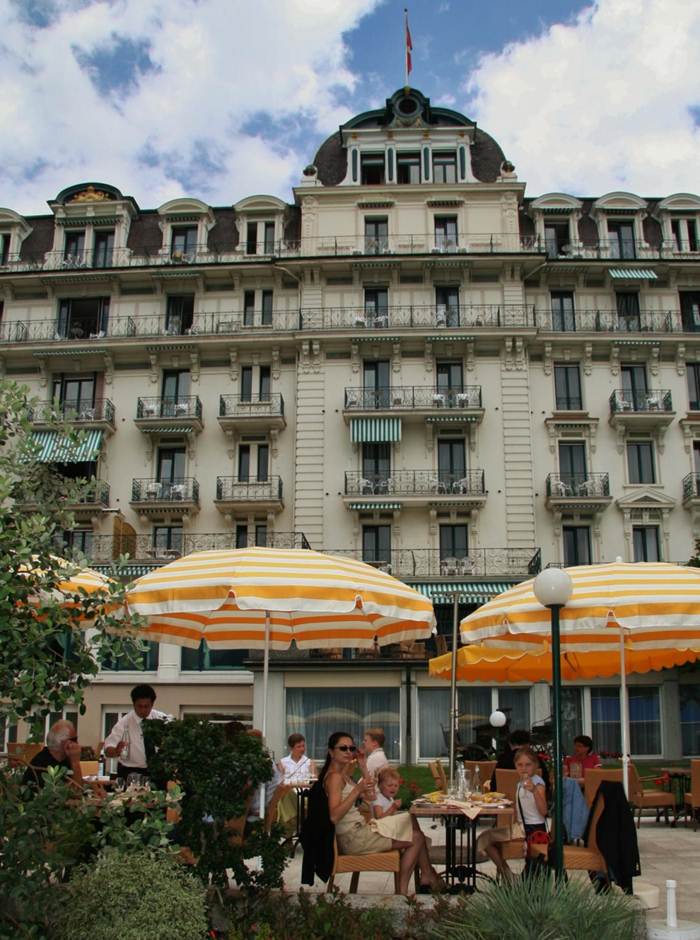
Montreux is beautiful!
A stroll along the impressive lakeside promenade in Montreux at Lake Geneva.
ITALY
Management for Presidents. Villa d’Este, Lace Como, at the Swiss-Italian border
I prefer classical architecture. Modern buildings in glass and steel rarely appeal to me. I see them as cold, sometimes almost hostile. The Renaissance style is the one I admire most. This I understood already in my school years, when I sat up three days and nights to write an essay about Michelangelo. The man and his work was simply so fascinating that I could not sleep.
Italian Michelangelo di Lodovico Buonarroti Simoni (1475 - 1564), commonly known as Michelangelo, was the very 'renaissance guru'; a painter, sculptor, architect, poet and engineer. Only Leonardo da Vinci can be compared. Strange, by the way, that so many of the contemporary geniuses of those days were multi-talented.
During my years as a business leader in Trondheim, Norway, I used some time to read about leadership and management. The course ended in May-June a year in the mid 1980s, and I set my course for Villa d'Este on Lake Como in northern Italy. I was going on one week's final course: 'Management Course for Presidents, a Concentrated program of study in professional management for chief executives.'
We were three persons from Trondheim arriving at Linate Airport in Milan that late May evening. Soon I was sitting behind the wheel of a rented car, a blue-black Lancia Gamma. On the motorway we were met by heavy lightning and thunder, the rain pouring. Police cars with flashing blue lights driving slowly on the highways around Milan to get other cars to take it easy. Not always easy in Italy... The weather improved when we an hour later, following the winding mountain roads, approached the hotel on Lake Como. Soon we come to a guard shelter with a turnpike. The guard checked our booking information, and not long after we parked outside one of the world's most beautiful hotels - in an incredibly stunning setting on the hillside above the lake. Later I was told that the reason for placing the guard a full mile before reaching the hotel, was that business people from Milan should be notified in time to get hidden mistresses away in case the wives came for a hotel visit...
Villa d'Este was originally a privately Renaissance palace, built in the 1500s, since 1873 a luxury hotel. We were here for a week, going through a busy course agenda and enjoying nature, luxury, in one of the world's most scenic areas.
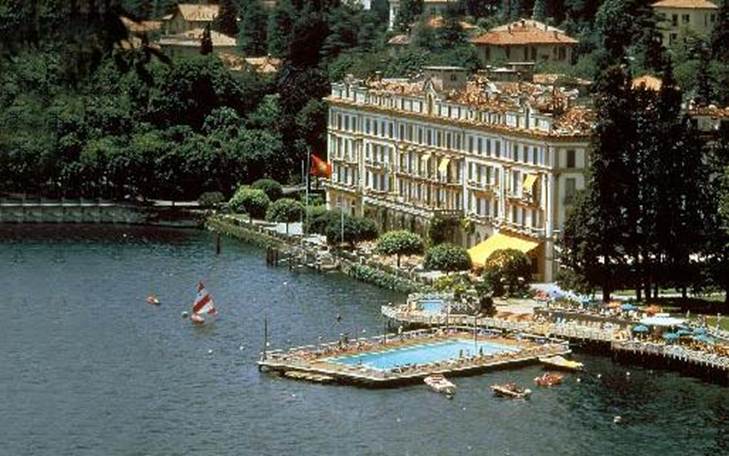
The Renaissance Palace Villa d'Este on Lake Como, between Italy and Switzerland,
is one of the world's finest hotels.
Foto: Italianvisits.com
Pisa, Central Italy
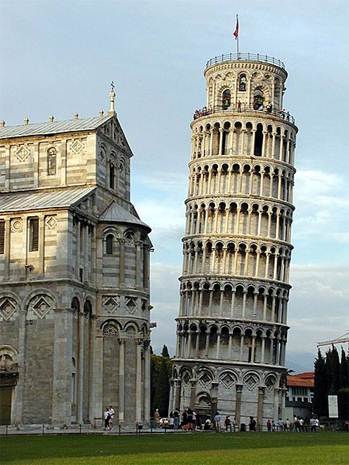
The leaning tower of Pisa.
Pisa is a city in Tuscany, Central Italy, on the right bank of the mouth of the River Arno on the Tyrrhenian Sea. It is the capital city of the Province of Pisa. Although Pisa is known worldwide for its Leaning Tower (the bell tower of the city's cathedral), the city of over88,332 residents (around 200,000 with the metropolitan area) contains more than 20other historic churches, several palaces and various bridges across the River Arno .
The city is also home of the University of Pisa, wooden has a history going back to the12th century and also has the mythic Napoleonic Scuola Normale Superiore di Pisa and Sant'Anna School of Advanced Studies as the best Superior Graduate Schools in Italy.
|
The three Renaissance Capitals of the World!
Did you know that throughout the Renaissance period, when Italy was a trading centre and a melting pot for the world’s greatest civilisations, Vilnius also became a Renaissance centre, competing with Florence and Milan? The two great nations merged when Grand Duke Sigismund the Old (1467-1548) married the Princess of the Italian city of Milan, Bona Sforza, and returned to reign in and from Vilnius as the capital of the Grand Duchy of Lithuania. The royal couple created an Italian community within the court and, under the influence of the new Grand Duchess, Italian culture became the preoccupation of the Lithuanian’ elite. This was at a time when Lithuania was Europe’s largest nation, stretching from the Baltic Sea to the Black Sea. See https://vilnews.com/?p=326
|
District of Tuscany – city of Florence
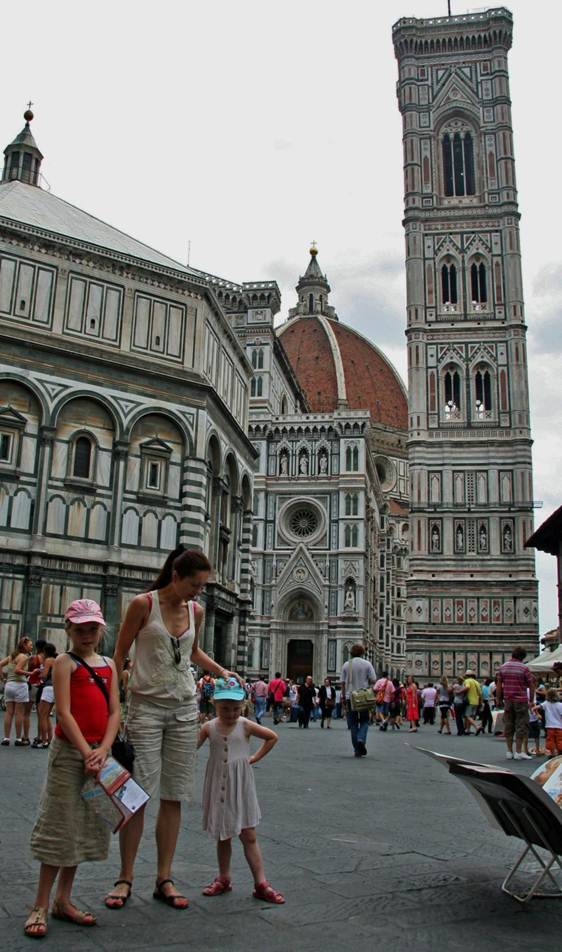
The Basilica di Santa Maria del Fiore (English: Basilica of Saint Mary of the Flower) is the cathedral church of Florence. The Duomo, as it is ordinarily called, was begun in 1296 in the Gothic style to the design of Arnolfo di Cambio and completed structurally in 1436 with the dome engineered by Filippo Brunelleschi. The exterior of the basilica is faced with polychrome marble panels in various shades of green and pink bordered by white and has an elaborate 19th century Gothic Revival façade by Emilio De Fabris.
The Palazzo Medici, also called the Palazzo Medici Riccardi after the later family that acquired and expanded it, is a Renaissance palace located in Florence. The palace was designed by Michelozzo di Bartolomeo for Cosimo de' Medici, head of the Medici banking family, and was built between 1445 and 1460. The House of Medici or Famiglia de' Medici was a political dynasty, banking family and later royal house that first began to gather prominence under Cosimo de' Medici in the Republic of Florence during the late 14th century. The family originated in the Mugello region of the Tuscan countryside, gradually rising until they were able to found the Medici Bank. The bank was the largest in Europe during the 15th century.
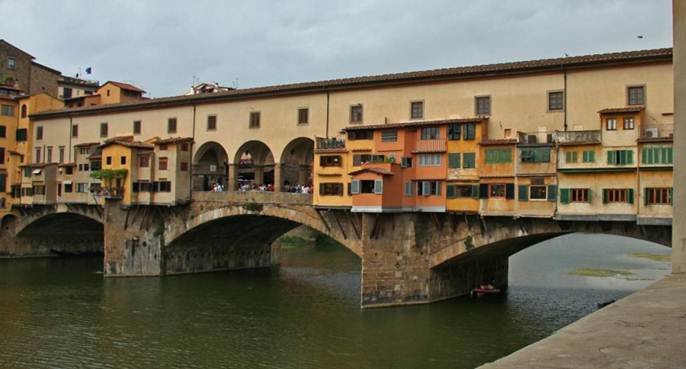
The Ponte Vecchio ("Old Bridge") is a Medieval stone closed-spandrel segmental arch bridge over the Arno River, in Florence, noted for still having shops built along it, as was once common. Butchers initially occupied the shops; the present tenants are jewellers, art dealers and souvenir sellers. A curious fact regarding the words bank and bankruptcy is that they derive from the economic activity on Ponte Vecchio. The stand, or table, that held the merchants goods was called a "banco" (“bench”). When a merchant was no longer able to pay his taxes, his banco was literally broken or "rotto" into pieces, therefore creating the term "bancorotto" which translated into the word "bankruptcy" in English.
A room with no view
A Room with a View is a 1908 novel by the English writer E. M. Forster, about a young woman in the repressed culture of Edwardian England. Set in Florence and England, the story is both a romance and a critique of English society at the beginning of the 20th century. Merchant-Ivory produced an award-winning film adaptation in 1985. Our hotel room in Florence faced a house wall, a room with no view, but my daughter Cassandra was able to take reading light.
When in Rome, do as the Romans do
Rome is the capital of Italy and the country's largest and most populated city and commune, with over 2.7 million residents. The city is located in the central-western portion of the Italian Peninsula, on the Tiber River within the Lazio region of Italy. Rome's history spans two and a half thousand years. It was the capital city of the Roman Kingdom, the Roman Republic and the Roman Empire, which was the dominant power in Western Europe and the lands bordering the Mediterranean for over seven hundred years from the 1st century BC until the 7th century AD. Since the 1st century AD Rome has been the seat of the Papacy and, after the end of Byzantine domination, in the 8th century it became the capital of the Papal States, which lasted until 1870. In 1871 Rome became the capital of the Kingdom of Italy, and in 1946 that of the Italian Republic.
The Trevi Fountain is a fountain in the Trevi district in Rome, Italy. Standing 26 metres (85.3 feet)
high and 20 metres (65.6 feet) wide, it is the largest Baroque fountain in the city and one
of the most famous fountains in the world.
The Colosseum, originally the Flavian Amphitheatre, is an elliptical amphitheatre in the centre of the city of Rome, the largest ever built in the Roman Empire. It is considered one of the greatest works of Roman architecture and Roman engineering. Occupying a site just east of the Roman Forum, its construction started in 72 AD under the emperor Vespasian and was completed in 80 AD under Titus, with further modifications being made during Domitian's reign (81–96). The name "Amphitheatrum Flavium" derives from both Vespasian's and Titus's family name (Flavius, from the gens Flavia).Capable of seating 50,000 spectators, the Colosseum was used for gladiatorial contests and public spectacles such as mock sea battles, animal hunts, executions, re-enactments of famous battles, and dramas based on Classical mythology. The building ceased to be used for entertainment in the early medieval era. It was later reused for such purposes as housing, workshops, quarters for a religious order, a fortress, a quarry, and a Christian shrine.
One of many fantastic nights in Rome. My kids simply loved them.
Gargano, South Italy, has the best beaches of the Mediterranean Sea!
Gargano is a historical and geographical Italian sub-region situated in Apulia, consisting of a wide isolated mountain massif made of highland and several peaks and forming the backbone of the Gargano Promontory projecting into the Adriatic Sea. The high point is Monte Calvo at 1,065 m (3,494 ft). Most of the upland area, about 1,200 km2 (460 sq mi), is part of the Gargano National park, founded in 1991. It is within the Italian Province of Foggia. My good friends are running a motel & camping close to the Adriatic Sea. A paradise for travellers!
The coast of Gargano is rich in beaches and tourist facilities. Vieste, Peschici and Mattinata are world-wide-famous seaside resort locations. The two major salt lakes of Lesina and Varano are located in the northern part of the peninsula. Monte Gargano is the site of the oldest shrine in Western Europe dedicated to the archangel Michael, Monte Sant'Angelo sul Gargano. Today tourism is thriving with several hotels and campsites, in particular along the seaside of Marina of Lesina, give the possibility of staying in this suggestive area. Tourist attractions include the cathedral, the episcopal palace, the Abbey of Santa Maria of Ripalta and the volcanic rocks dating back to the Triassic era, known as "Black Stones", as well as the Sanctuary of San Nazario.
|
|
I will always feel gratitude towards the Pacilli family here in Gargano. They have taught me important things about friendship, companionship, food, Italian wine and the joy of a long meal among friends when darkness falls...
|
Santa Claus and Lithuania's Grand Duchess My years in Lithuania and my many visits to Italy have put a different and very special Christmas story onto my lap. Far south in Italy, a little south of Gargano, lies the city of Bari with its Cathedral Basilica di San Nicola, built between1087 and 1197. This church was erected over the remains of St. Nicholas (270-343). His relics were originally stolen from the city of Myra in today's South-west Turkey. When Myra in the 1000s was occupied by the Saracens, the Catholic Church saw this as an opportunity to move the saint's relics to a more friendly place. According to the justifying legend which was created, had the saint himself, |
|
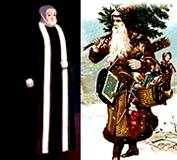
during a voyage from Myra to Rome, arrived at the port of Bari and then selected the city as his burial place. It came to great competition for the relics between Venice and Bari. The latter won and the relics were removed just below the nose of their Greek keepers and their Muslim masters. On 9 May 1087 the remains safely arrived in Bari. A crypt was immediately made for the remains of this important saint, and a new church was started built on top of the crypt. Pope Urban II was present at the consecration of the crypt in 1089. The church, which naturally carried the saint's name, was completed in 1197
460 years pass, and the Lithuanian Grand Duchess Bona Sforza, who is now the widow after Grand Duke Sigismund the Old, comes to Bari gets to collect the debt Spain's King Philip II has to her. Instead of receiving money as agreed, she was poisoned by the Spanish king's envoy and she dies here in Bari in the year 1557. Her sarcophagus was placed in the middle of the church. The Sforza family's role in Bari was very important, and it are no wonder that Bonas sarcophagus in the St. Nicholas Church to this day symbolizes and represents this role in a grand manner.
It was duchess Bona and her mother, Isabella d'Aragona, Princess of Naples, Duchess of Milan and Bari, who had undertaken the construction of the fort here in Bari. The fort still dominates today Bari's old town, but has now turned into a cultural centre in the midst of the imposing defensive bastions. The fort also houses a gallery of plaster casts and temporary exhibits of different character
|
|
So here they lie, St. Nicolas who later became better known as Santa Claus, and Bona Sforza, the grand duchess who was also the mother of the last two representatives of Lithuania's famous Jagailo dynasty, Sigismund Augustus and Anna Jagiellon. With them came the 300-year dynasty of the House of Gediminas to an end, and today the world knows very little about the country that was once Europe's largest, the Grand Duchy of Lithuania. And ironically enough, the relics of the woman who was such a leading symbol of Lithuania's greatness is to be found, not in Lithuania, but here in southern Italy - along with the remains of the symbol of today's Christmas traditions...
|
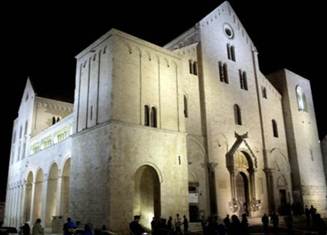
Venice shows me that architecture first of all is about life
|
|
Venice is a perfectly beautiful city. The smells, the sounds, the narrow alleys, canals, bridges. Place suddenly, often unexpectedly, opens as you go. The music, The gondoliers’ songs, vaparettos, taxi boats. I feel well. It is as if I'm in the middle of the very architectural being. I was once one of many who believed that architecture is primarily about buildings. Venice shows me that architecture first of all is about life. Our human life. How it is the architecture which gives us the framework and background for how best to walk, sit, eat, sleep, work, meet with others, experience beauty. I understand that the spaces between buildings are as important as the houses themselves. That the widths, heights, depths and connections between everything we surround ourselves with are important. The relationship between them. Interaction. Venice makes me feel that the physical is in total harmony with life itself. Also the spiritual. It is as if the body, intellect and spirituality converge. I feel an intense happiness. Maybe this town is the world's leading symbol of what an architect should strive to achieve in his work. Maybe it has something to teach us about ourselves. About how important it is to think holistically, holistic in the way we plan our environment and our lives. "A great architect is not made by way of a brain nearly so much as he is made by way of a cultivated, enriched heart," said the famous American architect Frank Lloyd Wright. Venice tells me that he is right. One does not become a good architect, no matter how much knowledge is acquired, without having talent and an inner inspiration that drives one to draw very good environment for real people interacting with each other. Empathy. Synergy. Proximity. Emotions. In a living symbiosis. |
“Form follows function - that has been misunderstood. Form and function should be one, joined in a spiritual union,” says Llloyd Wright also. He emphasizes that "Art for art's sake is a philosophy of the well-fed." "Get the habit of analysis -analysis goodwill in time enable synthesis two Become your habit of mind. All fine architectural values are human values, else not valuable, "he concludes. Venice is to me proof of that.
Venice taught me to look behind facades. It was here it first dawned on me that it is the human that
is good architecture's true nature. The architect's task is to create inspiring framework that promotes,
does not conflict with or interfere with human activity. I start taking pictures of people
and situations, more than of buildings.
Photo: Aage Myhre, 1974.
|
Venice is an outstanding symbol of life itself...
|
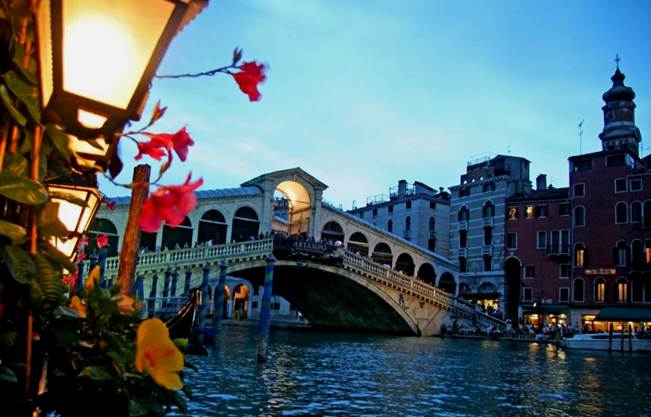
Venice has been known as the "La Dominante", "Serenissima", "Queen of the Adriatic", "City of Water", "City of Masks", "City of Bridges", "The Floating City", and "City of Canals". Luigi Barzini described it in The New York Times as "undoubtedly the most beautiful city built by man". Venice has also been described by the Times Online as being one of Europe's most romantic cities. The city stretches across 117 small islands in the marshy Venetian Lagoon along the Adriatic Sea in northeast Italy. The saltwater lagoon stretches along the shoreline between the mouths of the Po (south) and the Piave (north) Rivers. The Republic of Venice was a major maritime power during the Middle Ages and Renaissance, and a staging area for the Crusades and the Battle of Lepanto, as well as a very important center of commerce (especially silk, grain, and spice) and art in the 13th century up to the end of the 17th century. This made Venice a wealthy city throughout most of its history. It is also known for its several important artistic movements, especially the Renaissance period. Venice has played an important role in the history of symphonic and operatic music, and it is the birthplace of Antonio Vivaldi.
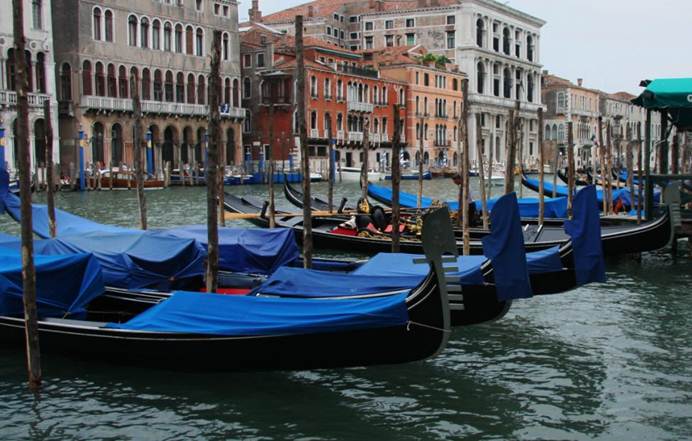
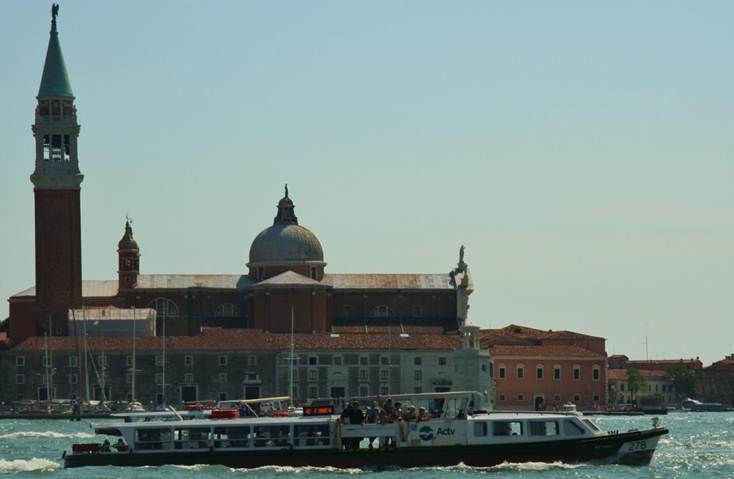
- Bookmark :
- Digg
- del.icio.us
- Stumbleupon
- Redit it
- Posted by - (3) Comment
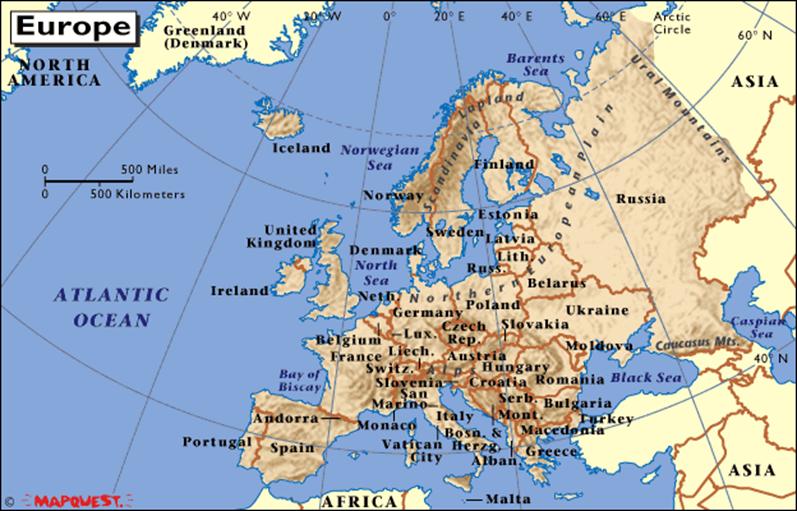
EXPLORING EUROPE
Join me on my journey to 26 European countries!
TOUR GUIDE: Aage Myhre, VilNews editor-in-chief
aage.myhre@VilNews.com
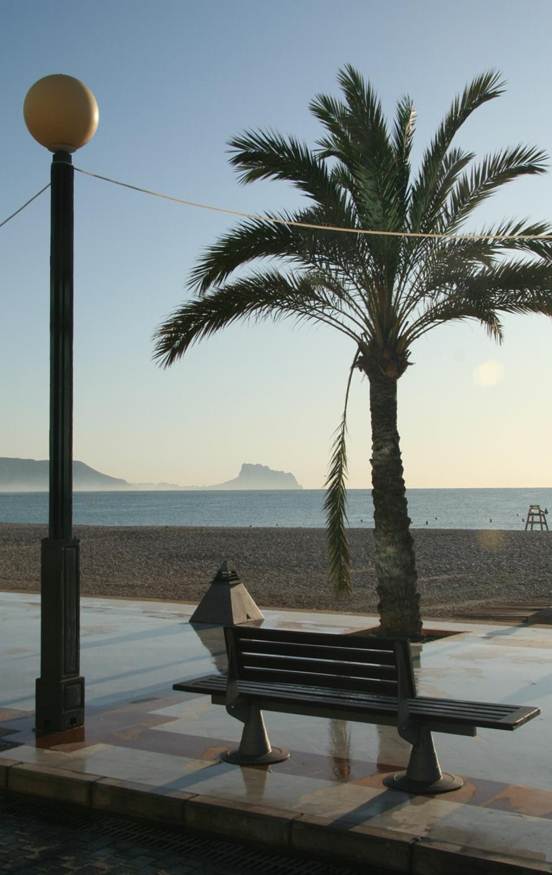
Early morning at Costa Blanca, Spain's White Mediterranean coast.
Text & photos: Aage Myhre, VilNews editor-in-chief
The more I travel around the world the more I realise that I am European. Although I have had good, close friends and have experienced extraordinary things in all corners of the world. Maybe my mind is not sufficiently exotic. That's ok. I have grown older now. Driving a car is the best way to experience Europe. Lithuania's border crossings to Latvia and Poland is no problem anymore. Within a day's drive you can reach most of the northern and central European countries. One more day and you can already stand and look out over the warm, slow waves of the Mediterranean Sea...
Over the next few weeks VilNews will present some glimpses of Europe ... A Europe that is now so close to everyone... The Iron Curtain is gone, forever...
|
1 |
|
Exploring Europe |
|
2 |
|
Switzerland & Italy |
|
3 |
|
Along the Riviera |
|
4 |
|
From Strasbourg to London |
|
5 |
|
Austria & Germany |
|
6 |
|
Finland & Scandinavia |
|
7 |
|
En route Warsaw - Budapest |
|
8 |
|
Moscow and further east |
|
9 |
|
The Baltic Hanseatic route |
|
10 |
|
Istanbul |
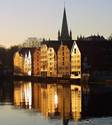
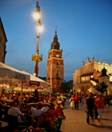
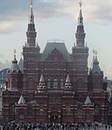
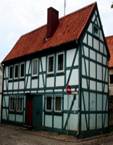
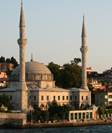
1 of 10: Exploring Europe
I love old towns. No matter how good a new suburb is. I, and many with me, prefer the old towns. It has something to do with the atmosphere. Details, ornaments. Human life. Sound and smell. Warmth. Joy.
Europe is the 'old town' of the entire world!
I think it primarily is about culture and history. All that Europe is so infinitely rich on. It is something about that feeling. The idea and the knowledge of the Roman Empire every time I'm in Rome. Recognition every time I visit a museum or gallery and see the many art treasures I feel is a part of my European self.
It is more to Europe I never get tired of. For example, being able to walk, touch, feel, smell. Being a tourist here is like walking on the world stage as it has provided the basis for so much over thousands of years. Fortunately, European leaders long ago realized that the human being is more important than cars. Take
Strøget in Copenhagen, bike paths in Holland and promenades along pretty much all The Mediterranean sea-coast as good examples of this.
Europe means walking around on cobbled streets. Between historic buildings.
To see. Listen. Experience. Feel. Smell. Like here in Florence.
Venice is my favourite European spot...
A stroll along the impressive lakeside promenade in Montreux at Lake Geneva.
Vienna, home of Freud and the Strauss family.
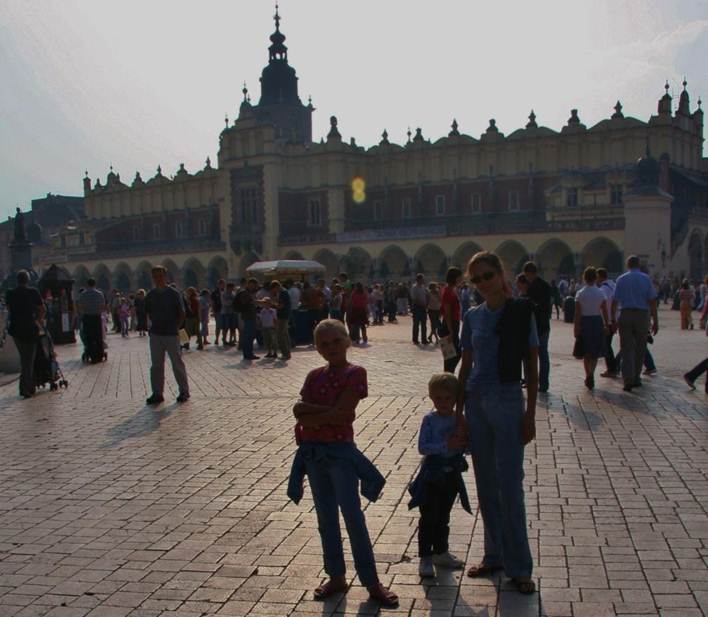
The Renaissance Sukiennice building is the central feature of the Main Market Square in Kraków Old Town.
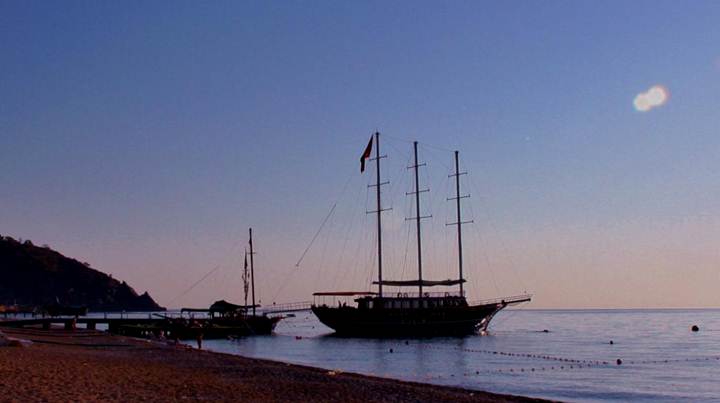
Turkey’s Mediterranean coast.
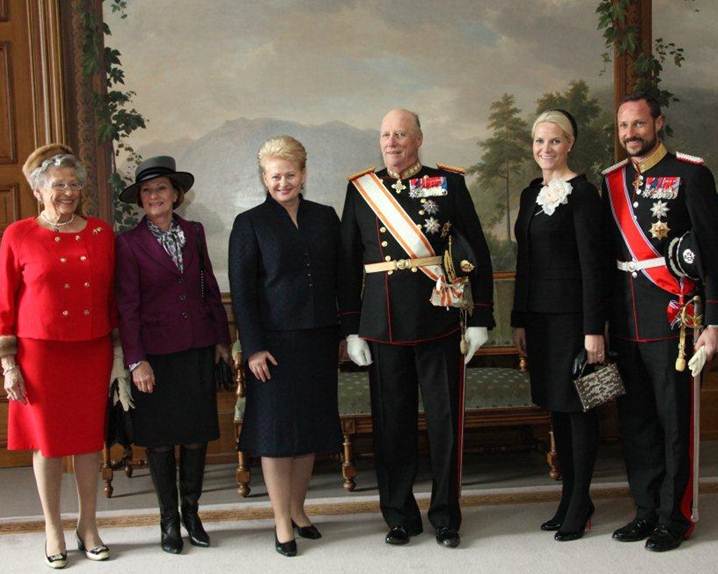
Lithuanian President Dalia Grybauskaitė on a two-day state visit to Norway in 2011. The President was officially
welcomed at the Royal Palace, where she met with King Harald V and Queen Sonja of Norway,
Crown Prince Haakon and his wife Crown Princess Mette-Marit, and Princess Astrid.
Photo: www.president.lt
- Bookmark :
- Digg
- del.icio.us
- Stumbleupon
- Redit it
- Posted by - (0) Comment
Section Editor
AAGE MYHRE
Norwegian. VilNews Editor-in-Chief. Has lived in Lithuania for almost 20 years. He holds a Norwegian M.Sc. of Civil Engineering (dept. of Architecture), and has 35 years of experience as a journalist and editor.
POSTGRADUATE: Architectural Psychology, Université Louis Pasteur, Strasbourg, France (1982). MISCELLANEOUS COURSES: Management for Presidents, Psychology, Sociology, Marketing and Politics.
Aage Myhre has been actively involved in Lithuanian affairs since 1990 within politics, business, new investments, media, architecture and general development of the country. He is one out a handful Norwegians, among them also a former Norwegian Prime Minister and Foreign Minister, having received the Lithuanian Prime Minister’s special award for support to Lithuania in 1990-91 and for later outstanding contribution to the bilateral cooperation between the two countries. If you want to contact him, please do so at aage.myhre@VilNews.com
His web page is www.VilNews.com
VLADAS LASAS
CEO/Founder of Skubios siuntos UAB Kaunas & UPS/Lithuania. Vladas Lašas studied, lectured and did research on Computer Vision at Kaunas University of Technology. He holds doctorate in Computer Science. He presented results of his research at conferences in Japan, USA, Germany, Russia and other countries. He is co-founder and/or co-owner of several companies in Lithuania, including: UPS Authorised Service Contractor in LT - Skubios siuntos UAB, Elinta UAB - Industrial and Power Plant Automation, Elinvision UAB - Computer Vision R&D, and Globaltus UAB - Global e-Commerce. Vladas is a TED Conference member and one of the 32 TED Patron’s worldwide. He is an investor in sustainable & renewable energy projects in Europe through GRE Holding. His area of interest includes innovation in technology, education and society. He actively take part in projects run by AmCham, The British Council, Save The Children, Rotary Club, universities and other organisations. He likes jogging, trekking, bicycling and adventure. If you want to contact him, please do so at vladas@ups.lt
His web page is www.ups.lt
GIEDRIUS SABALIAUSKAS
Attorney at Law. International development consultant and investment adviser with over 10 years of professional experience. Specializing in investment management, advice on investment climate improvement, PPP and infrastructure regulatory aspects. Over 5 years of ongoing focused experience in advising businesses, governments and municipal authorities on the regulatory frameworks for the establishment, management and operations of the Industrial/Special Zones and related PPP/management models. Recent development missions: Lithuania (2004-2007), Yemen (2008), Serbia (2008-2009); The Gambia (2009-2010). Over 5 years experience in managing and supervising investment projects in Lithuania (services, real estate, manufacturing) If you want to contact him, please do so at giedrius.sabaliauskas@siplaw.lt
His web page is www.siplaw.lt
DIANA KOVAL
A student of history at the Vilnius University (3rd year). She had been volunteering for VEKS projects (Vilnius – European capital of culture 2009). Currently - a member of initiative group at the Foreign Lithuanian students’ club and a member of Sakura club. Also, she is an intern for VilNews e-magazine.
Web page: www.VilNews.com
E-mail: diana.koval@VilNews.com
- Bookmark :
- Digg
- del.icio.us
- Stumbleupon
- Redit it
- Posted by - (0) Comment
Section Editor
VIN KARNILA
Vin Karnila is a Lithuanian American from the Boston area of Massachusetts. His professional background includes more than thirty years in the automotive industry including twenty years as an international management consultant and trainer. Vin has lived in Lithuania since 2004 and is the owner of BalticValue.com which offers items from the Baltic’s and Tarptautinis English which is an English language training and editing service. You can contact Vin at: vin.karnila@VilNews.com
His web pages are:
www.balticvalue.com
www.VilNews.com
TOMAS VENCLOVA
Born in Klaipeda, Lithuania, Mr. Venclova now resides in the United States. His education includes a Diploma in Philology from Vilnius University, Graduate Study at Tartu University and a Ph. D. from Yale University. Mr. Venclova’s professional experience includes positions as professor and lecturer in the fields of language and literature at Yale University, UCLA, Ohio University, University of California Berkeley, and Vilnius University. His fields of specialization and teaching are Russian, Polish and Lithuanian language and literature and Semiotics and literary criticism. His honors and awards include the International literary prize Vilenica, numerous Doctor honoris causa, Lithuanian National Prize, New Culture of New Europe Award and Baltic Star Award. Mr. Venclova has authored in various languages over 200 publications and 9 books in the scholarly field and 52 books of poetry and essays. http://en.wikipedia.org/wiki/Tomas_Venclova
- Bookmark :
- Digg
- del.icio.us
- Stumbleupon
- Redit it
- Posted by - (0) Comment
Section Editor
GENE EMMER
Dr. Gene Emmer is a physiologist and an MBA. After an international career in the pharmaceutical industry which gave him the opportunity to live and work in several different countries, Gene developed the European distribution network for an American manufacturer of wheelchairs. He then founded a company manufacturing innovative wheelchair accessories which he sells from his wheelchair www.NewDisability.com website. He also runs a wheelchair www.WheelchairPride.com blog. Gene lives in Lithuania with his wife and young son.
AUDRIUS SIMAITIS
Mr. Simaitis graduated from the Medical Faculty of Vilnius University in 1990 and completed advanced training in Cardiology in 1994. In 1995 his family moved to Klaipeda and he became a member of a team that established modern Cardiology services in Western Lithuania. Currently he works as Consultant Cardiologist at Royal Cornwall Hospital, United Kingdom.
His blog link is http://simaitis.lt/
Email: nemanius99@gmail.com
- Bookmark :
- Digg
- del.icio.us
- Stumbleupon
- Redit it
- Posted by - (0) Comment
Author Ellen Cassedy
soon on tour in Lithuania
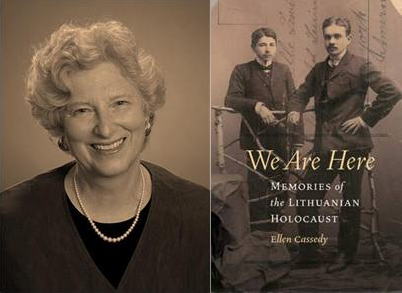
Ellen Cassedy, author of
We Are Here: Memories of the Lithuanian Holocaust
Dear Friends,
I will be traveling to Lithuania for the launch of the Lithuanian edition of my book, We Are Here: Memories of the Lithuanian Holocaust.
The Lithuanian edition, Mes esame čia: Atsiminimai apie holokausta Lietuvoje, will be published by Media Incognito in a beautiful translation by Rasa Krulikauskienė.
For those of you in Lithuania, I’m delighted to invite you to attend these events. For those not in Lithuania, I would be grateful if you could pass along this information to anyone who would be interested in attending:
Thursday, February 21, 2013, 5:30 p.m. (17:30)
Tolerance Center, Naugarduko g. 10/2, Vilnius
Saturday, February 23, 2013, 12 noon
Book presentation, Lithuanian edition of We Are Here
Vilnius Book Fair, LITEXPO, Laisves pr. 5, Vilnius
I will also be speaking in
- Kaunas,
- Kedainiai,
- Siauliai,
- Panevezys,
- Rokiskis
between February 25 and March 6.
For information about those events, please email SidrysI@state.gov or telephone +370 5 266 5453.
Thank you – aciu!
All the best,
Ellen Cassedy
--
Ellen Cassedy
ellen@ellencassedy.com
www.ellencassedy.com
Author of We Are Here: Memories of the Lithuanian Holocaust
(University of Nebraska Press, March 2012)
For updates about We Are Here, sign up for my mailing list or follow me on Facebook or twitter. See my new YouTube video.
- Bookmark :
- Digg
- del.icio.us
- Stumbleupon
- Redit it

OPINIONS
Have your say. Send to:
editor@VilNews.com
Ph. D., Chicago
A wave of unity sweeps the international Lithuanian community on March 11th every year as Lithuanians celebrated the anniversary of the Lithuanian Parliament's declaration of independence from the Soviet Union in 1990. However, the sense of national unity engendered by the celebration could be short-lived.
Human beings have a strong tendency to overgeneralize and succumb to stereotypical us-them distinctions that can shatter even the strongest bonds. We need only search the internet to find examples of divisive thinking at work:
- "Those who fled Lithuania during World II were cowards -- and now they come back, flaunt their wealth, and tell us 'true Lithuanians' how to live."
- "Lithuanians who work abroad have abandoned their homeland and should be deprived of their Lithuanian citizenship."

In Lithuania Christmas Eve is a family event and the New Year's Eve a great party with friends!
Lithuanian say "Kaip sutiksi naujus metus, taip juos ir praleisi" (the way you'll meet the new year is the way you will spend it). So everyone is trying to spend New Year's Eve with friend and have as much fun as possible.
Lithuanian New Year's traditions are very similar to those in other countries, and actually were similar since many years ago. Also, the traditional Lithuanian New Years Eve party was very similar to other big celebrations throughout the year.
The New Year's Eve table is quite similar to the Christmas Eve table, but without straws under the tablecloth, and now including meat dishes. A tradition that definitely hasn't changes is that everybody is trying not to fell asleep before midnight. It was said that if you oversleep the midnight point you will be lazy all the upcoming year. People were also trying to get up early on the first day of the new year, because waking up late also meant a very lazy and unfortunate year.
During the New Year celebration people were dancing, singing, playing games and doing magic to guess the future. People didn't drink much of alcohol, especially was that the case for women.
Here are some advices from elders:
- During the New Year, be very nice and listen to relatives - what you are during New Year Eve, you will be throughout the year.
- During to the New Year Eve, try not to fall, because if this happens, next year you will be unhappy.
- If in the start of the New Year, the first news are good - then the year will be successful. If not - the year will be problematic.
* If New Year's night is cold and starry - look forward to a good summer!
* If the during New Year Eve trees are covered with frost - then it will be a good year. If it is wet weather on New Year's Eve, one can expect a year where many will die and dangerous epidemics occur.
* If the first day of the new year is snowy - the upcoming year will see many young people die. If the night is snowy - mostly old people will die.
* If the New Year time is cold - then Easter will be warm.
* If during New Year there are a lot of birds in your homestead - then all year around there will be many guests and the year will be fun.
Christmas greetings
from Vilnius
and epic battle for the
future
Philosopher, political theorist, historian of
ideas, social analyst, and political
commentator
Ukraine was and continues to be perceived by the EU political class as a sort of grey zone with its immense potential and possibilities for the future, yet deeply embedded and trapped in No Man's Land with all of its troubled past, post-Soviet traumas, ambiguities, insecurities, corruption, social divisions, and despair. Why worry for what has yet to emerge as a new actor of world history in terms of nation-building, European identity, and deeper commitments to transparency and free market economy?
Right? Wrong. No matter how troubled Ukraine's economic and political reality could be, the country has already passed the point of no return. Even if Vladimir Putin retains his leverage of power to blackmail Ukraine and the West in terms of Ukraine's zero chances to accede to NATO due to the problems of territorial integrity, occupation and annexation of Crimea, and mayhem or a frozen conflict in the Donbas region, Ukraine will never return to Russia's zone of influence. It could be deprived of the chances to join NATO or the EU in the coming years or decades, yet there are no forces on earth to make present Ukraine part of the Eurasia project fostered by Putin.
want to learn about the
new, scary propaganda
war between Russia,
The West and the
Baltic States!
believe their government
is corrupt
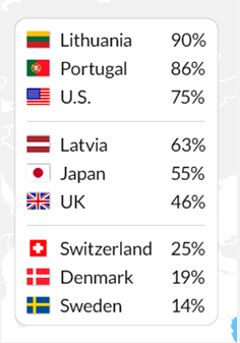
students say no to
bribes for doctors
During Soviet times, government was administered for the people in control, not for the local population, court decisions were decreed, they were not the administration of justice, and academia was the domain of ideologues. 25 years of freedom and openness should have put those bad experiences behind Lithuania, but that is not so.
Today, it is a matter of expectation that court pronouncements will be governed by ideological dictates. Few, if any Lithuanians expect real justice to be effected. For foreign companies, doing business in Lithuania is almost impossible in a situation where business people do not expect rule of law, so, surely Government would be a refuge of competence?
Lithuanian Government has not emerged from Soviet styles. In an attempt to devolve power, Lithuania has created a myriad of fiefdoms of power, each speaking in the name of the Government, each its own centralized power base of ideology.
Chepstow, Wales
Doesn't that sound suspiciously like Lithuania? Ah, but I didn't mention the mountains of Snowdonia, which would give the game away.
I'm talking about Wales, that part of the UK which Lithuanians used to call "Valija", but later named "Velsas" (why?). Wales, the nation which has welcomed two Lithuanian heads of state to its shores - firstly Professor Vytautas Landsbergis, who has paid several visits and, more recently, President Dalia Grybauskaitė who attended the 2014 NATO summit which was held in Newport, South Wales.
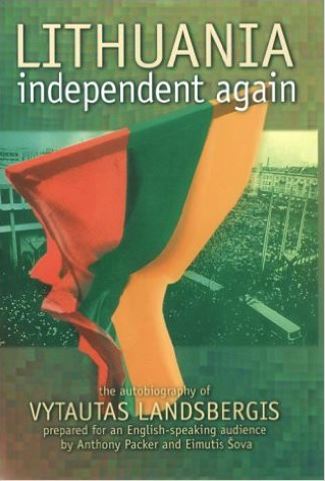
ENGLISH VERSION OF THE
AUTOBIOGRAPHY OF VYTAUTAS LANDSBERGIS.
Although Lithuanian activities have thinned over the decades as that postwar generation died out, the Lithuanian Martyrs' parish hall is crowded with many, many hundreds of visitors who come to the Lithuanian cemetery for All Souls' Day. Similarly, the Franciscan parish has standing room only for Christmas Eve mass.
Although I am firmly embedded in the literary culture of Canada, my themes are usually Lithuanian, and I'll be in Kaunas and Vilnius in mid-November 2015 to give talks about the Lithuanian translations of my novels and short stories, which I write in English.
If you have the Lithuanian language, come by to one of the talks listed in the links below. And if you don't, you can read more about my work at
www.anatanassileika.com
http://www.vdu.lt/lt/rasytojas-antanas-sileika-pristatys-savo-kuryba/ https://leu.lt/lt/lf/lf_naujienos/kvieciame-i-rasytojo-59hc.html
"My love and best wishes to all. As long as VilNews exists, there is hope for the future,"" she writes.
Irena Veisaite means very much for our publication, and we do hereby thank her for the support and wise commitment she always shows.
You can read our interview with her
Facing a new reality
Dear readers of VilNews,
For a number of years, the EU and Russia had assumed the existence of a strategic partnership, based on the convergence of values, economic integration and increasingly open markets and a modernisation agenda for society.
Our agenda was positive and ambitious. We looked at Russia as a country ready to converge with "European values", a country likely to embrace both the basic principles of democratic government and a liberal concept of the world order. It was believed this would bring our relations to a new level, covering the whole spectrum of the EU's strategic relationship with Russia.
The likelihood of Putin
invading Lithuania
.jpg "lithuania today")
Founding Director at Summer Literary Seminars
Are all Lithuanian energy
problems now resolved?
Lithuania as a country does not have significant energy resources. Energy consuming infrastructure after WWII was small and totally supported by energy imports from Russia.
First nuclear reactor begins power generation at Ignalina in 1983, the second reactor in 1987. Iganlina generates enough electricity to cover Lithuania's needs and about 50%.for export. As, prerequisite for membership in EU, Ignalina ceases all nuclear power generation in 2009
The Klaipėda Sea terminal begins Russia's oil export operations in 1959 and imports in 1994.
Mazeikiu Nafta (current ORLEAN Lietuva) begins operation of oil refinery in 1980.
Have Lithuanian ties across
the Baltic Sea become
stronger in recent years?
The two decades that have passed since regaining Lithuania's independence can be described as a "building boom". From the wreckage of a captive Soviet republic, a generation of Lithuanians have built a modern European state, and are now helping construct a Nordic-Baltic community replete with institutions intended to promote political coordination and foster a trans-Baltic regional identity. Indeed, a "Nordic-Baltic community" - I will explain later in my text the meaning of this catch-phrase.
Since the restoration of Lithuania's independence 25 years ago, we have continuously felt a strong support from Nordic countries. Nordics in particular were among the countries supporting Lithuania's and Baltic States' striving towards independence. Take example of Iceland, country which recognized Lithuania in February of 1991, well in advance of other countries. Yet another example - Swedish Ambassador was the first ambassador accredited to Lithuania in 1991. The other countries followed suit. When we restored our statehood, Nordic Countries became champions in promoting Baltic integration into Euro-Atlantic institutions. To large degree thanks Nordic Countries, massive transformations occurred in Lithuania since then, Lithuania became fully-fledged member of the EU and NATO, and we joined the Eurozone on 1 January 2015.
Have you heard about the
South African "Pencil Test"?
But that is exactly what happened to me when I came back from South Africa. I will tell you how.
VilNews e-magazine is published in Vilnius, Lithuania. Editor-in-Chief: Mr. Aage Myhre. Inquires to the editors: editor@VilNews.com.
Code of Ethics: See Section 2 – about VilNews. VilNews is not responsible for content on external links/web pages.
HOW TO ADVERTISE IN VILNEWS.
All content is copyrighted © 2011. UAB ‘VilNews’.