THE VOICE OF INTERNATIONAL LITHUANIA

|
VilNews has its own Google archive! Type a word in the above search box to find any article.
You can also follow us on Facebook. We have two different pages. Click to open and join.
 Click on the buttons to open and read each of VilNews' 18 sub-sections Click on the buttons to open and read each of VilNews' 18 sub-sections  |

|


 Incredible Indian-Lithuanian relations
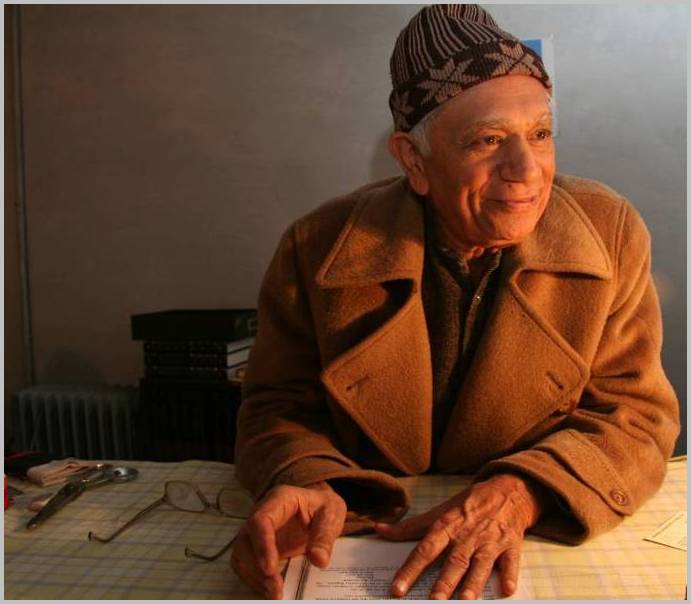
Professor Lokesh Chandra (84), one of India’s leading experts on Sanskrit and Buddhism
It’s early morning in Delhi. I have been invited to the small, dark office of Professor Lokesh Chandra, one of India’s leading experts on Sanskrit and Buddhism. “The same year I was born, 1927, my father went to London to get a degree in Lithuanian language. He spoke the language fluently, but he never visited Lithuania,” tells the elderly professor, still with his Kashmir coat and cap on despite the outside temperature of close to 300 Celsius.
I soon learn that the professor’s knowledge about the connections between Old Sanskrit and Lithuanian language and ancient cultural ties between India and Lithuania is nothing but amazing. He confirms that there since ancient times have been unique ties between India and Lithuania, not only with regards to language. Also the songs, the medieval cultures and more were extraordinary closely connected to each other.
Here is what he tells me this early morning at his New Delhi office: “The very mention of Lithuanian opens up an image, a vision that gives a people their identity through language. It shows how the darkness of dreams becomes the new embodied hope. My father was stimulated and strengthened in his work on the development of Hindi by the history of Lithuanian language. It has been the eternal continuity of these people; - it rustles something deep in their being. My father felt that we in India share with our distant Lithuanian brothers the silent geography of lost frontiers. Political freedom is inseparable from language.”
And the professor continues with his amazing story: “My father would relate how grandmas in the remote villages narrated folk-tales to eager grandchildren in their Lithuanian language which was despised by the Slavised nobility and punished by the Czarist regime. My father also told me how the Lithuanian daina (songs) were abandoned by the courts, but still continued to live on in the villages, faithfully preserved by the poorest people of Lithuania, guarded by the mothers of the families even during the darkest periods of Lithuania’s history.”
“Such was my first contact with Lithuania, in 1937, at an age of ten,” smiles Professor Chandra.

 Sanskrit and Lithuanian are closely related
Since the 19th century, when the similarity between Lithuanian and Sanskrit was discovered, Lithuanians have taken a particular pride in their mother tongue as the oldest living Indo-European language. To this day, to some Lithuanians their understanding of their nationality is based on their linguistic identity. It is no surprise then that they proudly quote the French linguist Antoine Meillet, who said, that anyone who wanted to hear old Indo-European should go and listen to a Lithuanian farmer. The 19th century maxim - the older the language the better - is still alive in Lithuania.
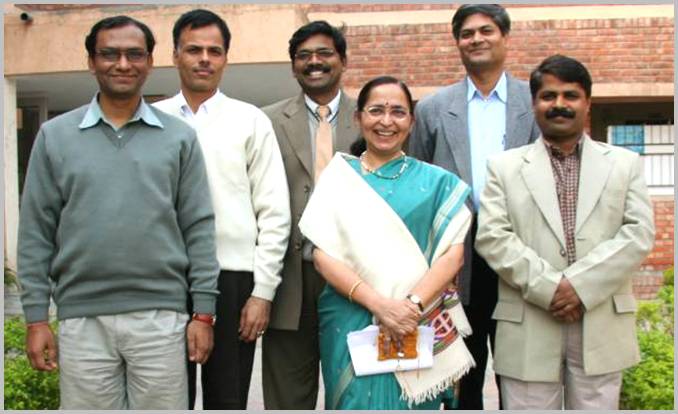
Professor Shashiprabha Kumar, and her amazing team of specialists at the Centre for Sanskrit Studies at the Jawaharlal Nehru University in New Delhi, is convinced that there is a very strong connection between Old Sanskrit and Lithuanian
It is a common belief that there is a close similarity between the Lithuanian and Sanskrit languages; Lithuanian being the European language grammatically closest to Sanskrit. It is not difficult to imagine the surprise of the scholarly world when they learned that even in their time somewhere on the Nemunas River lived a people who spoke a language as archaic in many of its forms as Sanskrit itself. Although it was not exactly true that a professor of Sanskrit could talk to Lithuanian farmers in their language, coincidences between these two languages are truly amazing, for example:
SON: Sanskrit sunus - Lithuanian sunus
SHEEP: Sanskrit avis - Lithuanian avis
SOLE: Sanskrit padas - Lithuanian padas
MAN: Sanskrit viras - Lithuanian vyras
SMOKE: Sanskrit dhumas - Lithuanian dumas
These Lihuanian words have not changed their forms for the last five thousand years.
The relationship between Sanskrit and Lithuanian goes even deeper. Take, for example, the Lithuanian word 'daina' that usually is translated as 'song'. The word actually comes from an Indo-European root, meaning ‘to think, to remember, to ponder over’. This root is found in Sanskrit as dhi and dhya. The word also occurs in the Rigveda (ancient Indian sacred collection of Vedic Sanskrit hymns) in the sense of ‘speech reflecting the inner thoughts of man’.
Apart from its Indo-European background as word and term, the ‘daina’ incorporates the idea of the Sun-Goddess who was married to the Moon-God, reminiscent of goddess Surya in the Rigveda.
|
|
OM (also spelled AUM) is a Hindu sacred sound that is considered the greatest of all mantras. The syllable OM is composed of the three sounds a-u-m (in Sanskrit, the vowels a and u combine to become o) and the symbol's threefold nature is central to its meaning. |

- Bookmark :
- Digg
- del.icio.us
- Stumbleupon
- Redit it



VilNews e-magazine is published in Vilnius, Lithuania. Editor-in-Chief: Mr. Aage Myhre. Inquires to the editors: editor@VilNews.com.
Code of Ethics: See Section 2 – about VilNews. VilNews is not responsible for content on external links/web pages.
HOW TO ADVERTISE IN VILNEWS.
All content is copyrighted © 2011. UAB ‘VilNews’.
Formal education consists of systematic instruction, teaching and training by professional teachers. This consists of the application of pedagogy and the development of curricula. In a liberal education tradition, teachers draw on many different disciplines for their lessons, including psychology, philosophy, information technology, linguistics, biology, and sociology. Teachers in specialized professions such as astrophysics, law, or zoology may teach only in a narrow area, usually as professors at institutions of higher learning.
Private Tutor, Private Tuition, Maths Tutor, English Tutor
Good publish you have performed the following. I am really very happy you just read this kind of. That is a quite useful subject matter you are preferred. keep writing.live blog
A man I worked with for years in Boston, Massachusetts was a first generation Lithuanian. He spoke Lithuanian at home with his family untill he was 18 years old when he joined the Army Air Corp. He flew the 'Hump', that is his plane flew from India, over the eastern end of the Himalayas, and on to China. His plane was shot down and he bailed out over western India. He lived in a remote village until he was rescued. He claims he could under stand the people in that village because their language was so similar to Lithuanian.
Steve
Sanskrit is considered mother of all languages. Sanskrit is the best ever language to program computers. Sanskrit has been found written in almost all ever found ancient relics , tablets in india.
I am Indian though i dont leave in India, I would love to relearn Sanskrit and read all FOUR Vedas before I die. I am not relegious as i understand exactly what and why relegion was made in the first place. Vedas are not religious either. Out of 4 Vedas, Scientist are baffled over 1 Ved that describe magic(tantra-mantra) (science that is not yet discovered or have been recently discovered). It has similarities that was never thought about or was practiced. Out of 4 veds, 1 is all about medical stuff which is the most famous of all.
Svastika is common in Lithuanian etnography and mythology. It was the symbol of fire and sun. Also it was the symbol of our main pagan god (Lithuanians were the last stubborn pagans in Europe up until 14-15th century and Christianity was accepted only because of political reasons – to stop crusades).
On link Lithuanian and Sanskrit led me Swami Vivekananda, one of the gr8st of men ever walkin on earth. Now I do deep research. Actualy Lithuanian is part of proto Balto-Slavic. Check wikipedia 4 “distribution r1a” and check map- violet sea. This guys R indo-europeans or Arians. R1b are all Basque origins and this language is not IE. English Spanish French Italian are Vulgar Latin so theirs original language is not IE. Interesting is that Basque religion symbol is Lauburu, like svastika, and superior goddes Mari. Vedic Tara was also Terra Mari-mother of earth. Basque say that they left homeland west of Ural 15 000 years ago. Come to Vedas. Vedic goddes of water is Danu. All rivers to the Black sea bear her name. Have you ever heard about Black sea deluge? What’s about Aratta and Kamyana Mohyla? Dwarka city of Krishna?
How old are Vedas? In vedic scripts say that Kashmir was lake. Actualy thru. 40 000 years ago. In Dwarka under sea 20 000 years old potery. You must realize that name Rome comes from Rama. Basilica St Peter is build on Vedic temple. Check Stephen Knapp or Richard Cassaro. Ancient Egypt bull and Minoan bull are the same as Mithra. Check Akhenaten and Rigveda. There is also theory that Akhenaten was Moses. 10 comandements are copy from Papyrus of Ani, or Egyptian book of dead. Abraham was Ibrahim Zeradust and come from Saraswati river.
Equivalent to Veda in Greek is Sophia. Sophia is goddes of wisdom. Sophia is also Baphomet. And it is gnosticism. Gnosticism in judaism is kabbalah. Jesus’s Essenes were practiced Kabbalah. Jesus as Iessu was study in Kashmir. Original Solomon Suleiman temple is in Kashmir.
Not many people know about Northern Crusade and how german Prussia was created. Like it or not Stalin kicked them out. Even Germans from Czech republic.
Unfortunately there is big splitter put between Slavs and Western bankers are winners. We are all happy in democracy now. Thanx God
Sanskrit is the language, with very high versatile wealth, its a language of HINDU GODS, IT has got transformed todays form, it has lend lot words to all languages in the world. no language of today without a word of Sanskrit origin. All four VEDHAS, 108 Upanishad,
RAMAYANAM , MAHABHARATHA, 18 PURANAS all are in sanskrit only. Then all this translated to INDIANS regional languages.
MAX MULLER of England accepted SANSKRIT the mother of all european languages, he used to write as MOKSHA MULLER, WHY because MAXIMUM IN sanskrit is moksha, SO HE USED to write moksha Muller.
After Mahabaratha war, people left BHARAT and settled in different parts of the world, especially in EUROPE, naturally all european languages replica of SANSKRIT.
Ramayanam and mahabharat are not of myth, there originality is very well confirmed by NASA all the dates MENTIONED IN great epic exactly matches, RAMA SETHU is available today after 7000 years.
OTHER religion mention world/earth age around 4000 to 5000 years, hindu VEDHAS cofirm it as 4320 billion years, this also exactly matched with NASA findings that all the planet in the cosmos will take exactly the same years of 4320 years to finish one circle rotation(shortest one takes 80days)
It is believed that Aryans migrated to India from the polar region, going through the various countries on the way. Sanskrit, their language has made its impact on the local languages and dialects. For example in the Russian language, the word for fire is OGNI corresponding to AGNI in sanskrit, the word for brother is BRAT ( or brath as South Indians pronounce it ) corresponding to BHRATA in sanskrit, the word mother is MAT ( MATH ) corresponding to MATA (MATHA) in sanskrit and so on.
Very interesting story thought, however, recently one of the best known Lithuanian historians (Jūratė Statkutė de Rosales) have published her book Europos Saknys ir Mes, Lietuviai ( The Roots of Europe and We Lithuanians) where her discovery's about the existed Terra Sarmatia and linguistic past have led to the conclusion that Sanskrit came from the Lithuanian language as the base of all Sarmatia languages some 6000BC. Anil M Popli fire in lithuanian is UGNIS …
[…] also: https://vilnews.com/?p=4425 and […]