Section 12: BUSINESS, ECONOMY – INVESTMENTS


THE VOICE OF INTERNATIONAL LITHUANIA

|
VilNews has its own Google archive! Type a word in the above search box to find any article.
You can also follow us on Facebook. We have two different pages. Click to open and join.
 Click on the buttons to open and read each of VilNews' 18 sub-sections Click on the buttons to open and read each of VilNews' 18 sub-sections  |

|
- Posted by - (7) Comment

Two private investors, together with their partners, offered to municipality to lease the buildings for 25 years and invest nearly 8 m euro to the renovation of the heavily rundown buildings. The agreement has been made. While keeping their original looks and historical value (there are some fragments of decorated floors, etc. left that will be kept), the buildings are about to be reborn as 8 000 sq meter space for startups and related infrastructure.…
- Posted by - (2) Comment
It’s the economy, stupid *
THE LITHUANIAN ECONOMY: INNOVATE OR DIE
By Valdas (Val) Samonis , PhD, CPC
RRU and INET, http://www.about.me/val.
* When Bill Clinton ran for President in 1992, Democratic strategist James Carville famously posted a large sign in the campaign’s “war room” that read: “It’s the economy, stupid!” Carville wanted to remind his candidate and those working for him to keep their focus where he felt it belonged: the economy.
“DEDICATED TO THOSE WHOSE BLOOD AND BRAINS MADE FREE LITHUANIA POSSIBLE”
ABSTRACT. This paper takes a comparative policy look at the Lithuanian (LT) economy during the intellectually and practically interesting period (2000-2015) of the coincidence of a middle-income growth trap, that LT found itself in alongside other transition economies, and a policy response to the Great Financial Crisis (GFC) that started in 2008. The paper argues that the LT policy response (a radical and classical austerity) was wrong and unenlightened because it coincided with strong and continuing deflationary forces in the EU and the global economy which forces were predictable, given the right policy guidance. Those forces were caused primarily by high debts of the EU countries and the mismanagement of both monetary and fiscal policies of the Eurozone during the misguided efforts to get out of GFC by the EU. Also, the paper makes a point that LT austerity, and the resulting sharp drop in GDP and employment in LT, stimulated emigration of young people (and the related worsening of other demographics) which processes took huge dimensions thereby undercutting even the future enlightened efforts to get out of the middle-income growth trap by LT. Consequently, the country is now on the trajectory (development path) similar to that of a dog that chases its own tail. A strong effort by new generation of policymakers is badly needed to jolt the country out of that wrong trajectory and to offer the chance of escaping the middle-income growth trap via innovations. The paper points to some useful if debatable characteristics of this future effort.…
- Posted by - (0) Comment
Closer bilateral ties
China – Lithuania
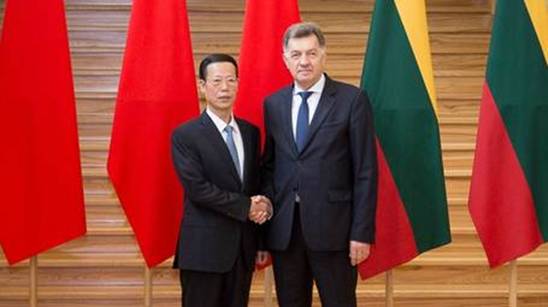 CHINESE VICE PREMIER ZHANG GAOLI AND
LITHUANIAN PRIME MINISTER ALGIRDAS BUTKEVICIUS
Zhang urged the two countries to further enhance mutual
Zhang said both sides should strive for breakthroughs in cooperation on major projects in infrastructure development and other areas. He said China is willing to participate in the construction of the Rail Baltic project in an appropriate form in a bid to complement each other and achieve mutual benefit and win-win situation.…
- Posted by - (3) Comment
 Dr. Stasys Backaitis | Lithuania will hold the Presidency of the Council of the European Union in the second half of 2013, starting from the 1st of July. VilNews has on this background asked readers to annotate and analyze factors that have to do with Europe, the EU, the euro and Lithuania. This is one of the posts we have received. An article by Dr. Stasys Backaitis, |
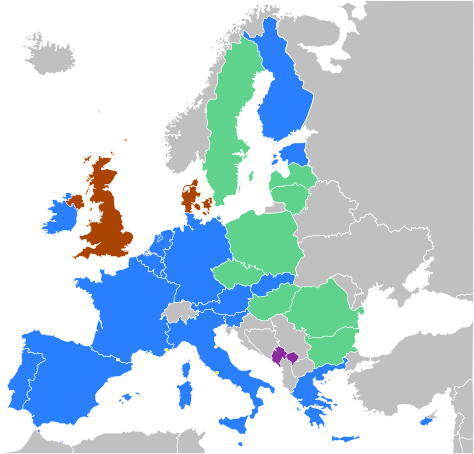
| EU Eurozone (17) |
If becoming eurozone members is a way for the Baltic countries to insure security and protection of their sovereignty, then it is a reasonable risk, provided it is guarded by good governance and sound administration of fiscal policies. Of most importance is that the Baltic politicians do not succumb to the lures of easy money and irresponsible spending. Even when debt is incurred, the borrowed funds should be invested in long-term economic growth and job creation, improved competitiveness, quality of work, and with focus of achieving positive balance of trade. The Baltic politicians need to realize that their small countries are not equipped and cannot compete in traditional mass manufacturing with highly industrialized countries. Rather the countries can excel by being frugal and competing through product uniqueness, excellence in quality, innovation and unexcelled services. Their success of rising from economic ashes of 2008-2012 is a proof of their ability to meet these challenges.
- Posted by - (0) Comment
 Valdas Samonis |
Lithuania will hold the Presidency of the Council of the European Union in the second half of 2013, starting from the 1st of July. VilNews has on this background asked readers to annotate and analyze factors that have to do with Europe, the EU, the euro and Lithuania. This is one of the posts we have received. An article by Valdas Samonis, PhD, CPC |
Cutting through the EU bureaucratic gobbledygook
Part 2
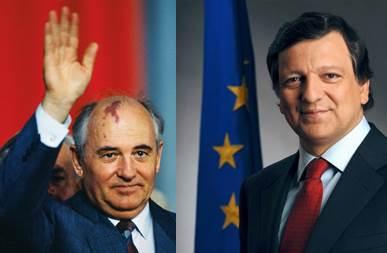
The more I am into my research on my forthcoming book
"INSIDER CRONY SOCIALISM", the more I see the parallels
between the Gorbachev's USSR and Barroso's EU!
Collapsing EUSSR under Reformer Barrosov?
Pray that God gives more wisdom to European Leaders!
I have to admit it.
The more I am into my research on my forthcoming book "INSIDER CRONY SOCIALISM", the more I see the parallels between the Gorbachev's USSR and Barroso's EU!
- Posted by - (3) Comment

By Kestutis Eidukonis, VilNews CEO
At the beginning of this month, I had the great privilege of representing the PLB (World Lithuanian Community) in its bi-annual meeting with members of the Seimas (Parliament). This joint commission meets twice a year and consists of ten members elected by the World Lithuanian Community and ten members of the Seimas, one from each party. The commission has two co-chairs one from the PLB and one from the Seimas. The co-chair from the PLB was Dr. Jonas Prunskis and the co-chair from the Seimas was Ona Valiukevičiūte.
The areas of debate and concern for the commission were:
- Posted by - (2) Comment

Brussels, Belgium — Over the past three years the share of European Union (EU) citizens who want to be self-employed has fallen from 45% to 37%, reports European Commission (EC). This year EC highlighted the need for more entrepreneurs in order to return the EU to economic growth and higher levels of employment.
However, historical, cultural and economic background of diverse European countries has significant effects on attitudes towards entrepreneurs in European countries. Lack of in-depth knowledge might determine future revival of entrepreneurship in Europe, reveals the study by Lithuanian Free Market Institute (LFMI) today presented in Brussels.
“It is a positive trend in Europe to turn to entrepreneurs and acknowledge their role in creating economic growth. Yet, without knowing the mistakes of the past, there is no future. This is especially important then considering New Member States, such as Lithuania or Bulgaria, which still carry a burden of post-communist past. Therefore, only full understanding of entrepreneurial situation per country can guarantee that necessary measures will be taken and they actually will give wanted results”, says Zilvinas Silenas, President of LFMI.
In line with the acknowledged need to revive entrepreneurial spirit of Europe, LFMI conducted an international in-depth study in two New EU Member States, Lithuania and Bulgaria, and for comparative reasons in two non-EU countries – Georgia and Kyrgyzstan. The aim of the current study was to determine attitudes towards entrepreneurs in countries sharing the same post-communist past and underlying historical, cultural and economic reasons of such attitudes.
How to get rid of the “exploiter” image of the entrepreneurs?
- Posted by - (1) Comment
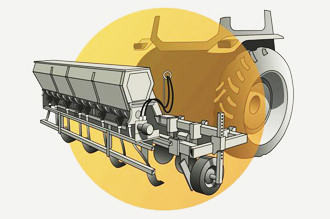
Kinze Manufacturing Inc., the second largest planting and seeding equipment manufacturer in the United States, will open a production facility in Vilnius District along the highway to Druskininkai. The facility will manufacture the company’s agricultural machinery product line, planters/seeders, to support its growing market in neighbouring countries including Russia, Ukraine, Czech Republic, Bulgaria and Hungary. It will open in autumn 2013 and start with 10 employees. In a few years the manufacturer will eventually employ 250 welders, mechanics, CNC operators and other specialists in its Lithuanian operations.
“This is our first plant abroad geared to increasing sales in Russia, Ukraine and the whole of the European Union,” commented Susanne Kinzenbaw Veatch, Vice President and Chief Marketing Officer of Kinze Manufacturing, Inc. “We were looking to expand in Eastern Europe and were considering Slovakia, Poland or Lithuania. We chose Lithuania because the local workforce is undoubtedly productive and cost-effective. Also we were very impressed by the country’s long-standing manufacturing traditions and the degree to which public institutions were attentive to our business needs.”
- Posted by - (2) Comment
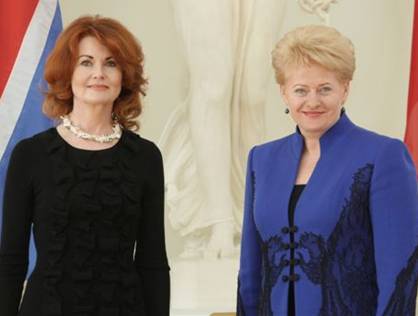
Lithuanian President Dalia Grybauskaitė with the
Ambassador of Iceland, Elin Flygenring.
The Icelandic government failed to convince its own citizens in the elections this weekend, and the conservative opposition claimed poll win as voters returned parties that ruled over 2008 financial collapse back to power.
But the present Icelandic government has, nevertheless, something important to teach the eurozone, according to an Icelandic economics professor.
While droves of businesses have had to close its doors in Euro cities like Rome and Athens, the business community in Reykjavik avoided mass death. But it could have gone differently, says economics professor Thórólfur Matthíasson at the University of Iceland.
He has called the crisis that hit Iceland in 2008, the perfect storm. A financial sector ten times larger than Iceland's GDP collapsed. The Icelandic krona lost over half the value. Inflation rose far and fast.
Up to 90 percent of Icelandic companies were in danger of getting bankrupt, but many of them could point to future, long term opportunities. The solution Iceland chose, and Matthíasson participated in, was to facilitate the corporate debts.
Both government, banks and individuals went into talks about impairment. The result was win-win, says Matthíasson.
Banks got customers who could handle their debts. Businesses avoided extensive closures. Icelanders avoided unemployment and social deprivation.
- The banks could have pushed for bankruptcy in many companies, but have instead really done their very best to look for common sense in the matter, says the economics professor.
- Posted by - (0) Comment
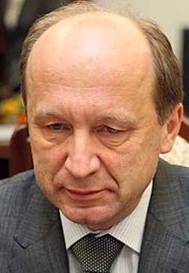 Lithuania’s former prime minister, Andrius Kubilius is a staunch advocate for those who want to cut spending to reduce deficits and "restore confidence." |
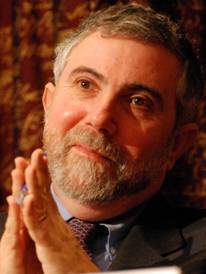 "Stimulus" spending, Paul Krugman argues, would help reduce unemployment and prop up economic growth until the private sector heals itself and begins to spend again. |
For the past five years, a fierce war of words and policies has been fought in America and other economically challenged countries around the world.
On one side were economists and politicians who wanted to increase government spending to offset weakness in the private sector. This "stimulus" spending, economists like Paul Krugman argued, would help reduce unemployment and prop up economic growth until the private sector healed itself and began to spend again.
On the other side were economists and politicians who wanted to cut spending to reduce deficits and "restore confidence."
Government stimulus, these folks argued, would only increase debt loads, which were already alarmingly high. If governments did not cut spending, countries would soon cross a deadly debt-to-GDP threshold, after which economic growth would be permanently impaired. The countries would also be beset by hyper-inflation, as bond investors suddenly freaked out and demanded higher interest rates. Once government spending was cut, this theory went, deficits would shrink and "confidence" would return.
This debate has not just been academic.
Those in favor of economic stimulus won a brief victory in the depths of the financial crisis, with countries like the U.S. implementing stimulus packages. But the so-called "Austerians" fought back. And in the past several years, government policies in Europe and the U.S. have been shaped by the belief that governments had to cut spending or risk collapsing under the weight of staggering debts.
Over the course of this debate, evidence has gradually piled up that, however well-intentioned they might be, the "Austerians" were wrong. Japan, for example, has continued to increase its debt-to-GDP ratio well beyond the supposed collapse threshold, and its interest rates have remained stubbornly low. More notably, in Europe, countries that embraced (or were forced to adopt) austerity, like the U.K. and Greece, have endured multiple recessions (and, in the case of Greece, a depression). Moreover, because smaller economies produced less tax revenue, the countries' deficits also remained strikingly high.
So the empirical evidence increasingly favored the Nobel-prize winning Paul Krugman and the other economists and politicians arguing that governments could continue to spend aggressively until economic health was restored.
- Posted by - (8) Comment
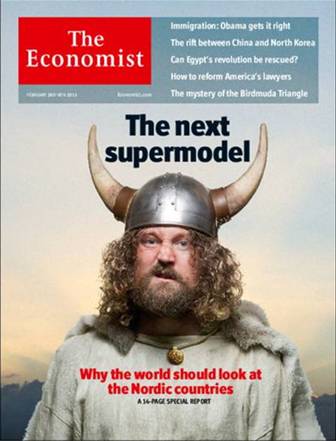
The Nordic countries are inventing the new capitalism,
says the Economist editorial. The front of the magazine
shows a seemingly overweight, bearded Viking,
aptly titled "The Next Supermodel".
Politicians from other parts of the world could learn much of Scandinavia, the Economist writes in this weekend edition.
The Nordic countries are inventing the new capitalism, says the Economist editorial. The front of the magazine shows a seemingly overweight, bearded Viking, aptly titled "The Next Supermodel".
The four Nordic countries Sweden, Denmark, Finland and Norway do well on one international poll after another. They are often found on top of the tables in various rankings of competitiveness of purchasing power, and even happiness.
Norway, for example, has for several years been at the top in a UN ranking of the best countries to live in. The rating is calculated as part of the human development index (Human Development Index), which is an attempt to create a measure of how we are doing, that of the good life.
It encompasses not only economic indicators but also looks at health, education and income.
Politicians from other countries should learn from the Nordic model, says the Economist. It pertains to the heavily indebted countries such as in South Europe.
- Posted by - (2) Comment
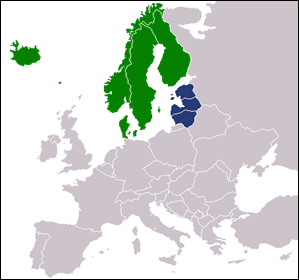
“Russia can turn the lights out on Lithuania and the other two Baltic states any time it pleases. And they can't turn them back on without Russia’s permission. Not only does this small, central European nation, as well as its neighbors Latvia and Estonia, not have access to the Russian owned-switch, but, to a large extent, it also depends on energy supplies from Russia to power its electricity generating plants; power that is needed for energy and economic independence. Lithuania as well as the other Baltic countries, being poor in energy resources, are facing a tough future and are seeking solutions.”
This was what Dr. Stan Backaitis wrote here in VilNews in 2011. We have also published articles stating that Lithuania’s dependence on Russia, to a certain degree also EU, should be reduced. We have stated that the neighbours to the north in many cases would be much more attractive partners.
- Posted by - (0) Comment
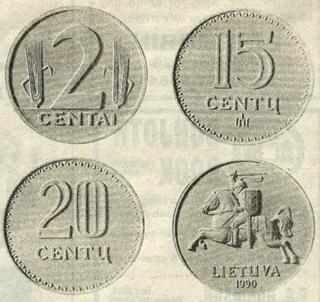
Dear readers,
We are delighted and honored that Mr. Frank Passic of Michigan, USA, graciously continues to share with us his vast knowledge of Lithuanian numismatics. In this article he provides us with a very interesting look into how Lithuania already in April 1990 bravely started planning for the re-introduction of Litas as the nation’s currency.
Frank Passic of Albion, Michigan has collected, researched, and written about Lithuanian numismatics for many years. His educational displays of Lithuanian money have won numerous awards at state and national coin shows in the United States. Of Lithuanian heritage, his maternal grandparents emigrated from Lithuania to America just prior to World War I.
- Posted by - (1) Comment
|
|
KAUNAS IN FOCUS 24 NOV – 26 DEC 2012 |
|
|
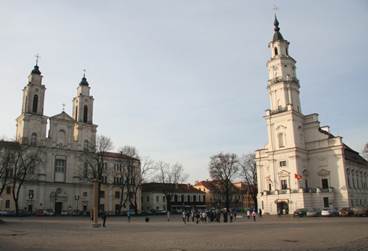
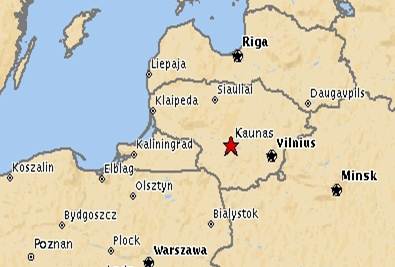
Kaunas, Lithuania's second largest city and former capital, is receiving much attention in VilNews now as 2012 is coming to an end. We focus on history, business, culture, innovation, tourism and more. We would also like to hear from you who have your personal Kaunas story to tell... Send us your Kaunas story!
|
||
|
Thinking of business?
|
||
|
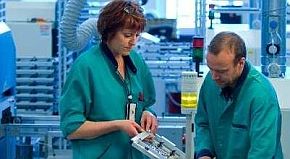
Kitron to invest in Kaunas
|
||
- Posted by - (0) Comment
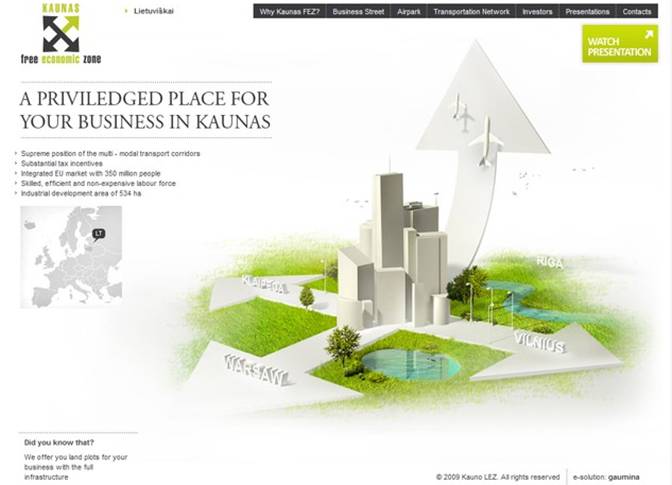
Kaunas FEZ (Free Economic Zone) is a 534 ha industrial
development area which offers tax incentives.
Key advantages include:
· Considerable tax incentives;
· Excellent geographic location, coupled with high quality road and railroad connections;
· Adjacent to Kaunas Airport (at present 17 flight directions to the Western European Countries) ;
· Close to ice-free Klaipeda Seaport;
· Stable and constantly growing Lithuanian economy;
· Highly skilled and inexpensive workforce;
· Well developed infrastructure;
· Inconsiderable cultural and linguistic barrier;
· Good investment climate;
· Safety of business in the FEZ.
Watch presentation of the Kaunas FEZ:
http://www.ftz.lt/index.php/presentation/183?vid=60
For more information, see: www.ftz.lt
- Posted by - (3) Comment
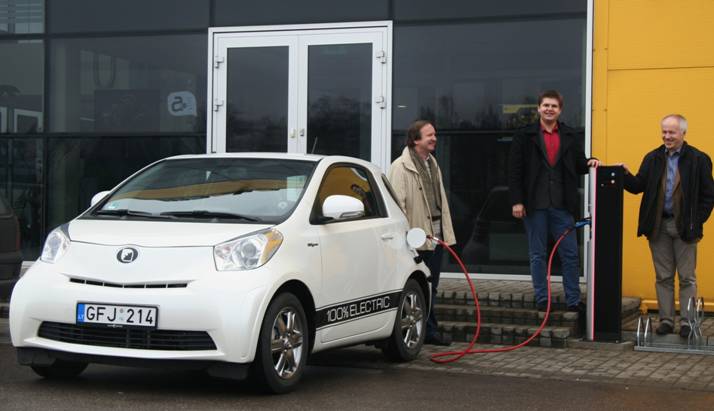
Kaunas electronics manufacturer ELINTA has come a long way in developing a new electric car here in Kaunas. These three gentlemen are behind the success: Dr. Vytautas Jokužis, Laurynas Jokužis and Dr. Vladas Lašas.
Since 1994 Elinta has also been selling products from some of the most advanced European companies. They were the first to bring the products of SIEMENS, PHOENIX CONTACT, and RITTAL to Lithuania.
With time Elinta gained significance in the field of Lithuanian industry automation. With the aim to optimise its performance ELINTA modernised its organisation by relocating different types of activities to secondary companies: UAB Elinvision, UAB Elintos matavimo sistemos, UAB Elinta VS.
Have your say. Send to:
editor@VilNews.com
 Greeks won, Lithuanians lost!
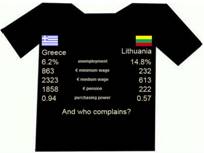 A far too bright picture of the present reality
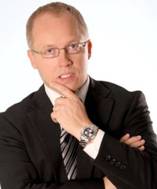
 New Chairman of the Bank of Lithuania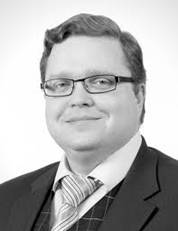
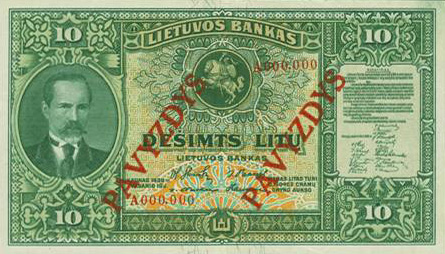 Independence day commemorationIn connection to this year’s Lithuanian Independence Day, it might be of your interest to know that in 1938 there was printed an unissued ten litu banknote commemorating the 20th anniversary of Lithuanian independence 1918-1938.
VilNews e-magazine is published in Vilnius, Lithuania. Editor-in-Chief: Mr. Aage Myhre. Inquires to the editors: editor@VilNews.com.
Code of Ethics: See Section 2 – about VilNews. VilNews is not responsible for content on external links/web pages.
HOW TO ADVERTISE IN VILNEWS.
All content is copyrighted © 2011. UAB ‘VilNews’.