
THE VOICE OF INTERNATIONAL LITHUANIA

|
VilNews has its own Google archive! Type a word in the above search box to find any article.
You can also follow us on Facebook. We have two different pages. Click to open and join.
 Click on the buttons to open and read each of VilNews' 18 sub-sections Click on the buttons to open and read each of VilNews' 18 sub-sections  |

|


Author Archive
- Posted by - (0) Comment
Donatas Januta: Reply to Olga Zabludoff re Holocaust in Lithuania
Honest differences of opinion do not mean bad intentions or motives
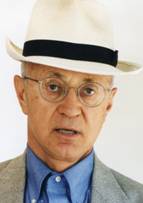
Donatas Januta
Dear Olga,
I have sincerely and honestly tried to respond to you. But you keep changing the rules on me, and you attribute to me intentions and motives which I have not stated and do not have.
We seem to agree on the important basic points. Yes, the Jewish Holocaust was and is the most terrible tragedy that has occurred in Europe. And if I could do anything to undo it, I would. Yes, I do not dispute Israeli historian Dina Porat’s conclusion that half of one percent (0.5%) of Lithuanians were involved directly or indirectly in the German organized killing of Jews. But beyond that, we, including yourself, get into the specifics of individual events – the where, why, and how – and there we do not seem to be able to find common ground.
You said that the reason Jews had a monopoly in the trades and commerce in Lithuania is because ethnic Lithuanians “chose” not to enter those fields. I responded by showing that ethnic Lithuanians’ long history of repression by the Russian czars did not allow them to make any such choice. Now you tell me that history is irrelevant.
You said that Litvaks had been dancing in Lithuania for 700 years, and that failing to invite some non-existent Yiddish dancers to a Lithuanian ethnic dance festival in Los Angeles was an anti-semitic act. You brought that up, not I. So I responded by noting that during those 700 years, Litvaks themselves neither invited nor joined ethnic Lithuanians. And that I understand and appreciate the rich and unique culture that Litvaks were able to develop as a separate culture from that of ethnic LIthuanians. So, I asked, why could not ethnic Lithuanians also celebrate their own separate culture.
But then, you turn this on its head and say that I am “chastizing the Lithuanian Jews for not being ethnic Lithuanians.” Yet, on October 26th here, I wrote:
“Litvaks’ vast contribution to world knowledge, science and the arts over the last 100 years probably has no no parallel in any other group. And we have all benefitted from their talents and intellect.”
Does that really sound to you that I would prefer that Litvaks were ethnic LIthuanians? Gosh darn, Olga, if anything, I would wish the other way around - that my small tribe of ethnic Lithuanians were half as talented and accomplished as yours have been. Yet, you say that I am “leading up in cunning fashion to the Nazi-inspired rhetoric.” Olga, that’s really not fair of you. I can’t seem to win.
Yes, true, as you say, in Lithuania during the brief period of independence, 20 years total between the two World Wars, Jewish signs were taken down from storefronts and other public places - the same as Russian, Polish, and German signs which were also taken down.
After having been denied for hundreds of years the use of their own language in their own country, Lithuanians sought to gain back lost ground. Isn’t that similar to what Israel did by introducing Hebrew as the official state language – or are all Israelis speaking the Palestinian language that they found in Palestine? Aren’t you applying – oops, there’s that phrase again that you don’t like – a double standard here?
But Jews in Lithuania continued to maintain and attend their own yeshivas and synagogues, have their own Yiddish and Hebrew newspapers, and their own Jewish cultural and political organizations like the Bund, the Zionists, and so forth, all the way until the Soviet occupation of 1941.
I have read the articles that you directed me to as well as others. Suziedelis’ articlde offers what appears to be a fairly good general overview of past Lithuanian attitudes, as well as of his own learning path, towards the Holocaust. He does, however, lean towards generalities and avoids specifics, and some of his comments are too obscure or vague for me to understand.
For example, he states (in his original Lithuanian) that “I never felt that my parents had any particular sympathy for Jews” and that his parents “were tortured by the same stereotypes as others of his generation.” I have no idea what to make of such statements. As far as his statement about his parents not having any sympathy for Jews, in contrast elsewhere in the same article he states he is aware of two occasions when his father protested the treatment of Jews. And he really does not tell us which particular stereotypes he is referring to, nor in what manner they tortured his parents.
Incidentally, you seem to refer to Suziedelis as one of the “young educated” Lithuanians, “not clouded by present-day Nationalist politics”, as opposed, I guess, to someone like me. But he and I are of the same generation. We both came to the US as children, as war refugees, we both grew up and were educated in the US and have lived our adutl lives here. And by “present-day Nationalist politics” – do you mean like that of Israel, which I understand and appreciate, despite the fact that I may disagree with some of Israel’s policies from time to time.
As for the article by Wyman Brent that you referred me to – he seems like a well intentioned fellow who appears to have swallowed the Zuroff party line.
I guess, Olga, from your last post here, that we have come to the end of our current conversation. I wish you well.
- Bookmark :
- Digg
- del.icio.us
- Stumbleupon
- Redit it

Lithuania still among the “flawed democracies” around the world, according to a new report from The Economist
- Posted by - (0) Comment

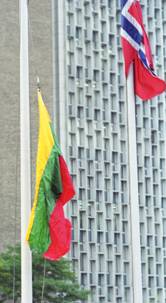
Norway on top,
Lithuania number 41.
The publication’s Economist Intelligence Unit ranked 167 countries and territories in its Democracy Index 2011, placing Lithuania as 41st overall, same as last year.
The report scores countries based on five measures: electoral process and pluralism; civil liberties; the functioning of government; political participation; and political culture.
Based on their scores, countries are placed in one of four different regime categories: full democracies, flawed democracies, hybrid regimes and authoritarian regimes.
Just 25 countries, led by Norway, are considered full democracies, according to the 2011 report. A total of 53 countries, including all three Baltic states, are considered flawed democracies. Hybrid regimes are found in 37 countries, while authoritarianism reigns in 52.
“Much of eastern Europe illustrates the difference between formal and substantive democracy,” according to the report. “The new EU (European Union) members from the region have pretty much equal level of political freedoms and civil liberties as the old developed EU, but lag significantly in political participation and political culture—a reflection of widespread anomie and weaknesses of democratic development.”
The Czech Republic, ranked No. 16, is the only country from Eastern Europe to make it into the top tier of full democracies.
Scandinavia swept the top four spots in the rankings. Norway at No. 1 is followed by Iceland, Denmark and Sweden. The Top 10 full democracies are rounded out by New Zealand, Australia, Switzerland, Canada, Finland and the Netherlands.
The United States ranks 19th, one notch below the United Kingdom.
Among the Baltic states, only Latvia’s ranking improved, rising from 49th in the 2010 index. Estonia dropped a spot from 33rd in 2010 to 34th in 2011. Lithuania, at No. 41, remains unchanged.
Russia ranked 117th, placing it in the list of authoritarian regimes. The announcement in September that Prime Minister Vladimir Putin will again seek the presidency of Russia is “a retrograde and cynical step,” according to the report.
- Bookmark :
- Digg
- del.icio.us
- Stumbleupon
- Redit it

- Posted by - (0) Comment
EUROPE
my home & my castle
Text and photos: Aage Myhre
aage.myhre@VilNews.com
The more I travel around the world the more I realize that I am European. Although I have had good, close friends and have experienced extraordinary things in all corners of the world. Maybe my mind is not sufficiently exotic. That's ok. I have grown older now. Europe does not lose lustre. Driving a car is the best way to experience Europe. Lithuania's border crossings to Latvia and Poland is no problem anymore. Within a day's drive you can reach most of the northern and central European countries. One more day and you can already stand and look out over the warm, slow waves of the Mediterranean Sea...
Over the next few weeks VilNews will present some glimpses of Europe ... A Europe that is now so close to everyone... The Iron Curtain is gone, forever!
|
1 |
|
Exploring Europe |
|
2 |
|
Switzerland & Italy |
|
3 |
|
Along the Riviera |
|
4 |
|
From Strasbourg to London |
|
5 |
|
Austria & Germany |
|
6 |
|
Finland & Scandinavia |
|
7 |
|
En route Warsaw - Budapest |
|
8 |
|
Moscow and further east |
|
9 |
|
The Baltic Hanseatic route |
|
10 |
|
Istanbul |


1 of 10: Exploring Europe
I love old towns. No matter how good a new suburb is. I, and many with me, prefer the old towns. It has something to do with the atmosphere. Details, ornaments. Human life. Sound and smell. Warmth. Joy.
Europe is the 'old town' for the entire world!
I think it primarily is about culture and history. All that Europe is so infinitely rich on. It is something about that feeling. The idea and the knowledge of the Roman Empire every time I'm in Rome. Recognition every time I visit a museum or gallery and see the many art treasures I feel is a part of my European self.
It is more to Europe I never get tired of. For example, being able to walk, touch, feel, smell. Being a tourist here is like walking on the world stage as it has provided the basis for so much over thousands of years. Fortunately, European leaders long ago realized that the human being is more important than cars. Take Strøget in Copenhagen, bike paths in Holland and promenades along pretty much all The Mediterranean sea-coast as good examples of this.
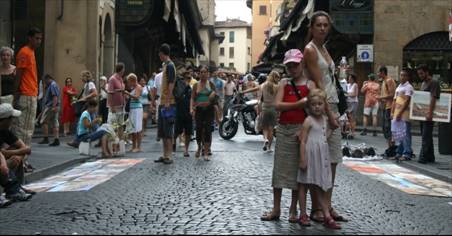
Europe means walking around on cobbled streets. Between historic buildings.
To see. Listen. Experience. Feel. Smell.
- Bookmark :
- Digg
- del.icio.us
- Stumbleupon
- Redit it

- Posted by - (2) Comment
EUROPE
my home & my castle
Text and photos:
Aage Myhre
aage.myhre@VilNews.com
The more I travel around the world the more I realize that I am European. Although I have had good, close friends and have experienced extraordinary things in all corners of the world. Maybe my mind is not sufficiently exotic. That's ok. I have grown older now. Europe does not lose lustre. Driving a car is the best way to experience Europe. Lithuania's border crossings to Latvia and Poland is no problem anymore. Within a day's drive you can reach most of the northern and central European countries. One more day and you can already stand and look out over the warm, slow waves of the Mediterranean Sea...
Over the next few weeks VilNews will present some glimpses of Europe ... A Europe that is now so close to everyone...
The Iron Curtain is gone, forever!
|
1 |
|
Exploring Europe |
|
2 |
|
Switzerland & Italy |
|
3 |
|
Along the Riviera |
|
4 |
|
From Strasbourg to London |
|
5 |
|
Austria & Germany |
|
6 |
|
Finland & Scandinavia |
|
7 |
|
En route Warsaw - Budapest |
|
8 |
|
Moscow and further east |
|
9 |
|
The Baltic Hanseatic route |
|
10 |
|
Istanbul |
1 of 10: Exploring Europe
I love old towns. No matter how good a new suburb is. I, and many with me, prefer the old towns. It has something to do with the atmosphere. Details, ornaments. Human life. Sound and smell. Warmth. Joy.
Europe is the 'old town' for the entire world!
I think it primarily is about culture and history. All that Europe is so infinitely rich on. It is something about that feeling. The idea and the knowledge of the Roman Empire every time I'm in Rome. Recognition every time I visit a museum or gallery and see the many art treasures I feel is a part of my European self. It is more to Europe I never get tired of. For example, being able to walk, touch, feel, smell. Being a tourist here is like walking on the world stage as it has provided the basis for so much over thousands of years. Fortunately, European leaders long ago realized that the human being is more important than cars. Take Strøget in Copenhagen, bike paths in Holland and promenades along pretty much all The Mediterranean sea-coast as good examples of this.

Europe means walking around on cobbled streets. Between historic buildings.
To see. Listen. Experience. Feel. Smell.
- Bookmark :
- Digg
- del.icio.us
- Stumbleupon
- Redit it

Lithuania still planning to adopt euro in 2014
- Posted by - (0) Comment

Lithuania is still determined to introduce the embattled euro currency in two years, a government official said Tuesday, despite skepticism by the Baltic country's president.
The center-right government was doing everything possible to join the eurozone in 2014, its previously stated goal, said Virgis Valentinavicius, an adviser to Prime Minister Andrius Kubilius.
"The most important thing are stable finances" to meet the standards of the EU "and the prime minister is sure that our country will meet them," said Valentinavicius.
"We can only hope that EU will solve the problems of common currency by that time," he added.
However, in an interview published Monday in the Veidas magazine, President Dalia Grybauskaite expressed doubt that Lithuania would be ready, saying "2014 was unrealistic." She did not elaborate.
- Bookmark :
- Digg
- del.icio.us
- Stumbleupon
- Redit it

- Posted by - (0) Comment
Olga Zabludoff: Reply to Donatas Januta re Holocaust in Lithuania
. . . it was the “lucky Jews” who were deported [to Siberia] since they accounted for many of the survivors. . . . Jews could not return from the mass graves.
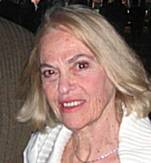
Olga Zabludoff
Dear Donatas,
I send New Year greetings to you and your family.
In response to your article of 20th December, 2011, I regret to tell you that your lengthy sermon on serfdom was irrelevant to our discussion. Let me remind you that from its onset this debate has been rooted in modern Lithuanian history. It has been labeled a discussion on “Holocaust in Lithuania” and has frequently traveled into the arena of current Lithuanian-Jewish issues and attempts at reconciliation.
- Bookmark :
- Digg
- del.icio.us
- Stumbleupon
- Redit it
Re: Article by Dr. Irena Veisaite
- Posted by - (0) Comment
Dear Editor,
The recent article by Dr. Irena Veisaite agreeing with the antisemitic establishment's evaluation of the life's work of Dr. Efraim Zuroff, Director of the Simon Wiesenthal Center's Israel office and a leading historian of the Lithuanian Holocaust, has been a cause of great dismay to us, the world's last active organization of Lithuanian Holocaust survivors and their descendants.
- Bookmark :
- Digg
- del.icio.us
- Stumbleupon
- Redit it
- Posted by - (2) Comment
Olga Zabludoff: Reply to Donatas Januta re Holocaust in Lithuania
. . . it was the “lucky Jews” who were deported [to Siberia] since they accounted for many of the survivors. . . . Jews could not return from the mass graves.
Olga Zabludoff
Dear Donatas,
I send New Year greetings to you and your family.
In response to your article of 20th December, 2011, I regret to tell you that your lengthy sermon on serfdom was irrelevant to our discussion. Let me remind you that from its onset this debate has been rooted in modern Lithuanian history. It has been labeled a discussion on “Holocaust in Lithuania” and has frequently traveled into the arena of current Lithuanian-Jewish issues and attempts at reconciliation.
I have tried to play by the rules and have told you time and again that I find it difficult to relate to medieval times in Lithuania or even to the period of the Grand Duchy of Lithuania – given the time frame of our topic. (Sure, sometimes one makes a reference to an earlier period but almost as a simple footnote.) So when I asked: “When were the Lithuanian people not allowed to have a hand in their country’s economy or barred from any particular occupations?” I was clearly not referring to the 18th century when most Lithuanians were indeed peasant serfs. I was talking about the period of Independent Lithuania (the interwar years), the era on which our debate is focused. Your digression into the earlier centuries makes about as much sense as if I would have cried to you that my Jewish ancestors had been Pharaoh’s slaves in Egypt.
In one of my earliest responses to you I claimed that you twist your facts and figures to suit your arguments. Actually you go further than that. You constantly resort to periods in Lithuanian history that have little or no connection to our theme. Is this in order to deflect or distract from issues you would rather not address? You corrupt history by telling only half the story. For instance, in your 24th November, 2011 article, “Litvaks: Lithuania’s Warriors,” you state openly that Lithuanian Jews were a force in helping win an Independent Lithuania, fighting and dying alongside their Lithuanian brethren. In turn, the Jews were rewarded with rights and privileges for their participation in achieving their country’s freedom. But at that point you stop short, obviously preferring to omit the rest of the story:
After a few years of this “Golden Age,” all Jewish rights and privileges were harshly revoked, and the darkest period in the history of Lithuania’s Jews began to germinate: “Lithuania for Lithuanians!” Jewish signs on businesses had to be removed. Then they lost their businesses, their homes. Vitriolic Nazi propaganda was embraced in Lithuania. We all know the end . . .
Like an insidious drum beat you recycle and recycle your party line: Jews contributed “zilch” to the Lithuanian economy. Jews created a monopoly in the marketplace. Jews played no role in Lithuanian culture. Jews kept themselves distinct from the Lithuanians among whom they lived. Jews did not invite Lithuanians to dance with them. Jews did not communicate with Lithuanians in the same language. Jews did not worship the Lithuanian religion. Jews had separate schools and dressed differently from Lithuanians. Jews did not intermix with Lithuanians except in the marketplace. Their Litvak culture was totally separate and distinct from the ethnic Lithuanian culture.
In other words, you are chastising the Lithuanian Jews for not being ethnic Lithuanians. You are leading up in cunning fashion to the Nazi-inspired rhetoric that the Jews themselves were responsible for what happened to them, and that they deserved their fate. This is a devious Nationalist strategy to incite hatred and to rid Lithuania of guilt. And of course there is the eternal echo in your arguments that the Lithuanians were the victims of the controlling Jews. This is another diabolical tactic to reverse the roles of perpetrator and victim.
A prominent historian in the UK (a non-Jew) wrote me recently: “The double genocide argument is so fraudulent. Of course the word ‘genocide’ cannot be used exclusively for the Holocaust: there are other genocides as well. But the evidence set out clearly indicates that there was no such extermination of the Lithuanians – terrible suffering, yes, but not a genocide. You don’t have to look far for the reasons (not the reasoning) for the argument. It helps to reduce the sense of guilt. So instead of saying ‘Weren’t we terrible,’ they say, ‘We all suffered together.’ Which in turn reduces the need for a complete realignment of sensibility.”
I have read recent pieces in VilNews concerning the Soviet deportations of Lithuanians to Siberia. Among the responses to the articles are many which confirm that the deportees eventually returned to their home country – not all, but many. It is also important for readers to realize that the Soviets did not spare Lithuanian Jews from being deported to Siberia along with non-Jews. In fact, it was the “lucky Jews” who were deported since they accounted for a good number of survivors. Brutal as were the conditions of the deportees, the population statistics tell us that by 1951 more than 90% of non-Jewish Lithuanians had survived, after which year the population began to climb. In sharp contrast less than 5% of the pre-war Lithuanian-Jewish population remained alive at the close of 1941. Jews could not return from mass graves. The annihilation of more than 95% defines a true genocide.
Donatas, I don’t believe we have made progress, however hard we may have tried. I cannot and do not want to keep repeating myself in reply to your cyclical charges of red herrings, Jewish monopolies, Jewishness, Zuroff & Co., and one-way streets. It is like a jingle you have created. We will not convince one another. I find it unfortunate that a man of your education has a distorted view of the very same facts that other educated Lithuanians or Lithuanian-Americans or historians in general see as historical truth. The seeds of reconciliation are probably sprouting in the minds and hearts of young educated Lithuanians who are able to confront their nation’s past with clarity and whose visions for their country’s future are not clouded by present-day Nationalist politics.
In closing, I wish you would read the articles I have linked below.
http://defendinghistory.com/wyman-brent-founder-of-vilnius-jewish-library-assures-supporters-of-library%E2%80%99s-integrity/20396- Bookmark :
- Digg
- del.icio.us
- Stumbleupon
- Redit it
Re: Article by Dr. Irena Veisaite
- Posted by - (6) Comment
Dear Editor,
The recent article by Dr. Irena Veisaite agreeing with the antisemitic
establishment's evaluation of the life's work of Dr. Efraim Zuroff,
Director of the Simon Wiesenthal Center's Israel office and a leading historian of the Lithuanian Holocaust, has been a cause of great dismay
to us, the world's last active organization of Lithuanian Holocaust
survivors and their descendants.
We have been equally dismayed by her years of betrayal of her fellow survivors and willingness to serve a Lithuanian government PR agent
who is sent far and wide to help cover up for the policies of Holocaust distortion and toleration of antisemitism in Lithuania.
We wish Dr. Veisaite well, and at the same time we ask that the readers of VilNews.com remember that she represents her own views and perhaps
those of high Lithuanian government officials, but certainly not those of the international community of Lithuanian Holocaust survivors who will not remain silent.
Joseph A. Melamed
Attorney
Chairman, Association of Lithuanian Jews in Israel
- Bookmark :
- Digg
- del.icio.us
- Stumbleupon
- Redit it
Nida tranquility
- Posted by - (0) Comment
Text and photos: Aage Myhre
aage.myhre@VilNews.com
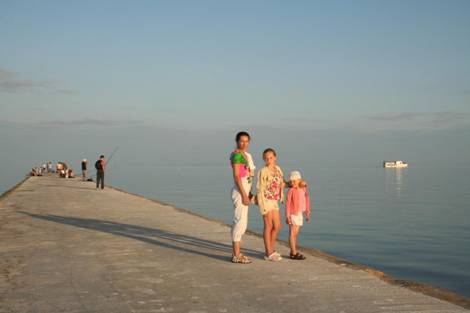
The quiet resort village Nida is based at the Curonian Spit (Neringa) near the Kaliningrad border, less than one hour’s drive from Klaipeda at Lithuania’s seacoast. With beautiful Baltic Sea beaches on the west side, the large Curonian Lagoon on the east side and the largest sand dunes of Northern Europe on the southern side, this is a truly unique place for a relaxed vacation. You should spend one or two weeks in a self catering fisherman's cottage or a few days in a guest house or hotel. Nida is the place to take it easy!
Here is what a visiting family wrote after their visit:
"We have never visited anywhere that had such a relaxing effect on us as the view from the sun clock on the Great Dune in Nida. The silky-smooth lagoon to one side of the golden spit and the sparkling waves of the Baltic Sea to the other side was breath-takingly beautiful. We did lots of walking, running and cycling including a walk along the Baltic Sea beach from west of Preila back to Nida”.
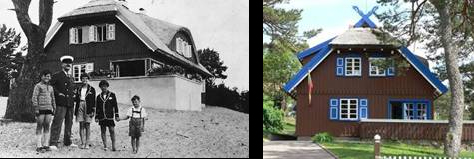
The Nida home of the German writer Thomas Mann,
today the Thomas Mann Museum.
- Bookmark :
- Digg
- del.icio.us
- Stumbleupon
- Redit it
Nida tranquility
- Posted by - (1) Comment

Text and photos: Aage Myhre
aage.myhre@VilNews.com
The quiet resort village Nida is based at the Curonian Spit (Neringa) near the Kaliningrad border, less than one hour’s drive from Klaipeda at Lithuania’s seacoast. With beautiful Baltic Sea beaches on the west side, the large Curonian Lagoon on the east side and the largest sand dunes of Northern Europe on the southern side, this is a truly unique place for a relaxed vacation. You should spend one or two weeks in a self catering fisherman's cottage or a few days in a guest house or hotel. Nida is the place to take it easy!
Here is what a visiting family wrote after their visit:
"We have never visited anywhere that had such a relaxing effect on us as the view from the sun clock on the Great Dune in Nida. The silky-smooth lagoon to one side of the golden spit and the sparkling waves of the Baltic Sea to the other side was breath-takingly beautiful. We did lots of walking, running and cycling including a walk along the Baltic Sea beach from west of Preila back to Nida”.
|
|
|


The Nida home of the German writer Thomas Mann, today the Thomas Mann Museum.
The Curonian Lagoon
|
The Curonian Lagoon is separated from the Baltic Sea by the Curonian Spit. Its surface area is 1,619 square kilometres. The Nemunas River supplies about 90% of its inflows; its watershed consists of 100,450 square kilometres in Lithuania, Belarus, and the Kaliningrad Oblast. At the northern end of the Spit, there is a passage to the Baltic Sea, and the place was chosen by the Teutonic Knights in 1252 to found Memelburg castle and the city of Memel (today’s Klaipeda). The Lagoon, formed about 7,000 years BC, is classified as brackish. Water depths average is 3.8 meters. Nida is very beautifully situated on the west bank of the lagoon. It is from here the fishermen go out on the lagoon in the early morning hours to find the catch of the day. This is where sailing boats gather in late summer evenings. It is in the small streets and on the promenade along the lagoon that the good life in Nida takes place. |
|
|


I
took this picture on a warm late summer evening. I had had a very
enjoyable evening with family and friends, and decided afterwards to go for a
walk along the Curonian Lagoon. The silence, peace, and the slow whisper of the
waves from this large lagoon makes an unforgettable impression. The faint
moonlight and the last sailing boats that were heading towards the Nida harbour
made the impression no less impressive. Nida is a place on earth that
simply MUST be experienced...

The local fishermen are still going strong!


Colourful fishermen homes


A sailors’ paradise


A children’s paradise


The Nida sand dunes are high as mountains
|
Nida is located in the middle of the Curonian Spit (Neringa), half way between Klaipeda and Kalininigrad. The Curonian Spit is a long and narrow sand peninsula that separates the Curonian Lagoon from the Baltic Sea. The huge sand dunes here are the largest in North Europe. A walk on the sand-hills on the outskirts of Nida is an absolute must when you're here. You climb up the steep stairs, take off your shoes. Kilometers of hot desert sand lies ahead. To the east you overview the huge lagoon between the Curonian Spit and the Lithuanian mainland. To the west you can see out over the glassy Baltic Sea almost to Sweden. Fantastic!
|
|


The fantastic Nida beaches – at the Baltic Sea
The Curonian Spit is around 3 km wide here at Nida, and it’s very easy to walk from east to west, over the hilltop, through beautiful pine forests, to some of the finest beaches existing at the Baltic Sea. Probably the best in Northern Europe!
|
|
|


Nida tranquillity awaits you!

- Bookmark :
- Digg
- del.icio.us
- Stumbleupon
- Redit it
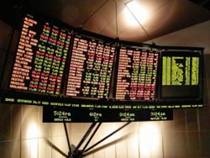
The year 2011 was the least successful for Vilnius bourse NASDAQ OMX; its index fell 27.5% – the lowest since 2008, The Lithuania Tribune reports, referring to 15min.lt.
A specialist of SEB Bank noted that the decrease of the Vilnius stock exchange index took place due to the foreign facts, writes LETA/ELTA.
"At least one can take comfort from the fact that decline [of the stock exchange in 2011] was mainly due to foreign news, not local. From the earthquake in Japan to the eurozone debt crisis", said Arvydas Jacikevicius, Senior Broker at SEB Bank.
According to him, the main European stock markets still tried to resist the pessimism up until the end of the summer, while stock markets in developing countries, including Lithuania, did not show any obvious signs of recovery since spring.
However, according to Rytis Davidovicius, the General Director of Orion Asset Management, which manages 7.6 million litas worth investment fund Omx Baltic Benchmark, next year would bring many challenges because of multiple market sentiment changes and political decisions directly affecting the stock markets.
"For this reason, the investors should not get distracted and after reassessing their risks keep to their investment strategy", said R. Davidovicius.
From the beginning of this year to Wednesday, Vilnius stock market index OMX Vilnius suffered the biggest fall among the Baltic States' indexes – by 27.5%, the OMX Tallinn fell by 22.9%, and OMX Riga – by 6.2%.
Read more…
- Bookmark :
- Digg
- del.icio.us
- Stumbleupon
- Redit it
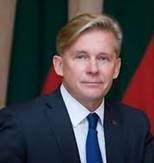
In the wake of failed bilateral talks on Polish minority schools in Lithuania, the Lithuanian foreign minister has said that his country “do not need a big brother.”
Foreign Minister Audronius Azubalis said that Poland had “driven into a dead end” by trying to influence internal Lithuanian affairs.
“Our government said clearly: all issues relating to citizens, regardless of whether they relate to minorities, shall be settled by we ourselves,” he told the Lithuanian IQ magazine.
The foreign minister added that his own country was not to blame for the problems.
“Vilnius is not responsible for tensions in Polish-Lithuanian relations,” he said.
Read more…
- Bookmark :
- Digg
- del.icio.us
- Stumbleupon
- Redit it
- Posted by - (1) Comment
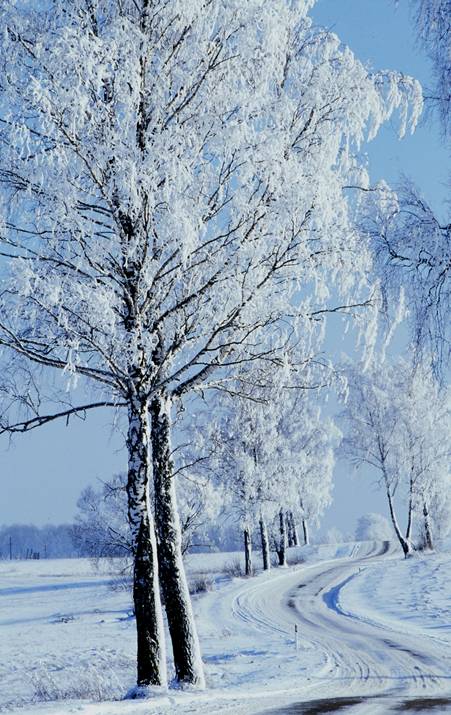
Winter motive from Aukštaitijos National Park.
May 2012 become
just as peaceful as a
Lithuanian landscape…
- Bookmark :
- Digg
- del.icio.us
- Stumbleupon
- Redit it
- Posted by - (2) Comment

Winter motive from Aukštaitijos National Park.
May 2012 become just as peaceful as a Lithuanian landscape
Text: Aage Myhre – aage.myhre@VilNews.com
Photos: The Lithuanian State Department of Tourism - http://www.lithuaniatourism.co.uk
It is New Year's Day year 2012. I wish all of you, dear readers of VilNews, a happy, good, warm and successful year. Let us all do our best to show genuine care and concern for our fellow human beings throughout this year that now barely has started.
Both in Lithuania and in other countries there will also in 2012 be huge groups of people who will feel the consequences of the global economic crisis, and I am afraid war and injustice will continue in many areas of our world throughout the year.
Then there is the the Maya's "Long Count" calendar that marks the end of a 5,126-year era on the 21st of December this year. This has led some to forecast widespread catastrophes for the world. Others predict a restoration of a "true balance between Divine Feminine and Masculine, whereas some anticipate a "change in the nature of consciousness," assisted by indigenous insights and psychedelic drug use...
I recommend the Lithuanian nature as medicine for all who seek peace in their souls in the midst of all problems and predictions for 2012.
Peaceful, harmonious and energizing is the landscape here, as it has been for millions of years. This is a landscape that has seen more war and bloodshed than most other places around the globe. But it is a good landscape. Not as dramatic and wild as in many other countries. Rather quietly and unpretentiously beautiful. The forests, the mighty rivers, and the plains that slowly wave from Belarus to the colossal sand dunes out there on the Baltic Sea coast.
About 28 % of the country is covered by forests, 40 % of them are pines. Wild berries and mushrooms grow in abundance and the picking of them is the most popular hobby of local people. About 300 species of birds can be found, and four Nature Reservations are their breeding grounds. White Storks are the most popular birds, returning to their Lithuanian nests every spring from Sub-Saharan areas where they spend their winters. The White Stork is the country’s national bird, and 25 March is the official ‘Stork’s Day’. Notably, Lithuania is a beneficial and important habitat for the White Storks with the highest known nesting density in the world!
There are over 4,000 lakes and 722 rivers in Lithuania. Wetlands and a mixed forest zone cover nearly 33% of the land. The longest river is the Nemunas, which is 937 km (582 mi) long totally, whereas its length through Lithuania is 457 km (284 mi). Nemunas gathers and carries the waters of many tributaries to the Baltic Sea, wherein lies Lithuania's famous "amber coast" at the Curonian Spit, a 100 km-long (60 mi) bank of sand dunes and pine trees which stretches from the southwest to the seaport of Klaipėda and encloses the vast Curonian Lagoon.
For centuries, amber, Lithuania's precious harvest of the sea, has been washed onto these golden sands. Lithuania enjoys almost 100 kilometres (60 mi) of beautiful sandy coastline, white, soft beaches that are a true bathing paradises during the summer months. Probably the best beaches in all Northern Europe!
The Lithuanian landscape has been smoothed by glaciers. The highest areas are the moraines in the western uplands and eastern highlands, none of which are higher than 300 metres (1,000 ft) above sea level, with the maximum elevation being Aukštojas Hill at 294 metres (964 ft). The best of the country's scenery can be seen in its five National Parks.
The climate lies between maritime and continental, with wet, moderate winters and summers. According to one geographical computation method, Lithuania's capital, Vilnius, lies only a few kilometres south of the geographical centre of Europe.
But these are only the hard facts. The Lithuanian countryside is so much more than just facts. It is only when you begin your walk through the woods here, as you slowly float down one of the rivers in a canoe or a raft, when you sit down at one of the many amazing lakes, or when you first put your foot down into the Baltic Sea’s salty water that you really understand that this country is different. And now, in the year of 2012, you will have the great opportunity of exploring and feeling close to Lithuania's highly inspirational nature. A landscape of peace...
|
|
The colours of the Lithuanian flag symbolise: |
|
Amber (gintaras) is highly treasured and is the only national gem of Lithuania. |


Lake and island formations in Aukštaitijos National Park.

Autumn in the Aukštaitijos National Park.

A winter coated Aukštaitijos National Park.

Mingė, often nicknamed Lithuania’s Venice) is a small fishermen's village in the Šilutė district, on the Minija river, and is part of the Nemunas Delta Regional Park. This village is unique in Lithuania as the main "road" is the river. Houses are situated on both banks and there is no bridge to connect them. The only way to get around is to use a boat. In 1997 it had 48 residents.
The Curonian Spit (Neringa)
The Curonian Spit (Neringa) is a long and narrow sand peninsula that separates the Curonian Lagoon from the Baltic Sea. This natural wonder, listed as a UNESCO World Heritage site, still exists today solely due to human efforts to counter the natural erosion process. The Neringa landscape is truly unique, dominated by picturesque sand dunes and pristine beaches. The area has a distinct ethnographic flavour, characterised by wooden fishermen cottages and the local speciality of smoked fish. Those looking for a quiet seaside vacation in picturesque surroundings will most definitely not be disappointed.
The huge sand dunes of the Curonian Spit are the largest in North Europe. You reach them by ferry from Klaipeda (takes only 10 min).The Curonian Lagoon is separated from the Baltic Sea by the Curonian Spit. Its surface area is 1,619 square kilometres. The Nemunas River supplies about 90% of its inflows; its watershed consists of 100,450 square kilometres in Lithuania, Belarus, and the Kaliningrad Oblast. At the northern end of the Spit, there is a passage to the Baltic Sea, and the place was chosen by the Teutonic Knights in 1252 to found Memelburg castle and the city of Memel (today’s Klaipeda). The Lagoon, formed about 7,000 years BC, is classified as brackish. Water depths average is 3.8 meters.
|
|
|
|
|


Curonian Spit sand dunes.

Curonian Spit sand formations.
|
THE NATIONAL PARKS Source: http://www.lithuaniatourism.co.uk Five national parks (Aukštaitijos, Dzūkijos, Žemaitijos, Kuršių nerijos and Trakų) and 30 regional parks filled with virgin forests and unspoiled marshland exist in Lithuania, inhabited by protected wild animals and rare birds. Three parks (Aukštaitijos, Dzūkijos and Žemaitijos) are named after the ethnographic regions they are situated in. Each of the parks is under the government’s protection and all kinds of recreational and agricultural activities are strictly regulated so that these natural wonders can be enjoyed by everyone. Protected areas, including natural and cultural reserves as well as national and regional parks, cover almost 12% of the country’s entire territory. >Apart from these, there are 386 special natural monuments (old trees, natural springs, standing stones, etc.) and 3,719 cultural monuments (old ethnographic villages, manors, castles, churches, barrows) under the state’s protection. In many parks, particularly in eastern and western Lithuania, old villages that have kept their traditional structures of unsurfaced streets, thatched-roof farmsteads and fields can be found. They have the status of ethnographic reserves. These national and regional parks offer visitors the opportunity to see Lithuanian customs and traditions as well as try out local foods and have a good time. www.countryside.lt There are plenty of opportunities for learning more about Lithuania and its lovely, unspoilt countryside. There are routes and paths for walking, horse riding, cycling, birdwatching and water tourism. Viewpoints throughout the country with magnificent views of the surrounding landscape can easily be reached. Information in English and other languages is available at the parks’ information centres:
|


- Bookmark :
- Digg
- del.icio.us
- Stumbleupon
- Redit it
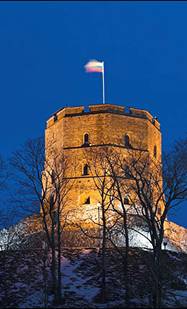
“Vilnius became one of the favourite cities due to its Flag Day, since 1919, when the Lithuanian tricolor was first raised on the castle tower.
Argophilia Travel News has named its favorite Eastern European cities to celebrate 2012: Riga, Tallinn, Prague, Debrecen and Vilnius.
Riga was named one of Eastern Europe’s best due to its spectacular fireworks, live concerts and shows; Tallinn was praised for its artistic celebration program, and Vilnius – for its unique Flag Day tradition marked on Jan. 1, informsLETA.
“Riga (Latvia) holds a New Year’s Eve fireworks event next to the Freedom Monument (…) There are many events – live concerts, shows, handicrafts market – before midnight, when the fireworks will light the sky,” writes Argophilia.
“Tallinn (Estonia) concludes 2011 with a unique artistic celebration: the Estonia Ball 2011 at the National Opera. Traditional food and drinks accompany the event, which will feature the National Symphony Orchestra, soloist Marilin Kongo and DJ Aivar Havi from Club Colombinas. Guests will enjoy dancing in the unique atmosphere of the theater. (…)”
“Vilnius (Lithuania) celebrates more than just the New Year on Jan. 1: this is Lithuania’s Flag Day, since 1919, when the Lithuanian tricolor was first raised on the castle tower on Gediminas’ Hill. Aside traditional concerts, and fireworks at midnight, you can see the changing on the flag the next day, and assist at various national celebrations,” noted Argophilia’s experts.
- Bookmark :
- Digg
- del.icio.us
- Stumbleupon
- Redit it
OPINIONS
Have your say. Send to:
editor@VilNews.com
Ph. D., Chicago
A wave of unity sweeps the international Lithuanian community on March 11th every year as Lithuanians celebrated the anniversary of the Lithuanian Parliament's declaration of independence from the Soviet Union in 1990. However, the sense of national unity engendered by the celebration could be short-lived.
Human beings have a strong tendency to overgeneralize and succumb to stereotypical us-them distinctions that can shatter even the strongest bonds. We need only search the internet to find examples of divisive thinking at work:
- "Those who fled Lithuania during World II were cowards -- and now they come back, flaunt their wealth, and tell us 'true Lithuanians' how to live."
- "Lithuanians who work abroad have abandoned their homeland and should be deprived of their Lithuanian citizenship."

In Lithuania Christmas Eve is a family event and the New Year's Eve a great party with friends!
Lithuanian say "Kaip sutiksi naujus metus, taip juos ir praleisi" (the way you'll meet the new year is the way you will spend it). So everyone is trying to spend New Year's Eve with friend and have as much fun as possible.
Lithuanian New Year's traditions are very similar to those in other countries, and actually were similar since many years ago. Also, the traditional Lithuanian New Years Eve party was very similar to other big celebrations throughout the year.
The New Year's Eve table is quite similar to the Christmas Eve table, but without straws under the tablecloth, and now including meat dishes. A tradition that definitely hasn't changes is that everybody is trying not to fell asleep before midnight. It was said that if you oversleep the midnight point you will be lazy all the upcoming year. People were also trying to get up early on the first day of the new year, because waking up late also meant a very lazy and unfortunate year.
During the New Year celebration people were dancing, singing, playing games and doing magic to guess the future. People didn't drink much of alcohol, especially was that the case for women.
Here are some advices from elders:
- During the New Year, be very nice and listen to relatives - what you are during New Year Eve, you will be throughout the year.
- During to the New Year Eve, try not to fall, because if this happens, next year you will be unhappy.
- If in the start of the New Year, the first news are good - then the year will be successful. If not - the year will be problematic.
* If New Year's night is cold and starry - look forward to a good summer!
* If the during New Year Eve trees are covered with frost - then it will be a good year. If it is wet weather on New Year's Eve, one can expect a year where many will die and dangerous epidemics occur.
* If the first day of the new year is snowy - the upcoming year will see many young people die. If the night is snowy - mostly old people will die.
* If the New Year time is cold - then Easter will be warm.
* If during New Year there are a lot of birds in your homestead - then all year around there will be many guests and the year will be fun.
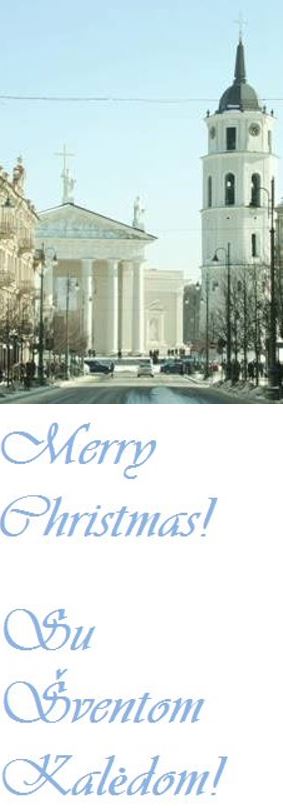
Christmas greetings
from Vilnius
and epic battle for the
future
Philosopher, political theorist, historian of
ideas, social analyst, and political
commentator
Ukraine was and continues to be perceived by the EU political class as a sort of grey zone with its immense potential and possibilities for the future, yet deeply embedded and trapped in No Man's Land with all of its troubled past, post-Soviet traumas, ambiguities, insecurities, corruption, social divisions, and despair. Why worry for what has yet to emerge as a new actor of world history in terms of nation-building, European identity, and deeper commitments to transparency and free market economy?
Right? Wrong. No matter how troubled Ukraine's economic and political reality could be, the country has already passed the point of no return. Even if Vladimir Putin retains his leverage of power to blackmail Ukraine and the West in terms of Ukraine's zero chances to accede to NATO due to the problems of territorial integrity, occupation and annexation of Crimea, and mayhem or a frozen conflict in the Donbas region, Ukraine will never return to Russia's zone of influence. It could be deprived of the chances to join NATO or the EU in the coming years or decades, yet there are no forces on earth to make present Ukraine part of the Eurasia project fostered by Putin.
want to learn about the
new, scary propaganda
war between Russia,
The West and the
Baltic States!
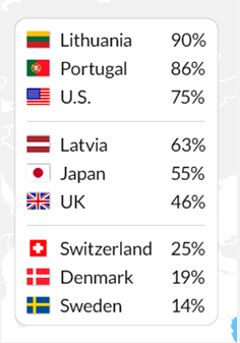
believe their government
is corrupt
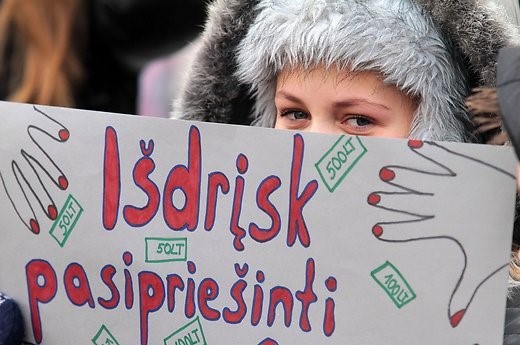
students say no to
bribes for doctors
During Soviet times, government was administered for the people in control, not for the local population, court decisions were decreed, they were not the administration of justice, and academia was the domain of ideologues. 25 years of freedom and openness should have put those bad experiences behind Lithuania, but that is not so.
Today, it is a matter of expectation that court pronouncements will be governed by ideological dictates. Few, if any Lithuanians expect real justice to be effected. For foreign companies, doing business in Lithuania is almost impossible in a situation where business people do not expect rule of law, so, surely Government would be a refuge of competence?
Lithuanian Government has not emerged from Soviet styles. In an attempt to devolve power, Lithuania has created a myriad of fiefdoms of power, each speaking in the name of the Government, each its own centralized power base of ideology.
Chepstow, Wales
Doesn't that sound suspiciously like Lithuania? Ah, but I didn't mention the mountains of Snowdonia, which would give the game away.
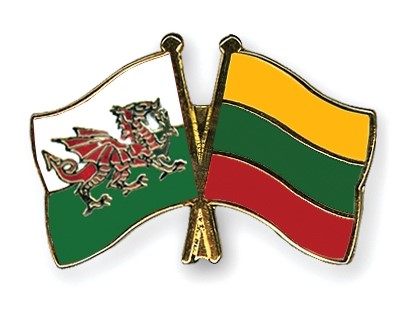
I'm talking about Wales, that part of the UK which Lithuanians used to call "Valija", but later named "Velsas" (why?). Wales, the nation which has welcomed two Lithuanian heads of state to its shores - firstly Professor Vytautas Landsbergis, who has paid several visits and, more recently, President Dalia Grybauskaitė who attended the 2014 NATO summit which was held in Newport, South Wales.
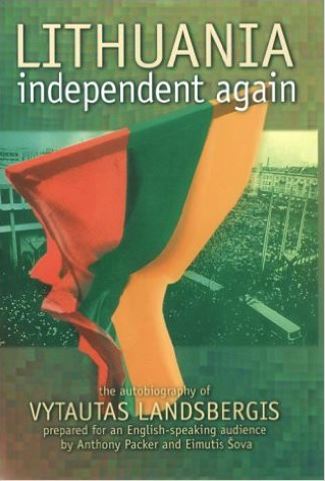
ENGLISH VERSION OF THE
AUTOBIOGRAPHY OF VYTAUTAS LANDSBERGIS.
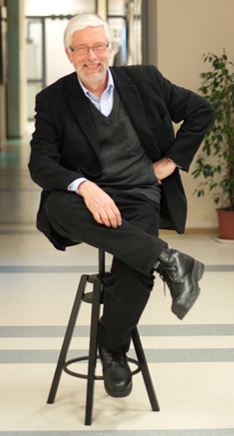
Although Lithuanian activities have thinned over the decades as that postwar generation died out, the Lithuanian Martyrs' parish hall is crowded with many, many hundreds of visitors who come to the Lithuanian cemetery for All Souls' Day. Similarly, the Franciscan parish has standing room only for Christmas Eve mass.
Although I am firmly embedded in the literary culture of Canada, my themes are usually Lithuanian, and I'll be in Kaunas and Vilnius in mid-November 2015 to give talks about the Lithuanian translations of my novels and short stories, which I write in English.
If you have the Lithuanian language, come by to one of the talks listed in the links below. And if you don't, you can read more about my work at
www.anatanassileika.com
http://www.vdu.lt/lt/rasytojas-antanas-sileika-pristatys-savo-kuryba/ https://leu.lt/lt/lf/lf_naujienos/kvieciame-i-rasytojo-59hc.html
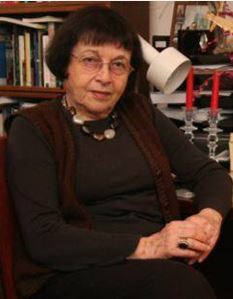
"My love and best wishes to all. As long as VilNews exists, there is hope for the future,"" she writes.
Irena Veisaite means very much for our publication, and we do hereby thank her for the support and wise commitment she always shows.
You can read our interview with her
Facing a new reality
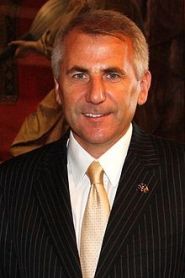
Dear readers of VilNews,
For a number of years, the EU and Russia had assumed the existence of a strategic partnership, based on the convergence of values, economic integration and increasingly open markets and a modernisation agenda for society.
Our agenda was positive and ambitious. We looked at Russia as a country ready to converge with "European values", a country likely to embrace both the basic principles of democratic government and a liberal concept of the world order. It was believed this would bring our relations to a new level, covering the whole spectrum of the EU's strategic relationship with Russia.
The likelihood of Putin
invading Lithuania
.jpg "lithuania today")
Founding Director at Summer Literary Seminars
Are all Lithuanian energy
problems now resolved?
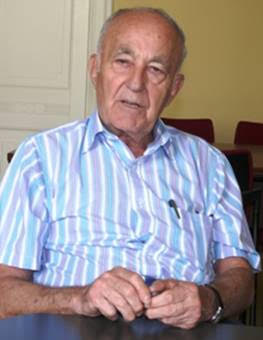
Lithuania as a country does not have significant energy resources. Energy consuming infrastructure after WWII was small and totally supported by energy imports from Russia.
First nuclear reactor begins power generation at Ignalina in 1983, the second reactor in 1987. Iganlina generates enough electricity to cover Lithuania's needs and about 50%.for export. As, prerequisite for membership in EU, Ignalina ceases all nuclear power generation in 2009
The Klaipėda Sea terminal begins Russia's oil export operations in 1959 and imports in 1994.
Mazeikiu Nafta (current ORLEAN Lietuva) begins operation of oil refinery in 1980.
Have Lithuanian ties across
the Baltic Sea become
stronger in recent years?
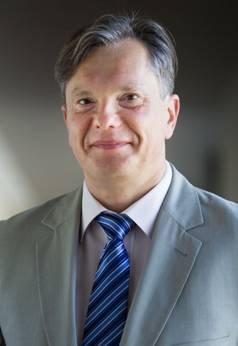
The two decades that have passed since regaining Lithuania's independence can be described as a "building boom". From the wreckage of a captive Soviet republic, a generation of Lithuanians have built a modern European state, and are now helping construct a Nordic-Baltic community replete with institutions intended to promote political coordination and foster a trans-Baltic regional identity. Indeed, a "Nordic-Baltic community" - I will explain later in my text the meaning of this catch-phrase.
Since the restoration of Lithuania's independence 25 years ago, we have continuously felt a strong support from Nordic countries. Nordics in particular were among the countries supporting Lithuania's and Baltic States' striving towards independence. Take example of Iceland, country which recognized Lithuania in February of 1991, well in advance of other countries. Yet another example - Swedish Ambassador was the first ambassador accredited to Lithuania in 1991. The other countries followed suit. When we restored our statehood, Nordic Countries became champions in promoting Baltic integration into Euro-Atlantic institutions. To large degree thanks Nordic Countries, massive transformations occurred in Lithuania since then, Lithuania became fully-fledged member of the EU and NATO, and we joined the Eurozone on 1 January 2015.
Have you heard about the
South African "Pencil Test"?
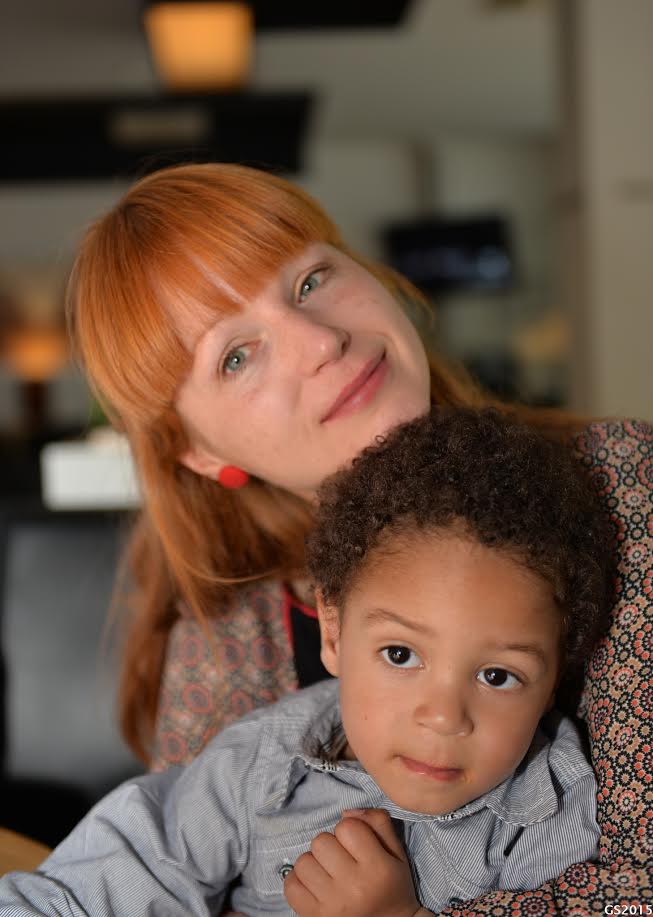
But that is exactly what happened to me when I came back from South Africa. I will tell you how.
VilNews e-magazine is published in Vilnius, Lithuania. Editor-in-Chief: Mr. Aage Myhre. Inquires to the editors: editor@VilNews.com.
Code of Ethics: See Section 2 – about VilNews. VilNews is not responsible for content on external links/web pages.
HOW TO ADVERTISE IN VILNEWS.
All content is copyrighted © 2011. UAB ‘VilNews’.