
THE VOICE OF INTERNATIONAL LITHUANIA

|
VilNews has its own Google archive! Type a word in the above search box to find any article.
You can also follow us on Facebook. We have two different pages. Click to open and join.
 Click on the buttons to open and read each of VilNews' 18 sub-sections Click on the buttons to open and read each of VilNews' 18 sub-sections  |

|


Travel Lithuania!
- Posted by - (1) Comment
Lithuania’s Hill of Crosses
without equal in the world
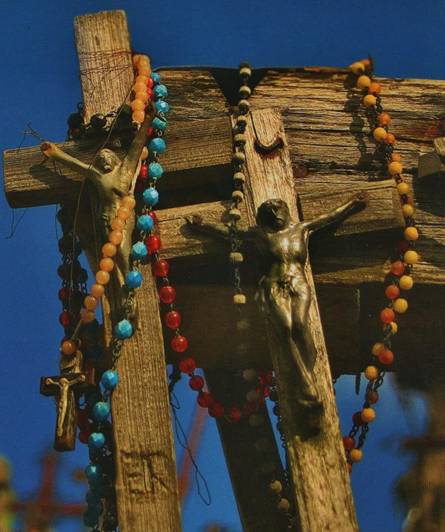
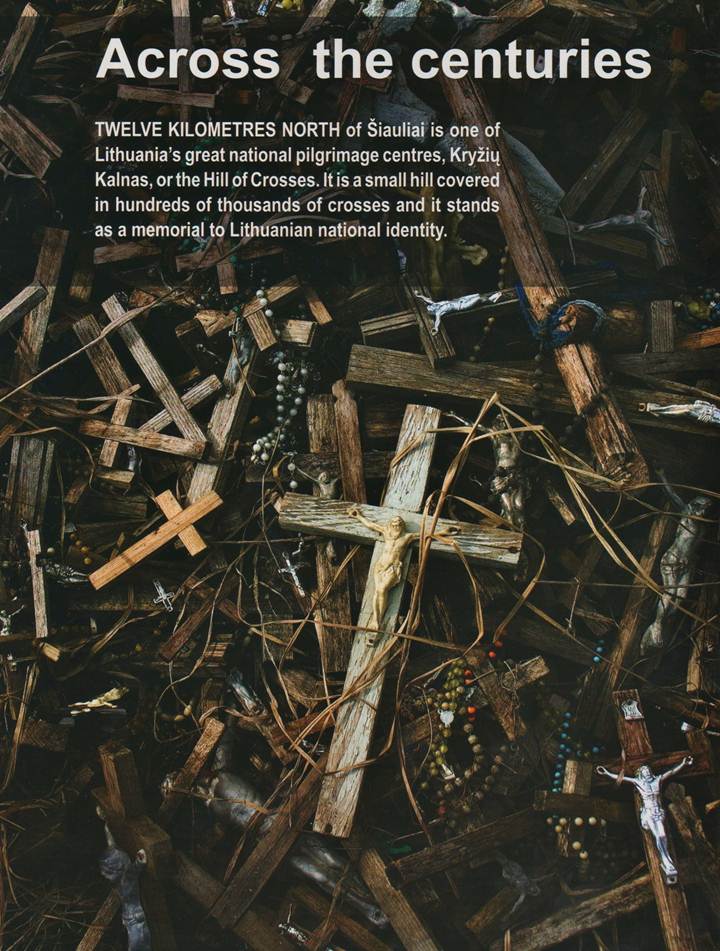
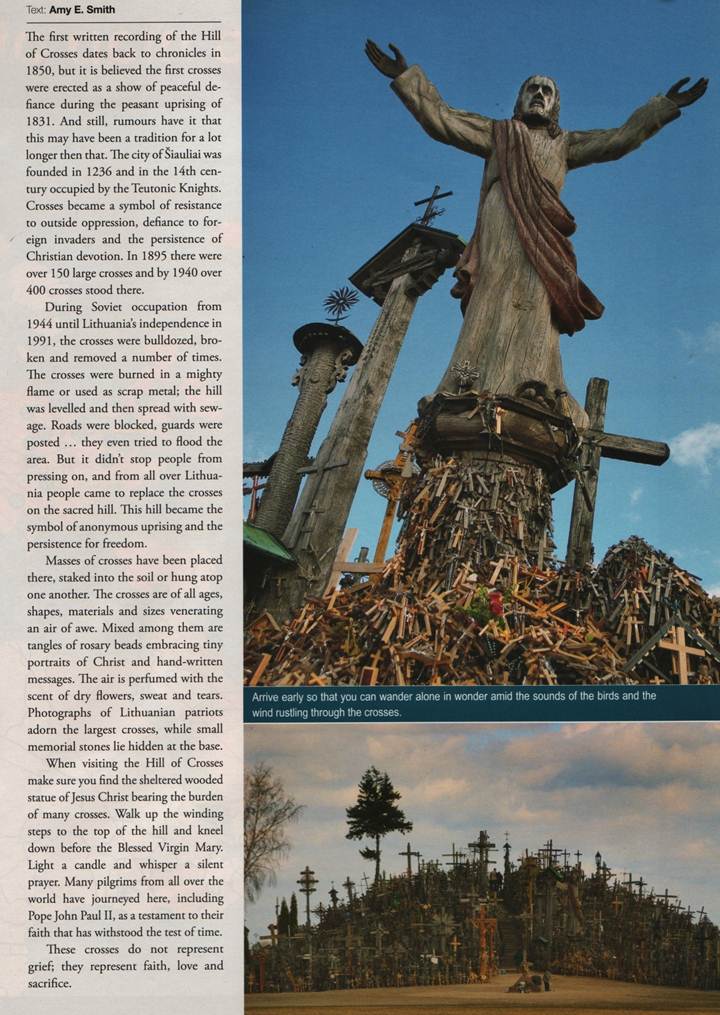
The Hill of Crosses (Lithuanian: Kryžių kalnas) is a site of pilgrimage about 12 km north of the city of Šiauliai, in northern Lithuania. The precise origin of the practice of leaving crosses on the hill is uncertain, but it is believed that the first crosses were placed on the former Jurgaičiai or Domantai hill fort after the 1831 Uprising. Over the centuries, not only crosses, but giant crucifixes, carvings of Lithuanian patriots, statues of the Virgin Mary and thousands of tiny effigies and rosaries have been brought here by Catholic pilgrims. The exact number of crosses is unknown, but estimates put it at about 100,000 in 2006.
|
Number of crosses
|
|
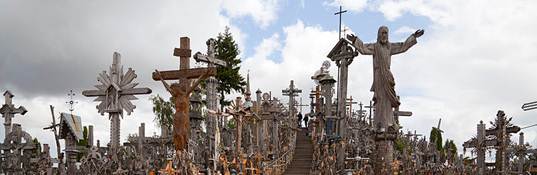
Over the centuries, the place has come to signify the peaceful endurance of Lithuanian Catholicism despite the threats it faced throughout history. After the 3rd partition of the Polish–Lithuanian Commonwealth in 1795, Lithuania became part of the Russian Empire. Poles and Lithuanians unsuccessfully rebelled against Russian authorities in 1831 and 1863. These two uprisings are connected with the beginnings of the hill: as families could not locate bodies of perished rebels, they started putting up symbolic crosses in place of a former hill fort.
When the old political structure of Eastern Europe fell apart in 1918, Lithuania once again declared its independence. Throughout this time, the Hill of Crosses was used as a place for Lithuanians to pray for peace, for their country, and for the loved ones they had lost during the Wars of Independence.
Most recently, the site took on a special significance during the years 1944–1990, when Lithuania was occupied by the Soviet Union. Continuing to travel to the Hill and leave their tributes, Lithuanians used it to demonstrate their allegiance to their original identity, religion and heritage. It was a venue of peaceful resistance, although the Soviets worked hard to remove new crosses, and bulldozed the site at least three times (including attempts in 1963 and 1973). There were even rumors that the authorities planned to build a dam on the nearby Kulvė River, a tributary to Mūša, so that the hill would end up under water.
On September 7, 1993, Pope John Paul II visited the Hill of Crosses, declaring it a place for hope, peace, love and sacrifice. In 2000 a Franciscan hermitage was opened nearby. The interior decoration draws links with La Verna, the mountain where St. Francis received his stigmata. The hill remains under nobody's jurisdiction; therefore people are free to build crosses as they see fit.
- Bookmark :
- Digg
- del.icio.us
- Stumbleupon
- Redit it

- Posted by - (0) Comment
- Bookmark :
- Digg
- del.icio.us
- Stumbleupon
- Redit it

- Posted by - (0) Comment
|
|
KAUNAS IN FOCUS |
|
|
Kaunas, Lithuania's second largest city and former capital, is receiving much attention in VilNews this winter. We focus on history, business, culture, innovation, tourism and more. We would also like to hear from you who have your personal Kaunas story to tell... Send us your Kaunas story!
|
||
|
Visit Kaunas this winter!
Why not visit Kaunas this advent? Let’s give you some good reasons. See below.
|
||

|
Kaunas – the taste of real Lithuania!
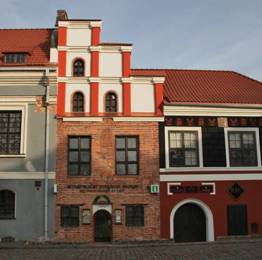
By Arnas Menciūnas, Welcome to Kaunas, the city which has mostly preserved the national character of the country, offering plenty of activities to everyone. Visit the heart of Lithuania and experience it‘s unique atmosphere: Feast here! Kaunas is home to a variety of festivals and events, including the famous Kaunas Jazz festival, Hanza days, Operetta, Pažaislis Classical Music festival, Bike show, Kaunas city days, Songs festival (listed by UNESCO), International Modern Dance Festival and much more. Visit! The remarkable Old Town which is a collection of ancient architectural monuments: the remnants of the 14th century with remains of Kaunas castle, the buildings of the Middle Ages in the Gothic and the Art Déco styles. The Kaunas Fortress is a valuable military heritage composed of a number of constructions that used to be a military complex. There are nine Forts around the city and the IXth Fort serves a museum. The macabre collection of nearly 3,000 devils at the Devils' Museum and the exhibitions showing the unique artistic styles of composer and painter M. K. Ciurlionis, as well as J. Maciunas initiator of the avant-garde Fluxus art movement. Taste it! The centre-piece of Lithuanian cuisine is dark rye bread. It is shown a great respect and even called "holy" and Lithuanians link many beliefs and magic with it. The great opportunity to taste it is to have soup in a bread bowl. Lithuanian drinks have very old traditions, to get to know them the "Stumbras" museum offers a guided tour of the history and tasting of strong drinks. Among the multitude of things that make any Lithuanian swell with pride (rich history, amber, beautiful nature, basketball, etc.), there is one that has a special place in his heart. This source of pride is the Lithuanian Beer. Make a wish! The beautiful confluence of two biggest Lithuanian rivers is well known for a magical saying - the Nemunas river is a male and the Neris is a female . The meeting of two rivers is considered as a marriage of a couple. Two rivers meet in Kaunas, they join and never split up! For those who want their dreams to come true it‘s a right place to go on rendezvous. See it! The whole Lithuania in one place is in the open air museum in Rumšiškės, which is the biggest open air museum in Eastern Europe. The museum with its collection of authentic wooden villages represents different regions of Lithuania: Zemaitija, Aukstaitija, Dzukija, Suvalkija and Lithuania Minor. Ride on it! The Funicular - a unique mean of transportation, is still in use today, including the genuine pre-war wagon, wooden seats, and stop platforms. Even today the funicular takes people up to the hill, from which the panorama of the Kaunas city centre and Old town is wide open. Kaunas is the only city among Baltic States, where such means of transportation is available. Sail! The biggest man-made water basin in Lithuania, which is surrounded by a wonderful landscape. Kaunas Sea is a perfect place for water activities. So see you on the deck! If you want to feel the real Lithuanian spirit, visit Kaunas and discover it. The heart of Lithuanian culture, tradition and history is just waiting to be discovered. Hotel news in 2012 IBIS KAUNAS CENTRE (opened in April, 2012) The Ibis Kaunas Centre hotel is located in the centre of Kaunas, within walking distance to the historic Old Town, close to railway and bus station and easy access to the highway to International Kaunas Airport. Ideal for business and leisure stays where guests can explore the city of Kaunas. It has 125 air-conditioned rooms with free Internet access, conference facilities, a bar serving snacks 24/7 and onsite parking. Our restaurant, The Oopen will delight you with pasta & grill dishes. Accor is the world’s number-one and Europe’s leading hotel operator. It has 440,000 rooms in nearly 3,500 hotels in 92 countries. Its extensive brand portfolio – encompassing Sofitel, Pullman, MGallery, Grand Mercure, Novotel, Suite Novotel, Mercur, Adagio, ibis, ibis Styles, Adagio Access, ibis budget and hotelF1 – provides a comprehensive range of options across the luxury to economy spectrum. Hotel and Eco center BABILONAS 2012 years 22 th. of June renovated hotel "Babilonas" was opened and now it's not only hotel, but and eco-tourism center. The rooms radiate a feeling of coziness created by modern wooden windows, curtains made from Lithuanian linen and the breathtaking panoramas of the city and the surrounding landscape. We can offer 50 high-quality German and American bikes, which can travel in urban areas and long distances. In formed package are included active entertainment, meals, transportation. Kaunas tourism information center and conference bureau offers original ways to get to know Kaunas. Unique guided tours allow you to glimpse the real charm of the city and see things that you never expected! Every visitor can choose These excurions: „Kaunas Compliments Women“, „The Old Town secrets in Kaunas”, „Strong alcohol degustation in Factory “Stumbras”, „Beer Route in Kaunas (excursion and degustation)”, „Basketball history in Kaunas“, „Sweet Kaunas",, „Spirit of Kaunas Catacombs”, „Kaunas – Provisional Capital“.
|
- Bookmark :
- Digg
- del.icio.us
- Stumbleupon
- Redit it

- Posted by - (1) Comment
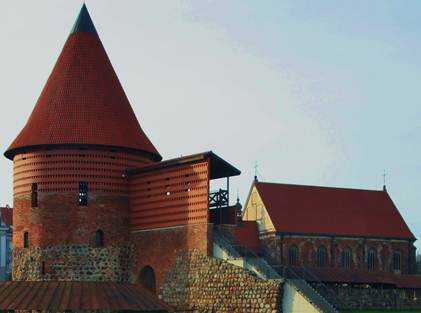
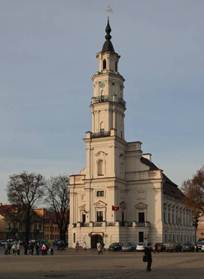
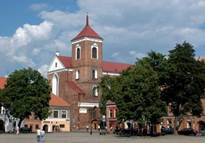
| PLACES TO SEE IN KAUNAS | |
| Kaunas Castle |
|
| Town Hall
|
|
| Arch-Cathedral Basilica
|
|
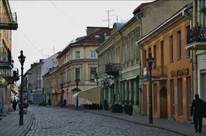
| Vilnius Street
|
|
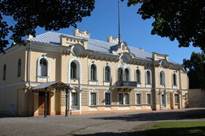
| Historical Presidential Palace
|
|
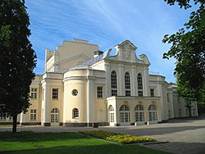
| Musical Theatre
|
|
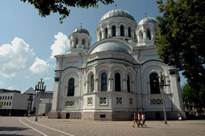
| St. Michael the Archangel Church (Sobor)
|
|
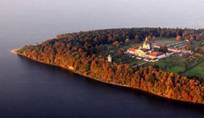
| Pažaislis Monastery
|
|
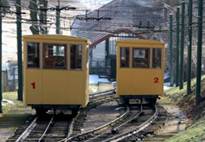
| Kaunas Funiculars |
|
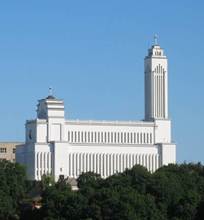
| Kaunas Monumental Christ’s Resurrection Church |
|
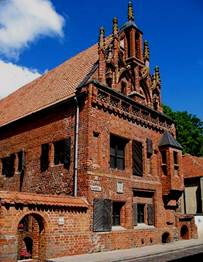
| House of Perkūnas The ruined house was rebuilt in the 19th century and served as a school and theatre, which was attended by Polish-Lithuanian poet Adam Mickiewicz. At the end of the 19th Century it was renamed "House of Perkūnas", when a figure, interpreted by the romantic historians of that time as an idol of the Baltic pagan god of thunder and the sky Perkūnas was found in one of its walls. Today, the house of Perkūnas once again belongs to the Jesuits and houses a museum of Adam Mickiewicz. |
- Bookmark :
- Digg
- del.icio.us
- Stumbleupon
- Redit it

- Posted by - (0) Comment
Vilnius
|
Pól Ó Conghaile, Irish Examiner
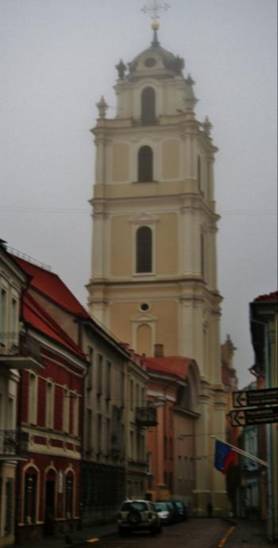
"Art may be a particularly good medium for distilling and reflecting the characteristics of a nation, but contemplation of it does not give us the vivid and visceral experience of them that we may crave," as Alain de Botton wrote recently in BA’s Highlife magazine. "We’re learning that what we might really want to do is to talk to people," the philosopher continued, with his usual — and irresistible — knack for nailing ideas so simple you wonder why nobody had nailed them before. "This is remarkably hard." Our increasing desire for stories, for the sweet sensation of living and breathing a city rather than digesting its historical data, hit me afresh in Vilnius. Lithuania’s capital is a gem. Its Old Town is a UNESCO World Heritage Site. It was a European Capital of Culture in 2009. It’s a small place by any measure, but one spilling over with Gothic, Baroque and Renaissance churches, town halls and other buildings. Yet none of these things puts the hook in me. What puts the hook in me is the moment I wander into a small chapel above the Gate of Dawn to find a wedding underway. An older couple exchanges vows — she in a cream bonnet, he with a bouquet of blooms under his arm and trousers bunching around his ankles. A Handycam is propped atop of the organ. Beneath vaulted ceilings, a priest in a golden robe takes a step backwards. The couple leans in together and delivers a quick, bird-like kiss. The small crowd around them claps. And there it is. Interesting and all as the 16th century Gate of Dawn is, or the fact that its famous icon of the Virgin Mary is said to have healing powers, or that Pope John Paul II took time to say the rosary here in 1993, the strongest memory I’m taking away is of that little kiss. That moment in time. That stolen insight into two Lithuanian lives… |
- Bookmark :
- Digg
- del.icio.us
- Stumbleupon
- Redit it

- Posted by - (21) Comment
Need some peace of mind?
Try a boat trip on the
Nemunas and a spa visit
to beautiful Birštonas!
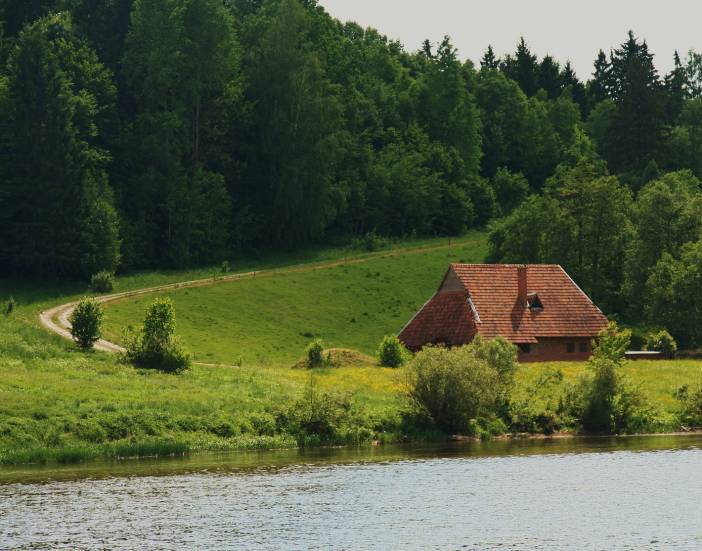
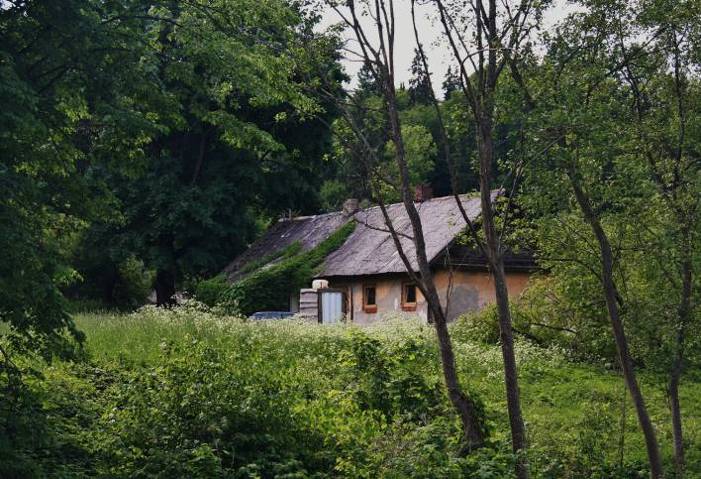
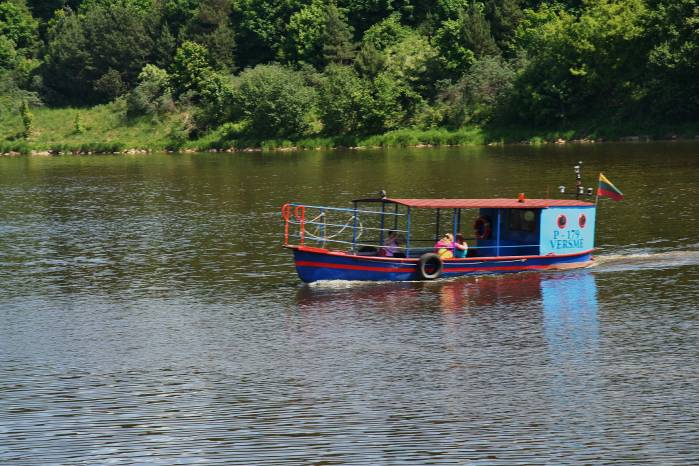
An old house on the Nemunas river bank near Birštonas
Text and photos: Aage Myhre
aage.myhre@VilNews.com
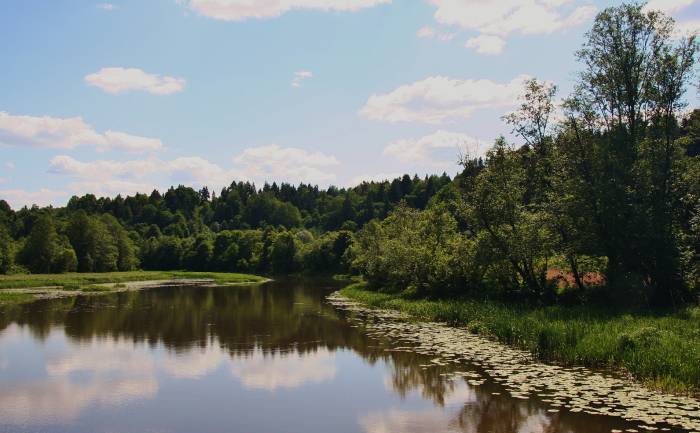
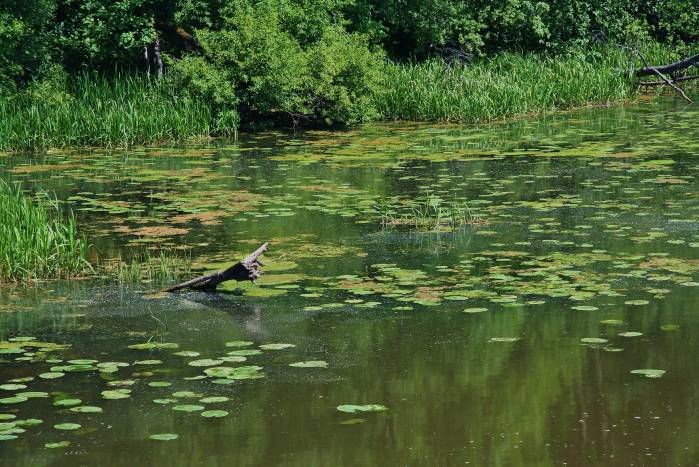
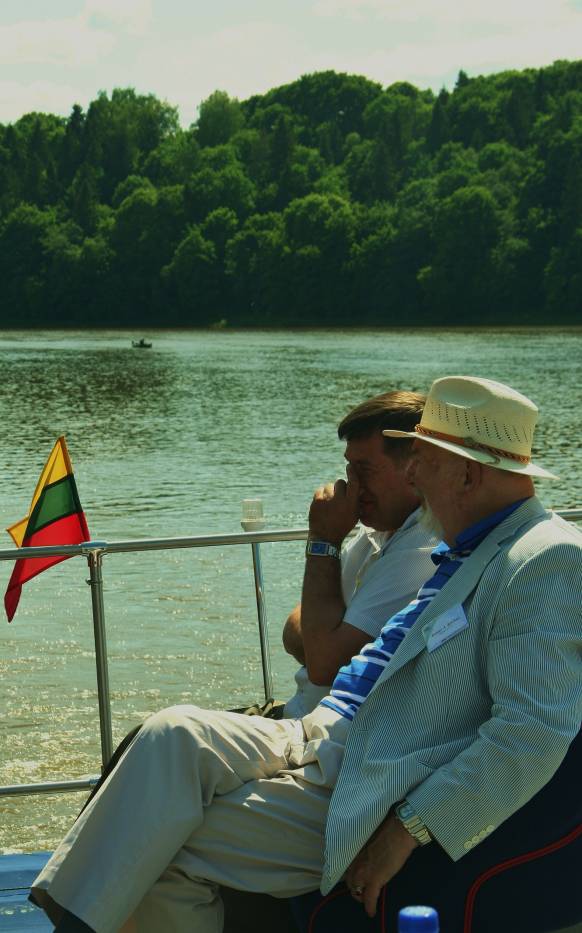
Lithuania’s largest river, the Nemunas, is a slow and peaceful river; with an average speed of only 1 to 2 m/s. Its total length of 937 km makes it the 14th largest river in Europe. 459 km flow in Belarus, 359 km in Lithuania. Well, we called it peaceful, but if you agree to join us for a trip to the small resort town of Birštonas, one hour’s drive from Vilnius, you will soon realise that it’s right here that Nemunas gets a bit crazy, making four large loops without any other reason than this that Birštonas needed some special attention and minerals that over the centuries has made it such an attractive spa resort. Birštonas is suitable for therapy and recreation all year round with its curative peat and mineral water used in treating chronic diseases of peripheral nervous system, gastrointestinal, respiratory and blood circulation systems. The first patients were treated in Birštonas as early as 1840. Enjoy!
Rūta Kapočinskaitė is my Birštonas heroine. She has understood what it takes to represent a tourist destination with energy and genuine attention to the visitor - much more so than representatives of the majority of destinations in this country. So, if you are a Lithuanian working in the tourist trade, don’t miss the chance to learn from Rūta. It takes enthusiasm to promote a destination, and Rūta has got plenty of exactly that. She is simply good!
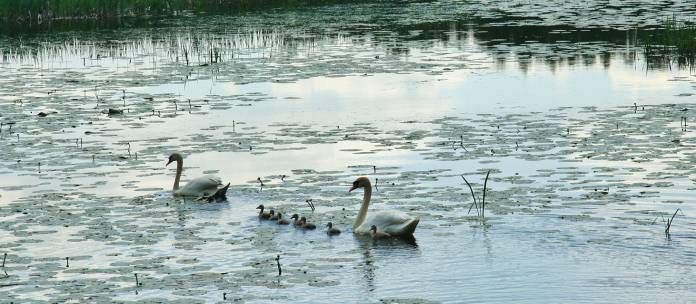
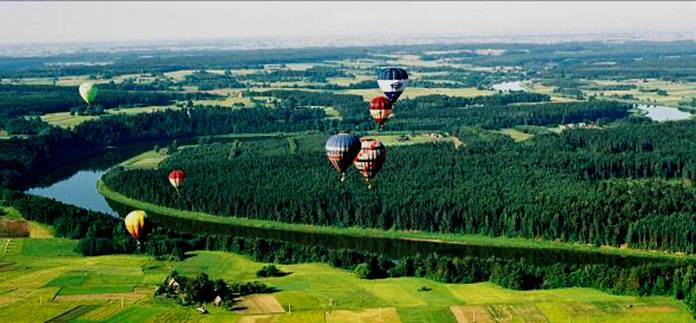
Why should people come to Birštonas? This is my first question to Rūta, and her reply is quick and without hesitation; “Because of everything we have to offer. There is simply no better place than Birštonas!”
But let me tell you a bit more about the history of this remarkable place before Ruta start her sightseeing show with us.
As I said above, it is the loops of Nemunas River that has created the very special landscape here. In earlier times, the loops represented great difficulty for ship navigators. Even the rather precise maps of the Grand Duchy (Magni Ducatus Lithuaniae) had not registered the loops correctly, and it was only in 1777 that such registration works were started. In 1852, the Vilnius University professor Abicht finally succeeded in outlining the loops in a proper and correct manner.
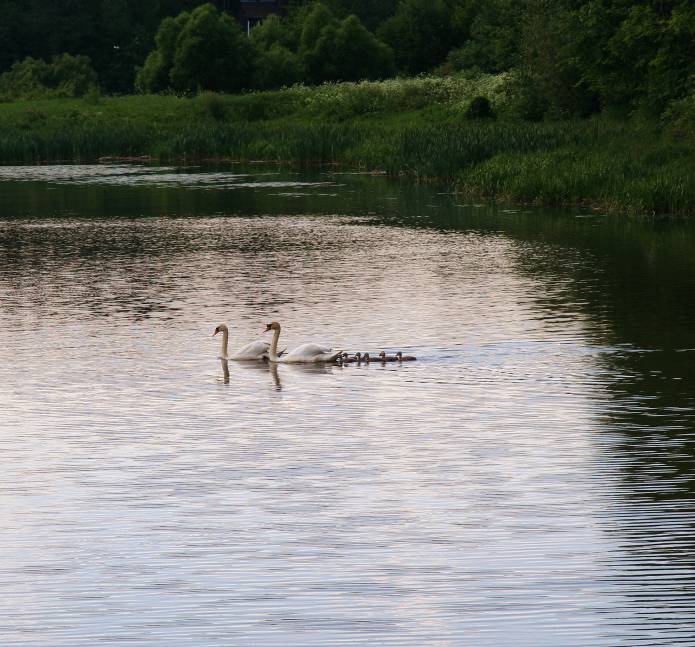
The river loops have made the Birštonas landscapes more rolling than the rest of Lithuania. Here you can find rather deep valleys and steep riverside banks of more than 40 metres height. The river itself is on its widest four kilometres.
The other landscape feature I am sure you will recognise as soon as you show up in Birštonas is the fantastic forests which occupy more than half of the municipal area. Beautiful, tall pine trees are the dominant, but also birch-trees and other broad-leaved trees will certainly make your forest walk more than unusual.
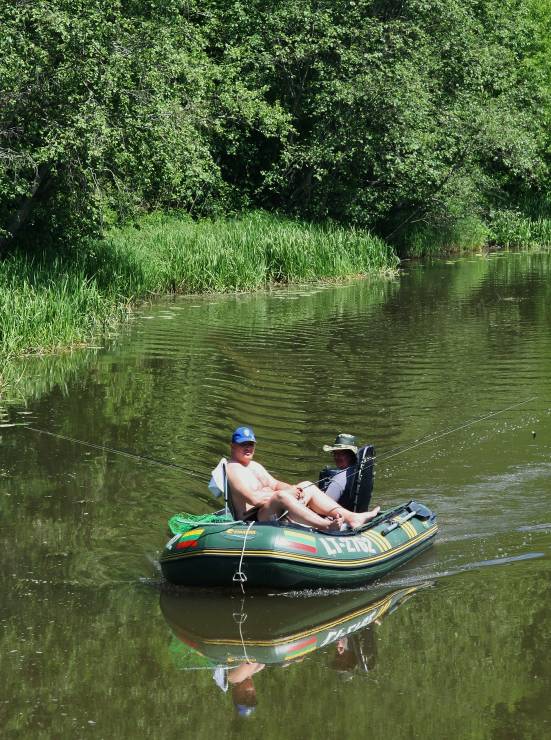
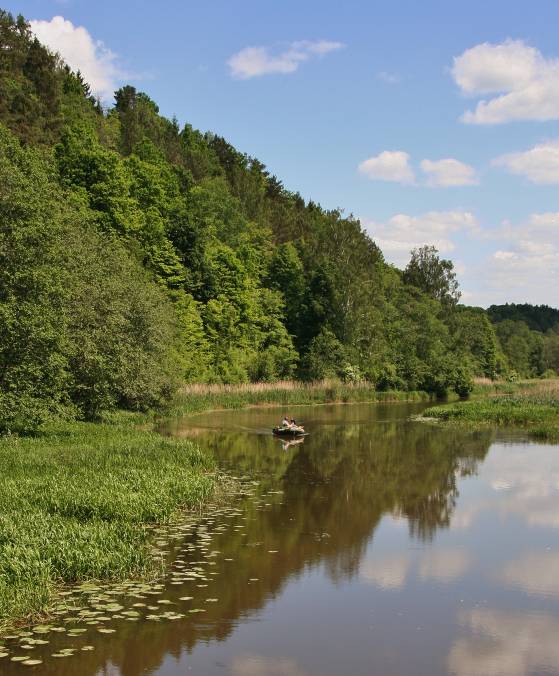
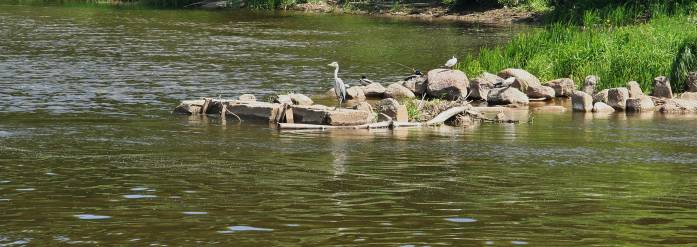
It goes without saying that there is an extensive wild life along the Nemunas shores. Birds, animals and fish in different variants and sizes – they’re all here. The biggest fish caught here is said to have been a catfish of close to 60 kgs!
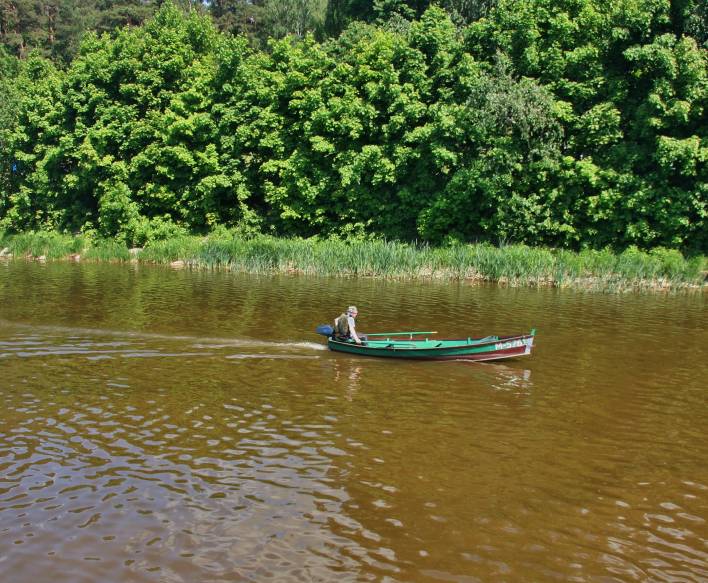
The biggest fish caught here in Nemunas next to Birštonas is said to have been a catfish of close to 60 kgs!
People have been living peacefully in the Birštonas area since ancient times, with its first recordings back to the 4th millennium BC. In the 13th century, however, the crusaders changed this peaceful life, and the people of the present Birštonas lands had to start defending themselves from conquer campaigns. This lead to the construction of mounds, wooden fortresses and defensive castles. The most famous wooden fortress was erected on a mound called Vytautas Hill, and it was next to this fortress that the town of Birstonas started growing up in the 14th century. The name Birštonas was first mentioned in the 1382 chronicles of the Crusaders, as “a homestead next to salty water” (Birstain, Birstan).
After the 1410 Grunwald Battle, the fortresses lost their significance, and the victorious Grand Duke himself (Vytautas the Great) took over the Birstonas Castle as his private hunting mansion. Since that moment, Birštonas became a very much beloved area for hunting, visited by many European Kings and Dukes on the invitation from Grand Duke Vytautas. The forest keeps the name Žvėrinčius (full of wild animals) after these glorious times for both Birštonas and Lithuania.
In 1519 Birštonas was already referenced as a town. It had about 600 inhabitants, and there were four beer-houses and two whisky taverns. A town of hospitality already back then!
I have not been able to find out if the whisky was brought to Birštonas by Scotsmen, but what I have found is that the Hungarians started showing interest for the area already in the 16th century, even being rendered the rights of the city for 40 years. In these times royal stud of horses thrived in Birštonas.
Modern Birštonas, however, has first of all gained its fame after the 19th century detection of healing mineral water from several springs in the area. 1846 is the great year for Birštonas as a spa resort, from then of visitors from many countries have come here for their healing.
“So you see, Birštonas is really the place to visit if you want to heal your body or soothe your soul.” Rūta is back, waking me up from my travel back in time. And from now on, I am again under her attentive control, going for a sightseeing walk around Birštonas – because here the distances are short and no car or bus is needed.
Go for a sanatorium week-end in the “Royal Spa Resort” of Birštonas
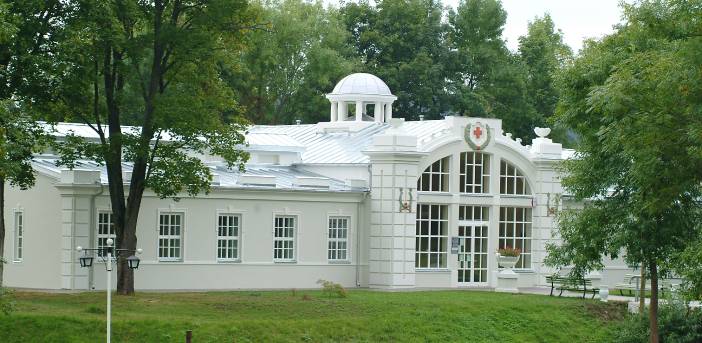
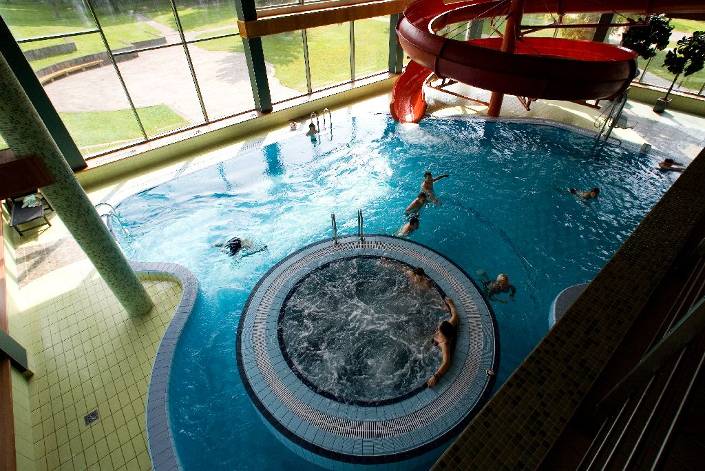
“A week-end in Birštonas helps for almost everything”, explains our enthusiastic guide Rūta Kapočinskaitė when she leads us to the place where the town’s first sanatorium was built in 1846, where today’s modern sanatorium “Tulpe” now is located, at the very bank of the Nemunas River. And it’s here you should come to spend a week-end to heal your body and soul.
Birštonas is recently accepted as a member of the very fashionable club “The Royal Spas of Europe” which all have as its common intention to meet the highest quality described in a catalogue of criteria which includes what has to be complied with by the Royal Spas of Europe with respect to their offers for health, wellness and fitness, thermal facilities, medical care, infrastructure, standards of hotels and cultural events.
But we are in Birštonas now, and if you agree to come here for a weekend, the treatments will start already upon your arrival on Friday afternoon, and continue throughout the weekend with all kinds of baths and treatments – in mineral or herbal water, or in healing mud. Massage procedures of all kinds are also important ingredients in the programme.
I have, myself, no clue what they mean, all these terms the experts in the Tulpe Sanatorium use when they try to explain me about their methods and the results thereof, so I have no other choice than to “cheat” a little bit by simply referring to what is written in their brochure:
“A few days in Birštonas are sufficient to regain spiritual equilibrium, serenity, good mood, to get rid of nervousness, general body weariness, and tiredness. The microclimate of Birstonas resort and mineral waters are most suitable for treating illnesses of digestive system, joints, spines, and gynaecological and oenological diseases. The place has a positive effect on the central nervous system, suits the purpose of the genera rehabilitation and, of course, is ideal for having a rest, The personified health programme that is prepared by qualified specialists according to the client’s needs with a menu prepared by dietologists (whatever that is) will ensure you recuperate quickly and regain energy with the best of spirits”.
The Tulpe Sanatorium can also offer a place for you to stay during your visit, in their own little hotel close to the river and with the town and its surrounding forests within a few minutes walk away.
And in addition to this, the Sanatorium offers you to talk with your colleagues in one of their conference rooms, where up to 100 persons can be seated.
“You see,” says Rūta now, “Birštonas has it all.”
Experience a healthy outdoor life in Birštonas
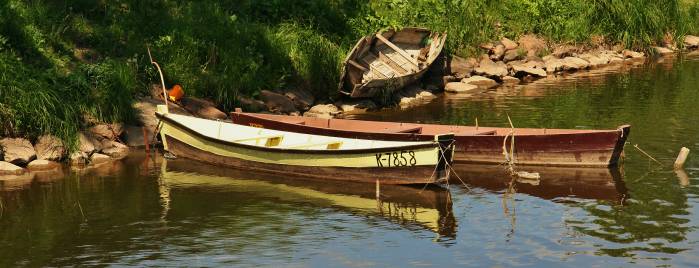
I knew in advance that Birštonas had very much to offer in the summertime, when people here are becoming very active with river-sports in their boats, canoes and kayaks, or on bikes, horseback or foot in the forests and the sport arenas. But I did not know that Birštonas now also has quite a bit to offer during the winter time, especially after the two new ski slopes opened, almost in the very centre of the city.
Rūta grabbed the director of the ski-centre, ……., out of his office asking him to come up and show us the two tracks – the 160 m long blue track and the 300 m long red track – so here we are, seeing that Birstonas has developed their own Alp mood with modern ski lifts, snow canons and other equipment that makes this place a real paradise for skiing enthusiasts.
And, as if that should not be enough, next to the ski tracks a skating ring for kids has been developed.
But, of course, the summer time is soon here, and that’s when Birštonas really shows you what a healthy outdoor life means.
Birštono Seklytėlė - a genuine country tavern on top of a steep river bank
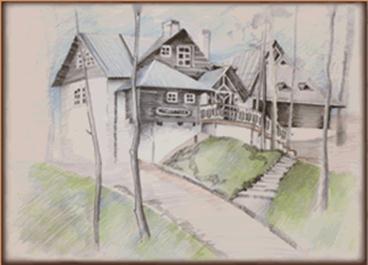
We are in Birštonas and lunchtime is approaching. So, like so many others have been doing before us both during and after the Soviet times, we drive up the hill to the famous tavern (seklytėlė) on top of the Nemunas River bank two kilometres from the town centre.
This is the place where you certainly will get a feeling of being close to the nature either you sit inside or on the view-terrace outside. The restaurant windows and the terrace both overlook the spectacular landscape and the river itself. This is the place for a rich lunch or a nice dinner, relaxed and in the middle of the nature. Overlooking the Nemunas River this genuine tavern is a favourite of locals and foreign visitors alike. It offers a vast array of tasty food and beverages in a cosy setting with original Lithuanian interiors and a fire place that is lit on cold evenings. On most evenings make live music makses this a highly desirable place to while away the hours with friends.
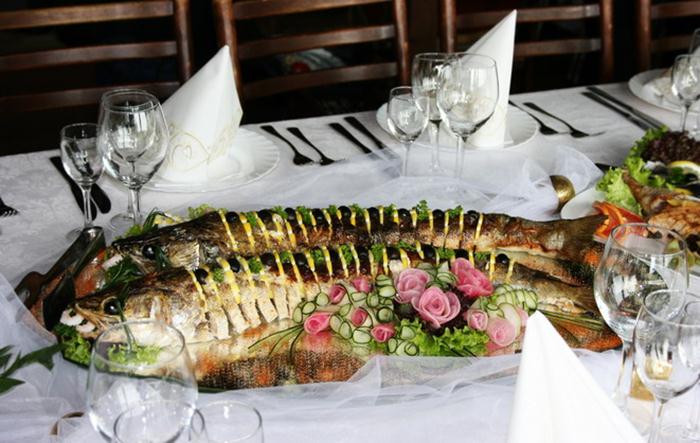
We had a good lunch consisting of local fish from the river and beef from the fields nearby, and our waiter really did his utmost to make us feel at home.
So our conclusion is simple but tasteful; - that the Birštono Seklytėlė is a must to visit for everyone coming to this region.
- Bookmark :
- Digg
- del.icio.us
- Stumbleupon
- Redit it
- Posted by - (1) Comment
A wonderful May visit to:
Text and photos: Aage Myhre
aage.myhre@VilNews.com
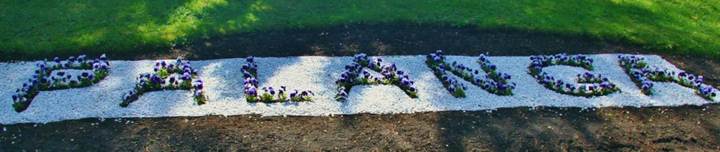
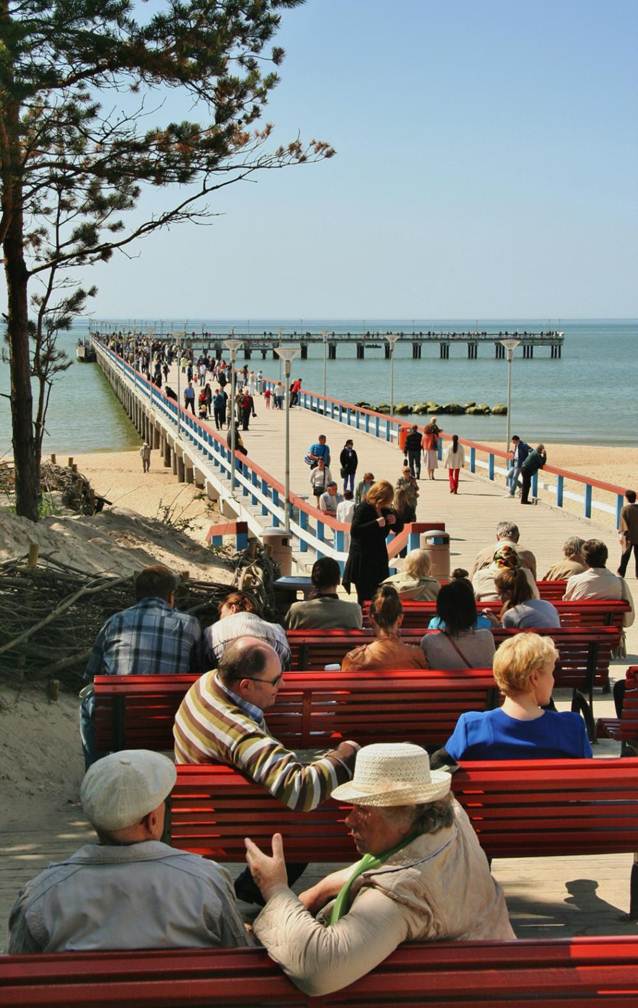
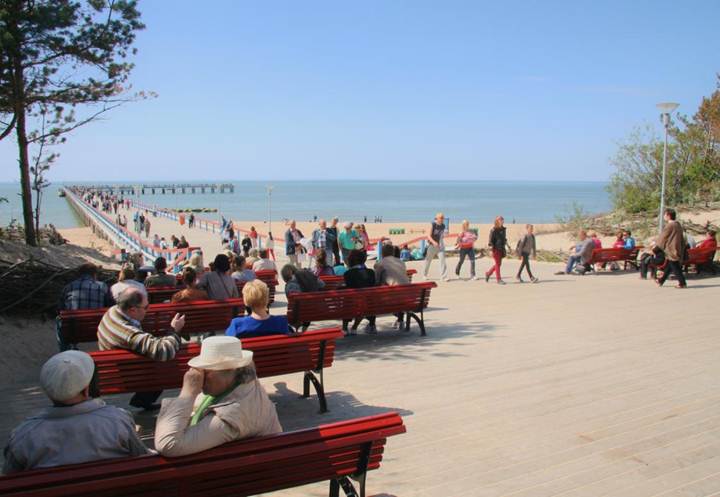
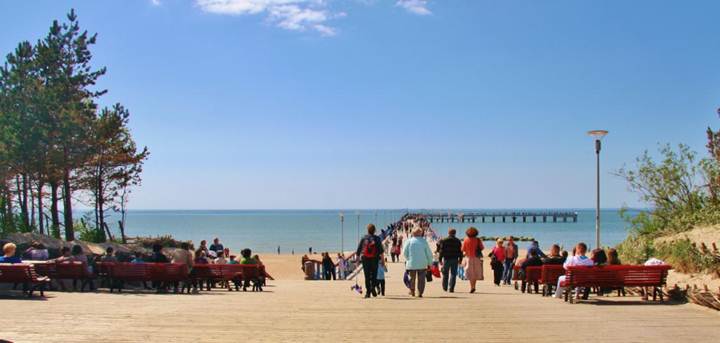
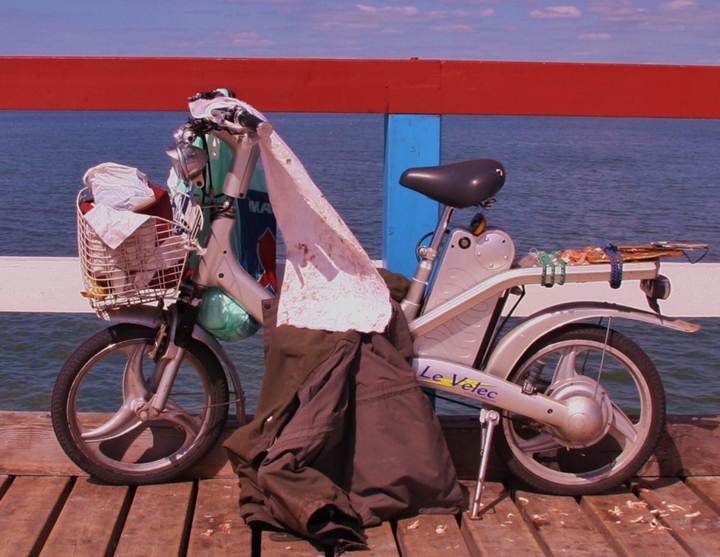
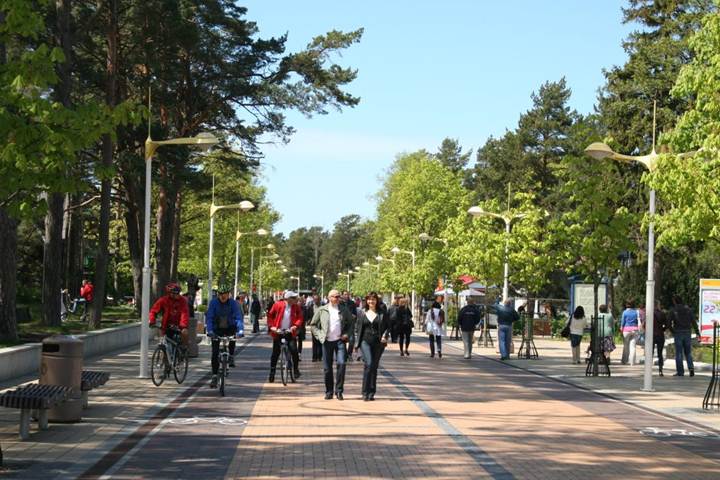
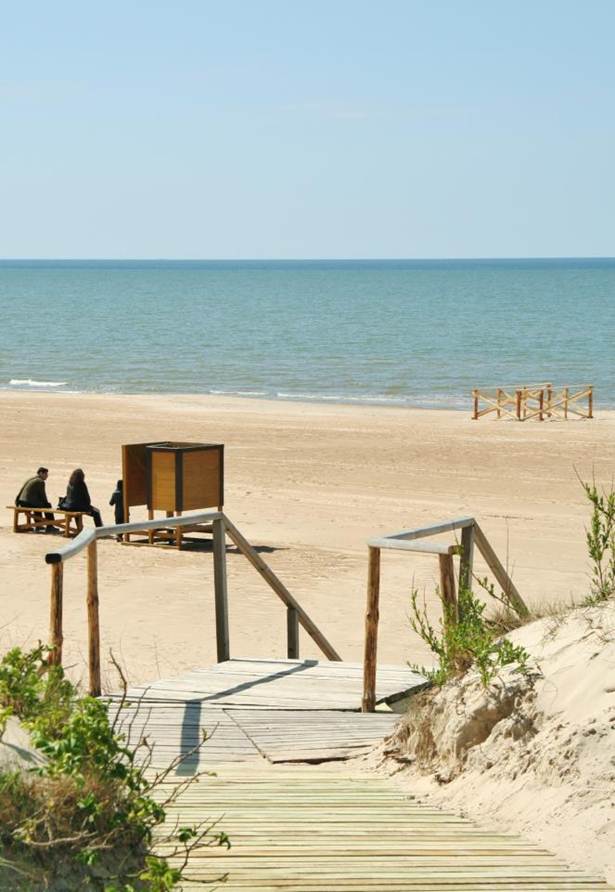
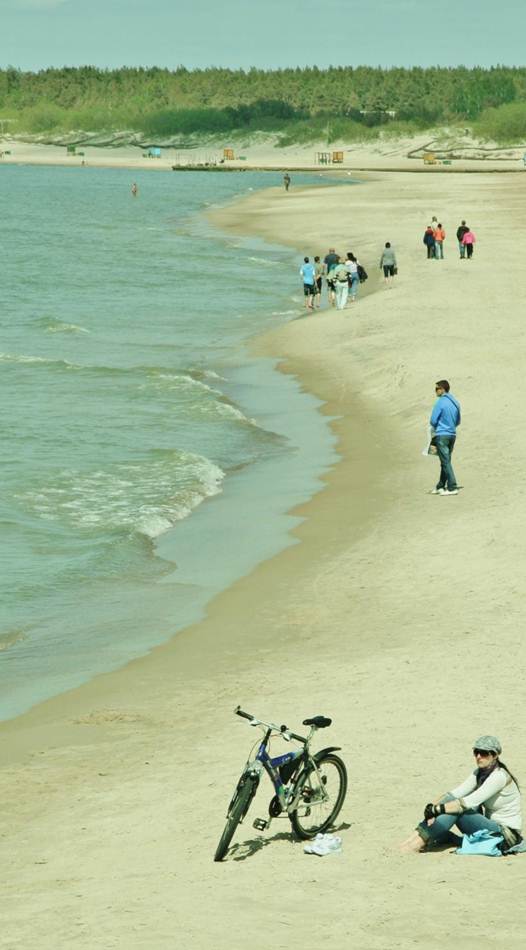
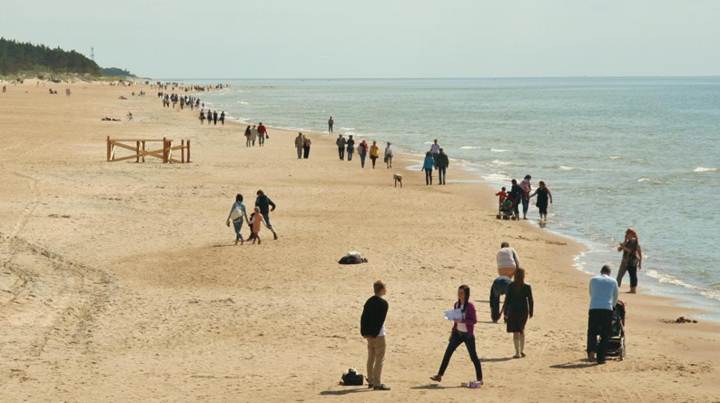
The long pier that stretches out into the Baltic Sea is the hallmark of Palanga. It is still relatively spacey now in May, but it will soon become the crowded promenade path for intense summer evenings when the sun sets over the Baltic Sea. It is a real breakwater, struggling against the never-ending waves rolling in towards the sandy coast of Lithuania where the more than fresh breeze often does it very best to blow the sand further inland, but with the high dunes behind the beaches effectively stopping it. It is early summer in Palanga, and I simply love the freshness of the sea water, the breeze and the air that now feels healthier than ever.
In Lithuanian language the pier is called a bridge, and I am thinking that for the long years of Soviet oppression, the Palanga pier may have been like a real bridge for the people of this country, a bridge of imagination on how it would be to walk over to the Swedish shore on the other side - to the freedom and prosperity that for so many years had to be no more than a dream for the Lithuanian people.
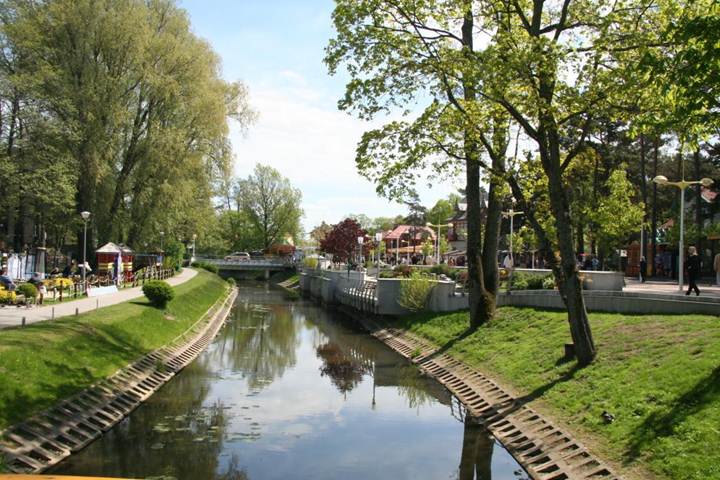
Palanga town itself is calm and relatively quiet, perfectly well protected from the wind by the tall bowed pine trees that grow along the coast line. The leaves on the deciduous trees behind are still keeping their fantastic glowing red and yellow colours, even if many of them already have fallen to the ground, preparing to fertilise the soil for a new spring next year.
Spring in Palanga is for me even more attractive than the very summer when the huge crowds of tourists arrive here. Now I can see the beauty of the nature in a far more undisturbed way, and each breath of the wind seems now more soothing and healing.
As so many times earlier, I am thinking that Lithuania is the country than cannot be understood until one knows at least something about the enormous changes and upheavals that took place on the soil and shores here over century after century throughout the entire history of the country, or at least until the Soviet lid was closing, hiding the truth about Lithuania to the rest world.
Looking out to the Baltic waves I remember the legendary story about how the fleet of the Danish king Valdemar came to Palanga in 1161, becoming the first known conqueror of these shores. Later more Vikings coveted these lands, followed by 13th and 14th century crusaders, who to a high degree devastated the area and the settlements here. Only after the Grunwald battle in 1410, a peace contract was concluded, stopping the invasion of the Order to Lithuania. In accordance with the peace contract of Brest in 1435 Palanga became Lithuanian.
The following centuries saw a relatively flourishing Palanga where the inhabitants earned for their living by fishing and gathering of amber which was cast ashore from the sea, trading it with other towns of Baltic coast. Baltic Sea traders visiting Palanga exchanged their goods to amber, honey and furs, all going well until neighbouring port towns got jealous and convinced the Swedish fleet to destroy the Palanga and Sventoji ports.
In 1795, the Russian Empire annexed Lithuania, including Palanga, and then, in 1824, a strange business deal took place when a colonel in the Tsar's army, earl Mykolas Tiskevicius, simply bought the complete Palanga. The earl’s later contribution, however, to the development of the town is very apparent. He established the now famous Palanga Park, including an amazing palace; a new port was made, a brick factory was established, a church was built, and the resort with sanatoriums as we know it today was established.
After the First World War, when Lithuania became an independent state again, there was a disagreement with Latvia regarding the territory of Palanga and Sventoji, but the towns eventually became Lithuanian again.
Walking here, down the lively Basanavicius Street, I am also thinking of Jonas Sliupas, father of my friend Vytautas Sliupas. From 1933 to 1940, Jonas Sliupas served as mayor of Palanga. He returned to this office briefly during the Nazi occupation of 1941, until ousted because of his protest against the destruction of Lithuanian and Jewish lives. How different must not the emotions of those days have been compared to today’s relaxed atmosphere in freedom.
After the storms of two wars, and a 20-year period of freedom in between, in 1944-45, Soviet army occupied Lithuania and Soviet authority was set in also in Palanga. The result was that private villas were nationalized, and instead of them state sanatoriums and relaxation houses were established. In 1952, when Palanga was qualified in Republic subordination, a new project layout of the resort was composed. The relaxation and treatment base of resort was adapted for working all year round, and Palanga became one of the most popular resorts and health centres on the Baltic coast.
In 1991 the Palanga resort opened a new page of history. Nationalized buildings and land were returned to their just owners, the relaxation houses and hotels became private, and people started building modern private villas, detached houses, hotels and restaurants. Every year since, Palanga has gained great popularity as a summer hot-spot.
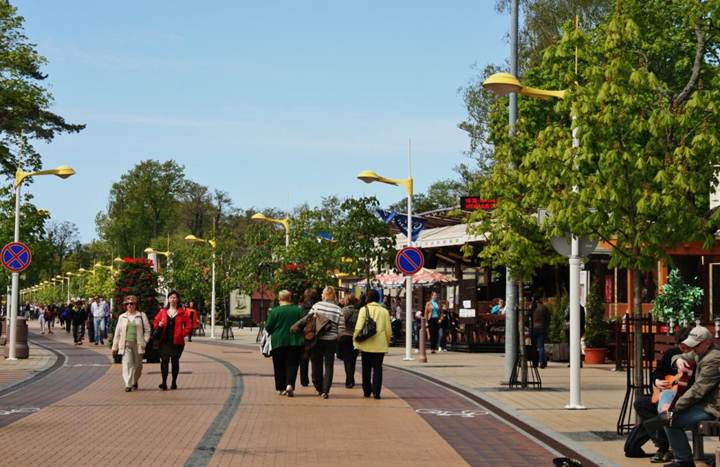
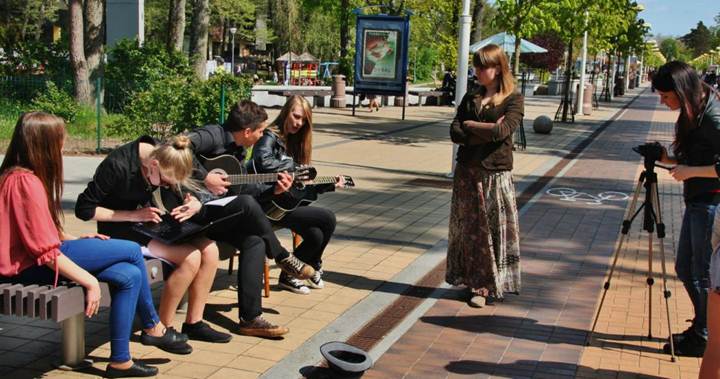
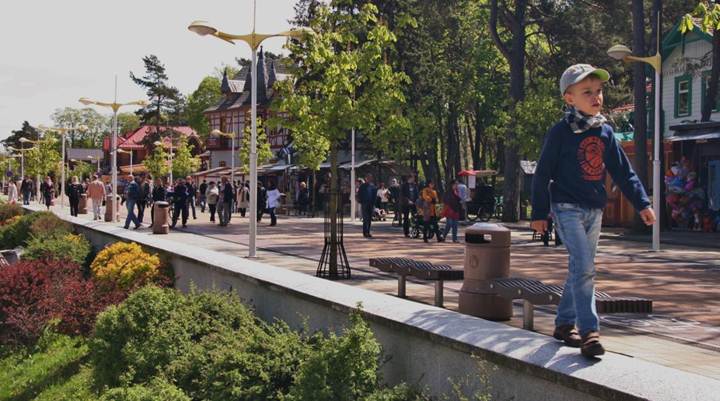
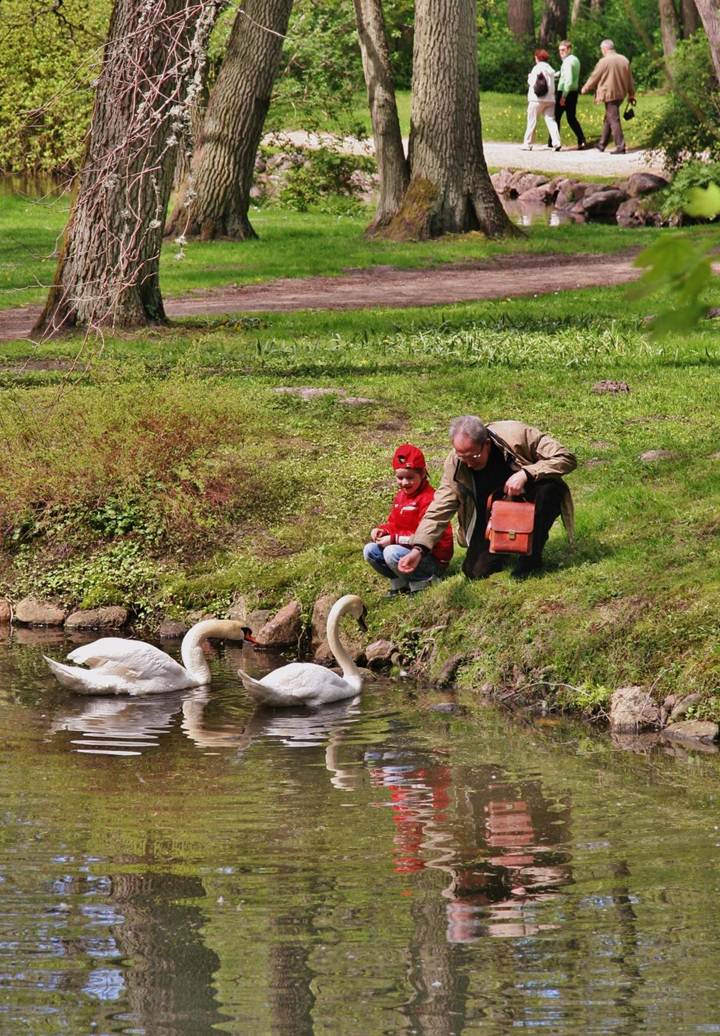
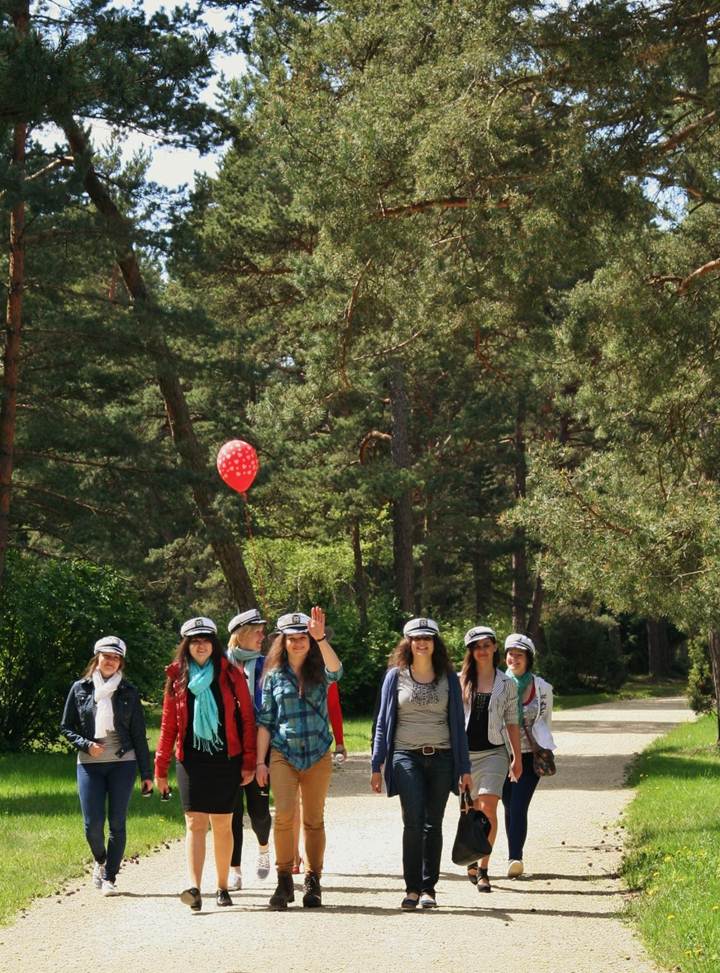
I am here when the summer season has not yet started, but I am happy to see that there is an increasing popularity for Palanga also at this time of the year. In the hotel lobby I read that a well-known company with headquarter in Vilnius is having a seminar in the hotel’s conference room, on the pedestrian paths through the forests I see many on foot and bicycles, many are still enjoying the sunrays on the park benches after having fed the swans, and there is still teeming life and laughter in Basaniviaus Street every evening.
To visit Palanga, any time of the year, is a healthy and fun experience, truly worth a try!
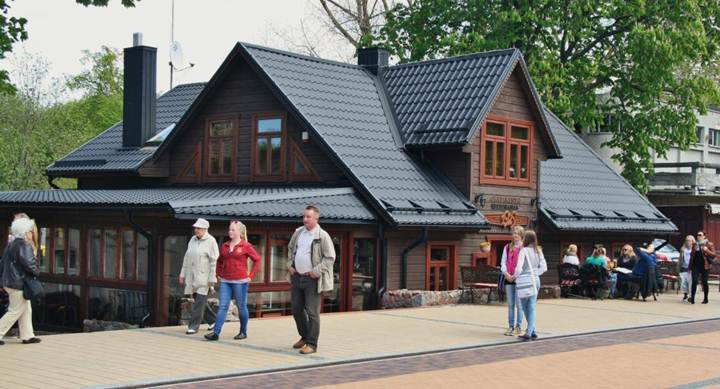
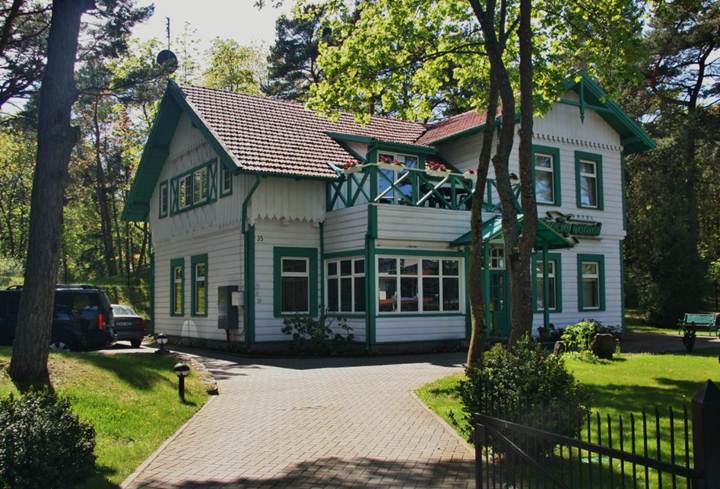
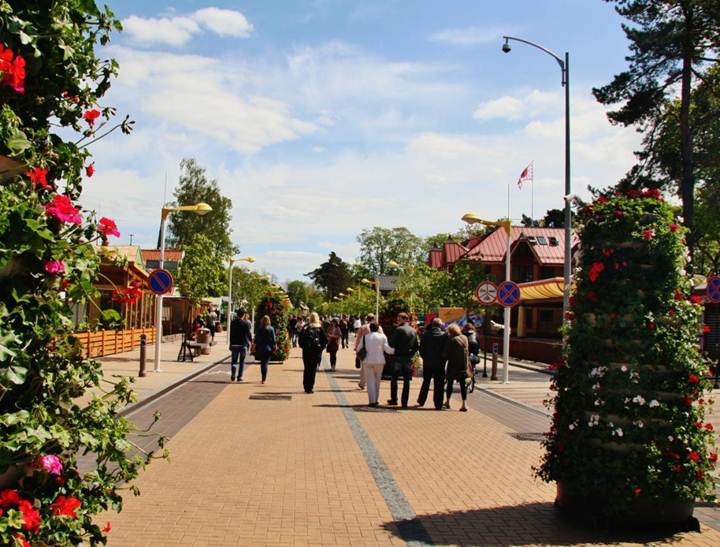
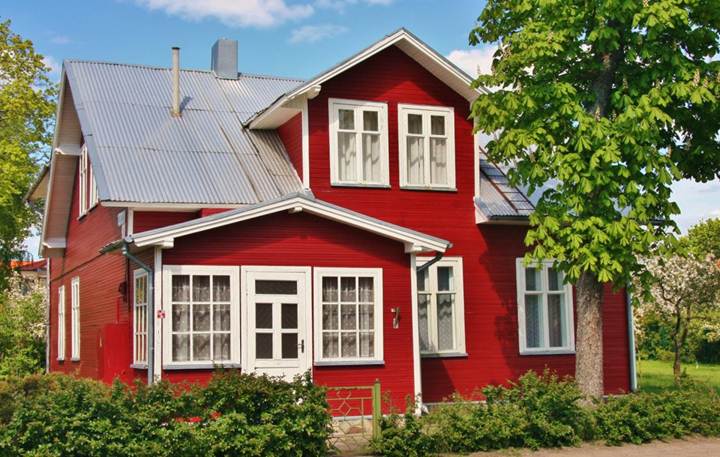
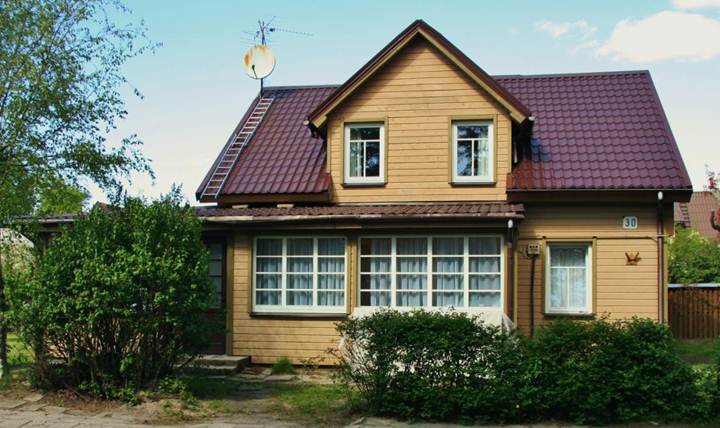
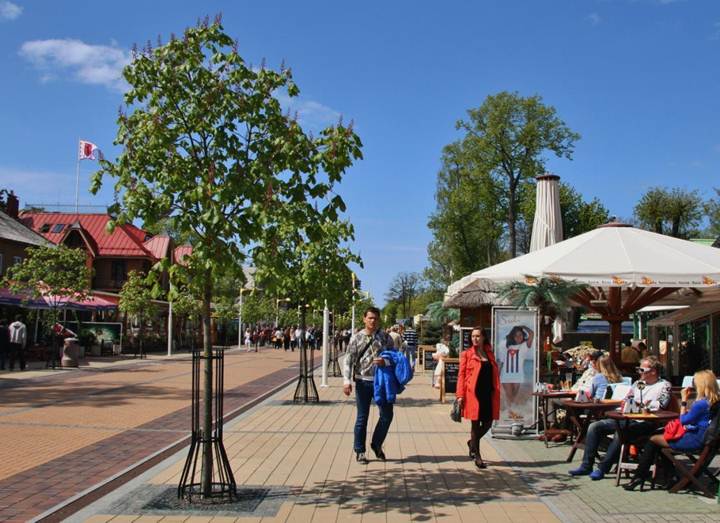
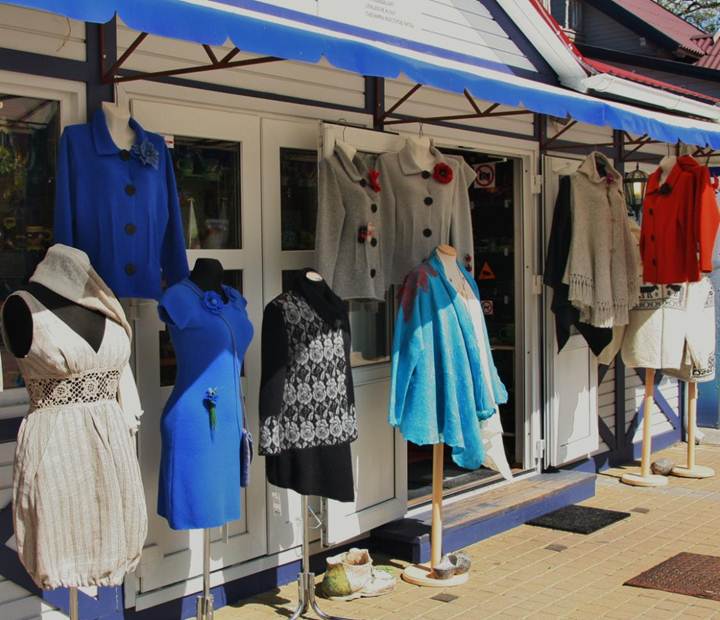
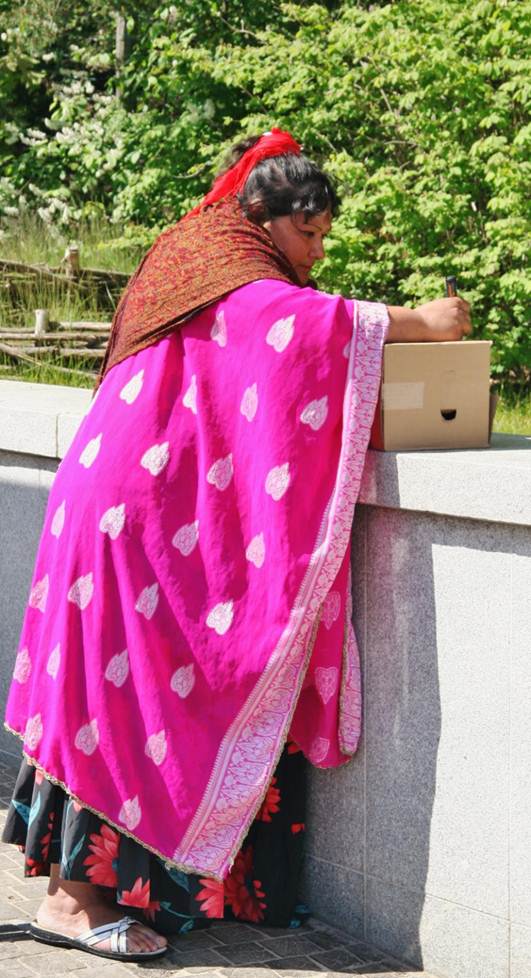
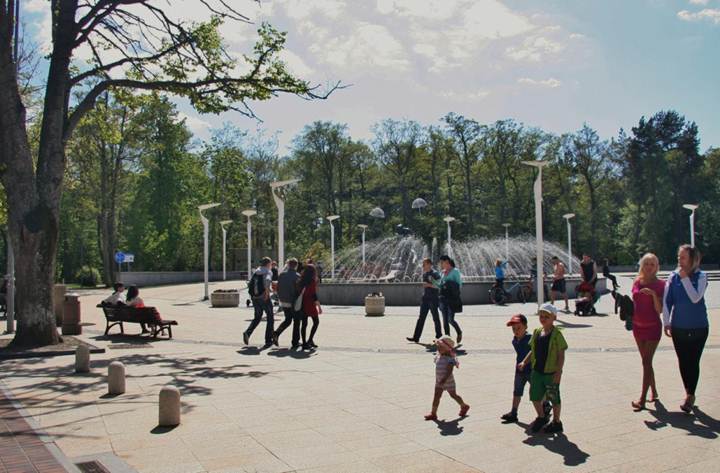
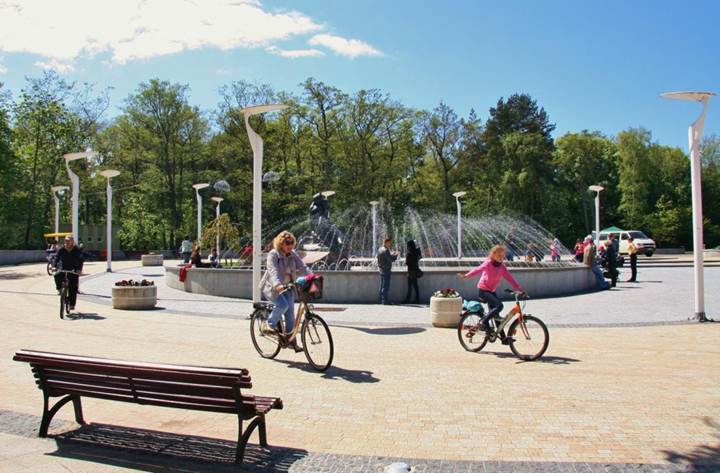
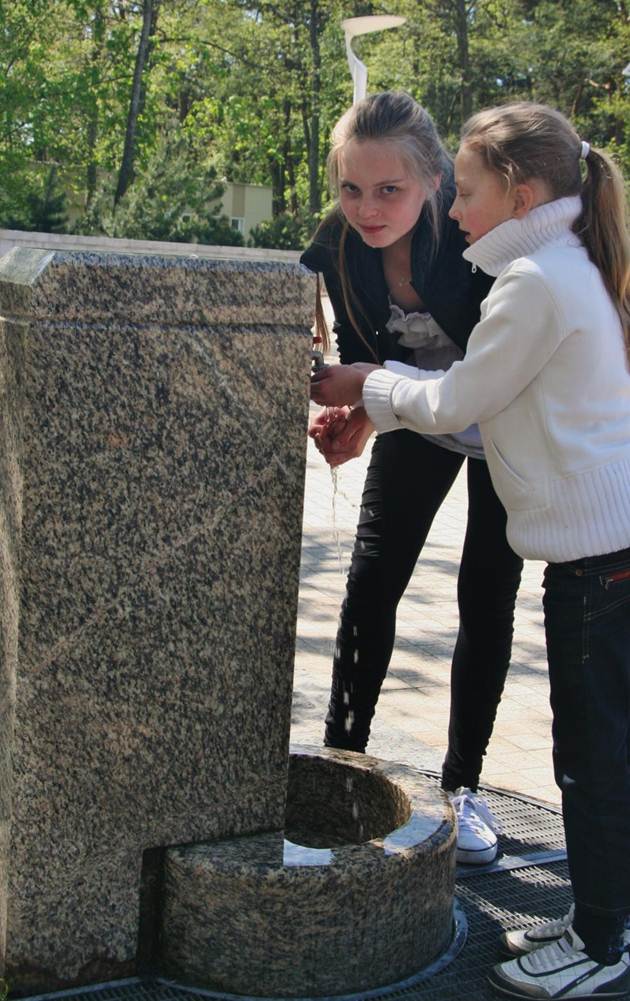
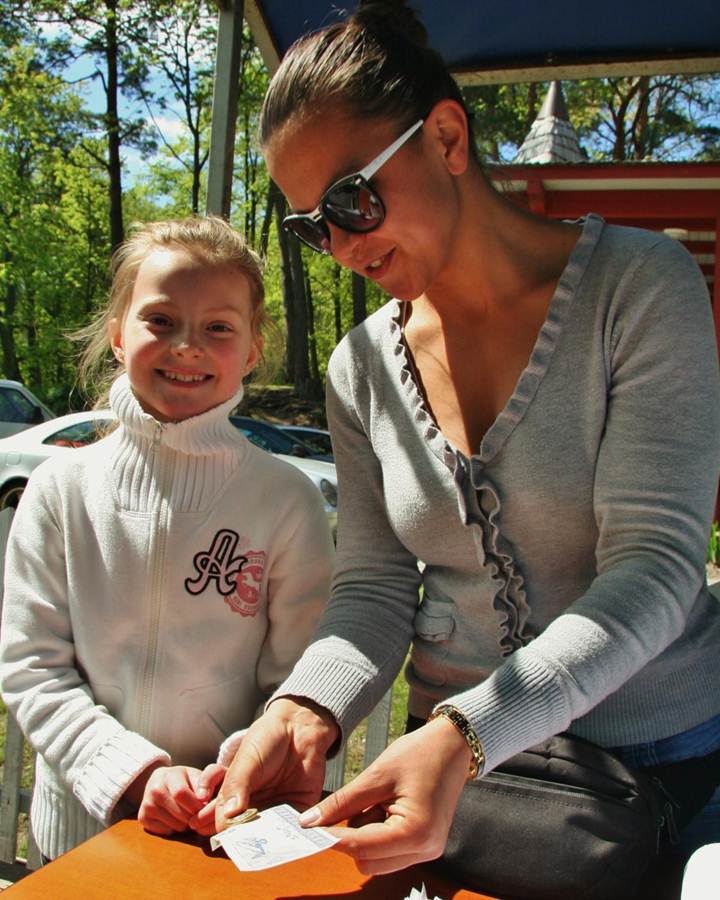
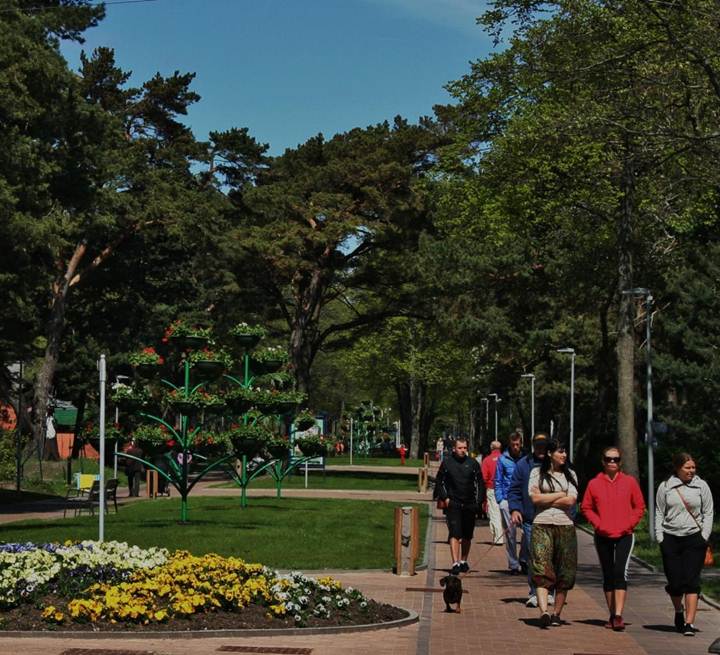
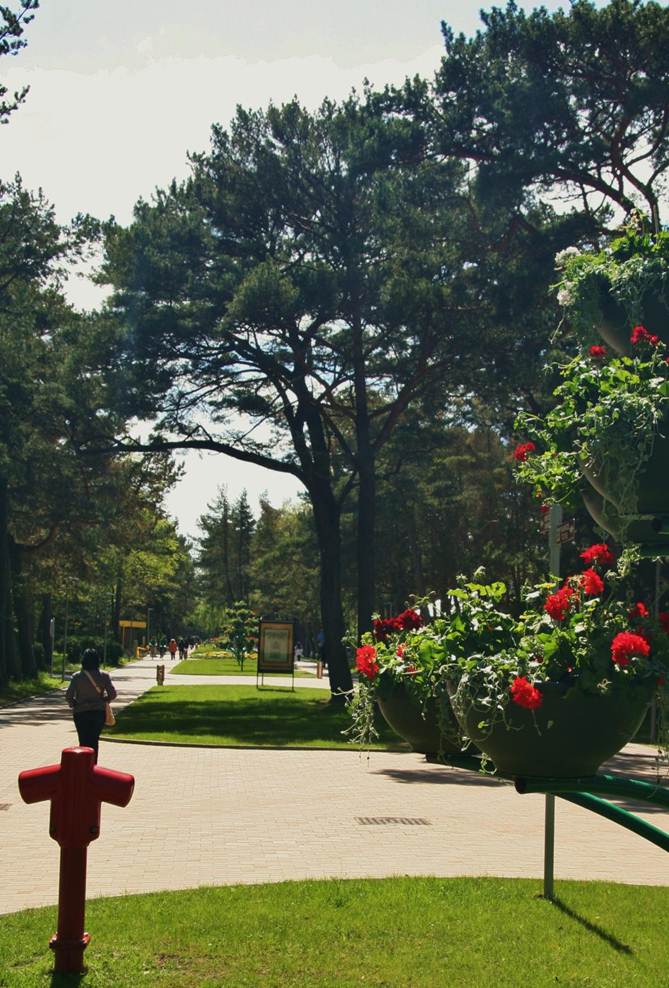
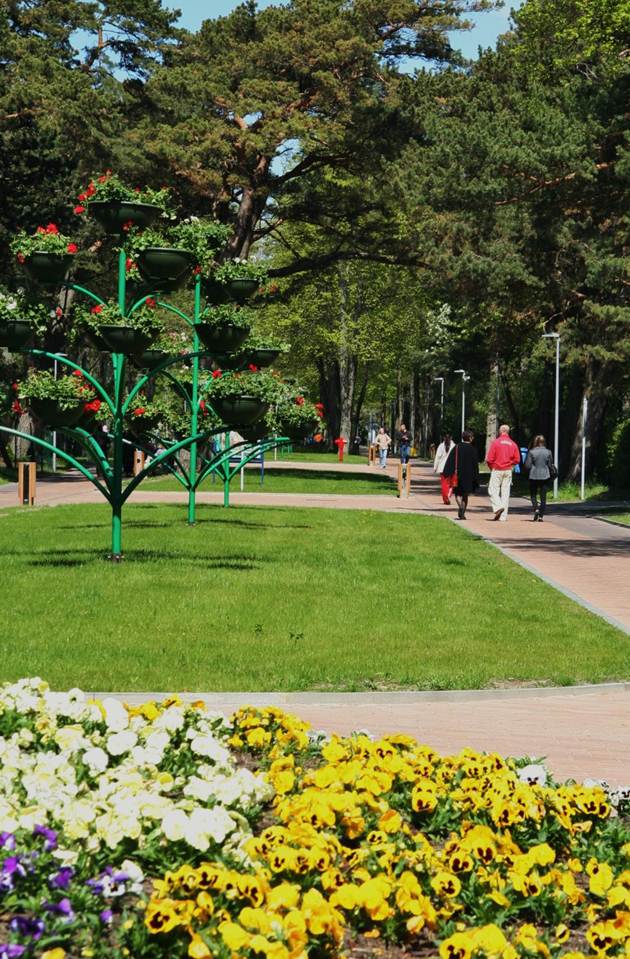
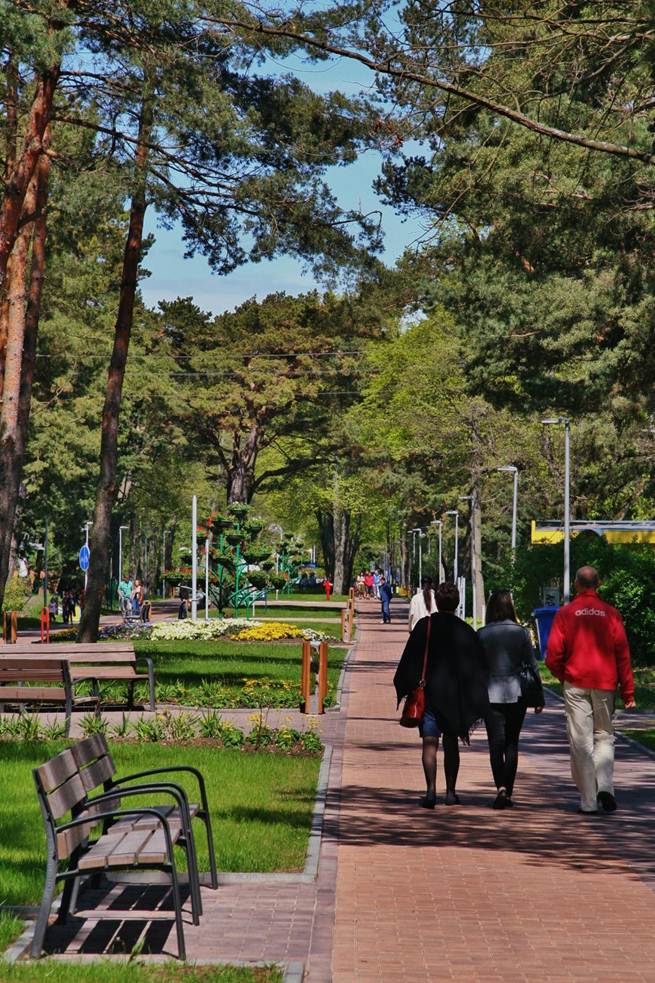
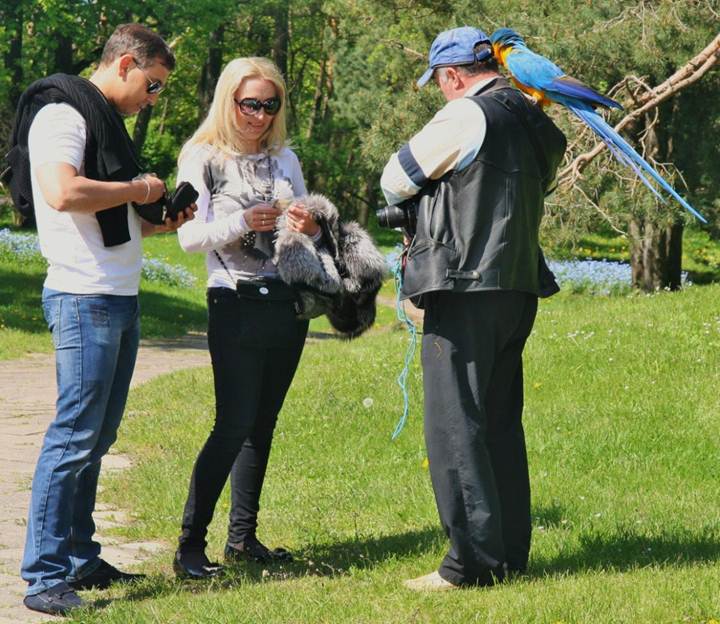
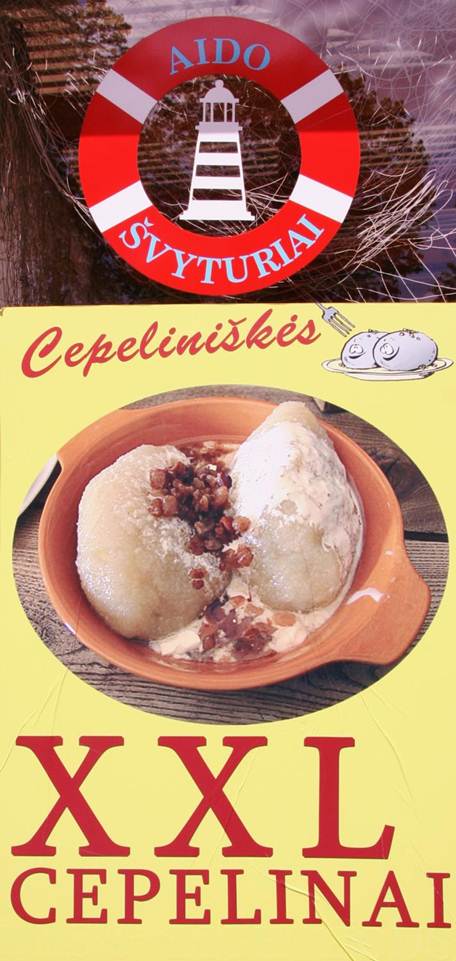
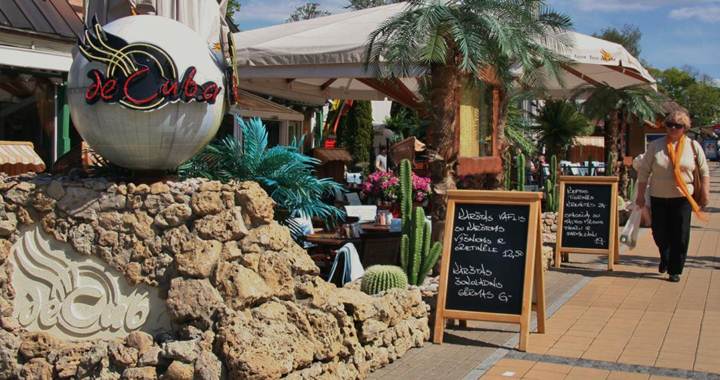
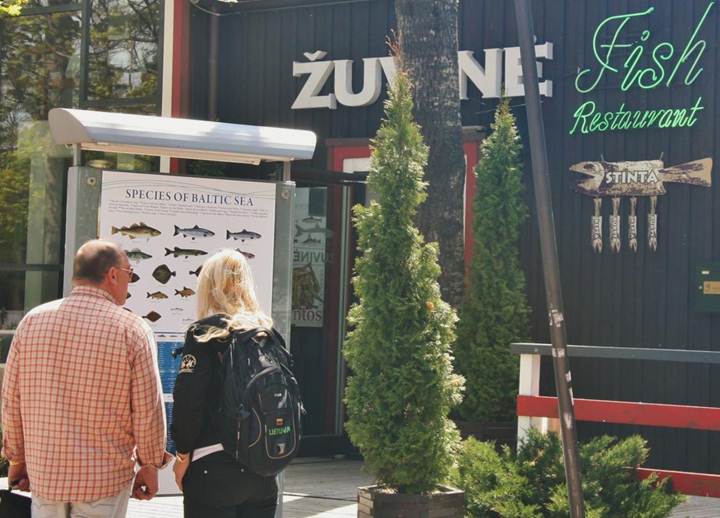
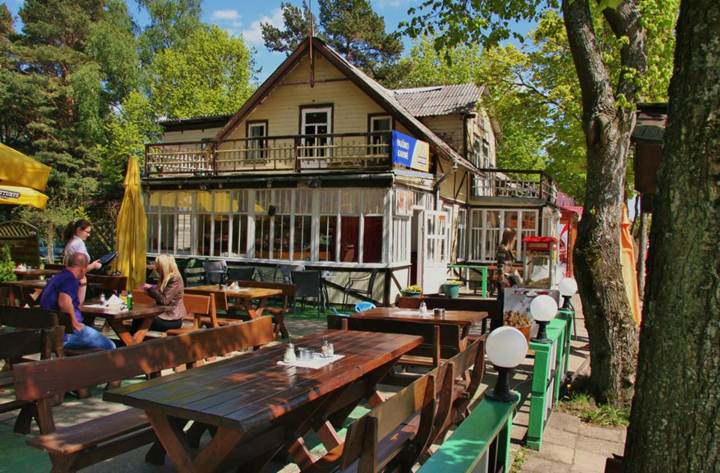
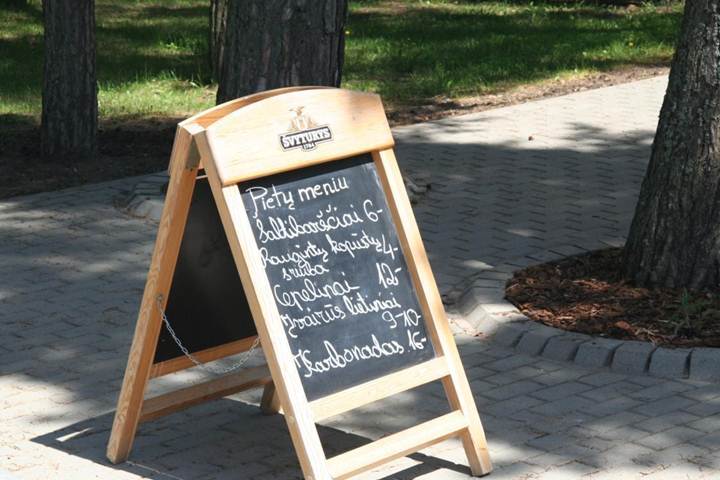
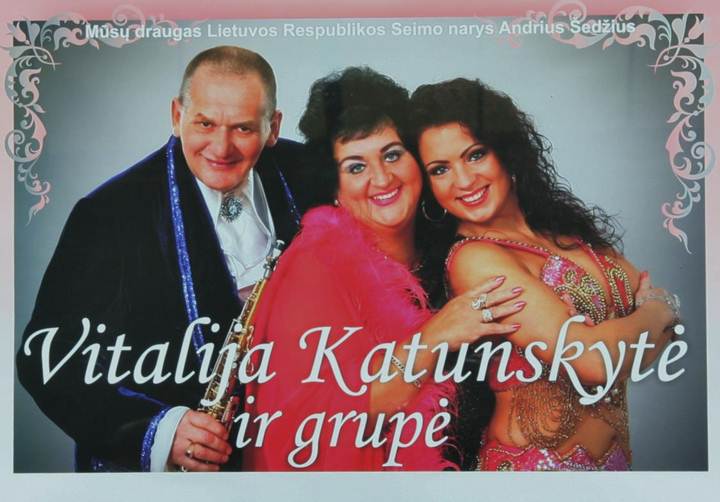
Palanga restaurants
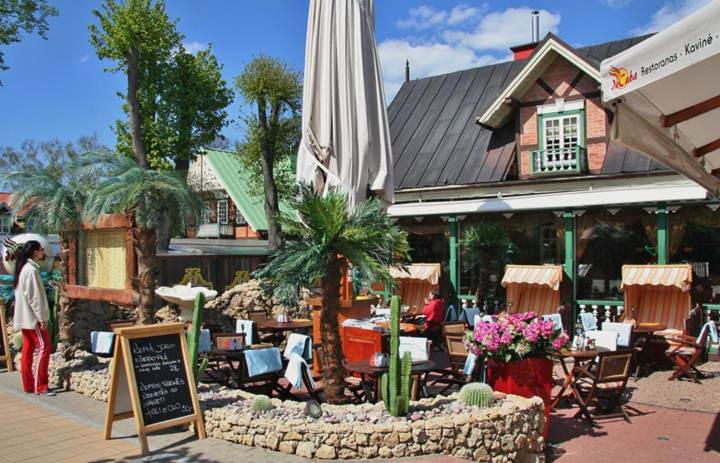
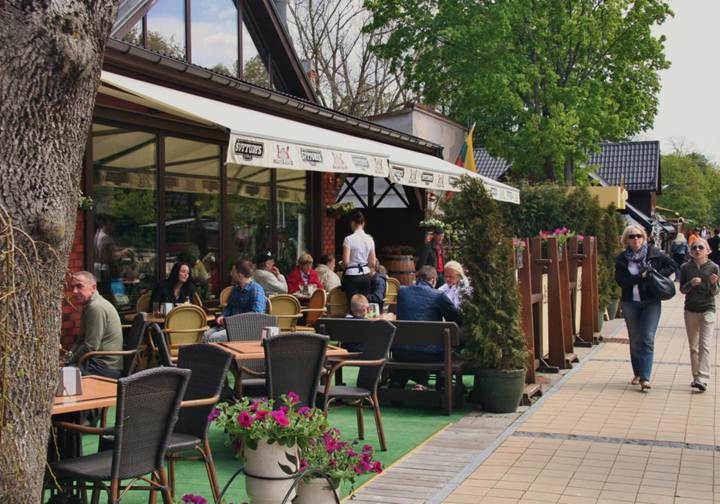
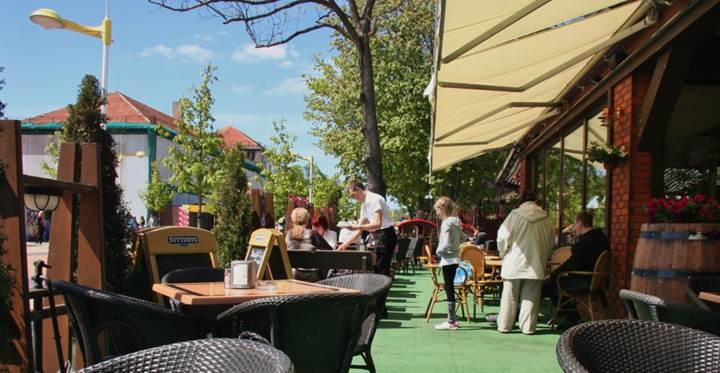
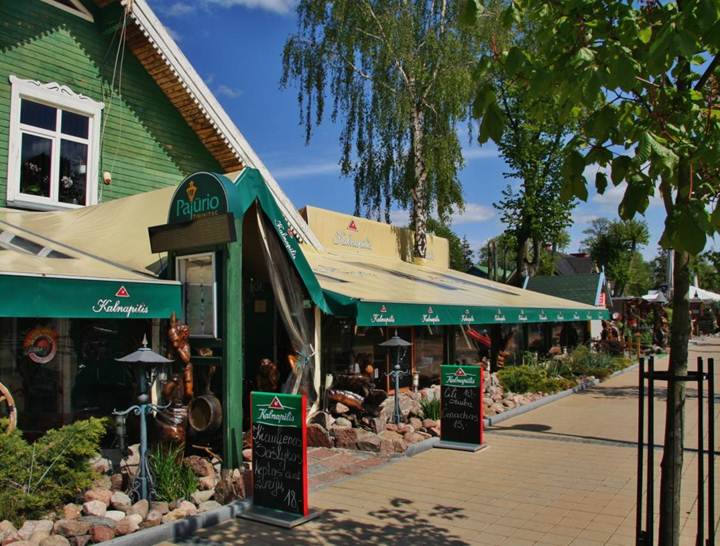
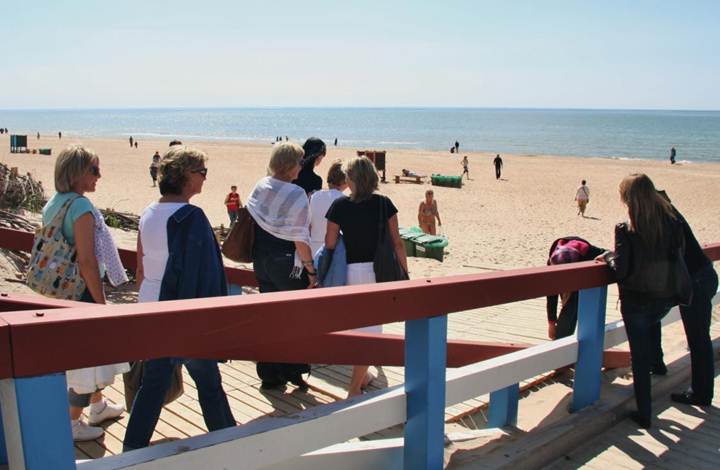
The fantastic Palanga beach
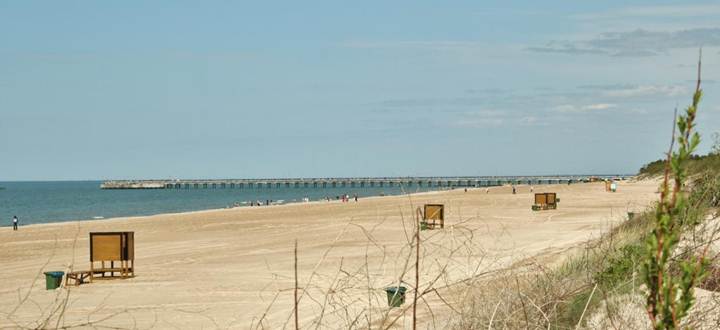
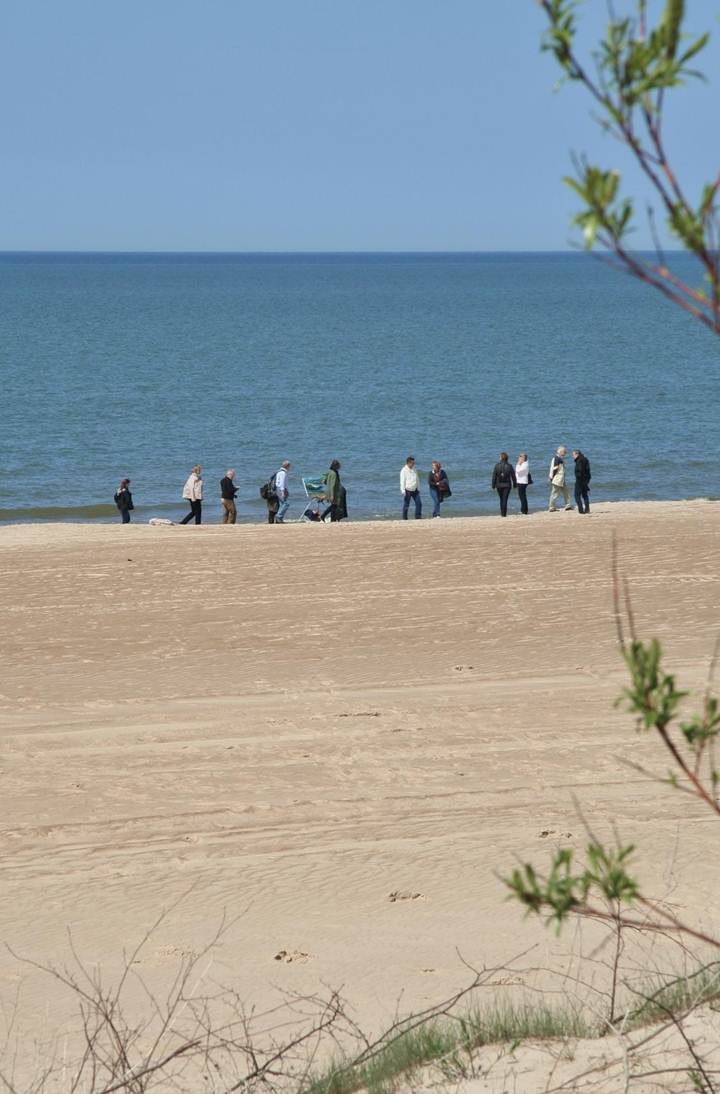
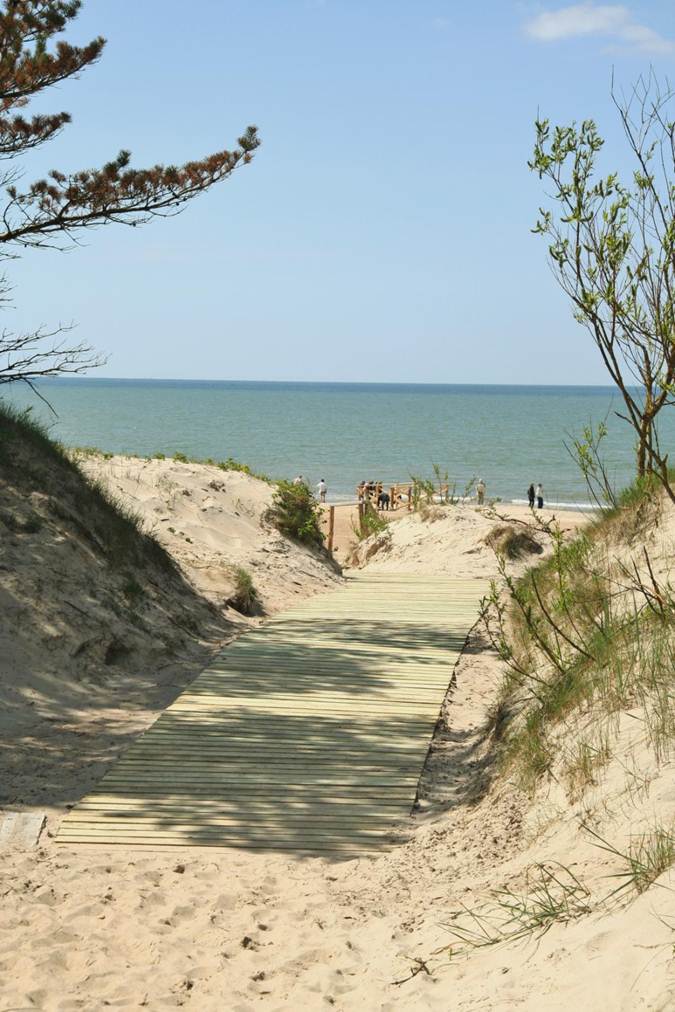
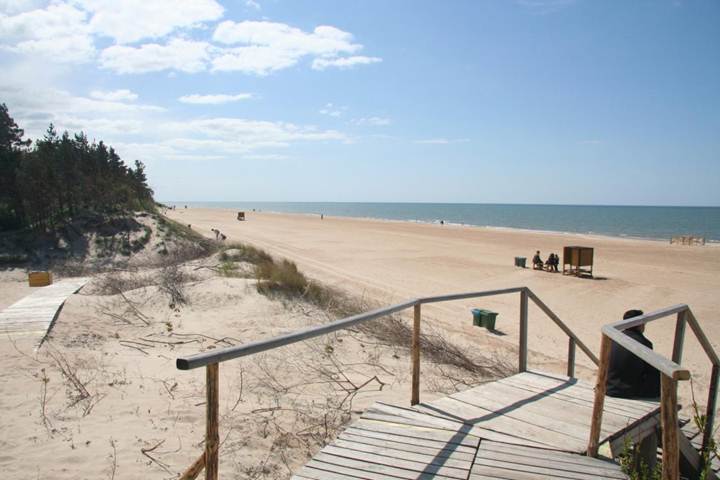
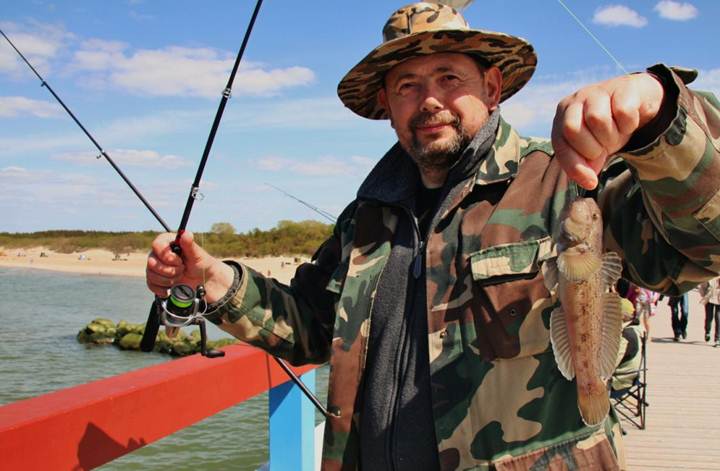
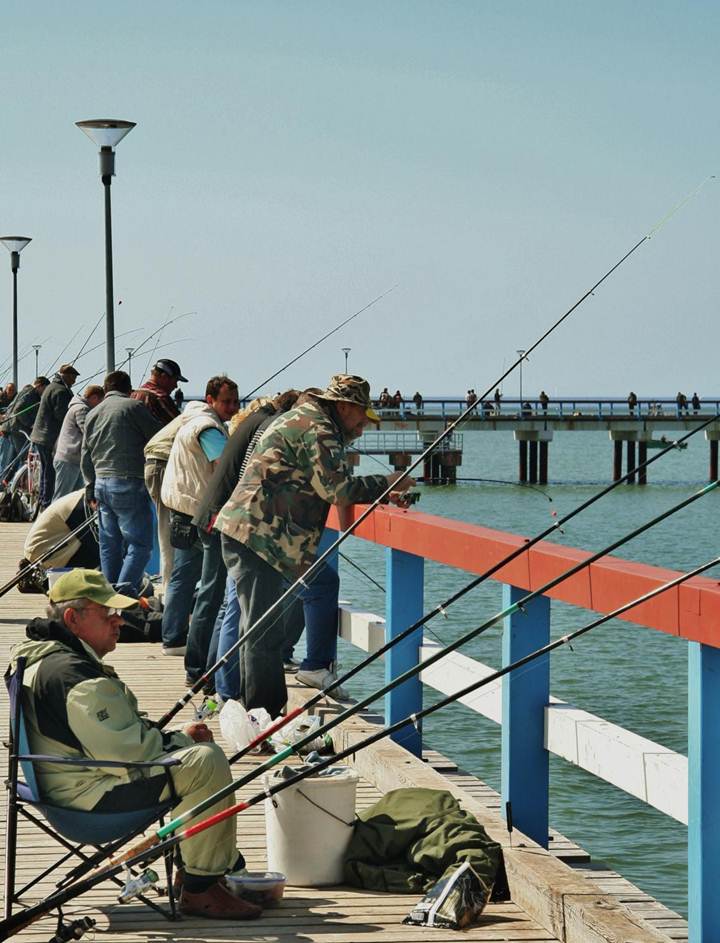
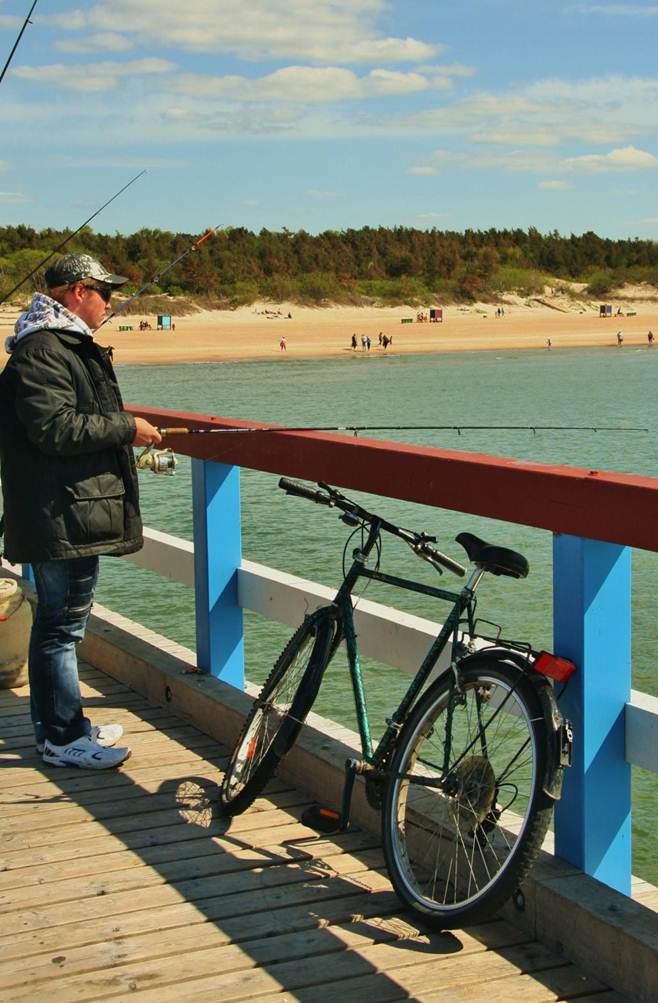
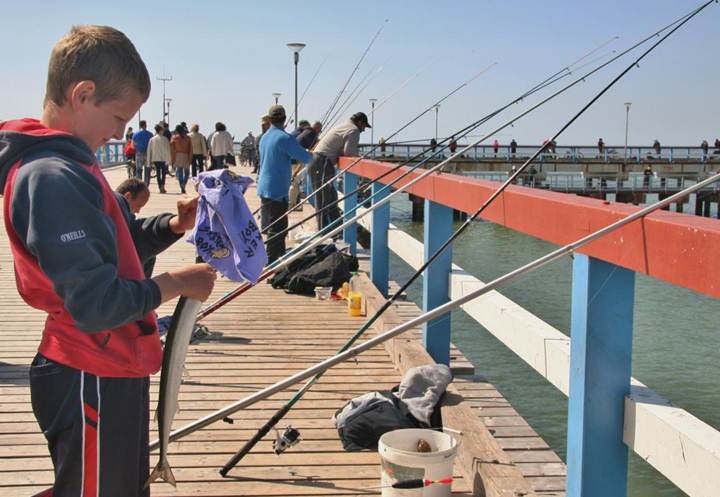
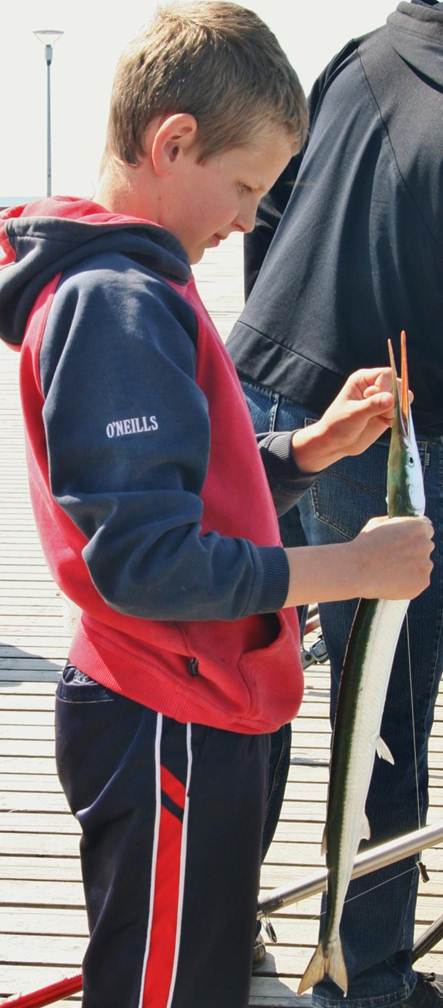
Fishing at the Palanga pier
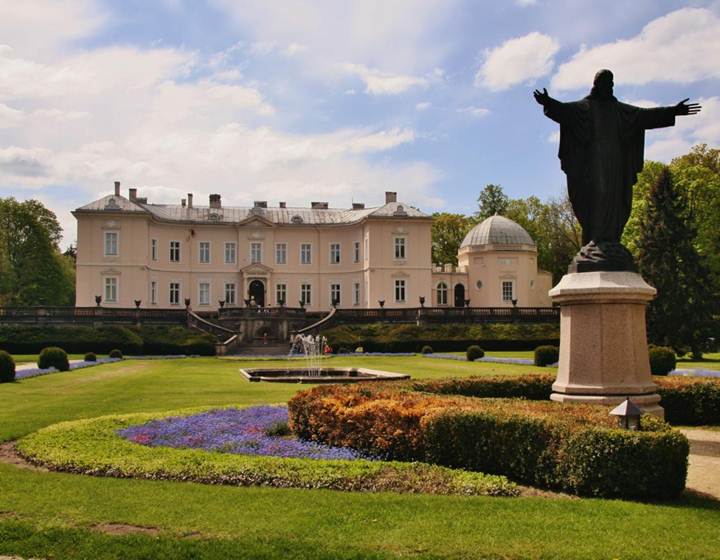
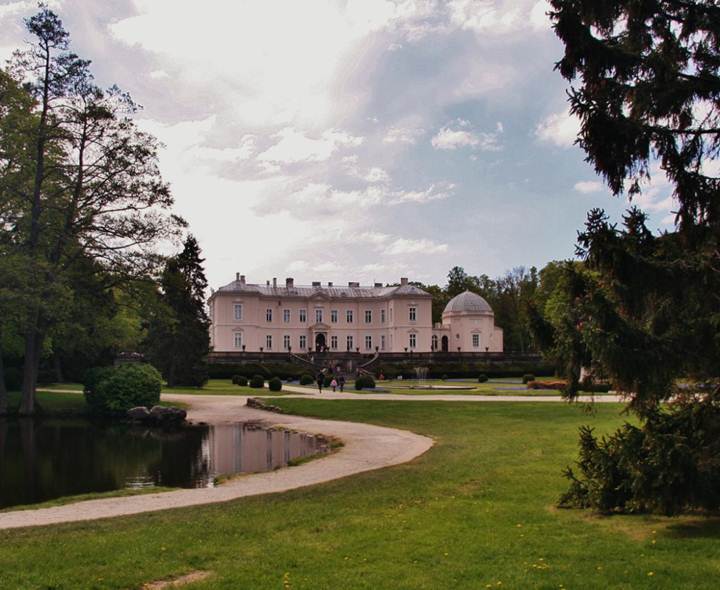
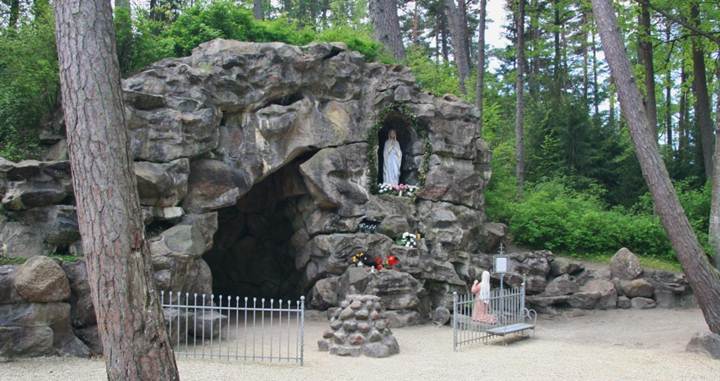
The Palanga Park
This landscaped garden is one of the prettiest, best-preserved, and best-kept parks in Lithuania's coastal region. In 1987 Count Felix Tiskevicius founded this park around the palace built the same year. The park was designed by the famous French landscape architect and botanist Eduard Fransua Andr‚ (1840-1911), who spent three summers in Palanga with his son Ren Eduard Andr (1867-1942) supervising the park's construction. They were assisted by the Belgian gardener Buyssen de Coulon.
Andr's talent and the natural and historical uniqueness of the park's setting successfully blended to create a piece of art.
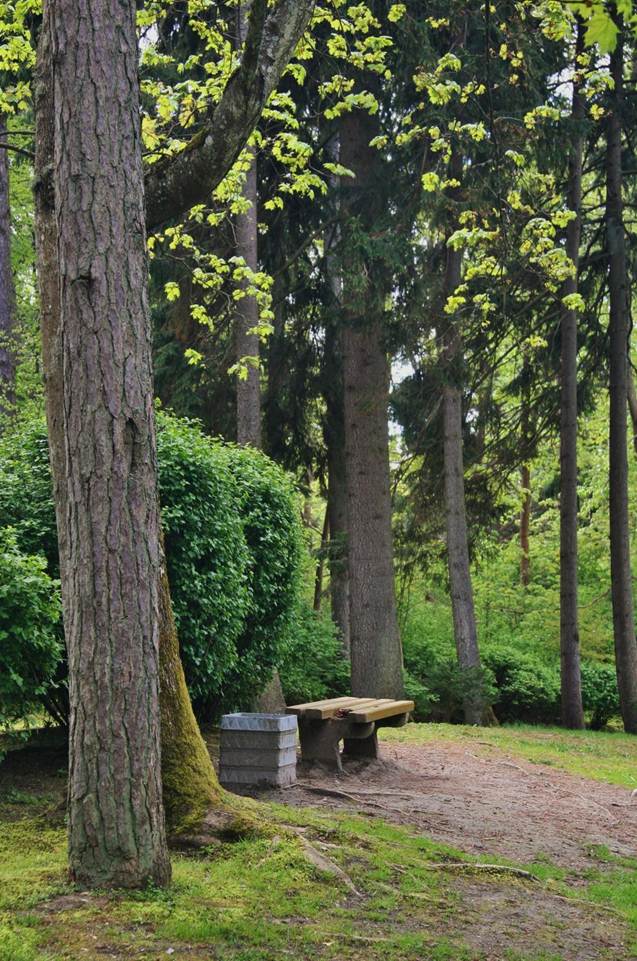
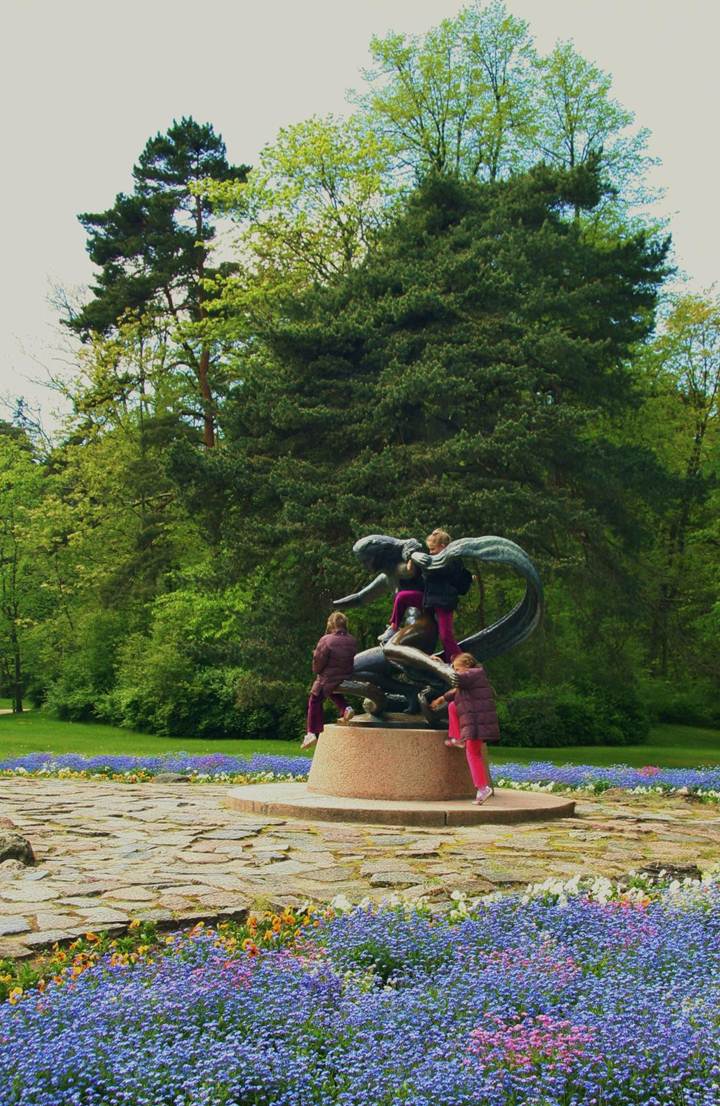
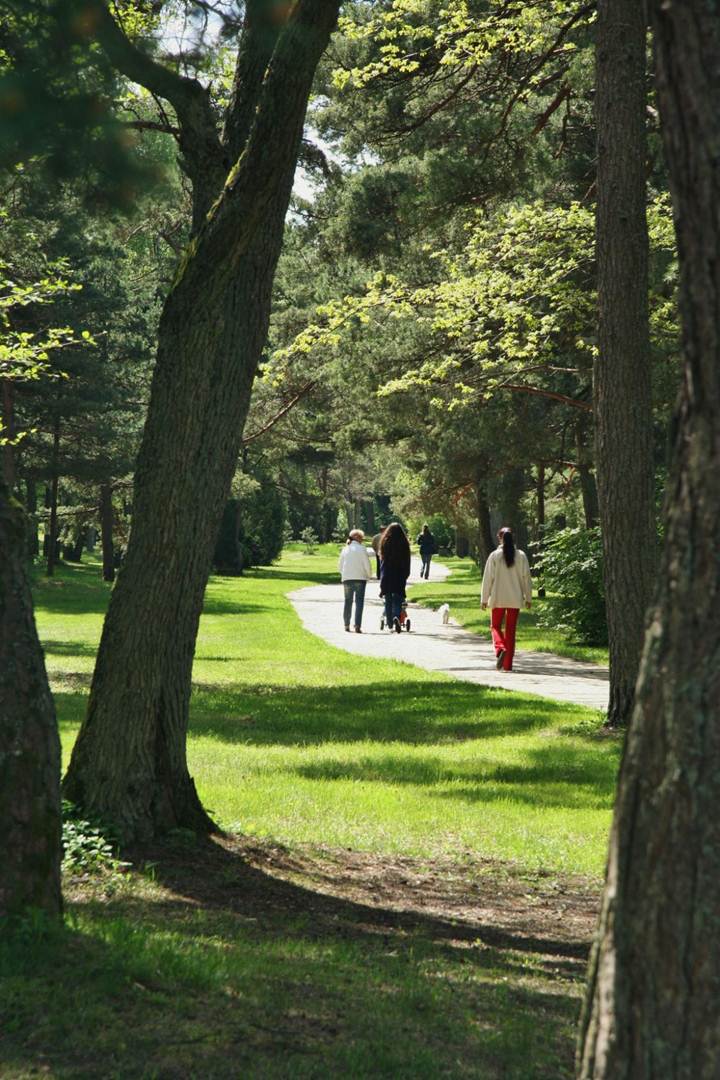
The scenic park offers a variety of views and moods. The palace is set between a pond and the legendary hill of Birute - an ancient Lithuanian sacred place - that offers a glorious view of the sea. The natural foundation of the park, both in earlier times and now, are relicts of ancient pine forests. Little paths and squares with beautiful flower arrangements are laid out skillfully among the trees.
The contrast of scenery is emphasized by the palace's regular shape: the north side opens onto a magnificent terrace and steps leading into the park. Flowers and a fountain complete the effect. The south side of the palace is surrounded by an oval rose garden that is connected to the palace's terraces by stairs.
Experts guess that the park's founders planted about 500 different kinds of trees and bushes. Trees were brought to Palanga from Berlin, Karaliaucius and other European botanical gardens. Today - as before - pine trees dominate the park. Firs and dark alders grow in the more humid areas. About 250 imported and 370 native plant species are represented. 24 of these are included in Lithuania's list of endangered species (1992 data).
The park has survived two world wars and a number of natural disasters. It has also been extended and restored. However, with the exception of a few details, the park has kept the atmosphere created by Andr, as Florence Andr Kappelin, the head of the E. Andr association, confirmed during her visit to Palanga in 1996.
- Bookmark :
- Digg
- del.icio.us
- Stumbleupon
- Redit it
- Posted by - (2) Comment

Winter motive from Aukštaitijos National Park.
May 2012 become just as peaceful as a Lithuanian landscape
Text: Aage Myhre – aage.myhre@VilNews.com
Photos: The Lithuanian State Department of Tourism - http://www.lithuaniatourism.co.uk
It is New Year's Day year 2012. I wish all of you, dear readers of VilNews, a happy, good, warm and successful year. Let us all do our best to show genuine care and concern for our fellow human beings throughout this year that now barely has started.
Both in Lithuania and in other countries there will also in 2012 be huge groups of people who will feel the consequences of the global economic crisis, and I am afraid war and injustice will continue in many areas of our world throughout the year.
Then there is the the Maya's "Long Count" calendar that marks the end of a 5,126-year era on the 21st of December this year. This has led some to forecast widespread catastrophes for the world. Others predict a restoration of a "true balance between Divine Feminine and Masculine, whereas some anticipate a "change in the nature of consciousness," assisted by indigenous insights and psychedelic drug use...
I recommend the Lithuanian nature as medicine for all who seek peace in their souls in the midst of all problems and predictions for 2012.
Peaceful, harmonious and energizing is the landscape here, as it has been for millions of years. This is a landscape that has seen more war and bloodshed than most other places around the globe. But it is a good landscape. Not as dramatic and wild as in many other countries. Rather quietly and unpretentiously beautiful. The forests, the mighty rivers, and the plains that slowly wave from Belarus to the colossal sand dunes out there on the Baltic Sea coast.
About 28 % of the country is covered by forests, 40 % of them are pines. Wild berries and mushrooms grow in abundance and the picking of them is the most popular hobby of local people. About 300 species of birds can be found, and four Nature Reservations are their breeding grounds. White Storks are the most popular birds, returning to their Lithuanian nests every spring from Sub-Saharan areas where they spend their winters. The White Stork is the country’s national bird, and 25 March is the official ‘Stork’s Day’. Notably, Lithuania is a beneficial and important habitat for the White Storks with the highest known nesting density in the world!
There are over 4,000 lakes and 722 rivers in Lithuania. Wetlands and a mixed forest zone cover nearly 33% of the land. The longest river is the Nemunas, which is 937 km (582 mi) long totally, whereas its length through Lithuania is 457 km (284 mi). Nemunas gathers and carries the waters of many tributaries to the Baltic Sea, wherein lies Lithuania's famous "amber coast" at the Curonian Spit, a 100 km-long (60 mi) bank of sand dunes and pine trees which stretches from the southwest to the seaport of Klaipėda and encloses the vast Curonian Lagoon.
For centuries, amber, Lithuania's precious harvest of the sea, has been washed onto these golden sands. Lithuania enjoys almost 100 kilometres (60 mi) of beautiful sandy coastline, white, soft beaches that are a true bathing paradises during the summer months. Probably the best beaches in all Northern Europe!
The Lithuanian landscape has been smoothed by glaciers. The highest areas are the moraines in the western uplands and eastern highlands, none of which are higher than 300 metres (1,000 ft) above sea level, with the maximum elevation being Aukštojas Hill at 294 metres (964 ft). The best of the country's scenery can be seen in its five National Parks.
The climate lies between maritime and continental, with wet, moderate winters and summers. According to one geographical computation method, Lithuania's capital, Vilnius, lies only a few kilometres south of the geographical centre of Europe.
But these are only the hard facts. The Lithuanian countryside is so much more than just facts. It is only when you begin your walk through the woods here, as you slowly float down one of the rivers in a canoe or a raft, when you sit down at one of the many amazing lakes, or when you first put your foot down into the Baltic Sea’s salty water that you really understand that this country is different. And now, in the year of 2012, you will have the great opportunity of exploring and feeling close to Lithuania's highly inspirational nature. A landscape of peace...
|
|
The colours of the Lithuanian flag symbolise: |
|
Amber (gintaras) is highly treasured and is the only national gem of Lithuania. |


Lake and island formations in Aukštaitijos National Park.

Autumn in the Aukštaitijos National Park.

A winter coated Aukštaitijos National Park.

Mingė, often nicknamed Lithuania’s Venice) is a small fishermen's village in the Šilutė district, on the Minija river, and is part of the Nemunas Delta Regional Park. This village is unique in Lithuania as the main "road" is the river. Houses are situated on both banks and there is no bridge to connect them. The only way to get around is to use a boat. In 1997 it had 48 residents.
The Curonian Spit (Neringa)
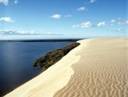
The Curonian Spit (Neringa) is a long and narrow sand peninsula that separates the Curonian Lagoon from the Baltic Sea. This natural wonder, listed as a UNESCO World Heritage site, still exists today solely due to human efforts to counter the natural erosion process. The Neringa landscape is truly unique, dominated by picturesque sand dunes and pristine beaches. The area has a distinct ethnographic flavour, characterised by wooden fishermen cottages and the local speciality of smoked fish. Those looking for a quiet seaside vacation in picturesque surroundings will most definitely not be disappointed.
The huge sand dunes of the Curonian Spit are the largest in North Europe. You reach them by ferry from Klaipeda (takes only 10 min).The Curonian Lagoon is separated from the Baltic Sea by the Curonian Spit. Its surface area is 1,619 square kilometres. The Nemunas River supplies about 90% of its inflows; its watershed consists of 100,450 square kilometres in Lithuania, Belarus, and the Kaliningrad Oblast. At the northern end of the Spit, there is a passage to the Baltic Sea, and the place was chosen by the Teutonic Knights in 1252 to found Memelburg castle and the city of Memel (today’s Klaipeda). The Lagoon, formed about 7,000 years BC, is classified as brackish. Water depths average is 3.8 meters.
|
|
|
|
|


Curonian Spit sand dunes.

Curonian Spit sand formations.
|
THE NATIONAL PARKS Source: http://www.lithuaniatourism.co.uk Five national parks (Aukštaitijos, Dzūkijos, Žemaitijos, Kuršių nerijos and Trakų) and 30 regional parks filled with virgin forests and unspoiled marshland exist in Lithuania, inhabited by protected wild animals and rare birds. Three parks (Aukštaitijos, Dzūkijos and Žemaitijos) are named after the ethnographic regions they are situated in. Each of the parks is under the government’s protection and all kinds of recreational and agricultural activities are strictly regulated so that these natural wonders can be enjoyed by everyone. Protected areas, including natural and cultural reserves as well as national and regional parks, cover almost 12% of the country’s entire territory. >Apart from these, there are 386 special natural monuments (old trees, natural springs, standing stones, etc.) and 3,719 cultural monuments (old ethnographic villages, manors, castles, churches, barrows) under the state’s protection. In many parks, particularly in eastern and western Lithuania, old villages that have kept their traditional structures of unsurfaced streets, thatched-roof farmsteads and fields can be found. They have the status of ethnographic reserves. These national and regional parks offer visitors the opportunity to see Lithuanian customs and traditions as well as try out local foods and have a good time. www.countryside.lt There are plenty of opportunities for learning more about Lithuania and its lovely, unspoilt countryside. There are routes and paths for walking, horse riding, cycling, birdwatching and water tourism. Viewpoints throughout the country with magnificent views of the surrounding landscape can easily be reached. Information in English and other languages is available at the parks’ information centres:
|


- Bookmark :
- Digg
- del.icio.us
- Stumbleupon
- Redit it
- Posted by - (0) Comment
36 REASONS WHY IT’S SUCH AN EXCELLENT IDEA
TO VISIT LITHUANIA THIS AUTUMN AND WINTER
Good reasons for all seasons
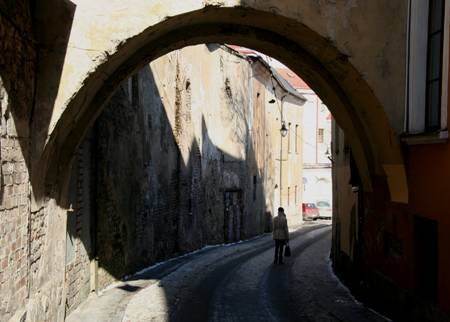
You can and should visit Lithuania for a lot of reasons this autumn and winter – as you can see from our below survey. Common for all the 36 ideas mentioned, is that here you get top quality and tons of experience – for half the price – if to compare with USA and most West-European countries.
We do, however, recommend you to plan your trip thoroughly, well in advance.
If you wish, we can help you to put together the most perfect programme for your trip, and give you some hints about how to get here, where to stay, with whom to deal and much more...
If this would be of interest for you, please write us at editor@VilNews.com
|
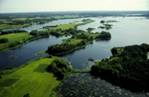
A – NATURALLY Nature has been generous to Lithuania. There are no mountains or big forests, the country's beauty lies in the diversity of its landscape. This is a place of rolling hills and gentle plains; of quietly flowing rivers and of lakes reflecting the blueness of the sky. |
|||||||
|
|
|
|
|||||
|
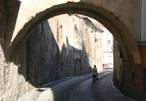
B – MUST SEES Vilnius Old Town has a stunning array of Gothic, Renaissance and Baroque architecture, a truly amazing place to visit and experience. It’s also in Vilnius centre that you find the KGB Museum, a reminder of the gruesome Soviet oppression this country was forced to live with for 50 sad years. But only 30 km from the city, there is a strong medieval symbol of the 500 years of glory, when Lithuania was Europe’s largest country. |
|||||||
|
|
|
|
|||||
|
|
|
|
|||||
|
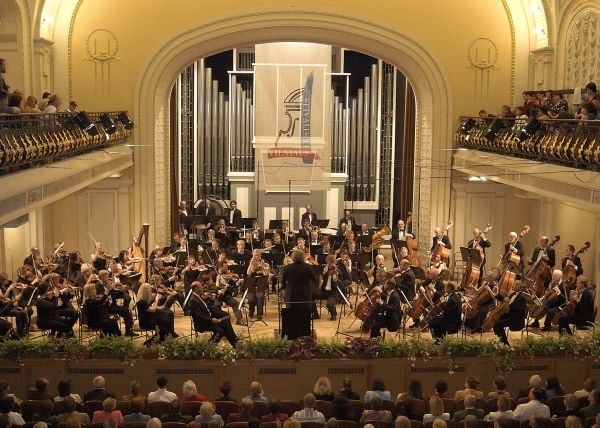
C – CULTURE Far too few people outside Lithuania know what a tremendous treasure of culture this country represents! Today Lithuanian art is not only flourishing at home but is also gaining recognition internationally. Though not every poster tells that a nightingale soprano, a graceful ballerina, or a divine cello player comes from Lithuania, the probability that you have just enjoyed a concert of a Lithuanian artist is great, being it in New York, London, Berlin, or Vilnius. |
|||||||
|
|
|
|
|||||
|
D – HEALTH & WELLBEING Many people come to Lithuania for quality health care of various kinds. Medical quality here is very high and prices for services very low... In addition the country has a number of extremely good spa and tourism resorts where visitors can undergo all kinds of treatments or simply relax and charge their batteries... |
|||||||
|
|
|
|
|||||
|
E – SPORT, OUTDOOR LIFE & PHYSICAL ACTIVITIES This year’s EuroBasket tournament took place in Lithuania (Aug-Sep). But Lithuania has also numerous other sport activities and events to offer, all year around. The Lithuanian lakes and rivers are full of fish, and the forests full of wild animals including deer, wild bears, beavers, elks and many others. One is allowed to hunt elks, wild bears, wolves, foxes, hares and birds, such as geese, ducks and woodcocks. |
|||||||
|
|
|
|
|||||
|
|
|
|
|||||
|
F - JUST FOR FUN Wondering what to do in Lithuania? We can help you stay busy, don’t worry... We can tell you about the most popular tourist attractions, beaches, outdoor/indoor activities, nightlife and much, much more... |
|||||||
|
|
|
|
|||||
|
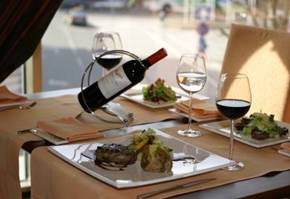
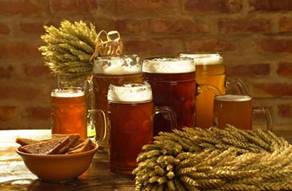
G – WINING & DINING The natural and healthy character of its dishes is what makes Lithuanian cuisine unique. There are all kinds of restaurants in absolutely all corners of the country – international and local dining and wining from Nida to Druskininkai, from coast to inland, not to forget the big cities... |
|||||||
|
|
|
|
|||||
|
H – HOTELS, CONFERENCES Lithuanian hotels offer a large variety of accommodation options. Though the country has undergone vast economic development, it also retains ties with its nature loving, glorious pagan, countryside past. Did we mention conferences? Try Lithuania – fantastic quality, half the price! |
|||||||
|
|
|
|
|||||
|
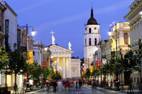
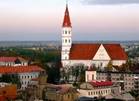
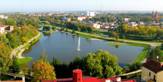
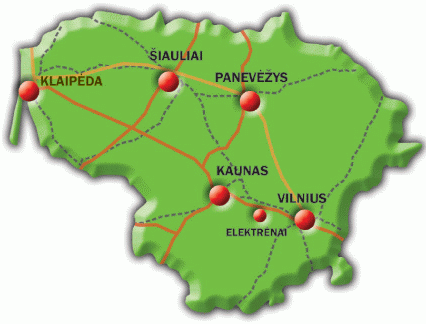
I – TOWNS & CITIES Lithuania’s cities started to form in the 13th-14th century together with the Grand Duchy of Lithuania. The first city to receive city rights was Klaipėda (1257). Most of the cities are old, established before the 18th century. There are only 19 cities with population of more than 20.000. Cities are quite evenly spread out through the territory of Lithuania. This forms a good network to support economic development throughout the country. The distance from the capital Vilnius to the port city Klaipėda is only 300 km, with excellent 4-lane motorway. |
|||||||
|
|
|
|
|||||
|
|
|
|
|||||
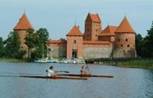
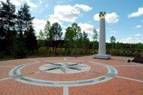
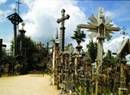
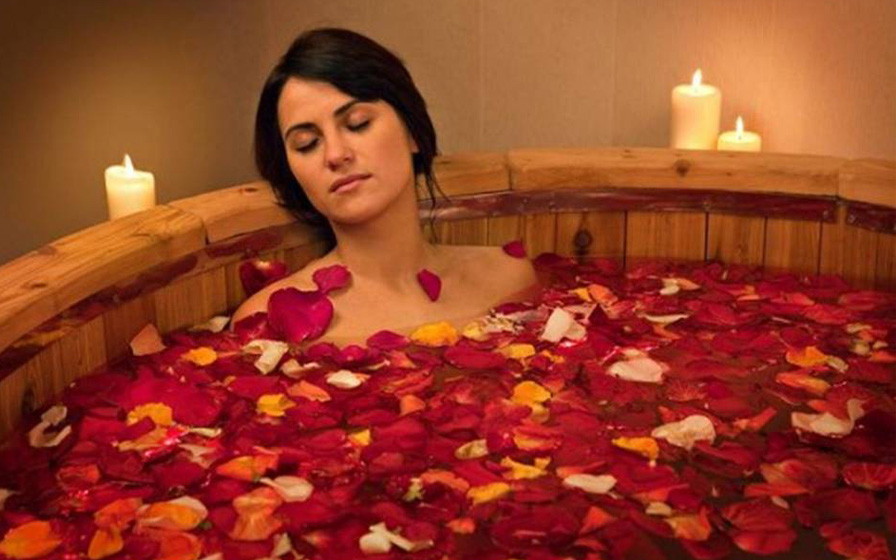
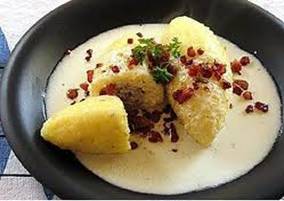
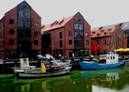
 Lithuania has become a leading medical tourism destination for people from countries around the world





- Bookmark :
- Digg
- del.icio.us
- Stumbleupon
- Redit it
- Posted by - (2) Comment
LITHUANIA
A country you may think you know – but do you really?
To read more, click on the below links
or search in our VilNews-Google archive above...
|
EUROPE'S LARGEST COUNTR
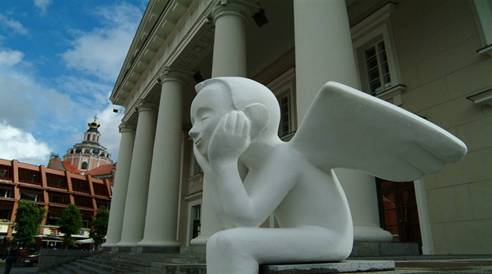
1. Lithuania was a world super power (1300-1600) – much longer than USA has been – stretching from the Baltic Sea to the Black Sea, considered Europe's largest country by then. |
A HAVEN OF TOLERANCE 2. Gediminas (1275-1341) – founder of Vilnius and the first Grand Duke of the family of Lithuanian rulers during 300 years– made Lithuania a 'haven of tolerance' according to British historian Norman Davies. |
|
STOPPING THE MONGOLS
3. Lithuania (the Grand Duchy) was the country stopping the Golden Hordes (the Mongols) from invading Europe (late 1300s) |
LAST TO BE CHRISTIANISED
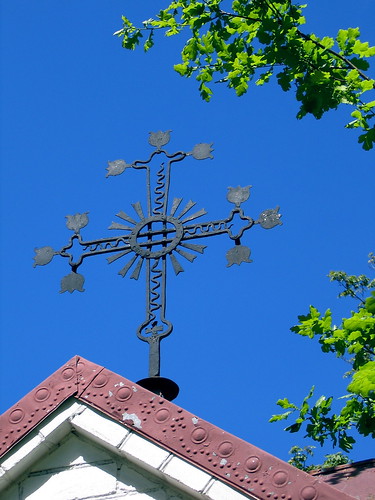
4. Lithuania was the last European country to be Christianised (around 1400), and Paganism is still going strong here. Even Christian crosses sometimes contain pagan elements (sun, flowers, grass snakes). |
|
CRIMEAN-TURKIC PEOPLES
5. Karaims – the Turkic-Crimean people who guarded the Grand Dukes – came to Lithuania in 1397 – and the Trakai town (at the castle) near Vilnius is now their world capital. |
JERUSALEM OF THE NORTH
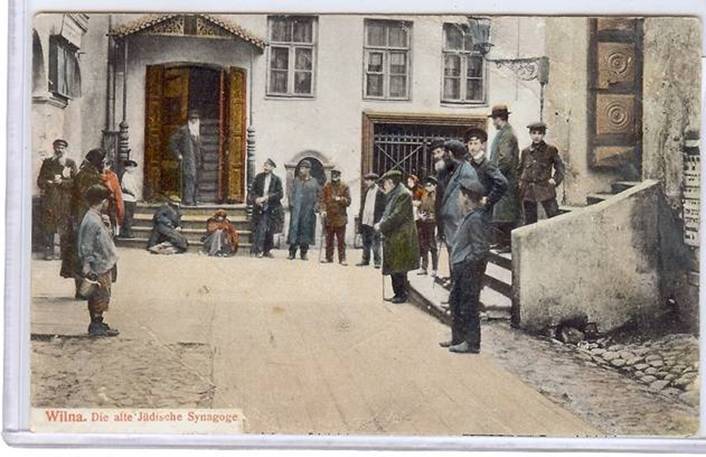
6. Napoleon Bonaparte named Vilnius Jerusalem of the North when he arrived here in 1812. Lithuanian Jews (the Litvaks) had an extraordinary life here for 600 years. |
|
EXCEPTIONAL ITALIAN INFLUENCE
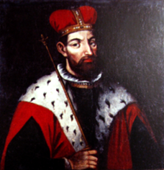
7. Vilnius is the world's most Italian city outside Italy... Lithuania and Italy share a very unique common history. |
LANGUAGE CLOSE TO SANSKRIT
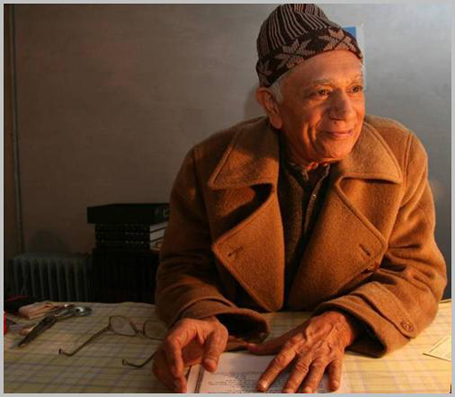
8. The languages Old Sanskrit and Lithuanian are having the same Indo-European roots. Incredible similarities between Indian and Lithuanian cultures since the early civilisations. |




|
NATIONAL REBIRTH 9. Lithuania declared independence in 1918, after 123 years of mostly Russian occupation. The interwar years were very successful and the country prospered immensely. Kaunas was the capital for the period 1919-1940, after Poland occupied Vilnius and southern Lithuania. |
300.000 DEPORTED TO SIBERIA
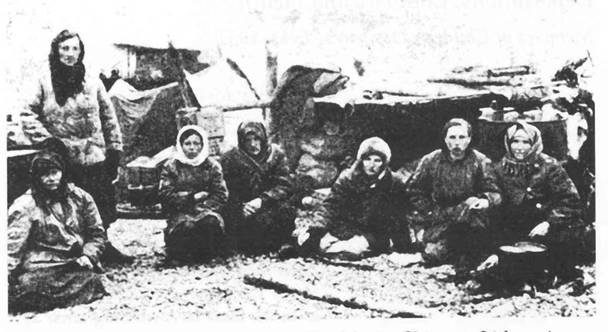
10. During 1940–1953, some 132.000 Lithuanians were deported to remote areas of the USSR. More than 70% were women and children. 30.000 died there due to climate, hard slave work and starvation. 50.000 were not able to return to Lithuania. During the same period, another 200.000 people were prisoned and 150.000 of them were sent to Siberian Gulags. |
|
HOLOCAUST KILLED 95%
11. The Holocaust in Nazi-occupied Lithuania resulted in the near total destruction of Lithuania's Jewish population. Out of more than 200.000, around 95% were murdered during WWII, the most tragic, worst example of Holocaust in the whole world.
|
PARTISAN WAR 1944-1953
12. 22.000 Lithuanian 'forest brothers' and 70.000 Soviet soldiers were killed in modern Europe's longest and bloodiest guerrilla war, after the Balts withdrew into the woods to organize their powerful armed partisan resistance when the Soviet Union re-occupied the Baltic States in 1944. |
|
SOVIET'S SILICON VALLEY
13. Post-war Lithuania became known as the Soviet Silicon Valley, and also today this country enjoys a very strong research and development sector. Lithuanian world-class specialists cooperate with NASA, NATO, Volvo, Saab, Philips, and many others in the fields of biotechnology, biochemistry, laser optics, chemistry, physics, etc. |
SINGING REVOLUTION
14. The Singing Revolution – that between 1987 and 1991 led to the restoration of the independence of Estonia, Latvia and Lithuania, culminating with the Soviet attack in January 1991 and the Union's fall later same year. In august 1989, two million people joined hands to form a human chain spanning over 600 km (370 mi) across the three Baltic States. |
|
50% LIVE ABROAD
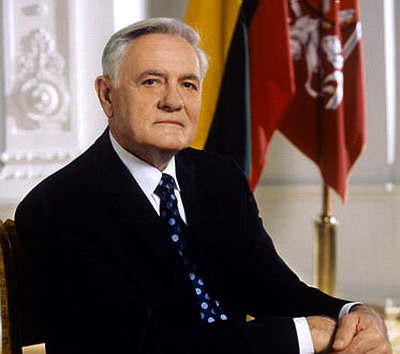
15. Former President Valdas Adamkus was one among the tens of thousands fleeing Lithuania at the end of WWII. Chicago is counted as Lithuania's 2nd largest city, and it is estimated that around one million Lithuanians live in the U.S. A new wave of emigration started in 1991, and one expects that half of all Lithuanians now live outside their home land. |
LITVAKS IN THE WORLD
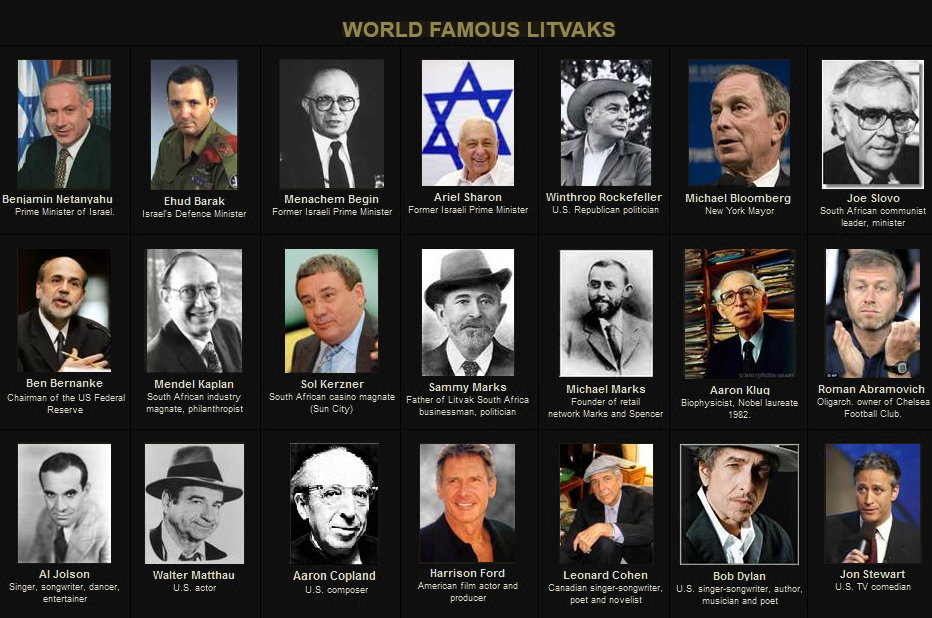
16. During the 19th and 20th century, hordes of Lithuanian Jews emigrated to the U.S. and South Africa (90% of its 100.000 Jewish population are from Lithuania). Litvaks are today playing leading roles worldwide. |


VILNIUS CATCHES AND CHANGES YOUR SOUL!
Russian writer Daniil Granin
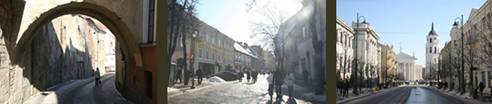
17. Paris has its Eiffel Tower. London its bridges. Rome has the Colosseum. Washington has the White House, and Berlin its Brandenburg Gate. Vilnius has its wonderful, mysterious Old Town with narrow, winding streets, courtyards, cellars, smells, music of all kinds, and the very atmosphere of 700 years development of a Mediterranean-like city far away from mainstream Europe...
- Bookmark :
- Digg
- del.icio.us
- Stumbleupon
- Redit it
- Posted by - (0) Comment
The Travel Magazine:
Spa, romance in the Uzupis and beer.
Vilnius makes for a great weekend away
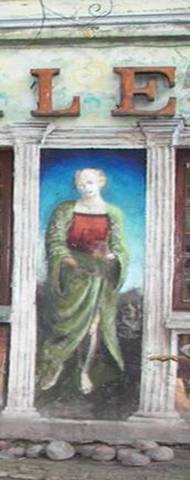
The UMI gallery in
UŽ!upio resPUBLIKA
Photo: Rasa Mekuskaite
If you believed the hype about amber you’d think it was the cure for all ills: heart problems, arthritis, depression, even the plague. I can’t vouch for any of those but I can say that having one’s face massaged with amber powder applied by amber balls is an absolutely delicious experience, like some rather superior form of tickling.
The ‘Gold of the North’ has been fished out of the Baltic Sea and traded for centuries – it was much in demand in Imperial Rome – and here today in Vilnius it is still big business.
There are countless shops, a museum devoted to the subject and a specialist spa which is where I’m about to sample a treatment.
I confess to being a bit of a fidget in some spas and when linen bags are tied round our bare feet and we’re asked to walk in different ways across a layer of small pieces of the fossilised resin – on our toes, on our heels, feet rolled outwards, feet rolled inwards – the familiar combination of mild irritation and self-consciousness begins to creep over me.
But once I’m lying on a bed and the therapist is gently rolling the amber spheres over my skin, pressing here and there, I succumb to the pleasure of the moment. I don’t know whether the ‘negative ions’ or whatever have done their bit: I can’t say I look any different by the end of the session but I certainly feel very contented and serene. And my purse is only lighter by about £15 which is certainly a lot cheaper than buying a piece of jewellery.
There are more elaborate treatments but the 20 minute one I’ve had is just right when time is limited.
We’re only in the Lithuanian capital for two days but because it’s relatively small and compact – certainly in the historic areas – you can fit a lot in. The old city is the major draw, with 1500 buildings one of the finest in Central and Eastern Europe, an UNESCO World Heritage Site of narrow streets, hidden courtyards and an extraordinary mix of architectural styles: classical, gothic, baroque.
Read more at: http://www.thetravelmagazine.net
USEFUL INFO
www.lithuaniatourism.co.uk
www.vilnius-tourism.lt
www.lokys.lt
www.vilniuscitytour.com
www.ambermassage.lt
www.kybynlar.lt
We stayed at www.novotel.com
We flew to Vilnius with Wizzair from Luton (they also fly to Vilnius from Doncaster/Sheffield). Prices from around £42 one way. Find cheap flights to Vilniusfrom other airports.
- Bookmark :
- Digg
- del.icio.us
- Stumbleupon
- Redit it
Undervalued Lithuanian stars…
- Posted by - (2) Comment
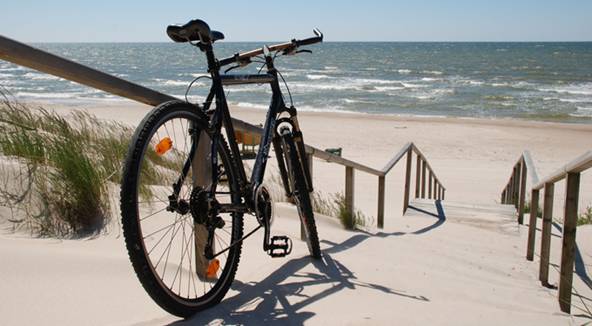
Palanga and its Vanagupe Hotel is among the author’s top Lithuanian favourites.
Photo: www.vanagupe.lt
Text: Thomas Danielsen, Baltic Travel Partner
After writing an article about the paradox of Lithuanian tourism, where I am not only negative, but also sarcastic and patronizing towards the people in charge of Lithuania tourism, I was thinking that it is time to try to write a positive article about Lithuania and tourism. The fact that I have called Lithuania home for 7 years and have worked with tourism (read: promoting Lithuania) for almost as long, there must be something good or great to show the international tourist. And believe me, it is! Vilnius especially, but also Lithuania in general, has a lot to offer in terms of being a tourism product. It is the seemingly total lack of strategy, knowledge and understanding of the concept of tourism and marketing of it that frustrates me (and I am not alone)!
It is possible to make a rather long list of what is "good" and what pose as an "opportunity" within Lithuania as a destination for the incoming tourist. However, one does need to bear in mind that there are many markets and many segments. So what might be of interest for one market/nationality might not be so appealing to another. I think that Vilnius has the most to offer in general, but again, depending on market, Klaipeda and Nida and the areas close by, due to this region’s historic links with Germany, might have more interest for the German market than Vilnius. But I would claim that the key products that Lithuania has on offer today, is what I will briefly state (I am not saying that these are the only ones - but from my point of view some of the more unique ones):
The capital of Lithuania, Vilnius, has to be in the first place. It has a beautiful UNESCO world heritage listed old town with many beautiful sights within itself. A simple stroll in the old town is a treat.
Uzupis is the most "undervalued" place in Vilnius
I think the bohemian area of Uzupis is the most "undervalued" place in Vilnius in terms of tourism and holds a great potential for tourism development in the future (think Notting Hill in London, Montmartre in Paris, Grünerløkka in Oslo, "The Valley" in Brisbane).
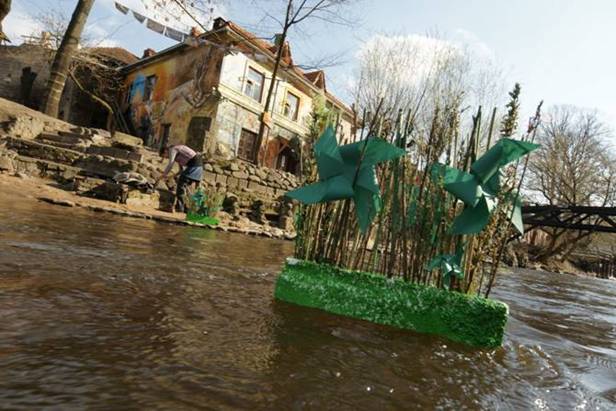
Užupis is an urban area of Vilnius characterized by dilapidated buildings, courtyards and side streets that haven‘t been renovated for decades. Photo: Andrius Ambramavičius
Talking about Vilnius for business tourists, there are pretty good facilities for conferences (though limited), but it is for incentive groups Vilnius really excels. The more popular activities which our agency sells is our very own "Vilnius Treasure Hunt", Kalashnikov shooting, Segway driving, ATV driving in a former military area, 4x4 driving, outdoor go-cart driving and more. The "KGB museum" (Genocide Victims Museum) and the TV tower are as well areas/sights we utilize.
Trakai Castle is a great place to visit
The Trakai Castle and its history from the Middle Ages and former capital of Lithuania is definitely a great place to visit (and the restaurant Round Table Club provides the most beautiful view from any restaurant in Lithuania!)..
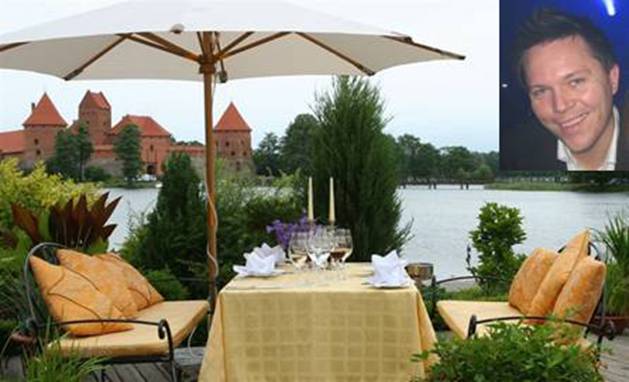
The author’s favourite view of the Trakai Castle, from the Round Table Club restaurant.
Nida, Klaipeda and Palanga are interesting areas especially when speaking about the German market and for the cruise market. The cruise ships sailing in the Baltic Sea towards Helsinki and St. Petersburg is a potential opportunity, however, it seems to be a long way to go (as Riga and Tallinn is way in front and has Klaipeda already lost that battle?).
I think that both Klaipeda and Palanga (Vanagupe Hotel in particular) are the most underrated towns for conferences! Future stars?
Druskininkai with its spas and leisure centres could become the leading star
Druskininkai with its spas and leisure centres could potentially turn into the leading star in Lithuanian tourism (and worth a case study in itself on long term planning and tourism and city development). Excellent spa, conference and leisure facilities presents Druskininkai with great potential in the near future. The biggest challenge though, is the distance from Vilnius and/or an international airport (especially talking about the international market).
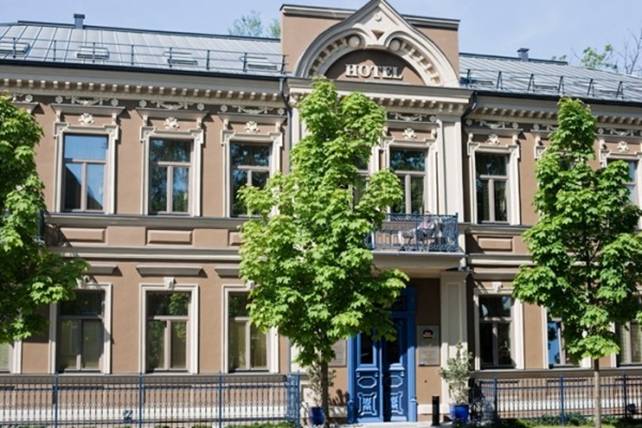
Best Western Hotel Central in Druskininkai.
Photo: http://centralhotel.eu/LT/Druskininkai
When I talk about Lithuanian tourism, I talk about it as a failure! It is however important to underline that it is not the product itself there is something wrong with. Far from it! It is the lack of management of the resources that is the problem! And if someone out there now cleverly wants to state that Lithuanian tourism is not a failure, that there are fast growth in both tourists visiting the country and flight connections to/from the 3 main airports in the country, that Vilnius get the highest rankings in ICCA for associating meetings in the Baltics, that we now have year on year growth of visitors every month, I will still continue to claim that Lithuania tourism is a failure! Why? Because it fails to be all it can be!
Thomas Danielsen
Partner / Project Manager
Baltic Travel Partner OÜ, Tallinn
Baltic Travel Partner SIA, Riga
Baltic Travel Partner UAB, Vilnius
- Bookmark :
- Digg
- del.icio.us
- Stumbleupon
- Redit it
- Posted by - (0) Comment
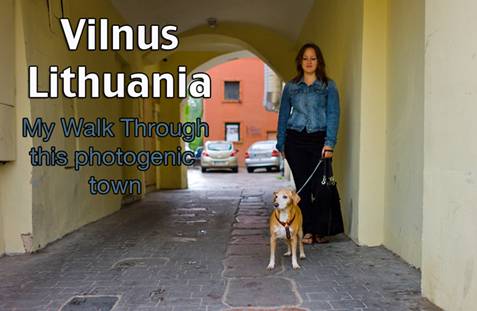
Vilnius Lithuania – My walk through this photogenic town
By Steve Huff
So here I am today..another day of serious photo opportunities! I am in Vilnius Lithuania for the next stop on the Seal European summer tour and yesterday I walked around quite a bit snapping shots of this lovely charming town. Had my Fuji X100 (new firmware rumored to be coming within the week) and Leica M9 with me and both gave me wonderful results, can’t complain about either of these lovely cameras.
I started the day early morning as the weather was brisk, cool, and sunny. In other words, PERFECT! Back home in Phoenix it is 110 and sunny so I am really enjoying this weather while I can get it! As I looked out of my hotel window I thought “Perfect Photo Weather”!
BTW, I am also staying at a beautiful hotel here in town and had to snap a couple as I left my room. Love the old world charm of this place.
You’ll find the complete story and see the rest of Steve Huff’s photos at:
http://www.stevehuffphoto.com/2011/06/21/vilnius-lithuania-my-walk-through-this-photogenic-town/
- Bookmark :
- Digg
- del.icio.us
- Stumbleupon
- Redit it
- Posted by - (0) Comment
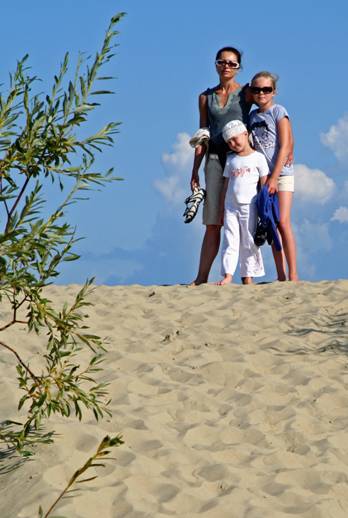
On top of the Nida sand dunes.
Visit Lithuania's coast if you want an “authentic” kind of vacation this year
Lithuania offers the Baltic Sea’s longest, whitest and softest beaches. Most of the country's coastline, from Kaliningrad until Latvia, consist of sandy beaches as far as the eye can see. Furthest to the south you will find Europe’s highest sand dunes, next to the picturesque old fishing village of Nida. In the midst of the coastline the bustling port city of Klaipeda is located, and a bit further north you are very much welcomed to the tourist towns of Palanga and Šventoji.
What makes the Lithuanian coastal line so special, is that here you can still find the kind of genuine, authentic atmosphere and tourist resorts that you may remember from your childhood also in other parts of Europe.
Beautiful nature, good beer, and fantastic smoked fish are just three of the ingredients that will make you remember “the good old times” as soon as you arrive….
Palanga is the most important resort of Lithuania. Some of you may have childhood memories from this unique and beautiful tourist village right on the Baltic Sea lazy waves and miles of attractive beaches ...
Palanga lives - throughout the night - during three hectic summer months. And if you're lucky, it may well be that you will experience a live concert with Stasys Povilaitis, Lithuania’s famous ballad singer…
- Bookmark :
- Digg
- del.icio.us
- Stumbleupon
- Redit it
Direct flights to Palanga
- Posted by - (0) Comment
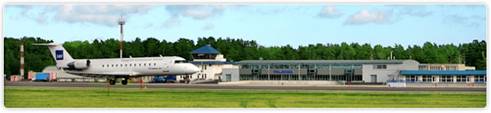
Palanga International Airport is a small regional airport located at the Baltic Sea, only 10 minutes away from the Palanga tourism resort and 30 minutes from the port city Klaipeda.
There are regular direct flights to/from Palanga Airport operated by the airlines airBaltic, Norwegian Air Shuttle, RusLine and SAS (Scandinavian Airlines).
Palanga has direct flights from Copenhagen (Denmark), Moscow (Russia), Oslo (Norway) and Riga (Latvia), from where it is easy to reach a lot of other cities in Europe and the world!
Check the airports web page for more information about flights etc:
http://www.palanga-airport.lt/en/
- Bookmark :
- Digg
- del.icio.us
- Stumbleupon
- Redit it
Ferries to Klaipeda
- Posted by - (1) Comment
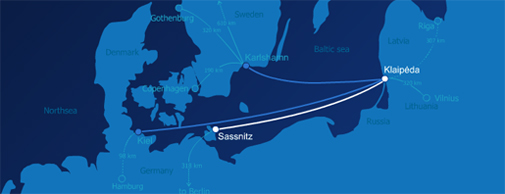
DFDS Seaways operate three passenger ferry routes on the Baltic Sea to/from the Lithuanian port city of Klaipeda.
1) The Klaipeda - Karlshamn ferry service connects Lithuania and Sweden with daily departures in each direction.
2) The Klaipeda - Kiel ferry service offers six departures in each direction per week connecting Lithuania with North-Western Germany & Southern Denmark.
3) The Klaipeda - Sassnitz service connects Lithuania to the East German island of Rügen from where there is quick access to the extensive German motorway network.
Check the DFDS web page for more information:
http://www.dfdslisco.lt/bookonline/?ln=en
- Bookmark :
- Digg
- del.icio.us
- Stumbleupon
- Redit it

OPINIONS
Have your say. Send to:
editor@VilNews.com
Ph. D., Chicago
A wave of unity sweeps the international Lithuanian community on March 11th every year as Lithuanians celebrated the anniversary of the Lithuanian Parliament's declaration of independence from the Soviet Union in 1990. However, the sense of national unity engendered by the celebration could be short-lived.
Human beings have a strong tendency to overgeneralize and succumb to stereotypical us-them distinctions that can shatter even the strongest bonds. We need only search the internet to find examples of divisive thinking at work:
- "Those who fled Lithuania during World II were cowards -- and now they come back, flaunt their wealth, and tell us 'true Lithuanians' how to live."
- "Lithuanians who work abroad have abandoned their homeland and should be deprived of their Lithuanian citizenship."

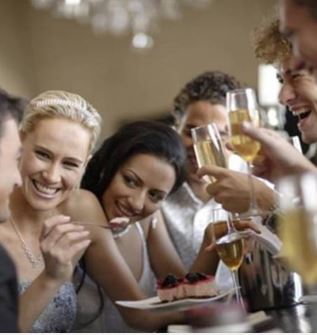
In Lithuania Christmas Eve is a family event and the New Year's Eve a great party with friends!
Lithuanian say "Kaip sutiksi naujus metus, taip juos ir praleisi" (the way you'll meet the new year is the way you will spend it). So everyone is trying to spend New Year's Eve with friend and have as much fun as possible.
Lithuanian New Year's traditions are very similar to those in other countries, and actually were similar since many years ago. Also, the traditional Lithuanian New Years Eve party was very similar to other big celebrations throughout the year.
The New Year's Eve table is quite similar to the Christmas Eve table, but without straws under the tablecloth, and now including meat dishes. A tradition that definitely hasn't changes is that everybody is trying not to fell asleep before midnight. It was said that if you oversleep the midnight point you will be lazy all the upcoming year. People were also trying to get up early on the first day of the new year, because waking up late also meant a very lazy and unfortunate year.
During the New Year celebration people were dancing, singing, playing games and doing magic to guess the future. People didn't drink much of alcohol, especially was that the case for women.
Here are some advices from elders:
- During the New Year, be very nice and listen to relatives - what you are during New Year Eve, you will be throughout the year.
- During to the New Year Eve, try not to fall, because if this happens, next year you will be unhappy.
- If in the start of the New Year, the first news are good - then the year will be successful. If not - the year will be problematic.
* If New Year's night is cold and starry - look forward to a good summer!
* If the during New Year Eve trees are covered with frost - then it will be a good year. If it is wet weather on New Year's Eve, one can expect a year where many will die and dangerous epidemics occur.
* If the first day of the new year is snowy - the upcoming year will see many young people die. If the night is snowy - mostly old people will die.
* If the New Year time is cold - then Easter will be warm.
* If during New Year there are a lot of birds in your homestead - then all year around there will be many guests and the year will be fun.
Christmas greetings
from Vilnius
and epic battle for the
future
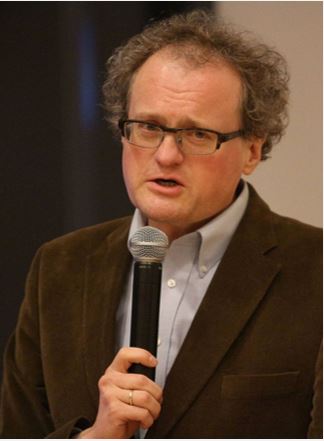
Philosopher, political theorist, historian of
ideas, social analyst, and political
commentator
Ukraine was and continues to be perceived by the EU political class as a sort of grey zone with its immense potential and possibilities for the future, yet deeply embedded and trapped in No Man's Land with all of its troubled past, post-Soviet traumas, ambiguities, insecurities, corruption, social divisions, and despair. Why worry for what has yet to emerge as a new actor of world history in terms of nation-building, European identity, and deeper commitments to transparency and free market economy?
Right? Wrong. No matter how troubled Ukraine's economic and political reality could be, the country has already passed the point of no return. Even if Vladimir Putin retains his leverage of power to blackmail Ukraine and the West in terms of Ukraine's zero chances to accede to NATO due to the problems of territorial integrity, occupation and annexation of Crimea, and mayhem or a frozen conflict in the Donbas region, Ukraine will never return to Russia's zone of influence. It could be deprived of the chances to join NATO or the EU in the coming years or decades, yet there are no forces on earth to make present Ukraine part of the Eurasia project fostered by Putin.
want to learn about the
new, scary propaganda
war between Russia,
The West and the
Baltic States!
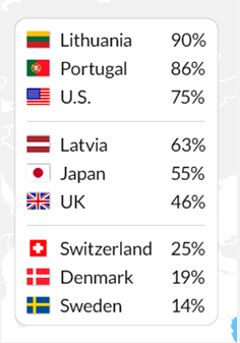
believe their government
is corrupt
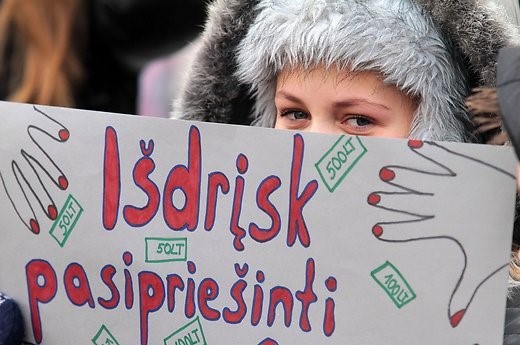
students say no to
bribes for doctors
During Soviet times, government was administered for the people in control, not for the local population, court decisions were decreed, they were not the administration of justice, and academia was the domain of ideologues. 25 years of freedom and openness should have put those bad experiences behind Lithuania, but that is not so.
Today, it is a matter of expectation that court pronouncements will be governed by ideological dictates. Few, if any Lithuanians expect real justice to be effected. For foreign companies, doing business in Lithuania is almost impossible in a situation where business people do not expect rule of law, so, surely Government would be a refuge of competence?
Lithuanian Government has not emerged from Soviet styles. In an attempt to devolve power, Lithuania has created a myriad of fiefdoms of power, each speaking in the name of the Government, each its own centralized power base of ideology.
Chepstow, Wales
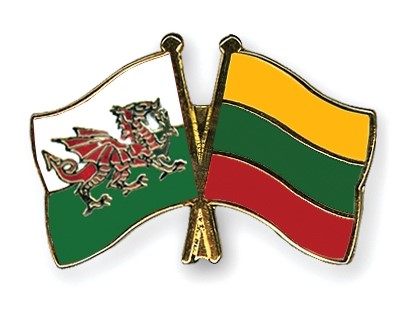
Doesn't that sound suspiciously like Lithuania? Ah, but I didn't mention the mountains of Snowdonia, which would give the game away.
I'm talking about Wales, that part of the UK which Lithuanians used to call "Valija", but later named "Velsas" (why?). Wales, the nation which has welcomed two Lithuanian heads of state to its shores - firstly Professor Vytautas Landsbergis, who has paid several visits and, more recently, President Dalia Grybauskaitė who attended the 2014 NATO summit which was held in Newport, South Wales.
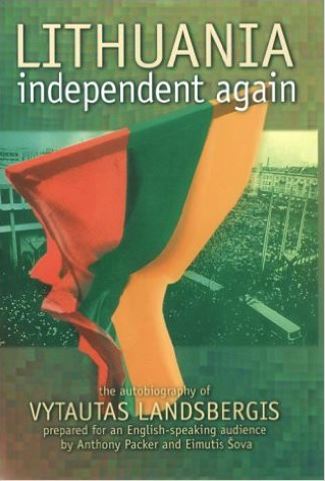
ENGLISH VERSION OF THE
AUTOBIOGRAPHY OF VYTAUTAS LANDSBERGIS.
Although Lithuanian activities have thinned over the decades as that postwar generation died out, the Lithuanian Martyrs' parish hall is crowded with many, many hundreds of visitors who come to the Lithuanian cemetery for All Souls' Day. Similarly, the Franciscan parish has standing room only for Christmas Eve mass.
Although I am firmly embedded in the literary culture of Canada, my themes are usually Lithuanian, and I'll be in Kaunas and Vilnius in mid-November 2015 to give talks about the Lithuanian translations of my novels and short stories, which I write in English.
If you have the Lithuanian language, come by to one of the talks listed in the links below. And if you don't, you can read more about my work at
www.anatanassileika.com
http://www.vdu.lt/lt/rasytojas-antanas-sileika-pristatys-savo-kuryba/ https://leu.lt/lt/lf/lf_naujienos/kvieciame-i-rasytojo-59hc.html
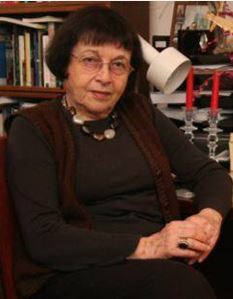
"My love and best wishes to all. As long as VilNews exists, there is hope for the future,"" she writes.
Irena Veisaite means very much for our publication, and we do hereby thank her for the support and wise commitment she always shows.
You can read our interview with her
Facing a new reality
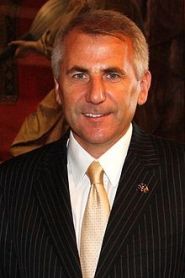
Dear readers of VilNews,
For a number of years, the EU and Russia had assumed the existence of a strategic partnership, based on the convergence of values, economic integration and increasingly open markets and a modernisation agenda for society.
Our agenda was positive and ambitious. We looked at Russia as a country ready to converge with "European values", a country likely to embrace both the basic principles of democratic government and a liberal concept of the world order. It was believed this would bring our relations to a new level, covering the whole spectrum of the EU's strategic relationship with Russia.
The likelihood of Putin
invading Lithuania
.jpg "lithuania today")
Founding Director at Summer Literary Seminars
Are all Lithuanian energy
problems now resolved?
Lithuania as a country does not have significant energy resources. Energy consuming infrastructure after WWII was small and totally supported by energy imports from Russia.
First nuclear reactor begins power generation at Ignalina in 1983, the second reactor in 1987. Iganlina generates enough electricity to cover Lithuania's needs and about 50%.for export. As, prerequisite for membership in EU, Ignalina ceases all nuclear power generation in 2009
The Klaipėda Sea terminal begins Russia's oil export operations in 1959 and imports in 1994.
Mazeikiu Nafta (current ORLEAN Lietuva) begins operation of oil refinery in 1980.
Have Lithuanian ties across
the Baltic Sea become
stronger in recent years?
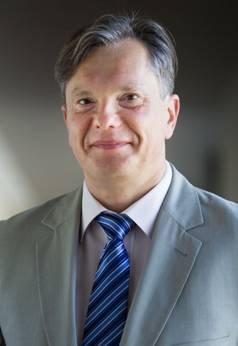
The two decades that have passed since regaining Lithuania's independence can be described as a "building boom". From the wreckage of a captive Soviet republic, a generation of Lithuanians have built a modern European state, and are now helping construct a Nordic-Baltic community replete with institutions intended to promote political coordination and foster a trans-Baltic regional identity. Indeed, a "Nordic-Baltic community" - I will explain later in my text the meaning of this catch-phrase.
Since the restoration of Lithuania's independence 25 years ago, we have continuously felt a strong support from Nordic countries. Nordics in particular were among the countries supporting Lithuania's and Baltic States' striving towards independence. Take example of Iceland, country which recognized Lithuania in February of 1991, well in advance of other countries. Yet another example - Swedish Ambassador was the first ambassador accredited to Lithuania in 1991. The other countries followed suit. When we restored our statehood, Nordic Countries became champions in promoting Baltic integration into Euro-Atlantic institutions. To large degree thanks Nordic Countries, massive transformations occurred in Lithuania since then, Lithuania became fully-fledged member of the EU and NATO, and we joined the Eurozone on 1 January 2015.
Have you heard about the
South African "Pencil Test"?
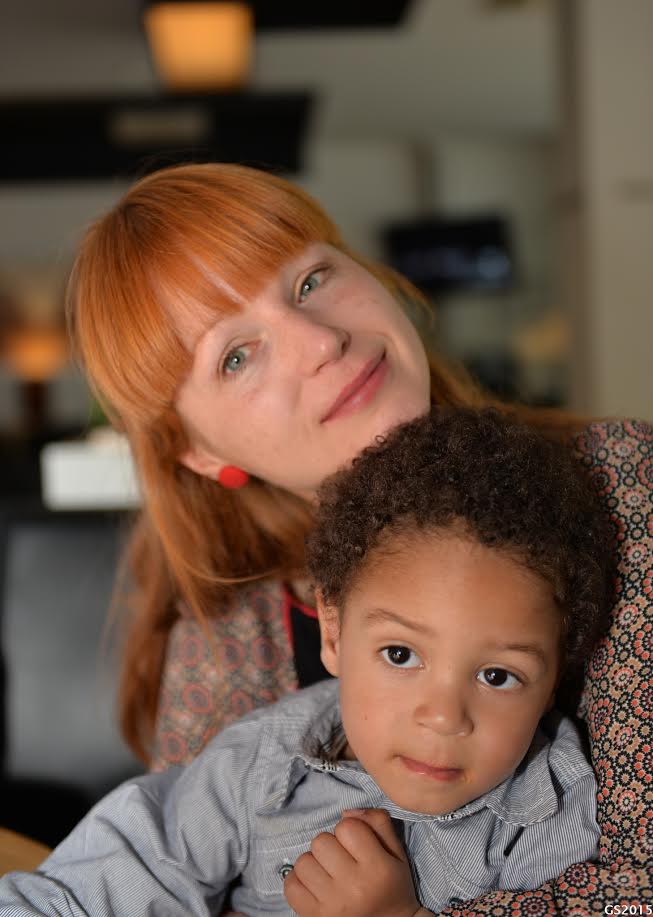
But that is exactly what happened to me when I came back from South Africa. I will tell you how.
VilNews e-magazine is published in Vilnius, Lithuania. Editor-in-Chief: Mr. Aage Myhre. Inquires to the editors: editor@VilNews.com.
Code of Ethics: See Section 2 – about VilNews. VilNews is not responsible for content on external links/web pages.
HOW TO ADVERTISE IN VILNEWS.
All content is copyrighted © 2011. UAB ‘VilNews’.