
THE VOICE OF INTERNATIONAL LITHUANIA

|
VilNews has its own Google archive! Type a word in the above search box to find any article.
You can also follow us on Facebook. We have two different pages. Click to open and join.
 Click on the buttons to open and read each of VilNews' 18 sub-sections Click on the buttons to open and read each of VilNews' 18 sub-sections  |

|


Archive for January, 2011
Holocaust in Lithuania
- Posted by - (14) Comment

Jews being marched from their ghetto in the centre of Vilnius (today’s Old Town) to the Paneriai (Ponary) forest outside the city for execution, 1942/1943. Paneriai is an area of wooded hills, where in 1941-1944 60,000 to 70,000 Jews from Vilnius were executed. - Drawing by Fajwel Segal
What happened to the Jews in Lithuania during World War II is a matter of grim record. Of the 250.000 Jews in 1939, only between 12.500 and 17.500 survived; of those, only about 200 remain today.
It has been estimated that of the 265.000 Jews living in Lithuania in June 1941, 254.000 or 95% were murdered during the German occupation. No other Jewish community in Nazi-occupied Europe was so comprehensively destroyed.
The Red Army occupied Vilnius on 19 September 1939. Lithuania and the Soviet Union signed a treaty of mutual aid, in accordance with which Vilnius and the Vilnius region were returned to Lithuania. In 1940, Vilnius became the capital of Soviet Lithuania.
Vilnius remained under Soviet control until 26 June 1941, when the city fell to the invading German Army (Wehrmacht). On 8 July 1941 an order was issued stating that all Jews must wear a special patch on their back; subsequently they were ordered to wear the patch on their chest. In addition Jews were forbidden to walk along the main streets of the city, and shops were ordered to sell them food in limited amounts. Jewish people were fired from their jobs, deprived of the means of personal transportation and radios, forbidden to use public transport, and prohibited from public places. Jews were arrested on the streets, at their work places, and in their houses.

Paneriai forest near Vilnius.
Jewish victims of execution before the mass burial, 1943.
The Vilnius Ghettos
The first shootings of Jews in Vilnius occurred on 4 July 1941 (or even earlier), after the military administration was replaced by a civil administration. On the same date the Germans ordered the establishment of a Judenrat (Jewish Council) which was intended to control the Jewish ghetto police and various departments of: work, health service, social welfare, food, housing, etc. Of special importance was the department of work.
The mass extermination of the Jewish people in Vilnius began at the moment when district commissar Hans Christian Hingst arrived, together with the "expert on Jewish questions", Franz Murer.
It has been estimated that between one-half and two-thirds of all Lithuanian Jews were killed by local militia, although it should be said that there were also some Lithuanians as well as Germans who assisted Jews. Even if few in number, their courage serves to highlight the barbaric acts of their compatriots.
Two ghettos were installed, separated by Niemiecka Street. This street was outside the limits of both ghettos and served as a barrier between them. A wooden fence enclosed each ghetto, and the entrances of houses facing the outside were blocked off. Each ghetto had only one gate for exit and entry, placed at opposite ends of the enclosed area, so that it would be impossible for those entering and leaving to cross paths.
29.000 people were incarcerated in Ghetto 1 and 9.000-11.000 in Ghetto 2. The living conditions were those common to the ghettos of countries under Nazi occupation - dilapidated housing, lack of sanitation, unbearable congestion. A doctor calculated that in the 72 buildings, which comprised Ghetto 1, the average living space was 1.5-2 square meters. The killing never stopped. Even on the day of the setting up of the ghettos, a day on which it was intended to lull the Jews into some sense of security, killings had taken place.
1941-43 was a period of relative quiet in the ghetto. Vilnius became a "working ghetto". The Judenrat’s policy of "rescue through work" was based on the assumption that if the ghetto would be productive, it would be worthwhile for the Germans to keep it going, for economic reasons. In this it shared a belief common to the Judenrat of many other ghettos. All sought, in their different ways, to preserve the precarious balance between work and death.
Few Jews wanted to be members of the Jewish councils. The Judenräte were instruments by which the Germans held control over the Jews. Since the council's functionaries were Jewish, the members felt as if they were betraying their co-religionists. The Vilnius Judenrat was initially established with extreme difficulty, as those who were selected as members by Rabbi Simeon Rosowski refused the position. Thus, the decision was made at a meeting in the prayer house, that if someone was elected, they were obligated to accept.
By the summer of 1943, the final death throes of the Vilnius Ghetto had begun in accordance with Himmler's order to liquidate the ghettos of the Reichskommissariat Ostland. All provincial work camps of the Vilnius Ghetto (in Baltoji Voke, Beznodys, and Kena) were dissolved, and several hundreds of their prisoners killed by the German police.
Under the supervision of Bruno Kittel, head of the Jewish section of the Gestapo from June 1943, the Vilnius Ghetto was liquidated on 23 and 24 September 1943.
By 25 September 1943, only 2.000 Jews officially remained in Vilnius, in four small labour camps. More than 1.000 were in hiding inside the ghetto. Those in hiding were gradually hunted down and executed.
Between 2.000 and 3.000 of the original 57.000 Jewish inhabitants of Vilnius survived, either in hiding, with the partisans, or in camps in Germany and Estonia, a mortality rate of approximately 95% - almost exactly corresponding with that of Lithuania as a whole. The 2001 census indicated that the population of Vilnius was 542.287 of whom 0.5% or about 2.700 were Jews.
In post-war trials of the major war criminals of Vilnius, Franz Murer, the "expert on Jewish affairs" in the city from 1941 to 1943, also called by survivors "The Butcher of Vilnius" was arrested in 1947 and extradited to the Soviet Union. There he was sentenced to 25 years hard labour. In 1955 he was released and returned to his native Austria, where he became a farmer. He was eventually traced by Simon Wiesenthal. A further trial took place in Austria in 1967, at the conclusion of which Murer was acquitted. Soviet courts tried some Lithuanians. Most perpetrators were never prosecuted.

Map of the two Vilnius‘ ghetto districts.
The Kaunas Ghettos

Footbridge connecting the large ghetto and the small ghetto.
Kaunas (Kovno) ghetto, Lithuania, 1941.
Between 1920 and 1939, Kaunas (Kovno) was Lithuania's capital and largest city. It had a Jewish population of 35.000-40.000, about one-fourth of the city's total population. Jews were concentrated in the city's commercial, artisan, and professional sectors.
Kaunas was also a centre of Jewish learning. The yeshiva in Slobodka, an impoverished district of the city, was one of Europe's most prestigious institutions of higher Jewish learning, with a rich and varied Jewish culture. The city had almost 100 Jewish organizations, 40 synagogues, many Yiddish schools, 4 Hebrew high schools, a Jewish hospital, and scores of Jewish-owned businesses. It was also an important Zionist center.
Kaunas‘ Jewish life was disrupted when the Soviet Union occupied Lithuania in June 1940. The occupation was accompanied by arrests, confiscations, and the elimination of all free institutions. Jewish communal organizations disappeared almost overnight. Soviet authorities confiscated the property of many Jews. Meanwhile, the Lithuanian Activist Front, founded by Lithuanian nationalist emigres in Berlin, clandestinely disseminated antisemitic literature in Lithuania. Among other themes, the literature blamed Jews for the Soviet occupation. Hundreds of Jews were exiled to Siberia.
Following Germany's invasion of the Soviet Union on 22 June 22 1941, Soviet forces fled Kaunas. Immediately before and following the German occupation of the city on June 24, anti-Communist, pro-German Lithuanian mobs began to attack Jews (whom they unfairly blamed for Soviet repression), especially along Jurbarko and Krisciukaicio streets. These right-wing vigilantes murdered hundreds of Jews and took dozens more Jews to the Lietukis Garage, in the city center, and killed them there.
In early July 1941, German Einsatzgruppe (mobile killing unit) detachments and their Lithuanian auxiliaries began systematic massacres of Jews in several of the forts around Kovno. These forts had been constructed by the Russian tsars in the nineteenth century for the defense of the city. Einsatzgruppe detachments and Lithuanian auxiliaries shot thousands of Jewish men, women, and children, primarily in the Ninth Fort, but also in the Fourth and Seventh forts. Within six months of the German occupation of the city, the Germans and their Lithuanian collaborators had murdered half of all Jews in Kaunas.
The Nazis established a civilian administration under SA Major General Hans Kramer. Between July and 15 August 1941, the Germans concentrated the remaining Jews, some 29.000 people, in a ghetto established in Slobodka. It was an area of small primitive houses and no running water. The ghetto had two parts, called the "small" and "large" ghetto, separated by Paneriu Street. In the autumn of 1943, the SS assumed control of the ghetto and converted it into the Kauen concentration camp. On 8 July 1944, the Germans evacuated the camp, deporting most of the remaining Jews to the Dachau concentration camp in Germany or to the Stutthof camp, near Danzig, on the Baltic coast. Three weeks before the Soviet army arrived in Kaunas, the Germans razed the ghetto to the ground with grenades and dynamite. As many as 2.000 people burned to death or were shot while trying to escape.

Kaunas (Kovno), Lithuania. The completely destroyed Ghetto, 1944.
In July 1944, the Germans blew up and burned down this Ghetto
in search of Jews in hiding there.
- Bookmark :
- Digg
- del.icio.us
- Stumbleupon
- Redit it

- Posted by - (1) Comment
Emmanuel Zingeris:
Vilnius was like a Mediterranean city!
“Vilnius was like a Mediterranean city. Lithuania before Holocaust was a society of love, full of colourful life and warm interaction between people. Imagine that here, in the street we are sitting, the windows would now be open, the mothers would be shouting to their children, and the street would be filled with joyful people discussing, singing, reading and mingling in a happy crowd of friends, colleagues and visitors.”

Stikliai Hotel’s outdoor café at Gaono Street was the venue for my talk with Emmanuel Zingeris a late September afternoon when the temperature still could remind a lively town on a more southern latitude. The café, however, is located only a few metres away from one of the infamous gates that during the war-time fenced in a whole population of Jews in Vilnius Old Town, reminding us about the incomprehensible tragedy this city was undergoing when 95% of its 80.000 Jewish inhabitants were murdered. No other Jewish community in Nazi-occupied Europe was so comprehensively destroyed.
Emmanuel Zingeris (53) was born in Kaunas in a family of Lithuanian Jewish survivors. His mother, Polina Tatarski, became a prisoner of a Kaunas ghetto in the year she ended Lithuanian secondary school. From the ghetto she was deported to a German concentration camp in Stutthof. After the war she was engaged as a physician. His father, Mykolas Zingeris, fought against Nazis in Lithuanian division of the Soviet army and was a teacher of English after the war.
Zingeris began his life-long efforts for the Lithuanian Jewish community already as a young student, in 1983, when he attempted to open a show of Lithuanian Jewish cultural heritage at Vilnius University, where he was studying Lithuanian literature. He also became a leading politician in the Conservative party with Professor Vytautas Landsbergis, and has later been elected to the Council of Europe Parliamentary Assembly on looted Jewish cultural assets. He has been Chairman of the international Commission for the Evaluation of Crimes Committed by the Nazi and Soviet Occupation Regimes of Lithuania, he is a member of the Lithuanian delegation to the Council of Europe Parliamentary Assembly, a member of the Committee on Culture and Education of the Assembly, and has been President of the Jewish Community of Lithuania and Director of the Tolerance Centre in Vilnius.
This is the brief background of the man who for twenty years now has been in the forefront for the Jews in Lithuania, and my first question to him was about who these Jews are.

Rotuses Square, Vilnius, 1905.
These were my questions to Mr. Zingeris, and, even more important, his answers:
You are today one of the few Litvak Jews in Lithuania, whereas the majority of Jews here now are of Russian origin. Can you tell me more about the Litvaks, the people who constituted such a great part of Lithuania’s population and history for hundreds of years?
Litvaks are the descendents of the big migration group of Jews (Ashkenazim) that left from Western and Central Europe, mostly Germany, starting in the 14th century. They were renowned for their strong religious feelings, intellectual rationalism, intellectual approach, learning and spiritual matters as well as to day-to-day affairs. All of that distinguished them from the others and they became known as Litvaks. Litvaks are all Jews who resided in the territories of the former Grand Duchy of Lithuania. In our times, due to the emigration of Lithuanian Jews and their high status, Litvaks and Litvak traditions have spread all over the world, in particular to Israel, South Africa and the United States.
The Litvaks came to the Grand Duchy from Western Europe due to pursuit reasons, but what was it that made Lithuania such a unique place and important cultural centre, carrying a weight far greater than its relative size in Jewish history?
Here the Litvaks found an umbrella for flourishing. Lithuania was cold by temperature but warm in its welcoming atmosphere for the Litvaks. The Grand Duchy represented the safe haven these people hadn’t seen earlier on their wanderings from the German areas, and before that from the Mediterranean shores of the Roman Empire. They brought their Southern European features with them here, which is why Vilnius became such an exotic city over hundreds of years. At the same time they were people with deep religious belief who for centuries had been developing very strong traditions of culture and intellectual activity, and in Lithuania they found the freedom that gave them the opportunity to make these qualities flourish. Lithuania was truly a multicultural paradise where the special mixture of Mediterranean and Nordic features brought really fantastic results – until it all was so brutally terminated during the years of 1940-44.
Do you see any possibility for the Litvak culture to start growing again?
No. There is no chance. There were simply killed too many for that. The parent stock of our people is destroyed forever. Holocaust made an effective end to the Litvak people and its amazing culture.
Have you ever reflected on why the Nazis were so determined to kill the Jews?
I believe it was because the Jews always were in opposition to the Nazis pathetic constructions of a heroic society. Jews represented the best brains in Germany as well as in many other countries, often thinkers ahead of their own time, and the Nazi rulers felt threatened in their attempts to recreate neo-romantic ideologies, like in the Nibelung (Nazi Germany's main defence fortification was called the "Siegfried Line," after the mythic hero in Wagner's Ring of the Nibelung). The Jews were sitting in their cafés laughing at the rulers, and as Hitler said in his famous speech from the 30th of January 1939, that “You are still laughing, but not much longer”.
(What Hitler said in this speech, was: ”During my struggle for power, the Jews primarily received with laughter my prophecies that I would someday assume the leadership of the state and thereby of the entire nation and then, among many other things, achieve a solution of the Jewish problem. I suppose that meanwhile the laughter of Jewry in Germany that resounded then is probably already choking in their throats”).
Already as a young student at the Vilnius University you became active in the Lithuanian resistance fight against the Soviet rulers?
Yes, and I can tell you that it was not an easy task, of several reasons. I was called by my relatives in Israel and South Africa and asked why I tried to help Lithuania when it in this country had been such big groups that had collaborated with the Nazis, helping them in killing the Jews, and it was of course also not easy to convince the West that the time had come for a free Lithuania at the same time as the Soviets used all possible tricks in order to stop our “revolutionary activities”. Let me add that all my people, and also all official Jewish leaders, became very pro Lithuania’s fight for freedom when they understood the importance this country’s fight had for the resistance against the Soviets.
You were fighting against the Soviets side-by-side with professor Vytautas Landsbergis. How would you define him?
I have great admiration both for the person and for his courage. I was with him to Moscow several times, and I saw him moment after moment stand in front of the huge groups of generals and politicians explaining and fighting for Lithuania’s freedom, and in this aspect I am disappointed to see that the people of Lithuania has not shown this man the respect he deserves, trying to understand the importance of seeing his actions by then in a historical perspective.
How would you define today’s relationship between Jews and the native Lithuanians?
Emotions are still not the best. Among some groups of Lithuanians there are still suspicions that the Jews will be coming back to take over their pre-war properties, and Jews are sad to see that there seems to be little grief among Lithuanians about the losses of their former neighbours. But I would also say that I think the antagonism between our peoples now gradually is becoming smaller.
You have the latest years become a politician with the complete world as your arena. How do you see Lithuania in such wider perspective?
The biggest problem for the Lithuanians of today is that they don’t any longer believe in idealism. Politics as well as other spheres in Lithuania are ruled by groups who base their actions on tactical games instead of creating common, visionary strategies for the best of the country. The word idealism is considered more negative than positive in today’s Lithuania, and even young people believe that only losers can be idealists.
The twilight of the Indian-summer evening in Vilnius has embraced us and the Gaono Street Café while we have been talking. Small groups of tourists and individuals are passing us in calmness. But the liveliness of the Jewish quarter this once was, is gone – forever.

The good old days in the Jewish quarter of Vilnius Old Town.
- Bookmark :
- Digg
- del.icio.us
- Stumbleupon
- Redit it

|
|
|
Zhydu (Jewish) street |

A widespread saying had it - if one wants to do business, one has to go to Lodz, but if one wants to gain wisdom - one goes to Vilnius.
The first document mentioning Jews in Vilnius dates back to 1567. At that time Jews did not have the right to purchase houses in the city, they could only rent them. Jews gained the right to own buildings in Vilnius only in 1593. Before that, they were allowed to reside in the lands which did not belong to the magistrate, so called jurisdiks. At the end of 16th - beginning of 17th centuries they were allowed to inhabit Zhydų (Jewish), Šv. Mykolo (Saint Michael's), and Mėsinių (Butchers') streets. They could also live on Vokiečių (German) street, but the windows of their apartments could not face the street.
|
|
|
Entrance to the Jewish quarter |

The Jewish quarter was formed in the Old Town. According to 1784 census there were around 5,000 Jews in Vilnius at that time; according to 1897 census Jews constituted 38.8% of town's population (64,000 Jews). After WWI their number somewhat decreased, and in 1923 only 55,000 Jews lived here (33.3% of the population), and on the eve of WWII, in 1939, Jews made up 27.9% of the population, which then was around 60,000 people.
In the 18th century the great genius Gaon of Vilna emerged. Since then Vilnius became a recognized spiritual center called Jerusalem of the North. There are several versions of the story why Vilnius was so exceptional. One of them says that there were 333 scholars in the town who knew the whole Talmud by heart.
But this is only a legend. The fact is that before the Catastrophe Vilnius indeed was the most honoured centre of Judaic culture. On the eve of WWII there were over 100 synagogues and 10 yeshivas, the most famous among them - the Ramaile yeshiva, in Vilnius. The world recognition of Vilnius is testified by the dream of the hero of the story "If I were Rotshild" by the great Yiddish writer Sholom Aleichem. The dream is to establish a huge charity organisation, which would provide work for all Jews, everyone would live in peace and study Talmud in yeshivas. And above all yeshivas there would be the chief one, "of course, in Vilnius".
Jewish merchants played an important role in the development of Vilnius. As far back as early 15th century, the Town Hall Square was bordered by small shops. With the expansion of the city and the development of trade the number of small shops was increasing. Most of them were selling salt, iron and meat products. It is known that all of these shops could not have been sold, donated or transferred will-fully as everything was strictly regulated. Trading on the Town Hall Square was restricted by a number of regulations such as the prohibition for the Jewish butchers to build their shops both on the urban market and on Vokiečiu Street. It was also prohibited to buy up products on the roadsides and sell them later in the city at a higher price. It was a measure to avoid the season of high prices, especially if there was a shortage of some product such as grain in deficit times. Any violations were punished with monetary fines, flogging, imprisonment and confiscation of merchandise. By the way, confiscated goods were donated to various refuges and hospitals. However, fighting with resellers was often a real challenge: powerful owners of jurisdictions would not always obey the orders of the rulers. For some reasons, Scottish and Jewish tradesmen in the 17TH century were forbidden to trade in golden, silver, silk and semi-silk fringes and edgings, but this prohibition was not applied to the said articles produced in manufactories of Naples and Frankfurt. It is also interesting that following the example of a foreign city Vilnius was granted the Magdeburg rights. According to these rights, merchants from other countries travelling on the routes through Vilnius were not entitled to go round the city and they had to stop in the capital and to sell the goods they had brought to local buyers, if any wished to buy them. In 1503, the city was obligated to build a special guest house so that foreign traders should have some place to stay. Such guest hose was built on the site of the nowadays National Philharmonic. They had rooms for merchants and their retinues to accommodate and some premises to store their goods as well as room for horses, carts and sledge. Strict regulations were also imposed on traders and guilds regarding the construction of their market places and participation in the city’s events.
- Bookmark :
- Digg
- del.icio.us
- Stumbleupon
- Redit it

Keeping the ‘shtetl’ memories alive
- Posted by - (0) Comment
Text: Linda Cantor (USA) http://www.shtetlinks.jewishgen.org/kupiskis/kupishok.htm
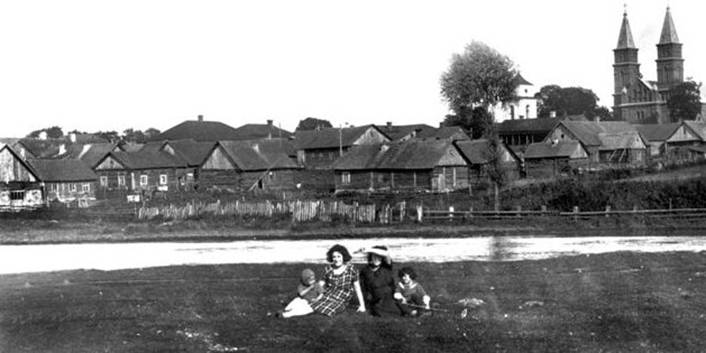
The Uzpaliai ‘shtetl’ in the 1920’s
“Shtetl” is the Yiddish word for small town, the type of community that many of our Eastern European ancestors lived in for centuries before either emigrating or being killed during the Holocaust. Under the aegis of JewishGen, Inc. and its ShtetLinks project (http://www.shtetlinks.jewishgen.org/), genealogists are able to memorialize the shtetl that their families came from. For me this is a wonderful way to honor not only my grandparents who grew up in these communities but also all those who came before them. It’s a way to remember the Jewish communities of Eastern Europe that no longer exist -- the people, the culture, and the institutions.
I maintain three Shtet Links sites for the Lithuanian towns of Kupiskis, Rokiskis, and Uzpaliai. My father’s parents were born in Kupiskis and Uzpaliai and many family members lived in Rokiskis. After a visit to these towns with my father, I decided that I wanted a more permanent way of honoring my family and all their neighbors and so I started my websites. But while I maintain them, the content is a result of a huge group effort. Photos and information were shared by survivors and descendants of people from these towns. I have tried to recreate the communities that existed in the past through family stories, family photos, and archival and historical records.
There are over 400 ShtetLinks sites that cover eastern and western Europe, as well as the rest of the globe. The creators are all volunteers who are doing this as a way to commemorate their family pasts. In essence, we are writing the history of our families and their communities.
- Bookmark :
- Digg
- del.icio.us
- Stumbleupon
- Redit it

(Lithuanian Jews)
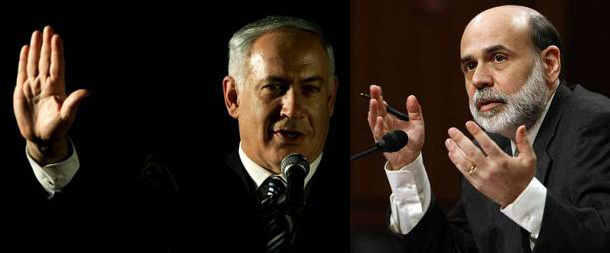
Well, if you didn’t, please see what Monika Bončkutė, a journalist at Lithuania’s leading newspaper, Lietuvos Rytas, wrote last year:

Monika Bončkutė
What do Ben Bernanke, the head of the Federal Reserve leading the United States to economic recovery; one of the most-famous American singers of all time, Bob Dylan; the rocker Pink; British comedian Sacha Baron Cohen and French philosopher Emmanuel Levinas all have in common?
All these people have roots in Lithuania. As do hundreds of thousands, or perhaps even millions, of Jews around the world, whose parents were driven from our country by the Tsar’s restrictions, fellow Lithuanians withdrawn into a closed farming culture and the mass murder organized by the Nazis in World War II.
What would Lithuania look like now as we enter the second decade of the 21st century, if almost all Lithuanian Jews had not been exterminated during the last century, and instead of 50 years of the artificial “friendship of nations” promulgated by the Soviets, our parents and grandparents had lived as true citizens of the free world?
What would the map of Lithuanian politics, economics, art and pop culture look like if Jews today comprised seven percent of the Lithuanian population as they did before World War II? Maybe we would have had, finally, a Nobel Prize winner, world-renowned actors and actresses and highly capable businesspeople and politicians.
Who knows, Sacha Baron Cohen might have made “Borat” in Lithuania, and Binyamin Netanyahu would now be prime minister of Lithuania, and would now be preparing a plan for the improvement of our country’s economic situation and solving complicated relations with Russia instead of tackling the problem of peace between Israelis and Palestinians.
Last year we marked Lithuania’s millennium, this year we will celebrate twenty years since the re-establishment of Lithuanian Independence. So far we have spent in total around 60 million litas for the government to create Lithuania’s image [improve and propagate country’s image abroad], but the only thing we are really known for is probably that two Lithuanians have made it on the United Kingdom’s most wanted list.
Perhaps now that the first decade of the 21st century has passed, a decade of terrorism, war and economic crisis Time magazine recently said was “sent from hell,” it would be a good time to learn from the mistakes of history and to start to build Lithuania’s image and civil society upon foundations of tolerance and inclusiveness?
I bet money that a video clip presenting Lithuania as the land of the parents and grandparents of world famous artists, scientists and politicians would be much more successful than some guy named Jonas making clown faces and pushing boring facts about Lithuania in the form of a deck of cards on the screen, telling the world how well Mazeikiu Oil is doing.
Of course, it needs to be told to a society dripping with anti-Semitism and intolerance in general that the most famous people from Lithuania and those who have achieved the most in the world are Jews. Jews who call themselves Litvaks coming from the territories of the former Grand Duchy of Lithuania who immigrated to Western Europe and the US did not spend their time idly.
Jascha Heifetz, the wunderkind born in Vilnius, used to play for the picky audience in Kaunas when he was seven, until he entered the US and became one of the most famous violinists in the world, ever.
The Howard brothers, fathers of Vaudeville and comedy in America, known as “The Three Stooges” also have Lithuanian roots. As does American composer Philip Glass. This grandchild of Lithuanian Jews is one of the most famous composers of the end of the 20th century and works with some of the most famous artists in the world, including Canadian singer and descendant of Lithuanian Jews Leonard Cohen.
You could continue this list indefinitely, because in every country in the West, wherever there is a moderate-sized Jewish community, you will find those who say they come from Lithuania.
Ben Bernanke, whose grandfather registered as Jonas Bernanke at the Immigration Registration Center at Ellis Island in New York, was Time magazine’s man of the year last year. A Time editorial claimed that if not for the chairman of the Federal Reserve, there would be a much worse economic situation in America and the world right now.
Incidentally, this was probably the first time the Lithuanian origin of the US “finance czar” was mentioned in the press. Only in the issue of Time dedicated to Bernanke was it noted that the grandparents of the head of the Federal Reserve Bank survived pogroms in Lithuania.
Before the anti-Semites open their filthy mouths, I would like to remind them that practically every head of a Hollywood studio, many actors and actresses and Nobel Prize winners of all fields are of Jewish origin. But they speak English, and are understood first as Americans. Does America benefit from this? Undoubtedly.
Try to picture the film industry without Harrison Ford, Gwyneth Partlow, Sarah Jessica Parker or Zack Efron.
What if Americans had slaughtered Jews as the Nazis did in our country with the help of Lithuanians? It’s possible that the US would even now not have one of its most influential cultural icons, Hollywood.
As if it weren’t enough that the contribution of Lithuanian Jews and their descendants was not appropriately recognized when Independence was restored [1990-1991], recently anti-Semitism has only been gaining ground in Lithuania.
In 1991, 10% of respondents said they didn’t view Jews favourably, i.e., four times less than now. According to results of a survey conducted by the Pew Research centre, in 2009 some 37 percent of Lithuanian residents said they viewed Jews negatively.
Viewed from outside, this appears totally incomprehensible and unjustified. Currently just under 3,500 Jews live in Lithuania, so the possibility that the 3.5 million people living in the country, mainly “pure” Lithuanians, are personally acquainted with even one Jewish family is quite small.
Our forefathers looked askew at Jews because they were farmers shut in to their own world, while many Jews were merchants. For them, Jews were probably the most foreign group of people. But at least they met Jews at the store or when Jews came calling with their goods at their farms.
But now, self-respecting citizens of the independent Lithuanian state that belongs to international organizations, many of whom have never during their life even had a beer with a Jew, never mind any deeper acquaintance, feel themselves entitled to judge negatively the entire Jewish people.
And now for a bit of statistics: 92% of Americans believe that diversity is good for society. Only 51% of Lithuanians share this view. This is also one of the lowest indicators for the value of diversity in Europe.
Will we be able, in 2010, to draw the interest of the world as a country of pure-blooded, blue-blooded Lithuanians, not just for surrendering our most creative and intelligent members during occupations, wars or through stupidity, but also for the stubborn persistence of our fear of diversity?
The translated version of this article was found at the web site www.HolocaustInTheBaltics.com,
and extracted from the page "BOLD CITIZENS SPEAK" www.holocaustinthebaltics.com/132423.html
This page features several Lithuanian citizens who have spoken up for the country's Jewish minority.
- Bookmark :
- Digg
- del.icio.us
- Stumbleupon
- Redit it

Lithuania needs writing in English
- Posted by - (1) Comment
Andrius Užkalnis
I am positive that Lithuania - not only the expats who live there - need writing in English. A lot of it. As much as possible, really.
The presence of a vibrant expat community, which is closely linked with Lithuanians or half-Lithuanians (if I may use this term), who have spent many years overseas and had been exposed to Western culture, is critical as an ultimate mind-opener.
I have always been going against the flow in that I said good things about the Lithuanians who go abroad for a year, for five years or even for good. In Lithuania, it is often seen as a disaster and an exodus of biblical proportions with similarly apocalyptic implications. I see it as a natural part of being a free country. Even if it leads to some transformations that may even be irreversible, such as compromises over what is seen as Lithuanian ethnic purity (which is an artificial and doubtful construct anyway, in my view) or a changer of the Lithuanian identity, emigration is good because it opens the mind and creates new patterns of thinking. It opens up angles which people have not thought about. It changes the way that parts of the society interact with each other and their relationship with the government, the establishment, the educational elite.
A confident and active expat community brings all this to their host land too, and does this in a concentrated and very effective manner. The English-speaking expat crowd is bringing values and behaviours that Lithuania needs the most: perceived and often imaginary "Americanization" is mostly skin-deep and has little lasting impact. And this is why any exchange of written words is so critical.
About two decades ago, I was one of the first employees of "Vilnius In Your Pocket", a city guide started by four expats in Vilnius. VIYP at that time it was the Bible for all English-speaking local residents, witty and bright and colourful, and a brilliant contrast to the drab surroundings of early post-Soviet Vilnius. It no longer holds the exclusive position of cult publication, but its impact is still remembered by those who remember the English-speaking Vilnius 20 years ago. There was also The Baltic Independent, a Tallinn-based English newspaper for which Edward Lucas, today of the Economist fame, was writing - there was a little office in Liauksmino gatve and I was a writer there. Edward lived in Vilnius at that time.
It is, therefore, impossible to say no when people ask me to get involved with the writing for English speakers in Lithuania. So I wish the Editor-In-Chief perseverance in chasing articles from contributors and I wish the publication a huge readership of intelligent and curious people. God speed.
- Bookmark :
- Digg
- del.icio.us
- Stumbleupon
- Redit it
The village voice…
- Posted by - (0) Comment
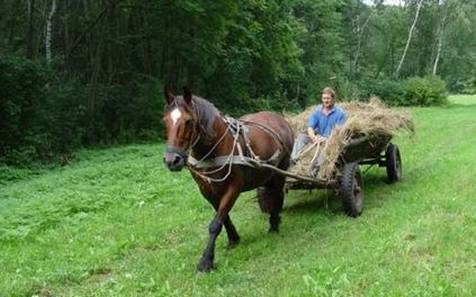
VilNews will from time to time publish articles under the heading 'The Village Voice'. The articles will be written by a retired Englishman, David Holliday, who for the past fifteen years has lived with his wife Migle in the village Lapiai 30 km from Klaipeda. We think that you, dear reader, will come to appreciate David's many subtle tales and stories from his life out there – so far off the beaten track...
|
Wg Cdr David Holliday joined the British Royal Air Force in 1961. He trained as a pilot and his first operational tour from 1964 to 1968 was spent flying Victor nuclear bombers carrying the American Blue Steel stand-off missile. His Cold War targets were in the Baltic States, Belarus and Ukraine. In 1968 the British nuclear deterrent was handed over to the Royal Navy and the Blue Steel fleet was disbanded. After a tour as a flying instructor David returned to Victors, but this time in the Air-to Air refuelling role, again as an instructor. This was followed by a tour in Moscow as an assistant Air Attaché (74-77). In 1979 he was posted to France to be the Strike Command liaison officer with the French Air Defence Command. The next ten years was spent in staff appointments in Human Intelligence. David’s last tour (92-94) was as the first British Defence Attaché in Vilnius after Lithuania regained its independence. He retired in 1994 and remained in Lithuania with his wife Migle, who he married in 1993. |
|
Around the castle hill
How We Found Lapiai
Part one
July 1995
My life here in Lithuania revolves around my home in the country. To many it would be a bore, but for me it is the perfect life and I could wish for nothing better. This morning, as always, I walked the dogs around the valley and, as always, Blondie ran off into the woods. I stopped off by the river to see if the overnight rain had had any effect. It had, but not much and we need more. This spring of 1995 was abnormally hot and dry and they say that there has been nothing like it since records began. Farmers have been hard hit again this year and yields all round will be very low. There are still signs of beaver activity on the riverbank and there are several dams in our stretch of river, which runs for about a kilometre. Our neighbours have erected a fence in front of their cattle fodder to stop the beavers pinching it at night. It seems to have worked for there haven’t been any raids for the last few days. I want to put a sign up on the fence saying “Beavers! Food round the back of the fence”. But Migle says that it might not go down well with Povilas, because it might work and put our friendship in jeopardy!
I normally walk the dogs all around the valley, but at this time of year the grass is very high and I get soaked tramping through it. Tomorrow (or the next day) I will go round with the trimmer and cut a swathe through it. On the way back from the river I stop off at the alpinarium for a look. Actually it’s an enormous pile of rocks, which were pulled out when we excavated the pond last year. Some of them are nearly chest height and weigh several tonnes. Together they cover an area half the size of a tennis court. In England they would cost £100 each in the garden centres. Anyway, we call it an Alpinarium as we are working towards it. Migle has planted some flowers and shrubs and it is my job to weed and to water and it’s got to be done today! Yes dear. It’s going to be another exciting day and I can’t wait to get started. But first a cup of breakfast!
Before we go on, I’d better explain how I came to be here. My last appointment in the Service was as DA in Vilnius. That was from 1992-94 when the Russian troops were still here. I worked in the MOD in London and spent about a third of my time out here. I was single at the time and met Migle. She was wheeled in as the interpreter whenever a group of Englishmen appeared in Klaipeda. She had her own business and did it as a favour to one of her army friends here.
Migle and I married at the Registry Office in Ashford in front of the home crowd on New Year’s Eve 1993. I took early retirement in March 94 and made sure that we got married before I left, for reasons which you and I know, but which Migle remains blissfully unaware of! In the meantime we bought a three room flat in the centre of Klaipeda for £8,000 and had it refurbished and modernised for about another £2,500. The flat is comfortable and right in the centre of Klaipeda next to the old town. It overlooks the river Danes and between the river and us is a park with a decorative water fountain. All very comfortable, but not much to do in the winter.
We had an artist friend we met in town and from whom I used to buy the odd piece. One day in the summer of 1995 he invited us out to his country house about 30 km form Klaipeda in the village of Lapiai. It is a lovely situation on the side of a hill. The house was being built and the foundations were in place. Meanwhile, as is the way out here, he had built the outhouse first, so they could live there while the main house was being done. He has about a hectare of land (2.5 acres), just down the slope below the village school. It was a lovely day and we sat outside and chatted well into the night. In those days I had to communicate in Russian and that made it rather difficult for the locals who all wanted to lapse into Lithuanian. I remember during the course of the evening that Migle said that we were looking for a place in the country as well. We went home and thought no more about it.
A few weeks later in early summer, Migle had a phone call. It was Vytas our artist friend. He said that there was a small farm in the village, which had come up for sale. Did we want to have a look? Did we ever! We drove out again at the weekend and parked in his drive. Vytas explained that the farm was in the valley down the hill about a kilometre further on. It belonged to an old lady whose husband had died about three years ago and who wanted to sell up.
We walked down the hill and into the valley. At first we chatted in Russian so I could join in, but quickly changed to Lithuanian as Vytautas (Vytas for short), Eugenija his wife and Migle moved ahead slightly. The first farm at the bottom of the hill has a good position within a stone’s throw of the river. I knew it wasn’t the one for sale as it was too close to the hill. We followed the river around the bend and the next farm came into sight over the growing corn. I could see several out buildings, including the large barn, some beehives and the inevitable outside toilet painted “s” brown. Again, it looked attractive, but I didn’t really think it would be the one, so I didn’t fantasise too much. Sure enough, we kept on the little road and moved on round the corner and down another rise. And there in front of us about 300 m away in the distance was this beautiful sight. The house and farm buildings stood on a knoll in the centre. The river ran some 200 m to the right. Beyond the buildings were open fields and then the castle hill dating back to the 14th century. To the left more grassland before the ground began to rise up to the woods at the side of the valley. From where we stood the house was on the right and was painted pastel green. To the front and facing towards the river there was a rickety glass conservatory covered in ivy or vines. Standing a few yards from the verandah were two magnificent old spruces and perched on top of the furthest of them was the biggest stork’s nest you have ever seen! We walked closer along the lane, which led towards or past the house. All heads were turned to take in the unfolding view. Nobody wanted to stare, but everyone wanted to look. For it was certain sure that we were being watched.
But instead of turning up the track leading to the house, the three ahead continued past the house and turned right towards the river and left the house behind us. So, I must have been wrong. This wasn’t the farm. There must be another one beyond the Castle Hill and at the very end of the valley. I tried hard not to be disappointed, but I was. Desperately.
I followed a few paces behind Migle, Vytautas and Eugenija like a Russian-speaking leper. I could here them talking and discussing, but had no idea what they were saying. We arrived at the bend of the river. It is called the Zvelsa and at this point is about six to eight metres wide. It was mid-summer and the water was running low and slow. About a kilometre further on it joins the larger Minijos, which is one of the larger rivers flowing across eastern Lithuania.
Here we stopped for what seemed an age as they chatted and I began to move ahead, impatient to see what would lie round the next bend. But when I turned back, they were gone! I rushed back to the river and saw them a little way ahead and walking back the way we had come. I ran up to them and said in English “Migle, why are we going back?” She said, “This is the house. This is the one we are coming to see!” I said, “But why did we walk past it and down to the river?” She said, “Well, we just wanted to see the view from the river and get the feel of the place and see all the land that goes with it”.
I can’t explain how happy I felt then. It was a defining moment in my life. The first date, first solo and maiden century all rolled into one! Migle said, “You stay here and we’ll go in and talk to the old lady. If she knows you’re a foreigner the price will go through the roof!”
I went back to the bend in the river and sat down on a rock by the water and listened to the music of the river and the birds. They could talk for as long as they liked. I wasn’t going anywhere! This was where I was going to live!
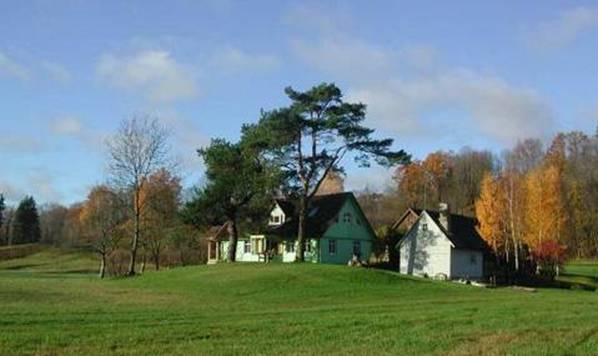
July 1995: I wasn’t going anywhere! This was where I was going to live!
- Bookmark :
- Digg
- del.icio.us
- Stumbleupon
- Redit it
Rita Stankeviciute
Lietuvos Rytas Correspondencet in Washington
January 15, 2011
How much more blood would have been shed in Lithuania, had news about
the Soviet aggression not reached the outside world? In commemorating
January 13, US journalists still wonder why the Soviets did not expel
them from Vilnius.
“If we had been unable to continue broadcasting, no one knows what would
have happened” stated former US National Public Radio correspondent Ann
Cooper, who was reporting on events in Lithuania 20 years ago.
“It’s always easier to inflict violence when there are no witnesses
around. In Vilnius, there were a lot of witnesses,” stated former
Newsweek Warsaw Bureau Chief, Andrew Nagorski.
On January 13, 2011, Americans gathered in Washington for the filming of
a broadcast on the role of Western media during the events of January
1991 in Vilnius. The show would air on Lithuanian television in Vilnius
the following week.
They were afraid to tarnish their reputations
It was a time when telephone calls were routed through Moscow,
information had to be faxed or transmitted via teletype, and news about
Lithuania was transmitted around the world from the basements of ham
radio operators.
David Satter, a Soviet Affairs correspondent for the influential
newspaper, The Wall Street Journal, hurried to Vilnius a few days after
the events of Bloody Sunday.
The number of journalists in the building of the Supreme Council kept
growing. Satter felt that Mikhail Gorbachev delayed his offensive for
that very reason.
"He was not a typical Soviet leader. His predecessors knew not to get
too friendly with the West and become dependent upon their opinion.
But Gorbachev was obsequious with leaders of the Western world so he was
afraid to behave poorly in their eyes.
Gorbachev realized that aggression in Lithuania would discredit him
completely. I think that made an impact,” said David Satter in an
interview with Lietuvos Rytas.
Images reached congress
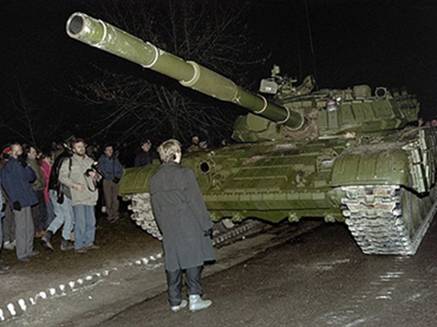
Images of tanks attacking unarmed people and buzzing bullets quickly
reached the United States.
The Lithuanian-American community did everything possible to make sure
that these images reached television audiences and important policy
makers.
New York Lithuanians gave a recording to their Congressional
representative, Gary Ackerman, who showed pictures from Lithuania to the
entire U.S. Congress. “This helped to mobilize the House of
Representatives and the Senate” said Washington Lithuanian-American
community activist Asta Banionis.
Dan Ritter, a Congressman at the time, described how difficult it was to
draw the attention of the White House to events in Lithuania because
then U.S. President George Bush senior, even after the declaration of
independence in 1990, was in no hurry to recognize independent
Lithuania.
Just as Dan Ritter flew immediately to Vilnius, so did other members of
the Congressionally created Commission on Security and Cooperation in
Europe still known as the Helsinki Commission.
"We wanted to show that the people and the state of Lithuania were
important to the US, despite contradictory comments coming out of the
White House.
U.S. authorities did not necessarily support the idea of a free and
independent Lithuania. But the Helsinki Commission was convinced that
the empire was in its death throes, "said Ritter.
A caricature appeared in one US publication showing Gorbachev in a
Soviet tank headed to Lithuania. A passerby picks up something from the
side of the road and says "Oops, I think someone just lost a Nobel Peace
Prize."
Holed Up In a Lithuanian Apartment
When news reached Washington from Rita Dapkute, an employee of the
Lithuanian Supreme Council, that the building was full of foreign
correspondents, American Lithuanians tried to inform the Soviet Embassy
of this fact.
"So they would know that if the Supreme Council was attacked,
representatives of the foreign media would be killed, too" explained
Asta Banionis.
Foreigners working in Vilnius were less concerned with their safety than
they were with possibly being expelled from Lithuania. It could happen
at any moment because most foreigners were accommodated at one hotel,
"The Tourist" so that the Soviets could track their movements more
easily.
"We kept wondering when they were going to come and surround us.” Peter
Gumbel of The Wall Street Journal found a Lithuanian family who housed
them in an apartment near the Parliament. About eight of us slept on the
floor there. We shared their telephone and their bathroom.
“I kept calling Moscow to ask to be connected to my editor because I
felt that I was preparing what could be the most important report of my
life" recalled Ann Cooper.
The Lithuanian Legation in Washington
Regardless of the important role that the media may have played in
Lithuania's independence, the U.S. journalists underscored that without
the absolute unity of the people, nothing would have been able to stop
the killing.
"I received a call from then Ambassador (Charge d’Affaires) of Lithuania
in Washington, Stasys Lozoraitis, Jr., who said that the people refused
to leave even after being fired upon.
I turned around to the Secretary of State James Baker to say that maybe
it was time to think about opening an American embassy in Lithuania.
Because no one has enough bullets to stop those who are not afraid of
them" stated Paul Goble, then special adviser to the Baltic countries
for the U.S. State Department.
Witnesses to Other dramas in Vilnius
"The Soviet leaders realized that in order to subjugate Lithuania they
would have to kill many people, and still they would not succeed.
In January 1991, they understood that they could go no further, and that
it was time for the Soviet Union to bid farewell to Lithuania" concluded
Dave Satter about these dramatic events..
- Bookmark :
- Digg
- del.icio.us
- Stumbleupon
- Redit it
- Posted by - (3) Comment

90% of all Jews in South Africa are Litvaks
Text and photos: Aage Myhre
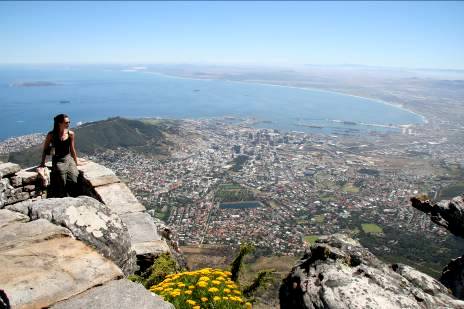
For the tens of thousands Litvaks who came to South Africa during the years 1860 –
1940, the Cape Town harbour was the first glimpse they had of their new homeland.
It is considered that around 90% of the approximately 80,000 Jews living in South Africa are of Lithuanian descent (the so-called Litvaks), which thus constitutes the largest pocket of Litvaks in the world! You are hereby invited to learn more about this unique Jewish community that still holds Lithuania alive in their hearts, museums and synagogues.
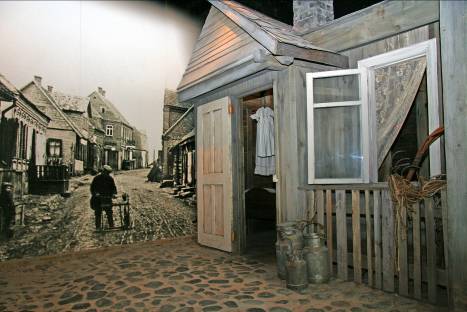
The Jewish Museum in Cape Town is more Lithuanian than Lithuania itself.
The Jewish Museum in Cape Town offers visitors a journey back in time. Most museums do. The striking feature of this museum, however, is that the journey to the past also brings us to a completely different part of our world, from Africa's southern tip to a seemingly modest little country far to the north, to a country where around 90% of South Africa's Jewish population has its roots (there are today about 80,000 Jews in South Africa).
The museum's basement is dominated by a village environment (shtetl) from the late 1800s. A few houses are reconstructed in full scale, and you can clearly see how people lived and co-existed at the time. The village is called Riteve. It was recreated in the museum on the basis of entries made in the 1990s by a group of experts who went from South Africa to Lithuania to find traces of the family of the museum's founder, Mendel Kaplan.
The village is called Rietavas in Lithuanian. It is there to this day, less than a half hour drive from Klaipeda, at the highway direction Kaunas and Vilnius. The Kaplan family emigrated from here in the 1920s, while the village's population was still 90% Jewish. Today, no Jews live in Rietavas.
A stroll among the house-models in the Cape Town museum's basement is like walking around in a part of Lithuania, almost more Lithuanian than Lithuania itself. This impression is becoming no less strong when I discover that the café that is a part of this comprehensive Jewish complex in Cape Town, is also named after the founder's home town in Lithuania, and that the older part of the museum is a replica of a Vilnius synagogue. This synagogue was built in 1863, and was the first ever built in South Africa.
The museum and Café Riteve are just two of the elements of an extensive complex of Jewish-related buildings here in Cape Town's incredibly beautiful botanical garden, so if you first come here, I recommend that you take your time. Worth a visit is the Great Synagogue from 1905, the Gitlin Library (including a large collection of books in Yiddish that the Litvaks brought with them on the long sea voyage from Lithuania to Cape Town), and the Cape Town Holocaust Centre (see below).

Lithuanians dominate the Jewish community in South Africa
Lithuanians dominate the Jewish community in South Africa to an extent seen in no other country. Casino magnate Sol Kerzner (1935 - ), communist leader Joe Slovo (1926 – 1995) and veteran anti-apartheid activist Helen Suzman (1917 – 2009) make an unlikely trio but have in common that they are all of Lithuanian descent.
Like their Lithuanian ancestors, whose political ranks included wealthy capitalists, zealous Zionists, prominent religious scholars and committed communists, South Africa's Litvaks, have spanned the political spectrum. On the left stands Slovo, the former head of the South African Communist Party, who was born in Lithuania in 1926 and came to South Africa at the age of nine. On the right stands Kerzner, a flamboyant businessman who built the famous casino resort Sun City (north of Johannesburg) and founded the entertainment and leisure giant Sun International.
Jewish emigrants from Tsar occupied Lithuania are generally thought of as having fled the persecution and poverty for the safe shores of America. A much less known story is that of the many Litvaks who travelled to South Africa. Many of these migrants came from the Kaunas region (Kovno in Yiddish), but many also came from towns such as Palanga, Panevėžys, Rietavas and Šiauliai.
Many travelled via the Liepāja port in Latvia on ships bound, via the Baltic Sea and (after its opening in 1895) the Kiel Canal shortcut, for English east coast ports. From there, they travelled overland, usually via London, to Southampton to embark for Cape Town.
This movement of people was not accidental: a whole business existed to cater for them, from the ticket agents in Kaunas or Vilnius, to shipping lines such as the Wilson Line shuttling between Liepāja and Hull, to the Poor Jews’ Temporary Shelter in London which housed and orientated many of the trans-migrants, to the Castle Line and the Union Line which specialised in the route to South Africa.
And like any successful movement of people, it became self-perpetuating, as the new South Africans sent home letters, and money, encouraging others to follow suit. The first countrywide Union of South African census in 1911 indicates a population of 46,919 Jews, a majority of whom were Litvaks. By 1921, the Jewish population had risen to 62,103, but with more of a shift in gravity towards the gold-mining and commercial centres of Witwatersrand in the Transvaal area (which accounted for 33,515).
What this means is that a great many of those North Americans and British with Litvak ancestors are likely to have kin in South Africa. There are many good sources for Jewish family history research in Lithuania and prospects of success are often favourable, as long as the place of origin within the country is known or can be identified.
The extraordinary story of Sammy Marks (1843 – 1910) from Taurage

The entrepreneur Samuel Marks was born in the Lithuanian district of Taurage in 1843. He was one of the very first Litvaks to arrive on African shores. He came here via England in 1868 and began his career by hawking cheap jewellery and cutlery in Cape Town. Later he moved on to Kimberley where he went into business with his brother-in-law Isaac Lewis and Jules Porges. Together they formed the French Diamond Mining Company.
Following this, Lewis and Marks decided to relocate to the Eastern Transvaal where they established the African and European Investment Company. This company proceeded to become a major Rand finance house with controlling interests in several gold mines. Mr. Marks had become a leading magnate and one of South Africa’s richest men.
An example of his many success stories is one of the companies he started, theZuid-Afrikaanscheen Oranje Vrystaatsche Mineralen en Mijnbouvereeniging, which became the basis of the town Vereeniging. Marks also developed the Viljoen’s Drift coal mine and encouraged the expansion of the Witbank coalfields.
Sammy Marks was also a close friend and admirer of South Africa’s State President Paul Kruger (who is often called the father of the Afrikaner nation) and a popular figure within the Transvaal business community. It was Marks who advised Kruger to build a railway line from Pretoria to Lorenco Marques. He served as a senator in the Union Parliament from 1910 until his death in 1920 in Johannesburg.
Worth a visit is the Sammy Marks Museum north of Pretoria and Johannesburg. The museum building, a splendid Victorian mansion dating from 1884, was the residence of Marks, whose significant contribution to the industrial, mining and agricultural development of the Zuid-Afrikaansche Republiek has given him an outstanding position in South African history, so very far away from his birthplace in Taurage, Lithuania…
|
Click here to read more about the exceptional history of the Litvaks in South Africa : http://www.jewishvirtuallibrary.org/jsource/vjw/South_Africa.html
|
Some of today’s Litvaks in South Africa
Let me introduce you to some of my good friends in South Africa. Most of them are second and third generation Litvaks (plus one single first-generation Litvak). There is also a small colony of Lithuanians who have moved down here the last 20 years. My conclusion is that Lithuania and the Lithuanian spirit is alive and present, even in modern South Africa.
SAM (SHMUEL) KEREN
BORN IN PABRADE, LITHUANIA, IN 1934. A HOLOCAUST SURVIVOR

Sam's life story is worthy of a screenplay. His autobiographical book, 'Mulik the Zulik', says it all. Sam was the only person of his family able to escape the Holocaust in Lithuania. A Polish neighbour family acted as if he was their son and managed in this way to smuggle him out of Lithuania during the war. The rest of his family was executed. After WWII, Sam managed to get to Switzerland, and later to Israel. But it was South Africa that was to become his new homeland, in the 1960s. Here he has done well in business and private. Sam visits Lithuania and his home-place Pabradė every summer since the 1990s. He likes Lithuania, but is still sceptical of Lithuanians and their involvements in the killing of Jews during the Holocaust. I took the above photo of Sam in his office in downtown Cape Town. On the walls hangs many of the memories from his enormously challenging youth. The image he shows me is of the tombstone he installed on his mother's grave a few years ago. In Pabradė village, Lithuania.
JEANETTE JEGGER
FILM PRODUCER AND DIRECTOR. PREPARING A DOCUMENTARY ABOUT LITVAK LITHUANIA
|
|
Jeanette completed an MA in Film Production at the University of Bristol, UK, in 2000 and, upon returning to South Africa, realised that the only way to make a film was to get out there and do it. And so, with the support of friends and other grassroots filmmakers, she made Krisimesi, also exploring children’s unique perspectives, which has, in its different versions, screened at various international film festivals and won several awards. She teaches film and has a production company with Matthys Mocke. During my meeting with Jeanette she told me much about her so far only visit to Lithuania. She told me about when she came to Kaunas to try to find the house where her ancestors lived, and how nervous the woman who now lives in the house became when Jeanette knocked on the door, and the fantastic three days that followed when she and the woman, a known Lithuanian artist, afterwards sat down in mutual trust and dialogue… |

PROFESSOR MILTON SHAIN
DIRECTOR OF THE ISAAC AND JESSIE KAPLAN CENTRE FOR JEWISH STUDIES, UNIVERSITY OF CAPE TOWN
|
|
|


Professor Shain excuses himself, mildly and courteously, as he welcomes me in shorts this December day. "It's really all in the middle of summer here," he says as he leads me into the facilities he is the head of, here at the “Isaac and Jessie Kaplan Centre for Jewish Studies at the University of Cape Town”. And it is by his crowded desk that I get to know so much more about the amazing relationships between his ancestral homeland, Lithuania, and the intellectual South Africa he represents. So, dear reader, if you want to know more about Jews in South Africa, you should definitely read Milton's latest book “Jews in South Africa”.
RICHARD FREEDMAN
DIRECTOR OF THE SOUTH AFRICAN HOLOCAUST FOUNDATION, CAPE TOWN

Richard meets me at the entrance to the Holocaust Centre in Cape Town. I was expecting a man that would put the most emphasis on the many tragic events of the Holocaust in Lithuania and in Europe in general. Richard is, after all, a Litvak himself. But what he instead emphasizes, is that there are an infinite number of comparison points between the Holocaust in Europe and the apartheid in South Africa. "Whites who look down on blacks, Nazis who look down on Jews, people who think themselves better than others, aren’t they all of the same kind?", he asks…
KIM FEINBERG
THE ‘JEWISH TEA MOTHER’ AND HER RENTLESS FIGHTS AGAINST HIV-AIDS IN SOUTH AFRICA

The Christmas trees are beautifully decorated in the district of Rosebank, Johannesburg, this summer afternoon in December. I am slowly strolling around when I suddenly see an energetic white young lady in the middle of a crowd of black youths. It turns out that she is a genuine Litvak, and that she is the head of the organization 'Tomorrow's Trust', which in recent years has become a leading institution in the fight against AIDS-HIV in South Africa.
Kim is the one who some years ago walked out of the movie ‘Schindler’s List’ filled with a sense of purpose. “I just thought, ‘I have to do something. I spoke to my rabbi and then started my own oral history project,” she explains.
What an amazing person and determination. Her name is Kim Feinberg, soon 50 years old, still young forever.
RUTH RABINOVWITZ
THE LITVAK MEDICAL DOCTOR WHO REPRESENTS THE ZULUS IN THE SOUTH AFRICAN PARLIAMENT

An unlikely Zulu, Ruth Rabinowitz represents the Zulu Inkatha Freedom Party in the South African parliament!
I meet Ruth in the library of the Johannesburg Grace Hotel to talk about her unusual life and political career. And Ruth tells an almost incredible story. About how her Litvak family, many years ago, became close friends with the Zulu king and his family. She tells about her medical background, but first of all, she focuses on the circumstances for Africa's largest tribe, the Zulus, that today includes three million people, almost as many as the number of inhabitants in Lithuania, the country her ancestors came from (if to count only the present, local population of Lithuania, of course)…
THE HONORARY CONSULS OF LITHUANIA TO SOUTH AFRICA
THREE SUCCESSFUL ATTORNEYS - ALL LITVAKS
|
|
|
|
|
RAYMOND JOFFE Honorary Consul of Lithuania, Johannesburg |
ALAN B. SCHMIEDT Honorary Consul of Lithuania, Cape Town
|
IVOR FEINBERG Honorary Consul of Lithuania, Pretoria |


Here they are. Lithuania's three musketeers in South Africa: Raymond, Alan and Ivor. Three skilled lawyers, all of them genuine Lithuanian Jews. It is these three who make up the front line in terms of current relations between Lithuania and South Africa. It is these three who help facilitate Lithuanians arriving to Africa's southern areas, and they are also the ones constantly informing South Africans about the wonderful country called Lithuania.
They were, some years ago, recommended as consuls by the Lithuanian ambassadors to Israel. Israel? Yes, believe it or not, but the fact is that Lithuania does not have its own ambassador to the country having the largest pocket of Litvaks in the world… The Lithuanian ambassador in Tel Aviv must serve Israel, Cyprus and South Africa altogether. But then, in turn, the ambassadors we've had so far have done a good job. It was, as an exemplary example, the very capable Lithuanian ambassadors Romas Misiunas and Alfonsas Eidintas who recommended these three smart guys we today are naming Lithuania's three musketeers in South Africa.
I have had the pleasure of meeting all three of them several times, both here in Lithuania and in South Africa, and I know that they all burn for stronger ties between our two countries. But I've also heard them talk about how sad it was to experience the Lithuanian Constitutional Court rule that Lithuanian citizens around the globe could no longer be registered as Dual Citizens. They feel, as I do, that it is terribly sad to see nowadays Lithuania burn bridges instead of seeking renewed contact with its fantastic diasporas around the world. In this aspect, sadly, every day that passes is a day lost…

|
|
Rietavas and the
Kaplan family
|

The impressions from the Jewish Museum in Cape Town were as glued to my memory. So in August last year I decided to visit Rietavas, the village the Kaplan family emigrated from almost 100 years ago. I had expected to find proud traces of the family; a museum, a memorial, or maybe even something more sophisticated… But I got terribly disappointed. What struck me, then and there, was that this was almost like coming to Salzburg without seeing Mozart mentioned at all...
What a shame. I took some pictures and went from there with bowed head. Mendel Kaplan, by far the wealthiest and certainly one of the wisest Lithuanians ever, was not mentioned with a single word or symbol in the very home village of his own family...
When I came back to Vilnius from Rietavas that August evening, I sent my photos and comments to Dr. Kaplan in Cape Town. This is what he replied a few days later:
|
Dear Mr Myhre, I thank you for your correspondence on Riteve and your complimentary remarks about our family. When President Landsbergis was surrounded by tanks and holed up in parliament I visited him with my wife and friends in the building and established a very warm relationship. I hope he is still well and I remember the fact that his wife was responsible for saving a number of Jews during the Second World War. Yours sincerely Mendel Kaplan
|
Mendel Kaplan (1936-2009) died of a stroke three months after he sent me the above message. In the obituaries that followed, leading Jews stated that Dr. Kaplan was a man who could be termed “the father of the South African Jewish community.” They wrote that he had served as a leadership capacity in several Jewish organisations, that he was involved in the establishment of the South African Jewish Museum in Cape Town and was also one of the first founders of the ‘City of David Archaeological Excavation Project’ in Israel.
Born in Cape Town, Dr. Kaplan had qualified both in law and with an MBA, survived by his wife, four children and grandchildren.
I never met Mendel Kaplan face to face, but I was told that there had been much for him to celebrate in his 73 years of living: The steel company Cape Gate had been transformed from a modest business selling products like wrought iron and garden benches into a vast conglomerate producing its own steel; becoming one of the largest privately owned companies in South Africa, an expansion largely orchestrated by Mendel and his brother Robert.
Dr. Mendel Kaplan, a world leading Litvak philanthropist, lawyer, writer and business magnate passed away just four months ago. His ties to and care for Lithuania were strong and impressive. Isn’t it time for Lithuania to offer a proper response?
|
|
|
|
Rietavas at the time Mendel Kaplan's parents lived here (around 1900).
|
Old wooden buildings in today’s Rietavas (August 2009). |


|
Lithuanians settling in
South Africa
after1990 |
|

If to compare with the more than 70,000 Litvaks living in South Africa, the numbers of Lithuanian expatriates of today are very modest. But there are a few of them, and I want to tell you all a little bit about Jadvyga Kazlauskiene from the village Vievis between Vilnius and Kaunas. Jadvyga emigrated to South Africa mid 1990s with her daughter, now 20 years old. She started her career down under as a waitress in a Johannesburg restaurant, but began gradually to climb up the career ladder after she came in contact with the property industry in South Africa's main city and most densely populated area.

My personal impression is that Jadvyga's success started the day she met her current manager and boss, property queen Wendy Machanik (along-standing with Jadvyga in the above photo). Wendy is an amazing Litvak with phenomenal successes within real estate brokerage in the Johannesburg area for many years (hi Wendy, are the pictures still hanging there, in correct positions?).
Last time I saw Jadvyga and her family was at her home village Vievis, here in Lithuania, on a very cold winter day just a few weeks ago, when they all came here to bring their beloved mother to her final rest. The contrast between warm Johannesburg and freezing Lithuania must have been enormous. When the funeral was over, I thought that now one more link between Lithuania and South Africa had been cut. How often will Jadvyga come back up north now when her mother is gone?
But maybe there is something we can do to keep the ties and connections alive, all of us who love both Lithuania and South Africa? Please feel free to write me with your suggestions and ideas…
Aage Myhre
- Bookmark :
- Digg
- del.icio.us
- Stumbleupon
- Redit it
- Posted by - (1) Comment
Hi, I'm Kristina. I'll try to take you on a small journey. I will provide you with some links to music, poetry, films and more – expressions of art that I personally like and appreciate. Maybe not always so ‘off the beaten path’, but certainly a few times. I will sometimes also express my own thoughts and reflections. But this is also a club and a forum where you as reader and listener can present your own proposals and response. Write to me at kristina.sirvinskaite@VilNews.com These are my today’s suggestions for you:
Music
Poetry
|
||||||||||||||||||||||||||||


- Bookmark :
- Digg
- del.icio.us
- Stumbleupon
- Redit it

OPINIONS
Have your say. Send to:
editor@VilNews.com
Ph. D., Chicago
A wave of unity sweeps the international Lithuanian community on March 11th every year as Lithuanians celebrated the anniversary of the Lithuanian Parliament's declaration of independence from the Soviet Union in 1990. However, the sense of national unity engendered by the celebration could be short-lived.
Human beings have a strong tendency to overgeneralize and succumb to stereotypical us-them distinctions that can shatter even the strongest bonds. We need only search the internet to find examples of divisive thinking at work:
- "Those who fled Lithuania during World II were cowards -- and now they come back, flaunt their wealth, and tell us 'true Lithuanians' how to live."
- "Lithuanians who work abroad have abandoned their homeland and should be deprived of their Lithuanian citizenship."


In Lithuania Christmas Eve is a family event and the New Year's Eve a great party with friends!
Lithuanian say "Kaip sutiksi naujus metus, taip juos ir praleisi" (the way you'll meet the new year is the way you will spend it). So everyone is trying to spend New Year's Eve with friend and have as much fun as possible.
Lithuanian New Year's traditions are very similar to those in other countries, and actually were similar since many years ago. Also, the traditional Lithuanian New Years Eve party was very similar to other big celebrations throughout the year.
The New Year's Eve table is quite similar to the Christmas Eve table, but without straws under the tablecloth, and now including meat dishes. A tradition that definitely hasn't changes is that everybody is trying not to fell asleep before midnight. It was said that if you oversleep the midnight point you will be lazy all the upcoming year. People were also trying to get up early on the first day of the new year, because waking up late also meant a very lazy and unfortunate year.
During the New Year celebration people were dancing, singing, playing games and doing magic to guess the future. People didn't drink much of alcohol, especially was that the case for women.
Here are some advices from elders:
- During the New Year, be very nice and listen to relatives - what you are during New Year Eve, you will be throughout the year.
- During to the New Year Eve, try not to fall, because if this happens, next year you will be unhappy.
- If in the start of the New Year, the first news are good - then the year will be successful. If not - the year will be problematic.
* If New Year's night is cold and starry - look forward to a good summer!
* If the during New Year Eve trees are covered with frost - then it will be a good year. If it is wet weather on New Year's Eve, one can expect a year where many will die and dangerous epidemics occur.
* If the first day of the new year is snowy - the upcoming year will see many young people die. If the night is snowy - mostly old people will die.
* If the New Year time is cold - then Easter will be warm.
* If during New Year there are a lot of birds in your homestead - then all year around there will be many guests and the year will be fun.
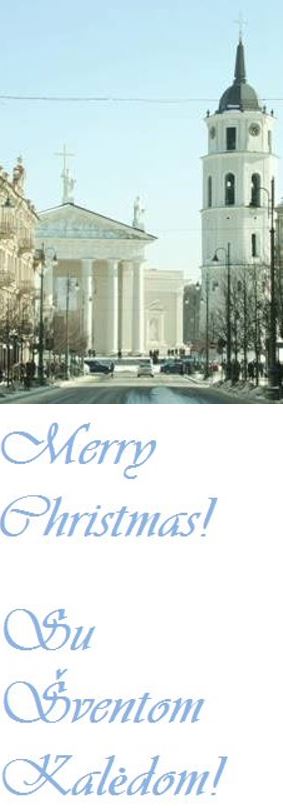
Christmas greetings
from Vilnius
and epic battle for the
future
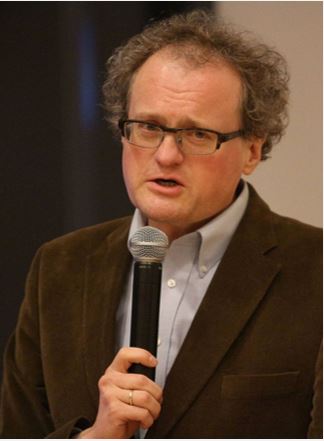
Philosopher, political theorist, historian of
ideas, social analyst, and political
commentator
Ukraine was and continues to be perceived by the EU political class as a sort of grey zone with its immense potential and possibilities for the future, yet deeply embedded and trapped in No Man's Land with all of its troubled past, post-Soviet traumas, ambiguities, insecurities, corruption, social divisions, and despair. Why worry for what has yet to emerge as a new actor of world history in terms of nation-building, European identity, and deeper commitments to transparency and free market economy?
Right? Wrong. No matter how troubled Ukraine's economic and political reality could be, the country has already passed the point of no return. Even if Vladimir Putin retains his leverage of power to blackmail Ukraine and the West in terms of Ukraine's zero chances to accede to NATO due to the problems of territorial integrity, occupation and annexation of Crimea, and mayhem or a frozen conflict in the Donbas region, Ukraine will never return to Russia's zone of influence. It could be deprived of the chances to join NATO or the EU in the coming years or decades, yet there are no forces on earth to make present Ukraine part of the Eurasia project fostered by Putin.
want to learn about the
new, scary propaganda
war between Russia,
The West and the
Baltic States!
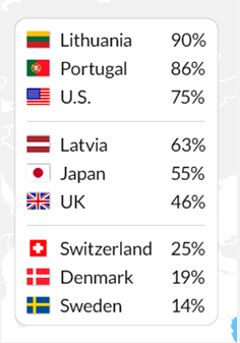
believe their government
is corrupt
students say no to
bribes for doctors
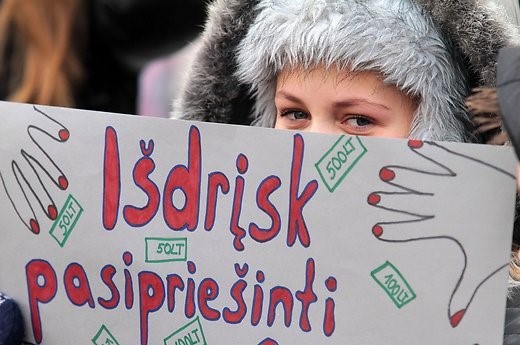
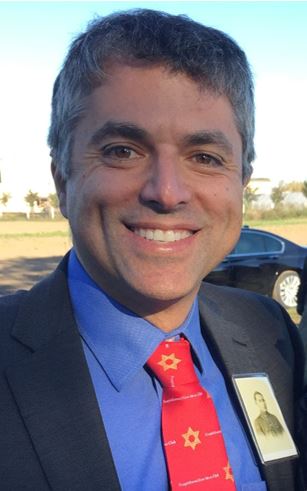
During Soviet times, government was administered for the people in control, not for the local population, court decisions were decreed, they were not the administration of justice, and academia was the domain of ideologues. 25 years of freedom and openness should have put those bad experiences behind Lithuania, but that is not so.
Today, it is a matter of expectation that court pronouncements will be governed by ideological dictates. Few, if any Lithuanians expect real justice to be effected. For foreign companies, doing business in Lithuania is almost impossible in a situation where business people do not expect rule of law, so, surely Government would be a refuge of competence?
Lithuanian Government has not emerged from Soviet styles. In an attempt to devolve power, Lithuania has created a myriad of fiefdoms of power, each speaking in the name of the Government, each its own centralized power base of ideology.

Chepstow, Wales
Doesn't that sound suspiciously like Lithuania? Ah, but I didn't mention the mountains of Snowdonia, which would give the game away.
I'm talking about Wales, that part of the UK which Lithuanians used to call "Valija", but later named "Velsas" (why?). Wales, the nation which has welcomed two Lithuanian heads of state to its shores - firstly Professor Vytautas Landsbergis, who has paid several visits and, more recently, President Dalia Grybauskaitė who attended the 2014 NATO summit which was held in Newport, South Wales.
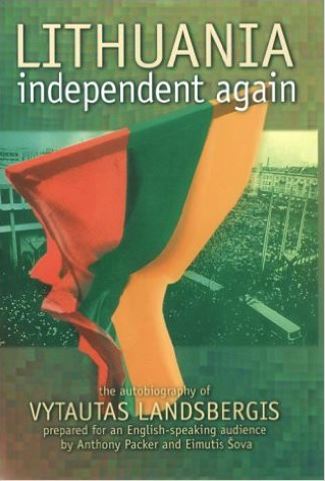
ENGLISH VERSION OF THE
AUTOBIOGRAPHY OF VYTAUTAS LANDSBERGIS.
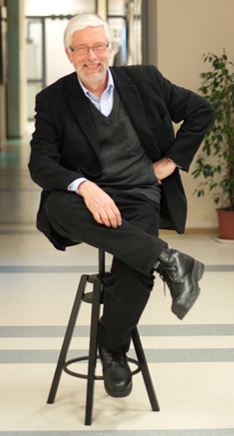
Although Lithuanian activities have thinned over the decades as that postwar generation died out, the Lithuanian Martyrs' parish hall is crowded with many, many hundreds of visitors who come to the Lithuanian cemetery for All Souls' Day. Similarly, the Franciscan parish has standing room only for Christmas Eve mass.
Although I am firmly embedded in the literary culture of Canada, my themes are usually Lithuanian, and I'll be in Kaunas and Vilnius in mid-November 2015 to give talks about the Lithuanian translations of my novels and short stories, which I write in English.
If you have the Lithuanian language, come by to one of the talks listed in the links below. And if you don't, you can read more about my work at
www.anatanassileika.com
http://www.vdu.lt/lt/rasytojas-antanas-sileika-pristatys-savo-kuryba/ https://leu.lt/lt/lf/lf_naujienos/kvieciame-i-rasytojo-59hc.html
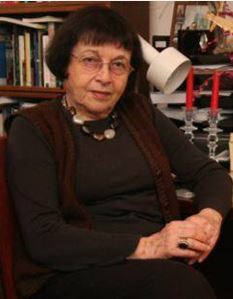
"My love and best wishes to all. As long as VilNews exists, there is hope for the future,"" she writes.
Irena Veisaite means very much for our publication, and we do hereby thank her for the support and wise commitment she always shows.
You can read our interview with her
Facing a new reality
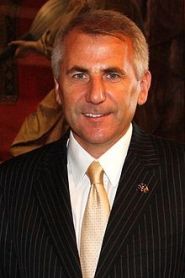
Dear readers of VilNews,
For a number of years, the EU and Russia had assumed the existence of a strategic partnership, based on the convergence of values, economic integration and increasingly open markets and a modernisation agenda for society.
Our agenda was positive and ambitious. We looked at Russia as a country ready to converge with "European values", a country likely to embrace both the basic principles of democratic government and a liberal concept of the world order. It was believed this would bring our relations to a new level, covering the whole spectrum of the EU's strategic relationship with Russia.
The likelihood of Putin
invading Lithuania
.jpg "lithuania today")
Founding Director at Summer Literary Seminars
Are all Lithuanian energy
problems now resolved?
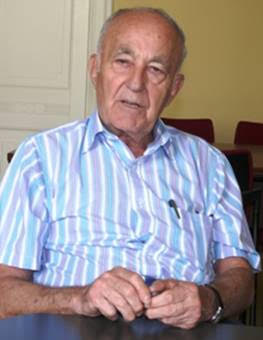
Lithuania as a country does not have significant energy resources. Energy consuming infrastructure after WWII was small and totally supported by energy imports from Russia.
First nuclear reactor begins power generation at Ignalina in 1983, the second reactor in 1987. Iganlina generates enough electricity to cover Lithuania's needs and about 50%.for export. As, prerequisite for membership in EU, Ignalina ceases all nuclear power generation in 2009
The Klaipėda Sea terminal begins Russia's oil export operations in 1959 and imports in 1994.
Mazeikiu Nafta (current ORLEAN Lietuva) begins operation of oil refinery in 1980.
Have Lithuanian ties across
the Baltic Sea become
stronger in recent years?
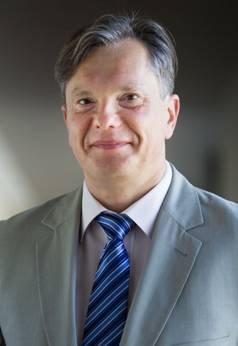
The two decades that have passed since regaining Lithuania's independence can be described as a "building boom". From the wreckage of a captive Soviet republic, a generation of Lithuanians have built a modern European state, and are now helping construct a Nordic-Baltic community replete with institutions intended to promote political coordination and foster a trans-Baltic regional identity. Indeed, a "Nordic-Baltic community" - I will explain later in my text the meaning of this catch-phrase.
Since the restoration of Lithuania's independence 25 years ago, we have continuously felt a strong support from Nordic countries. Nordics in particular were among the countries supporting Lithuania's and Baltic States' striving towards independence. Take example of Iceland, country which recognized Lithuania in February of 1991, well in advance of other countries. Yet another example - Swedish Ambassador was the first ambassador accredited to Lithuania in 1991. The other countries followed suit. When we restored our statehood, Nordic Countries became champions in promoting Baltic integration into Euro-Atlantic institutions. To large degree thanks Nordic Countries, massive transformations occurred in Lithuania since then, Lithuania became fully-fledged member of the EU and NATO, and we joined the Eurozone on 1 January 2015.
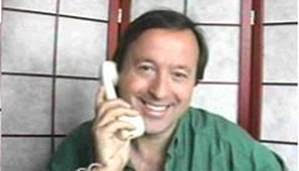
Have you heard about the
South African "Pencil Test"?
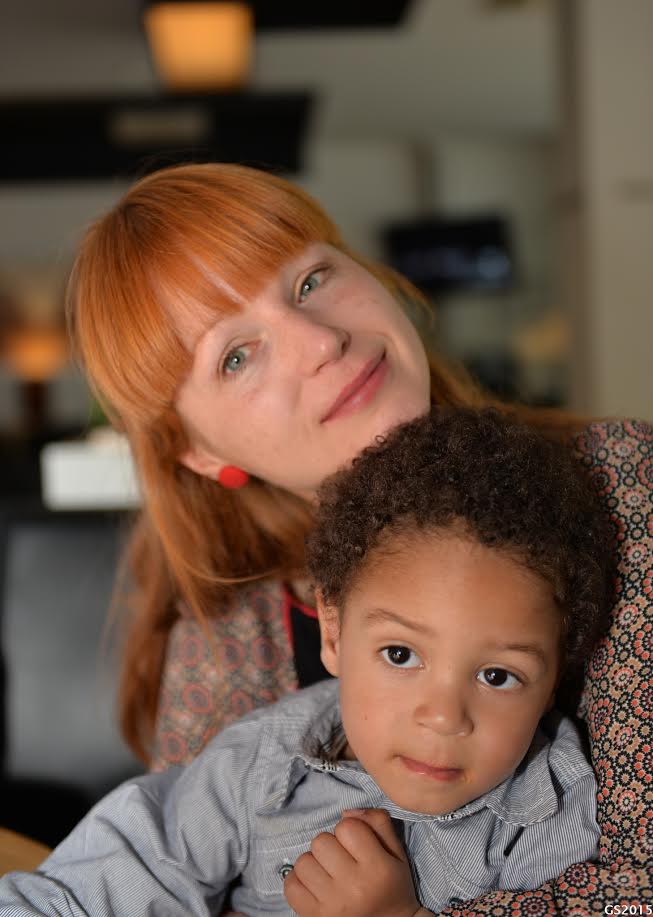
But that is exactly what happened to me when I came back from South Africa. I will tell you how.
VilNews e-magazine is published in Vilnius, Lithuania. Editor-in-Chief: Mr. Aage Myhre. Inquires to the editors: editor@VilNews.com.
Code of Ethics: See Section 2 – about VilNews. VilNews is not responsible for content on external links/web pages.
HOW TO ADVERTISE IN VILNEWS.
All content is copyrighted © 2011. UAB ‘VilNews’.