
THE VOICE OF INTERNATIONAL LITHUANIA

|
VilNews has its own Google archive! Type a word in the above search box to find any article.
You can also follow us on Facebook. We have two different pages. Click to open and join.
 Click on the buttons to open and read each of VilNews' 18 sub-sections Click on the buttons to open and read each of VilNews' 18 sub-sections  |

|


Author Archive
Historians in the West don’t think that the Baltics and their people are important
- Posted by - (2) Comment

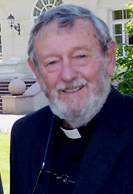
Dominican Father David O’Rourke, one of the two priest producers of “Red Terror on the Amber Coast.” Father O’Rourke is director of The Tatra Project (www.tatraproject.org), which provides educational resources and media on life under the former Soviet Union.
I lived and worked on and off in Vilnius, from 2000 until about 2009. Part of my work involved research in the film and photo archives that led to the documentary film, Red Terror on the Amber Coast. I was the writer and producer. I have only one point I want to make here, but I think it is important.
From the time that the Soviets first occupied the Baltics after the Molotov-Ribbentrop Pact until the fall of the Soviet system, essentially all the information about life in the Baltic Republics came from the occupying governments – Soviet and Nazi. Occupiers have their own agenda. Telling the truth about what they were doing in the countries they occupied was not one of them. To the contrary, both the Soviets and the Nazis were expert in producing self-promoting propaganda. So I believe it is both naïve and foolish to look to news and information reports produced by either of these regimes about the occupation years as though they were reliable. My own view is that relatively little concerning life during these years is known today outside these countries and their several diasporas. And very little is known because historians in the West don’t think that the Baltics and their people are important enough to their own studies to worry about.
David O'Rourke
California, USA.
- Bookmark :
- Digg
- del.icio.us
- Stumbleupon
- Redit it

- Posted by - (1) Comment
How I came to Lithuania 21 years ago (1 of 6)
Some private memories by Aage Myhre, VilNews Editor-in-Chief
aage.myhre@VilNews.com
Summer of 1990:
Landsbergis to Norway
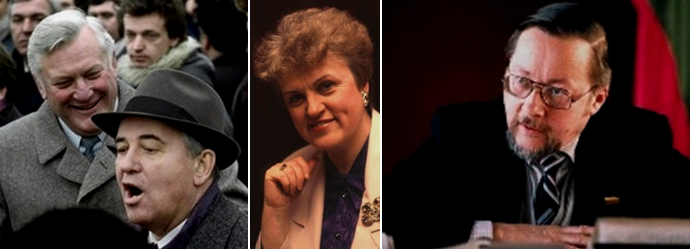
In the summer of 1990 it’s still little known in the west that there once was a country called Lithuania. The fact that this small nation, with its two Baltic neighbours, are engaged in a process of secession from the Soviet Union has still not achieved any major headlines in our western newspapers. The fall of the Berlin Wall is more important. We do not know that the Soviet President, Mikhail Gorbachev, has recently been in Lithuania to meet the country's Communist leader, Algirdas Brazauskas (both pictured left). The fact that Lithuania's prime minister, Kazimir Prunskiene (centre above), has recently been in Norway to try to get the oil company STATOIL to deliver oil to the country, which is now subjected to blockade by the Soviet power, has been heard little about. Then Parliament President Vytautas Landsbergis (pictured right) comes on his first 'official visit' to a Western country, to Norway. That changes a lot.
A young man with a ponytail enters our office community in the centre of Oslo, Norway. It’s a warm, sunny day, mid-summer 1990. Someone has told him that our office, with 16 different small firms, enjoys a relatively large network of contacts, lobbyists perhaps although I do not know much about what that word means. He tells us that he is adviser to a president of a country we have hardly heard of before now. The country is called Lithuania, the president Vytautas Landsbergis, he informs us. The advisor’s name appears to be Ramunas Bogdanas.
What we get to know, is that Landsbergis needs help in finding contacts at the highest Norwegian level in connection with his planned 'official visit' to Norway in late August, the first for a Western country. Bogdanas asks us to undertake such a task. Even if he cannot offer any payment for the job.
We wonder why this Landsbergis has chosen precisely Norway as the first western country to visit on a so-called official basis. Would not the close-lying Sweden have been more obvious? "Sweden accepted the Soviet occupation and annexation of our country during World War II. As early as 1946. Norway never did. Formally, your country still considers Lithuania an independent nation. Therefore he has chosen Norway", explains Bogdanas.
Three of us in the business community sit down to discuss whether we want to accept the proposed mission, Dag Andersen, Bjorn Kittilsen and me. We agree to seek financial support before we answer Bogdanas. We make some calls to Statoil, the Telecom, Oslo Municipality and others. Oddly enough the answers are generally positive, and soon we start with the project. We call ourselves 'Lithuania Norway Corporation'.
Soon we convince our Prime Minister Jan P. Syse, Foreign Minister Kjell M. Bondevik and other leading politicians to give a warm welcome to Landsbergis when he and his delegation arrive. The period of the visit is 29 - 31 August 1990.
For Landsbergis the visit becomes the start of his long, strong relations with Norway. We are all very impressed with his knowledge of Edvard Grieg and Henrik Ibsen. Vytautas Landsbergis is a professor of music and an eminent pianist. In addition to being a politician.
We also introduce him and his delegation to Norwegian leaders in business and culture, and he is among those who get the honour of standing on the balcony of the National Theatre at the opening of our very first Ibsen Festival, along with our Norwegian cultural elite.
The visit becomes a great success. We who helped him are invited to Lithuania.
- Bookmark :
- Digg
- del.icio.us
- Stumbleupon
- Redit it

- Posted by - (0) Comment
How I came to Lithuania 21 years ago (2 of 6)
Some private memories by Aage Myhre, VilNews Editor-in-Chief
aage.myhre@VilNews.com
November 1990: A
Volga journey from Riga
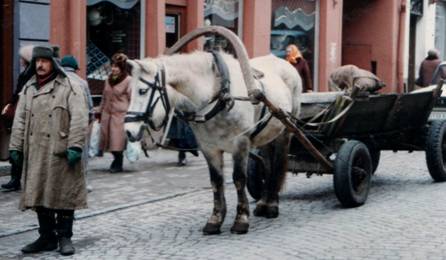
November 1990: Delivery of coal to properties in Pilies g. right in the centre of Vilnius. With horses. People pick it up in burlap sacks. Other times, the horse driver is simply shovelling the coal out on the sidewalk in front of the buildings on the ordering list.
Photo: Aage Myhre.
We land at Riga airport on a late November afternoon in 1990. Flights from western countries are still not allowed to land in Vilnius. A white Volga from the Lithuanian government is waiting for us. The driver is 70. So is the speed (km/h), so it takes us seven hours to be driven the 300 kilometres from Riga to Vilnius. Through Baltic darkness.
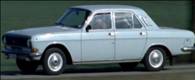
We are two Norwegians bumping through Latvia and Lithuania this November evening in a poorly padded back seat. The car has certainly springs and shock absorbers, but they don’t help much. Through Latvia and the northern part of Lithuania the roads are like roads in Norway, narrow and winding. Great is therefore my surprise when half the distance remains and a four-lane highway appears in a country I had expected would only be characterized by worn out poverty! But the top speed of the Volga remains the same.
Almost seven hours have passed when we pass a huge sign. VILNIUS it says, in enormous concrete letters. But it is still dark outside the car windows. Only when we drive down the hill towards the centre, we begin to see some faint lights. Even one neon light. 'Hotel Lietuva' it says. On top of what we understand must be a very tall building. But the darkness dominates entirely. The feeling of the Soviet Union.
"It is better to light a small candle than to curse the darkness." I come to think of words of the Chinese philosopher Confucius (K'ung Fu-tzu). This becomes my motto for my further works in and with Lithuania.
To read more, go to our SECTION 13 – THE WORLD IN LITHUANIA
- Bookmark :
- Digg
- del.icio.us
- Stumbleupon
- Redit it

- Posted by - (3) Comment
How I came to Lithuania 21 years ago (2 of 6)
Some private memories by Aage Myhre, VilNews Editor-in-Chief
aage.myhre@VilNews.com
November 1990:
A Volga journey from Riga
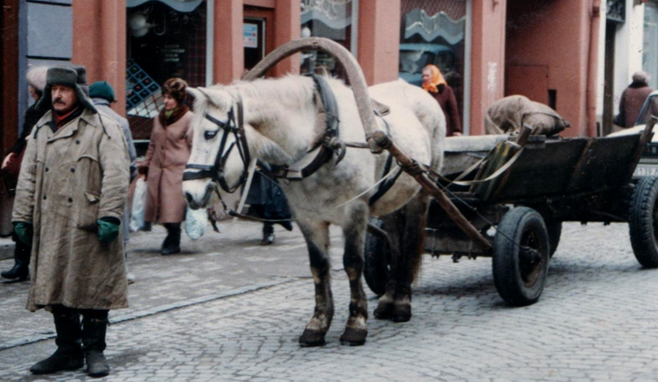
November 1990: Delivery of coal to properties in Pilies g. right in the centre of Vilnius. With horses. People pick it up in burlap sacks. Other times, the horse driver is simply shovelling the coal out on the sidewalk in front of the buildings on the ordering list.
Photo: Aage Myhre.
We land at Riga airport on a late November afternoon in 1990. Flights from western countries are still not allowed to land in Vilnius. A white Volga from the Lithuanian government is waiting for us. The driver is 70. So is the speed (km/h), so it takes us seven hours to be driven the 300 kilometres from Riga to Vilnius. Through Baltic darkness.
We are two Norwegians bumping through Latvia and Lithuania this November evening in a poorly padded back seat. The car has certainly springs and shock absorbers, but they don’t help much. Through Latvia and the northern part of Lithuania the roads are like roads in Norway, narrow and winding. Great is therefore my surprise when half the distance remains and a four-lane highway appears in a country I had expected would only be characterized by worn out poverty! But the top speed of the Volga remains the same.
Almost seven hours have passed when we pass a huge sign. VILNIUS it says, in enormous concrete letters. But it is still dark outside the car windows. Only when we drive down the hill towards the centre, we begin to see some faint lights. Even one neon light. 'Hotel Lietuva' it says. On top of what we understand must be a very tall building. But the darkness dominates entirely. The feeling of the Soviet Union.
"It is better to light a small candle than to curse the darkness." I come to think of words of the Chinese philosopher Confucius (K'ung Fu-tzu). This becomes my motto for my further works in and with Lithuania.
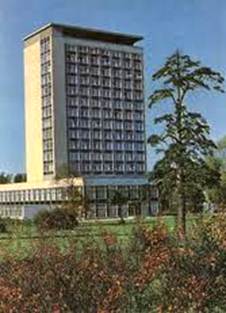
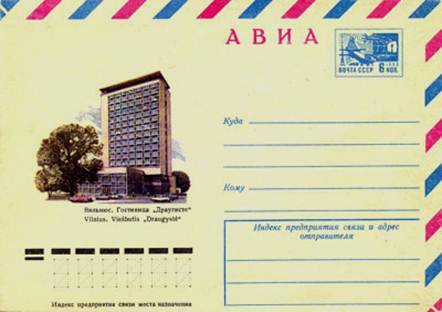
It is well past midnight when we finally arrive at the hotel. Hotel Draugyste (friendship), where state guests, the ‘stately’ guests, are placed in safe environments. With microphones everywhere.
|
|
|
The hotel's dining options are obviously closed at this time of day. We ask if they have room service or whether there are open restaurants to find in the neighbourhood. Stupid question obviously. We can see the facial expressions of the two cute girls behind the huge long reception desk. They shake their heads. Then one of them remembers that there is an open door behind the reception, to the hotel’s coffee shop. Maybe there is some food left there after the day’s business hours. We jump over the counter. It’s the only way to get in.
The armed guard, who so far has been sitting quietly in one of the deep lobby lounge chairs made of not-so-genuine leather, pops up and starts to object strenuously. Fortunately, only with his mouth. The girls manage to restrain him, and soon we are in full swing enjoying our feast. Half sandwiches of dark bread. With three kinds of cold cuts: cheese, sausage and dried sardines. The girls are even finding a few bottles of warm beer for us.
The beds appear to be the too short. But we are too tired to react.
|
|
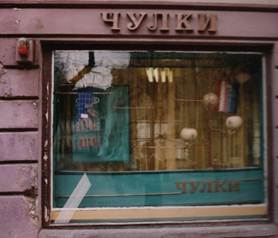
Next morning we go for a walk in the Old Town. Before the official programme starts. What we find is a beautiful but dilapidated city. The façades are mostly unpainted. Plaster has fallen off. The very few shops have no colourful shop windows. It smells of terrible Soviet fuel from Ladas, which dominates the city traffic. Horses with the carriages are moving around bringing out coal and more to people. Time seems to have stood still here. People are dressed in grey or other dark colours. Women wearing headscarves or hats, men often with berets tilted towards one ear. No smiles. We, with our Western clothing, must be a very unusual sight for them. But nobody is watching us. They look down or away. I feel sadness. |
- Bookmark :
- Digg
- del.icio.us
- Stumbleupon
- Redit it

Brand new apartments in Vilnius Old Town!
- Posted by - (0) Comment
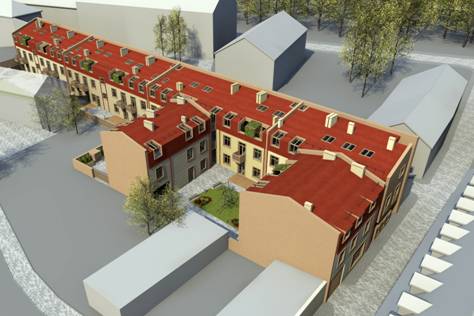
Kotrynos vartai is being built at Klaipedos Street in the very centre of Vilnius Old Town, close to the St. Catherine Church and the Teachers‘ House.
Illustration: Resolution/NEWSEC.
It is not often build new homes here in Vilnius Old Town. There are simply very few vacant spaces. The financial crisis has also contributed to 'freeze' the majority of new developments in Lithuania’s real estate sector.
But now it's finally something happening. A brand new apartment complex under construction in the heart of the Old Town, on a site that until recently was reserved for old garages from the Soviet era.
Kotrynos Vartai is the name, a complex of apartments and two commercial premises being built at Klaipedos street next to St. Catherine’s Church and the Teachers’ House.
The development includes:
- 33 apartments from 28 to 138 sq.m;
- The smallest units are 1-room studios, the largest spacey 5-rooms apartments (4 bedrooms);
- Two commercial premises facing Klaipedos street;
- Underground parking;
- Most of the apartments are equipped with terraces, balconies, high ceilings and fireplaces;
- Two closed green inner yards, with playgrounds.
The construction works started spring 2011, Completion in autumn of 2012.
The apartments are sold at prices varying from 6.700 LTL/sq.m to 8.900 LTL/sq.m. Till now eight apartments are sold.
More information at www.kotrynosvartai.lt.
- Bookmark :
- Digg
- del.icio.us
- Stumbleupon
- Redit it

Brand new apartments in Vilnius Old Town!
- Posted by - (8) Comment
Kotrynos vartai is being built at Klaipedos Street in the very centre of Vilnius Old Town, close to the St. Catherine Church and the Teachers‘ House.
Illustration: Resolution/NEWSEC.
It is not often build new homes here in Vilnius Old Town. There are simply very few vacant spaces. The financial crisis has also contributed to 'freeze' the majority of new developments in Lithuania’s real estate sector.
But now it's finally something happening. A brand new apartment complex under construction in the heart of the Old Town, on a site that until recently was reserved for old garages from the Soviet era.
Kotrynos Vartai is the name, a complex of apartments and two commercial premises being built at Klaipedos street next to St. Catherine’s Church and the Teachers’ House.
The development includes:
- 33 apartments from 28 to 138 sq.m;
- The smallest units are 1-room studios, the largest spacey 5-rooms apartments (4 bedrooms);
- Two commercial premises facing Klaipedos street;
- Underground parking;
- Most of the apartments are equipped with terraces, balconies, high ceilings and fireplaces;
- Two closed green inner yards, with playgrounds.
The construction works started spring 2011, Completion in autumn of 2012.
The apartments are sold at prices varying from 6.700 LTL/sq.m to 8.900 LTL/sq.m. Till now eight apartments are sold.
More information at www.kotrynosvartai.lt.
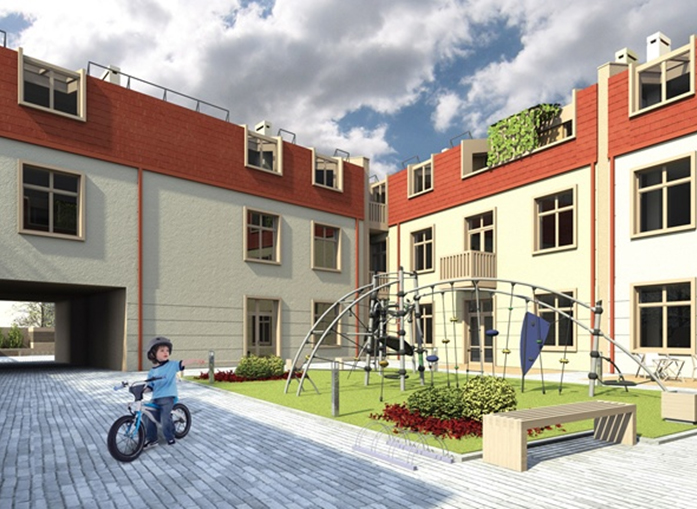
Kotrynos vartai will be a truly green and attractive oasis in the very centre of the city.
Illustration: Resolution/NEWSEC.
- Bookmark :
- Digg
- del.icio.us
- Stumbleupon
- Redit it
- Posted by - (0) Comment
Vilnius Old Town is
unique in the world
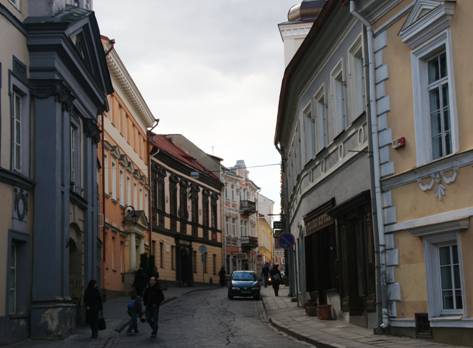
Dominikonu Street in Vilnius Old Town. The colours play together. The
attention to detail is great.
Photo: Aage Myhre.
Text: Aage Myhre, architect and editor.
From an architectural point of view, the Vilnius Old Town is unique. In the world. It can also be justified to call this the world's most international city, taking into account all nations and cultures that have been involved in its planning and construction over many centuries.
It was here architects and builders from Italy and other Mediterranean countries came to shape the international Vilnius almost 700 years ago, along with experts from Central Europe. The influence of the city's large Jewish community was also very evident throughout the centuries.
It is to Vilnius you should come if you want to watch an entire people's ancient spirit, expressed in a beautiful, special setting unmatched anywhere else. It is when you walk around in the streets here that you will understand why Vilnius has been named as the 'New Babylon', 'Jerusalem of the North', 'The world's most Italian city outside Italy' and 'The world's most baroque city north of the Alps'.
It's when you feel the round cobbles in the streets pushing up against your shoe soles that you can fully understand the concepts of multiculturalism and multi-nationalism, as you could find it in Old Vilnius.
- Bookmark :
- Digg
- del.icio.us
- Stumbleupon
- Redit it
- Posted by - (1) Comment
Vilnius Old Town is
unique in the world
Dominikonu Street in Vilnius Old Town. The colours play together. The
attention to detail is great.
Photo: Aage Myhre.
Text: Aage Myhre, architect and editor.
From an architectural point of view, the Vilnius Old Town is unique. In the world. It can also be justified to call this the world's most international city, taking into account all nations and cultures that have been involved in its planning and construction over many centuries.
It was here architects and builders from Italy and other Mediterranean countries came to shape the international Vilnius almost 700 years ago, along with experts from Central Europe. The influence of the city's large Jewish community was also very evident throughout the centuries.
It is to Vilnius you should come if you want to watch an entire people's ancient spirit, expressed in a beautiful, special setting unmatched anywhere else. It is when you walk around in the streets here that you will understand why Vilnius has been named as the 'New Babylon', 'Jerusalem of the North', 'The world's most Italian city outside Italy' and 'The world's most baroque city north of the Alps'.
It's when you feel the round cobbles in the streets pushing up against your shoe soles that you can fully understand the concepts of multiculturalism and multi-nationalism, as you could find it in Old Vilnius.
Architecture is a reflection of the level of development and maturity of any nation in the world. The architecture of Vilnius
Old Town tells us about the outstanding wisdom and multiculturalism that hallmarked this country for hundreds of years.
Vilnius architecture reflects European styles - Gothic, Renaissance, Baroque, Classicism, and more - because Lithuania's ancient leaders knew how to seek advice and expert assistance from outside. Simultaneously the city developed its own unique style.
Vilnius was, during the centuries following 1323, the year the city was founded, fully on a par with cities further west and south in Europe.
In the 1500s, Vilnius was one of Europe's three leading renaissance cities, on par with Florence and Milan.
But the styles represent only one side of it. Equally important was the fact that the contemporary leaders,
urban planners and architects followed holistic planning ideals.
The areas between the buildings were as important as the buildings themselves. Human dimensions and scale was the excellent ideal. That’s how the planners of those days paved the way for good, interactive human life and activity in Vilnius.
Therefore, also today, the old Vilnius is a good, lively and warm city to live in for people from many nations and cultures.
Capitals around the world have their special features and icons, often very important symbols of the countries they represent. Paris has the Eiffel Tower. London has its bridge. Rome has the Colosseum. Washington has the White House, Berlin has its Brandenburg Gate.
Vilnius has its wonderful Old Town that was once among the world's foremost symbols of tolerance and
peaceful coexistence and from many different nationalities and cultures. A city that exuded peace, harmony and 'good life'. A city that went ahead in humanity.
Things have changed, but the Old Town of Vilnius remains the same.
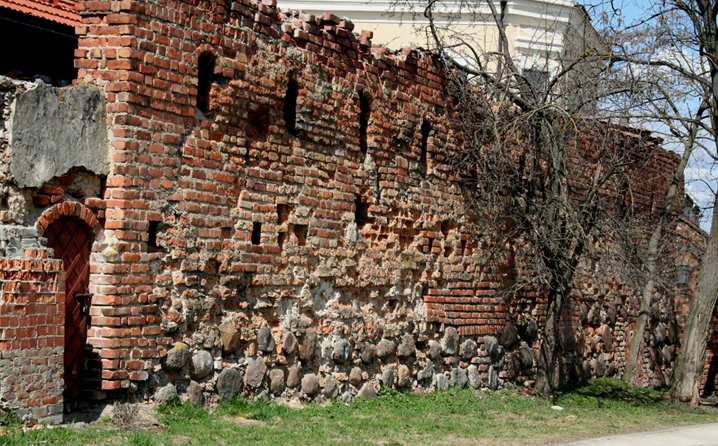
Vilnius Old Town is genuine! Here a fragment of the old city wall from the 1500s.
Photo: Aage Myhre.
- Bookmark :
- Digg
- del.icio.us
- Stumbleupon
- Redit it
Since their peak in December 2007 apartment prices in Vilnius have fallen by 39.1%
- Posted by - (0) Comment
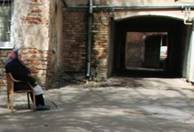
Apartment prices in the main cities in the Baltics are stable with Tallinn showing a surge in prices and sales last month, according to the latest Ober-Haus Baltic Apartment Price Index.
After a 0.1% increase in August prices of apartment in Vilnius remained stable in September at €1,209 per square meter. It means that year on year prices has decreased by 2.4%.
Sales activity in the region’s housing market normally increases in autumn but there is no sign of that happening in September as no major changes in apartment prices were seen in any major Lithuanian city.
Since their peak in December 2007 apartment prices in Vilnius have fallen by 39.1%.
Read more:
http://www.propertywire.com/news/europe/baltic-poland-property-prices-201110195697.html
- Bookmark :
- Digg
- del.icio.us
- Stumbleupon
- Redit it
- Posted by - (0) Comment
How I came to Lithuania 21 years ago (1 of 6)
Some private memories by Aage Myhre, VilNews Editor-in-Chief
aage.myhre@VilNews.com
Summer of 1990:
Landsbergis to Norway
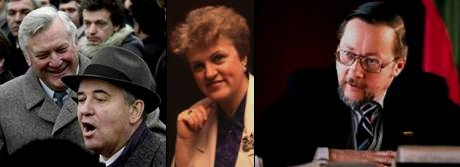
In the summer of 1990 it’s still little known in the west that there once was a country called Lithuania. The fact that this small nation, with its two Baltic neighbours, are engaged in a process of secession from the Soviet Union has still not achieved any major headlines in our western newspapers. The fall of the Berlin Wall is more important. We do not know that the Soviet President, Mikhail Gorbachev, has recently been in Lithuania to meet the country's Communist leader, Algirdas Brazauskas (both pictured left). The fact that Lithuania's prime minister, Kazimir Prunskiene (centre above), has recently been in Norway to try to get the oil company STATOIL to deliver oil to the country, which is now subjected to blockade by the Soviet power, has been heard little about. Then Parliament President Vytautas Landsbergis (pictured right) comes on his first 'official visit' to a Western country, to Norway. That changes a lot.
A young man with a ponytail enters our office community in the centre of Oslo, Norway. It’s a warm, sunny day, mid-summer 1990. Someone has told him that our office, with 16 different small firms, enjoys a relatively large network of contacts, lobbyists perhaps although I do not know much about what that word means. He tells us that he is adviser to a president of a country we have hardly heard of before now. The country is called Lithuania, the president Vytautas Landsbergis, he informs us. The advisor’s name appears to be Ramunas Bogdanas.
What we get to know, is that Landsbergis needs help in finding contacts at the highest Norwegian level in connection with his planned 'official visit' to Norway in late August, the first for a Western country. Bogdanas asks us to undertake such a task. Even if he cannot offer any payment for the job.
To read more, go to our SECTION 13 – THE WORLD IN LITHUANIA
- Bookmark :
- Digg
- del.icio.us
- Stumbleupon
- Redit it
Happy Mozart weekend!
- Posted by - (0) Comment
- Bookmark :
- Digg
- del.icio.us
- Stumbleupon
- Redit it
- Posted by - (0) Comment
Vilnius Airport:
53.7% increase in passenger traffic

Watch the air traffic over Lithuania.
Vilnius International Airport (VIA) ended this year’s aviation summer season with excellent results: passenger traffic in October grew by 53.7% compared to the same period last year. Passenger traffic of the second month of autumn reached the most successful results of the same period of activity of 2008.
“This year’s autumn brought very satisfactory results and this fact once again proves that Vilnius International Airport has been implementing a purposeful strategy and chose the right flight geography development”, Minister of Transport and Communications Eligijus Masiulis summarized the activity results of the VIA.
In October Vilnius International Airport provided services for 168.2 thousand passengers and performed 2477 flights the number of which grew by 18%. In October the most popular destinations included London, Frankfurt, Copenhagen, Helsinki, Milan and Dublin. Last month the highest number of passengers was serviced by airlines Lufthansa, Scandinavian airlines, Finnair, Wizzair, Ryanair and AirBaltic.
“Our aim for the aviation winter season is to maintain the growth rate of 30% developed during the summer season by ensuring the best result in the history of our activity”, said Director General of VIA Tomas Vaišvila.
The number of flights provided in the current flight schedule for the winter season grew by more than one third compared to the winter season last year. During the winter season of 2010–2011 VIA performed flights for 19 routes, while for the same period in 2011–2012 it has been planned to increase the number of regular flights routes up to 27.
- Bookmark :
- Digg
- del.icio.us
- Stumbleupon
- Redit it
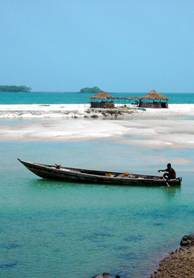
Tokeh Beach in Sierra Leone.
Greetings to our VilNews readers in:
- Togo
- Belize
- Hawaii
- Mauritius
- Polynesia
- Guatemala
- Sierra Leone
- Cote d'Ivoire
- Burkina Faso
- Dominican Republic
- Saint Vincent & Grenadines
Our VilNews e-magazine has now readers in no less than 114 countries!
The above 11 locations are probably representing our most exotic readerships.
It would be interesting to hear from you who are reading VilNews under the sun, so why not send us an email with some information about yourself, your connections to Lithuania etc – from your deckchair in the cooling shade under the palm tree?
We somehow like this that Lithuania attracts interest from suntanned readers so far away from the motherland...
- Bookmark :
- Digg
- del.icio.us
- Stumbleupon
- Redit it
Pulling extraordinary minds & brains together for the purpose of ‘rescuing’ Lithuania
- Posted by - (0) Comment
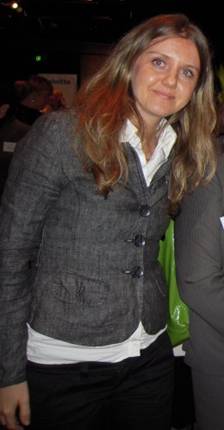 |
I have been reading some of the most interesting articles since the VilNews launch. There was one, in particular, that touched and impressed me deeply, it was an Oxfordian view on Lithuania's education. However, what has impressed me the most is the fact that you have been able to pull extraordinary 'minds & brains' together from all over the world for the purpose of 'rescuing' Lithuania as a nation, and fundamentally improve its current practices with respect to economic and political justice, business practices, educational sustainability and resilience and much, much more. Just wanted to say one more time THANK YOU!!!
|
“What has impressed me the most is the fact that you have been able to pull extraordinary 'minds & brains' together from all over the world for the purpose of 'rescuing' Lithuania as a nation, and fundamentally improve its current practices with respect to economic and political justice, business practices, educational sustainability and resilience and much, much more.”
- Bookmark :
- Digg
- del.icio.us
- Stumbleupon
- Redit it
Pulling extraordinary minds & brains together for the purpose of ‘rescuing’ Lithuania
- Posted by - (6) Comment
|
I have been reading some of the most interesting articles since the VilNews launch. There was one, in particular, that touched and impressed me deeply, it was an Oxfordian view on Lithuania's education. However, what has impressed me the most is the fact that you have been able to pull extraordinary 'minds & brains' together from all over the world for the purpose of 'rescuing' Lithuania as a nation, and fundamentally improve its current practices with respect to economic and political justice, business practices, educational sustainability and resilience and much, much more. Just wanted to say one more time THANK YOU!!!
|
“What has impressed me the most is the fact that you have been able to pull extraordinary 'minds & brains' together from all over the world for the purpose of 'rescuing' Lithuania as a nation, and fundamentally improve its current practices with respect to economic and political justice, business practices, educational sustainability and resilience and much, much more.”
- Bookmark :
- Digg
- del.icio.us
- Stumbleupon
- Redit it
Vilnius University during “Soviet Times”
- Posted by - (0) Comment
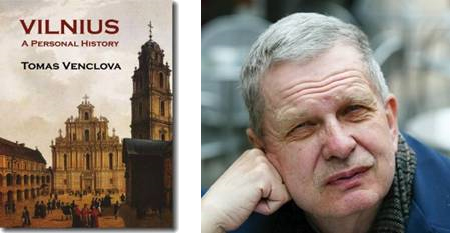
Excerpt from Tomas Venclova’s book “Vilnius a Personal History”.
I entered the University shortly after Stalin’s death. I was sixteen years old, one of the youngest students there. Times had somewhat improved―become more “vegetarian,” to quote Anna Akhmatova. The war against the anti-Communist Lithuanian and Polish partisans was coming to an end, most of them having been killed. The deportations had stopped, and people―though not all, by far―were coming back from Siberia and the prisons. Yet grim Soviet conditions still prevailed. Polish professors from the prewar era had been ousted―“repatriated” was the official term―and there were scarcely any Lithuanian professors left. Some ended up in America, others in concentration camps or six feet under, and still others were simply not permitted to teach. In the best of cases, they were replaced by high school teachers (most of them very intimidated); in somewhat worse cases, by young careerists; and in the worst of all cases, by individuals who had sent dozens of people into slave labor. Among this third group were many recent arrivals from Russia, who were more successful than the locals in adapting to the system since they knew it better. Lithuanian continued to be the language of instruction. The local Communists thought this was to their great credit, but those in power probably weren’t especially interested in which language was used―what was more important to them was what was said. Marxism (oh, if only it had really been Marxism!) and military training took up almost all the students’ time. At least half of the university library could not be accessed without special permission, something that was practically impossible to get.
Go to our Section 18 to read more
- Bookmark :
- Digg
- del.icio.us
- Stumbleupon
- Redit it

OPINIONS
Have your say. Send to:
editor@VilNews.com
Ph. D., Chicago
A wave of unity sweeps the international Lithuanian community on March 11th every year as Lithuanians celebrated the anniversary of the Lithuanian Parliament's declaration of independence from the Soviet Union in 1990. However, the sense of national unity engendered by the celebration could be short-lived.
Human beings have a strong tendency to overgeneralize and succumb to stereotypical us-them distinctions that can shatter even the strongest bonds. We need only search the internet to find examples of divisive thinking at work:
- "Those who fled Lithuania during World II were cowards -- and now they come back, flaunt their wealth, and tell us 'true Lithuanians' how to live."
- "Lithuanians who work abroad have abandoned their homeland and should be deprived of their Lithuanian citizenship."

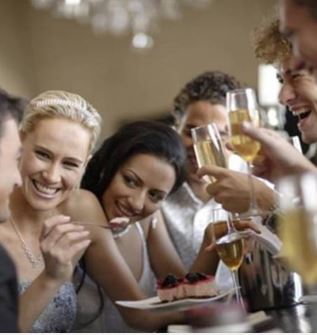
In Lithuania Christmas Eve is a family event and the New Year's Eve a great party with friends!
Lithuanian say "Kaip sutiksi naujus metus, taip juos ir praleisi" (the way you'll meet the new year is the way you will spend it). So everyone is trying to spend New Year's Eve with friend and have as much fun as possible.
Lithuanian New Year's traditions are very similar to those in other countries, and actually were similar since many years ago. Also, the traditional Lithuanian New Years Eve party was very similar to other big celebrations throughout the year.
The New Year's Eve table is quite similar to the Christmas Eve table, but without straws under the tablecloth, and now including meat dishes. A tradition that definitely hasn't changes is that everybody is trying not to fell asleep before midnight. It was said that if you oversleep the midnight point you will be lazy all the upcoming year. People were also trying to get up early on the first day of the new year, because waking up late also meant a very lazy and unfortunate year.
During the New Year celebration people were dancing, singing, playing games and doing magic to guess the future. People didn't drink much of alcohol, especially was that the case for women.
Here are some advices from elders:
- During the New Year, be very nice and listen to relatives - what you are during New Year Eve, you will be throughout the year.
- During to the New Year Eve, try not to fall, because if this happens, next year you will be unhappy.
- If in the start of the New Year, the first news are good - then the year will be successful. If not - the year will be problematic.
* If New Year's night is cold and starry - look forward to a good summer!
* If the during New Year Eve trees are covered with frost - then it will be a good year. If it is wet weather on New Year's Eve, one can expect a year where many will die and dangerous epidemics occur.
* If the first day of the new year is snowy - the upcoming year will see many young people die. If the night is snowy - mostly old people will die.
* If the New Year time is cold - then Easter will be warm.
* If during New Year there are a lot of birds in your homestead - then all year around there will be many guests and the year will be fun.
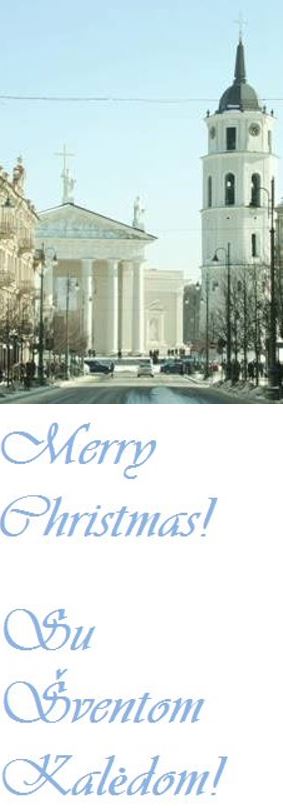
Christmas greetings
from Vilnius
and epic battle for the
future
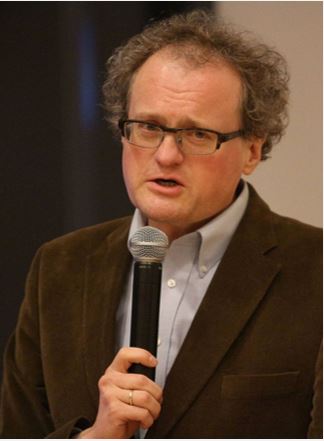
Philosopher, political theorist, historian of
ideas, social analyst, and political
commentator
Ukraine was and continues to be perceived by the EU political class as a sort of grey zone with its immense potential and possibilities for the future, yet deeply embedded and trapped in No Man's Land with all of its troubled past, post-Soviet traumas, ambiguities, insecurities, corruption, social divisions, and despair. Why worry for what has yet to emerge as a new actor of world history in terms of nation-building, European identity, and deeper commitments to transparency and free market economy?
Right? Wrong. No matter how troubled Ukraine's economic and political reality could be, the country has already passed the point of no return. Even if Vladimir Putin retains his leverage of power to blackmail Ukraine and the West in terms of Ukraine's zero chances to accede to NATO due to the problems of territorial integrity, occupation and annexation of Crimea, and mayhem or a frozen conflict in the Donbas region, Ukraine will never return to Russia's zone of influence. It could be deprived of the chances to join NATO or the EU in the coming years or decades, yet there are no forces on earth to make present Ukraine part of the Eurasia project fostered by Putin.
want to learn about the
new, scary propaganda
war between Russia,
The West and the
Baltic States!
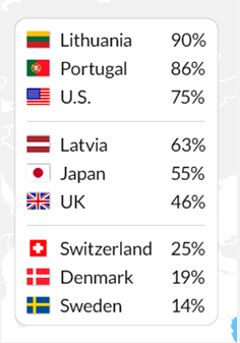
believe their government
is corrupt
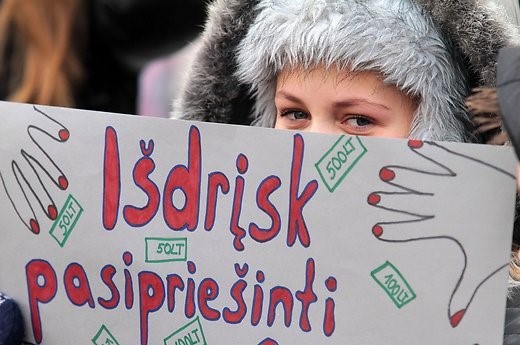
students say no to
bribes for doctors
During Soviet times, government was administered for the people in control, not for the local population, court decisions were decreed, they were not the administration of justice, and academia was the domain of ideologues. 25 years of freedom and openness should have put those bad experiences behind Lithuania, but that is not so.
Today, it is a matter of expectation that court pronouncements will be governed by ideological dictates. Few, if any Lithuanians expect real justice to be effected. For foreign companies, doing business in Lithuania is almost impossible in a situation where business people do not expect rule of law, so, surely Government would be a refuge of competence?
Lithuanian Government has not emerged from Soviet styles. In an attempt to devolve power, Lithuania has created a myriad of fiefdoms of power, each speaking in the name of the Government, each its own centralized power base of ideology.

Chepstow, Wales
Doesn't that sound suspiciously like Lithuania? Ah, but I didn't mention the mountains of Snowdonia, which would give the game away.
I'm talking about Wales, that part of the UK which Lithuanians used to call "Valija", but later named "Velsas" (why?). Wales, the nation which has welcomed two Lithuanian heads of state to its shores - firstly Professor Vytautas Landsbergis, who has paid several visits and, more recently, President Dalia Grybauskaitė who attended the 2014 NATO summit which was held in Newport, South Wales.
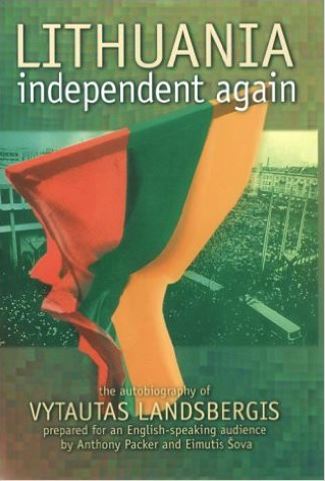
ENGLISH VERSION OF THE
AUTOBIOGRAPHY OF VYTAUTAS LANDSBERGIS.
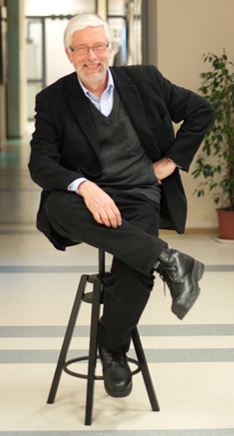
Although Lithuanian activities have thinned over the decades as that postwar generation died out, the Lithuanian Martyrs' parish hall is crowded with many, many hundreds of visitors who come to the Lithuanian cemetery for All Souls' Day. Similarly, the Franciscan parish has standing room only for Christmas Eve mass.
Although I am firmly embedded in the literary culture of Canada, my themes are usually Lithuanian, and I'll be in Kaunas and Vilnius in mid-November 2015 to give talks about the Lithuanian translations of my novels and short stories, which I write in English.
If you have the Lithuanian language, come by to one of the talks listed in the links below. And if you don't, you can read more about my work at
www.anatanassileika.com
http://www.vdu.lt/lt/rasytojas-antanas-sileika-pristatys-savo-kuryba/ https://leu.lt/lt/lf/lf_naujienos/kvieciame-i-rasytojo-59hc.html
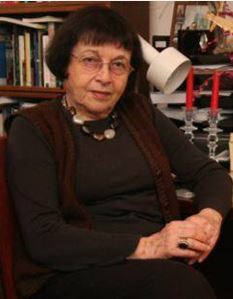
"My love and best wishes to all. As long as VilNews exists, there is hope for the future,"" she writes.
Irena Veisaite means very much for our publication, and we do hereby thank her for the support and wise commitment she always shows.
You can read our interview with her
Facing a new reality
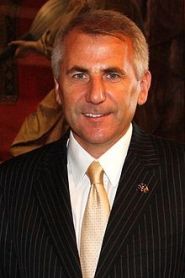
Dear readers of VilNews,
For a number of years, the EU and Russia had assumed the existence of a strategic partnership, based on the convergence of values, economic integration and increasingly open markets and a modernisation agenda for society.
Our agenda was positive and ambitious. We looked at Russia as a country ready to converge with "European values", a country likely to embrace both the basic principles of democratic government and a liberal concept of the world order. It was believed this would bring our relations to a new level, covering the whole spectrum of the EU's strategic relationship with Russia.
The likelihood of Putin
invading Lithuania
.jpg "lithuania today")
Founding Director at Summer Literary Seminars
Are all Lithuanian energy
problems now resolved?
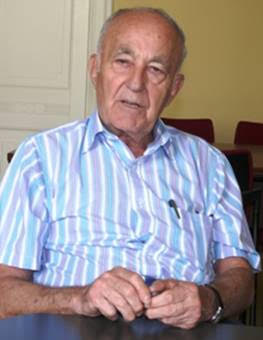
Lithuania as a country does not have significant energy resources. Energy consuming infrastructure after WWII was small and totally supported by energy imports from Russia.
First nuclear reactor begins power generation at Ignalina in 1983, the second reactor in 1987. Iganlina generates enough electricity to cover Lithuania's needs and about 50%.for export. As, prerequisite for membership in EU, Ignalina ceases all nuclear power generation in 2009
The Klaipėda Sea terminal begins Russia's oil export operations in 1959 and imports in 1994.
Mazeikiu Nafta (current ORLEAN Lietuva) begins operation of oil refinery in 1980.
Have Lithuanian ties across
the Baltic Sea become
stronger in recent years?
The two decades that have passed since regaining Lithuania's independence can be described as a "building boom". From the wreckage of a captive Soviet republic, a generation of Lithuanians have built a modern European state, and are now helping construct a Nordic-Baltic community replete with institutions intended to promote political coordination and foster a trans-Baltic regional identity. Indeed, a "Nordic-Baltic community" - I will explain later in my text the meaning of this catch-phrase.
Since the restoration of Lithuania's independence 25 years ago, we have continuously felt a strong support from Nordic countries. Nordics in particular were among the countries supporting Lithuania's and Baltic States' striving towards independence. Take example of Iceland, country which recognized Lithuania in February of 1991, well in advance of other countries. Yet another example - Swedish Ambassador was the first ambassador accredited to Lithuania in 1991. The other countries followed suit. When we restored our statehood, Nordic Countries became champions in promoting Baltic integration into Euro-Atlantic institutions. To large degree thanks Nordic Countries, massive transformations occurred in Lithuania since then, Lithuania became fully-fledged member of the EU and NATO, and we joined the Eurozone on 1 January 2015.
Have you heard about the
South African "Pencil Test"?
But that is exactly what happened to me when I came back from South Africa. I will tell you how.
VilNews e-magazine is published in Vilnius, Lithuania. Editor-in-Chief: Mr. Aage Myhre. Inquires to the editors: editor@VilNews.com.
Code of Ethics: See Section 2 – about VilNews. VilNews is not responsible for content on external links/web pages.
HOW TO ADVERTISE IN VILNEWS.
All content is copyrighted © 2011. UAB ‘VilNews’.