
THE VOICE OF INTERNATIONAL LITHUANIA

|
VilNews has its own Google archive! Type a word in the above search box to find any article.
You can also follow us on Facebook. We have two different pages. Click to open and join.
 Click on the buttons to open and read each of VilNews' 18 sub-sections Click on the buttons to open and read each of VilNews' 18 sub-sections  |

|


Opinions
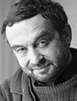
Professor Mikhail Iossel.
Congratulations on the VilNews debut in this new, expanded format. It looks very good indeed, is highly informative, and I wish you much success with it. The sheer amount of effort and dedication that must have gone into getting this undertaking off the ground is quite awe-inspiring. You are doing an important, noble thing for the beautiful country you love. It is indeed an exceptionally interesting, genuinely fascinating country, with a turbulent past and difficult present -- a place that, despite (and in part, due to) the many still-unresolved issues of history, never is not-interesting, where "the past is not dead. It isn't even past," to quote Faulkner -- and as someone who also has been held under its thrall for many years, I share your desire to see as many people as possible the world over to discover it, come visit -- and fall in love with it, too, and keep coming back. My very best wishes to VilNews.
Mikhail Iossel, Professor, Montreal, Canada
- Bookmark :
- Digg
- del.icio.us
- Stumbleupon
- Redit it

- Posted by - (0) Comment
Olga Zabludoff: Reply to Donatas Januta re Holocaust in Lithuania
There was only one genocide
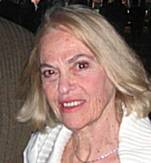
Olga Zabludoff
Dear Donatas,
The ball is now in my court and I am happy to continue the discussion. It might be that you and I have an irreconcilable difference of opinion on the subject of Jewish contributions to the Lithuanian economy, or -- as you maintain -- the lack of Jewish contributions. Let me try once more to convince you.
You point out that on the eve of World War 1 the economy of “Mother Russia,” which had an insignificant Jewish population, and the economy of Lithuania, which had a substantial Jewish population, were pretty much equal – depressed and backward. You emphasize that in spite of the fact that Jews participated in Lithuania’s economy but did not participate in the economy of czarist Russia, there was no virtual difference in the two economies.
Logic 101: If Jews had not been present in Lithuania at the time and therefore had not participated in its economy, perhaps Lithuania’s economy might have been even weaker than that of “Mother Russia.” Participating in a nation’s economy does not mean controlling the economy of that nation, let alone an entire region. Conditions in Eastern Europe during that period were what they were; the result was a weak and undeveloped economy.
- Bookmark :
- Digg
- del.icio.us
- Stumbleupon
- Redit it

- Posted by - (3) Comment
From Arizona, USA
News, ideas, questions and offers, presented by:

Click here to open the Rat Pack page
….and the photographer Rimgaudas Vidziunas
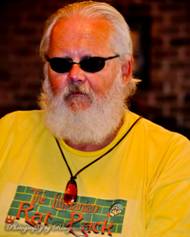
Go to ‘The Lithuaninan Rat Pack’ if you have an interest in "The Lithuanian Rat Pack" t-shirts. Thanks, ~Rimgaudas~
- Bookmark :
- Digg
- del.icio.us
- Stumbleupon
- Redit it


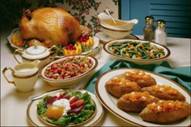
Thanksgiving is a way for Lithuanian immigrants to celebrate being in America and to share that celebration with everyone in the nation—from the descendants of the people who arrived here on the Mayflower to a family that arrived here last year.
When families immigrate to the United States, they often keep to the foods of their native countries. They also tend to continue their traditional holidays. The one American event that gets incorporated into the holiday cycle of almost every new arrival is Thanksgiving. It usually includes all the traditional foods—turkey, stuffing, pumpkin pie, sweet potatoes, cranberries and popcorn, but often with unusual twists that reflect our original homeland.
Any unusual twists on a Lithuanian-American Thanksgiving?
- Bookmark :
- Digg
- del.icio.us
- Stumbleupon
- Redit it

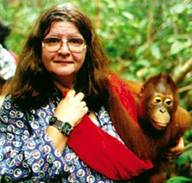
Famous Lithuanians: Birutė Marija Filomena Galdikas, (born 10 May 1946 in Wiesbaden, Germany to Lithuanian parents. A primatologist, conversationalist and author of several books relating to the endangered orangutan, particularly the Bornean orangutan. Well known in the field of modern primatology, Galdikas is recognized as a leading authority on orangutans. Prior to her field study of orangutans, scientists knew little about the species.
- Bookmark :
- Digg
- del.icio.us
- Stumbleupon
- Redit it

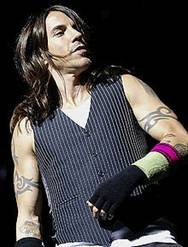
Famous Lithuanian: Anthony Kiedis born November 1, 1962) is an American vocalist/lyricist and occasional actor best known as the lead vocalist of the Grammy-winning American rock band Red Hot Chili Peppers.
- Bookmark :
- Digg
- del.icio.us
- Stumbleupon
- Redit it
- Posted by - (0) Comment
Donatas Januta: Reply to Olga Zabludoff
The ‘Green House’ has been used as a red herring*
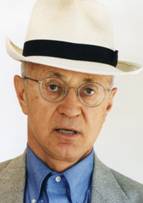
Donatas Januta
Dear Olga,
You are absolutely correct that the Jews had little choice but earn their living as merchants and traders. I was not judging how they got there. But regardless how they got there, I was only responding to their activities there, to your claim regarding Jewish contribution to the Lithuanian nation’s economy.
Let’s examine it from another perspective.
To read the post, go to
SECTION 5 or SECTION 12
- Bookmark :
- Digg
- del.icio.us
- Stumbleupon
- Redit it
- Posted by - (0) Comment
Dr. Irena Veisaite:
Re Holocaust in Lithuania
We have to build bridges!
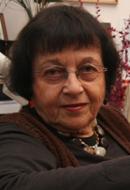
Dr. Irena Veisaite.
Dear Aage,
I fully share with you the view that people are thinking in a different way and have the right to express their position and feelings. But I am also convinced that different arguments should be expressed at the same time, if possible, on the same page.
Dr. Yves Plasseraud is well known as a fighter for minority rights and against any xenophobic trends including also anti-Semitism.
I decided to write this little note only because I noticed some concrete mistakes in the articles of Mr. Bertini and Donatas Januta.
- Bookmark :
- Digg
- del.icio.us
- Stumbleupon
- Redit it
- Posted by - (0) Comment
Holocaust in Lithuania;
Response to Didier Bertin.
The Lithuanian authorities are better than most in the region
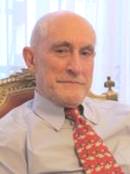
Dr. Yves Plasseraud
By Yves Plasseraud, Paris
I would like to answer briefly to the paper of my compatriot Didier Bertin, posted in VilNews on October 15. Discussion is always positive and I welcome his contribution.
I would first like to point out that my incriminated paper only concerned the attitude of some intellectuals vis-a-vis the Holocaust question in Lithuania and by no means « the martyrdom of the jewish people » in itself.
Now, concerning Bertin’s reaction, I note that although many points he raises are unfortunately true and worth mentioning, I cannot agree with him on several issues :
The Lithuanian authorities are certainly not 100% right in their treatment of the jewish question, but, they are better than most of their counterparts in the region.
- Bookmark :
- Digg
- del.icio.us
- Stumbleupon
- Redit it
- Posted by - (0) Comment
Olga Zabludoff:
Reply to Donatas Januta re Holocaust in Lithuania (3)
I dare to hope that our debate can build bridges to a better understanding
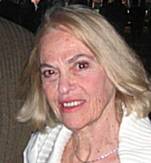
Olga Zabludoff
Dear Donatas,
The last paragraph in your article of 8 November is a good place to begin my response. I concur that our differences of opinion as well as our areas of agreement should be viewed as an exchange of honest, healthy dialogue. I would even dare to hope that it can begin to build bridges to a better understanding of all the issues we wander into.
- Bookmark :
- Digg
- del.icio.us
- Stumbleupon
- Redit it
- Posted by - (0) Comment
Donatas Januta: Reply to Olga Zabludoff re Holocaust in Lithuania
To say that there were other genocides does not diminish the Holocaust
Donatas Januta
Dear Olga,
Apparently, we agree that Jews and Lithuanians both suffered greatly during World War II. And we both agree that Timothy Snyder’s Bloodlands is an excellent book. But, there are still a few things that we don’t agree on. And I hope that we can disagree without necessarily imputing bad motives to each other.
I do not dispute Dov Levin’s claim that Jews were an integral part of Lithuania’s economy. But the Jewish lending of money to the Polish kings and other nobles that you brought up, which enabled them to continue their extravagant lifestyles at the people’s expense, had both a short-term and a long-term negative impact on the country and the lives of Lithuanians. Yes, the Jews were also mainly merchants, traders, shopkeepers and craftsmen. But to evaluate their contribution to the country’s economy in those fields is a little hard, because Jews had a monopoly in Lithuania in those fields, and it is acknowledged that all monopolies, with their price-fixing, stifling of competition, and other evils, generally have a negative impact on a country’s economy. That’s why in the US we have anti-trust laws, anti-price-fixing laws, etc. Lithuanians did not have any of those protections.
One result was that, after 600 years of Lithuanians and Jews living side by side, on the eve of World War I, Lithuania was an economically depressed and backward country.
To read this and the other posts on this topic, go to:
SECTION 5 or SECTION 12
- Bookmark :
- Digg
- del.icio.us
- Stumbleupon
- Redit it
- Posted by - (0) Comment
Olga Zabludoff: Reply to Donatas Januta re Holocaust in Lithuania
I love and respect Lithuanians no less than I do my American friends, both Jews and non-Jews
Olga Zabludoff
Washington, DC, USA
Dear Donatas,
Thank you for your gracious opening paragraph to our discussion. I will try to comment on the points you raise in your letter.
I do not dispute Dina Porat’s finding that 99.5% of the Lithuanian population was neither directly nor indirectly involved in the killing of Jews. I would not dispute the findings of any reputable researcher/historian. But what I wish to point out is that one-half of 1% of the 1941 Lithuanian population equaled about 15,000 persons. Looking at the Jewish population of about 200,000 at the time, the ratio between killers and victims was 1: 13.
That can account for high efficiency. The real problem was that the other 99.5% of the population chose to close their eyes.
"All that is necessary for the triumph of evil is that good men do nothing." This quote from Edmund Burke is the painful truth in the story of the Holocaust as well as other major tragedies.
To read more, go to
SECTION 5 or SECTION 12
- Bookmark :
- Digg
- del.icio.us
- Stumbleupon
- Redit it
- Posted by - (0) Comment
Donatas Januta:
Reply to Olga Zabludoff
re Holocaust in Lithuania
Why can’t the Lithuanians simply grieve their own tragedy, and the Jews grieve theirs?
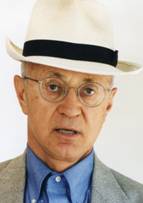
Donatas Januta:
Dear Olga:
Of the numbers of Lithuanian Jews that were killed in 1941-1944 I have seen several numbers, all of which were around 90% or more. If you feel more comfortable with 95-96%, I won’t quarrel with you. The fact is that any such number is an enormous number, and it was and is a great tragedy. If there was anything that I could do to undo it, I would.
But you don’t seem to dispute the Israeli historian Dina Porat that 99.5% of the Lithuanian population was neither directly nor indirectly involved.
As for your claim that the Jews contributed “enormously” to Lithuania’s economy and culture, you quote that wealthy Jews lent money to the “Lithuanian authorities” when they got into financial trouble. But that was in centuries past, and those Lithuanian authorities were either individual warlords, or the Polish kings of the joint commonwealth, who got into personal financial trouble due to their extravagant lifestyles. And all those Jewish loans then went into their own private pockets. And, of course, the Jewish lenders did not act solely out of a sense of charity; they received more than a quid pro quo. The Lithuanian nation, i.e., the people of Lithuania, however, did not benefit at all from letting those same “Lithuanian authorities” continue living their extravagant lifestyles, at, ultimately, the people’s expense. That's why those Jewish "contributions" to the Lithuanian nation's economy were, as I said, either ziltch, or perhaps less than ziltch.
To read more, go to:
SECTION 5 or SECTION 12
- Bookmark :
- Digg
- del.icio.us
- Stumbleupon
- Redit it
- Posted by - (0) Comment
A number of people have been commenting on this topic over the latest days.
Go to Section 5 or Section 12 to read all comments.
Mr. Januta twists facts and figures to suit his arguments
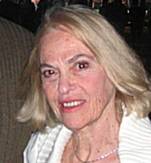
Olga Zabludoff
By: Olga Zabludoff
Washington, DC, USA
Mr. Januta’s article goes right to the heart of the problem: the tendency of critics like him to accuse others of being misinformed and of misstating facts. Indeed it is Mr. Januta who twists facts and figures to suit his arguments. Even when his facts are “correct,” they are simply half-truths.
For example: Yes, there is a Holocaust Museum in Vilnius, but to compare the pitiful little hidden building (the Green House) with the state-of-the-art Museum of Genocide located on a major street is like comparing a mouse to an elephant.
- Bookmark :
- Digg
- del.icio.us
- Stumbleupon
- Redit it
Aloha from Hawaii!
- Posted by - (0) Comment

Thanks for keeping me posted these last few months while I enjoy the winter in sunny and warm Hawaii. I want to congratulate you for your great new idea and wish you all the best with the project. You can count on me to be an avid reader.
Aloha, Elena Bradunas Aglinskas
- Bookmark :
- Digg
- del.icio.us
- Stumbleupon
- Redit it
- Posted by - (0) Comment
So-called ‘double genocide’ and other red herrings
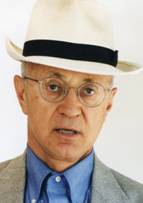
Donatas Januta
By Donatas Januta
Mr. Didier Bertin is either woefully misinformed or intentionally misstates facts in his “reply” to Yves Plasseraud’s article “Lithuania and the memory of the Shoah (Holocaust)”.
He refers to the crimes of Hitler and Stalin as the “Double Genocide” theory, states that the comparison of the two is initiated by Lithuania and/or its government, and that the reason for it is to somehow minimize the tragedy which the world’s Jews suffered during the Second World War. But the comparison between the tragedies brought by those two psychopaths, Hitler and Stalin, is not of Lithuanian origin or usage at all.
Mr. Bertin chooses not to give credit where credit is due. The comparison between Hitler’s and Stalin’s crimes was first made and thoroughly analyzed by the prominent Israeli historian Dov Levin, in his book “The Lesser of Two Evils”.
Read more at:
Section 5 and Section 12
- Bookmark :
- Digg
- del.icio.us
- Stumbleupon
- Redit it

OPINIONS
Have your say. Send to:
editor@VilNews.com
Ph. D., Chicago
A wave of unity sweeps the international Lithuanian community on March 11th every year as Lithuanians celebrated the anniversary of the Lithuanian Parliament's declaration of independence from the Soviet Union in 1990. However, the sense of national unity engendered by the celebration could be short-lived.
Human beings have a strong tendency to overgeneralize and succumb to stereotypical us-them distinctions that can shatter even the strongest bonds. We need only search the internet to find examples of divisive thinking at work:
- "Those who fled Lithuania during World II were cowards -- and now they come back, flaunt their wealth, and tell us 'true Lithuanians' how to live."
- "Lithuanians who work abroad have abandoned their homeland and should be deprived of their Lithuanian citizenship."

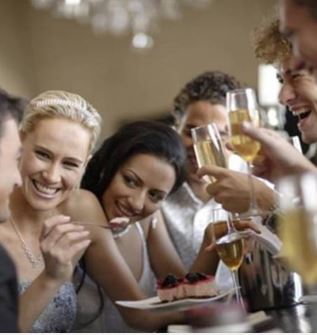
In Lithuania Christmas Eve is a family event and the New Year's Eve a great party with friends!
Lithuanian say "Kaip sutiksi naujus metus, taip juos ir praleisi" (the way you'll meet the new year is the way you will spend it). So everyone is trying to spend New Year's Eve with friend and have as much fun as possible.
Lithuanian New Year's traditions are very similar to those in other countries, and actually were similar since many years ago. Also, the traditional Lithuanian New Years Eve party was very similar to other big celebrations throughout the year.
The New Year's Eve table is quite similar to the Christmas Eve table, but without straws under the tablecloth, and now including meat dishes. A tradition that definitely hasn't changes is that everybody is trying not to fell asleep before midnight. It was said that if you oversleep the midnight point you will be lazy all the upcoming year. People were also trying to get up early on the first day of the new year, because waking up late also meant a very lazy and unfortunate year.
During the New Year celebration people were dancing, singing, playing games and doing magic to guess the future. People didn't drink much of alcohol, especially was that the case for women.
Here are some advices from elders:
- During the New Year, be very nice and listen to relatives - what you are during New Year Eve, you will be throughout the year.
- During to the New Year Eve, try not to fall, because if this happens, next year you will be unhappy.
- If in the start of the New Year, the first news are good - then the year will be successful. If not - the year will be problematic.
* If New Year's night is cold and starry - look forward to a good summer!
* If the during New Year Eve trees are covered with frost - then it will be a good year. If it is wet weather on New Year's Eve, one can expect a year where many will die and dangerous epidemics occur.
* If the first day of the new year is snowy - the upcoming year will see many young people die. If the night is snowy - mostly old people will die.
* If the New Year time is cold - then Easter will be warm.
* If during New Year there are a lot of birds in your homestead - then all year around there will be many guests and the year will be fun.
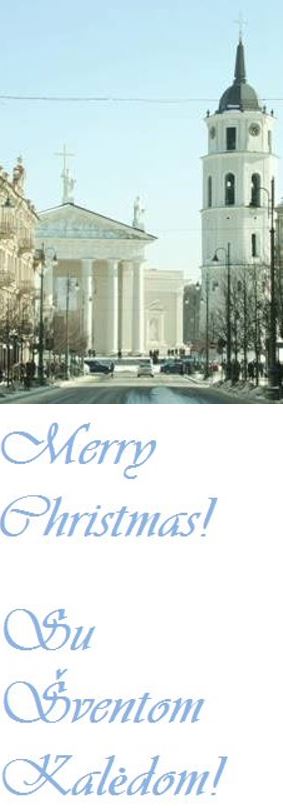
Christmas greetings
from Vilnius
and epic battle for the
future
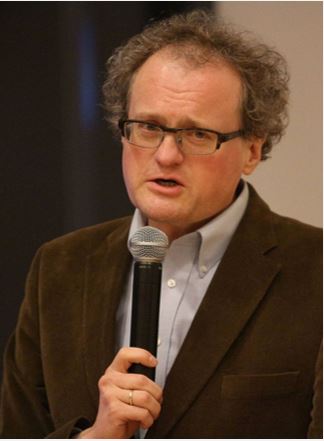
Philosopher, political theorist, historian of
ideas, social analyst, and political
commentator
Ukraine was and continues to be perceived by the EU political class as a sort of grey zone with its immense potential and possibilities for the future, yet deeply embedded and trapped in No Man's Land with all of its troubled past, post-Soviet traumas, ambiguities, insecurities, corruption, social divisions, and despair. Why worry for what has yet to emerge as a new actor of world history in terms of nation-building, European identity, and deeper commitments to transparency and free market economy?
Right? Wrong. No matter how troubled Ukraine's economic and political reality could be, the country has already passed the point of no return. Even if Vladimir Putin retains his leverage of power to blackmail Ukraine and the West in terms of Ukraine's zero chances to accede to NATO due to the problems of territorial integrity, occupation and annexation of Crimea, and mayhem or a frozen conflict in the Donbas region, Ukraine will never return to Russia's zone of influence. It could be deprived of the chances to join NATO or the EU in the coming years or decades, yet there are no forces on earth to make present Ukraine part of the Eurasia project fostered by Putin.
want to learn about the
new, scary propaganda
war between Russia,
The West and the
Baltic States!
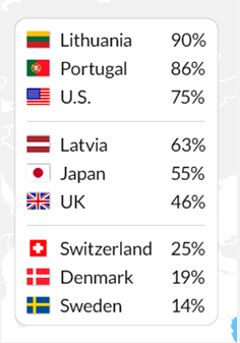
believe their government
is corrupt
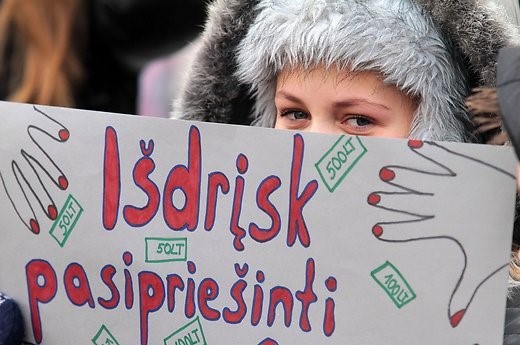
students say no to
bribes for doctors
During Soviet times, government was administered for the people in control, not for the local population, court decisions were decreed, they were not the administration of justice, and academia was the domain of ideologues. 25 years of freedom and openness should have put those bad experiences behind Lithuania, but that is not so.
Today, it is a matter of expectation that court pronouncements will be governed by ideological dictates. Few, if any Lithuanians expect real justice to be effected. For foreign companies, doing business in Lithuania is almost impossible in a situation where business people do not expect rule of law, so, surely Government would be a refuge of competence?
Lithuanian Government has not emerged from Soviet styles. In an attempt to devolve power, Lithuania has created a myriad of fiefdoms of power, each speaking in the name of the Government, each its own centralized power base of ideology.
Chepstow, Wales
Doesn't that sound suspiciously like Lithuania? Ah, but I didn't mention the mountains of Snowdonia, which would give the game away.
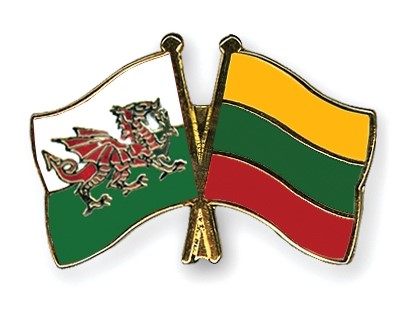
I'm talking about Wales, that part of the UK which Lithuanians used to call "Valija", but later named "Velsas" (why?). Wales, the nation which has welcomed two Lithuanian heads of state to its shores - firstly Professor Vytautas Landsbergis, who has paid several visits and, more recently, President Dalia Grybauskaitė who attended the 2014 NATO summit which was held in Newport, South Wales.
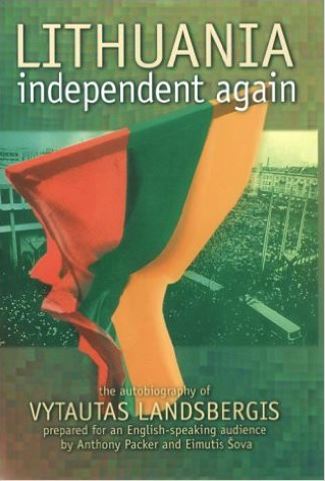
ENGLISH VERSION OF THE
AUTOBIOGRAPHY OF VYTAUTAS LANDSBERGIS.
Although Lithuanian activities have thinned over the decades as that postwar generation died out, the Lithuanian Martyrs' parish hall is crowded with many, many hundreds of visitors who come to the Lithuanian cemetery for All Souls' Day. Similarly, the Franciscan parish has standing room only for Christmas Eve mass.
Although I am firmly embedded in the literary culture of Canada, my themes are usually Lithuanian, and I'll be in Kaunas and Vilnius in mid-November 2015 to give talks about the Lithuanian translations of my novels and short stories, which I write in English.
If you have the Lithuanian language, come by to one of the talks listed in the links below. And if you don't, you can read more about my work at
www.anatanassileika.com
http://www.vdu.lt/lt/rasytojas-antanas-sileika-pristatys-savo-kuryba/ https://leu.lt/lt/lf/lf_naujienos/kvieciame-i-rasytojo-59hc.html
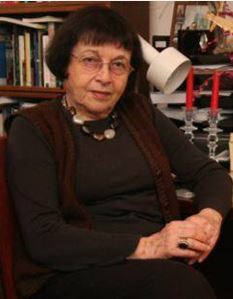
"My love and best wishes to all. As long as VilNews exists, there is hope for the future,"" she writes.
Irena Veisaite means very much for our publication, and we do hereby thank her for the support and wise commitment she always shows.
You can read our interview with her
Facing a new reality
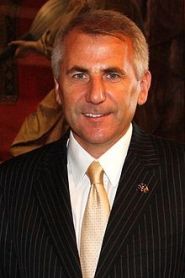
Dear readers of VilNews,
For a number of years, the EU and Russia had assumed the existence of a strategic partnership, based on the convergence of values, economic integration and increasingly open markets and a modernisation agenda for society.
Our agenda was positive and ambitious. We looked at Russia as a country ready to converge with "European values", a country likely to embrace both the basic principles of democratic government and a liberal concept of the world order. It was believed this would bring our relations to a new level, covering the whole spectrum of the EU's strategic relationship with Russia.
The likelihood of Putin
invading Lithuania
.jpg "lithuania today")
Founding Director at Summer Literary Seminars
Are all Lithuanian energy
problems now resolved?
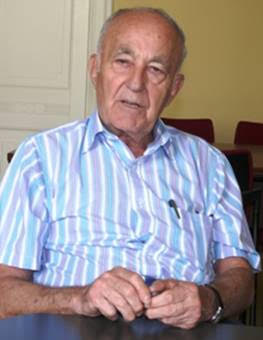
Lithuania as a country does not have significant energy resources. Energy consuming infrastructure after WWII was small and totally supported by energy imports from Russia.
First nuclear reactor begins power generation at Ignalina in 1983, the second reactor in 1987. Iganlina generates enough electricity to cover Lithuania's needs and about 50%.for export. As, prerequisite for membership in EU, Ignalina ceases all nuclear power generation in 2009
The Klaipėda Sea terminal begins Russia's oil export operations in 1959 and imports in 1994.
Mazeikiu Nafta (current ORLEAN Lietuva) begins operation of oil refinery in 1980.
Have Lithuanian ties across
the Baltic Sea become
stronger in recent years?
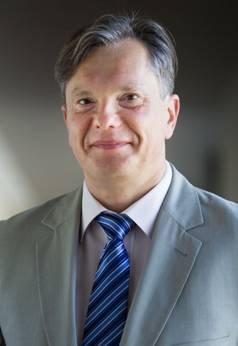
The two decades that have passed since regaining Lithuania's independence can be described as a "building boom". From the wreckage of a captive Soviet republic, a generation of Lithuanians have built a modern European state, and are now helping construct a Nordic-Baltic community replete with institutions intended to promote political coordination and foster a trans-Baltic regional identity. Indeed, a "Nordic-Baltic community" - I will explain later in my text the meaning of this catch-phrase.
Since the restoration of Lithuania's independence 25 years ago, we have continuously felt a strong support from Nordic countries. Nordics in particular were among the countries supporting Lithuania's and Baltic States' striving towards independence. Take example of Iceland, country which recognized Lithuania in February of 1991, well in advance of other countries. Yet another example - Swedish Ambassador was the first ambassador accredited to Lithuania in 1991. The other countries followed suit. When we restored our statehood, Nordic Countries became champions in promoting Baltic integration into Euro-Atlantic institutions. To large degree thanks Nordic Countries, massive transformations occurred in Lithuania since then, Lithuania became fully-fledged member of the EU and NATO, and we joined the Eurozone on 1 January 2015.
Have you heard about the
South African "Pencil Test"?
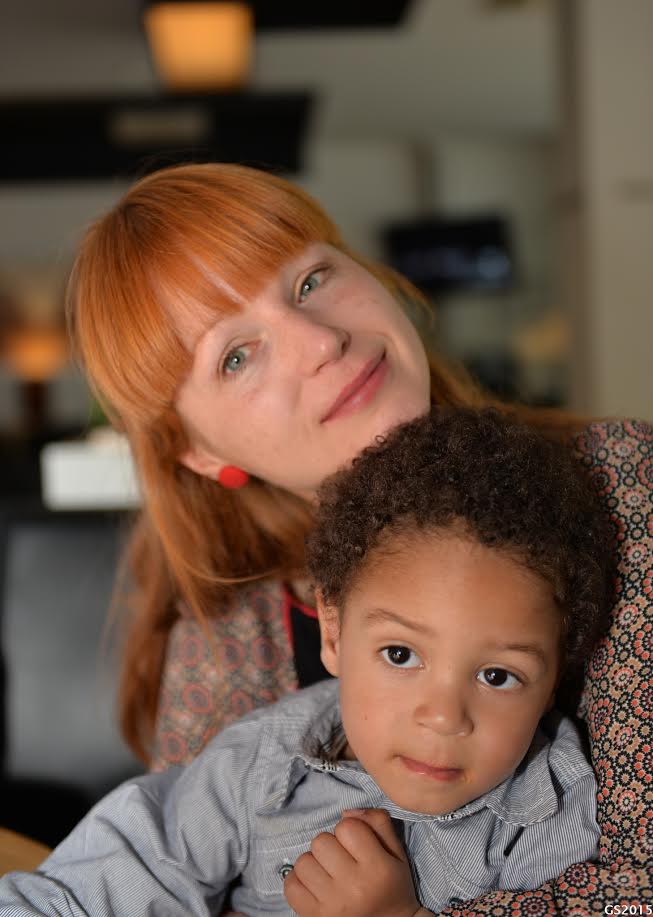
But that is exactly what happened to me when I came back from South Africa. I will tell you how.
VilNews e-magazine is published in Vilnius, Lithuania. Editor-in-Chief: Mr. Aage Myhre. Inquires to the editors: editor@VilNews.com.
Code of Ethics: See Section 2 – about VilNews. VilNews is not responsible for content on external links/web pages.
HOW TO ADVERTISE IN VILNEWS.
All content is copyrighted © 2011. UAB ‘VilNews’.