
THE VOICE OF INTERNATIONAL LITHUANIA

|
VilNews has its own Google archive! Type a word in the above search box to find any article.
You can also follow us on Facebook. We have two different pages. Click to open and join.
 Click on the buttons to open and read each of VilNews' 18 sub-sections Click on the buttons to open and read each of VilNews' 18 sub-sections  |

|


Opinions

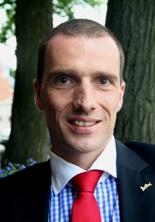
General Manager Tobias Ammon at Radisson Blu Hotel in Klaipeda.
The Radisson Blu Hotel in Klaipeda has just celebrated its first ten years as the only truly international luxury hotel at Lithuania’s beautiful seacoast.
Two months ago the hotel got a new General Manager, German Tobias Ammon (35), and I am sitting down with him in the hotel’s breakfast room this early July morning to let him explain to you, dear readers, why you should visit Klaipeda and his hotel – this summer as well as when the autumn winds already make the endless Baltic Sea waves powerfully roll in towards the port city shores.
“I must admit that I had to ask where Klaipeda is when I was offered this position, but I was astonished to see what a nice area this is, when I first came here,” tells the young manager, who now has moved here with wife and little daughter. He and his little family are now in full swing “testing Klaipeda as travel destination”, and they are using their bicycles to do exactly that!
“This area is really ideal for bikes, and we are now using our weekends to bike to the fantastic beaches in the outskirts of the city, riding through beautiful coastal pine tree forests, villages and over the wavy, green landscapes that characterise this area,” he tells.
- Bookmark :
- Digg
- del.icio.us
- Stumbleupon
- Redit it

This country is steeped in corruption
- Posted by - (0) Comment
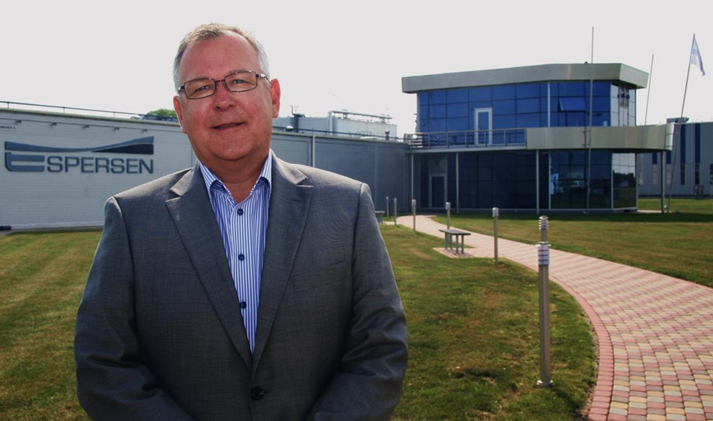
General Director Reidar Inselseth at the Espersen Fish Factory in Klaipeda
I sit with the director of the Espersen plant in Klaipeda, Norwegian Reidar Inselseth, in the new office building his firm has just built. The building is designed as the wheelhouse of a ship, with a shiny blue glass surface, and the 'bow, roof top and masts' in stainless steel.
Reidar has been director of this facility for four years now, and among other things, been responsible for extensive new investments and developments of the company. My first question to him is what he finds hardest by being entrepreneur and company leader in Lithuania.
"The lack of predictability," he replies immediately. "Unfortunately, that is something that to a far too high degree characterizes this country. For my company this is so serious that we hardly had chosen Lithuania for our production if we eight-nine years ago had known what we now know."
"This country is steeped in corruption, which we feel very directly when we often are subjected to strange inspections etc. from the authorities; something we do not see anything like in any of the other countries where we have fish processing plants. We are, for example, constantly subjected to unreasonable disclosure requirements and controls, even if we always follow highly acclaimed and transparent international principles of production, environmental control, bookkeeping and treatment of employees. It feels as if here in Lithuania companies like ours still have to prove their innocence instead of being greeted with open arms and cooperative attitudes."
Aage Myhre
- Bookmark :
- Digg
- del.icio.us
- Stumbleupon
- Redit it

- Posted by - (0) Comment
CONSUL GREETINGS
From Krister Castren, Honorary Consul of Finland in Klaipeda
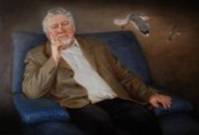
Krister Castren, painted by Žygimantas Augustinas.
http://www.augustinas.lt/ind_ang.html
The roots of the relationship between Finland and the Klaipeda region are hundreds of years old. The Baltic Sea, with its naval and fishery activities have been of mutual interest in the old ages and will probably be in the future as well. Even during the dark Soviet times, sometimes Finnish cargo was unloaded at the port of Klaipeda.
Especially Aland Island, well known for its long maritime history, still being a big factor in the branch, had an exchange of captains and other crew with colleagues in Klaipeda. Part of that history will be found in the National Sea Museum in Klaipeda.
One of the symbols of the City is the sailing ship now standing with visible commercial sails in the river Dane. The origin of the ship is interesting. It was built in Turku, Finland after WW2 as part of the compensation for war damages to Soviet Union. It had dozens of sister ships of which only three are left, Klaipeda’s “Meridianas” being the best, but not in very good shape. Its history is well known having last served as a Soviet sailors’ training ship in Kaliningrad from where it was taken to Klaipeda and put in the river with the idea of preventing it from sinking. Although it is now in private hands, we hope that this old lady still has got another 60 years in her to decorate Klaipeda’s old town.
Finnish business activities in the Klaipeda region are not very remarkable. The most visible Finnish trademarks are, as everywhere in Lithuania, Neste Oil and of course the giant Nokia. The other Finnish giant, Fortum, is a minority share-holder of Klaipeda Energija and plans to make some huge investments in the energy production field in the near future. Kuusakoski, a recycler of metal waste, has its Lithuanian head office in Klaipeda. Another well known company holding its office here is Lemminkainen, having been working for years to improve the quality of Lithuanian roads.
But, Klaipeda is still on the waiting list to achieve Finnish investments and the reasons for that are partly pretty well known. The first question is how to reach the city in a reasonable amount of time. This means in modern business terms, one day. There are no flexible flight connections to the Palanga airport from Finland. The closest place to land is Kaunas, but first you must manage to drive to Tampere, 200 kilometers away from Helsinki and then there is another 220 km drive to Klaipeda. Or try your chances flying to Vilnius with a 300 kilometers drive one way to Klaipeda. Not so comfortable. It doesn’t matter how attractive the local objects are if you cannot check your investments in a reasonable time - Put your money elsewhere!
- Bookmark :
- Digg
- del.icio.us
- Stumbleupon
- Redit it

- Posted by - (0) Comment

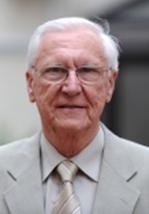
The Chronicle you wrote is excellent. You have done a great job and should be proud of it.
Jonas Kronkaitis,
Brigadier General, former Commander of Lithuania’s Armed Forces
- Bookmark :
- Digg
- del.icio.us
- Stumbleupon
- Redit it

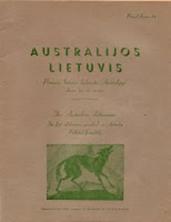
Your ‘Chronicle of Lithuania’ is interesting as it details events that sometimes are lost and are shown with different point of view.
Romas,
Australia
- Bookmark :
- Digg
- del.icio.us
- Stumbleupon
- Redit it

We, Lithuanians in diaspora or in Lithuania itself, should be very grateful and obliged to Great Friends of Lithuania like you!
Valdas Samonis, PhD, CPC (Canadian – Lithuanian)
The Web Professor of Global Management(SM)
- Bookmark :
- Digg
- del.icio.us
- Stumbleupon
- Redit it
I would read with my grandchildren your well illustrated publication and encourage them to ask questions
- Posted by - (0) Comment
I am Isolde Ira Pozelaite – Davis AM, a grandmother of three beautiful grandchildren.
A lady who lives in the Lithuanian retirement Village where I live as well, has given me to read a photocopied pamphlet LITHUANIA IN A GLOBAL PERSPECTIVE.
I would like to buy, If this is possible, 3 copies of this excellent publication. My grandchildren are 7, 12, 14 years old. I would read with them your well illustrated publication and encourage them to ask questions.
This would lead to a discussion and explanations. Have been a High School teacher for 38 years teaching French and German and 20 years Lithuanian in Australia. As you see old habits are difficult to forget. Will be 87 years in May, 2010.
Isolde Ira Poželaitė – Davis AM
Australian-Lithuanian
- Bookmark :
- Digg
- del.icio.us
- Stumbleupon
- Redit it
Dummheit und Stolz wachsen auf einem Holz
- Posted by - (0) Comment

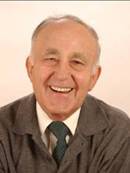
Dr. Stan Backaitis
Several months ago I had arranged a visit between the minister of energy and a CEO of an important nuclear reactor manufacturer. The meeting was supposed to be for the benefit of the minister on information of what is forthcoming in the future, particularly in small reactors and the possibility of establishing a European affiliate of the company in Lithuania.
The minister graciously extended an invitation to the CEO, but the minister's secretariat refused to extend even the slightest courtesy to this visit, such as picking up the visitor from the airport and transporting him to the meeting, setting up a meeting agenda, or even providing to the visitor's office the address of the ministry. They claimed that this was just another sales visit, and the visitor should take care of everything on his own. As a result the CEO canceled the meeting and eventually went to London. The European affiliate was established in the UK. Thus through such arrogance another opportunity was lost.
There is a lot truth in the German proverb "Dummheit und Stolz wachsen auf einem Holz".
Stan Backaitis
Washington, USA
- Bookmark :
- Digg
- del.icio.us
- Stumbleupon
- Redit it
I spoke to a number of Lithuanians with degrees from top Western universities, who don’t want to return to Lithuania – according to them, the “natives” know everything better
- Posted by - (0) Comment
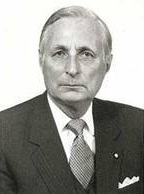
Ambassador Algirdas Žemaitis
You have lived long enough in Lithuania and must realize that many of the problems of the present day Lithuania are due to their reluctance to learn from the Western countries or accept advice from Lithuanians who lived and studied in the West. The relative success of Lithuania after World War I was largely due to the replacement of Russian educated officials by those who got their degrees in the West. My own father was the first Lithuanian with a degree in forestry from a Western university and introduced major reforms in the forest management, which survived even during the Communist occupation.
Alas, after 20 years of restoration of independence to paraphrase Kipling "The East is East, the West is West and the twain shall never (so far) meet". I spoke to a number of Lithuanians with degrees from top Western universities, who don't want to return to Lithuania - according to them, the "natives" know everything better.
I might add that for me it was easier to obtain an audience with the Pope, than with a Minister for Foreign Affairs of Lithuania.
Ambassador Algirdas Zemaitis
Vilnius – Rome
- Bookmark :
- Digg
- del.icio.us
- Stumbleupon
- Redit it
- Posted by - (0) Comment
VilNews will this summer from time to time publish poetry that we receive from our readers. Please send us yours!

Night Knight
by KR Slade
I finished at school then home I came.
And fourteen days past Christmas next
my father went in sleep to his grave.
When I had forgotten so long before
the stories at bedtime that he had told.
I’d always to sleep and miss some part
but waked again to hear some more;
so all the story I’d often heard but never
remembered from start to end, the all.
Wasn’t it just of our to-make-believe ?
Didn’t we laugh because it wasn’t true ?
But now I know that jest was only just
to make it less scary for then and now.
The legend that would for me come true.
- Bookmark :
- Digg
- del.icio.us
- Stumbleupon
- Redit it
- Posted by - (0) Comment
Now I have another reason to visit Lithuania
A most interesting article! Now I have another reason to visit Lithuania as I have in the past. Would love to at least see Vilnius University as we were unable to enter it on our last trip there. Thank you for the information and will pass it on to other lovers of Lithuanian history.
Irene A. Petkaitis
- Bookmark :
- Digg
- del.icio.us
- Stumbleupon
- Redit it
Tell us more about the paining
- Posted by - (0) Comment
Well written! Tell us more about the painting.
Bob & Peggy Moroney
* * *
Dear Bob & Peggy,
The painting ‘Death of Grand Duke Sigismund Augustus’ (1522-1572) – is a handmade oil painting reproduction by Jan Matejko (1838–1893).
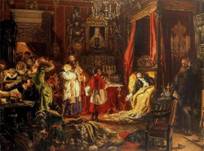
Read more about the painter here:
http://www.culture.pl/web/english/resources-visual-arts-full-page/-/eo_event_asset_publisher/eAN5/content/jan-matejko
- Bookmark :
- Digg
- del.icio.us
- Stumbleupon
- Redit it
Actually Sigismund Augustas never trusted the Jesuit Brothers and he had the Grail secretly hinded in the bell tower, because that is the last place the Brotherhood would look for the Grail after his death.
Joe Bakaitis
- Bookmark :
- Digg
- del.icio.us
- Stumbleupon
- Redit it

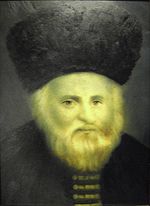
It is worth to mention that later on starting from 1779 Vilnius and the Lithuanian Grand Duchy, as many other nations around the world, was an invisible battleground between Jewish led Illuminati freemasons and Vatican Jesuits fighting each other in order to gain and maintain control. Maybe It is worth to mention some colourful names and their activities like Elijah ben Shlomo Zalman known as the Vilna Gaon or Elijah of Vilna
Enjoyed this interesting VilNews issue. Especially, your article on Holy Grail and Sforza family connection even though you did not provided any supporting historical data to prove this. Nevertheless, legends do sell and we need them to market this country.
It is worth to mention that later on starting from 1779 Vilnius and the Lithuanian Grand Duchy, as many other nations around the world, was an invisible battleground between Jewish led Illuminati freemasons and Vatican Jesuits fighting each other in order to gain and maintain control. Maybe It is worth to mention some colourful names and their activities like Elijah ben Shlomo Zalman known as the Vilna Gaon or Elijah of Vilna who was an exceptional Talmudist, Halachist, Kabbalist, and the foremost leader of non-hasidic world Jewry of the past few centuries. He is commonly referred to in Hebrew as ha'Gaon ha'Chasid mi'Vilna, "the saintly genius from Vilnius."
Arvydas Arnasius, Vilnius
- Bookmark :
- Digg
- del.icio.us
- Stumbleupon
- Redit it
Fantastico
- Posted by - (0) Comment
Fantastico . Molto bella come storia, anzi credo proprio che se qualcuno pieno di soldi ne facesse un film, come "il codice da vinci" la Lituania avrebbe un ritorno economico non indifferente, specie se, nel racconto il sacro grall avesse fatto tappa in diverse località della Lituania, prima di arrivare a Vilnius ... così che ci sia un percorso da seguire per vedere posti, di importanza storica dove tra mistero ed intrighi il sacro grall passò attraverso le mani di quei seguaci del Cristo Bianco, così come veniva chiamato tra le popolazioni del nord il noto e ben amato Gesù Cristo ..........
Rino Logiacco
- Bookmark :
- Digg
- del.icio.us
- Stumbleupon
- Redit it
- Posted by - (0) Comment
Santa Claus and Lithuania’s Grand Duchess buried in same South-Italian basilica
(maybe no need to tell your kids…)
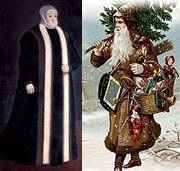
Grand Duchess Bona Sforza (1494-1557) and St. Nicholas (270-343).
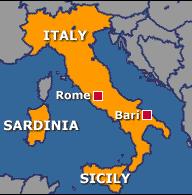
The Basilica di San Nicola in the South-Italian city Bari was built between 1087 and 1197. Its foundation is related to the stealing and burying of the relics of St. Nicholas (270-343) from the saint’s original shrine in Myra in what is now south-west Turkey.
When Myra passed into the hands of the Saracens, some saw it as an opportunity to move the saint's relics to a more hospitable location. According to the justifying legend, the saint, on a trip passing by the city on his way to Rome, had chosen Bari as his burial place.
There was great competition for the relics between Venice and Bari. The latter won and the relics were carried off under the noses of the lawful Greek custodians and their Muslim masters, and on 9 May 1087, were safely landed at Bari. A new church was built to shelter Nicholas' remains and Pope Urban II was present at the consecration of the crypt in 1089.
460 years pass, and Lithuania’s Grand Duchess Bona Sforza, now widow after Grand Duke Sigismund the Old, comes to Bari to claim the dept Spain’s King Philip II has to her – but instead she is poisoned and dies here in Bari in 1557.
It was, by the way, Bona and her mother, Isabella d'Aragona, princess of Naples, Duchess of Milan and Bari, who transformed the Bari Castle, that so much dominates the city’s old town, into a cultural centre and adding imposing defensive bastions to it. Today the castle is the seat of a Gallery of plaster casts and of temporary exhibitions..
The Sforza family’s role in Bari was indeed very important, and it’s no wonder that Bona’s sarcophagus in the St. Nicholas Basilica even today fully symbolizes and represents this role.
So here they are, St. Nicolas who later became better known as Santa Claus, and Bona Sforza, the Grand Duchess who also was the mother of the two last representatives of Lithuania’s famous Jagiellon Dynasty, Sigismund Augustus and Anna Jagiellon.
With them the 300-year Dynasty after the House of Gediminas ended, and today the world knows very little about what once was Europe’s largest country, the Grand Duchy of Lithuania.
And, ironically enough, relics of the woman who was such a leading symbol of Lithuania’s days of glory are to find right here in Southern Italy – along with the relics of a truly main symbol of our today’s Christmas traditions...
- Bookmark :
- Digg
- del.icio.us
- Stumbleupon
- Redit it

OPINIONS
Have your say. Send to:
editor@VilNews.com
Ph. D., Chicago
A wave of unity sweeps the international Lithuanian community on March 11th every year as Lithuanians celebrated the anniversary of the Lithuanian Parliament's declaration of independence from the Soviet Union in 1990. However, the sense of national unity engendered by the celebration could be short-lived.
Human beings have a strong tendency to overgeneralize and succumb to stereotypical us-them distinctions that can shatter even the strongest bonds. We need only search the internet to find examples of divisive thinking at work:
- "Those who fled Lithuania during World II were cowards -- and now they come back, flaunt their wealth, and tell us 'true Lithuanians' how to live."
- "Lithuanians who work abroad have abandoned their homeland and should be deprived of their Lithuanian citizenship."

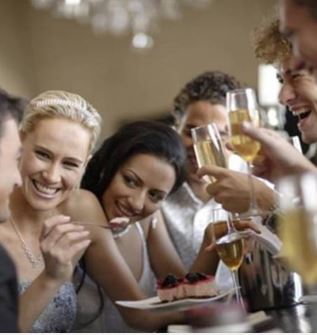
In Lithuania Christmas Eve is a family event and the New Year's Eve a great party with friends!
Lithuanian say "Kaip sutiksi naujus metus, taip juos ir praleisi" (the way you'll meet the new year is the way you will spend it). So everyone is trying to spend New Year's Eve with friend and have as much fun as possible.
Lithuanian New Year's traditions are very similar to those in other countries, and actually were similar since many years ago. Also, the traditional Lithuanian New Years Eve party was very similar to other big celebrations throughout the year.
The New Year's Eve table is quite similar to the Christmas Eve table, but without straws under the tablecloth, and now including meat dishes. A tradition that definitely hasn't changes is that everybody is trying not to fell asleep before midnight. It was said that if you oversleep the midnight point you will be lazy all the upcoming year. People were also trying to get up early on the first day of the new year, because waking up late also meant a very lazy and unfortunate year.
During the New Year celebration people were dancing, singing, playing games and doing magic to guess the future. People didn't drink much of alcohol, especially was that the case for women.
Here are some advices from elders:
- During the New Year, be very nice and listen to relatives - what you are during New Year Eve, you will be throughout the year.
- During to the New Year Eve, try not to fall, because if this happens, next year you will be unhappy.
- If in the start of the New Year, the first news are good - then the year will be successful. If not - the year will be problematic.
* If New Year's night is cold and starry - look forward to a good summer!
* If the during New Year Eve trees are covered with frost - then it will be a good year. If it is wet weather on New Year's Eve, one can expect a year where many will die and dangerous epidemics occur.
* If the first day of the new year is snowy - the upcoming year will see many young people die. If the night is snowy - mostly old people will die.
* If the New Year time is cold - then Easter will be warm.
* If during New Year there are a lot of birds in your homestead - then all year around there will be many guests and the year will be fun.
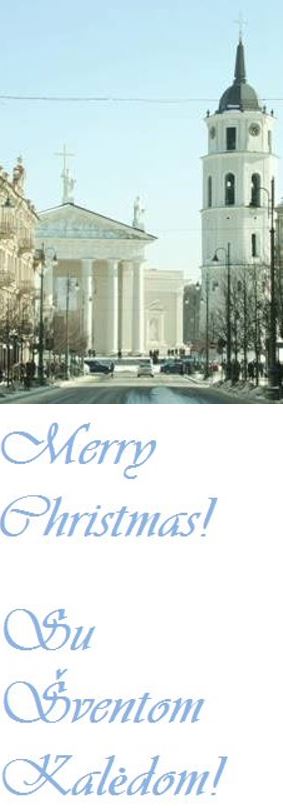
Christmas greetings
from Vilnius
and epic battle for the
future
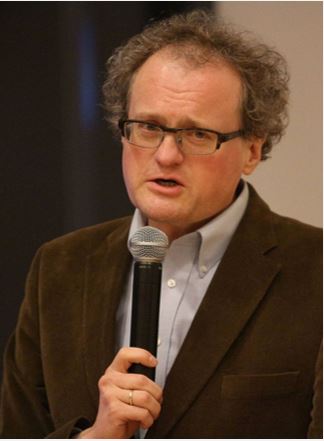
Philosopher, political theorist, historian of
ideas, social analyst, and political
commentator
Ukraine was and continues to be perceived by the EU political class as a sort of grey zone with its immense potential and possibilities for the future, yet deeply embedded and trapped in No Man's Land with all of its troubled past, post-Soviet traumas, ambiguities, insecurities, corruption, social divisions, and despair. Why worry for what has yet to emerge as a new actor of world history in terms of nation-building, European identity, and deeper commitments to transparency and free market economy?
Right? Wrong. No matter how troubled Ukraine's economic and political reality could be, the country has already passed the point of no return. Even if Vladimir Putin retains his leverage of power to blackmail Ukraine and the West in terms of Ukraine's zero chances to accede to NATO due to the problems of territorial integrity, occupation and annexation of Crimea, and mayhem or a frozen conflict in the Donbas region, Ukraine will never return to Russia's zone of influence. It could be deprived of the chances to join NATO or the EU in the coming years or decades, yet there are no forces on earth to make present Ukraine part of the Eurasia project fostered by Putin.
want to learn about the
new, scary propaganda
war between Russia,
The West and the
Baltic States!
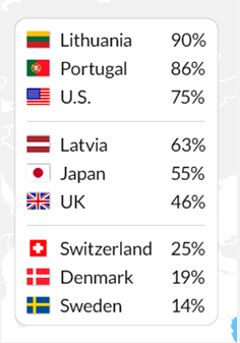
believe their government
is corrupt
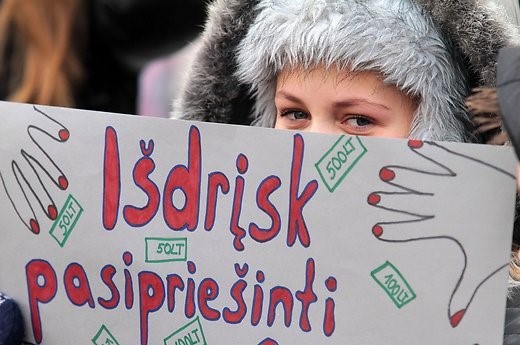
students say no to
bribes for doctors
During Soviet times, government was administered for the people in control, not for the local population, court decisions were decreed, they were not the administration of justice, and academia was the domain of ideologues. 25 years of freedom and openness should have put those bad experiences behind Lithuania, but that is not so.
Today, it is a matter of expectation that court pronouncements will be governed by ideological dictates. Few, if any Lithuanians expect real justice to be effected. For foreign companies, doing business in Lithuania is almost impossible in a situation where business people do not expect rule of law, so, surely Government would be a refuge of competence?
Lithuanian Government has not emerged from Soviet styles. In an attempt to devolve power, Lithuania has created a myriad of fiefdoms of power, each speaking in the name of the Government, each its own centralized power base of ideology.

Chepstow, Wales
Doesn't that sound suspiciously like Lithuania? Ah, but I didn't mention the mountains of Snowdonia, which would give the game away.
I'm talking about Wales, that part of the UK which Lithuanians used to call "Valija", but later named "Velsas" (why?). Wales, the nation which has welcomed two Lithuanian heads of state to its shores - firstly Professor Vytautas Landsbergis, who has paid several visits and, more recently, President Dalia Grybauskaitė who attended the 2014 NATO summit which was held in Newport, South Wales.
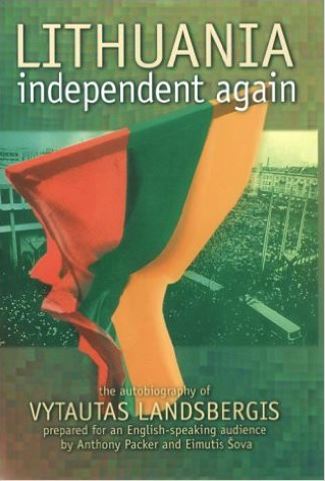
ENGLISH VERSION OF THE
AUTOBIOGRAPHY OF VYTAUTAS LANDSBERGIS.
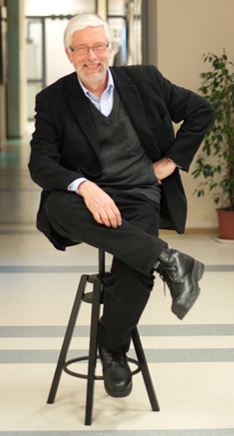
Although Lithuanian activities have thinned over the decades as that postwar generation died out, the Lithuanian Martyrs' parish hall is crowded with many, many hundreds of visitors who come to the Lithuanian cemetery for All Souls' Day. Similarly, the Franciscan parish has standing room only for Christmas Eve mass.
Although I am firmly embedded in the literary culture of Canada, my themes are usually Lithuanian, and I'll be in Kaunas and Vilnius in mid-November 2015 to give talks about the Lithuanian translations of my novels and short stories, which I write in English.
If you have the Lithuanian language, come by to one of the talks listed in the links below. And if you don't, you can read more about my work at
www.anatanassileika.com
http://www.vdu.lt/lt/rasytojas-antanas-sileika-pristatys-savo-kuryba/ https://leu.lt/lt/lf/lf_naujienos/kvieciame-i-rasytojo-59hc.html
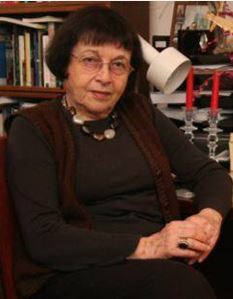
"My love and best wishes to all. As long as VilNews exists, there is hope for the future,"" she writes.
Irena Veisaite means very much for our publication, and we do hereby thank her for the support and wise commitment she always shows.
You can read our interview with her
Facing a new reality
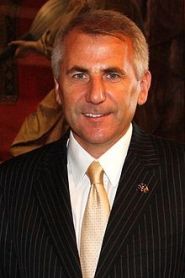
Dear readers of VilNews,
For a number of years, the EU and Russia had assumed the existence of a strategic partnership, based on the convergence of values, economic integration and increasingly open markets and a modernisation agenda for society.
Our agenda was positive and ambitious. We looked at Russia as a country ready to converge with "European values", a country likely to embrace both the basic principles of democratic government and a liberal concept of the world order. It was believed this would bring our relations to a new level, covering the whole spectrum of the EU's strategic relationship with Russia.
The likelihood of Putin
invading Lithuania
.jpg "lithuania today")
Founding Director at Summer Literary Seminars
Are all Lithuanian energy
problems now resolved?
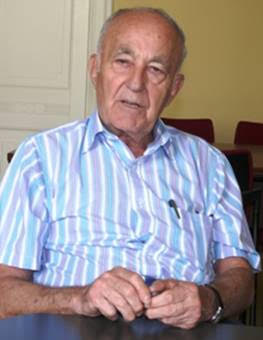
Lithuania as a country does not have significant energy resources. Energy consuming infrastructure after WWII was small and totally supported by energy imports from Russia.
First nuclear reactor begins power generation at Ignalina in 1983, the second reactor in 1987. Iganlina generates enough electricity to cover Lithuania's needs and about 50%.for export. As, prerequisite for membership in EU, Ignalina ceases all nuclear power generation in 2009
The Klaipėda Sea terminal begins Russia's oil export operations in 1959 and imports in 1994.
Mazeikiu Nafta (current ORLEAN Lietuva) begins operation of oil refinery in 1980.
Have Lithuanian ties across
the Baltic Sea become
stronger in recent years?
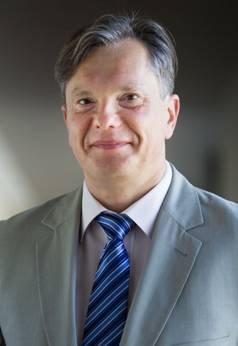
The two decades that have passed since regaining Lithuania's independence can be described as a "building boom". From the wreckage of a captive Soviet republic, a generation of Lithuanians have built a modern European state, and are now helping construct a Nordic-Baltic community replete with institutions intended to promote political coordination and foster a trans-Baltic regional identity. Indeed, a "Nordic-Baltic community" - I will explain later in my text the meaning of this catch-phrase.
Since the restoration of Lithuania's independence 25 years ago, we have continuously felt a strong support from Nordic countries. Nordics in particular were among the countries supporting Lithuania's and Baltic States' striving towards independence. Take example of Iceland, country which recognized Lithuania in February of 1991, well in advance of other countries. Yet another example - Swedish Ambassador was the first ambassador accredited to Lithuania in 1991. The other countries followed suit. When we restored our statehood, Nordic Countries became champions in promoting Baltic integration into Euro-Atlantic institutions. To large degree thanks Nordic Countries, massive transformations occurred in Lithuania since then, Lithuania became fully-fledged member of the EU and NATO, and we joined the Eurozone on 1 January 2015.
Have you heard about the
South African "Pencil Test"?
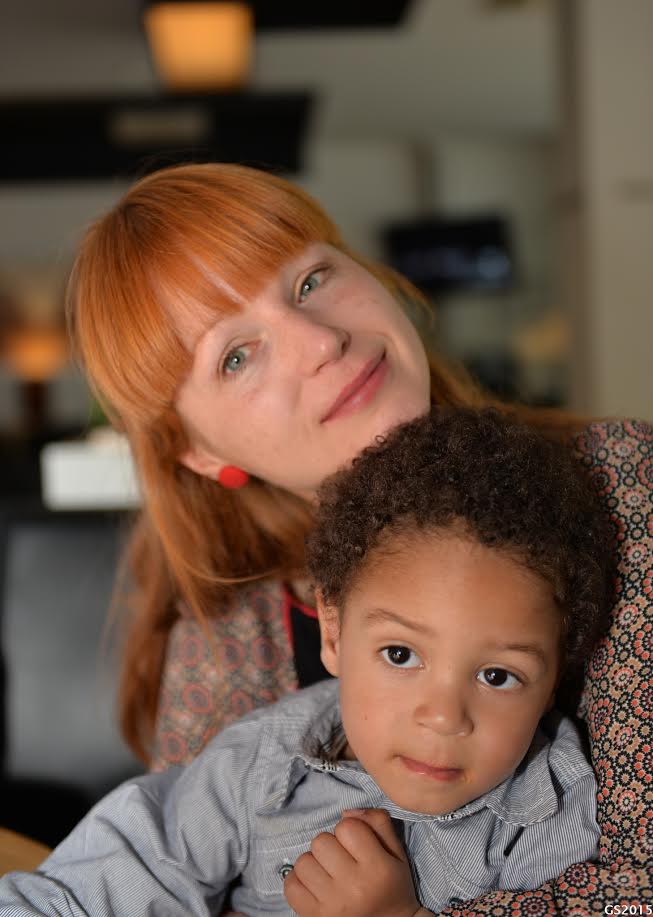
But that is exactly what happened to me when I came back from South Africa. I will tell you how.
VilNews e-magazine is published in Vilnius, Lithuania. Editor-in-Chief: Mr. Aage Myhre. Inquires to the editors: editor@VilNews.com.
Code of Ethics: See Section 2 – about VilNews. VilNews is not responsible for content on external links/web pages.
HOW TO ADVERTISE IN VILNEWS.
All content is copyrighted © 2011. UAB ‘VilNews’.