
THE VOICE OF INTERNATIONAL LITHUANIA

|
VilNews has its own Google archive! Type a word in the above search box to find any article.
You can also follow us on Facebook. We have two different pages. Click to open and join.
 Click on the buttons to open and read each of VilNews' 18 sub-sections Click on the buttons to open and read each of VilNews' 18 sub-sections  |

|


Opinions
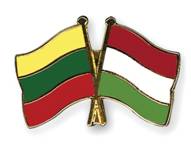
Fascinating and welcome news of Hungarian links with Lithuania. As a collector of Hungarian philately for over 60 years and with a family friendship that has lasted as long, I find Hungary an amazing place. Glad to see it featured.
Mervyn Benford,
Oxford, UK
- Bookmark :
- Digg
- del.icio.us
- Stumbleupon
- Redit it

- Posted by - (0) Comment
A black man in Lithuania as "Chairman of Klaipeda International Business Club", I'm loving it!
Ref. our article about Mr. Lont: https://vilnews.com/?p=7623
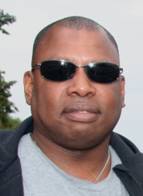
Clifford Lont, Chairman of Klaipeda International Business Club, has moved the long way from Suriname in South America to a much colder climate here at the Lithuanian coast.
First of all I would like to say that I admire Clifford's courage and perseverance. Second, I have respect for the way he has managed to adapt himself not only to the (sometimes very) cold weather and the different lifestyle, but also to the very different culture. He conquered it all. A black man in Lithuania as "Chairman of Klaipeda International Business Club" , I'm loving it!
I see Clifford as one of many who are building bridges between nations. I wish him well.
U sisa
EML
- Bookmark :
- Digg
- del.icio.us
- Stumbleupon
- Redit it

- Posted by - (0) Comment
A mistake to confuse resistance to occupation and WWII
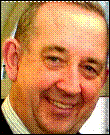
Robert Jennings
The Second World War in Europe was a war fought against fascism – in particular the German variant exemplified by Nazism – and including also Italian fascism. The Second World War in Europe ended with the surrender of Germany; a surrender to which Russia was the major contributor because Germany was largely defeated at Stalingrad and Kursk and was always in retreat afterwards.
The Resistance in Lithuania against Soviet occupation was a heroic effort by some Lithuanians to obtain freedom for their country. In my opinion it is a mistake to confuse resistance to occupation and the Second World War. After the end of the Second World War there have been many occupations of many countries by Capitalist and Communist powers and each side has tried to characterise any resistance to its forces as an act of the 'Other' side.
Resistance to Occupation has a very long and courageous history in Europe and throughout the world and no 'side' has a right to claim the heroic activities of resistance fighters/activists to support its ideology. Inevitably that requires misrepresentation of the motives and objectives of the resistance; part of the theme of the book "The Ugly American" about the then developing Vietnamese war. It is also the type of misrepresentation that leads to one 'side' claiming "We are all Georgians now".
This misrepresentation is a major cause of the inability of 'Western' countries to think in any clear way about the activities grouped under the label of 'terrorism' and it is better to avoid such ideologically driven commentary/analysis.
Robert Jennings,
Ireland-Lithuania
- Bookmark :
- Digg
- del.icio.us
- Stumbleupon
- Redit it

The ‘war against fascism’ was a construct intended to make the Soviet Union look good
- Posted by - (1) Comment

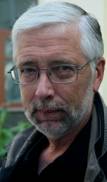
Antantas Sileika
Dear Editor,
Mr. Robert Jennings's letter, in which he claims that the Second World War was a war against fascism and nothing else, obfuscates the truth rather than clarifies it.
No one declared war on fascism. If they had, Spain and Portugal would have between attacked. The United Sates and other powers declared war against the axis powers. The "war against fascism" was a construct intended to make the Soviet Union look good and to disguise its own crimes. How was the Soviet invasion of Finland in 1939 a war against fascism? What about the forced incorporation of the Baltic States into the Soviet Union well before any war with Germany? What about the Molotov-Ribbentrop pact, which divided Eastern Europe between the Soviet Union and Germany? Would the Poles agree that the war was a war against fascism? Was the murder of the Polish officers at Katyn part of the war against fascism?
Neither Tony Judt nor Norman Davies, prominent historians of Europe, would agree that the conflict which only ended in 1989 with the fall of the Berlin wall was a "war against fascism."
Who benefits by such a formulation? Only the Soviets, whose crimes become excusable excesses of war. The independent Lithuanian government now considers the last anti-Soviet partisan commander, Jonas Zemaitis, to have been the Lithuanian head of state. It seems that L Beria considered him the same way because upon his capture in 1953, Zemaitis was transported to Moscow and interviewed by Beria who seemed to be seeking accommodation now that Stalin had died. However, both Zemaitis and Beria were executed that same year.
WW2 is remembered as a "good war", but this is a formulation that works only on the western side, where the allies came to help brave resisters such as the French underground. There were brave underground resisters in the East too, but no one ever came to help them. They fought until the dies, were captured, or gave up. Their story is just coming out now.
Antanas Sileika,
Canada
- Bookmark :
- Digg
- del.icio.us
- Stumbleupon
- Redit it



I admire your work and efforts to “spread the gospel” about wonderful Lithuania
- Posted by - (0) Comment
I join the very large group of people, who admire your work and efforts to "spread the gospel" about wonderful Lithuania and your serious endeavours to induce Lithuanian decision makers to improve on the not-so-wonderful aspects of Lithuanian political and economic life.
Peter Modeen, Costa del Sol, Spain
- Bookmark :
- Digg
- del.icio.us
- Stumbleupon
- Redit it
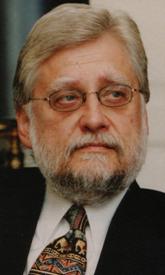
Dr. Romas J. Misiunas
I was extremely gratified to see your recent issue on South Africa. Most of the Litvaks whom you identify specifically had been quite helpful to me in re-establishing ties with the land of their forebears. I am honoured to have had the opportunity to meet almost all of them. Some have become good friends. And I fully hope that the renewal ties with the country of their origins will prove quite beneficial to many in this rapidly intermingling world.
When I initially learned about such a situation of largely forgotten ”roots,” not long after taking up residence in Tel Aviv, I realized the extent to which these ties spanned a century and more. The efforts to increase awareness of them in Lithuania itself remain an ongoing process and forms another story in itself. Thank you for your contribution.
I much admire your efforts to promote knowledge about this country, especially in the far flung corners of the world.
Dr. Romas J. Misiunas
Ambassador of Lithuania
(former Ambassador of Lithuania to Israel and South Africa)
Vilnius
- Bookmark :
- Digg
- del.icio.us
- Stumbleupon
- Redit it
It is time to bring all Lithuanians together
- Posted by - (0) Comment
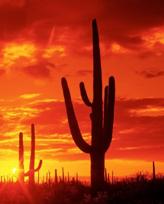
Rimgaudas P. Vidziunas: I have been living in Arizona for over 31 years
Again exceptionally well written. It is time to bring all Lithuanians together.
I have been living in Arizona for over 31 yrs. I was born in a displaced persons camp in Germany after World War II and came to the USA two years later. Have been all over the USA and visited Lithuania in 1999 and 2002. My passions are photography and writing poetry.
I am currently involved with Lithuanians throughout the world via Facebook and the internet.
Please let me know if I may be of any assistance in your "footprints journey".
Rimgaudas P. Vidziunas
Mesa, Arizona, USA
- Bookmark :
- Digg
- del.icio.us
- Stumbleupon
- Redit it
As a person with Lithuanian roots it makes me proud to have some kind of connection to the greater humanity called India
- Posted by - (0) Comment
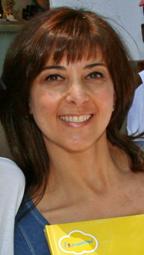
Kim Feinberg
This is just so fascinating ! I have a love for India and the contrasts that I experienced there. It is a land like no other and one that no one can prepare you for when you land there.
The smells, taste and feel is and only belongs to India – a place I deeply respect. Whose people have an essence and a space in time that the West cannot imagine.
Thank you so much for sharing this. As a person with Lithuanian roots it makes me proud to have some kind of connection to the greater humanity called India.
Best
Kim Feinberg
Johannesburg, South Africa
- Bookmark :
- Digg
- del.icio.us
- Stumbleupon
- Redit it
Why a row over Austria’s release of a Soviet commander is more than a dusty historical question
- Posted by - (0) Comment

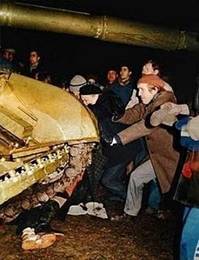
Soviet tanks attacking the people of Lithuania, January 1991.
Who bears responsibility now for the crimes of the Soviet past? This is the real question behind the continuing row over Mikhail Golovatov, a former Soviet special-forces commander briefly arrested at Vienna airport on 14 July. In one sense, the argument is about the European Arrest Warrant issued by Lithuania. Was it properly drafted? Can it apply to the events of January 1991, when Soviet troops under Golovatov's command killed 14 pro-independence demonstrators in Vilnius? Did Austria give Lithuania the correct amount of time to remedy any deficiencies in the original warrant's wording?
At another level, the question is about Russia's clout in the EU. Is it really true, as the Austrian Green parliamentarian Peter Pilz claims, that his country's senior officials met on the morning of 15 July and resolved to send Golovatov back to Russia forthwith, and to concoct an excuse based on Lithuanian bureaucrats' bad drafting? Does Austria's closeness to Russia, based on favourable dealings in gas supplies, and the Viennese banks' cosy ties to big Russian customers, explain its cold-shouldering of a fellow EU member?
A third question is about Lithuania's effectiveness of response.
Read more at:
http://www.europeanvoice.com/article/imported/an-arrest-that-highlights-tensions-and-ties-with-russia-/71751.aspx
- Bookmark :
- Digg
- del.icio.us
- Stumbleupon
- Redit it

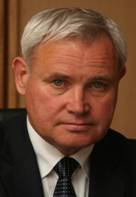
Mayor of Klaipeda,
Vytautas Grubliauskas
What can you tell our readers about today's situation and the outlooks for the economy of Klaipeda?
Recession in Klaipeda lasted much shorter than in other cities. Thus it's still present in real estate sector, we bounced quickly back in other sectors. We kept quite stable consumer demand due to Klaipeda's large workforce share (appr. 40%) employed in harbour related activities that hardly experienced recession.
Positive economical outlook for local companies continued city economy running in difficult times. For future, I see much unused capacity in harbour and free economical zone activities that are already best performers in whole Baltics. On the other hand I watch with uncertainty demographic decline as most difficult macroeconomic challenge for municipal budget and consumer demand. We have to cope with a shrinking city scenario.
- Bookmark :
- Digg
- del.icio.us
- Stumbleupon
- Redit it
To my dear homeland Norway
- Posted by - (0) Comment

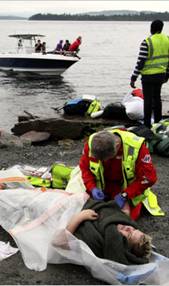
PICTURE: From the island Utøya near Oslo, where around 90 young people last night were massacred by a 32 year old man characterised as a right-wing Christian fundamentalist. The man is also expected to be behind the powerful bomb blast in downtown Oslo earlier same day.
Dear VilNews readers,
Most of you probably know that I am Norwegian, although I for the last 20 years have lived in Lithuania. Today I want to share with you all that the tragic events that took place yesterday in my beloved Norway makes a deep impression on me. I simply feel sad and empty right now.
The attack is considered the worst violence my country has seen since World War II, with a death toll of around 100.
The blast in the city quarter, where our government is located, shattered glass and sent a shockwave through the heart of downtown Oslo, killing at least seven people.
An hour later, the gunman opened fire at the Utøya summer camp, killing around 90 totally innocent young people.
My thoughts go to all those who have lost their loved ones in this deeply tragic way. Norway will move on, but this incident will forever remain a deep crater in our history.
Aage Myhre,
Editor-in-Chief
- Bookmark :
- Digg
- del.icio.us
- Stumbleupon
- Redit it

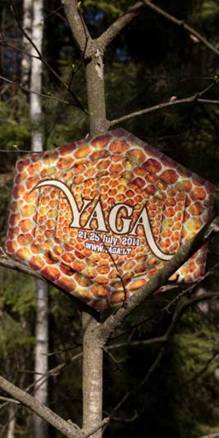
Outdoor musical gathering,
Vilnius outskirts, 21 – 25 July
The festival will feature more than 100 artists performing on three different sateages in the midst of a wonderful nature scenery!
An that’s only a fraction of what you will experience at the "Yaga Gathering"….
Leave civilization behind and immerse yourself in the real meaning of the word “Yaga“, which translated from Sanskrit means disposal of old and emergence of new.
Do you want to take a breath of fresh air, sink your everyday worries into a lake and refresh yourself with spring water? "Yaga" is offering that! Are you missing intoxicating sounds, dazzling light show and spectacular scenery? It will to be there! The festival will host five areas: three musical –trance, chill-out and eclectic and two educational – healing area for body & mind practices and workshop's area for those who want to learn a variety of crafts.
"Yaga" will also feature a wide range of electronic and live music - everything from Balkan beats, reggae, dub, ethno, IDM and ambient to techno and psy-trance. The festival will also host shamanic sauna, cinema, camping site, few chaishops, fine beer and homemade kvass stall, flea market and a kindergarten.
"Yaga" will show that a festival can be environmentally friendly and visitors can enjoy an alternative lifestyle and entertainment in harmony - "Yaga" connects travelers, yogis, greenpeace activists, artists, businessmen, party-animals and many other visible and invisible characters.
Exciting every time and charging with positive energy "Yaga" invites you to join and create the festival
How to get there?

Take a public bus from Vilnius bus station, direction Druskininkai.
Jump off at a bus stop named "Valkininku internato namai", 60 km south of Vilnius.
Read more at
http://www.yaga.lt/en
- Bookmark :
- Digg
- del.icio.us
- Stumbleupon
- Redit it
- Posted by - (3) Comment
Rimgaudas P. Vidziunas
Mesa, Arizona, USA
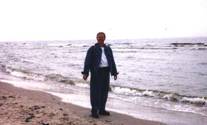
The photo is of the author, Rimgaudas P. Vidziunas, walking on the shores of the Baltic Sea. He was inspired to write poetry upon his first visit to Lithuanian in 1999
Today we are pleased to introduce you to Rimgaudas P. Vidziunas who came to the USA in 1949. Visited Lithuania 1999, 2002. BA History, University of Miami, Florida January 1970. Photographer for over 35 years.
Follow him on Facebook: "Photography by Rimgaudas". Currently residing Mesa, Arizona, USA.
Email: rvidziunas@yahoo.com
* * *
BALTIC BEACH DREAMS
I thought I heard you dream of Baltic beaches.
Walking in the evening sunset toward the cottage
That lies among the dunes.
The storm battered rain on our face, watching the storm end.
The return of the seagulls
Indicates the ending of the storm
And fly to greet us
As if saying all is well.
- Bookmark :
- Digg
- del.icio.us
- Stumbleupon
- Redit it
Poet Kazys Bradunas (1917-2009)
- Posted by - (0) Comment

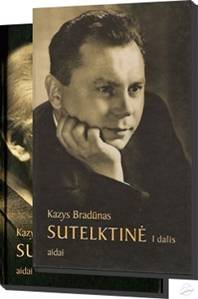
Poet Kazys Bradunas (1917-2009)
Today we are pleased to introduce you to Kazys Bradunas (1917-2009), a distinguished Lithuanian poet who, living in exile in the US during the Soviet occupation of his country, became one of the most active figures in preserving a national literary culture.
Bradunas was born in the village of Kirsai in southwestern Lithuania, coincidentally also the birthplace of the noted prewar woman poet Salomeja Neris. A year after his birth, in the turmoil following the Russian Revolution, Lithuania declared its independence. Bradunas began to write poetry while still a schoolboy. He studied Lithuanian language and literature at universities in Kaunas and Vilnius, and his first volume of verse, The Bells of Vilnius, was published in 1943. By then, however, Lithuania’s independence had been ended by successive Soviet and Nazi invasions. In 1944, when Soviet troops reoccupied Lithuania, Bradunas left the country, living in a camp for displaced persons in Germany before ultimately emigrating in 1949 to the US.
Resident in Baltimore and Chicago, Bradunas worked tirelessly to sustain a Lithuanian literature. He was a founder of the Zeme (“Earth”) movement, which sought to create a distinctively Lithuanian poetry, rooted in agriculture and local customs. He co-edited a Zeme anthology published in 1951.
In his own verse he drew on the rhythms of folk music and used descriptions of simple, specific objects to evoke Lithuania and its culture, focusing on its rural landscapes and its blend of pagan and Catholic heritage. Naturally, given the tragic national experience, his work was often elegiac: the title of his first published volume after leaving Lithuania, The Alien Bread (1945), aptly expressed the sense of dislocation experienced by the exile and captured in Bradunas’s poetry. Nevertheless, there was at times a note of triumph in verse which celebrated the flourishing of Lithuanian writers abroad:
Exiled poets are — desert cactuses.
They receive no moisture;
Sand surrounds them,
Yet they grow and bloom
Spiny red blossoms.
(translated by Jurgis Bradunas)
LET THE BLOSSOMS BLOOM
For Loreta and Jurgis
The river comes flowing
And brings with it a name.
Man comes forward
And brings with him a surname
A toponym appears:
A cross is constructed,
Smoke rises from a chimney.
In this way Suduva was born,
Absorbed into our hearts.
A daughter comes forward
And brings with her a fire.
A son comes forward
And brings with him bread.
At the shore of another world,
In the shade of another sky
And another tree
A table is constructed,
A loaf is sliced
Life begins.
Put your clasped hands
On the ancient table
And let the blossoms bloom.
(translated by Rita Dapkus)
SUN RITE
You brought in the sun for me
Past the smoky door jamb
Now I can hardly remember
How you knocked with a stone
At my cradle
While all around, like a dream you'd lost,
Awakened the forests of Rominta.
Then you put the sun for me
Like a transfigured breadloaf on the table
And the linen paled.
Then life's long
Ceremony began,
In which, like the censer's grains,
Smelled the blossoms of Rominta.
Where are you now, little sun,
Snuffed, carried out, buried?
Will I touch the earth with my forehead
Asking, can I
Knock with a stone
At your coffin
There, where late in the evening
Rustle the forests of Rominta.
(translated by Jonas Zdanys)
- Bookmark :
- Digg
- del.icio.us
- Stumbleupon
- Redit it
Professor Enrique Ferrer Corredor
- Posted by - (0) Comment

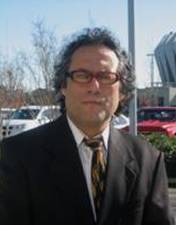
Enrique Ferrer Corredor
Today we are pleased to introduce you to Professor Enrique Ferrer Corredor, a Colombo-Venezuelan who loves Lithuania:
Professor Ferrer Corredor is an author and professor with a broad academic background. He divides his time between literature, economics, political science and his love for soccer. He is co-founder of Común Presencia (literary Magazine) and, founder and director of Papeles (Papers); he belonged to many writers' workshops in Colombia and Venezuela.
Ash of Moon, his first collection of poems, was published in 1994 and had two editions in 1998. In 2006, he published his book El público en escena (short stories). Also he has published many articles of literature and political science in international magazines. Today he is part of Word4word, a group of writers in Newport News, Virginia (USA).
Sand Time
for Inga Repšytė
Cling
to sand that goes down
between busy lips,
demonstrating
that time is measured
by the absent body
Flight
Girl, you have wasted your time with the rules;
prisons have closed their doors
and you stayed in your flight.
Roses are not amulets for the night,
cells are inhabited by Sade
where the guards come to the feast of freedom.
Geographies
My recent geography of your body speaks
Of words trapped in your skin
Of ruins and old residents
But it ignores
The music of your nights with no fate
Your ignorance against any defeat
Your fear of snakes
And a moon that sails in your belly.
Testament
My port
Is a wave
And ghosts
Eat at my table.
And if your eyes shut down
On the edge of the blade
Open my house's door
And cling to the abyss.
Instant
Two bodies
Plough the night
A flame
Hushes the fire.
- Bookmark :
- Digg
- del.icio.us
- Stumbleupon
- Redit it

OPINIONS
Have your say. Send to:
editor@VilNews.com
Ph. D., Chicago
A wave of unity sweeps the international Lithuanian community on March 11th every year as Lithuanians celebrated the anniversary of the Lithuanian Parliament's declaration of independence from the Soviet Union in 1990. However, the sense of national unity engendered by the celebration could be short-lived.
Human beings have a strong tendency to overgeneralize and succumb to stereotypical us-them distinctions that can shatter even the strongest bonds. We need only search the internet to find examples of divisive thinking at work:
- "Those who fled Lithuania during World II were cowards -- and now they come back, flaunt their wealth, and tell us 'true Lithuanians' how to live."
- "Lithuanians who work abroad have abandoned their homeland and should be deprived of their Lithuanian citizenship."

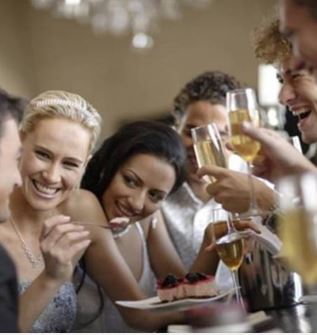
In Lithuania Christmas Eve is a family event and the New Year's Eve a great party with friends!
Lithuanian say "Kaip sutiksi naujus metus, taip juos ir praleisi" (the way you'll meet the new year is the way you will spend it). So everyone is trying to spend New Year's Eve with friend and have as much fun as possible.
Lithuanian New Year's traditions are very similar to those in other countries, and actually were similar since many years ago. Also, the traditional Lithuanian New Years Eve party was very similar to other big celebrations throughout the year.
The New Year's Eve table is quite similar to the Christmas Eve table, but without straws under the tablecloth, and now including meat dishes. A tradition that definitely hasn't changes is that everybody is trying not to fell asleep before midnight. It was said that if you oversleep the midnight point you will be lazy all the upcoming year. People were also trying to get up early on the first day of the new year, because waking up late also meant a very lazy and unfortunate year.
During the New Year celebration people were dancing, singing, playing games and doing magic to guess the future. People didn't drink much of alcohol, especially was that the case for women.
Here are some advices from elders:
- During the New Year, be very nice and listen to relatives - what you are during New Year Eve, you will be throughout the year.
- During to the New Year Eve, try not to fall, because if this happens, next year you will be unhappy.
- If in the start of the New Year, the first news are good - then the year will be successful. If not - the year will be problematic.
* If New Year's night is cold and starry - look forward to a good summer!
* If the during New Year Eve trees are covered with frost - then it will be a good year. If it is wet weather on New Year's Eve, one can expect a year where many will die and dangerous epidemics occur.
* If the first day of the new year is snowy - the upcoming year will see many young people die. If the night is snowy - mostly old people will die.
* If the New Year time is cold - then Easter will be warm.
* If during New Year there are a lot of birds in your homestead - then all year around there will be many guests and the year will be fun.
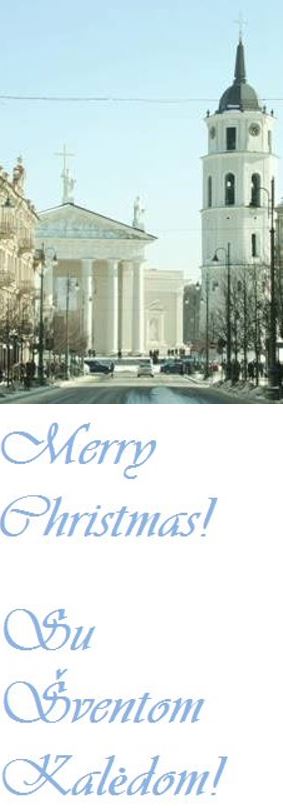
Christmas greetings
from Vilnius
and epic battle for the
future
Philosopher, political theorist, historian of
ideas, social analyst, and political
commentator
Ukraine was and continues to be perceived by the EU political class as a sort of grey zone with its immense potential and possibilities for the future, yet deeply embedded and trapped in No Man's Land with all of its troubled past, post-Soviet traumas, ambiguities, insecurities, corruption, social divisions, and despair. Why worry for what has yet to emerge as a new actor of world history in terms of nation-building, European identity, and deeper commitments to transparency and free market economy?
Right? Wrong. No matter how troubled Ukraine's economic and political reality could be, the country has already passed the point of no return. Even if Vladimir Putin retains his leverage of power to blackmail Ukraine and the West in terms of Ukraine's zero chances to accede to NATO due to the problems of territorial integrity, occupation and annexation of Crimea, and mayhem or a frozen conflict in the Donbas region, Ukraine will never return to Russia's zone of influence. It could be deprived of the chances to join NATO or the EU in the coming years or decades, yet there are no forces on earth to make present Ukraine part of the Eurasia project fostered by Putin.
want to learn about the
new, scary propaganda
war between Russia,
The West and the
Baltic States!
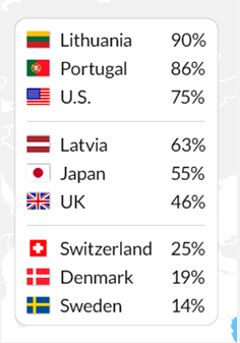
believe their government
is corrupt
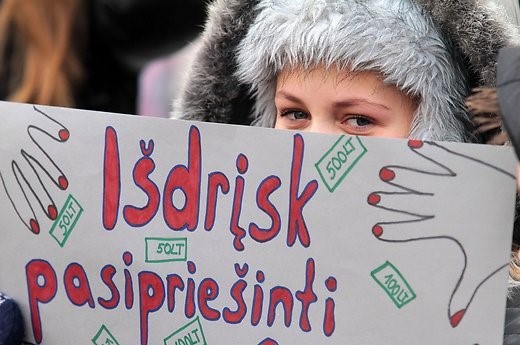
students say no to
bribes for doctors
During Soviet times, government was administered for the people in control, not for the local population, court decisions were decreed, they were not the administration of justice, and academia was the domain of ideologues. 25 years of freedom and openness should have put those bad experiences behind Lithuania, but that is not so.
Today, it is a matter of expectation that court pronouncements will be governed by ideological dictates. Few, if any Lithuanians expect real justice to be effected. For foreign companies, doing business in Lithuania is almost impossible in a situation where business people do not expect rule of law, so, surely Government would be a refuge of competence?
Lithuanian Government has not emerged from Soviet styles. In an attempt to devolve power, Lithuania has created a myriad of fiefdoms of power, each speaking in the name of the Government, each its own centralized power base of ideology.
Chepstow, Wales
Doesn't that sound suspiciously like Lithuania? Ah, but I didn't mention the mountains of Snowdonia, which would give the game away.
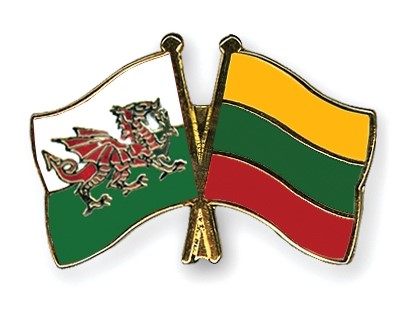
I'm talking about Wales, that part of the UK which Lithuanians used to call "Valija", but later named "Velsas" (why?). Wales, the nation which has welcomed two Lithuanian heads of state to its shores - firstly Professor Vytautas Landsbergis, who has paid several visits and, more recently, President Dalia Grybauskaitė who attended the 2014 NATO summit which was held in Newport, South Wales.
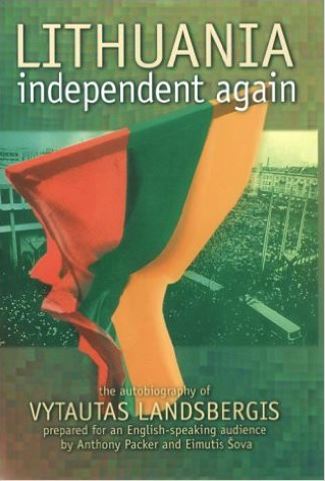
ENGLISH VERSION OF THE
AUTOBIOGRAPHY OF VYTAUTAS LANDSBERGIS.
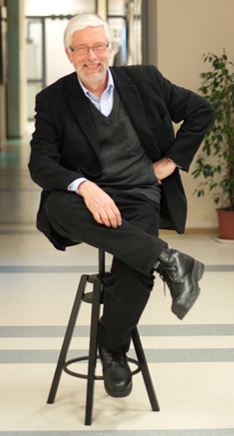
Although Lithuanian activities have thinned over the decades as that postwar generation died out, the Lithuanian Martyrs' parish hall is crowded with many, many hundreds of visitors who come to the Lithuanian cemetery for All Souls' Day. Similarly, the Franciscan parish has standing room only for Christmas Eve mass.
Although I am firmly embedded in the literary culture of Canada, my themes are usually Lithuanian, and I'll be in Kaunas and Vilnius in mid-November 2015 to give talks about the Lithuanian translations of my novels and short stories, which I write in English.
If you have the Lithuanian language, come by to one of the talks listed in the links below. And if you don't, you can read more about my work at
www.anatanassileika.com
http://www.vdu.lt/lt/rasytojas-antanas-sileika-pristatys-savo-kuryba/ https://leu.lt/lt/lf/lf_naujienos/kvieciame-i-rasytojo-59hc.html
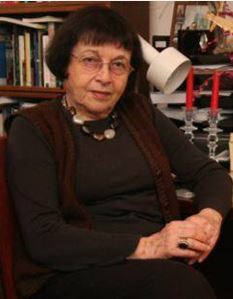
"My love and best wishes to all. As long as VilNews exists, there is hope for the future,"" she writes.
Irena Veisaite means very much for our publication, and we do hereby thank her for the support and wise commitment she always shows.
You can read our interview with her
Facing a new reality
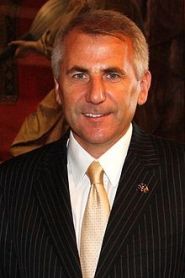
Dear readers of VilNews,
For a number of years, the EU and Russia had assumed the existence of a strategic partnership, based on the convergence of values, economic integration and increasingly open markets and a modernisation agenda for society.
Our agenda was positive and ambitious. We looked at Russia as a country ready to converge with "European values", a country likely to embrace both the basic principles of democratic government and a liberal concept of the world order. It was believed this would bring our relations to a new level, covering the whole spectrum of the EU's strategic relationship with Russia.
The likelihood of Putin
invading Lithuania
.jpg "lithuania today")
Founding Director at Summer Literary Seminars
Are all Lithuanian energy
problems now resolved?
Lithuania as a country does not have significant energy resources. Energy consuming infrastructure after WWII was small and totally supported by energy imports from Russia.
First nuclear reactor begins power generation at Ignalina in 1983, the second reactor in 1987. Iganlina generates enough electricity to cover Lithuania's needs and about 50%.for export. As, prerequisite for membership in EU, Ignalina ceases all nuclear power generation in 2009
The Klaipėda Sea terminal begins Russia's oil export operations in 1959 and imports in 1994.
Mazeikiu Nafta (current ORLEAN Lietuva) begins operation of oil refinery in 1980.
Have Lithuanian ties across
the Baltic Sea become
stronger in recent years?
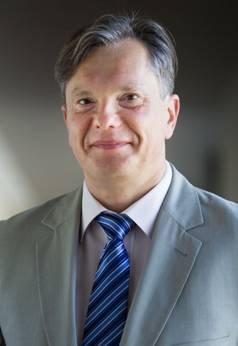
The two decades that have passed since regaining Lithuania's independence can be described as a "building boom". From the wreckage of a captive Soviet republic, a generation of Lithuanians have built a modern European state, and are now helping construct a Nordic-Baltic community replete with institutions intended to promote political coordination and foster a trans-Baltic regional identity. Indeed, a "Nordic-Baltic community" - I will explain later in my text the meaning of this catch-phrase.
Since the restoration of Lithuania's independence 25 years ago, we have continuously felt a strong support from Nordic countries. Nordics in particular were among the countries supporting Lithuania's and Baltic States' striving towards independence. Take example of Iceland, country which recognized Lithuania in February of 1991, well in advance of other countries. Yet another example - Swedish Ambassador was the first ambassador accredited to Lithuania in 1991. The other countries followed suit. When we restored our statehood, Nordic Countries became champions in promoting Baltic integration into Euro-Atlantic institutions. To large degree thanks Nordic Countries, massive transformations occurred in Lithuania since then, Lithuania became fully-fledged member of the EU and NATO, and we joined the Eurozone on 1 January 2015.
Have you heard about the
South African "Pencil Test"?
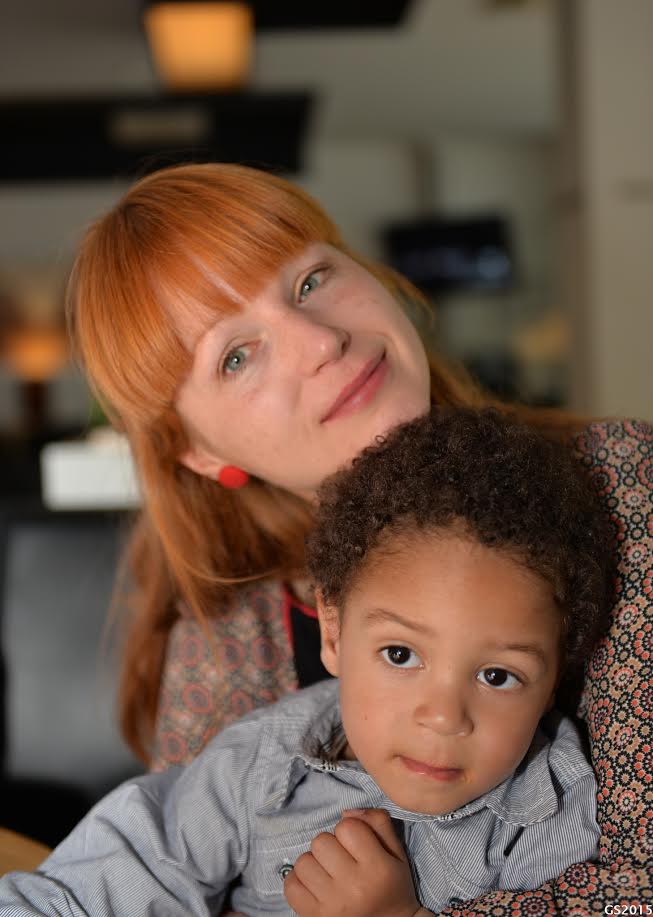
But that is exactly what happened to me when I came back from South Africa. I will tell you how.
VilNews e-magazine is published in Vilnius, Lithuania. Editor-in-Chief: Mr. Aage Myhre. Inquires to the editors: editor@VilNews.com.
Code of Ethics: See Section 2 – about VilNews. VilNews is not responsible for content on external links/web pages.
HOW TO ADVERTISE IN VILNEWS.
All content is copyrighted © 2011. UAB ‘VilNews’.