
THE VOICE OF INTERNATIONAL LITHUANIA

|
VilNews has its own Google archive! Type a word in the above search box to find any article.
You can also follow us on Facebook. We have two different pages. Click to open and join.
 Click on the buttons to open and read each of VilNews' 18 sub-sections Click on the buttons to open and read each of VilNews' 18 sub-sections  |

|


Opinions

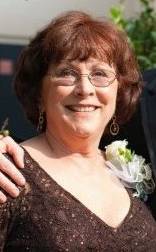
Jurate Kutkus Burns
On my first visit to Lithuania in 1998 I was struck by 2 major differences between the language I heard spoken at home in the USA and that which was spoken in Lithuania.
My parents pronunciation was much softer, and did not have that hard Slavic edge I heard spoken by young Lithuanians. Also, there were lots of vocabulary words unfamiliar to me.
Jurate Kutkus Burns, Florida
- Bookmark :
- Digg
- del.icio.us
- Stumbleupon
- Redit it

Not only do I smile a lot, I love to laugh
- Posted by - (0) Comment
[Ref. our article: https://vilnews.com/?p=7150]

I really enjoyed reading this commentary. I feel I have had someone validated me and my personality, for not only do I smile a lot, I love to laugh. It is hard to be seen this way in a wave of gloomy faces, and I have sometimes thought it a sin to be too happy. I am of Lithuanian descent, and I do know of some to whom the concept of even a hint of a smile is considered not something appropriate in public. Maybe more conducive to something you do indoors. I don't think it really pertains to culture. Maybe just a matter of temperament, because there are gloomy people all over this planet of ours.
Ramute Juska
- Bookmark :
- Digg
- del.icio.us
- Stumbleupon
- Redit it

“Enthusiasm is the least expensive and most beneficial cosmetic in the world.”
- Posted by - (0) Comment
"Enthusiasm is the least expensive and most beneficial cosmetic in the world." Have all a happy productive DAY..and keep smiling :-))

- Bookmark :
- Digg
- del.icio.us
- Stumbleupon
- Redit it

The Lithuanians who do not smile are, in general, just fun, outgoing, friendly people
- Posted by - (0) Comment
Dear Sir;
First of all, I’d like to say how much I enjoy VilNews. Thank you for your effort.
I am a Lithuanian, although I have lived in the U.S.A. since the times when Lithuania was still in the depth of the Soviet occupation.
Just a little aside regarding smiling/ not smiling.
True, the Lithuanians are not in the habit of smiling easily to strangers, but I rather think it is more cultural than anything else. I am writing this because of my own encounter with some other cultures, in this case, Mexican. When my husband and I were getting ready to visit Mexico for the first time, we read much about the country, its history, culture, customs, etc. I remember being surprised at reading that it was not customary to smile in Mexico at strangers, in shops, restaurants, museums, etc. and it was suggested to try not to smile because the Mexicans find it strange and puzzling to see a total stranger smiling at them. Somebody said that people who do not like kids are not all that bad. The Lithuanians who do not smile are, in general, just fun, outgoing, friendly people. You simply have to get to know them. Then, they are all smiles.
Cheers and a big smile!
Irena Cade
Amherst, MA
U.S.A.
- Bookmark :
- Digg
- del.icio.us
- Stumbleupon
- Redit it

Article ref:
https://vilnews.com/?p=6704
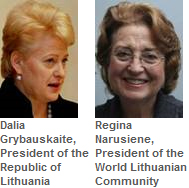
REGINA NARUSIENE: “The majority, I believe, are disappointed and discouraged with the present president’s seemingly unfriendly view toward Lithuanian-Americans and others abroad.”
* * *
The above article was published in VilNews 18 June. I added, by then, the following comment to the article:
|
Around half of all Lithuanians in the world live outside their home country. They represent a human resource Lithuania desperately needs to get the country back on its feet again after 50 years of bloody wars, genocides, deportations, Soviet opression and now two decades with much muddle and confusion instead of professional focus on collaboration and team work among its own populations here and abroad. - Aage Myhre, Editor-in-Chief |
And here is what US-Lithuanian Joe Barlow says in his today’s comment:
The majority of people I speak with have no interest in doing anything, because of the unwelcome feeling or worries of being taken advantage of and wondering if they will get any kind of return on investment or just watch it all go down the drain
I could not agree more with Aage, this is long overdue coming and there are enough people outside of Lithuania that have the means, Education, Business expertise, Etc... that would only help our country and everyone involved or connected to it.
Keeping all the diaspora at bay and not welcoming such people seems such a waste, when together all as a whole we can make things better, in all aspects; Economy, Banking, Education, Investments in companies the list goes on...
The majority of people I speak with have no interest in doing anything, because of the unwelcome feeling or worries of being taken advantage of and wondering if they will get any kind of return on investment or just watch it all go down the drain.
There is no bottom to this well of people from all different fields and many experts, but this well will dry up and soon another generation will pass and there will be more and more less interest in knowing our homeland and trying to keep it a strong vibrant economically sound country, one we can all be proud of and one many still are of.
Joe Barlow
- Bookmark :
- Digg
- del.icio.us
- Stumbleupon
- Redit it

Lithuania turns its back on us
- Posted by - (0) Comment
The trick is, what to do about it or, for those of us living outside, why should we be concerned? As life goes on, roots are deepened overseas and Lithuania turns its back on us or makes no effort to either woo back the Diaspora, attract tourists or foreign investment (are these all culturally linked?) an "ace up Lithuania's sleeve" will be lost forever.
To be sure, internally generated progress over the last 20 years has been great and the cultural life, in Vilnius particularly, makes life here in Cleveland, or almost anywhere else I can afford to live, pretty dull.
Lithuania, however, given its precarious geographic position and small population needs to be exceptional in how it organizes itself and how it takes advantage of every scrap of resource (particularly human) that it can.
Rimas Aukstuolis,
Cleveland (American-Lithuanian)
Vice President Structured Trade Finance, Fifth Third Bank
- Bookmark :
- Digg
- del.icio.us
- Stumbleupon
- Redit it
- Posted by - (0) Comment
Comments to the blog:
I will become a resident of Vilnius – again after 17 years abroad
By best-selling writer Andrius Užkalnis
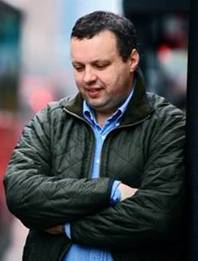
Article ref: https://vilnews.com/?p=6913

Welcome, Andrius,
and I hope you'll find your luck in Vilnius, especially the place you'll live is miracolous. Don't forget to visit Uzhupis, to have beer with our republic's citizens:),
Yours, Thomas Chepaitis

Well, good luck. Hope you try to find some way of using what you have learnt abroad to help Lithuania get rid of its Soviet mentality. And hope you keep sharing your thoughts with Vilnews.
Gintautas Kaminskas
Good luck to you and your family! I wish you to soar smoothly and elegantly and make Lithuanians think and re-think and to look at the things from a different corner and with eyes widely open to the world not only their village called Lithuania.
Good girl
It seems to me that not only will you enjoy your native culture in the magnificent Vilniaus senamiestis, but you are bringing something valuable back home. You can add to the richness and diversity of a small, but great country which is well-loved by so many of us scattered across the globe.
Jurate Kutkus Burns
goodbye England's rose...
E_J
LOL :)))
Goodby English rose, hello Lithuanian thyme... or thorn... or...
Užkalnis forgot to mention, that he has some quite good friend here (Lithuania) also (I'm not talking about me, I mean I just think so, I mean I know that).
Skirtumas
welcome back :))
niex
A repatriate is an outsider too, a foreigner at home.
Nomeda Repšytė
- Bookmark :
- Digg
- del.icio.us
- Stumbleupon
- Redit it
The same people who were used to the Soviet style of thinking and work ethic kept their jobs, even if they were doing nothing or even doing harm
- Posted by - (1) Comment

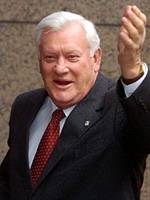
Former president and prime minister of Lithuania, Algirdas Brazauskas. who died last year
The idea is excellent, but the problem is that the majority of the people in the positions where the change could be initiated were from the Soviet times. The fact that Brazauskas was really good at public relations and was able to retain his power for so long meant that the same people who were used to the Soviet style of thinking and work ethic kept their jobs, even if they were doing nothing or even doing harm. To them, changing the way how things are done meant undermining their own position, so of course they did nothing.
My hope is that with time the things will clean up, and these changes will occur. It will take time, though.
Tautietis
- Bookmark :
- Digg
- del.icio.us
- Stumbleupon
- Redit it
The truth is that the Soviet communist nomenklatura has hijacked Lithuania’s development in the last two decades
- Posted by - (0) Comment

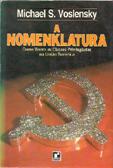
Unfortunately, the “inconvenient truth” is that the Soviet communist nomenklatura has hijacked Lithuania’s development in the last almost two decades and, consequently, our country has largely horribly wasted a truly impressive and immense political and economic capital of global good will, so excruciatingly hard earned by the Victims of the January 13th, 1991 brutal Soviet aggression and by the blood and brains of the legendary Lithuanian freedom fighters, world renowned anti-communist dissident movements, and political refugees in the West in the post-WW II years.
Valdas Samonis, PhD, CPC (Canadian – Lithuanian)
The Web Professor of Global Management (SM)
- Bookmark :
- Digg
- del.icio.us
- Stumbleupon
- Redit it
- Posted by - (0) Comment

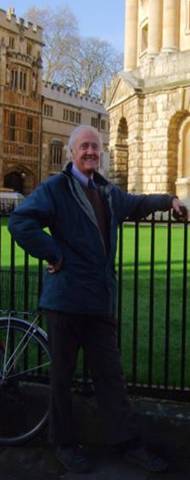
Mervyn Bedford at one of the many Oxford landmarks of higher education.
How soon will human beings be wired to the super computers?
Because I know Aage Myhre and his wife and very much respect what he is trying to do for Lithuania, I offered to write of educational values for the new version of VilNews. The Baltic nations have a perfect opportunity to change the map of educational provision in ways that better fit the rapidly changing world of the 21st. century. Education is not about buildings. It is not about systems and organisations. It is not about tests and inspections. It is about people and the relationships between those who want to learn, or need to learn, and those who already know it. For almost 150 years State school systems have imposed a model of teaching and learning that has hardly changed while society has fundamentally changed and, recently, very rapidly. Those changes are racing unseen towards our youngest children.
At a conference in Norway in 2009, reported in the respected UK magazine “New Scientist,” experts discussed how soon human beings will need to be wired to the super computers rapidly arriving in the work place. Earliest suggested date was 2045. At MIT in the US by 2029 they will have computers able to replicate human thought and decision by copying the chemical and electrical patterns in the human brain. Two Oxford University teachers have argued in print about whether it is right to allow students drugs to enhance their brain performance. Drugs to provide specific hours of sleep and brain implants that help deaf children to hear and paralysed limbs to move already exist. Job requirements in a very few years time and the character of society will change dramatically. We do not have long to get a school system right.
- Bookmark :
- Digg
- del.icio.us
- Stumbleupon
- Redit it
Human trafficking and exploitation
- Posted by - (1) Comment
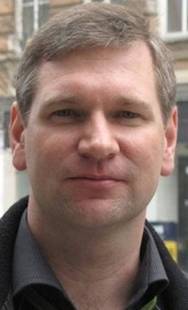
Associate Professor Aurelijus Gutauskas, Mykolas Romeris University, Law Faculty,. Criminal Law and Criminology Department
Head of the Department
By Aurelijus Gutauskas
Human trafficking has taken a new form as some victims agree to travel to countries with higher standards of living and engage in voluntary prostitution. The women's social vulnerability (unemployment, absence of income) and absence of other information results in their allowing others to take half of their income. Human trafficking is organized and committed not only by Organized Criminal Groups (OCGs) but also, in some regions of Lithuania, by individuals with no direct connections with OCGs.
Human trafficking involves recruiting people (by deception or telling the truth), organizing transportation (by finding ways to forge documents and arrange transport), and searching for locations in which to sell and receive profit. Payment is sometimes extracted from the person's earnings.
Victims of human trafficking are usually women aged 18 to 24. They are recruited through modeling agencies, radio shows, online dating, social networks such as Facebook and other websites, and often voluntarily leave their home countries.
Cases are known in which women are offered legal jobs (as waitresses and dancers), but once transported abroad they are forced to provide sexual services. Violence is also often used to make them work and to intimidate others. Search and recruitment is conducted by low-level members of the OCGs. Women are not only recruited by procurers but also by working prostitutes who receive rewards of up to 600 euros for a new woman.
Poland is one of the main transit countries through which persons are carried, but persons were also carried through Latvia, Germany, and the Czech Republic (using land transport where there was no internal border control). The destination countries are states with higher standards of living, whose economies are more stable, and where there is a demand for cheap labor and sexual services (e.g., Germany).
Employment, dating, and modeling agencies, recreation centers, nightclubs, rented flats, and hotels are used to commit these criminal acts. The establishment of LBSs is often planned along with the criminal activity being organized. Companies are set up in the names of other, often antisocial, persons. LBSs are established not only in Lithuania but also in the countries in which criminal acts are committed.
Favorable conditions for these criminal acts are created by tolerant national legislation, scarce state control, and the demand for sexual services and cheap labor in the destination countries.
The commission of these criminal activities is conditioned by complicated economic situations and high levels of unemployment in Lithuania. The reason OCGs participate in these criminal acts may be that they offer low risk and high profits. The proceeds of this crime are invested in legal business, and so destabilize the economy of the state.
- Bookmark :
- Digg
- del.icio.us
- Stumbleupon
- Redit it
Toronto Raptors select Jonas Valančiūnas
- Posted by - (0) Comment
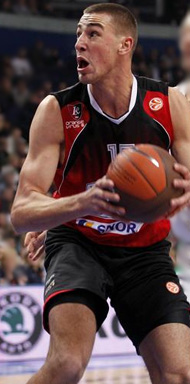
Jonas Valančiūnas
By Mike Ulmer
This week the Toronto Raptors drafted Jonas Valanciunas out of Lithuania and while it matters little where he is from, it matters quite a bit where he will stand.
At centre.
When, of course is anybody's guess. Still, the Raptors decision to draft him at number five at Thursday's NBA draft was great fun to dissect.
First, the whole deal was a surprise. It had widely been assumed that given the chance, the Raptors would opt for either Kemba Walker or Brandon Knight. Both were point guards and explosive athletes who could supercharge the Raptors in the open count and supplement Jerryd Bayless and Jose Calderon.
It turns out no one was more shocked than the 19-year-old Lithuanian.
“I was so surprised, so happy,” he said from New Jersey moments after being selected. “I didn’t think I was going to be drafted so high.”
Valanciunas, a kid whose 231 pounds is spread on a surface about the size of PEI knows he must get bigger but he covets the chance to bang bodies in the low post. He sees himself as a centre, now and forever.
“I’m not ready yet but I will work hard and improve. I will get my body bigger and stronger.”
At 19, it will take a while for Valanciunas to reach Toronto.
There are media reports of a necessary buyout with his European team and the fact that he is probably still growing means immediate immersion in the NBA is highly unlikely.
All this, in turn, means that while Andrea Bargnani pines for more time at power forward, his immediate future looks to be at centre where he will be subject to the defensive demands of new coach Dwane Casey. There will be help for Bargnani. It will be Valanciunas but it will not arrive soon.
The selection will prompt the usual eye-rolling that the Raptors are Euro-centric. By selecting a European big man instead of an American guard, the Raptors will invite still more people to buy into that notion.
Truth is, the Raptors got the best potential centre in the draft. Valanciunas pocketed 12.8 points and 8.5 rebounds in just 21 minutes a night in Lithuania. He is smooth for a big man with a great motor and a hunger for defence and rebounding.
Finally, there is the question of timing. When GM Bryan Colangelo signed a two-year contract extension with a club option for the third no one thought he would invest in something as slow to mature as a green banana. Yet he drafted a player whose journey to the roster could take years.
It speaks to an enviable confidence. Say what you want about Colangelo, his only term is long.
Read more about Jonas Valančiūnas:
http://en.wikipedia.org/wiki/Jonas_Valančiūnas
- Bookmark :
- Digg
- del.icio.us
- Stumbleupon
- Redit it
You reduced me to tears with your addition of one Song of Freedom by Lithuanian fighters
- Posted by - (0) Comment
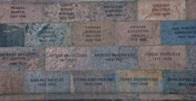
Wall of former KGB headquarters (now museum) in Vilnius. Each stone is engraved with the name of a Lithuanian partisan who was executed by the Soviets.
You reduced me to tears with your addition of one Song of Freedom by Lithuanian fighters [Oh little falcon].
Those songs, sung by my family in secret when I was a kid, still ring in my ears today, e.g. about the Kalniske battle or about the Soviet murdered freedom fighters whose bloodied bodies were put by the NKVD for display and further humiliation in the Lithuanian town squares:
“Pagulde Tave ant akmeneliu, o aplink Tave kraujo klanai
Ir neatejo nei Motinele, nei Tavo Broliai narsus kariai”.
Valdas Samonis,
Canada
- Bookmark :
- Digg
- del.icio.us
- Stumbleupon
- Redit it
Fresh winds of new confidence based on young people and new leaders badly needed: a Catch 22 situation*
- Posted by - (0) Comment
By Val Samonis
RE: Lithuania has been having a difficult time setting an investment climate.
Mrs. Narusiene is right. Who wants to invest in a smallish (and getting smaller) country largely run by the former communist nomenklatura in the last close to two decades since Independence. Despite its glorious history, LT still has a bad image problem globally, largely due to the 1992 return of former Bolsheviks to power. Younger generations see that older folks have been voting for communists, so now we have a historically highest emigration - young people "vote with their feet"! Who would want to invest in a country that does not believe in itself; who does not correct its mistakes swiftly?
Fresh winds of new confidence based on young people and new leaders are badly needed: a catch 22 situation.

* Catch 22:
http://en.wikipedia.org/wiki/Catch-22
- Bookmark :
- Digg
- del.icio.us
- Stumbleupon
- Redit it
Aciu Tetei ir Mamytiai!
- Posted by - (0) Comment

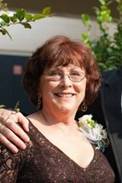
Thank you for posting this article which so affected my parents' post-war years in Germany and later in the US. I think they felt guilty for abandoning their homeland and relieved that they had gotten to freedom. What they did not leave behind is their love for Lietuva which they worked hard to pass on to their children. Aciu Tetei ir Mamytiai!
Jurate Kutkus Burns
- Bookmark :
- Digg
- del.icio.us
- Stumbleupon
- Redit it
Illustration: http://www.facebook.com/pages/I-love-Lithuania/124391247572076
Dear Aage
Your editorial of 6 June:
("How can Lithuania better attract and assist foreign investors?")
made depressing reading.
It also made me think of an analogy which helps me to understand why I and other don't give up and turn our backs on Lithuania. The analogy partly comes to mind because at the beginning of August I am visiting Lithuania with my son (age 35) who has never been to Lithuania yet. Anyway, the analogy is this: let's say you and your partner are parents who love their child very much, as is natural. Let's say that at a certain age, perhaps 10, for argument's sake, your child is kidnapped by a creep and undergoes all sorts of horrible experiences at which I won't even hint – a parent's nightmare. The creep keeps your child for 25 years. During that time you never know whether you will ever see your beloved child again and the worry is hard to live with. OK, finally after 25 years the creep who was jailing your son/daughter finally dies and your child is able to escape. Bewildered, he/she manages to get back to your house and say "Here I am, I'm still alive."
Now anyone can imagine what a horrible situation this is for the parents. Of course they never stopped loving their child and they are glad to have him/her back. But after 25 years, their child is automatically not the person they used to know and love, plus there are all the horrible experiences on top of that, and the damage done by 25 years of living with a creep.
I don't know how other feel about my analogy, but I personally find it useful to help understand our feelings. Our beloved country was kidnapped/hijacked by a bunch of creeps and held hostage for 50 years. They did horrible things to her. And the most horrible aspect of all is that the Soviet mentality lives on in so many Lithuanians and it is stopping Lithuania from becoming a normal country. Perhaps the sentence that upset me most in your editorial was: « "What's in it for me personally?" was the question that was often presented when we contacted representatives of local authorities and businesses.» It upsets me because it summarises the Soviet mentality that is continuing to do so much harm to my native land; and it upsets me because that mentality is still so widespread. It's why schools and hospitals continue to languish in their primitive state – because crooked politicians and businessmen can't make a "killing" out of them the way they do out of real estate development projects. Having a few skyscrapers and fancy shopping centres is no big deal. That's not a measure of civilisation. It's when the schools and hospitals come up to Western European standard – that's when we will be able to feel some progress has finally been made.
What keeps me from despairing is that unlike individual humans, fortunately countries are not mortal, they do not automatically die in less than a century. So Lithuania will go on, and my hope is that the forces of light (i.e. the West) will in the long term win over the forces of darkness (i.e. the East). Hopefully this process will be helped by Lithuanian immigrants (or their offspring) returning from Western countries, returning with Western attitudes, not prepared to tolerate the lingering Soviet way of doing things. Returning to my analogy, I guess the basic thing I want to say today is let's remember that our loved one is a torture and trauma survivor, and healing will be a long, slow process. It will require a lot of patience and understanding from us, and well thought-out forms of practical assistance.
Regards
Gintautas Kaminskas
Australia
- Bookmark :
- Digg
- del.icio.us
- Stumbleupon
- Redit it

OPINIONS
Have your say. Send to:
editor@VilNews.com
Ph. D., Chicago
A wave of unity sweeps the international Lithuanian community on March 11th every year as Lithuanians celebrated the anniversary of the Lithuanian Parliament's declaration of independence from the Soviet Union in 1990. However, the sense of national unity engendered by the celebration could be short-lived.
Human beings have a strong tendency to overgeneralize and succumb to stereotypical us-them distinctions that can shatter even the strongest bonds. We need only search the internet to find examples of divisive thinking at work:
- "Those who fled Lithuania during World II were cowards -- and now they come back, flaunt their wealth, and tell us 'true Lithuanians' how to live."
- "Lithuanians who work abroad have abandoned their homeland and should be deprived of their Lithuanian citizenship."

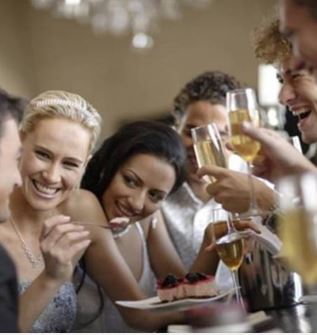
In Lithuania Christmas Eve is a family event and the New Year's Eve a great party with friends!
Lithuanian say "Kaip sutiksi naujus metus, taip juos ir praleisi" (the way you'll meet the new year is the way you will spend it). So everyone is trying to spend New Year's Eve with friend and have as much fun as possible.
Lithuanian New Year's traditions are very similar to those in other countries, and actually were similar since many years ago. Also, the traditional Lithuanian New Years Eve party was very similar to other big celebrations throughout the year.
The New Year's Eve table is quite similar to the Christmas Eve table, but without straws under the tablecloth, and now including meat dishes. A tradition that definitely hasn't changes is that everybody is trying not to fell asleep before midnight. It was said that if you oversleep the midnight point you will be lazy all the upcoming year. People were also trying to get up early on the first day of the new year, because waking up late also meant a very lazy and unfortunate year.
During the New Year celebration people were dancing, singing, playing games and doing magic to guess the future. People didn't drink much of alcohol, especially was that the case for women.
Here are some advices from elders:
- During the New Year, be very nice and listen to relatives - what you are during New Year Eve, you will be throughout the year.
- During to the New Year Eve, try not to fall, because if this happens, next year you will be unhappy.
- If in the start of the New Year, the first news are good - then the year will be successful. If not - the year will be problematic.
* If New Year's night is cold and starry - look forward to a good summer!
* If the during New Year Eve trees are covered with frost - then it will be a good year. If it is wet weather on New Year's Eve, one can expect a year where many will die and dangerous epidemics occur.
* If the first day of the new year is snowy - the upcoming year will see many young people die. If the night is snowy - mostly old people will die.
* If the New Year time is cold - then Easter will be warm.
* If during New Year there are a lot of birds in your homestead - then all year around there will be many guests and the year will be fun.
Christmas greetings
from Vilnius
and epic battle for the
future
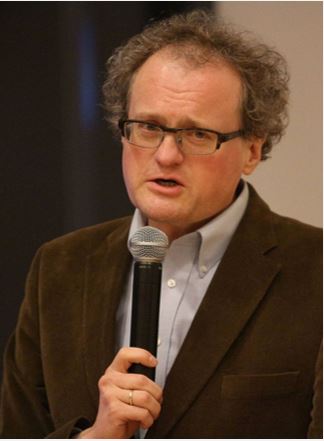
Philosopher, political theorist, historian of
ideas, social analyst, and political
commentator
Ukraine was and continues to be perceived by the EU political class as a sort of grey zone with its immense potential and possibilities for the future, yet deeply embedded and trapped in No Man's Land with all of its troubled past, post-Soviet traumas, ambiguities, insecurities, corruption, social divisions, and despair. Why worry for what has yet to emerge as a new actor of world history in terms of nation-building, European identity, and deeper commitments to transparency and free market economy?
Right? Wrong. No matter how troubled Ukraine's economic and political reality could be, the country has already passed the point of no return. Even if Vladimir Putin retains his leverage of power to blackmail Ukraine and the West in terms of Ukraine's zero chances to accede to NATO due to the problems of territorial integrity, occupation and annexation of Crimea, and mayhem or a frozen conflict in the Donbas region, Ukraine will never return to Russia's zone of influence. It could be deprived of the chances to join NATO or the EU in the coming years or decades, yet there are no forces on earth to make present Ukraine part of the Eurasia project fostered by Putin.
want to learn about the
new, scary propaganda
war between Russia,
The West and the
Baltic States!
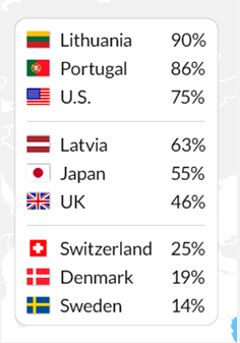
believe their government
is corrupt
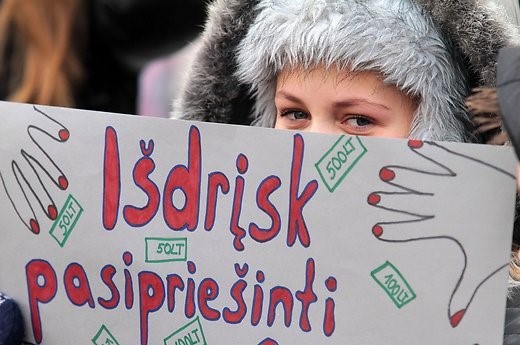
students say no to
bribes for doctors
During Soviet times, government was administered for the people in control, not for the local population, court decisions were decreed, they were not the administration of justice, and academia was the domain of ideologues. 25 years of freedom and openness should have put those bad experiences behind Lithuania, but that is not so.
Today, it is a matter of expectation that court pronouncements will be governed by ideological dictates. Few, if any Lithuanians expect real justice to be effected. For foreign companies, doing business in Lithuania is almost impossible in a situation where business people do not expect rule of law, so, surely Government would be a refuge of competence?
Lithuanian Government has not emerged from Soviet styles. In an attempt to devolve power, Lithuania has created a myriad of fiefdoms of power, each speaking in the name of the Government, each its own centralized power base of ideology.

Chepstow, Wales
Doesn't that sound suspiciously like Lithuania? Ah, but I didn't mention the mountains of Snowdonia, which would give the game away.
I'm talking about Wales, that part of the UK which Lithuanians used to call "Valija", but later named "Velsas" (why?). Wales, the nation which has welcomed two Lithuanian heads of state to its shores - firstly Professor Vytautas Landsbergis, who has paid several visits and, more recently, President Dalia Grybauskaitė who attended the 2014 NATO summit which was held in Newport, South Wales.
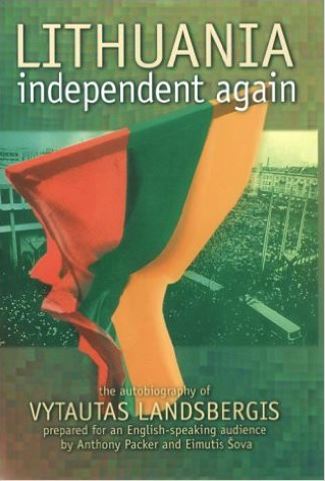
ENGLISH VERSION OF THE
AUTOBIOGRAPHY OF VYTAUTAS LANDSBERGIS.
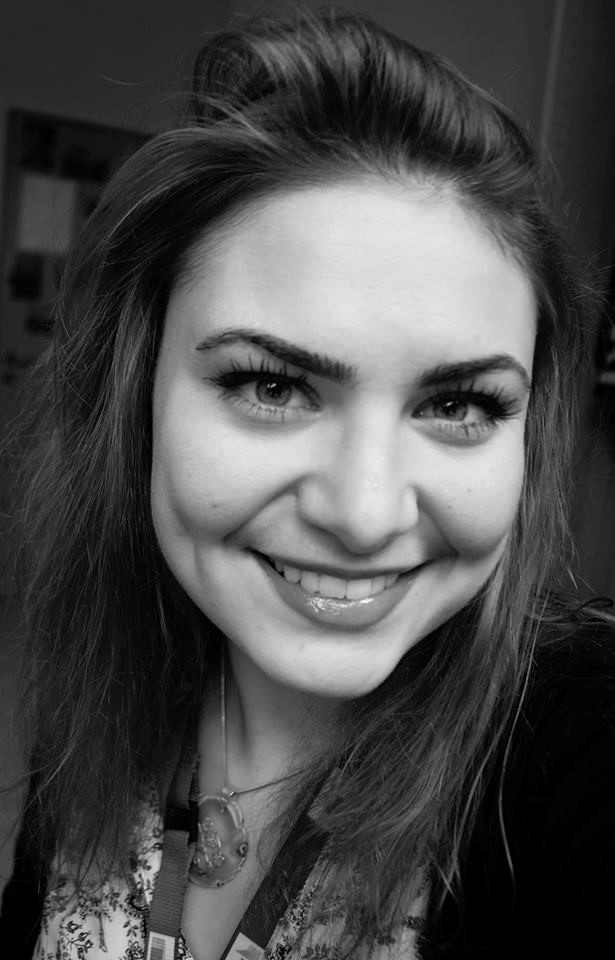
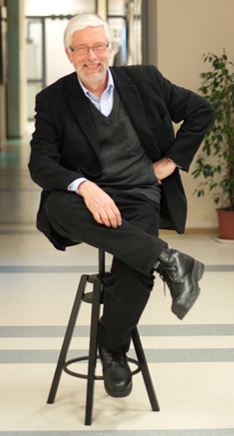
Although Lithuanian activities have thinned over the decades as that postwar generation died out, the Lithuanian Martyrs' parish hall is crowded with many, many hundreds of visitors who come to the Lithuanian cemetery for All Souls' Day. Similarly, the Franciscan parish has standing room only for Christmas Eve mass.
Although I am firmly embedded in the literary culture of Canada, my themes are usually Lithuanian, and I'll be in Kaunas and Vilnius in mid-November 2015 to give talks about the Lithuanian translations of my novels and short stories, which I write in English.
If you have the Lithuanian language, come by to one of the talks listed in the links below. And if you don't, you can read more about my work at
www.anatanassileika.com
http://www.vdu.lt/lt/rasytojas-antanas-sileika-pristatys-savo-kuryba/ https://leu.lt/lt/lf/lf_naujienos/kvieciame-i-rasytojo-59hc.html
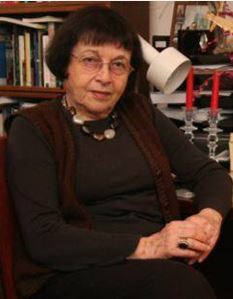
"My love and best wishes to all. As long as VilNews exists, there is hope for the future,"" she writes.
Irena Veisaite means very much for our publication, and we do hereby thank her for the support and wise commitment she always shows.
You can read our interview with her
Facing a new reality
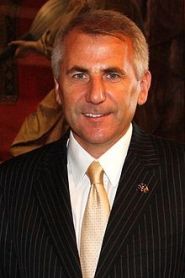
Dear readers of VilNews,
For a number of years, the EU and Russia had assumed the existence of a strategic partnership, based on the convergence of values, economic integration and increasingly open markets and a modernisation agenda for society.
Our agenda was positive and ambitious. We looked at Russia as a country ready to converge with "European values", a country likely to embrace both the basic principles of democratic government and a liberal concept of the world order. It was believed this would bring our relations to a new level, covering the whole spectrum of the EU's strategic relationship with Russia.
The likelihood of Putin
invading Lithuania
.jpg "lithuania today")
Founding Director at Summer Literary Seminars
Are all Lithuanian energy
problems now resolved?
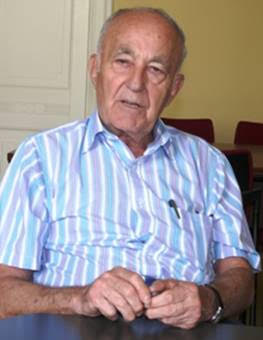
Lithuania as a country does not have significant energy resources. Energy consuming infrastructure after WWII was small and totally supported by energy imports from Russia.
First nuclear reactor begins power generation at Ignalina in 1983, the second reactor in 1987. Iganlina generates enough electricity to cover Lithuania's needs and about 50%.for export. As, prerequisite for membership in EU, Ignalina ceases all nuclear power generation in 2009
The Klaipėda Sea terminal begins Russia's oil export operations in 1959 and imports in 1994.
Mazeikiu Nafta (current ORLEAN Lietuva) begins operation of oil refinery in 1980.
Have Lithuanian ties across
the Baltic Sea become
stronger in recent years?
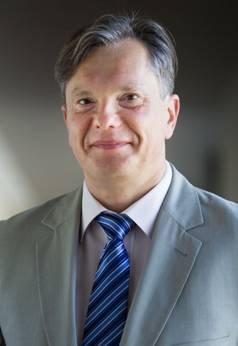
The two decades that have passed since regaining Lithuania's independence can be described as a "building boom". From the wreckage of a captive Soviet republic, a generation of Lithuanians have built a modern European state, and are now helping construct a Nordic-Baltic community replete with institutions intended to promote political coordination and foster a trans-Baltic regional identity. Indeed, a "Nordic-Baltic community" - I will explain later in my text the meaning of this catch-phrase.
Since the restoration of Lithuania's independence 25 years ago, we have continuously felt a strong support from Nordic countries. Nordics in particular were among the countries supporting Lithuania's and Baltic States' striving towards independence. Take example of Iceland, country which recognized Lithuania in February of 1991, well in advance of other countries. Yet another example - Swedish Ambassador was the first ambassador accredited to Lithuania in 1991. The other countries followed suit. When we restored our statehood, Nordic Countries became champions in promoting Baltic integration into Euro-Atlantic institutions. To large degree thanks Nordic Countries, massive transformations occurred in Lithuania since then, Lithuania became fully-fledged member of the EU and NATO, and we joined the Eurozone on 1 January 2015.
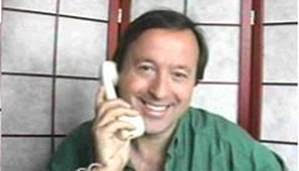
Have you heard about the
South African "Pencil Test"?
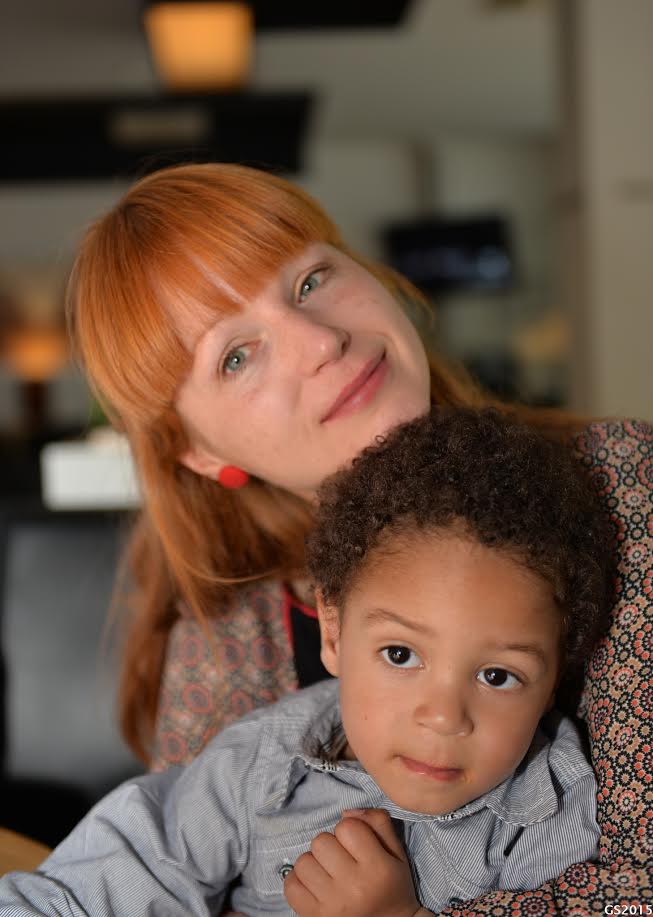
But that is exactly what happened to me when I came back from South Africa. I will tell you how.
VilNews e-magazine is published in Vilnius, Lithuania. Editor-in-Chief: Mr. Aage Myhre. Inquires to the editors: editor@VilNews.com.
Code of Ethics: See Section 2 – about VilNews. VilNews is not responsible for content on external links/web pages.
HOW TO ADVERTISE IN VILNEWS.
All content is copyrighted © 2011. UAB ‘VilNews’.