
THE VOICE OF INTERNATIONAL LITHUANIA

|
VilNews has its own Google archive! Type a word in the above search box to find any article.
You can also follow us on Facebook. We have two different pages. Click to open and join.
 Click on the buttons to open and read each of VilNews' 18 sub-sections Click on the buttons to open and read each of VilNews' 18 sub-sections  |

|


Archive for 2011

Thank God for Lithuania!
- Posted by - (1) Comment
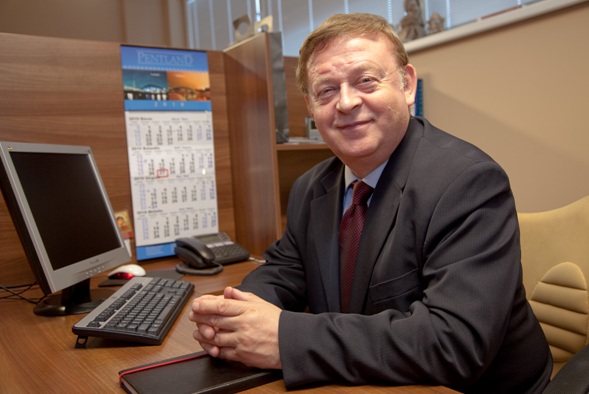
David Telky, Managing Director of Scottish-Lithuanian manufacturing company Pentland, has over 35 years in the clothing manufacturing industry. David was born in Glasgow, Scotland where he has carried on the family business of 90 years to present.
A personal thank you note to Lithuania from David Telky, Scotland
The above quote took over 30 years to occur. It covers activities in 14 countries and many years of garment production around the globe.
My background was in accountancy, but when my father, a tailor, phoned me to return to Scotland to help him start a large factory, I needed no second request.
Accountancy could not stand up to the thought of working with my father, starting a new factory and working in a manufacturing environment that had been a family trade for generations.
Two years later, after my training was over, the factory we designed was completed and my theory was to be put into practice.
To finance the project, at a very stormy time in the British economy, took every penny that we could beg and borrow but the beautiful factory was ours (and the banks) and now we had to staff and provide orders for its production.
10 eventful years later, sadly after my wonderful Father died, the factory had expanded to 450 people and was making 10,000 jackets a week, but customers were moving to overseas production, mainly from China!
This was when the stresses of running a large enterprise in Glasgow bore the health problems that many find the hardest part of business management. The long hours the mental strain of multiple problems, the financial pressures, the staff aggravations.
The answer was to do what all similar enterprises in UK were looking at and out source production, but where?
Over the next 5years,after successful forays into China, Indonesia, Sri Lanka, Turkey, Poland ,Portugal, Belarus Egypt and a few not so successful, I found the right place, Lithuania- my search was over!
The stress of all this had seen me in hospital with health problems, that linger to this day, so the expression "thank God for Lithuania ...without it I could be dead!" evolves from the joy of working with some of the best staff I have ever employed, combined with some of the finest and most loyal factories producing excellent products with an almost old fashioned loyalty and ethic that was so prevalent in the UK of my youth.
Altogether the move to Lithuania has not only been a work influenced move but the social aspect of the community of local and expats has opened my eyes to a life of harmony and peace that I thought was lost forever and fills me each day with happiness.
So Thank God for Lithuania in it's helping me develop not only a great company Pentland , a sum of it's fine employees ,but for giving me the chance to meet so many great and wonderful people not least the Editor of this fine Journal, Aage Myhre ,who I am honoured to count as my good friend .
May I say that the journal that Aage has developed tirelessly over many years is a fine demonstration of his love of Lithuania that I am proud to share with him!
Good luck to Vilnews and to you my friend Aage Myhre!
| Pentland Pentland is a Scottish based Clothing Manufacturing company headquartered in Glasgow with its production sites in Lithuania, Belarus and Moldova. Pentland has been manufacturing tailored clothing in Glasgow since 1973 and moved its production to Eastern Europe in 1985. Pentland produces for the European market for leading fashion retailers delivering tailored outerwear for men and women, with over 40 factories in Lithuania and neighbouring countries. David Telky, Managing Director of Pentland has over 35 years in the Clothing Manufacturing industry. David was born in Glasgow, Scotland where he has carried on the family business of 90 years to present. David participates hands on in his manufacturing companies from sales, production to delivery – producing fashion garments for the British and other western markets. |
- Bookmark :
- Digg
- del.icio.us
- Stumbleupon
- Redit it

The Lithuanian Picnic
- Posted by - (3) Comment
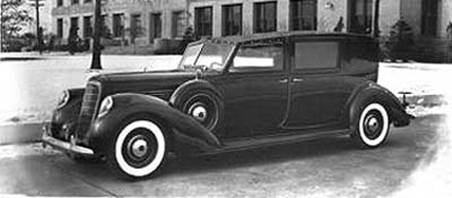
Straight-line 12-cylinder 1938 Lincoln Saloon
By KR Slade
Sunday was, as usual, the day for Father and me to go to Lithuanian Catholic mass; and, as usual, thereafter, to return to my familiar English-speaking world. Our Sunday masses were always at our Lithuanian church -- the only one between Massachusetts and Connecticut. I never had any idea what anyone at church was saying, because I did not understand any Lithuanian. In 1958, the mass was in Latin; however, the sermon, readings, singing, and announcements were in Lithuanian. I understood some Latin, although I was only ten years old. It was the ‘everything else’ -- before, during, and after church -- that I did not understand . . .
After mass, there was our weekly tradition: a couple of ‘dogs’ at the ‘New York System’ wiener-joint, just around the corner from the church, in the old inner-city Lithuanian neighbourhood; then a drive across town to the Italian bakery for a box of pastries to take to Mother’s parents’ house for an hour or two of ‘Sunday visit’.
It was not until we were at home that Father announced the news: next Saturday was to be the first-of-the-summer-season Lithuanian picnic. Mother’s reaction was that this was going to be a lot of work for her: to prepare all of the food, for the three of us and more to share. I thought that it would be great: lot’s of other kids, to meet and play with, none of whom spoke anything but English. We all would ‘goof’ on all of the adults trying to speak Lithuanian, which the adults did not know very well, had forgotten, would be corrected, and would argue about. They would be so language pre-occupied as to leave us kids alone, for us to have our fun . . .
Next Saturday, Father’s old -- but still impressive, straight-line 12-cylinder 1938 Lincoln Saloon’s huge trunk compartment was picnic-packed. We rolled out of our driveway.
“Tom. There will be swimming, of course. Did you bring your swimming trunks?”
“Yes.”
(Mother): “Well, I hope that it’s going to be at the big lake, the water is good there. That other picnic place -- with the big pond is okay; but that other picnic place, with the little pond -- I don’t want Tom swimming there. I think that there are leeches there. So, which picnic ground is it ?”
That’s when Father stepped on the brakes, more notable an event because we were going up a hill.
“Ohh . . . ”
“Which picnic ground is it ?”
“Ohh . . . ”
“Which picnic ground is it ?”
“Well, . . . ”
“Don’t tell me that you don’t know.”
“Okay.”
“Which picnic ground is it ?”
“We’ve been there.”
“Which picnic ground is it ?”
“It’s not a problem. We will see. Everything will be okay. We will just go to the church.”
“It is eleven o’clock. The picnic is at noon. It is an hour’s drive to any of the three picnic grounds. The church is a half-hour away; the other way.”
“It’s OK; we will go to the church; and we will see.”
“What we will see is nothing; because everyone will have already left.”
“Well, we will go to the church, and we will see.”
We went to the church . . . ‘to see’ . . . and we saw nothing. Any idea of posting a notice as to where/what/when or anything about the event, was an unknown concept [both then and thereafter, and probably in the hereafter and forever]. No need to tell: ‘Everyone knows’.
We drove around the neighbourhood of the church. Father reasoned that there would be someone knowledgeable of the precise details of the event, although unable/unwilling to attend. Of course, since we were passing the New York System Wieners, we were obliged to stop for ‘a couple of dogs’, on the pretence of getting information. Mother waited in the Lincoln, with the doors locked and windows rolled-up. Somehow, she noticed the tiniest touch of mustard, and made me take-off my T-shirt.
We drove around the neighbourhood, looking for addresses. After knocking on six doors, he did find one person who knew the correct location. Now we knew which picnic ground: the one with the big lake.
From my spacious backseat of the Lincoln, a limousine-distance away from the front seat, I could see my father chain-smoking, and it seemed like smoke was coming from my Mother’s ears. However, the Lincoln leather seat soon became uncomfortably hot on my bare back, so I took to sitting on the thick-wool rugged spacious floor. Father kept a very clean car. The long drive encouraged me to change positions frequently. Positioning my feet on the back of Father’s seat was not such a good idea, because at a traffic light stop, his huge bear paw of a hand reached over and behind and caught me on my right calf, which encouraged me to find other positions. That was when I understood what was going to be the mood of this family outing.
We arrived at two o’clock: two hours late. However, there was no one there. Father praised the solitude of the lakeside forest; Mother was silent -- still-more smoke from ears, still makes no sound, but makes for a more profound stillness. We ate our picnic, in Silence.
We had too-much food. Mother was not particularly hungry. Father had a seemingly larger than his large-normal appetite. I was a tall, but skinny, kid; I never ate much; and Father kept urging me to eat more. However, after the over-eating, there was still too-much food.
A couple of other picnicking families arrived, around the lake. Father gathered up the excess food, and he and I carried it off on a give-away mission. The first family was Polish; Father spoke with them for a long time in their language; they had plenty of food and did not want any more; they gave us some great homemade pickles; Mother was not pleased that we returned with more food. The second family was Jewish, and kosher; so, it was not opportune to offer our pork-laden gifts; but Father had a long talk with them in Yiddish and Russian, and they gave us some nice sweet bread. Mother was more displeased with the more food. Father and I set-off on a walk around the lake, where we ‘lost’ our gift-food. For the resident squirrels and other creatures, it must have been a day of bonanza.
I mentioned swimming. Mother said that I could not swim alone. Father said he would swim with me. Then he remembered that he had forgotten his swimming trunks. My parents had a short discussion.
“It’s okay. I will swim in my underwear.”
“No; you will not.”
It was time to leave. We packed our residue picnic paraphernalia into the trunk of the Lincoln.
Three busses of Lithuanians arrived, from our church. Evidently, the picnic was to be at 3:30 pm.
Everyone was very cordial, but there were the inevitable questions, totally understandable, directed to my mother.
“Why did you not wait to eat with us ?”
“Why did you not bring food to share with others ?”
“You did not cook ?”
In very-good Lithuanian, Mother responded to the Lithuanian-language questions, saying, “I do not speak Lithuanian-language”.
Unfortunately, the bus ride had been long, and this early-summer day was very hot. The Lithuanian taste for milk-products was not suitable to this especially hot summer day. Personally, I do not like beets, especially in soup, more-especially with cream. Mother continued her day’s fasting; I did not want to eat more; even Father had over-eaten.
And it came to pass, that the three busloads of Lithuanians became ill; violently ill -- with some sort of great stomach distress. Father drove to find a telephone to call a hospital. Three ambulances arrived. The one doctor examined people.
One of the ambulance drivers was German, and was somewhat naturally attracted to the ‘borscht’ soup -- with the cream, on the sunny picnic-buffet. His workday ended, and his ambulance was soon to become abandoned. It was strange to see the doctor driving one of the three buses -- all to the hospital.
We drove home in the Lincoln. Mother said nothing. Actually, she said nothing for about a week, which was the same amount of time that Father slept in the guest room. Maybe it would not have been so bad if on our way home Father had not said, “As I told you, everything will be okay; we will see.”
I had a great time at the picnic; well, at least before everyone else ate, and before I experienced ‘sympathetic vomiting’. There were lots of other kids to play with; and there was good swimming. I met a cute Lithuanian girl, although she was two years older. I told all of the kids the story of how we came to our Lithuanian picnic; they all laughed. She told me, “You tell good stories.” I became more interested in going to Sunday mass. Five years later, she was my date at my Freshman Prom.
“Everything will be okay; we will see.”
The foregoing article is ‘fiction’, an excerpt from “T.F.”. Then again, maybe it is a ‘fiction’ to say that it was ‘fiction’; you can never know with ‘fiction’ . . .
All Rights Reserved: 2006
Note: A version of the foregoing story was published in the October--November 2006 issue of the Canadian subscriber's journal, 'Dialogue' magazine (www.dialogue.ca)
- Bookmark :
- Digg
- del.icio.us
- Stumbleupon
- Redit it

- Posted by - (0) Comment
Two “Lithuanian” mayors known for their stunts
By Jeremy Druker - August 4th, 2011
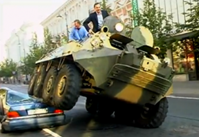
Vilnius Mayour Artura Zuokas crushing illegally parked cars with a ‘tank’.
It’s not so often a video from Lithuania goes viral or even semi-viral, so I can’t avoid calling more attention to a recent stunt pulled by the mayor of Lithuania to convince people not to park in bike lanes. The video has since been picked up by many media, including the Guardian, but I saw it first, of all places, on an environmental website in the U.S. called Grist. It’s now been viewed by almost 1.4 million people.
The episode got me thinking about another mayor of Lithuanian origin known for his stunts, but this time on the other side of the world. Somehow, I only recently heard about Aurelijus Rutenis Antanas Mockus Šivickas — a Colombian mathematician, philosopher, and politician — who is the son of Lithuanian immigrants.
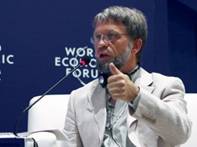
Antanas Mockus, former Mayor of Bogota, Colombia.
Antanas Mockus, as he’s better known, is a real character, who actually mooned students when he was president of the National University of Columbia. While he eventually had to step down over the scandal, the publicity helped him in his subsequent mayoral campaign. He ended up serving two terms as Bogota’s mayor, leading a transformation of the city...
Read more at:
http://eastofcenter.tol.org/2011/08/two-lithuanian-mayors-known-for-their-stunts/
- Bookmark :
- Digg
- del.icio.us
- Stumbleupon
- Redit it

I admire your work and efforts to “spread the gospel” about wonderful Lithuania
- Posted by - (0) Comment
I join the very large group of people, who admire your work and efforts to "spread the gospel" about wonderful Lithuania and your serious endeavours to induce Lithuanian decision makers to improve on the not-so-wonderful aspects of Lithuanian political and economic life.
Peter Modeen, Costa del Sol, Spain
- Bookmark :
- Digg
- del.icio.us
- Stumbleupon
- Redit it

Lithuania criticizes Norwegian bank
- Posted by - (0) Comment

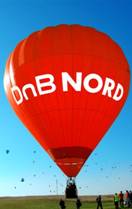
The Lithuanian state finance regulator has attacked Norwegian bank DnB NOR for “unprofessional behaviour” after it allegedly sold structured savings products to amateur investors who went on to lose NOK 200 million (over USD 37 million).
640 Lithuanian investors were sold the structured savings products worth around NOK 1.55 billion (nearly USD 288 million) in the months before the financial crisis hit through DnB NORD, originally a joint operation between DnB NOR and a German Bank that trades in Estonia, Latvia, Lithuania and Poland. The Lithuanian authorities have criticized the bank for selling such products via inexperienced investors that were not sufficiently informed of the risk.
Norwegian Broadcasting (NRK) reports that the Lithuanian regulator has written a report that states, “we will not tolerate such unprofessional behaviour.” It goes on to say that “one scrupulous actor” can affect confidence in the whole financial markets system. The Lithuanian authorities now expect DnB NORD to compensate those who have lost out from the deals.
DnB NOR took full control of the bank in January. The company’s information director, Thomas Midteide, told news agency NTB that it did not agree with the regulator’s conclusions but was pleased to see that no measures were taken against the bank. “This is an old issue, and we did not own the bank at the time these sales happened,” Midteide commented, adding that “the products have not been sold in the last few years.”
- Bookmark :
- Digg
- del.icio.us
- Stumbleupon
- Redit it
- Posted by - (1) Comment
Newsletter 3 August:
Two Norwegian companies to invest over LTL 70 million in Lithuania
The Ministry of Economy has signed letters of intent with Norwegian companies Mirror Accounting AS and Storebrand Group planning to implement LTL 70.5 million worth of development projects in Vilnius and create at least 270 jobs.
News
August 01, 2011
HITACHI shows interest in investment environment in Lithuania Press releases
During a working visit to Lithuania, representatives of Hitachi Corporation, a strategic investor in the new Visaginas nuclear power plant (NPP), also visited the public agency Invest Lithuania. During the meeting, Akira Shimizu, the Managing Director of Hitachi Europe Ltd., gave a detailed presentation of the activities and next development plans of the company as well as inquired about the investment environment in Lithuania.
Events
September 08, 2011
The China International Fair for Investment and Trade (CIFIT) is China's premier investment event and a globally leading platform for investment stakeholders worldwide to showcase investment climates and a never-ending matchmaking scene for projects and capital.
September 20, 2011
INVEST LITHUANIA at Finance Transformation Summit
Invest Lithuania will be expecting to meet representatives of expanding businesses at the Finance Transformation Summit, which will be held in Dallas, the US, on 20-22 September.
September 25, 2011
Shared Services Exchange conference in Germany
INVEST LITHUANIA is preparing for the Shared Services Exchange event to take place in Germany and gather strategic decision makers to take a step back from their current operations, see what strategies and solutions others are adopting, develop new business partnerships and make investment choices that deliver innovative solutions to their shared services organisation and the wider business.
September 26, 2011
First U.S. Certified Trade Mission to Lithuania
The American Chamber of Commerce in Lithuania is proud to announce the first U.S. certified Trade Mission to Lithuania at the end of September, 2011. This kind of mission has a record of success for almost 13 years in other countries, bringing together the power of business interest and governments' support, promoting real business opportunities worldwide and putting companies on the fast track of growth.
September 27, 2011
Lithuania will be presented for British businesses in September
INVEST LITHUANIA in partnership with Cormack Consultancy Baltic Limited (CCB), and in cooperation with the Lithuanian embassy in London, will host a series of 3 seminars in 3 cities in the United Kingdom for the promotion of Lithuania as an inward investment location relating to R&D, Shared Services and BPO, as well as Manufacturing.
September 28, 2011
INVEST LITHUANIA to participate at 8th Annual Shared Services and BPO conference
In 2009 Annual Shared Services and BPO conference took place in Prague, the Czech Rep., and gathered an audience of 450 participants, last year 500 shared services representatives from around the globe came to the conference in Dublin, Ireland, and this year the event hosted in Palau de Congressos de Catalunya, Barcelona, Spain, expects to have 600 participants.
October 25, 2011
Event series for British businesses by INVEST LITHUANIA in October
INVEST LITHUANIA in partnership with Cormack Consultancy Baltic Limited (CCB), and in cooperation with the Lithuanian embassy in London, will host a series of 3 seminars in 3 cities in the United Kingdom for the promotion of Lithuania as an inward investment location relating to R&D, Energy and Manufacturing.
- Bookmark :
- Digg
- del.icio.us
- Stumbleupon
- Redit it
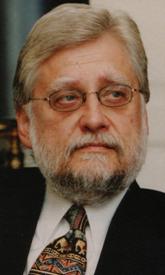
Dr. Romas J. Misiunas
I was extremely gratified to see your recent issue on South Africa. Most of the Litvaks whom you identify specifically had been quite helpful to me in re-establishing ties with the land of their forebears. I am honoured to have had the opportunity to meet almost all of them. Some have become good friends. And I fully hope that the renewal ties with the country of their origins will prove quite beneficial to many in this rapidly intermingling world.
When I initially learned about such a situation of largely forgotten ”roots,” not long after taking up residence in Tel Aviv, I realized the extent to which these ties spanned a century and more. The efforts to increase awareness of them in Lithuania itself remain an ongoing process and forms another story in itself. Thank you for your contribution.
I much admire your efforts to promote knowledge about this country, especially in the far flung corners of the world.
Dr. Romas J. Misiunas
Ambassador of Lithuania
(former Ambassador of Lithuania to Israel and South Africa)
Vilnius
- Bookmark :
- Digg
- del.icio.us
- Stumbleupon
- Redit it
It is time to bring all Lithuanians together
- Posted by - (0) Comment
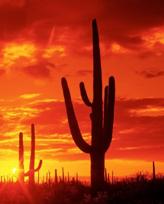
Rimgaudas P. Vidziunas: I have been living in Arizona for over 31 years
Again exceptionally well written. It is time to bring all Lithuanians together.
I have been living in Arizona for over 31 yrs. I was born in a displaced persons camp in Germany after World War II and came to the USA two years later. Have been all over the USA and visited Lithuania in 1999 and 2002. My passions are photography and writing poetry.
I am currently involved with Lithuanians throughout the world via Facebook and the internet.
Please let me know if I may be of any assistance in your "footprints journey".
Rimgaudas P. Vidziunas
Mesa, Arizona, USA
- Bookmark :
- Digg
- del.icio.us
- Stumbleupon
- Redit it
As a person with Lithuanian roots it makes me proud to have some kind of connection to the greater humanity called India
- Posted by - (0) Comment
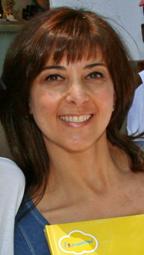
Kim Feinberg
This is just so fascinating ! I have a love for India and the contrasts that I experienced there. It is a land like no other and one that no one can prepare you for when you land there.
The smells, taste and feel is and only belongs to India – a place I deeply respect. Whose people have an essence and a space in time that the West cannot imagine.
Thank you so much for sharing this. As a person with Lithuanian roots it makes me proud to have some kind of connection to the greater humanity called India.
Best
Kim Feinberg
Johannesburg, South Africa
- Bookmark :
- Digg
- del.icio.us
- Stumbleupon
- Redit it
- Posted by - (5) Comment
Lithuanian footprints
|

|
|
|


Bona Sforza (1494-1557), Grand Duchess of Lithuania, Queen of Poland, Duchess of Bari and Princess of Rossano, left the Royal Palace in Vilnius after her husband Grand Duke Sigismund the Old died in 1548. She stayed eight years in Poland and then went to Bari in Southern Italy to claim a sizeable dept from King Philip II of Spain. But instead she was poisoned by her trusted officer, Gian Lorenzo Pappacoda, acting on behalf of King Philip. She was buried in St. Nicholas' Basilica in Bari, where her daughter Anna had a beautiful tomb made in the current Renaissance style for her remains (above, left).
See also: https://vilnews.com/?p=1652
CAPE TOWN, SOUTH AFRICA
|
|
|


Dr. Mendel Kaplan (1936-2009), steel magnate, writer and philanthropist, whose family emigrated from the town Rietavas (near Klaipeda) in the 1920s was called "the father of the South African Jewish community," also very much involved in the establishment of the South African Jewish Museum in Cape Town, a museum that appears more Lithuanian than Lithuania itself. Walking through the museum's cellar floor is like walking through Rietavas in year 1900.
Read more at: https://vilnews.com/?p=1703
DELHI, INDIA
|
|
|


Professor Lokesh Chandra (84), one of India's leading experts on Sanskrit and Buddhism, tells me this early morning in his New Delhi office: "The very mention of Lithuanian opens up an image, a vision that gives a people their identity through language. It shows how the darkness of dreams becomes the new embodied hope. My father was stimulated and strengthened in his work on the development of Hindi by the history of Lithuanian language. It has been the eternal continuity of these people; - it rustles something deep in their being. My father felt that we in India share with our distant Lithuanian brothers the silent geography of lost frontiers. Political freedom is inseparable from language."
And the professor continues his amazing story: "My father would relate how grandmas in the remote villages narrated folk-tales to eager grandchildren in their Lithuanian language which was despised by the Slavised nobility and punished by the Czarist regime. My father also told me how the Lithuanian daina (songs) were abandoned by the courts, but still continued to live on in the villages, faithfully preserved by the poorest people of Lithuania, guarded by the mothers of the families even during the darkest periods of Lithuania's history."
"Such was my first contact with Lithuania, in 1937, at an age of ten," smiles Professor Chandra this early Delhi morning.
Read more at: https://vilnews.com/?cat=18&paged=2
BOGOTÁ, COLOMBIA
|
|
|


Antanas Mockus (his full name is Aurelijus Rutenis Antanas Mockus Šivickas) was born 25 March 1952 in Bogotá, Colombia. His parents were Lithuanian immigrants. He is a mathematician, philosopher, and politician. He was mayor of Colombia's capital, Bogotá (population more than 7 millions), for two terms, during which he became known for springing surprising and humorous initiatives upon the city's inhabitants. These tended to involve grand gestures, including local artists or personal appearances by the mayor himself — taking a shower in a commercial about conserving water, or walking the streets dressed in spandex and a cape as Supercitizen. The impact of Mockus on the development of Bogotá is described in a documentary film released in October 2009 with the title CITIES ON SPEED - Bogotá Change.
ARCTIC & SPACE
|
|
|


Mikalojus Konstantinas Čiurlionis (1875-1911), Lithuania's national painter and composer, has a mountain and an asteroid named after himself. In 1913 on an expedition through the Arctic ocean a painter N.Pinegin turned his attention to a plateau in the Franz Josef Land archipelago, which resembled M.K.Ciurlionis' painting "Stillness" (above). So he called it the Ciurlionis Mountain. In1975 the Crimean astrophysicist Nikolaj Cernych discovered a new 8 km diameter asteroid and called it the Ciurlionis asteroid. It orbits round the Sun in approximately four years (average distance from the Sun: 384 mln. km).
LITVAKS (LITHUANIAN JEWS) IN ISRAEL AND THE U.S.
|
|
|
|


Benjamin Netanyahu, Jon Stewart and Bernanke – prominent world Litvaks. Jews of Lithuanian origin are today in leading roles and positions around all the world – some of our nowadays most famous politicians, scientists, businessmen, economists, actors, writers and singers...
Read more at: https://vilnews.com/?page_id=152
FBI – WASHINGTON, USA
|
|
|


Alexander Bruce Bielaski (1883-1964) was born in Montgomery County, Maryland by Lithuanian emigrant parents. He received a law degree from George Washington University in 1904 and joined the Department of Justice that same year. Like his predecessor Mr. Finch, Mr. Bielaski worked his way up through the department. He served as a special examiner in Oklahoma where he "straightened out the court records" and aided in the reorganization of Oklahoma's court system when the Oklahoma territory became a state. Returning to Washington, Mr. Bielaski entered the Bureau of Investigation and rose to become Mr. Finch's assistant. In this position he was in charge of administrative matters for the Bureau.
At the end of April 1912, Attorney General Wickersham appointed Mr. Bielaski to replace Mr. Finch. As chief, Mr. Bielaski oversaw a steady increase in the resources and responsibilities assigned to the Bureau.
After leaving the Bureau in 1919, Mr. Bielaski entered private law practice. According to The New York Times, while on a trip to Cuernavaca, Mexico in 1921, Mr. Bielaski was kidnapped. He escaped three days later, saving himself and the $10,000 gathered to rescue him.
Mr. Bielaski worked undercover as a prohibition agent operating a decoy speakeasy in New York City. From 1929 to 1959, he headed the National Board of Fire Underwriters team of arson investigators. In 1938, Mr. Bielaski served as president of the Society of Former Special Agents. He died in February 1964, at the age of 80.
- Bookmark :
- Digg
- del.icio.us
- Stumbleupon
- Redit it
Lithuania and Latvia catching up with Estonia
- Posted by - (0) Comment

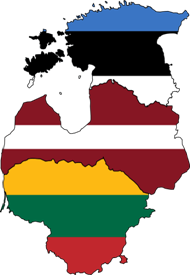
In the last ten years, Latvia has witnessed the biggest and Lithuania the smallest increase in prices in Baltic states. Lately, however, the increase has been lead by Estonia, followed closely by the other two countries.
In one year, the prices of food and non-alcoholic drinks have gone up by 11,5%. Almost all food products have been affected by the rise, announces ERR Radio News.
The Estonian price level has increased a bit more than Latvian and Lithuanian, where food prices have increased by 10,5% and 10,2% accordingly, but as the rise started earlier in Estonia, the other Baltic states are catching up with it.
Viktoria Trasanov, the chairwoman for statistics of price and salary department of the Estonian Statistics, says that even though Estonian prices went up by 11,5% compared to about 10% in other states, the numbers this year differ greatly – food and non-alcoholic drinks witness a rise in prices by 4,3% in Estonia, 6,3% in Latvia and 6,6% in Lithuania, showing a slower tempo in Estonia.
Source:
http://balticbusinessnews.com
- Bookmark :
- Digg
- del.icio.us
- Stumbleupon
- Redit it
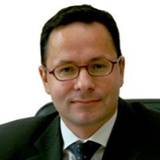
Žygimantas Pavilionis is a career diplomat who became ambassador of Lithuania to the United States in August 2010.
Born on August 22, 1971, in Vilnius, Pavilionis grew up with parents who prized higher education; his father, Roland Pavilionis, being an academician and his mother, Mary Pavilionienė Venus, a professor.
He attended college at Vilnius University, where he earned a master’s degree in philosophy and postgraduate diploma in international relations.
In 1993, Pavilionis joined the Ministry of Foreign Affairs and worked in the Western European Division, with the rank of third secretary.
He was assistant director of policy from 1994-1995, before moving to the Ministry of European Integration, Department of Political Cooperation.
He worked in Brussels, Belgium, at the Lithuanian Permanent Mission from 1999-2002.
Pavilionis was then promoted to lead the Ministry of Foreign Affairs’ European Integration Department from 2002-2004.
Most recently, he served as ambassador-at-large and chief coordinator for Lithuania’s presidency of the Community of Democracies, as well as chief coordinator for the Transatlantic Cooperation and Security Policy Department at the Ministry of Foreign Affairs.
Pavilionis and his wife, Lina Pavilioniene, have four sons.
-Noel Brinkerhoff
http://www.allgov.com
- Bookmark :
- Digg
- del.icio.us
- Stumbleupon
- Redit it
- Posted by - (1) Comment
Chronicle of Lithuania
in a global perspective
Lithuania is a country that cannot be understood if you don’t know at least
something about its exceptional past and its extraordinary global ties – with
Italy, India, South Africa, Israel, Poland, Belarus, Ukraine, Crimea/Turkey,
Sweden, Germany, Russia, Australia and America
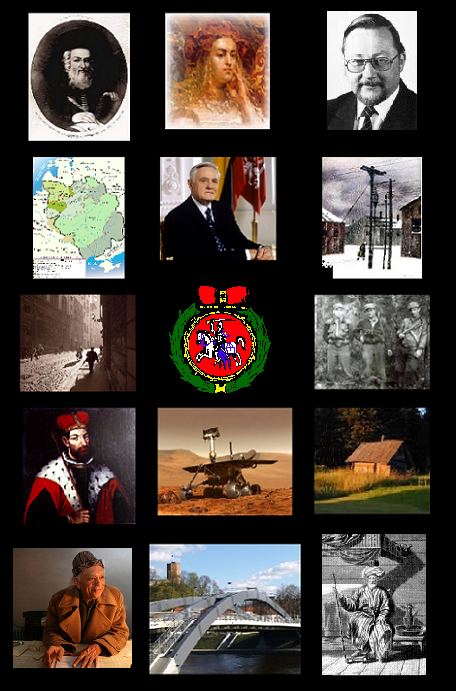
LITHUANIA - IN A GLOBAL PERSPECTIVE
A Chronicle of historic and contemporary Lithuania and her relations to the world
See also: https://vilnews.com/?p=886
I have, over the years since I first came to Lithuania from my native Norway in 1990, often wondered why authorities or other institutions here haven’t published a chronicle describing the many ties and touching points this amazing country has to the rest of the world throughout historical and modern times.
Because Lithuania is a country that cannot be understood if you don’t know at least something about its exceptional past and its extraordinary ties with Italy, India, South Africa, Israel, Poland, Belarus, Ukraine, Crimea/Turkey, Sweden, Germany, Russia, Australia and America.
This was why I some years ago put together my own electronic ‘Chronicle of Lithuania in a global perspective’. that I often have used for presentations to guests and others with some interest in this little country that once was a ‘superpower’ of world class and for hundreds of years a thriving cradle for co-existence between people from many nations, cultures and religions. Or, as the British historian Norman Davies puts it: “Lithuania was a haven of tolerance”. Davies was not the only one who took notice of this. Erasmus of Rotterdam (1466 – 1536) is quoted as stating; “I congratulate this nation [Lithuania] which now, in sciences, jurisprudence, morals, and religion, and in all that separates us from barbarism, is so flourishing that it can rival the first and most glorious of nations.”
I know that foreign embassies and international companies, as well as many individuals, for many years have been using my ‘chronicle’ when they try to describe Lithuania to people and institutions in other countries, and I also urge you, dear readers, to pass on a link to this 'chronicle' to all your friends and acquaintances. That’s how we together can make Lithuania better known and understood for people around the globe...
Please keep in mind, however, that this is my personal collection of articles and impressions, not in chronological order, hence it might very well be that a historian would have chosen other articles and put together the information in a completely different manner. Nevertheless; have a good read. I believe afterwards you will agree with me that Lithuania is a truly amazing and far too little known spot on the world map!
Aage Myhre, Editor-in-Chief
TOPIC 1:
Lithuania’s peaceful fight for new freedom 1988 – 1991
The little stroke that fell the great bear and opened for the new era of a united Europe
|
|
|
|
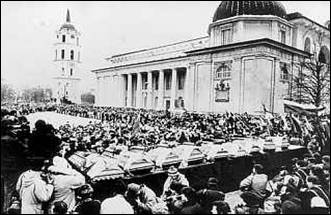
Funeral of the victims of the 13 January 1991 Soviet attacks on Lithuania.
|
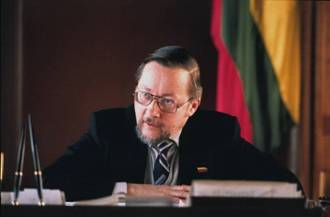
Professor Vytautas Landsbergis, January 1991. |


"Lithuanians, do not resist, your government has deceived you. Go home to your families and children."
This was the repeated announcement from the Soviet military ‘sound trucks’ rolling through the streets of Vilnius in January 1991. But luckily for Lithuania and for the new united Europe we today take more or less for granted, there was a music professor and a complete little nation that wanted it all differently. Hadn‘t it been for this peaceful fight for regained freedom against an occupation and a ruling the people of the Baltic States never wanted or agreed to, the map of Europe would most likely have looked very different today...
If there were those in the West who hadn’t heard about Lithuania before, they almost certainly had by the end of the day, 13 January 1991. That was the day Soviet troops cracked down in Vilnius and the resulting bloodshed made headlines around the world. The action was apparently a bid to stop Lithuania’s independence drive in its tracks. By the time the firing stopped and the smoke cleared, more than a dozen people lay dead, and hundreds more were injured. The crackdown, and particularly the killings at the TV tower, not only brought fame and sympathy to Lithuania from around the world, it was also a defining moment for Lithuanians themselves.
The bloodshed meant they had crossed a point of no return. If there was ever any notion of reconciling with Moscow, it was now unthinkable. For those watching from abroad, Vytautas Landsbergis was the central player in the drama unfolding in Vilnius. The colourful, quick-tempered music professor became Lithuania’s president (or chairman of the Lithuanian Supreme Council) in 1990 and, from that time on, his name became almost synonymous with the Lithuanian independence movement. His blunt talk about breaking free of the Soviet Union and about Lithuania’s moral right to be able to do so startled observers in the West almost as much as it infuriated the Kremlin.
See also: https://vilnews.com/?p=3642
TOPIC 2:
South Africa, home to 70.000 Lithuanian Jews
|
|
|
|
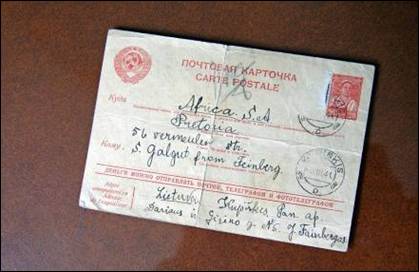
“This postcard was the last sign of life my father had from his father. It was sent from my grandfather’s home here in Kupiskes (North Lithuania) in March 1941 to my father’s new home in Pretoria (South Africa), but my grandfather was most probably already dead when the postcard reached Pretoria late summer 1941. He was killed by the Nazis”.
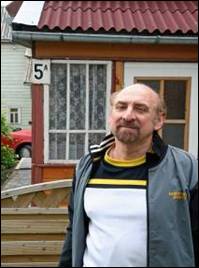
Attorney Ivor Feinberg, Lithuania’s consul in Pretoria, is obviously very touched when he visits his grandfather’s house in Kupiskes, telling us about the last memory of his grandfather – a memory not unlike many other stories related to the about 70.000 Jews of Lithuanian descent living in South Africa.
|
|


Lithuanians dominate the Jewish community in South Africa to an extent seen in no other country, even their former home. "We have around 80.000 to 90.000 Jews in South Africa, and about 80 percent of them are of Baltic descent, most of them from Lithuania," saYS David Saks, an historian and researcher at the Jewish Board of Deputies in Johannesburg. "We probably have the most 'Lithuanian' Jewish community in the world," said Saks, whose own grandparents came from Lithuania.
This ratio even exceeds that of Lithuania itself as most of the Baltic State's small Jewish community, now numbering a mere 5.000, is comprised mostly of immigrants who arrived from different parts of the Soviet Union after World War Two.The war devastated Lithuanian Jewry, once a leading centre of Jewish thought and culture. Historians estimate that 94 percent of the country's pre-war Jewish population of 220.000 perished in the Holocaust. The capital Vilnius, once known as the Jerusalem of the North, was home to a thriving community of 60.000 Jews, with more than 90 synagogues and the biggest Yiddish library in the world. Aside from one functioning synagogue, few traces of its rich Jewish past remain.
"South Africa is more Litvak than Lithuania itself...we see our culture and society have been preserved there," says playwright and novelist Mark Zingeris, one of the few Litvaks remaining in Lithuania.
See also: https://vilnews.com/?p=1703
TOPIC 3:
Italy’s extraordinary, little known role in Lithuania
|
|
|
|
|
Sigismund the Old |
Bona Sforza
|
The Royal Palace – once again being rebuilt |


When Lithuania’s Grand Duke Sigismund the Old in 1518 married the Italian Princess Bona Sforza, this became another outstanding manifestation of the already strong relationship between Italy and Lithuania.
The royal couple created together an Italian community within the court and Italian culture became the preoccupation of the Vilnius city elite. Macheroni, skryliai, and even the confection marcipanus became staples among the cogniscenti and life at court became a series of cultural events, with rich noblemen competing for extravagance. During the rule of Sigismund the Old the palace was greatly expanded, to meet the new needs of the Grand Duke and Duchess. Another wing was added, as well as a third floor and the gardens were also extended. The palace reconstruction plan was probably prepared by Italian architect Bartolomeo Berrecci da Pontassieve.
The Royal Palace – that now again is being rebuilt – was remodelled by Bona Sforza and Sigismund the Old in Renaissance style. The plans were prepared by Italian architects, including Giovanni Cini da Siena, Bernardino de Gianotis Zanobi, and others. Among the many visitors to the Palace was Ippolito Aldobrandini, who later became Pope Clement VIII, also this emphasizing the extraordinary connections between Italy and Lithuania that lasted for hundreds of years – also giving background for the saying that ‘Vilnius is the world’s most Italian city outside Italy’.
Throughout the Renaissance, when Italy was the leading trading centre and a melting pot for the world’s greatest civilizations, also Vilnius also became a leading Renaissance centre of world class, competing only with Florence and Milan.
See also: https://vilnews.com/?p=2927 and https://vilnews.com/?p=1652
TOPIC 4:
The Lithuanian-Americans, a nation outside the nation
|
|
|
|
Ex-President Valdas Adamkus is today’s most famous US-Lithuanian
|
Distribution of Lithuanian-Americans according to the 2000 census |


Many Lithuanians immigrated to the New World before the American Revolution. The first may have been a Lithuanian physician, Dr. Aleksandras Kursius, who is believed to have lived in New York as early as 1660. Most of the other Lithuanians who ventured to the Americas during this period were members of the noble class or practitioners of particular trades. But the first really significant wave of Lithuanian immigration to the United States began in the late 1860s, after the American Civil War. During the late nineteenth and early twentieth centuries, an estimated 300,000 Lithuanians journeyed to America. A flow that was later halted by the combined effects of World War I, the restriction of immigration into the United States and the achievement in 1918 of Lithuanian independence.
The second wave of immigration had a greater impact on U.S. census figures. Following World War II, a flood of displaced refugees fled west to escape the Russian reoccupation of Lithuania. Eventually 30,000 Dipukai (war refugees or displaced persons) settled in the United States, primarily in cities in the East and the Midwest. These immigrants included many trained and educated leaders and professionals who hoped to return someday to Lithuania. The heightening of tensions between the United States and the Soviet Union—known as the Cold War—dampened these expectations, and many Lithuanians sought to create a semi permanent life in the United States. By 1990 the U.S. Bureau of the Census listed 811,865 Americans claiming "Lithuanian" as a first or second ancestry.
The main areas of Lithuanian settlement in the United States included industrial towns of the Northeast, the larger cities of the Northeast and the Midwest, and the coal fields of Pennsylvania and southern Illinois. According to the 1930 census report, only about 13 percent of Lithuanians lived in rural areas, and even fewer—about two percent—were involved in agriculture. Nearly 20 percent of all Lithuanian immigrants settled in Chicago alone. Throughout the twentieth century, Lithuanian Americans began to climb up the economic ladder and gain an important place in their local communities. This mobility allowed them to enter the American mainstream.
Two important developments in Lithuania led to the growth of a strong Lithuanian American ethnic identity: the late nineteenth-century rise of Lithuanian national consciousness and the achievement of Lithuanian independence in 1918. Lithuanian Americans were staunch supporters of their newly independent homeland during the 1920s and 1930s, and some even returned to assist in the restructuring of the country's economy and government.
The post World War II wave of Lithuanian immigrants—the Dipukai—also experienced a surge of Lithuanian consciousness. These later immigrants saw themselves as an exiled community and clung to their memory of two decades of freedom in Lithuania. They developed an extensive network of schools, churches, and cultural institutions for the maintenance of Lithuanian identity in the United States.
|
FAMOUS AMERICAN-LITHUANIANS (there are many more) |
||||||
|
The very first FBI Director, 1912-1919 |
Al Jolson (1886-1950) Singer and Entertainer |
|
(1921 – 2003) Movie Star |
Marija Gimbutiene (1921-1994) Archeologist
|
Birute Galdikus (1946 - ) Anthropologist, world leading authority on orangutans |
Dr. Juozas P. Kazickas (1918 - ) Business entrepreneur |


See also:
TOPIC 5:
Lithuania and India - same language root and more…
|
|
|


Pictures: Aage Myhre
It’s early morning in Delhi, India. I have been invited to the small, dark office of Professor Lokesh Chandra, one of India’s leading experts on Sanskrit and Buddhism. “The same year I was born, 1927, my father went to London to get a degree in Lithuanian language. He spoke the language fluently, but he never visited Lithuania”, tells the elderly professor, still with his Kashmir coat and cap on, despite the outside temperature of close to 300 Celsius. And I soon learn that the professor’s knowledge about the connections between Old Sanskrit and the Lithuanian language and ancient cultural ties between India and Lithuania is nothing but amazing…
It is a common belief that there is a close similarity between the Lithuanian and Sanskrit languages; Lithuanian being the European language grammatically closest to Sanskrit. It is not difficult to imagine the surprise of the scholarly world when they learned that even in their time somewhere on the Nemunas River lived a people who spoke a language as archaic in many of its forms as Sanskrit itself. Although it was not exactly true that a professor of Sanskrit could talk to Lithuanian farmers in their language, coincidences between these two languages were truly amazing, for example:
Sanskrit sunus - Lithuanian sunus; son Sanskrit viras - Lithuanian vyras; man
Sanskrit avis - Lithuanian avis; sheep Sanskrit dhumas - Lithuanian dumas; smoke
Sanskrit padas - Lithuanian padas; sole
We can assert that these Lihuanian words have not changed their forms for the last five thousand years!
Read also: https://vilnews.com/?p=4425 and https://vilnews.com/?p=4434
TOPIC 6:
Lithuania turned 1000 years in 2009!

"In 1009 St Bruno, who is called Boniface (Bonifatius), Archbishop and monk, in the second year of his conversion, on the border between Russia and Lithuania (Lituae), having been hit on the head by the pagans, and his 18 men went to heaven on the 23rd of February. "There are several sources that mention the event - the killing of the missionary but they refer to Prussia rather than Lithuania, which proves that both Germans and Poles did not know about the existence of Lithuanians then. They thought that Prussians were the only Balts (or the majority of Balts). Quedlinburg Annals mentioned Lithuania because they were keen on precision and the information was received from St Bruno's entourage. The story about St Bruno describes the political organisation of Lithuanians, which was peculiar and not characteristic of other Baltic tribes before the 13th century.
TOPIC 7:
Modern Lithuania in a new Europe
|
|
|


Lithuania has shown an impressive performance since its liberation from the USSR. The world recession was, however, hitting very hard, and there is now acutely necessary to search for new growth resources. A new growth cycle of the economy should focus on incentives and promotion of higher-quality high-tech industries, through R&D support, high-tech industry incubators, and appropriate educational focus.
The general strengths of Lithuanian national innovation system lies in the well developed and continuing its academic tradition higher education sector with strong science and technology research tradition and engineering orientation.
This results in a relatively high share of the population with tertiary education, high numbers of S&T graduates among them, and cultural orientation of the younger generation towards higher education. However, restricted resources for R&D and the higher education sector combined with the growing numbers of students at all higher education levels doubts the quality of education, especially in areas where technological based education is significantly important. Also low or non existing investments of businesses in vocational training lead to obsolete qualifications not suitable for high tech high skill work. The weak links between business and higher education and R&D communities result not only in obsolescing qualifications of the highly educated labour force, but also in low value added innovations, developed without input from the R&D sector.
TOPIC 8:
Karaims and Tatars - Turkish nationalities in Lithuania
|
|
|
|
Typical Karaim house in Trakai, 30 km from Vilnius city. |
A senior Tatar Muslim cleric (akhund) |


Since the 14th Century two Turkish nationalities – Tatars and Karaims – have been living in Lithuania. From linguistic and ethno genetic points of view they belong to the oldest Turkish tribes - Kipchaks. This ethnonym (Kipchak) for the first time was mentioned in historical chronicles of Central Asia in the 1st millennium BC. Anthropologically ancient Kipchaks were very close to Siberia inhabitants Dinlins, who lived on both sides of the Sajan Mountains in Tuva and the northern part of Gob. In the 5th century BC Kipchaks lived in the West of Mongolia, in the 3rd century BC they were conquered by Huns. Since the 6 - 8 centuries, when the first nomadic Turkish empires were founded, the Kipchak’s fate is closely connected with the history and migration of the Middle Asia tribes. In Turkish literature they are known as Kipchaks.
The history of Karaims is connected with Lithuania since 1397-1398. According to the tradition, The Great Duke of Lithuania, Vytautas, after one of the marches to the Golden Horde steppes, had to bring from the Crimea several hundred Karaims and settle them in the Great Duchy of Lithuania. Transference of several hundred Karaim families and several thousand Tatars was not done once. It was in connection with the state policy of The Great Duchy to inhabit the empty areas, build towns and castles and to develop trade and economic life.
Initially, Karaims were settled in Trakai between the two castles of The Great Duke, present Karaim Street. Later they were found living in Biržai, Naujamiestis, Pasvalys and Panevėžys. However, Trakai has always been the community's administrative and spiritual centre for Karaims in Lithuania, nowadays more and more also for Karaims throughout the world.
See also: https://vilnews.com/?p=2942
TOPIC 9:
Lithuania 500 years ago was Europe’s largest country
|
|
|
|
Vytautas the Great (1350-1430). |
The Grand Duchy of Lithuania, 13-16 centuries. |
|
|
|


“Lithuania was a superpower much longer than USA has been“. This is how I often tease my American friends arriving in Vilnius. But the teasing is in fact not so far away from reality, as the Grand Duchy of Lithuania (GDL) for 300 years was one of the leading and largest nations of the World – the largest in Europe – stretching from the Baltic Sea to the Black Sea.
It all started with King Mindaugas (1203-1263), Lithuania‘s first and only king, who in 1236 defeated the Livonian Brothers of the Sword and united the different Lithuanian tribes under his reign. But the real expansion began when Grand Duke Gediminas (1275 – 1341) came to power in 1316, and started a new dynasty of leaders.
Gediminas employed several forms of statesmanship to expand and strengthen the GDL. He invited members of religious orders to come to the Grand Duchy, announced his loyalty to the Pope and to his neighbouring Catholic countries and made political allies with dukes in Russia as well as with the Poles through marriage to women in his family.
Gediminas’ political skills are revealed in a series of letters written to Rome and nearby cities. He makes mention of the Franciscan and Dominican monks who had come to the GDL by invitation and were given the rights to preach, baptise and perform other religious services. He also included an open invitation to artisans and farmers to come and live in the GDL, promising support and reduced taxes to those who would come.
Grand Duke Gediminas is my personal favourite among all the Lithuanian nobles, and in my opinion, he was one of the greatest rulers of medieval Europe. He was a man of extraordinary knowledge and wisdom, understanding the importance and advantage of having a multicultural society as the foundation for his new city, more cleverly than most world rulers during the centuries after him. In October 1323, for example, representatives of the archbishop of Riga, the bishop of Dorpat, the king of Denmark, the Dominican and Franciscan orders, and the Grand Master of the Teutonic Order assembled in Vilnius when Gediminas confirmed his promises and undertook to be baptized as soon as the papal legates arrived. A compact was then signed in Vilnius, in the name of the whole Christian World, between Gediminas and the delegates, confirming the promised privileges. Fifteen months later, on the 25th of January 1325, Gediminas issued circular letters to the principal Hansa towns in Europe offering a free access into his domains to men of every order and profession from nobles and knights to tillers of the soil. The immigrants were to choose their own settlements and be governed by their own laws. After Gediminas, Vilnius emerged over hundreds of years, expanding, changing, and embodying the creative imagination and experience of many generations of architects and builders from Lithuania and abroad. Under the care of generous and perceptive benefactors, it became a city rich in architectural treasures and urban harmony.
Under Vytautas the Great (1350-1430), Lithuania‘s military and economy grew even stronger, and he was the one expanding the Grand Duchy‘s frontiers south to the Black Sea. The Grand Duchy was at its largest by the middle of the 15th Century. It existed in the very centre of Europe and comprised the entire territories of contemporary Lithuania, Belarus, Ukraine, a part of Poland and stretched from the Baltic Sea to the Black Sea. Both Belarus and Ukraine point back to the days when they were part of the thriving GDL as proof of their cultural and political distinction from Russia.
Successfully ruled by a dynastic line of dukes, the Grand Duchy of Lithuania (GDL) developed a highly advanced system of state administration and stove off invading Crusaders longer than any other Central European power. Its statesmen conducted effective foreign policy and military campaigns and created a multi-ethnic state. Though officially ended in 1795, the history of the GDL continues to influence modern-day nationalist thinking in the region. Not only Lithuania but also Belarus and Ukraine remember the days when they were part of the thriving GDL as proof of their cultural and political strength clearly distinguishing them from Russia.
See also: https://vilnews.com/?p=326
TOPIC 10:
Lithuania’s new international role:
A bridge at the crossroads of east-west-south-north
|
|
|


Today Lithuania is in a unique position to continue and expand its role as a significant transportation hub and meeting point for many neighbouring regions. Lithuania serves as a natural bridge for East - West (Europe-Asia) traffic with transport connections to the Trans-Siberian rail route and direct links with Russia and other countries of the former Soviet Union, as well as rapidly growing Baltic countries and even East Asia, including China. Nearly half or 45% of Russia’s total foreign trade passes through the Baltic Sea ports. A major advantage of Lithuania lies in its strategic location at the crossroads between Eastern and Western Europe as well as the Baltic Sea region. Lithuania has for centuries been on an important trade route, linking the Baltic Sea Region to the Black Sea. Klaipeda, the country’s sea coast city, has moved from having been an important port city in the Hanseatic League of trading cities around the Baltic and North Sea since the 13th century, to becoming a modern logistic hub for trade and transport between Western and Eastern Europe. Its unfrozen port is the best transportation centre between the east and west. Vilnius, the capital of Lithuania, is together with the country‘s second largest city, Kaunas, developing into a huge metropolis, showing all the potential of becoming a significant commercial, financial and transportation centre for the Baltic Sea region and Northern Europe. Traditions and experience gained during many centuries and historically strong presence of people from many nations and backgrounds are important for conducting economic relations nowadays. In addition, Lithuania is located in one of the most dynamic and competitive areas of the world representing 10 metropolitan areas with over 90 million inhabitants and being the home to well-established companies and product brands and the leading IT and telecom producing area of Europe with the highest cellular telephone penetration in the world.
TOPIC 11:
For hundreds of years Lithuania was home to amazingly thriving Jewish communities
|
|
|
|
|
LEFT: The Great Gaon of Vilnius - Elijahu ben Solomon Zalman (1720-1797) was the greatest luminary not only among the many Talmudical scholars of the 17th and 18th centuries, but also for many later generations.
RIGHT: A typical ‘Jewish’ Vilnius street, early 20th century.
|
||


Napoleon Bonaparte was the one who started calling Vilnius ‘Jerusalem of the North’, when he arrived here in June 1812. It was the first and only "Jewish city" Napoleon would ever see. It is said that he became very surprised on what met him in Vilnius, a city so far away from mainstream Europe and still with a lively Mediterranean mood and life.
And true enough, the history of the Litvaks, as the Lithuanian Jews are called, is unusual and surprising. It was a history of mostly peaceful coexistence with other peoples and cultures that lasted for more than six centuries. It was a history that spawned an incredible number of eminent Jews.
The "Golden Age of Jewry" in Lithuania started with Grand Duke Gediminas (1275-1341), the empire builder who took a liking to foreigners and Jews whose skills and education were badly needed in medieval Lithuania. In the early 1300's he attracted them to his realm with numerous perks, including guarantees of religious freedom and tax exemptions. The Jews of Europe responded in droves, and Vilnius became the heralded centre of Jewish culture and learning. There would be synagogues, schools, theatres, publishing houses and the Yiddish Institute of Higher Learning.
At a time when others in Europe were effectively illiterate, all the Jews in Vilnius could read and write. This was so unusual that it provoked the invention of a brand-new word, "Vilner," meaning "an educated man with knowledge." For almost 700 years, the Litvaks became an inseparable part of Lithuanian society, having enriched the country’s economy, culture, science, and education.
During the Second World War, about 200.000 (95%), Lithuanian Jews were murdered. This was the greatest loss in all of Eastern and Central Europe. The Nazi Holocaust led to an almost complete extermination of Lithuania’s Jews, and also the destruction of their history and cultural monuments - a most tragic page of Lithuanian history.
See also: https://vilnews.com/?page_id=152
TOPIC 12:
Poland and Lithuania – an intertwined relationship
|
|
|
|
|


Poland and Lithuania have an exceptionally intertwined history since the Middle Ages and, unfortunately - so much has divided and remained problematic between these two close neighbours. But maybe the time now has come to focus on what unites? Maybe it’s time to study the example of the famous writer Czeslaw Milosz?
Nobel Price Winner Czesław Miłosz was born June 30, 1911 in Szetejnie, Lithuania. He spent his youth in Vilnius. During his law studies at Stefan Batory University in Vilnius he created a poets' group called Żagary. He published his first volume of poetry, A Poem in Frozen Time, in 1933. During the German occupation, Miłosz participated in Warsaw's underground cultural life, even publishing a volume of poetry called Invincible Song.
In 1960 Miłosz moved to the United States, where he became a professor at Berkeley University's department of Slavic literature. Throughout this period, Miłosz mainly published his works in Paris and the United States. Initially he specialized in writing essays but he gradually became a well-known poet. His fame was confirmed by the Neustadt International Prize for Literature and being crowned with the Nobel Prize. In Poland his works were largely absent from the official press, only published occasionally in collective anthologies. Only following his Nobel Prize were Miłosz's poems officially published and only then was he allowed to return to Poland. Miłosz died in 2004, at his home in Kraków, aged 93. His first wife, Janina, had died in 1986, and his second wife, Carol, a U.S.-born historian, in 2002.
TOPIC 13:
600.000 persons from the Baltic States were deported to Siberia during the period 1940 – 1953
|
|
|
|
Lithuanians in Molotkov, Siberia (unknown year) |
Former President of Lithuania, Aleksandras Stulginskis, was one of the many deportees
|


The saddest period in the history of Lithuania began in August 1939, when Hitler and Stalin concluded their agreement that divided up Central Europe. After the outbreak of the Second World War, Lithuania was occupied three times: first by the USSR in 1940, then by Nazi Germany in 1941, and finally by the USSR again in 1944.
During the Nazi and Soviet occupations, including more than 200.000 Holocaust victims, the losses of the population of Lithuania amounted to 33 percent of the total number of the country's population in 1940. Lithuania lost 1 million people to deportations, executions, incarceration, murder of political opposition and forced emigration. Altogether, some 600.000 prisoners were taken from the Soviet occupied Baltic States - Lithuania, Latvia, and Estonia. There were some 10 million inhabitants in all three Baltic States on the eve of the Soviet occupation. Proportionately, the number of Baltic prisoners would be equal to a loss of 20 million in the United States or 5 million in Great Britain.
During 1940-1953, some 132,000 Lithuanians were deported to remote areas of the USSR: Siberia, the Arctic Circle zone and Central Asia. They were not allowed to leave remote villages. More than 70 percent of the deportees were women and children. Some 50,000 of the deportees were not able to return to Lithuania. During the same period, another 200,000 people were thrown into prisons. Some 150,000 of them were sent to the Gulags, the USSR‘s concentration camps, situated mostly in Siberia.
See also:
TOPIC 14:
The Lithuanian partisan war 1944-53 was the longest and bloodiest guerrilla war of modern Europe
|
The Lithuanian resistance to Soviet occupation from 1944-1953 was one of the longest partisan guerrilla wars of 20th century Europe and spanned the first decade of almost 50 years of Soviet aggression in Lithuania.
|
||
|
|
|
|


Despite the heroics of the Lithuanian partisans, or Forest Brothers as they became known, they were doomed to failure because it was a fight that was ignored by the West. Their war became known as the ‘unknown’ or ‘hidden’ war.
Altogether 22,000 Lithuanian partisans and their supporters lost their lives in the struggle against the Soviet and NKVD (later to become the KGB) forces. The war continued until 1953, though the last resistance fighter refused to surrender and shot himself in 1965 and another partisan finally came out of hiding in 1986.
“The Lithuanians had to choose from three options: to emigrate, stay in Lithuania and suffer the oppression and humiliation, or go into a forest to defend their Fatherland,” said Albinas Kentra, chairman of the Lithuanian Forest Brothers Union. The basic goal of the guerrilla warfare was aimed at the re-establishment of Lithuanian Sovereignty. Thousands of men gathered in the forests in the hope that they would not have to hold out for long – only until the Peace Conference decided to implement the principle of national self-determination.
See also:
https://vilnews.com/?page_id=131&paged=2
TOPIC 15:
Lithuania – a land of unspoilt nature,
an example for countries around the world
|
|
|
|


Nature is everywhere in Lithuania. Even the approaches to Vilnius are surrounded by forests, and every spring, a woodland grouse, the capercaillie one of the rarest birds, carries out its mating rituals just 20 kilometres from the town centre in an old pine forest which has been preserved for it.
It would be difficult today to identify the beginning of the environmental tradition in Lithuania. Perhaps we could look for it in the statutes of the 16th century, the key state legal documents. Perhaps it started even earlier, in the sacred oak groves that could be damaged only by the winds and storms, but never by man. The first nature reserve, at Žuvintas, was founded 70 years ago. There, everything is left to nature. No man’s foot can step in it. Birds and animals there may feel that their nests and offspring are safe. Today the network of protected areas covers 12 per cent of the country, including five national parks, four sanctuaries, 30 regional parks and multiple reserves.
Every ancient tree, or rock in an interesting shape and form of relief, is protected.
TOPIC 16:
Lithuania on Mars

Lithuania was once known as the Soviet Silicon Valley, and also today the country has a very strong research and development sector. Lithuanian world-class specialists cooperate with NASA, NATO, Volvo, Saab, Philips, and many others in the fields of biotechnology, biochemistry, laser optics, chemistry, physics, etc.
According to Paris‘ “Le Monde”, Lithuania is the biggest exporter of femtosecond lasers in the world. Among the clients is NASA, i.e. using Lithuanian laser technology for analyses of minerals on Mars. A country of 3.5 million people, Lithuania, has about 15 laser producers, employing about 300 laser specialists, half of which are engineers and doctors of sciences. Lithuania’s laser sector grows about 15-20 % annualy, which is twice faster than the whole economy of the country. Lithuanian laser production is demanded by the best scientific laboratories in Europe and the US.
Lithuania has six science and technology parks which develop favourable infrastructure for the establishment of new innovative businesses in Lithuania and encourage the growth of existing ones engaged in the development of innovative technologies. Lithuania’s science and technology parks seek to provide a comfortable environment for commercializing R&D activities and integrating business, science, and research by supporting knowledge transfers leading to the exploitation of research results and to the development of marketable products and services. According to the 7 Economist Intelligence Unit (EIU) in 2006, Lithuania demonstrated an advanced e-business environment. Lithuania was acknowledged as one of the emerging markets where mobile phone penetration is several times that of fixed lines. This, plus a rapid increase in the number of WiFi hotspots in its capital and other cities, has helped improve overall connectivity for its consumers and businesses. In Lithuania, e-banking, e-government services and mobile internet are being used in everyday business and life and are becoming increasingly popular.
“Lithuanian scientists are likely to become leaders in certain spheres of world science.” (Achilleas Mitsos, Director General of the European Commission’s Directorate General for Research).
- Bookmark :
- Digg
- del.icio.us
- Stumbleupon
- Redit it
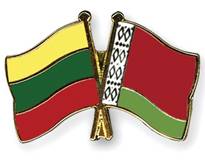
The quantity of Lithuanian visas issued to citizens of Belarus in the first half of 2011 has increased by 59% as compared to the analogous period of the last year.
It has been stated by the director of Foreign Ministry’s Consular Department Vytautas Pinkus at a session of an inter-institutional working group in Palanga on July 27, BelaPAN and the press-service of the Lithuanian Foreign Affairs agency report.
As said by Pinkus, the number of visas is mostly coinciding with tourists’ flows. “In 2010 the Lithuanian Embassy in Minsk and Consulate General in Hrodna together issued more than 107 thousand visas, and 77 thousand were issued just in the first half of this year,” reported the press service of Lithuanian MFA. In particular, in June 2011, compared with the same period in 2010, the number of visas issued by Lithuanian diplomatic representations in Belarus rose by 48%.
The inter-institutional working group was established by an order of the Foreign Minister Audronius Azubalis.
The group began its activities on 21 October 2010. In co-operation with the government and business partners, the working group makes decisions with regard to the enhancement of the procedures of visa issuance to tourists.
Source:
http://www.charter97.org
- Bookmark :
- Digg
- del.icio.us
- Stumbleupon
- Redit it
Chronicle of Lithuania – in a global perspective
- Posted by - (2) Comment
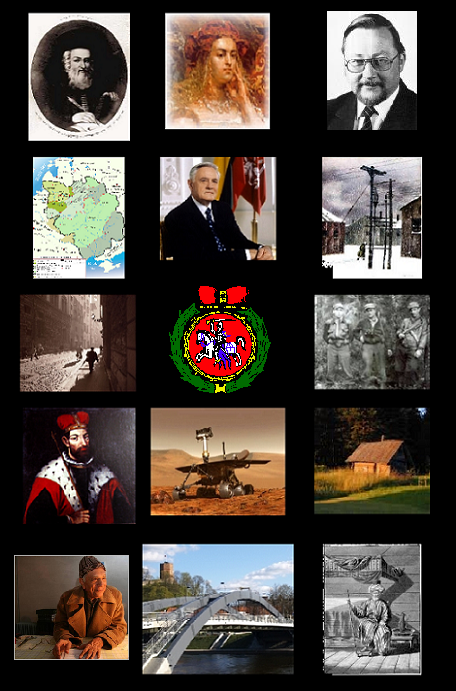
LITHUANIA - IN A GLOBAL PERSPECTIVE
A chronicle of historic and contemporary Lithuania and her relations to the world
See also: https://vilnews.com/?p=886
I have, over the years since I first came to Lithuania from my native Norway in 1990, often wondered why authorities or other institutions here haven’t published a chronicle describing the many ties and touching points this amazing country has to the rest of the world throughout historical and modern times.
Because Lithuania is a country that cannot be understood if you don’t know at least something about its exceptional past and its extraordinary ties with Italy, India, South Africa, Israel, Poland, Belarus, Ukraine, Crimea/Turkey, Sweden, Germany, Russia, Australia and America.
This was why I some years ago put together my own electronic ‘Chronicle of Lithuania in a global perspective’. that I often have used for presentations to guests and others with some interest in this little country that once was a ‘superpower’ of world class and for hundreds of years a thriving cradle for co-existence between people from many nations, cultures and religions. Or, as the British historian Norman Davies puts it: “Lithuania was a haven of tolerance”. Davies was not the only one who took notice of this. Erasmus of Rotterdam (1466 – 1536) is quoted as stating; “I congratulate this nation [Lithuania] which now, in sciences, jurisprudence, morals, and religion, and in all that separates us from barbarism, is so flourishing that it can rival the first and most glorious of nations.”
I know that foreign embassies and international companies, as well as many individuals, for many years have been using my ‘chronicle’ when they try to describe Lithuania to people and institutions in other countries, and I also urge you, dear readers, to pass on a link to this 'chronicle' to all your friends and acquaintances. That’s how we together can make Lithuania better known and understood for people around the globe...
Please keep in mind, however, that this is my personal collection of articles and impressions, not in chronological order, hence it might very well be that a historian would have chosen other articles and put together the information in a completely different manner. Nevertheless; have a good read. I believe afterwards you will agree with me that Lithuania is a truly amazing and far too little known spot on the world map!
Aage Myhre, Editor-in-Chief
aage.myhre@VilNews.com
TOPIC 1:
Lithuania’s peaceful fight for new freedom 1988-91
The little stroke that fell the great bear and opened for the new era of a united Europe
|
|
|
| Funeral of the victims of the 13 January 1991 Soviet attacks on Lithuania | Professor Vytautas Landsbergis, January 1991 |
"Lithuanians, do not resist, your government has deceived you. Go home to your families and children."
This was the repeated announcement from the Soviet military sound trucks rolling through the streets of Vilnius in January 1991. But luckily for Lithuania and for the new united Europe we today take more or less for granted, there was a music professor and a complete little nation supporting him that wanted it all differently. Hadn‘t it been for this peaceful fight for regained freedom against an occupation and a ruling the people of the Baltic States never wanted or agreed to, the map of Europe would most likely have looked very different today...
If there were those in the West who hadn’t heard about Lithuania before, they almost certainly had by the end of the day, January 13, 1991. That was the day Soviet troops cracked down in Vilnius and the resulting bloodshed made headlines around the world. The action was apparently a bid to stop Lithuania’s independence drive in its tracks. By the time the firing stopped and the smoke cleared, more than a dozen people lay dead, and hundreds more were injured. The crackdown, and particularly the killings at the TV tower, not only brought fame and sympathy to Lithuania from around the world, it was also a defining moment for Lithuanians themselves. The bloodshed meant they had crossed a point of no return. If there was ever any notion of reconciling with Moscow, it was now unthinkable. For those watching from abroad, Vytautas Landsbergis was the central player in the drama unfolding in Vilnius. The colourful, quick-tempered music professor became Lithuania’s president (or chairman of the Lithuanian Supreme Council) in 1990 and, from that time on, his name became almost synonymous with the Lithuanian independence movement. His blunt talk about breaking free of the Soviet Union and about Lithuania’s moral right to be able to do so startled observers in the West almost as much as it infuriated the Kremlin.
See also: https://vilnews.com/?p=3642
TOPIC 2:
South Africa, home to 70,000 Lithuanian Jews
|
|
|
|
“This postcard was the last sign of life my father had from his father. It was sent from my grandfather’s home here in Kupiskes (North Lithuania) in March 1941 to my father’s new home in Pretoria (South Africa), but my grandfather was most probably already dead when the postcard reached Pretoria late summer 1941. He was killed by the Nazis”. Attorney Ivor Feinberg, Lithuania’s consul in Pretoria, is obviously very touched when he visits his grandfather’s house in Kupiskes, telling us about the last memory of his grandfather – a memory not unlike many other stories related to the about 70,000 Jews of Lithuanian descent living in South Africa. |
|
Lithuanians dominate the Jewish community in South Africa to an extent seen in no other country, even their former home. "We have around 80,000 to 90,000 Jews in South Africa, and about 80 percent of them are of Baltic descent, most of them from Lithuania," said David Saks, an historian and researcher at the Jewish Board of Deputies in Johannesburg. "We probably have the most 'Lithuanian' Jewish community in the world," said Saks, whose own grandparents came from Lithuania. This ratio even exceeds that of Lithuania itself as most of the Baltic state's small Jewish community, now numbering a mere 5,000, is comprised mostly of immigrants who arrived from different parts of the Soviet Union after World War Two.The war devastated Lithuanian Jewry, once a leading centre of Jewish thought and culture. Historians estimate that 94 percent of the country's pre-war Jewish population of 220,000 perished in the Holocaust. The capital Vilnius, once known as the Jerusalem of the North, was home to a thriving community of 60,000 Jews, with more than 90 synagogues and the biggest Yiddish library in the world. Aside from one functioning synagogue, few traces of its rich Jewish past remain. "South Africa is more Litvak than Lithuania itself...we see our culture and society have been preserved there," said playwright and novelist Mark Zingeris, one of the few Litvaks remaining in Lithuania.
See also: https://vilnews.com/?p=1703
TOPIC 3:
Italy’s extraordinary, little known role in Lithuania
|
|
|
|
| Sigismund the Old | Bona Sforza | The Royal Palace – once again being rebuilt |
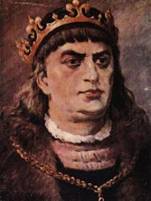
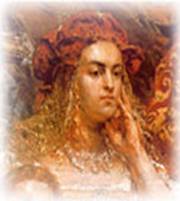
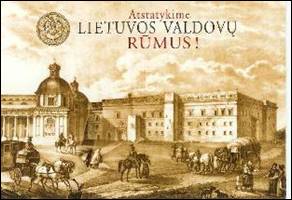
When Lithuania’s Grand Duke, Sigismund the Old in 1518 married the Italian Princess Bona Sforza, this became an outstanding manifestation of the already strong relationship between Italy and Lithuania. The royal couple created together an Italian community within the court and Italian culture became the preoccupation of the Vilnius city elite. Macheroni, skryliai, and even the confection marcipanus became staples among the cogniscenti and life at court became a series of cultural events, with rich noblemen competing for extravagance. During the rule of Sigismund the Old the palace was greatly expanded, to meet the new needs of the Grand Duke and Duchess. Another wing was added, as well as a third floor and the gardens were also extended. The palace reconstruction plan was probably prepared by Italian architect Bartolomeo Berrecci da Pontassieve.
The Royal Palace – that now again is being rebuilt – was remodelled by Bona Sforza and Sigismund the Old in Renaissance style. The plans were prepared by Italian architects, including Giovanni Cini da Siena, Bernardino de Gianotis Zanobi, and others. Among the many visitors to the Palace was Ippolito Aldobrandini, who later became Pope Clement VIII, also this emphasizing the extraordinary connections between Italy and Lithuania that lasted for hundreds of years – also giving background for the saying that ‘Vilnius is the world’s most Italian city outside Italy’. Throughout the Renaissance, when Italy was the leading trading centre and a melting pot for the world’s greatest civilizations, Vilnius also became a leading Renaissance centre of world class.
See also: https://vilnews.com/?p=2927 and https://vilnews.com/?p=1652
TOPIC 4:
The Lithuanian-Americans, a nation outside the nation
|
|
|
| Ex-President Valdas Adamkus is today’s most famous US-Lithuanian | Distribution of Lithuanian-Americans according to the 2000 census |
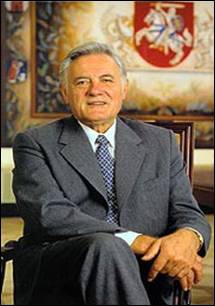
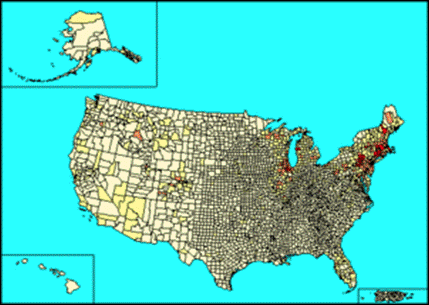
Many Lithuanians immigrated to the New World before the American Revolution. The first may have been a Lithuanian physician, Dr. Aleksandras Kursius, who is believed to have lived in New York as early as 1660. Most of the other Lithuanians who ventured to the Americas during this period were members of the noble class or practitioners of particular trades. But the first really significant wave of Lithuanian immigration to the United States began in the late 1860s, after the American Civil War. During the late nineteenth and early twentieth centuries, an estimated 300,000 Lithuanians journeyed to America. A flow that was later halted by the combined effects of World War I, the restriction of immigration into the United States and the achievement in 1918 of Lithuanian independence.
The second wave of immigration had a greater impact on U.S. census figures. Following World War II, a flood of displaced refugees fled west to escape the Russian reoccupation of Lithuania. Eventually 30,000 Dipukai (war refugees or displaced persons) settled in the United States, primarily in cities in the East and the Midwest. These immigrants included many trained and educated leaders and professionals who hoped to return someday to Lithuania. The heightening of tensions between the United States and the Soviet Union—known as the Cold War—dampened these expectations, and many Lithuanians sought to create a semi permanent life in the United States. By 1990 the U.S. Bureau of the Census listed 811,865 Americans claiming "Lithuanian" as a first or second ancestry.
The main areas of Lithuanian settlement in the United States included industrial towns of the Northeast, the larger cities of the Northeast and the Midwest, and the coal fields of Pennsylvania and southern Illinois. According to the 1930 census report, only about 13 percent of Lithuanians lived in rural areas, and even fewer—about two percent—were involved in agriculture. Nearly 20 percent of all Lithuanian immigrants settled in Chicago alone. Throughout the twentieth century, Lithuanian Americans began to climb up the economic ladder and gain an important place in their local communities. This mobility allowed them to enter the American mainstream.
Two important developments in Lithuania led to the growth of a strong Lithuanian American ethnic identity: the late nineteenth-century rise of Lithuanian national consciousness and the achievement of Lithuanian independence in 1918. Lithuanian Americans were staunch supporters of their newly independent homeland during the 1920s and 1930s, and some even returned to assist in the restructuring of the country's economy and government.
The post World War II wave of Lithuanian immigrants—the Dipukai—also experienced a surge of Lithuanian consciousness. These later immigrants saw themselves as an exiled community and clung to their memory of two decades of freedom in Lithuania. They developed an extensive network of schools, churches, and cultural institutions for the maintenance of Lithuanian identity in the United States.
| FAMOUS AMERICAN-LITHUANIANS (there are many more) | ||||||
|
Alexander Bruce Bialskis The very first FBI Director, 1912-1919 |
Al Jolson (1886-1950) Singer and Entertainer |
Walter Matthau (1920 – 2000) Movie Star |
Charles Bronson (1921 – 2003) Movie Star |
Marija Gimbutienė (1921-1994) Archeologist |
Birute Galdikus (1946 - ) Anthropologist, world leading authority on orangutans |
Dr. Juozas P. Kazickas (1918 - ) Business entrepreneur |
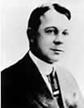
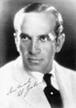
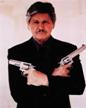

See also:
https://vilnews.com/?p=2071
https://vilnews.com/?p=3798
https://vilnews.com/?p=766
https://vilnews.com/?p=2027
https://vilnews.com/?p=762
https://vilnews.com/?p=6704
TOPIC 5:
Lithuania and India - same language root and more…
|
|
Pictures: Aage Myhre |
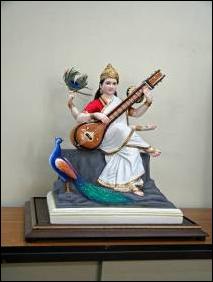
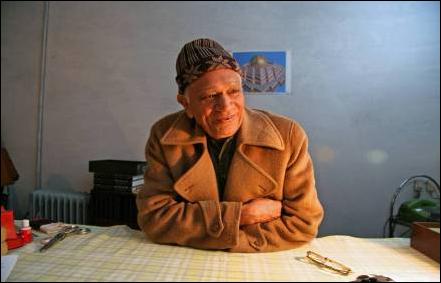
It’s early morning in Delhi, India. I have been invited to the small, dark office of Professor Lokesh Chandra, one of India’s leading experts on Sanskrit and Buddhism. “The same year I was born, 1927, my father went to London to get a degree in Lithuanian language. He spoke the language fluently, but he never visited Lithuania”, tells the elderly professor, still with his Kashmir coat and cap on, despite the outside temperature of close to 300 Celsius. And I soon learn that the professor’s knowledge about the connections between Old Sanskrit and the Lithuanian language and ancient cultural ties between India and Lithuania is nothing but amazing.
It is a common belief that there is a close similarity between the Lithuanian and Sanskrit languages; Lithuanian being the European language grammatically closest to Sanskrit. It is not difficult to imagine the surprise of the scholarly world when they learned that even in their time somewhere on the Nemunas River lived a people who spoke a language as archaic in many of its forms as Sanskrit itself. Although it was not exactly true that a professor of Sanskrit could talk to Lithuanian farmers in their language, coincidences between these two languages were truly amazing, for example:
Sanskrit sunus - Lithuanian sunus; son Sanskrit viras - Lithuanian vyras; man
Sanskrit avis - Lithuanian avis; sheep Sanskrit dhumas - Lithuanian dumas; smoke
Sanskrit padas - Lithuanian padas; sole
We can assert that these Lihuanian words have not changed their forms for the last five thousand years!
Read also: https://vilnews.com/?p=4425 and https://vilnews.com/?p=4434
TOPIC 6:
Lithuania 1000 years in 2009!

In 2009, Lithuania celebrated its Millennium – as the name Lithuania was mentioned for the first time in 1009 in the Annales Quedlinburgenses books. Lithuania's name Lietuva is considered to have developed from the name of the 11-km long rivulet Lietauka. The area between the middle Nemunas and the Neris where Kernavė, Nemenčinė and Maišiagala now are is believed to have been the land called Lietuva. Duke Mindaugas was the ruler there, and the River Lietauka ran through that area and fell into the Neris upstream of the Šventoji. The Land of Lietuva (Lithuania) is supposed to have been named after the river, and the name was later extended to the State of Lithuania. Other sources indicate that the Land of Lietuva, was on the right bank of the Šventoji in the area between Anykščiai and Viešintai and prove their conclusion by the existence of the administrative unit, Vaitystė of Leitava, there.
"In 1009 St Bruno, who is called Boniface (Bonifatius), Archbishop and monk, in the second year of his conversion, on the border between Russia and Lithuania (Lituae), having been hit on the head by the pagans, and his 18 men went to heaven on the 23rd of February. "There are several sources that mention the event - the killing of the missionary but they refer to Prussia rather than Lithuania, which proves that both Germans and Poles did not know about the existence of Lithuanians then. They thought that Prussians were the only Balts (or the majority of Balts). Quedlinburg Annals mentioned Lithuania because they were keen on precision and the information was received from St Bruno's entourage. The story about St Bruno describes the political organisation of Lithuanians, which was peculiar and not characteristic of other Baltic tribes before the 13th century.
TOPIC 7:
Modern Lithuania in a new Europe
|
|
|
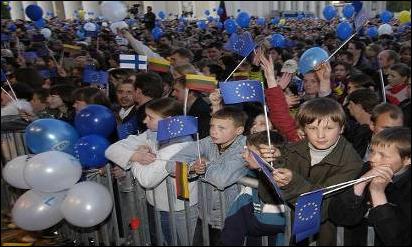
Lithuania has shown an impressive economic performance since its liberation from the USSR. “The Ballistic Baltic” and “The Baltic Tiger” are only two of the labels attached by foreign market observers to signify the speed and expected sustainability of this economic growth.
However, main restructuring based growth resources are coming to the end, which implies the need for search of new growth resources or decline of the growth cycle of the economy has as its vital economic interest to incentives and promote higher-quality high-tech industries, through R&D support, high-tech industry incubators, and appropriate educational focus.
The general strengths of Lithuanian national innovation system lies in the well developed and continuing its academic tradition higher education sector with strong science and technology research tradition and engineering orientation.
This results in a relatively high share of the population with tertiary education, high numbers of S&T graduates among them, and cultural orientation of the younger generation towards higher education. However, restricted resources for R&D and the higher education sector combined with the growing numbers of students at all higher education levels doubts the quality of education, especially in areas where technological based education is significantly important. Also low or non existing investments of businesses in vocational training lead to obsolete qualifications not suitable for high tech high skill work. The weak links between business and higher education and R&D communities result not only in obsolescing qualifications of the highly educated labour force, but also in low value added innovations, developed without input from the R&D sector.
TOPIC 8:
Karaims and Tatars - Turkish nationalities in Lithuania
|
|
|
| Typical Karaim house in Trakai, 30 km from Vilnius city | A senior Tatar Muslim cleric (akhund) |
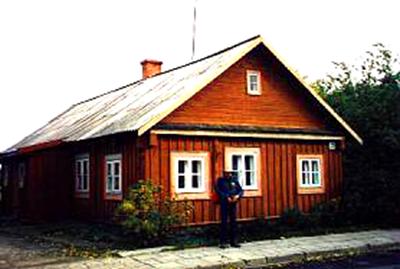
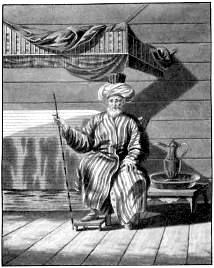
Since the 14th Century two Turkish nationalities – Tatars and Karaims – have been living in Lithuania. From linguistic and ethno genetic points of view they belong to the oldest Turkish tribes - Kipchaks. This ethnonym (Kipchak) for the first time was mentioned in historical chronicles of Central Asia in the 1st millennium BC. Anthropologically ancient Kipchaks were very close to Siberia inhabitants Dinlins, who lived on both sides of the Sajan Mountains in Tuva and the northern part of Gob. In 5th century BC Kipchaks lived in the West of Mongolia, in 3rd century BC they were conquered by Huns. Since the 6 - 8 centuries, when the first nomadic Turkish empires were founded, the Kipchak’s fate is closely connected with the history and migration of the Middle Asia tribes. In Turkish literature they are known as Kipchaks. The history of Karaims is connected with Lithuania since 1397-1398. According to the tradition, The Great Duke of Lithuania Vytautas, after one of the marches to the Golden Horde steppes, had to bring from the Crimea several hundred Karaims and settle them in the Great Duchy of Lithuania. Transference of several hundred Karaim families and several thousand Tatars was not done once. It was in connection with the state policy of The Great Duchy to inhabit the empty areas, build towns and castles and to develop trade and economic life. Initially, Karaims were settled in Trakai between the two castles of The Great Duke, present Karaim Street. Later they were found living in Biržai, Naujamiestis, Pasvalys and Panevėžys. However, Trakai has always been the community's administrative and spiritual centre for Karaims in Lithuania, nowadays more and more also for Karaims throughout the world.
See also: https://vilnews.com/?p=2942
TOPIC 9:
Lithuania 500 years ago was Europe’s largest country
|
|
|
| Vytautas the Great (1350-1430) | The Grand Duchy of Lithuania, 13-16 centuries (marked green) |
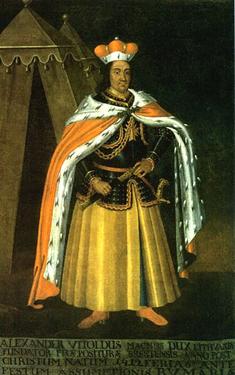
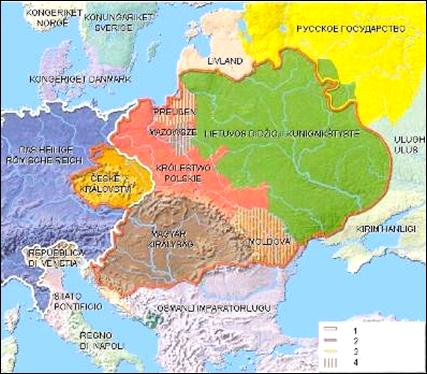
“Lithuania was a superpower much longer than USA has been“. This is how I often tease my American friends arriving in Vilnius. But the teasing is in fact not so far away from reality, as the Grand Duchy of Lithuania (GDL) for 300 years was one of the leading and largest nations of the World, stretching from the Baltic Sea to the Black Sea.
It all started with King Mindaugas (1203-1263), Lithuania‘s first and only king, who in 1236 defeated the Livonian Brothers of the Sword and united the different Lithuanian tribes under his reign. But the real expansion began when Grand Duke Gediminas (1275 – 1341) came to power in 1316, and started a new dynasty of leaders. Gediminas employed several forms of statesmanship to expand and strengthen the GDL. He invited members of religious orders to come to the Grand Duchy, announced his loyalty to the Pope and to his neighbouring Catholic countries and made political allies with dukes in Russia as well as with the Poles through marriage to women in his family. Gediminas’ political skills are revealed in a series of letters written to Rome and nearby cities. He makes mention of the Franciscan and Dominican monks who had come to the GDL by invitation and were given the rights to preach, baptise and perform other religious services. He also included an open invitation to artisans and farmers to come and live in the GDL, promising support and reduced taxes to those who would come. Under Vytautas the Great (1350-1430), Lithuania‘s military and economy grew even stronger, and he was the one expanding the Grand Duchy‘s frontiers south to the Black Sea. The Grand Duchy was at its largest by the middle of the 15th Century. It existed in the very centre of Europe and comprised the entire territories of contemporary Lithuania, Belarus, Ukraine, a part of Poland and stretched from the Baltic Sea to the Black Sea. Both Belarus and Ukraine point back to the days when they were part of the thriving GDL as proof of their cultural and political distinction from Russia. Successfully ruled by a dynastic line of dukes, the Grand Duchy of Lithuania (GDL) developed a highly advanced system of state administration and stove off invading Crusaders longer than any other Central European power. Its statesmen conducted effective foreign policy and military campaigns and created a multi-ethnic state. Though officially ended in 1795, the history of the GDL continues to influence modern-day nationalist thinking in the region. Not only Lithuania but also Belarus and Ukraine remember the days when they were part of the thriving GDL as proof of their cultural and political strength clearly distinguishing them from Russia.
By the way, Grand Duke Gediminas (1275 – 1341) is my personal favourite among all the Lithuanian nobles, and in my opinion, he was one of the greatest rulers of medieval Europe. He was a man of extraordinary knowledge and wisdom, understanding the importance and advantage of having a multicultural society as the foundation for his new city, more cleverly than most world rulers during the centuries after him. In October 1323, for example, representatives of the archbishop of Riga, the bishop of Dorpat, the king of Denmark, the Dominican and Franciscan orders, and the Grand Master of the Teutonic Order assembled in Vilnius when Gediminas confirmed his promises and undertook to be baptized as soon as the papal legates arrived. A compact was then signed in Vilnius, in the name of the whole Christian World, between Gediminas and the delegates, confirming the promised privileges. Fifteen months later, on the 25th of January 1325, Gediminas issued circular letters to the principal Hansa towns in Europe offering a free access into his domains to men of every order and profession from nobles and knights to tillers of the soil. The immigrants were to choose their own settlements and be governed by their own laws. After Gediminas, Vilnius emerged over hundreds of years, expanding, changing, and embodying the creative imagination and experience of many generations of architects and builders from Lithuania and abroad. Under the care of generous and perceptive benefactors, it became a city rich in architectural treasures and urban harmony.
See also: https://vilnews.com/?p=326
TOPIC 10:
Lithuania’s new international role – a bridge at the crossroads of east-west-south-north
|
|
|
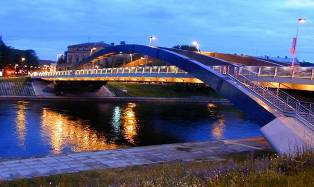
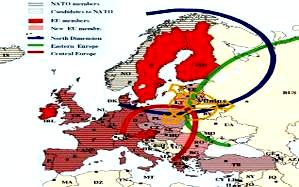
Today Lithuania is in a unique position to continue and expand its role as a significant transportation hub and meeting point for many neighbouring regions. Lithuania serves as a natural bridge for East - West (Europe-Asia) traffic with transport connections to the Trans-Siberian rail route and direct links with Russia and other countries of the former Soviet Union, as well as rapidly growing Baltic countries and even East Asia, including China. Nearly half or 45% of Russia’s total foreign trade passes through the Baltic Sea ports. A major advantage of Lithuania lies in its strategic location at the crossroads between Eastern and Western Europe as well as the Baltic Sea region. Lithuania has for centuries been on an important trade route, linking the Baltic Sea Region to the Black Sea. Klaipeda, the country’s sea coast city, has moved from having been an important port city in the Hanseatic League of trading cities around the Baltic and North Sea since the 13th century, to becoming a modern logistic hub for trade and transport between Western and Eastern Europe. Its unfrozen port is the best transportation centre between the east and west. Vilnius, the capital of Lithuania, is together with the country‘s second largest city, Kaunas, developing into a huge metropolis, showing all the potential of becoming a significant commercial, financial and transportation centre for the Baltic Sea region and Northern Europe. Traditions and experience gained during many centuries and historically strong presence of people from many nations and backgrounds are important for conducting economic relations nowadays. In addition, Lithuania is located in one of the most dynamic and competitive areas of the world representing 10 metropolitan areas with over 90 million inhabitants and being the home to well-established companies and product brands and the leading IT and telecom producing area of Europe with the highest cellular telephone penetration in the world.
TOPIC 11:
For hundreds of years Lithuania was the home-country to amazingly thriving Jewish communities
|
|
|
|
| Left: The Great Gaon of Vilnius - Elijahu ben Solomon Zalman (1720-1797) was the greatest luminary not only among the many Talmudical scholars of the 17th and 18th centuries, but also for many later generations
Right: A typical ‘Jewish’ Vilnius street, early 20th century |
||
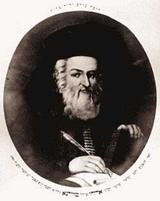
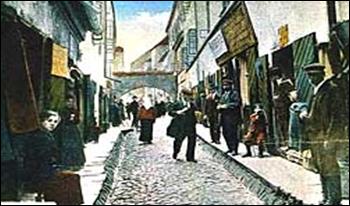
Napoleon Bonaparte was the one who started calling Vilnius ‘Jerusalem of the North’, when he arrived here in June 1812. It was the first and only "Jewish city" Napoleon would ever see. It is said that he became very surprised on what met him in Vilnius, a city so far away from the European mainstreams and still with a lively Mediterranean mood and life. And true enough, the history of the Litvaks, as the Lithuanian Jews are called, is unusual and surprising. It was a history of mostly peaceful coexistence with other peoples and cultures that lasted for more than six centuries. It was a history that spawned an incredible number of eminent Jews. The "Golden Age of Jewry" in Lithuania started with Grand Duke Gediminas (1275-1341), the empire builder who took a liking to foreigners and Jews whose skills and education were badly needed in medieval Lithuania. In the early 1300's he attracted them to his realm with numerous perks, including guarantees of religious freedom and tax exemptions. The Jews of Europe responded in droves, and Vilnius became the heralded centre of Jewish culture and learning. There would be synagogues, schools, theatres, publishing houses and the Yiddish Institute of Higher Learning. At a time when others in Europe were effectively illiterate, all the Jews in Vilnius could read and write. This was so unusual that it provoked the invention of a brand-new word, "Vilner," meaning "an educated man with knowledge." For almost 700 years, the Litvaks became an inseparable part of Lithuanian society, having enriched the country’s economy, culture, science, and education. During the Second World War, about 200,000 (95%), Lithuanian Jews were murdered. This was the greatest loss in all of Eastern and Central Europe. The Nazi Holocaust led to an almost complete extermination of Lithuania’s Jews, and also the destruction of their history and cultural monuments - a most tragic page of Lithuanian history.
See also: https://vilnews.com/?page_id=152
TOPIC 12:
Poland and Lithuania – an intertwined relationship
 |
|
|
|
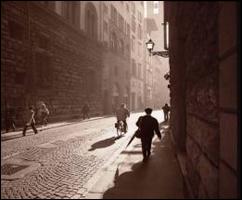
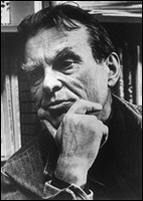
Poland and Lithuania have an exceptionally intertwined history since the Middle Ages and, unfortunately - so much has divided and remained problematic between these two close neighbours. But maybe the time now has come to focus on what unites? Maybe it’s time to study the example of the famous writer Czeslaw Milosz?
Nobel Price Winner Czesław Miłosz was born June 30, 1911 in Szetejnie, Lithuania. He spent his youth in Vilnius. During his law studies at Stefan Batory University in Vilnius he created a poets' group called Żagary. He published his first volume of poetry, A Poem in Frozen Time, in 1933. During the German occupation, Miłosz participated in Warsaw's underground cultural life, even publishing a volume of poetry called Invincible Song.
In 1960 Miłosz moved to the United States, where he became a professor at Berkeley University's department of Slavic literature. Throughout this period, Miłosz mainly published his works in Paris and the United States. Initially he specialized in writing essays but he gradually became a well-known poet. His fame was confirmed by the Neustadt International Prize for Literature and being crowned with the Nobel Prize. In Poland his works were largely absent from the official press, only published occasionally in collective anthologies. Only following his Nobel Prize were Miłosz's poems officially published and only then was he allowed to return to Poland. Miłosz died in 2004, at his home in Kraków, aged 93. His first wife, Janina, had died in 1986; and his second wife, Carol, a U.S.-born historian, in 2002.
TOPIC 13:
600,000 persons from the Baltic States were deported to Siberia during the period 1940-53
|
|
|
| Lithuanians in Molotkov, Siberia (unknown year) | Former President of Lithuania, Aleksandras Stulginskis, was one of the many deportees |
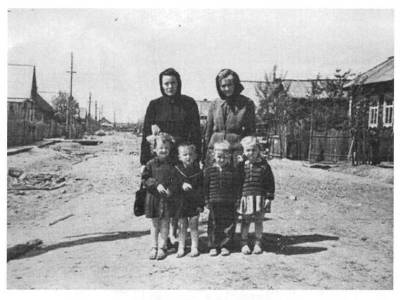
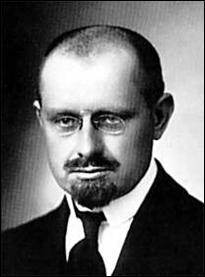
The saddest period in the history of Lithuania began in August 1939, when Hitler and Stalin concluded their agreement that divided up Central Europe. After the outbreak of the Second World War, Lithuania was occupied three times: first by the USSR in 1940, then by Nazi Germany in 1941, and finally by the USSR again in 1944. During the Nazi and Soviet occupations, including 200,000 Holocaust victims, the losses of the population of Lithuania amounted to 33 percent of the total number of the country's population in 1940. Lithuania lost 1 million people to deportations, executions, incarceration, murder of political opposition and forced emigration. Altogether, some 600,000 prisoners were taken from the Soviet occupied Baltic States - Lithuania, Latvia, and Estonia. There were some 10 million inhabitants in all three Baltic States on the eve of the Soviet occupation. Proportionately, the number of Baltic prisoners would be equal to a loss of 20 million in the United States or 5 million in Great Britain. During 1940-1953, some 132,000 Lithuanians were deported to remote areas of the USSR: Siberia, the Arctic Circle zone and Central Asia. They were not allowed to leave remote villages. More than 70 percent of the deportees were women and children. Some 50,000 of the deportees were not able to return to Lithuania. During the same period, another 200,000 people were thrown into prisons. Some 150,000 of them were sent to the Gulags, the USSR‘s concentration camps, situated mostly in Siberia.
See also:
https://vilnews.com/?p=335
https://vilnews.com/?p=2168
https://vilnews.com/?p=6539
TOPIC 14:
The Lithuanian partisan war 1944-53 was the longest and bloodiest guerrilla war of modern Europe
| The Lithuanian resistance to Soviet occupation from 1944-1953 was one of the longest partisan guerrilla wars of 20th century Europe and spanned the first decade of almost 50 years of Soviet aggression in Lithuania | ||
|
|
|
|
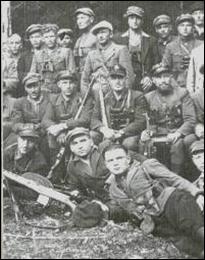
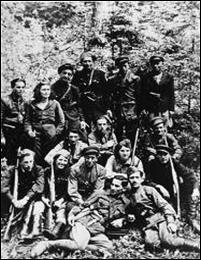
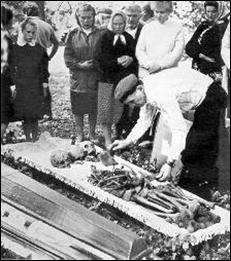
Despite the heroics of the Lithuanian partisans, or Forest Brothers as they became known, they were doomed to failure because it was a fight that was ignored by the West. Their war became known as the ‘unknown’ or ‘hidden’ war. Altogether 22,000 Lithuanian partisans and their supporters lost their lives in the struggle against the Soviet and NKVD (later to become the KGB) forces. The war continued until 1953, though the last resistance fighter refused to surrender and shot himself in 1965 and another partisan finally came out of hiding in 1986. “The Lithuanians had to choose from three options: to emigrate, stay in Lithuania and suffer the oppression and humiliation, or go into a forest to defend their Fatherland,” said Albinas Kentra, chairman of the Lithuanian Forest Brothers Union. The basic goal of the guerrilla warfare was aimed at the re-establishment of Lithuanian Sovereignty. Thousands of men gathered in the forests in the hope that they would not have to hold out for long – only until the Peace Conference decided to implement the principle of national self-determination.
See also:
https://vilnews.com/?p=5391
https://vilnews.com/?page_id=131&paged=2
TOPIC 15:
Lithuania – a land of unspoilt nature, an example for countries around the world
|
|
|
|
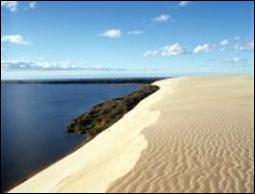
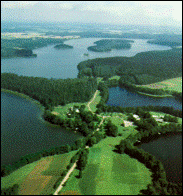
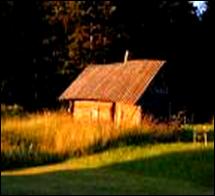
Nature is everywhere in Lithuania. Even the approaches to Vilnius are surrounded by forests, and every spring, a woodland grouse, the capercaillie one of the rarest birds, carries out its mating rituals just 20 kilometres from the town centre in an old pine forest which has been preserved for it.
It would be difficult today to identify the beginning of the environmental tradition in Lithuania. Perhaps we could look for it in the statutes of the 16th century, the key state legal documents. Perhaps it started even earlier, in the sacred oak groves that could be damaged only by the winds and storms, but never by man. The first nature reserve, at Žuvintas, was founded 70 years ago. There, everything is left to nature. No man’s foot can step in it. Birds and animals there may feel that their nests and offspring are safe. Today the network of protected areas covers 12 per cent of the country, including five national parks, four sanctuaries, 30 regional parks and multiple reserves.
Every ancient tree, or rock in an interesting shape and form of relief, is protected.
TOPIC 16:
Lithuania on Mars
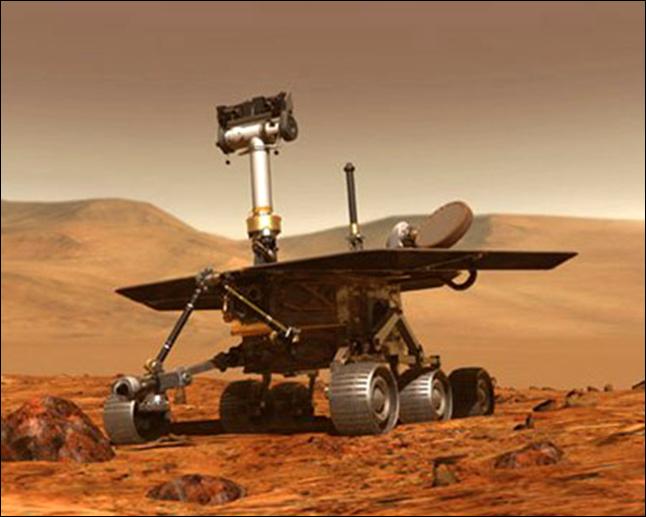
Lithuania was once known as the Soviet Silicon Valley, and also today the country has a very strong research and development sector. Lithuanian world-class specialists cooperate with NASA, NATO, Volvo, Saab, Philips, and many others in the fields of biotechnology, biochemistry, laser optics, chemistry, physics, etc.
According to Paris‘ “Le Monde”, Lithuania is the biggest exporter of femtosecond lasers in the world. Among the clients is NASA, i.e. using Lithuanian laser technology for analyses of minerals on Mars! A country of 3.5 million people, Lithuania, has about 15 laser producers, employing about 300 laser specialists, half of which are engineers and doctors of sciences. Lithuania’s laser sector grows about 15-20 % annualy, which is twice faster than the whole economy of the country. Lithuanian laser production is demanded by the best scientific laboratories in Europe and the US.
Lithuania has six science and technology parks which develop favourable infrastructure for the establishment of new innovative businesses in Lithuania and encourage the growth of existing ones engaged in the development of innovative technologies. Lithuania’s science and technology parks seek to provide a comfortable environment for commercializing R&D activities and integrating business, science, and research by supporting knowledge transfers leading to the exploitation of research results and to the development of marketable products and services. According to the 7 Economist Intelligence Unit (EIU) in 2006, Lithuania demonstrated an advanced e-business environment. Lithuania was acknowledged as one of the emerging markets where mobile phone penetration is several times that of fixed lines. This, plus a rapid increase in the number of WiFi hotspots in its capital and other cities, has helped improve overall connectivity for its consumers and businesses. In Lithuania, e-banking, e-government services and mobile internet are being used in everyday business and life and are becoming increasingly popular.
“Lithuanian scientists are likely to become leaders in certain spheres of world science.” (Achilleas Mitsos, Director General of the European Commission’s Directorate General for Research).
- Bookmark :
- Digg
- del.icio.us
- Stumbleupon
- Redit it

OPINIONS
Have your say. Send to:
editor@VilNews.com
Ph. D., Chicago
A wave of unity sweeps the international Lithuanian community on March 11th every year as Lithuanians celebrated the anniversary of the Lithuanian Parliament's declaration of independence from the Soviet Union in 1990. However, the sense of national unity engendered by the celebration could be short-lived.
Human beings have a strong tendency to overgeneralize and succumb to stereotypical us-them distinctions that can shatter even the strongest bonds. We need only search the internet to find examples of divisive thinking at work:
- "Those who fled Lithuania during World II were cowards -- and now they come back, flaunt their wealth, and tell us 'true Lithuanians' how to live."
- "Lithuanians who work abroad have abandoned their homeland and should be deprived of their Lithuanian citizenship."


In Lithuania Christmas Eve is a family event and the New Year's Eve a great party with friends!
Lithuanian say "Kaip sutiksi naujus metus, taip juos ir praleisi" (the way you'll meet the new year is the way you will spend it). So everyone is trying to spend New Year's Eve with friend and have as much fun as possible.
Lithuanian New Year's traditions are very similar to those in other countries, and actually were similar since many years ago. Also, the traditional Lithuanian New Years Eve party was very similar to other big celebrations throughout the year.
The New Year's Eve table is quite similar to the Christmas Eve table, but without straws under the tablecloth, and now including meat dishes. A tradition that definitely hasn't changes is that everybody is trying not to fell asleep before midnight. It was said that if you oversleep the midnight point you will be lazy all the upcoming year. People were also trying to get up early on the first day of the new year, because waking up late also meant a very lazy and unfortunate year.
During the New Year celebration people were dancing, singing, playing games and doing magic to guess the future. People didn't drink much of alcohol, especially was that the case for women.
Here are some advices from elders:
- During the New Year, be very nice and listen to relatives - what you are during New Year Eve, you will be throughout the year.
- During to the New Year Eve, try not to fall, because if this happens, next year you will be unhappy.
- If in the start of the New Year, the first news are good - then the year will be successful. If not - the year will be problematic.
* If New Year's night is cold and starry - look forward to a good summer!
* If the during New Year Eve trees are covered with frost - then it will be a good year. If it is wet weather on New Year's Eve, one can expect a year where many will die and dangerous epidemics occur.
* If the first day of the new year is snowy - the upcoming year will see many young people die. If the night is snowy - mostly old people will die.
* If the New Year time is cold - then Easter will be warm.
* If during New Year there are a lot of birds in your homestead - then all year around there will be many guests and the year will be fun.
Christmas greetings
from Vilnius
and epic battle for the
future
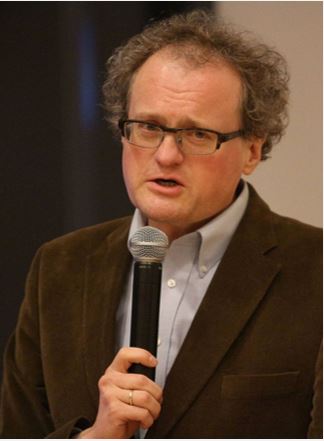
Philosopher, political theorist, historian of
ideas, social analyst, and political
commentator
Ukraine was and continues to be perceived by the EU political class as a sort of grey zone with its immense potential and possibilities for the future, yet deeply embedded and trapped in No Man's Land with all of its troubled past, post-Soviet traumas, ambiguities, insecurities, corruption, social divisions, and despair. Why worry for what has yet to emerge as a new actor of world history in terms of nation-building, European identity, and deeper commitments to transparency and free market economy?
Right? Wrong. No matter how troubled Ukraine's economic and political reality could be, the country has already passed the point of no return. Even if Vladimir Putin retains his leverage of power to blackmail Ukraine and the West in terms of Ukraine's zero chances to accede to NATO due to the problems of territorial integrity, occupation and annexation of Crimea, and mayhem or a frozen conflict in the Donbas region, Ukraine will never return to Russia's zone of influence. It could be deprived of the chances to join NATO or the EU in the coming years or decades, yet there are no forces on earth to make present Ukraine part of the Eurasia project fostered by Putin.
want to learn about the
new, scary propaganda
war between Russia,
The West and the
Baltic States!
believe their government
is corrupt
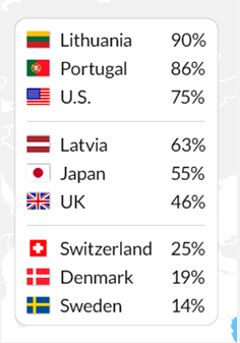
students say no to
bribes for doctors
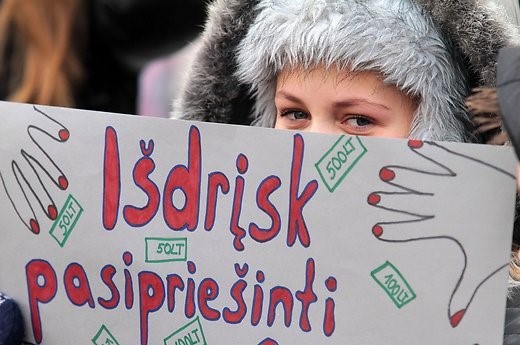
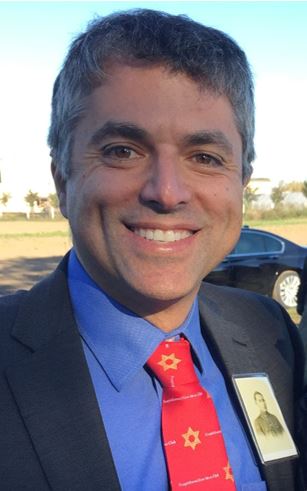
During Soviet times, government was administered for the people in control, not for the local population, court decisions were decreed, they were not the administration of justice, and academia was the domain of ideologues. 25 years of freedom and openness should have put those bad experiences behind Lithuania, but that is not so.
Today, it is a matter of expectation that court pronouncements will be governed by ideological dictates. Few, if any Lithuanians expect real justice to be effected. For foreign companies, doing business in Lithuania is almost impossible in a situation where business people do not expect rule of law, so, surely Government would be a refuge of competence?
Lithuanian Government has not emerged from Soviet styles. In an attempt to devolve power, Lithuania has created a myriad of fiefdoms of power, each speaking in the name of the Government, each its own centralized power base of ideology.
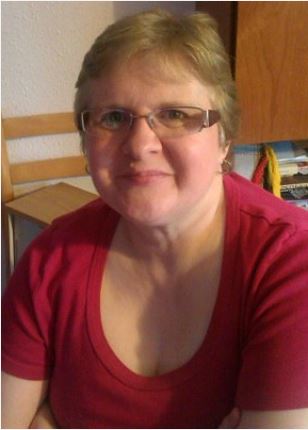
Chepstow, Wales
Doesn't that sound suspiciously like Lithuania? Ah, but I didn't mention the mountains of Snowdonia, which would give the game away.
I'm talking about Wales, that part of the UK which Lithuanians used to call "Valija", but later named "Velsas" (why?). Wales, the nation which has welcomed two Lithuanian heads of state to its shores - firstly Professor Vytautas Landsbergis, who has paid several visits and, more recently, President Dalia Grybauskaitė who attended the 2014 NATO summit which was held in Newport, South Wales.
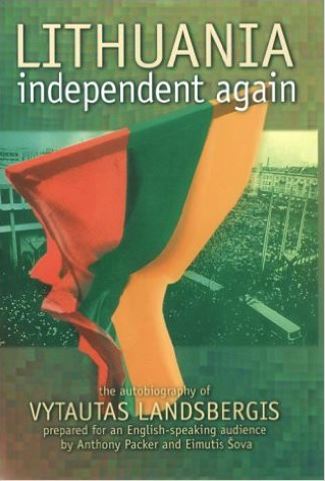
ENGLISH VERSION OF THE
AUTOBIOGRAPHY OF VYTAUTAS LANDSBERGIS.
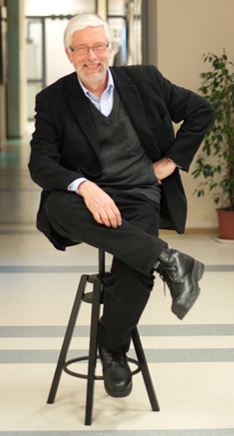
Although Lithuanian activities have thinned over the decades as that postwar generation died out, the Lithuanian Martyrs' parish hall is crowded with many, many hundreds of visitors who come to the Lithuanian cemetery for All Souls' Day. Similarly, the Franciscan parish has standing room only for Christmas Eve mass.
Although I am firmly embedded in the literary culture of Canada, my themes are usually Lithuanian, and I'll be in Kaunas and Vilnius in mid-November 2015 to give talks about the Lithuanian translations of my novels and short stories, which I write in English.
If you have the Lithuanian language, come by to one of the talks listed in the links below. And if you don't, you can read more about my work at
www.anatanassileika.com
http://www.vdu.lt/lt/rasytojas-antanas-sileika-pristatys-savo-kuryba/ https://leu.lt/lt/lf/lf_naujienos/kvieciame-i-rasytojo-59hc.html
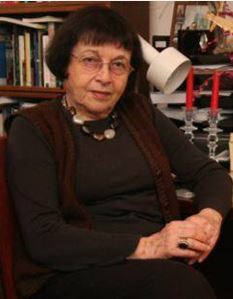
"My love and best wishes to all. As long as VilNews exists, there is hope for the future,"" she writes.
Irena Veisaite means very much for our publication, and we do hereby thank her for the support and wise commitment she always shows.
You can read our interview with her
Facing a new reality
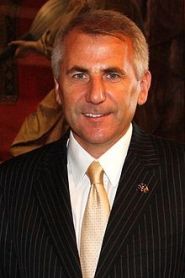
Dear readers of VilNews,
For a number of years, the EU and Russia had assumed the existence of a strategic partnership, based on the convergence of values, economic integration and increasingly open markets and a modernisation agenda for society.
Our agenda was positive and ambitious. We looked at Russia as a country ready to converge with "European values", a country likely to embrace both the basic principles of democratic government and a liberal concept of the world order. It was believed this would bring our relations to a new level, covering the whole spectrum of the EU's strategic relationship with Russia.
The likelihood of Putin
invading Lithuania
.jpg "lithuania today")
Founding Director at Summer Literary Seminars
Are all Lithuanian energy
problems now resolved?
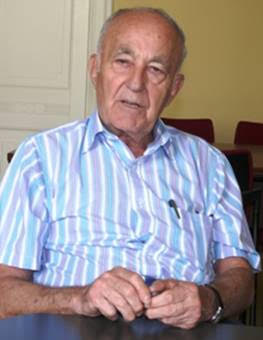
Lithuania as a country does not have significant energy resources. Energy consuming infrastructure after WWII was small and totally supported by energy imports from Russia.
First nuclear reactor begins power generation at Ignalina in 1983, the second reactor in 1987. Iganlina generates enough electricity to cover Lithuania's needs and about 50%.for export. As, prerequisite for membership in EU, Ignalina ceases all nuclear power generation in 2009
The Klaipėda Sea terminal begins Russia's oil export operations in 1959 and imports in 1994.
Mazeikiu Nafta (current ORLEAN Lietuva) begins operation of oil refinery in 1980.
Have Lithuanian ties across
the Baltic Sea become
stronger in recent years?
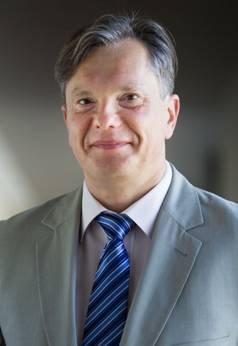
The two decades that have passed since regaining Lithuania's independence can be described as a "building boom". From the wreckage of a captive Soviet republic, a generation of Lithuanians have built a modern European state, and are now helping construct a Nordic-Baltic community replete with institutions intended to promote political coordination and foster a trans-Baltic regional identity. Indeed, a "Nordic-Baltic community" - I will explain later in my text the meaning of this catch-phrase.
Since the restoration of Lithuania's independence 25 years ago, we have continuously felt a strong support from Nordic countries. Nordics in particular were among the countries supporting Lithuania's and Baltic States' striving towards independence. Take example of Iceland, country which recognized Lithuania in February of 1991, well in advance of other countries. Yet another example - Swedish Ambassador was the first ambassador accredited to Lithuania in 1991. The other countries followed suit. When we restored our statehood, Nordic Countries became champions in promoting Baltic integration into Euro-Atlantic institutions. To large degree thanks Nordic Countries, massive transformations occurred in Lithuania since then, Lithuania became fully-fledged member of the EU and NATO, and we joined the Eurozone on 1 January 2015.
Have you heard about the
South African "Pencil Test"?
But that is exactly what happened to me when I came back from South Africa. I will tell you how.
VilNews e-magazine is published in Vilnius, Lithuania. Editor-in-Chief: Mr. Aage Myhre. Inquires to the editors: editor@VilNews.com.
Code of Ethics: See Section 2 – about VilNews. VilNews is not responsible for content on external links/web pages.
HOW TO ADVERTISE IN VILNEWS.
All content is copyrighted © 2011. UAB ‘VilNews’.