
THE VOICE OF INTERNATIONAL LITHUANIA

|
VilNews has its own Google archive! Type a word in the above search box to find any article.
You can also follow us on Facebook. We have two different pages. Click to open and join.
 Click on the buttons to open and read each of VilNews' 18 sub-sections Click on the buttons to open and read each of VilNews' 18 sub-sections  |

|


Archive for August, 2012
- Posted by - (0) Comment
TOPIC 6:
A new European alliance?
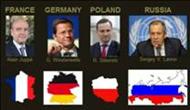
Some time ago we raised the question about a potential new alliance between Russia, Poland, Germany and France. Below some of the comments we have received.

Hermes Birkins·13 weeks ago
I came across your blog web site on the internet and check several of your earlier articles. Continue to maintain up the extremely great operate. I just additional up your RSS feed in order to my MSN Information Readers. Looking for toward reading through far more from you later on!?-
garmin nuvi 255w review·10 weeks ago
Thanks i love your article about A new European alliance?
beautiful widgets·8 weeks ago
I agree with your A new European alliance?, wonderful post.
Curtis Doak·4 weeks ago
I love you because of your entire work on this website. It has been an push for me personally. I have handed this particular onto a buddy associated with mine.
kahlua recipe·2 weeks ago
I really liked the way you presented this information. It nice to read good information like this rather than to waste your time doing nothing. Great Job! Thnkas for posting it!
- Bookmark :
- Digg
- del.icio.us
- Stumbleupon
- Redit it

- Posted by - (0) Comment
Estonian Minister:
Talks over Visaginas nuclear power plant are advancing sluggishly
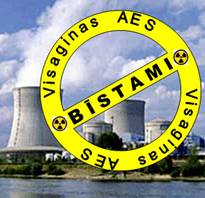
Latvian and Estonian leaders are not much impressed by their Lithuanian counterparts’ energy progress.
Lithuanian Minister of Energy Arvydas Sekmokas this week met with Estonian Minister of Economic Affairs Juhan Parts to discuss joint energy projects. According to Parts, the talks over Lithuania's planned Visaginas nuclear power plant are moving forward at a slow pace.
Currently, Lithuania is conducting negotiations with Latvia and Estonia as well as with the Hitachi Group, which was brought in as a strategic investor, ETV reported.
In June, Latvian Prime Minister Valdis Dombrovskis told media that if Latvian economic interests are ignored in the Visaginas project's concession contract,
Latvia will withdraw from the project. In response, Lithuania has pledged to take into consideration the interests of all the partners. However, the whole project might still collapse as a result of the Lithuanian Parliament's decision to hold a referendum on the nuclear power plant in October.
"Let us wait and see what the result of the referendum will be. What is most important is to answer the questions posed by Latvia and Estonia. Lithuania is ready to tackle all the issues that are not covered by the concession contract between Lithuania and the Hitachi Group. We are prepared to solve these issues and to establish the project implementation company," said Lithuanian Minister of Energy Arvydas Sekmokas. According to Sekmokas, Lithuanian public opinion is currently in favour of the nuclear power plant.
Estonian Minister of Economic Affairs Juhan Parts noted that if the Lithuanians reject the nuclear power plant project, it will leave Lithuania largely dependent on imported electricity, which could undermine the predictability and reliability of the whole Baltic electricity market in the eyes of the investors and the consumers.
"If a large proportion of the electricity is imported - 60 percent in the case of Lithuania today - the situation is precarious," Parts said.
- Bookmark :
- Digg
- del.icio.us
- Stumbleupon
- Redit it

- Posted by - (3) Comment
Next time you eat bacalao* in Spain or Italy...
* The word bacalao is Spanish, and simply means cod. Actually, in many Latin countries like Brazil, Italy, Greece and of course Spain, the term bacalao is used for stockfish or salted cod. In Portugal, bacalao is said to be prepared in at least 365 different ways – one for each day of the year.
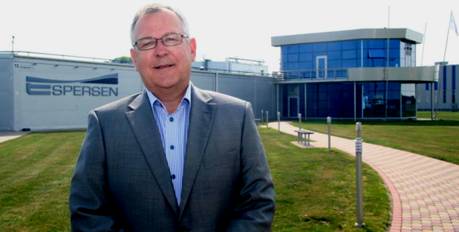
Reidar Inselseth is General Director of the Espersen fish factory in the Klaipeda Free Economic Zone, where cod from the Baltic Sea and Arctic Ocean is converted to delicious fish fillets for southern European markets.

Every day, all year round, a truck drives out from the Espersen fish processing plant in the Klaipeda Free Economic Zone, fully loaded with over 20 tonnes of finished fish fillets for the south and west European markets. Not many days later, these fish products are to be found at a restaurant table in Spain, Italy and Greece as delicious dishes prepared by chefs who so often are amazing fish experts and know to appreciate the wonderful ingredients the Baltic Sea and Arctic Ocean have to offer. Because it is from these seas Espersen Lietuva gets its fish raw material, roughly 40 tonnes per day.
About 50% of the fish they purchase from the Baltic countries Lithuania, Latvia, Sweden and Denmark, while the remaining half is purchased from Norway, caught in northern Atlantic waters. Some of the fish is purchased fresh, some frozen.
Espersen was the first company that was established in Klaipeda Free Economic Zone. The opening took place in January 2003. Now 275 people work here in this fish processing company, and the company has already invested EUR 10 million here in the course of these years. The facility stands as a magnificent specimen of a modern fish processor, one of the very best in the world and has become an almost indispensable and important partner for the fishermen in Lithuania and other Baltic nations.
Fish products from the plant are eaten at present by people in the UK, Germany, France, Portugal, Spain, Italy and Greece.
The mother company of Espersen Lieutva, A. Espersen A/S, was founded in Denmark in 1937 with the purpose of taking advantage of the abundance of cod in the Baltic Sea region. The company was established by J.P.A. Espersen with its first premises on Bornholm, an island in the middle of the Baltic Sea.
Since then, constant growth has transformed it into one of the world´s most important white fish processing corporations with a staff of more than 1.100 employees in modern production plants in Denmark, Poland, Lithuania and China.
Among its milestones, Espersen was the first food processing company in Europe to establish its own laboratories to monitor quality control.
In 1971 the entire equity capital of Espersen was turned over to “Direktør J.P.A. Espersen og hustru, fru Dagny Espersens Fond”. The yield of the Foundation contributes with financial investments to Espersen and is distributed among charity organisations.
Today, with an annual turnover of more than 200 million Euros, Espersen is considered a financially well consolidated company basing its transactions on strong partnerships with both suppliers and customers.
For contingency reasons Espersen has chosen to have production in several at countries - Denmark (Bornholm), Poland, Lithuania, China and Vietnam.
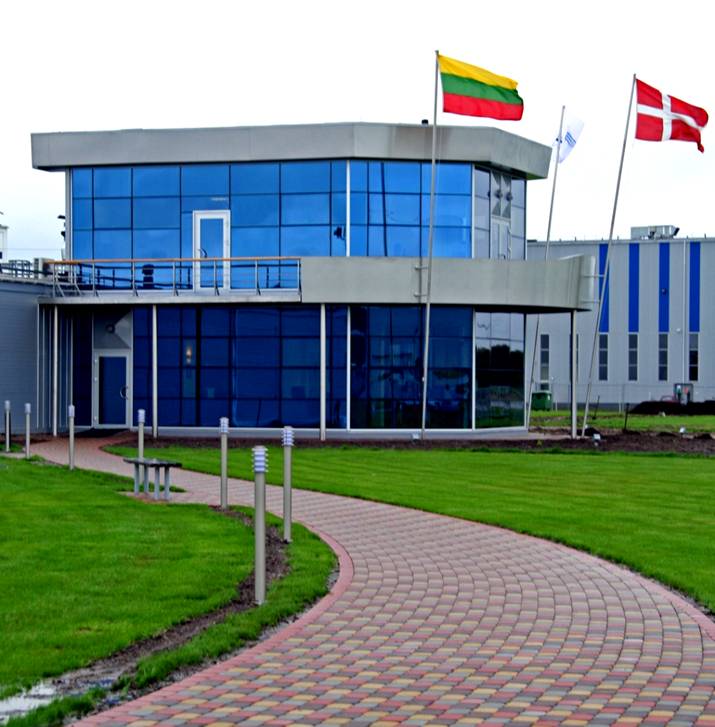
The new Espersen office building in the Klaipeda Free Economic Zone
is shaped as a ship bridge.
Interview with General Director Reidar Inselseth
I sit with the director of the Espersen plant in Klaipeda, Norwegian Reidar Inselseth, in the new office building his firm has just built. The building is designed as the wheelhouse of a ship, with a shiny blue glass surface, and the 'bow, roof top and masts' in stainless steel.
Reidar has been director of this facility for four years now, and among other things, been responsible for extensive new investments and developments of the company. My first question to him is what he finds hardest by being entrepreneur and company leader in Lithuania.
"The lack of predictability," he replies immediately. "Unfortunately, that is something that to a far too high degree characterizes this country. For my company this is so serious that we hardly had chosen Lithuania for our production if we eight-nine years ago had known what we now know."
"This country is steeped in corruption, which we feel very directly when we often are subjected to strange inspections etc. from the authorities; something we do not see anything like in any of the other countries where we have fish processing plants. We are, for example, constantly subjected to unreasonable disclosure requirements and controls, even if we always follow highly acclaimed and transparent international principles of production, environmental control, bookkeeping and treatment of employees. It feels as if here in Lithuania companies like ours still have to prove their innocence instead of being greeted with open arms and cooperative attitudes."
"Do you see these things as something that remains from the Soviet times?"
"Yes, I think so. There is, for example, too little of free and open competition, far too many monopolies, generally too low level of knowledge in public administration, and too big distance from the country's legislature to where things really happen."
"What do you think the Lithuanian authorities should do with this?"
"First and foremost, they must streamline their anti-corruption efforts and substantially increase transparency in the entire state administration. And those who are appointed to executive positions must be selected on the basis of merit, not because of party affiliation."
"Are there other, more practical problems you face for your business in today's Lithuania?"
"The biggest problem in this respect is undoubtedly the increasing shortage of labour here due to the massive emigration that has taken place in recent years. Many of those we have trained in fish processing in our firm have travelled to the west, and now we are seriously struggling to find qualified workers. What we see in the Lithuanian society today is becoming a daunting demographic composition with too many old and very young and too few in working age."
"This is a problem that the authorities immediately should take more seriously. Society should be organized so that it again becomes safe and interesting to live and work here. We must have safe, good schools, health care and jobs. Today these things combined are just so negative that too many choose to leave their home country."
"The lack of labour is, by the way, now so precarious that the government should allow for greatly increased immigration from countries farther east."
Reidar Inselseth is clearly engaged in these issues, probably partly due to the fact that he has a Lithuanian wife, with whom he has two school-age children. The family would like to live in Klaipeda, but hope the negative trends in the country soon will turn so that they can again feel the optimism and satisfaction of living and working here.
Meanwhile, truck after truck rolls out from this top modern fish processing plant here in Klaipeda.
Restaurant guests in Rome, Madrid and Athens hardly have a clue that the delicious, tasty dinners they are about to eat origin just from here...
Recipe for Bacalao a la Vizcayna
|
|
|
|


Bacalao a la Vizcayna is a Spanish dish. It is basically sautéed salted fish that is popularly known as a staple food during the Lentewn season.
Ingredients:
half a kilo of dried and salted bacalao (dried salted cod fish)
1 tbsp flour
half a cup olive oil
5 cloves minced garlic
1 medium chopped onion
2 medium chopped tomatoes
half a cup of water
200g tomato sauce and 1 cup canned garbanzos
2 medium red bell peppers, cut into strips
pepper grounded and salt
2 medium cubed potatoes
Procedure:
1. Soak the dried fish in water for at least 1 hour and drain out the excess water. Afterwards, boil the fish, drain and set aside. When cool enough to handle, flake and discard the bones of the fish and then set aside.
2. Sprinkle flour over flaked fish, then fry it in olive oil until light brown in color. Afterwards, set it aside.
3. Sauté garlic, onions, and tomatoes. Add water and simmer the mixture for 2 minutes. Pour in tomato sauce and bring to a boil.
4. Add prepared fish, garbanzos, and pepper. Season with salt and pepper
5. Add fried potatoes and simmer.
A recipe from: http://myrecipehouse.com
- Bookmark :
- Digg
- del.icio.us
- Stumbleupon
- Redit it

Too long, information given by foreign representatives has been based either on official Lithuanian sources or yellow newspaper articles
- Posted by - (0) Comment
(this is an opinion letter from last Setpember)
I liked very much that you made a summary of the "bad boys and girls". As we know, there is not any source for foreigners in Lithuania to follow those cases or even to be aware of them. This information is valuable in two ways - to show the world that there is some justice in Lithuania and to tell that black forces are still existing. Too long a time the information given by the foreign representatives has been based on either official Lithuanian sources or the (light) yellow newspapers articles. It is very important that you are taking those things into the light in a simplified form for everybody to read. Unfortunately this is only the top of an iceberg and there is still so much to take up and solve until even the most horrible cases are over.
Anyway, Aage, you are again doing something great. But I must admire your brave!
Regards
Krister Castren
Honorary Consul of Finland in Klaipeda
- Bookmark :
- Digg
- del.icio.us
- Stumbleupon
- Redit it

- Posted by - (0) Comment
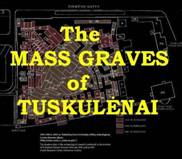
“The mass graves of Tuskulėnai”
A series of articles in 6 parts
TODAY: The “process” –
executions between 1944 and 1947
By Vincas Karnila, Associate editor
vin.karnila@VilNews.com
 |
INTRODUCTION
|
 |
Part 1 of 6
|
 |
Part 2 of 6
|

To read more, go to our SECTION 10
- Bookmark :
- Digg
- del.icio.us
- Stumbleupon
- Redit it

- Posted by - (0) Comment
Help us make VilNews
even more successful!

Dear VilNews Readers,
First of all, thanks to all of you for your kind words, suggestions, comments and support for VilNews. We have always felt very strongly about the wonderful potential of Lithuania in the world. It is a country of much beauty and fascinating multicultural history – a nation now represented in all corners of the world. We have been very pleased to provide a forum for a free, open and respectful dialogue about the past, present and future of Lithuania. The Staff and I have taken your advice to heart and decided to continue publishing VilNews and possibly also publishing a Lithuanian version of it. For this to occur we will need additional financial support.
We cannot continue to carry the full financial cost of publishing and disseminating VilNews on our own. We feel that all of us have a vested interest in the success of VilNews. In order to continue and expand this great publication we need your help.
If you can, please make a financial contribution to VilNews. At the present time we can only accept checks or money orders made out to UAB VilNews. Please write me if you consider contributing.
If you know of any business that should or could advertise in VilNews, please contact them. We are looking for sponsors and advertisers.
Please check your e-mail contact lists and suggest www.VilNews.com to all your friends who are interested in Lithuania. You would be surprised, how many of them have not heard of us. VilNews has also two different pages on Facebook, so go in and "like" us and participate in our ongoing debates.
I am sure that all of us working together can make VilNews even more successful than it already is.
Sincerely,
Kestutis J. Eidukonis
CEO VilNews
kestutis.eidukonis@VilNews.com
To read more, go to our SECTION 3
- Bookmark :
- Digg
- del.icio.us
- Stumbleupon
- Redit it
- Posted by - (4) Comment
Help us make VilNews
even more successful!
Dear VilNews Readers,
First of all, thanks to all of you for your kind words, suggestions, comments and support for VilNews. We have always felt very strongly about the wonderful potential of Lithuania in the world. It is a country of much beauty and fascinating multicultural history – a nation now represented in all corners of the world. We have been very pleased to provide a forum for a free, open and respectful dialogue about the past, present and future of Lithuania. The Staff and I have taken your advice to heart and decided to continue publishing VilNews and possibly also publishing a Lithuanian version of it. For this to occur we will need additional financial support.
We cannot continue to carry the full financial cost of publishing and disseminating VilNews on our own. We feel that all of us have a vested interest in the success of VilNews. In order to continue and expand this great publication we need your help.
If you can, please make a financial contribution to VilNews. At the present time we can only accept checks or money orders made out to UAB VilNews. Please write me if you consider contributing.
If you know of any business that should or could advertise in VilNews, please contact them. We are looking for sponsors and advertisers.
Please check your e-mail contact lists and suggest www.VilNews.com to all your friends who are interested in Lithuania. You would be surprised, how many of them have not heard of us. VilNews has also two different pages on Facebook, so go in and "like" us and participate in our ongoing debates.
I am sure that all of us working together can make VilNews even more successful than it already is.
Sincerely,
Kestutis J. Eidukonis
CEO VilNews
kestutis.eidukonis@VilNews.com
- Bookmark :
- Digg
- del.icio.us
- Stumbleupon
- Redit it
Californian Rotarians visiting Lithuania
- Posted by - (0) Comment
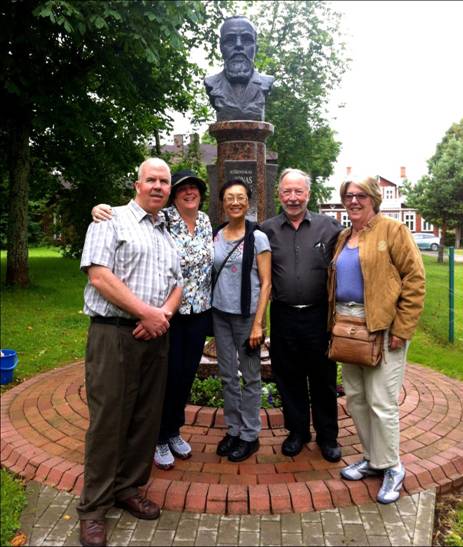
Report written by Millbrae CA Rotarian Walter Gladwin,
Millbrae Rotarians, California
The basic purpose of this trip was to visit our Rotary Club’s Sister City Club in Siauliai Lithuania, visit the Auksuciai Farm that our club has been supporting for several years, visit two Museums in Lithuania that have items donated by the Sliupas family (Vytas Sliupas is a member of our Millbrae California Rotary club).
Eventually five of us started this adventure, Denis & Marciana O’Halloran, Deirdri & Walt Gladwin and Shirley Kwok. We all planned on getting to Lithuania on July 1.
To read more, go to our SECTION 13
- Bookmark :
- Digg
- del.icio.us
- Stumbleupon
- Redit it
Californian Rotarians visiting Lithuania
- Posted by - (2) Comment
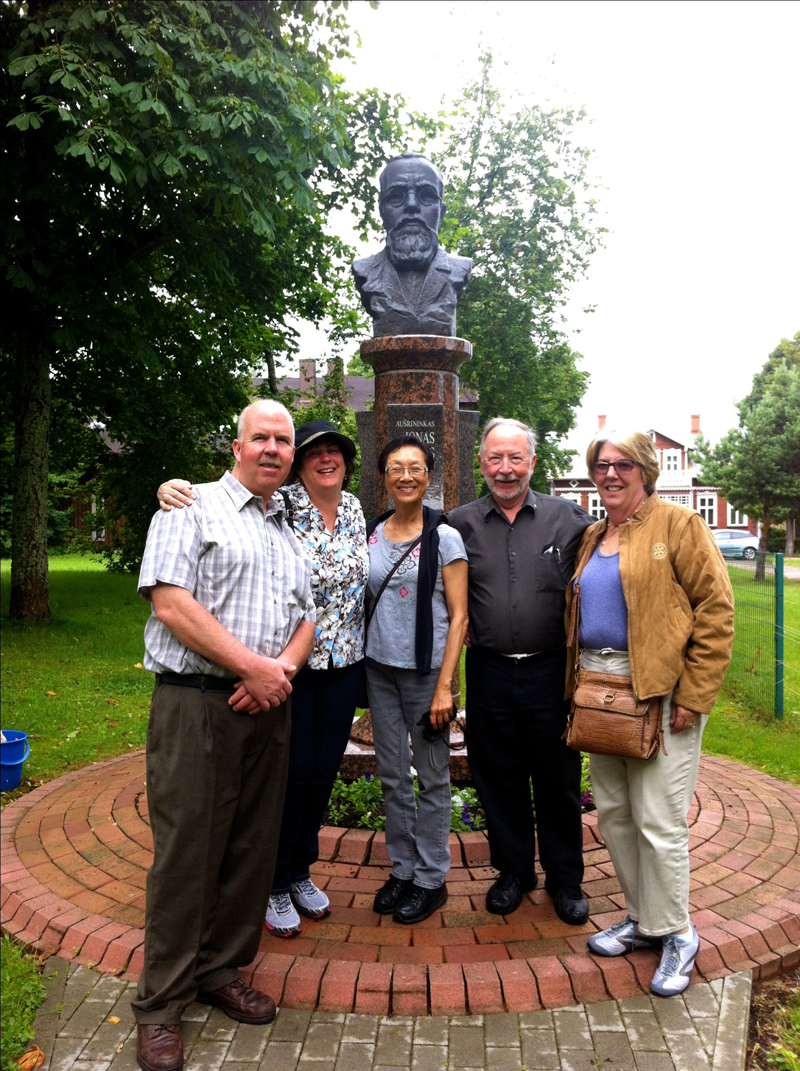
Report written by Millbrae CA Rotarian Walter Gladwin, Millbrae Rotarians, California
The basic purpose of this trip was to visit our Rotary Club’s Sister City Club in Siauliai Lithuania, visit the Auksuciai Farm that our club has been supporting for several years, visit two Museums in Lithuania that have items donated by the Sliupas family (Vytas Sliupas is a member of our Millbrae California Rotary club).
Eventually five of us started this adventure, Denis & Marciana O’Halloran, Deirdri & Walt Gladwin and Shirley Kwok. We all planned on getting to Lithuania on July 1.
Day 2 - July 2 in Vilnius, Lithuania - Have Breakfast. Coffee (Kava) is good and strong. Shirley was delayed in Newark NJ and had to spend the night there. Her connecting flight “lost” her luggage so all she has is her carry-on. We go on our walking tour basically limited to the Old Town area, a UNESCO protected site, which is very pleasant, and maintained in a strict manner to represent the visual of the period. We then proceed to the Vilnius University Library established in 1547. A very impressive set of buildings. Next are the Gediminas Castle and its funicular lift to the top of the hill. One can see that attackers would have an extremely difficult time with this defense.
Day 3 - July 3rd Depart Vilnius and stop at the famous Trakai castle. More pictures on the road to the city of Kaunas for lunch. We visit the Pazaislis Monastery where Napoleon quartered troops on his way to Moscow 200 years ago. The horses were stabled in the church and the damage is clearly visible. One of the Nuns gives us a history lesson and surprises us with her use of a laser pointer. In town we visit the War Museum to see the tapestry that our club member Vytautas Sliupas and his wife Vanda worked on for 10 years. Then to the Ciurlionis Art Museum. One room is set as a music hall so we enjoy a few minutes of the recorded music. We are off to Klaipeda for the night. Shirley’s luggage still has not caught up to her.
Day 4 - July 4 – Happy Birthday USA!!! – which goes unnoticed where we are. We are going to tour the “Amber Coast” by a short ferry ride to the Curonian Spit (Kursiu Nerija), a narrow stretch of land from Klaipeda south to the Kaliningrad (Karaliaucius) Oblast, which currently is a part of Russia. The East side (Courland Lagoon or Kursiu Marios) has fresh water; the West side is the Baltic Sea. We stop at a popular Park. There is a walking path thru the area known as the Witches Hill (Raganu Kalnas). Along this path are various wooden carved pieces depicting mythical beings, each with a story that our guide relates. Some pieces have magical properties, one of which grants wishes. Shirley sits in one and asks for her luggage. It takes an hour to walk the entire trail. At the town of Nida have lunch outdoors in a slight drizzle and a walk to the house were the Author Thomas Mann spent summers for three years. Back to the ferry and Klaipeda. Shirley’s wish at the Witches Hill comes true, her missing luggage has arrived.
Day 5 – Off to Palanga to visit the Amber Museum. Amber is the resin from Pine Trees that hardened under pressure some 20 million years ago. It sometimes will contain vegetable or small creatures imbedded in it as it formed. See some really neat samples of carving and imbedded “bugs”. We then visit the Dr. Jonas Sliupas (Vytautas’ or Vytas’ father) Museum and his monument. Jonas was a historical person, former Mayor, Teacher, activist, Ambassador and other roles in the country’s development in the last 125 years. Onward towards Siauliai we stop in Plateliai to visit a former USSR ICBM site. It was active until the Soviet withdrawal in 1993. They took all of the rockets, warheads and small arms. The current government is restoring the base as a historical attraction and allows self guided tours of safe portions. Onward to Kursenai, we meet Aldas Kikutis the Director of the Auksuciai Farm we have come to visit. He leads our van thru miles of fields on a dusty road and we often lose sight of his car but not his dust. The farm, we learn, is quite large. A portion is the experimental crop development area where the Rotary Clubs have been involved. We examine the water system in the farmhouse; the fields, the refrigerated storage shed and return to the farmhouse where a large finger food banquet has been prepared. The resident Agriculture Student, Toma Bilyte, from the University of Siauliai has prepared far too much but we make a large dent. She keeps urging us to eat more. The recently grown fresh asparagus is sampled. Yummy!!!. There is a thunder storm approaching and we need to get out of here and onto a hard road. So Aldas leads us out to a highway that leads to our final stop in Siauliai. We are taken to our hotel which has been arranged by our Sister Club, Siauliai Rotary Klubas. There we are met by Rotarians, including the new President Rimundas Domarkas, who greet us very warmly. They host us with dinner at the hotel and give us an outline of events for the next few days. Many stories are told back and forth and a good time was had by all.
Day 6 - We have to move to a different room today. There are athletes staying here from South Africa, Macao and elsewhere. We get picked up by our Rotarian hosts, given VIP Credentials for the World Games that start today. These are the 5th TAFISA World Games for All Games sponsored in part by the International Olympic Committee. We go to the center of the city where the opening parade will take place. There is a fly over by two Polish Air Force jets assigned to NATO, at about 150 feet altitude and they are loud, then 6 sky divers parachute down right on the street in front of us. Wow!!!. Off to the Hill of Crosses. It has been a memorial for many years. During the Soviet Occupation, starting in 1945, it was destroyed on a regular basis to try to Sovietize the population. Each time the local people would install new crosses at night. Finally the attempts were abandoned by the Soviets. Today there are 10s of thousands of crosses of all sizes, from 10 feet tall to one quarter inch in size. At 7PM we go to the Opening Show for the Games. Our VIP status gets us premium seating in booths. A parade of the participating Countries, an outstanding Arial act, Gymnastic performance, a fitness performance by senior citizens, folk dancing, Stilt Walkers and a good buffet dinner during all of this.
Day 7 – Nicest morning so far. We go to the University Library to deliver a book to the Dr. Jonas Sliupas Archyvas. The book is a collection of 100 Lithuanian motive Postal Cards that Vytas sent to his family from different countries he visited during his travels. We are given a tour of the Library starting with a game of Chess in the Lobby. The board is part of the floor and the pieces are 3 feet tall and heavy. After many moves, some suggested by bystanders, the game is called a draw. We view the slide show and are shown many of the items in the Jonas Sliupas collection. Then we walk on the pedestrian boulevard which was the first ever constructed in Soviet occupied lands. We get a tour of this lovely Victorian home built in 1908 by the owner, a Mister Frenkel, of a Shoe Manufacturing business. The home was used as a hospital during the Soviet times, as the Soviet Occupation is referred to by the Lithuanians. We get a “wild” ride back to the hotel as our drivers may have had a bit too much of the beverages.
Day 8 – We visit a Church in which is an organ that was donated by Rotarian Janet Fogarty, one of our Club’s members, from her Father’s Estate. There is a wedding and christening here also, a beautiful bride, he so-so, and the Priest takes time to explain, thru our interpreter, that it takes years to rebuild churches that were damaged or destroyed during the “times”. The Siauliai Rotary Klubas donated the Carrilon Bells and the Priest has them played for us. A very special treat. Back to the Hotel to pack. We leave for Vilnius in the morning.
Day 8 – The Rotary Club President Rimundas and the party host meet us at the hotel to wish us goodbye. We exchange good wishes and thank yous and an invitation to visit our Club again, “maybe possible” we are told. Our van arrives and we are off to Vilnius. Later we go to a below ground level restaurant with an ancient staircase that winds down and you have to duck your head a couple of times. We all order a Lithuanian meal - Deirdri has Halibut, Walter has Rabbit Pie, both very good.
Day 9 – July 9 – We have a free morning before being shuttled to the airport. During breakfast we hear a military band. Outside is a formation consisting of a 40 person band, a platoon of soldiers and a platoon of sailors all smartly dressed. Officers with swords. Orders are given and the formations respond. There is a large group of civilians gathered just in front of them and they proceed into the building next door to the hotel. It turns out that it is the Defense Ministry being visited by high ranking foreigners. Just to complete the scene there are a number of guys dressed in black suits, white shirts and ties with ear pieces scattered around the area. Wana bet, Lithuanian Secret Service? Our van is a few nervous minutes late to pick us up. The plane is a turboprop, noisy but smooth and there are no travel hitches this time.
***********************
World history as taught in our schools does not get into the level of detail as told by local guides. That is our conclusion after being in the country. The earliest mention of Lithuania dates from about 1009. At one point Lithuania ruled the area from the Baltic to the Black Sea to Moscow.
We were very satisfied with the arrangements made, the flexibility of the local guides, their punctuality and their ability to answer our off the wall questions. In general the food was very good. The places we visited were interesting, the best were the Witches Hill and everything in and about Siauliai. Thank you Siauliai Rotarians for having invited us!
- Bookmark :
- Digg
- del.icio.us
- Stumbleupon
- Redit it
- Posted by - (0) Comment

2 Gold
Rūta Meilutytė
Swimming
Women’s 100 m breaststroke
Laura Asadauskaitė
Modern pentathlon
Women’s competition
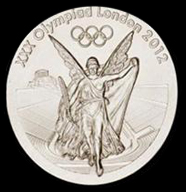
1 Silver
Jevgenij Shuklin
Canoeing
Men’s C-1 200 metres
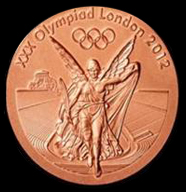
2 Bronze
Aleksandr Kazakevič
Wrestling
Men’s Greco-Roman 74 kg
Evaldas Petrauskas
Boxing
Men’s lightweight
Read also:
The history of Lithuania in the Olympics
- Bookmark :
- Digg
- del.icio.us
- Stumbleupon
- Redit it
- Posted by - (0) Comment
2 Gold
Rūta Meilutytė
Swimming
Women’s 100 m breaststroke
Laura Asadauskaitė
Modern pentathlon
Women's competition
1 Silver
Jevgenij Shuklin
Canoeing
Men's C-1 200 metres
2 Bronze
Aleksandr Kazakevič
Wrestling
Men's Greco-Roman 74 kg
Evaldas Petrauskas
Boxing
Men's lightweight
Read also:
The history of Lithuania in the Olympics
- Bookmark :
- Digg
- del.icio.us
- Stumbleupon
- Redit it
- Posted by - (0) Comment
Lithuania won the last and final Olympic Gold Medal!!
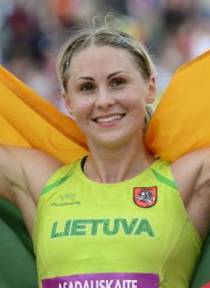
Lithuania's Laura Asadauskaite took gold in the women's modern pentathlon on Sunday, storming to a convincing win in the combined shoot and run finale of the one-day event to bag the final medal of the Games.
Britain's Samantha Murray, who was in fourth place after the first three events of fencing, shooting and riding, took the silver to a deafening roar from the home crowd.
The nail-biting combined finale, in which athletes shoot at five targets before running 1,000 meters, a procedure they repeat three times, is making its Olympic debut in London. The events were previously held separately.
Brazil's Yane Marques, who had gone into the shoot and run on level points with world number one Asadauskaite, stormed to an early lead after the first shoot but fell behind in the running laps around Greenwich Park, eventually taking bronze.
- Bookmark :
- Digg
- del.icio.us
- Stumbleupon
- Redit it
- Posted by - (6) Comment
New CEO of VilNews
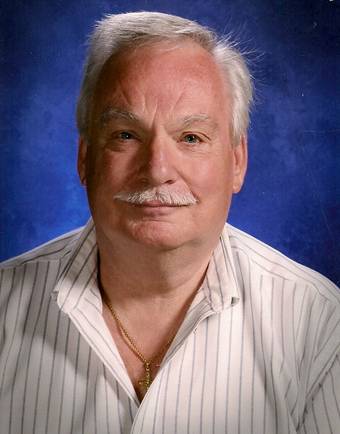
Kestutis J. Eidukonis
Dear readers,
I am today pleased to announce that Mr. Kestutis J. Eidukonis has accepted the position as CEO (Chief Executive Officer), of VilNews. As his family name suggests, Kestutis is of Lithuanian origin, though he has lived most of his life in the USA. Kestutis replaces Mr. Torben Pedersen as CEO for VilNews.
As CEO Kestutis will be responsible for the business aspects of VilNews, whereas I will continue to be responsible for all editorial aspects, as Editor-in-Chief.
Kestutis brings a wealth of experience from his life-long career(s). He can proudly look back at a brilliant career at the US Armed Forces, which brought him to work in many countries and in many roles, including being primary adviser in political and military affairs to the Commander-in-Chief of U.S. Southern Command (Latin and Central America). His successful military career can best be illustrated by the numerous decorations for outstanding performance he has received over the years.
Kestutis’ civil career is not less impressive. He has successfully managed the improvement or turn-around of over 500 small to medium size businesses ranging in annual revenue from $500,000 - $60 million. He has successfully advised several Russian and Eastern European firms endeavoring to do business with Western Countries, and he has worked extensively in Russia, the Baltics and Scandinavia. He has been teaching Entrepreneurship, Audio Video Technology, Electronic Journalism and Media communications, and lectured at AT&T's Global Business Program, East Stroudsburg University, School of the Americas, and the Air Force War College, as well as he has presented seminars on various business topics.
It’s without any doubt that Kestutis’ achievements, credentials, skills and experiences are outstanding and impressive. However, maybe most importantly, during the last couple of months, where I have learned to know Kestutis (also) as a person, I have noticed his strong feelings for Lithuania and Lithuanians, which I’m convinced has played an important role in his decision of accepting the position as CEO of VilNews.
He shares the vision of VilNews, to develop and maintain an e-publication that should be viewed as a good, strong, independent, democratic and outspoken Fourth Estate media in and for Lithuania, be critical of the negative that is still going on in this country, while increasingly trying to find positive stories and interesting angles on events and characteristics from both past and present, and to build bridges between Lithuania and its many extraordinary fine diasporas around the world.
You might claim that his decision was made by his heart rather than by his brain, however, as long as the brain is not completely disconnected, this is not a bad combination.
Let me also take the opportunity to thank Torben Pedersen for all the efforts he has put into VilNews…so far. Torben accepted the role as CEO in connection with the establishment of VilNews, as a temporary measure, however we all know that temporary arrangements, in the worst case, tend to become permanent, and in the best case, take longer than anticipated. I know that Torben is happy that Kestutis has accepted to take over as CEO, not for his own sake, but for the sake of VilNews. Torben is also a character that doesn’t care about titles or positions, however, I am convinced that Torben will work closely together with Kestutis in the future, that they will greatly supplement each other and constitute a great management team.
Please extend a hand and help Kestutis, Torben and I make VilNews a truly successful and wonderful reading experience for all lovers of Lithuania.
Aage Myhre
Editor-in-Chief
- Bookmark :
- Digg
- del.icio.us
- Stumbleupon
- Redit it
- Posted by - (0) Comment
Article 1 of 6
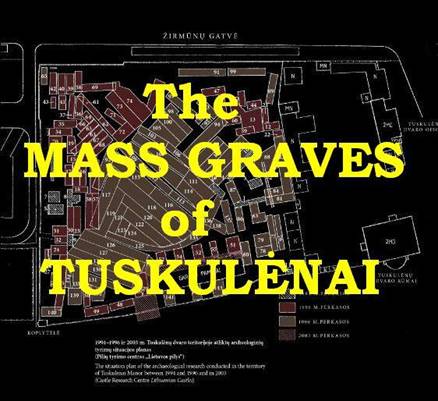
Situation plan created by and property of Castle Research Center Lithuanian Castles. All rights reserved
In 1944, the Soviet Union drove the army of Nazi Germany from the territory of Lithuania and occupied the country for a second time. Repressions against the citizens of our country began without delay. Members of the anti-Soviet armed resistance and underground anti-Soviet organisations, their supporters, farmers, teachers, intelligentsia; politicians, public servants, soldiers, and other officials of former independent Lithuania; and members of the Catholic clergy were arrested, imprisoned, exiled, sentenced to death, and subsequently executed. The convicts were judged by Military Tribunals of internal troops and an Extraordinary Meeting with the State Security Minister of the USSR. Pursuant to the 1926 Criminal Code Article 58 of RSFSR, they imposed penalties which included custody or the death sentence (by shooting). Indictments were based on torture or documents obtained illegally. Between 1944 and 1953, the Extraordinary Meeting convicted at least 11,932 people and the Military Tribunals – at least 22,080.
PART 1 OF 6
CONSEQUENCES OF THE TOTALITARIAN REGIME IN LITHUANIA 1940–1953.
- Bookmark :
- Digg
- del.icio.us
- Stumbleupon
- Redit it
- Posted by - (2) Comment
Article 1 of 6
Situation plan created by and property of Castle Research Center Lithuanian Castles. All rights reserved
In 1944, the Soviet Union drove the army of Nazi Germany from the territory of Lithuania and occupied the country for a second time. Repressions against the citizens of our country began without delay. Members of the anti-Soviet armed resistance and underground anti-Soviet organisations, their supporters, farmers, teachers, intelligentsia; politicians, public servants, soldiers, and other officials of former independent Lithuania; and members of the Catholic clergy were arrested, imprisoned, exiled, sentenced to death, and subsequently executed. The convicts were judged by Military Tribunals of internal troops and an Extraordinary Meeting with the State Security Minister of the USSR. Pursuant to the 1926 Criminal Code Article 58 of RSFSR, they imposed penalties which included custody or the death sentence (by shooting). Indictments were based on torture or documents obtained illegally. Between 1944 and 1953, the Extraordinary Meeting convicted at least 11,932 people and the Military Tribunals – at least 22,080.
CONSEQUENCES OF THE TOTALITARIAN REGIME
IN LITHUANIA 1940–1953.
In 1939, the Soviet Union and Nazi Germany signed a secret agreement (the Molotov–Ribbentrop Pact) for the division of Central and Eastern Europe. Lithuania fell under the sphere of influence of the Soviet Union, as a result, on 15 June 1940 Lithuania was occupied and subsequently annexed by the USSR. In order to carry out the sovietisation of the country, to break and destroy it, physical and spiritual destruction of the nation took place. The scheme was prepared by the top Communist Party officials of the Soviet Union and implemented by the repressive NKVD–MVD and NKGB–MGB structures and subordinate courts – Military Tribunals of the USSR NKVD troops and the non-judicial authority, the Extraordinary Meeting of the People’s Commissariat of Internal Affairs of the USSR. These institutions carried out the instructions of Communist Party officials by surveilling, arresting, investigating, imprisoning, and killing “traitors of the motherland”. During the first Soviet occupation in 1940, 23,000 Lithuanian citizens were arrested, executed, or exiled.
From the end of June 1941, when the country was occupied by the military forces of Nazi Germany until 1944, nearly 30,000 Lithuanian citizens were arrested and deported to concentration camps, another 60,000 were taken for forced labour in Germany, and 240,000 were killed, approximately 200,000 of them Jews.
In 1944, the Soviet Union drove the army of Nazi Germany from the territory of Lithuania and occupied the country for a second time. Repressions against the citizens of our country began without delay. Members of the anti-Soviet armed resistance and underground anti-Soviet organisations, their supporters, farmers, teachers, intelligentsia; politicians, public servants, soldiers, and other officials of former independent Lithuania; and members of the Catholic clergy were arrested, imprisoned, exiled, sentenced to death, and subsequently executed. The convicts were judged by Military Tribunals of internal troops and an Extraordinary Meeting with the State Security Minister of the USSR. Pursuant to the 1926 Criminal Code Article 58 of RSFSR, they imposed penalties which included custody or the death sentence (by shooting). Indictments were based on torture or documents obtained illegally. Between 1944 and 1953, the Extraordinary Meeting convicted at least 11,932 people and the Military Tribunals – at least 22,080.
Between 1944 and 1953, around 186,000 people were arrested and imprisoned, of which 143,000 were imprisoned in GULAG camps, 118,000 – exiled, and nearly 21,000 members of the armed anti-Soviet resistance and their supporters perished.
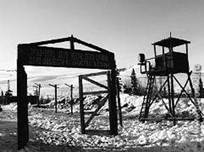
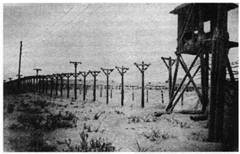
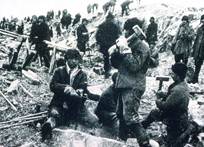
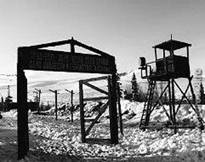
Soviet Gulag camps
Editors note - The Gulag (Russian: ГУЛаг, tran. GULag) was the government agency that administered the main Soviet forced labor camp systems. GULag is the acronym for Chief Administration of Corrective Labor Camps and Colonies (Russian: Гла́вное управле́ние исправи́тельно-трудовы́х лагере́й и коло́ний, tran. Glavnoye upravlyeniye ispravityel'no-trudovih lagyeryey i koloniy) of the NKVD. It was officially created on April 25, 1930 and dissolved on January 13, 1960.
Prior to the collapse of the Soviet Union, the procedure for carrying out the most severe sentence – death by shooting – as well as the place of burial were classified as a state secret. In 1990, after the re-establishment of independence in Lithuania, it became known an appropriate burial place for the bodies of the executed convicts. General-Lieutenant Ivan Tkachenko, the person designated by the NKVD–NKGB for the Lithuanian SSR, had in 1944 selected the grounds of the former Tuskulėnai Manor as the site that complied with all the security requirements of the time. In this 1.3 ha territory near the city centre surrounded by a high brick and timber fence it was easy to safely hide the burial sites of the bodies. The MGB documents from 1952 specify that Tuskulėnai was selected “due to the impossibility of driving outside the city limits at night as the situation in the Lithuanian SSR was extremely tense”. There was still armed anti-Soviet resistance and therefore there was fear of clashes with freedom fighters while moving the corpses for burial. Another important circumstance was the experience of 1941 when, at the outset of the war between Germany and the USSR, retreating security agents did not have time and did not manage to conceal the execution sites. In summer and autumn 1941, graves of people executed in the NKVD internal prison were identified in Kaunas Petrašiūnai Cemetery.
This is the translation of a certificate dated 23 June 1952 by Lieutenant-Colonel Pavel Grishin, head of the Lithuanian SSR MGB Division, about the reasons why the grounds of the former Tuskulėnai Manor were selected in 1944 for burying the bodies of people executed in the Lithuanian SSR NKGB–MGB internal prison between 1944 and 1947. The place name Tuskulėnai is not mentioned in the certificate.
|
79 Certificate From the time the Lithuanian SSR was liberated from the German fascist invaders until 1947 when, following the order of the Presidium of the Supreme Council of the USSR, the death penalty was abolished, those who were shot were buried in the territory of a former private estate of the style of the country residence within Vilnius city limits. The location is marked with the arbitrary sign (+) on the enclosed city plan. Around 1.000 people are buried in the territory of this estate. Burial within the city limits and the use of the said estate for this purpose was sanctioned, due to the extremely tense situation in the republic, by Lieutenant- General Tkachenko, the person formerly designated by the USSR MVD–MGB for the Lithuanian SSR following the request by Lieutenant-Colonel Kharchenko, former head of the Lithuanian SSR MGB Division A. Two residential buildings of the estate were passed to DOSAAF in 1949, therefore the burial site remains without the necessary protection and this shortcoming has not been eliminated since. In order to eliminate this shortcoming, it is necessary to build a small summer house on the said part of the estate and accommodate one of our employees in it. Head of the Lithuanian SSR MGB Division A 23 June 1952 The said certificate was issued on the instruction of the Minister Major- General Kaldanov on his arrival to the Lithuanian SSR and returned on his departure from the Lithuanian SSR. Head of the Lithuanian SSR MGB Division A 14/07/1952 (Grishin) /Signature/
Translation property of the Memorial Complex of the Tuskulėnai Peace Park. All rights reserved. |
This is the translation of a letter dated 19 February 1952 from Lieutenant-Colonel Pavel Grishin, head of the Lithuanian SSR MGB Division, to Major-General Arkady Gertsovsky, head of the USSR MGB Division A, regarding the opportunity to destroy the remains of the bodies on the grounds of Tuskulėnai Manor using chemical products.
|
K Series STRICTLY PRIVATE 59 Division A 19 February 1952 10/7/1-3314 /Signature/ To the HEAD OF DIVISION A of USSR MGB Major-General GERTSOVSKY Moscow In 1944, i.e. prior to my arrival to work in Lithuania, the location for the burial of those who received the highest sentence was selected within Vilnius city limits due to the impossibility of driving outside the city limits at night as the situation in the Lithuanian SSR was extremely tense. We were to use this site until 1947, i.e. when, following the order of the Presidium of the Supreme Council of the USSR, the death penalty was abolished and this place has not been used since. Today, there is an opportunity to liquidate this burial site, but we cannot do it, i.e. evacuate the remains to another location, due to the cold weather which recurs each winter. For this reason, could you clarify the possibility of liquidating this location using chemical products, specifically so as not to attract the attention of outsiders and how could this be taken care of, i.e. how would we carry it out.
Head of the Lithuanian SSR MGB Division A Lieutenant-Colonel /Signature/ (Grishin) 2 copies printed 1 – addressee 2 – __________ Executed by Grishin Printed by Dmitriyeva /Handwritten note: Note: Lieutenant-Colonel Vorobev, head of Division A of the Lithuanian SSR MGB transmitted via a HF (high frequency) connection that the remains cannot be evacuated and it is categorically forbidden to do so. Additional notification is required for elimination of the burial site of the remains using chemical products. 05/03/1952 /Signature/
|
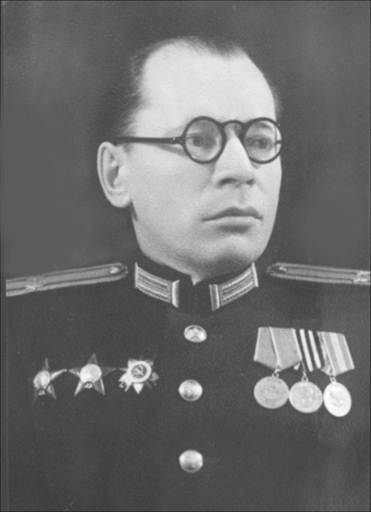
Photo property of the Lithuanian Special Archives. All rights reserved.
Lieutenant-Colonel Pavel Grishin
People executed in the NKGB–MGB internal prison and participants of the anti-Soviet underground movement tortured or killed during NKVD counterinsurgency operations in Vilnius and its environs, were buried within the grounds of Tuskulėnai until the late spring of 1947 when the death penalty was abolished in the USSR. At the beginning of 1950, the Presidium of the Supreme Council of the USSR passed the decree “On the employment of the death penalty for traitors of the motherland, spies, and saboteurs-subversives”, as a result of which the death penalty, pursuant to the 1926 Criminal Code Article 58 of RSFSR, was re-instated and the execution resumed. Most were carried out in the same NKGB–MGB internal prison as before and continued until 1961. Executions continued after 1961 but they were not carried out pursuant to the 1926 Criminal Code Article 58 of RSFSR. You would need to look at each and every individual execution that took place after 1961 to determine on what basis they were carried out.
Today, the burial sites of those executed after the re-instatement of the death penalty,
still remain a secret.
Tuskulėnai is the only known location where the bodies of those executed in Vilnius NKGB–MGB internal prison were buried, and therefore it has become one of the symbols commemorating the victims of the Soviet terror.
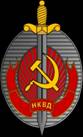
MGB – rus. МГБ, Министерство государственной безопасности – Lith. Valstybės saugumo ministerija – Ministry of State Security [of the USSR]
MVD – rus. МВД, Министерство внутренних дел – Lith. Vidaus reikalų ministerija – Ministry of Internal Affairs [of the USSR]
NKGB – rus. НКГБ, Народный Комиссариат Государственной Безопасности – Lith. Valstybės saugumo liaudies komisariatas – People’s Commissariat for Internal Affairs [of the USSR]
NKVD – rus. НКВД, Народный комиссариат внутренних дел – Lith. Vidaus reikalų liaudies komisariatas – People’s Commissariat of Internal Affairs [of the USSR]
Lithuanian SSR – Lithuanian Soviet Socialist Republic
RSFSR – the Russian Soviet Federal Socialist Republic
USSR – Union of Soviet Socialist Republics
Bronius Eiva was a Lithuanian partisan leader. He was arrested 8 September 1944. He is one of the many that between 28 September 1944 and 16 April 1947 that were executed in the NKGB–MGB internal prison in Vilnius and then buried in the mass graves at Tuskulėnai.
This is a translation of excerpts from the letter of farewell Bronius Eiva wrote to his wife, dated September 1944, written from the prison of Ukmergės People’s Commissariat for Internal Affairs, where severely wounded, he was being investigated after his arrest on 8 September 1944.
“This is my last letter. I shall die and you shall live. Please raise our precious daughter Rūtelė-Regina, and when she grows up please tell her I loved her…I lay wounded in the right leg. But it is not the pain that bothers me most, it is the sorrow for you…Please find out when I was shot or hanged and where they bury me. Dig me up and take me to Šeta cemetery.”
TUSKULĖNAI MASS GRAVES
Starting in autumn 1944, death penalties passed by Military Tribunals of the USSR and the Extraordinary Meeting were carried out in the NKGB–MGB internal prison in Vilnius (now – Gedimino pr. 40 / Aukų g. 2A). Between 28 September 1944 and 16 April 1947, the death penalty was carried out on 767 people; 613 of them were sentenced under Articles 58(I)(a) and 58(I)(b) ‘For treason’ of the 1926 Criminal Code of the RSFSR (Статья 58 Уголовного Кодекса РСФСР/вариант 1926 года). Under these articles, people were charged for actions which sabotage the military power of the USSR, its independence as a country, and sanctity of its territory.
In 1944, the death penalty was carried out on 45 convicts
In 1945 – on 479 convicts
In 1946 – on 185 convicts
In 1947 – on 58 convicts.
The largest number of executions, 45 people, was carried out on 21 March 1945. After the executions, the bodies were secretly buried within the grounds of Tuskulėnai Manor.
The convicts included;
Participants of the anti-Soviet movement
Participants of the uprising of 23 June 1941
Fighters of the Polish Armia Krajowa
People charged with war crimes
People who served in civil or military structures of Nazi Germany
Deserters from the Red Army
People charged with criminal offences
The death penalty was carried out on people of fifteen different nationalities, the majority being Lithuanians and included among others Russians, Poles, Germans, Belarusians, Latvians, Ukrainians, Jews, etc.
The territory of the Tuskulėnai Manor served as a secret mass grave until 26 May 1947 when, following the order of the Presidium of the Supreme Council of the USSR, the death penalty was abolished and replaced with 25 years imprisonment at a penitentiary establishment (work camps). On 12 January 1950, the Presidium of the Supreme Council of the USSR passed a decree re-instating the death penalty.
Between October 1950 and July 1952, 182 people sentenced to death were executed at Vilnius NKGB–MGB internal prison. Their place of burial is still not known.
During the time of the Soviet occupation, the territory of the former Tuskulėnai Manor was vigilantly watched over by NKGB–MGB–KGB officials. Until the early fifties, the territory was fenced and guarded. In 1990, after the re-establishment of independence in Lithuania, the archives became accessible and witnesses could tell their stories, as a result of which the secret of this location was revealed. At the beginning of 1994, the State Security Department of the Republic of Lithuania identified a mass grave within the grounds of Tuskulėnai Manor of people sentenced to death by Soviet repressive structures. An archaeological investigation was conducted and bodies were exhumed. Forty-five graves with 724 bodies were found.
Forensic medicine experts identified that 666 victims had gunshot wounds. 506 of them were killed with one shot to the head, 111 – two shots, 31 – three shots, 13 – four shots, 4 – five shots and 1 – six shots
The skulls of 239 victims had signs of gunshot wounds and other forms of physical violence. 122 of these had marks inflicted by a blunt instrument, 112 – had signs of cuts and stabbing and 5 – had signs of deep cuts
In 2004, after the remains of the bodies exhumed were transferred to the chapel-columbarium, the place was officially opened to public on All Soul’s Day, November 2.
KGB – rus. КГБ, Комитет Государственной Безопасности – Lith. Valstybės saugumo komitetas – Committee for State Security [of the USSR]
MGB – rus. МГБ, Министерство государственной безопасности – Lith. Valstybės saugumo ministerija – Ministry of State Security [of the USSR]
NKGB – rus. НКГБ, Народный Комиссариат Государственной Безопасности – Lith. Valstybės saugumo liaudies komisariatas – People’s Commissariat for Internal Affairs [of the USSR]
RSFSR – the Russian Soviet Federal Socialist Republic
USSR – Union of Soviet Socialist Republics
Scheme of archeological research
The situation plan of the archaeological excavations of the Tuskulėnai Manor between 1994 and 1996 and in 2003. (Created by the Castle Research Centre Lithuanian Castles)
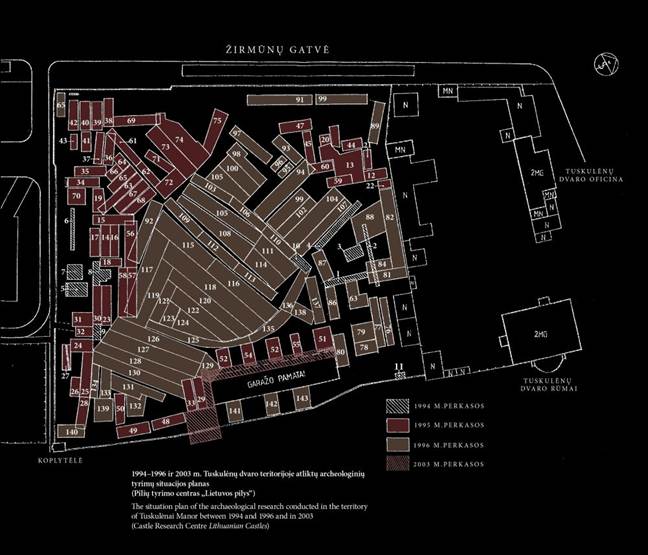
Situaition plan created by and property of Castle Research Center Lithuanian Castles. All rights reserved
Note - The Lithuanian word “PERKASOS” is TRENCHES
Look for the next article
Part 2 of 6
The “PROCESS”
EXECUTIONS BETWEEN 1944 AND 1947
Dear readers
WE NEED YOUR HELP
Dear VilNews readers, we need your help. As we have said, the victims that were executed in the NKGB–MGB internal prison in between 28 September 1944 and 16 April 1947 were buried in secret mass graves in the territory of the Tuskulėnai Manor. These victims have been found, their bodies recovered, given the dignified burial they never received and their souls have been blessed by a Holy person of the religion the worshipped.
26 May 1947, following the order of the Presidium of the Supreme Council of the USSR, the death penalty was abolished.
On 12 January 1950, the Presidium of the Supreme Council of the USSR passed a decree re-instating the death penalty. Between October 1950 and July 1952, 182 people sentenced to death were executed at Vilnius NKGB–MGB internal prison.
Their place of burial is still not known.
After July 1952 to 1961 executions continued pursuant to the 1926 Criminal Code Article 58 of RSFSR.
The burial place of these victims is still unknown.
The 1926 Criminal Code Article 58 of RSFSR was terminated in 1961 but executions continued.
The burial place of these victims is still unknown
Dear readers we would like to find where these people are buried, recover their bodies, give them the dignified burial they never received and have them blessed by a Holy person of the Religion they worshipped.
This is where we need your help. The NKVD and NKGB–MGB officers that oversaw these executions are now all dead. What ever records and documents which still exist are most likely locked away in a vault somewhere in the Russian Federation and it would seem highly unlikely that anyone in the Russian Federation would be kind enough allow access to these documents and records so that we could find out the location of the burial sites or simply tell us where these people are buried.
We know that there are people out there that know the location of some of these burial sites. Maybe it is a person that processed the documents, maybe it is some one that was just a rank and file soldier that was ordered to drive the truck that transported the bodies or was ordered to dig the trenches for the graves, maybe it is a colleague of one of these people or maybe it is the bartender that heard some of these people talk of it one night. The possibilities are endless.
Maybe none of these people with first hand knowledge of the burial sites are still alive. In that case we are sure that there are people out there with second hand or even third hand information. To have first hand knowledge of these executions would weigh very heavily on any civilized person’s heart and it is very possible that after carrying this weight inside them for many years they finally felt the need to free themselves from this burden they carried inside and told some one.
If you have any information at all, any information of any kind – Please tell us.
It is not important to us how you know, who it was, what they did or who told you.
None of this is important.
The only thing that is important is that we find where the executed people are buried.
This is all we care about.
What we want to do is best explained in the words from Bronius Eiva’s farewell letter he wrote to his wife while waiting his execution while in the prison of Ukmergės Peoples Commissariat for Internal Affairs.
“Please find out when I was shot or hanged and where they bury me.
Dig me up and take me to Šeta cemetary.”
This is all we want to do – Find where they are buried, dig them up and then give them a proper burial but we can only do this with your help.
All information will be kept strictly confidential
We are not concerned with who or what
We are only concerned with where these people are buried
If you have any information of any kind please contact:
The Memorial Complex of Tuskulenai Peace Park
Žirmūnų Gatvė 1F,
LT-09239, Vilnius
Lithuania
Telephone: +370 5 275 1223
E-mail. tuskulenai@genocid.lt
You can also contact me at vkvilnius-tuskulenai@yahoo.com
We sincerely thank you for your help.
Su pagarbe
Vincas Karnila
- Bookmark :
- Digg
- del.icio.us
- Stumbleupon
- Redit it

OPINIONS
Have your say. Send to:
editor@VilNews.com

Ph. D., Chicago
A wave of unity sweeps the international Lithuanian community on March 11th every year as Lithuanians celebrated the anniversary of the Lithuanian Parliament's declaration of independence from the Soviet Union in 1990. However, the sense of national unity engendered by the celebration could be short-lived.
Human beings have a strong tendency to overgeneralize and succumb to stereotypical us-them distinctions that can shatter even the strongest bonds. We need only search the internet to find examples of divisive thinking at work:
- "Those who fled Lithuania during World II were cowards -- and now they come back, flaunt their wealth, and tell us 'true Lithuanians' how to live."
- "Lithuanians who work abroad have abandoned their homeland and should be deprived of their Lithuanian citizenship."


In Lithuania Christmas Eve is a family event and the New Year's Eve a great party with friends!
Lithuanian say "Kaip sutiksi naujus metus, taip juos ir praleisi" (the way you'll meet the new year is the way you will spend it). So everyone is trying to spend New Year's Eve with friend and have as much fun as possible.
Lithuanian New Year's traditions are very similar to those in other countries, and actually were similar since many years ago. Also, the traditional Lithuanian New Years Eve party was very similar to other big celebrations throughout the year.
The New Year's Eve table is quite similar to the Christmas Eve table, but without straws under the tablecloth, and now including meat dishes. A tradition that definitely hasn't changes is that everybody is trying not to fell asleep before midnight. It was said that if you oversleep the midnight point you will be lazy all the upcoming year. People were also trying to get up early on the first day of the new year, because waking up late also meant a very lazy and unfortunate year.
During the New Year celebration people were dancing, singing, playing games and doing magic to guess the future. People didn't drink much of alcohol, especially was that the case for women.
Here are some advices from elders:
- During the New Year, be very nice and listen to relatives - what you are during New Year Eve, you will be throughout the year.
- During to the New Year Eve, try not to fall, because if this happens, next year you will be unhappy.
- If in the start of the New Year, the first news are good - then the year will be successful. If not - the year will be problematic.
* If New Year's night is cold and starry - look forward to a good summer!
* If the during New Year Eve trees are covered with frost - then it will be a good year. If it is wet weather on New Year's Eve, one can expect a year where many will die and dangerous epidemics occur.
* If the first day of the new year is snowy - the upcoming year will see many young people die. If the night is snowy - mostly old people will die.
* If the New Year time is cold - then Easter will be warm.
* If during New Year there are a lot of birds in your homestead - then all year around there will be many guests and the year will be fun.

Christmas greetings
from Vilnius
and epic battle for the
future
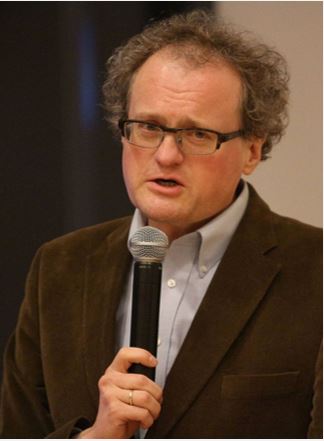
Philosopher, political theorist, historian of
ideas, social analyst, and political
commentator
Ukraine was and continues to be perceived by the EU political class as a sort of grey zone with its immense potential and possibilities for the future, yet deeply embedded and trapped in No Man's Land with all of its troubled past, post-Soviet traumas, ambiguities, insecurities, corruption, social divisions, and despair. Why worry for what has yet to emerge as a new actor of world history in terms of nation-building, European identity, and deeper commitments to transparency and free market economy?
Right? Wrong. No matter how troubled Ukraine's economic and political reality could be, the country has already passed the point of no return. Even if Vladimir Putin retains his leverage of power to blackmail Ukraine and the West in terms of Ukraine's zero chances to accede to NATO due to the problems of territorial integrity, occupation and annexation of Crimea, and mayhem or a frozen conflict in the Donbas region, Ukraine will never return to Russia's zone of influence. It could be deprived of the chances to join NATO or the EU in the coming years or decades, yet there are no forces on earth to make present Ukraine part of the Eurasia project fostered by Putin.
want to learn about the
new, scary propaganda
war between Russia,
The West and the
Baltic States!
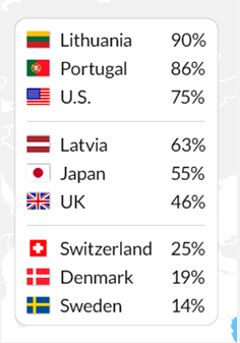
believe their government
is corrupt
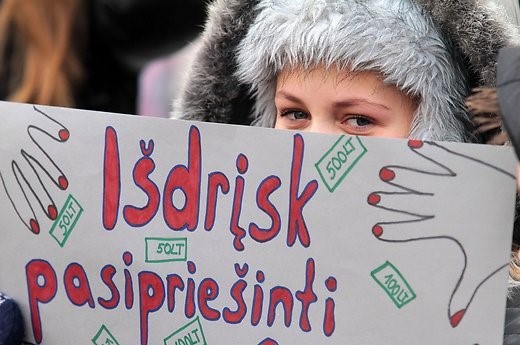
students say no to
bribes for doctors
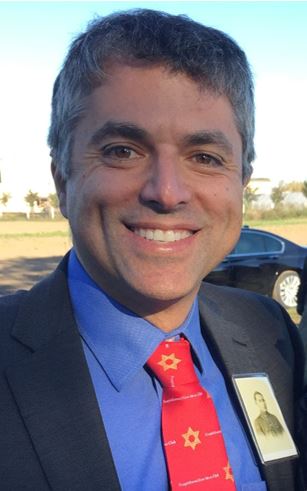
During Soviet times, government was administered for the people in control, not for the local population, court decisions were decreed, they were not the administration of justice, and academia was the domain of ideologues. 25 years of freedom and openness should have put those bad experiences behind Lithuania, but that is not so.
Today, it is a matter of expectation that court pronouncements will be governed by ideological dictates. Few, if any Lithuanians expect real justice to be effected. For foreign companies, doing business in Lithuania is almost impossible in a situation where business people do not expect rule of law, so, surely Government would be a refuge of competence?
Lithuanian Government has not emerged from Soviet styles. In an attempt to devolve power, Lithuania has created a myriad of fiefdoms of power, each speaking in the name of the Government, each its own centralized power base of ideology.

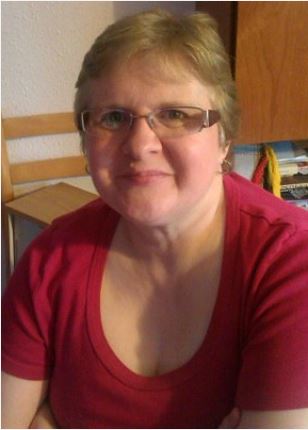
Chepstow, Wales
Doesn't that sound suspiciously like Lithuania? Ah, but I didn't mention the mountains of Snowdonia, which would give the game away.
I'm talking about Wales, that part of the UK which Lithuanians used to call "Valija", but later named "Velsas" (why?). Wales, the nation which has welcomed two Lithuanian heads of state to its shores - firstly Professor Vytautas Landsbergis, who has paid several visits and, more recently, President Dalia Grybauskaitė who attended the 2014 NATO summit which was held in Newport, South Wales.
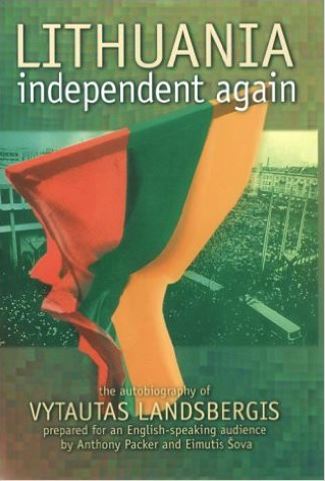
ENGLISH VERSION OF THE
AUTOBIOGRAPHY OF VYTAUTAS LANDSBERGIS.
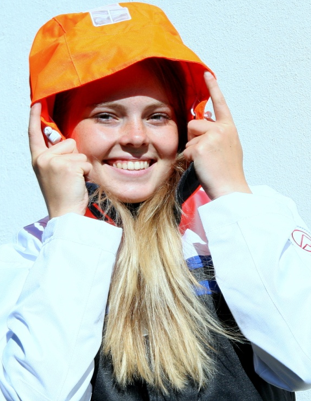
Although Lithuanian activities have thinned over the decades as that postwar generation died out, the Lithuanian Martyrs' parish hall is crowded with many, many hundreds of visitors who come to the Lithuanian cemetery for All Souls' Day. Similarly, the Franciscan parish has standing room only for Christmas Eve mass.
Although I am firmly embedded in the literary culture of Canada, my themes are usually Lithuanian, and I'll be in Kaunas and Vilnius in mid-November 2015 to give talks about the Lithuanian translations of my novels and short stories, which I write in English.
If you have the Lithuanian language, come by to one of the talks listed in the links below. And if you don't, you can read more about my work at
www.anatanassileika.com
http://www.vdu.lt/lt/rasytojas-antanas-sileika-pristatys-savo-kuryba/ https://leu.lt/lt/lf/lf_naujienos/kvieciame-i-rasytojo-59hc.html
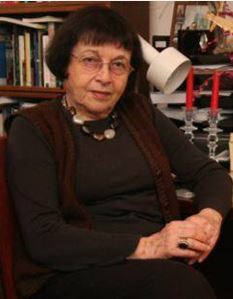
"My love and best wishes to all. As long as VilNews exists, there is hope for the future,"" she writes.
Irena Veisaite means very much for our publication, and we do hereby thank her for the support and wise commitment she always shows.
You can read our interview with her
Facing a new reality
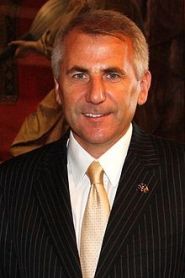
Dear readers of VilNews,
For a number of years, the EU and Russia had assumed the existence of a strategic partnership, based on the convergence of values, economic integration and increasingly open markets and a modernisation agenda for society.
Our agenda was positive and ambitious. We looked at Russia as a country ready to converge with "European values", a country likely to embrace both the basic principles of democratic government and a liberal concept of the world order. It was believed this would bring our relations to a new level, covering the whole spectrum of the EU's strategic relationship with Russia.
The likelihood of Putin
invading Lithuania
.jpg "lithuania today")
Founding Director at Summer Literary Seminars
Are all Lithuanian energy
problems now resolved?
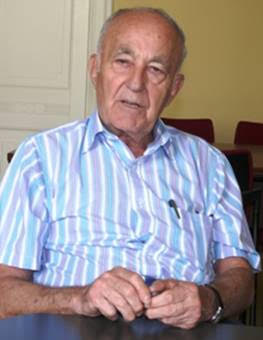
Lithuania as a country does not have significant energy resources. Energy consuming infrastructure after WWII was small and totally supported by energy imports from Russia.
First nuclear reactor begins power generation at Ignalina in 1983, the second reactor in 1987. Iganlina generates enough electricity to cover Lithuania's needs and about 50%.for export. As, prerequisite for membership in EU, Ignalina ceases all nuclear power generation in 2009
The Klaipėda Sea terminal begins Russia's oil export operations in 1959 and imports in 1994.
Mazeikiu Nafta (current ORLEAN Lietuva) begins operation of oil refinery in 1980.
Have Lithuanian ties across
the Baltic Sea become
stronger in recent years?
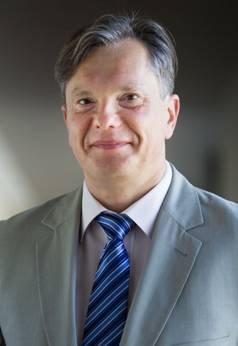
The two decades that have passed since regaining Lithuania's independence can be described as a "building boom". From the wreckage of a captive Soviet republic, a generation of Lithuanians have built a modern European state, and are now helping construct a Nordic-Baltic community replete with institutions intended to promote political coordination and foster a trans-Baltic regional identity. Indeed, a "Nordic-Baltic community" - I will explain later in my text the meaning of this catch-phrase.
Since the restoration of Lithuania's independence 25 years ago, we have continuously felt a strong support from Nordic countries. Nordics in particular were among the countries supporting Lithuania's and Baltic States' striving towards independence. Take example of Iceland, country which recognized Lithuania in February of 1991, well in advance of other countries. Yet another example - Swedish Ambassador was the first ambassador accredited to Lithuania in 1991. The other countries followed suit. When we restored our statehood, Nordic Countries became champions in promoting Baltic integration into Euro-Atlantic institutions. To large degree thanks Nordic Countries, massive transformations occurred in Lithuania since then, Lithuania became fully-fledged member of the EU and NATO, and we joined the Eurozone on 1 January 2015.
Have you heard about the
South African "Pencil Test"?
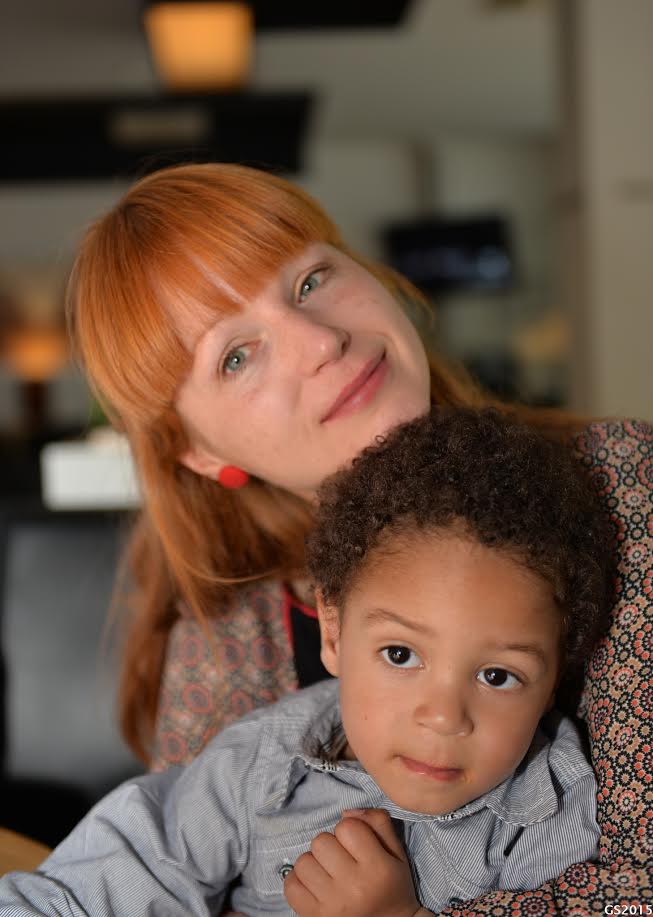
But that is exactly what happened to me when I came back from South Africa. I will tell you how.
VilNews e-magazine is published in Vilnius, Lithuania. Editor-in-Chief: Mr. Aage Myhre. Inquires to the editors: editor@VilNews.com.
Code of Ethics: See Section 2 – about VilNews. VilNews is not responsible for content on external links/web pages.
HOW TO ADVERTISE IN VILNEWS.
All content is copyrighted © 2011. UAB ‘VilNews’.