
THE VOICE OF INTERNATIONAL LITHUANIA

|
VilNews has its own Google archive! Type a word in the above search box to find any article.
You can also follow us on Facebook. We have two different pages. Click to open and join.
 Click on the buttons to open and read each of VilNews' 18 sub-sections Click on the buttons to open and read each of VilNews' 18 sub-sections  |

|


Archive for August, 2012
- Posted by - (0) Comment
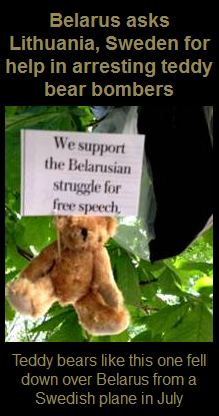
Belarusian state security has asked Lithuania and Sweden to help it apprehend the "teddy bear bombers" and put them on trial in Minsk for violating both Belarusian and Nato airspace. Meanwhile, the EU is to hold an emergency meeting after all of Sweden's diplomats were asked on August 8 to leave Minsk.
Belarus spent July denying the incident, which saw Minsk and its surroundings showered with hundreds of teddy bears clutching placards calling for human rights to be respected by a Swedish public relations firm, Studio Total, that specializes in revolutionary advertisements. However, earlier in August, the government of President Alexander Lukashenko changed its tune, firing two high-ranking military officials for allowing the plane - which took off from Lithuania piloted by two Swedes - to penetrate the former Soviet air defences undetected. Lukashenko also told the incoming border guard chief not to hesitate to use weapons to prevent violations of Belarusian air space in future.
According to Belapan, the Belarusian KGB's PR chief Alexander Antanovich said that a request has been sent to Vilnius and Stockholm requesting assistance in the investigation of a violation of the Belarusian border by the airplane on July 4. Antanovich added that the Belarusian law enforcement agencies are asking the two countries for assistance to bring the perpetrators to Minsk so that an "objective investigation of the case" can take place.
Apparently without irony, the KGB man added that Minsk is working on the grounds of international law and existing procedures, and on the understanding that the unauthorized flight violated Nato air space as well as that of Belarus. Asked whether the KGB might accept an investigation by the Swedish authorities into the identity of the pilots, Antanovich remarked "an identification parade on television is not possible."
Last week, Minsk announced that it has declined to renew the Swedish ambassador's accreditation, prompting Sweden to respond with anger. Foreign Minister Carl Bildt accused the Lukashenko regime of having "seriously violated the standards of international relations" and in response would expel two Belarusian diplomats and the new Belarusian ambassador "would not be welcome" in Sweden.
On August 8, the Belarusian foreign ministry said it is to withdraw all embassy staff from Stockholm, and asked Sweden to pull its diplomats out of Minsk by August 30, reports RIA Novosti. That has prompted an emergency meeting of EU ambassadors in Brussels set for August 10.
- Bookmark :
- Digg
- del.icio.us
- Stumbleupon
- Redit it

Swedes slam Belarus over teddy bear arrests, calling Pres. Alexander Lukashenko an ‘armed clown’
- Posted by - (0) Comment

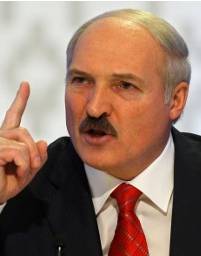
The founder of the Swedish PR firm which dropped hundreds of pro-free speech teddy bears over Belarus has mocked president Alexander Lukashenko as an "armed clown" following the arrest of people suspected of aiding in the pro-democracy stunt.
- Bookmark :
- Digg
- del.icio.us
- Stumbleupon
- Redit it

- Posted by - (0) Comment
- Bookmark :
- Digg
- del.icio.us
- Stumbleupon
- Redit it

- Posted by - (0) Comment
Lithuania may delay
its euro-adoption
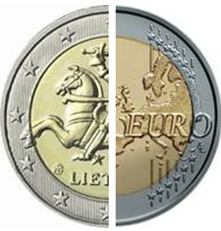
SWEDBANK: Lithuania may delay its euro-adoption goal beyond 2014 because the currency area’s debt crisis is worsening and its government lacks “political determination” before a parliamentary ballot.
Lithuania may be wary of providing aid to ailing euro-region members such as Greece, Swedbank economists Nerijus Maciulis and Lija Strasuna says in an e-mailed report. While it has a good chance of meeting entry criteria by next April, neighbouring Latvia has stronger political resolve to adopt the currency the following year, they write.
“There seems to be a more unanimous agreement to meet Maastricht criteria for the sake of stability, but not necessarily in order to adopt the euro immediately” in Lithuania, Swedbank says. “There’s a probability Lithuania won’t apply formally for euro adoption in 2014 -– much of this will depend on election results in October, as well as the euro area’s progress toward a sustainable solution.”
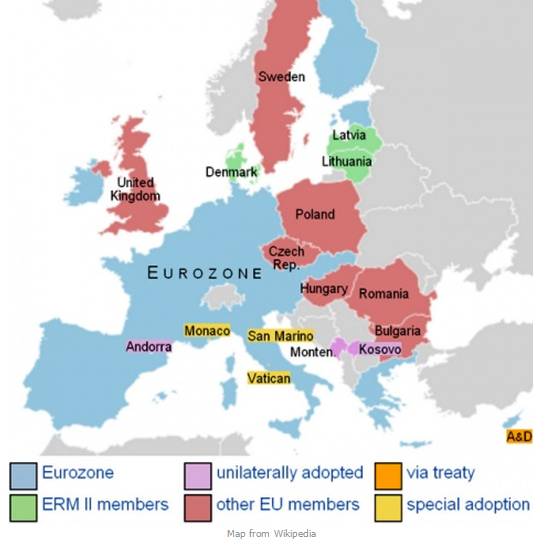
Latvia and Lithuania are likely to meet the Maastricht criteria in early 2013 and were both expected to join the euro zone in 2014.
Thus, by 2014, the two countries may be able to take full advantage of the benefits offered by the membership in Economic and Monetary Union, according to the Swedbank economists.
According to Chief Economist at Swedbank Nerijus Maciulis, Lithuanian politicians avoid making decisions and even discussing the subject because of the recent fall of the euro popularity and the public's trust in the future of the single currency.
However, the economist points out that the risk of the euro future is not high enough to forget a long-term strategic goal of Lithuania.
The passive attitude of the responsible Lithuanian authorities is also reflected in the survey of the Eurobarometer which reveals that 60% of residents in Lithuania say that they do not get enough information about the euro.
However, the study conducted by the European Commission shows that 44% of population support the euro adoption and 5% have not decided yet. Maciulis says that the euro benefits are tangible and easily measured.
"There seems to be a more unanimous agreement to meet Maastricht criteria for the sake of stability, but not necessarily in order to adopt the euro immediately" in Lithuania, Swedbank
economists Nerijus Maciulis and Lija Strasuna said in an e-mailed report.
Lithuania and Latvia are next in line to join the 17-nation Euro Area, while other Eastern European nations such as Poland and the Czech Republic show slow preparations as the debt crisis deepens.
In 2006, Lithuania became the only nation rejected for euro adoption after it missed an inflation target by 0.1 percentage point.
Estonia became the 17th member of the Euro Area in 2011.
- Bookmark :
- Digg
- del.icio.us
- Stumbleupon
- Redit it

- Posted by - (0) Comment
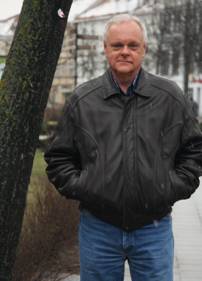
Vin Karnila, Associate Editor
Today:
CONSEQUENCES OF THE TOTALITARIAN REGIME IN LITHUANIA 1940–1953
My greatest hope is that this story will bring out the information that still to this day is unknown: Where are the people that were executed after 1950 buried?
Look for the first part of our six part story which will be out in a few days…
_________________________________
From
 VilNews Forum
Carol Luschas
Thanks for posting this on the forum! These victims need their story heard and remembered!
_________________________________

Arunas Teiserskis
The Tuskulenai memorial is to commemorate the victims of Soviet crimes. It is a fact, that majority of the people killed in Soviet repressions were innocent men and women, who were simply deemed as "dangerous" for the imposition of Soviet rule: community leaders, clergy, other people, who were generally called a national elite or other persons, who sometimes might have even been accused by jealous neighbours for very personal matters, but without proper legal procedures having no chance to defend their innocence.
There were, of course, some who participated in LAF* actions. But make no mistake - if the person was clearly known for participation in crimes against humanity, he or she was given a very public process, just to present him as an evil to the society and make Soviets look good.
The Soviets put a lot of emphasis on propaganda after all. The ones killed by Soviets silently behind closed door there mainly people, which Soviets struggled to present as evil.
There is no denial, that some victims have been active LAF members and have participated in Holocaust, but deeming ALL victims as "a bunch of Jew murderers", makes you very similar to the people who justify the Holocaust telling that Jewish were very supportive in Soviet occupation and some of them even actively participated in deportations just before German attack on the Soviet Union.
We all agree that some very few Jews who entered Soviet NKVD (alongside leftist Lithuanians as well) doesn't justify pogroms on all Jews during WWII, so we should equally agree that some very few Lithuanians, who actively supported Nazism and committed crimes against humanity, doesn't justify Soviet terror after WWII on Lithuanian nation, particularly it's national elite, in order to destroy that nation as separate entity and assimilate it into uniform Soviet nation.
* Lithuanian Activist Front or LAF (Lithuanian: Lietuvos Aktyvistų Frontas) was a short-lived resistance organization established in 1940 after Lithuania was occupied by the Soviet Union. The goal of the organization was to liberate Lithuania and re-establish its independence. It planned and executed the June Uprising and established the short-lived Provisional Government of Lithuania. The Government self-disbanded and LAF was banned by Nazi authorities in September 1941. LAF remains rather controversial due to its anti-Semitic and anti-Polish views.
- Bookmark :
- Digg
- del.icio.us
- Stumbleupon
- Redit it

- Posted by - (0) Comment
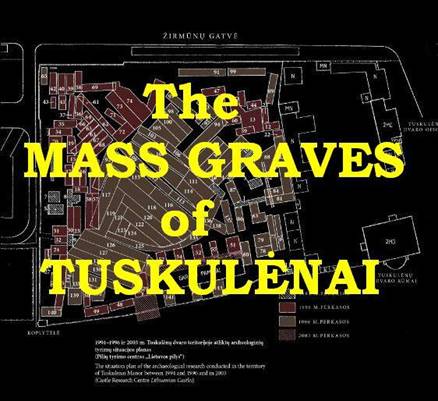
Situation plan created by and property of Castle Research Center Lithuanian Castles. All rights reserved
Between 28 September 1944 and 16 April 1947, the death penalty was carried out on 767 people in the NKGB–MGB internal prison in Vilnius. It took forty seven years and the restitution of Lithuania’s freedom to finally find the secret location where the Soviets had buried the victims.
- Bookmark :
- Digg
- del.icio.us
- Stumbleupon
- Redit it
- Posted by - (6) Comment
Situation plan created by and property of Castle Research Center Lithuanian Castles.
All rights reserved
Between 28 September 1944 and 16 April 1947, the death penalty was carried out on 767 people in the NKGB–MGB internal prison in Vilnius. It took forty seven years and the restitution of Lithuania’s freedom to finally find the secret location where the Soviets had buried the victims.
INTRODUCTION
The Genocide and Resistance Research Centre of Lithuania is a state institution which investigates all manifestations of genocide and crimes against humanity, the persecution during the Soviet and Nazi occupations and the armed and peaceful resistance to the occupations. It also gives juridical evaluations of the perpetrators of the reprisals and genocide, and immortalizes the memory of the freedom fighters and genocide victims.
The objectives of the centre are to establish historical truth and justice; to investigate the physical and spiritual genocide of Lithuanians carried out by the occupying regimes between 1939 and 1990, and the resistance to the regimes; to immortalize the memory of the freedom fighters and the genocide victims; and to initiate the juridical evaluation of the aftermath of the occupying regimes. The centre also researches into the policy of the occupying regime in the
The
While the
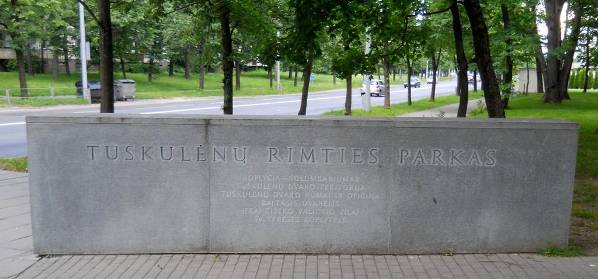
Starting in autumn 1944, death penalties passed by Military Tribunals of the
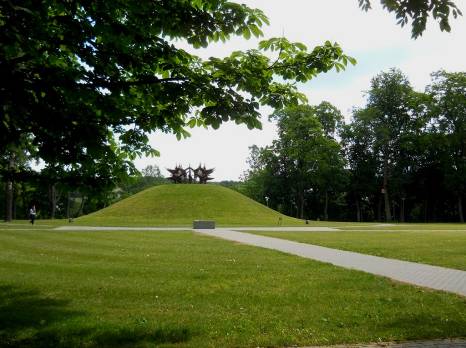
This story about the Memorial Complex of the
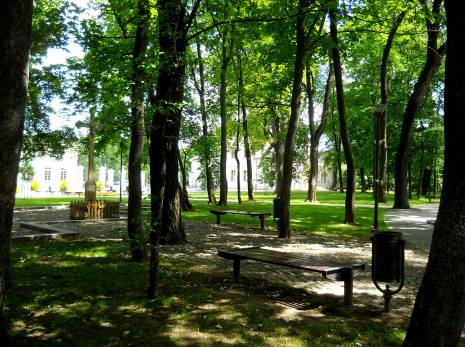
So what I thought would be a story I could complete in two or three days turned into three months of research, meetings, visits to various government offices, telephone conversations and emails back and forth. While much of the text for this article was prepared by the expert staff of the Tuskulėnai Memorial Complex, there are so many other government offices, organizations and people that are involved with the Tuskulėnai Memorial Complex and the information for this article. What took all the time to prepare this article was getting all the information together. I must give credit to where credit is due. In effect I only acted as the person that put all this together so that it could be published for you our readers. The real work and all the credit for this article goes to the dedicated professional staff of the Tuskulėnai Memorial Complex and all the other government offices, organizations and people that have done all the research and work to tell the story of what happened here and give a dignified final resting place for the victims.
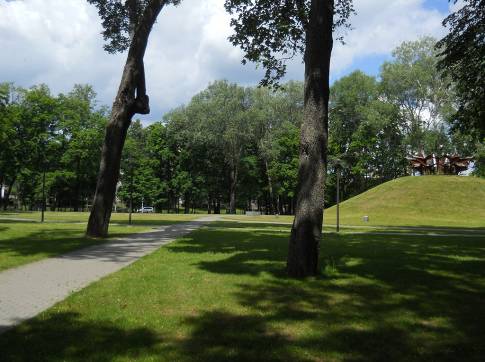
The next time you are in
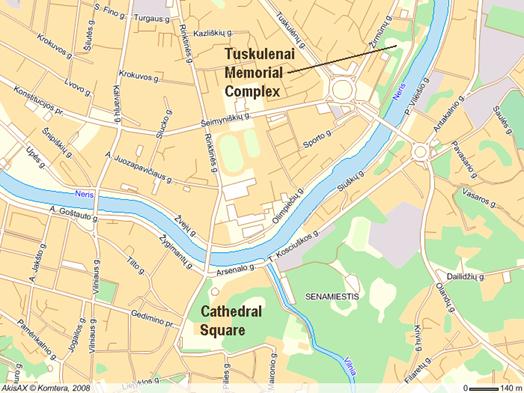
It is my hope that this information we share with you will provide some insight as to the tragic events that were taking place at the KGB prison and Tuskulėnai during the Soviet occupation of Lithuania. I hope that it will also give you some idea as to all the diligent effort that so many people have put in and are still putting in to honor the victims and try to bring some closure for their families and relatives.
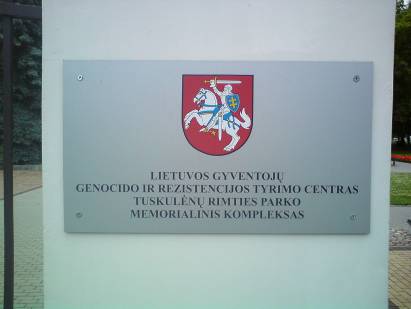
My greatest hope is that this story will bring out the information that still to this day is unknown
Where are the people that were executed after 1950 buried?
Look for the first part of our six part story which will be out in a few days
CONSEQUENCES OF THE TOTALITARIAN REGIME
IN
Su pagarbe
Vincas Karnila
Associate editor
- Bookmark :
- Digg
- del.icio.us
- Stumbleupon
- Redit it
Over the River and through the Woods
- Posted by - (0) Comment

Kestutis Eidukonis tells us in this story about his experiences on what you have to expect when you travel out of Vilnius to experience the Lithuanian countryside…
As a frequent visitor to Lithuania, I find an interesting disconnect from beautiful Vilnius and the rest of the countryside - I do not mean Kaunas or the rest of the major cities, but the real countryside where the rest of the Lithuania lives, works and fights their daily fight with bureaucracy and the legacy of Homo Sovieticus.
In Vilnius, you have the beauty of Old Town (Senamiestis) Pilies street and all that that entails. Sure there is the occasional fight with the beggars, the graffiti and the out of control druggie or local character of interest such as Grafas or Rozyte. In the "Kaimas" however you are dealing with people who take every occasion to get drunk, who are set in the old ways. The un mown grass, the flies, the mosquitoes, the bad roads, the problem of getting anything fixed. The lack of motivation of some of the locals. The negative attitudes towards city folks and the government. Try to get a plumber or electrician to drive 40 kilometers to fix anything. All these problems however pale in comparison to the biggest battle that lies ahead for anyone who plans to farm or work on reforestation.
- Bookmark :
- Digg
- del.icio.us
- Stumbleupon
- Redit it
Over the River and through the Woods
- Posted by - (0) Comment

Kestutis Eidukonis tells us in this story about his experiences on what you have to expect
when you travel out of Vilnius to experience the Lithuanian countryside…
As a frequent visitor to Lithuania, I find an interesting disconnect from beautiful Vilnius and the rest of the countryside - I do not mean Kaunas or the rest of the major cities, but the real countryside where the rest of the Lithuania lives, works and fights their daily fight with bureaucracy and the legacy of Homo Sovieticus.
In Vilnius, you have the beauty of Old Town (Senamiestis) Pilies street and all that that entails. Sure there is the occasional fight with the beggars, the graffiti and the out of control druggie or local character of interest such as Grafas or Rozyte. In the "Kaimas" however you are dealing with people who take every occasion to get drunk, who are set in the old ways. The un mown grass, the flies, the mosquitoes, the bad roads, the problem of getting anything fixed. The lack of motivation of some of the locals. The negative attitudes towards city folks and the government. Try to get a plumber or electrician to drive 40 kilometers to fix anything. All these problems however pale in comparison to the biggest battle that lies ahead for anyone who plans to farm or work on reforestation.
I am talking about the problems people are having with Heracleum sosnowskyi or Sosnowskyi Hogweed. Known in Lithuanian as Sosnovskio barštis. This plant was introduced in Stalin's time and is really getting out of control in a lot of parts of the countryside. So far the government and the EU have done little or nothing to help people fight this problem. The biggest problem with this plant is that it is spreading like wildfire in areas of the country which have been neglected or abandoned. It is extremely dangerous to humans. The liquid sap from the plant causes burns and blisters which can require hospitalization. The EU and the Lithuanian government have done little to help fight this problem other than publishing a some advise on how to get rid of it. The problem is that getting rid of it is very expensive if you use chemicals or hand labor. This is not an individual farmers or landowners problem. You can clean up your parcel using very expensive chemicals or hand labor only to be re infested from your less diligent neighbor or the Lithuanian Government owned land next to yours.

Sosnowskyi Hogweed. Known in Lithuanian as Sosnovskio barštis
What really aggravates the situation and gets under the skin of the situation is to see projects out there which are a total waste of EU and GOL Government of Lithuania moneys. I can walk to a project that was financed by the EU to set up a road and bike trails for tourists to visit the so called highest spot in Lithuania. Gedanoniu Kalva or Gedanonių hill in English. This is supposed to be a tourist attraction which generates revenue for the locality. The problem is that in clearing the hill top and building the pretty wooden staircase to the top of the hill, the access roads from Nemaitonys and Aukstadvaris were so badly torn up that vehicle access to the area from Nemaitonys is difficult and almost impossible from the Velnio Duobe (Devils Ditch) to Aukstadavaris even with four wheel drive. Within walking distance of this hill the local residents are muttering curses under their alcohol sodden breaths while fighting the barštis!

Gedanoniu Kalva (Gedanonių Hill).
Don't get me wrong there are a lot of pleasant things out in the beautiful "Kaimas" The storks, the swallows flying around the house, the occasional deer. The pleasure of sitting around a bonfire in the evening talking to friends and family and occasionally singing a Lithuanian song, the smell of fresh mown grass, the gorgeous flowers, the rye waving in the fields, the sight of wheat. But at times the frustration and aggravation is overwhelming.
Ah, how good it feels to get back to Vilnius!
Kestutis Eidukonis
- Bookmark :
- Digg
- del.icio.us
- Stumbleupon
- Redit it
- Posted by - (0) Comment
Lithuania may delay
its euro-adoption
SWEDBANK: Lithuania may delay its euro-adoption goal beyond 2014 because the currency area’s debt crisis is worsening and its government lacks “political determination” before a parliamentary ballot.
Lithuania may be wary of providing aid to ailing euro-region members such as Greece, Swedbank economists Nerijus Maciulis and Lija Strasuna says in an e-mailed report. While it has a good chance of meeting entry criteria by next April, neighbouring Latvia has stronger political resolve to adopt the currency the following year, they write.
“There seems to be a more unanimous agreement to meet Maastricht criteria for the sake of stability, but not necessarily in order to adopt the euro immediately” in Lithuania, Swedbank says. “There’s a probability Lithuania won’t apply formally for euro adoption in 2014 -– much of this will depend on election results in October, as well as the euro area’s progress toward a sustainable solution.”
Latvia and Lithuania are likely to meet the Maastricht criteria in early 2013 and were both expected to join the euro zone in 2014.
Thus, by 2014, the two countries may be able to take full advantage of the benefits offered by the membership in Economic and Monetary Union, according to the Swedbank economists.
According to Chief Economist at Swedbank Nerijus Maciulis, Lithuanian politicians avoid making decisions and even discussing the subject because of the recent fall of the euro popularity and the public's trust in the future of the single currency.
However, the economist points out that the risk of the euro future is not high enough to forget a long-term strategic goal of Lithuania.
The passive attitude of the responsible Lithuanian authorities is also reflected in the survey of the Eurobarometer which reveals that 60% of residents in Lithuania say that they do not get enough information about the euro.
However, the study conducted by the European Commission shows that 44% of population support the euro adoption and 5% have not decided yet. Maciulis says that the euro benefits are tangible and easily measured.
"There seems to be a more unanimous agreement to meet Maastricht criteria for the sake of stability, but not necessarily in order to adopt the euro immediately" in Lithuania, Swedbank
economists Nerijus Maciulis and Lija Strasuna said in an e-mailed report.
Lithuania and Latvia are next in line to join the 17-nation Euro Area, while other Eastern European nations such as Poland and the Czech Republic show slow preparations as the debt crisis deepens.
In 2006, Lithuania became the only nation rejected for euro adoption after it missed an inflation target by 0.1 percentage point.
Estonia became the 17th member of the Euro Area in 2011.
- Bookmark :
- Digg
- del.icio.us
- Stumbleupon
- Redit it
- Posted by - (0) Comment
Video:
Lithuanian swimmer Rūta Meilutytė takes FIRST place in London Olympics...

Stephanie Samaitis Carnell something to enjoy and celebrate…she's done it! woohooo!

Kazys Preikšas LITHUANIAN TORPEDO HITS THE GOALD! THE GOAL! THE GOLD!
you know what I mean

Daiva Repeckaite I love the story - fame for Lithuania is brought by a 15-year-old woman, a daughter of a migrant worker in the UK. In your face, basketball machos :) I hope this will become an impetus to make different sports more equal in Lithuania, to strive for a fairer distribution of public funds for sports, and, finally, to strive for gender equality in the funding and social prestige of sports.

Mark SPLINTER totally. this story is just absolutely perfect in so many ways.
Carol Luschas I love the story too! Lithuanians play with such heart and dedication! I understand the training involved for such a great sport! Remember waking up at 5 AM for morning practice and later in the afternoon for a second. Countless hours putting my body through so much! Butterfly was my stroke! My grandfather would always say: "Niekada Nepasiduok!" He told me to say this to myself whenever I needed a boost of confidence especially during a race!
- Bookmark :
- Digg
- del.icio.us
- Stumbleupon
- Redit it
The Lithuanian Cinderella
- Posted by - (0) Comment
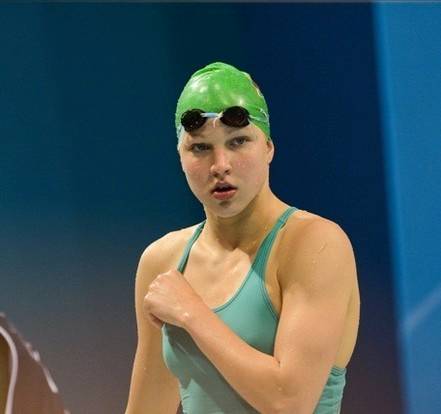
Rūta Meilutytė (born 19 March 1997). This week, at the Summer Olympics in London, she won the gold medal in the women's 100 meter breaststroke with
a time of 1:05.47, becoming the first Lithuanian swimmer since Lithuania's Declaration of Independence from the Soviet Union in 1990 to earn an
Olympic medal in swimming.
Photo: Wikipedia
Fifteen-year-old Rūta Meilutytė is a refreshingly outstanding representative of the original spirit of sports at a time when seriousness and the business aspects of sports often takes over for joy and the more fundamental aspects of the competitions.
Rūta has managed to grow strong, athletic and competitive-focused in spite of a difficult childhood in a country where training opportunities in swimming and many other sports are bad, because here in Lithuania it’s mostly just basketball that counts.
Her gold medal in the Olympics shows that even a young girl who is not raised and trained as a professional athlete since birth, can manage to reach even the highest goals in the sports world.
She is a true Cinderella of our days!
- Bookmark :
- Digg
- del.icio.us
- Stumbleupon
- Redit it
The Lithuanian Cinderella
- Posted by - (4) Comment
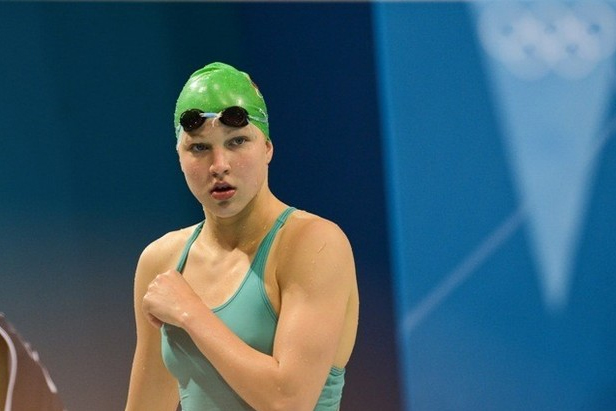
Rūta Meilutytė (born 19 March 1997). This week, at the Summer Olympics in London, she won the gold medal in the women's 100 meter breaststroke with a time of 1:05.47, becoming the first Lithuanian swimmer since Lithuania's Declaration of Independence from the Soviet Union in 1990 to earn an Olympic medal in swimming.
Photo: Wikipedia
Fifteen-year-old Rūta Meilutytė is a refreshingly outstanding representative of the original spirit of sports at a time when seriousness and the business aspects of sports often takes over for joy and the more fundamental aspects of the competitions.
Rūta has managed to grow strong, athletic and competitive-focused in spite of a difficult childhood in a country where training opportunities in swimming and many other sports are bad, because here in Lithuania it’s mostly just basketball that counts.
Her gold medal in the Olympics shows that even a young girl who is not raised and trained as a professional athlete since birth, can manage to reach even the highest goals in the sports world.
She is a true Cinderella of our days!
Rūta had just turned four years old when a terrible accident dramatically affected her and her family forever. Her mother, Ingrida, was on Easter visit to Vilnius and was about to cross a street in the pedestrian crossing when a car struck her so violently that she later died of the injuries.
Rūta's father, Saulius Meilutis, lived at this time in the United States, where he worked to support his family home in Lithuania, and Rūta started therefore living with her grandmother after her mother’s tragic death. She moved to the grandmother with her brothers Margiris and Mindaugas.
Already at an age of seven, her Kaunas coach, Giedrius Martinionis, seeing how well-built she was, told her father: ‘You must take her to swimming lessons – there will come a time when this little girl will be breaking country’s records’.
When Rūta was eight years old her father moved home from the United States. But like other returnees, it appeared difficult for him to find a decent job here, so after only three years he went west again, setting course for the southern English town of Plymouth where he got a job in a care home as a caregiver for disabled persons.
“When I left for Plymouth, my sons were somewhat grown and relatively mature, but I was worried about my daughter. After turning thirteen, Rūta had ceased listening to her grandmother. She wanted to be more independent. So I decided to take her with me to England,” her father tells to the daily Lietuvos Rytas.
Rūta had before this been showing good results in Kaunas Swimming School, so one of the most important tasks for the father was to find a good swimming club and an experienced coach in Plymouth.
He found one of England’s best swimming clubs and persuaded the coach Jonathan Rudd to work with his daughter. The road to success started.
“In addition to the sweet taste of victory, the father, however, sees the other side of the medal too, experiencing what it means to be a father not just occasionally but always. He looks after his daughter every single day of the year: from preparing breakfast, to advising what to wear,” the father tells to Lietuvos Rytas.
“Rūta loves herring or smoked bacon with onions, but I cannot treat her like that often, for such food is not good for a sportsperson. An adolescent girl undergoing a lot of physical exertion needs the proper, wholesome food. Before the afternoon training I usually prepare some pasta, which is rich in carbohydrates. While after the training it is usually a high protein meal such as meat or fish with vegetables. For breakfast she normally eats a cereal. I usually add some banana slices and nuts to them,” the father says about her diet.
“Rūta is tall, slim and has long legs. Her feet are rather long too: my daughter already wears size 43 shoes. She inherited these traits from her mother Ingrida, who looked like a model: she was slim and had long legs,” the father tells.
“Rūta’s character, however, is similar to mine: she is a very determined girl. She was supposed to be born in early April under the sign of Aries. However, she came to the world earlier than the doctors expected – on 19 March, under the sign of Pisces. Therefore I call her my little fish with a ram’s character,” laughs the father.
“Agility and physical strength marked Rūta since her childhood. She was very strong because she used to climb the trees as a child, along with her brothers. She was no less agile than the boys,” the father recalls.
Rūta stood out from the same age children with her apparent winning mentality.
Even in ball games at school she used to be a leader of her team. Her shots were very precise.
Continuous honest work also served to harden the able-bodied Rūta.
The family lived in their own house, so the girl used to help her grandmother around. Rūta used to cut the firewood and chop it with an axe, prepare garden beds and rake leaves.
Like the original Cinderella…
- Bookmark :
- Digg
- del.icio.us
- Stumbleupon
- Redit it
- Posted by - (0) Comment
98th Annual Lithuanian
Days in Frackville,
Pennsylvania!
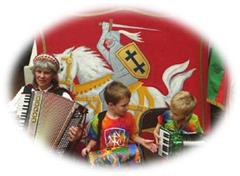
August 11-12, 2012
· AUGIS Lithuanian Pop & Folk Singer
· Sing a-long with Lynne Cox, Accordionist
· Malunas Dance Ensemble, Baltimore, MD
· Zilvinas, Dance Ensemble, Philadelphia, PA
· Gintaras Jr. Dance Ensemble, Mahanoy City, PA
· “Spins and Needles Guild” Weaving Demonstrations
· The Sensations Band
· Thomas Sadauskas: Lithuanian Genealogy Expert
· Pennsylvania National Guard
· Lithuanian Heritage Room
· Delicious Lithuanian Food
· Lithuanian Arts and Crafts:
Longest Running Consecutive Ethnic Festival in the USA!
Website: www.kofl144.weebly.com
- Bookmark :
- Digg
- del.icio.us
- Stumbleupon
- Redit it
- Posted by - (0) Comment
The Stockholm arbitration court turned down Gazprom OAO (GAZP)’s complaint over Lithuania’s plan to oust managers representing the Russian gas-export monopoly at the Lietuvos Dujos AB (LDJ1L) gas utility.
The court decided that Gazprom can’t prevent the government from seeking a judicial ruling over the performance of the Lietuvos Dujos management, the Energy Ministry in Vilnius, Lithuania’s capital, said in an e-mailed statement today.
The government sought to oust Lietuvos Dujos’s management, alleging it ignored the interests of Lithuania and didn’t negotiate a fair gas price for Russian supplies.
Gazprom holds 37 percent in the company.
Lithuania is splitting ownership of the gas sales and transmission activities of Lietuvos Dujos as part of a European Union drive to force dominant energy companies to improve access for competitors.
- Bookmark :
- Digg
- del.icio.us
- Stumbleupon
- Redit it

OPINIONS
Have your say. Send to:
editor@VilNews.com
Ph. D., Chicago
A wave of unity sweeps the international Lithuanian community on March 11th every year as Lithuanians celebrated the anniversary of the Lithuanian Parliament's declaration of independence from the Soviet Union in 1990. However, the sense of national unity engendered by the celebration could be short-lived.
Human beings have a strong tendency to overgeneralize and succumb to stereotypical us-them distinctions that can shatter even the strongest bonds. We need only search the internet to find examples of divisive thinking at work:
- "Those who fled Lithuania during World II were cowards -- and now they come back, flaunt their wealth, and tell us 'true Lithuanians' how to live."
- "Lithuanians who work abroad have abandoned their homeland and should be deprived of their Lithuanian citizenship."

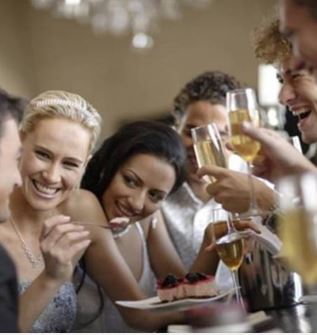
In Lithuania Christmas Eve is a family event and the New Year's Eve a great party with friends!
Lithuanian say "Kaip sutiksi naujus metus, taip juos ir praleisi" (the way you'll meet the new year is the way you will spend it). So everyone is trying to spend New Year's Eve with friend and have as much fun as possible.
Lithuanian New Year's traditions are very similar to those in other countries, and actually were similar since many years ago. Also, the traditional Lithuanian New Years Eve party was very similar to other big celebrations throughout the year.
The New Year's Eve table is quite similar to the Christmas Eve table, but without straws under the tablecloth, and now including meat dishes. A tradition that definitely hasn't changes is that everybody is trying not to fell asleep before midnight. It was said that if you oversleep the midnight point you will be lazy all the upcoming year. People were also trying to get up early on the first day of the new year, because waking up late also meant a very lazy and unfortunate year.
During the New Year celebration people were dancing, singing, playing games and doing magic to guess the future. People didn't drink much of alcohol, especially was that the case for women.
Here are some advices from elders:
- During the New Year, be very nice and listen to relatives - what you are during New Year Eve, you will be throughout the year.
- During to the New Year Eve, try not to fall, because if this happens, next year you will be unhappy.
- If in the start of the New Year, the first news are good - then the year will be successful. If not - the year will be problematic.
* If New Year's night is cold and starry - look forward to a good summer!
* If the during New Year Eve trees are covered with frost - then it will be a good year. If it is wet weather on New Year's Eve, one can expect a year where many will die and dangerous epidemics occur.
* If the first day of the new year is snowy - the upcoming year will see many young people die. If the night is snowy - mostly old people will die.
* If the New Year time is cold - then Easter will be warm.
* If during New Year there are a lot of birds in your homestead - then all year around there will be many guests and the year will be fun.
Christmas greetings
from Vilnius
and epic battle for the
future
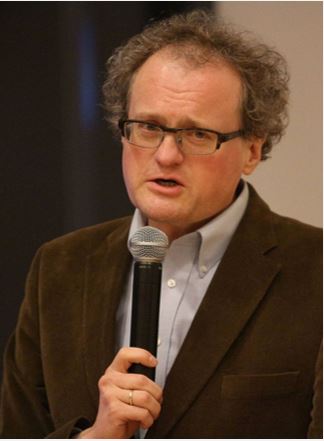
Philosopher, political theorist, historian of
ideas, social analyst, and political
commentator
Ukraine was and continues to be perceived by the EU political class as a sort of grey zone with its immense potential and possibilities for the future, yet deeply embedded and trapped in No Man's Land with all of its troubled past, post-Soviet traumas, ambiguities, insecurities, corruption, social divisions, and despair. Why worry for what has yet to emerge as a new actor of world history in terms of nation-building, European identity, and deeper commitments to transparency and free market economy?
Right? Wrong. No matter how troubled Ukraine's economic and political reality could be, the country has already passed the point of no return. Even if Vladimir Putin retains his leverage of power to blackmail Ukraine and the West in terms of Ukraine's zero chances to accede to NATO due to the problems of territorial integrity, occupation and annexation of Crimea, and mayhem or a frozen conflict in the Donbas region, Ukraine will never return to Russia's zone of influence. It could be deprived of the chances to join NATO or the EU in the coming years or decades, yet there are no forces on earth to make present Ukraine part of the Eurasia project fostered by Putin.
want to learn about the
new, scary propaganda
war between Russia,
The West and the
Baltic States!
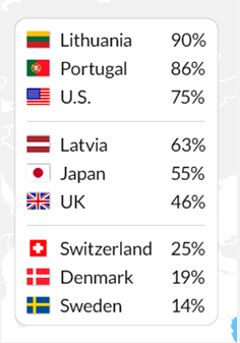
believe their government
is corrupt
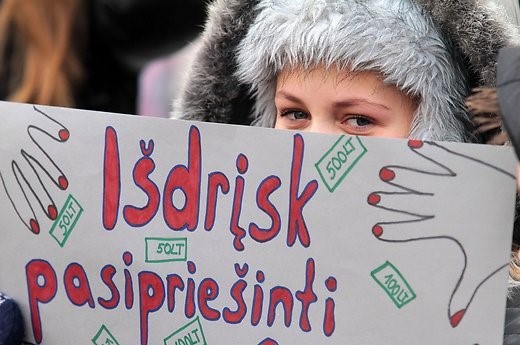
students say no to
bribes for doctors
During Soviet times, government was administered for the people in control, not for the local population, court decisions were decreed, they were not the administration of justice, and academia was the domain of ideologues. 25 years of freedom and openness should have put those bad experiences behind Lithuania, but that is not so.
Today, it is a matter of expectation that court pronouncements will be governed by ideological dictates. Few, if any Lithuanians expect real justice to be effected. For foreign companies, doing business in Lithuania is almost impossible in a situation where business people do not expect rule of law, so, surely Government would be a refuge of competence?
Lithuanian Government has not emerged from Soviet styles. In an attempt to devolve power, Lithuania has created a myriad of fiefdoms of power, each speaking in the name of the Government, each its own centralized power base of ideology.

Chepstow, Wales
Doesn't that sound suspiciously like Lithuania? Ah, but I didn't mention the mountains of Snowdonia, which would give the game away.
I'm talking about Wales, that part of the UK which Lithuanians used to call "Valija", but later named "Velsas" (why?). Wales, the nation which has welcomed two Lithuanian heads of state to its shores - firstly Professor Vytautas Landsbergis, who has paid several visits and, more recently, President Dalia Grybauskaitė who attended the 2014 NATO summit which was held in Newport, South Wales.
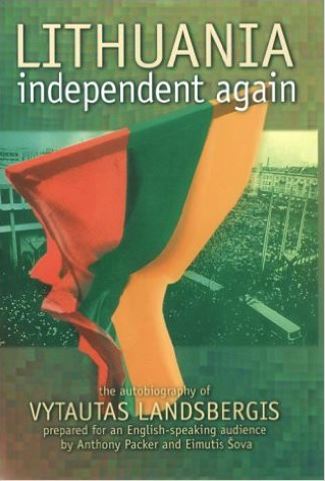
ENGLISH VERSION OF THE
AUTOBIOGRAPHY OF VYTAUTAS LANDSBERGIS.
Although Lithuanian activities have thinned over the decades as that postwar generation died out, the Lithuanian Martyrs' parish hall is crowded with many, many hundreds of visitors who come to the Lithuanian cemetery for All Souls' Day. Similarly, the Franciscan parish has standing room only for Christmas Eve mass.
Although I am firmly embedded in the literary culture of Canada, my themes are usually Lithuanian, and I'll be in Kaunas and Vilnius in mid-November 2015 to give talks about the Lithuanian translations of my novels and short stories, which I write in English.
If you have the Lithuanian language, come by to one of the talks listed in the links below. And if you don't, you can read more about my work at
www.anatanassileika.com
http://www.vdu.lt/lt/rasytojas-antanas-sileika-pristatys-savo-kuryba/ https://leu.lt/lt/lf/lf_naujienos/kvieciame-i-rasytojo-59hc.html
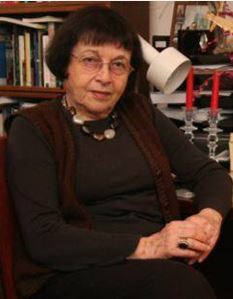
"My love and best wishes to all. As long as VilNews exists, there is hope for the future,"" she writes.
Irena Veisaite means very much for our publication, and we do hereby thank her for the support and wise commitment she always shows.
You can read our interview with her
Facing a new reality
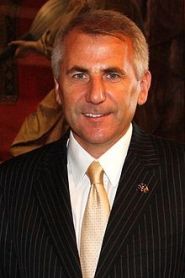
Dear readers of VilNews,
For a number of years, the EU and Russia had assumed the existence of a strategic partnership, based on the convergence of values, economic integration and increasingly open markets and a modernisation agenda for society.
Our agenda was positive and ambitious. We looked at Russia as a country ready to converge with "European values", a country likely to embrace both the basic principles of democratic government and a liberal concept of the world order. It was believed this would bring our relations to a new level, covering the whole spectrum of the EU's strategic relationship with Russia.
The likelihood of Putin
invading Lithuania
.jpg "lithuania today")
Founding Director at Summer Literary Seminars
Are all Lithuanian energy
problems now resolved?
Lithuania as a country does not have significant energy resources. Energy consuming infrastructure after WWII was small and totally supported by energy imports from Russia.
First nuclear reactor begins power generation at Ignalina in 1983, the second reactor in 1987. Iganlina generates enough electricity to cover Lithuania's needs and about 50%.for export. As, prerequisite for membership in EU, Ignalina ceases all nuclear power generation in 2009
The Klaipėda Sea terminal begins Russia's oil export operations in 1959 and imports in 1994.
Mazeikiu Nafta (current ORLEAN Lietuva) begins operation of oil refinery in 1980.
Have Lithuanian ties across
the Baltic Sea become
stronger in recent years?
The two decades that have passed since regaining Lithuania's independence can be described as a "building boom". From the wreckage of a captive Soviet republic, a generation of Lithuanians have built a modern European state, and are now helping construct a Nordic-Baltic community replete with institutions intended to promote political coordination and foster a trans-Baltic regional identity. Indeed, a "Nordic-Baltic community" - I will explain later in my text the meaning of this catch-phrase.
Since the restoration of Lithuania's independence 25 years ago, we have continuously felt a strong support from Nordic countries. Nordics in particular were among the countries supporting Lithuania's and Baltic States' striving towards independence. Take example of Iceland, country which recognized Lithuania in February of 1991, well in advance of other countries. Yet another example - Swedish Ambassador was the first ambassador accredited to Lithuania in 1991. The other countries followed suit. When we restored our statehood, Nordic Countries became champions in promoting Baltic integration into Euro-Atlantic institutions. To large degree thanks Nordic Countries, massive transformations occurred in Lithuania since then, Lithuania became fully-fledged member of the EU and NATO, and we joined the Eurozone on 1 January 2015.
Have you heard about the
South African "Pencil Test"?
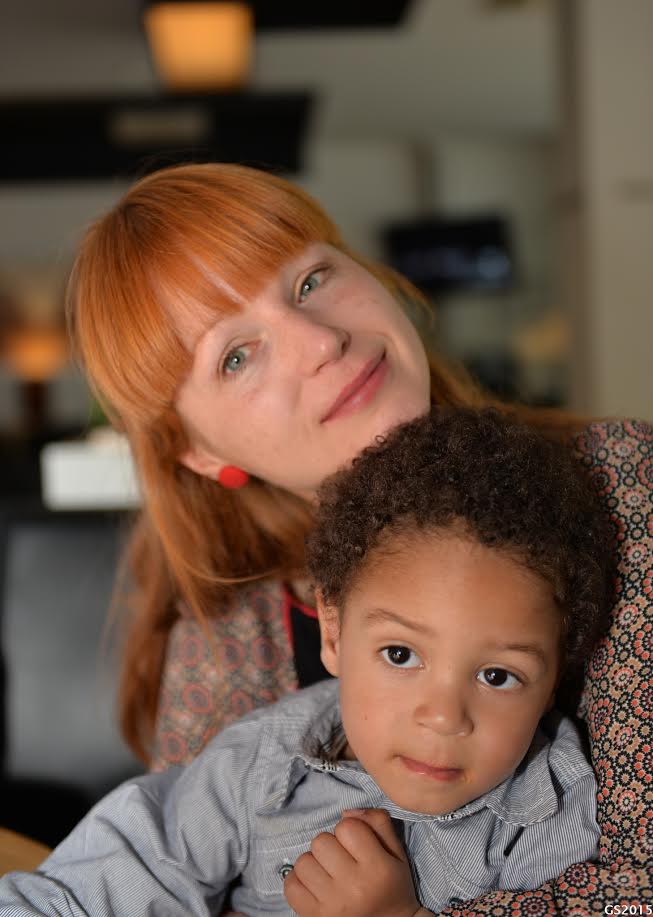
But that is exactly what happened to me when I came back from South Africa. I will tell you how.
VilNews e-magazine is published in Vilnius, Lithuania. Editor-in-Chief: Mr. Aage Myhre. Inquires to the editors: editor@VilNews.com.
Code of Ethics: See Section 2 – about VilNews. VilNews is not responsible for content on external links/web pages.
HOW TO ADVERTISE IN VILNEWS.
All content is copyrighted © 2011. UAB ‘VilNews’.