
THE VOICE OF INTERNATIONAL LITHUANIA

|
VilNews has its own Google archive! Type a word in the above search box to find any article.
You can also follow us on Facebook. We have two different pages. Click to open and join.
 Click on the buttons to open and read each of VilNews' 18 sub-sections Click on the buttons to open and read each of VilNews' 18 sub-sections  |

|


Author Archive
The British should apologize to the thousands and thousands of victims for the vicious treachery in peace time of their MI5 and MI6 services
- Posted by - (0) Comment

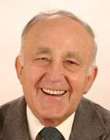
Dr. Stan Backaitis, Washington
Dear Aage,
Thank you for the very moving story about the post WWII partisans.
Unfortunately on page 6 you are giving some credit to the British intelligence, even though later on you mention Philby as having been responsible for the vicious death of thousands of the Baltic partisans.
In fact the entire top levels of MI5 and MI6 since late 30's through early 70s were thoroughly penetrated by Britishers serving the Soviet espionage services.
Peter Wright in his book "the Spycatcher" identified Maclean, Burgess, Blake, Sinclair, Roger Hollis and numerous others who participated in setting up contacts with the partisans while assuring that the KGB was in full knowledge and control of their every movement and contact. Unfortunately, the doomed fighters sincerely believed for a long time that the British were on their side while being betrayed and delivered into the hands of the KGB.
In my view, it is also the British who have much to apologize to the thousands and thousands of victims for the vicious treachery in peace time of their MI5 and MI6 services.
Stan Backaitis
Washington, D.C. , USA
- Bookmark :
- Digg
- del.icio.us
- Stumbleupon
- Redit it

I strongly condemn any attacks, aimed to set the Lithuanian society at variance on ethnic, racial or other grounds
- Posted by - (0) Comment
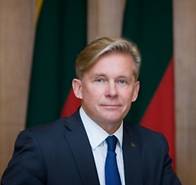
By Audronius Ažubalis, Lithuania’s Minister of Foreign Affairs
“I strongly condemn any attacks, aimed to set the Lithuanian society at variance on ethnic, racial or other grounds. I assess such actions when we are commemorating the Holocaust Remembrance Day as a provocation. This is an audacious challenge not only to the ones who experienced this tragedy, the Jewish community of Lithuania and Litvaks that are scattered all around the world, but also to every decent member of our society.
I believe in the maturity of the Lithuanian society and the State of Lithuania, and of our law enforcement institutions. The instigators of ethnic hatred must be found as soon as possible and punished according to the Law of the Republic of Lithuania. The Government of Lithuania will make continued effort to perpetuate the memory of the Holocaust victims and to raise public tolerance through education.
Racist attacks of the society’s radical groups are hurting the international authority of our State and society. Therefore, I urge the law enforcement institutions to take more vigorous and better coordinated action and fight against them. Also each one of us can contribute to that by disapproving of and speaking up against any actions or statements that are aimed to set the Lithuanian society at variance.”
- Bookmark :
- Digg
- del.icio.us
- Stumbleupon
- Redit it

May 8, 2011
By Tanushree Poddar

When Napoleon saw this church, he wanted to carry it away with him on the palm of his hand and gift it to his sweetheart, Josephine,” our guide informed us with a twinkle in her eyes.
“Thankfully, he could not fulfill his wishes and the church still remains in Vilnius.” I was not surprised.
I would have liked to carry the stunning church home, too. St. Anne’s church evokes covetousness in all breasts. It is so beautiful.
Vilnius, the capital of Lithuania, is an artist’s dream. With its emerald forests, cobalt lakes, cerise spires and pine scented air, it is a romantic paradise. Apart from lovely landscape, it has some of the most beautiful churches I have ever seen.
Read more at:
http://www.deccanchronicle.com/tabloid/sunday-chronicle/travel/romantic-paradise-187
The Deccan Chronicle is a daily newspaper published through the Andhra Pradesh, Karnataka, and Tamil Nadu states ofIndia. It is published in English, and is the largest circulation English-language newspaper in the south of India.The newspaper's name derives from the originating place Deccan regions of India.
- Bookmark :
- Digg
- del.icio.us
- Stumbleupon
- Redit it

With love, from Italy
- Posted by - (0) Comment
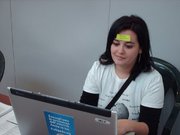
I wanted to share with you some good memories of my time in Lithuania 2 years ago. I do miss your country. With love, from Italy.
- Bookmark :
- Digg
- del.icio.us
- Stumbleupon
- Redit it

A Christmas story from Šilagalis, year 1945
- Posted by - (4) Comment
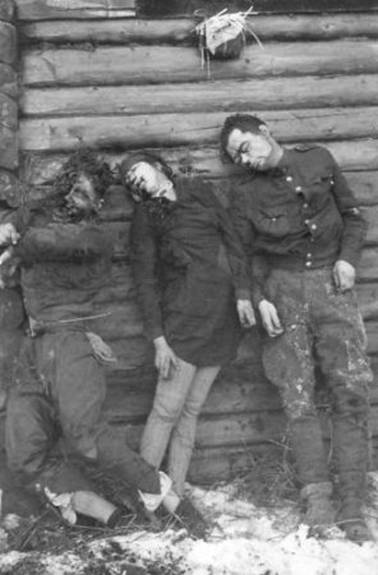
Desecrated bodies of unrecognized Lithuanian partisans.
By Aage Myhre
Christmas 1945 was in most of the world celebrated with a joy and delight hardly ever seen before. Young and old met in homes, on streets and in churches. An infinite series of victory events took place in almost every corner of the world. With a deep sense of joy and gratitude all wished each other a heartfelt good and restful Christmas holiday, knowing that the Nazi-era was over and that the world now more than ever could look forward to a future of peace and prosperity. The war had finally released its grip, forgotten was the economic recession of the 1930s, but forgotten was also our close friends and neighbours - the Baltic States.
On a small farm in northern Lithuania, in the outskirts of the village Šilagalis, the Christmas of 1945 is also approaching. It is the 22nd December today, and the mother in the house feels very happy that her 21-year-old son Povilas finally has come home for a visit after having been away for many months.
He has come to change to dry clothes that can keep him warm through the cold winter days waiting. His mother is infinitely happy to have her son home this one day, and she does everything she can to treat him with all the good food and drink found in the farm stores. You never know how long it will be till next time.
Povilas had joined a local partisan group earlier in 1945, and now spends all the time in Northern Lithuania's forests where the local "forest brothers" have established their hidden habitats. It is from these caches, often at night time, they still conduct operations against the military facilities and forces of the Soviet Red Army and the NKVD, the Soviet secret police which later changed its name to KGB. Soviet occupation of Lithuania has lasted more than a year now, but Povilas and other forest brothers still hope their constant needle can get Joseph Stalin to withdraw his troops out of Lithuania and the other two Baltic countries.
Povilas is glad to finally have gotten a day off, not least to be able to eat real Christmas food and experience a little Christmas fun with the family. A small nick in the pleasure it is that his father and his little sister and little brother are not home. Both the brother and the sister go to boarding school in the nearest city, Panevezys, and his father had in the early morning of that day gone into town to bring them home for Christmas. But his mother is here, and when she and he, with the arms around each other, go out to the barn to feed the animals, he sings joyfully a song stanzas he so often has sung in the partisan camp over the last months: "To die young is difficult, but not for my country. For my native country Lithuania I am ready to sacrifice my young life."
The mother scolds him motherly strictly that he sings: "You know it is not appropriate to sing now that it's Advent." Lithuania's Roman Catholic Church is quite strict when it comes to how to behave through the year's various festivals, and his mother reprimands therefore her son while at the same time she feels proud and glad that he does such an honourable service for the home country.
Back in the farmhouse they suddenly hear the dog starts to bark, and through the window, they see that a group of soldiers approaching. The soldiers are still in some distance, so Povilas has time to hide in a small cellar room they have beneath the living room floor, and the mother has time to hide the cellar hatch as best she can. This basement room has also previously been used to hide partisans, and both believe this is a safe hiding place until the soldiers have left again.
The mother goes out into the yard to meet the soldiers from the Soviet Red Army. They ask about her son is home and if he, in case, is alone. Without waiting for an answer they storm into the house and begin turning upside down all furniture and interiors. Then they begin to shoot down to the floor to see if there may be cavities under the floorboards. It takes some time before they discover the basement hatch, but as soon as they find and can open it, they fire a machine gun burst into the hole. Then it does not take long before they can take the now perforate and lifeless body of Povilas out of the basement. The whole operation has taken them five hours, but they have found what they sought, and another young Lithuanian life has been lost in the desperate struggle against the Soviet over power.
The distance from the farm to the road is over 500 meters, so the soldiers find a chain in the barn so they can tow the corpse of Povilas over the fields to the military vehicles that are waiting. The mother is forced to follow, and soon they are on their way to the NKVD headquarters in Panevezys where the body of Povilas is thrown out in the middle of the courtyard while his mother is brought to a prison cell in the basement.
Early next morning, little Christmas Eve 1945, the mother is brutally dragged up from the wooden bench she lay sleepless on during the night. Today, and each subsequent day through two weeks, she is brought up for interrogation, through the courtyard where her son's mangled body still lies. Christmas and New Year holiday season in 1945 passes by with this terrible routine of a mother dissolved into tears and sorrow, but early January she is released and can finally go home and tell the family what had happened.
In thousands of homes around the world families walk happily around their Christmas trees. They celebrate that Jesus is born and once again has overcome the world's evil. In northern Lithuania the parents of Povilas and other parents of killed partisans find that the bodies of their young sons have been dumped in a forest outside the village Kaizerlingas. During the dark night hours of the early January days 1946, they manage to find the dead bodies of their children and carry them home to secret burials in their hometown cemeteries.
Christmas 1945 is over. Most of the world looks forward to many good years of peace, freedom and economic growth. The Baltic States' ten year long guerrilla war against the occupants has barely begun.
The story of Povilas is real. It is based on a passage from the book "Lithuania's struggle for freedom" (Lithuanian Partisans' War Chronicles).
- Bookmark :
- Digg
- del.icio.us
- Stumbleupon
- Redit it

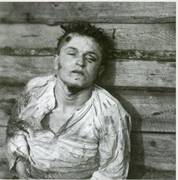
One of the many killed Lithuanian partisans, Juozas Luksa – "Skirmantas", "Daumantas", after his death on the 4th of September 1951.
You in the West preferred not to know, "the inconvenient truth" is.
I learned that the hard way, from my grandparents & other family who closely worked with Skirmantas and other top Lithuanian freedom war leaders in the Seinai-Punskas (Sejny-Punsk), Poland, during their secret border crossing missions to the West (via Gdansk and Warsaw) and back to Lithuania in 1946-50. My family was put in hard-regime prisons for that, all the hard earned property confiscated, and I was born a communist slave, so to speak. While in high school I rebelled against the Soviet occupation of Lithuania, was arrested and thrown out of school, persecuted for a long time by communist secret services, and finally made my way to the West: Glory Be to God!
Yours sincerely,
Valdas Samonis,
Canada
P.S. My family was decorated with Lithuania's top freedom medals by President Adamkus. I was officially recognized by free Poland (IPN) as the freedom activist persecuted by the communist regime.
- Bookmark :
- Digg
- del.icio.us
- Stumbleupon
- Redit it
BUT THE SPIRIT OF LITHUANIA IS STILL NOT FREE
- Posted by - (0) Comment
Hi Aage,
I found your article interesting and would like to get more of them. After looking at those young faces, who lost their lives for the freedom of Lithuania, I realize that these days we have freedom, but the spirit of Lithuanian is still not free, rather haunted by the past challenging experiences. I believe that eventually we will become free and will start feeling worthy again.
Sincerely,
Aušra, USA
- Bookmark :
- Digg
- del.icio.us
- Stumbleupon
- Redit it
IN MY OPINION IT IS A MISTAKE TO CONFUSE RESISTANCE TO OCCUPATION AND THE SECOND WORLD WAR
- Posted by - (0) Comment
Dear Aage
The Second World War in Europe was a war fought against fascism – in particular the German variant exemplified by Nazism – and including also Italian fascism. The Second World War in Europe ended with the surrender of Germany; a surrender to which Russia was the major contributor because Germany was largely defeated at Stalingrad and Kursk and was always in retreat afterwards.
The Resistance in Lithuania against Soviet occupation was a heroic effort by some Lithuanians to obtain freedom for their country. In my opinion it is a mistake to confuse resistance to occupation and the Second World War. After the end of the Second World War there have been many occupations of many countries by Capitalist and Communist powers and each side has tried to characterise any resistance to its forces as an act of the ‘Other’ side.
Resistance to Occupation has a very long and courageous history in Europe and throughout the world and no ‘side’ has a right to claim the heroic activities of resistance fighters/activists to support its ideology. Inevitably that requires misrepresentation of the motives and objectives of the resistance; part of the theme of the book “The Ugly American” about the then developing Vietnamese war. It is also the type of misrepresentation that leads to one 'side' claiming “We are all Georgians now”.
This misrepresentation is a major cause of the inability of ‘Western’ countries to think in any clear way about the activities grouped under the label of ‘terrorism’ and it is better to avoid such ideologically driven commentary/analysis.
Kindest Regards
Robert Jennings, Ireland-Lithuania
- Bookmark :
- Digg
- del.icio.us
- Stumbleupon
- Redit it
Since moving back to the UK in 2008 I have not read a single positive story about Lithuania
- Posted by - (0) Comment
I got onto a flight from Edinburgh to London on Wednesday and got to read about this sad story in the newspaper. It was very disturbing. Since we moved back to the UK in 2008, I have not read a single positive story reported about Lithuanians. Can someone please prove me wrong??
(see the below article)
- Bookmark :
- Digg
- del.icio.us
- Stumbleupon
- Redit it
SCOTLAND: 26 year old Lithuanian mother accused of murdering her newborn baby
- Posted by - (0) Comment
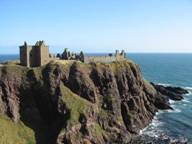
It was here, in Aberdeenshire, Scotland, that the young Lithuanian mother allegedly murdered her newborn son last year
Ineta Dzinguviene, 26, is accused of murdering her baby on the day he was born and dumping his body in a holdall in Aberdeenshire. Scotland.
Ineta Dzinguviene, 26, is accused of asphyxiating the newborn, later named Paulius Dzingus, by holding the clear plastic food wrapping over his nose or mouth, or by other means.
Dzinguviene, of Fraserburgh, Aberdeenshire, is alleged to have carried out the murder at a flat on the High Street in the fishing port on April 12 last year.
Read more at:
http://news.stv.tv/scotland/north/245100-mother-murdered-her-new-born-son-and-hid-his-body-in-bag-court-hears/
- Bookmark :
- Digg
- del.icio.us
- Stumbleupon
- Redit it

VilNews e-magazine has been online for just under 12 weeks but has, in all modesty, already become a tremendous success, connecting Lithuania-related people in virtually every single corner of the world..
We have now readers in 109 countries around the globe, we've had close to 60 000 visits and we have so far had 3.3 million article hits.
But perhaps even more important is that VilNews engages its readers in good communication with each other and with us in the newsroom in a way hardly seen before.
We do therefore believe that our success is very much due to our unique combination of daily news, social media (blogs, commentaries, discussions, information exchange) and a vast background material of historical and contemporary character.
If VilNews had been printed, we would have been a book of about 5,000 pages!
VilNews is simply a living, active medium that truly engages its readers in a whole new way, even by world standards, while also presenting a huge, unbiased information basis for opinions and comments from our readers. We believe this is the main reason for our success, and we think many media around the world will follow in our footsteps for the years to come.
We believe this is the way professional journalism and open, systematized dialogue will create the future of the media, as well as the way people are achieving true freedom of speech and participation in real peoples’ democracy.
Have your say!
- Bookmark :
- Digg
- del.icio.us
- Stumbleupon
- Redit it
Differs very much from all we read!
- Posted by - (0) Comment

Differs very much from all we read!
Salonas Jaukūs Namai,
Kaunas
- Bookmark :
- Digg
- del.icio.us
- Stumbleupon
- Redit it
Venclova`s Vilnius (4)
- Posted by - (1) Comment
The history of the amazing Lithuanian city written by the great poet most qualified to write about it. This book includes a dialogue between the author and Nobel Prize laureate Czeslaw Milosz about the city. An absolutely indispensable work on the city that produced John Gielgud, Bernard Berenson and the Budapest String Quartet.
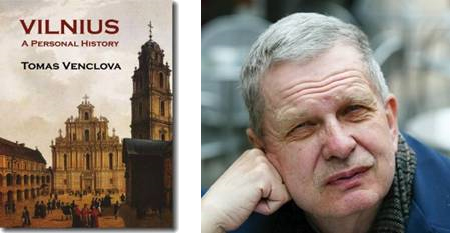
This is the fourth in a series of excerpts from Tomas Venclova’s book “Vilnius a Personal History”:
TODAY: Lithuanians,
“The Saracens of the North”
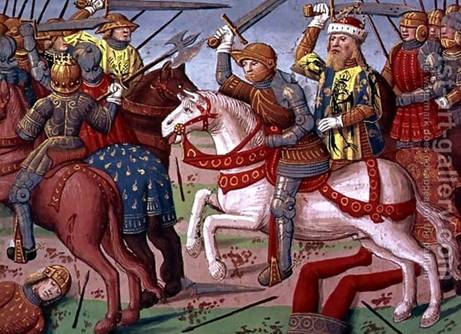
Saracen was a term used by the ancient Romans to refer to a people who lived in desert areas in and around the Roman province of Arabia, and who were distinguished from Arabs.
The Order of Teutonic Knights and all of Europe called the Lithuanians, “the Saracens of the North.” Established at the time of the Crusades in Palestine, the Order was responsible for fighting the war against the Moslems, but the Knights soon had to be shifted to the Baltic coast. To the Order’s zealous members, Lithuania represented the menacing “Other,” an empire of barbarism, of primeval darkness: Europe’s subconscious that had to be enlightened, controlled, and punished. The Lithuanians, on the other hand, considered the Knights of the Order as a no-less-menacing “Other.” What the Knights saw as heroic deeds, the Lithuanians considered brazen robbery and murder―and vice versa. There have not been many conflicts in Europe of comparable length and tenacity as the war between the two powers, which lasted some two hundred years. The Knights founded Thorn, Marienburg, Königsberg, and numerous other castles ― but they did not get farther than the Neman River (in Lithuanian: Nemunas). Gediminas, according to tradition, is said to have died in battle at the Neman; his ashes were buried on the hill next to the Vilnius Castle. Another branch of the Teutonic Order governed Riga and Tallinn, but they too were brought to a standstill north of the Lithuanian territory, where the Lithuanian-Latvian border is today.
The first time I went to Vienna, I wanted above all to visit the church that to this day belongs to the Order of the Teutonic Knights. Situated in the center of the city, it is very modest. A member of the Order, a peaceful-looking old man smoking a pipe, acted as my guide. He took me through the small church museum and showed me documents of the Order and maps of old Lithuania and its neighboring lands. I was the sole visitor, probably the only one that day. It may sound ridiculous, but I felt somewhat triumphant: practically nothing is left of the Order besides this church and its little museum, while my country, which was attacked by the Knights and which they wanted to destroy, still endures. The way I felt reflects how deeply rooted the history of this war is in Lithuanian consciousness. The Romantics found in this an inexhaustible source of inspiration, as Byron found in the Orient. The most popular theme is the story of Grandmaster Konrad von Wallenrode, who unsuccessfully marched against Vilnius, was disliked by his subordinates, and died young. Mickiewicz wrote a poem about him: it is full of unexpected twists and turns, almost like a spy novel, and it gradually becomes clear that Wallenrode was actually a Lithuanian who had infiltrated the upper level of the Order so that he could destroy it from within. Of course this is pure fantasy, but the name Wallenrode has become a symbol in Lithuania and Poland: quite a few Nazi and Communist collaborators have tried to justify themselves, both privately and publicly, saying that they acted in the interest of their own people, as he did. Another figure who has found his way into world literature conspired with Wallenrode: Henry Bolingbroke, the future King Henry IV of England, founder of the dynasty of the Red Rose and hero of the eponymous play by Shakespeare. In 1390, Henry Bolingbroke, with three hundred Englishmen and Wallenrode’s knights, briefly occupied Vilnius. According to Bolingbroke, the city was built of wood at that time and had no protective walls, but in fact it already had a large stone castle. The attackers set the city and a smaller castle on fire, but they could not capture the large one.
Toward the end of the fourteenth century, this war became hopeless for Lithuania. It reminds me of the recent war in Chechnya; the hatred on both sides and the extent of the destruction are comparable. The descendants of Gediminas tried to find allies. After several futile attempts, they realized they would have to convert to Christianity in order to deprive the Knights of their most important argument. I do not think that dogmatic fine points were important to the Lithuanians; but the Orthodox Faith, that is to say, the Eastern Heresy, was a dubious defense against the Teutonic Knights. On the other hand, being forced to accept Christianity by the Teutonic Order would have meant capitulation and the collapse of the state. It was at this point that Poland came to their aid, having some accounts of its own to settle with the Knights. It was suggested that the grandson of Gediminas, Jogaila (Jagiełło), marry the thirteen-year-old Polish Princess Jadwiga (Hedwig), who had lost her father; that he have himself baptized; and that he become the ruler of both countries. Jogaila agreed. For him, this was not a romantic union but a political calculation. However, Jadwiga resisted. She loved the son of an Austrian duke, but even more importantly, she was afraid of the thirty-year-old Lithuanian barbarian. It is said that she sent a trusted nobleman to Vilnius who was to report to her what he found out about the prince of that wild land. The emissary went to a banquet feast with Jogaila, was even said to have joined him in a sauna, and let Jadwiga know that she had nothing to fear. Nonetheless, the marriage was not a happy one; Jadwiga died soon afterward, leaving no heirs. Jogaila married three more times. Finally, at an advanced age, he had children with his fourth wife, thus founding the renowned Jagiellon Dynasty. Supposedly, all European ruling families have the blood of Jogaila and Gediminas in their veins.
Jogaila accepted the Polish crown, ordered the destruction of the pagan sanctuary in Vilnius, extinguished the sacrificial fires, killed the sacred snakes, and on the same spot erected a new cathedral that was even larger than Mindaugas’s. He and his cousin Vytautas baptized the heathen subjects, pushing them into the river in droves and giving the whole lot the same Catholic name. It is said that the two rulers even translated the Lord’s Prayer, the Ave Maria, and the Credo into Lithuanian. Jogaila moved to Krakow, the Polish capital, leaving Vilnius and its castles to Vytautas. The united Lithuanians and Poles together resisted the Teutonic Order, and, in their decisive victory at the Battle of Grunwald (1410), they managed to remove the Order from the political equation once and for all. The defeated Order, as we know, became a museum piece. But it has preserved its place in the sphere of myth. The Knights of the Order continue to symbolize the fatal danger emanating from the West, a phantasm that always appears ― or is artificially conjured up ― whenever the political situation warrants. During the First World War, the army of Kaiser Wilhelm was compared to the Teutonic Knights, even by the Germans themselves. And during the Second World War, the rulers of the Soviet Union, using the same symbolism, were partially successful in their attempts to manipulate public opinion. Somewhat later, Lithuanian newspapers printed a photograph of Konrad Adenauer wearing the cloak of the Order (he was in fact a member of the Knights); but most Lithuanians ignored it, as they did almost all Soviet propaganda. The Adenauer photo may finally have destroyed the myth. In any case, Lithuanian opponents of European Union membership did not seek recourse in it to support their position.
- Bookmark :
- Digg
- del.icio.us
- Stumbleupon
- Redit it
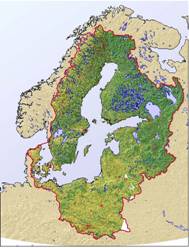
http://www.grida.no/baltic/htmls/related1.htm
At the seminar “The Baltic Sea region cooperates: what opportunities open up for the Lithuanian business?”, in Vilnius this week, Vice-Minister of Foreign Affairs of Lithuania Egidijus Meilūnas called on businessmen, academicians and representatives from other fields to search for partners in the entire Baltic Sea region, take up new initiatives and projects.
“More active participation of Lithuanian entrepreneurs in developing new potential of the Baltic Sea region is not only welcome, but also necessary. The Baltic macro-region presents a new perspective and an opportunity for boosting our economy,” Egidijus Meilūnas said.
The Vice-Minister acquainted the participants of the seminar with the EU Strategy for the Baltic Sea Region Baltic Sea strategy, its drafting and the progress that had been made.
At the seminar, speeches were also delivered by Programme Director of the Swedish Agency for Innovation Systems Vinnova Karin Nygård Skalman and representatives from the Ministry of Economy, Lithuanian Innovation Centre and Klaipėda Science and Technology Park.
After the speeches, a discussion was held about how to encourage the country’s companies and entrepreneurs to more actively engage in regional cooperation.
The event took place at the ISM University of Management and Economics in Vilnius.
The EU Strategy for the Baltic Sea Region is the first in the EU’s history macro-regional strategy, which foresees specific actions in all the countries of the region: Denmark, Estonia, Germany, Iceland, Latvia, Lithuania, Norway, Poland, Russia and Sweden. The Strategy promotes political, institutional, also business and scientific cooperation aiming at increased mobility in the region, regional sustainability and sustainable growth.
When implementing the priority Action Plan of the EU Strategy for the Baltic Sea Region, Lithuania coordinates three out of fifteen priority areas. One of the priority areas that Lithuania coordinates (the seventh) is dedicated to the exploit of the potential of the region’s innovation and development.
Source: www.urm.lt
- Bookmark :
- Digg
- del.icio.us
- Stumbleupon
- Redit it
The Presidential week in pictures
- Posted by - (0) Comment
04-05-2011 |

03-05-2011 |

03-05-2011 |

02-05-2011 |

29-04-2011 |

27-04-2011 |

- Bookmark :
- Digg
- del.icio.us
- Stumbleupon
- Redit it
- Posted by - (0) Comment
Debate topic no 2:
Lithuanian tourism sector is haunted by poor leadership!

How can a fantastic place like Vilnius with its 500,000 plus inhabitants and Lithuania with its 3 million plus inhabitants have a smaller tourism budget than a mountain village in Norway of 450 people? Read more…
Thomas Danielsen

Wise words from the man who really know a thing or two about tourism. !

Dear Thomas. Naturally your point is obvious – it is with Tourists as with FDI – If Lithuania want it, then do something about it instead of talking.

I believe a lot of it has to do with incompetence and poor management. There is still very much the Soviet mentality which holds back Lithuania from becoming a real member of the European Union.

LT is a fabulous tourist destination, but unfortunately Wyman is correct. That mindset pervades so much of LT Government and institutions.

It tells two things: that Norway has way too much money and that Lithuania has poor management....

Thomas, I think you are making many good points in your article, and I know that many within the tourism industry of this country completely agree with you. This is a sector where the infrastructure and more already is in place, capacity is good and the attractions just are waiting for more people to come, see and experience... No no investments needed, just start coordinating some good marketing efforts... But, as you say, let's see what our new Vilnius Mayor, Arturas Zuokas, can do about it.

That's still nothing. Vilnius was European Capital of Culture in 2009. An amazing event (I think I can say that, I witnessed it in 3 months). But the official website and any mirrors are nowhere to be found now. As if nothing had ever happened. The Internet is writing mankind's history nowadays: deleting such a resource is such a waste of time and money. If I was Lithuanian I'd be mad for this.

If I knew how, I would write a longer article about "Vilnius 2009". It is just one out of many total failures and example of totally lack of management and understanding of tourism and its impact on the society and country as a whole... Once in a lifetime opportunity gone to waste! (I now live in Tallinn they are capital of culture this year... and this year they are capital of culture. It’s nice to see that they, as usual, understand the importance of this
What I witnessed, April to July, was good. Tons of events, most of them free, almost every day or so. I heard there were troubles at last, but still, I really had a good time, went to many concerts, art exhibits, street events, guided visits... I am writing a post (in Italian) about my experience and will cover that as well.
...there were no events, concerts, exhibitions etc in 2007. 2008, 2010, 2011? (It’s a city of 550 000 people!).
Nothing makes me more happy, Elitre if you had a good experience while in Vilnius! Many people, once they actually get here, love the place! Thats pretty much my point, the ones that do get here, love it! Why can we not share it with the world?
(it comes down again to marketing and management!)
Thomas, if you take a look at my pictures, you'll see that I was able to enter a place which is usually locked for tourists. Even the guides were amazed that I was able to book for the visit as it was not on the Vilnius 2009 English page (I had to translate the Lithuanian one with Google). Once there, the guys "guiding" were not prepared to explain things in English, but at least they tried. I think I know what you mean, after all, Vilnius did not look/behave like a big European capital (you might find hundreds of events in one night only in cities such as Rome ;) ), but that aspect was among the ones I love of it.

Of course, Thomas, we know that Lithuanian tourism industry is still developing ;) However, economic recession affects tourism (f.e. Flylal went bankrupt & it caused problems with direct connections between LT and other countries). Still, there are number of other challenges the society is faced with... But I really hope that the tourism industry will develop! Hope Zuokas will give you a call ;)
Dear Inga, why do you think FlyLAL went broke? Recession? Why did Air Baltic leave then? They did not go broke. Ever thought about that? Vilnius airport was one of the most expensive airport in Europe. Did you know that?
Point is that sure, tourism industry is developing, but point is that there is already so much developed and does not need more development, just management! THATS the point! It’s useless management of resources already existing! It’s not being utilized! That’s the point! ;)
It’s so typical to say "we know that..so who cares...?" it looks like people here have just given up their country...big shame.

For 20 years I have heard that "We have so many other problems in Lithuania that we cannot give this matter any priority." But it is true, the people is now more paralyzed than ever before. Look to market cashiers, border lines (96 hours line at land border to get from Lithuania to Kaliningrad and back again) , emigration (population is decreasing with 5000-10,000 persons pr month) etc. Increased tourism will create ripple effects for all business.
It is with Tourism as with FDI - If Lithuania really want it, then do something serious about it

Maybe they just don't want it...
I do think some of the Ministers do - unfortunately many Civil Servants seem to have other priorities. It's about Leadership - the Cabinet need to take charge, explain the population what is right and wrong - and be good examples

So true - Lithuania have so much to offer for tourism travellers.. but need proff people to run the business.--.
- Bookmark :
- Digg
- del.icio.us
- Stumbleupon
- Redit it

OPINIONS
Have your say. Send to:
editor@VilNews.com
Ph. D., Chicago
A wave of unity sweeps the international Lithuanian community on March 11th every year as Lithuanians celebrated the anniversary of the Lithuanian Parliament's declaration of independence from the Soviet Union in 1990. However, the sense of national unity engendered by the celebration could be short-lived.
Human beings have a strong tendency to overgeneralize and succumb to stereotypical us-them distinctions that can shatter even the strongest bonds. We need only search the internet to find examples of divisive thinking at work:
- "Those who fled Lithuania during World II were cowards -- and now they come back, flaunt their wealth, and tell us 'true Lithuanians' how to live."
- "Lithuanians who work abroad have abandoned their homeland and should be deprived of their Lithuanian citizenship."

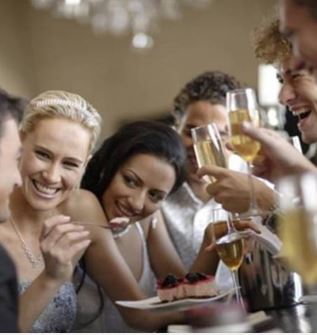
In Lithuania Christmas Eve is a family event and the New Year's Eve a great party with friends!
Lithuanian say "Kaip sutiksi naujus metus, taip juos ir praleisi" (the way you'll meet the new year is the way you will spend it). So everyone is trying to spend New Year's Eve with friend and have as much fun as possible.
Lithuanian New Year's traditions are very similar to those in other countries, and actually were similar since many years ago. Also, the traditional Lithuanian New Years Eve party was very similar to other big celebrations throughout the year.
The New Year's Eve table is quite similar to the Christmas Eve table, but without straws under the tablecloth, and now including meat dishes. A tradition that definitely hasn't changes is that everybody is trying not to fell asleep before midnight. It was said that if you oversleep the midnight point you will be lazy all the upcoming year. People were also trying to get up early on the first day of the new year, because waking up late also meant a very lazy and unfortunate year.
During the New Year celebration people were dancing, singing, playing games and doing magic to guess the future. People didn't drink much of alcohol, especially was that the case for women.
Here are some advices from elders:
- During the New Year, be very nice and listen to relatives - what you are during New Year Eve, you will be throughout the year.
- During to the New Year Eve, try not to fall, because if this happens, next year you will be unhappy.
- If in the start of the New Year, the first news are good - then the year will be successful. If not - the year will be problematic.
* If New Year's night is cold and starry - look forward to a good summer!
* If the during New Year Eve trees are covered with frost - then it will be a good year. If it is wet weather on New Year's Eve, one can expect a year where many will die and dangerous epidemics occur.
* If the first day of the new year is snowy - the upcoming year will see many young people die. If the night is snowy - mostly old people will die.
* If the New Year time is cold - then Easter will be warm.
* If during New Year there are a lot of birds in your homestead - then all year around there will be many guests and the year will be fun.
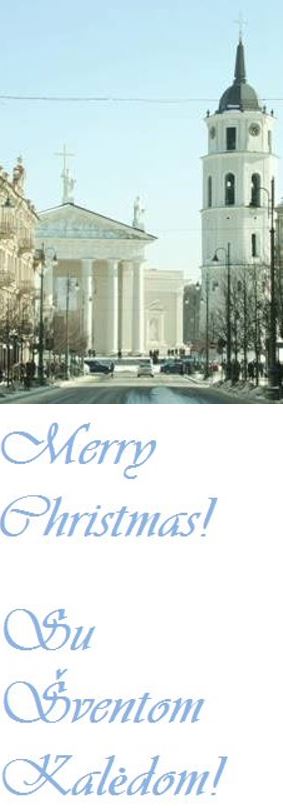
Christmas greetings
from Vilnius
and epic battle for the
future
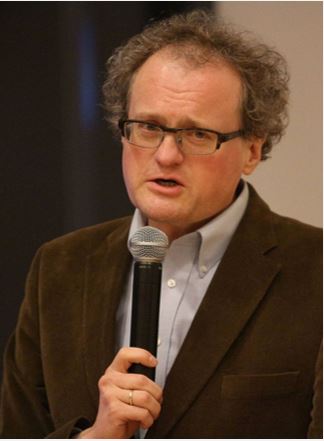
Philosopher, political theorist, historian of
ideas, social analyst, and political
commentator
Ukraine was and continues to be perceived by the EU political class as a sort of grey zone with its immense potential and possibilities for the future, yet deeply embedded and trapped in No Man's Land with all of its troubled past, post-Soviet traumas, ambiguities, insecurities, corruption, social divisions, and despair. Why worry for what has yet to emerge as a new actor of world history in terms of nation-building, European identity, and deeper commitments to transparency and free market economy?
Right? Wrong. No matter how troubled Ukraine's economic and political reality could be, the country has already passed the point of no return. Even if Vladimir Putin retains his leverage of power to blackmail Ukraine and the West in terms of Ukraine's zero chances to accede to NATO due to the problems of territorial integrity, occupation and annexation of Crimea, and mayhem or a frozen conflict in the Donbas region, Ukraine will never return to Russia's zone of influence. It could be deprived of the chances to join NATO or the EU in the coming years or decades, yet there are no forces on earth to make present Ukraine part of the Eurasia project fostered by Putin.
want to learn about the
new, scary propaganda
war between Russia,
The West and the
Baltic States!
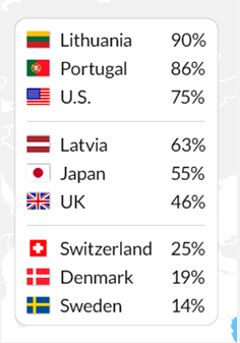
believe their government
is corrupt
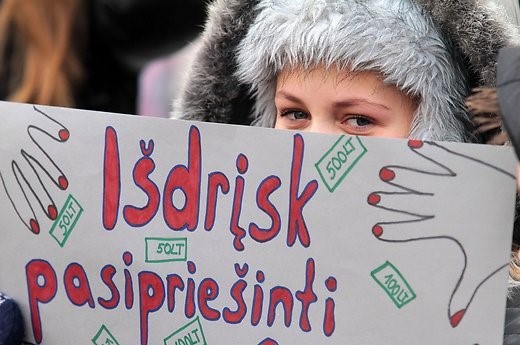
students say no to
bribes for doctors
During Soviet times, government was administered for the people in control, not for the local population, court decisions were decreed, they were not the administration of justice, and academia was the domain of ideologues. 25 years of freedom and openness should have put those bad experiences behind Lithuania, but that is not so.
Today, it is a matter of expectation that court pronouncements will be governed by ideological dictates. Few, if any Lithuanians expect real justice to be effected. For foreign companies, doing business in Lithuania is almost impossible in a situation where business people do not expect rule of law, so, surely Government would be a refuge of competence?
Lithuanian Government has not emerged from Soviet styles. In an attempt to devolve power, Lithuania has created a myriad of fiefdoms of power, each speaking in the name of the Government, each its own centralized power base of ideology.
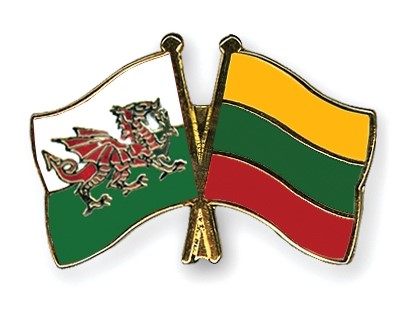
Chepstow, Wales
Doesn't that sound suspiciously like Lithuania? Ah, but I didn't mention the mountains of Snowdonia, which would give the game away.
I'm talking about Wales, that part of the UK which Lithuanians used to call "Valija", but later named "Velsas" (why?). Wales, the nation which has welcomed two Lithuanian heads of state to its shores - firstly Professor Vytautas Landsbergis, who has paid several visits and, more recently, President Dalia Grybauskaitė who attended the 2014 NATO summit which was held in Newport, South Wales.
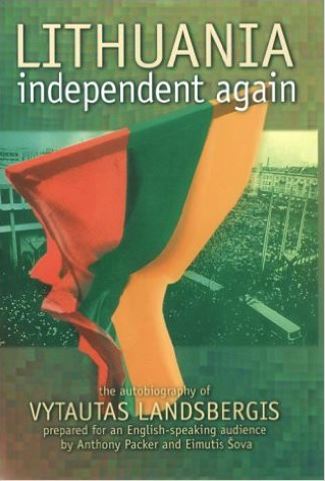
ENGLISH VERSION OF THE
AUTOBIOGRAPHY OF VYTAUTAS LANDSBERGIS.
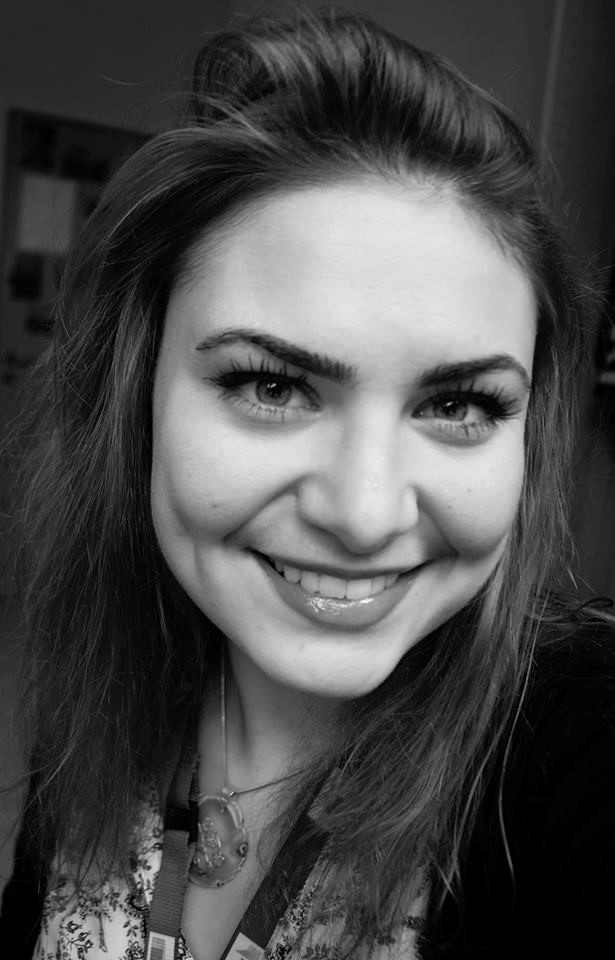
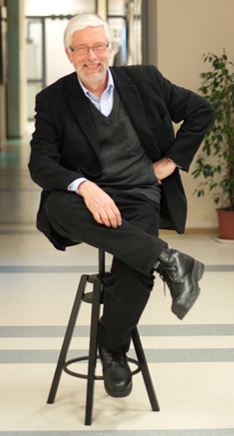
Although Lithuanian activities have thinned over the decades as that postwar generation died out, the Lithuanian Martyrs' parish hall is crowded with many, many hundreds of visitors who come to the Lithuanian cemetery for All Souls' Day. Similarly, the Franciscan parish has standing room only for Christmas Eve mass.
Although I am firmly embedded in the literary culture of Canada, my themes are usually Lithuanian, and I'll be in Kaunas and Vilnius in mid-November 2015 to give talks about the Lithuanian translations of my novels and short stories, which I write in English.
If you have the Lithuanian language, come by to one of the talks listed in the links below. And if you don't, you can read more about my work at
www.anatanassileika.com
http://www.vdu.lt/lt/rasytojas-antanas-sileika-pristatys-savo-kuryba/ https://leu.lt/lt/lf/lf_naujienos/kvieciame-i-rasytojo-59hc.html
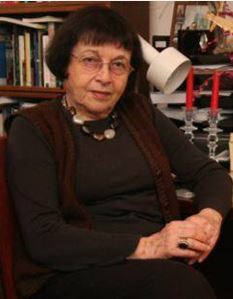
"My love and best wishes to all. As long as VilNews exists, there is hope for the future,"" she writes.
Irena Veisaite means very much for our publication, and we do hereby thank her for the support and wise commitment she always shows.
You can read our interview with her
Facing a new reality
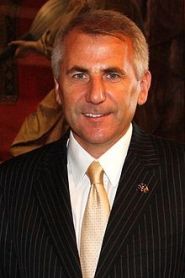
Dear readers of VilNews,
For a number of years, the EU and Russia had assumed the existence of a strategic partnership, based on the convergence of values, economic integration and increasingly open markets and a modernisation agenda for society.
Our agenda was positive and ambitious. We looked at Russia as a country ready to converge with "European values", a country likely to embrace both the basic principles of democratic government and a liberal concept of the world order. It was believed this would bring our relations to a new level, covering the whole spectrum of the EU's strategic relationship with Russia.
The likelihood of Putin
invading Lithuania
.jpg "lithuania today")
Founding Director at Summer Literary Seminars
Are all Lithuanian energy
problems now resolved?
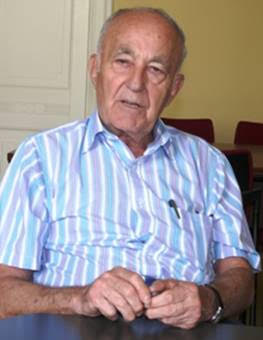
Lithuania as a country does not have significant energy resources. Energy consuming infrastructure after WWII was small and totally supported by energy imports from Russia.
First nuclear reactor begins power generation at Ignalina in 1983, the second reactor in 1987. Iganlina generates enough electricity to cover Lithuania's needs and about 50%.for export. As, prerequisite for membership in EU, Ignalina ceases all nuclear power generation in 2009
The Klaipėda Sea terminal begins Russia's oil export operations in 1959 and imports in 1994.
Mazeikiu Nafta (current ORLEAN Lietuva) begins operation of oil refinery in 1980.
Have Lithuanian ties across
the Baltic Sea become
stronger in recent years?
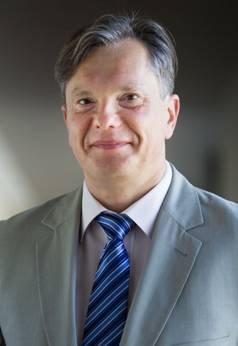
The two decades that have passed since regaining Lithuania's independence can be described as a "building boom". From the wreckage of a captive Soviet republic, a generation of Lithuanians have built a modern European state, and are now helping construct a Nordic-Baltic community replete with institutions intended to promote political coordination and foster a trans-Baltic regional identity. Indeed, a "Nordic-Baltic community" - I will explain later in my text the meaning of this catch-phrase.
Since the restoration of Lithuania's independence 25 years ago, we have continuously felt a strong support from Nordic countries. Nordics in particular were among the countries supporting Lithuania's and Baltic States' striving towards independence. Take example of Iceland, country which recognized Lithuania in February of 1991, well in advance of other countries. Yet another example - Swedish Ambassador was the first ambassador accredited to Lithuania in 1991. The other countries followed suit. When we restored our statehood, Nordic Countries became champions in promoting Baltic integration into Euro-Atlantic institutions. To large degree thanks Nordic Countries, massive transformations occurred in Lithuania since then, Lithuania became fully-fledged member of the EU and NATO, and we joined the Eurozone on 1 January 2015.
Have you heard about the
South African "Pencil Test"?
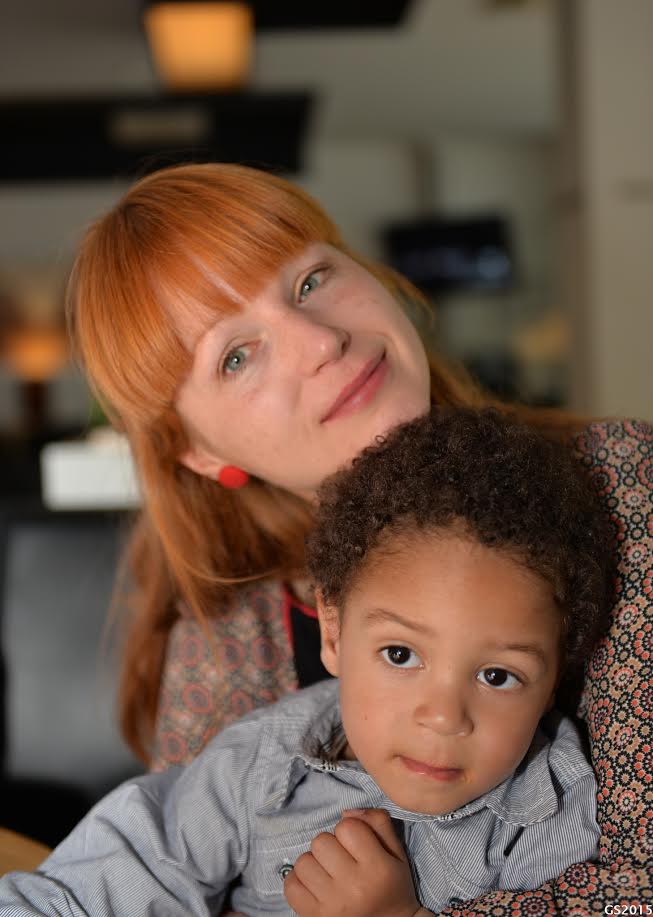
But that is exactly what happened to me when I came back from South Africa. I will tell you how.
VilNews e-magazine is published in Vilnius, Lithuania. Editor-in-Chief: Mr. Aage Myhre. Inquires to the editors: editor@VilNews.com.
Code of Ethics: See Section 2 – about VilNews. VilNews is not responsible for content on external links/web pages.
HOW TO ADVERTISE IN VILNEWS.
All content is copyrighted © 2011. UAB ‘VilNews’.