
THE VOICE OF INTERNATIONAL LITHUANIA

|
VilNews has its own Google archive! Type a word in the above search box to find any article.
You can also follow us on Facebook. We have two different pages. Click to open and join.
 Click on the buttons to open and read each of VilNews' 18 sub-sections Click on the buttons to open and read each of VilNews' 18 sub-sections  |

|


Author Archive
Travel Channel to make new movie about Vilnius
- Posted by - (0) Comment

The Travel Channel will shoot its second film about Lithuania and the capital, the Vilnius Tourism Information Center informs.
A few years ago, the popular Travel Channel shot a film about Vilnius and Lithuania, which was shown around the world for two years, writes LETA/ELTA.
The first few days in the Lithuanian capital left a great impression on the film crew.
The concept of the new film – The Third Class Traveler – differs from the previous one. Director Julian Hunter, together with the creative team, strives to reveal the diverse face of the city and get acquainted with it through people living here.
The main idea of the upcoming film – fascinating journeys and exploring cities does not have to cost large sums of money.
The film about Lithuania will be shown for five years in 117 countries across Europe, America, Africa and the Middle East, in 14 languages.
Information about our country will reach 75 million in Travel Channel audience.
Source:
- Bookmark :
- Digg
- del.icio.us
- Stumbleupon
- Redit it

- Posted by - (6) Comment
Would a ‘Genealogy Section’ in VilNews be of interest for you?
Please contact our Associate Editor, Vin Karnila, as soon as
possible if you think a ‘Genealogy Section’ in VilNews would
be of interest for our readers around the world.
vin.karnila@VilNews.com
Text: Vin Karnila, Associate Editor
We at VilNews have received numerous inquiries from our readers regarding locating relatives in Lithuania or more specific information about their Lithuanian ancestors. Since we know that tracing your Lithuanian Roots is a very important issue for many of you, we are considering a special section, “Genealogy Lithuania”, to assist you in finding information about your ancestors in Lithuania.
Please respond to us if you think such a section would be of interest for our readers around the globe.
The On Line Lithuanian Telephone Book
Once you have an idea as to what the names of your immigrant ancestors were the best place to start and probably the most recommended is the On Line Lithuanian Telephone Book
http://www.zebra.lt/lt/suzinok/telefonai/. This can help you find people currently living in Lithuania with the family name you are searching for. This was in fact how I first found members of the Karnila family so this is what I always first recommend for people to use.
It is however in the Lithuanian language so here are some instructions for using it.
Pavardė = family name/last name
Vietovė = location – In the pull down menu you will see “Didieji miestai”. These are the large cities in Lithuania. “Kiti miestai” are other cities in the country. If you want to search a specific city, click the city of your choice. If you want to search all of Lithuania, do not select a city.
Then click “Ieškoti” and the next page will show any matches to the name you entered.
Some helpful advice for finding a place on a map
The online Lithuanian Telephone Book web site will show you the location on a map however if you want to find the location again on a mapping web site you will need to enter the name correctly. If you try to copy the address that the phone book gave you it will not work. This is because the place names are displayed with Lithuanian grammar.
As an example, the listing could show an address like this:
Sodų g. 2, Rumšiškių mstl., Rumšiškių sen., Kėdainių raj.
The street address, Sodų g. 2 will work on a mapping web site but the rest will not.
“Rumšiškių mstl.” is actually Rumšiškės so you would need to enter Rumšiškės in the mapping web site. The “mstl.” is the abreviation for miestelis which means town. Don‘t enter the word “miestelis” or “mstl” in the mapping web site. You may also find a listing such as “Bajoriškių k”. The “k” means Kaimas or village so this would be the village of Bajoriškiai. A listing such as “Švenčionėlių m.”. The “m” means miestas or city so this would be the city of Švenčionėliai. Don‘t enter the words “village” or “city and don’t enter or “k” or “m” in the mapping web site.
“Rumšiškių sen.” is Rumšiškių seniūnija. Seniūnija is the local government administration office so this means that Rumšiškės is under the jusidiction of this office. You wont need Rumšiškių sen. For the mapping web site. Only enter this if you do not know the name of the village but know what administrative office serves it.
“Kėdainių raj.” is Kadainiai region. Again, you won’t need this for the mapping web site. About the only time you would need to enter the seniūnija or region is if there are more than one town or village with that name.
www.maps.lt is a very good mapping web site you may want to check out.
Even with the number of mapping web sites out there it is a good idea to get a map. The problem with the mapping web sites is that as you zoom in, the area you are viewing gets smaller and you lose the relationship of where you are in relation to other areas. When you zoom out you lose details. When you get a map you will want the scale to be at least 1:400 000. Even at this scale it will not show some of the smaller villages. As an example my family’s village of Garonys is not shown on a map of this scale. To get a map that shows my village I bought what is called an “apylinkės” (district) map which is at a scale of 1:130 000. Another good tool is the Lithuanian Road Atlas in 1:120 000 scale. All of these maps and atlases are available at www.balticvalue.com They have about the largest assortment of Lithuanian maps and road atlases on the Internet.
Some websites
We have compiled a list of some good web sites to get information from. Please keep in mind that no one web site will usually give you all the information you are looking for so it is good to check as many as you can.
Lithuanian Global Genealogical Society. LGGS
http://www.lithuaniangenealogy.org/
GenoPro - Genealogy ressources in Lithuania
Good site with useful links for searching for people of the Jewish Faith.
Included are The JewishGen Yizkor Book, JewishGen ShtetlSeeker, Litvak SIG and JewishGen Lithuania Database
http://www.genopro.com/genealogy-links/?country=LT&t=Lithuania
Lithuanian State Historical Archives
http://www.archyvai.lt/archyvai/index.jsp
Vilnius church provincial archives documents and metadata information system – Lithuanian language
http://www.kf.vu.lt/baris/
Archives of Belarus
http://archives.gov.by/eng/
Polish Virtual Archives
http://szukajwarchiwach.pl/
Polish genealogy and coats of arms
http://www.jurzak.pl/
Polish genealogy
http://www.genealogiapolska.pl/index.php
Lithuanian estates Database. Very interesting web site – Lithuanian language
http://www.heritage.lt/dvarai/ppavadinimas.php
Lithuanian military volunteers - Lithuanian language
http://www.versme.lt/sav_a.htm
The Statue of Liberty- Ellis Island Foundation
http://www.ellisisland.org/
LitvakSIG – Lithuanian Jewish Special Interest Group
http://www.jewishgen.org/litvak/all.htm
Genealogy Links Lithuania
http://www.genealogylinks.net/europe/lithuania/
LITHUANIA MAILING LISTS
http://www.rootsweb.ancestry.com/~jfuller/gen_mail_country-lit.html#LITHUANIA
Lithuania Professional Research
http://genealogyjourney.com/t/?x=Vilnius
Lithuanian Place Name Changes
http://www.rootsweb.ancestry.com/~ilwinneb/placelit.htm
As stated before, no one web site will usually give you all the information you are looking for so dear readers if you know of any web sites that are helpful in providing information for tracing some ones Lithuanian Roots please tell us about them so that we can share them with our fellow readers.
A word about some of the genealogy pay sites. As you search the web for sites that offer genealogical information you will come across many sites that require you to pay a fee to use them. Are they worth it??? Good question. Let’s face it, if they help you find your family they are worth it but the chances of finding your family on one of these sites is kind of hit or miss. This is because of how most of them work. Most of them do two things. They provide a program to organize your data or in other words create your family tree. What they also do is give you access to the data from the other people that use this site. So if some one that has a connection to your family has also paid to use this site then it is possible to view their information – maybe. The person has to authorize the web site to display their information. They can also instruct the web site to limit the information for privacy purposes. I have found that this “limited” information is not much help. Of course if no one with a connection to your family has used the specific pay site then it won’t be of much help to you.
As you start to gather information it is highly advisable to organize it. The best way to do this is to use genealogy software. There are quite a few genealogy software programs out there. I have tried a few and have not been very satisfied with them. The reason being that the reports they generate are limited. There is only one software program that I can personally recommend and I can tell you that I highly recommend this software. It is easy to use, easy to input data and easy to find data and it provides a very wide variety of report formats. The program is called “Brother’s Keeper” and it is considered one of the best genealogy software programs available.
You can get more information from their web site
http://bkwin.org/
at the bottom of the page you will find the link to their online store
http://brotherskeeperstore.stores.yahoo.net/brotkeepforw.html
Contact the people that you possibly are related to
Now let us talk about what you can do once you finally find information about a person or some people that you are possibly related to. There is only one thing to do – You need to contact them. If you have both an Email address and a mailing address I would recommend that you send both an Email and a letter. This is because you don’t know if one or the other is still current.
In the message KEEP IT SHORT AND SIMPLE. Tell them who you are. Tell them the information you know. This would be the information about the people in your family that do not live in Lithuania. If you have information about your family in Lithuania of course include this. What you are trying to provide is a line from you back to Lithuania. The information that is helpful is names, dates and places. Adding brothers, sisters and cousins will not be of much help and could confuse things unless any of these people were born in Lithuania or can trace themselves back to Lithuania.
If you are going to write a letter to Lithuania and don’t speak Lithuanian I really wouldn’t worry about it. In this day and age in Lithuania finding some one to translate a letter written in English is not much of a problem. However when I recommend KEEP IT SHORT AND SIMPLE, you will want to be very careful in regards to grammar and phrases. I am an English language trainer here in Vilnius and I can tell you that only my advanced level students can fully understand (sometimes) all the nuances of English grammar. When you write your letter try to use only the “simple tense” and limit the use of the “continuous tense”. Try to write nothing in the “perfect tense” as the perfect tense is VERY difficult to understand because this form of grammar does not exist in the Lithuanian language. Writing a letter all in the simple tense is easy to do and easy to translate and understand. I also operate an editing service here and I can tell you that most of the letters I edit related to genealogy end up being reduced by about 50% so that only the key information remains - KEEP IT SHORT AND SIMPLE.
The next question is when should I send the letter???
The answer is – As soon as you get a name and address to send a letter to!!!
I have edited some letters more than a year ago for some people and they still have not sent the letter. The usual reason is that they are still trying to get more information. Until you send the letter you probably won’t get any useful information so just send the letter. Some one may respond to your letter in effect saying that your information is too general to show a direct link. If that’s the case, at least you have established a contact. I have found that the people here in Lithuania are more than happy to try to help people find their families even if they are not sure they are directly related to you.
Searching for your roots can be interesting, rewarding and frustrating. So much of it is hit or miss and in some cases just pure luck and good fortune. Although it took years for me to finally find and connect with my family here in Lithuania, I was lucky that the name of Karnila is a rather unique name. All of the Karnilas in Lithuania are traced back to the same family. My grandmother’s family of Petkevičius is a different matter in that it is more common. Eventually I learned that I had to address her family as Petkevičius of the Kaišiadorys region. When I enter the name of Petkevičius in the On Line Lithuanian Telephone Book there are 280 matches. A dear friend of mine has the family name of Kazlauskas. When you enter this name in the On Line Lithuanian Telephone Book you get about 150 matches. Things like this can make matters much more of a challenge. In spite of some of these road blocks and detours the key to success is to just keep on searching.
|
Please let us know if you think a “Genealogy Section” in VilNews would be of interest |
- Bookmark :
- Digg
- del.icio.us
- Stumbleupon
- Redit it

I found my family!
- Posted by - (1) Comment
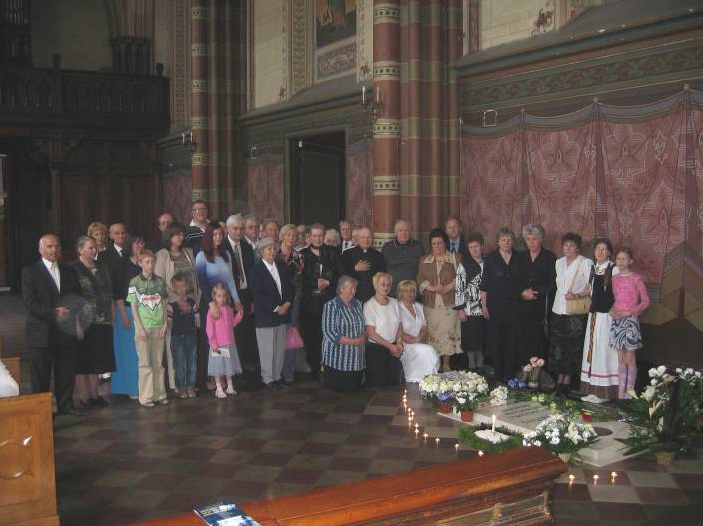
My first meeting with my family in Lithuania
- we had been searching for 90 years
By KR Slade
It's Saturday, 28 May 2005, 6pm, in Lithuania. I've just returned to my room in the capital city, Vilnius, from my nine-hour day-trip to Kaunas, Lithuania's second-largest city. Kaunas had been the capital of the first Republic of Lithuania, during the inter-world-wars period, and is 90+ percent ethnic-Lithuanian -- compared to 60 percent in Vilnius. Lithuania is, now and since 1990, in its ‘third’ republic, again free, after its second -- and fake --‘Lithuanian Soviet Socialist Republic’, when it was occupied and annexed by the Union of Soviet Socialist Republics. Kaunas is called ‘the heart of Lithuania’, especially by the people of Kaunas. Today is a very special day for my family in Lithuania: the fifth anniversary of the death of our family’s Cardinal Vincentas Sladkevicius.
I exited the mini-bus (CDN$5) on ‘Savonariu (i.e., 'Volunteers' -- named for those who fought against the invading Nazis, or Soviets, or Poles) Prospect’ in downtown Kaunas, after the 1.25 hour trip, which is 1.5 hours by any other kind of vehicle. The mini-bus does not leave Vilnius on any ‘Western’ schedule, other than 'when it is full' with its maximum of eight passengers, or sooner if everyone waiting too-long complains. The driver will stop anywhere a passenger wants. There is a debate as to whether this bus service is legal. I was passenger number eight, so we left in one minute.
My Lithuanian language must be getting better, because upon arriving in down-town Kaunas, the bus driver understood where I ultimately wanted to go, and he told me to take a trolley-bus when he dropped me off. I asked a man at a trolley-stop how to get to the cathedral; but it was his 11-year-old son who became very proud (in front of his father and two younger brothers), because it was only he who could help me in English. Since 1990 independence, English replaced Russian that is taught in schools from first grade.
I got off the trolley-bus (CDN$.45) after I saw Laisves (i.e., ‘Freedom’) Street. I remembered being lost on that wide pedestrian-only street on both of my two previous, cold and rainy day-trips in the last year, to Kaunas.
I arrived early enough to while-away an hour on this summer-like day, with a salad and Coca-Cola (total: CDN$5) at a sidewalk café on the pedestrian-only, cobblestone streets of the nearly-empty Old City. The vegetable salad with milky dressing was good; I’m getting used to the standard room-temperature cola. A group of a dozen foreign tourists arrived, quickly gave up trying to understand the Lithuanian-only menu, began yelling into the basement dinning room for a waitress, ordered beers, and seemed surprised when the 20-year-old waitress completely understood their own second-language English.
I arrived fifteen minutes early at the Basilian-style cathedral; it’s only 400 years old, but it appears 1,000 years older because of its style of architecture, reminiscent of the time of St. Basil The Great, a Father and Doctor of the Church, most revered here in Eastern Europe. I entered and watched a child’s baptism ceremony at the front alter while I walked the length of a side aisle to the private chapel-room. Here, in this Gothic-style quiet area of his cathedral, Cardinal Sladkevicius is buried in the floor.
In a few minutes, about three-dozen relatives, and spouses, some with their small children, had gathered. I had never met any of them.
However, I had extensive research information from my previous seventeen months in Lithuania. Fr. Peternal of Vilnius had helped me for the previous eight months. We obtained the help of Fr. Klimas at the church in the village (i.e., Zasliai -- Guronys) where my family had lived for the last 300 years. Irena, Director of the Cardinal Sladkevicius Museum in Kaunas and author of two biographies of the Cardinal, provided documents. Antanas Paulauskas, author of the unpublished family-genealogy manuscript, wrote a letter to family members to introduce me. A couple of English-speaking cousins, one in London and another in Kaunas, had e-mailed me. Cousin Lina and her husband Marius had telephoned me and introduced me to the no-cost Skype computer telephony so that we could have several more long-distance conversations; and most importantly to tell me that the family’s private commemoration was on Saturday, not on Sunday (that was the public commemoration). Otherwise, I would have arrived a day late, and never met the family. However, I was slightly uncomfortable because some of the family knew me, but I did not know any of them.
In the chapel of this cathedral, after some time for reflection by our family, the very pleasant and jovial Prelate Vincentas Jalinskas entered, summoned us to him to stand around the Cardinal’s tomb, and he sang a cappella some hymns, interspersed with his personal recollections of the Cardinal, whom he knew well, and then greeted every one of us individually. The Prelate walked to the opened door, shook the hand of each of us, and told each of us, in Lithuanian, “Be careful of this step-down, here” as we re-entered the main part of the cathedral where a wedding was now taking place. If not only from the mid-day sunlight streaming blazingly through the ancient windows, perhaps more from exiting our transcendental experience, his caution was to be appreciated, as he well-knew that we all now were walking-on-air.
We all gathered in front of the cathedral for a few minutes, and then about thirty family members drove a short distance to a tiny chapel in a nearby neighbourhood for Mass, with two priests and two folk musicians. Father Alfonsas Bulota was the personal secretary to the Cardinal, and Fr. Virginijus Lenktaitis also knew His Eminence well. After the mass, we walked through the garden behind the chapel to a sit-down lunch gathering at the priest's house, where individuals shared their reminiscences about their uncle/cousin/friend, whom everyone calls 'His Eminence'. I did not understand what anyone was saying, but I could easily understand the fondness of their memories and their profound respect and admiration for our cardinal. The earlier sombre faces of the men and the tears of the women, at the cathedral and the mass, now turned to smiles and laughter.
Janina (the daughter of a brother of the Cardinal), who cared for His Eminence during his last three years’ battle with two cancers, and who took care of me throughout this day (although she doesn't speak any English!) arranged a ride for me back to Vilnius, with two non-English-speaking relatives. Five minutes into the drive, we discovered that Dr. N’s wife, Milda, and I could communicate in French.
Of course, we had to stop for ‘cepelini’, ten minutes out of Kaunas. Cepelini is a favourite Lithuanian ethnic food made from grated potatoes packed around a meatball, usually made of pork, served warm, with a light cheesy sauce. It has a nickname, ‘Zeppelin’ because it is the plate-size oblong shape of a dirigible aircraft. This restaurant is well-known for good ethnic food, and I enjoyed it in the leisurely atmosphere of the garden terrace and watching the children in the playground.
Between our translations of Lithuanian and French, I thought of how I had enjoyed myself so very much this day and how I hoped to have other family gatherings this coming summer. I am fortunate to be related to such nice people; there are twice as many more family members to meet here in Lithuania; there are more in London, the Americas, etc. In addition, there will be my Lithuanian grandmother’s family yet to discover.
One day meeting some of my family, a first meeting since my grandparents left Lithuania ninety years ago; total cost: CDN$10.45; total satisfaction: yes.
A few weeks later, I would find myself in a small village, 20 km from Kaunas, spending the weekend at Janina’s farm. The 24th of June is St. John’s Day, the biggest holiday in Lithuania, and Janina’s name-day, as well as her birthday. St. John’s Day has been celebrated in Lithuania for a thousand years before Christianity arrived here in the fourteenth century; pagans knew that it’s the shortest night of the year.
I became more acquainted with her son, daughter and husband and their 4 year-old, as well as Fr. Bulota, other family, and some family friends. Remembering names and relationships is going to be a temporary challenge. I remember the name of one of the three dogs, but not the cat; maybe there are no names for the five goats, twenty turkeys, four ducks, two roosters, and whatever number of chickens. The bull in the next pasture does not appear to be especially friendly. I rode a bicycle for the first time in 30 years, but only for 3,000 meters to the village store for ice-cream. I enjoyed the farm’s swimming hole. The food brought back forgotten memories of my grandmother’s cooking; the names of many foods here do not have English translations.
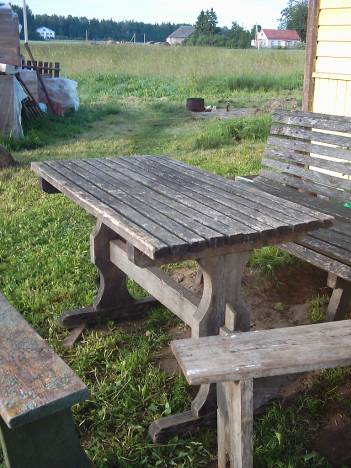
The Cardinal's garden-table, now on a farm
The first of our gatherings was out-of-doors, in the yard, around a weathered table, the Lithuanian variety of a picnic-table, of an ethnic design but not otherwise special. The first night was rainy, we ate inside, and afterwards I was shown some family photos of His Eminence. One photo showed the Cardinal in his garden, in his later years: sitting at the same table. Suddenly that table became to me, as it is to everyone who knows, very special. In addition, the photos are kept in the bookcase wall unit, not so special a piece of furniture, except that from the photos it is evident that this bookcase also was his. Now that soviet-era contemporary-design bookcase acquires a very historic provenance. I learned more about his forced and long ‘internal exile’ under the Soviet Regime, when he had been appointed by Pope John XXIII to be a bishop. There were the facts of his life-long suffering from a childhood disease, caused by poor diet from poverty. And, there were the many stories, from his almost eighty years, of interpretations of what he liked and what he did not especially like, and some of these interpretations are for only us ever to know.
I expect to be returning soon to the village to take advantage of my open invitation there. There are many more family, living and past, to get to know. There are more villages to visit. This story does not seem to be going to have an end any time soon...
- Bookmark :
- Digg
- del.icio.us
- Stumbleupon
- Redit it

- Posted by - (0) Comment
Lithuania and the Soviet Union
1939 – 1940 (1 – 4)
Dear readers,
On 15 June 1940, Soviet Russia invaded Lithuania. This was the beginning of Lithuania's loss of freedom for more than fifty years and the beginning of one of the saddest and most tragic parts of Lithuania's history. There has been much talk and speculation about how this invasion came about and what Lithuania did, or as some would accuse didn't do, to prevent it. To shed clear light on this topic, we would like to share with you parts of the personal memoirs of Juozas Urbšys who was a member of the group that personally met with Vyacheslav Molotov and Stalin. After reading these fascinating and very informative memoirs we are sure you will have a better appreciation for the precarious situation the leaders of the then free Republic of Lithuania were in and what they did to try to protect the lives of the Lithuanian people.
|
|
|
|
|
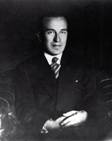
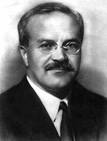
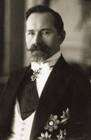
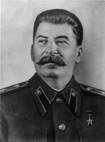
We share these memoirs in 4 parts. Here they are:
(click on the titles to open the articles)
Part 1: In Moscow
Part 2: Vilnius, army garrisons
Part 3: We accustom ourselves to army bases.
Part 4: Ultimatum. Occupation.
- Bookmark :
- Digg
- del.icio.us
- Stumbleupon
- Redit it

Venclova`s Vilnius (1 – 4)
- Posted by - (0) Comment
The history of the amazing Lithuanian city written by the great poet most qualified to write about it. This book includes a dialogue between the author and Nobel Prize laureate Czeslaw Milosz about the city. An absolutely indispensable work on the city that produced John Gielgud, Bernard Berenson and the Budapest String Quartet.
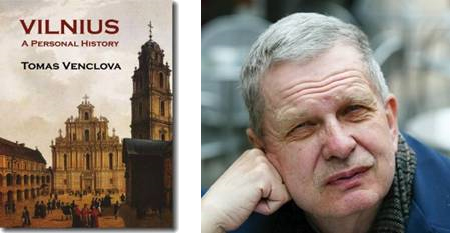
This is the four parts in a series of excerpts from Tomas Venclova’s book “Vilnius a Personal History”.
(click on the titles to open the articles)
Part 1: Venclova’s Vilnius
Part 2: Mindaugas, Gediminas and Vilnius
Part 3: Pagan Lithuania
Part 4: Lithuanians, “The Saracens of the North”
- Bookmark :
- Digg
- del.icio.us
- Stumbleupon
- Redit it

Lithuania and the Soviet Union 1939-1940 (4)
- Posted by - (2) Comment
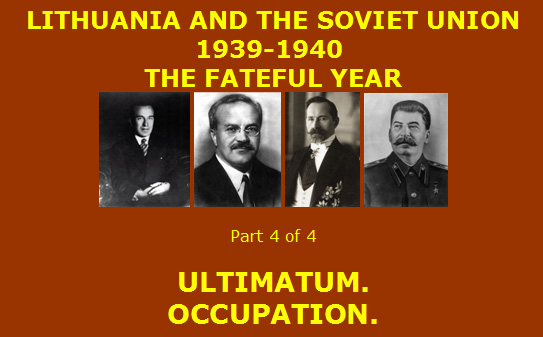
Dear readers,
On 15 June 1940, Soviet Russia invaded Lithuania. This was the beginning of Lithuania’s loss of freedom for more than fifty years and the beginning of one of the saddest and most tragic parts of Lithuania’s history. There has been much talk and speculation about how this invasion came about and what Lithuania did, or as some would accuse didn’t do, to prevent it. To shed clear light on this topic, we would like to share with you parts of the personal memoirs of Juozas Urbšys who was a member of the group that personally met with Vyacheslav Molotov and Stalin. After reading these fascinating and very informative memoirs we are sure you will have a better appreciation for the precarious situation the leaders of the then free Republic of Lithuania were in and what they did to try to protect the lives of the Lithuanian people.
We will share these memoirs in 4 parts. Here is part 4 of 4
ULTIMATUM.
OCCUPATION.
p. 28
The Lithuanian government decided to send its Minister of Foreign Affairs to Moscow to find out once and for all what was expected of Lithuania. Pozdniakov was appraised of this. After several days, Natkevičius telegraphed from Moscow that Molotov wished to speak with the Prime Minister.
On June 7, Prime Minister A. Merkys arrived in Moscow where he stayed until June 12. During that time he had several meetings with Molotov. The latter had invented yet another accusation: Lithuania, apparently, had entered into a military agreement with Latvia and Estonia against the Soviet Union. What an empty fabrication! Estonia and Latvia, at the beginning of their independence, had entered into a mutual military agreement, openly declared and known to all, including the Soviet Union which had concluded mutual assistance treaties with both countries. Lithuania, however, had never been party to the Estonian/Latvian military convention, nor had it made any other war treaty with them.
On June 11, the government of Lithuania sent its Minister of Foreign Affairs to aid A. Merkys. That same evening we were received by Molotov. We explained that now, as always, and especially in view of the international situation, Lithuania sought friendly relations with the Soviet Union based on reciprocal loyalty and fidelity to treaties. Molotov was not the least bit interested in listening to our speech.
A. Merkys flew to Kaunas on June 12, leaving me in Moscow.

Prime Minister Antanas Merkys
Minister Plenipotentiary Natkevičius and I try knocking on other doors in hopes of getting some clarification elsewhere. To this end we visit Assistant Deputy People's Commissar for Foreign Affairs, Dekanozov, who would later direct Lithuania's annexation and who would be shot together with Beria after the Second World War.
I question him about the matter concerning us, hoping to ascertain what it was that the Soviet Union expected of Lithuania.
— The matter is now in government hands and I, personally, can do nothing, — was Dekanozov's answer.
I had brought with me a letter from the President of the Republic of Lithuania, Antanas Smetona, addressed to the chairman of the Presidium of the Supreme Soviet of the Soviet Union, Mikhail Kalinin. In the letter, President Smetona solemnly asserts Lithuania's fidelity to traditional friendly relations between the two countries and states that Lithuania has no overt or covert commitments to any third nation which would not be compatible with such relations or with any Lithuanian/Soviet treaties.
"The government of the Republic of Lithuania and I, personally, had always made, and will continue to make, a concerted effort so that the treaty of October 10, 1939 will be most faithfully executed," wrote the President of Lithuania.
Minister Natkevičius and I requested a meeting with M. Kalinin to which he agreed. We gave him the letter. After reading it, this high-ranking Soviet official replied with something akin to:
— These issues are now under consideration by the government of the Soviet Union and I cannot interfere.
* * *
Ca-ta-stro-phe!
Let us remember a moment of the late evening meeting of October 3, 1939 in the Kremlin when Stalin declared to the Lithuanian delegation that the Soviet Union and Germany had agreed to divide up Lithuania and Molotov had talked of "new ways." New ways, indeed. Now it becomes clear that these new ways were paved for the same old purpose — so that hobnailed boots could trample foreign soil.
Midnight on June 14, Molotov summons us to the Kremlin. Natkevičius and I go.
— I have an important announcement for the government of Lithuania, — states Molotov picking up a written message from the table and reading it.
It was the worst kind of ultimatum. Worst in the sense that normally an ultimatum in international affairs means a categorical demand, precluding any further arguments or contradictions, which one country makes to another threatening the use of military force if its demands are not met within the time frame set by the ultimatum. This document, as we will see, was written in such a way, and further clarified by Molotov in words which would leave no doubt or hope, that no matter what concessions Lithuania made, the Soviet Union would still occupy it with its military might.
The first part of the ultimatum deals with reprimands, the second with demands.
The reprimands are divided into two paragraphs. The first harshly repeats the Soviet Union's version of the alleged abduction of Soviet soldiers, now clearly affirming that this was carried out by institutions of the Lithuanian government. That same paragraph mentions "mass arrests and deportations to concentration camps of Lithuanian citizens among whom are those individuals who serve Soviet army troops." All of these allegations are one-sidedly presented as facts which show that "the government of Lithuania grossly violates" the treaty of mutual assistance and is "preparing to attack (!) Soviet army bases established according to that treaty."
The second paragraph of the reprimands ascertains that "the government of Lithuania entered into a military alliance with Latvia and Estonia." That fictitious accusation of Molotov's is presented as a fact showing how "the government of Lithuania brusquely" violated Article 6 of the Soviet/Lithuanian mutual assistance treaty.
Had these accusations had some basis in fact, they would have been dealt with according to the procedures set forth in the September 28,1926 treaty of non-aggression between Lithuania and the Soviet Union. Article 5 of that treaty clearly states that in the event of a conflict arising between the two countries, and one which they could not resolve by diplomatic means, that Lithuania and the Soviet Union would appoint the necessary commissions. Hence, the Soviet Union, by one-sidedly resorting to military force to purportedly regulate not a real but an artificial conflict of its own making, was the one that grossly violated the treaty of non-aggression, and together with it, all of the other treaties linking the two countries.
This brings to mind the July 5,1933 treaty regarding the definition of an aggressor which stipulated that the use of armed force by one country against the other cannot be justified by that country's "political, economic, or social structure, the faults attributed to its administration, or to unrest arising from strikes ..."
The second part of the ultimatum demands:
"1. That Minister of the Interior Skučas and Director of State Security Povilaitis be put on trial as those directly responsible for the acts of provocation against Soviet garrisons in Lithuania;


General Kazimieras Skučas and Augustinas Povilaitis
2. That a government willing and capable of assuring the conscientious execution of the treaty of mutual assistance between the Soviet Union and Lithuania, and one resolved to suppress the foes of this treaty, be formed at once in Lithuania;
3. That free passage into Lithuanian territory be guaranteed immediately for those Soviet army units which will be situated in the most important centers of Lithuania and which will be large enough to assure the fulfillment of the Soviet/Lithuanian treaty of mutual assistance and the interdiction of the acts of provocation perpetrated against the Soviet garrisons in Lithuania."
All of these demands are clearly contrary to the treaty of mutual assistance which the ultimatum purports to defend, especially to Article 7 which reads:
"The execution of this treaty shall in no way infringe upon the sovereign rights of the contracting countries, and especially their system of government, their economic and social systems, their military means, or generally, the principle of non-interference in internal affairs."
Finally, the time limit for the ultimatum is set forth:
"The government of the Soviet Union expects a response from the government of Lithuania by 10 A.M. on June 15. Non-receipt of a response by that time will be taken to be a refusal to comply with the above-made demands of the Soviet Union."
Having read this aloud, Molotov handed it to me. I read it again silently. What to do? Or say? Stunned silence on my part.
— I am afraid of what this ultimatum means for Lithuania, — I finally say, feeling that these are not the requisite words.
Words? Like peas thrown against a wall.
Molotov cried out angrily:
—You've sold Lithuania right and left enough times! We know how much the fate of Lithuania means to you.
I waited for his effrontery to subside and after a moment asked:
— Wouldn't it be possible to extend the time limit of the ultimatum? It's almost one in the morning. We won't be able to submit it to our government on time. It still had to be coded.
To which Molotov replied:
— It's not necessary to submit the reasons for the ultimatum. The three points can be coded quickly and you should get a response by 10 A.M. Even so, whatever your reply may be, the army will march into Lithuania tomorrow.
(Tomorrow . . . Not tomorrow, today. Tomorrow had already begun . . . )
We return to the legation with the document burning a hole in our pockets. We feel dishonored, trampled, violated.
We try telephoning Kaunas and cannot get through. Evidently all the lines are busy. There is no time to code the message. We send the three paragraphs of the demands and the time limit for the ultimatum in an open telegram.
Towards morning our call to Kaunas finally comes through. The Ministry of Foreign Affairs answers. The director of the legal administration department, Voldemaras Vytautas Černeckis, comes to the phone.
— Good morning, — I say, — I have until 10 A.M. to report whether or not the government accepts the Soviet Union's ultimatum. What can I say?
I am not going to try and reconstruct Černeckis's words. The sound of his voice sufficiently echoes the tragedy of the situation. I feel that my question, too, must sound strange to his ears, almost incomprehensible. It's as if he were saying: "What kind of talk can there be about acceptance or refusal? That doesn't change a thing. The Soviet army is still going to march into Lithuania."
Finally, in a tired and dispirited voice, he says:
— It accepts.
This would be an apt place to honor the memory of this noble patriot. He had married a Lithuanian woman from America and they had raised a large and handsome Lithuanian family. Because she was born in the U.S., his wife had the right to become an American citizen, and through their marriage, so did he. When the Soviet Union occupied Lithuania, the U.S. Embassy offered to issue them American passports so that they and their family could go to the States. Černeckis, however, was unwilling to leave his country in its time of misfortune and stayed in Lithuania. Unfortunately, not for long. The newcomer Soviets deported him and his entire family to Siberia. There they incarcerated him in a camp where he died. "Assuring" the "fulfillment" of the non-aggression treaty, they deported his wife and four children beyond the Arctic Circle to the mouth of the Lena River.
On the morning of June 15, Natkevičius and I ask to see Molotov. After a bit, the phone rings:
— Molotov awaits you.
Molotov and Pozdniakov receive us. I say:
— The government of Lithuania accepts your ultimatum.
— Good, — says Pozdniakov, and raising his tone of voice, he adds — But your government continues to carry out policies hostile to ours. We've just received word that it has named Raštikis as the new Prime Minister. How can you name a new prime minister without our knowledge or our consent?
— But you have demanded that a new government be formed ... — I try to explain.
— True, but it has to be acceptable to us. That's why you must confer with us about its composition.
(...)
(Here Urbšys reiterates Article 7 of the mutual assistance treaty and its specification of non-interference in internal affairs.)
p. 33
And now look — Lithuania, a sovereign nation, can not even form its own government without the Soviet Union's approval.
— Very well, — continues Molotov in a calmer tone, — our special emissary will leave for Lithuania today. I still don't know who it will be.
He stares at me for a while thinking something to himself.
— Your president will have to confer with him about the composition of the new government. With him and with comrade Pozdniakov, — finishes Molotov.
The above-mentioned Dekanozov, Deputy People's Commissar for Foreign Affairs, was named that special emissary.
We telegraphed Kaunas of what we have heard from Molotov. Natkevičius says:
— Why not add that Skučas and Povilaitis not try to escape? Why should they be afraid of a trial? Their escape would only appear to be an admission of guilt.
So we telegraphed it ... How naive we still were . . . We thought that, all of this notwithstanding, Lithuania would remain an independent nation. Natkevičius supposed that it would be accorded the status that Mongolia had at the time. We presumed Lithuanian courts would publicly consider the case of Skučas and Povilaitis. The first paragraph of the ultimatum even required that they be put on trial. By ordering the arrest of these two individuals, Prime Minister Merkys was carrying out the demands of the ultimatum. And who heard about any such trial, or even about their fate? — They disappeared into the depths of the NKVD's labyrinths never to resurface. (Author's note, p. 34: "Skučas and Povilaitis were apprehended near the Prussian border, jailed and later executed," in Jerzy Ochmanski, Historia Litwi, 1967)
Ensignia of the NKVD
On June 15, in Moscow's grand theater, the final performance celebrating the decade of Byelorussia was being put on. Natkevičius asked whether or not we were going. I replied in the negative. Nonetheless, Natkevičius tried to persuade me to go by arguing that such a demonstration would be pointless.
We went. I was given a seat in the loge next to German Ambassador von Schulenburg, though whether this was for reasons of protocal or for others, I do not know.
Since I am to leave tomorrow, it would be fitting to pay a farewell visit to Molotov. The legation phoned the Protocol Department which quickly returned the call saying that although Molotov was to be at a reception in the Kremlin honoring the Byelorussians he would absent himself briefly to receive me at 11:30 in the evening.
Once again we went to the Kremlin for what would be, at least for me, the last time. Molotov, having left the reception, received us in good spirits. For some reason, he asked my opinion about Justas Paleckis. I replied that the man seemed to me a sincere Lithuanian patriot. I knew nothing then, nor could I have guessed, of the role which the Kremlin had foreseen for Justas Paleckis.
As he bid us farewell, Molotov looked attentively at Natkevičius and me, saying:
— The two of you will be able to work in the new system.
—Thank you.
Molotov now feels totally the master of Lithuania. And why not, considering how many troops he's crammed in there? As a Russian, he knows yog kto palku vzial tot i kapral or in the approximate Lithuanian version, the one holding the cudgel chases who he wants to.
The following morning, the 16th of June, I am on a Swedish passenger plane to Riga. The closer we get to Latvia the more Soviet fighter planes there are in the sky. On the same day that the Soviet Union occupied Lithuania its armies also took over Latvia and Estonia. Two fighters approach our plane, one on either side, and instruct us to land. We follow them to a military airfield and some sort of official alights from our plane. The rest of us wait. After about fifteen minutes he returns and we are airborne once again.
In Riga, I change to a train.
Soon I will be in Lithuania, my one and only, my dear and beloved country……

Photo courtesy of Lituanus
DEKANOZOV TAKES COMMAND OF LITHUANIA
p. 35;
The airport of Šiauliai is abuzz with Soviet military aircraft. At Kėdainiai, a "mutual assistance" tank partially protrudes from behind the station house.

How dismal. Past Jonava, several of the ultimatum's tanks rattle along a rye field path to the highway……
We would like to thank Lituanus for their kind permission to share this article with you.
LITUANUS
LITHUANIAN QUARTERLY JOURNAL OF ARTS AND SCIENCES
Volume 34, No. 2 - Summer 1989
Editor of this issue: Antanas Dundzila
Memoirs of Juozas Urbšys
Translated and edited by Sigita Naujokaitis
http://www.lituanus.org
- Bookmark :
- Digg
- del.icio.us
- Stumbleupon
- Redit it
New Lithuanian website spotlights KGB files
- Posted by - (0) Comment

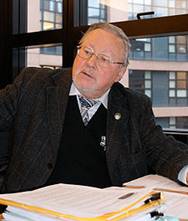
Professor Vytautas Landsbergis
(AFP) Lithuania on Thursday launched a website dedicated to exposing the activities of the Soviet KGB secret police when the Baltic republic was ruled by the Kremlin.
"For years, the truth was hidden," Prime Minister Andrius Kubilius said in a statement as the state-funded www.kgbveikla.lt went online.
"But today, the more truth there is, the greater freedom is too," added Kubilius, 54, a member of the dissident movement which steered Lithuania to independence in 1991 as the Soviet bloc crumbled.
The site was created under 2010 legislation beefing up efforts to call to account those who collaborated with the KGB during five decades of Soviet rule.
"It's certainly late and limited, but it's still a step in the right direction. It's important, because we'll no longer be hushing up dishonourable acts," independence leader Vytautas Landsbergis, 78, told AFP Thursday.
- Bookmark :
- Digg
- del.icio.us
- Stumbleupon
- Redit it
Gorbachev likely to decline Lithuanian request to speak about his role in the Soviet 1991 crackdown
- Posted by - (0) Comment
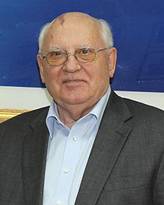
Mikhail Gorbachev is likely to decline a request from Lithuania to give evidence on his role in the Soviet crackdown on the Baltic state's 1991 independence drive, his spokesman said on Thursday.
Lithuanian justice authorities said Wednesday they would like to question the last Soviet leader as a witness in their investigation of the January 1991 crackdown which ended with the deaths of 14 civilians and hundreds wounded.
But Gorbachev's spokesman Vladimir Polyakov said he was likely to decline. "He has dealt with this issue many times, both in his books and in interviews, so everything has been said," he told the Echo of Moscow radio station.
Gorbachev has not received any official request from Lithuanian prosecutors, Polyakov added. The Lithuanian chief prosecutor's office said earlier this week it had sent Russia a formal request for legal assistance in its bid to question Gorbachev.
Soviet troops entered the capital Vilnius after Lithuania declared its secession in 1990 and stormed the city's television tower as tens of thousands of people formed human shields against the troops.
After Lithuania finally won recognition from Moscow as an independent state in September 1991, the Baltic state has sought justice for the crackdown's victims.
Read more at:
http://www.thenewage.co.za/17786-1020-53-Gorbachev_unlikely_to_talk_on_Lithuania_crackdown_spokesman
- Bookmark :
- Digg
- del.icio.us
- Stumbleupon
- Redit it
“It is Lithuanians in the Vilnius region who you should try to integrate and not Poles.”
- Posted by - (1) Comment

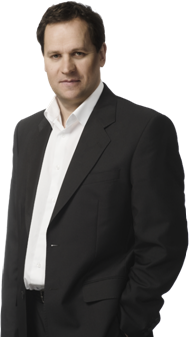
Waldemar Tomaszewski.
The Lithuanian attorney general has opened an investigation into alleged calls for ethnic unrest voiced by Lithuanian MEP (Member of the European Parliament) Waldemar Tomaszewski.
Tomaszewski is also the leader of the Polish Election Action in Lithuania.
The accusation was filed by the Lithuanian Centre Party after Tomaszewski said in an interview with the Respublika daily that;
“It is Lithuanians in the Vilnius region who you should try to integrate and not Poles.”
The attorney general’s office is thought to consider the statement in breach of Art. 170 of the Lithuanian Penal Code, which carries a potential two year prison sentence.
Commenting on negative consequences for the Polish minority in Lithuania introduced by amendments to Lithuania’s Education Act for Respublika in mid April, MEP Tomaszewski further said that;
“We [the Poles] have always been living here. The Lithuanians should integrate, as they are the ones who arrived to this region. This is our land. There are only Polish names at old cemeteries in Vilnius.”
In the 2001 national census, 234,989 persons identified themselves as having Polish ethnicity in Lithuania.
Poland has questioned Lithuania’s implementation of the Friendship Treaty signed by both countries in the early 1990s, which declared that Poles should be allowed to use the Polish spelling of their surnames. The treaty also said that the Polish minority should have access to a Polish education, something that the government in Warsaw questioned last month after changes to Lithuania’s education law.
- Bookmark :
- Digg
- del.icio.us
- Stumbleupon
- Redit it
Last October, the European Voice magazine, published in Brussels, described relations between Poles and Lithuanians as “the worst in Europe”
- Posted by - (0) Comment
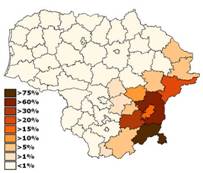
The Polish minority in Lithuania (living mostly in the region south-east of Vilnius) numbered 234,989 persons at the 2001 census (6.74% of the total population).
A large ethnic Polish minority was left behind in Lithuania following border shifts in 1945 agreed by the Allies. Before 1939 the mostly Polish-speaking city of Vilnius was part of Poland, a fact which was contested by the Lithuanian state.
Source: http://www.thenews.pl
- Bookmark :
- Digg
- del.icio.us
- Stumbleupon
- Redit it
Despite a stream of letters to the BBC since 2004, I haven’t been able to persuade them to take an interest in Lithuanian music
- Posted by - (0) Comment
How I agree with the heading statement "Lithuania is a cultural treasure the world still knows far too little about" [see our Section 14 – CULTURE & EVENTS] I have been visiting Lietuva since 2003 and quickly fell in love with your country.
Two aspects are of special interest to me: your railways (I assist the editor of Baltic Railways Magazine with the translation of the articles into English) and classical music.
Despite a stream of letters to the BBC since 2004, I haven't been able to persuade them to take an interest in Lithuanian music. I did manage to have Ciurlionis' Miske played in a request programme, but that was all. Offers to prepare a series of five programmes on Lithuanian music in the Composer of the Week series fell on deaf ears ("too far off the beaten track" they said) as did my suggestion that the Radio 3 Breakfast programme play the cd of Vytautas Landsbergis playing some of Ciurlionis' piano works on Black Ribbon Day ("we don't do anniversaries").
With the Ciurlionis 100th anniversary imminent, I will certainly have another go at the BBC to celebrate it.
One excuse for not playing Lithuanian music was that "we don't receive much from Lithuanian Radio, unlike Estonia which sends us lots". It would help if the appropriate organisations in Lietuva bombarded the BBC with Lithuanian music.
Regular broadcasts of Lithuanian music would probably help to promote the Lithuanian musicians based in England (such as Evelina Puzaite) who never get a mention on the BBC.
Tony Olsson,
North Devon, United Kingdom
- Bookmark :
- Digg
- del.icio.us
- Stumbleupon
- Redit it
US-Lithuanian student wins prestigious art prize, will be exhibited in Washington for a year
- Posted by - (0) Comment
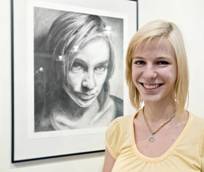
Subhadra Semetaite's self-portrait placed first in a 12th Congressional District art competition in the USA. Her artwork, called "SuBa," is done in graphite on paper.
"SuBa," a self-portrait created by US-Lithuanian Subhadra Semetaite, a high school senior at the American UNC School in the Arts, will be displayed for a year in the U.S. Capitol in Washington.
The work, done in graphite on paper, placed first in the 12th Congressional District portion of "An Artistic Discovery," the annual congressional art competition for high school students.
Read more at:
http://www2.journalnow.com/news/2011/may/07/4/wsmet01-local-student-wins-congressional-art-compe-ar-1012380/
- Bookmark :
- Digg
- del.icio.us
- Stumbleupon
- Redit it
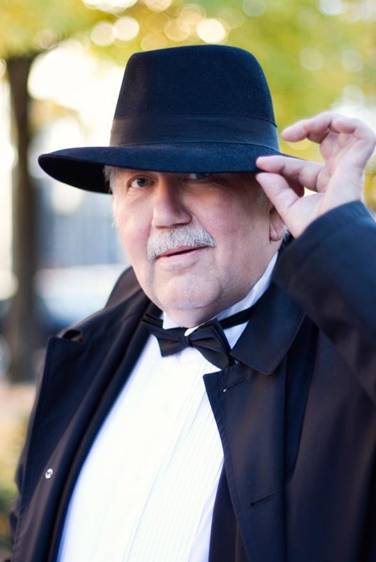
Lithuania’s great Maestro, Professor Donatas Katkus
Photo: Elena Petkauskiene
Donatas Katkus interviewed by Aage Myhre
Here he is, Lithuania’s famous music professor, Maestro Donatas Katkus! The man behind the Christopher Summer Festival since its very beginning in 1995, the man who has spread the joy of music throughout the streets of Vilnius for a whole life, making this city one of the most attractive in the world for all music lovers!
The Christopher Summer Festival is all about music – mostly classical, but also jazz and other genres are featured. The festival takes place in Vilnius churches, courtyards and concert halls, and lasts throughout all the summer, from the 1st of June till the 28th of August, even if the ‘official’ part lasts ‘only’ from 1st of July till the 26th of August! This summer’s festival is the 17th – a fantastic achievement by the founder, leader and artistic director – the utterly famous professor Donatas Katkus – and his excellent team!
The professor is conducting music and music festivals more energetically than anybody else, and he also treats the very term music in an anything but traditional manner, for example when he conducts an acrobatic plane, doing its loops according to Bach’s “Ave Maria”, or when he conducts a complete “orchestra” of bulldozers and excavators.
- Bulldozer conduction is very sexual, says the professor, gesticulating and emphasizing the importance of his words, in his so typical manner - full of humor, intensity and warm enthusiasm.
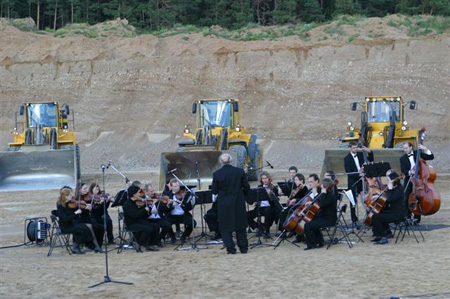
- Bulldozer conduction is very sexual, says the professor
Donatas Katkus was born in Kaunas 68 years ago, where his mother, an amateur actress, raised him alone. The professor was the outcome of a hectic love affair, and he never met his father.
-But, says the professor, I do not complain, because I am a very young and very nice man, and I am just happy my mother did not take the veil in a Belgian nunnery, as she planned to do before the war started.
|
|
Life is easy
Professor Katkus is widely known for his excellent mood. The laughter and the good story is never far away, always told with great immersion and sometimes also with aloud gesticulation in order to make himself fully understood, like when he told me about the concert where he conducted a small plane to make its loops to the music of “Ave Maria”.
Everybody in the restaurant we are sitting in stops talking when the professor starts his demonstration of how this event had been performed, using his arms to follow the loops, and his voice to indicate how the plane engine had been increasing its number of revolutions on its way up to highest octaves, into a decrescendo of sound and movement when the plane turned its nose down again.
- I am an actor by nature, and I do not take life too seriously, says the professor.
Forest brothers
But life was not always easy for Donatas Katkus. He can still well remember the summer day in his mother’s native village in the year 1949, when KGB suddenly appeared with a young, white-shirted man they had arrested. After one hour the troops re-appeared, and then the young forest brother’s shirt was totally soaked with blood. They would put the dead body of forest brothers at show for two weeks in the center of the village square in order to observe the reactions of the people watching the gruesome show so they could find out the relatives of the diseased and demonstrate how dangerous it was to fight for the freedom of our country, says the professor with a sad glance.
|
|
Family in Siberia
- Many from the family of my wife were deported to Vorkuta and the Siberian tundra, and I know stories of how they had to build their houses from frozen human bodies because no other building materials were available.
- But I know that they had their music, and I tend to think that the Lithuanian folk songs very much contributed to their survival, he tells, and the eyes of the professor start shining again.
Fear is terrible
- How was it to work during the Soviet period?
- Well, for people like me, working with culture, it was not too bad. But it was terrible always to feel fear, always having to look back over the shoulder in case somebody should be listening. Vilnius was a true province during those years, as everything international was supposed to take place in Moscow, and only at the end of the period it was possible to get impulses through Warsaw and later also directly from the West. My personal “breakthrough” came when I, as a young man, was chosen to participate in a competition in the Belgian city of Liege, where our Vilnius String Quartette won the first price.
One of the greatest achievements of Professor Katkus was to start and develop the Vilnius String Quartet, where he played his main instrument, the viola. – I have been playing in the quartet for 36 years, and it is still doing well today, so I am rather proud of that, he says.
St. Christopher
The St. Christopher has come to play the main role in the life of Professor Katkus, first when in 1994 he founded the St. Christopher Chamber Orchestra, and in 1995 when he started the now so famous St. Christopher Summer Festival, which every year is very successfully concluded, with its 30-40 concerts in different Vilnius venues during the months of July and August.
The saint’s name derives from a 3rd century legend, and the name means “Christ-bearer”. St. Christopher is the patron Saint of Vilnius and is featured on the coat of arms of the city. Due to the old legend, St. Christopher has become the saint of people who carry certain loads on their shoulders. The name seems to fit for the professor…
Money is crazy
Professor Katkus admits that it has been a very hard job to collect all the money needed for his summer festivals. – For example, he says, I remember one year it was only one week till the opening and I was still lacking 70,000 litas.
- But you did not get a heart attach?
- Look, I get several heart attacks in every festival, but do the festivals become inferior because of this? It’s so crazy always to have to think about money, which in fact is SOOO small a part of reality, so I prefer to remain happy whatever happens!
|
It’s so crazy always to have to think about money, which in fact is SOOO small a part of reality, so I prefer to remain happy whatever happens!
|
Advice to foreigners
- What is your advice to foreigners living in or visiting Vilnius?
- My advice is to take advantage of the fantastic musical life we have here in this rather small city, including two symphony orchestras, two chamber orchestras, two string quartets and a Music Academy with concerts almost every day! Both our Opera and our National Philharmonic are of fantastic level, and there are also a number of good pop and jazz concerts around in town. The cultural life in Vilnius is in fact so attractive and extensive that there is no need to go anywhere else. You are never alone in Vilnius!
Especially when the St. Christopher Summer Festival is in full swing virtually all through the summer...
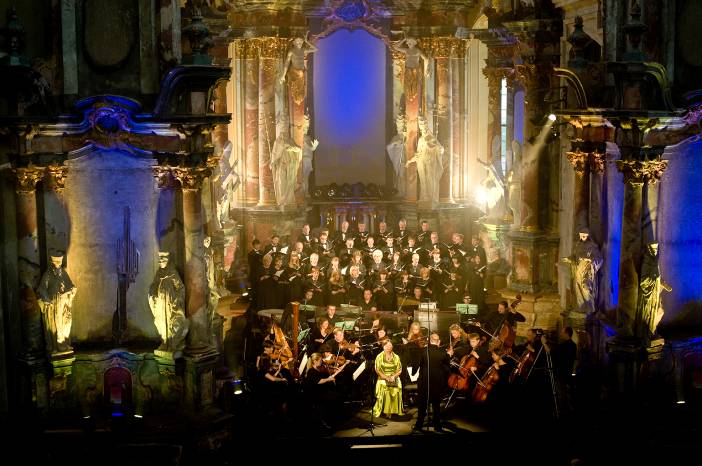 Professor Donatas Katkus conducting a church concert during last year’s Christopher Summer Festival.
- Bookmark :
- Digg
- del.icio.us
- Stumbleupon
- Redit it
Music nonstop since 1995!
- Posted by - (0) Comment
The idea to organise a Vilnius summer music festival was conceived in 1995 after a concert tour abroad by Professor Donatas Katkus, the artistic director of the then recently established St. Christopher Chamber Orchestra. The concept was very simple - back then, the prevailing belief in Lithuania was that no cultural life could exist during summer in the city - only in the resort towns, and this was a belief that demanded to be refuted! The Maestro had seen many successful examples of an unexpectedly large amount of excellent classical music festivals occuring during summer in Western Europe - often in castles beyond the urban fringe, but in the larger cities as well.
The beginnings of the Vilnius Summer Music Festival – as it was called in the beginning – were rather modest. The first year featured only around ten concerts. And the festival itself lasted not for two months, as it does nowadays, but just for three weeks in July.
The Maestro recalls that one of the break-throughs fifteen years ago was the "Gates of Jerusalem" cycle by composer Bronius Kutavičius, performed in midsummer. A full house gathered at the Philharmonic Hall not only for this concert, but at all the performances the first year of the festival. Imagine Vilnius on a hot Sunday afternoon... If not for the wandering tourists, most would say the city would be deserted... Yet in the packed St. Casimir's Church, a crowd of music lovers was huddled together, closely listening to a concert of the summer festival. Clearly, this time the sceptics were left to merely wring their hands, while the organisers were left convinced that this was a project well worth continuing!
Remembering the first festivals, Donatas Katkus says that he acted as the artistic director, and the administrator, as well as the distributing and displaying the festival posters himself, and would run around "wherever was necessary" to get the job done... The Christopher Summer Festival grew and became well-established around four or five years after its conception. Its duration stretched out to last one and a half months, the number of concerts increased, chamber operas started to be staged, and more and more new performers were invited to appear. By this stage, the festival already had its own emblem, a red-headed blue-coloured woman-bird design created by graphic artist, Petras Repšys. From the very beginnings of the summer festival, Maestro Donatas Katkus placed much significance on the fact that the concerts should aim to cover as many venues in Vilnius, and would be accessible to as large an audience as possible. Loyal fans of the festival would no doubt recall the concerts of the Christopher Summer Festival that took place at the Philharmonic Hall, St. Casimir's Church, the Chodkevich Palace, and in Vilnius University's Grand Courtyard and S. Daukantas Square. On a few occasions, even street music concerts were held under the banner of the festival. That's right - the first attempts at filling the streets of Vilnius with music took place around twelve or thirteen years ago, but of course now this has taken off in a completely different direction. Back then there was first a competition, and a commission would select the best street musicians and award them with prizes. Nowadays, the Christopher Summer Festival cannot be imagined without picnics at the Šešuolėliai (Širvintai District) and Bistrampolis manors (Panevėžys District).
The festival's concerts now draw large and colourful audiences every summer, and the number of faces keeps growing each year, which means that the circle of loyal followers is certainly increasing... So if you haven’t yet been among the visitors, maybe summer of 2011 should become your first Christopher Summer Festival?
- Bookmark :
- Digg
- del.icio.us
- Stumbleupon
- Redit it
This year’s programme
- Posted by - (0) Comment
|
CHRISTOPHER SUMMER FESTIVAL |
|
|||
|
Free admission |
|||
|
If you believe in the saying "your New Year's Eve is a preview of the rest of your year", you should also believe "expect surprises, for summer and the Christopher Festival are here!" That's precisely why we are inviting you to a real milonga in the heart of the Old Town, where you will see and hear the St. Christopher Chamber Orchestra along with Tangata, a quintet loved by the global tango community.
|
||||


|
Tickets: |
|||
|
If you associate the term "quartet" with a collective of serious musicians, playing serious music in serious halls with serious expressions on their faces, and if the mere thought of listening to such a collective already bores you, well throw that stereotype straight into the garbage can, because in Vilnius you can see some very special guests whose performances not only bring smiles to people's faces, but also unrestrained laughter. This is the funniest quartet in the world - MozArt Group!
|
||||

|
Tickets: |
|||
|
The Christopher Summer Festival has arranged a special summer dessert to revive everyone who can't wait to hear some unsual and original sounds! One would say that the energy of rock and the elegance of classical music could never partner one another, unless, that is, the St. Christopher Chamber Orchestra and guitarist Martynas Kuliavas take the stage together.
|
||||

|
Tickets: |
|||
|
Vienna is not only one of the most stunning European capitals, it is also a city that gave us the greatest classical musicians, the kings of the waltz, elegant Viennese balls, setting the highest benchmark for musical life. So don't miss this chance to listen to our guests from Austria who have prepared a glorious, celebratory programme which intertwines the mischief of the operetta, the sweeping grandour of dance, and the lightness and playfulness of Mozart.
|
||||

|
Tickets: |
|||
|
If you want to hear the true serenity of the soul above the empty noise that surrounds us and at least for a moment retreat from the never-ending rush, you must come to the Trecanum concert. The collective's artistic director Etienne Stoffel, learned in the art of Gregorian chant at the renowned Solesmes Abbey, gladly shares his knowledge with both the other members of Trecanum as well as every member of the audience.
|
||||

|
Tickets: |
|||
|
What comes to mind when you hear the word ‘Spain'? Most likely the flamenco, the corrida, wine, delicious cuisine, lively nights and temperamental personalities? This specifically multilateral present image is the result of the influence of many nations and individuals, which seem to come to life in the programmes of the L'incantari ensemble and transport audiences to the very roots of Spanish culture.
|
||||

|
Tickets: |
|||
|
It would appear that Joscho Stephan, guitar virtuoso, named as the successor of gypsy jazz pioneer, Django Reinhardt, could feel at home anywhere. The performer's affable approach infects others with positive energy, his natural temperament is transfused into his way of speaking, his gestures, and his music.
|
||||

|
Tickets: |
|||
|
Elena Strazdaitė-Bekerienė is the most prominent Lithuanian violinist from the 20th century who enthralled half of Europe with her playing. Although the Second World War destroyed her plans for an international solo career (she had been invited to the United States), her presence here was a true highlight in our cultural legacy. Teaching at the pre-war Lithuanian Academy of Music and later at the M. K. Čiurlionis Arts Gymnasium, this pioneer of Lithuanian violin pedagogy taught more than a hundred students, releasing them to pursue their dreams all over the world. One of them was violinist Dana Pomerancaitė-Mazurkevich, who was born and raised in Lithuania.
|
||||

|
Tickets: |
|||
|
When the eight members of the vocal ensemble Voices Unlimited met for their first rehearsal, they didn't have the slightest inclination that in only a few years time an audience 8,000 strong would be giving them a standing ovation at the World Choir Games in China, or that the most well known concert halls would be opening their doors to them, or that they themselves would become cultural ambassadors for the city of Salzburg throughout the world.
|
||||

|
Tickets: |
|||
|
Jacob Fischer - this renowned guitar virtuoso is inviting audiences to a recital full of surprises, featuring Scandinavian folk songs as well as Brazilian music flavoured with jazz tones. This particular combination is truly rare for Lithuanian concert halls, so don't miss this chance to dive into the whirlpool of light-coloured Northern melancholy, bossa nova nostalgia and crazy improvizations!
|
||||

|
Tickets: |
|||
|
The finest traditions are kept alive at the Christopher Summer Festival - following the impressive performances of Joana Amendoeira and Hélder Moutinho, this year the magic of fado will be revealed by a couple of young performers - Marco Oliviera and Ricardo Parreira.
|
||||

|
Tickets: |
|||
|
Music For A While is an excellent collective of jazz musicians from Norway which was formed in 2004 that performs works by composer Kurt Weill exclusively. This concept proved to be winner from the very beginning: the ensemble has since enjoyed great success not only in concert halls in their own country, but abroad as well.
|
||||

|
Tickets: |
|||
|
When asked to share their feelings about this concert, the performers all agreed that it is useless to ‘talk' about romances... they must be listened to. Why? Because they are "verses and melodies that when listened to touch our deepest places, where the eternal and most moving are woven together into the most beautiful lines of prose: on love, longing, and time which goes by so fast..."
|
||||

|
Tickets: |
|||
|
The sounds of the exotic charango will be heard for the first time here in Lithuania. It is a traditional instrument from the Andes similar to a miniature version of the familiar classical guitar. Even if at first glance it appears as if the charango is more of a toy than a musical instrument, in the hands of a talented performer it can produce the sounds of a choir, soloists, or even percussion... Too good to be true? Then seeing this concert is a must!
|
||||

|
Tickets: |
|||
|
Even though pianist Alice Baccalini is a genuine Italian, born and studying in Milan, for this concert she has prepared a programme with Paris as its central theme. This city is as inseperable from names such as Frederyk Chopin and Franz Liszt as are the great classics from Vienna.
|
||||

|
Tickets: |
|||
|
The members of Luz de luna did not choose such a poetic name for their trio by chance: their music does indeed flood the heart like moonlight, reaching into the very darkest corners.
|
||||

|
Tickets: |
|||
|
Sometimes a major, special event does not demand a pompous presentation or a huge performance space - sometimes all it takes is two musicians in a chamber hall who combine their talents to create a subtle and moving miracle.
|
||||

|
Tickets: |
|||
|
Passion and expression typify the duo of cellist Gleb Pyšniak and pianist Ole Christian Haagenrud, and leave no doubts about their brilliance. Enchanting not only the hearts of their audiences, but also of the strictest international competition juries, their performance is certain to delight guests of the Christopher Summer Festival as well.
|
||||

|
Tickets: |
|||
|
Having spent many years writing works for other Lithuanian artists, producing songs and instrumental works, guitarist Martynas Kuliavas is now inviting audiences to the launch of his first solo album. This evening will feature both older favourites and new compositions performed on acoustic and electric guitar. This release is a unique event in Lithuania's musical panorama and a brave step forward for this musician who has been given the title of best instrumentalist.
|
||||

|
Tickets: |
|||
|
Astor Piazzolla's tango opera Maria de Buenos Aires is an emotional and dramatic story about the life of a young Argentinian woman. The opera tells of the main character's, Maria's, journey from the outskirts to the city centre's night clubs. Adoration in the cabaret is followed by complete condemnation, decline and death...
|
||||

|
Tickets: |
|||
|
Back from Spain, Germany, Austria and Russia, the brightest Lithuanian talents invite you to a fiery evening where the flamenco and the tango will sound a little different - like the flamentango.
|
||||

|
Tickets: |
|||
|
It appears the young accordion virtuoso Martynas Levickis, whose performances leave nothing but the best impressions, was born to play this instrument. However, the laureate of more than thirty national and international competitions, the winner of the Coupe Mondiale 2010 world accordionists' competition, the first in Lithuania's history, and star of the TV project "Lithuania's talents" does not overrate his well-deserved titles and laurels, saying that his mission has only just begun. And just what mission is that?
|
||||

|
Tickets: |
|||
|
Welcome to the era of noisy big bands, polka-dot skirts and elegant hats, an age infected with dance fever! The Christopher Summer Festival stage will become a cosy jazz club where the unrestrained, energy-packed dance style called lindyhop will reign supreme, along with eleven lindyhop nuts in love with this movement.
|
||||

|
Tickets: |
|||
|
A bouquet of famous melodies with a hint of jazz harmony added, the softly burning, subtle, spell-binding and disarming vocals of Giedrė Kilčiauskienė, embraced by a perfectly balanced instrumental accompaniement - this is a combination perfect for an intimate summer evening. And even if you might have heard this concert's works many times before, this time you'll be pleasantly surprised: the essence of jazz is improvization, so you never know how things will sound in the "here and now".
|
||||

|
Tickets: |
|||
|
Classical music and the pulsating freedom of jazz, all with a Polish flavour. This is how one could describe the project initiated by one of the most famous Polish jazz performers, recognized for his activities by the legendary Duke Ellington himself. Włodzimierz Nahorny's sextet presents a new interpretation of works by F. Chopin and R. Maciejewski, giving them new value and stepping over long-established stereotypes.
|
||||

|
Free admission |
|||
|
The Christopher Summer Festival, the Vilnius Teachers' House and the "Kraujas" Oncohematological Patients Association once again invites you to a fantastic musical event organized to help people suffering from leukaemia. Last summer during this event 331 potential donors registered - a surprising, pleasing and awe-inspiring record (up till then the greatest amount of donors in one day was 115)! Every new member on the donors register can become someone's hope for survival and to break free from the chains of leukaemia. So let's get together once again and whilst listening to lots of different music let's set the words "Live Don't Die" the right way round.
|
||||

- Bookmark :
- Digg
- del.icio.us
- Stumbleupon
- Redit it
- Posted by - (0) Comment
Intolerance in today’s Lithuania
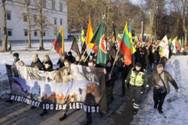
Intolerance, racism, anti-Semitism, xenophobia and homophobia. These are words and terms we unfortunately have heard and seen far too often in Lithuanian media in recent years. Read more…
What says the Catholic Church in Lithuania ???
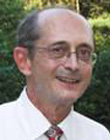
Ken-Russel Slade
It would be nice to know how our Roman Catholic Church addresses such issues ... albeit, it may not be currently perceived as an 'issue' ...
or, be perceived as 'proper' to respond ...
Is there not one priest, or one sister, in Lithuania: who will respond ?
Or, is this subject another RC "unspeakable" ?
Will there be some response:
from The Vatican ... a Papal Nuncio ... a Cardinal ... a Bishop ... a Priest ... a Monk ... a Friar ... a Sister ... ???
Will any such response be available to be subject to question(s): open dialogue ... discussion ... examination ... analysis ... commentary ... ???
Or, will this subject, and any 'response' thereto -- by the RC Church -- be 'closed' ?
A Personal Observation: The Pendulum -- It Swings ... !!
HOWEVER,
'VilNews' is a 'young' publication ... as an e-publication, not yet 14 weeks old!!
Perhaps, it is appropriate to make 'invitation' to our RC church (and other churches / denominations / faiths)
to write to 'VilNews', to comment, to publish ... to be welcome(d) here ...
I would like that my message here might be such an invitation !
Ken-Russel Slade
- Bookmark :
- Digg
- del.icio.us
- Stumbleupon
- Redit it

OPINIONS
Have your say. Send to:
editor@VilNews.com
Ph. D., Chicago
A wave of unity sweeps the international Lithuanian community on March 11th every year as Lithuanians celebrated the anniversary of the Lithuanian Parliament's declaration of independence from the Soviet Union in 1990. However, the sense of national unity engendered by the celebration could be short-lived.
Human beings have a strong tendency to overgeneralize and succumb to stereotypical us-them distinctions that can shatter even the strongest bonds. We need only search the internet to find examples of divisive thinking at work:
- "Those who fled Lithuania during World II were cowards -- and now they come back, flaunt their wealth, and tell us 'true Lithuanians' how to live."
- "Lithuanians who work abroad have abandoned their homeland and should be deprived of their Lithuanian citizenship."


In Lithuania Christmas Eve is a family event and the New Year's Eve a great party with friends!
Lithuanian say "Kaip sutiksi naujus metus, taip juos ir praleisi" (the way you'll meet the new year is the way you will spend it). So everyone is trying to spend New Year's Eve with friend and have as much fun as possible.
Lithuanian New Year's traditions are very similar to those in other countries, and actually were similar since many years ago. Also, the traditional Lithuanian New Years Eve party was very similar to other big celebrations throughout the year.
The New Year's Eve table is quite similar to the Christmas Eve table, but without straws under the tablecloth, and now including meat dishes. A tradition that definitely hasn't changes is that everybody is trying not to fell asleep before midnight. It was said that if you oversleep the midnight point you will be lazy all the upcoming year. People were also trying to get up early on the first day of the new year, because waking up late also meant a very lazy and unfortunate year.
During the New Year celebration people were dancing, singing, playing games and doing magic to guess the future. People didn't drink much of alcohol, especially was that the case for women.
Here are some advices from elders:
- During the New Year, be very nice and listen to relatives - what you are during New Year Eve, you will be throughout the year.
- During to the New Year Eve, try not to fall, because if this happens, next year you will be unhappy.
- If in the start of the New Year, the first news are good - then the year will be successful. If not - the year will be problematic.
* If New Year's night is cold and starry - look forward to a good summer!
* If the during New Year Eve trees are covered with frost - then it will be a good year. If it is wet weather on New Year's Eve, one can expect a year where many will die and dangerous epidemics occur.
* If the first day of the new year is snowy - the upcoming year will see many young people die. If the night is snowy - mostly old people will die.
* If the New Year time is cold - then Easter will be warm.
* If during New Year there are a lot of birds in your homestead - then all year around there will be many guests and the year will be fun.
Christmas greetings
from Vilnius
and epic battle for the
future
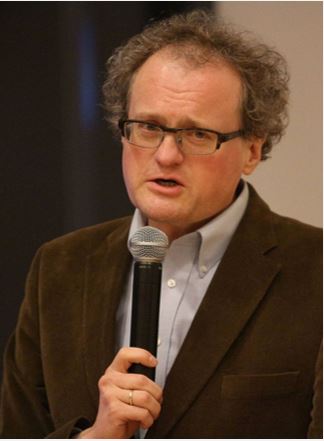
Philosopher, political theorist, historian of
ideas, social analyst, and political
commentator
Ukraine was and continues to be perceived by the EU political class as a sort of grey zone with its immense potential and possibilities for the future, yet deeply embedded and trapped in No Man's Land with all of its troubled past, post-Soviet traumas, ambiguities, insecurities, corruption, social divisions, and despair. Why worry for what has yet to emerge as a new actor of world history in terms of nation-building, European identity, and deeper commitments to transparency and free market economy?
Right? Wrong. No matter how troubled Ukraine's economic and political reality could be, the country has already passed the point of no return. Even if Vladimir Putin retains his leverage of power to blackmail Ukraine and the West in terms of Ukraine's zero chances to accede to NATO due to the problems of territorial integrity, occupation and annexation of Crimea, and mayhem or a frozen conflict in the Donbas region, Ukraine will never return to Russia's zone of influence. It could be deprived of the chances to join NATO or the EU in the coming years or decades, yet there are no forces on earth to make present Ukraine part of the Eurasia project fostered by Putin.
want to learn about the
new, scary propaganda
war between Russia,
The West and the
Baltic States!
believe their government
is corrupt
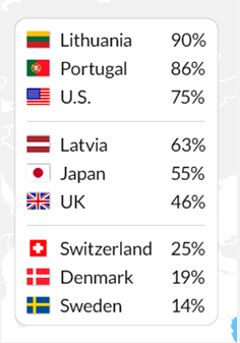
students say no to
bribes for doctors
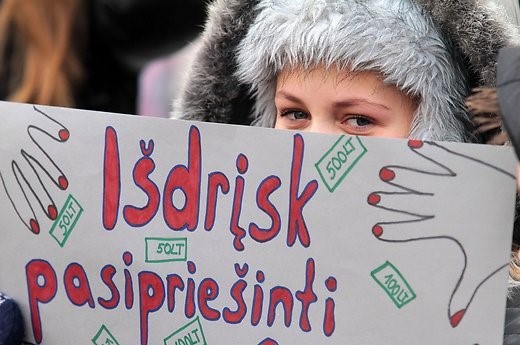
During Soviet times, government was administered for the people in control, not for the local population, court decisions were decreed, they were not the administration of justice, and academia was the domain of ideologues. 25 years of freedom and openness should have put those bad experiences behind Lithuania, but that is not so.
Today, it is a matter of expectation that court pronouncements will be governed by ideological dictates. Few, if any Lithuanians expect real justice to be effected. For foreign companies, doing business in Lithuania is almost impossible in a situation where business people do not expect rule of law, so, surely Government would be a refuge of competence?
Lithuanian Government has not emerged from Soviet styles. In an attempt to devolve power, Lithuania has created a myriad of fiefdoms of power, each speaking in the name of the Government, each its own centralized power base of ideology.

Chepstow, Wales
Doesn't that sound suspiciously like Lithuania? Ah, but I didn't mention the mountains of Snowdonia, which would give the game away.
I'm talking about Wales, that part of the UK which Lithuanians used to call "Valija", but later named "Velsas" (why?). Wales, the nation which has welcomed two Lithuanian heads of state to its shores - firstly Professor Vytautas Landsbergis, who has paid several visits and, more recently, President Dalia Grybauskaitė who attended the 2014 NATO summit which was held in Newport, South Wales.
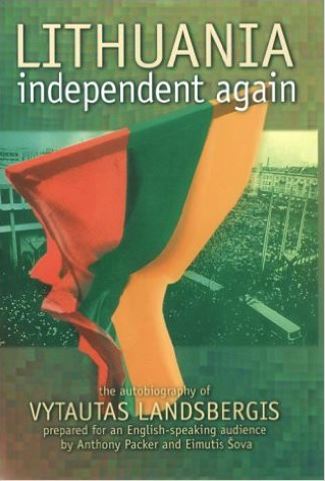
ENGLISH VERSION OF THE
AUTOBIOGRAPHY OF VYTAUTAS LANDSBERGIS.
Although Lithuanian activities have thinned over the decades as that postwar generation died out, the Lithuanian Martyrs' parish hall is crowded with many, many hundreds of visitors who come to the Lithuanian cemetery for All Souls' Day. Similarly, the Franciscan parish has standing room only for Christmas Eve mass.
Although I am firmly embedded in the literary culture of Canada, my themes are usually Lithuanian, and I'll be in Kaunas and Vilnius in mid-November 2015 to give talks about the Lithuanian translations of my novels and short stories, which I write in English.
If you have the Lithuanian language, come by to one of the talks listed in the links below. And if you don't, you can read more about my work at
www.anatanassileika.com
http://www.vdu.lt/lt/rasytojas-antanas-sileika-pristatys-savo-kuryba/ https://leu.lt/lt/lf/lf_naujienos/kvieciame-i-rasytojo-59hc.html
"My love and best wishes to all. As long as VilNews exists, there is hope for the future,"" she writes.
Irena Veisaite means very much for our publication, and we do hereby thank her for the support and wise commitment she always shows.
You can read our interview with her
Facing a new reality
Dear readers of VilNews,
For a number of years, the EU and Russia had assumed the existence of a strategic partnership, based on the convergence of values, economic integration and increasingly open markets and a modernisation agenda for society.
Our agenda was positive and ambitious. We looked at Russia as a country ready to converge with "European values", a country likely to embrace both the basic principles of democratic government and a liberal concept of the world order. It was believed this would bring our relations to a new level, covering the whole spectrum of the EU's strategic relationship with Russia.
The likelihood of Putin
invading Lithuania
.jpg "lithuania today")
Founding Director at Summer Literary Seminars
Are all Lithuanian energy
problems now resolved?
Lithuania as a country does not have significant energy resources. Energy consuming infrastructure after WWII was small and totally supported by energy imports from Russia.
First nuclear reactor begins power generation at Ignalina in 1983, the second reactor in 1987. Iganlina generates enough electricity to cover Lithuania's needs and about 50%.for export. As, prerequisite for membership in EU, Ignalina ceases all nuclear power generation in 2009
The Klaipėda Sea terminal begins Russia's oil export operations in 1959 and imports in 1994.
Mazeikiu Nafta (current ORLEAN Lietuva) begins operation of oil refinery in 1980.
Have Lithuanian ties across
the Baltic Sea become
stronger in recent years?
The two decades that have passed since regaining Lithuania's independence can be described as a "building boom". From the wreckage of a captive Soviet republic, a generation of Lithuanians have built a modern European state, and are now helping construct a Nordic-Baltic community replete with institutions intended to promote political coordination and foster a trans-Baltic regional identity. Indeed, a "Nordic-Baltic community" - I will explain later in my text the meaning of this catch-phrase.
Since the restoration of Lithuania's independence 25 years ago, we have continuously felt a strong support from Nordic countries. Nordics in particular were among the countries supporting Lithuania's and Baltic States' striving towards independence. Take example of Iceland, country which recognized Lithuania in February of 1991, well in advance of other countries. Yet another example - Swedish Ambassador was the first ambassador accredited to Lithuania in 1991. The other countries followed suit. When we restored our statehood, Nordic Countries became champions in promoting Baltic integration into Euro-Atlantic institutions. To large degree thanks Nordic Countries, massive transformations occurred in Lithuania since then, Lithuania became fully-fledged member of the EU and NATO, and we joined the Eurozone on 1 January 2015.
Have you heard about the
South African "Pencil Test"?
But that is exactly what happened to me when I came back from South Africa. I will tell you how.
VilNews e-magazine is published in Vilnius, Lithuania. Editor-in-Chief: Mr. Aage Myhre. Inquires to the editors: editor@VilNews.com.
Code of Ethics: See Section 2 – about VilNews. VilNews is not responsible for content on external links/web pages.
HOW TO ADVERTISE IN VILNEWS.
All content is copyrighted © 2011. UAB ‘VilNews’.