
THE VOICE OF INTERNATIONAL LITHUANIA
|
VilNews has its own Google archive! Type a word in the above search box to find any article.
You can also follow us on Facebook. We have two different pages. Click to open and join.
 Click on the buttons to open and read each of VilNews' 18 sub-sections Click on the buttons to open and read each of VilNews' 18 sub-sections  |

|


Author Archive
Russian suspicion, wary that the U.S. is looking to create a Russian version of the Arab Spring
- Posted by - (0) Comment

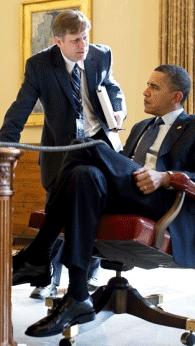
Mike McFaul, the new U.S. ambassador to Russia, with President Obama.
Just before Secretary of State Hillary Clinton swore in Mike McFaul on January 11 as the new U.S. ambassador to Russia, she told the audience packing the State Department's Benjamin Franklin Room that "Mike's reputation precedes him."
Yet it's that very reputation that has Russia eyeing McFaul with suspicion, wary that the ambassador, who arrived last Saturday, is looking to create a Russian version of the Arab Spring.
From the start, McFaul's mission to Moscow has been different. As Clinton explained to the audience that day, rather than send the Russian Foreign Ministry a diplomatic note announcing the appointment, the president took it upon himself to tell Russia's president, in person, about it.
"When President Obama saw President Medvedev at the G-8 summit in Deauville in May he simply said, 'I'm planning to nominate Mike to be the next ambassador to Russia,'" Clinton explained, "and President Medvedev responded immediately with a tone full of respect, 'Of course. He's a tough negotiator.' And that was that."
But it isn't his negotiation skill that has Russia nervous.
On McFaul's second day on the job in Moscow he was slammed by Russia's government-controlled Channel 1 television. "The fact is that McFaul is not an expert on Russia," said a Russian commentator. "He is a specialist solely in the promotion of democracy."
- Bookmark :
- Digg
- del.icio.us
- Stumbleupon
- Redit it

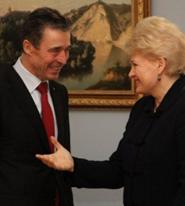
NATO chief Anders Fogh Rasmussen with President Dalia Grybauskaite
On a visit to Vilnius last week NATO chief Anders Fogh Rasmussen urged Russia to refrain from building up its military near the alliance’s borders, saying it was a concern for the 28-nation organisation. Rasmussen questioned Russian moves to bolster its forces in its Kaliningrad territory, which borders Nato members Lithuania and Poland, part of Moscow’s Cold War-era stamping ground. “These Russian statements are of course a matter of concern for Nato allies,” he told reporters in Lithuania’s capital Vilnius. “It is a complete waste of Russian financial resources, because it is a build-up of offensive military capacities directed against an artificial enemy, an enemy that doesn’t exist,” he said.
“Nato has no intention whatsoever to attack Russia,” he added, speaking alongside Lithuania’s President Dalia Grybauskaite. Moscow has warned that it plans to deploy Iskander missiles in Kaliningrad, and earlier this month, Russian media reported that an S-400 Triumph anti-aircraft missile system would go into service there in April.
- Bookmark :
- Digg
- del.icio.us
- Stumbleupon
- Redit it

- Posted by - (0) Comment


EUROPE – MY HOME & MY CASTLE (7 of 10)
From Warsaw to Budapest
|
VilNews is on its way around Europe!
Tour guide: Aage Myhre To read today’s travel report, click HERE To read the previous articles, go to our SECTION 11 |
- Bookmark :
- Digg
- del.icio.us
- Stumbleupon
- Redit it

- Posted by - (0) Comment
POLAND – LITHUANIA:
The never ending neighbour dispute
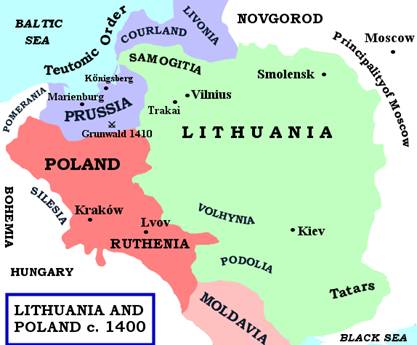
A few years ago my wife and I fell into conversation with two Poles in Oslo. When they heard that my wife was from Lithuania, they were quick to assert that the Vilnius area is actually Polish and never should have been given to Lithuania after World War II. My wife immediately responded that the area Punsk in eastern Poland in reality is Lithuanian and should be re-incorporated into the mother-country. The dispute was in full swing.
I have subsequently many times seen texts reminiscent of history forgery when Polish and international historians describe the Polish-Lithuanian relations in the later Middle Ages. The relationship is often described as if Poland was the leading nation and Lithuania a province in the east, while the reality was as the map above shows, with Lithuania as Europe’s biggest nation for centuries.
But Lithuania is not much better in its attitudes versus Poland and the Poles. In a comment article this week, Gary Peach has some interesting reflections on this topic in the European Voice. This is an excerpt of what he writes:
“Foreign minister for only two years, Audronius Ažubalis cannot be blamed for all of Lithuania's external mishaps and misfortunes. With neighbours like Belarus's Alyaksandr Lukashenka and Russia's Vladimir Putin, diplomatic successes are hard to come by. But as regards Poland and Latvia, Ažubalis shoulders some responsibility for the sorry state of affairs.
In fact, the minister alone set the tone for relations with Poland this year when, in an interview released on 2 January, he lashed out at Warsaw, saying that issues involving Lithuania's minorities, which include approximately 200,000 ethnic Poles, are a domestic matter and that Vilnius should not be lectured. “We don't need a big brother,” said Ažubalis, who in not-so-subtle terms went on to compare Polish pressure on Lithuania to bullying by Russia and the Soviet Union.
This was exceptionally harsh rhetoric, and will probably lead to a new nadir in bilateral ties.
- Bookmark :
- Digg
- del.icio.us
- Stumbleupon
- Redit it

- Posted by - (3) Comment
EUROPE – MY HOME & MY CASTLE (7 of 10)
From Warsaw to Budapest
|
VilNews is on its way around Europe!
Our today's journey begins in Warsaw. From there we drive south in Poland, Tour guide: Aage Myhre |
|||||||||||||||||||||
Today’s journey: View Larger Map
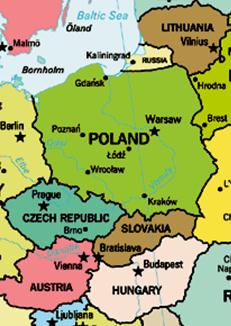
Poland is a country in Central Europe bordered by Germany to the west; the Czech Republic and Slovakia to the south; Ukraine, Belarus and Lithuania to the east; and the Baltic Sea and Kaliningrad Oblast, a Russian exclave, to the north. The total area of Poland is 312,679 square kilometres (120,726 sq mi), making it the 69th largest country in the world and the 9th largest in Europe. Poland has a population of over 38 million people,[6] which makes it the 34th most populous country in the world and the sixth most populous member of the European Union, being its most populous post-communist member. Poland is a unitary state made up of sixteen voivodeships. Poland is a member of the European Union, NATO, the United Nations, the World Trade Organization, the Organisation for Economic Co-operation and Development (OECD), European Economic Area, International Energy Agency, Council of Europe, Organization for Security and Co-operation in Europe, International Atomic Energy Agency and G6. The establishment of a Polish state is often identified with the adoption of Christianity by its ruler Mieszko I in 966, over the territory similar to that of present-day Poland. The Kingdom of Poland was formed in 1025, and in 1569 it cemented a long association with the Grand Duchy of Lithuania by signing the Union of Lublin, forming the Polish–Lithuanian Commonwealth. The Commonwealth ceased to exist in 1795 as the Polish lands were partitioned among the Kingdom of Prussia, the Russian Empire, and Austria. Poland regained its independence as the Second Polish Republic in 1918. Two decades later, in September 1939, World War II started with the Nazi Germany and the Soviet Union invasion of Poland. Over six million Polish citizens died in the war. Poland reemerged several years later within the Soviet sphere of influence as the People's Republic in existence until 1989. During the Revolutions of 1989, 45-year long communist rule was overthrown and the democratic rule was re-established. That gave foundations to modern Poland, constitutionally known as the "Third Polish Republic". Despite the vast destruction the country experienced in World War II, Poland managed to preserve much of its cultural wealth. There are currently 14 heritage sites inscribed on the UNESCO World Heritage list in Poland. Since the end of the communist period, Poland has achieved a "very high" ranking in terms of human development and standard of living.
A journey through former Warsaw Pact countries
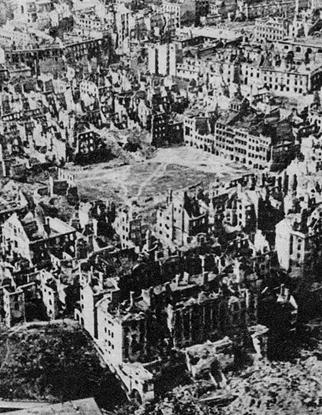
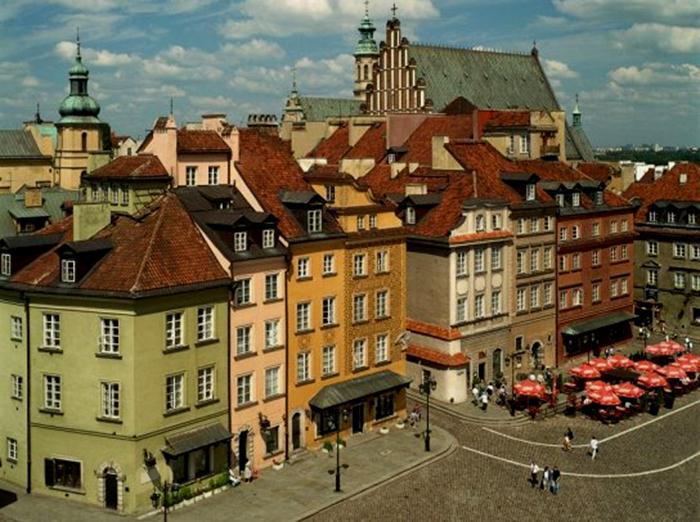
Warsaw - the city that rose from the ashes Warsaw is the post-war bird phoenix. Barely 20% of the city was left after the war’s bombs and fires. Most of Warsaw was in ruins. After the war, under the Communist regime that was installed by the Soviet conquerors, major residential projects were completed in order to solve housing shortage. Mostly through the use of large, prefabricated concrete elements. Gray, dreary suburbs as in the rest of the post-war Eastern Europe. Fortunately, many of the city's historic streets, buildings and churches were restored to their original shapes.
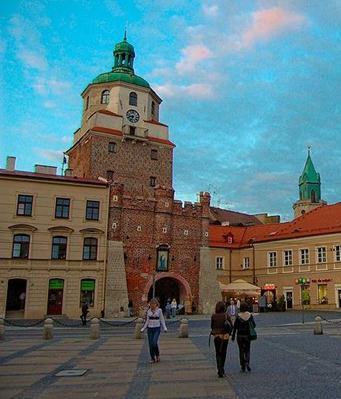
Lublin – the city where Poland and Lithuania signed their 1569 Union Treaty
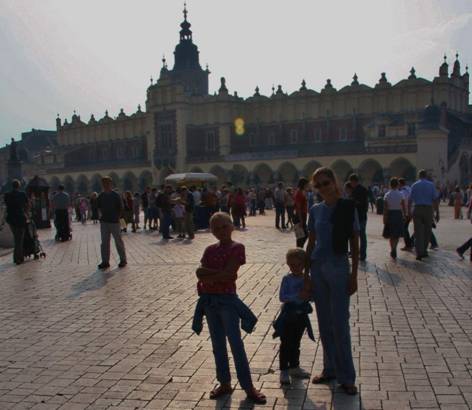
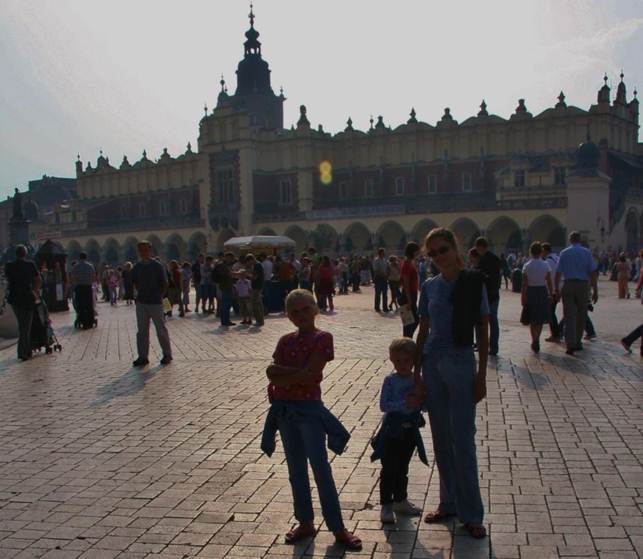
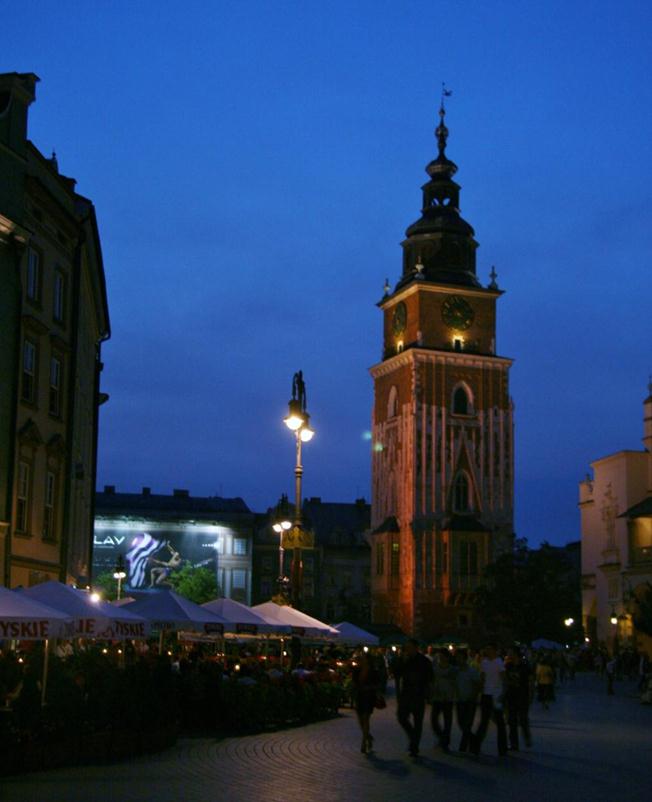
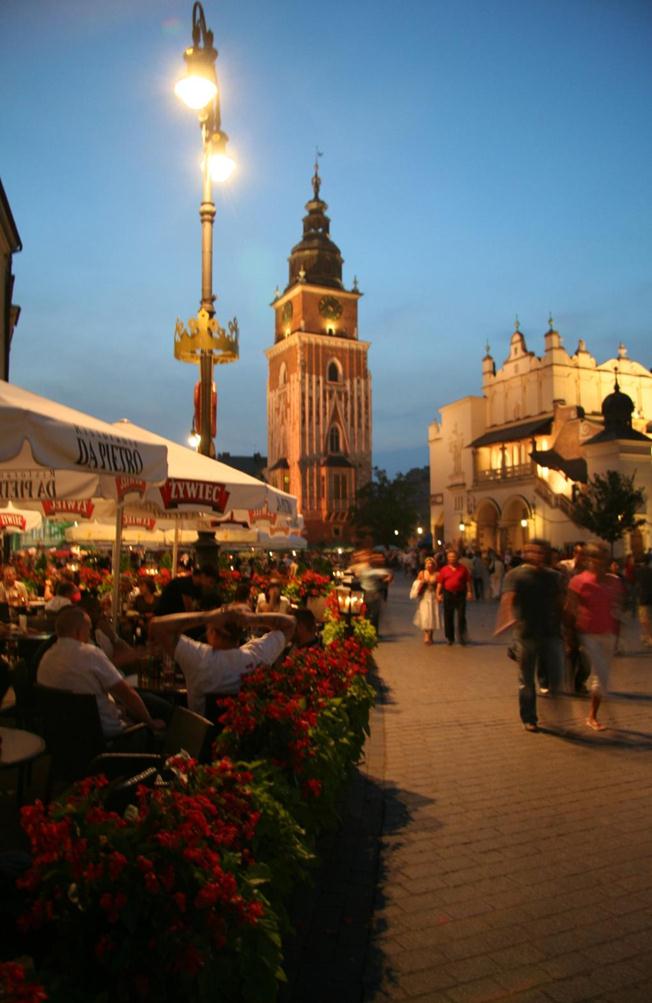
Kraków - Culture at Europe's largest medieval town square Krakow was surrounded by a 3 km long city wall with 46 towers and seven gates. The current town plan was drawn up in 1257 after the destruction of the city during the Tatar invasion in 1241 Union of Kraków and Vilnius of 1499, also known as the Vilnius Protocol was an important agreement in the Polish-Lithuanian union. So it was indeed these two towns that played key roles during the long partnership between these nations.
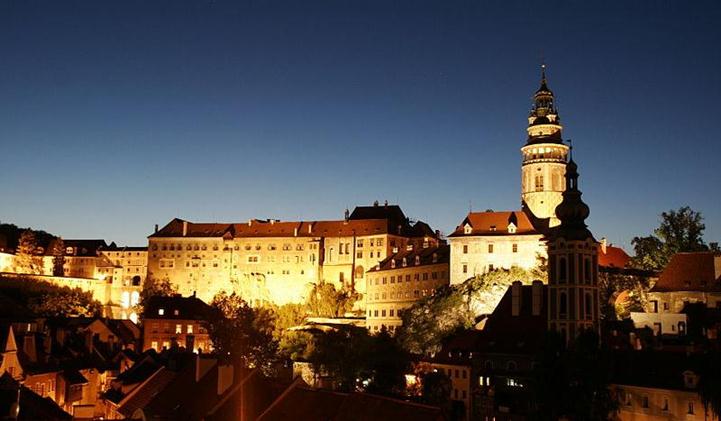
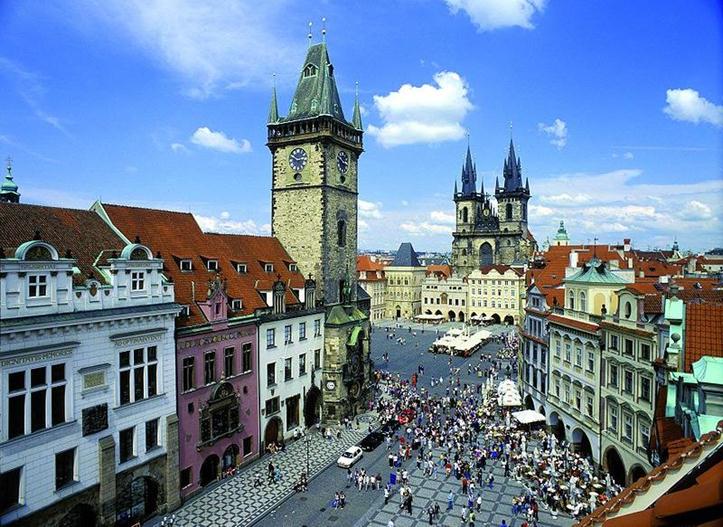
The Czech Republic is a landlocked country in Central Europe. It has a population of 10.5 million. The country is bordered by Germany to the west, Poland to the north, Austria to the south and Slovakia to the east. Its capital and largest city, at 1.3 million inhabitants, is Prague. It is a pluralist multi-party parliamentary representative democracy, a member of the European Union, NATO, the OECD, the OSCE, the Council of Europe and the Visegrád Group. The Czech state, formerly known as Bohemia, was formed in the late 9th century as a small duchy around Prague, at that time under dominance of the powerful Great Moravian Empire (which reached its greatest territorial extent during the reign of Svatopluk I from the House of Mojmír). After the fall of the Empire in 907, the centre of power was transferred from Moravia to Bohemia, under the Přemyslids. During the rule of Přemyslid dukes/kings and their successors, the Luxembourgs, the country reached its greatest territorial extent (13th–14th century). Life in the country was significantly affected by the Hussite wars, during which it faced economic embargo and crusades from all over Europe. Following the Battle of Mohács in 1526, the Crown of Bohemia was gradually integrated into the Habsburg monarchy as one of its three principal parts alongside the Archduchy of Austria and the Kingdom of Hungary. The Bohemian Revolt (1618–20) led to the further centralization of the monarchy including forced recatholization and Germanization. During radical reforms in the 18th century the Bohemian Crown was even de facto abolished (1749). In the 19th century the Czech lands became the industrial powerhouse of the monarchy and the core of the Republic of Czechoslovakia which was formed in 1918, following the collapse of the Austro-Hungarian empire after World War I. After the Munich Agreement, Polish annexation of Zaolzie and German occupation of Czechoslovakia and the consequent disillusion with the Western response and gratitude for the liberation of the major portion of Czechoslovakia by the Red Army, the Communist Party of Czechoslovakia won the majority in the 1946 elections. In a 1948 coup d'état, Czechoslovakia became a communist-ruled state. In 1968, the increasing dissatisfaction culminated in attempts to reform the communist regime. The events, known as the Prague Spring of 1968, ended with an invasion by the armies of the Warsaw Pact countries (with the exception of Romania); the troops remained in the country until the 1989 Velvet Revolution, when the communist regime collapsed. On 1 January 1993, Czechoslovakia peacefully dissolved into its constituent states, the Czech Republic and the Slovak Republic. The Czech Republic is the first former member of the Comecon to achieve the status of a developed country according to the World Bank. In addition, the country has the highest human development in Central and Eastern Europe, ranking as a "Very High Human Development" nation. It is also ranked as the third most peaceful country in Europe and most democratic and healthy (by infant mortality) country in the region.
My choice is Prague and Václav Havel
Prague has been a political, cultural and economic centre in Europe and especially central Europe through 1100 years. For centuries, during the Renaissance, the city was the permanent seat of the two Holy Roman emperors and thus also the capital of 'The Holy Roman Empire'. Later Prague an important city in the Habsburg monarchy and the Austro-Hungarian Empire.
The Slovak Republic (short form: Slovakia) is a landlocked state in Central Europe. It has a population of over five million and an area of about 49,000 square kilometres (19,000 sq mi). Slovakia is bordered by the Czech Republic and Austria to the west, Poland to the north, Ukraine to the east and Hungary to the south. The largest city is the capital, Bratislava, and the second largest is Košice. Slovakia is a member state of the European Union, NATO, United Nations, OECD and WTO among others. The official language is Slovak, a member of the Slavic language family. The Slavs arrived in the territory of present day Slovakia in the 5th and 6th centuries during the migration period. In the course of history, various parts of today's Slovakia belonged to Samo's Empire (the first known political unit of Slavs), Principality of Nitra (as independent polity, as part of Great Moravia and as part of Hungarian Kingdom), Great Moravia, Kingdom of Hungary, the Austro-Hungarian Empire or Habsburg Empire, and Czechoslovakia. A separate Slovak state briefly existed during World War II, during which Slovakia was a dependency of Nazi Germany between 1939–1944. From 1945 Slovakia once again became a part of Czechoslovakia. The present-day Slovakia became an independent state on 1 January 1993 after the peaceful dissolution of Czechoslovakia. Slovakia is a high-income advanced economy with one of the fastest growth rates in the European Union and the OECD. The country joined the European Union in 2004 and the Eurozone on 1 January 2009. Slovakia together with Slovenia and Estonia are the only former Communist nations to be part of the European Union, Eurozone, Schengen Area and NATO simultaneously. The Slovak Republic and the Czech Republic went their separate ways after 1 January 1993, an event sometimes called the Velvet Divorce. Slovakia has remained a close partner with the Czech Republic. Both countries cooperate with Hungary and Poland in the Visegrád Group.
Bratislava – home of Škoda Bratislava is the capital of Slovakia and, with a population of about 431,000, also the country's largest city. Bratislava is in southwestern Slovakia on both banks of the Danube River. Bordering Austria and Hungary, it is the only national capital that borders two independent countries. Bratislava is the political, cultural, and economic centre of Slovakia. It is the seat of the Slovak president, the parliament, and the executive branch of the government. It is home to several universities, museums, theatres, galleries and other important cultural and educational institutions. Many of Slovakia's large businesses and financial institutions also have headquarters there. The history of the city, long known by the German name Preßburg, has been strongly influenced by people of different nations and religions, namely by Austrians, Czechs, Germans, Hungarians, Slovaks, and Jews. The city was the capital of the Kingdom of Hungary, a part of the larger Habsburg Monarchy territories, from 1536 to 1783 and has been home to many Slovak, Hungarian, and German historical figures. More than 60% of all direct foreign investments in Slovakia are located in the Bratislava Region. The car manufacturer Volkswagen was established in Bratislava in 1991 subsequent to acquiring Škoda Auto and has expanded since. Currently, its production focuses on sport utility vehicles, which represent 68% of all production. VW Touareg is finished and Porsche Cayenne and Audi Q7 are partially built there. In recent years service and high-tech oriented businesses are thriving in Bratislava. Many global companies, including IBM, Dell, Lenovo, AT&T, SAP, and Accenture, are building their outsourcing and service centres or have plans to build in near future here.
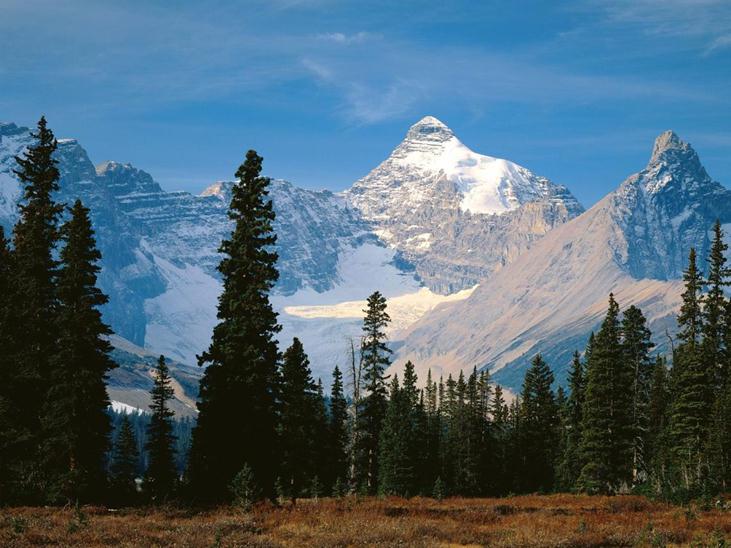
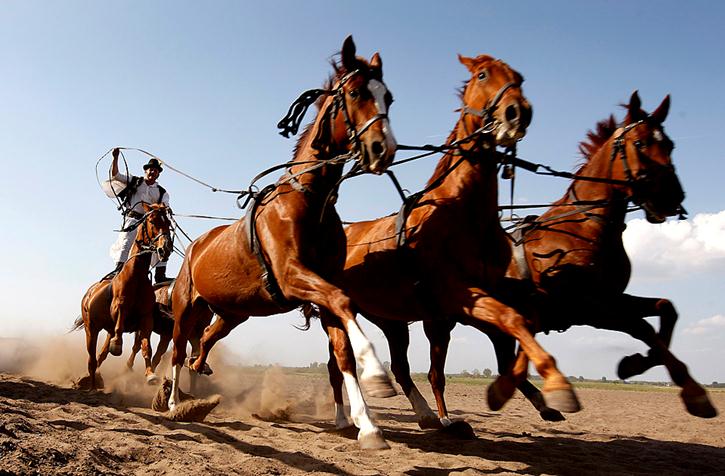
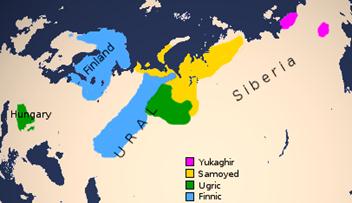
Hungary is a landlocked country in Central Europe. It is situated in the Carpathian Basin and is bordered by Slovakia to the north, Ukraine and Romania to the east, Serbia and Croatia to the south, Slovenia to the southwest and Austria to the west. The capital and largest city is Budapest. Hungary is a member of the European Union, NATO, the OECD, the Visegrád Group, and is a Schengen state. The official language is Hungarian, also known as Magyar, which is part of the Finno-Ugric group and is the most widely spoken non-Indo-European language in Europe. Following a Celtic (after c. 450 BCE) and a Roman (9 CE – c. 430 CE) period, the foundation of Hungary was laid in the late 9th century by the Hungarian ruler Árpád, whose great-grandson Saint Stephen I was crowned with a crown sent by the pope from Rome in 1000 AD. The Kingdom of Hungary lasted for 946 years, and at various points was regarded as one of the cultural centres of the Western world. After about 150 years of partial Ottoman occupation (1541–1699), Hungary was integrated into the Habsburg Monarchy, and later constituted half of the Austro-Hungarian dual monarchy (1867–1918). A great power until the end of World War I, Hungary lost over 70 percent of its territory, along with one third of its ethnic population, and all its sea ports under the Treaty of Trianon, the terms of which have been considered excessively harsh by many in Hungary. The kingdom was succeeded by a Fascist regime, and then a Communist era (1947–1989) during which Hungary gained widespread international attention during the Revolution of 1956 and the seminal opening of its border with Austria in 1989, thus accelerating the collapse of the Eastern Bloc. The present form of government is a parliamentary republic, which was established in 1989. Today, Hungary is a high-income economy and a regional leader in some respects. Hungary is one of the thirty most popular tourist destinations of the world, attracting 8.6 million tourists a year (2007). The country is home to the largest thermal water cave system and the second largest thermal lake in the world (Lake Hévíz), the largest lake in Central Europe (Lake Balaton), and the largest natural grasslands in Europe. The people of Hungary (the Magyar) have been known as great horsemen for centuries. As invaders crossed or conquered Hungary over the centuries, they brought with them their fine Turkoman (ancestors of today's Akhal-Teke), Iberian (ancestors of Andalusians and Lusitanos), and Arabian horses. These horses were crossed with the hardy little local horses to create a superior mount for the Hungarian cattlemen.
Budapest – the city where the language has Finnish-Siberian origin
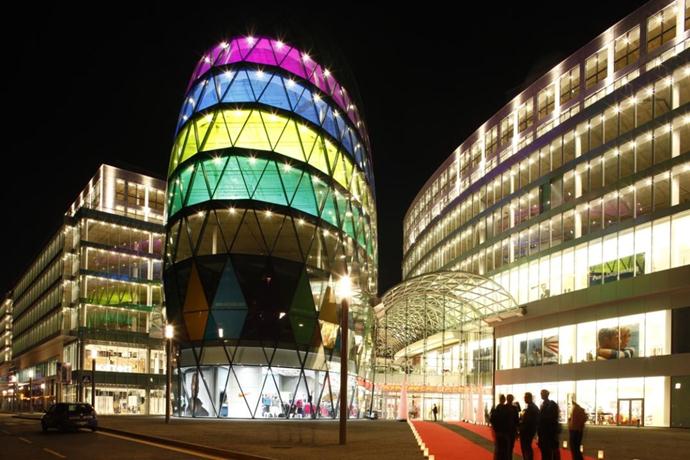
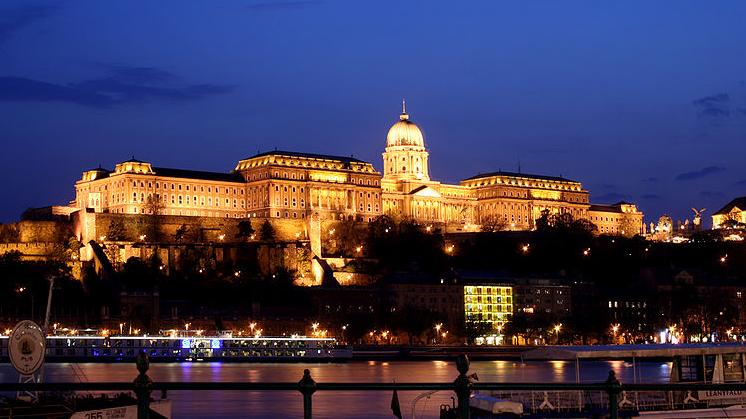
I am driving into Budapest a hot summer afternoon. We have had a few wonderful days in Hungary’s holiday paradise at Lake Balaton, Central Europe’s largest lake. Drunk good Hungarian wine and enjoyed the delicious water. But now it is the capital that counts. Infinite beautiful Budapest, Buda on one side, Pest on the other side of the slow Danube River which divides the city into two, with its beautiful water surface..
|





Szeged in South Hungary – where the 1956 revolts started
|
|
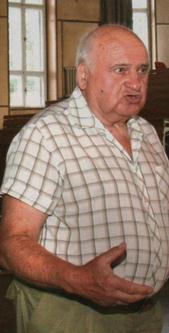
Ruszkik, haza! Russians, go home! The 1956 revolution in Hungary gave hope - but ended in disillusionment. This was what Dénes Fejér (78) told me when I met him here in the University Aula in his South-Hungarian hometown Szeged. Mr. Fejér was himself a 23-year old journalist, actively participating when the Hungarian uproar against the Soviet rulers started exactly here 55 years ago. I asked him to confirm that the 1956 revolution in Hungary started here in the University Aula in the Szeged University, “Yes, this is correct,” he says. “55 years ago, on the 16th of October, 1956, students from our Szeged town founded the youth organisation of MEFESZ (Hungarian Student Organisation). This event could be considered as the very first step of the revolution because in Hungary, at that time, after over ten years of Communist post war regime, only state founded and supported organisations could be established in a legal way.” |
“The Szeged initiative could be seen as the first crack on a dam where water is about to pour through. Of course, you don’t immediately realise when you see a small stream of water; that what follows it is going to overwhelm you. The Communist leadership did not see right away what actually was about to happen, as they did not expect such a massive force appearing in just a few days.”
Dénes Fejér, who was 23 when the revolt started, stands here in the Aula that looks more or less the same as it did in 1956, demonstrating how things started evolving exactly here that October evening 55 years ago.
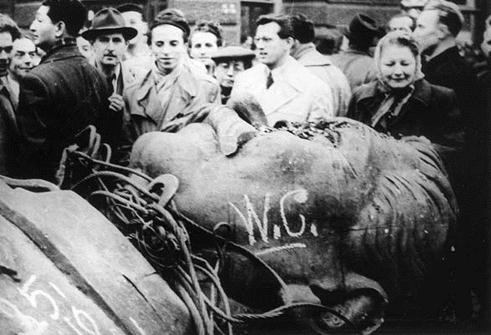
Hungarians gather around the head of the toppled Stalin Monument in Budapest 1956.
I ask Dénes Fejér to explain more about the 1956 revolt that started here in Szeged:
You were yourself present in that Aula meeting, and if I understand you correctly, this meeting became a fateful event (among several other developments in those days) which led inevitably to the outbreak of the revolution. It was the first meeting after World War II where questions were not pre-arranged slogans glorifying the regime, but where - because of the insistence of the audience - everyone was allowed to speak, and raise questions. What would you say were the most significant things happened at that assembly?
For two years after the end of the war in 1945, there was a plural political system in Hungary. Different political parties existed, and in the 1945 general elections the Independent Smallholder and Civil Party received absolute majority with 54% of the votes and the Communist Party only received 17%. Stalin realised that the people of Hungary did not want to embrace its system. The 1947 elections were already fraudulent and the Communist forces won. In 1948 the Social democratic Party was forcibly incorporated into the Communist party. The general wave of terror appeared only after this time. Forced nationalisation was started with businesses, commercial institutions, industrial entities and later, even private property like houses. A terror organisation was created within the Internal Ministry, called the AVO (State Security Authority) which later became an independent entity, having its own rules and methods.
This was the background where the MEFESZ was established, as the very first independent organisation in Communist Hungary. The programme and its demands were summarised in twenty points of the there are a few that are interesting. These included the request for open and free debates, the open trial of guilty Communist functionaries, the abolishment of death penalty in political cases, democratic elections, freedom of speech, and the that the 15th of March, the Commemoration Day of the 1848 Revolution should become an official national day. As you can see, these conditions and demands are natural in a free country but were unknown and unthinkable in a dictatorship. Although not part of the twenty points, another demand was phrased by the participant of the meeting. This was later a key phrase of the revolution: Russians, go home! The most fundamental demand was for the truth, that is to say that the leaders of the country should not lie and should not make the young people and the population lie. Telling the truth in Hungary at that time meant sever prison sentences.
To my knowledge, the assembly started as a rather innocent gathering where the students simply asked: “Why are the Soviet troops still stationed in our country?”, but ended with a the clear demand: “Ruszkik, haza!” - “Russians, go home!” From such a radical manifestation of the demands, you must have known that this was about to become dangerous?
The whole meeting started as a regular Communist youth organisation meeting. The Communist youth leaders gathered before it and reviewed the demands of the MEFESZ leaders, like András Lejtényi. When they learn the radical nature of these, they became frightened and left immediately for higher authority, the Communist party representatives at the university. Then the MEFESZ leaders went to meet the gathered students, read their demands, and the MEFESZ had the day!
“There was a general feeling of freedom among the participants. Fear disappeared. Saying the truth was a standard, normal thing during the event that caused happiness and joy among the audience.”
Didn‘t you realise that, according the Soviet system of those days, your collective name was "Shut up!" Did you not know that the Aula microphones were only for the Party collaborators and that nobody else were supposed to talk?
Nobody thought of ‘Shut up!’ at that time. After the first few words, there was a general feeling of freedom among the participants. Fear disappeared. Saying the truth was a standard, normal thing during the event that caused happiness and joy among the audience. The principle of ‘Shut up!’ had accumulated an amount of pressure in everyone that just erupted then. The age of ‘sober thoughts’ ended and the demand of freedom and truth became prevalent for the university youth.
You were yourself working as a journalist those days, and on the 23rd of October the newspaper “Delmagyarorszag” published your article called “Az igazsag keresesenek utjan”. What was the essence of this article and what reactions did you get?
This article, titled the ways of finding the truth, summarised what I have just explained above. It is very typical that we were not even sure whether the article would appear at all. The official, Communist newspaper Délmagyarország reported the event but left out the most important aspect which was the break of the dam, the shedding of the Communist oppression!
The period of hope to win over the mighty Soviet Union by peaceful measures, however, did not last long, and soon fights started spreading all over Hungary and the revolution began before your eyes. How will you describe this outcome of your efforts from the Aula assembly?
The main fighting happened in Budapest. This was the obvious and visible sign of the revolution. The fighting, the combat on the streets. The AVO, the armed troops and the Soviet soldiers were all surprised that ‘here they shoot back’. It was believed that a demonstration of force with tanks on the street would frighten people and prevent the escalation of the events, thus helping the consolidation of the Communist dictatorship. It didn’t happen like that.
Probably the Hungarian national character contributed to this as well. The courage to start again, to love one’s country, the national tradition of not giving in to slavery.
The revolutionaries of Budapest used bottles filled with petrol against tanks. They had no heavy weapons or anti-tank artillery. They fixed a burning piece of rag on the bottle and tossed it to the moving vehicle. The burning liquid turned the steel monsters into burning coffins. When the Soviet soldiers were abandoning their vehicles, they became easy preys to the weapons of the fighters.
There was an interrelation between the demands of the Szeged students, the fighting in Budapest and the revolutionary state nation-wise. The mental preparation rallied the fighters. The machine guns and the words were equally weapons of the revolution. Words changed things without bloodshed. From the smallest villages in Hungary to any institution or organisation, everyone of them had revolutionary councils. They replaced the very often incompetent previous leadership whose only added value to the system was their loyalty to the oppressing regime. The highest authority in the Communist state, the Central Committee and the Political Committee was simply dismissed. Instead of them reliable and trustworthy people were elected by the population or members of institutions or organisations. With open or secrets ballots. I was elected by a secret ballot to be on the workers’ council of the press in Szeged, and on the city’s revolutionary council.
I think this was the real result of the revolution. Replacing the old, Soviet puppets, the Communist leadership, and raising new, honest people into the power. This was created by the synergy of the students’ wishes and of the fighting in Budapest.
“For those who have never lived in oppression, in fear and in deprivation, for those who, on a daily basis, enjoy freedom and the rights of liberty, they probably don’t really know what freedom means for a prisoner.”
It has been said that something nearly supernatural stirred the hearts, minds and consciousness of the Hungarian people those days. Those shared feelings with friends and strangers must have been very special?
This special, disturbing experience is not difficult to describe for those who lived through it. The beautiful memories must be recalled from the past half-century. For those who have never lived in oppression, in fear and in deprivation, for those who, on a daily basis, enjoy freedom and the rights of liberty, they probably don’t really know what freedom means for a prisoner. I believe that it was this everlasting desire for freedom that prevailed back then. It was as if we were not even walking on the face of the Earth, as if floating in air. The communication changed among people, they were smiling to each other. They were nice, understanding towards each other. We even believed that the ‘guards’, our oppressors could change because they would realise that it is, in fact, better to live like this, free. It is probably also true that the experience of freedom created delusions.
By mid November 1956, it became evident that your revolution was lost. Not only the street fights, but also the lengthy demands of the students, which were fully supported by the whole society, were not going to be met. Instead, more and more of reprisals and arrests happened and an air of bitter disillusionment began to replace the heady days of the victorious revolution. How would you describe these days?
In the first days of November, it became obvious that the revolution had failed. Not in its results, not in its memories, not in its principles but in its survival. It was not our weakness but the overwhelming Soviet military power that defeated it. The twelve days a freedom turned into a totally different direction. In a few days we suddenly had to realise that those who had pretended to be with us till the 4th of November in 1956, turned into bloodthirsty puppets of the occupying forces and lost their human faces, becoming willing executioners.
The new puppet regime with Soviet arms behind it could only gradually strengthen its own position. They were expecting results, agreements, and waiting for their supporters t show once again. This started very slowly with the dismissed Communist leaders and members appearing again and again. Once they were feeling safe, the brutal punishment started.
We were hoping that they might have learnt their lesson, that we could not be treated the same way as we had been treated for nine years before the revolution. This was not the case, they continued everything in much the same way as it had been before. Everything came back, the deportation camps, the beatings, the prisons, the torture. Hungary again became a prison and we again humiliated prisoners.
It took some time before the Soviet rulers of your country were able to close the borders completely, and Austria was very willingly letting thousands of refugees cross into their country. You decided not to leave, why was that?
It became obvious that for those who had participated in the revolution, there was no place in Hungary any more. And many of them indeed left the country. Maybe some left because of fear, some because of adventure or new possibilities. Almost 200.000 people left the country. One of my best friend left who is currently living in New York while I was kept in a Soviet military prison in Eastern Hungary. Another friend of mine, who was briefly arrested with me, was inviting me to go to France.
It had never occurred to me that I could or would leave. Never, for a moment. I knew that I had account for all my activities eventually, and I was hoping that my life would be spared. During the revolution I did not fight, did not kill anyone. In my captivity Major Zokov, the Russian officer was interrogating me about all these things. Ha was trying to convince me that we were counter-revolutionaries while I was trying to convince him that we were revolutionaries. We couldn’t convince each other of course. I do not recall any fear gripping me, when, together with seven of my colleagues, I was transported in an ambulance, escorted by two armed armoured personnel carriers. I was wearing a white shirt and, when we were disembarked at the main square of Csongrád to be taken to the nearby hills, I remember thinking that anyone could easily recognise the white on a corpse, and might be able to inform my mother about my fate. I was not executed, but taken to Debrecen to the Soviet military airfield.
After I was released from prison, I did not want to leave. I couldn’t leave my country. I would not replace Hungary for any other place. I have seen a few peaceful spots in the world where life could be different than here. Once a Hungarian poet has said that for a Hungarian patriot ‘whether your faith may be blessed or cursed, here [ie. in Hungary] you must either live or die’. This is a moral command for me.
Some of your fellow students were executed and the Soviet jails were filling up during the next few months. You were among them arrested, hence it would be interesting to hear your personal story from the time after the revolution was so brutally crushed?
In the spring of 1957 I was arrested again, this time by the Hungarian political police. But before that an interesting episode happened in my life. When I was released from the Soviet prison, in February I returned to Szeged where I was approached by the newly organising Communist party, through two veteran leaders, Vince Bite and Károly Csíszár. I used to know Uncle Vince, since when I was ten to twelve, I used to be his helper in playing bowling at the beach. They told me to become member of the MSZMP [the newly formed Communist party] because I had been selected to be chief editor of the Délmagyarország newspaper. I had three days to consider their offer. I turned it down. Have you given it enough thoughts? Uncle Vince asked me. I have, I told him. Well, I hope you won’t regret it, he answered.
In two months time, I was arrested. I was interned. The whole thing became only a little bit clearer when I was released after one year. The temporary imprisonment that required no court verdict, could be prolonged indefinitely after every six months. When I was released, I was only allowed to do manual labour, only as a non-qualified worker, despite having a university degree with a certificate that allowed me to teach. My driving license was withdrawn, my reserve officer rank of the army was taken away, I did not get a passport, and could not travel abroad. As I recall, it did not really effect me because after finishing secondary school, I went to work on the Tisza bridge and learnt the craftsmanship of carpenters. This enabled me to work with my own two hands, and solved my financial problems.
What was difficult was the social exclusion. When my friends saw me on the streets, they went to the other side. Nobody dared speaking to me, or to be seen in the company of a convicted ‘counter revolutionary’. I was living with my mother and with my elder sister because I had lost my elder brother who had died in Russian captivity in the war.
During the sixties the terror had waned a little bit. I was allowed to teach in elementary school, although only subjects that were practical based, handcrafts. On regular basis a political officer appeared to check on me, and to try to make me work with them as an agent. I refused, and eventually got fed up with it all, and I returned to the construction industry. In the end I became a foreman, then a project manager. I was applying for eight years to the Szeged university law faculty but was always turned down. In the late 80s I was invited to be as chief editor of one of the first independent publishers. This was already the end of the Kádár-regime [János Kádár was the leader of Communist Hungary after 1956, till 1989. The period between 1956 and 1989 was often referred as the Kádár-regime.]
“It was only after many years that we learnt that the USA and the Great Britain informed the USSR that they would not oppose their intervention in Hungary.”
The governments of the free world watched your Hungarian Revolution with deep admiration even if none of them seriously considered providing military support, nor condemnation strong enough to stop the brutal actions of the Soviet Union. How do you view the behaviours of the Western countries those days?
The Western world provided enormous help to those almost 200.000 Hungarians who left the country. Those who went not as adventurers were appreciated by their new countries. Among the refugees you can find people who still come back to Hungary and who in fact, have two countries now. They have no roots, and their children have departed from Hungary for good.
The Western influence that we had in the days of the revolution was deceiving. It was only after many years that we learnt that the USA and the Great Britain informed the USSR that they would not oppose their intervention in Hungary.
Radio Free Europe was continuously encouraging the fighters to carry on because they were promised foreign help. This has led me to conclude that if it succeeds, if we had national local government in Szeged, I would suggest to change the name of Roosevelt Square in Szeged (like it was changed from Stalin Square) as I cannot support a liar, a friend of Soviets, even if he had been once the President of the USA.

Roosevelt Square in Szeged. The inscription lauds Franklin for his stand against
Fascism. Dénes Fejér, however, wants to change the name of the square.
“I cannot support a liar, a friend of the Soviets, even if he had been once
President of the USA,” he tells me.
- Bookmark :
- Digg
- del.icio.us
- Stumbleupon
- Redit it

- Posted by - (0) Comment
Interview with Vytis Jurkonis in today’s Baltic Times:
Relations between Poland and Lithuania have become over-politicized
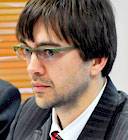
Vytis Jurkonis
What do you think about the policy of Poland towards Lithuania? MEP Vytautas Landsbergis told the magazine IQ that Poland has “a psychological defect from some heritage.”
My opinion is that the relations between Poland and Lithuania became over-politicized. Both sides have run into a situation where none of them can step out and decline their ‘principled position.’
Psychological defects are present both in Poland and in Lithuania and it shows first of all that we are not indifferent to ourselves and to our history. Nonetheless, I feel that some politicians cannot accept the fact that the concept of a nation is changing – we see the process when the voluntary and civic aspect of the identity is starting to prevail over the cultural one. One can resist that, can try to minimize the effects, but you cannot just deny the process. All in all those psychological or mentality issues, which certainly exist, are being manipulated and exaggerated by some politicians. This is the cheapest way to mobilize their electorate.
- Bookmark :
- Digg
- del.icio.us
- Stumbleupon
- Redit it
Thank you letter from Massachusetts, USA
- Posted by - (0) Comment
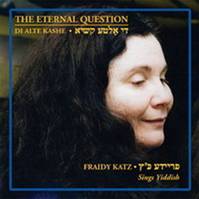
Dear Editor:
Thank you for the excellent acknowledgment and presentation you have given our video "Vilna" and our CD, "The Eternal Question" (Di Alte Kashe).
One sees that this site is a labor of love. The care, attention to detail, accuracy and thoroughness is evident throughout.
zol z@@n mit m@zl
Wolf Krakowski
Fraidy Katz
Kame'a Media: www.kamea.com
Northampton, Massachusetts, USA
- Bookmark :
- Digg
- del.icio.us
- Stumbleupon
- Redit it
Listen to “Vilna: A Yiddish song. Performed by Fraidy Katz. Directed by Wolf Krakowski”
- Posted by - (0) Comment
- Bookmark :
- Digg
- del.icio.us
- Stumbleupon
- Redit it
Pentagon steers more money to Eastern European allies relying more on them as West cuts budgets
- Posted by - (3) Comment
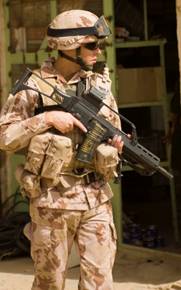
A Lithuanian soldier provides security for American Civil Affairs Soldiers during a market assessment in Dujayli, Iraq, July 9, 2008.
Photographer: Sgt. Daniel West,
Multi-National Division-Central.
The Pentagon is steering more money toward Eastern European allies fighting in Afghanistan even as it prepares further reductions of U.S. forces in nations to the west such as Germany.
The U.S. plans to spend as much as $100 million, 33 percent more than last year, to provide training and equipment to countries helping conduct special operations missions and training for Afghan forces fighting the Taliban, according to Pentagon figures released today.
The biggest increases are going to Hungary, Poland, Romania and Lithuania, which have made outsize contributions of troops to the North Atlantic Treaty Organization-led coalition in Afghanistan.
The Pentagon is relying more on Eastern European allies, most of them in NATO, as traditional alliance members such as the U.K., the Netherlands and Germany cut their own defense budgets. Western European allies also are looking to reduce their forces in Afghanistan in proportion to the Pentagon’s withdrawal of about a third of its forces by September.
Defense Secretary Leon Panetta said last week that the U.S. will halve the number of conventional brigades in Europe as it cuts $490 billion over the next decade and turns more attention to Asia.
The planned cut to two brigades will remove 6,000 to 10,000 troops, most of them in Western Europe. The U.S. had almost 80,000 military personnel stationed in Europe as of December 2010, more than 54,000 of them in Germany, according to the Defense Department’s website.
The Pentagon plans to compensate for the reductions by rotating more troops into the region and conducting additional joint training and exercises.
- Bookmark :
- Digg
- del.icio.us
- Stumbleupon
- Redit it
- Posted by - (0) Comment


EUROPE – MY HOME & MY CASTLE (6 of 10)
Scandinavia & Finland
|
VilNews is on its way around Europe!
Tour guide: Aage Myhre To read today’s travel report, click HERE To read the previous articles, go to our SECTION 11 |
- Bookmark :
- Digg
- del.icio.us
- Stumbleupon
- Redit it
- Posted by - (2) Comment
EUROPE – MY HOME & MY CASTLE (6 of 10)
Scandinavia & Finland
|
VilNews is on its way around Europe!
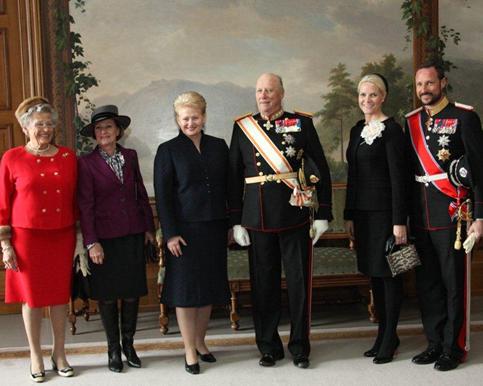
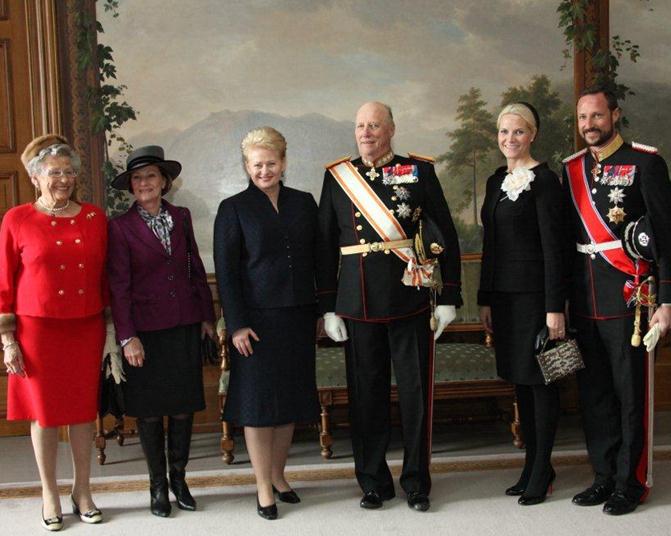
Lithuanian President Dalia Grybauskaitė on a two-day state visit to Norway in 2011. The President was officially Today's tour starts in the far north of Norway, and continues south Tour guide: Aage Myhre
|
|
|
|
|
|
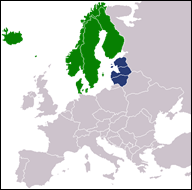
Lithuania’s best future lies in a Nordic union
New collaboration constellations are forming in our today’s Europe, very much due to the financial crisis. This new approach, between countries that previously were relatively far apart, as well as the so-called G-8 and G-20 alliances between the world's richest countries are examples of how we seem to be moving into a new World Order. Also in good old Europe we are now beginning to develop entirely new constellations. Typical of such constellations is that the largest and richest countries take initiatives to secure their own positions and welfare, while smaller countries often have to put up with playing second fiddle. What the three Baltic States now face is that being members of the EU is not enough. The economic crisis, and partly also questions on defence and security, have led to new forms of cooperation, as the aforementioned , and our small nations far north in Europe are not invited to become active participants. It is therefore my opinion that a tight collaboration with the other Nordic countries is the way to go. Together we are large enough to be heard and our common identity and cultural background is a good basis for cooperation. In the 13th century, an alliance of Northern European towns called the Hanseatic League created what historian Fernand Braudel called a “common civilization created by trading.” Today’s expanded list of Hansa states share Germanic and Scandinavian cultural roots. Germany and the Scandinavian countries have found their niches by selling high-value goods to developed nations, as well as to burgeoning markets in Russia, China, and India.
Widely admired for their generous welfare systems, Denmark, Finland, Norway, Sweden and Germany have liberalized their economies in recent years. They account for six of the top eight countries on the Legatum Prosperity Index and boast some of the world’s highest savings rates (25 percent or more), as well as impressive levels of employment, education, and technological innovation. “In strategies that we are developing for the next twenty years emphasize that it is important for the Baltic States to become more harmonized and catch up with Scandinavian countries. Integration with Nordic countries is an important objective,” said Andrius Kubilius, Lithuania’s prime minister, in a meeting in Tallinn last year. I think he is right.
|
|
|
|
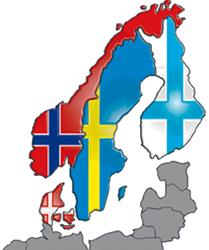
The Nordic model The Nordic model refers to the economic and social models of the Nordic countries (Denmark, Iceland, Norway, Sweden and Finland). This particular adaptation of the mixed market economy is characterised by "universalist" welfare states (relative to other developed countries), which are aimed specifically at enhancing individual autonomy, ensuring the universal provision of basic human rights and stabilising the economy. It is distinguished from other welfare states with similar goals by its emphasis on maximising labour force participation, promoting gender equality, egalitarian and extensive benefit levels, large magnitude of redistribution, and liberal use of expansionary fiscal policy. “America’s social model is flawed, but so is France’s,” the Parisian newspaper Le Monde recently wrote. According to Le Monde Europe should adopt the “Scandinavian model,” which is said to combine the economic efficiency of the Anglo-Saxon social model with the welfare state benefits of the continental European ones. |
Our today’s journey:
|
|
Norway – oil, fjords, fish & ships |

|
|
Norway, officially the Kingdom of Norway, is a Nordic unitary constitutional monarchy, with King Harald V as its head of state, whose territory comprises the western portion of the Scandinavian Peninsula, Jan Mayen, and the Arctic archipelago of Svalbard. Norway has a total area of 385,252 square kilometres (148,747 sq mi) and a population of about five million. Norway's extensive coastline, facing the North Atlantic Ocean and the Barents Sea, is home to its famous fjords. Two centuries of Viking raids tapered off following the adoption of Christianity by King Olav Tryggvason in 994. A period of civil war ended in the 13th century when Norway expanded its control overseas to parts of the British Isles, Iceland, and Greenland. Norwegian territorial power peaked in 1265, but competition from the Hanseatic League and the spread of the Black Death weakened the country. In 1380, Norway was absorbed into a union with Denmark that lasted more than four centuries. In 1814, Norwegians resisted the cession of their country to Sweden and adopted a new constitution. Sweden then invaded Norway but agreed to let Norway keep its constitution in return for accepting the union under a Swedish king. Rising nationalism throughout the 19th century led to a 1905 referendum granting Norway independence. Discovery of oil and gas in adjacent waters in the late 1960s boosted Norway's economic fortunes. In referenda held in 1972 and 1994, Norway rejected joining the EU. The Sámi people have a certain amount of self-determination and influence over traditional territories through the Sámi Parliament and the Finnmark Act. Although having rejected European Union membership in two referenda, Norway maintains close ties with the union and its member countries, as well as with the United States. Norway remains one of the biggest financial contributors to the United Nations, and participates with UN forces in international missions, notably in Afghanistan, Kosovo, Sudan and Libya. Norway has extensive reserves of petroleum, natural gas, minerals, lumber, seafood, fresh water, and hydropower. On a per-capita basis, it is the world's largest producer of oil and natural gas outside the Middle East, and the petroleum industry accounts for around a quarter of the country's gross domestic product. The country maintains a Nordic welfare model with universal health care, subsidized higher education, and a comprehensive social security system. Norway has the world’s highest human development index ranking. Norway’s merchant fleet is among the biggest in the world. Norwegian companies control approximately 23% of the world's cruise vessels, 19% of the world's gas carriers, 19% of the world's chemical tankers and 10.5% of the world's crude oil tankers. |
|
|
|
|
|
|
|
|
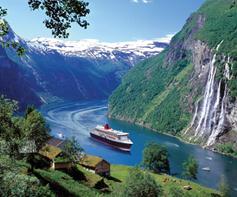
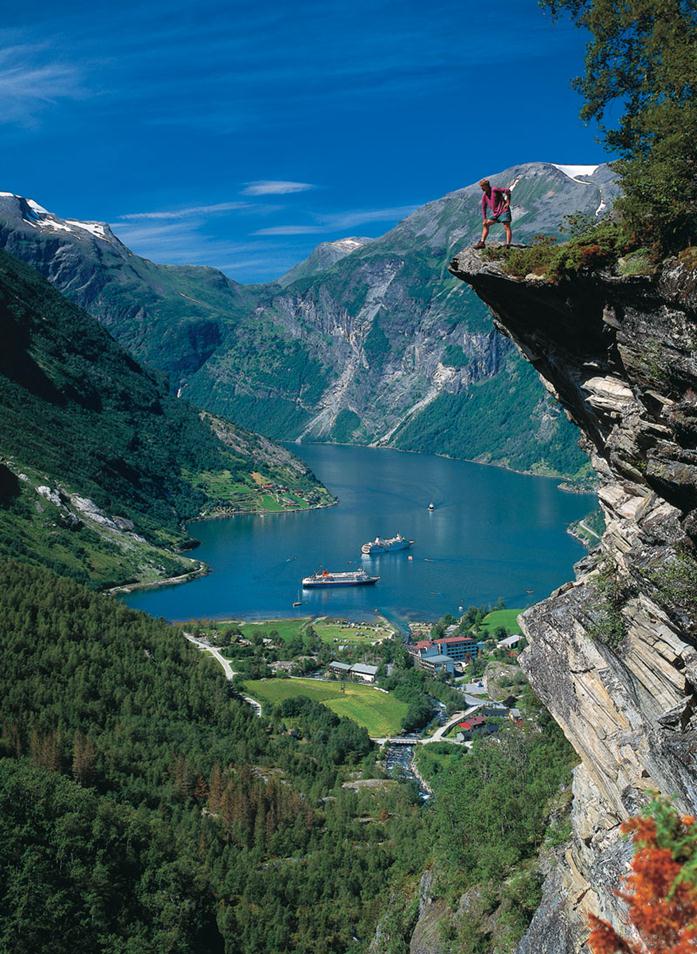
The Geiranger Fjord at Norway’s west-coast is a 15-kilometre (9.3 mi) long branch of the Storfjord (Great Fjord). The small village of Geiranger is located at the end of the fjord where the Geirangelva river empties into it.
The fjord is one of Norway's most visited tourist sites.
Photo: www.allempires.net
Our today’s trip starts in the Barents Sea – between Norway and the North Pole
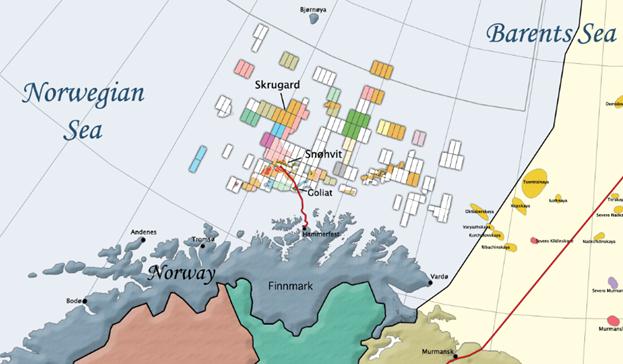
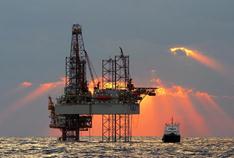
Oil and gas exploration in the Barents Sea began in the 1970s. Discoveries were made on both the Russian and Norwegian sides. The first major producing field is Snøhvit in the Norwegian sector. The largest discovery to date is the Shtokman field in the Russian sector. For decades there was a boundary dispute between Norway and Russia, with the Norwegians favouring the Median Line and the Russians favouring a meridian based sector. A compromise treaty announced 27 April 2010 settled the border in the approximate middle of these two stances. Snøhvit (Snøhvit means Snow White in Norwegian) is the name of a natural gas field situated 140 kilometres (87 mi) northwest of Hammerfest, Europe's northernmost town. The gas from Snøhvit is being used for LNG production at Melkøya close to Hammerfest. The total costs of field development will be around NOK 34.2 billion ($ 6 billion).
North Cape – on the very top of Norway and Europe
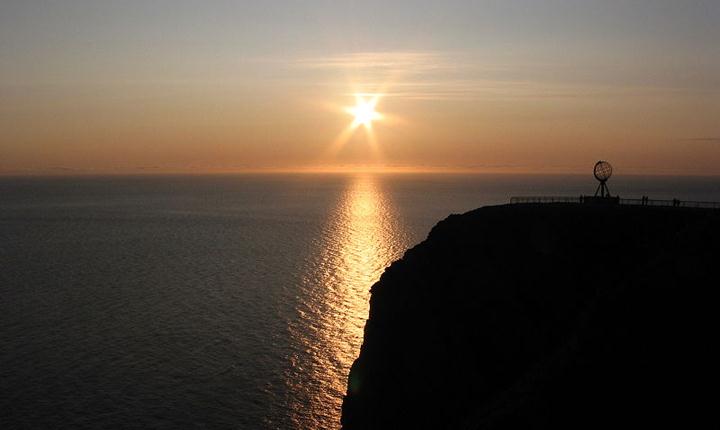
Midnight sun at North Cape, a cape on the island of Magerøya in Northern Norway. Its 307 metres (1,007 ft) high, steep cliff is often referred to as the northernmost point of Europe, located at 71°10′21″N 25°47′40″E, 2,102.3 kilometres (1,306.3 mi) from the North Pole.
Finnmark County – where Sámi (Lappish) people and reindeers live…

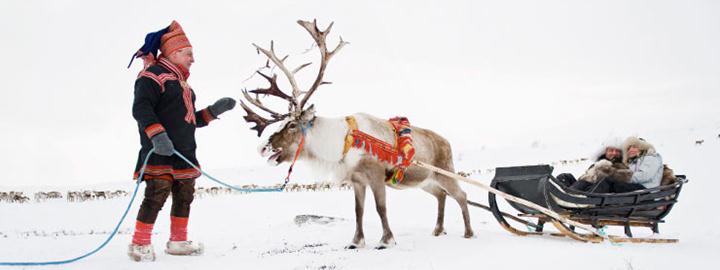
We move from the rough coast, to the inner parts of Finnmark, where many Sámi families are actively engaged with huge reindeer herds year round. The Sami are indigenous people who came to Norway more than 10 000 years ago.
Tromsø – the world’s northern light capital…
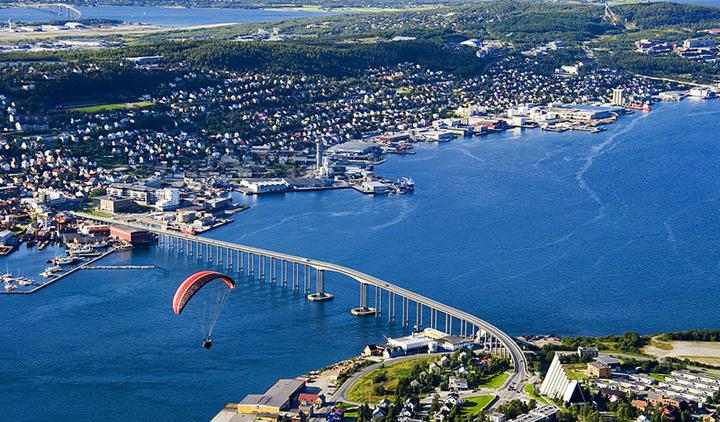
Tromsø is the capital of North Norway also called the world's northern lights capital. Here you will also find the world's
northernmost university, including an advanced northern lights observatory. International airport in the city centre!
|
|
Welcome to my birthplace Olaheim at the Senja island! Here, in the tiny village of Olaheim on the island of Senja in Northern Norway, I grew up in the 1950s. At that time we had neither running water nor electricity in the house. We survived on hunting, fishing and a small farm with one cow and a handful of goats and sheep. No road access to the rest of the world. Today this is a completely different, far more modern community with facilities and standards as the rest of Norway. You are welcome to visit. I'm taking you with me for fishing in the lake right by, or in the ocean off the island. Or how about a trip up in the vast mountains, some of which are a thousand meters high, plummeting straight down into the many Senja fjords? |
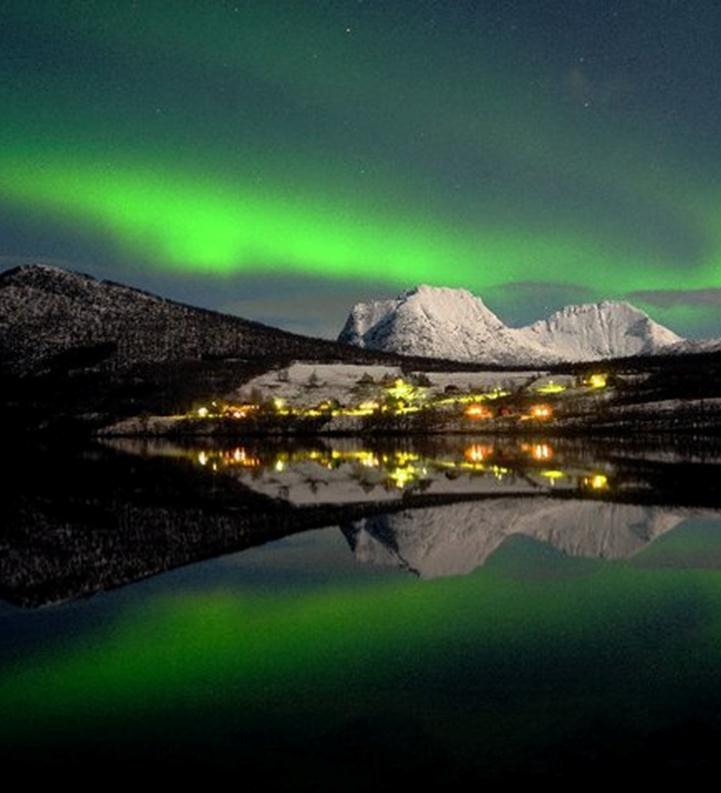
My home place Olahaeim at the island of Senja.
Photo by the world famous Senja photographer Hugo Løhre.
Lofoten has the world’s best waters for cod fishing
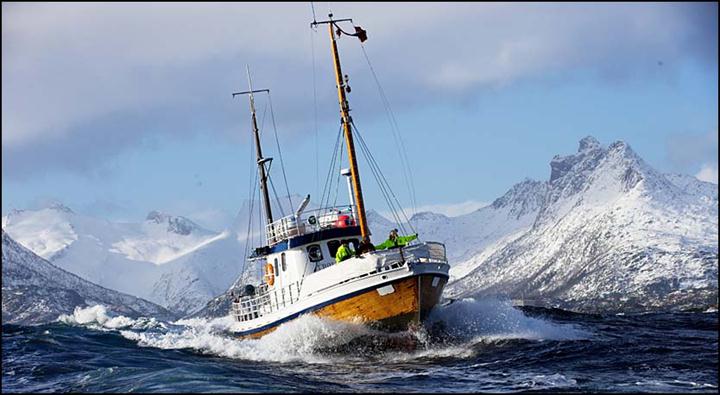
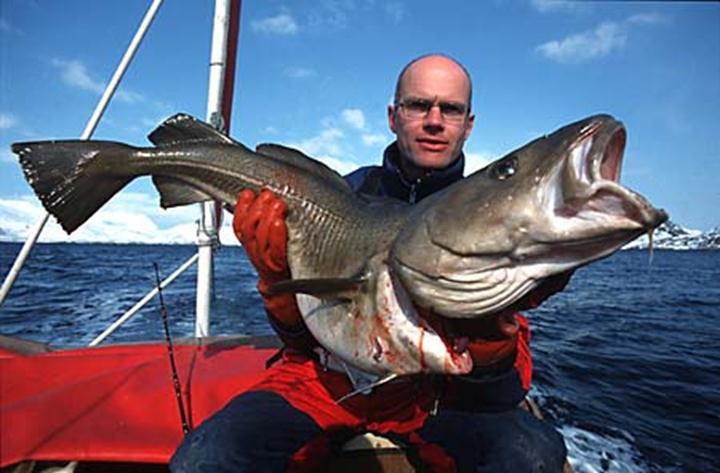
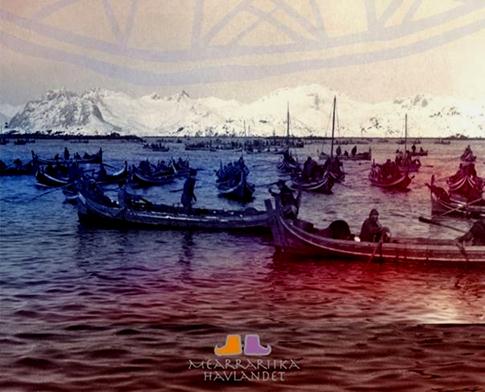
Lofoten is an archipelago and a traditional district in the county of Nordland, North Norway. Though lying within the Arctic Circle, the archipelago experiences one of the world's largest elevated temperature anomalies relative to its high latitude. The islands have for more than 1,000 years been the centre of great cod fisheries, especially in winter, when the cod migrates south from the Barents Sea and gathers in Lofoten to spawn. Bergen in southwestern Norway was for a long time the hub for further export south to large parts of Europe, particularly so when trade was controlled by the Hanseatic League.
|
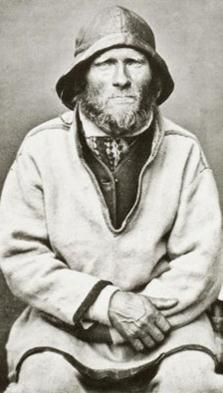
It is among the indigenous people that the answers are to be found
"The wisdom of the future comes from the north. That’s what our ancestors told us." The Mayan Indian in front of me is talking very seriously. Looking me straight in the eyes. He, a true child of the world's most famous indigenous people. From the south. Me a person with just a hint of Sami blood. From the north. The indigenous people's ability to 'see' more and deeper than the more modern versions within humanity is a resource that has been little exploited. More mocked and made fun of. Indigenous peoples' close contact with their ‘other dimension’ has often been regarded as ravings. The people of today find it hard to believe that people have qualities that cannot be explained by reason. But perhaps it is rather the understanding of the concept of 'common sense' there is something wrong with? That way he could he predict the hunting and fishing outcomes, tell people about their physical and spiritual life. Present, past and future. Nature's soul speaking through the shaman.
|
Is Trondheim, where I studied architecture, the most ideal city in the world?
|
|
"Trondheim is the world's most ideal city." This was the conclusion of a U.S. research group that travelled around the world to find the ideal city. The group's report highlighted that Trondheim is a 'mini-city' of adequate size, with wide streets, low buildings, good air, a small, efficient centre core and glorious surroundings. Not bad certificate for the city that was my home for several years... Trondheim is Norway's capital of technology, a lively and historical university town, and home to the Nidarosdomen Cathedral. With a population of about 165,000, Trondheim counts itself as Norway's third largest city.
|
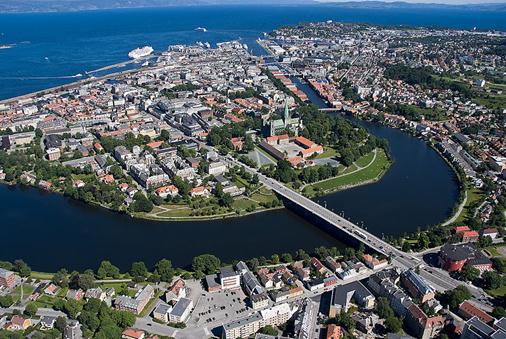
Trondheim is a green, beautiful city in Mid Norway. The city's Old Town, Midtbyen, is located on a peninsula formed by the river Nidelven, before it flows into the Trondheim Fjord and ends its long, wet journey from Selbusjøen southeast in the county. Scandinavia's largest church, the Nidarosdomen Cathedral is seen in the middle of the picture.
Photo: Aage Hojem, Trondheim Havn.
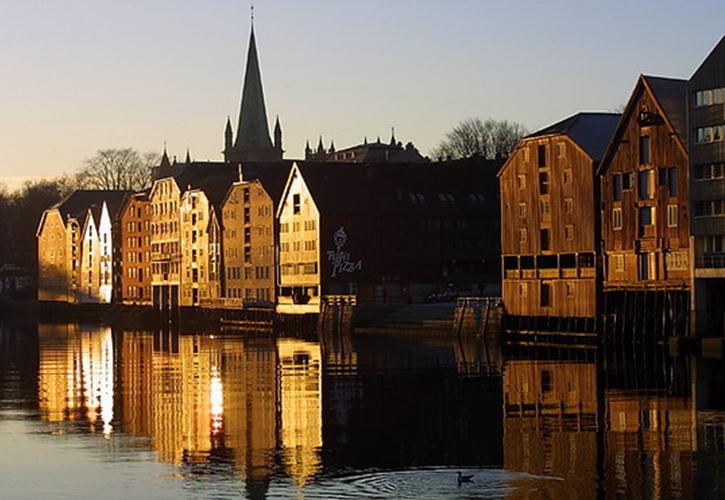
Wooden warehouses at the Nidelven river bank in the centre of Trondheim. There has been warehouses like these here since the Middle Ages. The oldest surviving ones are from the mid 1700's.
Foto: Trondheim.no.
Oslo – home of the Vikings and the world’s largest sculpture park
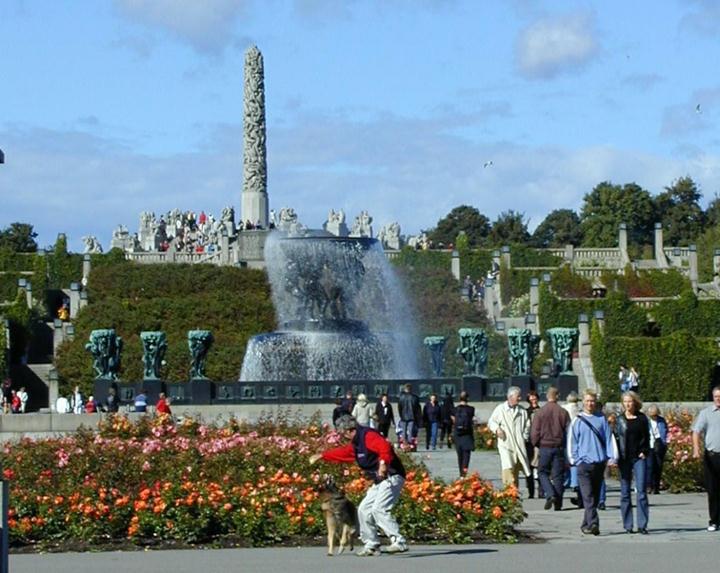
The Vigeland Park in Oslo is the world's largest sculpture park made by a single artist, and is one of Norway's most popular tourist attractions. The park is open to visitors all year round. The unique sculpture park is Gustav Vigeland's lifework with more than 200 sculptures in bronze, granite and wrought iron. Vigeland was also in charge of the design and architechtural layout of the park. The Vigeland Park was mainly completed between 1939 and 1949. Most of the sculptures are placed in five units along an 850 meter long axis: The Main gate, the Bridge with the Children's playground, the Fountain, the Monolith plateau and the Wheel of Life.
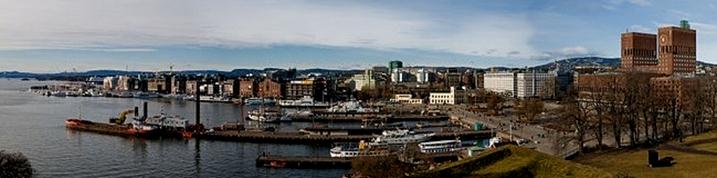
The capital of Norway is also its largest city. It has over 600,000 inhabitants and covers 454 square kilometres, 242 of which are forests. The city is located at the head of the 100-kilometre Oslofjord. The fjord’s 40 islands are great for recreation, and many of them can be reached by ferry. Over half of the municipality of Oslo is covered by forests and parks, making Oslo a truly green city, where opportunities for outdoor recreation are always nearby.
Oslo’s climate is milder than its latitude might indicate. Summer temperatures often equal those of cities much further south, yet the winters are usually cold enough to make Oslo a great skiing destination.
The prestigious Nobel Peace Prize is awarded annually on 10 December in Oslo City Hall.
|
|
Denmark – food, culture & energy |

|
|
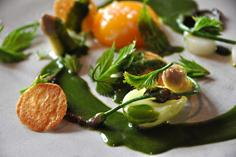
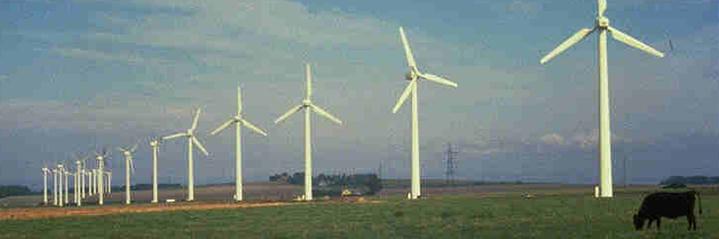
The countries of Denmark and Greenland, as well as the Faroe Islands, constitute the Kingdom of Denmark. Denmark consists of a large peninsula, Jutland (Jylland) and many islands, most notably Zealand (Sjælland), Funen (Fyn), Vendsyssel-Thy (commonly considered a part of Jutland), Lolland, Falster and Bornholm, as well as hundreds of minor islands often referred to as the Danish Archipelago. Denmark has long controlled the approach to the Baltic Sea (dominium maris baltici); before the digging of the Kiel Canal, water passage to the Baltic Sea was possible only through the three channels known as the "Danish straits". Denmark is a constitutional monarchy with a parliamentary system of government. It has a state-level government and local governments in 98 municipalities. Denmark has been a member of the European Union since 1973, although it has not joined the Eurozone. Denmark, with a mixed market economy and a large welfare state, ranks as having the world's highest level of income equality. It has frequently ranked as the happiest and least corrupt country in the world. The national language, Danish, is closely related to Swedish and Norwegian, with which it shares strong cultural and historical ties. Danish cuisine, originating from the peasant population's own local produce, was enhanced by cooking techniques developed in the late 19th century and the wider availability of goods after the Industrial Revolution. The open sandwiches, known as smørrebrød, which in their basic form are the usual fare for lunch, can be considered a national speciality when prepared and decorated with a variety of fine ingredients. Hot meals traditionally consist of ground meats, such as frikadeller (meat balls), or of more substantial meat and fish dishes such as flæskesteg (roast pork with crackling) or kogt torsk (poached cod) with mustard sauce and trimmings. Denmark is known for its Carlsberg and Tuborg beers and for its akvavit and bitters although imported wine is now gaining popularity. Danish chefs, inspired by continental practices, have in recent years developed an innovative series of gourmet dishes based on high-quality local produce. As a result, Copenhagen and the provinces now have a considerable number of highly acclaimed restaurants, of which several have been awarded Michelin stars. The Noma restaurant in Copenhagen is a two Michelin star restaurant run by chef René Redzepi. The name is an acronym of the two Danish words "nordisk" (Nordic) and "mad" (food), and the restaurant is known for its reinvention and interpretation of the Nordic Cuisine. In both 2010 and 2011, it was ranked as the Best Restaurant in the World. In 1973, during the Yom Kippur war, Denmark was 98% dependent on foreign oil for its power. Today, thirty-two years later, the country derives 21% of its energy from wind and is a net exporter of energy. |
|
|
|
|
|
|
|
|
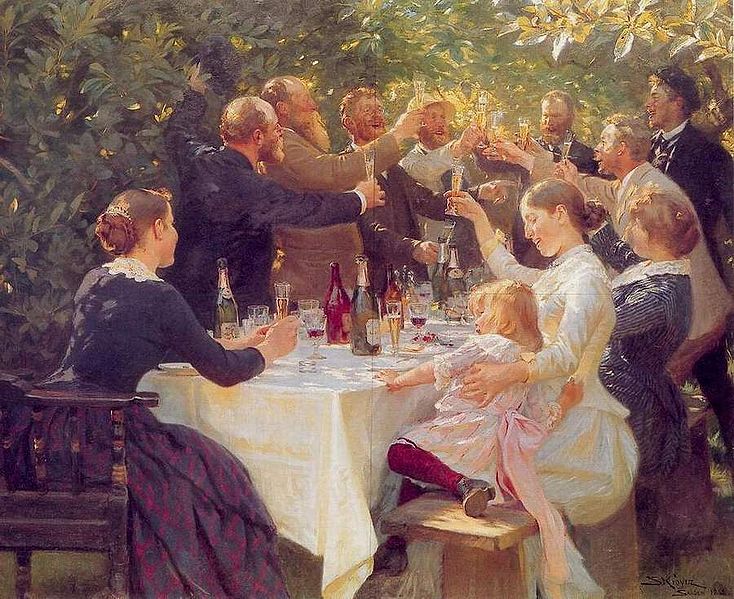
“Hipp Hipp Hurra!” by the Danish/Norwegian painter Peder Krøyer (1851-1909), the ringleader of a group of
genre painters who gathered in the Danish fishing village of Skagen.
Copenhagen – Scandinavia’s cosmopolitan city
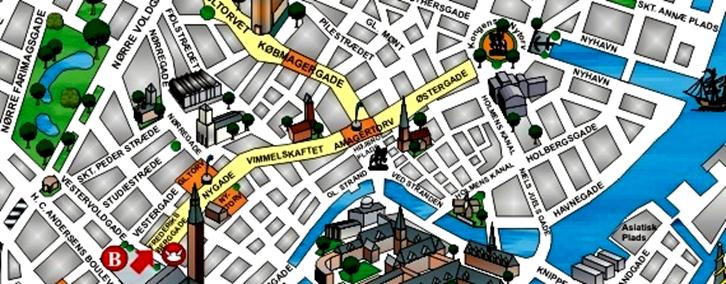
Strøget 'in Copenhagen is considered the world's oldest and longest pedestrian street.
Photo: Copenhagenet.dk.
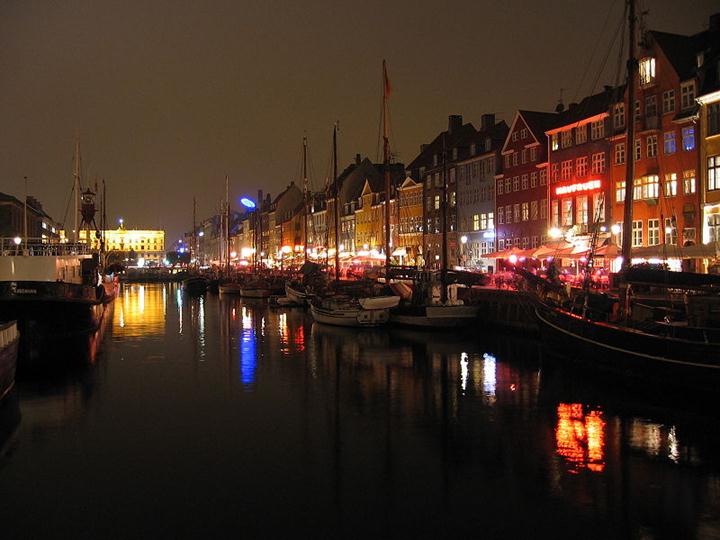
Nyhavn is part of the original Copenhagen Harbour all the way back to the founding of Haven, as
Copenhagen was called in the 12th century.
"I am not an Athenian, or a Greek, but a citizen of the world," said Socrates. That is Copenhagen in a nutshell. My favourite Scandinavian city, a world city where people are more laid-back, where the famous Danish 'grin' is never far away. Where shops are permitted to sell alcohol, and even exhibit the bottles in their windows. Miles away from the Swedish and Norwegian chastity. The old buildings have been standing here for hundreds of years. Copenhagen represents majestic dignity, but has also a fine-meshed network of narrow streets, small squares and architectural details that often dates back to the Middle Ages.
Copenhagen's city council decided in 1962 to establish a car-free pedestrian street from City Hall Square in the west to the Kongens Nytorv in the eastern part of the town. The world's first pedestrian-revolution was called "Strøget". Not just one street, but a maze of alleyways and historic sites, with a total length of over 3 km, the oldest and longest pedestrian system in the world. Nygaden, Vimmelskaftet and Østergade, the main thoroughfare, is winding between the beautiful old buildings. Known, loved shops and restaurants on both sides. The people flow waves back and forth. Day and night.
Summer and winter. This is what I call a vibrant city!
The pubs and restaurants at Gråbrødretorv, Kongens Nytorv, and along both quaysides in Nyhavn are as genial as the Danes themselves. Hviids Vinstue at Kongens Nytorv is a must for me when I'm in Copenhagen. With a few drops of ‘Gammel Dansk (Old Danish)'. Then a 'smørrebrød’ with herring. Or liver and bacon. A foaming Bajer belongs to the meal. The narrow and dark rooms in Hviids Vinstue have witnessed the dramatic historical events over nearly 300 years. It sits in the walls.
The restaurant St. Gertrud's Kloster experienced as a journey back to medieval times. Narrow basement times and restaurant rooms over several floors. All in spartan monastic style, only lit by candles under the brick-vaults. On Gråbrødretorv I have two favourites: The restaurants Peder Oxe and Bof & Ost. Rustic taverns with a relaxed square. Salad Tables and tender beef. Copenhagen at its best.
Copenhagen is the Danish capital and Scandinavian’s largest city. Copenhagen was founded by the Danish bishop Absalon in 1167 - who built a little fortress on a small isle outside of the growing town that today is inhabited with over 1.8 million people and is an international metropolis with the biggest airport in northern Europe. In Copenhagen the Danish parliament is located together with the Royal residence Amalienborg - as the capital became a regal city in 1443.
|
|
Sweden – technology & islands |

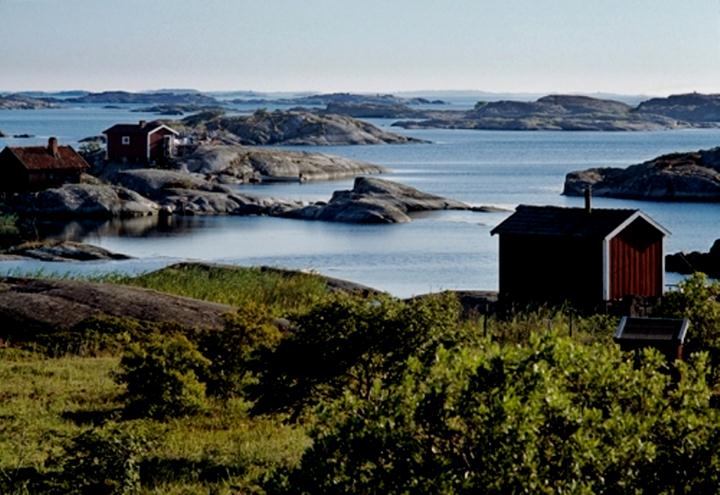
Sweden is the biggest country of Northern Europe and the fifth of whole Europe. With 449,964 sq km (173,732 sq mi) it is almost as big as Spain or France. But it has a completely different shape. The extreme distance from north to south in Sweden is about 1,575 km (about 980 mi). If you turn Sweden around at the southern end, you will see the north end up as south as Naples in Italy. The distance from east to west is only 500 km (about 310 mi).
Almost 9 million people live in this long-shaped country. With such a small population it is not a surprise this vast country is dominated by nature. One of the main facts about Sweden for tourists to remember is that Sweden is not a country for sensation-seekers.
Instead it is perfect for those who love nature, space, clean air, beautiful landscapes and outdoor activities. Great sceneries are among the major tourist attractions.
The more you get to the north the landscape becomes wilder, with ever bigger forests and literally thousands of lakes.
The north (Lapland) is often called the last wilderness in Europe, with high mountains, swamps and wild rivers, treeless highlands and impenetrable birch forests. In this part of Sweden the Saami live, also called the Lapps, one of the last nomad peoples in Europe.
Although at a very northern latitude, Sweden has a moderate climate. It has rainfall in spring, summer and fall, but never very much. In winter there is always snowfall. It is freezing cold then, especially in the northern parts of the country. The summers are sunny with an average temperature of 22°C (71°F). Daylight hours increase in summer and decrease in winter.
Sweden is a monarchy, now ruled by king Carl GustavXVI. In reality his function is purely ceremonial. The country is governed by a democratically chosen parliament. Social-democrats are traditionally the main political force, with the Moderate Party in second place.
The crown or krona is the Swedish currency. Sweden has a tradition of pacifism. It is the only European state that was not involved in any armed conflict for almost 200 years.
Kista - Sweden´s IT Capital
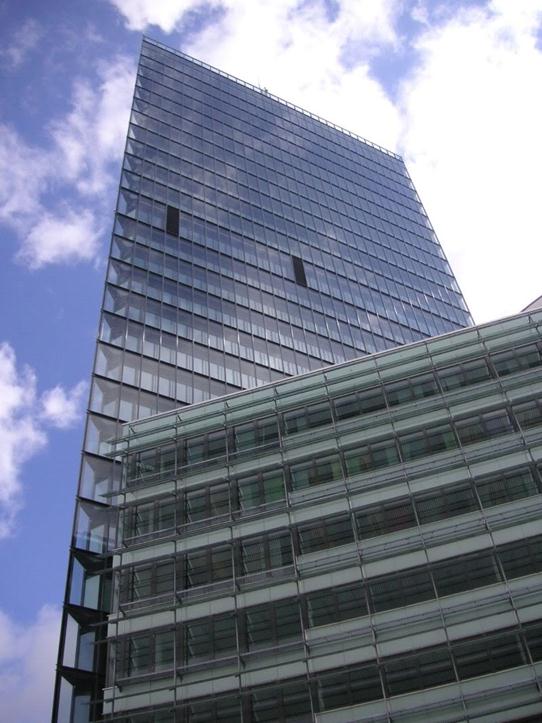
Kista Science Tower.
They call it Wireless Valley, Mobile Valley or the Silicon Valley of the North. Its formal name is Kista Science City, located in north-west Stockholm. It’s where you’ll find many of the world’s foremost ICT* companies, gathered together to take advantage of Sweden’s strong position in mobile communications. Kista Science City is one of the world’s leading high-tech clusters.
The Kista urban area is Sweden’s biggest corporate centre. Here are more companies and employees within a limited space than anywhere else in the country. Of the nearly 28,000 employees in some 750 Kista companies, two-thirds work in the ICT sector. Here is everything from the major international enterprise to the small, entrepreneur owned ICT business. Ericsson has its head office in Kista and is the largest single employer with a staff of more than 9,000.
Kista Science City is located centrally in the Stockholm region, 15 minutes from Central Station on the underground railway and 15 minutes from the main Stockholm airport at Arlanda. It also has the advantage of being close to Sweden’s financial centre in central Stockholm.
Companies and researchers are found along the entire value chain within wireless systems, mobile services and broadband systems - the three strategic areas for Kista Science City.
Stockholm – the city of thousand Islands
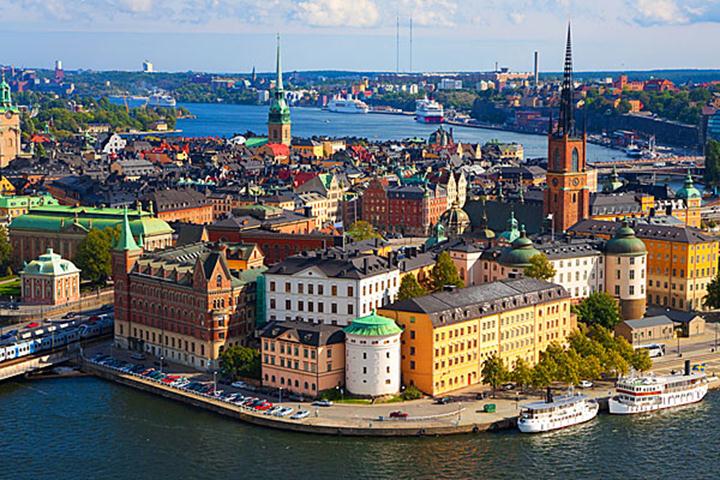
Post-war Stockholm makes me think that architects, urban planners and reform eager politicians too often lack the ability to see connections, physical and in a time perspective. How on earth could a beautiful city like this otherwise be so much destroyed around 1960? The world's worst city destruction ever, it is said, bombings and wars included. The ideas of the Swiss-French architect Le Corbusier, by some called the 20century's foremost, destroyed the good old Stockholm.
Only Gamla Stan and certain enclaves remain. Sweden wished to demonstrate its leading position in the postwar Europe.
As the most modern of all cities. That they managed. Unfortunately...
From my window here at the Sheraton Hotel, I see the great water-Stockholm. But I also look down on the street where there was once a bustling street life in the Klara district, where bohemian Stockholm once existed.
Fortunately, nature and the many islands of Stockholm is built on such strong force that people failed to do too much damage. I love to stroll through the narrow streets of Gamla Stan out at Riddarholmen. I like Skeppsholmen, Kungsholmen, Djurgården. The waters around the islands are full of small boats. A buzz that makes Stockholm deserve the designation 'Venice of the North'.
Stockholm is the capital of Sweden and the country’s largest city. It is located in the heart of Scandinavia, on Sweden's south east coast, by the Baltic Sea. The city was founded in the early 13th century, and is renowned for its beauty, clean open water, fascinating history, broad variety of arts and culture and its high environmental friendly standards.
The city spreads across 14 islands as it faces proudly out to the Baltic Sea. You can get to just about all of Stockholm’s many wondrous sites on foot, which is the perfect way to see the city. You can also take a boat trip that will give you a different facet of Scandinavia’s largest and probably most beautiful city.
The Stockholm region has a population of more than 2 million, whereas 850 000 live in the very city.
|
|
Finland – Nokia & thousand lakes |

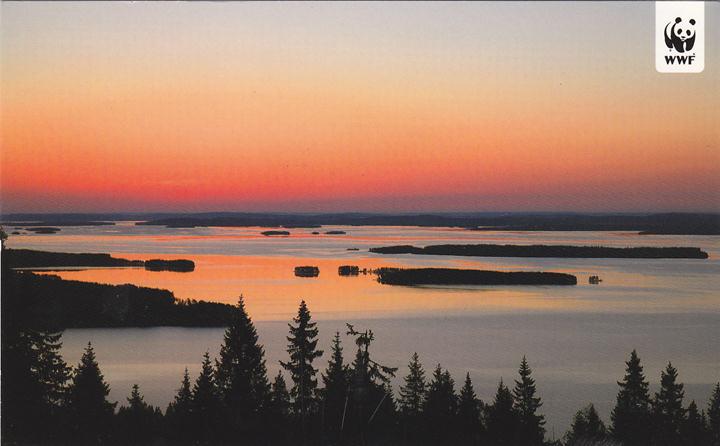
Finland is called ''the land of a thousand lakes,'' but at last count there were 187,888 of them - more lakes in relation to a country's size than any other. Indeed, with a population of about five million, Finland has one lake for every 26 people. Most of the lakes are in a region that stretches from above Kuopio in the north to Lahti in the south, and from Tampere in the west to Punkaharju and the Russian border in the east.
Finland borders Norway (727km) to the north, Sweden (614km) to the west and Russia (1,313km) to the east, with the Gulf of Finland to the south dividing it and the Baltic state of Estonia. It has a modest national population of just 5.2 million people, with its capital city, Helsinki, home to 10% of that figure.
Since it implemented huge education reforms 40 years ago, Finland's school system has consistently come at the top for the international rankings for education systems.
The mobile phone company Nokia has played an extremely important role for Finland. In 2000, Nokia produced 21 per cent of Finnish exports and paid €1.1-billion or 20 per cent of all corporate tax revenue. Then the smart phone wars began, prompting the rapid loss of market share to Apple’s iPhone and Google’s Android platform. In 2010, Nokia generated 13 per cent of Finnish exports and paid out just €100-million in taxes.
|
|
Finland was part of Sweden for seven hundred years, and through one hundred years governed by Tsarist Russia. The country achieved full independence in 1917 and quickly became more prosperous than Russia. Perhaps this was part of the reason why Stalin in November 1939 decided to attack Finland. He soon found out that the Finns are tough people, with deep knowledge of how the Russians operate. The Winter War was a fight to the death between small Finland and the mighty 'Evil Empire'. Stalin expected to conquer Finland already by the end of 1939, but the Finnish resistance stopped long the numerically superior invasion force. The Finns held out until 13 March 1940, when a peace agreement was signed. During much of the war Finland tried to negotiate through the Swedish government. Most of the inquiries resulted only in stricter Soviet requirements, and the peace was declared, Finland had to cede more land than what was in the original peace plan from the autumn of 1939. |
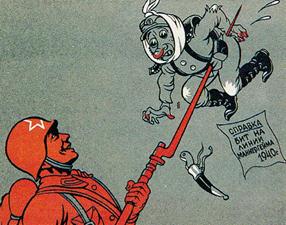
Had the Finnish forces not held out, however, it is likely that the whole Finland would have been occupied. Finland was forced to cede 10% of its territory and 20% of its industrial capacity, mainly forest industry, the Soviet Union. 10% of the population had to flee their homes and properties. The death toll for the Winter War is believed to have been about. 26,000 dead in Finland and the 270,000 on the Soviet side.
|
Why didn’t the Baltic States fight like Finland did? In a recently published book, '1939, The Year That Changed Everything in Lithuania's History ', the author Arnas Liekis presents an unflattering picture of the Baltic leaders at the time before World War II. In Lithuania, Latvia and Estonia, he says, no formal military resistance was provided, while Finland fought through their bloody winter war and survived the Soviet attack. The outcome was that brave Finland after the war evolved as one of the world's free, leading nations, while the Baltic states remained poor and forgotten under Soviet domination until 1990-91.
|
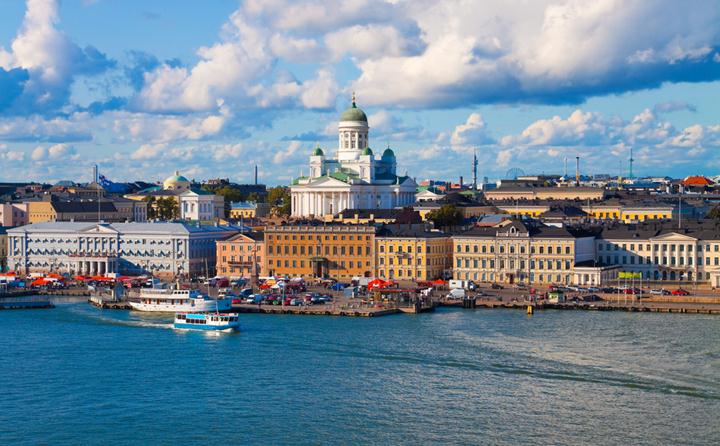
Helsinki and the distinctive Finnish architecture
|
Finnish architecture is different, exciting. Modern. Only12 percent of the buildings were built before independence in 1917. The first international breakthrough for Finnish architecture took place at the World Exhibition in Paris in 1900, while national romanticism was still the dominant style. AlvarAalto (1898-1976) shows. He designed more than 500 buildings, about 300 of them were built, most of them in Finland, but also some in the U.S., Germany, Italy and France. Aalto's wide design activities ranging from urban planning and architecture to interior and furniture design, glass design (Iittala) and painting. |
|
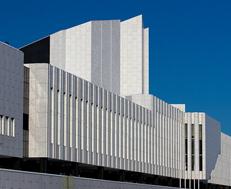
|
|
One of the most impressive features of the Finnish capital Helsinki, is the seaward approach to the city. The numerous islands and islets are all beautifully green, very neat. Finland leads, also this way.
|
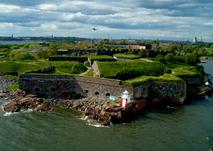
Helsinki was founded by Swedish King Gustav Vasa in 1550. The purpose was, curiously enough, to create a rival to the Hanseatic city of Tallinn.
At the beginning of the 1800s the city had still only 4,000 inhabitants. The change came when the Russians captured it in 1808 and Finland became a Grand Duchy under the Russian Tsar. In 1812 the Tsar decided that the Finnish capital was moved here from Turku on the southwest coast, probably because the city was closer to St. Petersburg. A new centre in the Empire style was built up around the Senate Square, with magnificent buildings, such as the Cathedral.
It's good to come to Helsinki. It is good to wander along the quays. See the huge ferries from Viking or Silja Line. Feel the good smell of the sea. Stroll along the Alexander Street and Mannheim Road. Sitting down with a cold beer in the park area Pohjoisesplanadi. The town centre here at the park is homogeneous neoclassical. One understands why the city was nicknamed the 'Nordic white city'. But Helsinki is perhaps even more famous for its numerous Art Nouveau buildings
(Finnish Art Nouveau) buildings from the early 1900's. These buildings are strongly influenced by the Kalevala, a very popular theme in Finland's national romantic art of that time. The master of Finnish Art Nouveau was the architect Eliel Saarinen (1873-1950), in this city known for his architectural masterpiece, the Helsinki main railway station. One would also not have walk many hundred meters before encountering Alvar Aalto buildings.
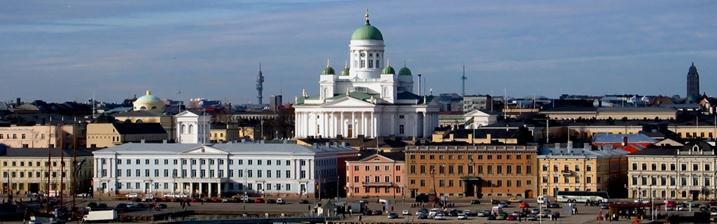
Seafront in Helsinki, with The Cathedral right behind.
Rovaniemi in North Finland claims to be the home of Santa Claus…
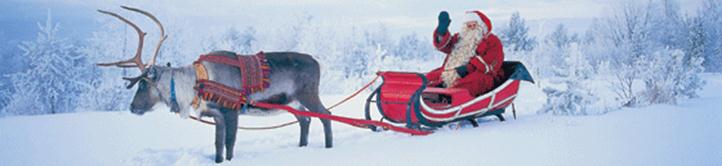
Rovaniemi is the capital of Lapland in Finland, located at the northern Arctic Circle. Lying at the junction of North and South on the border to the Arctic, Rovaniemi has become a modern town, full of life with its own unique characteristics.
There are eight different seasons this far north, each having its own type of daylight, temperature and natural phenomena. The changing seasons offer excellent settings for a whole variety of activities. During the frosty twilight, you can ride a snowmobile through snowy forests or over a frozen river, the Midnight Sun on the other hand, takes you cruising in a boat on the river. Each season offers an opportunity to experience the town in a totally different light.
Although Christmastime comes but once a year, in Rovaniemi you can experience Christmas throughout the year. Rovaniemi, in Finnish Lapland, is the hometown of Santa Claus who can be met on any day of the year at the Santa Claus Office on the Arctic Circle.
- Bookmark :
- Digg
- del.icio.us
- Stumbleupon
- Redit it
Lithuania thanks Denmark for endorsing proposals to strengthen European arrest warrant
- Posted by - (0) Comment
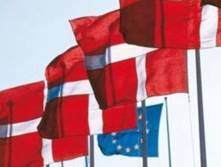
Lithuanian Minister of Foreign Affairs Audronius Azubalis thanked Minister of Justice of Denmark who took over the EU Presidency Morten Bodskov for expressing support for Lithuania and proposals to strengthen the European arrest warrant, reported BC the MFA.
"The attention of the EU Presidency is very important to us and vital to the full and effective application of the European arrest warrant," is stated in the letter of Azubalis to Bodskov sent on 13 January.
Denmark has announced its support to the initiatives of Lithuania and to the declaration signed together with Austria, in which the country undertakes to make practical steps to limit or withdraw the statements made under Article 32 of the Framework Decision on the European arrest warrant. It is possible that the statement has become one of the reasons why last summer Austria did not extradite to Lithuania the detained suspect in the January 13th case Michail Golovatov. "It is absolutely unacceptable that criminals, suspected for the crimes against humanity and placed under the European arrest warrant, might freely travel in the Schengen area," Azubalis stressed.
He also drew attention to the positive attitude expressed by a large majority of the Member States towards the European Commission's proposal to withdraw the declarations made under Article 32 of the Framework Decision on European arrest warrant, which do not allow to implement fully the European arrest warrant procedures.
"I trust that we will not lose this successful momentum and will be able to push forward the above mentioned question during the Danish Presidency. I am sure that the strengthening of the European arrest warrant, along with the other instruments of extradition and mutual legal assistance, are crucial measures to ensure our common security," Azubalis wrote.
- Bookmark :
- Digg
- del.icio.us
- Stumbleupon
- Redit it
- Posted by - (0) Comment
 Our VilNews Associate Editor, Vin Karnila, has edited the four articles we have presented on the topic “Lithuania and the Soviet Union 1939-1940” from the personal memoirs of Juozas Urbšys. Here is his response to Mr. Mazeika’s commentary:
Easy to say that they should have organized formal Military resistance – and get slaughtered
Vin Karnila
I would like to thank you Mr. Mazeika for sharing your thoughts with us and making us aware of what I’m sure is a very interesting book written by Arnas Liekis.
You bring up a topic that has been discussed many times throughout the years following 1940. The members of the Lithuanian delegation that were involved in the negotiations with Russia have always claimed that they knew that Russia at any time they chose could have invaded Lithuania. They also felt that if Russia did in fact invade, whether there was organized military resistance or not, this would result in catastrophic consequences for Lithuania and its people. Throughout the negotiations they said that what they were trying to achieve was the best possible outcome for Lithuania. In the end what they achieved was the best possible outcome that Russia would allow.
The topic of the courageous people of Finland and their organized military resistance to Russia’s invasion of their homeland in relation to the fact that Russia’s invasion of Lithuania in 1940 occurred without a shot being fired has also been discussed many times. The question remains how much did Lithuania know or did not know about Finland’s armed resistance to Russia in what is known as the “Winter War”?
To read more, go to our
SECTION 10 – HISTORICAL LITHUANIA
- Bookmark :
- Digg
- del.icio.us
- Stumbleupon
- Redit it
- Posted by - (0) Comment


EUROPE – MY HOME & MY CASTLE (5 of 10)
Authentic Austria – generous Germany
|
VilNews is on its way around Europe!
Tour guide: Aage Myhre To read today’s travel report, click HERE To read the previous articles, go to our SECTION 11 |
- Bookmark :
- Digg
- del.icio.us
- Stumbleupon
- Redit it
- Posted by - (2) Comment
EUROPE – MY HOME & MY CASTLE (5 of 10)
Authentic Austria – generous Germany
|
VilNews is on its way around Europe!
Tour guide: Aage Myhre
|
|
|
Authentic Austria |

|
Austria is a landlocked country of roughly 8.47 million people in Central Europe. It is bordered by the Czech Republic and Germany to the north, Hungary and Slovakia to the east, Slovenia and Italy to the south, and Switzerland and Liechtenstein to the west. The territory of Austria covers 83,855 square kilometres (32,377 sq mi) and has a temperate and alpine climate. Austria's terrain is highly mountainous due to the presence of the Alps; only 32% of the country is below 500 metres (1,640 ft), and its highest point is 3,798 metres (12,461 ft). The majority of the population speak local Austro-Bavarian dialects of German as their native language, and German in its standard form is the country's official language.[8] Other local official languages are Burgenland Croatian, Hungarian and Slovene. The origins of modern-day Austria date back to the time of the Habsburg dynasty when the vast majority of the country was a part of the Holy Roman Empire of the German Nation. During the 17th and 18th centuries, Austria became one of the great powers of Europe and, in response to the coronation of Napoleon I as the Emperor of the French, the Austrian Empire was officially proclaimed in 1804. In 1867, the Austrian Empire was reformed into Austria-Hungary. When the Habsburg (Austro-Hungarian) Empire collapsed in 1918 with the end of World War I, Austria used German Austria („Deutschösterreich”, later „Österreich”) as the state name in an attempt for union with Germany but was forbidden due to the Treaty of Saint Germain. The First Austrian Republic was established in 1919. In the 1938 Anschluss, Austria was occupied and annexed by Nazi Germany. This lasted until the end of World War II in 1945, after which Nazi Germany was occupied by the Allies and Austria's former democratic constitution was restored. In 1955, the Austrian State Treaty re-established Austria as a sovereign state, ending the occupation. In the same year, the Austrian Parliament created the Declaration of Neutrality which declared that the Second Austrian Republic would become permanently neutral. Today, Austria is a parliamentary representative democracy comprising nine federal states. Austria is one of the richest countries in the world, with a nominal per capita GDP of $48,350 (2011 est.). The country has developed a high standard of living and in 2011 was ranked 19th in the world for its Human Development Index. |
|
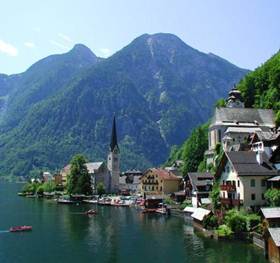
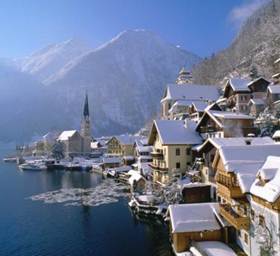
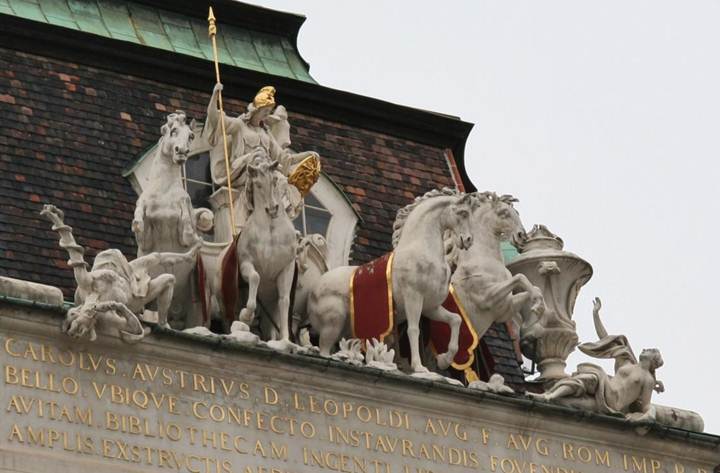
Vienna - Roof top Sculpture at Hofburg Palace.
Photo: Aage Myhre.
Vienna – home of Sigmund Freud and the Strauss family
At the turn of the 20th century, Vienna, capital of the vast but ailing Austro-Hungarian Empire, reflected on its past with pride and its future with uncertainty. The empire had nurtured Beethoven, Brahms, and Strauss. The city was home to Sigmund Freud, and considered a world leader in science, philosophy, and research. With 2 million inhabitants, Vienna was one of the most populous and multi-ethnic cities on earth, a melting pot of immigrants from across the empire.
But Vienna seethed with provincial nationalism, socialist ideals, and an odious wave of anti-Semitism. Though its culture and science still predominate, modern Vienna is, of course, a very different place. In the old town section, the Innere Stadt, throngs of tourists fill the streets, lost in reveries over their fabulous surroundings. But I had come to see another side of the city's history. For Vienna also nurtured the young Adolf Hitler, and, after his rise to power, played a significant part in supporting the Nazi reign of terror. Vienna is rife with reminders of those dark years.
Johann Strauss Sr. "Radetzky March", the last piece at the New Year's Concert
In Vienna 1987, with Austrian Herbert Von Karajan conducting the Vienna Philharmonic Orchestra.
Vienna is packed with life and culture!
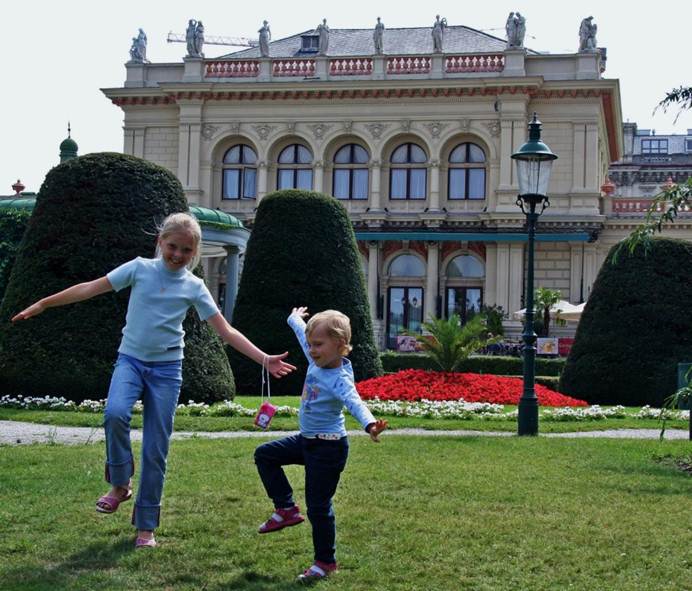
My kids dancing on the grass in front of the Belvedere Palace right in the heart of Vienna.
Photo: Aage Myhre.
Vienna, a city of full of life and history, has cultivated itself through many eras and embodies the very definition of culture: the tending of natural growth. Apart from Vienna’s rich history, the 20th Century alone offers enough ‘culture’ to fill an entire textbook with intricate descriptions. Starting with Freud’s Vienna, which was largely preoccupied with death and dark, unconscious drives, switching to Art Nouveau or the paintings of Gustav Klimt, going through the philosophy of Ludwig Wittgenstein and logical positivism, and finally culminating in Nobel Prize-winning Viennese Elfriede Jelinek, the city offers an abundance of history and inspiration, which only justifies Terry Eagleton’s claim that culture is “one of the two or three most complex words in the English language.”Vienna, among other things, is a place to feel how slowly and gracefully life progresses. Literally overflowing with sidewalk cafes, shadowy landscaped parks, wine bars and pastry shops, it is an ideal place to stop and relax for a while, observe and, in the Viennese cynical fashion, make witty remarks. Here you can savour various samples of the city’s cultural buffet, be it classical music, art, literature or theatre performances. Vienna’s architecture, which is comprised of cutting-edge contemporary buildings, Art Deco, Neo-Classical, Baroque and Rococo pieces, is a significant part of the city’s splendour. Food and drink are also part of Vienna’s allure, with the city offering excellent dining options just around the corner from the most desirable and important sightseeing locations.
This cosmopolitan centre, which incorporates Eastern European, Oriental and Western modes of thinking, has been a melting pot for cultural identities throughout the centuries. Thus, the Viennese represent a peculiar blend of many nationalities and cultural belongings. Vienna started off as a Celtic settlement of the Danube, which was later occupied by the Romans, and eventually evolving into the powerful Austro-Hungarian Empire in more recent times. Being defined by the iron fist of the Habsburg dynasty, the city has always been a vital spot for European history. Vienna has been through wars, occupations, it has been the victor of many battles, and in more recent history, has switched from a monarchy to a republic. Vienna is the world’s most famous music centre. A lot of talented musicians lived and worked here: Mozart, Beethoven, Hayden, Schubert, Brahms and many others. It's also the city of the legendary Vienna Boys' Choir and various musical events, such as the New Year Concert or the Annual Ball in the Vienna Opera House.
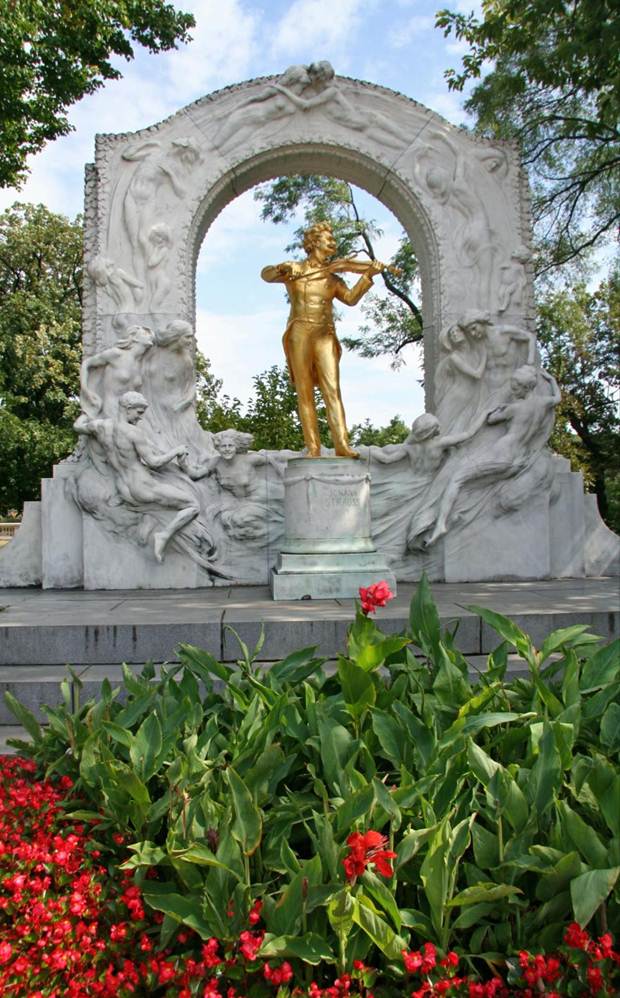
Johann Strauss II Statue in the Vienna City Park.
Photo: Aage Myhre
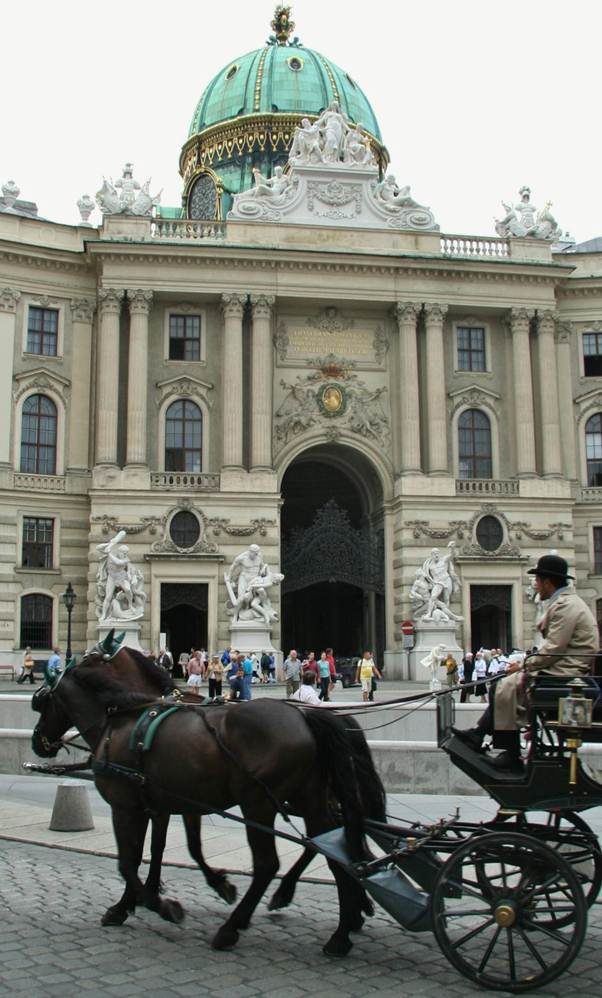
Hofburg Royal Palace, surrounded by Vienna’s typical horse carriages.
Photo: Aage Myhre.
Austrian wining & dining
Photo: Cassandra Myhre.
|
If any European capital knows how to enjoy the good life, it’s Vienna. Compared to most modern urban centers, the pace of life here is slow. Locals linger over pastry and coffee at cafés. Concerts and classical music abound. And chatting with friends at a wine garden is not a special event but a way of life. For many Viennese, the living room is down the street at the neighborhood coffeehouse, which offers light lunches, fresh pastries, a wide selection of newspapers, and “take all the time you want” charm (just beware of the famously grumpy waiters). Each coffeehouse comes with its own individual character. Café Sperl dates from 1880, and is still furnished identically to the day it opened—from the coat tree to the chairs. Café Hawelka has a dark, “brooding Trotsky” atmosphere, paintings by struggling artists (who couldn’t pay for coffee), smoked velvet couches, and a phone that rings for regulars. Mrs. Hawelka died a couple of weeks after Pope John Paul II. Locals suspect the pontiff wanted her much-loved “Buchteln“ (marmalade-filled doughnuts) in heaven. Make it a point to stop by Demel, the ultimate Viennese chocolate shop, filled with Art Nouveau boxes of choco-dreams come true: “Kandierte Veilchen” (candied violet petals), “Katzenzungen” (cats’ tongues), and much more. An impressive cancan of cakes is displayed to tempt you into springing for the 10-euro cake-and-coffee deal (point to the cake you want). You’ll sure to see Sacher torte, the local specialty. Apart from its apricot filling, the recipe seems pretty simple...chocolate on chocolate. You can sit inside the shop, with a view of the cake-making, or outside, with the street action. Fancy shops like this boast on their sign: “K.u.K.” (meaning good enough for the “König und Kaiser” – king and emperor). For another royally good experience, head to the wine gardens. Clustered around the edge of town, mostly in the legendary Vienna Woods, wine-garden restaurants feature cold-cut buffets paired with fine Austrian wines in an old-village atmosphere with strolling musicians. If you visit in fall, try Sturm, the semi-fermented new wine made from the season’s first grape harvest and only available in autumn. Many locals claim that it takes several years of practice to distinguish between Sturm wine and vinegar. The red version is so hearty and fruity that locals say “Eat up!” when toasting with it.
|
|
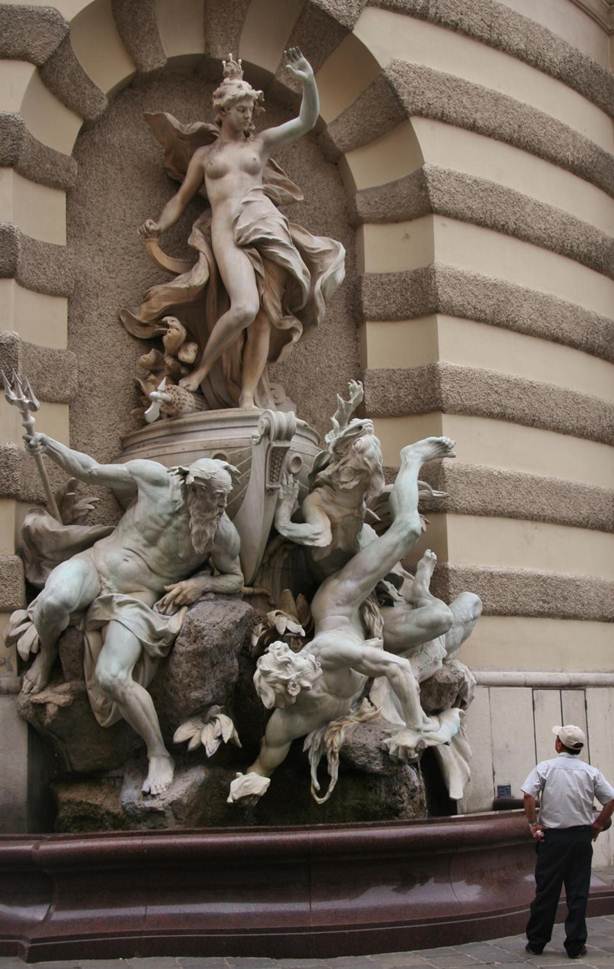
Watching each other... Neptune statue at the Royal Palace Hofburg, Vienna.
Photo: Aage Myhre.
|
Vilnius and Linz were European twin-capitals of culture in 2009 Linz and Vilnius were the European Capitals of Culture (ECOC) in 2009. Linz did well. Vilnius was very much a failure.
Linz implemented one of the largest ECOC cultural programmes to date, undertaking 200 projects involving 7,700 events and 5,000 artists and attracting audiences of nearly 3.5m people. The programme featured a number of European festivals/events, as well as performances, commissions, collaborations and residencies featuring artists from 66 nations, many of whom were operators of international significance. Activities took place across the city and on all 365 days of the title year. Highlights included a range of projects dealing with Linz's Nazi past (such as an exhibition exploring the difficult subject of the "Führermuseuem”), “80+1: Eine Weltreise” (a virtual journey round the world hosted), “Kultur-hauptstadtteil des Monats” (a series of community arts events in areas of the city designated as 'cultural capital neighbourhood of the month') and “Akustikon” (“World of Hearing”, an exhibition promoting the understanding of better acoustics). The Linz ECOC was successful in achieving a number of longer-term benefits for the city. There is evidence of a significant economic impact as well as an improvement in the city’s tourist offer, in part through the improvement of partnership working, which contributed to a marked increase in tourist visits during the title year. Key stakeholders also reported that the ECOC had a very positive effect on the opinions held by Linzers regarding their own city. The ECOC was also successful in raising the participation of local people (particularly young people) in cultural activities, both as performers and as audiences. Many of the cultural activities initiated in 2009 will continue and stakeholders report an increase in the capacity of Linz’s cultural sector, in terms of greater experience, better collaboration, more positive attitudes and greater professionalism. In Vilnius the ECOC was subject to a number of changes before 2009 and in the first half of the title year. First, the new government that took office after the general election at the end of 2008 faced a very large budget deficit and consequently reduced the budget for the cultural programme by about 40%. Secondly, the total number of staff employed by the delivery agency was reduced by about one-half early in 2009. Thirdly, there were two changes of director of the delivery agency – the first in 2007 and the second early in 2009. The result of these changes was that some projects started much later than planned and a significant number (previously selected following the calls for proposals) did not take place at all. It was not until the second and third months of 2009 that the situation began to be resolved, when a clear and simple governance structure was established, a new director took over at the agency and procedures were established for determining which projects would be cut from the programme.
|
Linz – birthplace of Lithuanian Grand Duchesses
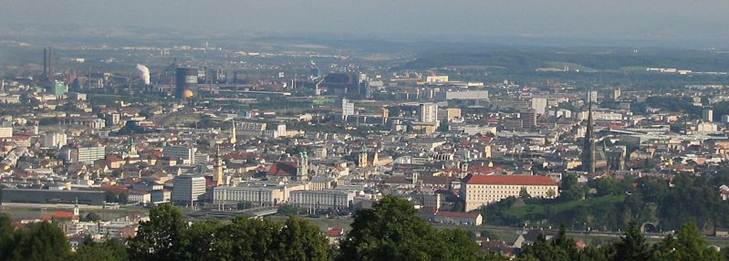
Linz is the third-largest city of Austria and capital of the state of Upper Austria (German: Oberösterreich). It is located in the north centre of Austria, approximately 30 km (19 mi) south of the Czech border, on both sides of the river Danube. The population of the city is 189,367, and that of the Greater Linz conurbation is about 271,000.
|
The golden age of Austrian – Lithuanian relations in the 15th – 16th centuries
|
||
|
The Jagiellonian and Habsburg Dynasties ‘united’ in 1454 when Grand Duke Casimir married Austrian Elizabeth von Habsburg The Jagiellonian dynasty was a royal dynasty originating from the Lithuanian House of Gediminas that reigned over the Grand Duchy of Lithuania, Europe’s largest country in the 14th-16th centuries (present day Lithuania, Belarus, Poland, Ukraine, Latvia, Estonia, parts of Russia (including nowadays Kaliningrad oblast), Hungary, Czech Republic, Slovakia). The Habsburg dynasty was another predominant force in Europe for several hundreds years. This house ruled over the Holy Roman Empire, Austria, Hungary, Bohemia, Spain and many other realms in Europe. The Habsburgs were especially powerful and played an exceptional role in the history of Central and Eastern Europe. This Jagiellonian dynasty started withVladislaus Jagiello, Grand Duke of Lithuania (1377-1401), who became King of Poland, marrying Jadvyga, the only daughter of the last King of Poland of the Andegawen dynasty (1386). In Lithuanian historiography this house is known as Gediminaiciai that is the descendants of Gediminas (c.1275-1341), grandfather of Jagiello and Grand Duke of Lithuania (1316-1341). Over five hundred years ago dynastic relations were a significant part of European politics. They were used to acquire new lands and cement political alliances. Therefore, dynastic contacts between the two most powerful houses in Central Europe were inevitable. When Casimir IV Jagiello, King of Poland and Grand Duke of Lithuania married Elizabeth of Habsburg in 1454 that became the first Habsburg-Jagiellon marriage ever contracted. The copule was a “Dream Team” of the late Middle Ages. Their wedding in 1454 (she was 17, he was 27) trigged off a historical golden era for Poland and Lithuania, which lasted over 100 years and ended in 1572 with the death of their grand-son Igismund II Augustus. Those were the glorious days of the Jagiellon dynasty Elizabeth von Habsburg (Elzbieta Habsburgaite) was called „Mother of the Jagiellons”, as she gave birth to 12 children, whereof six sons, among them the later Polish-Lithuanian King and Grand Duke Sigismund the Old (1467-1548). The Austro-Lithuanian couple seems to have been successful in practically all their undertakings, not least in politics and in warfare. King Casimir died in 1492, so the marriage lasted for 38 years, which is quite remarkable for those times. In their lifetime and after, Lithuania was the major power in eastern Europe. Historians point out that Casimir and Elizabeth were also renowned for their open-mindedness and tolerance. Cracow was then a rich and splendid royal residence, and its close contacts to Prague and Vienna certainly were of great mutual advantage. The Jagiellon courts were international meeting places of noblemen, intellectuals and artists. |
|
|
|
|
||
|
Two Austrian sisters married Lithuania’s Grand Duke Sigismund Augustus |
||
|
The older sister is buried in Vilnius Elisabeth of Austria (1526 – 1545) was the eldest child of Ferdinand I, Holy Roman Emperor and his wife Anna of Bohemia and Hungary. Elisabeth was a member of the House of Habsburg. From an early age Elisabeth was being prepared for her marriage to Sigismund II Augustus (1520-1572), Grand Duke of Lithuania and King of Poland, grandson of Grand Duke Casimir and Elizabeth of Austria. Elisabeth's father had attempted to marry his daughter off to the Lithuanian Grand Duke when she was only one year old. In view of the fact that Elisabeth was the granddaughter of Vladislas II of Hungary, uncle of Sigismund, Pope Clement VII had to give a papal dispensation so the wedding could take place. So 16 year old Elisabeth married 22 year old Sigismund, they married on May 6, 1543 in Wawel, Krakow. Elisabeth's mother-in-law Bona Sforza did not want the wedding to take place because she hated the Habsburgs. The marriage was not happy. Young, inexperienced and shy Elisabeth was not attracted to her husband. The situation deteriorated when Elisabeth was diagnosed with an incurable disease, epilepsy. Throughout the duration of marriage Sigismund betrayed his wife by taking a mistress, Barbora Radvilaitė. At the same time Bona openly showed dislike to Elisabeth. The only person showing sympathy to Elisabeth was her father-in-law Sigismund I the Old. In autumn 1544 the couple moved from Poland to Vilnius, where her husband was heavily involved in an affair with Barbora Radvilaitė. In the spring 1545 Elisabeth's health deteriorated, tormented by her increasingly frequent seizures of epilepsy. At the beginning of June 1545 Sigismund went to Krakow to receive the dowry of Elisabeth, he left his wife alone in Vilnius. On June 15 the young queen died exhausted by many seizures of epilepsy, she was just 19 years old. She was buried on August 24, 1545 in Vilnius Cathedral next to her husband's uncle, a brother of her grandfather, Alexander the Jagiellonian. Her quarrel with Bona Sforza over the Parmesan cheese was commonly known in both Poland and Lithuania.
|
|
|
|
The younger sister is buried in Linz After Elisabeth's death Sigismund remarried to Radvilaitė and after her death he married Elisabeth's younger sister Catherine of Austria (1533 – 1572.. On June 23, 1553, she became the third wife of Sigismund II Augustus. Sigismund had no legitimate children from his three wives Catherine became pregnant and miscarried in October 1554. After the miscarriage, the Grand Duke decided that his marriage was cursed because Catherine was sister of his first wife. He vainly attempted to have the marriage annulled, and in the autumn of 1566, Catherine left Lithuania and lived until her death in 1572 in Linz. Catherine of Austria was buried in 1614 in the Sankt Florian monastery near Linz in Austria (picture). |
|
|
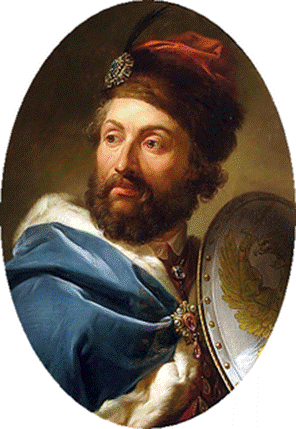
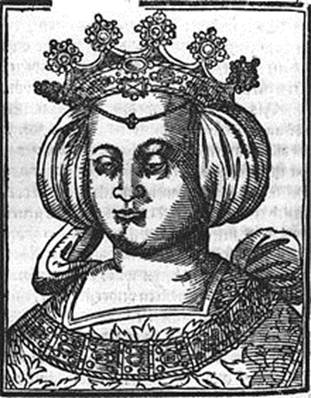
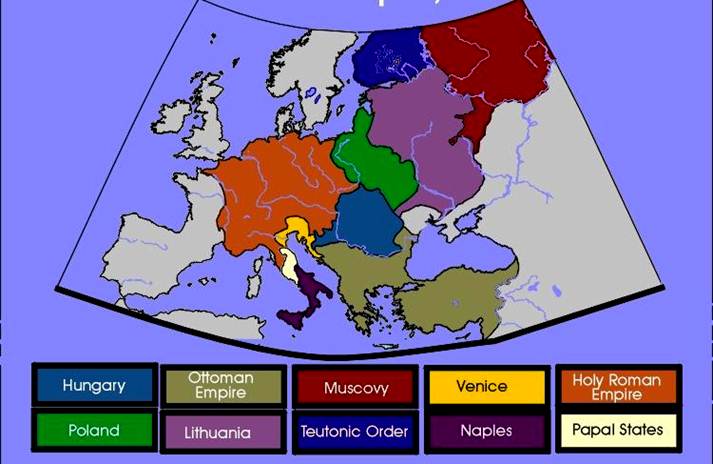
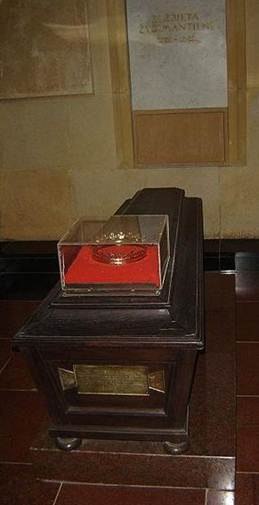
Salzburg – birthplace of the world's most prominent composer of all time
View of Salzburg City Centre.
Salzburg is the fourth-largest city in Austria and the capital city of the federal state of Salzburg. The "Old Town" (Altstadt) has internationally renowned baroque architecture and one of the best-preserved city centres north of the Alps. It was listed as a UNESCO World Heritage Site in 1997. The city is noted for its Alpine setting.
Salzburg was the birthplace of 18th-century composer Wolfgang Amadeus Mozart. In the mid-20th century, the city was the setting for parts of the American musical and film The Sound of Music.
The city has three universities. It has a large population of students who add liveliness and energy to the area, and the universities provide culture to the community.
How to recognise, understand and appreciate genius?
A ‘must see’ collage from the film 'Amadeus'.
Salieri, Austria's court composer by then, discusses the time he first met Mozart.
Wolfgang Amadeus Mozart (27 January 1756 – 5 December 1791), was a prolific and influential composer of the Classical era. He composed over 600 works, many acknowledged as pinnacles of symphonic, concertante, chamber, piano, operatic, and choral music. He is among the most enduringly popular of classical composers.
Mozart showed prodigious ability from his earliest childhood in Salzburg. Already competent on keyboard and violin, he composed from the age of five and performed before European royalty. At 17, he was engaged as a court musician in Salzburg, but grew restless and travelled in search of a better position, always composing abundantly. While visiting Vienna in 1781, he was dismissed from his Salzburg position. He chose to stay in the capital, where he achieved fame but little financial security. During his final years in Vienna, he composed many of his best-known symphonies, concertos, and operas, and portions of the Requiem, which was largely unfinished at the time of Mozart's death. The circumstances of his early death have been much mythologized. He was survived by his wife Constanze and two sons.
Mozart learned voraciously from others, and developed a brilliance and maturity of style that encompassed the light and graceful along with the dark and passionate. His influence on subsequent Western art music is profound.
Beethoven wrote his own early compositions in the shadow of Mozart, and Joseph Haydn wrote that "posterity will not see such a talent again in 100 years. Now more than 250 years have passed since Mozart was born...
|
Schloss Leopoldskron in Salzburg – the intellectual Cold War meeting point... |
|
Early in the 1980s, I sat in a ‘bierstub’ in Salzburg. I fell into conversation with an elderly gentleman and asked what he was working with. He then pulled out a 1000-shilling note from his wallet, pointing to the picture of a castle, and said that was where he worked. As castle manager. The castle, he said, was named after Count Leopold Anton Eleutherius von Firmian (1679-1744). Schloss Leopoldskron is a rococo palace and a national historic monument in a southern district of the city of Salzburg. The palace is located on the lake Leopoldskroner Weiher. Leopoldskron-Moos, an affluent residential area, reaches to the foot of the 1853m high Untersberg and features a number of still working farms as well as a peat-bog. The palace has been home to the Salzburg Global Seminar since 1947. The Salzburg Global Seminar is an American non-profit organization that holds seminars on economics, politics, and other issues for future political, economic, and business leaders from around the world. Its purpose is to "challenge current and future leaders to develop creative ideas for solving global problems." and to "lead the conversation for global change" through seminars held at the Schloss Leopoldskron. The organization was founded in 1947 by three men at Harvard University--Clemens Heller, a graduate student originally from Austria, a college senior named Richard Campbell and a young English instructor named Scott Elledge. "We hope to create at least one small centre in which young Europeans from all countries, and of all political convictions, could meet for a month in concrete work under favourable living conditions," Campbell said of their intentions in January 1947, "and to lay the foundation for a possible permanent centre of intellectual discussion in Europe." The Salzburg Seminar, as it came to be called, was created to be a venue to encourage intellectual exchange among Europeans and Americans and to ameliorate rifts created by World War II.
|
|
|
Generous Germany |

|
|
No big developed country has come out of the global recession looking stronger than Germany has. Exports are booming and unemployment falls to levels last seen in the early 1990s. The government is a stable, though sometimes fractious, coalition of three mainstream parties. Amid the truculence and turmoil around it, Germany appears an oasis of tranquillity. A recent essay published by Bruegel, a Brussels think-tank, explains “why Germany fell out of love with Europe”. Another, from the European Council on Foreign Relations, alleges that Germany is “going global alone”. Jürgen Habermas, Germany’s most distinguished living philosopher, accuses his country of pursuing an “inward-looking national policy”. “How can you not ask Germany questions about its vision of the future of Europe?” wonders Jacques Delors, who was president of the European Commission when the Berlin Wall fell. Even a pacific and prosperous Germany causes international angst... The German question never dies. Instead, like a flu virus, it mutates. On the eve of unification some European leaders worried that it would resume killer form. “We’ve beaten the Germans twice and now they’re back,” said Margaret Thatcher, Britain’s prime minister. Such fears now look comical. But even today’s mild strain causes aches and pains, which afflict different regions in different ways. America’s symptoms are mild. |
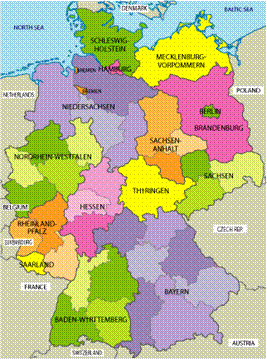
Central Europe seems to have acquired immunity. After unification 85% of Poles looked upon Germany as a threat, recalls Eugeniusz Smolar of the Centre for International Relations in Warsaw. Now just a fifth do. It is among Germany’s long-standing west and south European partners that the German question feels debilitating, and where a dangerous flare-up still seems a possibility. Germany’s answer to the question matters not only to them. It will shape Europe, and therefore the world.
Germans have not forgotten that their country was the author of the horrors of the 1930s and 1940s but, says Renate Kocher of Allensbach, a polling firm, they want to “draw a line under the past”. That does not mean ignoring its lessons or neglecting to teach them to the next generation. A new exhibition on “Hitler and the Germans” at the German Historical Museum in Berlin is drawing blockbuster crowds. But Germans are no longer so ready to be put on the moral defensive or to view the Nazi era as the defining episode of their past. Even non-Germans seem willing to move on. Recent books like “Germania” and “The German Genius” suggest that English-language publishing may be entering a post-swastika phase. Germany still atones but now also preaches, usually on the evils of debt, the importance of nurturing industry and the superiority of long-term thinking in enterprise. Others are disposed to listen. “Everyone orients himself towards Germany,” says John Kornblum, a former American ambassador.
Germany is a federal parliamentary republic. The country consists of 16 states while the capital and largest city is Berlin. Germany covers an area of 357,021 km2. With 81.8 million inhabitants, it is the most populous member state and the largest economy in the European Union. It is one of the major political powers of the European continent and a technological leader in many fields.
A region named Germania, inhabited by several Germanic peoples, was documented before AD 100. During the Migration Age, the Germanic tribes expanded southward, and established successor kingdoms throughout much of Europe. Beginning in the 10th century, German territories formed a central part of the Holy Roman Empire. During the 16th century, northern German regions became the centre of the Protestant Reformation while southern and western parts remained dominated by Roman Catholic denominations, with the two factions clashing in the Thirty Years' War, marking the beginning of the Catholic–Protestant divide that has characterized German society ever since. Occupied during the Napoleonic Wars, the rise of Pan-Germanism inside the German Confederation resulted in the unification of most of the German states into the German Empire in 1871 which was Prussian dominated. After the German Revolution of 1918–1919 and the subsequent military surrender in World War I, the Empire was replaced by the Weimar Republic in 1918, and partitioned in the Versailles Treaty. Amidst the Great Depression, the Third Reich was proclaimed in 1933. The latter period was marked by Fascism and the Second World War. After 1945, Germany was divided by allied occupation, and evolved into two states, East Germany and West Germany. In 1990 Germany was reunified.
Germany was a founding member of the European Community in 1957, which became the EU in 1993. It has the world's fourth largest economy by nominal GDP and the fifth largest by purchasing power parity. It is the second largest exporter and third largest importer of goods. The country has developed a very high standard of living and a comprehensive system of social security.
München mag Dich - Munich likes you
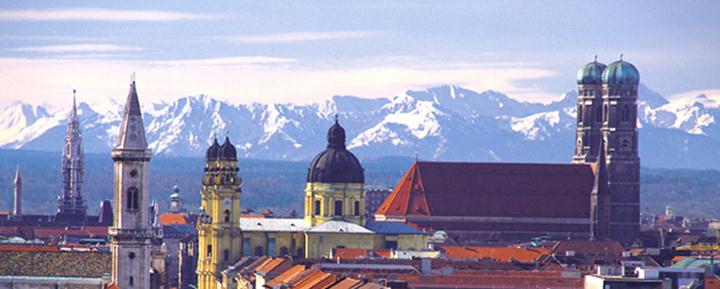
We have left Austria behind. We approach Munich, the capital city of Bavaria, Germany. It is located on the River Isar north of the Bavarian Alps. Munich is the third largest city in Germany, behind Berlin and Hamburg. About 1.35 million people live within the city limits. Munich hosted the 1972 Summer Olympics.
The city's motto is "München mag Dich" (Munich likes you). Its native name, München, is derived from the Old High German Munichen, meaning "by the monks' place". The city's name derives from the monks of the Benedictine order who founded the city; hence the monk depicted on the city's coat of arms. Black and gold—the colours of the Holy Roman Empire—have been the city's official colours since the time of Ludwig the Bavarian.
Modern Munich is a financial and publishing hub, and a frequently top-ranked destination for migration and expatriate location in livability rankings. Munich achieved 7th place in frequently quoted Mercer livability rankings in 2010. For economic and social innovation, the city was ranked 15th globally out of 289 cities in 2010, and 5th in Germany by the 2thinknow Innovation Cities Index based on analysis of 162 indicators. In 2010, Monocle ranked Munich as the world's most livable city.
Romantische Strasse and Rothenburg ob der Tauber
Don’t miss The Romantic Road (Romantische Straße) when you are in Bavaria! This a theme route coined by travel agents in the 1950s to describe the 350 kilometres (220 mi) road in southern Germany. In medieval times it used to be a trade route, connecting the centre of Germany with the South. Today this region is thought by many international travellers to possess "quintessentially" German scenery and culture, specifically in towns and cities such as Nördlingen, Dinkelsbühl and Rothenburg ob der Tauber. The route is also known for passing a lot of castles, such as Burg Harburg and the famous Neuschwanstein Castle. The Romantic Road is marked with brown signs along the road.
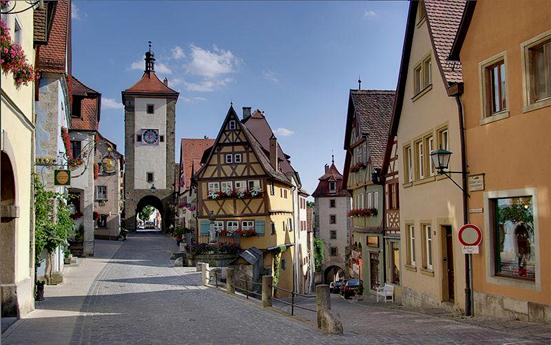
Rothenburg ob der Tauber is a town at the Romantische Strasse, well known for its
well-preserved medieval old town, a destination for tourists from around the world.
Nuremberg – the romantic city that became venue for the post-war Nazi Trial
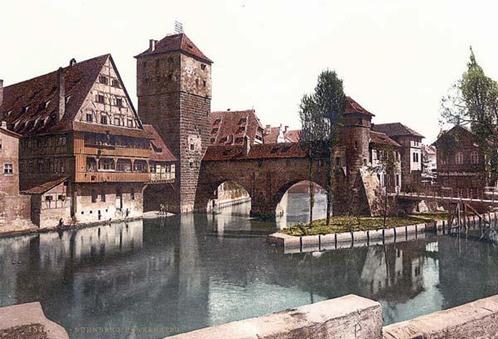
Nuremberg is a beautiful city in the German state of Bavaria, in the administrative region of Middle Franconia. Situated on the Pegnitz river and the Rhine–Main–Danube Canal, it is located about 170 kilometres (110 mi) north of Munich and is Franconia's largest city. The population is 500,000. The "European Metropolitan Area Nuremberg" has 3.5 million inhabitants. Nuremberg is often referred to as having been the 'unofficial capital' of the Holy Roman Empire.
But what a contrast isn’t it, knowing that it was right here the trial against the Nazi leaders took place during the immediate years after World War II...
Nuremberg: Nazis on trial
By Professor Richard Overy
|
|
|
In the aftermath of World War Two the Allies sought to bring the aggressors to justice. How did the surviving Nazi leaders give account for their actions?
In November 1945, in the German city of Nuremberg, the victors of the World War Two began the first international war crimes trial. The choice of the city was significant for it was here that the National Socialist Party held its annual rallies.
Adolf Hitler intended it to be rebuilt as the 'party city'. Now many of the leaders of the party were on trial for their lives, only a short distance from the grand arena where they had been fêted by the German people.
The 21 defendants came from very different backgrounds. Some, like Hitler's chosen successor Hermann Goering, were senior politicians - their responsibility clear.
Others were there because senior party leaders Heinrich Himmler, head of the feared SS, and Joseph Goebbels, head of propaganda - had killed themselves rather than face capture and trial. Their deputies or juniors stood on trial instead of them. But most of them were regarded by the western public, rightly or wrongly, as key playmakers in a system that had brought war to Europe and cost the lives of 50 million people.
This catalogue of sin was difficult for many of the defendants to come to terms with.
The charges laid at their door were extraordinary. They were collectively accused of conspiring to wage war, and committing crimes against peace, crimes against humanity (including the newly defined crime of genocide) and war crimes in the ordinary sense (abuse and murder of prisoners, killing of civilians and so on). This catalogue of sin was difficult for many of the defendants to come to terms with.
One of them, Robert Ley, best known for his role as head of the 'Strength through Joy' movement, which masterminded the Volkswagen car, hanged himself in his cell a few weeks before the trial started, so shamed was he by the accusations of crime. Ley's suicide was the most extreme example of the many ways the defendants responded to the trial.
The reaction of the others covered a very wide spectrum, from confident defiance to full admission of responsibility. In the case of Rudolf Hess, Hitler's former deputy, the reality was almost complete memory loss.
Two prisoners in particular came to represent opposite poles in their reaction to the trials and the accusation of massive crimes. Hermann Goering, the man Hitler chose as his successor in the 1930s and the most flamboyant and ambitious of the party hierarchy, prepared to defend Hitler and the Reich's war policy rather than admit that what had been done was criminal.
On the other hand Albert Speer, the youthful architect who rose to run Germany's armaments effort during the war, accepted from the start the collective responsibility of the defendants for the crimes of which they were accused and tried to distance himself from Hitler's ghostly presence at the tribunal.
Hermann Goering: 'Prisoner Number One'
Defendant Hermann Goering consults with his lawyer, Dr. Otto Stahmer, in the
Nuremberg prison at the International Military Tribunal trial of war criminals.
Goering was captured shortly after the end of the war with large quantities of his looted artworks. He thought he could negotiate with the Allies as Germany's most senior politician, but he found himself under arrest, stripped of everything, and held in an improvised prison camp before his transfer to Nuremberg to stand trial.
He was a big personality in every sense. The guards nicknamed him 'Fat Stuff' and bantered with him. He was charming, aloof and confident, and from the start was determined to dominate the other prisoners and make them follow his line of defence.
Goering insisted that everything that they had done was the result of their German patriotism. To defy the court was to protect Germany's reputation and to maintain their loyalty to their dead leader.
From the start Goering was determined to dominate the other prisoners and make them follow his line of defence.
With the start of the trial, Goering assumed at once the informal role as leader and spokesman for the whole cohort of prisoners. He was given the most prominent position in the dock.
When it came to his cross-examination he prepared carefully and in the opening exchanges with the American chief prosecutor Robert Jackson he emerged an easy winner.
So frustrated did Jackson become with Goering's clever, mocking but evasive responses that at the end of the session he threw down the headphones he had been wearing to hear the translated answers and refused to continue.
'If you all handle yourselves half as well as I did,' Goering boasted to the other prisoners, 'you will do all right.' Only after his cross-examination by the more experienced British barrister, Sir David Maxwell-Fyfe, was Goering at last cut down to size.
For the prosecution teams, Goering's domineering role among the prisoner body posed a problem. In mid-February 1946, on the recommendation of the psychologist who monitored prisoner behaviour, Goering was forced to exercise and take his meals on his own.
His isolation allowed the other prisoners to talk freely to each other and in the courtroom. The united front that Goering wanted soon collapsed.
During the long summer months, when he had to listen to the catalogue of crimes and atrocities laid at the door of the system he had served, he became less confident. But he maintained his loyalty to Hitler until the very end, when he finally confessed to the prison psychologist his realisation that in the eyes of the German people Hitler had 'condemned himself'.
Goering was found guilty on all the charges laid against him and condemned to death. He regarded the whole trial as simply a case of victors' justice and had not expected to escape with his life. At the very end he cheated his captors. On 14 October 1946, the night before he was to be executed, he committed suicide with a phial of cyanide either hidden in his cell or smuggled in by a sympathetic guard.
Read the complete BBC article at: http://www.bbc.co.uk/history/worldwars/wwtwo/nuremberg_article_01.shtml
Würzburg – capital of the Franconian white wines
|
|
We have arrived in Würzburg, capital of the Franconian wines. Founded in the 10th century, Würzburg served as the home of powerful prince-bishops for many centuries. It is renowned for the Residence, regarded as one of the finest palaces in Europe and a high point of Baroque art. Würzburg is also home to one of the oldest churches in Germany, built in the 8th century on top of a former pagan shrine. One of its most famous structures, Festung Marienberg, is a fortress which now surrounds the church. Würzburg was the centre of the kingdom known as Franconia. In the 19th century, Napoleon merged Franconia with Bavaria, by which the city is ruled to this day. Würzburg experienced heavy demolition during a 20-minute bombing raid in 1945 which destroyed some 80% of its city buildings. Much of the city has since been rebuilt, though not as painstakingly true to its original architecture as some other historic german communities. Anyone eager to visit this town to study its historic architectural structures should be prepared to see its restored buildings placed next to several post-war modernistic houses. Today Würzburg is a beautiful, historic, and lively city that is often overlooked by foreign visitors. |
Schwarzwald – Germany’s beautiful black forest...
|
|
We drive south-west after Würzburg, to Germany’s Black Forest, a truly attractive, romantic area with mountains, hills and endless forests. I love all the small curved roads, the picturesque villages, the cows, the feeling of warm friendliness... The Black Forest (Schwarzwald) is a wooded mountain range in Baden-Württemberg. It is bordered by the Rhine valley to the west and south. The highest peak is the Feldberg with an elevation of 1,493 metres (4,898 ft). The region is almost rectangular with a length of 200 km (120 mi) and breadth of 60 km (37 mi). Hence it has an area of approximately 12,000 km2 (4,600 sq mi). The name Schwarzwald, i.e. Black Forest, goes back to the Romans who referred to the thickly forested mountains there as Silva Nigra, i.e. "Black Forest," because the dense growth of conifers in the forest blocked out most of the light inside the forest.
|
|
|
Freiburg – most sunny in Germany Down to the river Rhine after the mountainous Balck Forest, to Freiburg im Breisgau, a sunny city in Baden-Württemberg in the extreme south-west of the country. It straddles the Dreisam river, at the foot of the Schlossberg. Historically, the city has acted as the hub of the Breisgau region on the western edge of the Black Forest in the Upper Rhine Plain. One of the famous old German university towns, and archiepiscopal seat, Freiburg was incorporated in the early 12th century and developed into a major commercial, intellectual, and ecclesiastical centre of the upper Rhine region. The city is known for its ancient university and its medieval minster, as well as for its high standard of living and advanced environmental practices. The city is situated in the heart of a major wine-growing region and serves as the primary tourist entry point to the scenic beauty of the Black Forest, supposed to be the sunniest and warmest in Germany. |
|
|
Baden Baden – the spa town loved by Romans The German word, 'Baden,' translates as 'baths.' The springs of Baden-Baden were known to the Romans, and the foundation of the town refers to the emperor, Hadrian, with an inscription of somewhat doubtful authenticity. The bath-conscious Roman emperor, Caracalla, once came here to ease his arthritic aches. Baden was also known as Aurelia Aquensis, in honour of Aurelius Severus, during whose reign Baden would seem to have been well known. Fragments of its ancient sculptures are still to be seen, and, in 1847, the well preserved remains of Roman vapour baths were discovered just below the New Castle.
|
|
|
Heidelberg – my lively favourite Heidelberg is a lively city, clearly one of my favourites in Germany. The fifth-largest city in the State of Baden-Württemberg after Stuttgart, Mannheim, Karlsruhe and Freiburg im Breisgau, Heidelberg is part of the densely-populated Rhine-Neckar Metropolitan Region. In 2009, over 145,000 people lived in the city. Heidelberg lies on the River Neckar in a steep valley in the Odenwald. A former residence of the Electoral Palatinate, Heidelberg is the location of the University of Heidelberg, well-known far beyond its and Germany's borders. Heidelberg is a popular tourist destination due to its romantic and picturesque cityscape, including Heidelberg Castle and the baroque style Old Town. Amazing place! |
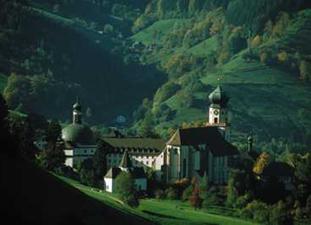
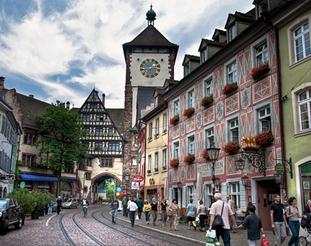
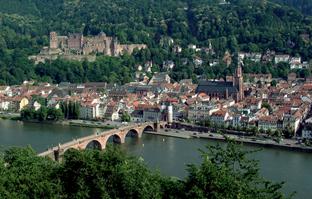
|
The Lithuanian school in the Rennhof Manor, Lampertheim-Hüttenfeld
By that time, however, it was becoming apparent that Lithuania was likely to remain occupied for the foreseeable future. Lithuanian refugees began to leave war-ravaged Germany. Most emigrated to distant countries—foremost among them the United States, Canada, and Australia. In the wake of their departure, most of these schools were shuttered. But approximately 8,000 Lithuanians chose to remain in Germany. In 1950, Germany’s Lithuanian Community established a single high school for Lithuanian students. The high school was founded in Diepholz—the site of a displaced persons camp where many Lithuanians had lived since the end of the war. In 1954, the Lithuanian Community acquired Rennhof Manor House with its twelve-acre park in the town of Lampertheim-Hüttenfeld. The school was relocated there. Throughout Lithuania’s 50-year struggle for independence from Soviet rule, the Lithuanian High School promoted engagement with Lithuania as well as support for dissidents fighting for freedom and human rights behind the Iron Curtain. With the advent of the reform movement Sąjūdis in the mid-1980s, the Lithuanian High School became an increasingly important conduit for ideas and support for reforms that led to Lithuanian independence in 1990. Following the reestablishment of independence, the school continued to serve as a cultural center for Lithuanians in Western Europe and a bridge between Lithuania and the West, providing an opportunity for the children of Lithuanian expatriates to integrate without losing their Lithuanian identity. Receiving full state accreditation in 1999, the Lithuanian High School remains the only full-time Lithuanian educational institution in Western Europe. The Rennhof Manor in Lampertheim-Hüttenfeld has a unique position for Lithuanians, harbouring numerous Lithuanian organizations, which has figured as the centre of Lithuanian émigré community life in Western Europe since 1953. Go to the school’s website to learn more about the school: http://gimnazija.de To learn about other Lithuanian youth activities in Germany, go to: http://www.pljs.org/category/english
|
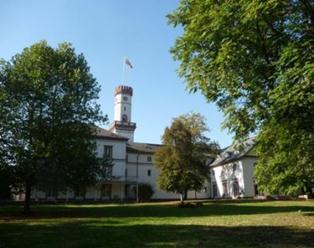
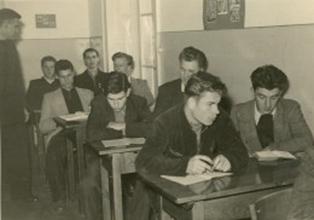
Frankfurt am Main – where EU’s financial decisions are made...
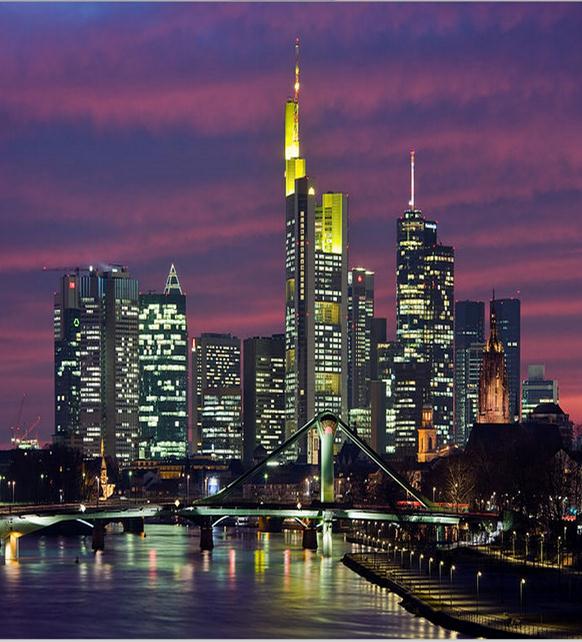
The European Central Bank is the institution of the European Union (EU) that administers the monetary policy of the 17 EU Eurozone member states. It is thus one of the world's most important central banks. The bank was established by the Treaty of Amsterdam in 1998, and is headquartered here in Frankfurt.
Frankfurt am Main, commonly known simply as Frankfurt, is the largest city in the German state of Hesse and the fifth-largest city in Germany, with a 2010 population of almost 700,000. The urban area had an estimated population of 2,300,000 in 2010. The city is at the centre of the larger Frankfurt Rhine-Main Metropolitan Region which has a population of 5,600,000 and is Germany's second-largest metropolitan region.
Frankfurt is the financial and transportation centre of Germany and the largest financial centre in continental Europe. It is seat of the European Central Bank, the German Federal Bank, the Frankfurt Stock Exchange and the Frankfurt Trade Fair, as well as several large commercial banks, e.g. Deutsche Bank, Commerzbank and DZ Bank. Frankfurt Airport is one of the world's busiest international airports, Frankfurt Central Station is one of the largest terminal stations in Europe, and the Frankfurter Kreuz is one of the most heavily used Autobahn interchanges in Europe. Frankfurt lies in the former American Occupation Zone of Germany, and it was formerly the headquarters city of the U.S. Army in Germany.
Frankfurt is considered an alpha world city as listed by the Loughborough University group's 2010 inventory, was ranked 20th among global cities by Foreign Policy's 2010 Global Cities Index and was ranked 6th among global cities for economic and social innovation by the 2thinknow Innovation Cities Index in 2010.
Frankfurt is an international centre for commerce, finance, culture, transport, education, and tourism. According to the Mercer cost of living survey, Frankfurt is Germany’s second most expensive city, and the 48th most expensive in the world. Frankfurt also ranks among the 10 most livable cities in the world according to Mercer Human Resource Consulting.
|
|
Bonn – the post-war capital of West Germany Bonn was the capital of West Germany from 1949 to 1990 and the official seat of government of united Germany from 1990 to 1999. Starting in 1998, many national government institutions were moved from Bonn to Berlin. Roughly half of all government jobs were retained as many government departments remained in Bonn and numerous sub-ministerial level government agencies relocated to the former capital from Berlin and other parts of Germany. Bonn has developed into a hub of international cooperation in particular in the area of environment and sustainable development. Bonn The Poppelsdorfer Schloss (picture), in which there is the “Mineralogisch-Petrologische Museum” today. |
|
|
Cologne – not only perfume Cologne is Germany's fourth-largest city, and is the largest city both in the Germany Federal State of North Rhine-Westphalia and within the Rhine-Ruhr Metropolitan Area, one of the major European metropolitan areas with more than ten million inhabitants. Cologne Cathedral (Kölner Dom) is the city's most famous monument and the Cologne residents' most respected landmark. It is a Gothic church, started in 1248, and completed in 1880. Eau de Cologne, “Water of Cologne”, is a toiletry, a perfume in a style that originated from Cologne. As of today cologne is a blend of extracts, alcohol, and water. Colognes are used by men and women but are generally marketed to men as an alternative to perfume. |
|
|
Bremen – go sailing or fishing! Bremen is a Hanseatic city in north-western Germany. A commercial and industrial city with a major port on the river Weser, Bremen is part of the Bremen-Oldenburg metropolitan area (2.4 million people). Bremen is the second most populous city in North Germany and tenth in Germany. With Bremerhaven right on the mouth the two comprise the state of Bremen. The Bremen Ports are among the most important universal harbours of Europe. The air of a seafaring port bursts from every corner of the busy but young seaport, which offers a range of attractions along miles of waterfront promenades, in generous areas of parkland and on the scenic River Geeste. |
|
|
Hamburg – the cosmopolitan Hansa town Hamburg is the second-largest city in Germany and the seventh-largest city in the European Union. The city is home to over 1.8 million people, while the Hamburg Metropolitan Region has more than 4.3 million inhabitants. Situated on the river Elbe, the port of Hamburg is the third-largest port in Europe and it is among the twenty largest in the world. Hamburg's official name is the Free and Hanseatic City of Hamburg. It reflects Hamburg's history as a member of the medieval Hanseatic League, as a free imperial city of the Holy Roman Empire, and also the fact that Hamburg is a city-state and one of the sixteen States of Germany. Hamburg is a major transport hub in Northern Germany and is one of the most affluent cities in Europe. We have arrived at Hamburg, the world's leading Hanseatic city. This is a remarkable, powerful metropolis that also clearly displays its traditional past in contact with the North Sea and Baltic Sea. This is also the place to go for tasty North-European seafood... |
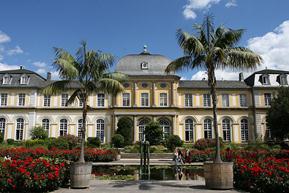
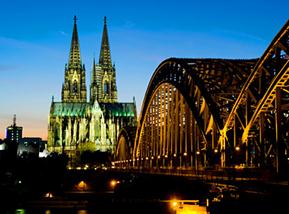
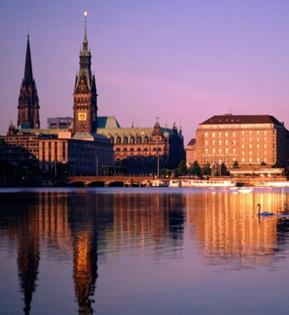
Quedlinburg – where the name Lithuania was first mentioned
|
We leave Hamburg, drive south-east, to Quendlinburg, a small town of about 23,000 inhabitants, near the Harz Mountains in Germany’s western Saxon-Anhalt, virtually the heart of Germany. This town is a treasure which is rapidly evolving into a prime tourist attraction, particularly for non-Germans. And Lithuanians are first in the queue! A rare combination of ancient, medieval and modern historical and artistic treasures are making it a "must" for visitors, much as Rothenburg, Trier, Lübeck and other German historical gems. Unlike the others, such as Aachen, where Charlemagne (Karl der Grosse) held sway over the Franks, Quedlinburg is the birthplace of a Nation. For it was here in 919 A.D. that a Diet of noble ducal peers elected a German King, the Saxon Duke Heinrich, monarch of Germany-everything--, rather than merely a ruler of a local domain such as Bavarian or Rhenish or Hessian lands. And this first hegemony extended for more than three centuries until Germany dissolved into almost 300 tiny city-states, provinces and squabbling communities, only to be reunited in 1871. |
|
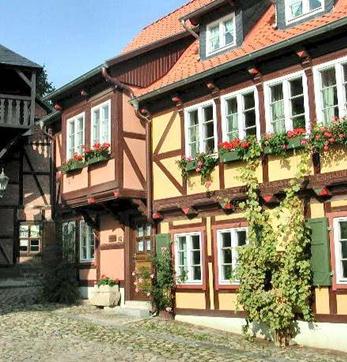
|
The first written occurrence of the name LITHUANIA has been traced to the Annals from Quedlinburg Abbey, dated to 9 March year 1009 THE PASSAGE READS: "Sanctus Bruno, qui cognominatur Bonifacius, archiepiscopus et monachus, XI suae conversionis anno in confinio Ruscia et Litua a paganis capite plexus, cum suis XVIII, VII. Id. Martii petiit coelos."
The Annals of Quedlinburg were written between 1008 and 1030 in the convent of Quedlinburg Abbey. In recent years a consensus has emerged that the annalist was a woman. The annals are mostly dedicated to the history of the Holy Roman Empire; they also contain the first written mention of the name of Lithuania ("Litua"), dated to 1009. The original document has disappeared, surviving only as a 16th-century copy held in Dresden, but its contents endure as a scholarly resource. The city of Quedlinburg, Germany, was first mentioned in writing in a document dated to 922. Saint Mathilda founded a religious community for women at its abbey, serving as abbess from 966 to 999. The abbey became a premier educational institution for the female nobles of Saxony, and maintained its mission for nearly 900 years. The city served as an imperial palatinate of the Saxon emperors, where Henry the Fowler, the founder of the Ottonian dynasty, was buried. Quedlinburg was situated not far from Magdeburg, the Royal Assembly of the empire, and its annalists could therefore rely on genuine information from the royal house and obtain eyewitness accounts.The city lost some stature under the rule of Henry II, who broke with the tradition of celebrating Easter there; the Annals portray him unfavorably, and demonstrate the extent to which a royal monastery was entitled to criticize its monarch. The Annals open with a chronicle of world history from the time of Adam to the Third Council of Constantinople in 680-681, based on chronicles by Jerome, Isidore, and Bede. The narrative is largely borrowed from multiple older sources until the year 1002, although original reports from as early as 852 are present. Beginning in 993, the narrative begins including events which represent the annalist's own eyewitness testimony concerning events at and around Quedlinburg. The amount of detail increases significantly from 1008 onwards, leading some analysts to conclude that 1008 was the actual date that the Annals were first compiled, although Robert Holzman argues for a start date of 1000. It has been suggested that the annalist temporarily abandoned the project between 1016 and 1021. The exact reasons for this suspension of the work are unknown. Work on the project continued between 1021 and 1030, when its authors were able to report a military victory against Mieszko II. The primary task of the annalists was to record the heritage of the Ottonian dynasty and of Quedlinburg itself. The Annals incorporate the stories of a number of historic and legendary figures such as Attila the Hun, King Dietrich of the Goths, and others. The historian Felice Lifshitz has suggested that amount of saga material integrated into its narrative is without parallel. The Annals of Quedlinburg became an important research source; during the 12th century they were used at least by five contemporary historians. Felice Lifshitz asserts that the Annals of Quedlinburg played a key role in shaping the ways in which influential Germans of the nineteenth and twentieth centuries saw their medieval past. They continue to be analyzed in other contexts: by scholars of Beowulf discussing its use of the term Hugones to mean Franks, by climatologists, and in a book discussing fear of the millennium. The first written occurrence of Lithuania's name has been traced to the Quedlinburg Annals and dated to 9 March 1009.The passage reads: "Sanctus Bruno, qui cognominatur Bonifacius, archiepiscopus et monachus, XI suae conversionis anno in confinio Ruscia et Litua a paganis capite plexus, cum suis XVIII, VII. Id. Martii petiit coelos." "[In 1009] St. Bruno, an archbishop and monk, who was called Boniface, was struck in the head by Pagans during the 11th year of this conversion at the Rus and Lithuanian border, and along with 18 of his followers, entered heaven on March 9th." From other sources that describe Bruno of Querfurt, it is clear that this missionary attempted to Christianize the pagan king Netimer and his subjects. However, Netimer's brother, refusing to accept Christianity, killed Bruno and his followers. The historian Alfredas Bumblauskas has suggested that the story records the first baptismal attempt in the history of Lithuania. Quedlinburg Abbey was a house of secular canonesses in Quedlinburg, Saxony-Anhalt, Germany. It was founded in 936 on the initiative of Saint Mathilda, the widow of Henry the Fowler, as his memorial. For many centuries it enjoyed great prestige and influence. Quedlinburg Abbey was founded on the castle hill of Quedlinburg in the present Saxony-Anhalt in 936 by Otto I, Holy Roman Emperor, at the request of his mother Queen Matilda, later canonised as Saint Matilda, in honour of her late husband, Otto's father, King Henry the Fowler, and as his memorial. Henry was buried here, as was Matilda herself. The "Kaiserlich freie weltliche Reichsstift Quedlinburg" ("Free secular Imperial abbey of Quedlinburg"), as its full style was until its dissolution in 1802, consisted of a proprietary church of the Imperial family to which was attached a college of secular canonesses (Stiftsdamen), a community of the unmarried daughters of the greater nobility and royalty leading a godly life. Thanks to its Imperial connections the new foundation attracted rich endowments and was soon a wealthy and thriving community. Ecclesiastically, the abbess was exempt from the jurisdiction of her diocesan, the Bishop of Halberstadt, and subject to no superior except the Pope. The bishops of Halberstadt were constantly engaged in dispute with the abbesses, as they claimed to have spiritual jurisdiction over the abbey in virtue of subjection of women to men. In her political relations, the abbess was a princess of the Holy Roman Empire, entitled to seat in the College of Princes and a vote at the Diets. During the Reformation the abbey became Protestant, under Abbess Anna II (Countess of Stolberg). After the German Mediatisation of 1803 the abbey was taken over by the Kingdom of Prussia as the Principality of Quedlinburg.
|
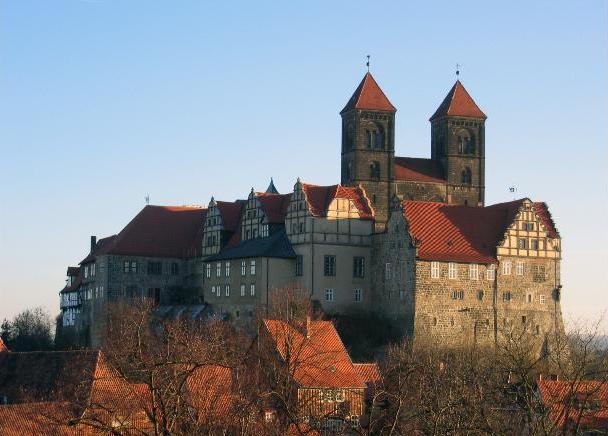
Magdeburg – the city that set rules for Lithuanian towns
|
There is more Lithuanian related history traces here in this area of Germany. We go to Magdeburg, the largest city and the capital city of the Bundesland of Saxony-Anhalt, Germany. Magdeburg is situated on the Elbe River and was one of the most important medieval cities of Europe. Emperor Otto I, the first Holy Roman Emperor, lived for most of his reign in the town and was buried in the cathedral after his death. Magdeburg's version of German town law, known as Magdeburg rights, spread throughout Central and Eastern Europe. The city is also well known for the 1631 Sack of Magdeburg, which hardened Protestant resistance during the Thirty Years' War. Nowadays Magdeburg is a traffic junction as well as an industrial and trading centre, with a population more than 230 000. The production of chemical products, steel, paper and textiles are of particular economic significance, along with Mechanical engineering and plant engineering, Ecotechnology and life-cycle management, Health management and Logistics. Along with ten other cities in Saxony-Anhalt, Saxony and Thuringia, Magdeburg is a member of the Central German Metropolitan Region. |
|
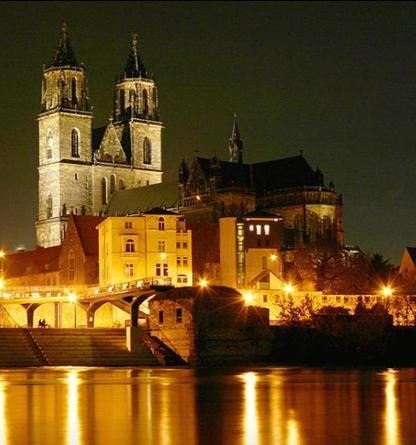
|
Vilnius was granted Magdeburg rights on the 22nd of March 1387 |
|
In February 1387 Lithuania’s Grand Duke Jogaila began to institute the reforms in Lithuania, which were required by the conditions for the union with Poland. On February 17th, he established the Vilnius Bishopric. On February 20th, he declared the first of the privileges to the Lithuanian nobility, who had accepted Christianity. The privileges were the granting of rights equal to those held by the Polish nobility. On February 22nd, he ordered all Lithuanians to accept the Catholic faith. Soon thereafter, he also established the first 7 parishes. The christening of Lithuania proved to be a tremendous social upheaval, even though Lithuania with her Pagan faith already exhibited the most important elements of civilisation, including brick architecture and writing. The Pagan Dukes were as advanced, as to go on military manoeuvres bringing a personal office with them. For example, the travelling bag of Skirgaila, which fell into the hands of the Crusaders in 1385, was found to contain "Ruthenian privileges sealed in lead." On March 22nd 1387, Jogaila granted Magdeburg Rights to the Lithuanian capital of Vilnius. Kaunas was granted Magdeburg Rights by Grand Duke Vytautas the Great in 1408, Trakai in 1409. Magdeburg Rights or Magdeburg Law were a set of German town laws regulating the degree of internal autonomy within cities and villages granted by a local ruler. Modelled and named after the laws of the German city of Magdeburg and developed during many centuries of the Holy Roman Empire, it was possibly the most important set of Germanic mediæval city laws. Adopted by numerous monarchs in Central and Eastern Europe, the law was a milestone in urbanization of the region and prompted the development of thousands of villages and cities. Apart from Magdeburg itself, notable towns based on Magdeburg Law (or its local variants) were Biecz, Frysztak, Sandomierz, Kraków, Kurów, Minsk, Polotsk, Poznań, Ropczyce, Łódź, Wrocław, Szczecin, Złotoryja, Vilnius, Trakai, Kaunas, Hrodna, Kiev, Lviv, Czernowitz (currently Chernivtsi in Ukraine), Brody, Lutsk, Volodymyr-Volynskyi, Sanok, Sniatyn, and Nizhyn, as well as Bardejov, Humenné and Krupina in present-day Slovakia.
|
Leipzig
Leipzig is, along with Dresden, one of the two largest cities in the federal state of Saxony, Germany. Both have a population of about 525,000. Leipzig is situated about a hundred miles south of Berlin at the confluence of the Weisse Elster, Pleisse and Parthe rivers at the southerly end of the North German Plain.
Leipzig has always been a trade city, situated during the time of the Holy Roman Empire at the intersection of the Via Regia and Via Imperii, two important trade routes. At one time, Leipzig was one of the major European centres of learning and culture in fields such as music and publishing. After World War II, Leipzig became a major urban centre within the Communist German Democratic Republic but its cultural and economic importance declined.
Leipzig later played a significant role in instigating the fall of communism in Eastern Europe, through events which took place in and around St. Nicholas Church. Since the reunification of Germany, Leipzig has undergone significant change with the restoration of some historical buildings, the demolition of others, and the development of a modern transport infrastructure. Leipzig has many institutions and opportunities for culture and recreation including a football stadium which has hosted some international matches, an opera house and a zoo.
In 2010 Leipzig was included in the top 10 of cities to visit by the New York Times.
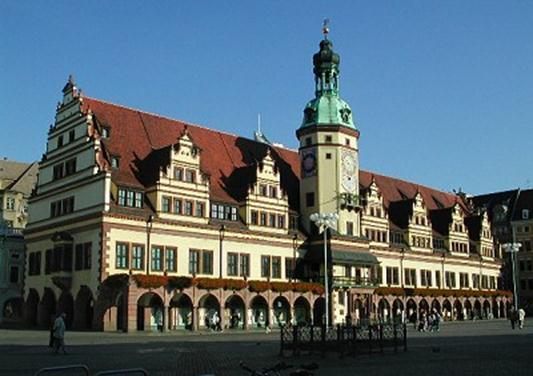
The Old Townhall of Leipzig is one of the most important Renaissance buildings in Germany.
It was constructed in just nine month in 1556/57 under the direction of the Leipzig architect
Hieronymus Lotter.
|
Lithuania’s national painter and composer, Mikolajus K. Čiurlionis, studied in Leipzig Čiurlionis studied composition under Professor Carl Reinecke and counterpoint under Salomon Jadassohn at the Leipzig Conservatoire in 1901-1902. As an external student he attended lectures in aesthetics, history and psychology. He listened to his favourite compositions by Handel, Tchaikovsky, Wagner and Liszt at the Gewandhaus and Leipzig Theatre. He studied independently orchestration of Berlioz and R. Strauss compositions at the library of C.F. Peters’ publishing house. During his Leipzig period, he composed the symphonic overture Kęstutis, a string quartet in four movements, canons and fugues including Sanctus and Kyrie for mixed choir. During his vacations he did some drawing. |
|
|
Dresden Dresden is the capital city of the Free State of Saxony in Germany. It is situated in a valley on the River Elbe, near the Czech border. The Dresden conurbation is part of the Saxon Triangle metropolitan area. Dresden has a long history as the capital and royal residence for the Electors and Kings of Saxony, who for centuries furnished the city with cultural and artistic splendour. The city was known as the Jewel Box, because of its baroque and rococo city centre. A controversial Allied aerial bombing towards the end of World War II killed thousands of civilians and destroyed the entire city. The impact of the bombing and 40 years of urban development during the East German communist era have considerably changed the face of the city. Some restoration work has helped to reconstruct parts of the historic inner city, including the Katholische Hofkirche, the Semper Oper and the Dresdner Frauenkirche. Since the German reunification in 1990, Dresden has regained importance as one of the cultural, educational, political and economic centres of Germany, with a population of more than half a million. Dresden in the 20th century was a leading European centre of art, classical music, culture and science until its complete destruction on 13 February 1945. Being the capital of the German state of Saxony, Dresden had not only garrisons but a whole military borough, the Albertstadt. This military complex, named after Saxon King Albert, was never targeted in the bombing of Dresden. During the final months of World War II, Dresden became a safe haven to some 600,000 refugees, including women, children, and wounded soldiers, with a total population of 1.2 million. Dresden was attacked seven times between 1944 and 1945, and was occupied by the Red Army after German capitulation.
|
|
|
|
|
|
The bombing of Dresden by the Royal Air Force and the United States Army Air Force between 13 February and 15 February 1945 remains one of the more controversial Allied actions of the Western European theatre of war. The inner city of Dresden was largely destroyed by 722 RAF and 527 USAAF bombers that dropped 2431.0 tons of high explosive bombs, and 1475.9 tons of incendiaries.The high explosive bombs damaged buildings and exposed their wooden structure, while the incendiaries ignited it. The bombing raid destroyed the 500 year-old Cathedral, along with almost all of the ancient centre of the city. The German Dresden Historians' Commission, in an official 2010 report published after five years of research, concluded there were up to 25,000 civilian casualties, while right-wing groups claim that up to 500,000 people died. |
|
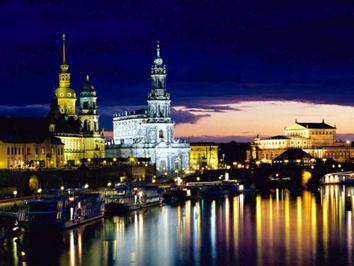
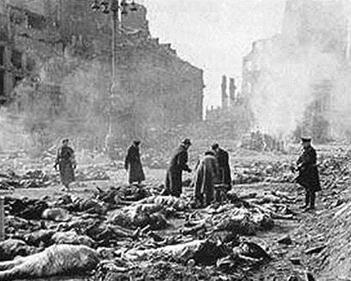
|
Many Lithuanian war refugees experienced the bombing of Dresden in 1945 |
|
|
You may remember our VilNews story where we followed Regina Narusiene, today’s leader of the World Lithuanian Community, from her childhood in Kaunas during WWII till she settled with her family in the US after the war. As the Soviets reoccupied Lithuania in 1944, Regina and her parents managed to get out of Lithuania. They knew that the fate awaiting them under a Soviet-controlled Lithuania would be deportation to northern Siberia's frozen tundra. Like so many other Baltic refugees they came to eastern Germany, where they lived for a while in Dresden and were witnesses to the bombing and terrible destruction that took place during the war's final months. Regina's parents followed the war developments closely, and realized that they had to get farther west into Germany, or otherwise they risked to come under Soviet control in the part of the country that later became the DDR (East Germany). |
|
|
The day after the German surrender the family heading south-west. They had to walk 200 km on foot, while a smaller part of the trip took place on cattle trains. Finally they came to the city of Augsburg, north-west of Munich in the southern German region Bavaria where they stayed in a Displaced Persons camp until 1949, when a cousin in Chicago helped them to come over to the U.S.
|
|
Berlin
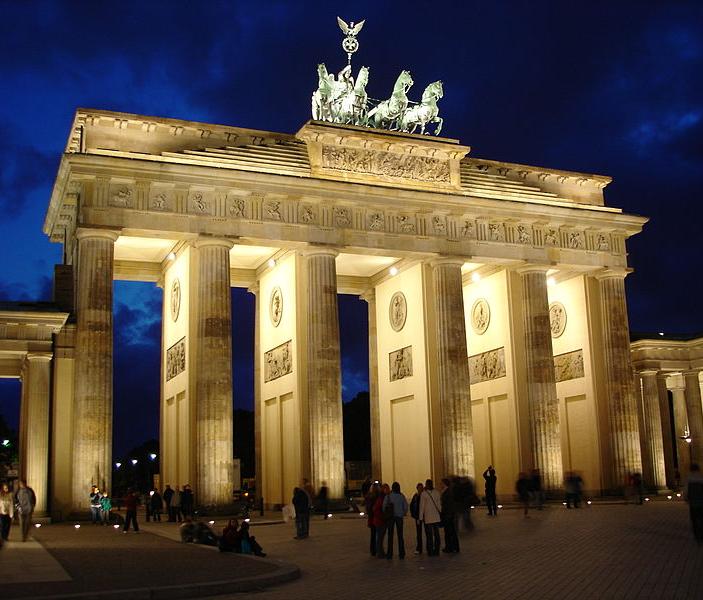
Berlin’s famous Brandenburg Gate.
Berlin is the capital city of Germany and is one of the 16 states of Germany. With a population of 3.45 million people, Berlin is Germany's largest city. It is the second most populous city proper and the seventh most populous urban area in the European Union. Located in north-eastern Germany, it is the centre of the Berlin-Brandenburg Metropolitan Region, which has 4.4 million residents from over 190 nations. Located in the European Plains, Berlin is influenced by a temperate seasonal climate. Around one third of the city's area is composed of forests, parks, gardens, rivers and lakes.
First documented in the 13th century, Berlin was the capital of the Kingdom of Prussia (1701–1918), the German Empire (1871–1918), the Weimar Republic (1919–1933) and the Third Reich (1933–1945). Berlin in the 1920s was the third largest municipality in the world. After World War II, the city became divided into East Berlin—the capital of East Germany—and West Berlin, a West German exclave surrounded by the Berlin Wall (1961–1989). Following German reunification in 1990, the city regained its status as the capital of Germany, hosting 147 foreign embassies.
Berlin is a world city of culture, politics, media, and science. Its economy is primarily based on the service sector, encompassing a diverse range of creative industries, media corporations, and convention venues. Berlin also serves as a continental hub for air and rail transport, and is a popular tourist destination. Significant industries include IT, pharmaceuticals, biomedical engineering, biotechnology, electronics, traffic engineering, and renewable energy.
Berlin is home to renowned universities, research institutes, orchestras, museums, and celebrities, as well as host of many sporting events. Its urban settings and historical legacy have made it a popular location for international film productions. The city is well known for its festivals, diverse architecture, nightlife, contemporary arts, public transportation networks and a high quality of living.
Most famous attractions of Berlin

Alexanderplatz
Layer upon layer of Berlin’s urban history is located in Alexanderplatz, interweaving centuries of social, political, and architectural history and repeatedly the subject of public debate and urban design competitions. more »

Berliner Dom
The Berliner Dom (Berlin Cathedral), completed in 1905, is Berlin’s largest and most important Protestant church as well as the sepulchre of the Prussian Hohenzollern dynasty. more »
Friedrichstadt-Palast

Experience Berlin's biggest Show in Europe's largest Show Palace, "Yma - too beautiful to be true". Can you fall in love with a show? Yes, with this one, you can. more »

Brandenburger Tor
The Brandenburg Gate is one of Berlin’s most important monuments – a landmark and symbol all in one with over two hundred years of history. more »

Checkpoint Charlie
Checkpoint Charlie, along with Glienicker Brücke (Glienicker Bridge) was the best known border-crossing of Cold War days. more »
|
The fall of the Berlin Wall in 1989
|
||
|
Berlin had been politically divided since the end of World War II, with the eastern portion of the city serving as the capitol of German Democratic Republic. The two parts of the city were physically divided in 1961 with the construction of the Berlin Wall, the most visible expression of the Cold War. When the Berlin Wall was opened on November 9, 1989 it marked for many the symbolic end of that war. To find the cause of the fall of the Berlin Wall, one must look, not in Germany, but in the Soviet Union. The change began when Mikhail Gorbachev came to power in the Soviet Union in 1985. He tried to make changes in the state bureaucracy and in the Communist party by restructuring the economy’s production and distribution system, a plan now known as perestroika. In addition, Gorbachev also allowed for the policy of glasnost, or public criticism of the communist party. Gorbachev’s reform contributed to the breakup of the centralized structure of the USSR. During this time some states such as Latvia, Estonia and Lithuania declared their independence. In 1989, Gorbachev shifted his policies toward the satellite states of the communist block in Eastern Europe, including Germany. In effect, the politics in Germany also began to lead toward the destruction of the wall. In the fall of 1989, there was an antigovernment demonstration in East Germany. In mid-October 1989, the Politburo forced the resignation of Erich Honecker, the leader of the GDR (German Democratic Republic). In this way, Erich Honecker was ousted from office, and others soon followed. By the first week of November, the entire Politburo and all of the members of the East German cabinet resigned. The new Prime minister, Hans Modrow, announced plans to decentralize the economy and an easing of travel restrictions. This allowed the East Germans, from the communist sector, to cross the border into the west, the Allied sector. At this point, East Germany began to reform. Then on November 9, 1989, the leader of the East Berlin communist party, Gunter Schabowski, announced that the border with West Berlin would be opened for "private trips abroad." Masses of people started to use hammers and chisels to knock out pieces of the wall. Shortly thereafter, on November 10, 1989 and later on December 22, 1989 checkpoints were opened at Potsdamer Platz and the Brandenberg Gate. On March 18, 1990, free elections in East Germany took place for the first time in 58 years. By July 1, 1990, the wall tumbled down and Germany was completely united. As a result, a massive emigration from East to West began, which has left economic and emotional scars that can only be healed by the hard work and understanding of generations to come. But on the day that the wall fell will stand out in all of history, as a day when friends and family and an entire nation were reunited, while tears of joy were being shed by all. The wall came down
|
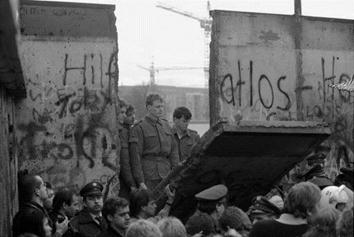
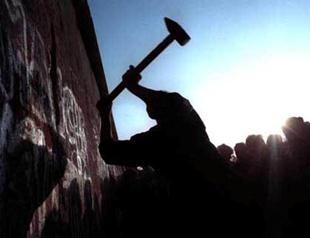
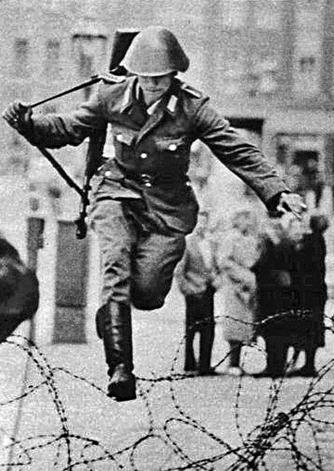
- Bookmark :
- Digg
- del.icio.us
- Stumbleupon
- Redit it
- Posted by - (0) Comment


EUROPE – MY HOME & MY CASTLE (4 of 10)
Strasbourg –
Benelux – England
|
VilNews is on its way around Europe!
Tour guide: Aage Myhre To read today’s travel report, click HERE To read the previous articles, go to our SECTION 11 |
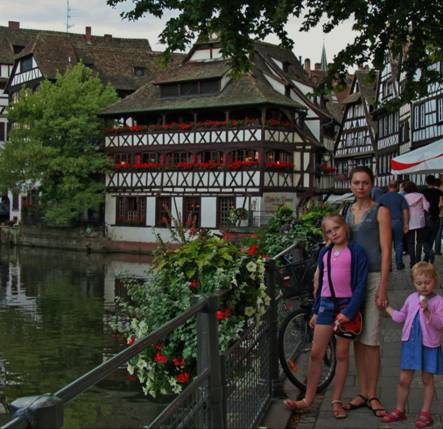
- Bookmark :
- Digg
- del.icio.us
- Stumbleupon
- Redit it

OPINIONS
Have your say. Send to:
editor@VilNews.com
Ph. D., Chicago
A wave of unity sweeps the international Lithuanian community on March 11th every year as Lithuanians celebrated the anniversary of the Lithuanian Parliament's declaration of independence from the Soviet Union in 1990. However, the sense of national unity engendered by the celebration could be short-lived.
Human beings have a strong tendency to overgeneralize and succumb to stereotypical us-them distinctions that can shatter even the strongest bonds. We need only search the internet to find examples of divisive thinking at work:
- "Those who fled Lithuania during World II were cowards -- and now they come back, flaunt their wealth, and tell us 'true Lithuanians' how to live."
- "Lithuanians who work abroad have abandoned their homeland and should be deprived of their Lithuanian citizenship."

In Lithuania Christmas Eve is a family event and the New Year's Eve a great party with friends!
Lithuanian say "Kaip sutiksi naujus metus, taip juos ir praleisi" (the way you'll meet the new year is the way you will spend it). So everyone is trying to spend New Year's Eve with friend and have as much fun as possible.
Lithuanian New Year's traditions are very similar to those in other countries, and actually were similar since many years ago. Also, the traditional Lithuanian New Years Eve party was very similar to other big celebrations throughout the year.
The New Year's Eve table is quite similar to the Christmas Eve table, but without straws under the tablecloth, and now including meat dishes. A tradition that definitely hasn't changes is that everybody is trying not to fell asleep before midnight. It was said that if you oversleep the midnight point you will be lazy all the upcoming year. People were also trying to get up early on the first day of the new year, because waking up late also meant a very lazy and unfortunate year.
During the New Year celebration people were dancing, singing, playing games and doing magic to guess the future. People didn't drink much of alcohol, especially was that the case for women.
Here are some advices from elders:
- During the New Year, be very nice and listen to relatives - what you are during New Year Eve, you will be throughout the year.
- During to the New Year Eve, try not to fall, because if this happens, next year you will be unhappy.
- If in the start of the New Year, the first news are good - then the year will be successful. If not - the year will be problematic.
* If New Year's night is cold and starry - look forward to a good summer!
* If the during New Year Eve trees are covered with frost - then it will be a good year. If it is wet weather on New Year's Eve, one can expect a year where many will die and dangerous epidemics occur.
* If the first day of the new year is snowy - the upcoming year will see many young people die. If the night is snowy - mostly old people will die.
* If the New Year time is cold - then Easter will be warm.
* If during New Year there are a lot of birds in your homestead - then all year around there will be many guests and the year will be fun.
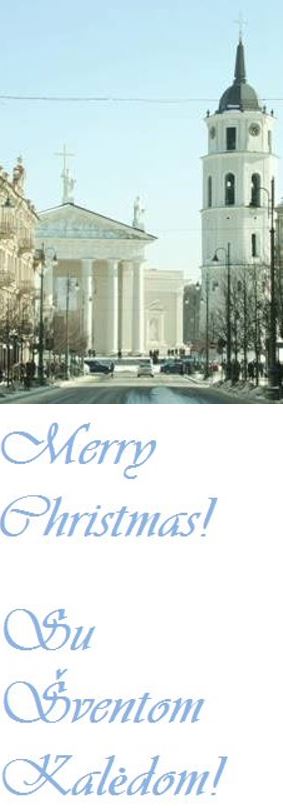
Christmas greetings
from Vilnius
and epic battle for the
future
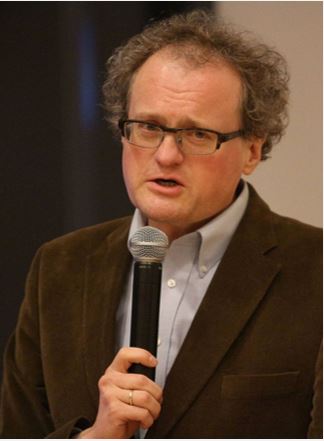
Philosopher, political theorist, historian of
ideas, social analyst, and political
commentator
Ukraine was and continues to be perceived by the EU political class as a sort of grey zone with its immense potential and possibilities for the future, yet deeply embedded and trapped in No Man's Land with all of its troubled past, post-Soviet traumas, ambiguities, insecurities, corruption, social divisions, and despair. Why worry for what has yet to emerge as a new actor of world history in terms of nation-building, European identity, and deeper commitments to transparency and free market economy?
Right? Wrong. No matter how troubled Ukraine's economic and political reality could be, the country has already passed the point of no return. Even if Vladimir Putin retains his leverage of power to blackmail Ukraine and the West in terms of Ukraine's zero chances to accede to NATO due to the problems of territorial integrity, occupation and annexation of Crimea, and mayhem or a frozen conflict in the Donbas region, Ukraine will never return to Russia's zone of influence. It could be deprived of the chances to join NATO or the EU in the coming years or decades, yet there are no forces on earth to make present Ukraine part of the Eurasia project fostered by Putin.
want to learn about the
new, scary propaganda
war between Russia,
The West and the
Baltic States!
believe their government
is corrupt
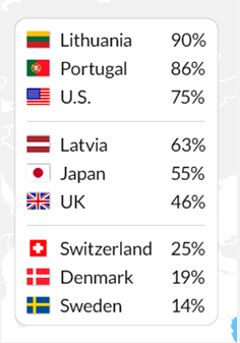
students say no to
bribes for doctors
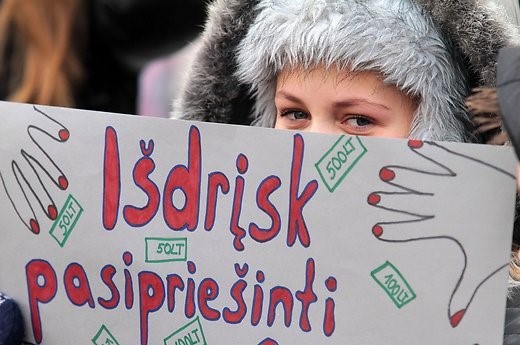
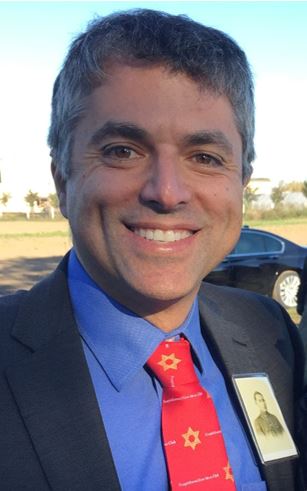
During Soviet times, government was administered for the people in control, not for the local population, court decisions were decreed, they were not the administration of justice, and academia was the domain of ideologues. 25 years of freedom and openness should have put those bad experiences behind Lithuania, but that is not so.
Today, it is a matter of expectation that court pronouncements will be governed by ideological dictates. Few, if any Lithuanians expect real justice to be effected. For foreign companies, doing business in Lithuania is almost impossible in a situation where business people do not expect rule of law, so, surely Government would be a refuge of competence?
Lithuanian Government has not emerged from Soviet styles. In an attempt to devolve power, Lithuania has created a myriad of fiefdoms of power, each speaking in the name of the Government, each its own centralized power base of ideology.
Chepstow, Wales
Doesn't that sound suspiciously like Lithuania? Ah, but I didn't mention the mountains of Snowdonia, which would give the game away.
I'm talking about Wales, that part of the UK which Lithuanians used to call "Valija", but later named "Velsas" (why?). Wales, the nation which has welcomed two Lithuanian heads of state to its shores - firstly Professor Vytautas Landsbergis, who has paid several visits and, more recently, President Dalia Grybauskaitė who attended the 2014 NATO summit which was held in Newport, South Wales.
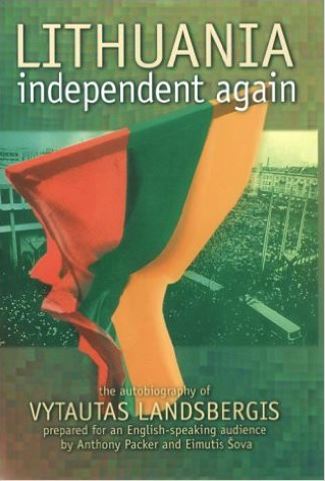
ENGLISH VERSION OF THE
AUTOBIOGRAPHY OF VYTAUTAS LANDSBERGIS.
Although Lithuanian activities have thinned over the decades as that postwar generation died out, the Lithuanian Martyrs' parish hall is crowded with many, many hundreds of visitors who come to the Lithuanian cemetery for All Souls' Day. Similarly, the Franciscan parish has standing room only for Christmas Eve mass.
Although I am firmly embedded in the literary culture of Canada, my themes are usually Lithuanian, and I'll be in Kaunas and Vilnius in mid-November 2015 to give talks about the Lithuanian translations of my novels and short stories, which I write in English.
If you have the Lithuanian language, come by to one of the talks listed in the links below. And if you don't, you can read more about my work at
www.anatanassileika.com
http://www.vdu.lt/lt/rasytojas-antanas-sileika-pristatys-savo-kuryba/ https://leu.lt/lt/lf/lf_naujienos/kvieciame-i-rasytojo-59hc.html
"My love and best wishes to all. As long as VilNews exists, there is hope for the future,"" she writes.
Irena Veisaite means very much for our publication, and we do hereby thank her for the support and wise commitment she always shows.
You can read our interview with her
Facing a new reality
Dear readers of VilNews,
For a number of years, the EU and Russia had assumed the existence of a strategic partnership, based on the convergence of values, economic integration and increasingly open markets and a modernisation agenda for society.
Our agenda was positive and ambitious. We looked at Russia as a country ready to converge with "European values", a country likely to embrace both the basic principles of democratic government and a liberal concept of the world order. It was believed this would bring our relations to a new level, covering the whole spectrum of the EU's strategic relationship with Russia.
The likelihood of Putin
invading Lithuania
.jpg "lithuania today")
Founding Director at Summer Literary Seminars
Are all Lithuanian energy
problems now resolved?
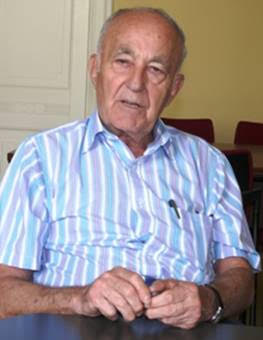
Lithuania as a country does not have significant energy resources. Energy consuming infrastructure after WWII was small and totally supported by energy imports from Russia.
First nuclear reactor begins power generation at Ignalina in 1983, the second reactor in 1987. Iganlina generates enough electricity to cover Lithuania's needs and about 50%.for export. As, prerequisite for membership in EU, Ignalina ceases all nuclear power generation in 2009
The Klaipėda Sea terminal begins Russia's oil export operations in 1959 and imports in 1994.
Mazeikiu Nafta (current ORLEAN Lietuva) begins operation of oil refinery in 1980.
Have Lithuanian ties across
the Baltic Sea become
stronger in recent years?
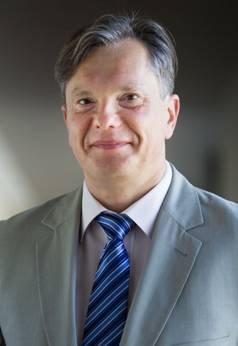
The two decades that have passed since regaining Lithuania's independence can be described as a "building boom". From the wreckage of a captive Soviet republic, a generation of Lithuanians have built a modern European state, and are now helping construct a Nordic-Baltic community replete with institutions intended to promote political coordination and foster a trans-Baltic regional identity. Indeed, a "Nordic-Baltic community" - I will explain later in my text the meaning of this catch-phrase.
Since the restoration of Lithuania's independence 25 years ago, we have continuously felt a strong support from Nordic countries. Nordics in particular were among the countries supporting Lithuania's and Baltic States' striving towards independence. Take example of Iceland, country which recognized Lithuania in February of 1991, well in advance of other countries. Yet another example - Swedish Ambassador was the first ambassador accredited to Lithuania in 1991. The other countries followed suit. When we restored our statehood, Nordic Countries became champions in promoting Baltic integration into Euro-Atlantic institutions. To large degree thanks Nordic Countries, massive transformations occurred in Lithuania since then, Lithuania became fully-fledged member of the EU and NATO, and we joined the Eurozone on 1 January 2015.
Have you heard about the
South African "Pencil Test"?
But that is exactly what happened to me when I came back from South Africa. I will tell you how.
VilNews e-magazine is published in Vilnius, Lithuania. Editor-in-Chief: Mr. Aage Myhre. Inquires to the editors: editor@VilNews.com.
Code of Ethics: See Section 2 – about VilNews. VilNews is not responsible for content on external links/web pages.
HOW TO ADVERTISE IN VILNEWS.
All content is copyrighted © 2011. UAB ‘VilNews’.