
THE VOICE OF INTERNATIONAL LITHUANIA

|
VilNews has its own Google archive! Type a word in the above search box to find any article.
You can also follow us on Facebook. We have two different pages. Click to open and join.
 Click on the buttons to open and read each of VilNews' 18 sub-sections Click on the buttons to open and read each of VilNews' 18 sub-sections  |

|


Archive for 2011
TAXATION AND BUDGETS
- Posted by - (0) Comment
Dividends should be taxed only in the country where the income is earned
29-04-2011
The European Commission is running a consultation regarding taxation problems, when dividends are distributed across different countries. We have submitted our answers to the Commission, proposing to tax dividends only in the country where the income is earned.
The real estate tax is based on emotions
19-04-2011
LFMI's President R. Vainienė read a commentary on the Lithuanian Radio regarding the arguments for the real estate tax. There are no logical arguments to support the tax, there are only emotional arguments, and they are not a good basis for the tax.
Financial sector tax – it's just another tax and it will not help to prevent crisis
18-04-2011
The European Commission is running a consultation regarding the initiative to introduce a new tax for the financial sector. In our opinion, the tax is not grounded, it would reduce the EU's competitiveness in the financial sector, would promote the outflow of capital to other regions and would not reduce excessive risk taking. The most appropriate way to solve the problem of excessively risky behaviour is to end the support from the taxpayers' pockets, so the responsibility for risky behaviour would fall on the shoulders of the financial institutions.
- Bookmark :
- Digg
- del.icio.us
- Stumbleupon
- Redit it

LFMI is against progressive taxation
- Posted by - (0) Comment
01-04-2011
For the last few years we have been repeatedly showing the vices and negative effects of the progressive taxation, repeating them again in our analysis regarding the amendments to the Law of Personal Income Tax in which we proposed to not approve this project.
LFMI Policy Analyst K. Leontjeva published a commentary on progressive taxation in the daily Lietuvos žinios “Envy + Pride = progressive taxation.”
The introduction of voluntary common consolidated corporate tax base would increase the risk of it becoming mandatory, and would not help to achieve the set goals
18-04-2011
Even though the current EC proposal to apply the common consolidated corporate tax base (CCCTB) voluntarily might look appealing to business, however, the creation of this system would be a first step towards the mandatory application of CCCTB to all firms. The tax base described in the proposal would increase the existing tax base in Lithuania, thus if CCCTB would become mandatory it is possible that the tax burden for Lithuanian firms would increase. Lithuania would lose the possibility to use a more transparent and simple corporate tax base as competitive advantage.
- Bookmark :
- Digg
- del.icio.us
- Stumbleupon
- Redit it

The use of EU funds in Lithuania – the important thing is “how” not only “how much”
- Posted by - (0) Comment
12-04-2011
We carried out a review of the use of EU structural funds in Lithuania and we concluded that even though Lithuania is one of the countries that absorb EU funds at the quickest pace, the set schedule is still not kept. It is necessary to think right now about the redistribution of EU funds in order to not only absorb them in time, but to get the maximum effect.
We suggest to simplify the accounting and administration of taxes on income from labour
07-04-2011
As the Parliament is getting ready to consider the guidelines for the reform of social insurance and pension system, among which is the aim to improve the administration of social security (Sodra), LFMI proposes to simplify the accounting and administration of taxes on income from labour (paying and declaring of the tax) by making the bases of income taxes uniform. LFMI suggests doing that together with the government’s plan to give the administration of social insurance payments to the State Tax Inspectorate.
- Bookmark :
- Digg
- del.icio.us
- Stumbleupon
- Redit it

ECONOMIC REFORMS
- Posted by - (0) Comment
It is necessary to gradually leave the system of state social insurance pensions and to move towards accumulation for pensions
13-04-2011
We propose to leave the system of state social insurance pensions and to step by step move towards the accumulation for pensions. Individuals who would fail to accumulate funds would receive state support after carrying out the means test. We also gave comments and suggestions regarding the different parts of the Project regarding the financing of the State Social Insurance Fund and the improvement of its administration and regarding the improvement of the system of pension accumulation.
We presented our position on April 28 at the Liberals Movement fraction’s meeting regarding the pensions reform.
- Bookmark :
- Digg
- del.icio.us
- Stumbleupon
- Redit it

BUSINESS DEREGULATION
- Posted by - (0) Comment

Regulative burden
The question regarding the sanctions for executives must be reconsidered
19-04-2011
We have repeatedly warned the members of the Parliament regarding the new provisions in the Law of Competition that lay down personal responsibility for executives of firms who break this law. The prohibition to work in executive position for 3-5 years is too severe a punishment for a person who violated the law.
Control "Additives Free": good enforcement of the law instead of new requirements
08-04-2011
We propose to remove the requirement that all food products that display information by the producer that the product is "Additives free" or similar on the package must have laboratory tests that confirm this information. If in a specific case the said marking is misleading, and has the appearance of false advertising, the responsible institution should perform an investigation according to established order on every specific case regarding breaches of advertising regulations.
The daily Lietuvos žinios has published LFMI President R. Vainienė's commentary on this topic, "How the control of "Additives Free" should look like."
Shadow economy: the causes are clear yet the fight is unsuccessful
11-04-2011
What causes the shadow and how to fight it? Are the measures that the government is proposing, such as cash registers and restrictions on the use of cash a good way to fight it? What is the scope of the shadow economy in other European countries? What can we judge from the first two months of the year about the success of government's plan to draw one billion litas from the shadow economy? LFMI's Policy Analyst Vytautas Žukauskas has published an article on these topics in the weekly Veidas.
In addition to that, on April 20 we participated in the hearings "The effectiveness of the Governmental measures to fight the shadow economy during the first quarter of the year 2011, and their possible impact on the income for the budget".
Why the shadowy Albinas will not go to the bank?
05-04-2011
LFMI president R. Vainienė read a commentary on the Lithuanian Radio regarding the new ways the government is trying to fight the shadow economy. This time the government has decided to restrict the use of cash. Is that an appropriate measure? Or maybe the shadow is simply laughing at a fight like this?
- Bookmark :
- Digg
- del.icio.us
- Stumbleupon
- Redit it

Employment regulation
- Posted by - (0) Comment
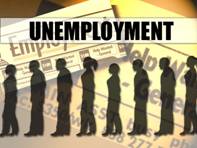
What measures would help to further a decrease in unemployment and encourage the creation of new jobs?
29-04-2011
Replying to the government‘s consultation we propose to not fake a fight against unemployment, but to take urgent steps – to improve the business environment, to create the preconditions for growth of the economy, to reduce the negative view of the entrepreneurship, and the mentality that is hostile to business, to lighten the procedures of forming and discontinuing a work agreement, to discard the protection of special groups, to increase the flexibility of regulation regarding the negotiation of the working time and to create more possibilities to negotiate the working time individually or at the company level, to reduce the unemployment benefits and other guarantees that are extended to the registered unemployed, to reduce the minimum wage. All of these measures are not „anti-crisis“ and are not aimed at only fighting the consequences of the existing unemployment or to temporary ease the situation in the labour market. The aim of all those measures is not only a reduction of unemployment, but also a sustainable long-term economic growth.
- Bookmark :
- Digg
- del.icio.us
- Stumbleupon
- Redit it
Transport
- Posted by - (1) Comment

It is necessary to continue and not to halt the reform of the railway sector
19-04-2011
The Parliament proposes to remove the Law on the Railway Sector Reform from its agenda and so essentially change the direction of the railway sector, on which the agreement was reached in 2004, when the Law of Railway Sector Reform was passed. The draft law contains no strong arguments to prove the necessity to eliminate the above mentioned Law of Railway Reform. We propose to not approve the bill.
- Bookmark :
- Digg
- del.icio.us
- Stumbleupon
- Redit it
Energy policy
- Posted by - (0) Comment
The electricity market lacks competition and freedom of choice
29-04-2011
As the new version of a draft of the law on electric energy reached the Parliament, we provided our comments and proposals regarding the issuance of permits to develop energy production capacity, the connection of new consumers to distribution network, the direct lines, and competition in the electricity sector.
Changes to the Laws on Heating Utilities and Competition will not solve the existing problems, creating the new ones instead
12-04-2011
The prohibition for maintenance companies (or persons) to have any connections with the providers of heating or the companies that produce the equipment of heating or service the equipment will be very hard to implement in smaller cities. The new regulation may reduce the efficiency and raise the costs of maintenance services.
The changes to the Law on Competition will not improve the supervisory mechanism and will increase the administrative burden for companies, meanwhile the definition of dominant position in the draft is discriminatory towards the companies that service building's heating and hot water system and towards the subjects, who administer the objects of common usage.
- Bookmark :
- Digg
- del.icio.us
- Stumbleupon
- Redit it
LFMI BLOG
- Posted by - (0) Comment
Vytautas Žukauskas: Whose income would be increased by progressive taxation?
29-04-2011
Kaetana Leontjeva. The Royal wedding - through the social glasses
29-04-2011
Vytautas Žukauskas: The fight with the shadow in a scheme
20-04-2011
- Bookmark :
- Digg
- del.icio.us
- Stumbleupon
- Redit it
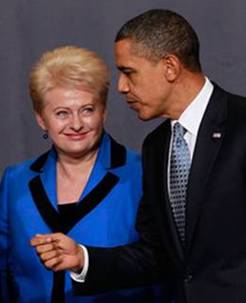
The president of Lithuania, Dalia Grybauskaite,
and president of the United States of America, Barack Obama.
USA's president, Barack Obama, visits Europe this week. Ireland, England, France and Poland are on his programmer on this trip to Europe, the 9th as U.S. president.
Obama's weeklong tour is all about tending to old friends in the Western alliance and securing their help with daunting challenges, from the political upheaval in the Mideast and North Africa to the protracted war in Afghanistan.
A priority for the president and his allies will be to more clearly define the West's role in promoting stability and democracy in the Arab world without being overly meddlesome and within tight financial limitations.
A highlight of Obama's opening stop in Ireland will be a pilgrimage to the hamlet of Moneygall, where Obama will explore his Irish roots. Fulmouth Kearney, who immigrated to the United States in 1850 at the age of 19, is the third great-grandfather of Obama on his white, Kansas-born mother's side. Obama, whose father was born in Kenya, will connect in Moneygall with distant relatives from the Irish branch of his family tree.
After his one day in Ireland, he will spend two in England, where he and first lady Michelle Obama will be treated to all the pomp and pageantry that the monarchy can muster for the president's first European state visit. The Obamas even get a Buckingham Palace sleepover.
Heather Conley, director of the Europe programme at the private Centre for Strategic and International Studies, said Obama's stop in Britain could help "put the 'special' back into the U.S.-U.K. special relationship."
In private, Obama and British Prime Minister David Cameron will plunge into the details of a host of international challenges on which the U.S. and Britain have worked together: Afghanistan, Libya, counterterrorism, the global economy and more.
Both leaders then scoot to a French summit of the Group of Eight industrialized nations, where the president hopes to build on momentum from his speech days ago about how best to promote stability and democracy in the Middle East.
Obama has called on the World Bank and International Monetary Fund to present the G-8 with an ambitious plan to help Egypt and Tunisia, in particular, recover from the disruptions caused by their democratic revolutions and prepare for elections later this year.
During his two-day stay in Deauville, France, Obama will take time for one-on-one meetings on the side of the G-8 with several world leaders, including Russian President Dmitry Medvedev and Japanese Prime Minister Naoto Kan.
Poland and Central Europe
Obama's visit to Poland is emblematic of a growing front in the administration's engagement in Europe, as the U.S. expands its economic and security relationship with Central European nations.
Obama will focus on energy cooperation, including shale gas development, when he visits NATO partner Poland for the first time, a US diplomat said last week in Warsaw.
"Energy is a pillar of Polish-American relations and it is sure to be the subject of discussions when President Obama visits Warsaw," US ambassador Lee Feinstein told delegates to a shale gas conference. Global fuel giants are exploring Poland's shale gas deposits, which a recent US study pegged as having a potential 5.3 trillion cubic metres of natural gas which could last some 300 years.
The U.S. has become a global leader in the production of natural gas extracted from shale, boosting its energy security, driving down prices and making it an exporter. Poland hopes it could reap similar benefits. However, experts insist that with exploration in the very early stages, it is too soon to gauge commercial viability.
Obama – Grybauskaite
In April 2010, Barack Obama and his Russian counterpart Dmitry Medvedev signed a new arms reduction treaty in Prague, primarily with regards to the Eastern European missile defence system that had been planned by the Bush administration,
After the signing, President Obama invited the presidents of Lithuania, Latvia, Estonia, and Romania, as well as the prime ministers of Poland, Czech Republic, Bulgaria, Croatia, Hungary, Slovakia and Slovenia to attend a dinner with him in Prague.
Lithuanian President Dalia Grybauskaite openly disagreed with Obama on the new reduction plan, claiming it harmed Lithuanian security, and in perhaps the most shocking move refused to take part in the dinner in Prague. Grybauskaite was the only invited president who refused to meet with Obama.
Since becoming Lithuania's president in 2009, Grybauskaite has wasted no time defining her leadership. "Yes, you have to be a strict and loud partner if you want to be heard in the conversation," she told The Associated Press in an interview this winter.
"Lithuania is not used to a straightforward, terse, forceful way of making statements. I admit using this style in pushing NATO defense plans for the Baltic States," she said, referring to U.S. cables released by WikiLeaks earlier this year, showing that NATO in January 2010 privately decided to expand a NATO defense plan for Poland to also cover Estonia, Latvia and Lithuania.
"I am afraid that if I had chosen a different tone, Lithuania and its neighbours would be still waiting another six years for these," she said to the Associated Press, giving herself credit for USA’s and NATO’s new strategy as revealed by WikiLeaks.
President Obama has invited the same state leaders for a dinner by the end of this week, now in Poland, and we understand that this time President Grybauskaite has accepted the invitation.
It still remains to see how President Grybauskaite’s ‘reflections’ vs. the Obama administration in 2010 and NATO now in 2011 are being treated and responded to by the said parties. We can only hope they are not given too much weight and that the relationships with Lithuania have not been harmed. Her acceptance of this year's invitation from Obama, and the absence of new provocative statements, suggest that she has adopted a more conciliatory and diplomatic style and line.
The right to disagree and discuss any topic should always remain free and open, but I think our president would be better off by following more recognized protocol procedures when such delicate issues are to be discussed at the highest international level.
To have a best possible relationship with the U.S. and the Obama administration is important for Lithuania, and one can only hope that his visit to Europe and Poland will come to represent a positive step towards improved dialogue and cooperation also between Lithuania and the United States.
Aage Myhre, Editor-In-Chief
- Bookmark :
- Digg
- del.icio.us
- Stumbleupon
- Redit it
A new European alliance?
- Posted by - (16) Comment
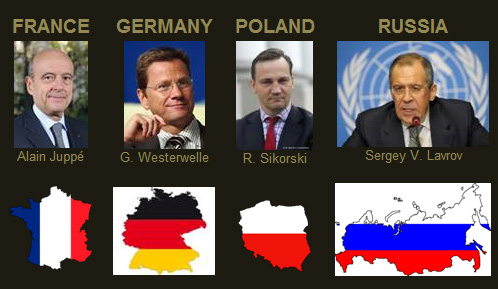
In a meeting in Bydgoszcz , Poland, last week, the foreign ministers of France, Germany and Poland agreed to an ambitious programme that includes pushing for tougher sanctions against Belarus, and for the European Union to establish its own civil and military planning headquarters independent of NATO.
The Foreign Ministers Alain Juppé of France, Guido Westerwelle of Germany and Radek Sikorski of Poland interspersed bonhomie with frank talk, showing how much relations have improved among the countries, after a past based on enmity and distrust.
The ministers said a European should be the next managing director of the International Monetary Fund after the resignation of Dominique Strauss-Kahn.
They also agreed that President Barack Obama’s speech delivered on Thursday on the Israeli-Palestinian conflict showed a link between changes sweeping the Middle East and a resolution to that intractable problem.
“The United States cannot do it alone,” Mr. Juppé said. “Europe must help.”
Mr. Westerwelle said: “The peace process affects what is happening in the Middle East. And what is happening in the Middle East affects the peace process.”
In another meeting, now in Klainingrad, Mr. Sikorski and Mr. Westerwelle for the first time held a trilateral meeting with their Russian counterpart, Sergei Lavrov. The meeting in Kaliningrad was part of an effort by the three countries to work together over political, security, energy and visa issues, and was viewed as a significant improvement in relations between Germany, Poland and Russia.
The Weimar Triangle
The meeting in Bydgoszcz was held under the umbrella of the Weimar Triangle, named after the city of Weimar, a jewel of a cultural center in southeastern Germany. The group was set up 20 years ago at the initiative of the German government to foster a deep reconciliation with Poland akin to what France and Germany did after 1945.
Poland, set to take over the six-month rotating European Union presidency in June, is showing more self-confidence, evident in its influential voice regarding Russia, Ukraine and Belarus.
Mr. Sikorski and Mr. Westerwelle called unacceptable the recent crackdown and trials of opposition leaders in Belarus who held peaceful protests in December against the fraudulent presidential elections. Mr. Sikorski said Poland, France and Germany would press their E.U. partners in Brussels on Monday to impose tougher sanctions against the Belarussian leadership.
At the same time they would support as much as possible independent, democratic movements and organizations.
Poland already provides financial assistance to Belarussians studying in Poland because their political activities prevent their doing so at home. And Poland finances Belsat, the independent television station that is based in Warsaw and broadcasts news and current affairs into Belarus.
The three ministers also agreed that the European Union should have its own civil and military planning headquarters. When the idea was first presented by Germany, France, Belgium and Luxembourg in 2003, when all four countries opposed the U.S.-led invasion of Iraq, it was staunchly rejected, not only by the United States but also by Poland and other East European countries.
Opponents of the idea said at the time that an E.U. planning headquarters would be a competitor to NATO and eventually would lead to the loosening of the trans-Atlantic alliance. Now, however, Poland increasingly sees Europe in need of a stronger security and defense policy, with its own civil and military planning headquarters, as the United States expects it to pull its weight in defense and security matters.
Meeting in Kaliningrad
Mr. Sikorski and Mr. Westerwelle travelled to the Russian exclave of Kaliningrad after the Bydgoszcz meeting, where for the first time they would hold a trilateral meeting with their Russian counterpart, Sergei Lavrov. The meeting in Kaliningrad was part of an effort by the three countries to work together over political, security, energy and visa issues, and was viewed as a significant improvement in relations between Germany, Poland and Russia.
Russia is seeking assurances from NATO that any missile defense system the military alliance deploys in Europe will not be directed against the country.
“We do not want any missiles aimed at Russia, and we want some kind of written guarantees from NATO that the missiles will not threaten Russia,” Lavrov, said after the talks.
“This is about cooperation, not confrontation, about discussing concrete projects,” Mr. Westerwelle told hundreds of students at Kant University who had gathered to question the three officials.
Russia has in the past threatened to place missiles in Kaliningrad — a small area with a population of nearly one million that is sandwiched between two European Union countries, Poland and Lithuania — in response to NATO’s plans to deploy part of its missile shield in Eastern Europe.
Shift in U.S. strategy
President Obama, who is to visit Poland next week, intends to deploy Patriot missiles there, but not the original missile shield system that the administration of President George W. Bush had promised to do. The Bush administration’s plans to place parts of the missile defense system in Poland and the Czech Republic, which were once part of the Soviet military alliance, led to a sharp deterioration of relations between Washington and Moscow. The Russian prime minister, Vladimir V. Putin of Russia, has said that such deployments would undermine Russia’s security.
Mr. Obama’s decision to shift strategy was not only because of the costs and the need to modify the scope of any missile defense system that would provide a much broader security umbrella over Europe. The administration said it also wanted to “reset” its relations with Russia.
During Saturday’s discussions, the ministers agreed that their meeting could evolve into something more permanent — like the Weimar Triangle, which the French, German and Polish foreign ministers set up 20 years ago after the reunification of Germany. The Weimar Triangle helped to lead to reconciliation between Poland and Germany, ending decades of enmity and distrust.
Mr. Lavrov acknowledged that Russia could not ignore Poland’s new role on the Continent, now that it is a member of the European Union and it is scheduled to take over the rotating EU presidency the 1st of July.
The three officials also discussed Belarus. Poland and Germany, with support from France, want European foreign ministers to impose more sanctions against Belarus. The sanctions, already imposed on the top leadership, could be extended to some enterprise managers. At the same time, Poland and Germany intend to strengthen their ties to civil society and the democratic opposition.
Russia, however, said it opposed more sanctions. “This will only lead to further isolation,” Mr. Lavrov said. “That will do nothing to help the way towards direction.”
- Bookmark :
- Digg
- del.icio.us
- Stumbleupon
- Redit it
Lithuania’s best future lies in a Nordic union
- Posted by - (3) Comment
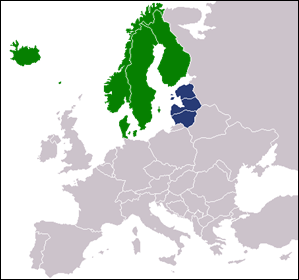
New collaboration constellations are forming in our today’s Europe. The potential new alliance between France, Germany, Poland and Russia is an example of that.
This new approach, between countries that previously were relatively far apart, as well as the so-called G-8 and G-20 alliances between the world’s richest countries are examples of how we seem to be moving into a new World Order. Also in good old Europe we are now beginning to develop entirely new constellations.
Typical of such constellations is that the largest and richest countries take initiatives to secure their own positions and welfare, while smaller countries often have to put up with playing second fiddle.
What the three Baltic States now face is that being members of the EU is not enough. The economic crisis, and partly also questions on defence and security, have led to new forms of cooperation, as the aforementioned , and our small nations far north in Europe are not invited to become active participants.
It is therefore my opinion that a tight collaboration with the other Nordic countries is the way to go. Together we are large and powerful enough to be heard, and our common identity and cultural background is a good basis for cooperation.
In the 13th century, an alliance of Northern European towns called the Hanseatic League created what historian Fernand Braudel called a “common civilization created by trading.” Today’s expanded list of Hansa states share Germanic and Scandinavian cultural roots. Germany and the Scandinavian countries have found their niches by selling high-value goods to developed nations, as well as to burgeoning markets in Russia, China, and India.
Widely admired for their generous welfare systems, Denmark, Finland, Norway, Sweden and Germany have liberalized their economies in recent years. They account for six of the top eight countries on the Legatum Prosperity Index and boast some of the world’s highest savings rates (25 percent or more), as well as impressive levels of employment, education, and technological innovation.
“In strategies that we are developing for the next twenty years emphasize that it is important for the Baltic States to become more harmonized and catch up with Scandinavian countries. Integration with Nordic countries is an important objective,” said Andrius Kubilius, Lithuania’s prime minister, in a meeting in Tallinn a few days ago..
I think he is right.
Aage Myhre, Editor-in-Chief
- Bookmark :
- Digg
- del.icio.us
- Stumbleupon
- Redit it
We have recently discovered your internet journal and are extremely impressed
- Posted by - (0) Comment

Dear VilNews,
We have recently discovered your internet journal and are extremely impressed by it. It is sad that our own, Lithuanian press does not have standards that you do!
We are very happy to have an informative, objective and intelligent source of news from Lithuania.
We are a community initiative, the non-profit organization based in New York.
We are video blog in Lithuanian reporting Lithuanian evens, news, interviews about Lithuanians in the US mainly in New York, New Jersey, Connecticut.
Sincerely,
Mykolas Gudelis
Founder, AmericaLTV
- Bookmark :
- Digg
- del.icio.us
- Stumbleupon
- Redit it
U.S. Secret Service opens Baltic States office
- Posted by - (0) Comment


The Embassy of the United States of America announced the official opening of the Office of the U.S. Secret Service in Estonia on Friday, May 20.
The Secret Service office will work closely with its law enforcement partners within the criminal investigative infrastructure in the Baltic nations of Estonia, Latvia and Lithuania.
Estonia was selected as the site for the new Secret Service office due to both the investigative nexus it provides in combating cyber and financial crimes, as well as the opportunity it provides the agency in the fulfillment of its protective duties within the region.
Tallinn will also serve as a prime location from which to engage counterparts in Russia and throughout the Nordic region.
Estonian Minister of Justice Mr. Kristen Michal, U.S. Ambassador to Estonia Michael C. Polt, and visiting U.S. Secret Service Assistant Director A.T. Smith will attend the event.
- Bookmark :
- Digg
- del.icio.us
- Stumbleupon
- Redit it
- Posted by - (0) Comment
|
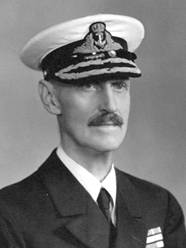
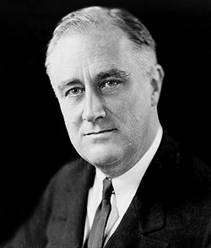
The "Look to Norway" speech by U.S. President Franklin D. Roosevelt was given during the handover ceremony of the Royal Norwegian Navy ship HNoM King Haakon VII at the Washington Navy Yard on 16 September 1942. In the speech the President said: "If there is anyone who still wonders why this war is being fought, let him look to Norway. If there is anyone who has any delusions that this war could have been averted, let him look to Norway; and if there is anyone who doubts the democratic will to win, again I say, let him look to Norway."
The speech served as an important source of inspiration to Norwegians fighting the German occupation of Norway and the rest of Europe as well as for the resistance fighters of other small countries during World War II. |
- Bookmark :
- Digg
- del.icio.us
- Stumbleupon
- Redit it
By Tanushree Poddar, Deccan Chronicle, South India
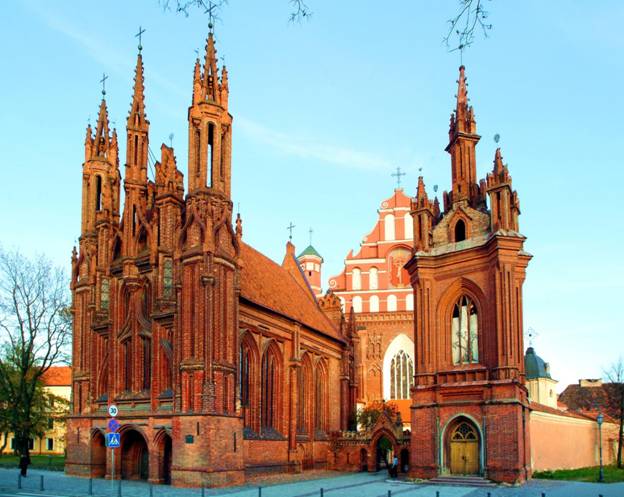
St. Anne’s Church in Vilnius.
Photo: www.travel.lt
When Napoleon saw this church, he wanted to carry it away with him on the palm of his hand and gift it to his sweetheart, Josephine,” our guide informed us with a twinkle in her eyes. “Thankfully, he could not fulfill his wishes and the church still remains in Vilnius.” I was not surprised.
I would have liked to carry the stunning church home, too. St. Anne’s church evokes covetousness in all breasts. It is so beautiful. Vilnius, the capital of Lithuania, is an artist’s dream. With its emerald forests, cobalt lakes, cerise spires and pine scented air, it is a romantic paradise. Apart from lovely landscape, it has some of the most beautiful churches I have ever seen.
Read more at:
http://www.deccanchronicle.com/tabloid/sunday-chronicle/travel/romantic-paradise-187
The Deccan Chronicle is a daily newspaper published through the Andhra Pradesh, Karnataka, and Tamil Nadu states of India. It is published in English, and is the largest circulation English-language newspaper in the south of India. The newspaper's name derives from the originating place Deccan regions of India.
- Bookmark :
- Digg
- del.icio.us
- Stumbleupon
- Redit it

OPINIONS
Have your say. Send to:
editor@VilNews.com

Ph. D., Chicago
A wave of unity sweeps the international Lithuanian community on March 11th every year as Lithuanians celebrated the anniversary of the Lithuanian Parliament's declaration of independence from the Soviet Union in 1990. However, the sense of national unity engendered by the celebration could be short-lived.
Human beings have a strong tendency to overgeneralize and succumb to stereotypical us-them distinctions that can shatter even the strongest bonds. We need only search the internet to find examples of divisive thinking at work:
- "Those who fled Lithuania during World II were cowards -- and now they come back, flaunt their wealth, and tell us 'true Lithuanians' how to live."
- "Lithuanians who work abroad have abandoned their homeland and should be deprived of their Lithuanian citizenship."

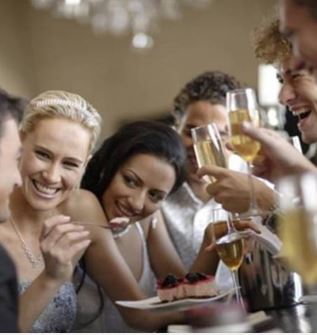
In Lithuania Christmas Eve is a family event and the New Year's Eve a great party with friends!
Lithuanian say "Kaip sutiksi naujus metus, taip juos ir praleisi" (the way you'll meet the new year is the way you will spend it). So everyone is trying to spend New Year's Eve with friend and have as much fun as possible.
Lithuanian New Year's traditions are very similar to those in other countries, and actually were similar since many years ago. Also, the traditional Lithuanian New Years Eve party was very similar to other big celebrations throughout the year.
The New Year's Eve table is quite similar to the Christmas Eve table, but without straws under the tablecloth, and now including meat dishes. A tradition that definitely hasn't changes is that everybody is trying not to fell asleep before midnight. It was said that if you oversleep the midnight point you will be lazy all the upcoming year. People were also trying to get up early on the first day of the new year, because waking up late also meant a very lazy and unfortunate year.
During the New Year celebration people were dancing, singing, playing games and doing magic to guess the future. People didn't drink much of alcohol, especially was that the case for women.
Here are some advices from elders:
- During the New Year, be very nice and listen to relatives - what you are during New Year Eve, you will be throughout the year.
- During to the New Year Eve, try not to fall, because if this happens, next year you will be unhappy.
- If in the start of the New Year, the first news are good - then the year will be successful. If not - the year will be problematic.
* If New Year's night is cold and starry - look forward to a good summer!
* If the during New Year Eve trees are covered with frost - then it will be a good year. If it is wet weather on New Year's Eve, one can expect a year where many will die and dangerous epidemics occur.
* If the first day of the new year is snowy - the upcoming year will see many young people die. If the night is snowy - mostly old people will die.
* If the New Year time is cold - then Easter will be warm.
* If during New Year there are a lot of birds in your homestead - then all year around there will be many guests and the year will be fun.
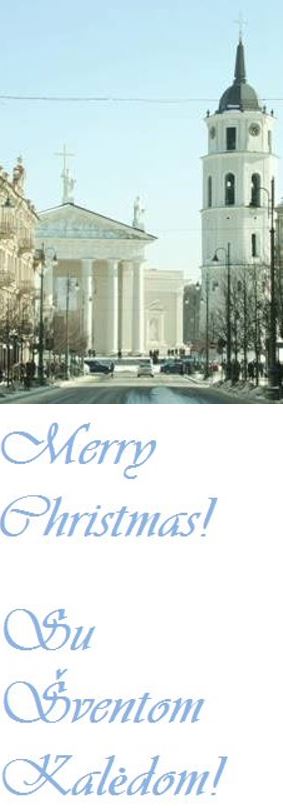
Christmas greetings
from Vilnius
and epic battle for the
future
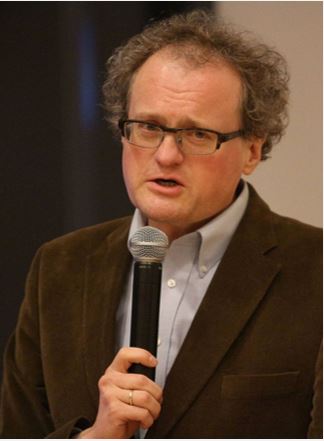
Philosopher, political theorist, historian of
ideas, social analyst, and political
commentator
Ukraine was and continues to be perceived by the EU political class as a sort of grey zone with its immense potential and possibilities for the future, yet deeply embedded and trapped in No Man's Land with all of its troubled past, post-Soviet traumas, ambiguities, insecurities, corruption, social divisions, and despair. Why worry for what has yet to emerge as a new actor of world history in terms of nation-building, European identity, and deeper commitments to transparency and free market economy?
Right? Wrong. No matter how troubled Ukraine's economic and political reality could be, the country has already passed the point of no return. Even if Vladimir Putin retains his leverage of power to blackmail Ukraine and the West in terms of Ukraine's zero chances to accede to NATO due to the problems of territorial integrity, occupation and annexation of Crimea, and mayhem or a frozen conflict in the Donbas region, Ukraine will never return to Russia's zone of influence. It could be deprived of the chances to join NATO or the EU in the coming years or decades, yet there are no forces on earth to make present Ukraine part of the Eurasia project fostered by Putin.
want to learn about the
new, scary propaganda
war between Russia,
The West and the
Baltic States!
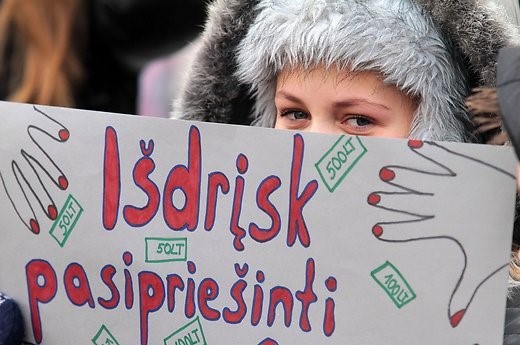
believe their government
is corrupt
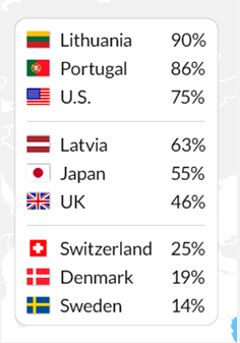
students say no to
bribes for doctors
During Soviet times, government was administered for the people in control, not for the local population, court decisions were decreed, they were not the administration of justice, and academia was the domain of ideologues. 25 years of freedom and openness should have put those bad experiences behind Lithuania, but that is not so.
Today, it is a matter of expectation that court pronouncements will be governed by ideological dictates. Few, if any Lithuanians expect real justice to be effected. For foreign companies, doing business in Lithuania is almost impossible in a situation where business people do not expect rule of law, so, surely Government would be a refuge of competence?
Lithuanian Government has not emerged from Soviet styles. In an attempt to devolve power, Lithuania has created a myriad of fiefdoms of power, each speaking in the name of the Government, each its own centralized power base of ideology.
Chepstow, Wales
Doesn't that sound suspiciously like Lithuania? Ah, but I didn't mention the mountains of Snowdonia, which would give the game away.
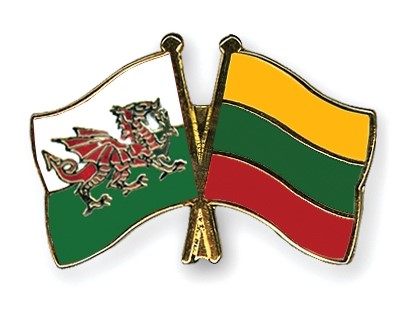
I'm talking about Wales, that part of the UK which Lithuanians used to call "Valija", but later named "Velsas" (why?). Wales, the nation which has welcomed two Lithuanian heads of state to its shores - firstly Professor Vytautas Landsbergis, who has paid several visits and, more recently, President Dalia Grybauskaitė who attended the 2014 NATO summit which was held in Newport, South Wales.
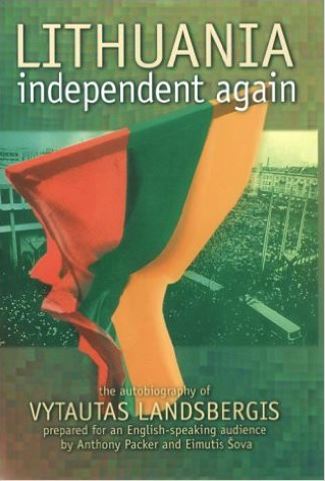
ENGLISH VERSION OF THE
AUTOBIOGRAPHY OF VYTAUTAS LANDSBERGIS.
Although Lithuanian activities have thinned over the decades as that postwar generation died out, the Lithuanian Martyrs' parish hall is crowded with many, many hundreds of visitors who come to the Lithuanian cemetery for All Souls' Day. Similarly, the Franciscan parish has standing room only for Christmas Eve mass.
Although I am firmly embedded in the literary culture of Canada, my themes are usually Lithuanian, and I'll be in Kaunas and Vilnius in mid-November 2015 to give talks about the Lithuanian translations of my novels and short stories, which I write in English.
If you have the Lithuanian language, come by to one of the talks listed in the links below. And if you don't, you can read more about my work at
www.anatanassileika.com
http://www.vdu.lt/lt/rasytojas-antanas-sileika-pristatys-savo-kuryba/ https://leu.lt/lt/lf/lf_naujienos/kvieciame-i-rasytojo-59hc.html
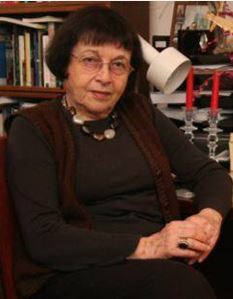
"My love and best wishes to all. As long as VilNews exists, there is hope for the future,"" she writes.
Irena Veisaite means very much for our publication, and we do hereby thank her for the support and wise commitment she always shows.
You can read our interview with her
Facing a new reality
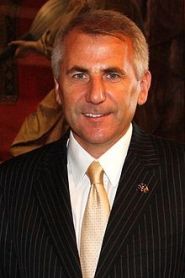
Dear readers of VilNews,
For a number of years, the EU and Russia had assumed the existence of a strategic partnership, based on the convergence of values, economic integration and increasingly open markets and a modernisation agenda for society.
Our agenda was positive and ambitious. We looked at Russia as a country ready to converge with "European values", a country likely to embrace both the basic principles of democratic government and a liberal concept of the world order. It was believed this would bring our relations to a new level, covering the whole spectrum of the EU's strategic relationship with Russia.
The likelihood of Putin
invading Lithuania
.jpg "lithuania today")
Founding Director at Summer Literary Seminars
Are all Lithuanian energy
problems now resolved?
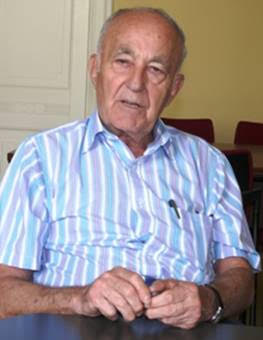
Lithuania as a country does not have significant energy resources. Energy consuming infrastructure after WWII was small and totally supported by energy imports from Russia.
First nuclear reactor begins power generation at Ignalina in 1983, the second reactor in 1987. Iganlina generates enough electricity to cover Lithuania's needs and about 50%.for export. As, prerequisite for membership in EU, Ignalina ceases all nuclear power generation in 2009
The Klaipėda Sea terminal begins Russia's oil export operations in 1959 and imports in 1994.
Mazeikiu Nafta (current ORLEAN Lietuva) begins operation of oil refinery in 1980.
Have Lithuanian ties across
the Baltic Sea become
stronger in recent years?
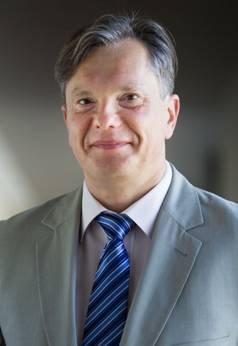
The two decades that have passed since regaining Lithuania's independence can be described as a "building boom". From the wreckage of a captive Soviet republic, a generation of Lithuanians have built a modern European state, and are now helping construct a Nordic-Baltic community replete with institutions intended to promote political coordination and foster a trans-Baltic regional identity. Indeed, a "Nordic-Baltic community" - I will explain later in my text the meaning of this catch-phrase.
Since the restoration of Lithuania's independence 25 years ago, we have continuously felt a strong support from Nordic countries. Nordics in particular were among the countries supporting Lithuania's and Baltic States' striving towards independence. Take example of Iceland, country which recognized Lithuania in February of 1991, well in advance of other countries. Yet another example - Swedish Ambassador was the first ambassador accredited to Lithuania in 1991. The other countries followed suit. When we restored our statehood, Nordic Countries became champions in promoting Baltic integration into Euro-Atlantic institutions. To large degree thanks Nordic Countries, massive transformations occurred in Lithuania since then, Lithuania became fully-fledged member of the EU and NATO, and we joined the Eurozone on 1 January 2015.
Have you heard about the
South African "Pencil Test"?
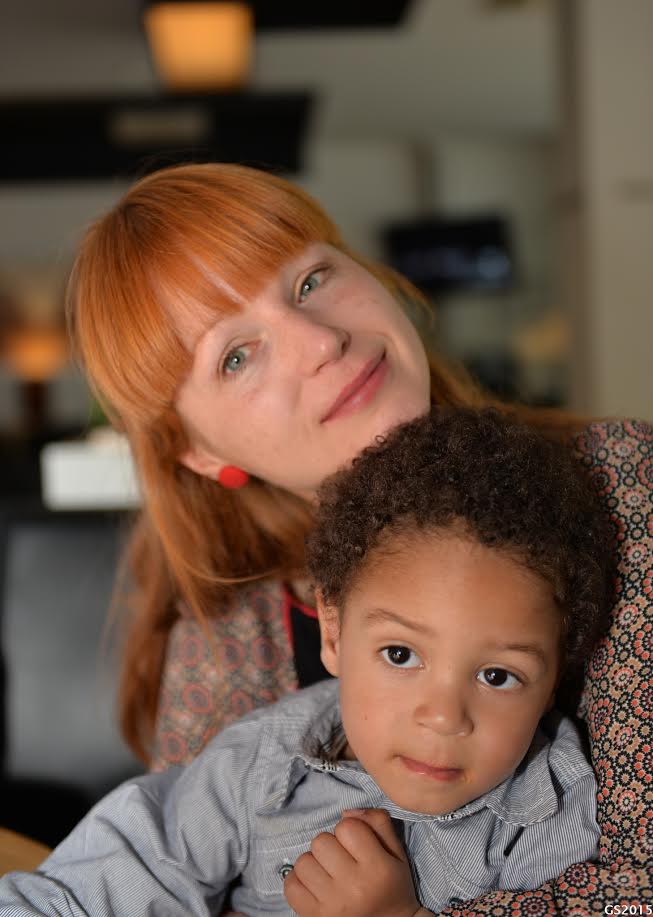
But that is exactly what happened to me when I came back from South Africa. I will tell you how.
VilNews e-magazine is published in Vilnius, Lithuania. Editor-in-Chief: Mr. Aage Myhre. Inquires to the editors: editor@VilNews.com.
Code of Ethics: See Section 2 – about VilNews. VilNews is not responsible for content on external links/web pages.
HOW TO ADVERTISE IN VILNEWS.
All content is copyrighted © 2011. UAB ‘VilNews’.