
THE VOICE OF INTERNATIONAL LITHUANIA

|
VilNews has its own Google archive! Type a word in the above search box to find any article.
You can also follow us on Facebook. We have two different pages. Click to open and join.
 Click on the buttons to open and read each of VilNews' 18 sub-sections Click on the buttons to open and read each of VilNews' 18 sub-sections  |

|


Archive for 2011
- Posted by - (1) Comment

This year’s ‘World Lithuanian Economic Forum’ takes place in Vilnius 4 – 5 July

There is over a million of people of Lithuanian origin living outside Lithuania. Having left their motherland in different times and of different reasons they are now living and working in countries around the world. Many of them became successful businessmen: owners or managers of big corporations and companies or highly ranked experts in different fields.
Establishing of a closer relationship with Lithuanians living abroad should nowadays be one of the most important goals in the strategy of our government. The diasporas represent an invaluable source which can enrich Lithuania and help to create a better future of our country.
The goal of the World Lithuanian Economic Forum is to attract Lithuanian business people, economists, politicians and scientists from the entire world into Lithuania’s economic life of today, to strengthen their relations with Lithuania, to encourage them to develop business in our country, to help attract investments, to enterprising growing Lithuanian companies, to create a global network of Lithuanians from all over the world.
The Forum is organized by Lithuanian Business Confederation | ICC Lithuania in cooperation with a number of partners – governmental institutions as well as business companies.
The first Forum, named “Competitive Lithuania: innovative economy, effective business development and investment”, was organized in 2009 in Vilnius. In 2010 WLEF “High tech innovation & investment: local to global” was held in London. Both events got loads of attention from public and media. Following the traditions this year WLEF comes back to Vilnius and will be held 4 – 5 July.
The main theme of his year’s event is the creation of a competitive state. Experts, business people and scientists of different spheres from all over the world will discuss the vision of the world and Lithuania in ten years, the creation of competitiveness through innovations, a partnership between business and science, the encouragement of starting and growing businesses.
For registration and additional information: http://www.plef.lt/
- Bookmark :
- Digg
- del.icio.us
- Stumbleupon
- Redit it

 By Milda Seputyte – BLOOMBERG
Lithuania’s economic growth accelerated to 6.9 percent in the first quarter, the second- fastest in the European Union, on investments and increased domestic demand.
The expansion compares with a 4.8 percent rise in the fourth quarter, the Vilnius-based statistics office said in an e-mailed statement today. The result is unchanged from a preliminary estimate on April 28. The economy expanded a seasonally adjusted 3.5 percent from the previous quarter.
Lithuania, part of the Baltic region along with Estonia and Latvia that suffered the world’s deepest recession in 2009, is benefiting from rising demand for its exports that account for about two-thirds of output. Foreign sales and recovering domestic demand has pushed economic growth to the fastest rate in the EU after Estonia.
Household consumption grew an annual 5.5 percent in the first quarter and capital formation jumped 41 percent from a year earlier on investments in real estate, equipment and machinery, the statistics office said.
The International Monetary Fund raised on May 19 its economic-growth forecast for Lithuania to 6 percent this year from 4.6 percent. The Finance Ministry estimates the economy may grow 5.8 percent this year, betting on an export-driven expansion as growth in the rest of Europe propels shipments of Lithuanian products to record highs.
Exports grew an annual 21.8 percent in the first quarter, driven by sales of refined fuels, cars and fertilizer. The Orlen Lietuva AB refinery, the nation’s biggest exporter, said crude processing grew 27 percent in the period from last year.
Retail trade expanded an annual 20 percent in the first three months of the year as consumers spent more on cars and clothing. Car sales rose an annual 83 percent in the period driven by demand from neighboring Belarus as the country prepares to unify its tariffs for vehicle imports from July 1 with other countries in a customs union that also includes Russia and Kazakhstan.
- Bookmark :
- Digg
- del.icio.us
- Stumbleupon
- Redit it

Lithuania has got its own Bill Clinton!
- Posted by - (1) Comment
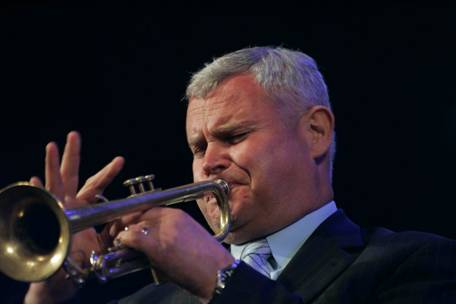
This weekend Klaipeda’s new Mayor, Vytautats Grubliauskas, greeted guests from Lithuania’s international community with jazz trumpet virtuosity, also singing Louis Armstrong’s ‘What a wonderful World’ very convincingly.
'The Singing Mayor' has introduced a completely new and refreshing sound into Lithuania's political life. A human face with a good ability to communicate with the audience through song and music. This bodes well and should be a source of inspiration for many!
Former U.S. President Bill Clinton became the world's most famous ‘jazz politician’, when he already during the election campaign in 1992 hit new tunes for U.S. politics, playing his tenor saxophone in a very convincing manner.
Lithuania has its own jazz politician through Klaipeda's newly elected mayor, VytautasGrubliauskas, who sings and plays trumpet in a top professional manner, latest for a large group from Lithuania's international community at an event in Klaipeda this weekend, when members of the British Chamber of Commerce in Lithuania took the road to the coast to a joint programme with the coastal city's international business organization.
The truth is that Mayor Grubliauskas for many years was one of Western Lithuania’s leading jazz musicians, known as the principal soloist of the Doudi Jazz Band from Klaipeda, famous for his trumpet playing and singing with a raspy voice that gave him the nickname ‘Lithuanian’s Louis Armstrong’. For many years Vytautas Grubliauskas shared his time and energy between performing and wide-ranging public activities, as a long-time president of the Klaipėda Jazz Club, Associate Professor and Head of the Jazz Department at the Klaipėda University, artistic and executive director of the Klaipėda Jazz Festival (now as a patron), and finally as a member of Seimas (Lithuania’s parliament) before winning the latest municipal elections and taking the post as Mayor of Klaipeda last month.
I have the suspicion that Mr. Grubliauskas will become internationally known as 'Lithuania’s Singing Mayor', after he introduced a completely new and refreshing sound into Lithuania's political life to the country’s international community this weekend. A human face with a good ability to community with the audience through song and music. This bodes well and should be a source of inspiration for many!
VilNews will revert with a comprehensive coverage of Klaipeda later in June, including an interview with the new Mayor, where we will be discussing politics, society, business, energy, tourism, culture and new visions for the coastal city and the region it is the capital for.
And for all of you who love jazz, please note that Klaipeda’s world famous Jazz Festival takes place the weekend of 3 – 5 June. If you are lucky also you may then be able to listen to ‘Lithuania’s Singing Mayor’!
Read more about the Jazz Festival at http://www.jazz.lt/festival/index.php?lang_id=2
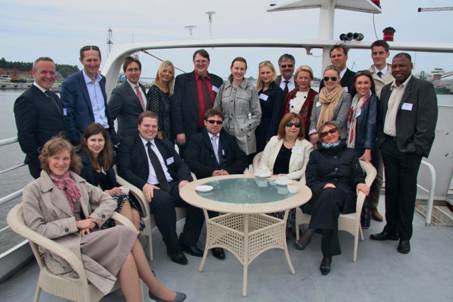
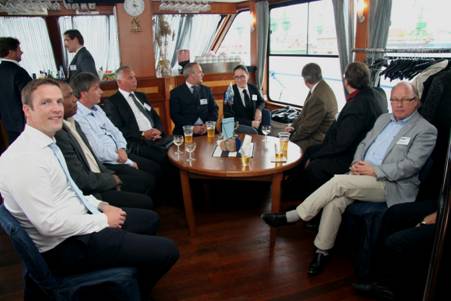
A boat trip is a must when you visit Klaipeda. So also when members of the British Chamber of Commerce in Lithuania this weekend took the road to the coast for a joint programme with the coastal city's international business organization.
- Bookmark :
- Digg
- del.icio.us
- Stumbleupon
- Redit it

Obama’s visit to Poland could mark change in relations with Eastern Europe
- Posted by - (1) Comment
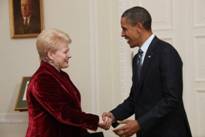
Last Friday President Dalia Grybauskaitė attended the meeting of Central European heads of state with US President Barack Obama. At the working dinner the Lithuanian President underlined that NATO anti-missile defense must cover all Allies. According to the President, NATO-Russian relations are particularly important for Lithuania owing to its strategically special location on the boundary of the Alliance’s territory. The President said the agreement reached in the NATO Lisbon Summit must not be changed and must not become the object of negotiations with Russia.
By Irena Chalupa
U.S. President Barack Obama’s European tour has offered something for everyone: the folksiness of a walk through an Irish village, the pomp and circumstance of a meeting with Queen Elizabeth, the gravitas of a G8 summit. His trip was ending in Poland, where the president met with 20 leaders from the countries of Central and Eastern Europe after his arrival and met with the Polish president the next day.
That scheduling leaves itself open to competing interpretations. Some of those attending the summit undoubtedly wonder whether this is a case of the president saving the most important item on his itinerary for last -- or of treating their part of the world as an afterthought.
Eastern Europeans worry that their region is sliding down the list of Washington’s priorities at a moment when political upheavals are transforming the Middle East. Others fret that the Obama administration’s much-discussed “reset” of its relationship with Moscow has come at their cost.
- Bookmark :
- Digg
- del.icio.us
- Stumbleupon
- Redit it

- Posted by - (5) Comment

(means “let’s be together”)
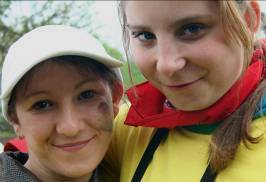
“I challenge all of us to volunteer”
 |
 |
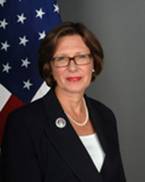
Ambassador Anne E. Derse: “The U.S. Embassy is honoured
to be the patron of “Būkime kartu” this year.
On Saturday 28th of May over 100 children from local orphanages will participate in “Būkime kartu 2011”, organized by the international community in Lithuania, including U.S. and other foreign embassies, Lithuanian public institutions and volunteers. The programme is intended to provide the children needed personal attention and care, and to promote the virtues of volunteering in Lithuania.
This event involves more than 150 volunteers from foreign embassies, private companies and public institutions and is under the patronage of the U.S. Ambassador to Lithuania, Anne E. Derse. “The U.S. Embassy is honoured to be the patron of “Būkime kartu” this year. 2011 is the “European Year of the Volunteering” in the European Union, and volunteerism is a value that is strongly held in Lithuania. In the United States as well, we have long believed that service to the community and work done for the greater good is part of the foundation of a stable, free and productive society. I challenge all of us to continue exploring ways to volunteer, give back and make a positive contribution to our communities,” said Ambassador Anne E. Derse, the patron of the event.
Mr. Torben Pedersen, Chairman of the “Būkime kartu” Committee under Vilnius International Club said: “2011 is the 9th year that “Būkime kartu” has been organized on the initiative of Vilnius International Club. It’s a full day of fun and learning, not only for orphans, but also for the many volunteers that made the event happen. Volunteering brings a special experience, which tried once gives an impressive understanding and responsibility for caring for each other. This is what drives us to continue with the event year after year”.
As a special recognition for outstanding contribution to support children of Lithuania, Vilnius International Club has introduced a “Volunteer of the Year” award this year, which will be announced at the event.
During the event children will learn how fire engine works, how police and customs dogs are trained, what equipment has army vehicle or crime lab. These and many other questions will be answered by firemen, army officers, policemen, customs officers and by participation in involving games. Participating children will enjoy many outdoor activities and team games such as a bouncy castle, face-painting, parachute game, spider web, hot air balloon lift and more. There will also be a special appearance by players from BC Lietuvos Rytas, who will provide some basketball lessons for children.
Various organizations have generously offered their support to the event, without which the event would not have been possible, including: Vilnius International Club, US Embassy, Swedish embassy, Danish embassy, Norwegian embassy, Turkish embassy, Bulgarian embassy, Deloitte Lietuva, COWI Lietuva, Rimi Lietuva, Tarptautinė Teisės ir Verslo Aukštoji Mokykla (TTVAM), Viva Green Resort, Ūkio Bankas, Policijos departamentas prie VRM, Vilniaus apskrities vyriausiasis policijos komisariatas (Vilnius County Police Headquarters), Lietuvos Respublikos muitinė (Customs of the Republic of Lithuania), Priešgaisrinės apsaugos ir gelbėjimo departamentas prie VRM (Fire and Rescue department) , Lietuvos kariuomenė (Lithuanian Army), Medicina Magna, Multidora, Pentland, Radisson Blu Astoria, Radisson Blu Lietuva, DnB Nord, Oreivystės centras, McDonald’s, Rokiškio sūris, Antakalnio vidurinė mokykla, Lietuvos socialinės gerovės asociacija (LSGA), BRB Consulting Development, IC Baltic and BC Lietuvos Rytas.
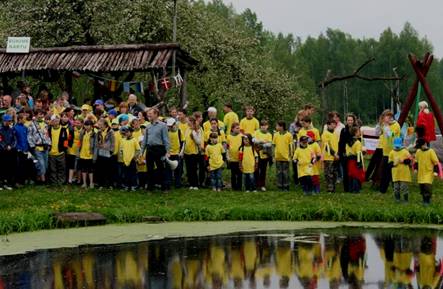
From “Būkime kartu 2010”
The event will take place in the beautiful Viva Green Resort, located 25 km away from Vilnius in Tuščiaulių village, Nemenčinė from 10.00 AM to 4.00 PM on Saturday, May 28th. For a map see http://www.vivagreenresort.lt/kaip_mus_rasti
For more information please contact: Lina Pradkeliene, Phone: +370 5 255 3030, mobile: +370 687 49856 Email: lpradkeliene@deloittece.com
Event program
|
Time |
Activity |
|
10.00-10.15 |
Opening talk |
|
10.15-11.00 |
Face painting |
|
10.20-13.00 |
Police bus, police cars and criminalist laboratory, Fire engine, Army cars, Basketball clinic Team games: castle jump, parachute, elephant feet, cup tower, crazy volley, obstacle course, spider web |
|
11.00-12.30 |
Air balloon lifts |
|
13.00-13.30 |
Police dogs and customs dogs show . Police mate Amsis. |
|
13.30-14.15 |
Lunch |
|
14.15-16.00 |
Police bus, police cars and criminalist laboratory, Fire engine, Army cars, Basketball clinic Team games: castle jump, parachute, elephant feet, cup tower, crazy volley, obstacle course, spider web |
|
16.00 |
Cake, coffee, tea |
|
16.10 |
Closing ceremony |
|
16.20 |
Volunteer of the year Award |
|
16.45 |
End of event |
- Bookmark :
- Digg
- del.icio.us
- Stumbleupon
- Redit it

“This has been the greatest day of my life!”
- Posted by - (0) Comment

This is a comment the organisers of the ‘charity’ event ‘BŪKIME KARTU’ have heard every year from the participating orphans, since it all began in 2002.
- Bookmark :
- Digg
- del.icio.us
- Stumbleupon
- Redit it
Lithuania may extract shale gas in two years
- Posted by - (0) Comment

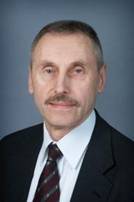
Energy Minister Arvydas Sekmokas quoted American experts as saying that Lithuania could extract not layers, but about 10 billion cubic metres of gas at the value of up to 30 billion U.S. dollars
As soon as year 2012, Lithuania may start works with test drills for shale gas with a private investor. Lithuania has 480 billion cubic metres of shale gas which could produce 100 billion cubic metres of gas, geologists say.
More actions should be taken to determine how much of the gas Lithuania has and what benefit it could bring, Environment Minister Gediminas Kazlauskas said after a meeting with the leadership of the Geological Survey of Lithuania Service, informs LETA/ELTA.
Exploration of shale gas is expensive for the budget and would take long, therefore, it will be aimed to draw investment from foreign companies, the minister said.
Energy Minister Arvydas Sekmokas quoted American experts as saying that Lithuania could extract not layers, but about 10 billion cubic metres of gas at the value of up to 30 billion U.S. dollars. However, according to the minister, these are only theoretical considerations which are not based on geological data. The research project is estimated to cost about 250 million U.S. dollars.
Prime Minister Andrius Kubilius intends to set up a working group on the matter. Lithuania's shale gas resources are expected to meet the country's needs for from 30 to 50 years.
Shale gas resources are possibly situated in south-west Lithuania, extending to the Kaliningrad region and Poland.
- Bookmark :
- Digg
- del.icio.us
- Stumbleupon
- Redit it
What is shale gas?
- Posted by - (1) Comment
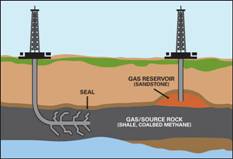
Shale gas is natural gas produced from shale. Shale gas has become an increasingly important source of natural gas in the United States over the past decade, and interest has spread to potential gas shales in Canada, Europe, Asia, and Australia. One analyst expects shale gas to supply as much as half the natural gas production in North America by 2020.[1]
Some analysts expect that shale gas will greatly expand worldwide energy supply.[2] A study by the Baker Institute of Public Policy at Rice University concluded that increased shale gas production in the US and Canada could help prevent Russia and Persian Gulf countries from dictating higher prices for the gas it exports to European countries.[3] The Obama administration believes that increased shale gas development will help reduce greenhouse gas emissions,[4] However, there is growing evidence that the extraction and use of shale gas results in the release of more greenhouse gases than conventional natural gas, and may lead to emissions greater than those of oil or coal.
Read more at:
http://en.wikipedia.org/wiki/Shale_gas
- Bookmark :
- Digg
- del.icio.us
- Stumbleupon
- Redit it
‘Invest Lithuania’ & ‘Enterprise Lithuania’
- Posted by - (0) Comment
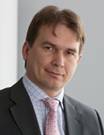
“ENTERPRISE LITHUANIA”
Managing Director
Paulius Lukauskas
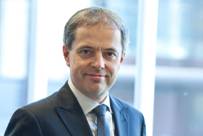
“INVEST LITHUANIA”
Managing Director
Mantas Nocius
15 months ago, the Lithuanian Development Agency (LDA) was restructured into two public rganizations – INVEST LITHUANIA (IL) and ENTERPRISE LITHUANIA (EL).
The restructure was made aiming to increase the efficiency of the two major functions of LDA, i.e. attraction of FDI to Lithuania and promotion of Lithuanian enterprises’ exports.
INVEST LITHUANIA is now responsible for the attraction of FDI projects, provide investment aftercare services as well as will be in charge of developing Lithuania’s economic image worldwide.
ENTERPRISE LITHUANIA is focusing on encouraging Lithuanian producers’ exports and provide support for local small and mid-sized businesses.
The Ministry of Economy of the Republic of Lithuania is the owner of the two new institutions.
……………
VilNews will, from time to time, bring news and information from the two institutions. We will also do our best to help and support them with their important tasks and duties.
- Bookmark :
- Digg
- del.icio.us
- Stumbleupon
- Redit it
- Posted by - (0) Comment
http://www.investlithuania.com/en/

Danes to invest over EUR 11 M into R&D centre

The Danish company Danspin is investing more than EUR 11 million in a spinning factory for carpet yarn in the Lithuanian town of Raseiniai. In addition to creating 200 new jobs at the factory, a centre for research and experimental development will be established. In its turn, the Lithuanian Ministry of Economy has granted almost 1.5 million to this project.
IBM’s new nanotechnology centre will collaborate with Lithuanian scientists

This week IBM and Swiss Federal Institute of Technology of Zurich (ETH Zurich), a premiere European science and engineering university, hosted more than 600 guests from industry, academia and government, to open the Binnig and Rohrer Nanotechnology Center, located on the campus of IBM Research – Zurich (Switzerland). The facility is the centerpiece of a 10-year strategic partnership in nanoscience between IBM and ETH Zurich where scientists will research novel nanoscale structures and devices to advance energy and information technologies.
"fDi Intelligence“: Lithuania – example of FDI attraction

Lithuania is a country that is an example of the successful foreign direct investment (FDI) attraction. This has been announced in the annual review "Global FDI Outlook Report 2011” by the European Bank for Reconstruction and Development prepared in cooperation with the fDi Intelligence of The Financial Times.
- Bookmark :
- Digg
- del.icio.us
- Stumbleupon
- Redit it
- Posted by - (0) Comment
Latest news from:

http://www.enterpriselithuania.com/en/

China's Huawei to set up research laboratory in Vilnius
Lithuania 's mobile operator Omnitel will team up with China's telecommunications giant Huawei Technologies and the University of Vilnius for setting up a joint research laboratory next autumn. The Rector of Vilnius University, Mr. Benediktas Juodka, Omnitel‘s President, Mr. Antanas Zabulis, and the Head of Huawei Technologies in the Baltic countries, Mr. Ye Yong, have signed a cooperation agreement this week in Vilnius.
- Bookmark :
- Digg
- del.icio.us
- Stumbleupon
- Redit it
- Posted by - (1) Comment
This can happen if or
when Greece falls
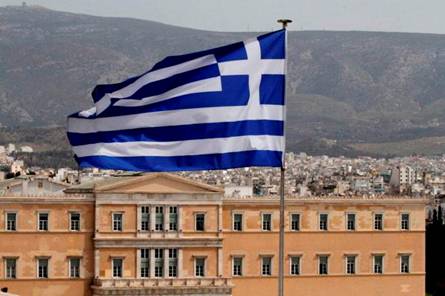
Photo: Dimitri Messinis / SCANPIX / AP
Despite the fact that Greece last year was allocated 110 billion Euros in crisis loan from the EU and the IMF, little has gone in the right direction for the embattled country.
More and more people believe that it is no longer question whether, but when Greece falls. Overall, Greece has total loans of 340 billion Euros.
Several experts expect a collapse in the next few days, writes Swedish Affärsvärlden.
Record Interest
Interest rates for the Greek government debt continues to rise this week, despite the fact that the government met to discuss yet another tightening package. The yield on ten-year government bonds rose to 16.8 percent, the highest level in the Euro zone’s history. The yield on two-year government bonds rose to 25.6 percent.
- There is much bad news out there. We have our doubts about the European cut plans, and its weaker economic data all over. The only thing that has pushed up the stock market is that the earnings season is now ending. It means that people will pull their money away from risk, "said Paul Zemsky at ING Investment Management told Bloomberg.
Refusing to accept the Greek government securities?
Several key players have said that banks will soon not accept Greek government securities as collateral. It will mean that the Greek banking system will be left without funding opportunities.
Economist and columnist Andrew Lilico on his blog made a summary of what he thinks happens when Greece, probably in the next few days, will be unable to meet its payment obligations.
Swedish Affärsvärlden says this is no reading for the timid…
British economist
It is when, not if

Andrew Lilico
Andrew Lilico’s predictions in ‘The Telegraph’:
It is when, not if. Financial markets merely aren’t sure whether it’ll be tomorrow, a month’s time, a year’s time, or two years’ time (it won’t be longer than that). Given that the ECB has played the “final card” it employed to force a bailout upon the Irish – threatening to bankrupt the country’s banking sector – presumably we will now see either another Greek bailout or default within days.
What happens when Greece defaults. Here are a few things:
- Every bank in Greece will instantly go insolvent.
- The Greek government will nationalise every bank in Greece.
- The Greek government will forbid withdrawals from Greek banks.
- To prevent Greek depositors from rioting on the streets, Argentina-2002-style (when the Argentinian president had to flee by helicopter from the roof of the presidential palace to evade a mob of such depositors), the Greek government will declare a curfew, perhaps even general martial law.
- Greece will redenominate all its debts into “New Drachmas” or whatever it calls the new currency (this is a classic ploy of countries defaulting)
- The New Drachma will devalue by some 30-70 per cent (probably around 50 per cent, though perhaps more), effectively defaulting 0n 50 per cent or more of all Greek euro-denominated debts.
- The Irish will, within a few days, walk away from the debts of its banking system.
- The Portuguese government will wait to see whether there is chaos in Greece before deciding whether to default in turn.
- A number of French and German banks will make sufficient losses that they no longer meet regulatory capital adequacy requirements.
- The European Central Bank will become insolvent, given its very high exposure to Greek government debt, and to Greek banking sector and Irish banking sector debt.
- The French and German governments will meet to decide whether (a) to recapitalise the ECB, or (b) to allow the ECB to print money to restore its solvency. (Because the ECB has relatively little foreign currency-denominated exposure, it could in principle print its way out, but this is forbidden by its founding charter. On the other hand, the EU Treaty explicitly, and in terms, forbids the form of bailouts used for Greece, Portugal and Ireland, but a little thing like their being blatantly illegal hasn’t prevented that from happening, so it’s not intrinsically obvious that its being illegal for the ECB to print its way out will prove much of a hurdle.)
- They will recapitalise, and recapitalise their own banks, but declare an end to all bailouts.
- There will be carnage in the market for Spanish banking sector bonds, as bondholders anticipate imposed debt-equity swaps.
- This assumption will prove justified, as the Spaniards choose to over-ride the structure of current bond contracts in the Spanish banking sector, recapitalising a number of banks via debt-equity swaps.
- Bondholders will take the Spanish Banking Sector to the European Court of Human Rights (and probably other courts, also), claiming violations of property rights. These cases won’t be heard for years. By the time they are finally heard, no-one will care.
- Attention will turn to the British banks. Then we shall see…
Andrew Lilico is an Economist with Europe Economics, and a member of the Shadow Monetary Policy Committee. He was formerly the Chief Economist of Policy Exchange.
Sources: http://www.dn.no/
and: http://blogs.telegraph.co.uk/finance/andrewlilico/100010332/what-happens-when-greece-defaults/
- Bookmark :
- Digg
- del.icio.us
- Stumbleupon
- Redit it
A more likely scenario is orderly restructuring
- Posted by - (0) Comment
|
|
|
By Nerijus Maciulis, Chief economist, Swedbank
The scenario described by Andrew Lilico is highly unlikely. Greece, Ireland and Portugal together constitute less than 6% of Euro area GDP – even if all of them restructure their debt at the same time, the effect will most probably be contained.
One of the reasons why ECB and European Commission keep resisting any kind of restructuring is to make sure that there will be no disastrous spill-over effects to financial sector. It is likely that ECB and EC are waiting for the results from bank stress tests before they take any decision on restructuring. But behind the closed doors there probably is a discussion on how to proceed with orderly and contained restructuring.
In case of the first (chaotic and contagious) scenario, the effects would be dramatic, despite Lithuania's weak links with euro area periphery. Increasing uncertainty and flight for safety would cause higher interbank interest rates and government borrowing costs. This would undoubtedly damage credit markets, which have not yet recovered from a previous blow. Lower confidence and higher interest rates would deter investments; consumers would increase savings and reduce spending. After global financial crisis the economy has adapted to different conditions and now households and companies are much less dependent on borrowed capital. However, current economic growth in Lithuania was mainly based on strong exports – a strong dent in foreign demand would slow down our recovery, if not cause another recession.
A more likely scenario is orderly restructuring (probably well before 2013, when European Stability Mechanism is introduced), which will cause some short-term volatility, but not significant damage to the real economy.
|
|
What could be the consequences for Lithuania if Greece falls? "Pretty little – we do not have any major exposure to Greece, not firm foreigh trade pattern. In default case, maybe Greece would become a top destination for vacation, which now is firmly taken by Turkey and Egypt." |


- Bookmark :
- Digg
- del.icio.us
- Stumbleupon
- Redit it
Kaunas Airport grows quickest in Europe!
- Posted by - (0) Comment

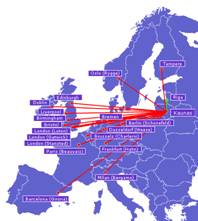
Kaunas Airport has won the Euro Annie Award as the fastest growing European airport in 2010 in the category of passenger volume segment of between 100,000 and 1 million passengers a year.
Over the last year, the numbers of passengers served in Kaunas airport have grown 77% with over 809,000 passengers served.
- Bookmark :
- Digg
- del.icio.us
- Stumbleupon
- Redit it
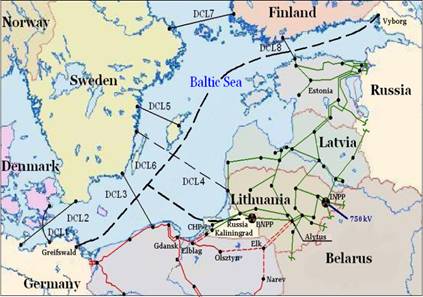
Energy infrastructure in the Baltic areas
By Aage Myhre, Editor-in-Chief
We described in yesterday's VilNews how the big powers France, Germany, Poland, and Russia now seem to be moving into a better climate of cooperation among themselves. We suggested in this context that Lithuania and the other Baltic States once again could become victims of the great powers' actions, and we recommended a much closer cooperation with the Nordic countries (Scandinavia) as the best and safest solution for Lithuania, Latvia and Estonia in the future. See also articles below.
The Baltic countries should, in my opinion, cooperate closely on a common approach to Scandinavia, and they should do their utmost to become independent of gas, oil and electricity from Russia – as soon as possible.
Lithuania already pays 40% more for gas bought from Gazprom than what Germany pays for the same gas, and there is little doubt that Russia is doing everything possible to prevent the Baltic States from developing their own energy sources. Russia has already taken a number of worrisome, significant steps to maintain and enhance its energy monopoly here.
The Baltic States may soon be even more squeezed and caught in a trap if the Nordic countries and the EU do not do more to help in achieving a much higher degree of independence from Russian energy.
The aspect of altered safety and balance in this region could easily be the next step, and we think the Baltic States, the Nordic countries and EU should look very carefully into this situation.
Here are two of the comments we have received to our yesterday's issue of VilNews:
|
|
Lithuania's hostile neighbourhood As an American, witnessing current American- Israeli discussions re: 1967 War boundaries. I would remain cautious about Obama's commitment to the Baltic nations. Kudos to Grybauskaite's remarks in 2010. Grybauskaite should be prepared to reiterate the need to validate past disclosures of US-NATO defense commitments to Lithuania, Latvia, Estonia. Just as there should be no illusions about the hostile neighborhood surrounding Israel, there must be no illusions re: Russian foreign policy affecting the Baltics and Poland. |
|
|
The true export of Russia is wholesale corruption, all-out cynicism
Aage, greetings. While in no way disputing the main thesis of your piece, I would like to supply a quick comment on its opening posit, concerning the "potential new alliance between France, Germany, Poland and Russia." Russia, I am afraid, is the odd man out in that suppositional constellation. It is, at present, a less than benign autocracy, and its economic model can only be described as unmitigated kleptocracy. 60-70% of its hard-currency revenue is due to oil and gas export, it is the world's third-largest international supplier of mineral resources, and so some of the more energy-dependent European countries, willy-nilly, exercise a cravenly "pragmatic" approach in their bilateral relations with Russia's ruling regime, agreeing to turn a blind eye even to some of its more blatant violations of human rights and economic freedoms. This is a country with no free elections, no freedom of press, no opposition figures ever allowed access to television; this is one of the most dangerous places on earth to be an independent journalist: the murder incidences among that category of people is very high indeed.
According to the Transparency International annual state-corruption ratings, Russia currently occupies the 154th spot out of the total of 178 on their: still ahead of Somalia, yet -- just as an example -- lagging behind Nigeria. And that's the true export of Russia, in the grand scheme of things: wholesale corruption, all-out cynicism. It is, in all, a shameful, thoroughly failed place, right now, I'm sad to say.
- Bookmark :
- Digg
- del.icio.us
- Stumbleupon
- Redit it

Dr. Stan Backaitis
Text: Dr. Stan Backaitis
P.E., SAE Fellow, USCBSC Consortium, member of CEEC
Russia can turn the lights out on Lithuania and the other two Baltic states any time it pleases. And they can't turn them back on without Russia’s permission.
Not only does this small, central European nation, as well as its neighbors Latvia and Estonia, not have access to the Russian owned-switch, but, to a large extent, it also depends on energy supplies from Russia to power its electricity generating plants; power that is needed for energy and economic independence. Lithuania as well as the other Baltic countries, being poor in energy resources, are facing a tough future and are seeking solutions.
What would you do?

Ignalina Nuclear Power Plant on the shore of Druksiu lake
Background
Lithuania’s Ignalina Nuclear Power Plant (INPP), a Soviet Union built installation with two RBMK-1500 reactors, was finally shut down on December 31, 2009. Closing down INPP was one of the conditions of Lithuania’s accession to membership in the European Union (EU). Overnight, the shut down changed Lithuania from a country exporting large amounts of electricity to a huge electricity importer, mainly from Russia, which is seen as an unreliable, and driven by political motives, supplier. Unfortunately, most of the remaining Lithuania’s power plants, that produce electricity, are fired by natural gas. Russia is its only accessible supplier.
To escape from dependency on Russia’s energy resources, Lithuania’s government, upon shut-down of the first INPP reactor in 2004, (Fig. 1) has made occasional statements of building a new nuclear power plant (NPP) in partnership with Latvia and Estonia. However, beyond rhetoric, nothing concrete was accomplished for the following four years. Only in June 2009, Andrius Kubilius, upon forming a new Lithuanian government, indicated that a new NPP, serving all three Baltic countries - Latvia, Lithuania, and Estonia, as well as Poland , would be built and put into operation in the 2018-20 timeframe.
In December 2009, the newly formed Lithuania’s Energy ministry (ENMIN) announced a tender offer for the development, design, construction, and management of a new NPP at Visaginas (VNPP). Review of some 20 responses indicated that only five of the proposals were worthy of further consideration. In September 2010, the ENMIN asked the five respondents to propose committing bids. Of the two responding parties in November 2010, only South Korea’s “Korea Electric Power Corporation” (KEPCO) was found to be in full compliance with the terms of the tender offer. However, two weeks later on December 10, 2010, KEPCO announced withdrawing its proposed bid.
The news media in Lithuania and the other Baltic countries are busy speculating about reasons for failing to home-in on an investor for the new NPP. The stories range from Russia’s pressure on all bidders to withdraw from the bidding process and its announcements to build two separate NPPs on the eastern and southwestern borders of Lithuania to KEPCO’s withdrawal because of possible armed conflict between North and South Koreas.
This mini study recognizes several factors that appear to have been predominant causes for the failure of the tender offer. They are: political, economic, financial, and indecisions partly due to Russia’s controlling influence on the existing electricity system and partly due to insufficient appreciation by Lithuania’s politicians and energy planners of how large international corporations and financial institutions operate as well as interact with their respective countries’ governments in such large financial commitments.
Political factors
Although Lithuania and the other two Baltic states have attained political independence, they still belong by virtue of electricity and gas imports to Russia's sphere of influence (Fig. 2.). Apparently, Russia has no intention to strong-arm the Baltic states over energy issues, since the sale of energy to them provides Russia substantially better margin of profits than sales, for example, to western Europe. Being the sole supplier of energy resources, Russia has a tremendous amount of leverage over the three countries in terms of their price and delivery. To break away from this dependence, Lithuania and its partners Latvia and Estonia announced their intention in 2004 to build a new nuclear plant that would provide them the needed electric power and thus free them of imports from Russia. However, for nearly four years, while the second reactor of INPP was still operating, Lithuania showed little initiative in firming up the plans to build the new NPP.

Russian-controlled energy infrastructure in the Baltic areas
While Russia until 2008 had no apparent intentions to build a new NPP in the Baltic region, realizing that Lithuania’s plans for a new NPP are in disarray, Moscow took the bull by the horns and announced in early 2009 its decision to construct a two reactor NPP in the Kaliningrad region – the Baltiiskaya nuclear power plant (BNPP). Inasmuch as the first BNPP reactor is aimed to begin operations in 2016 and the second one in 2020, the need for power from a significantly more expensive to fund reactor in Lithuania was put into question. By deciding to build the BNPP, Russia gained a strategic advantage. It reinforced its position as an overpowering electricity supplier to the Baltic region and eventually to Western Europe. This situation has become even more complex by Belarus announcement in 2009 of its intention to build a new NPP in Ostroviec in the Grodno region, in close proximity to the Lithuanian border. Russia’s Putin and Belarus’s Lukashenka (Fig. 3) signed a financial agreement on March 16, 2011, securing Russia’s financial backing in the amount of 9 bln. USD and technical assistance for the Ostroviec project. In return, Russia will own 50 percent share in the future NPP and is likely to offer its share of energy output to the European market.

Putin and Lukashenka agreeing on financing the Astraviec NPP
It appears that Lithuania’s desire to free itself from dependence on Russia’s energy supplies, by building the VNPP, might be a very desirable and valiant goal, but not very realistic in the current energy politics environment. Of course, this might change if the EU agreed to provide substantial funds for this project. However, there are no current signs for this kind of support apart from some vague statements by EU commissioners about the importance of energy independence.
Upon closure of the first INPP reactor in 2004, several Lithuania’s government officials talked on a few occasions, of the need to build a new NPP in partnership with Latvia and Estonia. In 2007 Lithuania invited Poland to join as an additional partner. However, even to date the partnership statements about the new NPP remain more rhetoric than formal commitments and contractual obligations. Normally, such massive projects require published consensus by all parties defining the need and scope of the undertaking, identifying principal elements, time schedules, financial contributions, sharing work and responsibilities by each participant, etc. Of further concern is apparent lack of commitment by both Latvia and Estonia to sever their ties from Russia's NorthWest (BRELL) power grid, which is essential for the Baltic states to achieve complete electrical independence.
The only accomplishments by Lithuania’s government during the first four years, from closure of the first INPP reactor in 2004, was to create in 2008 a semipublic utility corporation - the LEO.LT and the VNPP project office, with the intention of giving the NPP project some momentum. However, since then, in nearly two years, the rhetoric continued without any visible results.
The ENMIN, upon its establishment by the Kubilius government, dissolved the LEO.LT in September 2010 for its ineffectiveness. Subsequently, the ENMIN issued a tender offer for building the VNPP. However, the ENMIN failed to include its partners in the preparation of the tender offer and thereafter, in the review of the responses. Such exclusion of partners, significantly reduced the integrity and credibility of the project and its importance in the eyes of the bidders, particularly that Latvia, Estonia and Poland are supposed to be financial participants and customers for electricity. To make matters worse, the partners by now were also openly discussing the possibility of going alone with the acquisition of nuclear power plants for own electricity needs.
Economic factors
Shortly after closing INPP’s first reactor in 2004, Lithuania had a relatively easy opportunity to resolve its energy problems by building a new NPP. Its economy was strong and growing, raising the needed finances was relatively easy, and its neighbors, Latvia and Estonia, were very interested in participating in the project as receivers of their share of electricity. Construction of NPPs in the world was until 2007 in relative stagnation, and numerous NPP construction companies were eager to compete for new construction jobs. However, in the latter part of 2007 and in later years, the emerging economic crisis in the Western World and escalating energy demands have begun to radically increase the number of NPP constructions, particularly in China and India. It is to be noted that over 60 new NPP constructions have been started in the past several years throughout the world and many more are planned. Such rapid escalation of construction activity. coupled with less than a dozen companies capable of building NPPs, resulted in large increases of NPP construction costs. Lead times needed to manufacture major reactor and power plant components are now well over five years.
Regrettably, Lithuania's delay for almost four years to come to a decision undermined a relatively easy opportunity to become a nuclear based power producer again. Current environment for the construction of a new NPP is particularly unfavorable to small, highly indebted countries, compared to those having reasonably large initial down payments including capabilities of guaranteeing repayment of loans. Accordingly, it is not surprising to see low level of interest by large investors to participate in the project, because VNPP’s competitive viability became highly questionable in view of Russia’s intention to construct competing NPPs in the Kaliningrad enclave and in Belorussia.
Russia’s skills to use various opportunities to its advantage should be considered normal commercial practice but with added political overtones. By being a major and an aggressive player in the nuclear field, Russia is capable of offering a variety of economic and financial enticements to attract business. For example, a late news item in the energy news media indicates that Russia offered to provide a long term low interest loan to the Czech Republic if it was awarded the contract to build a two reactor power plant. As a sweetener, the Czech industry would be invited to build a number of large NPP components not only for the Czech plant, but also for other NPPs that Russia is constructing in different parts of the world.
Russia, being keenly aware of the attempts of the Baltic countries to break away from their electric energy dependence, saw upon closure of the INPP, a considerable power shortage developing in the region. It also foresaw, that Lithuania, by delaying its resolve to replace the INPP with a new NPP, would allow Russia to fill the energy void with a two reactor power plant in the Kaliningrad region with expressed aim to sell its output in the Baltic and the Western European markets.
Russia knew that if its new plant NPP was built and put into operation ahead of the VNPP, it would have a significant price advantage over the price of electricity that any future Lithuanian NPP could offer. Such information would be a considerable deterrent to investments in any future NPP venture in Lithuania. It reasoned that since BNPP would be built with non-returnable state funds, Lithuania’s planned NPP, constructed with borrowed private funds, would have to impose hefty surcharges to consumers of its electricity to pay off the debts. Accordingly, VNPP would have great difficulty competing based on the price of electricity that did not carry such charges. Understandably, knowledge of such financial burdens would cast in doubt the financial viability of the VAE in the eyes of any potential investor.
It can be agreed with ENMIN claims that the direct expense to produce electricity at VNPP would be relatively low. However, it needs to be pointed out that the cost to the consumer would be significantly higher upon inclusion of expense to maintain reserve power plants at capacities similar to that of the new NPP, outlays associated with treatment and storage of nuclear waste, profits to the foreign plant operator, payments covering the return on borrowed capital and corresponding interest, and very extensive interior and exterior safety provisions. Published comparisons of average costs for labor and nuclear fuels to produce 1 kWh of electricity at a U.S. NPP are around 2.2 cents USD, and about seven Lithuanian (lt) cents (about 2.7 cents USD) at INPP. The addition of all other expenses, such as operating and maintenance costs at the NPP, plant and equipment amortization, and transmission and distribution of electricity expenses result in an average delivery price between 8 and 9 cents (USD) for 1kWh to the U.S. consumer, while comparable cost of 1 kWh electricity produced by INPP was approx 30 cents (lt) (12 cents USD) to the Lithuanian consumer. After closure of INPP, the price of 1kWh of electricity rose to 45 cents (lt).
Future costs to produce a kilowatt hour of electricity at the future VNPP are unknown. Lithuania’s ENMIN estimates indicate 34 cents (lt). Recently, Turkey signed a nuclear power plant construction contract with Russia. It guaranteed Russia for building and operating the NPP, a purchase price of 35 cents (lt) per kWh for some 15 years. Inasmuch as Lithuania proposed in the tender offer similar funding and operating conditions as those between Turkey and Russia, it would be reasonable to assume that 35 cents (lt) per kWh would be the minimum price of electricity sold by the operator of the future VNPP facility Accordingly, it might be difficult to convince any buyer at the BaltPool or NordPool exchanges to purchase electricity at such a price if Baltiiskaya NPP can offer the same for 10 cents (lt) less or even lower, since it would not be burdened with the return on capital and interest payments. The only way VNPP could compete on price would be by the government subsidizing the price difference.
The price of electricity to the consumer is also dependent on amortization of the plant and the power grid, losses within the transmission and distribution systems, and theft of power from the network. Unfortunately, repayments of interest on the loan will need to start before the first watt of electricity is generated. Inasmuch as Lithuania is already highly indebted, any large loans for the NPP would fall in the high risk category, ranging from 10 to 12 percent interest rates. Assuming that the construction of the VAE would require some 18 to 20 bln. litas (7-8 bln. USD), expected interest payments would keep escalating as the construction is progressing, and would amount to approx. 2 bln. litas (800 mln. USD) annually just before the plant produces the first watt of electricity. Inasmuch as the government does not have any funds to make such payments, this money would have to be collected as additional fees to the consumers of electricity. Such payments would be expected to add approx. 15 to 20 cents (lt) to the normal price of electricity that is either imported or generated by conventional power plants. It would be extremely difficult for anyone to justify a price escalation of this magnitude when the same electricity can be imported or bought from BNPP for substantially less.
While the current Lithuanian government is attempting to remedy this unfortunate course of events, regrettably, the four year delay and the arrival on the scene of other large scale power generating capabilities, might have killed or greatly impeded the opportunity to build a competitive NPP. As a result, Lithuania’s people are now burdened by very high electricity prices, and will have to face not only their further escalation, but also uncertainty in continuous supply of electricity and natural gas in future years.
Financing Considerations
Lithuania’s politicians regarded the statements by Russian and Belarus leaders of intention to construct the BNPP and the Ostrovets NPPs, as bluffs, even as late as mid 2010. Moscow was quite clear that the BNPP would generate electricity mainly for export to Western European and the Baltic countries and not for internal needs. This was confirmed in March 2011 agreement between BNPP and Lietuvos InterRAO to import to Lithuania 1000 MW of electric power. By deciding to build a new NPP in the Kaliningrad region, Russia assured that Lithuania’s new NPP, if it was to be built, could not compete on price of electricity generated by the BNPP. As a result, once Russia’s plans for the BNPP were made public, it became extremely difficult for Lithuania to attract investors to finance the VAE project, unless the EU would guarantee the loans. Furthermore, most recently Russia invited both Poland and Latvia to participate as partners in the construction of BNPP in an attempt to wean them away from participating in Lithuania’s NPP project. In addition, Poland was offered not only low electricity prices by the BNPP, but also the opportunity to earn money for the transmission of electricity to Western Europe through Poland's existing power transmission network.
Lithuania’s government created in 2008 a semi-public LEO.LT energy corporation for the purpose of taking care of Lithuania’s energy needs, and by working together with its Latvian and Estonian partners to raise sufficient finances for the construction of a new nuclear power plant at Visaginas. However, upon establishment of LEO.LT, it became apparent that its two shareholders – the government and a private “NDX Energija” corporation – had totally different interests. The government interest was to ensure energy security through construction of a nuclear power plant, while the private investor’s interest was to maximize profits primarily by importing electricity. Such diverse interests were not inducive to good dialogue either in determining on what needs to be done or to conduct constructive discussions with their other partners. To make matters worse, while NDX Energija was to lead and guide the technical effort to build the NPP, its representatives acknowledged that they did not have the needed technical expertise either to plan and organize the building of a nuclear power plant or to raise the needed finances.
Large-scale investors in the western world showed over the years very little interest in Lithuania's energy problems and particularly, its nuclear initiatives. Significant international investors view Lithuania’s and the Baltic states’ commercial energy viability as highly risky, unattractive due to relatively isolated geographic location, small internal and difficult access to large markets, and poor in natural resources. Discussions with a vice president of one of the largest NPP construction company and with several operators of nuclear power plants revealed that they see “the Baltic countries as too small of a market in the region, bordered by a powerful and unpredictable neighbor who is also a significant size low cost energy producer and is ready to undermine any competition using price and other economic as well as political measures. Lithuania, even partnering with its neighbors, could not assure a return of investment of nearly 10 bln. USD, unless the EU would guarantee the needed loans. Considering that the EU had most recently to rescue a number of euro zone member countries from bankruptcy, it would be extremely difficult to find banks willing and capable of providing high risk loans to additional EU countries that are drowning in debts and for projects that might not be financially viable.
Following the publication of a tender offer for the construction of VNPP, Lithuania, as far it is known, has still failed to engage its potential partners in constructive discussions and developing obligatory agreements on the scope and extent of the new NPP, including their projected power needs and their financial contributions. Without such documentary evidence, it would be very difficult to attract serious investors. In spite of these shortcomings, the press reported several ENMIN hints of some 20 companies responding to the tender offer of which only five were found worthy of further consideration. Upon request of the five to submit binding bids, only two responded. Of the two, only KEPCO was found to be fully responsive to all technical specifications, building deadlines and raising the needed financial resources. At this point, the ENMIN vice minister Romas Svedas noted, that Lithuania was ready to inform its regional partners in Latvia, Estonia and Poland about the agreement with KEPCO. However, after two weeks of submitting the final bid, KEPCO notified the ENMIN on December 16, 2010, of its withdrawal from the project.
The withdrawal from the contest of the last candidate, forced the ENMIN to consider a new phase of negotiations with parties that might be interested in the NPP project based on a different set of conditions. With no time to waste, the ENMIN announced that direct negotiations with potential investors would start in January 2010 with a decision to be made as early as June 2010. Obviously, the new conditions would have to be considerably more favorable to attract potential investors. Knowing of the failure of the tender offer, all potential bidders will be at considerable advantage to extract for them much more favorable financial rewards. Any such agreement would be disadvantageous to Lithuania and its partners. At this point, with the government’s prestige on the line, the government either would have to agree with the best offer it receives, or find some excuse to gracefully withdraw its offer.
Indecisions: a detriment to the future
Lithuania, upon attaining independence, has inherited a number of large industrial enterprises such as INPP, electric power and gas facilities, an oil refinery, a large fishing fleet, sizeable electronics industry, etc. Unfortunately, a number of them were mismanaged and not developed to their full potential. Numerous others were either privatized, sold as junk property or went into bankruptcy and disappeared as functioning entities. Similarly, looking at the government delays to plan and take timely action in constructing the new NPP, keeping the public and the partner countries at a distance, continuously revamping the organization and management of the project, suggests that these actions were not in the best interest of the country and its people. It appears that the opportunity was shattered by competing interests between political parties, personal ambitions, disregard of partners' interests, and manipulation by powerful and resourceful interests of the neighboring country to gain strategic advantage. Apart from commitment to the EU to close the INPP, it is not clear what rationale guided the planning or the absence of planning of Lithuania's energy future upon closure of the INPP first reactor in 2004. It can be inferred from some newspaper reports of public officials’ comments that one line of thought was that Lithuania has a reliable natural gas and fuel supplier as well as sufficient power generating capacity of its own to produce adequate amounts of electricity to satisfy all Lithuania’s needs well into mid 2030-s. With gas and oil available in abundance from Russia, there is no urgency to build a replacement nuclear plant for the INPP. Another line of thought was that, shortly before the final closure of the INPP, EU’s authorities in Brussels would be approached with a story that the closure of the second nuclear reactor would create for Lithuania and its population very serious economic hardships. Since it would take nearly a decade to build a new nuclear plant, the EU would be asked to allow the INPP to continue the production of electricity several more years beyond 2010. Unfortunately, Lithuania’s people, who are paying the electricity bills, were never asked of what might be the best approach and/or solution in their judgment.
This line of wishful thinking or self deception prevailed for nearly four years until the arrival of the Kubilius government in late 2008. Although the preceding Kirkilas government announced as early as 2006 informal agreements with Latvia and Estonia to build a new nuclear power plant in Lithuania, surprisingly, the "National Energy Strategy 2007" (NES 2007) document covered the new NPP topic by only one sentence. It stated "that upon closure of the Ignalina NPP and until construction of a new nuclear power plant, the primary source for electricity will be “Lietuvos Elektrine” (Lithuania’s primary power plant)”. In contrast, the same document described in considerable length the development of Lithuania's energy in future years by diversification of energy sources in line with EU directives, such as competitiveness in energy generation, expanded use of natural gas, energy security, and preparation of proposals for a common EU energy policy dialogue with Russia. Of significance is also a discussion of expanded electricity generation using combined cycle gas turbines at “Lietuvos Elektrine”, whose operation is based on imports of natural gas from Russia.
It is not clear why the Government of Lithuania in spring 2007 did not consult its Latvian and Estonian partners by unilaterally including Poland into the partnership. This greatly alarmed both Latvians and Estonians. As a result, in energy conferences in Tallinn and later in Washington, D.C., both in 2007, Latvian and Estonian speakers were publically discussing consideration of smaller nuclear power plants for their future power needs. Latvia did not hide its frustration with Lithuania’s indecision and fogginess regarding the plans to build a new nuclear power plant. "Of course, we are now, as before, very skeptical about this project. From time to time, us, the Estonians, and the Poles wrote letters to Lithuania’s government, delivered appropriate demarches, hoping to somehow move the Lithuanians into action”, said Artis Camphors the Latvian Minister of Economic Affairs.
After Andrius Kubilius takeover of the government in late 2008 and upon establishment of the ENMIN, an extensive review was initiated to determine Lithuania’s current state of affairs of the energy sector and its future needs with particular concern on steps to be taken to attain energy independence. The ENMIN published on October 6, 2010 a new document the “National Energy Strategy 2010” (NES 2010). A couple months later, the ENMIN dissolved the LEO.LT and separated Lithuania’s electrical grid into East and West sectors, which just a year ago were merged into one conglomerate. However, in both cases, the government employed similar bulldozer tactics as used by the previous government. It did not consult either the public or private sector organizations including industrial and commercial users on how the future might be best served and the desired objectives achieved.
Upon KEPCO’s withdrawal from further discussions, the next round of negotiations with potential contractors might be very difficult and could involve significant additional expenses for NPP construction that might be more than Lithuania and its partners could bear. For this reason, it would be prudent for the ENMIN to lay out to the nation the true status of the nation’s energy, realistic projections of future needs, and an array of alternative measures that could be taken to attain sufficient generating capacity and the best means to achieve energy independence. In follow-on nation-wide hearings, rather than self-serving statistical poles, Lithuania’s taxpayers and energy users should be given the responsibility to decide if they would choose to remain a nuclear country and whether other alternatives should be pursued. Lithuania is in dire need of such public discussions during which the public should have the opportunity to listen not only to government declarations of a brighter vision of the future, which is actually very vague, but also to hear independent energy experts’ views and the positions of different user categories. Such discussions would not only bring for consideration additional relevant data and studies, but also facilitate the search for better solutions.
Recent nuclear plant disasters in Japan, necessitate an in -depth safety review of nuclear technologies for generation of electric power and their internal and external safety provisions. It is essential to reexamine the need for and safety of nuclear power plants not only for use in Lithuania, but also the two NPPs that Russia intends to build in the immediate proximity of Lithuania’s major population centers and at locations with marginal water resources. The of water sufficiency resources to fight NPP fires, potential meltdowns and radiation effects must be considered for all extreme climate conditions and other types destructive events. Lithuania needs to request at the highest international levels for an assessment by an independent international team of all safety provisions that Baltiiskaya and Ostroviec NPPs (Fig. 4) will be equipped with. Self certifications by the building and operating countries of the NPPs are just not sufficient when the lives of the entire nation and its habitat are involved. Furthermore, inasmuch as a nuclear disaster can have devastating effects on neighboring countries, the reactor owning country should establish financial insurance deposits at the World Bank or a similar institution to cover losses, should they occur.

Future Russian Nuclear plants on both sides of Lithuania
In the writer’s view, which is also supported by independent academic studies, the government in general and ENMIN in particular is over relying on studies produced by foreign consultants while disregarding analysis and recommendations of qualified experts in the country. It is known, that in many instances external consultants tend to produce studies supporting the purchaser’s desired outcome, knowing that a satisfied customer, would give them a much better chance to win subsequent studies. According to the ENMIN, the consultant projected a bright future and very profitable financial outcome for Lithuania if the new NPP was to be built. It noted that after a dozen years, the new NPP would be like a “hen laying golden eggs”. Unsaid was that Lithuania would have to wait for the first golden egg at least thirty years and hoping that the hen does not die in the meantime because of either old age or in the face of advancement of new technologies and other developments. Indeed, when all costs are taken into account, such as repayment of the NPP construction loan and interest, holding in ready reserve conventional power plant(s), storage of spent nuclear fuel, internal and external safety provisions, etc, very different conclusions could be reached. Furthermore. it is known, but not well publicized, that none of the world's existing nuclear power plants can survive without financial support of their respective governments. While large-scale nuclear power plant might be the most logical and cost-effective solution for energy resources poor Lithuania to assure energy independence, such comparative studies have not been made available to the public. It is the author’s professional and considered opinion that Lithuania should evaluate and make public all available options for its citizens to decide the alternatives they would be willing to support rather than being bulldozed into a financial quagmire by a bureaucratic decree.
Concluding remarks
Although it is difficult to pin down precisely the causes for creating the current energy dilemma, one can observe that Lithuania's foreign and domestic policy imbalances have greatly contributed to the country’s self-inflicted isolation and energy crisis. It creates the impression that diatribe on these issues by political parties, failure to recognize the critical energy situation by the Parliament, quest for quick personal gains, lack of attention to potential partners’ energy concerns, insufficient attention to international political and energy interests and associated manipulations, and failure to conclude with their partners binding agreements, pushed Lithuania's energy independence in the foreseeable future into serious doubt.
Energy availability in the future requires long term (30-50 years) strategic planning that is independent and isolated from interference by political parties or special interest groups who are primarily interested in short term gains. Currently proposed solutions by ENMIN appear to be mostly tactical decisions to initiate activities that would address short term problems, but not to resolve complex and long term issues. It is of utmost importance for vitally important long term energy problems to engage all parties interested in finding solutions in order to assure the object, on which consensus has been reached, the best possible environment to survive, as Russia is doing for the Kaliningrad and Belarusian NPPs.
For success, the decision maker needs to have a thorough and in depth understanding of all technical issues, because knowledge of just business or financial management is not sufficient to address all of the complexities and intricacies of the energy systems. Diminution of views of energy experts in important energy decisions and in many instances their replacement during reorganizations by individuals based on political party or family connections, threatens to reduce the competence needed to manage technical issues at many power generating and distribution facilities. Furthermore, management and distribution of financial resources without thorough appreciation of their effects either on the system or the various subsystems, exposes their functioning to severe disruptions and possible total collapse.
Shortly after closing the INPP first reactor, Lithuania had a relatively easy opportunity to resolve the energy problem in its favor. However, the delay for nearly four years to come to a decision helped Russia to turn around an unfavorable energy situation to its advantage. Current attempts to help remedy this unfortunate course of events are commendable, but might be too late, and most likely will lead to serious long term energy and economic consequences. Lithuania’s people are now burdened by very high electricity prices and will have to face not only their further escalation, but also uncertainty in continuous supply of electricity and natural gas unless alternative energy measures are vigorously pursued and implemented. If the nuclear option is to be selected, consensus by the people is essential, and Latvian and Estonian participation need to be assured by documented agreements. Assistance of EU would be of great value in persuading all of the neighbors that the new NPP would be a win-win situation for all in the long run. To overcome the small market dilemma of the Baltic countries and to maximize their power generation efficiency, it would be of substantial benefit to create a joint Baltic Energy Authority, similar to the Tennessee Valley Authority. Its responsibility, under an oversight committee of the tri-country governments, would be to negotiate the purchase and import of gas and electricity, provide advice on most efficient power generating methods and equipment for future needs, raise the needed financing, and to facilitate planning and organizing the construction of power plants at the regional level, including coordination of their operations and power distribution. Such joint activity would motivate the EU to support the quest of the Baltic States for energy security and reduce, if not nullify, their current vulnerability to Russia’s energy political power plays and price manipulations.
- Bookmark :
- Digg
- del.icio.us
- Stumbleupon
- Redit it

OPINIONS
Have your say. Send to:
editor@VilNews.com
Ph. D., Chicago
A wave of unity sweeps the international Lithuanian community on March 11th every year as Lithuanians celebrated the anniversary of the Lithuanian Parliament's declaration of independence from the Soviet Union in 1990. However, the sense of national unity engendered by the celebration could be short-lived.
Human beings have a strong tendency to overgeneralize and succumb to stereotypical us-them distinctions that can shatter even the strongest bonds. We need only search the internet to find examples of divisive thinking at work:
- "Those who fled Lithuania during World II were cowards -- and now they come back, flaunt their wealth, and tell us 'true Lithuanians' how to live."
- "Lithuanians who work abroad have abandoned their homeland and should be deprived of their Lithuanian citizenship."


In Lithuania Christmas Eve is a family event and the New Year's Eve a great party with friends!
Lithuanian say "Kaip sutiksi naujus metus, taip juos ir praleisi" (the way you'll meet the new year is the way you will spend it). So everyone is trying to spend New Year's Eve with friend and have as much fun as possible.
Lithuanian New Year's traditions are very similar to those in other countries, and actually were similar since many years ago. Also, the traditional Lithuanian New Years Eve party was very similar to other big celebrations throughout the year.
The New Year's Eve table is quite similar to the Christmas Eve table, but without straws under the tablecloth, and now including meat dishes. A tradition that definitely hasn't changes is that everybody is trying not to fell asleep before midnight. It was said that if you oversleep the midnight point you will be lazy all the upcoming year. People were also trying to get up early on the first day of the new year, because waking up late also meant a very lazy and unfortunate year.
During the New Year celebration people were dancing, singing, playing games and doing magic to guess the future. People didn't drink much of alcohol, especially was that the case for women.
Here are some advices from elders:
- During the New Year, be very nice and listen to relatives - what you are during New Year Eve, you will be throughout the year.
- During to the New Year Eve, try not to fall, because if this happens, next year you will be unhappy.
- If in the start of the New Year, the first news are good - then the year will be successful. If not - the year will be problematic.
* If New Year's night is cold and starry - look forward to a good summer!
* If the during New Year Eve trees are covered with frost - then it will be a good year. If it is wet weather on New Year's Eve, one can expect a year where many will die and dangerous epidemics occur.
* If the first day of the new year is snowy - the upcoming year will see many young people die. If the night is snowy - mostly old people will die.
* If the New Year time is cold - then Easter will be warm.
* If during New Year there are a lot of birds in your homestead - then all year around there will be many guests and the year will be fun.
Christmas greetings
from Vilnius
and epic battle for the
future
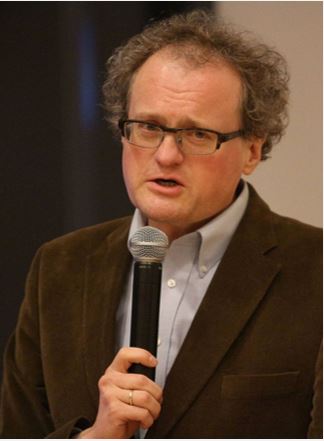
Philosopher, political theorist, historian of
ideas, social analyst, and political
commentator
Ukraine was and continues to be perceived by the EU political class as a sort of grey zone with its immense potential and possibilities for the future, yet deeply embedded and trapped in No Man's Land with all of its troubled past, post-Soviet traumas, ambiguities, insecurities, corruption, social divisions, and despair. Why worry for what has yet to emerge as a new actor of world history in terms of nation-building, European identity, and deeper commitments to transparency and free market economy?
Right? Wrong. No matter how troubled Ukraine's economic and political reality could be, the country has already passed the point of no return. Even if Vladimir Putin retains his leverage of power to blackmail Ukraine and the West in terms of Ukraine's zero chances to accede to NATO due to the problems of territorial integrity, occupation and annexation of Crimea, and mayhem or a frozen conflict in the Donbas region, Ukraine will never return to Russia's zone of influence. It could be deprived of the chances to join NATO or the EU in the coming years or decades, yet there are no forces on earth to make present Ukraine part of the Eurasia project fostered by Putin.
want to learn about the
new, scary propaganda
war between Russia,
The West and the
Baltic States!
believe their government
is corrupt
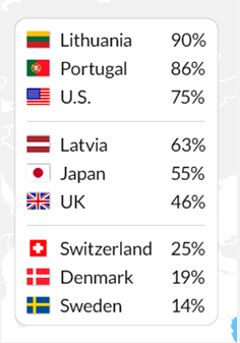
students say no to
bribes for doctors
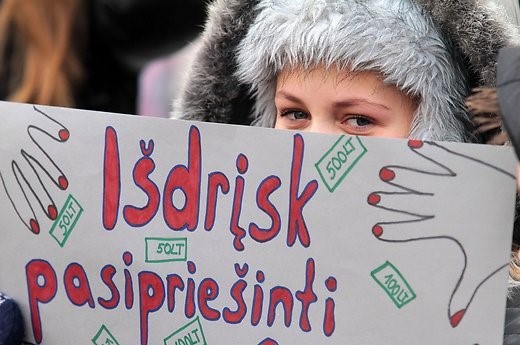
During Soviet times, government was administered for the people in control, not for the local population, court decisions were decreed, they were not the administration of justice, and academia was the domain of ideologues. 25 years of freedom and openness should have put those bad experiences behind Lithuania, but that is not so.
Today, it is a matter of expectation that court pronouncements will be governed by ideological dictates. Few, if any Lithuanians expect real justice to be effected. For foreign companies, doing business in Lithuania is almost impossible in a situation where business people do not expect rule of law, so, surely Government would be a refuge of competence?
Lithuanian Government has not emerged from Soviet styles. In an attempt to devolve power, Lithuania has created a myriad of fiefdoms of power, each speaking in the name of the Government, each its own centralized power base of ideology.


Chepstow, Wales
Doesn't that sound suspiciously like Lithuania? Ah, but I didn't mention the mountains of Snowdonia, which would give the game away.
I'm talking about Wales, that part of the UK which Lithuanians used to call "Valija", but later named "Velsas" (why?). Wales, the nation which has welcomed two Lithuanian heads of state to its shores - firstly Professor Vytautas Landsbergis, who has paid several visits and, more recently, President Dalia Grybauskaitė who attended the 2014 NATO summit which was held in Newport, South Wales.
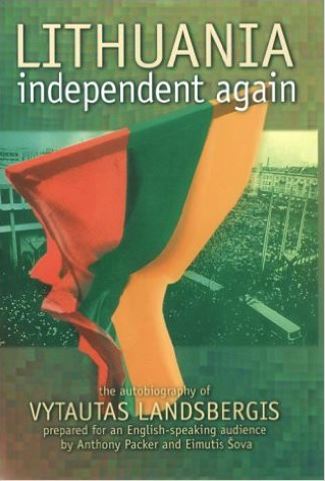
ENGLISH VERSION OF THE
AUTOBIOGRAPHY OF VYTAUTAS LANDSBERGIS.

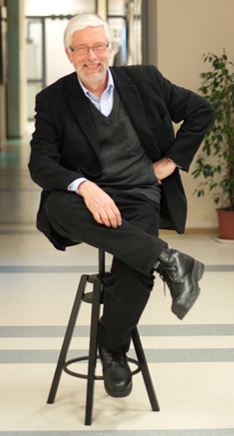
Although Lithuanian activities have thinned over the decades as that postwar generation died out, the Lithuanian Martyrs' parish hall is crowded with many, many hundreds of visitors who come to the Lithuanian cemetery for All Souls' Day. Similarly, the Franciscan parish has standing room only for Christmas Eve mass.
Although I am firmly embedded in the literary culture of Canada, my themes are usually Lithuanian, and I'll be in Kaunas and Vilnius in mid-November 2015 to give talks about the Lithuanian translations of my novels and short stories, which I write in English.
If you have the Lithuanian language, come by to one of the talks listed in the links below. And if you don't, you can read more about my work at
www.anatanassileika.com
http://www.vdu.lt/lt/rasytojas-antanas-sileika-pristatys-savo-kuryba/ https://leu.lt/lt/lf/lf_naujienos/kvieciame-i-rasytojo-59hc.html
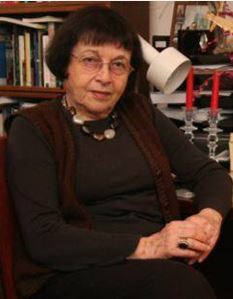
"My love and best wishes to all. As long as VilNews exists, there is hope for the future,"" she writes.
Irena Veisaite means very much for our publication, and we do hereby thank her for the support and wise commitment she always shows.
You can read our interview with her
Facing a new reality
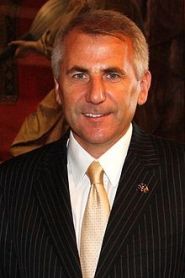
Dear readers of VilNews,
For a number of years, the EU and Russia had assumed the existence of a strategic partnership, based on the convergence of values, economic integration and increasingly open markets and a modernisation agenda for society.
Our agenda was positive and ambitious. We looked at Russia as a country ready to converge with "European values", a country likely to embrace both the basic principles of democratic government and a liberal concept of the world order. It was believed this would bring our relations to a new level, covering the whole spectrum of the EU's strategic relationship with Russia.
The likelihood of Putin
invading Lithuania
.jpg "lithuania today")
Founding Director at Summer Literary Seminars
Are all Lithuanian energy
problems now resolved?
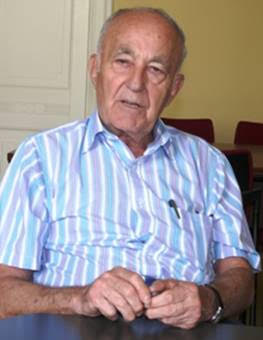
Lithuania as a country does not have significant energy resources. Energy consuming infrastructure after WWII was small and totally supported by energy imports from Russia.
First nuclear reactor begins power generation at Ignalina in 1983, the second reactor in 1987. Iganlina generates enough electricity to cover Lithuania's needs and about 50%.for export. As, prerequisite for membership in EU, Ignalina ceases all nuclear power generation in 2009
The Klaipėda Sea terminal begins Russia's oil export operations in 1959 and imports in 1994.
Mazeikiu Nafta (current ORLEAN Lietuva) begins operation of oil refinery in 1980.
Have Lithuanian ties across
the Baltic Sea become
stronger in recent years?
The two decades that have passed since regaining Lithuania's independence can be described as a "building boom". From the wreckage of a captive Soviet republic, a generation of Lithuanians have built a modern European state, and are now helping construct a Nordic-Baltic community replete with institutions intended to promote political coordination and foster a trans-Baltic regional identity. Indeed, a "Nordic-Baltic community" - I will explain later in my text the meaning of this catch-phrase.
Since the restoration of Lithuania's independence 25 years ago, we have continuously felt a strong support from Nordic countries. Nordics in particular were among the countries supporting Lithuania's and Baltic States' striving towards independence. Take example of Iceland, country which recognized Lithuania in February of 1991, well in advance of other countries. Yet another example - Swedish Ambassador was the first ambassador accredited to Lithuania in 1991. The other countries followed suit. When we restored our statehood, Nordic Countries became champions in promoting Baltic integration into Euro-Atlantic institutions. To large degree thanks Nordic Countries, massive transformations occurred in Lithuania since then, Lithuania became fully-fledged member of the EU and NATO, and we joined the Eurozone on 1 January 2015.
Have you heard about the
South African "Pencil Test"?
But that is exactly what happened to me when I came back from South Africa. I will tell you how.
VilNews e-magazine is published in Vilnius, Lithuania. Editor-in-Chief: Mr. Aage Myhre. Inquires to the editors: editor@VilNews.com.
Code of Ethics: See Section 2 – about VilNews. VilNews is not responsible for content on external links/web pages.
HOW TO ADVERTISE IN VILNEWS.
All content is copyrighted © 2011. UAB ‘VilNews’.