
THE VOICE OF INTERNATIONAL LITHUANIA

|
VilNews has its own Google archive! Type a word in the above search box to find any article.
You can also follow us on Facebook. We have two different pages. Click to open and join.
 Click on the buttons to open and read each of VilNews' 18 sub-sections Click on the buttons to open and read each of VilNews' 18 sub-sections  |

|


Archive for 2011
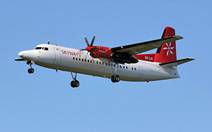
As the summer flight season is gaining momentum, Vilnius Airport can today welcome the Swedish airline Skyways.
From 7 June Skyways will operate flights to two European capitals – Stockholm and Berlin.
Swedish flights from Vilnius to Stockholm Arlanda Airport are scheduled every business day. Time of departure from Vilnius – 6:50; time of arrival to Vilnius – 10:10.
Skyways will also open flights from Vilnius to Berlin Tegel Airport – on a daily basis, except for Saturdays. Departure from Vilnius – 14:45; arrival to Vilnius – 18:20.
“ This summer Vilnius will have especially good connections to Germany: apart from new flights to Berlin opened by Skyways, Lufthansa will operate flights to Frankfurt, Ryanair will fly to Bremen and Wizz Air will launch new flights to Dortmund from the end of July,” says Tomas Vaišvila, General Manager of Vilnius International Airport.
Skyways flights will be operated by an Embraer 145 jet airplane with 48 seats.
This summer Vilnius Airport will service 600 flights per week. Sixteen airlines will operate regular flights from Vilnius to 29 European airports.
- Bookmark :
- Digg
- del.icio.us
- Stumbleupon
- Redit it


June 06, 2011, Invest Lithuania
Ryanair, which operates more than 1,500 flights per day from 44 bases and 1200+ low fare routes across 27 countries, is considering opening a Maintenance Repair and Overhaul (MRO) facility in Kaunas, Lithuania, to support its fleet maintenance requirements. The facility would be at Kaunas airport and would manage a range of aircraft checks and maintenance.
On 22nd June Ryanair is organizing a Recruitment Day in Kaunas and is expecting to meet potential candidates – mechanics, engineers, management and clerical staff - to form the local personnel team to work in Ryanair’s new MRO facility.
- Bookmark :
- Digg
- del.icio.us
- Stumbleupon
- Redit it

New biotechnological and R&D centre in Vilnius
- Posted by - (0) Comment
June 06, 2011, Invest Lithuania
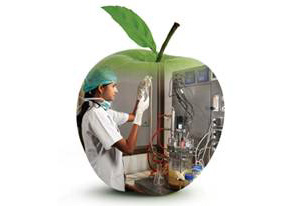
In the integrated science, studies and business centre the Santara Valley, located in the capital of Lithuania, a new biotechnological and R&D center and the biopharmaceutical product development laboratory are arising.
The biopharmaceutical company Biotechpharma, developing the new centre in the Santara Valley, is expecting to complete the project in a year. Investments should reach EUR 16.2 million, and part of it – EUR 11 million will come from the EU Structural Funds.
The new Biotechpharma R&D center will be equipped with a modern biopharmaceutical product development laboratory and will supplement the company’s research division. The center will be able to do more outsourcing: to develop not only pharmaceutical production technologies, but also new experimental drugs suitable for clinical research.
According to Biotechpharma, the state-of-the-art infrastructure, complying with the highest international requirements, will create the best conditions for Lithuanian scientists to develop and improve their qualifications. Currently, the laboratory employs 14 scientists who specialize in the biopharmaceutical, biochemical, genetic engineering and other fields. It is expected to create about 30 more jobs.
Biotechpharma is the only outsourcing biopharmaceutical scientific research and experimental development supplier in Central and Eastern Europe. In this region individual biopharmaceutical R&D services are provided by small research consultancy firms and some institutes, but the closest R&D centers, where there is ability to develop complex production technologies, are only in Western Europe and the United States.
Biotechpharma is settling down in the Santara Valley and joining other biopharmaceutical companies such as UAB Sicor Biotech Ltd., Valentis, Moog Medical Devices etc.
According to experts, share of biotechnologies in the Lithuanian economy is very similar to that in Germany, Great Britain or France.
In addition to the Santara Valley, 4 other integrated science, studies and business valleys are under construction in Lithuania: the Sunrise Valley in Vilnius, the Santaka and Nemunas Valleys in Kaunas, and the Baltic (Maritime) Valley in Klaipeda.
- Bookmark :
- Digg
- del.icio.us
- Stumbleupon
- Redit it

The Sunrise and Santara Valleys in Vilnius
- Posted by - (0) Comment

The “Sunrise Valley” and “Santara Valley” programmes, initiated by Vilnius University, are going to change the structure of the University itself and will stimulate a breakthrough in research development and research commercialization. These integrated centers of research, education and business are in development. This is a guarantee for Vilnius University to position itself in European and global research and education, uniting universities, research institutes, top-level high-tech companies and fast-developing start-ups. The first building of Sunrise Valley Science and Technology Park with Business Incubator has opened already, the next one – The National Open Access Science Information and Communication Centre is soon to be built. The Sunrise Valley STP provides high quality sites and premises suitable for technology-driven businesses and promotes networking between the universities and businesses, between the businesses themselves, and with partners elsewhere in Lithuania and worldwide.
- Bookmark :
- Digg
- del.icio.us
- Stumbleupon
- Redit it

COMMENT: Why would Lithuania’s ex-premier help build a new nuclear power plant in Russia?
- Posted by - (0) Comment

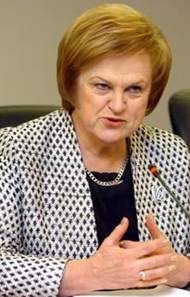
Kazimira Prunskiene
MOSCOW – To a casual observer, Lithuania’s former prime minister Kazimira Prunskiene might seem to be aiming to forge good-neighbourly relations with Russia. In point of fact, this is nothing but a ploy to be able to tap into the funds allocated for the construction of Russia’s Baltic Nuclear Power Plant in Kaliningrad Region.
At the end of May, Prunskiene – currently the leader of Lithuania’s agrarian centre-left party, the Lithuanian Peasant Popular Union, and formerly, this small Baltic republic’s prime minister in 1990 and 1991, was on a visit to Russia’s westernmost enclave of Kaliningrad. The agenda of this trip also included a visit to the site of the Baltic Nuclear Power Plant (NPP), now under construction. During a meeting with Kaliningrad Governor Nikolai Tsukanov, Prunskiene talked about the “necessity” for Lithuania to participate in the construction and operation of the future plant. As she said after the conversation with the governor, she had had the opportunity, while being led around the site, to ascertain for herself the “potential, reliability, and safety of the station.” The interesting fact about this station is that at this point, it presents nothing more than a huge pit awaiting to be filled with concrete for a future foundation. An assessment of reliability of a new nuclear power plant based on a tour around a big empty pit must indeed be a completely novel and unique method in the history of NPP safety evaluations.
What is this new Russian site exactly? The Baltic NPP is being built in Neman in Kaliningrad Region, a small patch of Russian land wedged between the European Union nations of Poland and Lithuania, on the southwest and northeast, respectively, and the Baltic Sea on the west. To the southeast beyond Lithuania is another former Soviet republic, Belarus, and further to the east, the vast expanses of mainland Russia. The two-unit 2.3-gigawatt nuclear power plant built to an experimental Russian design will thus end up being in the very backyard of the European Union, close to the Lithuanian capital, Vilnius, and also one tip of an ominous triangle – Belarus’s project in Ostrovets and Lithuania’s own tentatively planned new NPP in Visaginas being the other two – that environmentalists fear will lock the Baltic region into a desperate nuclear chokehold.
Curiously, the Baltic NPP is also a first Russian NPP project that Moscow has made open to participation by foreign investors – 51 percent of the capital funding is to be provided by the Russian state nuclear corporation Rosatom, while the rest is expected to flow from private coffers based abroad. And the only reason this station is being built is to export the future power output to the European Union – rather than meet the local demand – something that is well confirmed by documents from the Russian electric power trader Inter RAO, which has been charged with finding a European investor for the project.
Read more at: http://www.bellona.org/articles/articles_2011/lith_moscow
- Bookmark :
- Digg
- del.icio.us
- Stumbleupon
- Redit it

Lithuania was very pleased and grateful when Norwegian Telecom installed a satellite telephone station in the Lithuanian parliament, making it possible for Landsbergis to stay in touch with the world when the Soviets re-invaded Lithuania in 1991. But the country did little to hold on to Telenor and other Western investors. "We don’t need you," said former president Brazauskas.
Aage Myhre, Editor-in-Chief
To attract more foreign investors is often held up as a good way for Lithuania to follow – in order to achieve a more viable development, raise living standards and develop a more democratic, less corrupt society.
I began my personal efforts to assist Lithuania exactly 21 years ago, when Parliament President Vytautas Landsbergis announced that he would come to Oslo, on his first so-called official visit to a western country. I and a handful of others were ahead of his visit contacted by a presidential advisor and asked to put the best possible conditions for Landsbergis' visit to my home country Norway. That was how my long relationship to and with Lithuania started...
Landsbergis’ visit to Oslo became a great success and our group was therefore soon thereafter invited to visit Lithuania.
One thing that we put the most of emphasis on, already when Landsbergis was in Oslo the summer of 1990 and during our group’s initial visits to Lithuania, was to invite serious Western investors here.
Already during my very first visit here, in November 1990, we brought with us a representative of the governmental Norwegian oil company STATOIL, introducing the company to the Baltic States.
Just two years later STATOIL began developing the now well-known network of petrol stations across the Baltics and Poland. Our main contribution to STATOIL that time was to introduce them to representatives of governments, organizations and individuals we thought might be of help. The last substantial roles I had for the company was as an architect and facilitator of their offices here in Vilnius in the early 1990's, and to advise them when they later met on corruption and other problems.
During my first visit to Vilnius I also negotiated a contract with Lithuania's communications minister, based on an agreement I had with the Norwegian Telecommunications Administration to provide a satellite telephone station as a gift to Lithuania, and to install it in the parliament here, Parliament President Vytautas Landsbergis had asked our group of ' Lithuania-helpers' about this support when he was on a visit to Norway the summer of 1990.
Not long after this satellite telephone system turned out as very useful when Soviet troops re-invaded the Baltic States and cut all other calling options with foreign countries.
As a 'thank you for your help' the Norwegian Telecom was offered to create the first network for mobile phones here, but they rejected because they thought the market here was too small. They were also very tired of the treatments they were given by local bureaucrats.
I remember that this deeply disappointed me and Telecom's export director, who I worked closely with for the above mentioned satellite station in 1990-1991, and later on when we both tried to position the Norwegian company in the Baltics.
During the years that followed, I invited and tried to set stage for a number of Western investors. Some of them accepted, and some are still in full operation and business here today, very successfully!
What I quickly discovered, already two decades ago, was the importance of having a good personal contact with representatives of those companies, speaking ‘their language’ and to help them with many different problems and challenges in this misguided country where Soviet laws, structures and modes of action was still largely in force, and corruption a very widespread phenomenon.
I also understood that it was very important to offer ‘concepts’ not just ‘projects’ and investment objects to new investors.
Unfortunately, I seldom saw true understanding and interest from the Lithuanian authorities during those years. Even the largest and most serious firms were most often met with a shrug. "What's in it for me personally," was the question that was often presented when we contacted representatives of local authorities and businesses.
I will never forget when I in 1995 had lunch with Chicago’s largest builder, in the Neringa Restaurant here in Gedimino Avenue, a Lithuanian-American who had returned to Lithuania four years earlier, full of optimism and dreams of a restored home country. The day he left he told me: “Aage, let me tell you frankly that they have all cheated me. I invested into business, production, a hotel and more. But they all cheated me – from the highest of politicians to the simplest of workers. I am sick and tired of seeing how these people have ruined my homeland, and I’m now leaving it all behind. I will never again put foot on the soil of the country I dreamed of and supported for all my lifetime.”
I will also never forget that Lithuania's president and leader through much of the 1980s and 1990s, Algirdas Brazauskas, by then made it clear that Lithuania did not need foreign investments.
"We have enough money in this country, among our own investors and companies. We simply need no foreigners here," he said…
One could perhaps have thought that today's leaders would had learned, but the fact is that neither expatriates living here nor people within the country’s own diasporas around the world are much asked for help, advice or contributions. And when the authorities ask, they often ask the wrong people and institutions.
Let me, finally, also share with you a passage from Steven Levy’s book “How Google Thinks, Works and Shapes Our Lives”.
President Brazauskas' attitude and the following description explains a lot about why both and Lithuania are still living in a European backwater. Another sad example of how little the leaders of these two countries understood by then – and very often also today...
Here’s what Steven Levy writes:
“Google also made a priority to build centers overseas. Not long after she found the location in Atlanta, Cathy Gordon went to Europe, where Google wanted to build a giant data center similar to the one in the United States. Google had studied the laws and business practices of every country and narrowed the field to a few that might be able to provide the power and water required, as well as a friendly governmental hand. Some of the proposed locations were predictable – Switzerland, Belgium, France – but a couple were not.
One of those were Latvia, which Gordon had never visited before. The Google team flew into a ramshackle little airport and met the economic development committee, a cadre of what seemed to be stereotypical Soviet bureaucrats. Their host escorted them to the potential data centre site, an abandoned Soviet minibus factory. The building was cavernous and gloomy. In the centre of the building was a giant pit, and Gordon could not help but wonder whether any bodies were quietly decomposing in the stew. The group went to the area where the power facilities were located, and it looked to Gordon like they were on an old horror movie set, a ‘Gulag Archipelago’ version of Dr. Frankenstein’s lab. One of the hosts leaned over and spoke in a confidential whisper, heavy with Slavic accent. “Don’t go to near those things,” he said. “Basically we don’t know if they could kill you.”
“We eventually ended up doing a deal in Belgium,” says Gordon.
- Bookmark :
- Digg
- del.icio.us
- Stumbleupon
- Redit it
RE: Lithuanian health system, doctors and hospitals that has caused my greatest disillusionment with Lithuania
- Posted by - (0) Comment

Dear Gintautas:
This is not the “Lithuanian” health system but the legacy of the Soviet/communist system!
To provide evidence of much broader applicability of your very sad experience, I will briefly describe the tragic case of my Mother dying in a small town in Poland in 2003.
My Mother had a sudden cardiovascular event; an ambulance was called and it took that ambulance about two hours to arrive from a hospital located 25 km away; soon we realized why it took so long!
Some 6 people (sic!) arrived in that ambulance and all of them were under the visible influence of alcohol, the most intoxicated were the most important people in the ambulance: doctor and driver.
The crew eventually managed to put my Mother on the stretcher but one of the drunken bearers collapsed while carrying my Mother, almost dropping her on the ground! Then the ambulance drove off very slowly driven by a drunken driver. After spending several hours in hospital, my Mother passed away.
Rushed from Canada (I visited my Parents very frequently), I had seen my Mother just a couple of weeks before that fatal cardiovascular event. At that time she was in the same hospital with some 9 older patients in the same one room. The food served there was awful, so we used to bring our own food. I did not pursue any further actions to improve my Mother’s wellbeing there because she was about to be discharged home soon.
Immediately after my Mother’s funeral I did a bit of investigation into the (very new) possibilities of suing the hospital for malpractice and the criminal behavior (intoxication of the ambulance crew).
All my relatives and friends were strongly against any action against the hospital for fear of retaliation, e.g. poisoning when they find themselves in the hospital. They scolded me: “you will leave for Canada but we have to live here”. I conceded.
In the postwar period, my Mother was involved with the Anti-Communist Underground fighting for freedom of both Poland and Lithuania: “Za Wolnosc Wasza i Nasza”, Polish for “For Freedom of Yours and Ours”.
Gintautas, what you described was not the “Lithuanian” health system but the legacy of the Soviet/communist system!
Valdas Samonis
Toronto
- Bookmark :
- Digg
- del.icio.us
- Stumbleupon
- Redit it
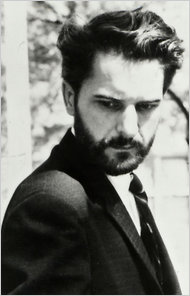
Adolfas Mekas, a Lithuanian immigrant who became an influential avant-garde filmmaker and teacher and who, with his brother Jonas, founded Film Culture, the seminal journal for cinéastes, died on Tuesday in Poughkeepsie, N.Y. He was 85.
The cause was heart failure, his wife, Pola Chapelle, said.
Though Jonas Mekas, a prolific director and avant-garde film archivist, became the better-known sibling, Adolfas Mekas made a handful of films that endure as avant-garde landmarks. The best known of them, “Hallelujah the Hills,” a comedy that spoofed movie history in telling an elliptical tale about two young men and their slapstick pursuit of the same girl, was among the critical and popular hits of the inaugural New York Film Festival in 1963.
“Hallelujah” was praised at the festival alongside films by Alain Resnais (“Muriel”), Roman Polanski (“Knife in the Water”), Luis Buñuel (“The Exterminating Angel”) and Joseph Losey (“The Servant”).
Source, New York Times:
http://www.nytimes.com/2011/06/03/movies/adolfas-mekas-avant-garde-filmmaker-and-teacher-is-dead-at-85.html
- Bookmark :
- Digg
- del.icio.us
- Stumbleupon
- Redit it
I understand that I will be unlikely to see much of an improvement in my lifetime, and therefore I will not be able to end my days in Lithuania, as I had hoped
- Posted by - (0) Comment

Gintautas Kaminskas
Wollongong, Australia
Below some extracts from an article written by Gintautas Kaminskas in Australia, based on his only attempt to live in Lithuania, a couple of years ago. You will find his complete article here:
https://vilnews.com/?p=4748
- At first it was wonderful being in Lithuania and speaking my beloved native language all the time, with everyone. But then I started to notice how unhappy so many people are, and how much dishonesty there is among crooked businessmen and tradesman and landlords who don’t pay taxes, bribe-taking public servants, policemen and doctors, people falsely claiming invalid pensions, etc. At a higher level some major scandals have shown that even some judges and Cabinet Ministers are not beyond taking a bribe.
The Seimas members are notorious for their greed and many have been exposed as corrupt.
It is mainly my experience with the Lithuanian health system, doctors and hospitals that has caused my greatest disillusionment with Lithuania and has in fact made me too frightened to live there myself. We could not leave my dad alone in hospital. We had to be with him 24 hours a day. We had to bring him food (you would die of malnutrition if you depended entirely on the inadequate meals the hospital gives you), we had to be there to bribe the doctor every few days (the amount of attention they paid to my dad dropped off noticeably if a new bribe was not received every few days), we had to be there to help him go to the toilet and in the end phase to change his nappy, we had to be there to make sure he got his medicine.
The hospitals were disgusting. One single toilet on the whole floor for 50 patients! No toilet seat! No paper! No soap! No fly screens on the windows – in a hospital! No lock on the toilet door – men come in and smoke while you are using the toilet – despite the “No Smoking” signs! No facilities for the patients to have a shower or somehow wash themselves. Cold in winter and hot in summer. Hygiene very dubious. An absolute nightmare and disgrace.
When my dad died we even had to bribe the cemetery officials to get a decent burial site that wasn’t down in the gully where a big puddle forms and the ground goes boggy every spring. (They deliberately offer you the lousy places to make sure they get a bribe.)
So by the end of 2009 I had left Lithuania too, with aching heart. I blame the bribery and corruption entirely on the Russians. If Lithuania had been left alone (preferably right from 1795, not just 1918!) I am sure it would be like Sweden now. There are a lot of hard-working decent folks in Lithuania and my heart bleeds for them.
The only way out of this quagmire that I can see is for journalists and other brave people to campaign against bribery and corruption and to convince the general public to start doing so too.
I am still an idealist, but now, belatedly, also a realist. I understand that I will be unlikely to see much of an improvement in my lifetime, and therefore I will not be able to end my days in Lithuania, as I had hoped. But the flame of hope burns brightly in my heart that the past sacrifices of brave Lithuanians for the homeland have not been in vain and that one day there will be a living standard in Lithuania not far behind that of the Scandinavian and leading Western European countries. I hope I can make some contribution to the process, no matter how minor.
- Bookmark :
- Digg
- del.icio.us
- Stumbleupon
- Redit it
Thanks for your brave and honest articles
- Posted by - (1) Comment
I agree 100 % with you about the thesis you wrote in this issue of the journal. Things in reality are exactly as you clearly and straight have written. The reason why you often get critics is the limited knowledge of short-term "visitors", such as business consultants, diplomat crops, coming here for some years and then trying to make a picture from official Lithuanian sources or lousy press articles. I think especially you and partly me (14th year passing here) with our good touch with local population, business-life, some understanding of language and Scandinavian background, values, are looking around without coloured spectacles. Still, almost every day on, with one's private and business life meet corruption, centralization of business (Rubikon, VP etc) and pre-agreed tenders, cartels.
Lithuania has got a lot of very good opportunities to become one of the success stories in Europe for agriculture, tourism, IT services, leading harbour country by the Baltic Sea etc. but the style must be changed as you say. Thanks, Aage, for your brave and honest articles earlier, now and in the future.
Krister Kastren,
Consul of Finland in Klaipeda, Lithuania
- Bookmark :
- Digg
- del.icio.us
- Stumbleupon
- Redit it
Fraud and corruption in Lithuania
- Posted by - (1) Comment
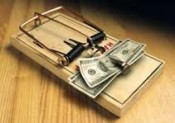
VilNews will frequently follow what goes on with regard to fraud and corruption in Lithuania. The statistics do not look particularly bright, and it seems that people`s perception of the circumstances with regards to fraud and corruption is not getting more optimistic over the years - rather the contrary.
In a recent survey people were asked how they think the level of corruption in this country has changed over the last three years. Here is what they answered:
8% - decreased
29% - stayed the same
63% - increased
Another question was: How would you assess your current government`s actions in the fight against corruption?
78% - ineffective
16% - neither
6% - effective
- Bookmark :
- Digg
- del.icio.us
- Stumbleupon
- Redit it
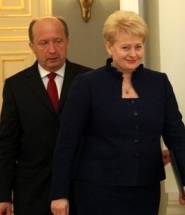
President Dalia Grybauskaite, soon two years in office, here with Prime Minister Andrius Kubilius.
"After the first year [as president], I slightly changed my approach to work. During the first year, we tried to help the Government, while, as the second year's task that I set for myself and my team was trying not only to help out the Government, but also initiating many legislative proposals on our own, especially, when it comes to fighting corruption and collusions on prices, making public procurement more transparent, legalizing extended confiscation of property, increasing penalties, introducing of terms in public offices, especially in law enforcement institutions," Grybauskaite said in an interview with the radio Ziniu Radijas this week.
The result of the new approach is the double amount of legislative drafts that reached the Seimas from the Presidential Palace. "Compared to previous year with 34 laws adopted, during the second year, we proposed 66 of them. I am glad that almost 75% of all initiatives enjoyed support. (...) I am also happy that the Seimas approved almost all of my proposals, with some small corrections only. I am glad because this shows that the Seimas and I understand each other," Grybauskaite said. The president will read her second annual report after a week.
Among the main achievements for the country under her leadership, the President named the NATO defence plans for the Baltic States, and the EU decision that by 2015 the Baltic States would be integrated into the European energy space, thus eliminating our energy isolation.
"We also received support for our idea of stricter requirements for nuclear power companies and especially for new constructions that are taking place next to the EU, that is, next to Lithuania. The idea was that new yet to be built nuclear power plants would be subject to very strict safety requirements, as well as stress-tests would be ran on them," Grybauskaite said.
The president was happy about the support for electricity and gas exchanges which to be formed. "Both energy and defence were extremely important priorities in foreign policy, they meet the interests of Lithuania and every citizen, they provide us with a development opportunity, coming out of difficult economic situation and having sufficient security so that we would develop the country for the good of people," Grybauskaite stressed.
Source: http://www.baltic-course.com
- Bookmark :
- Digg
- del.icio.us
- Stumbleupon
- Redit it
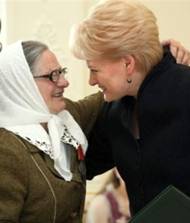
The government should restore pensions as planned to levels last reached before the global financial crisis and raise the minimum wage in 2012 as the economy expands, Grybauskaite said to another radio station, Lieutvos Radijas, last week.
The IMF estimates that the pension increase will boost spending by 0.6 percent of GDP. The government said today it plans to keep a freeze on public workers’ salaries next year after an 8 percent cut in 2009. The economy expanded 6.9 percent in the first quarter.
Grybauskaite told the government to resist turning the 2012 budget plan into a pre-election spending campaign.
- Bookmark :
- Digg
- del.icio.us
- Stumbleupon
- Redit it
Lithuania is the most attractive country for international companies looking to invest in the region of the Baltic States, the latest 2011 European Attractiveness survey from Ernst & Young shows
- Posted by - (0) Comment
“The number of projects has increased from 33 to 61 with Lithuania leading the region, with 31 project announcements. Investors come to the Baltics to invest in air transportation (25 %), financial services (12 %) and utilities (10 %). These countries are re-emerging as lower cost near-shoring locations with a quality workforce on the doorstep of Western Europe,” the survey reveals.
Ernst & Young’s 2011 European Attractiveness survey reflects Europe's real attractiveness for foreign direct investors, based on Ernst & Young's European Investment Monitor (EIM), as well as attractiveness of Europe and its competitors evaluated by a representative panel of 812 international decision-makers.
Follow to download 2011 European Attractiveness survey here.
- Bookmark :
- Digg
- del.icio.us
- Stumbleupon
- Redit it
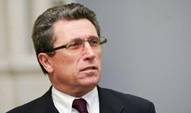
Ambassador Antanas Valionis called Latvian President Valdis Zatlers "villainous" and questioned his motives for trying to disband the Latvian assembly
Lithuania's ambassador to neighbouring Latvia is resigning following comments he made attacking the Latvian president's move to dissolve Parliament.
In an interview with Latvian news site delfi.lv, Ambassador Antanas Valionis called President Valdis Zatlers "villainous" and questioned his motives for trying to disband the Latvian assembly.
Zatlers said over the weekend new elections were needed to weed out a culture of corruption among lawmakers.
Baltic news agency BNS reported Valionis announced his resignation Tuesday after a meeting with Lithuanian President Dalia Grybauskaite, saying: "I apologize to the Latvian president who was insulted by my words. Therefore, I think I should not continue working in Latvia."
Source: The Associated Press
- Bookmark :
- Digg
- del.icio.us
- Stumbleupon
- Redit it
- Posted by - (7) Comment
Lithuania's economic crisis leads to crime and social disparities
Article 1 of 3
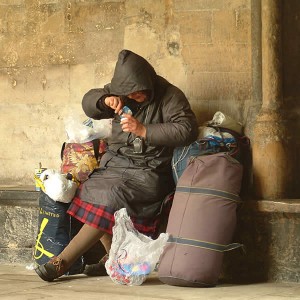
A report published by Associate Professor Aurelijus Gutauskas at Mykolas Romeris University's Law Faculty gives a very interesting insight into how the economic downturn has led to increased social disparities, crime, fraud and widespread shadow economy in Lithuania.
These are some of his findings:
The economic decline will have far-reaching negative effects on the most vulnerable groups in Lithuania unless the government takes additional measures
As in many countries worldwide, the economic downturn in Lithuania has had an adverse impact on national, social, and economic development. The economic decline will have far-reaching negative effects on the most vulnerable groups in Lithuania unless the government takes additional measures to promote employment and provide social protection.
The major negative social consequences of the economic decline in Lithuania are job losses and a decrease in income. These result in rising long-term unemployment, growing social exclusion, and an increase in emigration and the shadow economy.
Criminal offences against the financial system have increased by 47%
The statistical data analysis has shown that during the economic decline the crime rate increased while unemployment rose and household income decreased. Since 2008, the number of recorded criminal offences has been increasing by 6 to 7 per cent annually and reached 83,200 in 2009.
In 2009, the number of recorded criminal offences against the financial system increased by 47 %, and criminal offences related to the possession of narcotic or psychotropic substances increased by 19 %.
The production of counterfeit currency and securities increased by 258.6 % (from 237 to 613 cases) and cases of fraud grew by 59.1 % (from 915 to 1456 cases). Furthermore, the unlawful production of alcoholic beverages and the number of crimes committed by intoxicated persons nearly doubled in 2009. Based on Lithuanian and foreign experience, an increase in crime is expected to continue until 2012–2013 as restraints on economic crimes take longer to implement and are related to a rise in the standard of living in the country.
Lithuania's shadow economy will account for more than 20% of the GDP by 2015
The economic downturn has resulted in an increasing number of businesses experiencing financial difficulties, and some of them turn to the shadow economy as a means of salvation. This is particularly the case in the area of labor relations and in regard to failure to pay taxes (such as income and social insurance taxes). According to official Lithuanian statistics from 2004 and 2008, the shadow economy in Lithuania accounted for about 15 per cent of the GDP. The declining profitability of business entities, the rise in tax rates, and the worsening macroeconomic environment may increase the scope of the shadow economy to 20-22% by 2015.
Younger criminals are taking over the organized crime
The most significant trend within the Lithuanian organized crime community is the shift in power between the older and younger generations. The younger generations are gaining ground and seeking to increase their influence at the expense of older members. Lithuanian OCGs (organized criminal groups) are also aiming to become more interregional within Lithuania.
Smuggling and distribution of drugs and excise good are the most important means for OCGs to gain power. These groups have created an infrastructure in the drug trade and developed channels of supply, as well as networks of distributors, in almost all regions of Lithuania. Even group members who are in prison remain in the drug trade and control it. Smuggling is a strong factor encouraging the creation of new OCGs that specialize in this function.
Free movement of people and commodities inside the EU facilitates the shipment of illegal cargoes, and flawed external border security allows smuggling. The increasing trade in used vehicles in Lithuania has become a factor in the infrastructure for handling stolen property, with vehicles stolen in Western countries being exchanged for drugs. This made it possible for Lithuanian OCGs to play an influential, international role in heroin smuggling from the East to the West. The proceeds of crime are laundered through businesses in the financial and construction sectors.
In Russia in 2009 and 2010, Lithuanian OCGs used opportunities related to the acquisition of excise goods to engage in smuggling goods into the West, and then into the Netherlands. The goods smuggled included cocaine, hashish, cannabis, amphetamines, methamphetamines and ecstasy (MDMA), heroin (in the region of Kaliningrad), stolen vehicles.
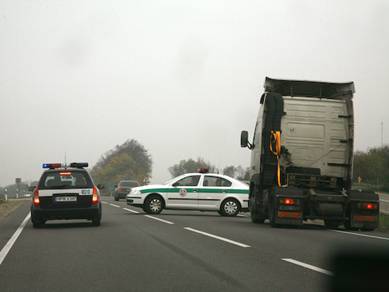
Lithuanian criminal groups now operate all over Europe
Article 2 of 3
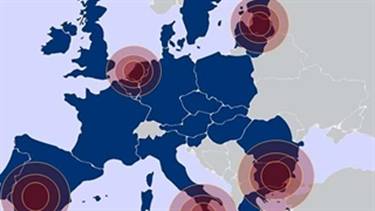
The EU's criminal intelligence agency EUROPOL has in its Organized Crime Threat Assessment for 2011 defined Estonia, Latvia, Lithuania and the Russian Federation exclave of Kaliningrad as the northeast criminal hub, singling out the prevalence of crime groups in Lithuania. Europol Assesses Baltic Organized Crime Hub | News | ERR
A report published by Associate Professor Aurelijus Gutauskas at Mykolas Romeris University's Law Faculty gives a very interesting insight into how the economic downturn has led to increased social disparities, crime, fraud and widespread shadow economy in Lithuania.
VilNews is presenting some of Professor Gutauskas' findings over three issues. This is our article number two:
23 active organized criminal groups (OCGs) in Lithuania
In 2010, there were 23 active organized criminal groups (OCGs) in Lithuania. Over the last two years, the number has remained much the same. Higher level OCGs are characterized by long-term activity or are recomposed from the members of broken or dismantled OCGs. The leadership is constantly renewed by young, new members or criminals who have already served prison sentences.
The geographical location of Lithuania encourages the international activity of OCGs. Lithuania is located at the crossroads of illicit commodities traffic in both internal and external directions. The locality of OCGs preconditioned their specialization when it came to control of regions of the external European Union border. Some of them use their influence at the Belarusian border, others at the Russian border.
Smuggling and distribution of drugs and excise good are the most important means for OCGs
Smuggling and distribution of drugs and excise good are the most important means for OCGs to gain power. These groups have created an infrastructure in the drug trade and developed channels of supply, as well as networks of distributors, in almost all regions of Lithuania. Even group members who are in prison remain in the drug trade and control it. Smuggling is a strong factor encouraging the creation of new OCGs that specialize in this function.
Human trafficking
Human trafficking has taken a new form as some victims agree to travel to countries with higher standards of living and engage in voluntary prostitution. The women's social vulnerability (unemployment, absence of income) and absence of other information results in their allowing others to take half of their income. Human trafficking is organized and committed not only by OCGs but also, in some regions of Lithuania, by individuals with no direct connections with OCGs.
Human trafficking involves recruiting people (by deception or telling the truth), organizing transportation (by finding ways to forge documents and arrange transport), and searching for locations in which to sell and receive profit. Payment is sometimes extracted from the person's earnings. Victims of human trafficking are usually women aged 18 to 24. They are recruited through modeling agencies, radio shows, online dating, social networks such as Facebook and other websites, and often voluntarily leave their home countries. Cases are known in which women are offered legal jobs (as waitresses and dancers), but once transported abroad they are forced to provide sexual services. Violence is also often used to make them work and to intimidate others. Search and recruitment is conducted by low-level members of the OCGs. Women are not only recruited by procurers but also by working prostitutes who receive rewards of up to 600 Euros for a new woman.
The European police service Europol has recently wound up an investigation into child pornography which lasted two years. Raids were made on houses in 20 countries. A total of 221 suspected pedophiles were discovered and 115 of them were arrested. Some of the suspects had jobs working with children. Victims of various nationalities were identified in the course of the investigation. The youngest was five.
Increased fraud, corruption and money laundering
Article 3 of 3
A report published by Associate Professor Aurelijus Gutauskas at Mykolas Romeris University's Law Faculty gives a very interesting insight into how the economic downturn has led to increased social disparities, crime, fraud and widespread shadow economy in Lithuania.
VilNews is presenting some of Professor Gutauskas' findings over three issues. This is our article number three:
Fraud
In 2009, 4229 cases of fraud were registered by law enforcement agencies, and 2494 more were registered between January and July 2010. In comparison with 2008 (when there were 2773 cases of fraud), there is an obvious increase in the commission of this kind of crime.
The economic crisis has affected many fields of business. Payments among the participants in an economy in disarray and a massive increase in mutual debts raise the probability of an increase in fraud crimes. Business difficulties stimulate the rise of new ways of perpetrating fraud, manipulation, shady financial transactions, and other forms of misappropriation. An increase of insurance fraud is also predicted. Companies that are going bankrupt, receiving no bank loans, and short of liquid assets will easily be attracted by offers of financial assistance or investment and will not investigate the source of the money. Analysis of investigations shows a trend of OCGs working to create favorable environment for acquiring legal businesses. By taking over insolvent companies and using them to launder the proceeds of crime, criminal groups would more easily be able to control a legal business. There has also been an increase in the number of fraud cases among legal entities. Companies are established or purchased in order to commit fraud, and commodities are purchased on the grounds of consignation. There are also cases of fraud in the recovery of VAT. Companies of this kind later go bankrupt or are illicitly sold to other persons, and further activity is undertaken. The persons who acquire them are usually antisocial, and trade is conducted using lost or stolen identity documents.
Corruption
Many law enforcement officers, prosecutors, and lawyers, at all levels and ranks, particularly those who specialize in tax cases, become corrupt. They set out to receive unlawful rewards from persons suspected of crimes against the financial system, who can avoid prosecution by paying bribes. If the bribe fails – that is to say, if the pre-trial investigation is not dismissed or the criminal act is not downgraded to a milder article of the criminal code – these persons make up charges and pay officers to intimidate or financially weaken their business competitors.
Those who participate in corruption in public tendering are persons who in the administrative field (officials of ministries, budgetary institutions, and municipalities), employees of public institutions, and managers of private companies or companies run by the state and municipalities. Aspects of corruption are noticed in all fields and stages of public tendering. Corrupt activity manifests itself most in the organization of public tendering regarding constructions, refurbishment, and information technologies.
Different corruption mechanisms are employed at each stage of public tendering. The initial stage includes one type of fraud. Representatives of companies participating in this procedure come to an informal agreement on a winner in a certain town, region, or ministry, and fix the price for services, commodities, or work. Agreements of this kind maintain high prices and stable income (the company knows how many tenders it will win each year). They also exclude possible competitors.
Money laundering
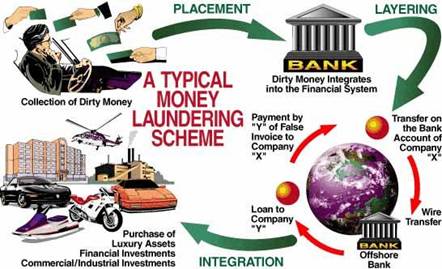
In order to launder money, foreign companies transfer their money to the accounts of fake foreign or Lithuanian companies that are usually established in Lithuanian banks by foreign citizens. Money is then transferred from one country to another through Lithuania financial institutions using the accounts of these fake companies. The proceeds of crime acquired in Lithuania may be transferred to foreign states, or the proceeds of crime in foreign countries may be transferred to Lithuania.
Lithuanian companies transfer money to the fake company or non-profit (usually fitness clubs), and the money is cashed immediately after it has been transferred. After the money has been cashed, fake accounts are opened and managed by antisocial citizens of both Lithuania and foreign countries who often have connections with criminal groups.
It is assumed that the major reason for transferring assets to Lithuania is to conceal the illegal origin of the assets. Nevertheless, cases have been discovered in which Lithuanian nationals used accounts in foreign countries while engaging in similar criminal activity.
Lithuanian companies increasingly use companies registered in foreign countries and foreign nationals to transfer money to the accounts of fake companies or offshore companies in foreign banks. More cases occur in which money is cashed in neighboring countries and in which the citizens of that particular country are involved.
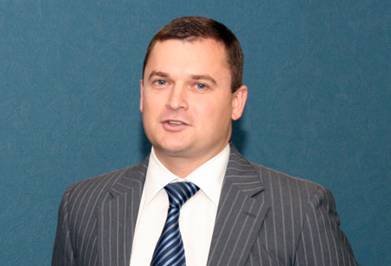
Former director of Lietuvos Pastas (Lithuanian Post) and Swedbank (Hanza) Leasing, Andrius Urbonas, was last year arrested for fraud. Urbonas was accused of having used his high position and connections in banking institutions to make loans to clients whose applications for loans were previously rejected. Authorities claim that he laundered money through the scheme. He denies the charges. A criminal case against him and other directors from Swedbank Leasing started in Vilnius District Court last week.
THE REPORT:
Economic Crisis and Organized Crime in Lithuania
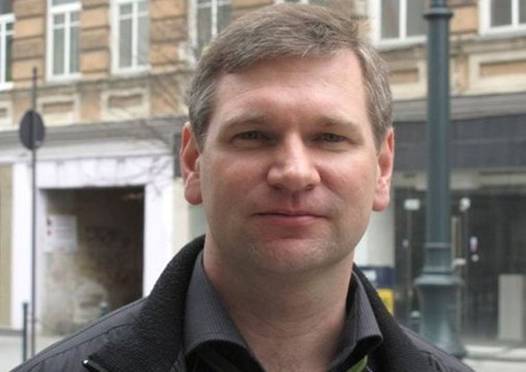
Associate Professor Aurelijus Gutauskas
Mykolas Romeris University
Law Faculty
Criminal Law and Criminology Department
Head of the Department
Contents
1 Economic and Social Impact of the Financial Crisis
1.1 Increase in the Crime Rate
1.2 Growth of the Shadow Economy
2 Trends within Organized Crime in Lithuania
2.2 Organized Crime Groups Active in Lithuania
2.3 Description of Criminal Acts
2.3.2 Cigarette and Alcohol Smuggling
2.3.4 Human Trafficking and Exploitation
2.3.6 Corruption of Public Officials and Institutions
1 Economic and Social Impact of the Financial Crisis
Since the start of the new millennium, the Baltic region has enjoyed one of the highest growth rates in the world. This positive development was interrupted by the financial crisis and the recession that followed.
As in many countries worldwide, the economic downturn in Lithuania has had an adverse impact on national, social, and economic development. The economic decline will have far-reaching negative effects on the most vulnerable groups in Lithuania unless the government takes additional measures to promote employment and provide social protection. In order to mitigate the possible negative social consequences of the decline, an attempt should be made to assess its impact on the country's socio-economic development (development of the population, income indicators of households, etc.) as well as to recommend measures to address any problems identified.
The major negative social consequences of the economic decline in Lithuania are job losses and a decrease in income. These result in rising long-term unemployment, growing social exclusion, and an increase in emigration and the shadow economy. In the long run, all of these increase poverty and reduce the quality of the labor force. For instance, both diminished skills and reduced work motivation weaken the recovery potential of the national economy.
The economic crisis has had a major negative impact on the Lithuanian labor market.[1] In the first quarter of 2009, the national unemployment rate more than doubled compared to the first quarter of 2008. If these trends continue, Lithuania will see a dramatic increase in the number of long-term unemployed (in 2010, they constituted 30 per cent of the unemployed, or 78,000 persons). High long-term unemployment is likely to persist even after the anticipated recovery of the national economy between 2012 and 2015 as most unemployed people are less competitive in the market due to their weaker or diminished skills after a long period of unemployment.
Rising unemployment also worsens the financial situations of households, as indicated by the ever-increasing number of persons receiving social benefits in Lithuania. The assessment of changes in earnings and unemployment in Lithuania shows that household income will continue to decline in 2010, but will then start rising slightly due to the growing shadow economy, as a well as the slow economic recovery anticipated in 2011. However, income levels in 2015 will not even reach those of 2008. Decreasing household incomes may boost the absolute poverty rate as high as 13.2 per cent in 2010. This means that the income of 440,700 persons will be below the poverty line. The absolute poverty rate is not expected to return to the level of the year 2008 (i.e. 4.8 per cent) before 2015.[2]
The deteriorating macroeconomic situation in the country boosts emigration from Lithuania.[3] Bearing in mind that the Lithuanian economy is expected to recover only in 2011–2012, emigration is likely to result in that Lithuania may lose another 100,000 to 150,000 residents by 2015.[4] In the long term, higher rates of emigration are associated with serious problems such as population decline, brain drain, and demographic ageing, all of which markedly weaken the growth potential of the national economy and slow down improvement in the standard of living.
1.1 Increase in the Crime Rate
The statistical data analysis has shown that during the economic decline the crime rate increased while unemployment rose and household income decreased.
Since 2008, the number of recorded criminal offences has been increasing by 6 to 7 per cent annually and reached 83,200 in 2009. Crimes accounted for about 90 per cent of all recorded offences. About 5 to 6 per cent of the crimes were serious or grave. In 2009 two-thirds of the criminal offences recorded were property-related, an increase of 6 per cent. Three-fourths of all property-related criminal offences recorded were thefts. In 2009, 40,000 thefts were recorded, which is 3 per cent more than in 2008.
In 2009, the number of recorded criminal offences against the financial system increased by 47 per cent, and criminal offences related to the possession of narcotic or psychotropic substances increased by 19 per cent.[5]
The production of counterfeit currency and securities increased by 258.6 per cent (from 237 to 613 cases) and cases of fraud grew by 59.1 per cent (from 915 to 1456 cases). Furthermore, the unlawful production of alcoholic beverages and the number of crimes committed by intoxicated persons nearly doubled in 2009. Based on Lithuanian and foreign experience, an increase in crime is expected to continue until 2012–2013 as restraints on economic crimes take longer to implement and are related to a rise in the standard of living in the country.[6]
1.2 Growth of the Shadow Economy
The economic downturn has resulted in an increasing number of businesses experiencing financial difficulties, and some of them turn to the shadow economy as a means of salvation. This is particularly the case in the area of labor relations and in regard to failure to pay taxes (such as income and social insurance taxes). According to official Lithuanian statistics from 2004 and 2008, the shadow economy in Lithuania accounted for about 15 per cent of the GDP. The declining profitability of business entities, the rise in tax rates, and the worsening macroeconomic environment may increase the scope of the shadow economy to 20-22 per cent by 2015. It is important to note that shadow activities develop very fast, but eradicating them is a slow process.
The biggest part of the parallel economy is smuggling, closely followed by the unaccounted sale of goods and unreported remuneration[7]. In order to reduce the impact of the shadow economy, the government has decided to focus on extracting one billion litas from it, which represents roughly 5 per cent of total tax income, instead of increasing taxes or cutting social benefits and salaries of public servants.
The shadow economy not only has an adverse effect on the country's economy, but it also has negative social consequences such as an increase in social and economic differentiation, a rise of the level of corruption in the country, the reduction of social guaranties for individuals, poorly allocated resources across sectors, an unbalanced tax system and a slowdown of the country's economic growth.
2 Trends within Organized Crime in Lithuania
In 2010, there were 23 active organized criminal groups (OCGs) in Lithuania.[8] Over the last two years, the number has remained much the same. Higher level OCGs are characterized by long-term activity or are recomposed from the members of broken or dismantled OCGs. The leadership is constantly renewed by young, new members or criminals who have already served prison sentences.
The most significant trend within the Lithuanian organized crime community is the shift in power between the older and younger generations. The younger generations are gaining ground and seeking to increase their influence at the expense of older members. Lithuanian OCGs are also aiming to become more interregional within Lithuania.
The dominant OCGs expand their authority and influence lower-level OCGs in different regions. Some OCGs started to seek dominant positions when members of higher-level OCGs return from corrective institutions.
Due to the change in criminal leadership, internal and external OCGs experience conflict and dishonesty between accomplices in continuing criminal deals. Violent actions are taken by OCGs seeking to be dominant. Interregional OCGs support their followers during conflicts between local OCGs. Firearms are used in campaigns of influence or revenge. During assaults, people are kidnapped, harmed, or killed, and their property is destroyed.[9]
In some situations, organized crime groups decide to make deals instead of turning to violence. They sometimes share the market and specialize in different trades. There is a trend for weaker OCGs to join bigger groups and find a niche within the larger organization. This development seems to be increasingly common among OCGs with international connections.
In 2009 and during the first semester of 2010, crime indicators in Lithuania decreased. (paaiskinti teksta). However, there was an increase in crimes committed by OCGs. The number of criminal acts related to murder and attempted murder, possession of weapons and seizures of weapons, seizure of property, property extortion, destruction of property, drug distribution, and excise goods smuggling increased in the regions of activity of the most influential OCGs. The crimes committed by OCGs incorporated a high level of planning and the application of special means and measures.
Smuggling and distribution of drugs and excise good are the most important means for OCGs to gain power. These groups have created an infrastructure in the drug trade and developed channels of supply, as well as networks of distributors, in almost all regions of Lithuania. Even group members who are in prison remain in the drug trade and control it. Smuggling is a strong factor encouraging the creation of new OCGs that specialize in this function.
In certain regions of Lithuania, OCGs active only in the field of smuggling are dominant. The groups controlling international relations ensure provision of illicit commodities. Lower-level OCGs organize the distribution and/or implement smuggling. Competition for influence is more typical of the retail trade in drugs. Property seizure is also a criminal field in which OCGs have strong subgroups or new specialized groups. OCGs acting at the international level seize luxurious cars and watercraft, equipments of cargo shipments, agriculture, and buildings. Property is seized from trade points and residential premises in different ways. In 2009, there was a tendency to break into agencies where large amounts of money were kept or to organize armed raids on these agencies.[10]
During the crisis period, the number of crimes committed against the economy and, the financial system rose, along with other kinds of fraud. The disruption of economic activity by companies and the mutual debts held by those companies resulted in property extortion and abuse of authority. Businessmen controlled by OCGs or dependent on criminals became the target of property extortion due to their debts. Another reason for the profitability of property extortion was the rise in the number of persons engaged in the distribution of illicit commodities or smuggling. Managing financial resources gave Lithuanian and foreign OCGs a chance to invest in the business sector. However, some groups lost their influence during the economic crisis because they experienced a financial downturn and lost the power they had previously held by serving legal businesses.[11]
2.1 Transnational Links
The geographical location of Lithuania encourages the international activity of OCGs. Lithuania is located at the crossroads of illicit commodities traffic in both internal and external directions. The locality of OCGs preconditioned their specialization when it came to control of regions of the external European Union border. Some of them use their influence at the Belarusian border, others at the Russian border. Close international relations with neighboring countries are also typical of local OCGs like those at the internal EU borders with Latvia and Poland.
Free movement of people and commodities inside the EU facilitates the shipment of illegal cargoes, and flawed external border security allows smuggling. The increasing trade in used vehicles in Lithuania has become a factor in the infrastructure for handling stolen property, with vehicles stolen in Western countries being exchanged for drugs. This made it possible for Lithuanian OCGs to play an influential, international role in heroin smuggling from the East to the West. The proceeds of crime are laundered through businesses in the financial and construction sectors.
In Russia in 2009 and 2010, Lithuanian OCGs used opportunities related to the acquisition of excise goods to engage in smuggling goods into the West, and then into the Netherlands. The goods smuggled included cocaine, hashish, cannabis, amphetamines, methamphetamines and ecstasy (MDMA), heroin (in the region of Kaliningrad), stolen vehicles. The OCGs were also involved in the running of LBSs. Some members of Lithuanian OCGs have settled in Russia.
In Poland in 2009 and 2010, Lithuanian OCGs used opportunities related to the transport and handling of smuggled excise goods, the counterfeiting of cigarette products, the transport of smuggled drugs, vehicle theft, and the use of counterfeit electronic payment instruments.
In Germany in 2009 and during the first semester of 2010, Lithuanian OCGs handled and smuggled cigarettes, transported smuggled drugs, traded in heroin, managed the organization of prostitution networks, engaged in human trafficking, seized vehicles and other property, distributed forged identity documents and euros, transported illegal migrants, purchased property, ran LBSs, laundered money, and engaged in corruption. Some members of these groups are serving prison sentences in Germany.
In Latvia in 2009 and 2010, Lithuanian OCGs handled and smuggled cigarettes and pure alcohol, transported and handled heroin, cannabis, and ecstasy (MDMA), counterfeited euros, and committed various thefts from vehicles, pipelines, cargoes, and equipment and chemicals for agriculture. The groups also engaged in the legalization of stolen vehicles, the use of false electronic means of payment, fraud, the use of forged documents, and the running of LBSs.
In Estonia in 2009 and 2010, Lithuanian OCGs smuggled drugs and ran LBSs.
In Finland in 2009 and 2010, OCGs smuggled cocaine, amphetamines, and methamphetamines and seized property. Some OCG members are serving prison sentences in Finland.
In Sweden in 2009 and 2010, OCGs transported and handled cannabis, amphetamines, ecstasy (MDMA), stole cars and watercraft, and seized other property. Some members of Lithuanian OCGs have settled in Sweden.
Finally, in Denmark in 2009 and 2010, Lithuanian OCGs transported and handled smuggled methamphetamines, stole cars, watercraft and their parts, and seized property.
2.2 Organized Crime Groups Active in Lithuania
The main sources of information about the major OCGs and their activities are reports by the Organized Crime Investigation Division of the Criminal Police and by Lithuanian police units between 2009 and 2010. Some data also come from the State Border Guard and the Customs Criminal Services. The following OCGs have been identified.
2.2.1 Agurkas
The Agurkas group is one of the strongest OCGs in Lithuania, and the level of organized crime in the country depends on its activity. It also influences trends in organized crime committed by Lithuanians abroad.
Agurkas' criminal activities cover the production and distribution of narcotics, the smuggling of excise goods, theft of vehicles from residential premises, robbery, extortion of property, fraud, human trafficking, the organization of prostitution, currency counterfeiting, and document forgery. In 2009–2010 Agurkas members were also suspected of criminal acts related to illegal activities by companies, possession of criminal property, possession of weapons, disturbance of public order, resistance to and offenses against officers, unlawful deprivation of freedom, threats of killing, maiming, and attempted murder and sexual abuses.
The Agurkas group is active mainly in Russia, Latvia, and Estonia. The group also has some activities in Norway, the United Kingdom, Spain, and Ukraine. In the Baltic region, it poses a threat in Poland, Latvia, Estonia, Sweden, and Russia. In the EU, its activities affect Norway, the Netherlands, Germany, Belgium, the United Kingdom, Ireland, Spain, and eastern Ukraine. All of these countries are harmed by its drug distribution and property seizures. The grey economy in the West is stimulated by the handling of smuggled excise commodities and the handling of property seized in the East.
2.2.2 Beglikas
The criminal activities of the Beglikas group include drug and alcohol smuggling, money laundering, and other crimes against the financial system. Beglikas is present in Latvia, Estonia, and Russia as well as in Spain. Its power and influence may be related to the criminal authority of its leader, his connections, and his ability to entrench his influence and the effectiveness of countermeasures to drug smuggling in the Spain–Lithuania–Russia route. Its power is also increased by the economic activity of related LBSs. Society is harmed by drug distribution. The increasing economic power of the OCG also poses a threat.
2.2.3 Šmikiniai
The criminal activities of the Šmikiniai group include the smuggling and distribution of drugs, smuggling and distribution of excise commodities, robbery, theft of luxury vehicles, theft from vehicles, extortion of property, handling of stolen property, distribution of counterfeit money, organization of prostitution, possession of weapons, destruction of or damage to property, bodily injuries, and money laundering. The Šmikiniai group is present in Latvia, Estonia, Finland, Sweden, Germany, Spain, and Russia as well as in Switzerland and Iceland. In the Baltic region Illegal commodities are transported through Latvia and Estonia. Drugs are distributed and property seized in the region of Scandinavia. The group is a threat in many north-western EU countries and in Russia because of cocaine smuggling from South America. The societies of these countries suffer harm due to drug distribution and money laundering. Victims of human trafficking from Lithuania and the East may be exploited in prostitution networks.
2.2.4 Žemaičiai
The criminal activities of the Þemaièiai group include drug production, smuggling and distribution; the smuggling and distribution of counterfeit money; extortion of property; fraud; robbery; theft including the theft of vehicles, motorcycles and water motorcycles; handling stolen property; crimes against the economy and the financial system; money laundering; violating public order; possession of weapons; destruction and damage of property; illegal deprivation of freedom; bodily injury, and murder. The Þemaièiai group is present in Latvia, Estonia, Germany, and Russia and also in many other EU countries such as Belgium, the Netherlands, the United Kingdom, Ireland, France, Bulgaria, Italy, and Spain. Drug smuggling is facilitated by the free movement of people and commodities within the EU and by weak external border security. This OCG uses LBSs in the fields of haulage, agriculture, and finance for criminal purposes. It uses EU financial support to strengthen its powers. Thanks to communication technologies, distant members can maintain constant contact.
2.2.5 Miliai
The criminal activities of the Miliai group include drug smuggling and distribution, the smuggling of excise commodities, property extortion, crimes against the economy, and money laundering. Miliai is present in Sweden and Russia as well as in Norway, Belgium, the Netherlands, the United Kingdom, Italy, Belarus, and Ukraine.
2.2.6 Buduliai
The criminal activities of the Buduliai group include drug smuggling and distribution as well as cigarette smuggling. It is present in some regions of Latvia that play an important role in drug smuggling, and in Norway where it connects with immigrants from Lithuania. Latvia suffers harm from the activity of Buduliai, and the OCG also encourages trade in drugs and cigarettes smuggling in Norway.
2.2.7 Švinius
The criminal activities of the Švinius include cigarette smuggling, money laundering, crimes against the economy, fraud, property extortion, robbery, bodily harm and possession of weapons. This group is present in Latvia, Germany, and Russia as well as in the United Kingdom and Belarus where the OCG runs LBSs, operates in the field of business construction, and makes use of corruption.
2.3 Description of Criminal Acts
Information in this section, as in the previous section, mostly comes from the Organized Crime Investigation Division of the Criminal Police and regular police units.
2.3.1 Drug Trafficking
The drug market trends in the Baltic States are similar, and the problem is increasing. For instance, in 2010, 5.5 kg of heroin was found in a hidden compartment of a truck at the Latvian–Lithuanian border. This was the largest quantity of heroin ever seized in the country.[12]
In 2009 heroin was the most popular intravenous drug in Lithuania and the demand which rose for it three years ago has remained. With reference to the results of work of law enforcement agencies in 2009 heroin prevailed among drugs withdrawn in doses in Lithuania and the data on detentions indicates that heroin replaced the previously used concentrate of poppies.
In 2009 3.7 kg and 853 ml of heroin were detained in Lithuania. In 2010, 1st half-year, 5.5 kg of a narcotic substance, namely, heroin, were found in a hidden compartment in a truck at the Latvian and Lithuanian border. This is the largest quantity of heroin detained in Lithuania. Its value on the black market would amount to one million Litas (i.e. 289620 EUR).
According to the intelligence, the wholesale price of 1g of heroin in Lithuania fluctuates from 90 LTL (26 EUR) to 160 LTL (46.33 EUR).
With reference to the information of law enforcement agencies, 1 kg of heroin is enough to produce about 14000 doses of drugs and the average price of one dose of heroin is from 30 LTL (8.6 EUR) to 50 LTL (14.4 EUR), the total price of all the quantity in retail market would amount to 420000-700000 LTL (i.e. 121640 – 202734 EUR).
The concentration of heroin in retail trade was from 0.01 per cent to 64.9 per cent (the average concentration made up 34 per cent).
It is believable that the demand for this narcotic substance will not cease.
Cocaine has not been marketable in the illicit market of drugs in Lithuania due to the high price for there is amphetamine or methamphetamine, which are considerably cheaper and have similar influence. In 2009 6 kg of cocaine, which has remained the most expensive drug in Lithuania, were withdrawn from circulation, the average concentration of the drug seized made up 37 per cent (it was 36 per cent in 2008). In 2009 there were also cases disclosed in which Lithuanian nationals were detained abroad shipping cocaine the total amount of which was 99.1 kg.
When making the overview of the situation of this year, it should be mentioned that in January 2010 a container shipped to Lithuania from Peru was detained, a very large amount of cocaine (about 397 kg) was found in it. This smuggled cargo makes up the largest amount of drugs ever detained in Lithuania and one of the largest amount detained in the European Union.
With reference to the information gathered, the wholesale price of cocaine in the country recorded in 2009 has not changed several years, it fluctuates from 34 EUR to 43 EUR (i.e. 120-150 LTL). The retail price of cocaine in Lithuania was from 43 EUR to 72 EUR (150-250 LTL). Thus, the main consumer of cocaine has remained the person who receives income higher than average.
The profit received from cocaine distribution is not precisely known. It is thought that after the distribution of 1 kg of cocaine, the profit (with no outlay included) may be approximately 11584 – 14481 EUR (i.e. 40000-50000 LTL).
The increasing offer of cocaine has been noticed in Lithuania, however, it is early to state that consumption of cocaine is going to increase in the country. The detentions of 2009 and 2010 indicate that larger amounts are detained on the home market and it confirms the assumption of international organizations that the demand for cocaine in Europe is increasing and the underworld is looking for new unusual routes of cocaine smuggling intensively.
Lithuania, just like Europe has faced a spreading phenomenon, i.e. indoor cannabis cultivation. For this reason cannabis may be cultivated in Lithuania or brought from the Netherlands or Spain.
Apart from several areas of cannabis cultivation in Lithuania in 2009, 2 specially equipped cannabis cultivation places were disclosed: 5.3 kg of cannabis were seized in one of them and 13 kg - in another one. In 2009 several cases of indoor cannabis cultivation (of small scale) were disclosed. In total 82 kg of cannabis were withdrawn from circulation in Lithuania.
Hashish is not a popular drug in Lithuania, so its circulation is not high. 10.5 kg of this drug were withdrawn from the circulation. This is an imported drug. As it was during the previous years, Lithuania has remained a transit country. Hashish smuggling is often organized from Western to Eastern Europe.
The wholesale price of cannabis and its parts (marihuana) was 14-26 LTL (i.e. 4-7 EUR) of 1 g and in retail market it was 20-80 LTL (i.e. 5.5 – 23 EUR).
The profit from the distribution of cannabis of criminals received is not precisely known. Having distributed 1 kg of cannabis the profit may approximately amount to 10 000 LTL (i.e. 2896 EUR).
Amphetamine type stimulants (ATS) have remained the most popular in the country as it was the previous year. Quite a quantity of these substances is brought from foreign states. In 2009 2.5 kg of amphetamine were withdrawn from circulation in Lithuania. It has been noticed that there was a decrease of amphetamine in the local market for methamphetamine is the most popular ATS.
With reference to data on detentions and other information the fact indicating illegal production of methamphetamine and amphetamine may be confirmed, however, it is not extensive. The scale of drug production in Lithuania is often overestimated. Lithuania is one of the states in which the quantity of drugs imported is higher than the quantity produced. In 2009 there was one illegal laboratory of methamphetamine of average capacity detected in the country. 82 kg of methamphetamine and 34 kg of free base of methamphetamine extracted from intermediate products found in laboratories were withdrawn from circulation.
In 2009 69823 ecstasy tablets were withdrawn from circulation in Lithuania. It has been noticed that the place of ecstasy is being replaced by mCPP and its mixtures.
Retail market prices of 1g of amphetamine and methamphetamine fluctuated from 15 to 80 LTL (4-23 EUR). The price of a dose of methamphetamine amounted from 15 to 25 LTL (4-7 EUR) and that of methamphetamine was from 20 to 40 LTL (5-11 EUR).
1 tablet of ecstasy in retail market cost from 5 to 25 LTL (1-7 EUR).
Average purity of amphetamine powder amounted to 23 per cent that of methamphetamine was 24 per cent and that of ecstasy – 20 per cent.
New uncontrolled psychoactive substances are also becoming popular. However, there also are some differences between the Baltic States. Whereas heroin is common in Lithuania, in Estonia the preferred substance is fentanyl (a synthetic heroin alternate). In Lithuania, the most popular synthetic drug is methamphetamine, whereas in Estonia amphetamine is in higher demand. In Latvia, amphetamine and methamphetamine share the market almost equally. The three countries are used for transit of drugs from the East to the West and vice versa, and for the transit of synthetic drugs to Scandinavia.
In Lithuania the members of OCGs share functions among themselves: some are responsible for the production or acquisition of drugs, others are in charge of local logistics (i.e., the selection and recruitment of couriers), while others are responsible for handling. Assignments are usually distributed with regard to the capabilities of the members of the group.[13] Heroin is usually brought to Lithuania from Russia. Some remains in Lithuania while the remainder is shipped to the region of Kaliningrad and Latvia.
Organized criminal groups use the transportation and financial sectors and the illicit market of commodities and services. New technologies facilitate the organization of criminal acts and complicate the discovery of crime and the gathering of evidence. The groups are encouraged in the illicit circulation of drugs due to the ease with which they operate and the great profits resulting from constant demand for narcotic substances and the existence of a market of consumers.
Because of its high price, cocaine has not been marketable in Lithuania and has been replaced by amphetamines or methamphetamines, which are considerably cheaper and have similar effects.
Even though the demand for cocaine is small in Lithuania, large quantities are being brought into the country for re-export to other European countries or Russia, where the demand is higher. Cocaine traffickers thus use Lithuania as a transit country to mislead law enforcement.
Along with amphetamine-type stimulants (ATS), cannabis is the most popular drug among consumers. Lithuania, like Europe, has faced the spreading phenomenon of indoor cannabis cultivation. Cannabis may thus be cultivated in Lithuania or imported from the Netherlands or Spain. In 2009, 313 cases of cannabis detention were registered and 356 suspects were identified.[14]
However the availability of amphetamine has decreased in the local market, as methamphetamine has become more popular. Illicit facilities for the production of methamphetamine and amphetamine have been found in Lithuania. Their products are not solely for the local market but are also transported to Scandinavia (through Latvia and Estonia) and Russia. Ecstasy, however, remains in Lithuania while other drugs are transported to Russia. The smuggling routes thus created are not only used for the transportation of drugs produced in Lithuania but also for the carriage of ecstasy and the import of amphetamine.
2.3.2 Cigarette and Alcohol Smuggling
In 2009, the retail price of tobacco products increased by 26.1 per cent compared to 2008 prices because excise and value-added tax (VAT) rates were doubled. Retail sales of tobacco products decreased by 31 per cent (for comparable prices), and statistics for the first semester of 2010 show that the legal market for cigarettes is shrinking.
In comparison with previous years there was a significant rise in contraband cigarettes shipped from third countries (most often Russia and Belarus), as well as increase in the quantity of contraband cigarettes seized in Lithuania. However, Lithuania remains a transit country, and 85 per cent of the cigarettes detained in Lithuania are intended for the black market of European countries (the United Kingdom, Germany, and Poland). The most popular brand of cigarettes smuggled through Lithuania has always been Jin Ling. A 1000 per cent profit was made by legally acquiring tobacco products in third countries (most often in Russia) and selling them illegally on the black market of EU member states. It has been noticed that those who previously organized the smuggling of cigarettes via the green border have started transporting them in cargo trucks and cars equipped with hidden compartments, thus decreasing the cost of transportation.
Due to the different prices of cigarettes in neighboring countries, intensified cross-border shopping has lately been observed in Lithuania. Individuals can legally import a certain quantity of cigarettes and alcohol. However, much of what is imported is not intended for personal use, but for resale. There has also been an increase in the number of Polish citizens, who, in order not to attract the attention of the Lithuanian law enforcement officers, purchase cars with Lithuanian registration numbers. These cars are equipped with specially equipped hidden compartments (in a fuel tank, an airbag or a double floorboard) for the illegal shipment of cigarettes.
In comparison to 2008, the retail prices of alcoholic beverages increased by 9.2 per cent in 2009. The price increase was caused by a higher excise rate, which was applied on January 1, 2009 and was influenced by VAT, which was raised in 2009. The prices of fortified alcoholic beverages have also greatly increased. In 2009, 3.3 million decalitres of fortified beverages were sold, which is 559,000 decalitres (14.3 per cent) less than in 2008.[15] The principal trends in alcohol smuggling have remained the same: products are smuggled from neighboring EU countries (Poland and Latvia). The scope of the transportation of illegal alcohol from Poland and Latvia and the scope of the production inside the country has expanded. Due to a liberal application of regulations regarding denaturing alcohol, legally produced alcohol, or alcohol brought from third countries is shipped to Lithuania (legally or illegally) where it is illegally processed under domestic conditions using simple technology and sold on the home market.
Special experience is needed to smuggle cigarettes and alcoholic beverages. The smugglers must be familiar with the terrain, have some minimal ability speak a foreign language, maintain contacts with criminal groups in neighboring counties, and have specially equipped cars and professional drivers. Members of the same OCG usually conduct all the stages of this criminal activity, but distribute tasks and roles. Some buy cigarettes from foreign suppliers or legally operating factories (in the region of Kaliningrad [Russia] or in Ukraine) while others bring cigarettes to Lithuania or arrange orders and sell cigarettes to the persons who later handle cigarettes in Lithuania or resell them. The smuggled cigarettes are most often shipped to Lithuania in hidden compartments or are hidden under various goods in trucks and cars. From the region of Kaliningrad, cigarettes are also shipped across the state border, bypassing the border checkpoints and are carried across the river on waterborne transport. Tobacco and its products illegally transit via Estonia, Latvia, Lithuania, Belarus, Poland, Greece, Hungary, and Sweden. The destination countries are Lithuania, Poland, Germany, England, Ireland, and Norway. Contacts are maintained with Russian, Polish, German, Latvian, Belarusian, Ukrainian, Israeli, and other criminal groups.
The main reasons for the increase of the smuggling of tobacco products are the general socio-economic decline and the considerable increase in cigarettes' prices. OCGs are attracted to this because it offers quick, high profits without much labor expenditure. As the organizers of the smuggling usually stay in the background, it is hard to identify them, and they are rarely imprisoned. The penalty for smuggling tobacco products is also lighter than that for smuggling narcotic substances.
Smuggling of cigarettes and alcohol direct damages the collection of state revenues, and the image and economy of Lithuania. Those who engage in this trade work illegally, do not declare their income, and do not pay taxes. Market competition is strained when the legal trade competes with illegal trade. Due to the fact that most of the cigarettes shipped via Lithuania are intended for the black market in EU countries, these countries must suffer similar damage. However, we do not possess any specific data on the influence of this criminal activity in the Baltic region inside and outside the EU.
2.3.3 Counterfeiting of Euros
The production and distribution of counterfeit currency is not common in Lithuania, since Lithuania is not a member of the eurozone. Nevertheless, the euro remains the most frequently counterfeited and distributed currency, particularly banknotes in denomination of 20 and 50 euros. The majority of counterfeit euros are handled in eurozone countries, but there are cases of people being paid for commodities in counterfeit euros. However, according to the data of the European Central Bank, the number of counterfeit euro banknotes is not very high in comparison with the increasing number of genuine euro banknotes in circulation.
The cessation of internal border control gives persons committing crimes the ability to travel freely in EU countries and to carry counterfeit money or other illicit items. The rapid development of technology allows organized groups to acquire high quality counterfeit money, which significantly hampers detection. As many countries have not yet introduced the euro, people have difficulties in telling the difference between real and counterfeit banknotes, and foreign citizens are very trusting. It is thus easy for those who wish to commit crimes to deceive them. Economic and financial problems in the Baltic states are partial preconditions for the commission of criminal acts such as the production, keeping, or handling of counterfeit money or securities.
The production and distribution of counterfeit euros do not have a particular influence on the economies of the countries of the Baltic region, although private persons suffer damage because they are ignorant about the security features of euros and accept counterfeit banknotes. Bank employees easily detect the counterfeits with special equipment used to identify security features of currency and immediately withdraw such notes from circulation.
2.3.4 Human Trafficking and Exploitation
Human trafficking has taken a new form as some victims agree to travel to countries with higher standards of living and engage in voluntary prostitution. The women's social vulnerability (unemployment, absence of income) and absence of other information results in their allowing others to take half of their income. Human trafficking is organized and committed not only by OCGs but also, in some regions of Lithuania, by individuals with no direct connections with OCGs.
Human trafficking involves recruiting people (by deception or telling the truth), organizing transportation (by finding ways to forge documents and arrange transport), and searching for locations in which to sell and receive profit. Payment is sometimes extracted from the person's earnings. Victims of human trafficking are usually women aged 18 to 24. They are recruited through modeling agencies, radio shows, online dating, social networks such as Facebook and other websites, and often voluntarily leave their home countries. Cases are known in which women are offered legal jobs (as waitresses and dancers), but once transported abroad they are forced to provide sexual services. Violence is also often used to make them work and to intimidate others. Search and recruitment is conducted by low-level members of the OCGs. Women are not only recruited by procurers but also by working prostitutes who receive rewards of up to 600 euros for a new woman.
Poland is one of the main transit countries through which persons are carried, but persons were also carried through Latvia, Germany, and the Czech Republic (using land transport where there was no internal border control). The destination countries are states with higher standards of living, whose economies are more stable, and where there is a demand for cheap labor and sexual services (e.g., Germany).
Employment, dating, and modeling agencies, recreation centers, nightclubs, rented flats, and hotels are used to commit these criminal acts. The establishment of LBSs is often planned along with the criminal activity being organized. Companies are set up in the names of other, often antisocial, persons. LBSs are established not only in Lithuania but also in the countries in which criminal acts are committed. Favorable conditions for these criminal acts are created by tolerant national legislation, scarce state control, and the demand for sexual services and cheap labor in the destination countries.
The commission of these criminal activities is conditioned by complicated economic situations and high levels of unemployment in Lithuania. The reason OCGs participate in these criminal acts may be that they offer low risk and high profits. The proceeds of this crime are invested in legal business, and so destabilize the economy of the state.
2.3.5 Fraud
In 2009, 4229 cases of fraud were registered by law enforcement agencies, and 2494 more were registered between January and July 2010. In comparison with 2008 (when there were 2773 cases of fraud), there is an obvious increase in the commission of this kind of crime.[18]
The economic crisis has affected many fields of business. Payments among the participants in an economy in disarray and a massive increase in mutual debts raise the probability of an increase in fraud crimes. Business difficulties stimulate the rise of new ways of perpetrating fraud, manipulation, shady financial transactions, and other forms of misappropriation. An increase of insurance fraud is also predicted. Companies that are going bankrupt, receiving no bank loans, and short of liquid assets will easily be attracted by offers of financial assistance or investment and will not investigate the source of the money. Analysis of investigations shows a trend of OCGs working to create favorable environment for acquiring legal businesses. By taking over insolvent companies and using them to launder the proceeds of crime, criminal groups would more easily be able to control a legal business. There has also been an increase in the number of fraud cases among legal entities. Companies are established or purchased in order to commit fraud, and commodities are purchased on the grounds of consignation. There are also cases of fraud in the recovery of VAT. Companies of this kind later go bankrupt or are illicitly sold to other persons, and further activity is undertaken. The persons who acquire them are usually antisocial, and trade is conducted using lost or stolen identity documents. Recently, many cases have been disclosed in which companies participated in fraud involving social allowances. For example, the salary of a female employee is disproportionally raised before her maternity leave and she receives a "raised" social allowance for two years. Fraud of this kind is usually only possible in private companies.
Law enforcement agencies have shown that the key component in frauds is the use of personal data belonging to another person.[19] Thus fraud is closely related to forgery of identity documents. In recent years, criminal acts of an economic nature have been noticed, including handling real estate belonging to other persons, fraud in order to acquire valuable real estate, great, employment fraud in, deliberate bankruptcy (Phoenix Syndrome), cargo fraud, and so on. Criminal acts involving the so-called "Phoenix Syndrome" have been registered in recent years. They happen when companies transfer property or activities to newly established subsidiary companies in order to evade paying VAT or other taxes, or to avoid payment for commodities or services to suppliers. Analysis of police investigations revealed new trends in criminal acts committed by organized groups.
Lithuanian assets are also targeted by foreign nationals acting on behalf of foreign companies. They forge documents indicating purchase of commodities from Lithuanian companies. For example, in the case of telephone purchases, they provided falsified documents to the State Tax Inspectorate (STI), and requested the recovery of VAT due to overpayment. These are cases where commodities were allegedly bought for handling in the Lithuanian market and were then allegedly exported abroad.
When it comes to VAT fraud, Lithuanian companies are usually used rather than foreign enterprises. Recently there have been more cases in which companies tried to obtain VAT payments from the state, rather than evading VAT payments. In other words, they simulated trade and requested refunds from the state.
VAT fraud is usually related to trading in oil products, metals, vehicles and their parts, and consumer commodities, and to the construction sector. VAT fraud also occurs in relation to the provision of various services and work that is difficult to verify and assess completion (such as advertising, applying research, mediation services) as well as in the field of information technologies and meat processing.
Although the methods of OCGs are becoming more elaborate, our analysis shows that the methods of VAT fraud have remained the same as in previous years:
· export of commodities is simulated using falsified documents;
· purchase of goods or services from other companies operating within the territory of the Republic of Lithuania is simulated using forged documents;
· forged documents certifying a supposedly legal purchase are used for legalization of illegally purchased goods. Later these commodities are resold for other undertakings;
· front companies (which are not conducting actual activities) are involved in the chain of purchasing commodities or services in order to fictitiously increase the prices of commodities and services purchased or to reduce the prices of goods and services sold;
· despite being aware of the complicated financial situations of a company, such as an impending bankruptcy, company managers continue to recruit customers and sign contracts for work or services while taking advance fees.
The most popular model of VAT fraud is the purchase of commodities or services from other companies active in the territory of Lithuania using falsified documents. A variant of this is the involvement of companies that do not actually purchase commodities or services but which illicitly increase or decrease the price of commodities or services purchased. It has been found that companies conducting fraudulent operations are very often also involved in legal activities.
Moreover, it has been found that companies that allegedly trade illicitly to evade VAT also evade the compulsory corporation tax. When committing fraud, members of OCGs share roles in order to fraudulently evade taxes or obtain funds from the state.
In order to commit criminal acts of this kind private companies whose role is to purchase real estate and register them in their name, are usually used. It should be noted that OCG members work in the companies mentioned.
2.3.6 Corruption of Public Officials and Institutions
Many law enforcement officers, prosecutors, and lawyers, at all levels and ranks, particularly those who specialize in tax cases, become corrupt. They set out to receive unlawful rewards from persons suspected of crimes against the financial system, who can avoid prosecution by paying bribes. If the bribe fails – that is to say, if the pre-trial investigation is not dismissed or the criminal act is not downgraded to a milder article of the criminal code – these persons make up charges and pay officers to intimidate or financially weaken their business competitors.
Those who participate in corruption in public tendering are persons who in the administrative field (officials of ministries, budgetary institutions, and municipalities), employees of public institutions, and managers of private companies or companies run by the state and municipalities. Aspects of corruption are noticed in all fields and stages of public tendering. Corrupt activity manifests itself most in the organization of public tendering regarding constructions, refurbishment, and information technologies.
Different corruption mechanisms are employed at each stage of public tendering. The initial stage includes one type of fraud. Representatives of companies participating in this procedure come to an informal agreement on a winner in a certain town, region, or ministry, and fix the price for services, commodities, or work. Agreements of this kind maintain high prices and stable income (the company knows how many tenders it will win each year). They also exclude possible competitors.
Civil servants or employees of municipalities and state companies participate in one of the most popular forms of corruption at the initial stage. This stage involves the drawing up of tender conditions for a particular supplier or commodity, with the establishment of requirements for qualification or technical specifications. Competitors may be excluded from tendering on the basis of requirements or qualification that have no direct connection with the commodity, service, or works required (e.g.. turnover, number of employees). Inside information is sometimes leaked at the this stage.
Future winners of tenders often arrange the tender conditions with the representatives of the contracting organization, set the requirements to suit their own qualifications, and sometimes even pay an illegal reward.
At the initial stages, those who able to influence the results of public tendering (members of the commissions of public tendering, high-ranking officials of ministries and municipalities such as advisors and consultants to managers and mayors) are bribed. In later stages, bribes are not only given to ministry or municipal officials but gifts may also be given to members of the commission.
Certain officers of the state receive monetary rewards for the organization of corrupt public tendering in the form of provision of certain services. Thus their real estate may be refurbished and they may receive discounts when purchasing a vehicle or gifts such as trips and furniture.
2.3.7 Money Laundering
In order to launder money, foreign companies transfer their money to the accounts of fake foreign or Lithuanian companies that are usually established in Lithuanian banks by foreign citizens. Money is then transferred from one country to another through Lithuania financial institutions using the accounts of these fake companies. The proceeds of crime acquired in Lithuania may be transferred to foreign states, or the proceeds of crime in foreign countries may be transferred to Lithuania.
Lithuanian companies transfer money to the fake company or non-profit (usually fitness clubs), and the money is cashed immediately after it has been transferred. After the money has been cashed, fake accounts are opened and managed by antisocial citizens of both Lithuania and foreign countries who often have connections with criminal groups.
It is assumed that the major reason for transferring assets to Lithuania is to conceal the illegal origin of the assets. Nevertheless, cases have been discovered in which Lithuanian nationals used accounts in foreign countries while engaging in similar criminal activity.
Lithuanian companies increasingly use companies registered in foreign countries and foreign nationals to transfer money to the accounts of fake companies or offshore companies in foreign banks. More cases occur in which money is cashed in neighboring countries and in which the citizens of that particular country are involved.
Quite a number of accounts for fake foreign companies have been opened in Lithuanian credit establishments. These may be called transit accounts. International payment transfers, including online transfers made into these accounts from abroad, are further transferred to another foreign commercial bank. This method of moving money in which money travels through many countries and into many accounts may be used in various tax evasion schemes and in the legalization of the proceeds of crime. It is difficult to identify the sources of the assets and the final receivers.
Money laundering has a geographic principle that is closely related to the principle of neighborhood (close in distance, no language boundaries) and the possibility of freely crossing the borders of EU countries. Since the Lithuanian border is one of the external borders of the EU, illegal assets are smuggled to third countries (the Russian Federation, Belarus) without being declared to the customs services of the Republic of Lithuania. Cash smuggling is one of the most frequent elements in money laundering schemes in order to conceal the illicit source and origin of money as well as its state of origin. Now that the internal EU borders are open, export of the proceeds of crime from the Republic of Lithuania has become extremely simple and, after further financial transactions, the origin of the illicit assets becomes particularly difficult to trace. The geography of the financial transactions of OCGs is also influenced by the geographical location of Lithuania, which is especially attractive for drug transit.
3 Conclusions
An increase in international crimes can be seen in Lithuania. For instance, Lithuanian OCGs have strong relations with criminals in the UK, Germany, and Spain. They jointly plan and engage in criminal activities, especially in the fields of drugs, human trafficking, smuggling, and forgery. It is indeed easier for them to implement their criminal activities together. Organized criminal groups are involved in drug dealing because it produces huge profits and can even be run from prison. They agree between themselves to control the whole drug business. Less financially affluent members of the criminal world, or weak criminal groups, attempt to join the most successful criminal groups. Criminal groups from small cities in Lithuania also try to join criminal associations operating in the capital, Vilnius. More and more often, the members of the criminal world are looking for opportunities to implement criminal activities in European Union countries, and many members of criminal groups are leaving the country in order to continue their criminal activities abroad.
It should be mentioned that globalization and the economic crisis have had a huge impact on the criminological situation in all countries. In Lithuania, the number of crimes against the financial system, committed by OCGs increased during the economic crisis. The most important measure in fighting organized crime is prevention of the financing of organized crime. Lithuania has already set in place laws concerning the confiscation of assets and the prevention and control of organized crime. Impeding the legalization of criminally acquired funds is an efficient mechanism to control organized crime. In order to destroy the economic potential of organized crime groups, as well as criminal businesses and their internal executive infrastructures and relations, special attention should be paid to the leading and organizing chains of the groups. To promote the fight against organized crime, groups of law enforcement, finance, and control institutions and other related institutions should cooperate.
The analysis of recent organized criminal activities suggests that there are many more professional criminals than before. Nowadays, unlawful activities are based on good mutual relations, at both domestic and international levels, and they rely on highly organized financial, technical, and information supplies.
It is very difficult to predict trends in the development of organized crime. Before 1993 the threat of organized crime was very real in Lithuania. Some researchers even raised the question of whether the country would be governed by criminal justice or organized crime.
Thanks to new laws directed against organized crime and the strengthening of the criminal justice system, there were a few successful trials and convictions in court, which weakened the position and influence of organized crime in Lithuania. However, organized crime in some fields such as smuggling, drug trafficking, theft of cars and from households, corruption and human trafficking and remains strong. The future depends on development of the political and economic situation and reform of the legal system and of the criminal justice system. There are enough options to bring organized crime under control.
[1] Labour Force, Employment and Unemployment. Statistics Lithuania, 2009. www.stat.gov.lt (2011 05 03 21:05:58)
[2] Gruzevskis B., Zabarauskaite R. Social Consequences of Economic Downturn (2008) in Lithuania // Economics. Research Papers. Vol. 89(3), Vilnius 2010. P. 83.
[3] International Migration of Lithuanian Population. Statistics Lithuania, Vilnius 2008. www.stat.gov.lt
[4] At the beginning of 2010, the company "Spinter tyrimai" conducted a survey on the attitudes of Lithuanian citizens towards emigration. In total, 1003 respondents were surveyed. According to the survey, 58.7% of the respondents would like to leave the country (65% of them were persons aged 18-25).
[5] Statistical Yearbook of Lithuania 2010, Vilnius 2010. P. 219-220.
[6] Gruzevskis B., Zabarauskaite R. Social Consequences of Ecomomic Downturn (2008) in Lithuania // Economics 2010 Vol. 89 (3).
[7] Lithuanian Free Market Institute, Survey of the Lithuanian Economy, 2009; T. Pedersen, What are the proposes for Lithuania's economy 2011-2013, 2011; V. Trasberg, Tax Administration and shadow economy in EU new members, 2004; World Bank, Tax Policy and Administration, http://www.worldbank.org/publicsector/tax/
[8] Information Analysis Board Criminal Police Bureau 2010.
[9] OCTA Europol, EU Organized Crime Threat Assessment 2009,
[10] Information from division of Lithuanian Criminal Police Bureau.
[11] Anti-organized crime Division of Criminal Police. Report of organized crime investigation.
[12] http://lkpb.policija.lt/index.php?option=com_content&view=article&id=135 .- LKPB oficiali internetinė svetainė
[14] Information Analysis Board Criminal Police Bureau 2010.
[15] Statistikos departamento tinklapis. 2010-06-11 d. pranešimas spaudai "Alkoholio vartojimas ir padariniai 2009 m". Department of Statistics website 2010-06-11.
[16] Lietuvos banko internetinė svetainė http://www.lb.lt žiūrėta 2010-09-15. Bank of Lithuania website.
[17] Information Analysis Board Criminal Police Bureau 2010.
[18] IRD prie VRM statistika, žiūrėta 2010-08-26
[19] Information Analysis Board Criminal Police Bureau 2010.
[20] "Lithuania to cut benefits, pay, hike VAT to fight crisis", EU Business, June 19, 2009. http://www.eubusiness.com/news-eu/1245249122.94/
- Bookmark :
- Digg
- del.icio.us
- Stumbleupon
- Redit it

OPINIONS
Have your say. Send to:
editor@VilNews.com
Ph. D., Chicago
A wave of unity sweeps the international Lithuanian community on March 11th every year as Lithuanians celebrated the anniversary of the Lithuanian Parliament's declaration of independence from the Soviet Union in 1990. However, the sense of national unity engendered by the celebration could be short-lived.
Human beings have a strong tendency to overgeneralize and succumb to stereotypical us-them distinctions that can shatter even the strongest bonds. We need only search the internet to find examples of divisive thinking at work:
- "Those who fled Lithuania during World II were cowards -- and now they come back, flaunt their wealth, and tell us 'true Lithuanians' how to live."
- "Lithuanians who work abroad have abandoned their homeland and should be deprived of their Lithuanian citizenship."


In Lithuania Christmas Eve is a family event and the New Year's Eve a great party with friends!
Lithuanian say "Kaip sutiksi naujus metus, taip juos ir praleisi" (the way you'll meet the new year is the way you will spend it). So everyone is trying to spend New Year's Eve with friend and have as much fun as possible.
Lithuanian New Year's traditions are very similar to those in other countries, and actually were similar since many years ago. Also, the traditional Lithuanian New Years Eve party was very similar to other big celebrations throughout the year.
The New Year's Eve table is quite similar to the Christmas Eve table, but without straws under the tablecloth, and now including meat dishes. A tradition that definitely hasn't changes is that everybody is trying not to fell asleep before midnight. It was said that if you oversleep the midnight point you will be lazy all the upcoming year. People were also trying to get up early on the first day of the new year, because waking up late also meant a very lazy and unfortunate year.
During the New Year celebration people were dancing, singing, playing games and doing magic to guess the future. People didn't drink much of alcohol, especially was that the case for women.
Here are some advices from elders:
- During the New Year, be very nice and listen to relatives - what you are during New Year Eve, you will be throughout the year.
- During to the New Year Eve, try not to fall, because if this happens, next year you will be unhappy.
- If in the start of the New Year, the first news are good - then the year will be successful. If not - the year will be problematic.
* If New Year's night is cold and starry - look forward to a good summer!
* If the during New Year Eve trees are covered with frost - then it will be a good year. If it is wet weather on New Year's Eve, one can expect a year where many will die and dangerous epidemics occur.
* If the first day of the new year is snowy - the upcoming year will see many young people die. If the night is snowy - mostly old people will die.
* If the New Year time is cold - then Easter will be warm.
* If during New Year there are a lot of birds in your homestead - then all year around there will be many guests and the year will be fun.
Christmas greetings
from Vilnius
and epic battle for the
future
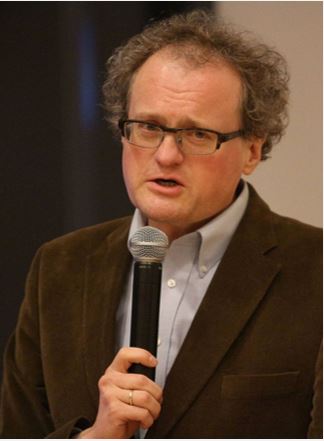
Philosopher, political theorist, historian of
ideas, social analyst, and political
commentator
Ukraine was and continues to be perceived by the EU political class as a sort of grey zone with its immense potential and possibilities for the future, yet deeply embedded and trapped in No Man's Land with all of its troubled past, post-Soviet traumas, ambiguities, insecurities, corruption, social divisions, and despair. Why worry for what has yet to emerge as a new actor of world history in terms of nation-building, European identity, and deeper commitments to transparency and free market economy?
Right? Wrong. No matter how troubled Ukraine's economic and political reality could be, the country has already passed the point of no return. Even if Vladimir Putin retains his leverage of power to blackmail Ukraine and the West in terms of Ukraine's zero chances to accede to NATO due to the problems of territorial integrity, occupation and annexation of Crimea, and mayhem or a frozen conflict in the Donbas region, Ukraine will never return to Russia's zone of influence. It could be deprived of the chances to join NATO or the EU in the coming years or decades, yet there are no forces on earth to make present Ukraine part of the Eurasia project fostered by Putin.
want to learn about the
new, scary propaganda
war between Russia,
The West and the
Baltic States!
believe their government
is corrupt
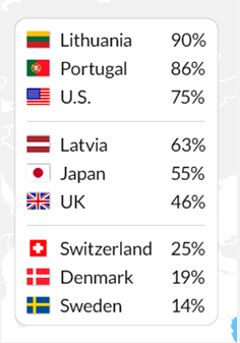
students say no to
bribes for doctors
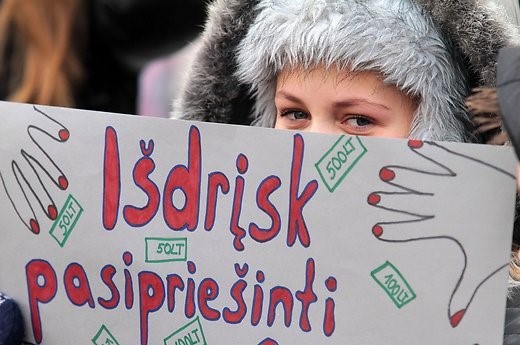
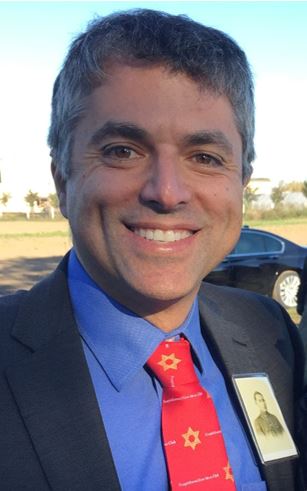
During Soviet times, government was administered for the people in control, not for the local population, court decisions were decreed, they were not the administration of justice, and academia was the domain of ideologues. 25 years of freedom and openness should have put those bad experiences behind Lithuania, but that is not so.
Today, it is a matter of expectation that court pronouncements will be governed by ideological dictates. Few, if any Lithuanians expect real justice to be effected. For foreign companies, doing business in Lithuania is almost impossible in a situation where business people do not expect rule of law, so, surely Government would be a refuge of competence?
Lithuanian Government has not emerged from Soviet styles. In an attempt to devolve power, Lithuania has created a myriad of fiefdoms of power, each speaking in the name of the Government, each its own centralized power base of ideology.

Chepstow, Wales
Doesn't that sound suspiciously like Lithuania? Ah, but I didn't mention the mountains of Snowdonia, which would give the game away.
I'm talking about Wales, that part of the UK which Lithuanians used to call "Valija", but later named "Velsas" (why?). Wales, the nation which has welcomed two Lithuanian heads of state to its shores - firstly Professor Vytautas Landsbergis, who has paid several visits and, more recently, President Dalia Grybauskaitė who attended the 2014 NATO summit which was held in Newport, South Wales.
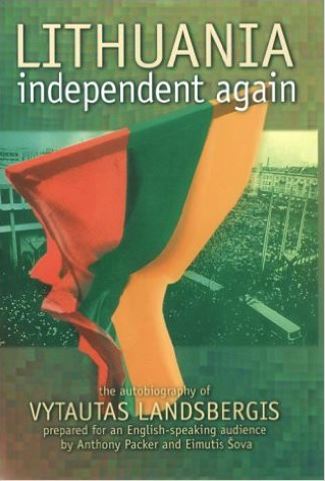
ENGLISH VERSION OF THE
AUTOBIOGRAPHY OF VYTAUTAS LANDSBERGIS.
Although Lithuanian activities have thinned over the decades as that postwar generation died out, the Lithuanian Martyrs' parish hall is crowded with many, many hundreds of visitors who come to the Lithuanian cemetery for All Souls' Day. Similarly, the Franciscan parish has standing room only for Christmas Eve mass.
Although I am firmly embedded in the literary culture of Canada, my themes are usually Lithuanian, and I'll be in Kaunas and Vilnius in mid-November 2015 to give talks about the Lithuanian translations of my novels and short stories, which I write in English.
If you have the Lithuanian language, come by to one of the talks listed in the links below. And if you don't, you can read more about my work at
www.anatanassileika.com
http://www.vdu.lt/lt/rasytojas-antanas-sileika-pristatys-savo-kuryba/ https://leu.lt/lt/lf/lf_naujienos/kvieciame-i-rasytojo-59hc.html
"My love and best wishes to all. As long as VilNews exists, there is hope for the future,"" she writes.
Irena Veisaite means very much for our publication, and we do hereby thank her for the support and wise commitment she always shows.
You can read our interview with her
Facing a new reality
Dear readers of VilNews,
For a number of years, the EU and Russia had assumed the existence of a strategic partnership, based on the convergence of values, economic integration and increasingly open markets and a modernisation agenda for society.
Our agenda was positive and ambitious. We looked at Russia as a country ready to converge with "European values", a country likely to embrace both the basic principles of democratic government and a liberal concept of the world order. It was believed this would bring our relations to a new level, covering the whole spectrum of the EU's strategic relationship with Russia.
The likelihood of Putin
invading Lithuania
.jpg "lithuania today")
Founding Director at Summer Literary Seminars
Are all Lithuanian energy
problems now resolved?
Lithuania as a country does not have significant energy resources. Energy consuming infrastructure after WWII was small and totally supported by energy imports from Russia.
First nuclear reactor begins power generation at Ignalina in 1983, the second reactor in 1987. Iganlina generates enough electricity to cover Lithuania's needs and about 50%.for export. As, prerequisite for membership in EU, Ignalina ceases all nuclear power generation in 2009
The Klaipėda Sea terminal begins Russia's oil export operations in 1959 and imports in 1994.
Mazeikiu Nafta (current ORLEAN Lietuva) begins operation of oil refinery in 1980.
Have Lithuanian ties across
the Baltic Sea become
stronger in recent years?
The two decades that have passed since regaining Lithuania's independence can be described as a "building boom". From the wreckage of a captive Soviet republic, a generation of Lithuanians have built a modern European state, and are now helping construct a Nordic-Baltic community replete with institutions intended to promote political coordination and foster a trans-Baltic regional identity. Indeed, a "Nordic-Baltic community" - I will explain later in my text the meaning of this catch-phrase.
Since the restoration of Lithuania's independence 25 years ago, we have continuously felt a strong support from Nordic countries. Nordics in particular were among the countries supporting Lithuania's and Baltic States' striving towards independence. Take example of Iceland, country which recognized Lithuania in February of 1991, well in advance of other countries. Yet another example - Swedish Ambassador was the first ambassador accredited to Lithuania in 1991. The other countries followed suit. When we restored our statehood, Nordic Countries became champions in promoting Baltic integration into Euro-Atlantic institutions. To large degree thanks Nordic Countries, massive transformations occurred in Lithuania since then, Lithuania became fully-fledged member of the EU and NATO, and we joined the Eurozone on 1 January 2015.
Have you heard about the
South African "Pencil Test"?
But that is exactly what happened to me when I came back from South Africa. I will tell you how.
VilNews e-magazine is published in Vilnius, Lithuania. Editor-in-Chief: Mr. Aage Myhre. Inquires to the editors: editor@VilNews.com.
Code of Ethics: See Section 2 – about VilNews. VilNews is not responsible for content on external links/web pages.
HOW TO ADVERTISE IN VILNEWS.
All content is copyrighted © 2011. UAB ‘VilNews’.