
THE VOICE OF INTERNATIONAL LITHUANIA

|
VilNews has its own Google archive! Type a word in the above search box to find any article.
You can also follow us on Facebook. We have two different pages. Click to open and join.
 Click on the buttons to open and read each of VilNews' 18 sub-sections Click on the buttons to open and read each of VilNews' 18 sub-sections  |

|


Archive for January, 2011
The Gariunai Market is a place you will never forget once you’ve been there
- Posted by - (6) Comment
Text: Jolita Sinicaite
If you want a taste of the largest open-air market on the Baltic Coast, then Gariunai Market is the place to go. Twenty minutes outside Vilnius, Gariūnai is a market place big as an airport, with tens of thousands of cars packed side by side, and the utility company Vilniaus Energy‘s cooling towers behind. It has ample room for 100,000 merchants and people . The Lithuanians call it “The largest market in Europe”, and considering its size, it may actually be true. People come here from all the Baltic States and from Poland, Russia, Belarus, Western Europe, Asia and all the way from Vietnam and the Arab world to sell and buy things. As you walk through the market you can hear all of the eastern European languages.. All kinds of goods like clothes, music, shoes and software are available here. For those on a low budget Gariunai Market is a must-see; however, quality doesn't come cheap.

You can find anything from cheap detergent, children's clothes, car spare parts, stolen car stereos with the characteristically snipped-off cables, knickknacks, to software and all-new ex-Red Army night-vision telescopes, everything!

This is the sketchiest market in all of Lithuania and all Baltic countries. Besides the regular array of cleaning products (they are about 10% cheaper than they would be in Maxima or IKI), this place boasts the most junk for your money. You can really find anything here. Take care of your belongings! Try to go there accompanied by a local person
Established on the outskirts of Vilnius in 1990, within a couple of years the Gariunai open-air market had become a major centre for private wholesale trade within the former Soviet Union. Providing an income a nd jobs to thousand of people...
Criticism is leveled at various aspects: the market is uncivilized and dominated by racketeers and thieves; traders just stand there, they don't do real work; incomes are not declared, thus trade is black; the market is considered non-Lithuanian, and especially dominated by Poles and Russians; it is outdoor and often dirty (one's shoes get dirty), and finally goods are of poor quality and traders often cheat.
Furthermore, a continuous impoverishment of the market has recently taken place; profits are diminishing, while at the same time new groups of the population are entering the market, often forced by increasing (though largely hidden) unemployment in Lithuania. Many teachers, technicians and even a few artists (many of them women) have lately begun trading. This development has further influenced the status of the market. But although all the points of criticism of the market hold elements of truth, the process of marginalization, symbolically as well as economically seems to be more complex and in addition highly political; there is indeed more to it than dirty shoes.
Picturing Gariunai entirely as a novelty, however, would be misleading, since many traders have experiences from past (illegal) forms of underground production and trading, and the association between trade and 'speculation' is still significant. Thus when asked about the history of the market, traders usually explained that the market began as “talkucke”, an 'illegal place for speculation'
Places like Gariunai might be difficult to come to terms with for Lithuanians and Westerners alike, because they are visible signs of a very different kind of 'transition' from what was expected and accepted. But they are significantly, precise because they contradict the ideology of 'the transition' in several ways. They challenge academic and political discourse on the transition by questioning the political project of a homogenous nation state, the creation of a Western-style market and the possibility of achieving a Western living standard. On the contrary, the use of the Russian language, the prevalence of multi-ethnicity and traders' trans-ethnic and Asian orientation give it a distinct flavour of a sort of globalized Sovietism, and indeed there seems to be very little 'Western' about it at all.
Today Gariunai: http://wikimapia.org/1458487/Gariunai-Cars-Marketplace


Modernization projects are now in process and Gariunai is starting to call “park” on our days. 15,000 work places are there. Gariunai has their own Website - http://www.gariunai.lt/ . They are the biggest car trades, too http://www.autogariunai.lt/. Nearby there is a even a motel for a traders and customers http://www.gariunai.lt/motelis/index.php?DL=en I have to mentioned also their radio center http://www.gerasfm.lt/ and even football team http://www.fk.gariunai.lt/ Gariunai is a Government Importance Project on 32,5 hectares of land. There are recently constructed modern buildings already there and they are trying to resettle all the traders from their nasty booths outside to inside the buildings with new charges. Many don‘t want that because of higher costs.... And they are fighting against it... But sooner or later capitalistic views will take over... Soon from a non regulated, dirty, chaotic place where a real free market was and it is now will become a Westernized shopping mall. The identity of the biggest free market under sky will disappear ....soon.
- Bookmark :
- Digg
- del.icio.us
- Stumbleupon
- Redit it

Juozas Statkevicius
- Posted by - (5) Comment

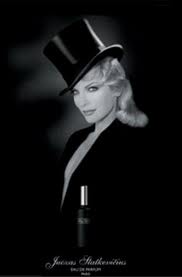
 Juozas Statkevicius is Lithuania’s most prominent fashion designer, well-known far beyond the borders of the Baltic States. In fact, he is the first designer from the Baltics to present his haute couture collections in Paris (in 2001 and 2002) and the first Lithuanian who has made appearance on glossy pages of Elle and Vogue fashion magazines. Statkevicius designs are available in New York, London and Tokyo and such stars as Bjork, Kyra Sadgwick and Naomi Watts wear them. The designer, who recently celebrated his 40th birthday, considers that fashion exists for one single reason - the love towards a woman, and his creative style is a perfect manifestation of that. His designs are like exquisite dreams, acted out in garments, with every elaborate and evocative detail telling its own story. The Statkevicius fashion house in Vilnius is a destination in itself and provides a perfect background for his designs. Like a frame, captured from a 1940s Hollywood movie, it makes us forget the reality of the 21st century for a while... "The most dreadful is not to have a single dream, that's the end then," says the fashion designer who is renowned for his theatre costumes, too, featured on numerous scenes around the world.
- Bookmark :
- Digg
- del.icio.us
- Stumbleupon
- Redit it

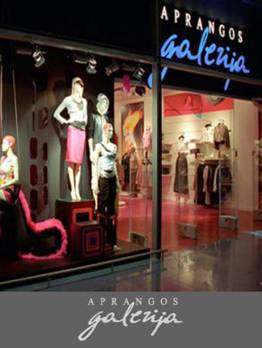 Apranga Group is a distinct leader of clothing retail in the Baltic States. Group increased retail clothing market share up to 35% in the local Lithuanian market. At the beginning of 2003, the company started its activity in Latvia. In 2004 company expanded to Estonia. Currently, the Group operates a chain of 114 stores in the Baltic States: 73 – in Lithuania, 31 – in Latvia, and 10 – in Estonia.
- Bookmark :
- Digg
- del.icio.us
- Stumbleupon
- Redit it

The shopping malls
- Posted by - (2) Comment
Vilnius became a shopper's paradise during the last decade when plenty of massive shopping malls were opened all over the city. There are three large American-style shopping malls here; Akropolis, Panorama andOzas. Akropolis is famous for its enormous number of shops, restaurants, coffee corners, plus its bowling and cinema facilities. You can also ice-skate or watch professional ice-hockey. Ozas is the newest mall, next to the aqua park Vichy Vanderparkas. There are also several smaller shopping centres, like Europaclose to the city centre. Kaunas is also a city of shopping malls in the city outskirts. The main ones areAkropolis, Mega, Molas, Savas, HyperMaxima, and Urmas. Klaipeda is a major shopping centre for people from the western part of the country, as well as for visitors from Latvia and Kaliningrad. The main shoppingmalls here are Akropolis, Arena, Studlendas and BIG. Many people arriving to the city on cruise ships also do their shopping in Klaipeda. Prices are good and the selection of goods truly wide...
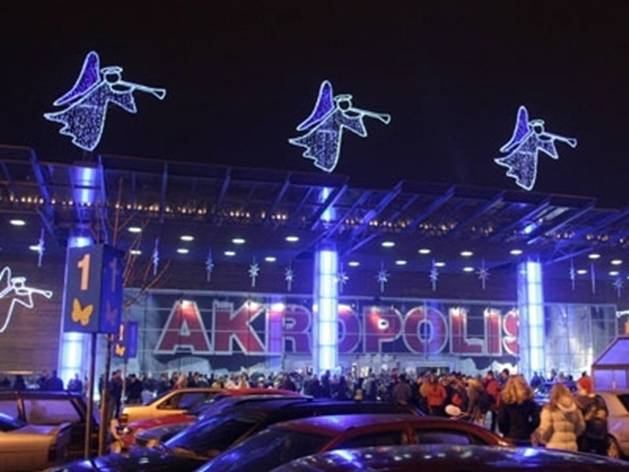
Akropolis shopping mall in Vilnius opened
in 2002. It has a gross area of 110.000 m2 and is the largest in the
Baltic countries. It attracted more than 13,5 million visitors per year in 2009.
- Bookmark :
- Digg
- del.icio.us
- Stumbleupon
- Redit it

Join us on the antiques trail
- Posted by - (2) Comment
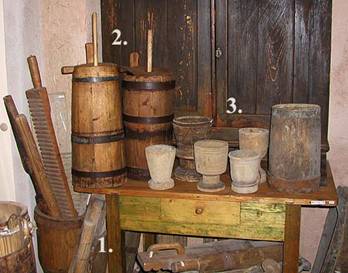
The many antique shops in Vilnius Old Town are the places to snoop around for decadent antiques. Many of them are as much galleries as shops. Browse opulent silverware, inlaid walnut furniture, pottery, elaborate hand-blown glass and gilt-framed religious paintings. One of the better ones is Vilniaus Antikvaro Centras on Dominikonų Street, which is a floor-to-ceiling treasure trove. The ground floor features jewellery, paintings and furniture, although you should make sure to ask the staff to take you down into the cavernous, brightly lit cellar where antiques have been grouped into sections by theme – Socialist Realism, Lithuanian folk art, etchings, Tsarist-era collectibles, Orthodox icons, and so forth.
- Bookmark :
- Digg
- del.icio.us
- Stumbleupon
- Redit it

You are in linen and amber land!
- Posted by - (2) Comment
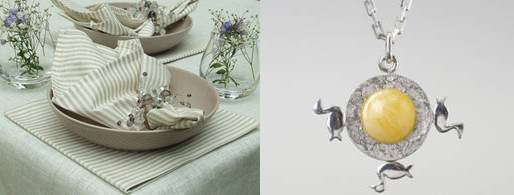
Traditional Lithuanian handicrafts, such as artistic linen, ceramic or amber articles, can make beautiful decorations for your home or great gifts. Many tend to think that amber and linen products are just souvenirs, but here in Lithuania you will find these two materials used also in very exclusive jewellery, fashionable outfits and much more. There are linen and amber shops at all tourist routes and shopping malls, but probably the best time for such shopping is in the beginning of March, when the traditional Kaziukas fair is held in Vilnius. The fair is also famous for its verbos traditional ornately beautiful Palm Sunday arrangements of dried plants.
- Bookmark :
- Digg
- del.icio.us
- Stumbleupon
- Redit it
Thinking of buying property? We can help you!
- Posted by - (3) Comment
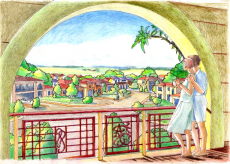
Are you looking for a new apartment or other form of housing in Lithuania? Thinking about starting business here? What about investing in property here now that the market is at its lowest? Please contact us if you want to evaluate the offers and opportunities that exist or if you want help from architects, engineers or interior designers. We can help you check legal matters, technical quality, etc.
Write to us. Tell us what you are looking for. To get information and avoid future problems. Read more…
- Bookmark :
- Digg
- del.icio.us
- Stumbleupon
- Redit it

Text: Neringa Rastenytė-NEWSEC
The Baltic countries seem to start recovering from a deep recession. All in all, the region’s competiveness is improving and, as the internal imbalances are solved, the region is expected to continue its progress on the economic ladder, followed by recovery in real estate market. Since the beginning of 2010 the Baltic countries have been trying to reach the bottom and is still unsure what the frail surface under the feet really means. Notwithstanding this, it is rather clear, that further fluctuations should be very minor and the major shocks are left behind. In any case, lets hope that global economy will not suffer the “W” scenario, which could be extremely harmful for such fragile economies as the Baltic States. So, what challenges and opportunities will Lithuania face in 2011? Is the current foundation strong enough to restart at a full pace?
Real estate market in Lithuania – how reasonable is the latest optimism?
Hundreds of thousands of square meters have been cancelled or frozen in 2009; the renewal of development projects does not seem to be started in next few years. The planned new development volumes for 2011 are modest and the few projects that will actually come on to the market are generally completions of previous years’ projects or extensions of existing ones. It is hardly possible, that developers will start developing without any pre-leases and banks will be extremely selective in financing new projects for at least next 2 years.
Retail turnovers have stabilized in the beginning of Q2, 2010 and some retailers start monitoring minor growth on a monthly basis. Local indexes of consumer confidence have started to improve half a year ago and keep growing in all three Baltic countries. Massive rent-price renegotiations have led to temporary rent discounts of around 30-35% and have changed rent payment structures. Turnover rent structures are now gaining ground in the Baltic region. Most of existing occupiers are not asking to increase existing rental discounts, which mainly are provided by the end of the year, however expect them to be prolonged for another 6 to 12 months. In 2011, owners of the most successful commercial properties, are going to start removing discounts step by step.
Occupational markets are still vulnerable; however it seems that vacancies in office markets are melting faster than expected. Vacancies in the field of prime offices have decreased substantially since the end of 2009. The main reason - low overall supply (Baltic capitals are still one of the least developed cities in the field of modern offices in all Europe), meaning that every single deal makes strong impact on vacancy rates. For example, there was 25-30% vacancy in Vilnius office market in the beginning of 2010. Impressive? Yes, if you look at percentage rates; no, if you look at number of vacant square meters. There is only ~400 thous. sq.m of modern office space in Vilnius (one of the lowest ratio per capita in Europe). Couple of deals in 2010 has affected vacancy rates significantly, which is just ~10% or 40 thous. sq.m today. In other words, the company seeking to lease office immediately would have no choice in existing A grade buildings. Moreover, most of large lease agreements have been concluded in 2007-2008 for mainly 3-5 years. Some of these occupiers will definitely consider moving into a newer office, thus local developers have solid platform to start pre-agreeing new lease agreements and plan new office developments.


Source: Newsec Baltics
Residential market seems to be the most affected; however more and more developers start new constructions. Most of unsold stock is of rather poor quality and is now in the process of being taken over by banks. After a rapid decline in 2008/2009 (~40% in Lithuania, ~50% in Estonia, ~65% in Latvia), prices have stopped dropping in the end of last year in Latvia and Estonia and in the end of Q1 in Lithuania. Most of transactions are concluded in the field of old soviet type apartments, where transaction value does not exceed 40-70 thous. euros per single unit.

Source: Newsec Baltics
- Bookmark :
- Digg
- del.icio.us
- Stumbleupon
- Redit it
Sleeping Beauty about to Wake up
- Posted by - (0) Comment
Luxury Residential Property Market in Lithuania
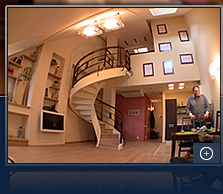
Text: Neringa Rastenytė-NEWSEC
Throughout the last decade residential property market has experienced one of the largest booms as well as one of the hardest falls among other property markets in Lithuania. Influenced by a strong growth of the economy and even stronger future growth forecasts, fueled by loosely controlled bank credit market and inexpensive lending as well as high future income expectations, the residential property market suffered from quick yet low-quality supply of new residential projects, bankruptcies of many of property developers and failures of many of the inhabitants who took mortgages, to repay or keep with the payment schedule.
However, many of the abovementioned issues, which strongly influenced the economy-class and medium class residential property markets, were not so in line with the developments in the luxury property markets in Lithuania.
Luxury Property Market
The luxury property market usually starts with around EUR 2300-2500 /m2 of residential property, and thus is only available to the most affluent part of the Lithuanian population. The properties considered as luxury are also highly sensitive to the nearest neighborhood, safety of the location, surrounding conveniences, such as convenient underground parking, quiet, clean neighborhood and respectable neighbors. A beautiful view from windows, high standards of architectural (and sometimes interior design) solutions, park/greenery close by are considered a must for a luxury properties as well.
A typical customer is usually 30 -50 years old, well (and usually abroad) educated, is married and has children. He or she is either a highly valued professional/manager or successfully manages own business, travels a lot and has business activities or worked abroad as well. In addition, market participants do not tend to take speedy decisions but rather analyze all offers available first. Speculative behavior is rarely observed in the market due to significantly higher transaction amounts than in the economy class or medium class residential properties. Furthermore, luxury properties are usually bought not as the first home, but as an improvement or extension to already owned properties, focusing on long term value of the property.
Market Hibernation
Due to a limited supply and the uniqueness of the objects as well as the selectiveness of the potential buyers, the luxury property market is much slower to react to the general residential market trends. Perhaps, the distinguishing feature of the luxury property market is the ability of the buyers and the sellers to wait, as usually it is not the first apartment or house of the purchaser and considerable resources are available already without external financing. Thus, the owners of the properties, unless distressed, do not tend to sell their properties “cheaply”.
Thus in 2009 the market entered into a phase of hibernation, where both the potential buyers and potential sellers were just viewing the properties and actual transactions were rarely concluded. If compared with 2008, the number of transaction in the luxury property market decreased by approximately a third, whereas it is very difficult to assess the changes in the price levels, as these were set on case-by-case basis. However, it can be noted that the most sensitive to price changes were properties, where despite seller claims of being a luxury property, there were considerable drawbacks (bad neighborhood, inconvenient location, parking or access to the property, bad quality of construction, speculative new projects of questionable value), where prices in many cases dropped down by around 30-40% to the levels of upper-class residential property prices, whereas the most prestigious luxury properties dropped by up to 20%, yet in many cases were not sold at all.
Scarce bank financing for mortgages was not considered as issue, whereas the need to finance own business needs was much more of a problem prevailing in the luxury property market in 2009.
In 2010, especially the second half of the year, market activity showed the first signs of improvement, with more frequent successful transaction conclusions. The price level, if compared to 2009, remained at a similar level. In both 2009 and 2010 there were some examples in the market of luxury properties sold at prices above EUR 4000 /m2 in Vilnius.
Location Puzzle
Whereas the price levels and the number of transactions varied in 2009-2010, top luxury locations in Vilnius remained the same. In Vilnius, Rotuse square, Didzioji and Pilies streets with select surrounding areas carried the top price tags, and together with Gaono, Stikliu, Saviciaus streets as well as some select spots in the old town area, such as “Mikalojaus ziedas” in Zemaitijos street, formed a luxury residential neighborhood.
Latviu and Ciurlionio streets as well as some residential individual-house neighborhoods, e.g. Valakampiai, are considered as luxury top spots as well, though not located directly in the city center or the old town.
Luxury Rent Market – an Unexpected Winner
Potential buyers, who were not able to find or purchase the desired properties, rented luxury properties, which became a more common trend in 2009-2010. This solution came handy to “check” the surrounding neighborhood as well. This behavior was atypical to the luxury property owners three or four years ago in Lithuania and was helped by the market rent level, which, in contrast to the sales prices, became approximately 40% lower if compared to the levels observed in 2007, thus more attractive to the market participants.
Sleeping Beauty is waking up The luxury property market, though having experienced a slowdown in the level of transactions in 2009-2010, is reacting very differently to the crisis, if compared with the general residential market. The past two years in many ways were the opposite, 2009 being full of uncertainty, cautious behavior and modest spending, whereas in 2010 the perceived stability in business and economic environment in Lithuania has brought the luxury property market up on feet, with buyers more willing to buy and sellers more willing to sell. The level of transactions is thus expected to improve in 2011, whereas the price level will most likely fluctuate around the same level.
Nevertheless, we should see more of rent transactions in the luxury property market as well. Typical owners perceive luxury properties more as an investment, thus an option to “check-out” the property before buying something in a similar location is attractive.
- Bookmark :
- Digg
- del.icio.us
- Stumbleupon
- Redit it
Interiors, interiors, interiors…
- Posted by - (2) Comment
What is up now 2011? TIPS from the Maison & Objet – interior exhibition in Paris
Text: Riina Ailio
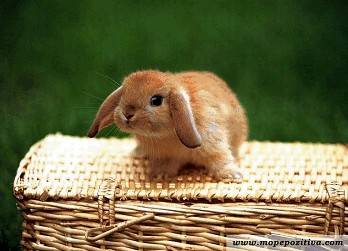
Today, in 2011, we are living in accordance with the sprit of the Rabbit Year! This year is lovely, absolutely lovely. You can feel the difference after the stormy Tiger Year, which was last year.
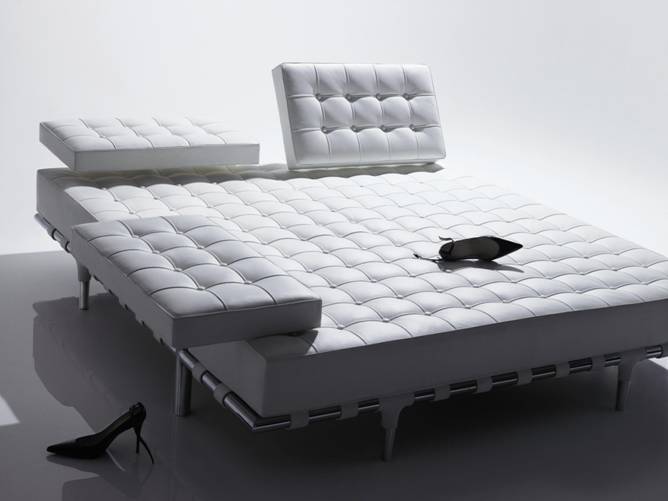
TIME TO RELAX, enjoy life and collect power. Take your e-book and do not feel quilt of lying on your brand new DAYBED. It is like a sofa, but sitting place extends to lying position. Total relax.
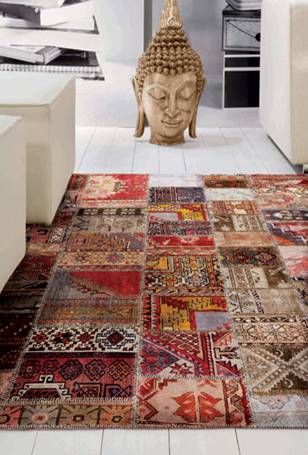
During the Rabbit Year you can dive to the history by the stories from the VINTAGE CARPET. Yes, it is true, what you see, this carpet is a mix and match of the master pieces of the real Persian carpets. Let’s share the story!
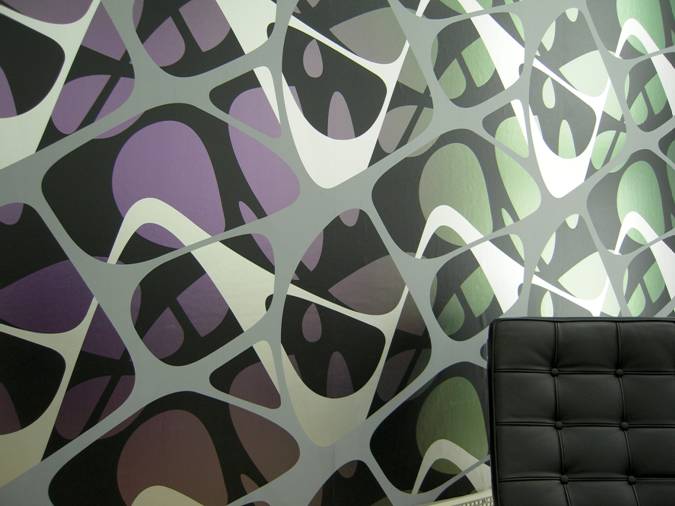
An inspirational Zaha Hadid wall covering.
Zaha Hadid, one of the biggest name in architectural and design world, has created some amazing wall patterns, changing colours like our rabbit is changing his fur colour. “Chameleon’- is the word for this year.
These are some tips for your home in 2011. And more you can get by inviting the INTERIOR SPECIALIST to your home to see what you don’t see.
An outsider can open your eyes. Your surroundings are the continuation of your own ego. Let’s find the effect together – the effect that you need to feel stronger inside you.
Your interior can courage you, it can make you relax, it can inspire you….it can do what ever you need, just notice it.
I, as an interior specialist and interior therapist have been visiting thousands of homes. And I believe I can read YOU by seeing your home. Maybe I even have something important to tell you. Let me know if you want to know. It is fun!!
- Bookmark :
- Digg
- del.icio.us
- Stumbleupon
- Redit it
Importance of leadership
- Posted by - (9) Comment
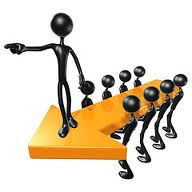
Leadership is an important function of management which helps to maximize efficiency and to achieve organizational goals. The following points justify the importance of leadership in a concern.
1. Initiates action- Leader is a person who starts the work by communicating the policies and plans to the subordinates from where the work actually starts.
2. Motivation- A leader proves to be playing an incentive role in the concern’s working. He motivates the employees with economic and non-economic rewards and thereby gets the work from the subordinates.
3. Providing guidance- A leader has to not only supervise but also play a guiding role for the subordinates. Guidance here means instructing the subordinates the way they have to perform their work effectively and efficiently.
- Bookmark :
- Digg
- del.icio.us
- Stumbleupon
- Redit it
Birštonas Secondary School is best in class
- Posted by - (0) Comment
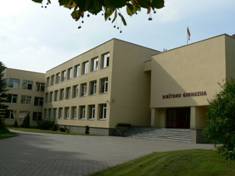
Some time ago I met with a very energetic school rector, Alvydas Urbanavičius at Birštonas Secondary School. Birštonas is a small town about 30 km from Kaunas.
I asked him what had made his school so successful and his answer was quick and clear: “We were very lucky to be ‘adopted’ by a Danish school already in the early 1990s, and the Danes taught us how to run a modern school and also gave us important funding so that we could avoid many of the problems that other Lithuanian schools and the very educational system here still is fighting with”.
He used some time to explain me what a good school is all about, and how the Government has to act if the school system in Lithuania should be able to reach a western level, but he became silent for a moment when I ask him what he would have done to the school system if HE was the Minister of Education.
When the answer finally came, the young rector’s face had become very serious: “It would not help much to be Minister on the top of a non-functional system as is the case today, so the first thing I would have to do would be to perform fundamental changes in the Ministry and only then start a very much needed modernising of the complete educational system in Lithuania”...
- Bookmark :
- Digg
- del.icio.us
- Stumbleupon
- Redit it
Many reforms are needed in Lithuanian higher education. Changes in the elementary and secondary levels are not considered here. By and large, these sectors, though delinquent in teachers’ salaries and school infrastructure, do prepare students reasonably well for their futures with rigorous and disciplined instruction. The need for change is noted by visiting volunteer groups from the U. S. and Canada, working with Lithuania’s teachers on continuing education programs. Students who complete the elementary and secondary levels do well when studying abroad, but are short changed in their higher education. We propose urgent reforms and major changes to this postsecondary level. Reforms in higher education must give serious priority to four areas: adequate financial resources; curricular changes to create a better system for imparting knowledge; outreach, wider service areas and new learning centres; and productivity and excellence in creating and imparting new knowledge in school and on the job
Text: Olga Medvedeva
To write about the higher education reform in Lithuania… - why me?!
That was my first reaction to the request to look into how the higher education (HE) reform is going on and to write about it.
I have always tried to avoid giving opinion about something I don’t think I know well enough. Indeed, there are people who study all the figures and ratios about HE: numbers of students by age, by type of studies, by future qualification, the labour market supply & demand, investment and outcome (in whatever units of measurement), trends in demography and vectors of migration, intra- and extra- factors etc. They diagnose the state of things and recommend what is to be reformed, transformed or introduced…
On the second thought, isn’t education one of the areas we are all involved in? First as students, then as parents, then just as common people who do care what specialists treat them in hospitals, design houses, set prices or calculate taxes? And as citizens, who are concerned about lots of university graduates leaving Lithuania in search of a job elsewhere…
A few facts about the HE reform in Lithuania:
Lithuania has switched over to the European model of higher education that makes a clear distinction between university and non-university studies; it is divided into undergraduate, graduate and post graduate studies. The common time- and workload framework allows for a bigger mobility of students and comparability of degrees. At present there are 21 universities (state and private) and 27 colleges in Lithuania; the country is well above the EU average by the proportion of students per 1000 to the total population aged 20-29 ( LT- 73.21; EU-52,8). The changes in the legal status and governance of universities have granted rights to engage in business activities: purchase and sell property, set up companies, get loans. The most disputable innovations of the reform are changes in financing: the notorious “student basket”, which includes teachers’ salaries, costs of study materials and scholarships, has caused a real commotion in universities’ hunt for potential students with their full baskets. The more students are admitted, the more finance a university or college gets…
No reform would be true to its name if it were not challenged and questioned at each step. Almost 50 HE institutions in Lithuania - is it just enough or too many? In 2009-2010 45,6 % of the emigrants from Lithuania were of the age of 20-39, how many of them carried away their university diplomas and educated brains?
Tertiary education “…equally accessible to all, on the basis of capacity,…” –shouldn’t there be more weight given to measuring or assessing capacity? Otherwise, we face an eternal clash between quantity and quality. With no intent to hurt anyone’s feeling, let me remind you Ezra Pound’s words about education:
“Real education must ultimately be limited to men who insist on knowing–the rest is mere sheep-herding”.
When going to universities in other countries rather than in Lithuania, most young people justify their choice by the reasonable prices for a better quality there… Quality is a complex concept; it is probably more complicated to define and assess “quality” in education than in the production of tangible things. But one cannot start wondering about quality when you see that financing per student in Lithuania is approximately 2 times less than the EU average, not to speak about Sweden, Finland or Denmark. And why do many university lecturers feel awkward when their peers from Belgium or Ireland talk about salaries? Is it because they are paid adequately for their lower-quality work?
My reflections on the changes in HE in Lithuania are fragmentary and subjective. Though formally “a teacher “, I believe in Shaw’s interpretation of teaching: “I am ….only a fellow traveler of whom you asked the way. I pointed ahead – ahead of myself as well as of you”.
- Bookmark :
- Digg
- del.icio.us
- Stumbleupon
- Redit it
We do not have long to get a school system right
- Posted by - (2) Comment
Text: Mervyn Bedford
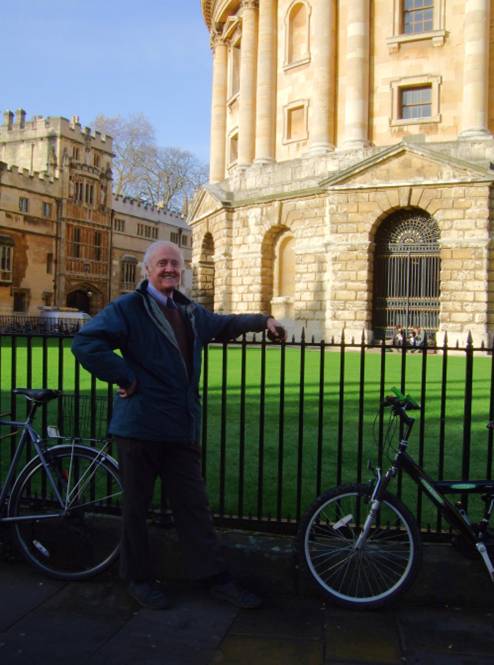
Mervyn Bedford at one of the many Oxford landmarks of higher education.
Because I know Aage Myhre and his wife and very much respect what he is trying to do for Lithuania, I offered to write of educational values for the new version of VilNews. The Baltic nations have a perfect opportunity to change the map of educational provision in ways that better fit the rapidly changing world of the 21st. century. Education is not about buildings. It is not about systems and organisations. It is not about tests and inspections. It is about people and the relationships between those who want to learn, or need to learn, and those who already know it. For almost 150 years State school systems have imposed a model of teaching and learning that has hardly changed while society has fundamentally changed and, recently, very rapidly. Those changes are racing unseen towards our youngest children.
At a conference in Norway in 2009, reported in the respected UK magazine “New Scientist,” experts discussed how soon human beings will need to be wired to the super computers rapidly arriving in the work place. Earliest suggested date was 2045. At MIT in the US by 2029 they will have computers able to replicate human thought and decision by copying the chemical and electrical patterns in the human brain. Two Oxford University teachers have argued in print about whether it is right to allow students drugs to enhance their brain performance. Drugs to provide specific hours of sleep and brain implants that help deaf children to hear and paralysed limbs to move already exist. Job requirements in a very few years time and the character of society will change dramatically. We do not have long to get a school system right.
1 An Ideal School System
The Early Brain
School systems have been rooted in teaching mainly facts which pupils and students have only to remember and write down on test papers. Testing systems of all kinds, including the university sector, are seriously flawed. Research shows that at best they test speed if handwriting and memory. These are not the most desirable qualifications for employment. Business people in England and some academics openly complain that despite escalating results at 18+ we are still not producing enough people who can think for themselves. That is why future human beings, including my four young grandchildren, may have to be electronically plugged into the machines.
Modern scanning reveals that the human brain, even before birth, is imprinted for learning. The two senses- touch and hearing- are alive and working from the first day. "Feed them now" nature is crying, but how little we do to work them effectively. A baby's early experience is a total lottery. There is abundant evidence that the brain has enormous reserve power that even the Einsteins and Hawkings do not tap. School systems threaten the human brain with redundancy.
Early encouragement of free, natural learning experience in babies is now essential. The priority for national investment must now be early education. The obvious risks can be managed effectively. We have to build raw brain power in those early years, up to three and four, when the brain is plastic enough to believe anything is possible. That is the power needed to stay ahead of the machines. What we have built by around 4 and 5 will continue to mature and learn but we cannot much increase its raw power. If we do what is right for our youngest children we shall solve all the problems most countries observe with later education, including many costly efforts to repair the dame of educational failure.
Parent-Teacher Partnership
Research clearly shows the power for young children’s learning when teachers and parents are on the same wavelength. This is best found in smaller schools. Across the UK and elsewhere standards in small schools are at the top of national performance despite all the alleged “problems” argued for closing them. No educational evidence is ever offered to support closures. They are said to be too expensive but this is a badly flawed argument. When total education spending is calculated small schools generally cost less. It is not fair only to calculate their pupil unit costs. Small schools serve mainly rural areas and bring rural community benefit, but our urban children and their communities urgently need the same benefits. The “big is better and by the way cheaper” myth has never been right. Long-term, small-scale education delivers profit on its costs. Academic achievements are more widely achieved and are more enduring. This brings better qualifications and jobs and eventually higher tax revenues for the State while the healthy partnership between home and school reduces the heavy costs of later educational failure. A wise government will invest in small-scale provision and partnership between teachers and parents.
Effective Teaching and Learning
Research has consistently shown that up to 50% of all outcomes still reflect home background- for better or worse. The other 50% is quality of teaching. This will also reflect quality of headteachers and school leadership.
There is much profoundly valid research showing basic factors which, if present in lessons, make them effective. This important professional research never reaches classrooms while the government systems shaping what schools do and what universities demand distract their interest. The desired models, however, require the opposite of what most school systems offer..….not least the way time is used. I worry about under-privileged and disadvantaged children, an often failing cadre of disaffected pupils, but I worry more for those who think they have succeeded. A wise government will invest heavily in giving teachers the tools they need to do the job. Teaching is not mysterious but it is more complex than even many professionals believe.
For example the most effective learning comes when teachers in their planning exploit what their pupils already know and can do. As a result they often ask them to make important decisions about their work and take responsibility for much of it. Real-world experience like discussion and co-operation play their part. Teaching becomes a sensitive matter of fine-tuning the whole programme, leading when required and at other times supporting the learning. Teachers must always show they are in charge and know the goals. They need to demonstrate they not only have the tools but know how and when and where to use them. Successful schools have leaders who inspire such professional insight and vision and lead the practice by their own example. Their schools are places where flexibility and spontaneity feature significantly in everyday organisation.
Effective Accountability
The observation model I developed in Sweden is similar to the one recently adopted in New Zealand to replace tests and inspections. If we inform teachers better and help them to inform each other by observing in classrooms, where the real action is, we shall change and improve practice in some cases overnight. Observation is such a revelatory practice. Its truths often have meaning for more than the teachers, but for the school and even the State. To invest in such a system needs only an independent, external validation system- checking that schools use it, and are learning from it. It will be much cheaper than tests and inspections.
If Lithuania adopted these principles and priorities it will achieve the paradigm shift in educational practice the 21st. century urgently requires. Heavy, top-down, bureaucratic and expensive procedures will be minimised. In England we are wasting billions of pounds on smart new buildings despite two major pieces of respected academic research showing that long-term the quality of school and college buildings impacts little on performance. We want clean schools, in good repair, with adequate working space, ventilation and sound-proofing. We do not need architectural palaces. No-one can tell me exactly what education will look in even ten years time, let alone 2099. It will be very much at a button and the two resources our children will still most need will be good parents and good teachers. Those are the targets for investment. Let Lithuania lead the world.
Mervyn Bedford
Mervyn Benford is a former teacher, head teacher, local authority inspector and adviser who later worked for eight years as a national school inspector in England and Wales. The school he led won recognition under the 1986 Royal Society of Arts “Education for Capability” award. He has throughout his career contributed media articles and interviews on education and more recently worked on and off in Sweden for 14 years training teachers to observe lessons and give friendly but constructive feedback as a better method of accountability than testing and inspection. He observed over 2600 lessons in Sweden across the age group from 1 to 20. He works voluntarily for an organisation designed to promote the virtues of smaller schools. He has a deep interest in the independent Baltic States and in 2009 talked at an international seminar in Riga on school quality issues. In England, as a member of the National Education Trust, he is regarded as one of its “Leading Thinkers
- Bookmark :
- Digg
- del.icio.us
- Stumbleupon
- Redit it
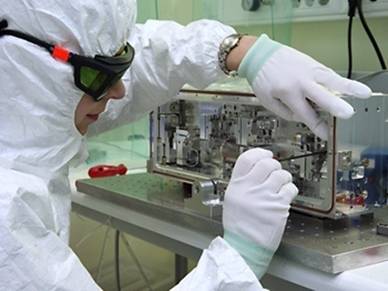
The French daily “Le Monde” has recently published an article about Lithuania’s world-leading laser manufacturers. According to “Le Monde”, Lithuania is the biggest exporter of femtosecond lasers in the world. The Lithuanian laser technologies producer UAB “Šviesos konversija” only holds 80% of the global market of femtosecond lasers. A country of 3.5 million people, Lithuania, has about 15 laser producers, employing about 300 laser specialists, half of which are engineers and doctors of sciences. Lithuania’s laser sector grows about 15-20 % annually, which is twice faster than the whole economy of the country. The Lithuanian laser production is demanded by the best scientific laboratories in Europe and the US.
Read more...- Bookmark :
- Digg
- del.icio.us
- Stumbleupon
- Redit it
- Posted by - (0) Comment
VilNews section TRAVEL LITHUANIA!

This is our ultimate tourism guide that supports promotion of Lithuania and all that this country has to offer. Articles on a variety of topics, information about hotels, airlines, resorts, historic sites, events, museums, attractions and much more can be easily found here!
The main activities of the TRAVEL LITHUANIA Tourism section are the following:
Spreading knowledge about tourism services and destinations in Lithuania.
Informing about tourism investment opportunities Lithuania.
Fostering tourism relations with other countries.
Informing about tourism exhibits and fairs.
Fostering foreign media coverage of tourism in Lithuania.
Informing about workshops and meetings, conferences, seminars for professionals.
Planning to visit Lithuania? Here is some information for You:
Visa
Overseas residents must present valid documents on entering Lithuania; these include a passport and an entry visa. No visa is required for residents of the United States, Britain, the EU and residents of many other countries who enter Lithuania for less than 90 days in a 12-month period.
There are arrangements with some 20 other countries, whose citizens are eligible to receive a visa to Lithuania without being in possession of an invitation from a Lithuanian body. Nevertheless, the visa is granted after proof is provided of the ability to finance the period of the stay in Lithuania; normally around 40 dollars a day is required.
For more about visa and Residence Permits see: http://www.urm.lt
How do I get to Lithuania?
It’s very easy to reach Lithuania by car, ferry, railroad or by air. There are three international airports, all with good connections to Europe. The airports are located in Palanga, Kaunas and Vilnius.
A list of flights to Lithuania from popular destinations can be found here: flights
What language is spoken in Lithuania?
The official language in the country is Lithuanian which is said to be the most archaic of all the living Indo-European tongues. In tourist places and in bigger cities most people know English. Other languages that it may be possible to communicate in Lithuania are Russian, Polish; sometimes French, German.
Got interested and want to learn some Lithuanian? See: http://www.oneness.vu.lt/lt/
What currency is used in Lithuania?
Legislation on the controls of cash entering or leaving the EU apply in all Member States. Any person entering or leaving the EU will have to declare the money that they are carrying if this amounts to 10,000 euro or more (including cheques, travellers' cheques, money orders, etc.). This will not apply to anyone travelling via the EU to a non-EU country, as long as the original journey started outside of the EU, nor to those travelling within the EU.
The official currency of Lithuania is Litas (Lt). Major credit cards are widely accepted and ATM machines can be found in most banks and hotels. There are numerous currency exchange kiosks in the capital Vilnius and travellers' cheques can be cashed at some banks.
For more see: currency
What precautions should I take against muggers and robbers?
Petty crime, notably pickpocketing in bars and restaurants and especially in outside areas, is common. Take extra care of your belongings in busy, and particularly in outside, locations. Avoid carrying large quantities of cash. When confronted by a mugger or robber do not oppose resistance.
If you need to contact the emergency services in Lithuania call 112
- Bookmark :
- Digg
- del.icio.us
- Stumbleupon
- Redit it

OPINIONS
Have your say. Send to:
editor@VilNews.com

Ph. D., Chicago
A wave of unity sweeps the international Lithuanian community on March 11th every year as Lithuanians celebrated the anniversary of the Lithuanian Parliament's declaration of independence from the Soviet Union in 1990. However, the sense of national unity engendered by the celebration could be short-lived.
Human beings have a strong tendency to overgeneralize and succumb to stereotypical us-them distinctions that can shatter even the strongest bonds. We need only search the internet to find examples of divisive thinking at work:
- "Those who fled Lithuania during World II were cowards -- and now they come back, flaunt their wealth, and tell us 'true Lithuanians' how to live."
- "Lithuanians who work abroad have abandoned their homeland and should be deprived of their Lithuanian citizenship."

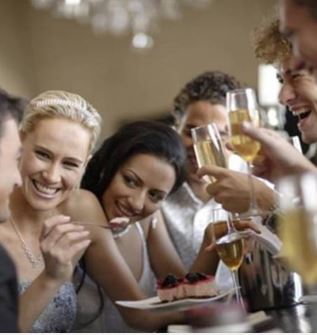
In Lithuania Christmas Eve is a family event and the New Year's Eve a great party with friends!
Lithuanian say "Kaip sutiksi naujus metus, taip juos ir praleisi" (the way you'll meet the new year is the way you will spend it). So everyone is trying to spend New Year's Eve with friend and have as much fun as possible.
Lithuanian New Year's traditions are very similar to those in other countries, and actually were similar since many years ago. Also, the traditional Lithuanian New Years Eve party was very similar to other big celebrations throughout the year.
The New Year's Eve table is quite similar to the Christmas Eve table, but without straws under the tablecloth, and now including meat dishes. A tradition that definitely hasn't changes is that everybody is trying not to fell asleep before midnight. It was said that if you oversleep the midnight point you will be lazy all the upcoming year. People were also trying to get up early on the first day of the new year, because waking up late also meant a very lazy and unfortunate year.
During the New Year celebration people were dancing, singing, playing games and doing magic to guess the future. People didn't drink much of alcohol, especially was that the case for women.
Here are some advices from elders:
- During the New Year, be very nice and listen to relatives - what you are during New Year Eve, you will be throughout the year.
- During to the New Year Eve, try not to fall, because if this happens, next year you will be unhappy.
- If in the start of the New Year, the first news are good - then the year will be successful. If not - the year will be problematic.
* If New Year's night is cold and starry - look forward to a good summer!
* If the during New Year Eve trees are covered with frost - then it will be a good year. If it is wet weather on New Year's Eve, one can expect a year where many will die and dangerous epidemics occur.
* If the first day of the new year is snowy - the upcoming year will see many young people die. If the night is snowy - mostly old people will die.
* If the New Year time is cold - then Easter will be warm.
* If during New Year there are a lot of birds in your homestead - then all year around there will be many guests and the year will be fun.
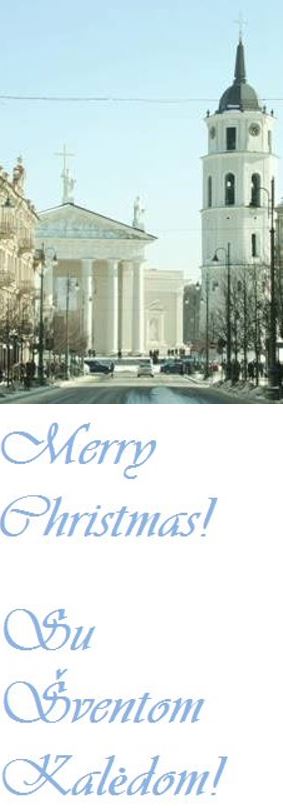
Christmas greetings
from Vilnius
and epic battle for the
future
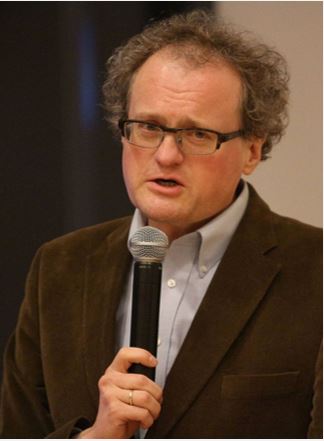
Philosopher, political theorist, historian of
ideas, social analyst, and political
commentator
Ukraine was and continues to be perceived by the EU political class as a sort of grey zone with its immense potential and possibilities for the future, yet deeply embedded and trapped in No Man's Land with all of its troubled past, post-Soviet traumas, ambiguities, insecurities, corruption, social divisions, and despair. Why worry for what has yet to emerge as a new actor of world history in terms of nation-building, European identity, and deeper commitments to transparency and free market economy?
Right? Wrong. No matter how troubled Ukraine's economic and political reality could be, the country has already passed the point of no return. Even if Vladimir Putin retains his leverage of power to blackmail Ukraine and the West in terms of Ukraine's zero chances to accede to NATO due to the problems of territorial integrity, occupation and annexation of Crimea, and mayhem or a frozen conflict in the Donbas region, Ukraine will never return to Russia's zone of influence. It could be deprived of the chances to join NATO or the EU in the coming years or decades, yet there are no forces on earth to make present Ukraine part of the Eurasia project fostered by Putin.
want to learn about the
new, scary propaganda
war between Russia,
The West and the
Baltic States!
believe their government
is corrupt
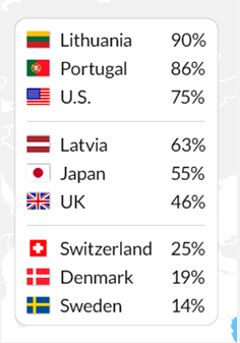
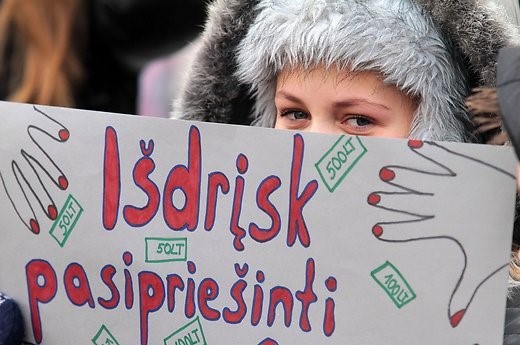
students say no to
bribes for doctors
During Soviet times, government was administered for the people in control, not for the local population, court decisions were decreed, they were not the administration of justice, and academia was the domain of ideologues. 25 years of freedom and openness should have put those bad experiences behind Lithuania, but that is not so.
Today, it is a matter of expectation that court pronouncements will be governed by ideological dictates. Few, if any Lithuanians expect real justice to be effected. For foreign companies, doing business in Lithuania is almost impossible in a situation where business people do not expect rule of law, so, surely Government would be a refuge of competence?
Lithuanian Government has not emerged from Soviet styles. In an attempt to devolve power, Lithuania has created a myriad of fiefdoms of power, each speaking in the name of the Government, each its own centralized power base of ideology.

Chepstow, Wales
Doesn't that sound suspiciously like Lithuania? Ah, but I didn't mention the mountains of Snowdonia, which would give the game away.
I'm talking about Wales, that part of the UK which Lithuanians used to call "Valija", but later named "Velsas" (why?). Wales, the nation which has welcomed two Lithuanian heads of state to its shores - firstly Professor Vytautas Landsbergis, who has paid several visits and, more recently, President Dalia Grybauskaitė who attended the 2014 NATO summit which was held in Newport, South Wales.
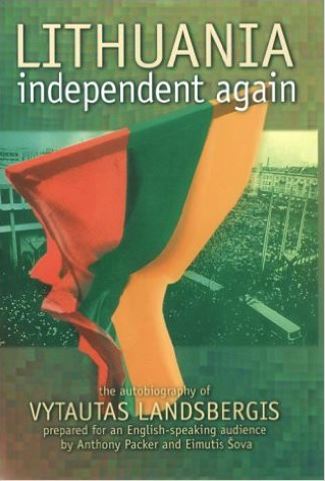
ENGLISH VERSION OF THE
AUTOBIOGRAPHY OF VYTAUTAS LANDSBERGIS.
Although Lithuanian activities have thinned over the decades as that postwar generation died out, the Lithuanian Martyrs' parish hall is crowded with many, many hundreds of visitors who come to the Lithuanian cemetery for All Souls' Day. Similarly, the Franciscan parish has standing room only for Christmas Eve mass.
Although I am firmly embedded in the literary culture of Canada, my themes are usually Lithuanian, and I'll be in Kaunas and Vilnius in mid-November 2015 to give talks about the Lithuanian translations of my novels and short stories, which I write in English.
If you have the Lithuanian language, come by to one of the talks listed in the links below. And if you don't, you can read more about my work at
www.anatanassileika.com
http://www.vdu.lt/lt/rasytojas-antanas-sileika-pristatys-savo-kuryba/ https://leu.lt/lt/lf/lf_naujienos/kvieciame-i-rasytojo-59hc.html
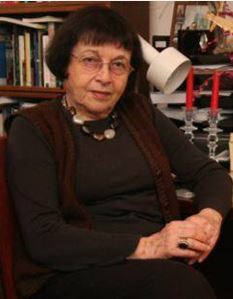
"My love and best wishes to all. As long as VilNews exists, there is hope for the future,"" she writes.
Irena Veisaite means very much for our publication, and we do hereby thank her for the support and wise commitment she always shows.
You can read our interview with her
Facing a new reality
Dear readers of VilNews,
For a number of years, the EU and Russia had assumed the existence of a strategic partnership, based on the convergence of values, economic integration and increasingly open markets and a modernisation agenda for society.
Our agenda was positive and ambitious. We looked at Russia as a country ready to converge with "European values", a country likely to embrace both the basic principles of democratic government and a liberal concept of the world order. It was believed this would bring our relations to a new level, covering the whole spectrum of the EU's strategic relationship with Russia.
The likelihood of Putin
invading Lithuania
.jpg "lithuania today")
Founding Director at Summer Literary Seminars
Are all Lithuanian energy
problems now resolved?
Lithuania as a country does not have significant energy resources. Energy consuming infrastructure after WWII was small and totally supported by energy imports from Russia.
First nuclear reactor begins power generation at Ignalina in 1983, the second reactor in 1987. Iganlina generates enough electricity to cover Lithuania's needs and about 50%.for export. As, prerequisite for membership in EU, Ignalina ceases all nuclear power generation in 2009
The Klaipėda Sea terminal begins Russia's oil export operations in 1959 and imports in 1994.
Mazeikiu Nafta (current ORLEAN Lietuva) begins operation of oil refinery in 1980.
Have Lithuanian ties across
the Baltic Sea become
stronger in recent years?
The two decades that have passed since regaining Lithuania's independence can be described as a "building boom". From the wreckage of a captive Soviet republic, a generation of Lithuanians have built a modern European state, and are now helping construct a Nordic-Baltic community replete with institutions intended to promote political coordination and foster a trans-Baltic regional identity. Indeed, a "Nordic-Baltic community" - I will explain later in my text the meaning of this catch-phrase.
Since the restoration of Lithuania's independence 25 years ago, we have continuously felt a strong support from Nordic countries. Nordics in particular were among the countries supporting Lithuania's and Baltic States' striving towards independence. Take example of Iceland, country which recognized Lithuania in February of 1991, well in advance of other countries. Yet another example - Swedish Ambassador was the first ambassador accredited to Lithuania in 1991. The other countries followed suit. When we restored our statehood, Nordic Countries became champions in promoting Baltic integration into Euro-Atlantic institutions. To large degree thanks Nordic Countries, massive transformations occurred in Lithuania since then, Lithuania became fully-fledged member of the EU and NATO, and we joined the Eurozone on 1 January 2015.
Have you heard about the
South African "Pencil Test"?
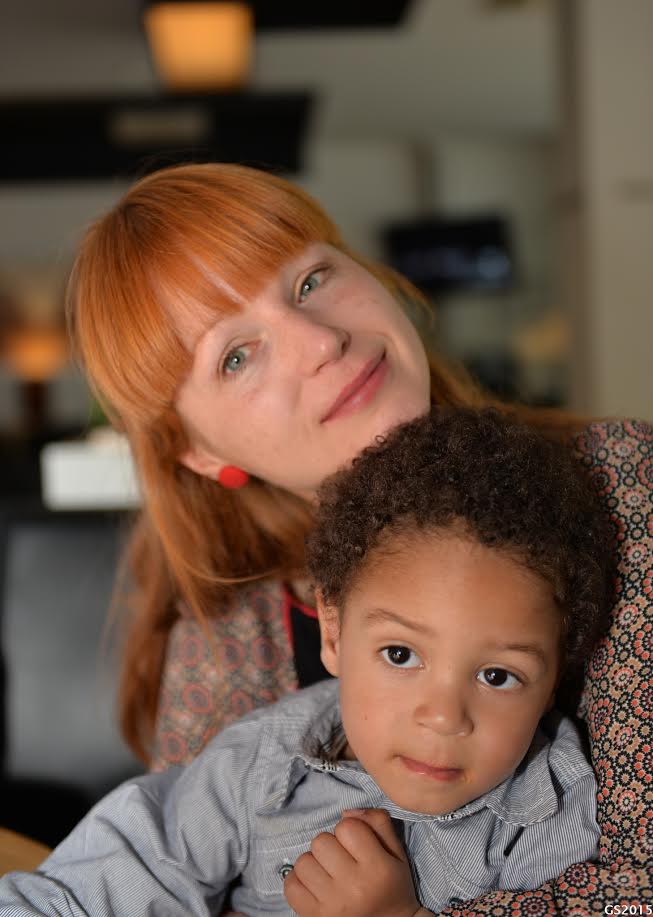
But that is exactly what happened to me when I came back from South Africa. I will tell you how.
VilNews e-magazine is published in Vilnius, Lithuania. Editor-in-Chief: Mr. Aage Myhre. Inquires to the editors: editor@VilNews.com.
Code of Ethics: See Section 2 – about VilNews. VilNews is not responsible for content on external links/web pages.
HOW TO ADVERTISE IN VILNEWS.
All content is copyrighted © 2011. UAB ‘VilNews’.