
THE VOICE OF INTERNATIONAL LITHUANIA

|
VilNews has its own Google archive! Type a word in the above search box to find any article.
You can also follow us on Facebook. We have two different pages. Click to open and join.
 Click on the buttons to open and read each of VilNews' 18 sub-sections Click on the buttons to open and read each of VilNews' 18 sub-sections  |

|


Archive for 2011
Thousands of Jews march in Poland and Lithuania to honour Holocaust victims
- Posted by - (0) Comment

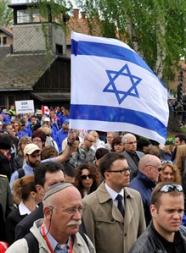
Participants of the traditional March of the Living start their march at the former Auschwitz Nazi Death Camp in Oswiecim, southern Poland, Monday, May 2, 2011. Thousands of people from around the world take part in the annual March of the Living, paying tribute to the victims of the Holocaust at the former Nazi Death Camp Auschwitz-Birkenau. (AP Photo/Bela Szandelszky)
By The Associated Press
WARSAW, Poland — About 7,000 Jews marched to the former German Nazi death camp of Auschwitz on Monday in memory of the 6 million Holocaust victims.
Participants in the 20th annual March of the Living were carrying Israeli flags. They started from the former camp's gate with the infamous "Arbeit Macht Frei" ("Work Sets You Free") sign.
The crowd walked about 3 kilometres (2 miles) from the red brick buildings of Auschwitz I to the wooden barracks and gas chambers of Birkenau, or Auschwitz II, where a memorial ceremony was held at a monument to the camp's victims.
The march, which is traditionally held on Holocaust Memorial Day, also included some Holocaust survivors.
Between 1942-1945, Jews from across Europe were brought to Birkenau by rail and killed in its gas chambers. At least 1.1 million people — mostly Jews, Poles and Gypsies — died that way or from starvation, disease and forced labour at the camp that German Nazis built in occupied Poland during World War II.
The Auschwitz camp was liberated Jan. 27, 1945 by Soviet troops.
Meanwhile, in Lithuania dozens of people paid tribute to the nearly 200,000 Jews who died 70 years ago when the Nazis invaded the country.
Waving Israeli and Lithuanian flags, about 100 demonstrators paid tribute to the dead by marching to the Holocaust survivor memorial outside the capital, Vilnius.
Visiting Israeli Deputy Foreign Minister Danny Ayalon said it was important to remember the 6 million Jews murdered in Europe by the Nazis because "anti-Semitism, xenophobia and racism ... are still threatening all of us."
Some 90 per cent of the country's pre-war Jewish population of 220,000 were murdered by the Nazis and local collaborators — the country's largest loss of life in such a short time. Most of the 70,000 Jews in the capital were killed within a few months in 1941.
- Bookmark :
- Digg
- del.icio.us
- Stumbleupon
- Redit it

Intolerance in today’s Lithuania
- Posted by - (0) Comment
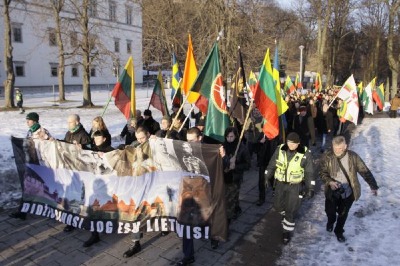
Neo-Nazis marching in Vilnius during
Lithuania’s Independence Day, 11 March 2011.
Photo: http://holocaustinthebaltics.com
Intolerance, racism, anti-Semitism, xenophobia and homophobia. These are words and terms we unfortunately have heard and seen far too often in Lithuanian media in recent years.
This country that for hundreds of years was a thriving cradle for co-existence between people from many nations, cultures and religions. Or, as the British historian Norman Davies puts it: “Lithuania was a haven of tolerance”. Davies was not the only one who took notice of this. Erasmus of Rotterdam (1466 – 1536) is quoted as stating; “I congratulate this nation [Lithuania] which now, in sciences, jurisprudence, morals, and religion, and in all that separates us from barbarism, is so flourishing that it can rival the first and most glorious of nations.”
But no longer so. Today’s Lithuania faces several forms and manifestations of intolerance. According to B.O. Dittrich (2007), Lithuania is the most homophobic of all the EU countries. In 2000 a survey conducted by European Value Study Group showed that the level of xenophobia in Lithuania is one of the highest in Europe. For example, as much as 23% of Lithuanians would not like to be neighbours with Jews (with Russians – 14, Estonians – 11.2%, Latvians – 5.2%, Germans – 5.2%, Swedes – 2.1%).
Attitude towards immigrants is as bad – 22.7% of Lithuanians would not like to be neighbours with immigrants, 94.2% believe that they should get a job before the immigrants, 55.2% do not think that our country should accept refugees, and as much as 58% of Lithuanians do not trust foreign companies.
During the spring of this year we have seen neo-Nazis marching through Vilnius on Lithuania’s Independence Day, we have seen the neo-Nazis hoisting swastika flags on the nation’s official flag poles, and we have seen lawmakers in the country’s Committee on Legal Affairs vote to make even more stringent censorship legislation for homosexuals, saying that they should be able to fine people for the "propagation of homosexual relations" in public.
This has earned condemnation from EU groups, but the European commission scarcely dares to take action when member states disregard with what West Europe consider fundamental rights for its people. For example, when the law that bans the “promotion of homosexuality”, little was heard from the EU.
Reactions from Lithuanian leaders against this worrisome trend has unfortunately also been relatively vague, although there are signs that some finally begin to wake up. But there are still some politicians who seem to breed homophobia and racism in this country.
VilNews will for some time focus on the problem of intolerance, and we do hereby open up for serious posts, interviews and articles on this theme. We begin today with an interview with Professor Irena Veisaite (below) and we urge you, dear readers, to write to us with your own thoughts and reflections.
Maybe one day we will again be able call Lithuania ‘A Haven of Tolerance’…
- Bookmark :
- Digg
- del.icio.us
- Stumbleupon
- Redit it

“There is always something growing”
- Posted by - (1) Comment
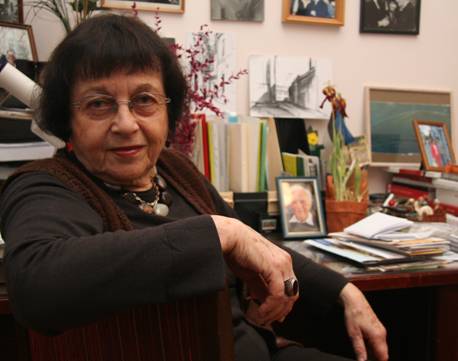
Professor Irena Veisaite
An Interview of Irena Veisaite
by Ellen Cassedy
April 26, 2011
Irena, you are a Holocaust survivor and have long been involved in Holocaust education initiatives in Lithuania. What do people outside Lithuania need to know about intolerance inside Lithuania today?
Of course there are examples of intolerance in Lithuania. All over the world there is intolerance. But there are also many attempts to promote tolerance in Lithuania. You should not always see only the negative side. We must appreciate positive steps as well.
What about the neo-Nazi march in Vilnius on March 11, independence day, and the swastika flags and anti-Semitic banner that appeared on Hitler’s birthday?
It is upsetting that this happened and that some young people joined that march. But it is also worth noting that both government and society at large reacted in protest against these incidents.
Lithuania’s foreign ministry and the Speaker of the Seimas, Dr. Irena
Degutiene, reacted strongly against the anti-Semitic outbreaks on the
day of Hitler's birthday. The reaction against the march on March 11
was not as strong and as far as I remember, it was mainly Kubilius who
reacted.
There is always something growing. This makes me hopeful.
What is being done to promote tolerance in Lithuania, and what more
should be done?
A great deal is being done. In a short interview it is impossible to
mention everything. Just a few examples: When Lithuania declared its
independence in 1990, there was almost nothing on this topic. Now we
have about 60 books researching the terribly painful history of the
end of Litvak history and culture in Lithuania. We have three books
about the Roma Holocaust in the country. Our textbooks are changing
toward openness and tolerance to Lithuania’s minorities, though they
are not yet perfect. We’re educating our teachers, with the help of
the US Holocaust Memorial Museum.
We also have many very active Educational Centers all over the country
which are teaching the history of the Holocaust. A wonderful, modern
exhibition has opened in the Museum of Tolerance in Vilnius Our
government has designated 2011 as the Year of Holocaust Remembrance in
Lithuania. Many events, discussions, conferences on this painful issue
are planned.
For young people all over the world, the Holocaust is so remote that
they can barely imagine it could happen. But we all need to learn
about the Holocaust, not only because of the terrible things that
happened, but because we need to understand that every one of us could
in certain circumstances become a perpetrator. Every day we see how
people are manipulated, how people are infected with hatred. As the
famous Polish-British sociologist Zygmunt Bauman has stated in his
book, Modernity and the Holocaust," the Holocaust is not a specific
Jewish problem; it is a problem of modern society as a whole.
When we speak about the Holocaust in Lithuania or other Eastern
European countries to people who also experienced the Gulag, we can’t
ignore their experience. If we want to work toward mutual
understanding, we must not become rivals as to who’s a bigger victim ,
but respect any victim of mass murder.
You have spoken of the need for "intolerance of intolerance." Can you
explain?
No doubt. we should be intolerant of intolerance whenever and wherever
it occurs. And we have first of all to apply it to ourselves. We can’t
tolerate corruption, coercion, violence, etc. We have to fight it, but
never overstep the border of tolerance. People are brought up
differently, they live in different cultures and traditions, they have
different experiences and therefore they can have different opinions
and feelings, which have to be tolerated.
What can people outside of Lithuania do to help promote tolerance in
Lithuania?
People from outside Lithuania should be very careful about
interfering. They can speak of their own experience, but when a person
from outside any country comes to teach local people how to act, you
have to know the local situation very well and find the right way to
speak. You must have tact. You have to understand the education
people received, and their experiences. Otherwise you will face
unexpected consequences.
Only one little example. In February, I attended a conference in
London called “No Simple Stories,” which brought together well-known
historians from the US, Israel, Germany, England, and Lithuania. We
examined Jewish-Lithuanian relations – the years of coexistence and the
years of violence. It was wonderful, very open and very honest. But at
the end came a professor from outside with two cameraman, who read a
statement which insulted all participants, accusing them in hiding the
truth about the Holocaust in Lithuania. Such declarations don’t help,
they only create bad blood and make a fair dialogue impossible.
Professor Irena Veisaite was a founder of the Open Society Fund –
Lithuania and is now ombudsman of the Open Society Institute. For the
past 15 years, she has participated in Holocaust education initiatives
in Lithuania. She has been honored by the Lithuanian government with
the Gediminas Order. The Sugihara Foundation nominated her as the
Person of Tolerance in 2002. She lives in Vilnius.
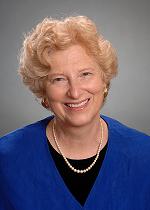 |
Ellen Cassedy traces her Jewish family roots to Rokiskis and Siauliai. Her book, "We Are Here: Memories of the Lithuanian Holocaust," will be published in March of 2012. She lives in Washington, D.C. Visit her website at www.ellencassedy.com. |
- Bookmark :
- Digg
- del.icio.us
- Stumbleupon
- Redit it

By Yves Plasseraud, Paris
A series of painful and worrying events (Stankeras holocaust denial, Vilnius neo-nazi parade, desacration of the 9th Fort Memorial… the list is sadly long) have recently drawn the attention of Western intellectual and journalists towards what seems to be a substantial increase of antisemitism in Lithuania. The name of Lithuania, associated for centuries (during the period of the Grand Duchy of Lithuania particularly) with the idea of tolerance and social peace, is now more and more being seen as synonym of antisemitism, racism, xenophobia and, another field, homophobia. For many observers, Lithuania is now leading the group of “small” countries where human Rights principles appear forgotten !
There is obviously some exaggeration in this perception, but the recent evolution of Lithuania’s public opinion remains indeed worrying. What happened to this country ? Let’s first try to determine if there are specific causes in the Lithuanian case, and, in the affirmative, what is their nature.
It does not seem to be the experience of World War Two of extensive collaboration with the Nazis and participation to the Holocaust. Countries like Latvia, Moldova or Ukraine share the same terrible memories. It can hardly be the current xenophobia, it is much worse in a country like neighboring Russia. Obliteration of the Holocaust responsibilities seems more obvious in Latvia or in Moldova than in Lithuania. In these conditions, what can be the specificity of the Lithuanian problem?
A systematical scrutiny of the situation points to two series of causes to this disturbing Lithuanian current evolution.
Those which are common to all post-communist States
If we look at post communist European societies, we observe that all of them are, to various degrees, infested by prejudice and social aggressivity. The wars in Yugoslavia and in the Caucasus in the ‘90 frightened rightfully the West. The international situation has now cooled down in these areas, but let us think about the anti-Roma “rage” in the former Czechoslovakian space, the anti- Tchiorni pogroms in Russia or the antagonisms between Hungarians and Slovaks, just to name a few hot cases. These antagonisms have long roots in the past, which usually can easily be traced back.
When communism collapsed in Europe in 1991, most of the pre-1945 ideas, prejudices and hatreds, “frozen” by the brutal communization came back to the surface. Among these ideologies of the late thirties, xenophobia, antisemitism (Nazi, but also to a certain extent Soviet antisemitism) and racism were not the least. All the intellectual, moral and social work done in Western Europe during these some 50 years, which, inhibited in “Eastern Europe” by the communist ideology, had not taken place, had to be suddenly undertaken. This was to be started almost from scratch and in a great mental confusion, particularly in view of the fact that the Western paradigm proved itself very different from the image it had – seen from outside – given until then.
In this matter, the current Lithuanian Republic does not differ from its neighbors and suffers from the same trauma.
One more element can be identified. All the social work done by NGO’s in the last 20 years on behalf of Europe (CoE, OSCE and EC) around the concept of national minorities have indirectly lead to a greater consciousness of the groups and subsequently to a kind of re-ethnicization of the society. The difference between “us” and “them” has thus considerably increased.
Causes which seem to be more specific to Lithuania
Several Lithuanian specificities can be identified.
• Major Societal discomfort: Several signs map this situation such as the high rate of suicides (the worst in Europe), the generalized pessimism and the traditional Lithuanian taste for self – depreciation combined with ethno-nationalism.
• Consciousness gap between the intellectual and political elites (often conscious but limited in number) and the rest of the population. More than elsewhere, these “elites” are largely discredited, or at least, not taken seriously !
• Absence of a clear image of what their country is really in the public opinion. Between the cherished image of the pre
• 1795 Grand Duchy, the peasant “ethnic” Republic of Smetona, the Soviet Lithuanian Republic and the current post-soviet State, the images and representations seldom match.
The consequence is a great degree of social anxiety – intensified by the current economic crisis and subsequent massive immigration. In such a context heterophobia and consequently the search for scapegoats and all what goes with it, is unfortunately a frequent reaction.
What can be done by the West to improve the situation?
The aim of the Western observers should be to help reconcile the people with itself and to make the different images of the country readable and coherent in the eyes of the average Lithuanian.
Recognizing the progresses and the efforts made (they are indeed numerous, and the authorities play their part !) is certainly the best way to make the justified critics receivable by the Lithuanian public.
We should also make our best to help the Lithuanian liberal intellectuals who are promoting the ideas of tolerance. In the Lithuanian case, they appear to be mostly social workers and academics (often working in Vytautas Magnus University in Kaunas, but of course not only) and often, in one way or another, related to the American born Santara Sviesa current of thought.
It is obviously through a more intensive Europeanization that the country of the White Knight will be able to chase its devils and fully integrate in the European Community.
- Bookmark :
- Digg
- del.icio.us
- Stumbleupon
- Redit it

Imminent collapse of the Euro?
- Posted by - (0) Comment
http://www.thetrumpet.com/?q=8225.6887.0.0
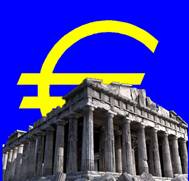
Rates on Greek debt soared to an astounding 21 percent last week. The end game on the Greek debt crisis could be near. If Greece defaults on its debt, it could trigger a domino collapse across Europe. But do the strategizers behind the euro have a secret plan that could totally reform the union?
One thing for sure is that the Greek government cannot long afford to borrow money at such high rates. It is virtually locked out of the debt market. That means that sooner or later, somebody isn’t going to get paid. In this case it mostly means big banks in France, Germany, Austria and Belgium.
The consequences could easily go global. European Central Bank executive member Jurgen Stark warned on April 23 that Europe may be about to suffer a banking crisis worse than that of 2008. It “could overshadow the effects of the Lehman bankruptcy,” he warned.
Bigger than Lehman?
According to Stark, a default by Greece would be the worst option for the eurozone. This would trigger massive and immediate government spending cuts and the inevitable social unrest that would ensue.
More critically, it could easily cause lenders to balk at loaning money to other troubled states like Ireland and Portugal—causing interest rates to soar in those countries and causing them to default too. Even Spain and Italy could be pushed over the edge, which would throw the whole eurozone into question.
- Bookmark :
- Digg
- del.icio.us
- Stumbleupon
- Redit it

Imminent collapse of the Euro?
- Posted by - (0) Comment
http://www.thetrumpet.com/?q=8225.6887.0.0
Rates on Greek debt soared to an astounding 21 percent last week. The end game on the Greek debt crisis could be near. If Greece defaults on its debt, it could trigger a domino collapse across Europe. But do the strategizers behind the euro have a secret plan that could totally reform the union?
One thing for sure is that the Greek government cannot long afford to borrow money at such high rates. It is virtually locked out of the debt market. That means that sooner or later, somebody isn’t going to get paid. In this case it mostly means big banks in France, Germany, Austria and Belgium.
The consequences could easily go global. European Central Bank executive member Jurgen Stark warned on April 23 that Europe may be about to suffer a banking crisis worse than that of 2008. It “could overshadow the effects of the Lehman bankruptcy,” he warned.
Bigger than Lehman?
According to Stark, a default by Greece would be the worst option for the eurozone. This would trigger massive and immediate government spending cuts and the inevitable social unrest that would ensue.
More critically, it could easily cause lenders to balk at loaning money to other troubled states like Ireland and Portugal—causing interest rates to soar in those countries and causing them to default too. Even Spain and Italy could be pushed over the edge, which would throw the whole eurozone into question.
- Bookmark :
- Digg
- del.icio.us
- Stumbleupon
- Redit it
QUOTE: Prophet Muhammad (570-632)
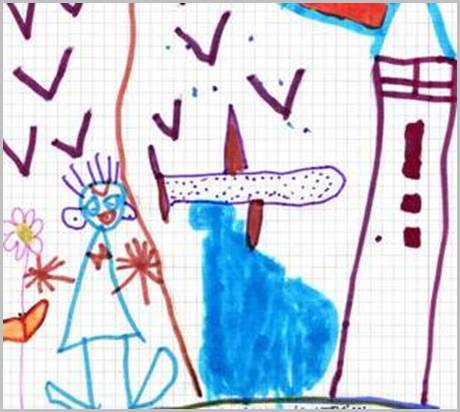
Without that I knew about it had my 4-year-old daughter made this drawing,
almost a month after she and I had seen on CNN how the planes crashed
into the twin towers in New York on 11 September 2001.
11 SEPTEMBER 2001: I had just come home to our apartment here in Vilnius after having brought my then 4-year-old daughter home from kindergarten. She was playing on the floor beside me while I sat down to watch the latest world news on CNN. What I saw on the screen in front of me was so unreal that I first could not believe that this was real news. My first thought was that CNN was showing fragments of a new film or the like. But it soon dawned on me that what I was seeing was the beginning of an unimaginable attack and a tragedy that would forever change our world's history and development.
11 September 2001 was the day when America was attacked on its own soil. The unthinkable had happened.
Today, 2 May 2011, Osama bin Laden was killed in Pakistan by US special troops.
The almost ten years that have followed since that September day in 2001, have brought enormous changes, not only in the U.S., but to the entire world. The war against terrorism, the war in Afghanistan, the war in Iraq, the new Arab revolts, and countless suicide attacks across virtually the entire world have all become symbols of our time -- in a way few of us could have imagined when the new millennium had barely started.
Lithuania has been little influenced by the 'war on terror'. Admittedly, the country is participating with troops in Afghanistan and it also became an almost-scandal when it became known that the CIA had two prisons for suspected terrorists here since 2005.
But even if Lithuania is not so much directly affected by what has happened around the world after the attack on the twin towers in New York on 11 September 2001, this country is also a part of a global society that is both physically and mentally experiencing enormous repercussions.
I have often asked myself: "What kind of world is it our children have to grow up in post-9/11? The daily traumas inflicted to the children in the two countries that have been hardest hit, Iraq and Afghanistan, are naturally the worst and most long-term harmful, but our children in the so-called free world have undoubtedly also been influenced by what happened and they will for many years have to experience the consequences in many different ways.
I was not aware that my little daughter saw what took place on the TV screen this September day ten years ago, so I must admit I was slightly shocked and shaken when she suddenly, a month later, came to give me a drawing she had made. The image of 'a plane flying into the tall tower' had been instilled in the child brain, and here she came to me with her visualisation of what she had seen and experienced in her thoughts when I thought she was quietly playing, occupied in her own childish world.
It goes without saying that we, the adults, need to help children feel as safe as possible at a time when the world has become a more dangerous place. Parents and teachers in particular should help youngsters understand current events factually, how events do or do not impact their lives, and how to handle their emotional reactions. All children are likely to be affected in some way by ‘the age of terrorism’.
For many of our children, the guidance of caring adults will make the difference between being overwhelmed and developing life-long emotional and psychological coping skills. It is crucial to provide opportunity for children to discuss their concerns and to help them separate real from imagined fears.
The lessons of 11 September 2001 are many. Some ‘contribute’ by burning the Quran. Others work for reconciliation and understanding between the people of our fragile little planet.
Hopefully the lesson of 2 May 2011 will be a peaceful one.
Aage Myhre
Editor
- Bookmark :
- Digg
- del.icio.us
- Stumbleupon
- Redit it
Prophet Muhammad
- Posted by - (2) Comment

Birth of the Prophet Muhammad
(Iranian illustration)
Muhammad was born around the year 570 in the city of Mecca, Arabia. His name means "highly praised." Muhammad's full name was Abu al-Qasim Muhammad Ibn Abd Allah Ibn Abd al-Muttalib Ibn Hashim. He was the last prophet of the religion of Islam.
Muhammad's father, Abdallah, died several weeks before his birth and his mother, Aminah, died when he was six years old. He was raised by his paternal grandfather, 'Abd al Muttalib, until the age of eight, and after his grandfather's death by Abu Talib, his paternal uncle. Under the guardianship of Abu Talib, Muhammad began to earn a living as a businessman and a trader.
The tradition of Islam claims that in the year 610, Muhammad, while on a retreat to Mount Hira for meditation during the month of Ramadan, received his first revelation from the Archangel Gabriel. Gabriel said to Muhammad: "Iqraa," meaning "read" or "recite." He replied, "I cannot read." Gabriel embraced Muhammad and after releasing him repeated: "Iqraa." Muhammad's answer was the same as before. Gabriel repeated the embrace, asking Muhammad to repeat after him and said: "Recite in the name of your Lord who created! He created man from that which clings. Recite; and thy Lord is most Bountiful, He who has taught by the pen, taught man what he knew not."
The Angel Gabriel visited the Muhammad many times over a period of twenty-three years. Gabriel taught Muhammad the verses and he instructed his scribes to record them. All the revealed verses are compiled in the Qur'an. The Prophet's sayings and actions are recorded separately in collections known as Hadith. Muslims believe that Muhammad was a messenger of Allah (Arabic for The One and Only God) and last of the prophets sent by Allah to guide man to the right path.
The Prophet's mission was to restore the worship of the One True God, the creator and sustainer of the universe, as taught by Prophet Abraham and all Prophets of God, and to demonstrate the laws of moral, ethical, legal, and social conduct. Islam means peace by submission and obedience to the Will and Commandments of God. Those who accept Islam are called Muslims, meaning those who have accepted the message of peace by submission to God.
- Bookmark :
- Digg
- del.icio.us
- Stumbleupon
- Redit it
Obama’s Cairo speech
- Posted by - (1) Comment
CAIRO 4 JUNE 2009: Quoting from the Quran for emphasis, President Barack Obama called for a "new beginning between the United States and Muslims" in his famous Cairo Speech the 4th of June 2009. He said that, together, they could confront violent extremism across the globe and advance the timeless search for peace in the Middle East.
"This cycle of suspicion and discord must end," Obama said in a widely anticipated speech in one of the world's largest Muslim countries, an address designed to reframe relations after the terrorist attacks of Sept. 11, 2001, and the U.S.-led war in Iraq.
The White House said Obama's speech contained no new policy proposals on the Middle East. He said American ties with Israel are unbreakable, yet issued a firm, evenhanded call to the Jewish state and Palestinians alike to live up to their international obligations.
In a gesture to the Islamic world, Obama conceded at the beginning of his remarks that tension "has been fed by colonialism that denied rights and opportunities to many Muslims, and a Cold War in which Muslim-majority countries were often treated as proxies without regard to their own aspirations."
"And I consider it part of my responsibility as president of the United States to fight against negative stereotypes of Islam wherever they appear," said the president, who recalled hearing prayer calls of "azaan" at dawn and dusk while living in Indonesia as a boy.
At the same time, he said the same principle must apply in reverse. "Just as Muslims do not fit a crude stereotype, America is not the crude stereotype of a self-interested empire."
Notably, Obama made an emotional plea for the right of Palestinians to live in dignity in an independent state of their own. He even used the term "Palestine," in a break from standard references to a future Palestinian state.
Obama also became the first U.S. president to admit the U.S. role in the 1953 CIA-led coup of Iran's elected prime minister Mohammed Mossadegh, the Washington Times reports. "In the middle of the Cold War, the United States played a role in the overthrow of a democratically-elected Iranian government," he said, alluding to the coup.
The speech was the longest of his presidency thus far, clocking in at 55 minutes. His speech was interrupted by applause over a dozen times.
Obama's remarks were televised on all radio and television stations in Israel, and with Arabic voice-over translations by Arab satellite stations Al-Arabiya and Al-Jazeera, Egyptian TV and Al-Manar, an outlet for the militant group Hezbollah. The speech was not broadcast in Iran, where the goverment jammed signals to block satellite owners from watching.
The president drew a somewhat positive response from corners of the world not given to complimenting the United States.
"There is a change between the speech of President Obama and previous speeches made by George Bush," said Fawzi Barhoum, a Hamas spokesman in Gaza. But he complained that Obama did not specifically note the suffering in Gaza following the three-week Israeli incursion earlier this year and did not apologize for U.S. military attacks in Iraq and Afghanistan.
In Iran, Mohammad Ali Abtahi, a cleric who was vice president under reformist President Mohammad Khatami, called the speech "compensation to hostile environment which was created during President Bush."
"This can be an initial step for removing misconceptions between world of Islam and the West," he said.
Obama spoke at Cairo University after meeting with Egyptian President Hosni Mubarak on the second stop of a four-nation trip to the Middle East and Europe.
The speech was the centerpiece of his journey, and while its tone was striking, the president also covered the Middle East peace process, Iran, the wars in Afghanistan and Iraq and the violent struggle waged by al-Qaida.
Obama arrived in the Middle East on Wednesday, greeted by a new and threatening message from al-Qaida's leader, Osama bin Laden. In an audio recording, the terrorist leader said the president inflamed the Muslim world by ordering Pakistan to crack down on militants in the Swat Valley and block Islamic law there.
But Obama said the actions of violent extremist Muslims are "irreconcilable with the rights of human beings," and quoted the Quran to make his point: "be conscious of God and always speak the truth ..."
"Islam is not part of the problem in combatting violent extremism -- it is an important part of promoting peace," he said.
"Hamas must put an end to violence, recognize past agreements, and recognize Israel's right to exist," he said of the organization the United States deems as terrorist.
"The Palestinian Authority must develop its capacity to govern, with institutions that serve the needs of its people," Obama said.
"At the same time, Israelis must acknowledge that just as Israel's right to exist cannot be denied, neither can Palestine. The United States does not accept the legitimacy of continued Israeli settlements" on the West Bank and outskirts of Jerusalem, he said. "It is time for these settlements to stop."
As for Jerusalem itself, he said it should be a "secure and lasting home for Jews and Christians and Muslims ..."
Obama also said the Arab nations should no longer use the conflict with Israel to distract their own people from other problems.
He treaded lightly on one issue that President George W. Bush had made a centerpiece of his second term -- the spread of democracy.
Obama said he has a commitment to governments "that reflect the will of the people." And yet, he said, "No system of government can or should be imposed upon one nation by any other."
At times, there was an echo of Obama's campaign mantra of change in his remarks, and he said many are afraid it cannot occur.
"There is so much fear, so much mistrust. But if we choose to be bound by the past, we will never move forward," he said.
The president's brief stay in Cairo included a visit to the Sultan Hassan mosque, a 600-year-old center of Islamic worship and study. He also toured the Great Pyramids of Giza, and joked with reporters that if they were not present, "I'd get on a camel." Some of his aides did just that.
The build-up to the speech was enormous, stoked by the White House although Obama seemed at pains to minimize hopes for immediate consequences.
"One speech is not going to solve all the problems in the Middle East," he told a French interviewer. "Expectations should be somewhat modest."
Eager to spread the president's message as widely as possible, the tech-savvy White House orchestrated a live Webcast of the speech on the White House site; remarks translated into 13 languages; a special State Department site where users could sign up for speech highlights; and distribution of excerpts to social networking giants MySpace, Twitter and Facebook.
Though the speech was co-sponsored by al-Azhar University, which has taught science and Quranic scripture here for nearly a millennium, the actual venue was the more modern and secular Cairo University.
Source: http://www.huffingtonpost.com/2009/06/04/obama-cairo-speech-video_n_211210.html
- Bookmark :
- Digg
- del.icio.us
- Stumbleupon
- Redit it
- Posted by - (0) Comment
 |
THE INK OF THE SCHOLAR |
The quote you have chosen is poignant beyond words
Nancy Wright Beasley
The quote you have chosen is poignant beyond words. It is up to us, the writers of the world, to leave a record to that effect. Thanks for your contribution, and that of your daughter's, on this day. It is sad, indeed, when the world rejoices at the death of another human being. Early in the day on May 1, 2011, I was privileged to spend time with Justice Gabriel Bach where he was honored by the Virginia Law Foundation at the Virginia Holocaust Museum in Richmond, VA. Justice Bach, who lives in Jerusalem, was named the deputy prosecutor for the upcoming trial of Adolf Eichmann, some 16 years after the end of World War II. Justice Bach is the sole surviving member of the legal team that brought Eichmann to justice 50 years ago. After he was named as the recipient of the Rule of Law Award, which is given to an individual who has demonstrated an extraordinary commitment to promoting the rule of law as the foundation of peaceful, stable, and prosperous nations, Justice Bach announced that the sole surviving judge of the Eichmann trial had just died. It is fitting that Bin Laden was buried at sea in the same manner that Eichmann's ashes were interred.
Nancy Wright Beasley
What we do as adults by our actions to set an example for our kids
Ellen Carmichael
Thank you for your article. That is a great quote. In my mind, what's even more sacred than even the written word is what we do as adults by our actions to set an example for our kids. At this time, it's important that kids be aware of current events, but adults do a disservice by portraying these events with an alarmist attitude. We should be aware of what is going on the world, but also how we as individuals and countries are uniting in difficult times. Kids need to learn that it's important to understand what's going on around us, but it's also important to know that nobody is just sitting back doing nothing, being scared.
Ellen Carmichael
VilNews became inspirational with today's edition!
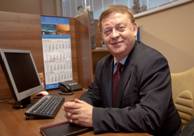
David Telky
Just had to write to say, your usually brilliant VilNews became inspirational with today's edition!
The educational input to minimise hatred through ignorance is a common theme in your writing and has been a measure of your great ability as a fact finding journalist.
Today your analysis of the start and development of Islam puts a calm face on a religion that is causing mainly unfounded hysteria in the world.
Thanks again for your great paper and your perceptive and human analysis of so main interesting current issues.
David Telky
Managing Director
Pentland Baltic UAB/
Pentland (Scotland) Ltd
- Bookmark :
- Digg
- del.icio.us
- Stumbleupon
- Redit it

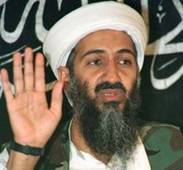
The death of Osama bin Laden at the hands of US forces will weaken the international terrorist network al-Qaeda in the short term, officials from the three Baltic states said Monday, DPA reported.
Estonia, Latvia and Lithuania are all NATO members, and all have forces serving in Afghanistan.
Latvian Defense Minister Artis Pabriks told the LNT television channel: "It is clear that bin Laden was one of the top leaders of his terrorist group and his death will certainly weaken the network."
While the death of bin Laden is a tactical victory, resolution of regional conflicts would also require a more strategic approach, Parbriks said.
Estonian Foreign Minister Urmas Paet told the ETV television channel that because bin Laden had been "an important symbol of international terrorism" for a decade, his death would strike a "strong blow" to terrorism.
- Bookmark :
- Digg
- del.icio.us
- Stumbleupon
- Redit it
Bin Laden’s death will “inspire confidence in the region” and encourage peace and reconciliation
- Posted by - (0) Comment
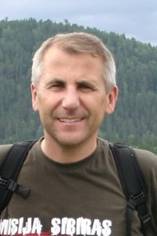
Former Lithuanian foreign minister Vygaudas Usackas
The European Union's current ambassador to Afghanistan - former Lithuanian foreign minister Vygaudas Usackas - was quoted on the website of the Lietuvos Rytas daily as saying the news of bin Laden's death would "inspire confidence in the region" and encourage peace and reconciliation.
- Bookmark :
- Digg
- del.icio.us
- Stumbleupon
- Redit it
How can a fantastic place like Vilnius with its 500,000 plus inhabitants and Lithuania with its 3 million plus inhabitants have a smaller tourism budget than a mountain village in Norway of 450 people?
Text: Thomas Danielsen
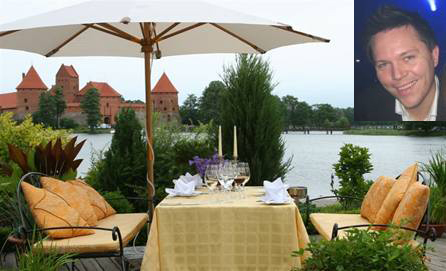
I am sitting in Apvalaus Stalo Klubas (Round Table Club) in Trakai writing this article. It is a beautiful spring Sunday and the sun is shining from a clear blue sky. There are still some ice flakes left on the waters in front of the wonderful Trakai Castle. It is still too cold for sitting outside, but I have a fantastic window table overlooking the castle. There is a mix of tourists and locals inside the restaurant. On my right there is an old couple from Germany and to my left a young Lithuanian couple staring deep into each other’s eyes and holding hands.
As I am soaking in this wonderful and romantic atmosphere, I find myself filled with ambivalent feelings. I simply love this place and I have spent many hours looking at this castle. I am thinking how sad it is, that there are not more people who get to experience this unique ambience and this "one of a kind" view. My ambivalence goes towards the fact that the Lithuanian tourism sector - of which I have been a part of for 7 years - is suffering to such a great extent, while there are so many great experiences to be had here.
I think it is a paradox that a country with so many treasures within the "tourism sector" is haunted with such poor leadership. >From what I see (or do not see), the people in charge of Lithuanian tourism obviously have no idea what they are doing! They simply lack the understanding and knowledge of tourism as a product and as a concept! This, combined with no budget at all (yes, apparently, the tourism department has no budget for tourism marketing), goes to show the poor management and understanding of this important sector. After all, the tourism sector is in fact one of the biggest sectors IN THE WORLD, if not the biggest. This fact being neglected does not only sadden me, it scares the living daylights out of me!
The tourism marketing budget of Lithuania (not counting whatever money Lithuania receives from EU for such purposes) is 0 Euros, 0 Dollars and 0 Litas.
Now let me give you some food for thought:
For a period of 6 months from October 2009 to April 2010 I had a consulting job as destination director in a small mountain village in Norway called Hovden. Hovden is predominantly a winter destination and the tourism is mostly centred around one "small" mountaintop (1183m) with 5 large ski lifts and a lift capacity about 3000 people per hour. There are 3 hotels and 2 apartment hotels in addition a range of cottages, both for private use and rentals. This mountain community of 450 people has various challenges related to their situation, ranging from how to attract more tourists in the summer season, to socioeconomically challenges such as how to attract people to settle down here. During the winter season, this little mountain village explodes in the number of people living or coming here for shorter or longer stays (weekend breaks, seasonal workers etc). On the weekends between November and April the village grows into as many as 10 000 people. The local government realized decades ago that in order for them to simply survive as a community, they had to put their efforts into what they were given - a mountain suitable for skiing! This was in 1966-67. Now fast forward to present day - 2011. The realization that tourism is extremely important has turned this little spot "in the middle of nowhere" into a tourism paradise. And here is the punch line; this little spot called Hovden - hardly visible on a map - has an annual tourism budget of more than 1.1 million euro!
The question resounding in my head is this:
How can a fantastic place like Vilnius with its 500,000 plus inhabitants and Lithuania with its 3 million plus inhabitants have a smaller tourism budget than a mountain village in Norway of 450 people?
If any bright mind out there is now thinking "well, Norway is a very rich country and they can afford stuff like this", then I simply answer back that it is a known fact that in order to make money, you need to spend money! This is called marketing. And to further underline my point, I will give you a free 30-second lesson in business, economics and marketing:
If you spend money marketing Vilnius/Lithuania (mind you, based on a proper, professional strategy, branding and long term objectives!), you will get an increased inflow of tourists to the country. With increased flow of tourists, the bus companies transporting tourists will need more drivers to transport them from A to B. The hotels will need more staff in order to maintain a certain level of service. The restaurants and cafes will need more waiters to cater for the increase in clients. The guide companies will need more guides to show the tourist the city/country. The shops in Vilnius will need more staff to service the increase of customers. The spas will need more therapists to deal with the increase of clients. The airport will need more baggage handlers. All of these companies will eventually need more accountants and more administrators.
By now you should get my point!
But just to point out the obvious:
More tourists require more people to be hired in the tourism sector directly (travel agencies, bus companies, hotels), as well as in the various sectors benefitting from an increase of clients/tourists in general (like the retail sectors for example). With more people hired, unemployment will go down (a benefit for the society), tax payments from both private people and companies will go up (increased government revenue), restaurants will need more products from the farmers, bus companies will need more gas from the gas stations. The list goes on and on...
Despite the fact that this is an extremely simplified economic model, this is how the (macro) economy works. (Those geniuses who thought that increasing VAT on hotels from 5% to 21% would increase governmental revenues, need to buy a book called ABC of economics).
I am still sitting in the Round Table Club in Trakai. The old couple have left, but a bus full of Italian youths stopped by and took some photos, bought a take away pizza and some bottles of water and left. They were speaking very vividly about the castle, how beautiful it is and how amazing this place is. This is my point; Vilnius, Trakai and Lithuania excite people! They are willing to come to the country and SPEND MONEY, their hard earned cash, their disposable income (disposable income, Mr. tourism boss man, is the amount of income left to an individual after taxes have been paid, available for spending and saving"). This is really not rocket science! In order for people with disposable income to come and "dispose" of their cash in Lithuania, they need to know about Lithuania and Lithuania needs to be accessible (am I the only one who finds it strange that Lithuania does not have a national flag carrier?). Stop thinking that China is an important market for Lithuania tourism! It is NOT! How about focusing on the markets 1-2-3 hours away which coincidentally both share historic links with the region and has a culture for travel abroad and have high disposable income (No, not Russia, but Europe and Scandinavia)!
The paradox remains. A village in Norway of 450 people far outperforms Vilnius of 500,000 people and Lithuania of 3 million people by any measure!
As a final note I want to express that there is a distant light in the tunnel, a glimpse of hope with the new Mayor of Vilnius, Mr. Zuokas. Despite the different opinions about his previous periods as mayor, he seems to have some understanding of how "things work". And to his return to power, I wish to present him with a challenge. Mr. Zuokas, you have at your power the chance to create, what is in my opinion, the most interesting job in all Europe within the tourism sector. This is the position as Destination Director of Vilnius Tourism (Visit Vilnius, Vilnius Tourism Agency, Vilnius Convention Agency, Destination Vilnius or whatever you may choose to call it). The fact of the matter is that with the right team and a "slightly" higher budget than today, Vilnius and Lithuania could change a lot. But please, should you take this challenge, do not hire any of your friends or whoever is willing to work for the lowest wage or someone corrupt! Hire someone with the proper knowhow, intelligence, experience and motivation. And please, do give him/her a budget with clear goals, clear expectations and clear requirements. You are free to give me a call! The editor has my number!
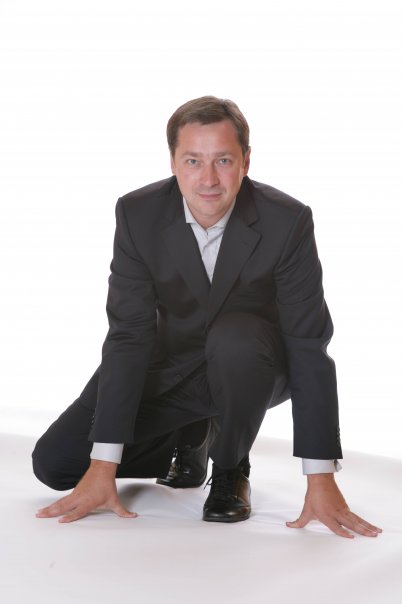
I want to express that there is a distant light in the tunnel, a glimpse of hope with the new Mayor of Vilnius, Arturas Zuokas. Despite the different opinions about his previous periods as mayor, he seems to have some understanding of how "things work".
- Bookmark :
- Digg
- del.icio.us
- Stumbleupon
- Redit it
Praise for Lithuanian railways
- Posted by - (1) Comment
Despite dire warnings from local Lithuanians and diaspora visitors, I courageously decided to travel from Vilnius to Warsaw and back on Lithuanian Railways, this Easter.
It was a great experience. Firstly, Vilnius railway station is very pleasant. The information and booking staff were extremely friendly and efficient. The booking agency staff in particular were very nicely uniformed and charming. I was booked in 2nd Class from Vilnius to Sestokai. The train left right on time, and whilst the train itself was not new, it was very clean and well maintained. The crew on board were friendly , very well dressed, and informative. The seats were comfortable. The journey allowed me to see the awakening spring of the Lithuanian countryside. Farms, farm animals, farmers ploughing fields a picture unseen by airline passengers. In the forests, the deep green of fir and pine trees were pleasing to the eye. I was so lucky to see a few deer, and amazingly a fox. Many of the farms were blessed with stork nests, and storks.
On arrival at Sestokai, we were transfered to Polish Railways service to Warsaw. Polish Railways was also good.
The return from Sestokai to Vilnius, was as pleasant as the forward journey. I would like to thank Lithuanian Railways for a safe and memorable journey.
As we all know, great service, efficiency and friendliness starts from the top. Therefore Congratulations to Mr. Stasys Dailydka, the Director General of Lithuanian Railways and his team for presenting such a fine product to the travelling public, especially foreign tourists.
Balys Stankunavicius
Vilnius – Melbourne
- Bookmark :
- Digg
- del.icio.us
- Stumbleupon
- Redit it
Birutė Hill in Palanga
- Posted by - (3) Comment
A place of Lithuanian history, legend, mythology culture and worship
In as late as 1965 a sculpture called “For you Berutė” was set on the base of the hill. What gets your attention about the sculpture is not only that it was set here more than 550 years after her death but the name of the stature also is intriguing. The inscription on the sculpture reads in Lithuanian “Tau Birutė”. The word “tau” in Lithuania translates to “for you” but the Lithuanian language contains formal and informal nouns. “Tau” is informal. To say “for you” in the formal, you would say “jums”. What is quite striking and sheds light on how people nowadays feel about Bitutė is that by using the word „tau“ they are addressing her as a close friend. http://en.wikipedia.org/wiki/File:Palanga_Birutes_kalnas.jpg

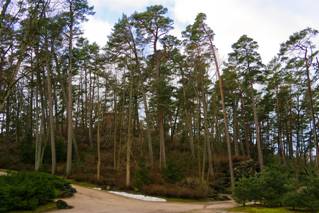
When in Lithuania, it would be highly recommended that you visit the beautiful sea side resort area of Palanga. Any time of year it is a pleasure to walk to sandy beaches with the waves of the Baltic Sea gently splashing onto the shore on one side and pristine pine forests on the other. While you are there, you should also get some smoked fish offered by many of the vendors. They offer many varieties and the taste is simply out of this world. Aside from the maritime treasures Palanga has to offer you should also take some time to visit the Palanga Botanical Garden and Park. The park features a rose garden, greenhouse, rotunda, a sculpture of Eglė, the Queen of Serpents, a Holocaust memorial, ponds, and gazebos; during the summer it hosts concerts and festivals. While in the warmer months the Park and Garden offer a multitude of blossoming flowers, a visit during the dead of winter will still reward you with the peaceful grandeur this area has to offer.
In addition to the beauty of nature the Park has two other places of interest. One is the Amber Museum. This is definitely worth a look inside. It is positively fascinating to learn of all the different types and variations of amber (gintras in Lithuanian). As you leave the museum, take the path on the right side of the building. It will lead you to a place that is a combination of Lithuanian history, legend, mythology, culture and worship. It is called “Birutė Hill”.
To explain Birutė Hill we should start by telling who Birutė was. Birutė was the second wife of Kęstutis, Grand Duke of Lithuania and the mother of Vytautas the Great. There is very little known about Birutė's life but after her death, in 1382, a strong bond developed with this lady among Lithuanians, especially in the area of Samogitia (Latin)/Žemaitija (Lithuanian).

While no documentation has yet to be found to support this, it is generally believed that she was born near Palanga to a Samogitian or Curonian magnate family. The story of her marriage to Kęstutis is very romantic and has become a legend in Lithuania. It is documented in chronicles that Birutė was a priestess (vaidilutė) and had dedicated her life to serving the Pagan gods by guarding the sacred fire. Apparently this young lady was quite attractive and soon word spread near and far of a priestess in Palanga whose beauty was second to none in the universe. When Kęstutis heard of her beauty, he visited the area and asked her to marry him. She had to refuse because she had made a solemn promise the gods to guard her virginity until her death. Kęstutis, apparently being smitten by the charms of this fine lass had no intention of taking no for an answer. So basically what happened is once he figured out that all this sweet talk wasn’t going to work he took her by force to Trakai and threw a big wedding bash. End result is Birutė and Kęstutis had three sons and three daughters. Vytautas, their first son, was born around 1350 so this indicates suggests that the marriage took place around 1349 or a bit earlier.
Just as with her life, the exact circumstances surrounding Birutė's death are not entirely clear. Between 1381 and 1382 her husband Kęstutis waged a war against his nephew Jogaila, who would become the Grand Duke of Lithuania. Jogaila signed a treaty with the Teutonic Knights against Kęstutis. The result was that her husband was arrested and taken to Kreva Castle in the part of Lithuania which is now Belarus. A week later Kęstutis was dead and some chronicles hint that he was murdered. In one chronicle written by the Teutonic Knights, it is written that Birutė, for reasons of safety, was moved to Brest, Belarus, where she drowned in the autumn of 1382. Even after her passing the details of her death are still uncertain. Thirty-five years after her death, a Samogitian delegation to the Council of Constance denied she was murdered. It gets even more interesting in that a legend claimed that Birutė did not die in Brest. It claims that after her husband’s death she returned to the shrine where she had served earlier in Palanga, and resumed serving the gods until her death which in this case was in 1389.
Now that we have shared with you who Birutė was we can begin to explain Birutė Hill. Birutė Hill is the highest dune at the seaside resort of Palanga and now is a part of the Palanga Botanical Garden. Archaeological research shows that there was a village at the bottom of the hill in the 10th century. In the 13th century, when the Teutonic Knights and Livonian Order invaded, the villagers built a defense system with a tower. After an initial defeat, the system was rebuilt and made even stronger; it now had two towers and a wall surrounded the top of the hill. However, when this was burned in the second half of the 14th century, a pagan shrine and observatory was built in its place instead.
OK, so why is this dune, which is the highest in the Palanga area, called Birutė Hill you ask???
It is because legend has it that she was buried in Palanga at the bottom of this hill named in her honor. Some even say that it is at or near this hill that Kęstutis proposed matrimony to this lovely maiden. After her death, people began to come to this spot to pay tribute to this pagan princess. She was considered to be a goddess or the pagan equivalent of a saint by the local people. Since it was believed that she was buried somewhere at the base of this hill it is only logical that people would come here to worship her. In 1989 archaeologists found evidence of a pagan sanctuary and observatory, which had existed on the top of Birutė Hill in the late 14th or early 15th century. It was likely built in Birutė's honor.
The fact that in the late 1300s or early 1400s the people of this area would have built a pagan sanctuary in honor of this woman they believed to be a goddess or a pagan saint is really not surprising. At this period of time Christianity was still quite new to Lithuania. Yes, Mindaugas was Baptised in 1250/1251 but then in 1261 he reputed Christianity. It wasn’t until Jogaila was Baptised in 1386 that Lithuania really began to become a Christian State. From this point on Jogaila’s court and his knights, which included his cousin Vytautas (Birutės son), were also Baptised and the people of Lithuania followed the religious direction of their leaders. Beginning in 1413, Samogitia / Žemaitija was the last ethnic region of Lithuania to become Christianized. In November 1413, Vytautas himself sailed the Nehman and Dubysa Rivers to the village of Dubysa, which at that time was in the far western part of Samogitia and is now in the Kaunas region, where he baptised the first groups of Samogitians. In 1416, the construction of eight first parochial churches was started. The Diocese of Samogitia was established on 23 October 1417 and Matthias of Trakai became the first Bishop of Samogitia. The cathedral was built in Medininkai around 1464.
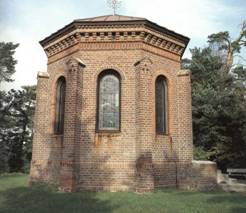
So in the early 1400s, the fact that people of the area were worshipping Birutė as a goddess could be considered understandable. However this is where it gets interesting and even to a degee mystifying though. The worshipping continued. The amount of worshippers of Birutė increased. Every year more and more people would come to the foot of the hill and pay their respects. This started to really become an uncomfortable issue in a country that was now considered to be a Christian country with Christian leaders. To discourage people from worshiping pagan gods and Birutė's grave or maybe just to make it look like the people were not worshipping a pagan goddess a chapel for Saint George was built on the top of the hill in 1506. In 1869 the chapel was re-built and to this day you can go to the top of Birutė Hill and visit the Chapel.
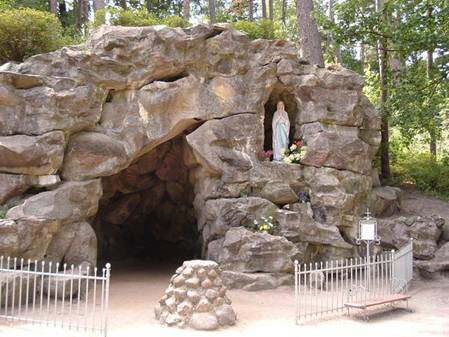
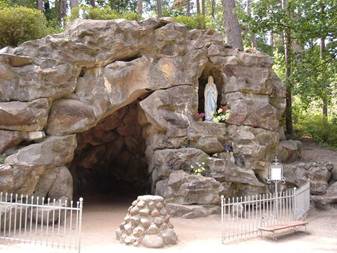
In spite of the Chapel and the concerns of the Church worshipping continued and the worshippers increased. In 1898 a Lourdes was built at the base of the hill. This photo of the Lourdes to Berutė was taken in September of 2010. As you can see from the prayer candles that are freshly lit, people to this day are visiting to pay their respects.
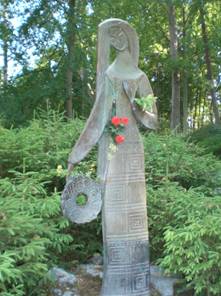
In as late as 1965 a sculpture called “For you Berutė” was set on the base of the hill. What gets your attention about the sculpture is not only that it was set here more than 550 years after her death but the name of the stature also is intriguing. The inscription on the sculpture reads in Lithuanian “Tau Birutė”. The word “tau” in Lithuania translates to “for you” but the Lithuanian language contains formal and informal nouns. “Tau” is informal. To say “for you” in the formal, you would say “jums”. What is quite striking and sheds light on how people nowadays feel about Bitutė is that by using the word „tau“ they are addressing her as a close friend.
The next time you are in Lithuania it would be well worth you time to go to Palanga. Explore the sandy beaches, stroll through the pine forests. I don‘t know what it is about the pine trees in Palanga but the sweet smell that they transmit is wonderfully strong and permiates the area in such a way that almost lifts you off your feet and floats you through the natural beauty of this seaside land of natural treasures. Absoulutely do not forget to indulge yourself on what is most likely some of the finest smoked fish you will find any where on this earth. You would also do well to make some time to experience Birutė Hill. When you go there you will more than likely see freshly lit prayer candles and observe people paying their respects to Birutė. As you watch these “worshippers” you may ask yourself are they paying their respects to the wife of Grand Duke Kęstutis, the mother of Vytautas the Great or the pagan princess guardian of the sacred fire. I guess the only way to know would be to ask but to interupt while some one is offering a message from their heart would be quite disrespectfull therefore I guess we will never know.
Su pagarbe
Vin Karnila
- Bookmark :
- Digg
- del.icio.us
- Stumbleupon
- Redit it
- Posted by - (1) Comment

Breast cancer diagnosis saves lives
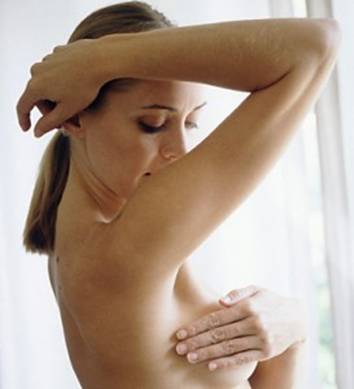
The International Women's Association of Vilnius and Roche Lietuva continue the battle against breast cancer
For the third year in a row a charity dinner has been organized to raise awareness and collect money.
All money collected from sponsors and from the dinner will be used to purchase biopsy needles which will then be donated to the main oncology hospitals in Klaipeda, Kaunas and Vilnius.
Breast cancer is one of the most common forms of cancer to affect women. While early diagnosis allows to dramatically increase survival rate, the percentage of breast cancer cases diagnosed at the late three and four stages is still high in Lithuania.
Last year's charity event 'Dancing through the Ages' raised more than 40,000 litas which was used to purchase the biopsy needles which are essential for early diagnosis.
For more information go to http://www.iwavilnius.com/blossom-of-hope.html
For sponsorship contact Barbara Little at barbsvilnius@gmail.com
- Bookmark :
- Digg
- del.icio.us
- Stumbleupon
- Redit it

OPINIONS
Have your say. Send to:
editor@VilNews.com
Ph. D., Chicago
A wave of unity sweeps the international Lithuanian community on March 11th every year as Lithuanians celebrated the anniversary of the Lithuanian Parliament's declaration of independence from the Soviet Union in 1990. However, the sense of national unity engendered by the celebration could be short-lived.
Human beings have a strong tendency to overgeneralize and succumb to stereotypical us-them distinctions that can shatter even the strongest bonds. We need only search the internet to find examples of divisive thinking at work:
- "Those who fled Lithuania during World II were cowards -- and now they come back, flaunt their wealth, and tell us 'true Lithuanians' how to live."
- "Lithuanians who work abroad have abandoned their homeland and should be deprived of their Lithuanian citizenship."

In Lithuania Christmas Eve is a family event and the New Year's Eve a great party with friends!
Lithuanian say "Kaip sutiksi naujus metus, taip juos ir praleisi" (the way you'll meet the new year is the way you will spend it). So everyone is trying to spend New Year's Eve with friend and have as much fun as possible.
Lithuanian New Year's traditions are very similar to those in other countries, and actually were similar since many years ago. Also, the traditional Lithuanian New Years Eve party was very similar to other big celebrations throughout the year.
The New Year's Eve table is quite similar to the Christmas Eve table, but without straws under the tablecloth, and now including meat dishes. A tradition that definitely hasn't changes is that everybody is trying not to fell asleep before midnight. It was said that if you oversleep the midnight point you will be lazy all the upcoming year. People were also trying to get up early on the first day of the new year, because waking up late also meant a very lazy and unfortunate year.
During the New Year celebration people were dancing, singing, playing games and doing magic to guess the future. People didn't drink much of alcohol, especially was that the case for women.
Here are some advices from elders:
- During the New Year, be very nice and listen to relatives - what you are during New Year Eve, you will be throughout the year.
- During to the New Year Eve, try not to fall, because if this happens, next year you will be unhappy.
- If in the start of the New Year, the first news are good - then the year will be successful. If not - the year will be problematic.
* If New Year's night is cold and starry - look forward to a good summer!
* If the during New Year Eve trees are covered with frost - then it will be a good year. If it is wet weather on New Year's Eve, one can expect a year where many will die and dangerous epidemics occur.
* If the first day of the new year is snowy - the upcoming year will see many young people die. If the night is snowy - mostly old people will die.
* If the New Year time is cold - then Easter will be warm.
* If during New Year there are a lot of birds in your homestead - then all year around there will be many guests and the year will be fun.
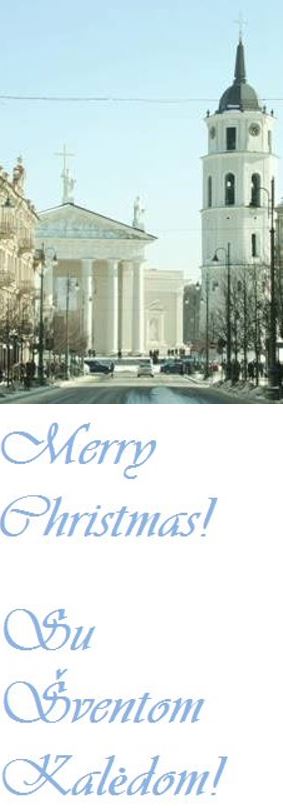
Christmas greetings
from Vilnius
and epic battle for the
future
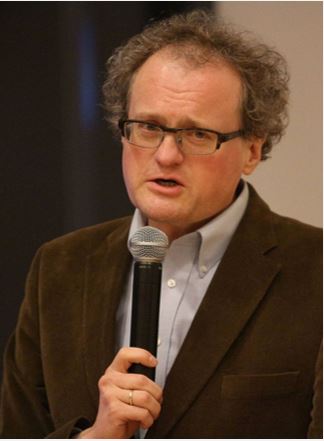
Philosopher, political theorist, historian of
ideas, social analyst, and political
commentator
Ukraine was and continues to be perceived by the EU political class as a sort of grey zone with its immense potential and possibilities for the future, yet deeply embedded and trapped in No Man's Land with all of its troubled past, post-Soviet traumas, ambiguities, insecurities, corruption, social divisions, and despair. Why worry for what has yet to emerge as a new actor of world history in terms of nation-building, European identity, and deeper commitments to transparency and free market economy?
Right? Wrong. No matter how troubled Ukraine's economic and political reality could be, the country has already passed the point of no return. Even if Vladimir Putin retains his leverage of power to blackmail Ukraine and the West in terms of Ukraine's zero chances to accede to NATO due to the problems of territorial integrity, occupation and annexation of Crimea, and mayhem or a frozen conflict in the Donbas region, Ukraine will never return to Russia's zone of influence. It could be deprived of the chances to join NATO or the EU in the coming years or decades, yet there are no forces on earth to make present Ukraine part of the Eurasia project fostered by Putin.
want to learn about the
new, scary propaganda
war between Russia,
The West and the
Baltic States!
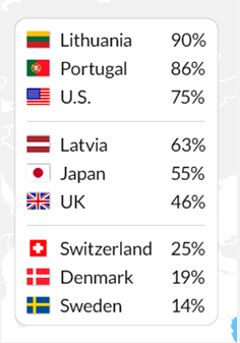
believe their government
is corrupt
students say no to
bribes for doctors
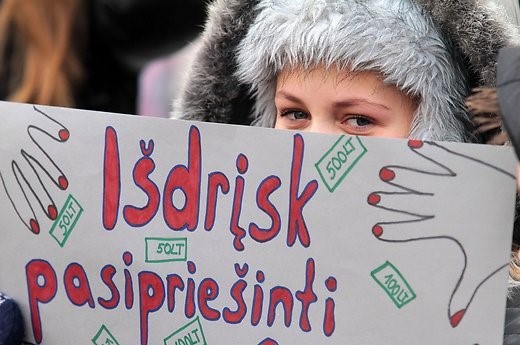
During Soviet times, government was administered for the people in control, not for the local population, court decisions were decreed, they were not the administration of justice, and academia was the domain of ideologues. 25 years of freedom and openness should have put those bad experiences behind Lithuania, but that is not so.
Today, it is a matter of expectation that court pronouncements will be governed by ideological dictates. Few, if any Lithuanians expect real justice to be effected. For foreign companies, doing business in Lithuania is almost impossible in a situation where business people do not expect rule of law, so, surely Government would be a refuge of competence?
Lithuanian Government has not emerged from Soviet styles. In an attempt to devolve power, Lithuania has created a myriad of fiefdoms of power, each speaking in the name of the Government, each its own centralized power base of ideology.

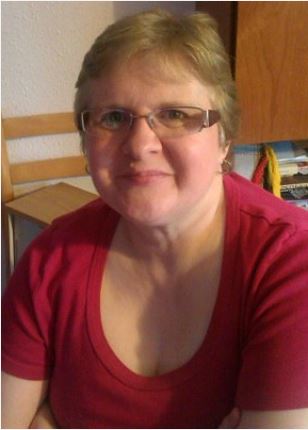
Chepstow, Wales
Doesn't that sound suspiciously like Lithuania? Ah, but I didn't mention the mountains of Snowdonia, which would give the game away.
I'm talking about Wales, that part of the UK which Lithuanians used to call "Valija", but later named "Velsas" (why?). Wales, the nation which has welcomed two Lithuanian heads of state to its shores - firstly Professor Vytautas Landsbergis, who has paid several visits and, more recently, President Dalia Grybauskaitė who attended the 2014 NATO summit which was held in Newport, South Wales.
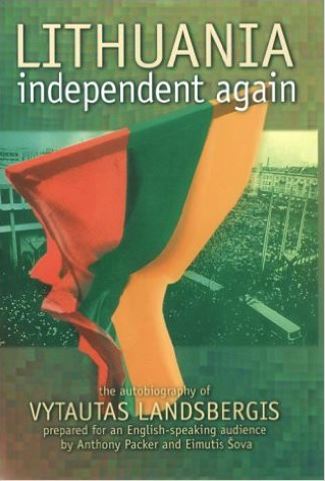
ENGLISH VERSION OF THE
AUTOBIOGRAPHY OF VYTAUTAS LANDSBERGIS.
Although Lithuanian activities have thinned over the decades as that postwar generation died out, the Lithuanian Martyrs' parish hall is crowded with many, many hundreds of visitors who come to the Lithuanian cemetery for All Souls' Day. Similarly, the Franciscan parish has standing room only for Christmas Eve mass.
Although I am firmly embedded in the literary culture of Canada, my themes are usually Lithuanian, and I'll be in Kaunas and Vilnius in mid-November 2015 to give talks about the Lithuanian translations of my novels and short stories, which I write in English.
If you have the Lithuanian language, come by to one of the talks listed in the links below. And if you don't, you can read more about my work at
www.anatanassileika.com
http://www.vdu.lt/lt/rasytojas-antanas-sileika-pristatys-savo-kuryba/ https://leu.lt/lt/lf/lf_naujienos/kvieciame-i-rasytojo-59hc.html
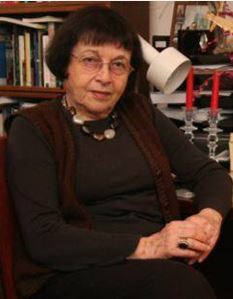
"My love and best wishes to all. As long as VilNews exists, there is hope for the future,"" she writes.
Irena Veisaite means very much for our publication, and we do hereby thank her for the support and wise commitment she always shows.
You can read our interview with her
Facing a new reality
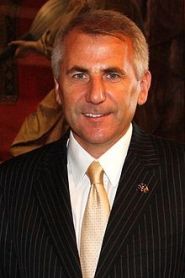
Dear readers of VilNews,
For a number of years, the EU and Russia had assumed the existence of a strategic partnership, based on the convergence of values, economic integration and increasingly open markets and a modernisation agenda for society.
Our agenda was positive and ambitious. We looked at Russia as a country ready to converge with "European values", a country likely to embrace both the basic principles of democratic government and a liberal concept of the world order. It was believed this would bring our relations to a new level, covering the whole spectrum of the EU's strategic relationship with Russia.
The likelihood of Putin
invading Lithuania
.jpg "lithuania today")
Founding Director at Summer Literary Seminars
Are all Lithuanian energy
problems now resolved?
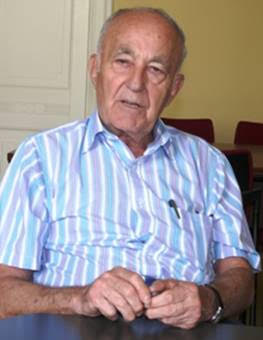
Lithuania as a country does not have significant energy resources. Energy consuming infrastructure after WWII was small and totally supported by energy imports from Russia.
First nuclear reactor begins power generation at Ignalina in 1983, the second reactor in 1987. Iganlina generates enough electricity to cover Lithuania's needs and about 50%.for export. As, prerequisite for membership in EU, Ignalina ceases all nuclear power generation in 2009
The Klaipėda Sea terminal begins Russia's oil export operations in 1959 and imports in 1994.
Mazeikiu Nafta (current ORLEAN Lietuva) begins operation of oil refinery in 1980.
Have Lithuanian ties across
the Baltic Sea become
stronger in recent years?
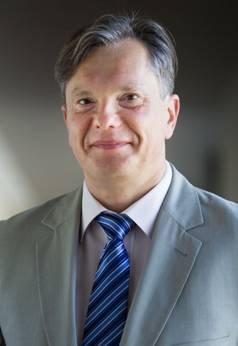
The two decades that have passed since regaining Lithuania's independence can be described as a "building boom". From the wreckage of a captive Soviet republic, a generation of Lithuanians have built a modern European state, and are now helping construct a Nordic-Baltic community replete with institutions intended to promote political coordination and foster a trans-Baltic regional identity. Indeed, a "Nordic-Baltic community" - I will explain later in my text the meaning of this catch-phrase.
Since the restoration of Lithuania's independence 25 years ago, we have continuously felt a strong support from Nordic countries. Nordics in particular were among the countries supporting Lithuania's and Baltic States' striving towards independence. Take example of Iceland, country which recognized Lithuania in February of 1991, well in advance of other countries. Yet another example - Swedish Ambassador was the first ambassador accredited to Lithuania in 1991. The other countries followed suit. When we restored our statehood, Nordic Countries became champions in promoting Baltic integration into Euro-Atlantic institutions. To large degree thanks Nordic Countries, massive transformations occurred in Lithuania since then, Lithuania became fully-fledged member of the EU and NATO, and we joined the Eurozone on 1 January 2015.
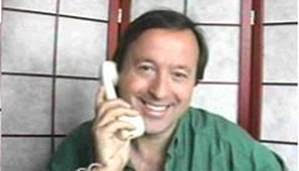
Have you heard about the
South African "Pencil Test"?
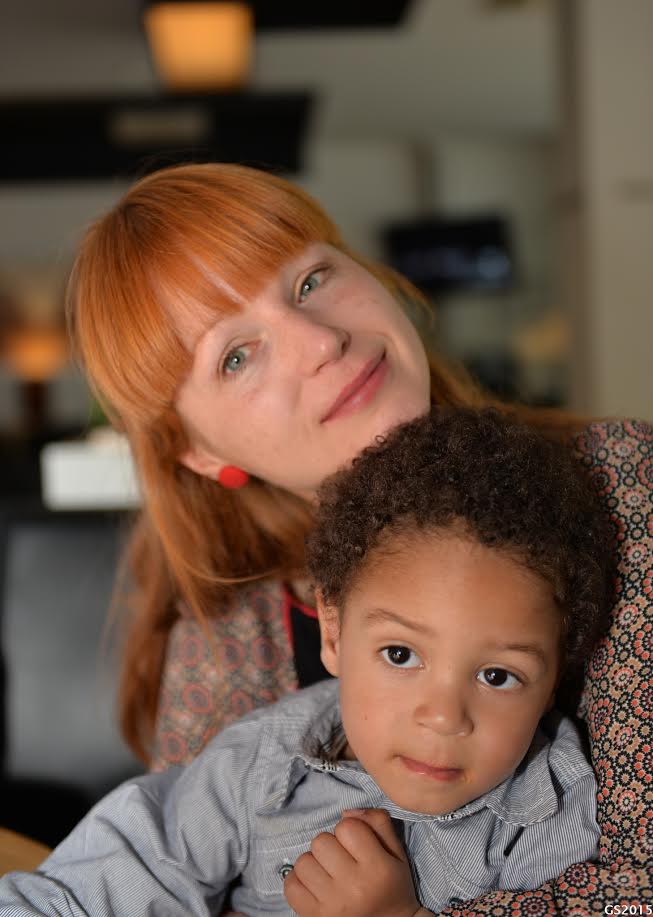
But that is exactly what happened to me when I came back from South Africa. I will tell you how.
VilNews e-magazine is published in Vilnius, Lithuania. Editor-in-Chief: Mr. Aage Myhre. Inquires to the editors: editor@VilNews.com.
Code of Ethics: See Section 2 – about VilNews. VilNews is not responsible for content on external links/web pages.
HOW TO ADVERTISE IN VILNEWS.
All content is copyrighted © 2011. UAB ‘VilNews’.