
THE VOICE OF INTERNATIONAL LITHUANIA

|
VilNews has its own Google archive! Type a word in the above search box to find any article.
You can also follow us on Facebook. We have two different pages. Click to open and join.
 Click on the buttons to open and read each of VilNews' 18 sub-sections Click on the buttons to open and read each of VilNews' 18 sub-sections  |

|


Author Archive
Barbra Kingstone finds Lithuania increasingly cosmopolitan – but not easy to read and walk…
- Posted by - (0) Comment

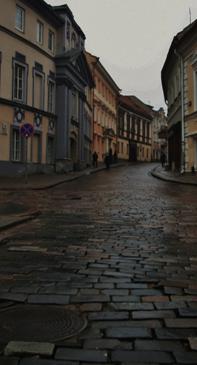
BARBARA KINGSTONE: Charming as the Vilnius cobblestone streets are, if you're walking, these uneven surfaces are a hazard so sensible shoes. As I traversed the ancient streets, it boggled my mind to see svelte young women in sky-high stilettos rush by without a wobble.
Photo: Aage Myhre.
An article by BARBARA KINGSTONE,
Special to QMI Agency
Some countries can be read like a manageable road map. It's easy to figure out where you are, learn about the history and politics, and navigate from one dot to another. Lithuania is not one of these.
With its history of political twists and turns, domination by various countries, shifting borders, and imposed ideologies, connecting the dots in Lithuania is complex. When likened to reading a map, even the most directionally adept person would beg for aspirin.
- Bookmark :
- Digg
- del.icio.us
- Stumbleupon
- Redit it

The fairy tale forests of the Gauja Valley in Latvia, the beauty of Saaremaa Island in Estonia and the 170-foot-high Parnidis Dune in Lithuania were waiting for author Patricia Schultz to discover them
- Posted by - (0) Comment

Patricia Schultz’s world bestselling travel book is back in a more informative, more experiential, more budget-friendly full-color edition. A #1 "New York Times" bestseller, "1,000 Places" reinvented the idea of travel book as both wish list and practical guide. As Newsweek wrote, it "tells you what's beautiful, what's fun, and what's just unforgettable-- everywhere on earth." And now the best is better. There are 600 full-color photographs. Over 200 entirely new entries, including visits to 28 countries like Lithuania, Latvia and Estonia, that were not in the original edition.
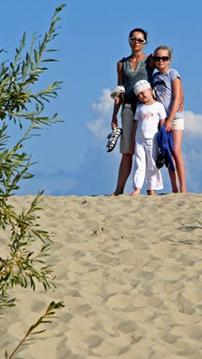
On top of the Parnidis Dune,
Neringa, Lithuania.
Photo: Aage Myhre.
- Bookmark :
- Digg
- del.icio.us
- Stumbleupon
- Redit it

- Posted by - (0) Comment
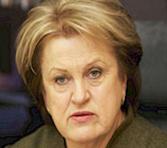
Kazimiera Prunskiene:
Russian direction is necessity, not a threat
By Linas Jegelevicius. Baltic Times
Twenty years ago she was called the Baltics’ Amber Lady, who led Lithuania to its independence, but today the KGB collaboration shadow haunts Kazimiera Danute Prunskiene, even though she has successfully fought off this accusation in court. Out of the Lithuanian Parliament and ousted from the chairwomanship of the Lithuanian Peasant Popular Union, in 2009, instead of enjoying life out of politics, she established the pro-Russian Lithuanian Populace Party (LPP), which is said to be of increased interest to Lithuania’s State Security Department. Though the party was doomed to defeat in the municipality elections in 2011, it was among the parties to have gained the biggest financial contributions from electoral campaign donors. The first prime minister of independent Lithuania and, currently, chairwoman of the controversial Lithuanian Populace Party, sat down with The Baltic Times for this interview.
- Bookmark :
- Digg
- del.icio.us
- Stumbleupon
- Redit it

BY NIKOLAJ NIELSEN
BRUSSELS - The number of unemployed people in Europe is reaching record highs as the economic crisis unfolds into one with significant social consequences.
In eight member states alone, over 30 percent of young people under 25 are out of jobs. The worst affected continues to be Spain where half its young are jobless.
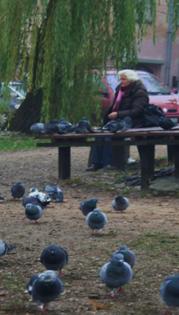
UNEMPOLYMENT IN LITHUANIA:
Youth unemployment: 31.1%
Overall unemployment: 15.3%
- Bookmark :
- Digg
- del.icio.us
- Stumbleupon
- Redit it

- Posted by - (2) Comment
The Polish-Lithuanian
War 1919-1920
A series of articles in 4 parts
By Vincas Karnila, Associate editor
vin.karnila@VilNews.com
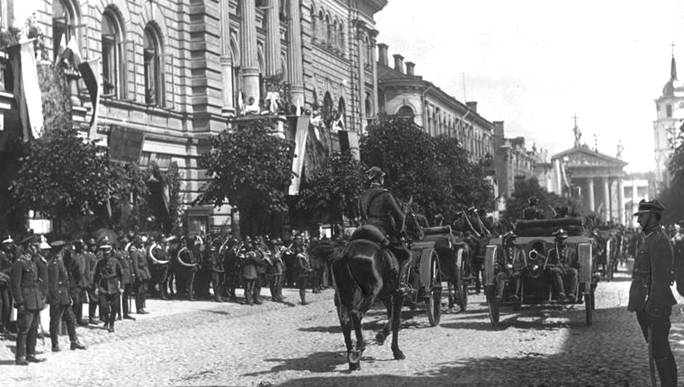
South-eastern Lithuania, Vilnius included, was occupied by Poland during the interwar period.
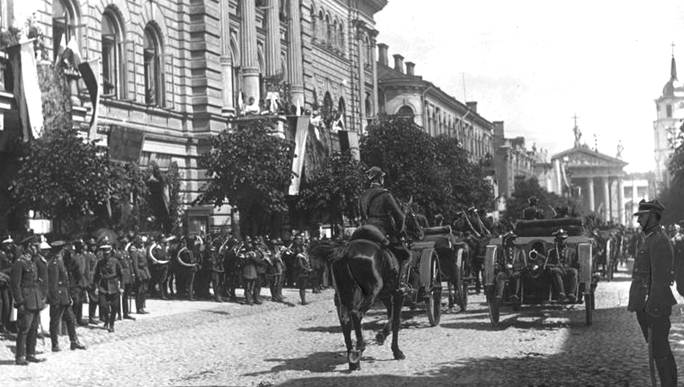
Picture: Celebration of the incorporation of Vilnius Region to Poland, 1922.
The Polish–Lithuanian War was an armed conflict between Lithuania and Poland in the aftermath of World War I and Lithuania's declaration of independence 16 February 1918.
The conflict primarily concerned territorial control of the Vilnius Region, including Vilnius, and the Suwałki Region, including the towns of Suwałki, Augustów, and Sejny. According to Lithuanian historians, the war was part of the Lithuanian Wars of Independence and spanned from spring 1919 to November 1920. According to Poland, the war included only fighting over the Suwałki Region in September–October 1920 and was part of the Polish–Soviet War.
After Vilnius was occupied by the Russian Bolsheviks in 1919, the government of the Republic of Lithuania established its main base in Kaunas. When Vilnius was forcibly annexed by Poland, Kaunas became the temporary capital of Lithuania, a position it held until 28 October 1939, when the Red Army handed Vilnius back to Lithuania. The Constituent Assembly of Lithuania first met in Kaunas on 15 May 1920. There were no diplomatic relations between Poland and Lithuania until 1938.
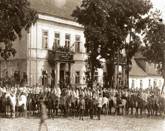 |
Part 1 – THE BUILD UP World War I ended on November 11, 1918 when Germany signed the Compiègne Armistice. On November 13, Soviet Russia renounced the Treaty of Brest-Litovsk. Most of today's Poland, Belarus, Ukraine and the Baltic States were passed to the government of Germany, which in turn decided to grant these states limited independence as buffer states) and began the Soviet westward offensive of 1918–1919.
|
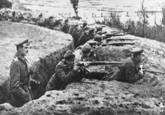 |
Part 2 – ADVANCES and RETREATS In April 1920 Poland launched the large-scale Kiev Offensive in hopes to capture Ukraine. Initially successful, the Polish Army started retreating after Russian counterattacks in early June 1920. Soon the Soviet forces began to threaten Poland's independence as they reached and crossed the Polish borders.
|
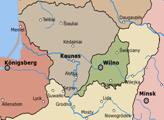 |
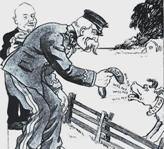
Part 3 – STRUGGLES for the VILNIUS REGION Polish chief of state Jozef Pilsudski ordered his subordinate, General Lucjan Zeligowski, to stage a mutiny with his 1st Lithuanian–Belarusian Division (16 battalions with 14,000 soldiers) in Lida and capture Vilnius in fait accompli.
|
 |
Part 4 – THE AFTERMATH In March 1921, the plans for a referendum vote were abandoned. Neither Lithuania, which was afraid of a negative result, nor Poland, which saw no reason to change status quo, wanted it. The parties could not agree in which territory to carry out the vote and how Żeligowski's forces should be replaced by the League's forces. The League of Nations then moved on from trying to solve the narrow territorial dispute in the Vilnius Region to shaping the fundamental relationship between Poland and Lithuania.
|

- Bookmark :
- Digg
- del.icio.us
- Stumbleupon
- Redit it

- Posted by - (0) Comment
The Polish-Lithuanian
War 1919-1920
Part 2 of 4 - ADVANCES and RETREATS
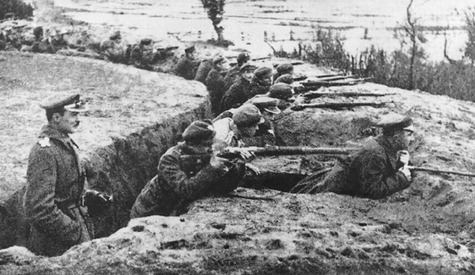
The Battle of the Niemen River was the second-greatest battle of the Polish-Soviet War. It took place near the Neman River between the cities of Suwałki, Grodno and Białystok in today’s Poland and Belarus.
Su pagarbe Vincas Karnila, Associate editor
vin.karnila@VilNews.com
DIPLOMATIC DEVELOPMENTS
In April 1920 Poland launched the large-scale Kiev Offensive in hopes to capture Ukraine. Initially successful, the Polish Army started retreating after Russian counterattacks in early June 1920. Soon the Soviet forces began to threaten Poland's independence as they reached and crossed the Polish borders. On July 9, Polish Prime Minister Wladyslaw Grabski asked the Allied Powers in the Spa Conference (The Spa Conference was a meeting between the Supreme War Council and Weimar Republic in Spa, Belgium on 5–16 July 1920).
READ TODAY’S ARTICLE – PART 2 OF 4
To read previous articles – GO TO OUR SECTION 10
- Bookmark :
- Digg
- del.icio.us
- Stumbleupon
- Redit it
- Posted by - (2) Comment
The Polish-Lithuanian
War 1919-1920
Part 2 of 4 - ADVANCES and RETREATS
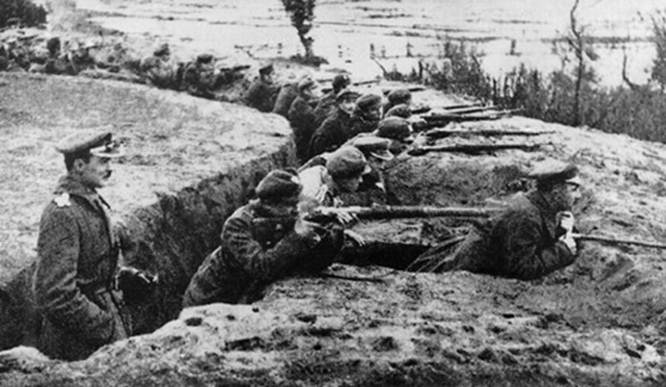
The Battle of the Niemen River was the second-greatest battle of the Polish-Soviet War. It took place near the Neman River between the cities of Suwałki, Grodno and Białystok in today’s Poland and Belarus.
Su pagarbe Vincas Karnila, Associate editor
vin.karnila@VilNews.com
DIPLOMATIC DEVELOPMENTS
In April 1920 Poland launched the large-scale Kiev Offensive in hopes to capture Ukraine. Initially successful, the Polish Army started retreating after Russian counterattacks in early June 1920. Soon the Soviet forces began to threaten Poland's independence as they reached and crossed the Polish borders. On July 9, Polish Prime Minister Wladyslaw Grabski asked the Allied Powers in the Spa Conference (The Spa Conference was a meeting between the Supreme War Council and Weimar Republic in Spa, Belgium on 5–16 July 1920).
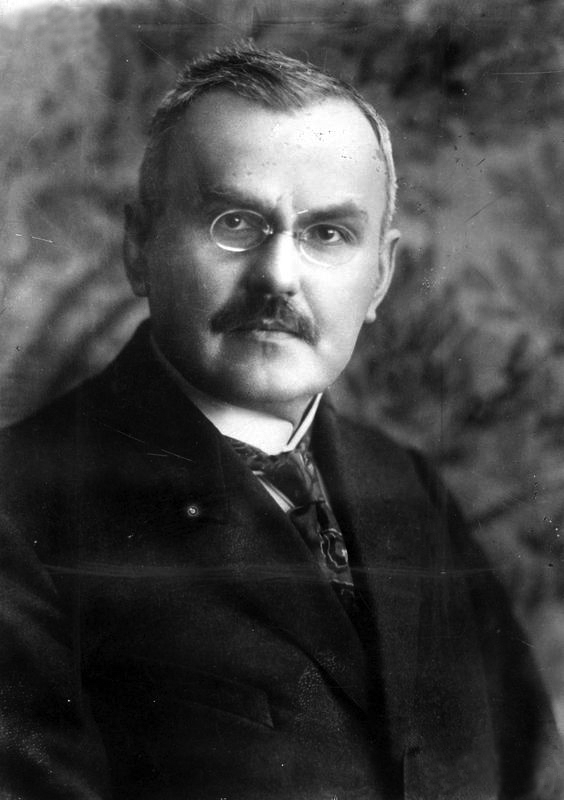
Wladyslaw Grabski
It was the first post-war conference to include German representatives. The attendees included British and French Prime Ministers Lloyd George and Alexandre Millerand, German Chancellor Constatin Fehrenbach. The Conference mainly discussed disarmament of Germany and war reparations required by the Treaty of Versailles) for military assistance in the war with the Soviets. The conference proposed that the Polish forces would withdraw behind the Curzon Line, the Soviet forces would stop 50 km (31 mi) to the east of the line, the Lithuanian forces would take control of Vilnius, and all other disputes would be settled via negotiations in London. Grabski opposed the transfer of Vilnius, but under pressure of British Prime Minister Lloyd George, agreed to the resolution on July 10.

Advance of Soviet forces (red arrows) against Polish troops in June–August 1920
At the same time the Soviets and Lithuania negotiated the Soviet–Lithuanian Peace Treaty, which was signed on July 12, 1920. Russia recognized Lithuanian independence and withdrew any territorial claims. The treaty drew the eastern border of Lithuania, which the Lithuanians continued to claim as their de jure state border until World War II. The Vilnius Region, including Braslau, Hrodna, Lida and Vilnius, was recognized to Lithuania. On August 6, after long and heated negotiations, Lithuania and Soviet Russia signed a convention regarding withdrawal of Russian troops from the recognized Lithuanian territory. However, the troops began to retreat only after the Red Army suffered a heavy defeat in Poland.
TERRITORIAL CHANGES
The Bolshevik forces reached the Lithuanian territory on July 7, 1920, and continued to push back the Polish troops and subsequently the Lithuanian Army moved to secure territories abandoned by the retreating Polish forces. They took Turmantas on July 7, Tauragnai and Alanta on July 9, Širvintos and Musninkai on July 10, Kernavė, Molėtai and Giedraičiai on July 11, Maišiagala and Pabradė on July 13. On July 13 the Polish command decided to transfer Vilnius to the Lithuanians in accordance with the resolution of the Spa Conference. Lithuanians tried to move in but their trains were stopped by Polish soldiers near Kazimieriškės. This delay meant that the Bolsheviks were the first to enter Vilnius on July 14. By the time the first Lithuanian troops entered the city on July 15, it was already secured by the Soviets. Poland sought to have Russians in the city as it would create much less complications when Polish Army counterattacked. Despite the Peace Treaty, the Soviets did not intend to transfer the city to the Lithuanians. Indeed there were indications that the Soviets planned a coup against the Lithuanian government in hopes to establish the Lithuanian SSR (Lithuanian Soviet Socialist Republic)
Despite the setback in Vilnius, the Lithuanians continued to secure territories in the Suwałki Region. Lithuanian forces took Druskininkai on July 17, Vištytis, Punsk, Giby, and Sejny on July 19, Suwałki on July 29 and Augustów on August 8. The Polish units, afraid of being surrounded and cut off from the main Polish forces, retreated towards Lomza. The Lithuanian authorities started to organize themselves in the regained areas.
LITHUANIAN NEUTRALITY
Poland claimed that Lithuania violated its claim to neutrality in the Polish–Soviet War and in effect became a Soviet ally. A secret clause of the Soviet–Lithuanian Peace Treaty allowed Soviet forces unrestricted movement within the Soviet-recognized Lithuanian territory for the duration of Soviet hostilities with Poland. This clause was more of a practical matter since Soviet troops already occupied much of the assigned territory and could not and would not withdraw while hostilities with Poland continued. Lithuanians were also simply unable to resist the Soviets and their troops. For example, when Lithuanians refused a permission to use a road, the Soviets ignored Lithuanian protests and transported their troops and equipment regardless. At the same time Polish soldiers were disarmed and interned bt Lithuania. The largest group, a brigade under colonel Pasławski, was interned on July 18, 1920, near Kruonis. On August 10, Lithuanians held 103 Polish officers and 3,520 private soldiers. Poland also claimed that the Lithuanian troops actively participated in military operations of the Red Army. This charge, based on memoirs of Soviet officials, lacks evidence. Further military clashes between Polish and Lithuanian troops in the Suwałki Region were interpreted by Poland to show that "the Lithuanian government has become an instrument of the Soviet government." Lithuania responded that it was defending its borders.
AUGUST to OCTOBER 1920 – STRUGGLES FOR THE SUWALKI REGION
POLISH ADAVANCE AND SOVIETS RETREAT
The Russians suffered a great defeat AT the Battle of Warsaw in mid-August 1920 and started withdrawing. They handed over Vilnius to the Lithuanians on August 26. The Lithuanians hastily made preparations to secure the border, as determined by the Soviet–Lithuanian Peace Treaty. The soldiers were ordered to maintain neutrality: avoid hostilities and intern any Soviet or Polish troops that would cross the border. On August 26, a Polish delegation, led by colonel Mieczyslaw Mackiewicz, arrived in Kaunas to negotiate the situation. The Poles, lacking authority to discuss political issues, were concerned with military aspects.

They sought permission to transport Polish troops through the territory of Lithuania, wanted access to a portion of the Warsaw–Saint Petersburg Railway and demanded that the Lithuanian troops would withdraw from the Suwałki Region behind the Curzon Line. The Lithuanians refused to discuss military matters without a clear political Polish–Lithuanian border that would be respected after the war. Due to these fundamental disagreements and Polish attacks, the negotiations broke down on August 30.
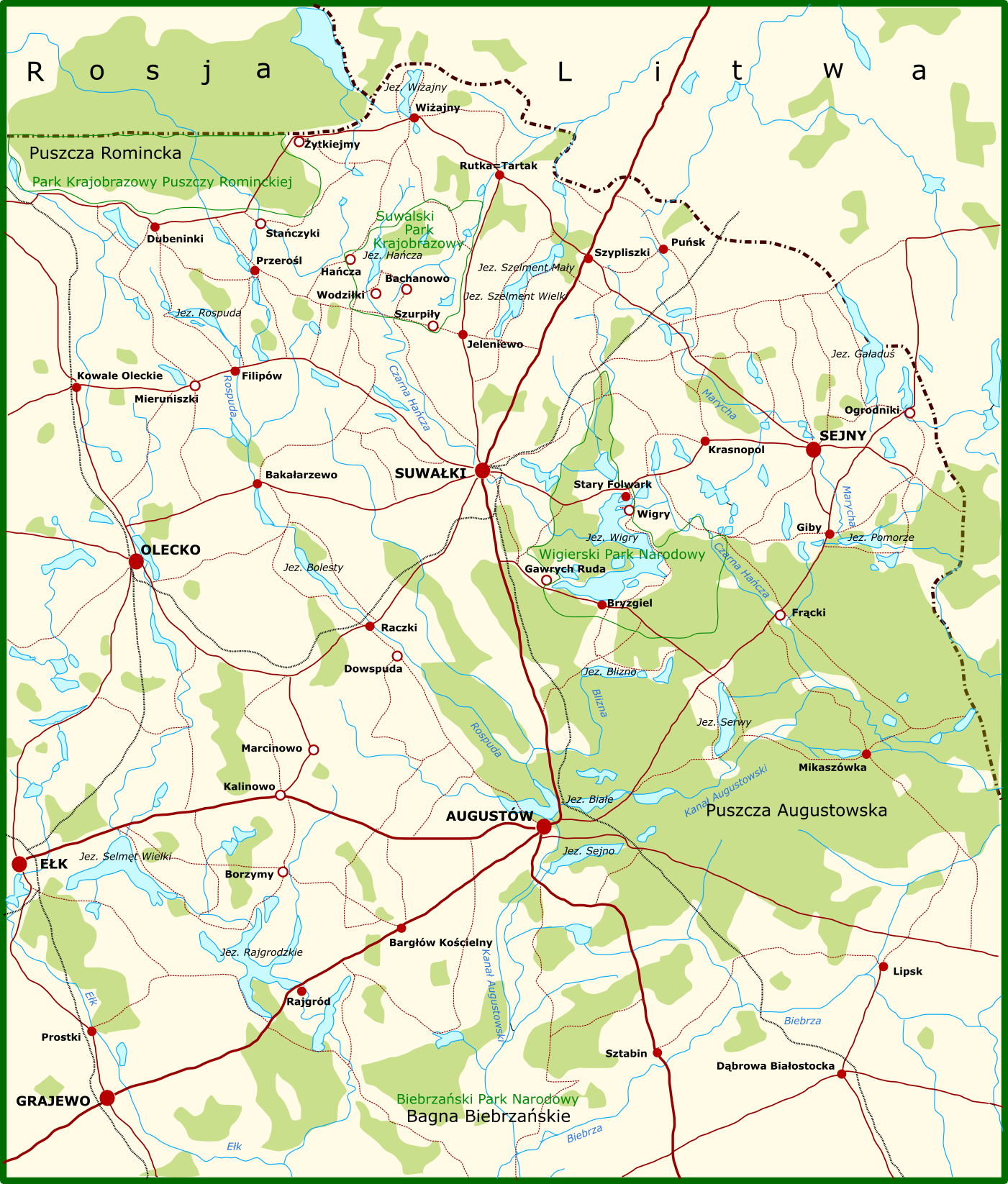
Map of the Suwałki Region. Its many forests and lakes complicated the military actions.
The Suwałki Region had strategic importance in the Polish–Soviet War. Following orders of Edward Rydz-Śmigły, Polish forces took Augustów from Lithuanians in a surprise attack on August 28. Confused and disoriented Lithuanians retreated from Suwałki and Sejny on August 30 and 31. The Lithuanians reorganized, gathered their forces (11 battalions with 7,000 soldiers) and organized a counterattack to "defend their border" on September 2. The goal was to take and secure the Augustów–Lipsk-Hrodna line. The Lithuanians succeeded in taking Sejny and Lipsk and by September 4 reached the outskirts of Augustów. On September 5, the Poles counterattacked and forced the Lithuanians to retreat. On September 9, the Polish forces recaptured Sejny but the Lithuanians pushed back and regained Sejny and Giby on September 13 and 14. Pending direct negotiations, hostilities were ceased on both sides.
DIRECT NEGOTIATIONS and the LEAGUE OF NATIONS
On September 6, Lithuanian Foreign Minister Juozas Purickis proposed direct negotiations in Marijampolė. On September 8, during a planning meeting of the Battle of the Niemen River, the Poles decided to maneuver through the Lithuanian territory to the rear of the Soviet Army, stationed in Hrodna In an attempt to conceal the planned attack, Polish diplomats accepted the proposal to negotiate. The negotiations started on September 16 in Kalvarija but collapsed just two days later.
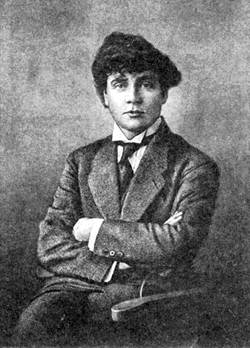
Juozas Purickis
On September 5, 1920, Polish Foreign Minister Eustachy Sapieha delivered a diplomatic note to the League of Nations alleging that Lithuania violated its neutrality and asking to intervene in the Polish–Lithuanian War.
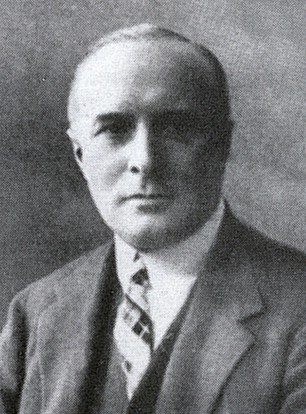
Eustachy Sapieha
The League agreed to mediate and began its session on September 16. The resolution, adopted on September 20, urged both states to cease hostilities and adhere to the Curzon Line. Poland was asked to respect Lithuanian neutrality if Soviet Russia agreed to do the same. Also a special Control Commission was to be dispatched into the conflict zone to oversee implementation of the resolution. It was clear that the League had only a narrow goal to prevent armed hostilities and not to resolve the underlying territorial dispute. The Lithuanian government accepted the resolution, while Poland reserved full freedom of action in preparation for the attack on the Soviets.
BATTLE of the NIEMAN RIVER
On September 22, 1920, Poland attacked Lithuanian units in the Suwałki Region on a wide front. Overwhelmed by 4–5 times larger enemy forces, some 1,700–2,000 Lithuanian troops surrendered and were taken prisoners. Polish forces then marched, as planned on September 8, across the Neman River near Druskininkai and Merkinė to the rear of the Soviet forces near Hrodna and Lida. The Red Army hastily retreated. The Lithuanians had limited intelligence warnings about such attack and as a result chose an inadequate defensive strategy and spread their forces too thinly along the entire Polish–Lithuanian front without sufficient forces to protect bridges across the Neman.

Map of the Battle of the Niemen river. Polish forces maneuvered through the Lithuanian territory (front line in red) to the rear of Soviet troops despite the resolution by the League of Nations to cease hostilities
This attack, just two days after the resolution by the League of Nations to cease hostilities, put more pressure on Poland to settle the dispute peacefully. On September 26, Poles captured Hrodna and Polish Foreign Minister Sapieha proposed new negotiations in Suwałki. The Battle of the Niemen River drastically altered the balance of power. Vilnius, in Lithuanian hands since August 26, was exposed to a Polish attack. Indeed Poles had already decided to capture the city and used the negotiations in Suwałki to stall and buy time for necessary preparations. The Lithuanian side was ready to give up the Suwałki Region in exchange for Poland's recognition of the Lithuanian claims to Vilnius.
SUWALKI AGREEMENT
The negotiations between Poles, led by colonel Mieczyslaw Mackiewicz and Lithuanians led by general Maksimas Katche, began in the evening of September 29, 1920. Both sides agreed to an armistice, but only to the east of the Neman River (the Suwałki Region).

Maksimas Katche
Fighting to the west on the river continued around Marcinkonys, Zervynos, Perloja and Eišiškės. A major point of contention, both diplomatic and military, was the train station in rėna (Orany) on the Warsaw – Saint Petersburg Railway. Major Lithuanian forces were still concentrated in the Suwałki Region and moving them to protect Vilnius without the railway would be extremely difficult. Fighting west of the Neman River ceased only on October 6, when Polish troops had already captured the train station in Varėna.

Selected demarcation lines between Poland and Lithuania. Line drawn by the Suwałki Agreement is in yellow; the final interwar border is in orange. The current borders of Lithuania, Poland and Balta Rusija that were established after the Second World War are indicated by the purple lines
Negotiations regarding the demarcation line were difficult. In essence, the Lithuanians wanted a longer demarcation line to provide better protection for Vilnius. The Poles agreed only to a short line in order to provide the planned attack on Vilnius with space for operation. The Polish delegation was also stalling to buy time for necessary preparations for an attack on Vilnius. While Vilnius was not a topic of debate, it was on everybody's mind. On October 4, the Control Commission, sent by the League according to its resolution of September 20, arrived to Suwałki. The Commission, led by French colonel Pierre Chardigny, re-energized the negotiations. On October 7, at midnight, the final agreement was signed. The treaty made not a single reference to Vilnius or the Vilnius Region. The ceasefire was effective only along the demarcation line, which ran through the Suwałki Region to the train station in Bastuny. Thus the line was incomplete, did not provide protection to the Vilnius Region, but indicated it would be left on the Lithuanian side.
In Part 3
OCTOBER to NOVEMBER 1920 – STRUGGLES for the VILNIUS REGION
- Bookmark :
- Digg
- del.icio.us
- Stumbleupon
- Redit it
- Posted by - (0) Comment
Re. Polish-Lithuanian War 1919-1920:
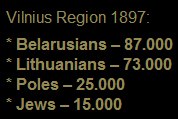
Thank you for the very interesting post. The demographics in 1897 is provided here
Interestingly in the areas around Vilnius, excluding the city ("Vilenskij ujezd bez goroda") Belarusians constituted around 87 000, Poles 25 000, Lithuanians 73 000, and Jews 15 000. So it was a very mixed area, and I wonder if "Belarusians" became "Poles" in later censuses.
Tautietis
- Bookmark :
- Digg
- del.icio.us
- Stumbleupon
- Redit it
- Posted by - (0) Comment
The Polish-Lithuanian
War 1919-1920
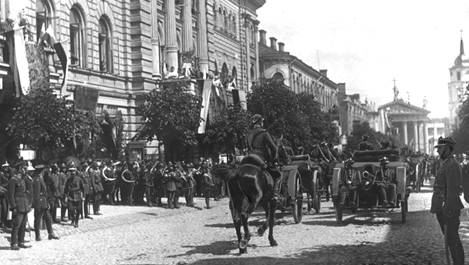
South-eastern Lithuania, Vilnius included, was occupied by Poland
during the interwar period. Picture: Celebration of the incorporation
of Vilnius Region to Poland, 1922.
The Polish–Lithuanian War was an armed conflict between Lithuania and Poland in the aftermath of World War I and Lithuania's declaration of independence 16 February 1918.
VilNews' Associate Editor Vincas Karnila today introduces our readers to a series with a total of four articles about this war and the consequences it had for the relationship between the once good neighbours Poland and Lithuania.
The conflict primarily concerned territorial control of the Vilnius Region, including Vilnius, and the Suwałki Region, including the towns of Suwałki, Augustów, and Sejny. According to Lithuanian historians, the war was part of the Lithuanian Wars of Independence and spanned from spring 1919 to November 1920. According to Poland, the war included only fighting over the Suwałki Region in September–October 1920 and was part of the Polish–Soviet War.
After Vilnius was occupied by the Russian Bolsheviks in 1919, the government of the Republic of Lithuania established its main base in Kaunas. When Vilnius was forcibly annexed by Poland, Kaunas became the temporary capital of Lithuania, a position it held until 28 October 1939, when the Red Army handed Vilnius back to Lithuania. The Constituent Assembly of Lithuania first met in Kaunas on 15 May 1920. There were no diplomatic relations between Poland and Lithuania until 1938.
Introduction
As usually happens, the end of one hostility often results in the beginning of other hostilities. This was the case between Lithuania and Poland after the end of the First World War. With both countries in a state of war with Bolshevik Russia, defending themselves against Russia’s attempt to recapture and occupy the two countries that had just recently regained their independence, this helped to set the stage for armed conflict between the two neighbors. This combined with one country’s plan to control part of Europe, claims to land based on its population and the continued “carving up” of smaller countries by larger countries all helped to create what was known as the Polish – Lithuanian War which resulted in Lithuania losing its capital of Vilnius and other parts of its country to Polish occupation during the interim war period.
Dear readers we would like to invite you review this series which will offer insight as to what led to the conflict, the reasons and justifications, the participants, the areas of action and some of the key events. As always we warmly welcome any additional information and any comments you would like to share.
Su pagarbe Vincas Karnila, Associate editor
vin.karnila@VilNews.com
- Bookmark :
- Digg
- del.icio.us
- Stumbleupon
- Redit it
- Posted by - (4) Comment
|
War 1919-1920
The Polish–Lithuanian War was an armed conflict between Lithuania and Poland in the aftermath of World War I and Lithuania's declaration of independence 16 February 1918. VilNews' Associate Editor Vincas Karnila today introduces our readers to a series with a total of four articles about this war and the consequences it had for the relationship between the once good neighbours Poland and Lithuania. The conflict primarily concerned territorial control of the Vilnius Region, including Vilnius, and the Suwałki Region, including the towns of Suwałki, Augustów, and Sejny. According to Lithuanian historians, the war was part of the Lithuanian Wars of Independence and spanned from spring 1919 to November 1920. According to Poland, the war included only fighting over the Suwałki Region in September–October 1920 and was part of the Polish–Soviet War. After Vilnius was occupied by the Russian Bolsheviks in 1919, the government of the Republic of Lithuania established its main base in Kaunas. When Vilnius was forcibly annexed by Poland, Kaunas became the temporary capital of Lithuania, a position it held until 28 October 1939, when the Red Army handed Vilnius back to Lithuania. The Constituent Assembly of Lithuania first met in Kaunas on 15 May 1920. There were no diplomatic relations between Poland and Lithuania until 1938.
|
Introduction
As
usually happens, the end of one hostility often results in the beginning of
other hostilities. This was the case between Lithuania and Poland after the end
of the First World War. With both countries in a state of war with Bolshevik
Russia, defending themselves against Russia’s attempt to recapture and occupy
the two countries that had just recently regained their independence, this
helped to set the stage for armed conflict between the two neighbors. This
combined with one country’s plan to control part of Europe, claims to land
based on its population and the continued “carving up” of smaller countries by
larger countries all helped to create what was known as the Polish – Lithuanian
War which resulted in Lithuania losing its capital of Vilnius and other parts
of its country to Polish occupation during the interim war period.
Dear readers we would like to invite you review this series which will offer insight as to what led to the conflict, the reasons and justifications, the participants, the areas of action and some of the key events. As always we warmly welcome any additional information and any comments you would like to share.
Su pagarbe Vincas Karnila, Associate editor
vin.karnila@VilNews.com
Part 1 of 4 - THE BUILD UP
MILITARY DEVELOPMENTS
World War I ended on November 11, 1918 when Germany signed the Compiègne Armistice. On November 13, Soviet Russia renounced the Treaty of Brest-Litovsk (After signing the Treaty of Brest-Litovsk March 3 1918, Bolshevik Russia lost the European lands it annexed in the 18th century and 19th century. Most of today's Poland, Belarus, Ukraine and the Baltic States were passed to the government of Germany, which in turn decided to grant these states limited independence as buffer states) and began the Soviet westward offensive of 1918–1919. The Bolsheviks followed retreating German troops and attacked Lithuania and Poland from the east trying to prevent their independence. They attempted to spread the global proletarian revolution, establish Soviet republics in the region, and join the German and the Hungarian Revolutions. The Soviet offensive sparked a series of local wars, including the Polish–Soviet War and the Lithuanian–Soviet War. At first the Soviets were successful, but came to a halt in February 1919. In March–April both Lithuanians and Poles began their offensives against the Soviets. The three armies met in the Vilnius Region. The Polish–Lithuanian relations were not immediately hostile, but grew worse as each side refused to compromise. On April 19, 1919, the Polish Army captured Vilnius.

The
advance of Polish (blue arrows), Lithuanian/German (dark purple arrows) against
the Soviet forces in early 1919. The blue line shows the Polish front in May
1920. The red line shows the Soviet front in February 1919
At first, both Poles and Lithuanians cooperated in their offensive against the Soviets, but soon the cooperation gave way to increasing hostility. Lithuania claimed neutrality in the Polish–Soviet War. As the Polish Army forced its way further into Lithuania, the first clashes between Polish and Lithuanian soldiers occurred on April 26 and May 8, 1919, near the village of Vievis. Though there was no formal state of war and few casualties, by July newspapers reported increasing clashes between Poles and Lithuanians, primarily around the towns of Merkinė and Širvintos. Direct negotiations in Kaunas between May 28 and June 11, 1919, collapsed as neither side agreed to compromise. Lithuania tried to avoid direct military conflict and submitted its case for mediation to the Conference of Ambassadors (The Conference was formed to enforce peace treaties and to mediate various territorial disputes among European states. The Conference consisted of ambassadors of Great Britain, Italy, and Japan accredited in Paris and the French minister of foreign affairs. The ambassador of the United States attended as an observer because the U.S. was not an official party to the Treaty of Versailles).
DIPLOMATIC DEVELOPMENTS
Poland did not recognize the independence of Lithuania as Polish leader Józef Piłsudski hoped to revive the old Polish–Lithuanian Commonwealth and campaigned for some kind of Polish–Lithuanian union in the Paris Peace Conference. Poland also did not intend to make any territorial concessions, justifying its actions not only as part of a military campaign against the Soviets but also as the right of self-determination of local Poles. According to the 1897 Russian census, the disputed city of Vilnius had an ethnic breakdown of 30% Poles, 40% Jews, and 2% Lithuanians; however the percentage of Lithuanians was much higher in the surrounding countryside. According to the 1916 German census, Poles constituted 50% of city's population. The Lithuanians claimed Vilnius as their historical capital and refused any federation with Poland, desiring an independent Lithuanian state.

Józef
Piłsudski
They regarded Polish federalism as recreation of Polish cultural and political dominance. The Lithuanian government in Kaunas, designated as the temporary capital, saw the Polish presence in Vilnius as an occupation. In addition to the Vilnius Region, the Suwałki Region was also disputed due to the fact it had a mixed Polish and Lithuanian population. In effect what Poland was saying was that if many Poles lived in an area, the area should be/is a part of Poland regardless of the fact that the area was in another country.
At the time the international situations of newly independent Poland and Lithuania were unequal. Poland, much larger in territory and population, was dedicated point 13 in Woodrow Wilson's Fourteen Points (The Fourteen Points was a speech given by United States President Woodrow Wilson to a joint session of Congress on January 8, 1918. The address was intended to assure the country that the Great War was being fought for a moral cause and for postwar peace in Europe. Point 13 was – “An independent Polish state should be erected which should include the territories inhabited by indisputably Polish populations, which should be assured a free and secure access to the sea, and whose political and economic independence and territorial integrity should be guaranteed by international covenant”).
Poland was recognized by all nations of the Entente, officially invited to the Paris Peace Conference and became one of the founding members of the League of Nations. Poland also enjoyed a close alliance with France. Lithuania did not receive international recognition (it was first recognized formally in July 1920 by Soviet Russia) as the Entente hoped to revive the Russian Empire within its former territory, which included Lithuania. Lithuania was not invited to any post-war diplomatic conferences. It also had to battle negative propaganda that the Council of Lithuania was a German puppet, that Lithuanians harbored pro-Bolshevik attitudes or that Lithuania was too small and weak to survive without a union with Poland.
MAY to SEPTEMBER 1919 – RISING TENSIONS
DEMARCATION LINES

Map of
demarcation lines of June 18 (light green) and July 26 (dark green) between
Poland and Lithuania. Poland ignored both lines and continued to advance up to
the orange line. Railroads are marked by black stitched lines.
The Conference of Ambassadors drew the first demarcation line on June 18. The line, drawn about 5 km (3.1 mi) west of the Warsaw – Saint Petersburg Railway, was based on the military situation on the ground at that time rather than ethnic composition. Neither Poles nor Lithuanians were content with the line. The Polish Ministry of Foreign Affairs rejected the line as it would require the Polish forces to retreat up to 35 km (22 mi). The Lithuanians protested leaving Vilnius and Hronda under Polish control. As German volunteers were departing from Lithuania and Lithuanian forces were preoccupied with battles against the Soviets in northern Lithuania, Poland mounted an offensive on a 100 km (62 mi) wide front moving 20–30 km (12–19 mi) deeper into the Lithuanian territory and Lithuania could not organize an effective defense to counteract this offensive.
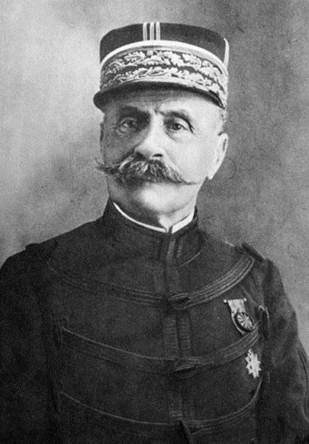
Ferdinand Foch
On July 18, Ferdinand Foch proposed the second demarcation line, known as the Foch Line. It was approved by the Entente on July 26. The Lithuanians were informed about the new line only on August 3. Two major modifications favorable to the Poles were made: the Suwałki Region was assigned to Poland and the entire line was moved about 7 km (4.3 mi) west. Again, both Poles and Lithuanians protested the line as it would require them to withdraw their armies from the Vilnius and Suwałki Regions respectively. The German administration, which had not yet retreated from the Suwałki Region, also opposed the Foch Line. The new line did not immediately halt the hostilities. After a couple of Polish attacks on July 29 and August 2, the front stabilized.
THE SEJNY UPRISING
The Lithuanians obeyed the Foch Line and retreated from Suwałki on August 7, 1919. However, they stopped in ethnically mixed Sejny and formed a line on the Czarna Hancza river – Wigry Lake. They showed their intention to stay there permanently, which caused concern among the local Poles. On August 12, the Poles of that area organized a rally of about 100 people demanding incorporation into Poland. The Sejny branch of Polish Military Organization (PMO) began preparing for an uprising, scheduled for the night of August 22 to 23, 1919 and between 900 and 1,200 partisans joined PMO forces. On August 23, the Poles captured Sejny and attacked the towns of Lazdijai and Kapčiamiestis on the Lithuanian side of the Foch Line. The insurgents planned to march as far as Simnas (located 23 km west of Alytus). Lithuanians recaptured Sejny on August 25 for a few hours. On August 26, Polish regular forces – the 41st Infantry Regiment – joined the PMO volunteers. On September 5, the Lithuanians agreed to withdraw behind the Foch Line by September 7. Poland secured Sejny and repressed Lithuanian cultural life: the Sejny Priest Seminary was expelled, Lithuanian schools and cultural organizations closed. After the uprising, the mistrust of Poles prompted Lithuanian intelligence to intensify its investigations of Polish activities in Lithuania. This helped to detect and prevent a planned coup d'état in Kaunas to overthrow the government of Lithuania.
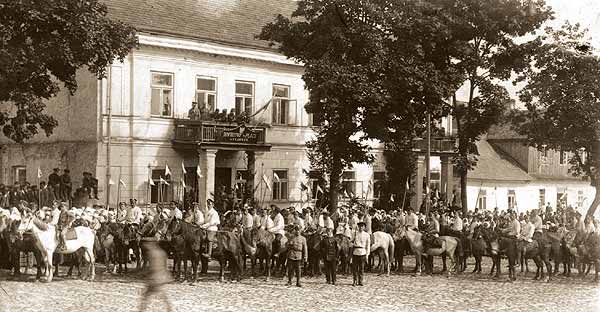
Polish cavalry parade
in Sejny
THE PLOISH COUP ATTEMPT
Sometime in mid-July 1919, PMO forces in Vilnius began planning a coup to replace the Lithuanian government with a pro-Polish cabinet, which would agree to a union with Poland of the proposed Miedzymorzr federation, also known as Intermarium was a plan, pursued by Polish leader Jozef Pilsudski, for a federation, under Poland's control of Central and Eastern European countries, invited to join the proposed federation were the Baltic states of Lithuania, Latvia, Estonia, Finland, Belarus, Ukraine, Hungary, Romania, Yugoslavia and Czechoslovalia. The proposed federation was meant to emulate the Polish-Lithuanian Commonwealth, stretching from the Baltic Sea to the Black Sea that, from the end of the 16th century to the end of the 18th, had united the Kingdom of Poland and the Grand Duchy of Lithuania. Intermarium complemented Piłsudski's other geopolitical vision of Prometheism, whose goal was the dismemberment of the Russian Empire and that Empire's divestment of its territorial conquests into Polish control. Intermarium was, however, perceived by some Lithuanians as a threat to their newly established independence, and by some Ukrainians as a threat to their aspirations for independence and was opposed by most Western powers.
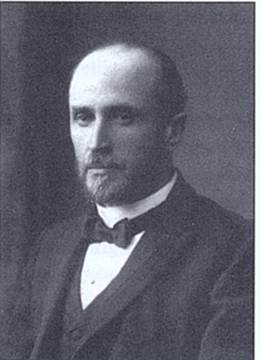
Leon Wasilewski
Polish leader Jozeph Pilsudski believed there were enough Polish sympathizers in Lithuania to carry out the coup. On August 3, a Polish diplomatic mission led by Leon Wasilewski, in Kaunas had a double purpose: propose a plebiscite (common people’s law) in the contested territories and assess preparedness for the coup. On August 6, the Lithuanian government rejected the plebiscite proposal, stating that the disputed territories constitute ethnographic Lithuania. PMO planned to capture and hold Kaunas for a few hours until arrival of the regular Polish troops, situated only some 40–50 km (25–31 mi) east from the city. The coup would be portrayed as an initiative of the local population to "free Lithuania from German influence" while denouncing any involvement of the Polish government. Polish newspapers ran a propaganda campaign claiming that the Council of Lithuania was simply a German puppet. The coup was initially scheduled for the night of August 27 to 28, but was postponed to September 1. Lithuanian intelligence discovered the coup, but did not have a list of PMO members. Lithuanian authorities began mass arrests of some 200 Polish activists, including some officers of the Lithuanian Army. Kaunas was declared under a state of siege. Polish press saw the mass arrests of Polish activists "to whom no charge can be ascribed other than being Poles" as proof of systematic anti-Polish policies of the German-ridden Lithuanian government”. PMO was little affected by the arrests and scheduled another coup attempt for the end of September. However, Lithuanians obtained a full PMO membership list and liquidated the organization in Lithuania.
SEPTEMBER 1919 to JUNE 1920 - MORE POLISH ATTACKS
After the failure of the coup in Kaunas there were numerous incidents. On September 19, 1919, Polish troops attacked Gelvonai and continued towards Ukmergė. On several occasions fights broke out regarding a strategically important bridge over the Šventoji River near Verpriai. In October, when the main Lithuanian forces were deployed against the Bermontians (The West Russian Volunteer Army or Bermontians was an army in the Baltic provinces of the former Russian Empire during the Russian Civil War of 1918-1920) in northwestern Lithuania, the attacks intensified and Poles captured Salakas on October 5 and attacked Kapčiamiestis on October 12. The front stabilized, but harassment of border guards and local villagers continued throughout late 1919 and early 1920. In March 1920, the Poles attacked along the railroad stations in Kalkūni and Turmantas. The situation was investigated by British and French observers and reported to the Entente. The situation somewhat improved only in late spring of 1920 when most Polish troops were deployed to Ukraine during the Polish–Soviet War.
At the time Lithuania faced a severe budget crisis – in 1919 its revenue was 72 million while expenses reached 190 million German marks. While the government was struggling to obtain financial assistance and loans, deep cuts affected the army. Instead of increasing its armed forces to 40,000 men, Lithuania was forced to cut them to about 25,000.
In part 2 of 4 - ADAVANCES and RETEATS
- Bookmark :
- Digg
- del.icio.us
- Stumbleupon
- Redit it
- Posted by - (0) Comment

OP-ED COLUMNIST
‘The Suffering Olympics’
By ROGER COHEN
Published: January 30, 2012
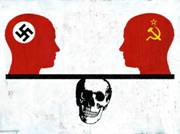
VILNIUS, LITHUANIA — The “double genocide” wars that pit Stalin’s crimes against Hitler’s are raging in wide swathes of Europe and every now and again along comes a gust from the past to stoke them. The 70th anniversary this month of the Nazi adoption at Wannsee of annihilation plans for the Jews provided one such squall.
Yes, the past is still treacherous beneath Europe’s calm surface. Memory swirls untamed in the parts of the Continent that the American historian Timothy Snyder calls “Bloodlands,” the slaughterhouses from Lithuania to Ukraine that Hitler and Stalin subjected to their murderous whim.
To mark the Wannsee anniversary, over 70 European Parliament members, including 8 Lithuanians, signed a declaration objecting to “attempts to obfuscate the Holocaust by diminishing its uniqueness and deeming it to be equal, similar or equivalent to Communism.” It also rejected efforts to rewrite European school history books “to reflect the notion of ‘double genocide.”’
All of this was too much for the Lithuanian foreign minister, Audronius Azubalis, a conservative, who blasted the Lithuanian social democrat signatories as “pathetic.” His spokeswoman declared that the only difference between Hitler and Stalin was the length of their mustaches. She said legal qualifications of the crimes they committed were “absolutely the same”: genocide, war crimes and crimes against humanity.
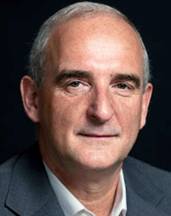
Roger Cohen
- Bookmark :
- Digg
- del.icio.us
- Stumbleupon
- Redit it
- Posted by - (0) Comment

Lithuania: not as bright as it seems
January 30, 2012
by Jonathan Wheatley
The mood turned sour again on European markets on Monday, as fresh worries about Greece rattled investors’ nerves. But that didn’t stop Lithuania getting a one-year bond auction away at a pretty impressive yield, on the day the country said its economy grew by a healthy 4.3 per cent last year.
Nevertheless, a glance behind the headline figures suggests that even where things look cheerful, investors should be cautious.
Lithuania sold 70m litas ($26.6m) of one-year debt with a yield of 2.74 per cent, Reuters reported, down from a yield of 3.876 per cent on 50m litas of debt maturing in August 2013 sold at the beginning of January. Average yields on Lithuanian one-year debt have fallen from more than 4 per cent at the end of November to 2.71 per cent today.
Lithuania and the other Baltic states, says Neil Shearing at Capital Economics, “have been the poster child for austerity in the face of crisis, pursuing internal devaluation and implementing big budget cuts despite huge falls in output.”
- Bookmark :
- Digg
- del.icio.us
- Stumbleupon
- Redit it
- Posted by - (0) Comment
The pride of
being Lithuanian

Illustration from: http://www.cafepress.com
Text: Aage Myhre
aage.myhre@VilNews.com
I've been asked why VilNews puts relatively much emphasis on articles with historical content. I've also been asked whether our journey around Europe in January should be presented in a publication that otherwise focuses on Lithuania.
My response is as follows:
Sooner or later the history knocks
at the door of the present
Lithuania’s Foreign Minister Audronius Ažubalis recently said this about the still latent conflict between Armenia and Turkey on the mass killing that took place during the First World War. He is of course right, and the statement is valid for us all, also Lithuania.
The Lithuanian people have for 200 years largely been deprived of the opportunity to know their own nation's history presented in an objective and outspoken way. Those who published historical documentation here were often people who deliberately swept some parts of Lithuania's history under the carpet, exaggerated on other aspects and deliberately misinformed the people. During the years when Lithuania was under Tsarist Russia, Nazi Germany and the Soviet Union, truth and authentic information was often forbidden or falsified. Today it is no longer so, but I still feel that the knowledge about own history among the people here is not very deep or comprehensive in many cases.
Lithuania is a country that more than many others should be seen and understood in the light of historical perspectives...
- Bookmark :
- Digg
- del.icio.us
- Stumbleupon
- Redit it
- Posted by - (1) Comment
The pride of being Lithuanian
Illustration
from: http://www.cafepress.com
Text: Aage Myhre
aage.myhre@VilNews.com
I've been asked why VilNews puts relatively much emphasis on articles with historical content. I've also been asked whether our journey around Europe in January should be presented in a publication that otherwise focuses on Lithuania.
My response is as follows:
Sooner or later the history knocks at the
door of the present
Lithuania’s Foreign Minister Audronius Ažubalis recently said this about the still latent conflict between Armenia and Turkey on the mass killing that
took place during
the First World War. He is of course right, and the statement is valid for us
all, also Lithuania.
The Lithuanian people have for 200 years largely been deprived of the opportunity to know their own nation's history presented in an objective and outspoken way. Those who published historical documentation here were often people who deliberately swept some parts of Lithuania's history under the carpet, exaggerated on other aspects and deliberately misinformed the people. During the years when Lithuania was under Tsarist Russia, Nazi Germany and the Soviet Union, truth and authentic information was often forbidden or falsified. Today it is no longer so, but I still feel that the knowledge about own history among the people here is not very deep or comprehensive in many cases.
Lithuania is a country that more than many others should be seen and understood in the light of historical perspectives. It is only when one becomes familiar with this nation's dramatic background that one can begin to understand more about the nation’s values and qualities. And it is this perspective we want to have as a backdrop for our articles in VilNews.
We want our readers to have access to deep knowledge of what has happened of good and bad here. Also in cases when this enforces tough confrontations with the past. For example what happened during the Holocaust, the guerrilla warfare that took place in the post-war years, as well as the many abuses carried out by Soviet and its henchmen during WWII and the 50 years that followed.
But Lithuania has also an infinite amount of history to be proud of. Take as an example the 300 years when the country was a world superpower, known as the Grand Duchy of Lithuania. It was the wise leaders of this period who caused the British historian Norman Davies to describe Lithuania as "a haven of tolerance".
Lithuania’s dramatic, bloody history during the period 1919 – 1991
|
|
|
|
|
|
|
|
|


Lithuania is back in the European family

Lithuania is back in good old Europe. A Europe that has seen dramatic changes through century after century, but that will forever remain "home & castle" for us Europeans. Lithuania played once a very significant role for this continent, but is now to be considered a newcomer into its former neighbourhood. It is, however, in this neighbourhood Lithuania belongs. And now it's time to get to know the neighbours and find the nation’s rightful place in this context.
You who have followed us on our journey through Europe in January, may have learned a little more about the different countries we visited. You may have also seen that there are prominent Lithuanian footprints in pretty much every European country.
Lithuania is now free to revive friendships and relations with its neighbours. Border crossings are open as never before. Despite the differences, it is here in the European family that Lithuania belongs.
But family and neighbourhood also represents commitments. This must be taken seriously.
Lithuanians have many good reasons to feel pride in their homeland. Having knowledge of historical and geographical context is an important prerequisite for the emergence of modern Lithuania, and our VilNews will therefore also in the future focus on bringing information that sheds light on these aspects.
- Bookmark :
- Digg
- del.icio.us
- Stumbleupon
- Redit it
- Posted by - (0) Comment
RE: Our January Europe tour has come to its end.
Right in time, my friend; just as Davos 2012 ends!

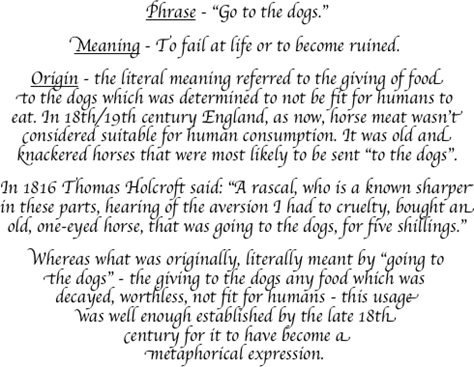
Pls forgive some sarcasm but very unlikely EU countries, like the Soviet communist exploited and impoverished Lithuania, have long showed the way to Europe by adopting serious austerity policies that go almost to the point of "eating the dog food", to use a hyperbole. Unfortunately, this good model that Davos 2012 has been looking so desperately for (and could not find) is drowned in the cacophony of bureaucratic screams around bailing out Greece and other profligate countries that are, so far at least, the true winners in Europe! The whole Europe will soon "go to the dogs"; so your Journey was not a month too soon, Aage.
My advice now: invest in the European dog food :)
Valdas Samonis,
Toronto.
- Bookmark :
- Digg
- del.icio.us
- Stumbleupon
- Redit it

Ruta Brazis-Velasco
- Bookmark :
- Digg
- del.icio.us
- Stumbleupon
- Redit it

OPINIONS
Have your say. Send to:
editor@VilNews.com
Ph. D., Chicago
A wave of unity sweeps the international Lithuanian community on March 11th every year as Lithuanians celebrated the anniversary of the Lithuanian Parliament's declaration of independence from the Soviet Union in 1990. However, the sense of national unity engendered by the celebration could be short-lived.
Human beings have a strong tendency to overgeneralize and succumb to stereotypical us-them distinctions that can shatter even the strongest bonds. We need only search the internet to find examples of divisive thinking at work:
- "Those who fled Lithuania during World II were cowards -- and now they come back, flaunt their wealth, and tell us 'true Lithuanians' how to live."
- "Lithuanians who work abroad have abandoned their homeland and should be deprived of their Lithuanian citizenship."


In Lithuania Christmas Eve is a family event and the New Year's Eve a great party with friends!
Lithuanian say "Kaip sutiksi naujus metus, taip juos ir praleisi" (the way you'll meet the new year is the way you will spend it). So everyone is trying to spend New Year's Eve with friend and have as much fun as possible.
Lithuanian New Year's traditions are very similar to those in other countries, and actually were similar since many years ago. Also, the traditional Lithuanian New Years Eve party was very similar to other big celebrations throughout the year.
The New Year's Eve table is quite similar to the Christmas Eve table, but without straws under the tablecloth, and now including meat dishes. A tradition that definitely hasn't changes is that everybody is trying not to fell asleep before midnight. It was said that if you oversleep the midnight point you will be lazy all the upcoming year. People were also trying to get up early on the first day of the new year, because waking up late also meant a very lazy and unfortunate year.
During the New Year celebration people were dancing, singing, playing games and doing magic to guess the future. People didn't drink much of alcohol, especially was that the case for women.
Here are some advices from elders:
- During the New Year, be very nice and listen to relatives - what you are during New Year Eve, you will be throughout the year.
- During to the New Year Eve, try not to fall, because if this happens, next year you will be unhappy.
- If in the start of the New Year, the first news are good - then the year will be successful. If not - the year will be problematic.
* If New Year's night is cold and starry - look forward to a good summer!
* If the during New Year Eve trees are covered with frost - then it will be a good year. If it is wet weather on New Year's Eve, one can expect a year where many will die and dangerous epidemics occur.
* If the first day of the new year is snowy - the upcoming year will see many young people die. If the night is snowy - mostly old people will die.
* If the New Year time is cold - then Easter will be warm.
* If during New Year there are a lot of birds in your homestead - then all year around there will be many guests and the year will be fun.
Christmas greetings
from Vilnius
and epic battle for the
future
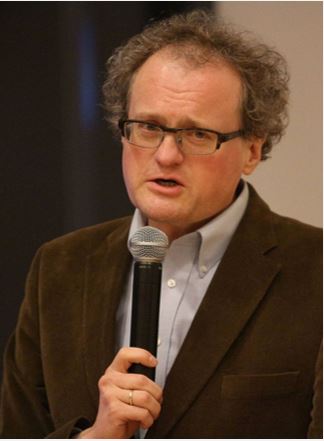
Philosopher, political theorist, historian of
ideas, social analyst, and political
commentator
Ukraine was and continues to be perceived by the EU political class as a sort of grey zone with its immense potential and possibilities for the future, yet deeply embedded and trapped in No Man's Land with all of its troubled past, post-Soviet traumas, ambiguities, insecurities, corruption, social divisions, and despair. Why worry for what has yet to emerge as a new actor of world history in terms of nation-building, European identity, and deeper commitments to transparency and free market economy?
Right? Wrong. No matter how troubled Ukraine's economic and political reality could be, the country has already passed the point of no return. Even if Vladimir Putin retains his leverage of power to blackmail Ukraine and the West in terms of Ukraine's zero chances to accede to NATO due to the problems of territorial integrity, occupation and annexation of Crimea, and mayhem or a frozen conflict in the Donbas region, Ukraine will never return to Russia's zone of influence. It could be deprived of the chances to join NATO or the EU in the coming years or decades, yet there are no forces on earth to make present Ukraine part of the Eurasia project fostered by Putin.
want to learn about the
new, scary propaganda
war between Russia,
The West and the
Baltic States!
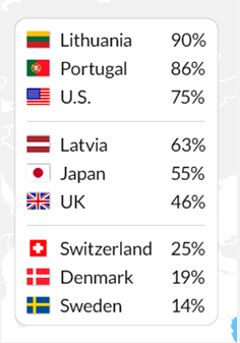
believe their government
is corrupt
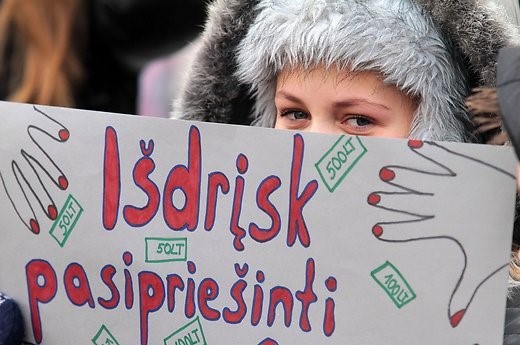
students say no to
bribes for doctors

During Soviet times, government was administered for the people in control, not for the local population, court decisions were decreed, they were not the administration of justice, and academia was the domain of ideologues. 25 years of freedom and openness should have put those bad experiences behind Lithuania, but that is not so.
Today, it is a matter of expectation that court pronouncements will be governed by ideological dictates. Few, if any Lithuanians expect real justice to be effected. For foreign companies, doing business in Lithuania is almost impossible in a situation where business people do not expect rule of law, so, surely Government would be a refuge of competence?
Lithuanian Government has not emerged from Soviet styles. In an attempt to devolve power, Lithuania has created a myriad of fiefdoms of power, each speaking in the name of the Government, each its own centralized power base of ideology.


Chepstow, Wales
Doesn't that sound suspiciously like Lithuania? Ah, but I didn't mention the mountains of Snowdonia, which would give the game away.
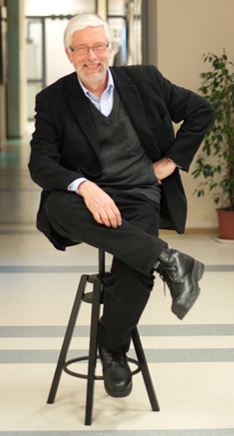
I'm talking about Wales, that part of the UK which Lithuanians used to call "Valija", but later named "Velsas" (why?). Wales, the nation which has welcomed two Lithuanian heads of state to its shores - firstly Professor Vytautas Landsbergis, who has paid several visits and, more recently, President Dalia Grybauskaitė who attended the 2014 NATO summit which was held in Newport, South Wales.
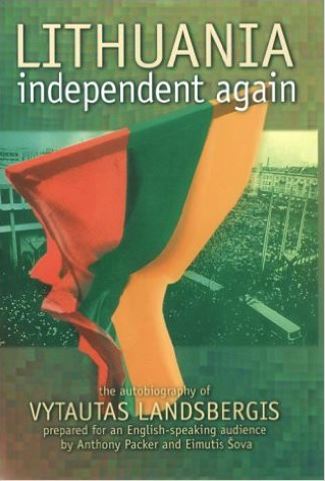
ENGLISH VERSION OF THE
AUTOBIOGRAPHY OF VYTAUTAS LANDSBERGIS.


Although Lithuanian activities have thinned over the decades as that postwar generation died out, the Lithuanian Martyrs' parish hall is crowded with many, many hundreds of visitors who come to the Lithuanian cemetery for All Souls' Day. Similarly, the Franciscan parish has standing room only for Christmas Eve mass.
Although I am firmly embedded in the literary culture of Canada, my themes are usually Lithuanian, and I'll be in Kaunas and Vilnius in mid-November 2015 to give talks about the Lithuanian translations of my novels and short stories, which I write in English.
If you have the Lithuanian language, come by to one of the talks listed in the links below. And if you don't, you can read more about my work at
www.anatanassileika.com
http://www.vdu.lt/lt/rasytojas-antanas-sileika-pristatys-savo-kuryba/ https://leu.lt/lt/lf/lf_naujienos/kvieciame-i-rasytojo-59hc.html

"My love and best wishes to all. As long as VilNews exists, there is hope for the future,"" she writes.
Irena Veisaite means very much for our publication, and we do hereby thank her for the support and wise commitment she always shows.
You can read our interview with her
Facing a new reality
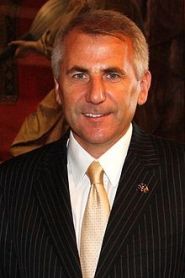
Dear readers of VilNews,
For a number of years, the EU and Russia had assumed the existence of a strategic partnership, based on the convergence of values, economic integration and increasingly open markets and a modernisation agenda for society.
Our agenda was positive and ambitious. We looked at Russia as a country ready to converge with "European values", a country likely to embrace both the basic principles of democratic government and a liberal concept of the world order. It was believed this would bring our relations to a new level, covering the whole spectrum of the EU's strategic relationship with Russia.
The likelihood of Putin
invading Lithuania
.jpg "lithuania today")
Founding Director at Summer Literary Seminars
Are all Lithuanian energy
problems now resolved?
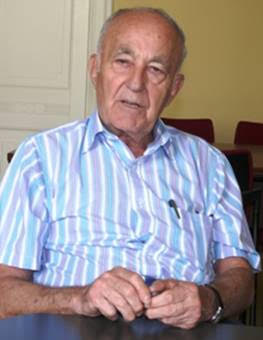
Lithuania as a country does not have significant energy resources. Energy consuming infrastructure after WWII was small and totally supported by energy imports from Russia.
First nuclear reactor begins power generation at Ignalina in 1983, the second reactor in 1987. Iganlina generates enough electricity to cover Lithuania's needs and about 50%.for export. As, prerequisite for membership in EU, Ignalina ceases all nuclear power generation in 2009
The Klaipėda Sea terminal begins Russia's oil export operations in 1959 and imports in 1994.
Mazeikiu Nafta (current ORLEAN Lietuva) begins operation of oil refinery in 1980.
Have Lithuanian ties across
the Baltic Sea become
stronger in recent years?

The two decades that have passed since regaining Lithuania's independence can be described as a "building boom". From the wreckage of a captive Soviet republic, a generation of Lithuanians have built a modern European state, and are now helping construct a Nordic-Baltic community replete with institutions intended to promote political coordination and foster a trans-Baltic regional identity. Indeed, a "Nordic-Baltic community" - I will explain later in my text the meaning of this catch-phrase.
Since the restoration of Lithuania's independence 25 years ago, we have continuously felt a strong support from Nordic countries. Nordics in particular were among the countries supporting Lithuania's and Baltic States' striving towards independence. Take example of Iceland, country which recognized Lithuania in February of 1991, well in advance of other countries. Yet another example - Swedish Ambassador was the first ambassador accredited to Lithuania in 1991. The other countries followed suit. When we restored our statehood, Nordic Countries became champions in promoting Baltic integration into Euro-Atlantic institutions. To large degree thanks Nordic Countries, massive transformations occurred in Lithuania since then, Lithuania became fully-fledged member of the EU and NATO, and we joined the Eurozone on 1 January 2015.

Have you heard about the
South African "Pencil Test"?
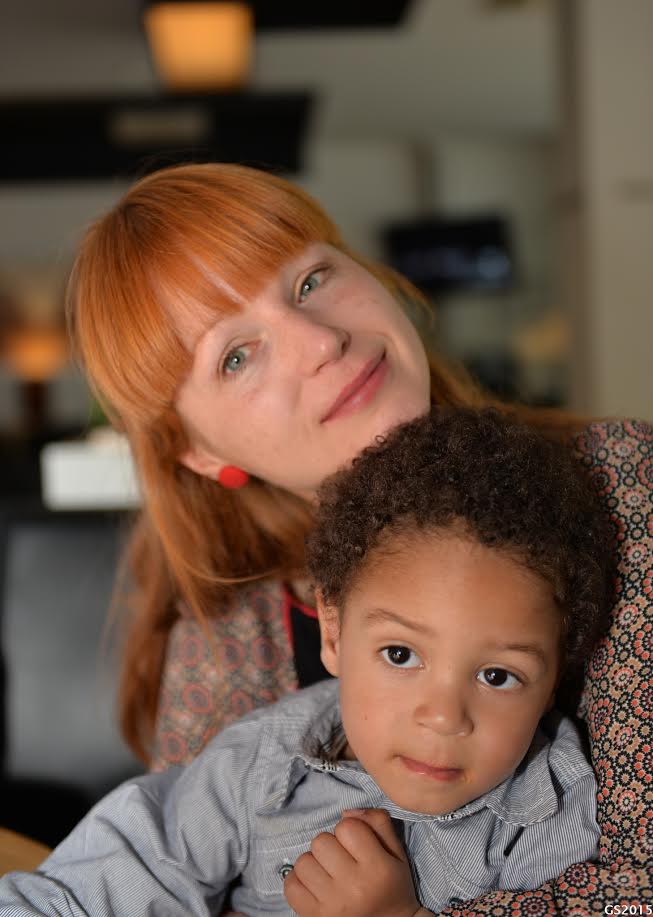
But that is exactly what happened to me when I came back from South Africa. I will tell you how.
VilNews e-magazine is published in Vilnius, Lithuania. Editor-in-Chief: Mr. Aage Myhre. Inquires to the editors: editor@VilNews.com.
Code of Ethics: See Section 2 – about VilNews. VilNews is not responsible for content on external links/web pages.
HOW TO ADVERTISE IN VILNEWS.
All content is copyrighted © 2011. UAB ‘VilNews’.