
THE VOICE OF INTERNATIONAL LITHUANIA

|
VilNews has its own Google archive! Type a word in the above search box to find any article.
You can also follow us on Facebook. We have two different pages. Click to open and join.
 Click on the buttons to open and read each of VilNews' 18 sub-sections Click on the buttons to open and read each of VilNews' 18 sub-sections  |

|


Author Archive
A world superpower for 300 years
- Posted by - (7) Comment

The Grand Duchy of Lithuania was a European state from the 12th /13th century until 1569 and then as a constituent part of Polish-Lithuanian Commonwealth until 1791. It was founded by the Lithuanians, one of the polytheistic Baltic tribes from Aukštaitija. The duchy later expanded to include large portions of the former Kievan Rus' and other Slavic lands, covering the territory of present-day Belarus, Latvia, Lithuania, Ukraine, and parts of Estonia, Moldova,Poland and Russia. At its greatest extent in the 15th century, it was the largest state in Europe. It was a multi-ethnic and multi-confessional state with great diversity in languages, religion, and cultural heritage.
“Lithuania was a superpower much longer than USA has been“. This is how I often tease my American friends arriving in Vilnius. But the teasing is in fact not so far away from reality, as the Grand Duchy of Lithuania (GDL) over 300 years, was one of the biggest nations of the world, stretching from the Baltic to the Black Sea.
It all started with King Mindaugas (1203-1263), Lithuania‘s first and only king, who in 1236 defeated the Livonian Brothers of the Sword and united the different Lithuanian tribes under his reign. But the real expansion began when Grand Duke Gediminas came to power in 1316, and started a new dynasty of leaders. Gediminas employed several forms of statesmanship to expand and strengthen the GDL. He invited members of religious orders to come to the Grand Duchy, announced his loyalty to the Pope and to his neighbouring Catholic countries and made political allies with dukes in Russia as well as with the Poles through marriage to women in his family. Gediminas’ political skills are evident in a series of letters written to Rome and nearby cities. He mentions the Franciscan and Dominican monks who had come to the GDL by invitation and were given the right to preach, baptise and perform other religious services. He also included an open invitation to artisans and farmers to come and live in the GDL, promising support and reduced taxes.
Along with his other political accomplishments, Gediminas established Vilnius as the capital of the GDL. During his rule, he managed to establish a stable state comprised of peoples of varied ethnicity and religious persuasions. When his rule ended in 1341, he left the GDL viable and strong.
Under Vytautas the Great, Lithuania‘s military and economy grew stronger, and he expanded the Grand Duchy‘s frontiers to the Black Sea.
The Grand Duchy was at its peak in the 15th Century. It was in the centre of Europe and comprised of the entire territories of contemporary Lithuania, Belarus, Ukraine, part of Poland and stretched from the Baltic Sea to the Black Sea. Successfully ruled by a dynastic line of dukes, the GDL developed a highly advanced system of state administration to stave off invading Crusaders longer than any other central European power. Its statesmen conducted effective foreign policy and military campaigns and created a multi-ethnic state. Though officially ending in 1795, the history of the GDL continues to influence modern-day nationalist thinking in the region. Lithuania, but also Belarus and Ukraine point back to the days when they were part of the thriving GDL as proof of their cultural and political strength, clearly distinguishing them from Russia.
Aage Myhre
- Bookmark :
- Digg
- del.icio.us
- Stumbleupon
- Redit it

Kugelis recipe
- Posted by - (26) Comment

Photo by Yours For Good Fermentables.com
I’m very excited to share this recipe with you because
KUGELIS IS MY ABSOLUTE FAVOURITE :o)
Once again I have been elected to share a traditional Lithuanian recipe with you due to the fact that I am so very “culinary challenged”. Please remember that I need to be supervised when I’m in the kitchen so that I don’t hurt myself. But the powers to be of VilNews feel that I’m the best person to share these recipes since if a person with my limited cooking skills can cook these tasty meals than it shows to every one how easy they are to prepare.
Kugelis is quite easy to make. The only thing a little confusing about making kugelis is what recipe to use. All recipes for traditional foods of all nationalities have their own little twists to them based on the recipe from one family to another. Recipes for traditional Lithuanian meals are the same.
However for kugelis??????
I think that kugelis has more variations for recipes than any other Lithuanian dish. So in formulating this recipe I took about six different recipes and averaged them out and gave ranges for some ingredients and options for the milk. All said and done, if you made kugelis from the six different recipes I used, in the end they would all be about the same and it would probably be difficult to taste or see the difference if you put a piece of each of the six on a plate.
So – Don’t worry about it. Just have fun!!!
What you will need
10 lbs./4.5 kg. potatoes
1-1 ½ lbs./.5-.7 kg. bacon or pork or chicken
3-6 eggs
2 large onions
1 can evaporated milk or 12 oz. scalded milk
Salt and pepper
Potato preparation
Peel and grate all of the potatoes.
If you do not have an Electric Potato Grater,
use the side of the hand grater with the smallest holes.
The consistency is important. It should be like apple sauce.

Unlike the potatoes for cepelinai, you can use a much wider variety of potatoes for kugelis
since the baking process will darken them and give a bit of a yellow tint.
Again we would not recommend using red potatoes though.
And yes by all means Sig and Rima you can use the purple potatoes!!!
You will have purple kugelis but I’m sure it will taste great and
after all there’s a first time for everything.

Just as we mentioned with the recipe for Cepelinai, the most time consuming part of making Kugelis is grating the potatoes. This is why many people don’t make this easy to make dish very often. This is also why many people got the Lithuanian Electric Potato Grater. It will grate 10 lbs. of potatoes in a matter of minutes. It is available through the Lithuanian E-Store www.balticvalue.com
They have it in both the 110 Volt and 220 Volt models and they ship world wide.

Drain the excess water from the grated potatoes.
The best way is to place grated potatoes in a doubled cheese cloth and squeeze.
A less strenuous way is to put the grated potatoes in a colander and let the liquid seep out.
Important – Drain the liquid into a pan.
When finished pour off the liquid and put the potato starch back into the grated potatoes.
Meat preparation
Cut the bacon into thin strips.
Fry up the bacon and finely chopped onion together.
DO NOT drain out the grease.
The bacon grease is an integral part of the consistency of the cooked Kugelis.
A note about the meat
You can use unsmoked or smoked bacon, it’s all a matter of personal taste.
I don’t think I would recommend bacon cured in maple syrup though.
You can but the packaged and precut bacon or you can buy the “slab bacon”.
The “slab bacon” is what is called šoninė in Lithuania – Pork belly
While using bacon is what some would say is the “traditional” meat, I can honestly tell you that I have had Kugelis made with about any variety of pork cut you can think of. I’ve even had Kugelis made with chicken or turkey. All variations were delicious.
Mixing all the ingredients
Pour the milk into the drained grated potatoes and mix well.
Add the fried bacon and onions into the potatoes (grease and all) and mix well.
Beat the eggs and add into the potato mixture.
Some people recommend that you beat each egg and add it separately???
Add salt and pepper to taste.
Once all the ingredients have been blended well,
Pour mixture into a medium depth, greased backing pan/dish.
Baking
Be sure the oven has been preheated.
Again this is a source of discussion.
Some say;
Bake at 425F/220C for 15 minutes then at 350F/180C for 1 hour
Bake at 425F/220C for 15 minutes then at 325F/165C for 1 hour
Bake at 350F/180C for 2 hours
Bake at 350/180C for 1 ½ hours
The best way is to cook it at whatever temperature you think will work for however long you think is enough – When the top is a golden brown and there is a darker crust around the edges it is DONE.
Remove from the oven and let sit about 20 minutes and then cut and serve.
Sour Cream is a great topping.
Here are a few things to consider.
Maybe using 10 lbs./4.5 kg. of potatoes is too much for the meal you are planning so you may want to use 5 lbs./2.5 kg. of Potatoes. Now this may sound kind of strange but every one I have talked to has said that the amounts of all the other ingredients stay the same – You just use less potatoes???
Even if you cook up a big batch of Kugelis and there is some left over don’t worry
BECAUSE

Fry up some of the left over Kugelis in a pan with some eggs
And this makes one fine breakfast.
In fact this is why I always make a bigger batch than I need just so that I can have Kugelis for breakfast the next day. In spite of what you may have read about “traditional Lithuanian breakfasts” in books, I can tell you that in Lithuania very often what you had for dinner last night is what you have for breakfast (and lunch) the next day.
Skanaus
Vin Karnila
- Bookmark :
- Digg
- del.icio.us
- Stumbleupon
- Redit it

Labas Aage Myhre,
I learned of your website through the British-Lithuanian Society, of which I have been a sustaining member for four years. The B-LS does a wonderful job of promoting Lithuanian social and cultural events in the United Kingdom, and helps to promote initiatives in Lietuva through The Tiltas Trust, a registered charity. For details, go to www.britishlithuaniansociety.org.uk.
I am very proud to tell you that the best man I ever knew was my maternal grandfather, who was Lithuanian. The spelling of the family name changes from document to document, but his father's surname was Markauskus (Markowskas? Markauskus?) and his mother's maiden name was Janusraitus (again, different spellings). There is NOTHING that would make me happier than to be able to trace my roots within Lietuva. If you - or anyone you know - can help me, I would be most grateful. Do you know which part of the country people with these names came from originally? You don't know how much this means to me.
My great grandparents left Lietuva in 1897, moved to Liverpool for four years and then went to Pittston, Pennsylvania, where my grandfather was born. He worked as a coal miner, but after an accident in the mine, decided to try his luck at securing a job at Henry Ford's factory in Michigan. Sadly, after a long time waiting in the hiring queue, he never got the job. So, he knocked on the door of another great American, and this time he got the job. The man who hired him was Thomas Edison. He raised his family in the Vailsburg section of Newark, New Jersey, and when he retired from the Edison Company he presented me with his retirement medal. I was his first born grandchild, and he raised me as if I were his son, which isn't surprising considering that he, a real "soldier's soldier" had daughters but no sons.
My grandfather gave me everything that money cannot buy. In return, I hope to honour his memory by doing whatever I can that will help Lietuva. My resources are limited - I do not have "extra" money, but I can make my contribution in other ways.
I have visited Lietuva twice and am happy to report that never once was I swindled by a taxi driver or a rogue trader. All the people were honest to a fault. Service in the restaurants is very slow (a holdover from Soviet times?), but everything else in the country is wonderful.
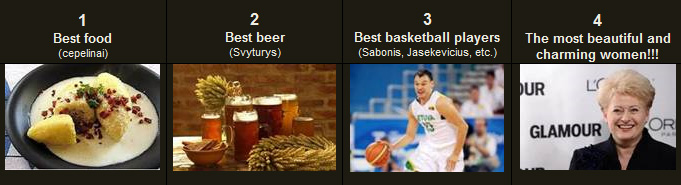
Lietuva is the best country in all the world for four reasons: The best food (cepelinai), the best beer (Svyturys), the best basketball players (Sabonis, Jasekevicius, etc.), and - most obviously - the most beautiful and charming women!!!
Please keep me on your mailing list. Your website is excellent!
Yours sincerely,
Brian Holmes, United Kingdom
- Bookmark :
- Digg
- del.icio.us
- Stumbleupon
- Redit it

Vilnius wins with cozy atmosphere
- Posted by - (0) Comment
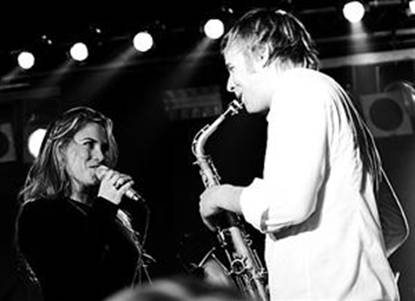
Recently old factory places were resourcefully adapted into clubs.
One of the most famous is "Loftas", where the Parov Stelar
Band (above) is among the many visiting artists.
Despite the clutter of local and international cultural happenings, openings, exhibitions and art workshops, when you think that 24 hours is too short to attend all events, Vilnius still has a nice and rich night life. Not only can you taste the best Japanese, Chinese, Indian and Mexican cuisines but you may enjoy gourmanic kitchens such as Argentinean, Italian, Spanish, Russian, Polynesian, Georgian, Armenian, Thai, German or French.
To try the "cepelinai" or "kugelis" of a Lithuanian national kitchen is a must. Since Lithuanian national dishes are quite heavy, digestive work can be done best by the local beer of big famous breweries or just tasty 'life' beer of the small local beer makers. If you prefer wine and jazz, Vilnius will invite you to lots of cozy wineries, whose numbers have lately grown 'as mushrooms after the rain'.
Not enough adventures? Go and shake your body in a night club! A few years ago, lots of Vilnius dancing clubs caught fire with salsa and bachata. If you more interested in international music, just go to "Pabo Latino" where the best music is played by international and local DJ's, and dance till the sunrise. Various types of life music are always available in "Tamsta Club". Recently old factory places were resourcefully adapted into clubs. One of the most famous is "Loftas". Having nice performances including video-music installations, competitive playing by international and local DJ's and theatrical costume shows – it's always astonishing and crowded.
If you try to compare Vilnius night life with other cities, let’s say to Dubai’s – Vilnius wins with cozy atmosphere, where you can easily meet friends or even find a soulmate (who knows! :) Just come, enjoy and spread the news. We are waiting for you.
Daiva Taliūtė
- Bookmark :
- Digg
- del.icio.us
- Stumbleupon
- Redit it

- Posted by - (0) Comment
· Japan
· China
· India
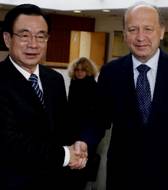
Lithuania is "China's important trading partner in the Baltic Sea region," He Guoqiang, member of the Standing Committee of the Political Bureau of the CPC Central Committee and secretary of the CPC's Central Commission for Discipline Inspection, said during this meeting with Lithuanian Prime Minister Andrius Kubilius.
The agreements that are negotiated, or are under development, are highly significant and may give Lithuania a key position as a link between Asia and EU.
The agreements represent all win-win situations for bilateral relations between the three countries and Lithuania, since both sides have much to gain from the sort of bilateral cooperation that have been negotiated.
For Lithuania, these agreements are so important, economically, politically and with regard to growth in research, technology and communications, that they are likely to be perceived as a political boost for the incumbent government. The deals are simply so promising that they can get PM Kubilius re-elected in the parliamentary election this fall.
Among the news in the cooperation between the countries are worth mentioning:
- JAPAN: Cooperation for the construction of a new nuclear power plant in Visagino, and related technology transfer.
- CHINA: New rail connection from China to Klaipeda and on to Antwerp in Belgium, plus a brand new IT innovation centre at the University of Vilnius.
- INDIA: Lithuania as India's textile industry's gateway to the EU.
Aage Myhre
aage.myhre@VilNews.com
A handful interesting inks with regards to Lithuanian bilateral cooperation with:
· JAPAN
· CHINA 1
· CHINA 2
· INDIA
- Bookmark :
- Digg
- del.icio.us
- Stumbleupon
- Redit it

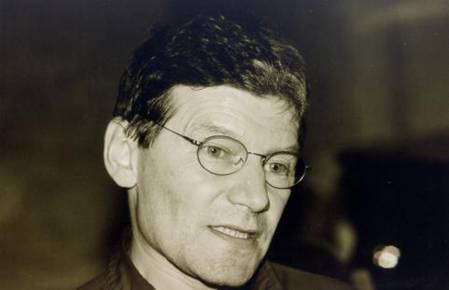
Markas Zingeris
Photo: Džojos Barysaitės
Markas Zingeris interviewed by Diana Koval
Markas Zingeris - a well-known writer, poet, journalist and director of the Vilna Gaon Jewish State museum, in an interview by Vilnews, shared his thoughts on intolerance and anti-Semitism issues in today’s Lithuania.
Q. Anti-Semitic displays in modern-day Lithuania happen quite often. For example, last month someone hoisted up swastika flags on Tauro hill in Vilnius and hung a poster with anti-Semitic slogans near the Kaunas Jewish synagogue. Why do you think such events are happening now? Another question - whether the public or the government is too indifferent to such a phenomenon? The investigation of Petras Stankeras case was terminated due to lack of evidence. Doesn’t it show public aloofness?
M. Z. It shows the lack of determination among the lawyers, or lack of consensus on some really central issues. Personally, I think it is the serious gap in humanitarian education among members of the judiciary, politicians, journalists and the lack of in-depth understanding of history of the twentieth century. In general, it is the absence of common accepted views about the past in a society stuck in the crossroads between East and West, Past and the Future.
Holocaust was denied on the pages of the magazine “Veidas” and this is an offence by law. So somebody needs to take a responsibility and this is either the author of the article or the editors. Just stopping the case wouldn’t do.
Western societies have went to the present-day understanding of crimes of WWII, particularly the Holocaust, a long road, from the Eichmann trial in Jerusalem in the sixties and students revolt in Germany, when children started to put uneasy questions to their parents as to what the latter were doing and where they were serving during WW II. Meanwhile, the Communist regime here concealed the racist motives of Nazi crimes. Communists put the focus on the crimes against “Soviet people” or against people in general, but kept silent about the reasons of Hitler's anti-Semitism ideology. They have censored the works of art, such as Vasiliji Grossman’s epic novel “Life and Fate”: or Jevtushenko’s poem Babiji Yar. There were few exceptions, such as Icchokas Meras with his ghetto stories, but they could not replace the lack of systematic education of human rights and racism, and anti-Semitism. There were periods were anti-Semitism here was even endorsed by the State. So, people haven’t developed immunity to such phenomena.
Consequently, the older generation is unable to transmit the necessary knowledge to the young that educational institutions in the Western Europe have given to the modern day children. Our educational efforts in this direction are too recent and inconsequenial to affect the society on the grass-roots level. People mainly have a certain stereotypical understanding about the past and, also, fail to fully recognize what is happening in today's world.
Our press is not of much use in this. In my perception, a lack of education and a wider perception beyond the ethnocentric view and lack of analytical understanding of twentieth century realities are the reasons why the wheat isn’t being separated from the chaff quite often among the general readers of the mainstream press and, even more, among the general electorate.
Neo-Nazis are selling themselves as patriots to the mass-audience; they misuse the term patriotism, plant ersatz values and spread seeds of hate.
Again, a remark about the dire political consequences of the decisions by the judiciary, recently the court in Klaipeda decided that the swastika is a symbol of the Balts so the public display of it must be legal. So, congrats, dear judges, it was raised over Tauro Hill in Vilnius in the white circle of the full-blown III Reich flags. Why not any other archaeological excavations have been chosen as an ancient symbol of the Balts, but swastika?
Yes, swastikas are common among the archaeological excavations, yes, it is the symbol of the sun, and Hitler also believed that. But let’s de-camouflage it. It is just rhetoric used by contemporary neo-Nazi organizers. Besides, it looks like their patrons are the mainstream party “tautininkai”. Quite often nor our legal institutions, nor our politicians and journalists are able to point out their demagoguery, to drag this camouflage of “patriotism” away, although our public intellectuals were not misled.
We may eventually develop a serious illness of society, as Russia has it, where neo-Nazis and extremists march in orderly columns on various occasions and, as we here, they often turn into violent gangs. We’ve had already had here an attack on a movie-theatre were an anti-fascist film was shown. Unfortunately, without effective response this phenomenon will deepen, expand and we may have some Neo-Nazis taking Parliament seats in due time. I would add that the reaction of the Jewish community was provincial and helpless, at best. Therefore, we have a whole series of events that constitute a favorable ground for such an aggressive phenomenon.
Q. Do you think that some state politicians probably weren’t responsive enough?
M. Z. The ruling party responded with a statement. And I think that the decision was difficult to make, because the ruling party is a cross-party alliance formation. Though the President’s initial reaction was rather vague, later she responded with more determination. So has responded the Prime Minister. In general, the ruling echelon was aware, and some politicians realize that this may be a serious development problem of our society. Somebody must diagnose this phenomenon, which is spreading and becoming more aggressive. It seems to me, that delayed response to extremism encourages extremism. Historically, extremism grows when forces of mainstream or of opposing political camps stay fragmented and hesitant.
Q. Lithuania is a young country. Maybe it just needs more time to rise a new generation, guided by other values, and oriented towards the West?
M. Z. Thinking of it in the silence of my office, sure, that would be very nice. But life out there is different. Everything spreads and develops with the speed of light in the modern world – Arab revolutions, the economic crisis . . . There seems to be no sustainable development. The world evolves convulsively and it is difficult to forecast. 2 + 2 is not four, but, say, 9/11.
Q. In your opinion, what is needed for Lithuania to get on the right path?
M. Z. All this rhetoric is discredited and it seems impossible to have a monopoly on truth, because as I have said the world is changing rapidly. However, there are certain values that need to reach the minds and hearts of as many people as it is possible. Those values are moderation, openness to each other, to minorities and, of course, respect for human rights.
I’d value a belief that the embrace is a more fruitful position than is the self-defense boxing pose of the outdated worldview against the whole present-day world – the East and the West. These demonstrators on March 11 shouted: no to East, no to West. I would say, yes to East, and yes to West! It is better to take everything that is best from everywhere. But indeed a well-educated generation and wise politicians are necessary. And I’ll just share with you some pipe-dreams, if I start writing prescriptions, so I wouldn’t do that. I think what is urgently needed is the political maturity of Lithuania as well as a strong middle class. Unfortunately, these things do not come all-at-once.
Q. Do you have something to tell, that I possibly haven’t asked?
M. Z. It seems to me at this time, there should be announced a kind of State of emergency in education, which would wisely educate intolerance to intolerance. Writers, intellectuals also should regain lost positions in society. Indeed, intellect is completely undervalued in Lithuania. Society should have supported achievements of their intellectuals and future potential Nobel laureates, as enthusiastically as it is supporting its basketball players. In response, there could be a response in a shape of a counterdemonstration in the very center of Vilnius, which was conceded so proudly by Municipality clerks to the radicals on 11 March. A counterdemonstration with completely contrary slogans, wise and peaceful, and a much forceful demonstration at that - this should be an adequate response.
- Bookmark :
- Digg
- del.icio.us
- Stumbleupon
- Redit it
- Posted by - (0) Comment
PM Kubilius welcomes Gazprom as investor in Lithuanian gas supply!
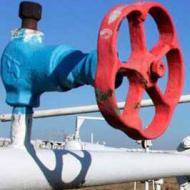
Lithuania, in unbundling the monopolies in the gas market, will let in Russian gas giant Gazprom to partly participate in the management of the country's gas-main (the large pipeline in which gas is carried for distribution through smaller pipes to consumers).
As Lithuanian Prime Minister Andrius Kubilius puts it, the company is a very important strategic partner and it is interested in gas transit to Kaliningrad region. Kubilius said that Gazprom would be just a financial investor, reports LETA/ELTA.
"Gazprom remains a very important strategic partner and it is absolutely natural that the company is concerned about the so called gas transit to Kaliningrad region. I personally do not see anything wrong in that. Gazprom would be just a financial investor without a final say as Lithuania would the one holding such right, there is nothing to worry about," the PM said to the radio Ziniu Radijas in a telephone interview from Stockholm.
The PM said that such provision of Gazprom being solely a financial investor and not having a casting vote in voting is outlined in Lithuania's letter which was handed in to Gazprom Export's Director General Alexander Medvedev during his visit to Vilnius Tuesday.
Kubilius reiterated that Lithuania must implement the EU Third Energy Package directive by the end of 2014.
During the meeting with Medvedev, Kubilius said that Gazprom could partly take part in the management of Lithuanian gas-main in the future.
- Bookmark :
- Digg
- del.icio.us
- Stumbleupon
- Redit it
- Posted by - (0) Comment
The Polish-Lithuanian
War 1919-1920
A series of articles in 4 parts
By Vincas Karnila, Associate editor
vin.karnila@VilNews.com

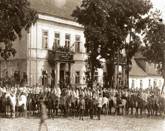
South-eastern Lithuania, Vilnius included, was occupied by Poland during the interwar period. Picture: Celebration of the incorporation of Vilnius Region to Poland, 1922.
The Polish–Lithuanian War was an armed conflict between Lithuania and Poland in the aftermath of World War I and Lithuania's declaration of independence 16 February 1918.
The conflict primarily concerned territorial control of the Vilnius Region, including Vilnius, and the Suwałki Region, including the towns of Suwałki, Augustów, and Sejny. According to Lithuanian historians, the war was part of the Lithuanian Wars of Independence and spanned from spring 1919 to November 1920. According to Poland, the war included only fighting over the Suwałki Region in September–October 1920 and was part of the Polish–Soviet War.
After Vilnius was occupied by the Russian Bolsheviks in 1919, the government of the Republic of Lithuania established its main base in Kaunas. When Vilnius was forcibly annexed by Poland, Kaunas became the temporary capital of Lithuania, a position it held until 28 October 1939, when the Red Army handed Vilnius back to Lithuania. The Constituent Assembly of Lithuania first met in Kaunas on 15 May 1920. There were no diplomatic relations between Poland and Lithuania until 1938.
 |
Part 1:
|
 |
Part 2:
|
 |
Part 3:
|
 |
Part 4:
|

- Bookmark :
- Digg
- del.icio.us
- Stumbleupon
- Redit it
- Posted by - (0) Comment
The Polish-Lithuanian
War 1919-1920
Part 4 of 4 - The AFTERMATH
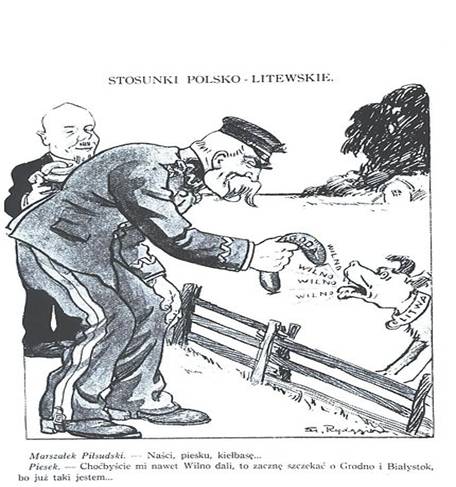
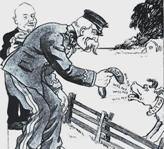
A satirical picture from interwar Polish press (around 1925-1935): a caricature of Marshal Józef Piłsudski and Lithuania, criticizing Lithuanian unwillingness to compromise over Vilnius region. Marshal Piłsudski offers the meat labeled "agreement" to the dog (with the collar labelled Lithuania); the dog barking
"Wilno, wilno, wilno" replies: "Even if you were to give me Wilno, I would
bark for Grodno and Białystok, because this is who I am."
Su pagarbe Vincas Karnila, Associate editor
vin.karnila@VilNews.com
In March 1921, the plans for a referendum vote were abandoned. Neither Lithuania, which was afraid of a negative result, nor Poland, which saw no reason to change status quo, wanted it. The parties could not agree in which territory to carry out the vote and how Żeligowski's forces should be replaced by the League's forces. The League of Nations then moved on from trying to solve the narrow territorial dispute in the Vilnius Region to shaping the fundamental relationship between Poland and Lithuania. During 1921, Belgian Paul Hymans suggested several Polish–Lithuanian federation models but all were rejected by both sides.
READ TODAY’S ARTICLE – PART 4 OF 4
To read previous articles – GO TO OUR SECTION 10
- Bookmark :
- Digg
- del.icio.us
- Stumbleupon
- Redit it
- Posted by - (4) Comment
The Polish-Lithuanian
War 1919-1920
Part 4 of 4 – The AFTERMATH
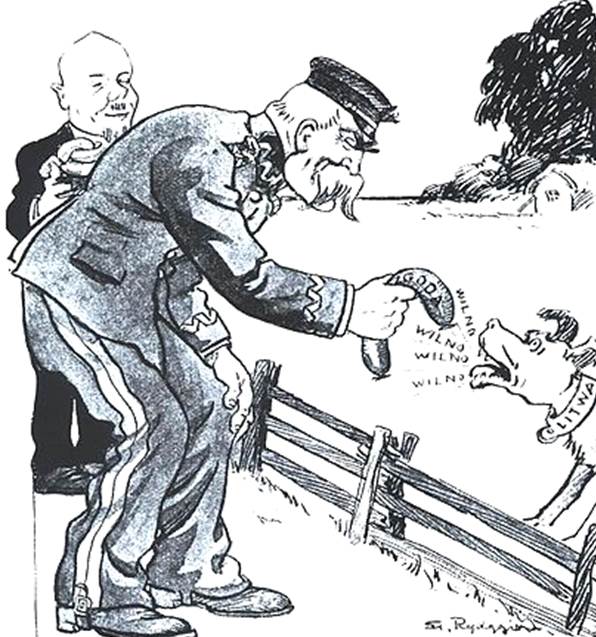
A satirical picture from interwar Polish press (around 1925-1935): a caricature of Marshal Józef Piłsudski and Lithuania, criticizing Lithuanian unwillingness to compromise over Vilnius region. Marshal Piłsudski offers the meat labeled "agreement" to the dog (with the collar labelled Lithuania); the dog barking "Wilno, wilno, wilno" replies: "Even if you were to give me Wilno, I would bark for Grodno and Białystok, because this is who I am."
Su pagarbe Vincas Karnila, Associate editor
vin.karnila@VilNews.com
In March 1921, the plans for a referendum vote were abandoned. Neither Lithuania, which was afraid of a negative result, nor Poland, which saw no reason to change status quo, wanted it. The parties could not agree in which territory to carry out the vote and how Żeligowski's forces should be replaced by the League's forces. The League of Nations then moved on from trying to solve the narrow territorial dispute in the Vilnius Region to shaping the fundamental relationship between Poland and Lithuania. During 1921, Belgian Paul Hymans suggested several Polish–Lithuanian federation models but all were rejected by both sides.
The general election in the (Polish) Republic of Central Lithuania was an election to the Vilnius Sejm (parliament) of the Polish-dominated Republic of Central Lithuania on January 8, 1922. The new parliament was intended to formally legalize incorporation of Central Lithuania into Poland. Such a measure was fiercely opposed by Lithuania, which claimed the territory for itself. The election was boycotted by non-Polish minorities and its results were unrecognized by the Lithuanian government in Kaunas and the League of Nations. The elected parliament convened in February 1922 and, as expected, voted to incorporate the Republic into Poland. Poland’s parliament accepted the resolution of the Diet and at the end of March 1922 Central Lithuania became Wilno Voivodeship of the Second Polish Republic. The League of Nations ended its efforts to mediate the dispute.
After Lithuania seized the Klaipėda Region, from Germany, in January 1923, the League saw recognition of Lithuanian interest in Klaipėda as adequate compensation for the loss of Vilnius. The League accepted the status quo in February 1923 by dividing the neutral zone and setting a demarcation line, which was recognized in March 1923 as the official Polish–Lithuanian border. Lithuania did not recognize this border.
The dispute over Vilnius remained one of the biggest foreign policy issues in Lithuania and Poland. Lithuania broke off all diplomatic relations with Poland and refused any actions that would recognize Poland's control of Vilnius even de facto. For example, Lithuania broke off diplomatic relations with the Holy See after the Concordat of 1925 established an ecclesiastical province in Wilno thereby acknowledging Poland's claims to the city. Poland refused to formally recognize the existence of any dispute regarding the region, since that would have lent legitimacy to the Lithuanian claims. Railroad traffic and telegraph lines could not cross the border, and mail service was complicated. For example, a letter from Poland to Lithuania needed to be sent to a neutral country, repackaged in a new envelope to remove any Polish signs, and only then delivered to Lithuania. Despite several attempts to normalize the relations, the situation of "no war, no peace" lasted until Poland demanded to reestablish diplomatic relations by issuing the ultimatum of 1938.
|
“Independent Lithuania cannot exist by itself” In April, 1918 Pope Bededict XV appointed Archbishop Achilles Ratti (later Pope Pius XI) as apostolic visitator to Poland and “ex Russian countries”, including Lithuania. Lithuanian – Polish relations became especially tense because of incorporation of Vilnius region into Poland. In 1921 apostolic visitator and delegate Rev. Antonio Zechini arrived in Kaunas. He publicly expressed the opinion that independent Lithuania could not exist by itself. Msgr. Zechini counseled Lithuanians to unite with Poles as they had done previously. On November 10, 1922 Vatican recognized independent Lithuania de jure. After the death of Pope Benedict XV Msgr. Antonio Zechini became Archbishop and apostolic delegate for the three Baltic nations. He did not favor the idea of a separate Lithuanian ecclesiastical province. On February 10, 1925 the Concordat was concluded between the Holy See and Poland. The Vilnius (Wilna) question was of the utmost importance to Lithuanians. The Polish Concordat did not undertake to decide the issue of territorial boundaries between Poland and Lithuania, but merely recognized a political de facto situation. Vilnius (Wilna), the ancient Lithuanian capital, was raised to the rank of archdiocese and made one of the five Polish ecclesiastical provinces. Polish Concordat caused great dissatisfaction among Lithuanian population. The situation became so acute that Archbishop Zechini departed for Riga without obtaining permission to return. The tempest was heightened by the news that Lithuanian bishop of Vilnius Jurgis Matulaitis (beatified 1987 by Pope John Paul II; Polish transcription: Jerzy Matulewicz) was forced to leave his See and departed for Rome.
|
In April, 1918 Pope Bededict XV appointed Archbishop Achilles Ratti (later Pope Pius XI) as apostolic visitator to Poland and “ex Russian countries”, including Lithuania. In 1921 apostolic visitator and delegate Rev. Antonio Zechini arrived in Kaunas. He publicly expressed the opinion that independent Lithuania could not exist by itself. Lithuania broke off diplomatic relations with the Holy See after the Concordat of 1925 established an ecclesiastical province in Wilno thereby acknowledging Poland's claims to the city. |
1938 POLISH ULTIMATUM to LITHUANIA
The 1938 Polish Ultimatum to Lithuania was an ultimatum delivered to Lithuania by Poland on March 17, 1938. The Lithuanian government had steadfastly refused to have any diplomatic relations with Poland after 1920, protesting the annexation by Poland of the Vilnius Region. As pre-World War II tensions in Europe intensified, Poland perceived the need to secure its northern borders. Five days earlier, Poland, feeling supported by international recognition of the annexation of Austria by Nazi Germany, decided it was imperative to deliver an ultimatum to Lithuania. The ultimatum demanded that the Lithuanian government unconditionally agree to establish diplomatic relations with Warsaw within 48 hours, and that the terms be finalized before March 31. The establishment of diplomatic relations would mean a de facto renunciation of Lithuanian claims to the region containing its historic capital, Vilnius (known in Polish as Wilno). Lithuania, preferring peace to war, accepted the ultimatum on March 19. Although diplomatic relations were established as a result of the ultimatum, Lithuania did not agree to recognize, in a legal sense or otherwise, the loss of Vilnius. The government of Poland made a similar move against the Czechoslovakian government in Prague on September 30, 1938, when it took advantage of the Sudeten Crisis, created by Nazi Germany, to demand a portion of and later annex Zaolzie. On both occasions, Poland used the international crises to address long-standing border disputes and to counter Germany's foreign policy initiatives.
INITIAL VERSION
The first version of the ultimatum, as drafted by Edward Rydz-Śmigły, Prime Minister Felicjan Slawoj Skladkowski, and Jan Szembek, contained six demands.
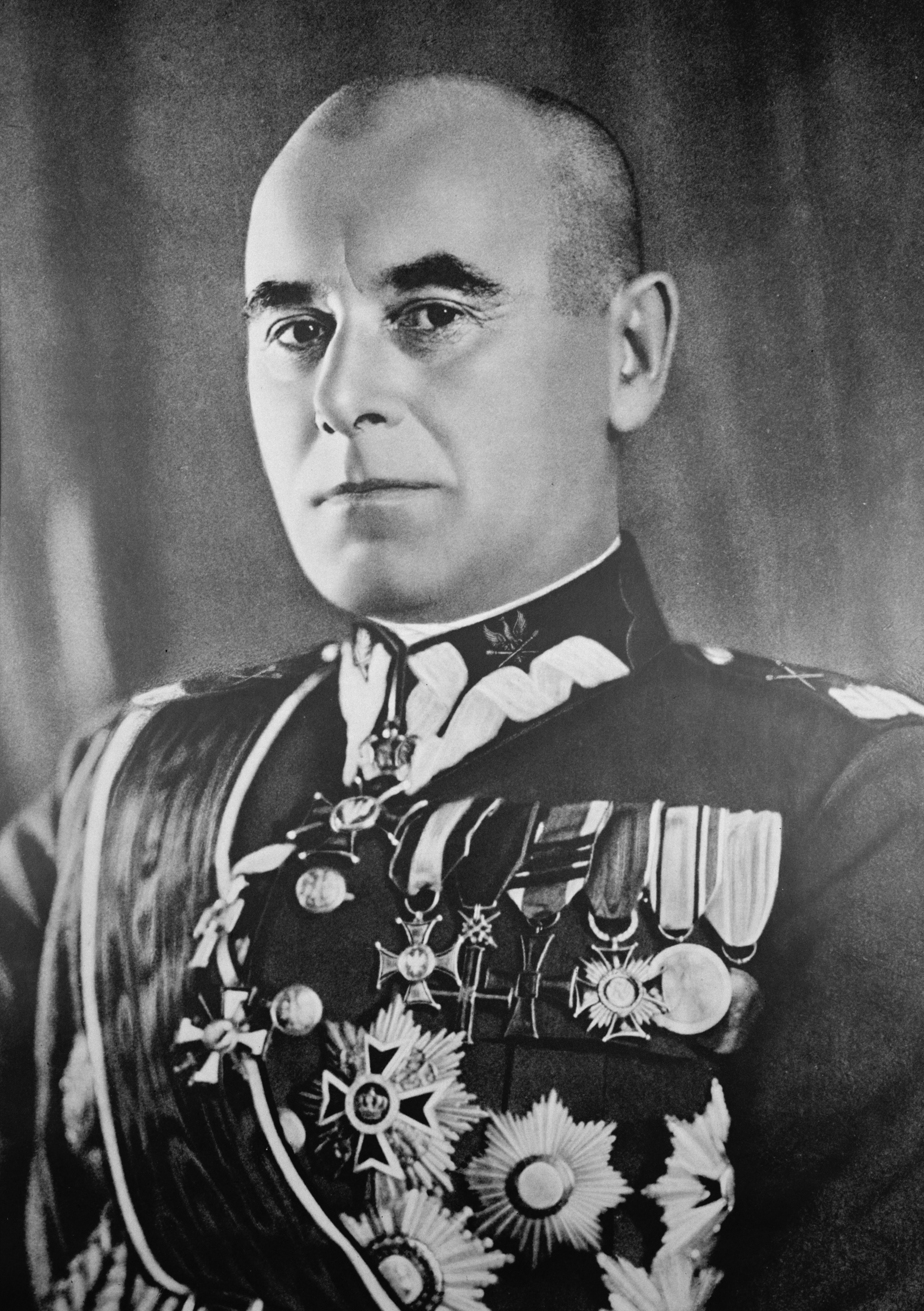

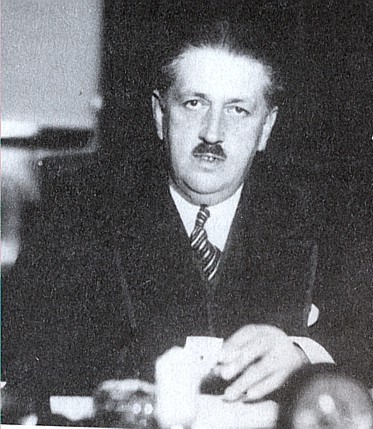
Edward Rydz-Śmigły Felicjan Slawoj Skladkowski Jan Szembek
1. Establish normal diplomatic and consular relations with Poland
2. Allow normal railway and road traffic and direct telephone and telegraph lines across the demarcation line
3. Amend the Lithuanian constitution to acknowledge that Vilnius was no longer the capital of Lithuania
4. Conclude the convention protecting the rights of the Polish minority in Lithuania in full
5. Conclude a trade and tariff agreement
6. Fully investigate the incident in Trasnykai
The Polish Foreign Minister Józef Beck, who had just returned from a trip to Sorrento, called for a government meeting on the night of March 16. During the meeting he argued that the ultimatum needed to contain only one demand - The establishment of diplomatic relations. In his view, such an ultimatum would not have violated any genuine Lithuanian interests and would offer much improved prospects for a peaceful resolution of the conflict and a speedy relief of tensions. It was in accordance with Beck's vision for Eastern Europe, which was based on a Warsaw dominated Polish–Baltic–Scandinavian bloc free of Soviet or German influence, a modified version of Jozef Pilsudski’s Miedzymorze plan, which required the normalization of relations with Lithuania. The removal of the other demands also reflected political pressure on Poland from the Soviet Union, France, and the United Kingdom to prevent the conflict from escalating into warfare.

Józef Beck.
The Polish government agreed to Beck's proposal and the ultimatum was toned down. However, at the same time, Beck ordered military preparations. Poland assembled four divisions along the demarcation line which totaled about 50,000 Polish troops compared to just over 20,000 Lithuanian troops. The Polish troops were reinforced by armored vehicles, by two air force regiments consisting of about one hundred aircraft and by the Polish fleet in the waters of the Baltic Sea along the Lithuanian shore.
THE ULTIMATUM
The final text of the ultimatum, completed by Józef Beck and delivered through a Polish envoy in Tallinn to Bronius Dailidė, the Lithuanian ambassador in Estonia, was as follows:
1. "The proposition of the Lithuanian Government of March 14 cannot be accepted for it does not give sufficient guarantees concerning the security of the frontier in view of the negative results of all Polish–Lithuanian negotiations made up to the present time."
2. "For this reason the Polish Government declares that it considers as the only solution corresponding to the gravity of the situation the immediate establishment of normal diplomatic relations without any previous condition. This is the only way to regulate the neighborly questions for a Government animated by good faith to avoid events dangerous to peace."
3. "The Polish Government allows the Lithuanian Government 48 hours from the moment the note is presented for the acceptance of this proposition in making it known that diplomatic representations at Kaunas and Warsaw will be accredited not later than March 31 of this year. Until that date all discussions of a technical or other character between the Polish and Lithuanian Governments shall be continued by the envoys extraordinary and ministers plenipotentiary at Tallinn.
The exchange of notes attached concerning the establishment of diplomatic relations shall take place, before the expiration of the period of 48 hours mentioned, at Tallinn between the Polish and Lithuanian Ministers at Tallinn."
4. "The proposition above mentioned will not be the subject of discussion with regard to its content or form—it is an unchangeable proposition.
The failure to respond or the presentation of any supplements or reservations shall be considered by the Polish Government as a refusal. In the event of a negative reply the Polish Government will guarantee the just interest of the state by its proper means."
The ultimatum contained an attachment which was a draft of what would be deemed an acceptable response to the ultimatum. The proposed response stated only that Lithuania agreed to establish regular diplomatic relations, send a legation to Warsaw, and guarantee normal conditions of operation for a Polish legation in Kaunas.
These tensions were one of the reasons why Jozef Pilsudski’s Miedzymorze planed federation was never formed. Ultimately the Soviet Union returned Vilnius to Lithuania after the Soviet invasion of Eastern Poland in September 1939.
IN RETROSPECT
Historians have speculated that if was it not for Poland’s involvement in the Polish-Soviet War, Lithuania would have been invaded by the Soviets and would never have experienced two decades of independence despite the Soviet-Lithuanian Treaty of 1920. Other historians have countered that due to countries such as Latvia and Lithuania engaging in their own wars against the Soviets, during this time period, it resulted in Poland not having to deal with the might of the entire Soviet force which, helped in their success repelling the Soviet’s invasion.
It is felt by many that the Russian hostilities in this area of Europe, at this time, set the stage for the diplomatic efforts of Poland and Lithuania, to resolve their issues, to break down and escalate into open warfare. While what would have happened if Lithuania and Poland were not involved in open warfare with the Russia will never be known. Personally I would like to believe that if peace had been in the area, the two neighbors would have found some peaceful way to work things out between them. In looking back at this time in history I find it very sad that two countries that had such a strong bond between them for hundreds of years would ultimately find themselves at war with each other. It is especially sad since it was the bond between these two countries that help keep peace in this area for hundreds of years. If you attacked Poland you had to be prepared to also take on Lithuania. If you attacked Lithuania you had to be prepared to also take on Poland. This was something a prospective enemy had to contend with and this bond of two friends most likely discouraged many a hostile force from embarking on any campaign to break the peace in this area. This is why the Polish – Lithuanian War is a very sad part of history for both countries. Two friends that once supported, defended and protected each other were now at war with each other – Very sad indeed.
The dispute over the borders of the two countries is something to be considered and both countries believed that they had just cause to contest this issue. During the period of the Polish–Lithuanian union from 1385 until 1569 and then the period of the Polish–Lithuanian Commonwealth from 1569 until 1795, the borders of the two neighbors were clearly defined and for the most part remained intact. There was a very definite line that identified where the Polish land was and where the Lithuanian land was and both sides seemed quite happy with this.
This unfortunately all came to an end in 1795. What now began was the period of Lithuania and Poland being carved up, sliced up and divided up by a long list of larger and more powerful countries. This ongoing rearranging of the Polish/Lithuanian border continued from 1795 to post World War I. Without going into all the fine detail of whose pre 1795 land was now within whose border, I’m sure you can imagine what a complete mess this was and what kind of challenge it would have been to restore the border to where it was in 1795.
The pre 1795 Polish/Lithuanian border compared with the border as it was at the end of World War I gave both sides with a very difficult situation to resolve and as I have said before, both sides felt that they had very justifiable claims. Aside from the contested cities, towns and villages in the pre 1795 border area there is one point of contention that, I must admit, I have had a very difficult time of understanding and making any justifiable sense of for many of year. This is in regards to Vilnius and the Vilnius area. Ever since there was a Poland and ever since there was a Lithuania and ever since there was a Vilnius and ever since there was a Polish/Lithuanian border, Vilnius and the Vilnius area had always been well within the boundaries of Lithuania.
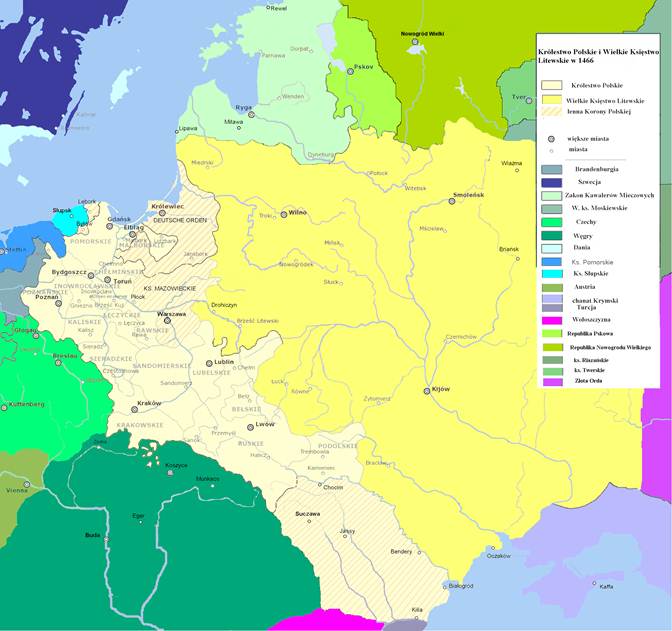
Polish–Lithuanian union 1466.
When countries are at war with each other, capturing and occupying their opponent’s capital is most always a prime objective. In this regard I can fully understand Poland’s efforts to capture Vilnius. What I have had a very difficult time of understanding and making any justifiable sense of for many of year is Poland’s reasoning as justification in not only capturing Vilnius but also occupying it for twenty years. In anything I have ever read or heard regarding this, the only point of reasoning I have ever been able to decipher is that since there was a large percentage of the Vilnius population that were Polish citizens or of Polish nationality then this meant that Vilnius belonged to Poland. Not only with Vilnius but in many other towns and villages that had been within the pre 1795 border of Lithuania, Poland’s claim as to why these towns and villages should be a part of Poland was that there was a large percentage of the population that were Polish citizens or of Polish nationality.
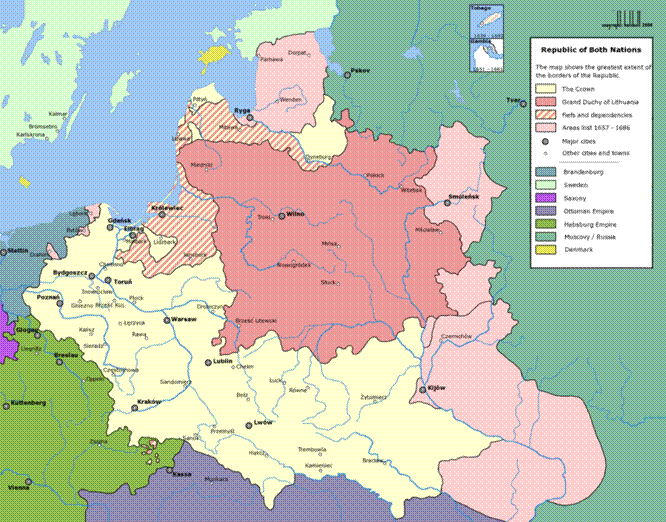
Map showing the greatest extent of the borders of both Poland and the Grand Duchy of Lithuania,
The Polish–Lithuanian Commonwealth.
KIND OF SAD ISN’T IT?
Now some might say that the only reason I have a difficult time of understanding and accepting this logic is because I am Lithuanian. To these people I would have to respectfully disagree. It is not about a Lithuanian – Polish issue. It is an issue about honoring the sovereignty of another country. I am not from Estonia but I would react with great shock and emotion if one day Russia announced that they were going to invade and annex the north-eastern part of Estonia and try to justify it by saying it is because there are many Russian citizens and people of Russian nationality live in this area. I would react with the same shock and emotion if Russia announced that they were going to invade and annex all of Latvia and try to justify this by citing not only how many people of Russian nationality live there but also how many people speak Russian there as their first language. I could go on and on with this logic. If this was an issue that was simply a part of history and had been long since resolved and forgotten about perhaps I would not still be trying ever so desperately to understand the logic but to this day there are people that will look you right in the eye and say that Vilnius is a part of Poland.
Assembling all the information for this series of articles was interesting but I must also say a bit depressing. This is sad a story about two friends being at war with each other. The Polish – Lithuanian bond of 1385 to 1795 was one of the, if not the, longest bonds of friendship in all of Europe. This bond also resulted in one of the greatest forces in all the history of Europe, something that undoubtedly resulted in many years of peace in this area.
As you all know, there are still issues between the two friends. While some of these issues are quite serious, to the extent that the EU has needed to step in and referee, some of these issues are not that serious but there are people out there that like to throw these smaller issues in with the big ones just to make the big issues even MORE serious. Personally it is my greatest hope that these issues can be resolved – SOON!!! It would be nice to get the two friends back together again and they would both be much better for it and the EU would be better for it.
One final thought – Often when I am in Druskininkai (one of my favorite places), since of its close proximity to Poland, I often end up talking with some people visiting from Poland. Trying to always be somewhat of a friendly person I’ll usually offer up a greeting or some pleasantry and since Druskinikai has a warm and friendly atmosphere about it this often results in a pleasant conversation. Since I speak very little Polish and often they speak very little Lithuanian, if they speak English we are able to have a very nice extended conversation - Even if they don’t speak English we both do everything we can to communicate and exchange pleasantries. After these very pleasant conversations, no matter how long or how short, I always wonder why it is that a Lithuanian and some people from Poland, who are perfect strangers to each other, can sit down and have such a warm and friendly conversation but our two countries are having such a difficult time getting along???
But, I guess that’s how things have always been and perhaps always will be with the peoples of many countries –
Kind of sad isn’t it?
Su pagarbe and Dziękujemy i pozdrawiamy
Vincas Karnila
Associate editor
- Bookmark :
- Digg
- del.icio.us
- Stumbleupon
- Redit it


Boris Yeltsin, Russia’s former leader who successfully fought communism but not the bottle. Are Lithuanian bureaucrats following his example?
Several employees of a Lithuanian authority were caught partying wildly in a drunken state during working hours on Thursday. Lithuanian journalist reflects on the alcohol issues of his country’s bureaucrats in an article published on February 6.
Alcoholism is widespread among bureaucrats and is eating away at the state, the daily Vilniaus Diena writes: “One may well be surprised at the combination of drinking and democracy, but not in the case of bureaucrats with their butts stuck to their seats… Institutional alcohol consumption is a glaring problem here in Lithuania but for decades there have been efforts to hide the fact.
- Bookmark :
- Digg
- del.icio.us
- Stumbleupon
- Redit it
Lithuania and Poland successfully discuss bilateral cooperation in EU matters
- Posted by - (0) Comment
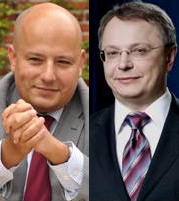
A successful partnership! Polish Secretary of State for European Affairs Mikołaj Dowgielewicz and Lithuanian Vice-Minister of Foreign Affairs Egidijus Meilunas.
WARSAW - On Feb. 2 in Warsaw, Lithuanian Vice-Minister of Foreign Affairs Egidijus Meilunas and Polish Secretary of State for European Affairs Mikołaj Dowgielewicz discussed bilateral cooperation in EU matters, Lithuania’s preparation for the Presidency of the Council of the EU in 2013.
The Lithuanian-Polish partnership in this area is assessed as very successful, especially consultations on the issues that are important for both countries, including the discussion on the EU Financial Framework 2014-2020.
- Bookmark :
- Digg
- del.icio.us
- Stumbleupon
- Redit it
- Posted by - (0) Comment
“Independent Lithuania cannot exist by itself”
(public opinion of the Vatican’s representative in 1921)
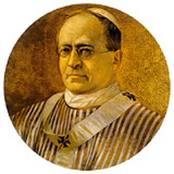
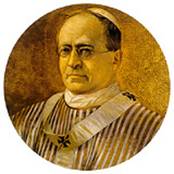
POPE PIUS XI
In April, 1918 Pope Bededict XV appointed Archbishop Achilles Ratti (later Pope Pius XI) as apostolic visitator to Poland and “ex Russian countries”, including Lithuania.
In 1921 apostolic visitator and delegate Rev. Antonio Zechini arrived in Kaunas.
He publicly expressed the opinion that independent Lithuania could not exist by
itself. Lithuania broke off diplomatic relations with the Holy See after the
Concordat of 1925 established an ecclesiastical province in Wilno
thereby acknowledging Poland's claims to the city.
In April, 1918 Pope Bededict XV appointed Archbishop Achilles Ratti (later Pope Pius XI) as apostolic visitator to Poland and “ex Russian countries”, including Lithuania. Lithuanian – Polish relations became especially tense because of incorporation of Vilnius region into Poland. In 1921 apostolic visitator and delegate Rev. Antonio Zechini arrived in Kaunas. He publicly expressed the opinion that independent Lithuania could not exist by itself. Msgr. Zechini counseled Lithuanians to unite with Poles as they had done previously. On November 10, 1922 Vatican recognized independent Lithuania de jure. After the death of Pope Benedict XV Msgr. Antonio Zechini became Archbishop and apostolic delegate for the three Baltic nations. He did not favor the idea of a separate Lithuanian ecclesiastical province. On February 10, 1925 the Concordat was concluded between the Holy See and Poland. The Vilnius (Wilna) question was of the utmost importance to Lithuanians. The Polish Concordat did not undertake to decide the issue of territorial boundaries between Poland and Lithuania, but merely recognized a political de facto situation. Vilnius (Wilna), the ancient Lithuanian capital, was raised to the rank of archdiocese and made one of the five Polish ecclesiastical provinces. Polish Concordat caused great dissatisfaction among Lithuanian population. The situation became so acute that Archbishop Zechini departed for Riga without obtaining permission to return. The tempest was heightened by the news that Lithuanian bishop of Vilnius Jurgis Matulaitis (beatified 1987 by Pope John Paul II; Polish transcription: Jerzy Matulewicz) was forced to leave his See and departed for Rome.
- Bookmark :
- Digg
- del.icio.us
- Stumbleupon
- Redit it
- Posted by - (0) Comment
The Polish-Lithuanian
War 1919-1920
Part 3 of 4 - STRUGGLES for the VILNIUS REGION
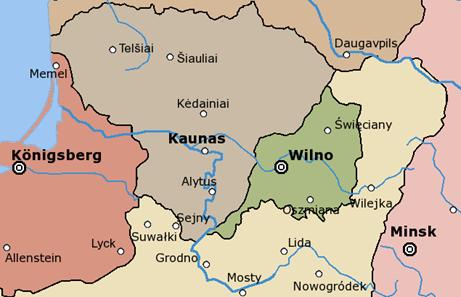
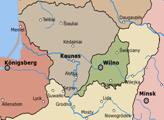
Map of the (Polish) Republic of Central Lithuania (in green).
By Vincas Karnila, Associate editor
vin.karnila@VilNews.com
ZELIGOWSKI’S MUTINY
Polish chief of state Jozef Pilsudski ordered his subordinate, General Lucjan Zeligowski, to stage a mutiny with his 1st Lithuanian–Belarusian Division (16 battalions with 14,000 soldiers) in Lida and capture Vilnius in fait accompli.
The rebellion had two main goals, capture Vilnius and preserve Polish international reputation. The League of Nations was mediating other Polish disputes, notably over the Free City of Danzig and Upper Silesia, and direct aggression against Lithuania could have hampered Polish bargaining positions. While the Polish side officially stated Żeligowski to be a deserter and did not support him, Poland provided logistic support, including munitions and food rations, to his units. Żeligowski also received reinforcements when, according to the official version, the mutiny spread further among the Polish troops. His initial attack was secured on both sides by two Polish Armies.
The Żeligowski's Mutiny, in planning since mid-September, began in the early morning on October 8, 1920, just few hours after the signing of the Suwałki Agreement. A provisional agreement was made in the Polish–Soviet War, which freed up Polish units for the attack on Lithuania. As part of the rouse, Żeligowski wrote a note to Polish command announcing his mutiny and expressing his disappointment with the Suwałki Agreement. He claimed that his troops marched to defend the right of self-determination of the local Polish population.
READ TODAY’S ARTICLE – PART 3 OF 4
To read previous articles – GO TO OUR SECTION 10
- Bookmark :
- Digg
- del.icio.us
- Stumbleupon
- Redit it
- Posted by - (2) Comment
The Polish-Lithuanian
War 1919-1920
Part 3 of 4 – STRUGGLES for the VILNIUS REGION

Map of
the (Polish) Republic of Central Lithuania (in green).
Su pagarbe Vincas Karnila, Associate editor
vin.karnila@VilNews.com
ZELIGOWSKI’S MUTINY
Polish chief of state Jozef Pilsudski ordered his subordinate, General Lucjan Zeligowski, to stage a mutiny with his 1st Lithuanian–Belarusian Division (16 battalions with 14,000 soldiers) in Lida and capture Vilnius in fait accompli.

Lucjan
Zeligowski
The rebellion had two main goals, capture Vilnius and preserve Polish international reputation. The League of Nations was mediating other Polish disputes, notably over the Free City of Danzig and Upper Silesia, and direct aggression against Lithuania could have hampered Polish bargaining positions. While the Polish side officially stated Żeligowski to be a deserter and did not support him, Poland provided logistic support, including munitions and food rations, to his units. Żeligowski also received reinforcements when, according to the official version, the mutiny spread further among the Polish troops. His initial attack was secured on both sides by two Polish Armies.
The Żeligowski's Mutiny, in planning since mid-September, began in the early morning on October 8, 1920, just few hours after the signing of the Suwałki Agreement. A provisional agreement was made in the Polish–Soviet War, which freed up Polish units for the attack on Lithuania. As part of the rouse, Żeligowski wrote a note to Polish command announcing his mutiny and expressing his disappointment with the Suwałki Agreement. He claimed that his troops marched to defend the right of self-determination of the local Polish population.
CAPTURE of VILNIUS and other MILITARY ATTACKS
Lithuanians were not prepared for the assault. They had only two battalions, stationed near Jašiūnai and Rūdninkai along the Merkys River, shielding the city from Poland’s troops. Their main forces were still in the Suwałki Region and to the west from Druskininkai and Varėna. Without the railway, Lithuanian units could not be easily redeployed to protect Vilnius. After it became clear that Żeligowski would not stop in Vilnius, Commander of the Lithuanian Army Silvestras Žukauskas, who took the position only on October 6, ordered to evacuate the city in the afternoon on October 8.

Silvestras
Žukauskas
They left the city's administration to Entente official Constantin Reboul. Żeligowski entered Vilnius the following evening. He did not recognize Reboul's authority and Entente officials left the city in protest. On October 12, Żeligowski proclaimed the independence of the (Polish) Republic of Central Lithuania, with Vilnius as its capital. The name was inline with Piłsudski's vision of historical Lithuania, divided into three cantons: Lithuanian-inhabited Western Lithuania with its capital in Kaunas, Polish-inhabited Central Lithuania with its capital in Vilnius, and Belarusian-inhabited Eastern Lithuania with its capital in Minsk. Further developments of other cantons was prevented by the Polish National Democracy, a party opposed to Piłsudski's federalist ideas.
Żeligowski's units continued to advance. Territories east of the city were taken without resistance while Lithuanians defended in the west. Żeligowski took Švenčionys and Rūdiškės on October 10, Nemenčinė on October 11, Lentvaris on October 13 and Rykantai on October 15. The front somewhat stabilized on the southern (left) side of the Neris River, but fighting continued on the northern (right) side of Neris. When Polish cavalry maneuvered towards Riešė, it learned from the local population the location of the command of the Lithuanian 1st Riflemen Regiment. On October 21, the cavalry raided the village and took the entire command prisoners. Left without their commanders, the Lithuanians retreated and Poles took Maišiagala and Paberšė. On October 26, another cavalry raid captured Dubingiai, Giedraičiai, Želva and threatened Ukmergė. However, Lithuanians counterattacked and took back Želva on October 30 and Giedraičiai on November 1. For a while the front stabilized.
On November 17, the mutineers began a major attack. They planned to capture Kaunas, thus threatening Lithuanian independence, by encircling the city from north through Širvintos-Ukmergė-Jonava and Giedraičiai –Kavarskas–Kėdainiai. Żeligowski's forces were about three times larger, 15 Polish battalions against 5 Lithuanian battalions. One cavalry brigade managed to break through the Lithuanian defense lines near Dubingiai, reached Kavarskas, and continued towards Kėdainiai. However, Lithuanians were successful in stopping an attack towards Ukmergė near Širvintos on November 19. About 200 Lithuanians maneuvered through swaps to the rear of three Polish battalions. Attacked from front and rear, some 200 Poles were taken prisoners while others retreated. Lithuanians continued to attack and captured Giedraičiai on November 21. On the same day a ceasefire was signed under pressure from the League of Nations. The Polish cavalry brigade, pushed from Kėdainiai and cut off from its main forces, retreated through Ramygala–Troškūnai–Andrioniškis–Lėliūnai and rejoined other Żeligowski units on November 24. These were the last military movements in the Polish–Lithuanian conflict.
MEDIATION and DIPLOMATIC MEASURES
On October 11, 1920, Lithuanian envoy in Paris Oscar Milosz asked the League of Nations to intervene in the renewed conflict with Poland. On October 14, Chairman of the League Léon Bourgeois issued a note condemning the aggression and asking Polish units to retreat. Politicians in London even considered expelling Poland from the League.

Oscar
Milosz
When the League heard both arguments on October 26–28, Polish envoy Szymon Askenazy claimed that there was no conflict between Poland and Lithuania to mediate. He maintained that the old conflict ended with signing ceasefires with Lithuania on October 7 and with Soviet Russia on October 12 and the new conflict was caused by Żeligowski, who acted without approval from the Polish command, but with moral support of the entire Polish nation. Lithuanian envoy Augustinas Voldemaras argued that Poland orchestrated the mutiny and demanded strict sanctions against Poland. The League refused to validate Żeligowski's action. It suggested to hold a referendum vote in the contested areas. On November 6 and 7, both sides agreed and Lithuanians began preparatory work.

Augustinas
Voldemaras
On November 19, Żeligowski proposed the Control Commission, led by Chardigny, to cease hostilities. Lithuanians agreed and a ceasefire was signed on November 21. Later this episode was criticized by Lithuanian commentators as at the time the Lithuanian Army had initiative in the front and had a chance of marching on Vilnius. However, the Lithuanians trusted the League of Nations would resolve the dispute in their favor and were also afraid that in the case of their attack on Vilnius regular Polish forces would arrive to reinforce Żeligowski's units.
Negotiations for a more permanent armistice, under mediation of the Control Commission, began on November 27 in Kaunas. Lithuania did not agree to negotiate directly with Żeligowski and thus legitimizing his actions therefore, Poland stepped in as a mediator. Lithuania agreed as it hoped to put the talks back into the context of the Suwałki Agreement. Poles rejected any withdrawal of Żeligowski's forces. No agreement could be reached regarding a demarcation line and on November 29, 1920, it was agreed only to cease hostilities on November 30, to entrust the Control Commission with establishment of a 6 km (3.7 mi) wide neutral zone and to exchange prisoners. This neutral zone existed until February 1923.
In part 4 of 4 - The Aftermath
- Bookmark :
- Digg
- del.icio.us
- Stumbleupon
- Redit it

Just to confirm that she does get her challenging work done, check out Barbara's popular online magazine Indulged Traveler at http://www.indulgedtraveler.com and find the best destinations, jewellery, hotels, food and fashion, wine regions and cooking lessons. Her email address is barbara3@rogers.com
- Bookmark :
- Digg
- del.icio.us
- Stumbleupon
- Redit it

OPINIONS
Have your say. Send to:
editor@VilNews.com
Ph. D., Chicago
A wave of unity sweeps the international Lithuanian community on March 11th every year as Lithuanians celebrated the anniversary of the Lithuanian Parliament's declaration of independence from the Soviet Union in 1990. However, the sense of national unity engendered by the celebration could be short-lived.
Human beings have a strong tendency to overgeneralize and succumb to stereotypical us-them distinctions that can shatter even the strongest bonds. We need only search the internet to find examples of divisive thinking at work:
- "Those who fled Lithuania during World II were cowards -- and now they come back, flaunt their wealth, and tell us 'true Lithuanians' how to live."
- "Lithuanians who work abroad have abandoned their homeland and should be deprived of their Lithuanian citizenship."


In Lithuania Christmas Eve is a family event and the New Year's Eve a great party with friends!
Lithuanian say "Kaip sutiksi naujus metus, taip juos ir praleisi" (the way you'll meet the new year is the way you will spend it). So everyone is trying to spend New Year's Eve with friend and have as much fun as possible.
Lithuanian New Year's traditions are very similar to those in other countries, and actually were similar since many years ago. Also, the traditional Lithuanian New Years Eve party was very similar to other big celebrations throughout the year.
The New Year's Eve table is quite similar to the Christmas Eve table, but without straws under the tablecloth, and now including meat dishes. A tradition that definitely hasn't changes is that everybody is trying not to fell asleep before midnight. It was said that if you oversleep the midnight point you will be lazy all the upcoming year. People were also trying to get up early on the first day of the new year, because waking up late also meant a very lazy and unfortunate year.
During the New Year celebration people were dancing, singing, playing games and doing magic to guess the future. People didn't drink much of alcohol, especially was that the case for women.
Here are some advices from elders:
- During the New Year, be very nice and listen to relatives - what you are during New Year Eve, you will be throughout the year.
- During to the New Year Eve, try not to fall, because if this happens, next year you will be unhappy.
- If in the start of the New Year, the first news are good - then the year will be successful. If not - the year will be problematic.
* If New Year's night is cold and starry - look forward to a good summer!
* If the during New Year Eve trees are covered with frost - then it will be a good year. If it is wet weather on New Year's Eve, one can expect a year where many will die and dangerous epidemics occur.
* If the first day of the new year is snowy - the upcoming year will see many young people die. If the night is snowy - mostly old people will die.
* If the New Year time is cold - then Easter will be warm.
* If during New Year there are a lot of birds in your homestead - then all year around there will be many guests and the year will be fun.
Christmas greetings
from Vilnius
and epic battle for the
future
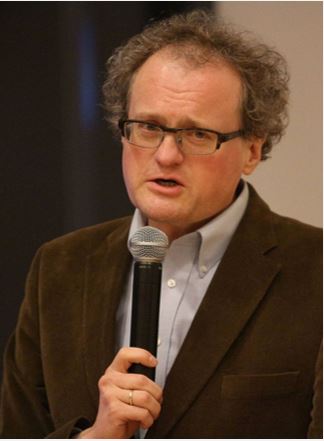
Philosopher, political theorist, historian of
ideas, social analyst, and political
commentator
Ukraine was and continues to be perceived by the EU political class as a sort of grey zone with its immense potential and possibilities for the future, yet deeply embedded and trapped in No Man's Land with all of its troubled past, post-Soviet traumas, ambiguities, insecurities, corruption, social divisions, and despair. Why worry for what has yet to emerge as a new actor of world history in terms of nation-building, European identity, and deeper commitments to transparency and free market economy?
Right? Wrong. No matter how troubled Ukraine's economic and political reality could be, the country has already passed the point of no return. Even if Vladimir Putin retains his leverage of power to blackmail Ukraine and the West in terms of Ukraine's zero chances to accede to NATO due to the problems of territorial integrity, occupation and annexation of Crimea, and mayhem or a frozen conflict in the Donbas region, Ukraine will never return to Russia's zone of influence. It could be deprived of the chances to join NATO or the EU in the coming years or decades, yet there are no forces on earth to make present Ukraine part of the Eurasia project fostered by Putin.
want to learn about the
new, scary propaganda
war between Russia,
The West and the
Baltic States!
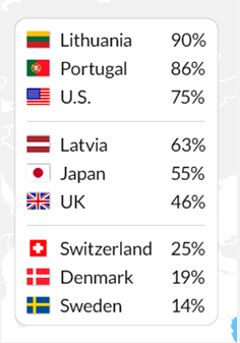
believe their government
is corrupt
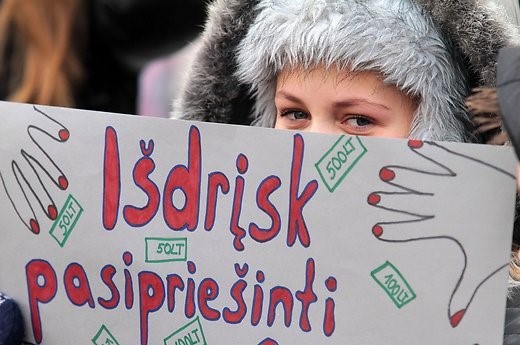
students say no to
bribes for doctors
During Soviet times, government was administered for the people in control, not for the local population, court decisions were decreed, they were not the administration of justice, and academia was the domain of ideologues. 25 years of freedom and openness should have put those bad experiences behind Lithuania, but that is not so.
Today, it is a matter of expectation that court pronouncements will be governed by ideological dictates. Few, if any Lithuanians expect real justice to be effected. For foreign companies, doing business in Lithuania is almost impossible in a situation where business people do not expect rule of law, so, surely Government would be a refuge of competence?
Lithuanian Government has not emerged from Soviet styles. In an attempt to devolve power, Lithuania has created a myriad of fiefdoms of power, each speaking in the name of the Government, each its own centralized power base of ideology.


Chepstow, Wales
Doesn't that sound suspiciously like Lithuania? Ah, but I didn't mention the mountains of Snowdonia, which would give the game away.
I'm talking about Wales, that part of the UK which Lithuanians used to call "Valija", but later named "Velsas" (why?). Wales, the nation which has welcomed two Lithuanian heads of state to its shores - firstly Professor Vytautas Landsbergis, who has paid several visits and, more recently, President Dalia Grybauskaitė who attended the 2014 NATO summit which was held in Newport, South Wales.
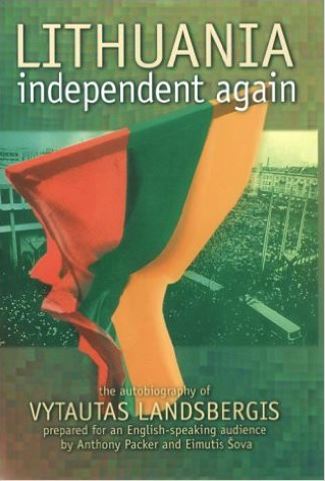
ENGLISH VERSION OF THE
AUTOBIOGRAPHY OF VYTAUTAS LANDSBERGIS.

Although Lithuanian activities have thinned over the decades as that postwar generation died out, the Lithuanian Martyrs' parish hall is crowded with many, many hundreds of visitors who come to the Lithuanian cemetery for All Souls' Day. Similarly, the Franciscan parish has standing room only for Christmas Eve mass.
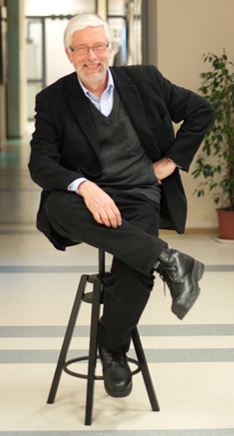
Although I am firmly embedded in the literary culture of Canada, my themes are usually Lithuanian, and I'll be in Kaunas and Vilnius in mid-November 2015 to give talks about the Lithuanian translations of my novels and short stories, which I write in English.
If you have the Lithuanian language, come by to one of the talks listed in the links below. And if you don't, you can read more about my work at
www.anatanassileika.com
http://www.vdu.lt/lt/rasytojas-antanas-sileika-pristatys-savo-kuryba/ https://leu.lt/lt/lf/lf_naujienos/kvieciame-i-rasytojo-59hc.html
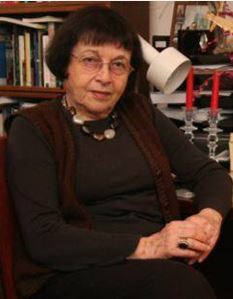
"My love and best wishes to all. As long as VilNews exists, there is hope for the future,"" she writes.
Irena Veisaite means very much for our publication, and we do hereby thank her for the support and wise commitment she always shows.
You can read our interview with her
Facing a new reality
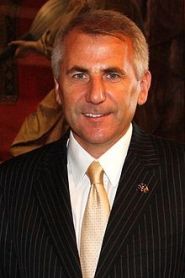
Dear readers of VilNews,
For a number of years, the EU and Russia had assumed the existence of a strategic partnership, based on the convergence of values, economic integration and increasingly open markets and a modernisation agenda for society.
Our agenda was positive and ambitious. We looked at Russia as a country ready to converge with "European values", a country likely to embrace both the basic principles of democratic government and a liberal concept of the world order. It was believed this would bring our relations to a new level, covering the whole spectrum of the EU's strategic relationship with Russia.
The likelihood of Putin
invading Lithuania
.jpg "lithuania today")
Founding Director at Summer Literary Seminars
Are all Lithuanian energy
problems now resolved?
Lithuania as a country does not have significant energy resources. Energy consuming infrastructure after WWII was small and totally supported by energy imports from Russia.
First nuclear reactor begins power generation at Ignalina in 1983, the second reactor in 1987. Iganlina generates enough electricity to cover Lithuania's needs and about 50%.for export. As, prerequisite for membership in EU, Ignalina ceases all nuclear power generation in 2009
The Klaipėda Sea terminal begins Russia's oil export operations in 1959 and imports in 1994.
Mazeikiu Nafta (current ORLEAN Lietuva) begins operation of oil refinery in 1980.
Have Lithuanian ties across
the Baltic Sea become
stronger in recent years?
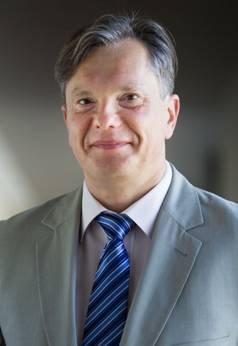
The two decades that have passed since regaining Lithuania's independence can be described as a "building boom". From the wreckage of a captive Soviet republic, a generation of Lithuanians have built a modern European state, and are now helping construct a Nordic-Baltic community replete with institutions intended to promote political coordination and foster a trans-Baltic regional identity. Indeed, a "Nordic-Baltic community" - I will explain later in my text the meaning of this catch-phrase.
Since the restoration of Lithuania's independence 25 years ago, we have continuously felt a strong support from Nordic countries. Nordics in particular were among the countries supporting Lithuania's and Baltic States' striving towards independence. Take example of Iceland, country which recognized Lithuania in February of 1991, well in advance of other countries. Yet another example - Swedish Ambassador was the first ambassador accredited to Lithuania in 1991. The other countries followed suit. When we restored our statehood, Nordic Countries became champions in promoting Baltic integration into Euro-Atlantic institutions. To large degree thanks Nordic Countries, massive transformations occurred in Lithuania since then, Lithuania became fully-fledged member of the EU and NATO, and we joined the Eurozone on 1 January 2015.

Have you heard about the
South African "Pencil Test"?
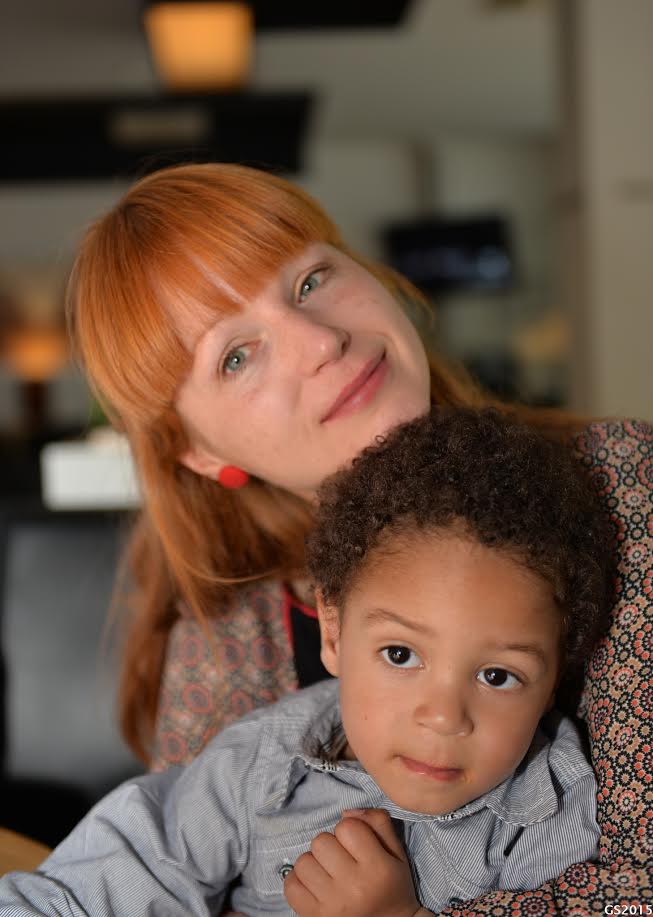
But that is exactly what happened to me when I came back from South Africa. I will tell you how.
VilNews e-magazine is published in Vilnius, Lithuania. Editor-in-Chief: Mr. Aage Myhre. Inquires to the editors: editor@VilNews.com.
Code of Ethics: See Section 2 – about VilNews. VilNews is not responsible for content on external links/web pages.
HOW TO ADVERTISE IN VILNEWS.
All content is copyrighted © 2011. UAB ‘VilNews’.