
THE VOICE OF INTERNATIONAL LITHUANIA

|
VilNews has its own Google archive! Type a word in the above search box to find any article.
You can also follow us on Facebook. We have two different pages. Click to open and join.
 Click on the buttons to open and read each of VilNews' 18 sub-sections Click on the buttons to open and read each of VilNews' 18 sub-sections  |

|


Author Archive
- Posted by - (0) Comment
February 16, 1918
Act of independence
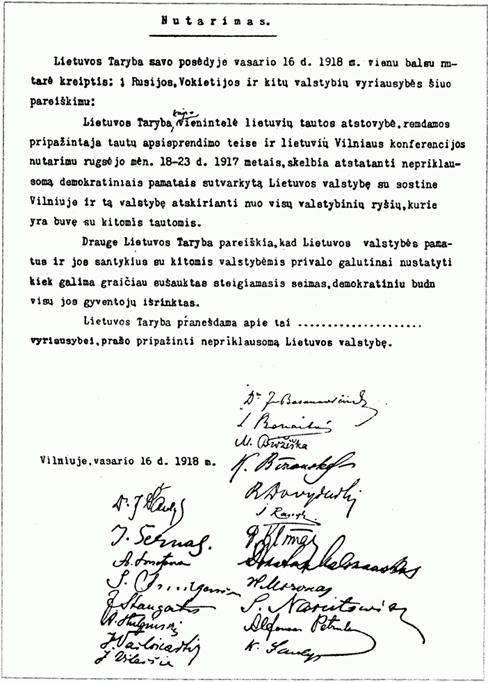
Facsimile of the Act of February 16
Dear readers,
Two of the most significant dates for Lithuania in the 20th Century were February 16, 1918 when Lithuania declared its independence from Imperial Russia by signing the Act of Independence of Lithuania and March 11, 1990 when the Act of the Re-Establishment of the State of Lithuania was signed which re-established the country’s freedom from Soviet Russia. We would like to share with you some of the situations that existed at this time and events that took place leading up to February 16, 1918 and the aftermath of this historical event.
Su pagarbe
Vincas Karnila
Associate editor
To read the article, go to our SECTION 10
See also picture at top of SECTION 9
- Bookmark :
- Digg
- del.icio.us
- Stumbleupon
- Redit it


- Posted by - (0) Comment
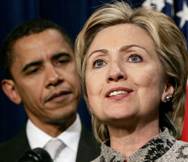
Despite years of war and Soviet occupation, the people of Lithuania have demonstrated what democracy can deliver to its people. On my two trips to Vilnius last year, I saw firsthand the progress that has been made. The United States and Lithuania share a long history as partners and friends, and today our countries are dedicated to promoting the ideals of democracy, human rights and rule of law, and we are working hard to create a safer future for all our people. We look forward to continuing to work with Lithuania as we tackle some of the world’s most challenging issues together.
The United States joins all citizens of Lithuania as you celebrate Lithuania’s independence and the inspiration it provides to countries around the world. Know that the United States stands with you as a dedicated ally and a friend as we work towards a more peaceful and prosperous world.
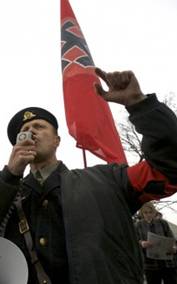
Lithuania 2011:
A neo-Nazi leader shouts menacing slogans in a megaphone next to police cordons at Baltic Pride. Although it is illegal to display a swastika in Lithuania, the police would not take away the group’s flags.
Photo: http://www.lgbt-ep.eu
As Lithuanian national holidays – February 16 and March 11 – are approaching, Lithuanian Minister of Foreign Affairs Audronius Azubalis urges the participants of the planned patriotic march "to overcome radicalism and rally around the tricolour", reported BC the MFA.
"During the national holidays, let us emphasize not our differences and ambitions, but public spirit and maturity in freedom. Public spirit, as you know, is determined not by the length of the hair, exclusive attitude or ethnic background. It is the outer manifestation of respect of Lithuania and its people," Azubalis said.
Participants of the march must make it clear and understandable that the love of one's fatherland has nothing to do with neo-Nazism or xenophobia. – One should not confuse the love of homeland with specific personal desires," the minister says.
He stresses that public holidays are for all Lithuanian citizens regardless of their background or attitude. "There should be no outcasts. On those days we must not forget the colours that are most important and we should not discard it for the interest of some group," Azubalis said.
The minister believes that the Lithuanian society "has always been and will be a dynamic, sustainable, and patchy fabric". Therefore, the patriotic march must demonstrate that there are more uniting threads than dividing ones in our society.
"Let us not give reason to defame Lithuania under the pretext of racism, xenophobia and Nazism. We have to express the love of our country responsibly and evaluate the impact of personal emotions," the minister says.
Read more...
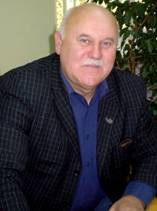
Rimantas Uzumeckas, principal of Upyna Secondary School of Silale.
By Linas Jegelevicius
TAURAGE, Lithuania | As a secondary school teacher, Lina Baltiene used to earn almost $800 a month, the average national wage, and she received another $100 to cover bus fare for the 30-kilometer (19-mile) ride to her school in the countryside.
What a difference a few years makes.
Now working part time, she‘s lucky if she makes one-third of her old salary. Gone is the perk of bus fare, though she still has to make the same daily trek, without a car of her own.
In some ways, Baltiene is a symbol of a shakeup in Lithuanian education spurred by the financial crisis and dramatically shifting demographics.
As in many countries, local governments in Lithuania used to offer incentives to teachers to work in rural communities. Those who commuted were reimbursed for transportation expenses; those who moved close to their schools received more generous benefits.
“Before the crisis, we would rent out apartments and even houses, and pay the rent for the teachers from town,” said Rimantas Uzumeckas, principal of Upyna Secondary School in the western district of Silale. Other benefits included free firewood and cut-rate school meals.
“Even villagers would treat them really well. Some local dairy farmers would provide the newcomers with milk,” Uzumeckas said.
“Now, forget it.”
Read more…
“Good life does not come easily in Lithuania”
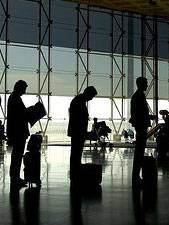
At the airport in Vilnius.
In a time of crisis with high unemployment, young Lithuanians are following in the footsteps of their emigrant ancestors. Tens of thousands have left the country in search of a better life, mainly in the British Isles and Scandinavia. The weekly Veidas reports.
Read more...

Dialogue of the deaf between Vilnius and Warsaw
OUTSIDERS find the Polish-Lithuanian spat the most incomprehensible in Europe. How come two countries with so much common history and so many common interests get on so badly? Is it just the appalling personal chemistry between some senior officials? Or is it, absurdly, about spelling? Poles in Lithuania want to spell their names using letters like ł and ę in official documents. (We can't use them, or most other diacritics, in the print edition of the Economist because our typeface doesn't have those characters).
I have not met any Lithuanian, even on the nationalist fringe, who believes that the authorities in Vilnius have handled this issue absolutely perfectly from the very beginning. Lithuanian politicians have habitually promised more than their parliamentarians are willing to vote for, or their officials are able to implement. It is easy to see why Poles feel cross about that.
Read more...

A planned gas pipeline between Poland and Lithuania may cost 471 million euros ($625 million), the Baltic News Service reported today, citing Slawomir Sliwinsky, board member of Poland’s Gaz-Systems.
The 562-kilometer pipeline is projected to be completed in 2018, which would supply the Baltic region with 2.3 billion cubic meters of gas a year, the newswire said. Gaz-Systems and Lithuania’s gas utility Lietuvos Dujos AB (LDJ1L) plan to receive financing for the project from the European Commission, it said.
To contact the reporter on this story: Milda Seputyte in Vilnius at mseputyte@bloomberg.net
To contact the editor responsible for this story: Balazs Penz at bpenz@bloomberg.net
Read more...
- Bookmark :
- Digg
- del.icio.us
- Stumbleupon
- Redit it

- Posted by - (0) Comment
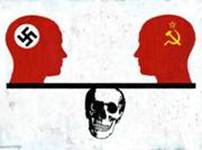 “DOUBLE GENOCIDE” |
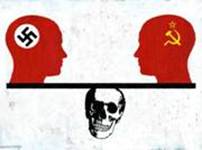
The "Double Genocide theory" is a concept about the equality of the Holocaust and Communist crimes against humanity. The term was used by associate professor of political science Dovilé Budryté in 2004 in a study of Lithuanian memory politics with regard to Soviet and Nazi repression, where the view held by a segment of that country since before the restoration of independence in 1991 was that Lithuanians similarly suffered genocide under Soviet rule. Recent critics of this Lithuanian viewpoint, Dovid Katz and Efraim Zuroff, have argued that the country has presented a false “double genocide” thesis and its argumentation obfuscates the Holocaust.
------------------------------------------------------------------------------------------------------------------------------------------------------------------------
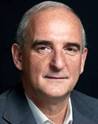 Roger Cohen |
 |
‘The Suffering Olympics’
By ROGER COHEN
Published: January 30, 2012
VILNIUS, LITHUANIA — The “double genocide” wars that pit Stalin’s crimes against Hitler’s are raging in wide swathes of Europe and every now and again along comes a gust from the past to stoke them. The 70th anniversary this month of the Nazi adoption at Wannsee of annihilation plans for the Jews provided one such squall.
Yes, the past is still treacherous beneath Europe’s calm surface. Memory swirls untamed in the parts of the Continent that the American historian Timothy Snyder calls “Bloodlands,” the slaughterhouses from Lithuania to Ukraine that Hitler and Stalin subjected to their murderous whim.
To mark the Wannsee anniversary, over 70 European Parliament members, including 8 Lithuanians, signed a declaration objecting to “attempts to obfuscate the Holocaust by diminishing its uniqueness and deeming it to be equal, similar or equivalent to Communism.” It also rejected efforts to rewrite European school history books “to reflect the notion of ‘double genocide.”’
All of this was too much for the Lithuanian foreign minister, Audronius Azubalis, a conservative, who blasted the Lithuanian social democrat signatories as “pathetic.” His spokeswoman declared that the only difference between Hitler and Stalin was the length of their mustaches. She said legal qualifications of the crimes they committed were “absolutely the same”: genocide, war crimes and crimes against humanity.
------------------------------------------------------------------------------------------------------------------------------------------------------------------------
Three major flaws mar
Mr. Cohen’s attempt
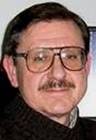
Boris Bakunas
By: Dr. Boris Vytautas Bakunas, Ph.D.
"Mr. Cohen may appear to make a sincere effort to present a balanced view in his article; however, three major flaws mar his attempt. First, the article is based on the logical fallacy of false dichotomy, also known as the either-or fallacy. Second, the scales of balance in Mr. Cohen’s presentation waver as a result of his failure to present all the relevant facts related to the establishment of The Museum of Genocide Victims in Vilnius. Finally, Mr. Cohen obfuscates two crucial terms: Holocaust and genocide.
------------------------------------------------------------------------------------------------------------------------------------------------------------------------
- Bookmark :
- Digg
- del.icio.us
- Stumbleupon
- Redit it

- Posted by - (2) Comment
“DOUBLE GENOCIDE”
Three major flaws mar
Mr. Cohen’s attempt
Boris Bakunas
By: Dr. Boris Vytautas Bakunas, Ph.D.
"Mr. Cohen may appear to make a sincere effort to present a balanced view in his article; however, three major flaws mar his attempt. First, the article is based on the logical fallacy of false dichotomy, also known as the either-or fallacy. Second, the scales of balance in Mr. Cohen’s presentation waver as a result of his failure to present all the relevant facts related to the establishment of The Museum of Genocide Victims in Vilnius. Finally, Mr. Cohen obfuscates two crucial terms: Holocaust and genocide.
First, let us consider Mr. Cohen's portrayal of Post-Soviet historiography as a series of "faltering attempts to deal with a thorny question: Were Lithuanians chiefly perpetrators (of Nazi crimes against Jews) or victims (of Soviet crimes against the nation)?" By posing his question in an either-or fashion, Mr. Cohen tacitly assumes that an entire nation can be characterized as falling within the one of two mutually exclusive categories: perpetrators or victims. In point of fact, some Lithuanians collaborated with their Nazi overlords, while others rescued Jewish Lithuanians at the risk of their own lives and those of their children. Individual accounts of their heroic deeds can be found in Gilbert Martin's excellent book "The Righteous: The Unsung Heroes of the Holocaust." Characterizing an entire group based solely on the actions of its worst or even its best representatives results in ethnic stereotyping, which clouds judgment and inflames passion.
Mr. Cohen also claims that The Museum of Genocide Victims in Vilnius “reflects a still-skewed national psyche” because it is devoted to Soviet crimes against Lithuanian partisans and not to the Jewish victims of the Nazis. Yet he fails to mention two important facts. The Vilnius Genocide Museum occupies the former KGB headquarters where Lithuanian partisans and others judged to be enemies of the Communist regime were imprisoned and tortured, while the Nazi genocide against Lithuanian Jews is memorialized in Kaunas’ 9th Fort Museum, where the Jewish people of Lithuania in the thousands were massacred. By selectively presenting only one relevant fact, Mr. Cohen slants his article towards a particular point of view.
Mr. Cohen's third error resides in confusing the terms Holocaust and genocide. The Holocaust was indeed a unique event -- in the same way that the Holodomor, the systematic famine engineered by Stalin in 1932-33 in which up to 10 million Ukrainians perished as well as the Massacre of Armenians during and right after the First World War were unique events. All instances of systematic mass murder are events unique to a particular time, place, and historical context. And all fall within the bounds of the superordinate concept of genocide.
The term "genocide" was first coined by Raphael Lemkin, a Polish lawyer of Jewish descent who lost 49 relatives during the Holocaust. After the war, Mr. Lemkin tirelessly campaigned for the establishment of international laws defining and forbidding genocide. In many of his writings and during many public appearances, Mr. Lemkin emphatically stated that genocide was a broad term that encompassed many
In his book “Axis Rule in Occupied Europe,” Mr. Lemkin wrote that "Genocide has two phases: one, destruction of the national pattern of the oppressed group; the other, the imposition of the national pattern of the oppressor. This imposition, in turn, may be made upon the oppressed population which is allowed to remain or upon the territory alone, after removal of the population and the colonization by the oppressor's own nationals." Clearly, the execution, torture, and mass deportations of Lithuanians by Soviet invaders fall within the scope of genocide.
Mr. Cohen’s dichotomous characterization of Lithuanians as either perpetrators or victims, his failure to present the full facts related the memorialization of genocide victims in present-day Lithuania, and his failure to understand the difference between the Holocaust and genocide gives a skewed report of independent Lithuania’s recognition of the Nazi and Soviet crimes against humanity. A little more thought and less hasty writing may have resulted in an article that enlightens rather than inflames this issue.
- Bookmark :
- Digg
- del.icio.us
- Stumbleupon
- Redit it

- Posted by - (0) Comment
“DOUBLE GENOCIDE”
Roger Cohen |
 |
 |
‘The Suffering Olympics’
By ROGER COHEN
Published: January 30, 2012
VILNIUS, LITHUANIA — The “double genocide” wars that pit Stalin’s crimes against Hitler’s are raging in wide swathes of Europe and every now and again along comes a gust from the past to stoke them. The 70th anniversary this month of the Nazi adoption at Wannsee of annihilation plans for the Jews provided one such squall.
Yes, the past is still treacherous beneath Europe’s calm surface. Memory swirls untamed in the parts of the Continent that the American historian Timothy Snyder calls “Bloodlands,” the slaughterhouses from Lithuania to Ukraine that Hitler and Stalin subjected to their murderous whim.
To mark the Wannsee anniversary, over 70 European Parliament members, including 8 Lithuanians, signed a declaration objecting to “attempts to obfuscate the Holocaust by diminishing its uniqueness and deeming it to be equal, similar or equivalent to Communism.” It also rejected efforts to rewrite European school history books “to reflect the notion of ‘double genocide.”’
All of this was too much for the Lithuanian foreign minister, Audronius Azubalis, a conservative, who blasted the Lithuanian social democrat signatories as “pathetic.” His spokeswoman declared that the only difference between Hitler and Stalin was the length of their mustaches. She said legal qualifications of the crimes they committed were “absolutely the same”: genocide, war crimes and crimes against humanity.
- Bookmark :
- Digg
- del.icio.us
- Stumbleupon
- Redit it
- Posted by - (0) Comment
Lithuania is now a preferred
gateway to the EU for:
Japan – China – India
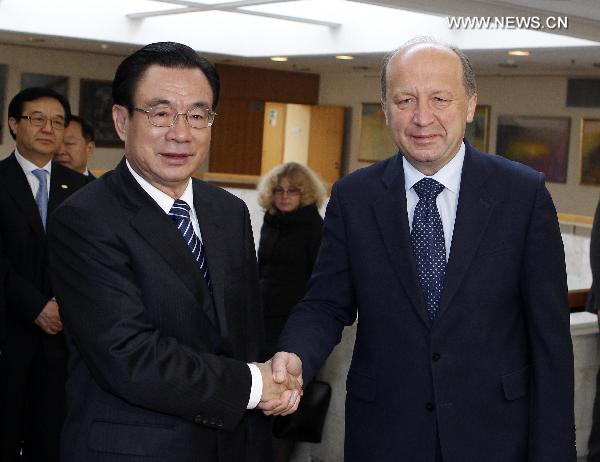
Lithuania is "China's important trading partner in the Baltic Sea region," He Guoqiang, member of the Standing Committee of the Political Bureau of the CPC Central Committee and secretary of the CPC's Central Commission for Discipline Inspection, said during this meeting with Lithuanian Prime Minister Andrius Kubilius.
The Lithuanian government has made several wise moves during the past year. One has connected ever-stronger ties to Scandinavia and Finland, another one is that there has been an increasing number of contacts made to Asian countries, especially with regards to China, India and Japan.
The agreements that are negotiated, or are under development, are highly significant and may give Lithuania a key position as a link between Asia and EU.
The agreements represent all win-win situations for bilateral relations between the three countries and Lithuania, since both sides have much to gain from the sort of bilateral cooperation that have been negotiated.
For Lithuania, these agreements are so important, economically, politically and with regard to growth in research, technology and communications, that they are likely to be perceived as a political boost for the incumbent government. The deals are simply so promising that they can get PM Kubilius re-elected in the parliamentary election this fall.
Among the news in the cooperation between the countries are worth mentioning:
- JAPAN: Cooperation for the construction of a new nuclear power plant in Visagino, and related technology transfer.
- CHINA: New rail connection from China to Klaipeda and on to Antwerp in Belgium, plus a brand new IT innovation centre at the University of Vilnius.
- INDIA: Lithuania as India's textile industry's gateway to the EU.
Aage Myhre
aage.myhre@VilNews.com
A handful interesting inks with regards to Lithuanian bilateral cooperation with:
- Bookmark :
- Digg
- del.icio.us
- Stumbleupon
- Redit it
Lithuania in a world perspective
- Posted by - (0) Comment
Text: Aage Myhre
A reader who responded to one of our VilNews issues last year argued that our publication had begun to go in the footsteps of local Lithuanian media in describing Lithuania in a rather negative way. I can well understand such a reaction, but it must also be said that unfortunately there has been a relatively large number of cases and circumstances in this country that deserve to be described in quite critical terms.
The bad
• The Lithuanian people, especially the weakest groups, are very hard hit by the economic crisis that continues to affect much of the world. The country's pensioners and other disadvantaged groups continue to live under very miserable conditions, and one must be allowed to make critical remarks on how this country's authorities have acted in the handling of the crisis. It seems to me that Lithuania's government has been more concerned with finding their own solutions, trying to ‘reinvent the wheel' rather than to learn from what other nations have made with regard to stimulus packages, lowered interest rates, etc. in these times of crisis, which in my view unnecessarily sets Lithuania several years back in time compared to many other countries. Fortunately, it appears that the immediate panic that came to characterize both the government and the banks in 2008-2010, was slowly taken over by more mature attitudes in 2011.
• There has still been far too little done for increased foreign investments in Lithuania, even if there were some good efforts made during 2010 and 2011. Also the country's own industry has largely had to fend for themselves without the kind of facilitation and support one sees taking place in countries frequently compared with Lithuania.
• The country has been constantly ill-placed on Transparency International's statistics on corruption and transparency over many years, compared with other European countries, a situation which clearly has hindered economic growth and a better society for its own citizens. That corruption and bribery is still a part of the country's 'culture' in business and public institutions is nothing less than a big shame!
• The country's press must, unfortunately, largely be described as underdeveloped, with too much emphasis on celebrity and scandal reviews, and too little emphasis on constructive and investigative journalism that focuses on corruption and other undesirable conditions that continue to hold this country down. But many would also say that the media focus too much on the negative, too little on all the positive things going on here.
• A huge proportion of Lithuania's population has emigrated in recent years, including many of those with higher education, and one can rightly ask what is done to create new jobs and make necessary provisions to keep these groups remain in their home country.
• One of Lithuania's most prominent human resources is undoubtedly the country's large diasporas around the globe, groups of people and their descendants who left their mother country because of war, difficult economic conditions, political persecution, etc. These diaspora groups are in my view too little listened to or consulted from the Lithuanian authorities, which is very sad for a nation that so desperately needs all possible support and assistance from the hundreds of thousands who still have Lithuania in their hearts.
• When Lithuania's Constitutional Court in November 2006 ruled that the country's Law on Citizenship should be interpreted in disfavour of dual citizenship for large groups of Lithuanians and their descendants having citizenships in other countries, this became the start of a still heated debate around the world, as many within the country's numerous diaspora groups felt that their country of origin did not want them back or did not want to appreciate them as full Lithuanians. Many felt that the Court's decision in its interpretation of the law was more influenced by hidden motives and intentions rather than common sense. As previously stated, Lithuania desperately needs goodwill from all of its huge diasporas, and should be more eager than most other countries to allow dual citizenship. Lithuania’s welcome-back-door must be kept constantly open, never closed. We need everyone who is ready to contribute and make an effort for the mother country.
• The Lithuanian school system, especially at higher levels, is still dominated by Soviet-era thinking and there is good reason to ask what has been done the last 22 years to make it more conducive to more advanced and modern education, research and collaboration between education, businesses and government.
• Health Service has major and serious deficiencies, and also suffers under the fact that many of the nation's doctors and nurses have emigrated to Western countries.
• The focus on travel and tourism has largely been unsuccessful, partly because of the disproportionately high airport taxes (the good news is that this was finally understood and these taxes were drastically lowered some time ago), under-developed ports for ferries and other ships in the Baltic Sea city of Klaipeda, poorly developed infrastructure and promotional activities, as well as little support to hotels and other tourist industries.
• Vilnius as European Capital of Culture in 2009, must also be described as a flop due to the fact that the number of visitors to the city was sharply down instead of up as expected, not least because of the unstructured and poor planning, and as several flights were cancelled due to FlyLAL's bankruptcy, too high airport charges and poor decisions by authorities. The planned main symbol of the year of culture, the re-created royal palace at the cathedral in Vilnius that should have been completed in all its glory during the culture year, still stands there as a ghostlike skeleton surrounded by construction cranes.
• The statistics for suicide and violent crime in Lithuania is sad reading, and the country is among those on the very bottom of all these statistics compared to the rest of Europe.
• Lithuanians make up for a disproportionate share of criminal gangs in Western Europe and the United States, something which increasingly creates major problems for the police and the judiciary in many countries and also leads to frequent negative headlines about Lithuania in the Western media.
• Lithuania is still suffering under a lot of pending historic "dirt", for example with regard to its dealings with the Holocaust and the fact that relatively many Lithuanians collaborated with the Nazis in the extermination of the Jews here. There was also an extensive collaboration between the KGB and senior Lithuanian politicians through the Soviet time, and it is still missing a wide clarification of what actually took place in the post-war partisan war. Reconciliation must be the obvious target, but based on all the facts laid on the table in a most scientific, objective way so that whatever might have been of injustice or illegal actions come to light and can be reacted to. A firm and fair treatment of these historical conditions will provide Lithuania great honour both domestically and from the international community.
• Participation in voluntary organizations is record low in Lithuania compared to other EU countries, and it seems that people in this country has relatively little liking for and willingness to teamwork and to work jointly with others within their neighbourhoods, local communities or on a national level. Is it perhaps selfishness, greed and mistrust of other people behind this?
The good
But, then, there is so very much positive that can be said about this country that many of us have become so fond of during the years after the liberation from the Soviet Union in 1990/91.
Lithuania has in many areas undergone an admirable growth for several years until the economical crisis started, which I recently saw very nicely symbolized by the many great new buildings that have shot up in the outskirts of Vilnius since I first came the same road into town in November 1990 on tour from my native Norway. Vilnius was by then a city that I experienced as sad, dark and worn, but is now a modern metropolis on a European level. An important part of this picture is the incredibly beautiful Old Town in Vilnius, which has now been renovated and re-emerged as one of Europe's finest and most attractive tourist magnets.
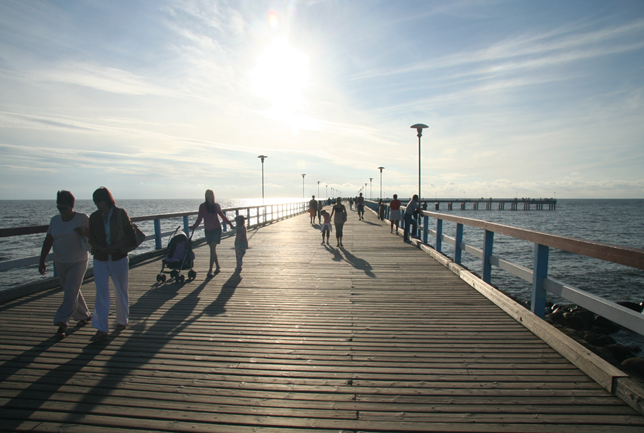
Also, coastal areas have undergone phenomenal change for the better. A summer stroll through the newly renovated Palanga city or at Europe's largest sand dunes in Nida are good experiences fully on par with what one finds in other countries' tourism destinations. The spa-town Druskininkai in South Lithuania has similarly undergone great improvements, and stands today as one of Europe's most attractive for anyone who wants to 'recharge the batteries' and at the same time enjoy the truly wonderful sceneries of Lithuania’s forest and lake landscapes.
It pleases me very much every time I visit my in-laws lush garden outside Vilnius. The practice of garden-towns is still alive and well here, and represents, in my opinion some of the closest you can get to this country's soul. Worth a visit!
Let me also mention the fantastic cultural life that so much characterizes this country. Music festivals that mark the cities and towns every summer. Most professional theatre, ballet and singing performances that fill the country's many stages throughout the winter months. Art exhibitions of all kinds, and spontaneous performances of various theatre and music groups in courtyards, squares, settlements and villages across the country. One needs never get bored in Lithuania!
And, let me share with you what two late statistics say about Lithuania:
According to the “2010 Quality of Life Index” published by the “International Living” magazine http://www1.internationalliving.com/qofl2010/, Lithuania is among the 25 best countries in the world to live in, with better quality of life than most other countries of Central and Eastern Europe (even ahead of some West-European countries).
Vilnius can boast of the cleanest air in Europe according to the „Economist Intelligence Unit“ and „Siemens“ in a research study called “An Index of Green European Cities” in which 30 cities-capitals of Europe were participating. http://www.vilnius-tourism.lt/topic.php?tid=84&aid=2304
Conclusion
It is my hope that Lithuania's authorities, businesses and people in general seriously start to cope with the still remaining problems and negative conditions, so that we can put behind us the negative features and once again see and experience a Lithuania with similar positive guts, profile and multi-cultural constellations that this country was once so famous for.
The initial question was what we can do to improve Lithuania's reputation to the rest of our world.
Many would probably say that what we need is more positive attention in international media. And, in fact, over the years there have been spent large sums on advertising Lithuania and Vilnius on CNN and in other media. It has been printed countless brochures, and it has repeatedly been created commissions that should propose new logos, new slogans, new profiles and new ideas for international promotion of Lithuania. But I hardly exaggerate when I say that the usefulness of all this has been extremely limited.
My answer to the question would therefore rather be to open up for a broad process with the aim to overcome, and actively improve the problem areas I have outlined in my bullet points above. I believe this would be a far better starting point and professional platform for improving Lithuania's reputation. Such a process would in itself attract attention and recognition in international media, as well as among leaders and ordinary people around the world.
Nothing gives better reputation for a nation than when the country’s authorities and citizens join forces into a positive and determined development process based on openness, fairness, honesty, genuine concern for fellow human beings, true respect for law and order, hard work, and attempted professionalism on all levels.
Lithuania has the historical and contemporary power to again become a leading, prominent example nation for other developing countries and many others around the world. Let’s take the opportunity.
PS:
I am fully aware that I have embarked into a minefield by writing the above comments, but after living in Lithuania more or less continuously for more than 20 years, I feel that I have some background to indicate an ever-so-small number of perceptions. Giving advice to others, however, is always a risk sport. To be a bit critical is even more risky. I have no roots in or from Lithuania, but I have my 'branches' here, and I would so dearly like my descendants and all other Lithuanians again to feel pride when they tell of their Lithuanian background. Therefore, I have written this, and I hope it will be well received as a constructive contribution with the best intentions and wishes for a brightest possible future in and for Lithuania.
- Bookmark :
- Digg
- del.icio.us
- Stumbleupon
- Redit it
“There is always something growing”
- Posted by - (2) Comment
Professor Irena Veisaite
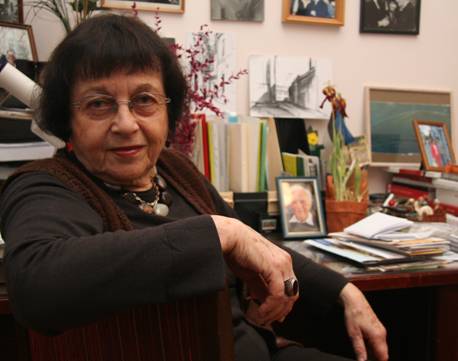
An Interview of Irena Veisaite by Ellen Cassedy April 26, 2011
Irena, you are a Holocaust survivor and have long been involved in Holocaust education initiatives in Lithuania. What do people outside Lithuania need to know about intolerance inside Lithuania today?
Of course there are examples of intolerance in Lithuania. All over the world there is intolerance. But there are also many attempts to promote tolerance in Lithuania. You should not always see only the negative side. We must appreciate positive steps as well.
What about the neo-Nazi march in Vilnius on March 11, independence day, and the swastika flags and anti-Semitic banner that appeared on Hitler’s birthday?
It is upsetting that this happened and that some young people joined that march. But it is also worth noting that both government and society at large reacted in protest against these incidents.
Lithuania’s foreign ministry and the Speaker of the Seimas, Dr. Irena Degutiene, reacted strongly against the anti-Semitic outbreaks on the day of Hitler's birthday. The reaction against the march on March 11 was not as strong and as far as I remember, it was mainly Kubilius who reacted.
There is always something growing. This makes me hopeful.
What is being done to promote tolerance in Lithuania, and what more should be done?
A great deal is being done. In a short interview it is impossible to mention everything. Just a few examples: When Lithuania declared its independence in 1990, there was almost nothing on this topic. Now we have about 60 books researching the terribly painful history of the end of Litvak history and culture in Lithuania. We have three books about the Roma Holocaust in the country. Our textbooks are changing toward openness and tolerance to Lithuania’s minorities, though they are not yet perfect. We’re educating our teachers, with the help of the US Holocaust Memorial Museum.
We also have many very active Educational Centers all over the country which are teaching the history of the Holocaust. A wonderful, modern exhibition has opened in the Museum of Tolerance in Vilnius Our government has designated 2011 as the Year of Holocaust Remembrance in Lithuania. Many events, discussions, conferences on this painful issue are planned.
For young people all over the world, the Holocaust is so remote that they can barely imagine it could happen. But we all need to learn about the Holocaust, not only because of the terrible things that happened, but because we need to understand that every one of us could in certain circumstances become a perpetrator. Every day we see how people are manipulated, how people are infected with hatred. As the famous Polish-British sociologist Zygmunt Bauman has stated in his book, Modernity and the Holocaust," the Holocaust is not a specific Jewish problem; it is a problem of modern society as a whole.
When we speak about the Holocaust in Lithuania or other Eastern European countries to people who also experienced the Gulag, we can’t ignore their experience. If we want to work toward mutual understanding, we must not become rivals as to who’s a bigger victim , but respect any victim of mass murder.
You have spoken of the need for "intolerance of intolerance." Can you explain?
No doubt. we should be intolerant of intolerance whenever and wherever it occurs. And we have first of all to apply it to ourselves. We can’t tolerate corruption, coercion, violence, etc. We have to fight it, but never overstep the border of tolerance. People are brought up differently, they live in different cultures and traditions, they have different experiences and therefore they can have different opinions and feelings, which have to be tolerated.
What can people outside of Lithuania do to help promote tolerance in Lithuania?
People from outside Lithuania should be very careful about interfering. They can speak of their own experience, but when a person from outside any country comes to teach local people how to act, you have to know the local situation very well and find the right way to speak. You must have tact. You have to understand the education people received, and their experiences. Otherwise you will face unexpected consequences.
Only one little example. In February, I attended a conference in London called “No Simple Stories,” which brought together well-known historians from the US, Israel, Germany, England, and Lithuania. We examined Jewish-Lithuanian relations – the years of coexistence and the years of violence. It was wonderful, very open and very honest. But at the end came a professor from outside with two cameraman, who read a statement which insulted all participants, accusing them in hiding the truth about the Holocaust in Lithuania. Such declarations don’t help, they only create bad blood and make a fair dialogue impossible.
Professor Irena Veisaite was a founder of the Open Society Fund – Lithuania and is now ombudsman of the Open Society Institute. For the past 15 years, she has participated in Holocaust education initiatives in Lithuania. She has been honored by the Lithuanian government with the Gediminas Order. The Sugihara Foundation nominated her as the Person of Tolerance in 2002. She lives in Vilnius.
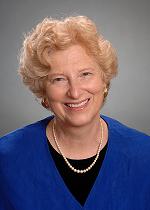 |
Ellen Cassedy traces her Jewish family roots to Rokiskis and Siauliai. Her book, "We Are Here: Memories of the Lithuanian Holocaust," will be published in March of 2012. She lives in Washington, D.C. Visit her website at www.ellencassedy.com. |
- Bookmark :
- Digg
- del.icio.us
- Stumbleupon
- Redit it
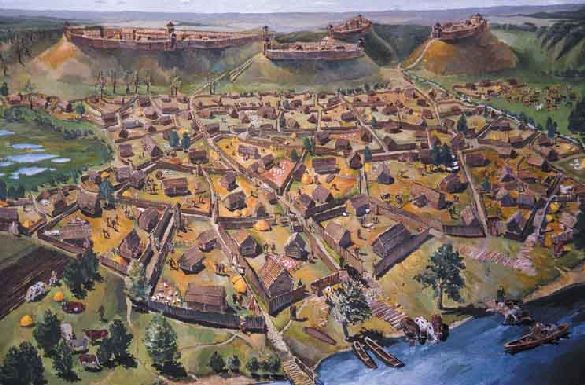
PICTURE: The castles and the town of Kernave (R. Sidrys). Kernavė is a unique 5 mounds complex, honoured as being the first capital of Lithuania. The first settlers appeared here as early as in 9th-8th millennium BC, in the Epipaleolithic period. Since then until the very Early Middle Ages, the territory was continuously settled by people who left their traces. In written sources Kernavė was first mentioned in 1279 in the Livonian Chronicle and the Herman Vartberg Chronicle, where it was described as Traidenis’, the Great Duke’s of Lithuania, estate (1269-1282). At that time Kernavė was the most significant economic-political centre of Lithuania. In 1390 Kernavė was burnt in an attack by Crusaders. After the fire the wooden town and castles have never been rebuilt.
The first people settled in the territory of Lithuania after the last glacial period in the 10th millennium BC. Over a millennium, the Proto-Indo-Europeans, who arrived in the 3rd – 2nd millennium BC, mixed with the local population and formed various Baltic tribes. The first written mention of Lithuania is found in a medieval German manuscript, the Annals of Quedlinburg, on 14 February 1009.
Initially inhabited by fragmented Baltic tribes, in the 1230s the Lithuanian lands were united by Mindaugas, who was crowned as King of Lithuania on 6 July 1253. After his assassination in 1263, pagan Lithuania was a target of the Christian crusades of the Teutonic Knights and the Livonian Order. Despite the devastating century-long struggle with the Orders, the Grand Duchy of Lithuania expanded rapidly overtaking former Slavic principalities of Kievan Rus’.
By the end of the 14th century, Lithuania was the largest country in Europe and included present-day Belarus, Ukraine, and parts of Poland and Russia. The geopolitical situation between the west and the east determined the multi-cultural and multi-confessional character of the Grand Duchy of Lithuania. The Lithuanian ruling elite practiced religious tolerance and borrowed Slavic state traditions, such as using the Chancery Slavonic language for official documents.
In 1385, the Grand Duke Jogaila accepted Poland's offer to become its king. He converted Lithuania to Christianity and established a personal union between Poland and Lithuania. After two civil wars Vytautas the Great became the Grand Duke of Lithuania in 1392. During his reign Lithuania reached the peak of its territorial expansion, centralization of the state was begun, and the Lithuanian nobility became increasingly prominent in state politics. Thanks to close cooperation, the armies of Poland and Lithuania achieved a great victory over the Teutonic Knights in 1410 at the Battle of Grunwald, one of the largest battles of medieval Europe.
After the deaths of Jogaila and Vytautas, the Lithuanian nobility attempted to break the union between Poland and Lithuania, independently selecting Grand Dukes from the Jagiellon dynasty. However, Lithuania was forced to seek a closer alliance with Poland when, at the end of the 15th century, the growing power of the Grand Duchy of Moscow threatened Lithuania's Russian principalities and sparked the Muscovite–Lithuanian Wars and the Livonian War.
The Polish–Lithuanian Commonwealth was created in 1569. As a member of the Commonwealth, Lithuania retained its institutions, including a separate army, currency, and statutory laws. However, eventually Polonization affected all aspects of Lithuanian life: politics, language, culture, even national identity. From the mid-16th to the mid-17th centuries culture, arts, and education flourished, fueled by the Renaissance and the Protestant Reformation. From 1573, Kings of Poland and Grand Dukes of Lithuania were elected by the nobility, who were granted ever increasing Golden Liberties. These liberties, especially the liberum veto (Latin for "I freely forbid"), led to anarchy and the eventual dissolution of the state.
During the Northern Wars (1655–1661), the Lithuanian territory and economy were devastated by the Swedish army. Before it could fully recover, Lithuania was again ravaged during the Great Northern War (1700–1721). The war, plague, and famine resulted in the loss of approximately 40% of the country's inhabitants. Foreign powers, especially Russia, became dominant players in the domestic politics of the Commonwealth. Numerous factions among the nobility used the Golden Liberties to prevent any reforms. Eventually, the Commonwealth was partitioned in 1772, 1792, and 1795 by the Russian Empire, Prussia, and Habsburg Austria.
The largest area of Lithuanian territory came under the control of Russia. After unsuccessful uprisings in 1831 and 1863, the Tsarist authorities implemented a number of Russification policies, including a ban on the Lithuanian press and the closing of cultural and educational institutions, and Lithuania became part of a new administrative region called Northwestern Krai. After the Russian – Turkey war in 1877–1878, when intervention of the German diplomacy withdrew from Russia fair winnings for the benefit of Turkey, the relationship between Russia and the German Empire became complicated. The Russian Empire resumed the construction of fortresses at its western borders for defenses against a potential invasion from Germany in the West. On 7 July 1879 the Russian Emperor Alexander II approved of a proposal from the Russian military leadership to build the largest 65 km2 (25 sq mi) "first-class" defensive structure in the entire state – Kaunas Fortress. Between 1868 and 1914, approximately 635,000 people, almost 20% of the population, left Lithuania. Large numbers of Lithuanians went to the United States first in 1867–1868 after a famine in Lithuania. Nevertheless, a Lithuanian National Revival laid the foundations of the modern Lithuanian nation and independent Lithuania.
LITHUANIA in the 20th century

The original 20 members of the Council of Lithuania after signing the Act of Independent Lithuania, 16 February 1918.
During World War I, the Council of Lithuania (Lietuvos Taryba) declared the independence of Lithuania on 16 February 1918, and the re-establishment of the Lithuanian State. During 1918-20 Lithuania successfully fought a war with newly independent Poland to defend its independence. At the end of 1920, however, Poland annexed Lithuania's capital city and province of Vilnius, which it held until World War II. For 19 years Kaunas became the temporary capital of Lithuania. Lithuania refused to have diplomatic relations with Poland until 1938 on the grounds that Poland illegally held the Vilnius region. After declaring independence, Lithuania also fought against the Bermondt-Avalov army, a German-sponsored group of military adventurers that sought to preserve German influence in the Baltic region, and against Russia. In November 1918, the Red Army invaded the country but ultimately was repulsed by the forces of the young Lithuanian government. On July 9, 1920, Soviet leader Vladimir I. Lenin signed a peace treaty with Lithuania, "forever" denouncing Russia's claims to the territory and recognizing the Lithuanian state.
From 1920 to 1940, independent Lithuania made great strides in nation building and development. A progressive land reform program was introduced in 1922, a cooperative movement was organized, and a strong currency and conservative fiscal management were maintained. Schools and universities were established (there had been no institutions of higher education and very few secondary schools under Russian rule), and illiteracy was substantially reduced. Artists and writers of the period produced works that have become classics.
In the early 1920s, Lithuania had a border dispute with Germany. The city and region of Klaipeda (Memel in German) had been under German rule for 700 years. Originally inhabited by Lithuanians, it was detached from Germany in 1919 by the Treaty of Versailles and placed under French administration. In 1923 Lithuanians organized an insurrection and took over the Klaipeda region. This region was ceded back to Germany after a German ultimatum in March 1939 stated that Germany would invade and take the region back by force if their demands were not met.
On August 23, 1939, Joseph V. Stalin and Adolf Hitler concluded the notorious Nazi-Soviet Nonaggression Pact (also known as the Molotov-Ribbentrop Pact). The agreement had a secret protocol that divided Poland, much of Central Europe, and the Baltic states between Germany and the Soviet Union. Lithuania, at first assigned to the German sphere of influence, in September was transferred to the Soviet Union. In October 1939, the Soviet Union forced on Lithuania a nonaggression pact that allowed Moscow to garrison 20,000 troops in the country. In return, the city of Vilnius, now occupied by Soviet troops, was granted to Lithuania. On June 15, 1940, Lithuania was overrun by the Red Army. At first a procommunist, so-called people's government was installed, and elections to a new parliament were organized. The elections were noncompetitive; a single approved list of candidates was presented to the voters. The parliament met on July 21, declared Soviet rule, and "joined" the Soviet Union as the Lithuanian Soviet Socialist Republic on August 6, 1940. The United States and many other countries refused to recognize the Soviet occupation.
Soviet rule brought about radical political and economic changes and Stalinist terror, which culminated in deportations to Siberia of more than 30,000 people on the night of June 14-15, 1941. Germany interrupted the Stalinist terror by attacking the Soviet Union on June 22, 1941.
The Lithuanian leadership went underground. An anti-Nazi resistance movement developed, publishing underground newspapers, organizing economic boycotts, and gathering arms. The resistance hoped that after victory the Western allies would insist on the restoration of Lithuanian statehood.
The nationalist Lithuanian resistance was supported by many Lithuanian political parties and resistance groups, including the Social Democrats and a coalition known as the Supreme Committee for the Liberation of Lithuania, which continued its activities many years after Lithuania was retaken by the Red Army. In 1943 this resistance frustrated German efforts at organizing a Lithuanian Schutz-Staffel (SS) legion. The Nazis responded by arresting Lithuanian nationalists and by closing universities. Moreover, occupation authorities succeeded, in the period 1941-44, in conscripting or capturing tens of thousands of people to work in Germany or to serve in the German military. Many perished in prisons or concentration camps. The main victims, however, were members of Lithuania's Jewish community. More than 200.000 Jews or almost 95 percent of the community's population, were massacred by Nazi squads.
Forcing the Germans out of Lithuania by 1944 the Red Army reestablished control and re-established the Lithuanian Soviet Socialist Republic. Sovietization continued with the arrival of Communist party leaders to create a local party administration. The mass deportation campaigns of 1941-52 exiled 29 923 families to Siberia and other remote parts of the Soviet Union. Official statistics state that over 120 000 people were deported from Lithuania during this period while Lithuanian sources estimate the number of political prisoners and deportees at 300 000. In response to these events an estimated 100,000 Lithuanian partisans fought a guerrilla war against the Soviet system. An estimated 30,000 partisans and their supporters were killed and many more were arrested and deported to Siberian gulags. It is estimated that Lithuania lost 780,000 people during 1940 – 1952. As a measure for Sovietization, Russification and industrial development Soviet authorities encouraged immigration of other Soviet workers especially Russians to Lithuania.
Soviet rule in Lithuania displayed well-known features of communist rule. The party had a monopoly on power, and the management of the economy was centralized. The regime collectivized agriculture from 1947 to 1951. Secret police terrorized the society and attempted to transfer Lithuanian nationalist loyalties to the communists. Deportations to Siberia were resumed. Religion was brutally suppressed. One Roman Catholic bishop was shot, one perished in prison, two died shortly after release, and two were banished for more than thirty years, leaving only one in office. Almost one-third of the clergy was deported, although survivors were allowed to return after Stalin's death in 1953. Eventually, the training of new priests was essentially stopped.
Underground resistance never disappeared, although the armed underground was destroyed. As a movement, resistance was first sparked by efforts to defend the Roman Catholic Church. After the Soviet invasion of Czechoslovakia in 1968, which led to increased repression in the Soviet Union, the dissident movement spread. In the 1970s, Lithuania had numerous underground publications. The most significant and regularly published among them was The Chronicle of the Catholic Church of Lithuania . It was never uncovered by the Soviet secret police, the Committee for State Security (Komitet gosudarstvennoy bezopasnosti--KGB), and was published for twenty years. In 1972 a young student, Romas Kalanta, immolated himself in protest against Soviet rule. Army units had to be sent in to quell a street rebellion by students that followed the self-immolation. The Committee for the Defense of Religious Rights and the Helsinki Watch Committee were established in the underground. Dissident work brought arrests and imprisonment. At the same time, the Lithuanian intelligentsia, especially writers and artists, demanded greater freedom of creative expression and protection of the Lithuanian language, traditions, and cultural values from the pressure of Russification that intensified during the administration of Leonid I. Brezhnev (1964-82).
The political and economic crisis that began in the U.S.S.R. in the mid-1980s also affected Lithuania and Lithuanians as well as other Balts offered active support to Gorbachev's program of social and political reforms. Under the leadership of intellectuals the Lithuanian reform movement Sajudis was formed in mid-1988 and declared a program of democratic and national rights winning nation-wide popularity. On Sajudis' demand the Lithuanian Supreme Soviet passed constitutional amendments on the supremacy of Lithuanian laws over Soviet legislation annulled the 1940 decisions on proclaiming Lithuania a part of the U.S.S.R. legalized a multi-party system and adopted a number of other important decisions. A large number of LCP members also supported the ideas of Sajudis and with Sajudis support Algirdas Brazauskas was elected First Secretary of the Central Committee of the LCP in 1988. In December 1989 the Brazauskas-led LCP split from the CPSU and became an independent party renaming itself in 1990 the Lithuanian Democratic Labor Party.
In 1990 Sajudis-backed candidates won the elections to the Lithuanian Supreme Soviet. On March 11 1990 its chairman Vytautas Landsbergis proclaimed the restoration of Lithuanian independence formed a new Cabinet of Ministers headed by Kazimiera Prunskiene and adopted the Provisional Fundamental Law of the state and a number of by-laws. The U.S.S.R. demanded to revoke the act and began employing political and economic sanctions against Lithuania as well as demonstrating military force. On January 10 1991 U.S.S.R. authorities seized the central publishing house and other premises in Vilnius and unsuccessfully attempted to overthrow the elected government by sponsoring a local "National Salvation Committee." Three days later the Soviet Army forcibly took over the TV tower killing 14 civilians and injuring 700. During the national plebiscite on February 9, 91% of those who took part in the voting (76% of all eligible voters) voted in favor of an independent democratic Lithuania. Led by the tenacious Landsbergis Lithuania's leadership continued to seek Western diplomatic recognition of its independence. Soviet military-security forces continued forced conscription occasional seizure of buildings attacking customs posts and sometimes killing customs and police officials.
On 4 February 1991, Iceland became the first country to recognize Lithuanian independence. After the Soviet August Coup, independent Lithuania received wide official recognition and joined the United Nations on 17 September 1991. The last Soviet troops left Lithuania on 31 August 1993 – even earlier than they departed from East Germany, which had not seen repression in recent times on the same level as the 1991 Vilnius massacre.
Lithuania became a member of the United Nations in 1991 and a full member of NATO and the European Union in spring 2004.
- Bookmark :
- Digg
- del.icio.us
- Stumbleupon
- Redit it
Postcards from the past
- Posted by - (4) Comment
Postcards collected by Stephanie Comfort, Texas, USA

Jewish market, Vilnius.
Stephanie Comfort, from Dallas, Texas, has over many years been an eager collector of old Jewsih postcards. Here is how she describes her ‘hobby’:
“I have the collecting gene: I collect dead Jews, their synagogues, their marketplaces and their family life - of the over 6,000,000 that were killed by the Germans and their countrymen "neighbours" there are few left to say Kaddish for them or to remember them. My Rabbi - Kenneth Roseman of Dallas once said that I am "Redeeming the Captives" by collecting the postcards and photos of them. I also collect and honour those few that saved them. In Lithuania it was the Japanese Consul to Lithuania, Chuin Sugihara, who was housed in Kaunas/Kovno (the Yiddish name) and although demanded to return with his family by the government of Japan he stayed and spent 24 hours a day - along with his wife - filling out visas which saved thousands of Lithuanian Jews. He was still filling them when on the train departing and throwing them out of the window. Upon his return to Japan he was removed from his position and never worked again. When the State of Israel discovered that they were destitute they paid them a yearly salary and educated his children. He - and other "Righteous Gentiles" (non-Jews) that saved Jews (proved via testamony) are honoured in the garden of Yad VaShem (Holocaust Museum) in Jerusalem, Israel by having a tree planted in their name.”
“I, myself, have visited Lithuania twice - stood in the Polnar Forest outside of Vilnius/Vilna and in the 9th Fort outside of Kaunas/Kovno and where the Kovno used to stand and where the Jewish patients, Jewish Nurses and Jewish Doctors were locked into the Jewish Hospital and set on fire and in front of the Sugihara home and was so very thankful to him and his family.”
“I was born in Brooklyn, New York to parents also born there BUT was also raised by maternal grandparents who came over from Russia, Poland - areas called The Pale or White Russia - today parts of the Ukraine. I was raised early on the stories of Pogroms .... my Great Grandfather was crucified during an Easter pogrom - nailed against a door. My Grandfather quickly grew a beard and came to the USA as his father. My Grandmother used to tell about the Christian peasants that used to "sic" their dogs on them in the fields where they walked and worked.”
“I have lived in Dallas, Texas for the past 44 yrs. although most of my schooling was in California. I have been a professional weaver - with one of my pieces being in the Dallas Museum of Art for a couple of months. I have been a jeweller - working primarily in gold with some silver and making jewelry and Judaica. During those years I also spent several months each summer in Israel studying Biblical Archaeology - called it sending Mother to Camp. For 4 seasons I worked in The City of David in Jerusalem and 2 seasons at Tel Dor on the Coast.”
“My husband and I travel a bit and about 15 years ago we went for the first time (there was also a second time) to the Camps in Poland: Auschwitz Birkenau, Treblinka, Madjanek and the killing fields in the towns with Ghettos. We stood in Budapest (3 visits) at the Danube where the Jews were tied 3 together so that only one bullet need be used. In the Czech Republic (3 visits) we've visited Theresenstadt/Terezin and in Lithuania (twice) the Polnar Forest and the 9th Fort. In Germany once it was Dachau and the Exposition Field where the Israeli Olympic wrestlers were killed in 1972. This all started me in collecting postcards of Jews that "were" knowing most of them were killed in the Holocaust not only by the Germans but ALSO by their fellow Lithuanians, Croatians, Latvians, Romanians, etc. etc. In fact it was only the Finns, the Danes, the Bulgarians, the Albanians and the Moroccans that were decent enough and brave enough to say NO.”
“Now with so many Holocaust deniers I fear that soon Europeans will start also denying that Jews ever lived in their countries - ergo - I document, document, document.”
“I think the story of how the Jewish Karaites were saved in Troki (Trakai) is interesting. When the German Commanded asked the Chief Rabbi of Vilna if they were also Jewish - his not liking the way they practiced their Judaism - said NO.”
“I was born during WW2 and remember the hushes when I would enter a room as a child - and the tears - and the names of relatives I would never know.”

Kaunas synagogue 1926.

Kaunas (Kovno) Chief Rabbi.


Jewish school 1926.

Jewish market, Vilnius.

Vilnius ghetto during World War II.

Vilnius, new synagogue.

Wooden synagogue, Žiežmariai (between Vilnius and Kaunas).

Old Vilnius synagogue.
- Bookmark :
- Digg
- del.icio.us
- Stumbleupon
- Redit it
- Posted by - (0) Comment
A brief chronology
2000 B.C. Lithuanian ancestors settle along the Baltic coast.
1009 A.D. Lithuania is first mentioned in chronicles. Lithuanians already have a reputation as fierce warriors.
1200 While much of Europe has already converted to Christianity, Lithuania is still pagan and will remain so for several hundred more years. Lithuanians believed fire embodies the divine. A sacred flameis kept at a Vilnius temple tended to by vestal virgins. If they break their vows of chastity or the flame goes out, the penalty is death.
1236 Lithuania is united by Mindaugas and later crowned king. Unification helps Lithuania fend off German crusaders.
1323 Vilnius founded by Grand Duke Gediminas.
1385 Polish-Lithuanian Union known as Kreva Union was sign. Lithuanian Duke Jogaila became Polish King.
1386 To keep the Germans at bay, the Lithuanian Grand Duke and Polish Queen wed, creating a monarchial union.
1387 The Christianization of Lithuania was initiated by the Grand Duke of Lithuania and King of Poland Jogaila with his cousin Vytautas the Great. This signified the official adoption of Christianity by Lithuania, one of the last pagan nations in Europe.
1392-1430 Lithuania-Poland stretches to the Black Sea.
1410 Lithuania, Poland and their allies defeat the Teutonic Knights and end their military influence in the region forever.
1400s Jews begin to settle in Lithuania. In time, Vilnius becomes a center of Jewish culture and learning in the world
1569 The Polish–Lithuanian Commonwealth. Lithuania enters a formal Commonwealth with Poland to help protect against increasing danger from Russia.
1657 The plague strikes and half the population of Vilnius die.
1795 The Commonwealth is partitioned by the Russian Empire, Prussia, and Habsburg Austria. Lithuania ends up controlled by Russia.
1860-1885 Lithuanian uprisings; The Emperor of Russia bans Lithuanian as an officially used language.
1900 Lithuanians begin emigrating en mass to escape Czarist persecution. The émigrés spread their influence far and wide. Among those who are either from Lithuania themselves or whose parents were: British actor Sir John Gielgud, singer Al Jolson, actor Charles Bronson, the Three Stooges, and American composer Aaron Copland. The father of former Israeli premier Ehud Barak was from Lithuania. Today, some 800,000 Americans claim Lithuanian heritage.
1918 Lithuania declares independence.
1920 After battling Russia and other powers, Lithuania secures independence. Poles occupy Vilnius; Kaunas becomes Lithuania’s provisional capital. Catholic Lithuania breaks relations with the Vatican after Rome recognizes Polish rule over Vilnius.
1920-1939 Lithuania prospers financially, culturally and in education.
1939 In March, a long-running dispute between Lithuania and Germany over the jurisdiction of Klaipeda comes to a head when Berlin demands that Lithuania give up the coastal city, or face a Nazi invasion. Lithuania, figuring it couldn’t depend on support from either Russia or any Western powers, gives in to the ultimatum. On March 22, Hitler arrives in Klaipeda.
1939 In August, Hitler and Stalin carve up Europe, with the Baltics in the Soviet sphere. Before, the Baltics were able to play Germany and Russia off each other, but they’re now virtually within U.S.S.R. occupies Lithuania; mass deportations to Siberia begin. Moscow hands Vilnius back to Lithuania.
1940 Soviet Army occupies Lithuania. Mass deportations to Siberia, forced exile, jailings and executions begin.
1941 Nazis occupy Lithuania. Most of Lithuania’s 240,000 Jews are killed.
1944 Soviets occupy Lithuania again. Over 500,000 Lithuanians are either deported, forced into exile, jailed or shot
1987 First open protests against Soviets.
1989 Lithuanian Communists vote to break with the Soviet Party, a daring and dangerous move at the time.
1990 Lithuania declares independence, the first Soviet republic to do so.
1991 Soviet crackdown kills 13 civilians in Vilnius; in August, after a failed Kremlin coup, Lithuania wins independence.
1993 Algirdas Brazauskas becomes president. The litas become the new national currency.
1997 A cooperation agreement is signed between Russia and Lithuania.
1998 Lithuanian born and now a U.S. citizen, Valdas Adamkus becomes a president of Lithuania after a 50-year exile.
March 29, 2004 Lithuania is accepted into NATO.
May 1, 2004 Lithuania joins the European Union.
- Bookmark :
- Digg
- del.icio.us
- Stumbleupon
- Redit it

Photo: Andrius Ambramavičius
Užupis is an urban area of Vilnius characterized by dilapidated buildings, courtyards and side streets that haven‘t been renovated for decades. But when the music reverberates over the cobbles in the late evenings I am convinced that you will fall in love with this unique part of Vilnius city. Užupis was declared as independent Republic in 1997. The atmosphere – filled with love, music, smells and happy people – will certainly catch your soul. When you at late night again cross the river Vilnia I think you’re going to do it with a big smile and renewed appreciation of the exceptionally many exciting adventures and stories Lithuania has to offer…
Text: Rasa Mekuškaitė
13 years ago the Republic of Užupis declared its independence. It’s easy to get there; Užupis is located right in the centre of the city, just a few hundred meters from Vilnius Old Town. Vilnia River prominently separates its territory from the rest of the city. Cultural, artistic and political representatives, engineers, students and the unemployed all combine to unite this small district in the capital of Lithuania. There you can meet all kinds of people – millionaires as well as beggars became an inseparable part of Užupis district.
As every district of the city Užupis also has its own lifestyle. However, the newcomers, who came to Užupis some 15-20 years ago were accepted by the current inhabitants in a very unfriendly way – like a colonists, says Romas Lileikis – film director, bard and president of the Republic of Užupis. Nonetheless, despite worries, those young and creative people sincerely tried to befriend the locals. “You have to break your inner barriers without any outside influence” Romas explains.
Today the Republic of Užupis is well known and attracts daily arriving newcomers and tourists. Indeed, establishment of Užupis was a hard task to do. The founders haven’t received any financial support from the government or private money investors.
Everything starts with an idea. Someone had drawn a map of Užupis, and then someone created the flags (different colors for each season of the year) and a completely new calendar marked with some unique holidays and dates, known nowhere in the world but in Užupis. An open hand with a round hole in the middle of the palm on white background was chosen to be a symbol of Užupis. Also an authentic constitution of 41 articles (only 4 of them didn’t start with the word “human”) was written.

Photo: Rasa Mekuškaitė
If you simply ask an inhabitant of Užupis (užupietis), or someone who loves this Republic what Užupis means to them –after a few minutes of consideration the answer would be – “Užupis is a . . .“ It’s mystic atmosphere and space, ancient history, an abundance of greenery, compatibility and accessibility and finally it’s cultural bohemian charm attracts people to visit this lovely place.
If someone wants to become an “užupietis” (that’s how inhabitants of Užupis are being called in Lithuanian) he didn’t have to memorize a constitution, be an artist or meet any other requirements. “One simply has to wade through the river and reach the other bank. It should come from the inside” Marius Abramavicius Neboisia (an old Užupis dweller and artist) shares his thoughts. While traveling to Georgia he even wrote in his memoirs that “an užupietis remains užupietis even in Georgia”. Nobody can force you to become the citizen of this republic and nobody can take it back from you.
All people who live here – from creative artists to enterprising businessmen – share the same opinion that Užupis is not their property “We’re creating it, but we don’t own it”. All the interested newcomers are becoming a natural part of this atmosphere. You may observe the changing names of resident artists and photography studios or the names of stores but the creative breathing remains the same.
One of the most important symbols of the Republic of Užupis (and of Vilnius as well) is a sculpture of an angel blowing a trumpet. It has an interesting history behind its origin. When artists began settling here they’ve decided that was important to have their own herald. The enthusiasm was so strong that the idea grew despite the fact that they didn’t have any funds.
The creation of Angel sculpture was exclusively funded by local dwellers. Firstly, they created an obelisk with a giant nest egg on the top of it. Today, when asked about the sculpture local teenagers say “Oh! The Angel has to be come out of an egg”. Finally, after five years the dream became reality and the angel is blowing his trumpet towards the West, towards the Old Vilnius. Usually this place has predominantly western winds, so somehow it is a play of words which shows us that everything is possible.
Also, a miniature copy of an Užupis angel was given to the President of Lithuania Valdas Adamkus on his inauguration day in 1998 as a gift from Užupis.

Photo: Rasa Mekuškaitė
A few years after, Republic officials decided to refuse keeping an army. “The army won’t protect us if heaven will refuse to do so” the President Romas Lileikis says. He also briefly comments that if we want to understand the world, we have to start out from ourselves and to struggle with aggression not from the outer side, but from the inside. The main following point is that talented people change other people into talented ones too. He also accents that it is very important to be a personality if you want to be together. Furthermore, social community will help you whenever you need it, whether you’re happy or sick, or seeking for mercy, or simply want to share your ideas and thoughts. Success is the most important gun of the nation, declares Romas.
One of the first European centers of alternative art Užupis Art Incubator (as it calls UMI) and its gallery “Galera” were founded in 1996 by a group of young and initiative Vilnius Art Academy students and local artists. This impressive building has beautifully painted walls, and is decorated by ground sculptures, wall sculptures and a monumental stone dedicated to the “Unknown teacher”. Nearby, in the yard, there are several embankments artistically strengthened with concrete and stones. Local ducks often use the smallest harbor in Europe (located in Užupis of course) for swimming and quacking around. That is why they have chosen an emblem of drake on it. A decade ago various art projects, festivals and avant-garde fashion shows took place here among the ruins of the Second World War. Today Užupis Art Incubator has become a new home for craft workshops, exhibitions and various live music venues.
Užupis has many resemblances to the famous bohemian district of Paris Montmartre (both have an uphill location, for instance). However, Užupis’ desires to stay unique is stronger than its wish to be called the Lithuanian equivalent of Montmartre.
The Republic of Užupis proclaimed its independence on April 1st 1998. Užupis’ Independence Day has become an important event to celebrate in a whole Vilnius. More and more tourists from all over the world are coming here to feast the Independence Day, so there are always lots of visitors and representatives of foreign media. Foreigners share their impressions and memories about Užupis with their friends so they all keep returning here when they get a chance. Back in 1998 the ambassadors of foreign countries who resided in Vilnius at that time also honored the newly proclaimed Republic on that special occasion by driving in their cars, trimmed with country flags around the main streets of Užupis.

Photo: Rasa Mekuškaitė
Traditional process of releasing fishes into the water of Vilnia River is also a part of Independence Day celebration. A long parade accompanied by brass band with themed slogans and posters walks along the streets, and then a special live concert concludes the celebration.
A famous U.S. film-maker, one of the activists of the 20th century Fluxus art movement and Lithuanian expatriate Jonas Mekas was claimed to be the first honorable citizen of the Uzupis Republic. A year ago, on the 1st of April, 2010 a Jonas Mekas pedestrian alley was solemnly opened there. The alley’s path goes along the main Užupis Street towards the Vilnius Art Academy, where you may see the roof topped bridge on the Vilnia River which was named by Jurgis Mačiūnas – George Maciunas (pioneer and author of the Fluxus idea). His Holiness the 14th Dalai Lama of Tibet and a former mayor of Bogotá Antanas Mockus (son of Lithuanian immigrants who has been a candidate for the presidential election in Colombia in 2010) are among the most famous visitors of Užupis.
Užupis’ New Year’s Day (so called a Trap Day) is celebrated on the day of the spring equinox (20th of March) and is coincident with astronomical spring and Earth Day. On that day much attention is paid to human addictions of material and spiritual background. All people are invited to purify themselves, to burn their old sins in the bonfire and symbolically wash themselves in the River’s water.
The Day of the White Tablecloths is celebrated on the second day of Easter at the Užupis café terrace. Everyone there exchanges greetings and food from their Easter meal. It doesn’t matter whether it is a sunny warm day or a snowy one. Indeed, covering their meals from falling snowflakes is the main attraction for those who came there. Everything fades behind a feeling of belonging to a community.
First planned as Fall Harvest day celebration has later become a regular weekly based natural foods and flea market in the Tymo block area.
Usually on Saturdays all bridges of Užupis are being attended by the married couples, because according to tradition the bridegroom has to carry his bride across the river. About 10 years ago a new interesting custom of ‘locking a padlock and throwing away the key’ has been adopted there. The newlyweds are affixing padlocks with engraved initials/date/wishes to the railings of the bridges and then throwing the key into the flowing river. If someone would take a closer look onto these almost new looking padlocks one may see that they were left by those couples, who recently celebrated their 10th wedding anniversary.

Photo: Rasa Mekuškaitė
After long negotiations with municipal committees and representatives of the People’s Republic of China a small park on the Malunu street, not far from oldest Vilnius electrical substation, has been named the Tibet Square.
The street name Malunu (Malunas – mill) is originated from old watermill on the Vilnele river which was a source of energy for a former paper factory. The area always had plenty of manufacturers. Since the Middle Ages a potter guild, a glass foundry and a forge were established here by local craftsmen.
Currently nearby in Angel square you may find clay workshops that keep traditions of Lithuanian heritage alive. There you may find professional artists renewing old tile estate stoves or leading craft workshops.
During the firewood market days when the weather gets colder, some people buy firewood for their pauper neighbors so that they can also warm their dwellings. There are still many homes at Užupis (which remains one of the oldest districts in Vilnius) that use firewood for heating. However, little by little everything changes and now the majority of residents use gas-fired boilers or electricity for warming up.
Wind Days are being celebrated in November. One more time, everything is dedicated to creation and creativity. Traditional poetry readings became an alternative to famous Lithuanian poetry festivals such as Spring Poetry or Poetical autumn of Druskininkai. Days of poetry are always accompanied by live music of different genres (dance, jazz, choral music) and young singers from Vilnius and Užupis. Directors of non commercial cinema present their movies here also during the Wind Days.
The Užupis café (located nearby the main entrance to Užupis) remains the most important spot for meetings of the Parliament of the Republic. Some very important questions are being considered here. There you can meet the ministers and the premier of the Republic of Užupis – Sakalas Gorodeckis and the finance minister Algimantas Mačiulis (he is also responsible for administering užas – a local currency). The minister of culture is Virginijus Paldavičius, who is also known for making craft boats with symbol of Užupis on its sail. One of the brightest personalities in Užupis is a minister of Foreign Affairs – Tomas Čepaitis. Usually he gives ministers their portfolios or decides who can perform their duties without portfolios. It should be noted that Republic of Uzupis has approx. 250 ambassadors and 100 consuls across the world. The Minister T. Čepaitis divides them into serious and non-serious ones. This depends on where the man feels in his own place and what he knows best.
First ambassadors in foreign countries were chosen to be Andrey Antonov in Byelorussia, Marius Abramavicius Neboisia in Tibet, Vytenis Rasutis in Georgia and Alfredas Maruška in Nepal (and of Esperanto as well). Also, agencies of Užupis were established in some EU countries. Usually the mayors of main Lithuanian cities are becoming ambassadors of Užupis automatically.
Non-serious ones represent various parts of life (from information technologies to chocolate). If sand and fog are important for you – you are welcome, half-jokingly says Tomas Čepaitis.
Sometimes Užupis is compared to Monaco and Liechtenstein duchies. Also this little Republic keeps creative diplomatic dialogues with Christiania (a similar Republic in Dresden), Žižkov (district of Prague), and odd micronations of Ladonia (Sweden) and Freedonia (Slovenia). By the way, Užupis has almost 7000 inhabitants.
All in all, it is not important whether you are looking upstream or downstream. The polygenesis is like a constant, odd drama for all the progressive ideas. During the warm summer days young people who come to sit there by the river say “Watching the flowing water never bores you”. The river channel surrounds Užupis from the three sides like a horseshoe or caring hands; every thought is feasible.

- Bookmark :
- Digg
- del.icio.us
- Stumbleupon
- Redit it
- Posted by - (3) Comment
|
Our recommended architect-tour through Vilnius VILNIUS ARCHITECTURE
|
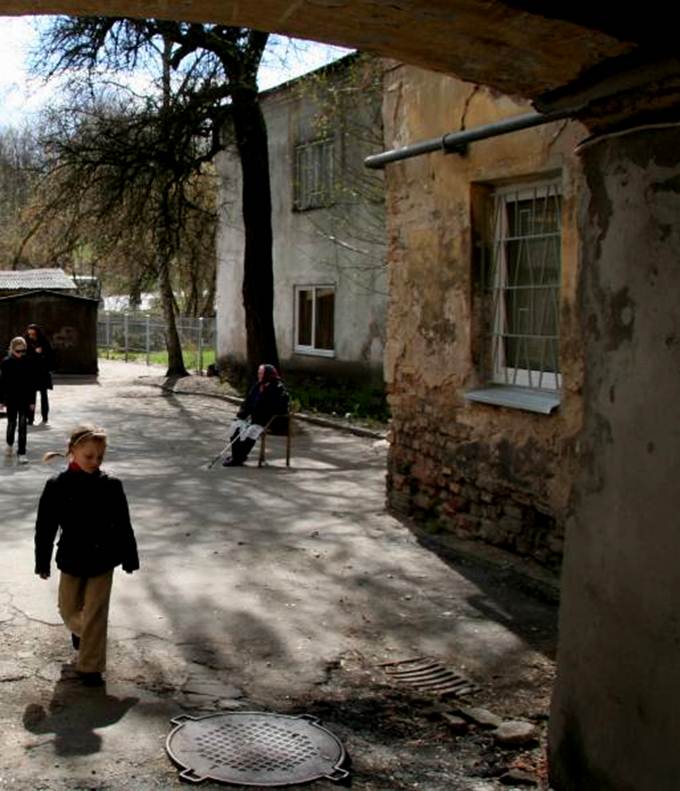
Maybe you just asked yourself: What on earth has such an image, the one above, to do with architecture? Let me admit, that when I began my studies to become an architect, 36 years ago, I also believed that architecture was about buildings and structures.
But, after I received my Norwegian master degree in architecture, and also had studied architectural psychology in France, it began to dawn on me that architecture is mostly about something else. I started realising that architects are creating constructions, but, more importantly, they are designing frameworks and environments for genuine human life and activities - being it at work, with family, during leisure time, travelling, at a restaurant table, or while simply seeking inspiration in some sort of environment.
The cover photo shows real life in one of Vilnius’ many hidden courtyards. You will understand the magnificent architecture of Vilnius Old Town only if you also visit these courtyards and the many ancient, vaulted cellars.
|
The mother art is architecture. Without an architecture of our own we have no soul of our own civilization.
|
From the architectural point of view, Vilnius is a unique city of world format. Unfortunately, there are not many reasons to mention the city’s new suburbs with modern architecture; they are mediocre. Vilnius Old Town is the only outstanding jewel in the crown. But what a jewel! It is here you should come to observe the amazingly strong expressions of a whole people's ancient soul; regardless of nationality, religion or cultural background.
It is when you come here you will fully understand why Vilnius once was given names like the 'New Babylon', ‘Jerusalem of the North’, ‘the world’s most Italian city outside Italy’ and ‘the most Baroque city north of the Alps’. It is here you fully can understand what the terms multiculturalism and multi-nationalism really implied in ancient Vilnius. It was to this very place architects and builders from Italy and other Mediterranean countries came to develop the international Vilnius nearly 700 years ago, along with experts from Central Europe. The city’s huge Jewish community also played an immensely important role.
When it comes to ancient architectural planning and roots, Vilnius is probably the world’s most international city.
|
|
|
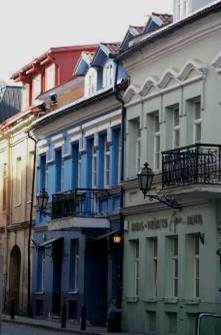
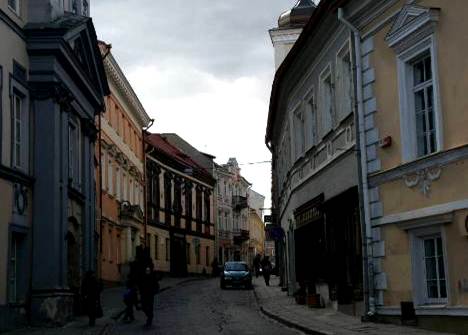
HOLISTIC THINKING AND PLANNING
Architecture is a mirror of the development level and maturity for any nation. Today's best example of precisely this is the new Dubai architecture that is created to tell a story about wealth and prosperity. Similarly, the architecture of Vilnius Old Town tells us about wisdom and multiculturalism in this country during hundreds of years. Vilnius reflects European styles, be it from the Gothic, Renaissance, Baroque or Classicism time periods because Lithuania's former leaders knew how to seek advice and expert assistance from outside. Vilnius of those days was fully on par with cities closer to main stream Europe. But the styles represent only one side of the case. Equally important is the fact that the then leaders, city planners and architects followed holistic planning ideals. The areas between the buildings were as important as the buildings themselves and the human dimension was given crucial importance. To pave the way for good and interactive human life and expression was a most important clue in all planning and development. Old Vilnius was a good and vibrant city to live in.
|
|
Outdoor rooms A little flippant answer maybe, but it is my belief that good architecture always should be based on the human dimension and the view that buildings are parts of a greater whole and context where interiors, exteriors and the outdoor spaces between the houses are playing together in harmony and mutual affinity. Vilnius Old Town is a shining example of a holistic approach in planning. The buildings are often to compare with napoleon cakes where the basement is usually from 1400-1600's, while the floors above are of increasingly younger 'vintage'. Still, the buildings appear as genuinely well designed and planned. We see clear signs of famous international styles, but the end result is still something exceptional: A genuine Vilnius style! The streets, squares and courtyards are planned in the same holistic manner. One minute you find yourself in a narrow alley, so narrow that even daylight has trouble reaching down to the cobbles. Then suddenly the street opens into a small square. You hear music and feel the good smell of food from one of the small sidewalk cafés. Other streets are wider. Widest of all is Didzioji gatvė (meaning the big street), which finally ends up in the City Hall Square (Rotušės aikštė) in front of the city's former council-house. In Vilnius Old Town you will find joy and adventures, whether you're indoors or outdoors, in a narrow street or in an open space. A complete, excellent feeling of harmony. I wish the newer parts of the town had been planned similarly well, with the human dimension in mind and with harmonious integration of outdoor space and building. Unfortunately, it's mostly the car that rules over the outdoor spaces in the city’s new districts. |
|
|
|
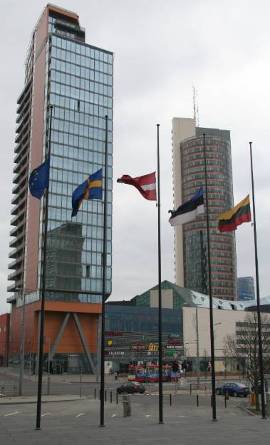
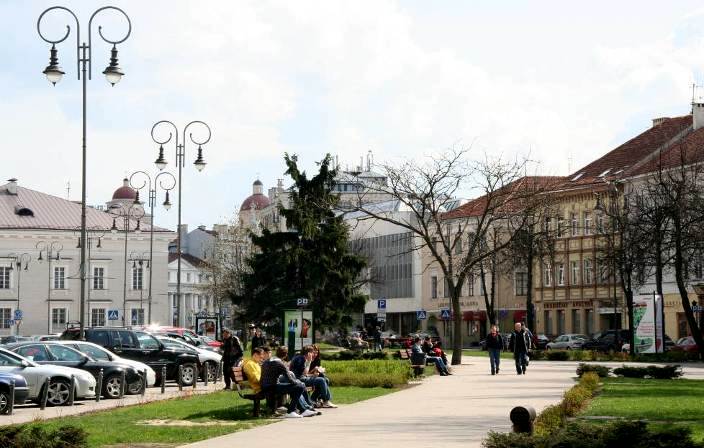
MY ARCHITECTURE ROUTE THROUGH VILNIUS
This is my personal architecture route through Vilnius. It follows far from historical order. It focuses not only on buildings, but is all along also touching a bit of general history and partly political events. For, as I said already at the very beginning, architecture is so much more than just structures. Architecture is art, frames for human life, politics, economics, prestige, happiness, sorrow - for better or worse. Or as a friend of mine tends to ask: ‘Do you know the difference between a doctor and an architect?’ The answer is that doctors can always bury their mistakes…
Vilnius, however, is a fully ambulatory 'patient'. Let me show you.
|
|
|
|
1. The new skyscraper district of Vilnius |
12. Church of the Holy Spirit |
|
2. River Neris and Stalinist architecture |
13. The Jewish Quarter |
|
3. Lukiškės Square, where Lenin’s statue once stood |
14. Stikliu gatve (Glassblower Street) |
|
4. The KGB Palace (today’s KGB Museum) |
15. Rotušes Square – the old City Hall |
|
5. Gediminas Avenue – Lithuania’s parade street |
16. St. Casimir’s Church |
|
6. Vilnius Cathedral and the Cathedral Square |
17. Gates of Dawn |
|
7. The Vilnius Castles – Gediminas Tower |
18. Užupis |
|
8. The Royal Palace |
19. St. Anne’s Church – Bernadine Church |
|
9. The Presidential Palace |
20. Piliės gatve (Tower Street) |
|
10. Vilnius University |
21. Sts. Peter and Paul’s Church |
|
11. Sts Johns’ Church |
|
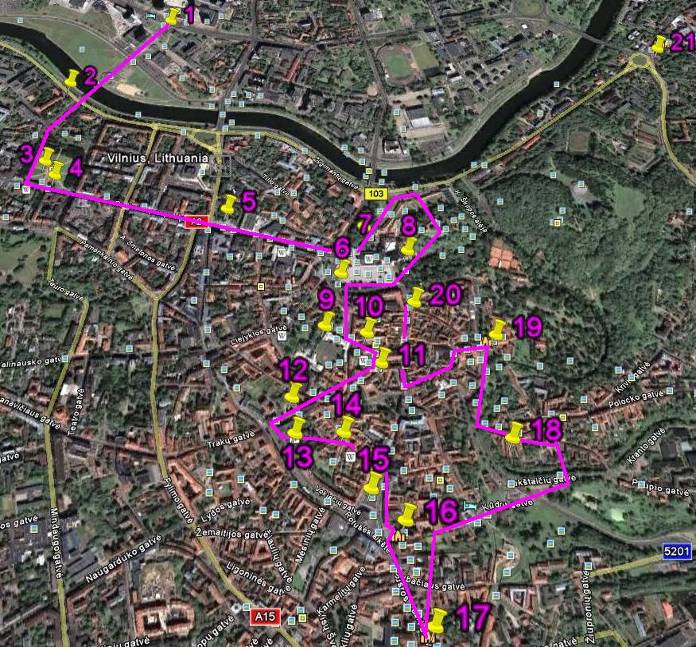
1. VILNIUS’ NEW SKYSCRAPER DISTRICT
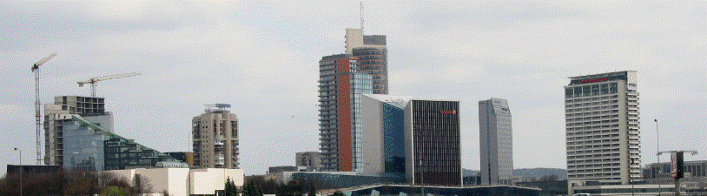
To the right in the picture above you can see the Reval Hotel Lietuva. The hotel was, with its 22 floors, until a few years ago Lithuania's only skyscraper. I lived there for half a year, in 1991. Where today's skyscraper district is located (to the left), there was just a dusty strip of land with lots of kiosks of good old-fashioned Soviet brand. Today's skyscrapers are taller and more modern. Glass and steel have in the 2000s made their triumphant entrance to Vilnius and Lithuania.
The new buildings are not bad. They are actually among the better in terms of recent, modern architecture in Lithuania. The two buildings I think most of, are; a) The Europa Tower, and b) Swedbank's new headquarters, both designed by architect Audrius Ambrasas. These two buildings have, in addition to a lot of glass and metal, also added a little warmer colours, which means a lot to an otherwise cold district. The shopping centre within the Europa Tower is also, in my opinion, the best in the whole of Lithuania in terms of architecture. Simple and understandable, yet elegant in its expression.
But, as the critic I always tend to be, let me be allowed to present three query target categories for this new glass-and-steel complex that has been raised over the past 10 years, only a stone's throw from the Vilnius Old Town:
1) Where is the holistic thinking behind this new district?
It seems that the Vilnius Municipality has not done much more than dividing up a large land area into land plots where each developer has been left free to build without regard to public facilities, outdoor space or a common architectural concept.
2) Why has one not assumed a design concept related to the centuries-old architecture of Vilnius Old Town?
The skyscraper district in Vilnius differs little from mediocre areas of similar character in the west, while the city’s own proud history of architecture seems to be completely forgotten.
3) Why is it that asphalt and cars have been allowed to completely dominate all outdoor areas?
The only attempt made to create an outdoor area seems to exist between the Europa Tower and the new City Hall building. But also this yard chemically free of greenery and life-giving activities, with the result that it is used very little by people. The new skyscraper city is also isolated from good contact with the Vilnius centre by a busy street. Why not put a lid on it, so that traffic could be hidden under the earth surface and human life could flourish on top of the lid?
PS: The new skyscraper district of Vilnius is located on the so-called right bank of the Neris River that runs through and forms the city of Vilnius. Now we will cross ‘the white bridge’ and move into the city centre.
2. RIVER NERIS – AND A TASTE OF STALINIST ARCHITECTURE
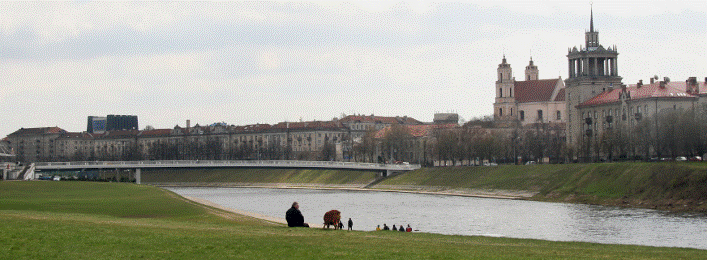
The Neris River flows slowly and beautifully through Vilnius. Unfortunately, the river banks are rarely used for human activities. Here you see no dynamic waterfront projects, outdoor restaurants or full set riverboats. This is not Prague, Paris or Rome. But there is so much more that could be done to make this beautiful river to a far more active element of city life here, and I hope one day we get a city planner who sees some of the many opportunities Neris provides the city that through 700 years has been growing large along its proud historic riverbanks.
Stalinist Architecture, also referred to as the Stalinist Gothic, or Socialist Classicism, is a term given to architecture of the Soviet Union between 1933 and 1955, when Nikita Khrushchev condemned ‘excesses’ of the past decades and disbanded the Soviet Academy of Architecture.
But while buildings from the Stalin period remain as very solid and thoughtful stylish monumental buildings, in Vilnius and other cities that belonged or were forced to obey Soviet rule, the buildings erected during Khrushchev’s time in the Kremlin, and later, have been left standing as uninteresting and weak symbols of a recession which in reality defined the Soviet Union from the moment Stalin died in 1953.
A few Stalinist buildings were erected in Vilnius after the war. You see one of them to the right on the picture above. Church symbolism is obvious even here, although this is just an ordinary apartment complex. Still, this building is the beginning of our ‘evil axes’ part of the route, leading us from the Stalin building to what 20 years ago was called the Lenin Square and the KGB Palace where unbelievable gruesome treatments took place - of thousands of Lithuanians who dared to resist their unwelcome rulers after WWII.
3. LUKIŠKĖS SQUARE – THE KGB PALACE
|
|
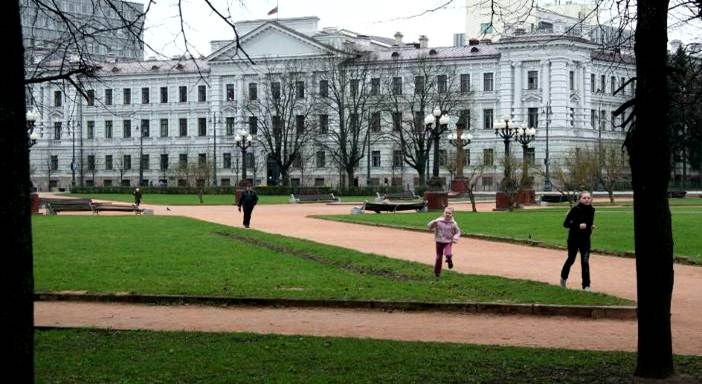
Lukiškės Square has been Lithuania’s symbol of terror since the 1800s, when public executions of insurgents took place here. This is also the place where hundreds of opponents of the Soviet Union were interrogated, tortured and executed during the years 1944–1956 in the infamous KGB Palace, facing the square (ref above picture).
The square was reconstructed according to the design of V. Mikučianis in 1949–1952. During the Soviet era, the square was renamed Lenin Square and a statue of Lenin was built in the middle of it in 1953. The statue, which used to be the largest of its kind in the Lithuanian SSR, was removed in 1991, after the restoration of independence of Lithuania. Gathered crowds celebrated the fall of the statue; its upper part was lifted using a crane and broke off at the lower legs attached to the pedestal. The reassembled Lenin statue is now on display in Grūtas Park near Druskininkai in southern Lithuania.
Today, the evil is gone. Children are having fun at the site that during two centuries represented death and destruction for Lithuania. The statue of Lenin, that stood here during the period 1953 – 1991, is also gone. Forever.
It is estimated that 22 000 Lithuanians and 70 000 KGB and Red Army soldiers were killed during the time of the post war guerrilla wars in this country between 1944 and 1956. When will we see a monument here, at the Lukiškės Square, to honour the many brave Lithuanians who were killed by the evil forces for the sake of their beloved homeland?
3. THE KGB MUSEUM
|
|
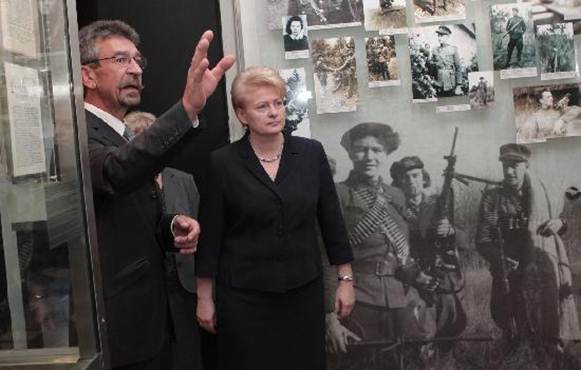
Set up in the former KGB Palace, the museum is the only one of its kind in the European Union. For Lithuanians, this building symbolises the 50-year-long Soviet occupation. During World War II it was the site of Gestapo headquarters and of the KGB later. Between 1940 and 1991 people who resisted the soviet occupants were arrested, killed or deported to Siberia. You will see a lot of the names of anti-Soviet resistance fighters carved into the stone walls of the building.
When you enter the building you feel more like whispering instead of talking as the gruesome reality of the past exhibited over a few floors is often too hard to handle. The building of the museum is intact as it was after the KGB left the premises in 1991. Amongst many other exhibited items you will see the authentically furnished rooms and KGB equipment that was used for the secret listening of private conversations and many more.
On the ground floor of the museum the authentic photographs of the partisans, original documents, personal belongings are displayed. The photographs depict the life of partisans, who were struggling to re-establish Lithuania’s independence. It is truly sad to look at the immortalised faces, as many of them were so young, barely 18 years old. The courage, sacrifice and love for their country of those young people is truly moving. You start understanding that Lithuanians, even though a small nation, were gallant and dignified people.
The exposition on the first floor displays dramatic black and white photographs depicting and awful working and living conditions of the people sent to the hard labour camps. The scenes look so grim with wiry fences and armed guards. Among the prisoners there was a great number of priests and women, arrested for publishing underground anti-Soviet papers. I couldn’t believe it when I saw that many of them had to wear signs on them that read: ‘Extremely dangerous criminal.’ Clothes and footwear of the prisoners and some personal items like hand made books are on display.
The basement prison is the most sobering part of the building. Here a lot of prisoners were brutally killed in the execution chamber for participation in the anti-Soviet resistance.
When you enter the prison, there are two about 1.6-square-metre dark cells called boxes, where prisoners were kept while the duty officer processed their documents. It’s sickening how small the cells were where you can hardly sit or stand. Among other cells you can see solitary confinement rooms which were used to break down the prisoners and make them confess. Prisoners had to stand in the ice-cold water or to balance on a small platform. Every time they got tired they fell down into the water.
The horrific padded cell sends chills down your spine. The walls are padded and soundproofed, made to absorb the cries and shouts for help. The straitjacket on the back wall was used for those who resisted or were demented from torture.
The execution chamber is the grimmest place in the museum. On display there is material, which shows the procedures of sentencing people to death and the inhuman treatment of dead bodies. Under a glass floor some personal belongings of the victims are displayed: shoes, buttons, glasses and engagement rings.
4. GEDIMINAS AVENUE
|
|
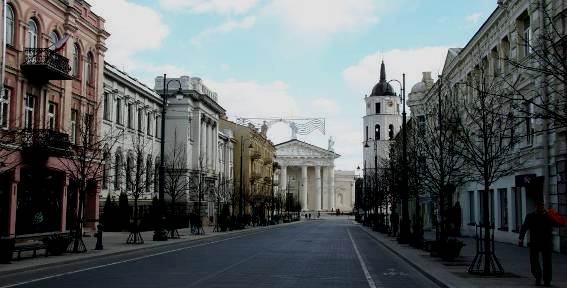
The Gediminas Avenue (Lithuanian: Gedimino prospektas) is the main street of Vilnius, where most of the governmental institutions of Lithuania are concentrated, including the government, parliament, Constitutional Court and ministries. It is also the place of cultural institutions such as Lithuanian National Drama Theatre, Bank of Lithuania, Lithuanian Academy of Music and Theatre and Martynas Mažvydas National Library.
Nowadays it is also a popular shopping and dining street. It is partially a pedestrian street in the evenings when the traffic is prohibited.
Named after the Grand Duke of Lithuania Gediminas, the street terminates at the Žvėrynas Bridge over the Neris River near the Seimas (Parliament) Palace on one end and at the Cathedral Square and Vilnius Castle Complex on the other, passing the Lukiškės Square. It connects the Old Town with Žvėrynas.
The street, started built in 1836, was initially known as St. George Avenue, Mickiewicz Street (Polish: ulica Mickiewicza), when Vilnius was under Polish rule (1922–1939) and Adolf Hitler Street during the Nazi Germany occupation. At the beginning of the Soviet occupation in 1940 it was called Stalin Avenue, later renamed to Lenin Avenue. The avenue carries its present name from 1939 to 1940 and since 1989.
A portion of the avenue from the Vilnius Cathedral to Municipality Square was thoroughly reconstructed before the celebration of 750th anniversary of King Mindaugas' coronation in 2003. The reconstructions included building an underground parking facility – the first such in Lithuania - under the Municipality Square and renovation of all kinds of pipelines and communication cables under the street. Over 100 new trees were planted. During the excavations a few archaeological findings were found and are now on display in the parking garage. The reconstruction was completed in 2009.
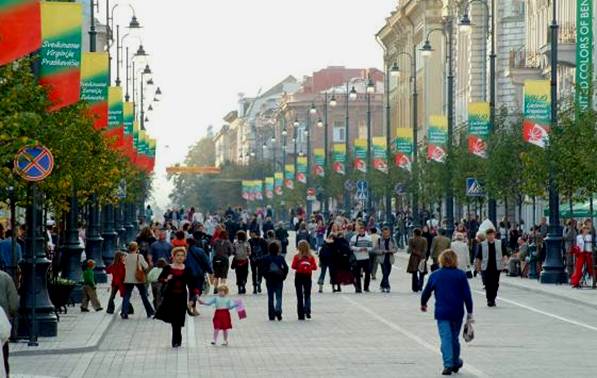
5. VILNIUS CATHEDRAL – THE CATHEDRAL SQUARE
|
|
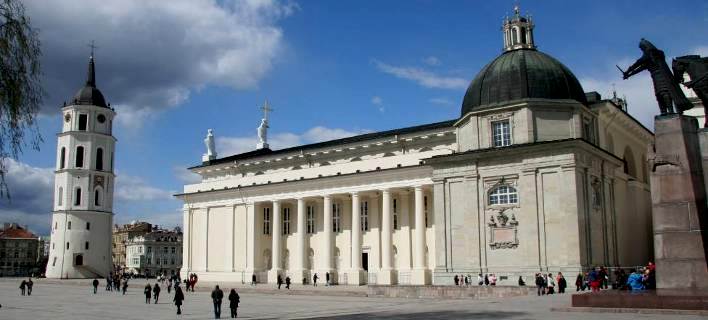
The Cathedral of Vilnius is the main Cathedral of Lithuania (Roman Catholic). It is situated in Vilnius Old Town, just off of Cathedral Square. It is the heart of Lithuania's Catholic spiritual life.
The coronations of the Grand Dukes of Lithuania took place within its confines. Inside its crypts and catacombs, many famous people, among them Vytautas the Great (1430), his wife Anna (1418), his brother Sigismund (1440), cousin Švitrigaila (1452), Saint Casimir(1484), Alexander Jagiellon (1506), two wives of Sigismund II Augustus: Elisabeth of Habsburg (1545) and Barbara Radziwiłł (1551), as well as others, are interred.
Inside, there are more than forty works of art dating from the 16th through 19th centuries; including frescoes and paintings of various sizes. During the restoration of the Cathedral, the altars of a presumed pagan temple and the original floor, laid during the reign of King Mindaugas, were uncovered. In addition, the remains of the cathedral built in 1387 were also located. A fresco dating from the end of the 14th century, the oldest known fresco in Lithuania was found on the wall of one of the cathedral's underground chapels.
It is believed that in pre-Christian times, the Baltic pagan god Perkūnas (god of thunder) was worshiped at this location. The Lithuanian King Mindaugas built the original cathedral in 1251 after his conversion to Christianity. Remains of the archaic quadratic church with three naves and massive buttresses have been discovered beneath the later layers in the late 20th century. After Mindaugas's death in 1263, it again became a place of pagan worship.
In 1387, the year in which Lithuania was officially converted to Christianity, a second Gothic style Cathedral with five chapels was built. The Cathedral burnt down in 1419. During the preparation for his coronation as King of Lithuania, Vytautas built a significantly larger Gothic Cathedral in its place; the Cathedral had three naves and four circular towers at its corners. Flemish traveller Guillebert de Lannoy noticed its similarity to the Frauenburg Cathedral.
The walls and pillars of this cathedral have survived to this day. In 1522, the Cathedral was renovated, and the bell tower was built on top of the Lower Castle defensive tower. In 1529, Sigismund Augustus, was crowned Grand Duke of Lithuania in the Cathedral. After the fire of 1530, it was rebuilt again and between 1534 - 1557 more chapels and the crypts were added. The Cathedral acquired architectural features associated with the Renaissance.
After the fire of 1610, it was rebuilt again, and the two front towers were added. The Cathedral was damaged during the war of 1655. It was renovated and decorated several more times.
Between 1623 - 1636, at the initiative of Sigismund III Vasa, the Baroque style Saint Casimir chapel by royal architect Constantino Tencalla was built of Swedish sandstone. Its interior was reconstructed in 1691-1692 and decorated with frescoes by Michelangelo Palloni, the altar and stuccowork by Pietro Perti.
In 1769, the southern tower built during the reconstruction of 1666 collapsed, destroying the vaults of the neighbouring chapel, killing six people. After the damage, Bishop of Vilnius Ignacy Jakub Massalski ordered the reconstruction of the Cathedral. The works started in 1779 and were completed in 1783, and the interior was completed in 1801. The Cathedral was reconstructed to its present appearance according to the design of Laurynas Gucevičius in the neoclassical style; the church acquired its strict quadrangular shape and the plan inherent to local public buildings. The main facade was adorned with sculptures of the Four Evangelists by Italian sculptor Tommaso Righi. Some scholars point to the architectural resemblance of the cathedral to the works of Andrea Palladio or see the influence of Gucevičius's tutor Claude Nicolas Ledoux. The influence of the Palladian architecture is evident in side facades of the building. The lack of 'purity' of the Classical architecture due to incorporation of Baroque style sculptures and other elements was later criticised by academical architects, notably Karol Podczaszyński.
6. THE LOWER CASTLE – GEDIMINAS TOWER
|
|
|
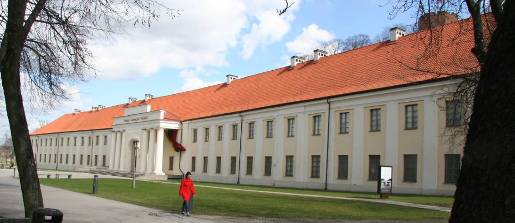
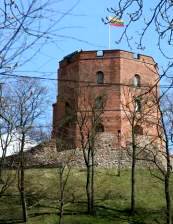
The Vilnius Castle Complex is a group of cultural and historic structures on the left bank of the Neris River, near its confluence with the Vilnia River in Vilnius. The buildings, which evolved between the 10th and 18th centuries, were one of Lithuania's major defensive structures.
The complex consisted of three castles: the Upper, the Lower, and the Crooked. The Crooked Castle was burned down by the Teutonic Knights in 1390 and was never rebuilt. The Vilnius Castles were attacked several times by the Teutonic Order after 1390, but they did not succeed in taking the entire complex. Its complete capture occurred for the first time during the 1655 Battle of Vilnius. Soon afterwards, the severely damaged castles lost their importance, and many buildings were abandoned. During the Tsarist annexation, several historic buildings were demolished; many more were damaged during the fortress construction in the 19th century.
Today, the remaining Gediminas Tower (above right) is a major symbol of the city of Vilnius and of the nation itself. Annually, on January 1, the Lithuanian tricolour is hosted on Gediminas Tower to commemorate Flag Day. The complex is part of the National Museum of Lithuania (above left), one of the largest museums in the country.
8. THE ROYAL PALACE
|
|
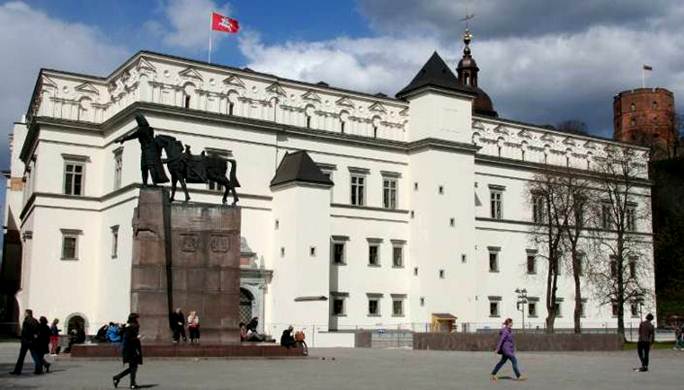
The Royal Palace of Lithuania (Lithuanian: Valdovų rūmai) was a palace built in the 15th century for the rulers of the Grand Duchy of Lithuania. The Royal Palace in the Lower Castle evolved over the years and prospered during the 16th and mid-17th centuries. For four centuries the Palace was the political, administrative and cultural centre of the Grand Duchy of Lithuania. It was demolished in 1801. A new palace has been under construction since 2002 on the site of the original building. It is expected to be completed in 2010.
9. THE PRESIDENTIAL PALACE
The Presidential Palace (Lithuanian: Prezidentūra), located in Vilnius Old Town, is the official seat of the President of Lithuania.
The Palace traces its history back to the 14th century, when Jogaila, the Grand Duke of Lithuania, issued an edict donating land in the city to the Vilnius Diocese, for this reason the palace is sometimes referred to as the Bishops' Palace. Construction of the Palace took place in the late 14th century under the auspices of the first Bishop of Vilnius, Andrzej Wasilko, and over succeeding generations, the building was gradually enlarged and renovated. During the Renaissance the Palace was once again renovated, and parks and gardens surrounding the building were expanded.
As the 18th century unfolded, a number of dramatic events in the Palace's history took place: the last Bishop of Vilnius lived in the Palace, Lithuania was annexed by the Russian Empire, and the building itself was badly damaged by two major fires in 1737 and 1748. The Palace was reconstructed in 1750 under the supervision of the architect Laurynas Gucevičius. After its reconstruction the Palace was used as a residence for Emperors, Kings and noblemen. During 1796, Tsar Paul I lived at the Palace. During the course of the 19th century the Palace served as a residence for several Imperial Russian governors, such as Mikhail Muravyov, nicknamed "The Hangman". It was also visited by the future King of France, Louis XVIII in 1804.
In 1812, both the Russian Tsar Alexander I and the French Emperor Napoleon used the Palace as their residence. During Napoleon’s invasion of Russia, he organized military operations and Lithuanian army units from this Palace, including five regiments of infantry, four cavalry regiments, and the National Guard of Vilnius. He received Lithuanian noblemen, newly appointed officials of the administration, and other dignitaries in this Palace as well. After Napoleon's defeat in 1812, the Palace was used for ceremonial proposes; it was here that then-general Mikhail Kutuzov was awarded Russia's highest military award - the Order of St. George. During 1824-1834, the Palace was reconstructed by the prominent St. Petersburg architect Vasily Stasov in the Empire style, under supervision of Karol Podczaszyński. Stasov's reconstruction of the Palace has remained to this day.
After Lithuania regained its independence in 1918, the Palace housed the Ministry of Foreign Affairs and the ELTA news agency until it ended up in Poland in 1920. It was restored in the 1930s by Stefan Narębski. After the Second World War, the Palace served as the Military Officers' Centre; later it housed various Lithuanian artists. The Palace was gradually adapted for use as a presidential residence, and since 1997 it has served as the official and since 1997 it has served as the official office of the President of Lithuania. A flag displaying the coat of arms of the President (top image) is hoisted when the President is present in the Palace or in the city.
|
|
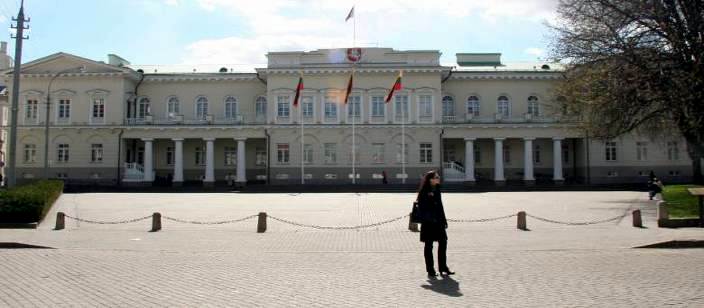
10. VILNIUS UNIVERSITY
|
Vilnius University (Lithuanian: Vilniaus Universitetas, formerly known as Vilnius State University, earlier - Stefan Batory University and before that Almae Academia et Universitas Vilnensis Societatis Jesu), is one of the oldest universities in both the Baltic states and Europe. It is also the oldest and largest university in Lithuania. In 1568, the Lithuanian nobility asked the Jesuits to create an institution of higher learning either in Vilnius or Kaunas. The following year Walerian Protasewicz, the bishop of Vilnius, purchased several buildings in the city centre and established the Vilnian Academy (Almae Academia et Universitas Vilnensis Societatis Jesu). Initially, the Academy had three divisions: humanities, philosophy, and theology. The curriculum at the College and later at the Academy was taught in Latin. At the beginning of 17th century there are records about special groups that taught Lithuanian speaking students Latin, most probably using Konstantinas Sirvydas' compiled dictionary. The first students were enrolled into the Academy in 1570. A library at the college was established in the same year, and Sigismund II Augustus donated 2500 books to the new college. In its first year of existence the college enrolled 160 students. |
|
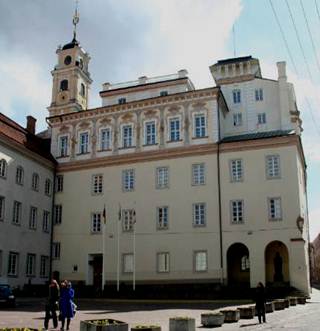
On April 1, 1579, Stefan Batory King of Poland and Grand Duke of Lithuania, upgraded the academy and granted it equal status with the Jagiellonian University of Kraków, creating the Almae Academia et Universitas Vilnensis Societatis Jesu. His edict was approved by Pope Gregory XIII's bull of October 30, 1579. The first rector of the Academy was Piotr Skarga. He invited many scientists from various parts of Europe and expanded the library, with the sponsorship of many notable persons: Sigismund II Augustus, Bishop Walerian Protasewicz, and the Marshal of the Crown, Kazimierz Lew Sapieha. Lithuanians at the time comprised about one third of the students (in 1568 there were circa 700 students); others were Germans, Poles, Swedes, and even Hungarians.
In 1575, Duke Mikołaj Krzysztof Radziwiłł and Elżbieta Ogińska sponsored a printing house for the academy, one of the first in the region. The printing house issued books in Latin and Polish and the first surviving book in Lithuanian printed in the Grand Duchy of Lithuania was in 1595. It was entitled Kathechismas, arba Mokslas kiekvienam krikščioniui privalus, and was authored by Mikalojus Daukša.
The Academy's growth continued until the 17th century. The following era, known as The Deluge, led to a dramatic drop in both the number of students that matriculated, and in the quality of its programs. In the middle of the 18th century, educational authorities tried to restore the Academy. This led to the foundation of the first observatory in the Polish-Lithuanian Commonwealth, (the fourth such professional facility in Europe), in 1753, by Tomasz Żebrowski. The Commission of National Education (Komisja Edukacji Narodowej), the world's first ministry of education, took control of the Academy in 1773, and transformed it into a modern University. Thanks to the Rector of the Academy, Marcin Poczobutt-Odlanicki, the Academy was granted the status of Principal School (Szkoła Główna) in 1783. The Commission, the secular authority governing the academy after the dissolution of the Jesuitorder, drew up a new statute. The school was named Academia et Universitas Vilnensis.
11. STS JOHNS’ CHURCH
|
This church was built as a Gothic chapel in 1387. In 1570, Lithuania’s Grand Duke Sigismund Augustus gave the chapel as a gift to the Jesuit Brothers who by then were developing the nearby college that later became Vilnius University. The Brothers immediately built a bell tower that still today is the highest in Vilnius. The tower stood ready in 1571. It was in a direct decree from the Pope that the Gothic chapel was expanded to a glorious house of God and given the name Sts. Johns' Church. It has happened only twice in Christianity’s history that a church has been named after both John the Baptist and the Apostle John. First time was when the Basilica of St. John Lateran, the first among the four major basilicas of Rome was built by Constantine the Great in the 4th century. This church is also the cathedral of the bishop of Rome, the Pope, and is thus known as Omnium urbis et orbis Ecclesiarum Mater et Caput: "Cathedral of Rome and of the World." Despite a number of restorations the church remains Gothic. Since 1773 it has been the official church of Vilnius University, located within the university territory and also sharing ‘The Great Courtyard’ with the university (picture). |
|
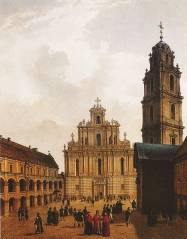
12. CHURCH OF THE HOLY SPIRIT
|
The Holy Spirit Church is a late Baroque church. It is also called the Dominican Church as it long belonged to a Dominican monastery. The church has one of the oldest organs in Lithuania. It is today a Polish Catholic church, and all masses are held in Polish language. The first church in this place was built in 1323. Later, Grand Duke Vytautas ordered the construction of a Gothic styled Holy Spirit Church here. In the 16th century the church was rebuilt and the Dominican Monastery settled in the nearby buildings. In the 17th century the church was twice on fire and rebuilt again. In 1844, the monastery was closed and its buildings occupied by different institutions and inhabitants, including a prison. Pope John Paul II visited the church in 1993 during his visit to Lithuania. The Holy Spirit Church has an amazing underground maze of catacombs, as it for decades was a burial place where plenty of plague and war victims were buried. Their coffins and remains are still here, in the church’s cellar. In 1943 students of Vilnius University tried to clean and explore the catacombs. They also guided excursions to catacombs. There are many stories about the ghosts living in the catacombs; the most outstanding is the one about the ghost of a knight who was buried alive here.
|
|
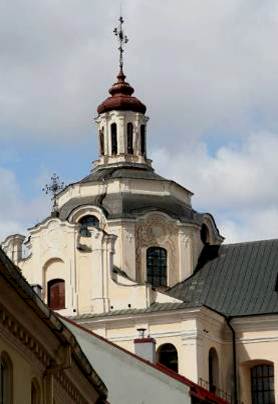
13. THE JEWISH QUARTER
|
|
|
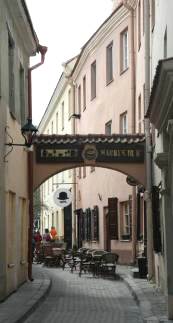
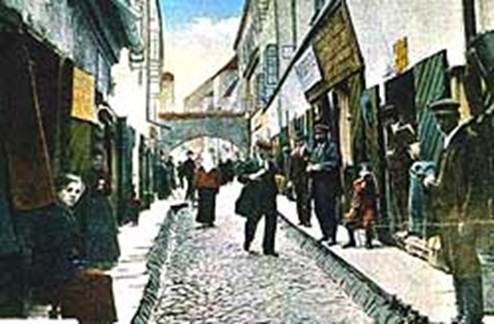
The pre-World War II numbers are staggering: Vilnius' Jewish population was nearly 100,000, about forty-five percent of the city's total. The country was strewn with some two hundred Jewish communities sustaining the lives and livelihoods of about 240,000 people. Vilnius had 105 synagogues and prayer houses. There were six daily Jewish newspapers. Yiddish was the language of choice. Indeed, the city was aptly named The Jerusalem of Lithuania.
The post-war numbers are horrifying: Only 24,000 Jews survived. Or, shall it be said, that 90 percent of the Jews had been murdered. Vilnius' Jewish population today is 5,000, a mere five percent of what it once was. The country is home to but 6,500 Jews, some 200 of whom are Holocaust survivors. Most of the two hundred pre-war communities were decimated, wiped off the map entirely. There is only one Jewish newspaper. Few people speak Yiddish anymore. Today, there remains only one synagogue in Vilnius (we will later this year make a special VilNews issue about the Litvaks – the Lithuanian Jews – and their exceptional role in Lithuania’s history since the 1300s).
14. STIKLIU GATVE (GLASSBLOWERS’ STREET)
|
|
The narrow Stiklių gatvė (Glassblowers’ Street) in the Old Town of Vilnius began its history in the 15th century, when merchants and craftsmen, invited by the Lithuanian Grand Dukes, started their businesses here. Many of the settlers were Jews who had immigrated from Germany, and Stiklių gatvė became in many ways the most central Jewish street in Vilnius. The construction of most of the current buildings at the street was started at the end of the 15th century by different merchants, both for living and trading purposes. Over the centuries, many of the original Gothic cellars changed owners and got new constructions above street level. There were shops, taverns and beer-houses. In 1972, the still existing hunters' restaurant, Lokys, was opened here. This restaurant, in Medieval style, has an atmosphere of a real medieval castle – medieval castle – and when the abundant food and drinks take the edge off the guests' thirst and hunger, you really start understanding what Vilnius is all about. In the 1990s, the famous Stikliai Hotel and Restaurants started their activities here. Today, this is the most luxurious hotel in Lithuania, and the restaurant as well as the cellar beer pub is truly worth a visit! Stikliu gatve is one of the most interesting and unusual places in the Lithuanian capital. The once vibrant Jewish flavour is unfortunately and sadly gone due the horrors of Holocaust in this country, but I am still asking you all to join me for a stroll down this amazing, narrow, winding street.
|
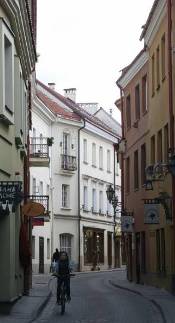
15. ROTUŠĖS AIKŠTĖ – THE OLD TOWN HALL SQUARE
|
|
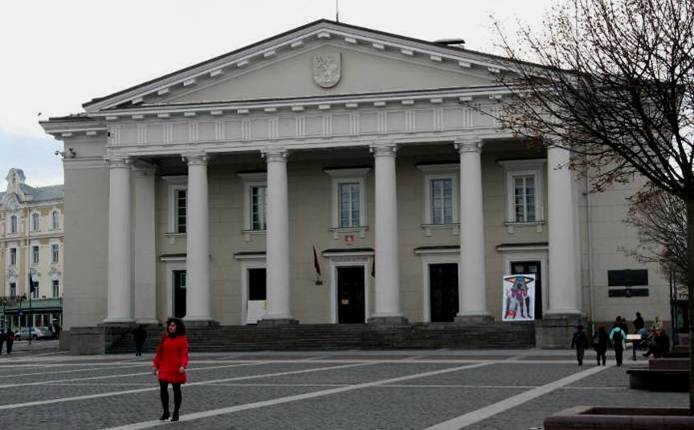
The Old Town Hall in Vilnius was mentioned for the first time in 1432. Initially it was a Gothic style building, and has since been reconstructed many times. The current Vilnius Town Hall was rebuilt in neoclassical style according to the design by Laurynas Gucevičius in 1799. It has remained unchanged since then. Its Gothic cellars have been preserved and may be visited. Nowadays it is used for representational purposes as well as during the visits of foreign state officials and rulers, including George W. Bush and Queen Elisabeth II.
The Town Hall Square (Lithuanian: Rotušės aikštė) is a traditional centre of trade and events in Vilnius. Major annual fairs, such as the Kaziukas Fair, are held in this square, the main Christmas tree is decorated here, various concerts and other attractions are organised as well as celebrations of important dates of the state.
16. ST. CASIMIR’S CHURCH
|
|
The beautiful St. Casimir's Church is one of the most interesting churches that you can visit in the capital city of Lithuania. Touted as one of the main attractions in Vilnius, the church got its name from the patron saint of the country, Prince Casimir Jagiellon. Having been founded by the Jesuits in the year 1604, the church is known to be the oldest Baroque-style religious structure in the city. It is as frequently visited as the other splendid churches in Vilnius. St. Casimir's Church, however venerated as it now is, was not spared by abuse and persecution in the past. The church was made into a grain store in the year 1812 by the troops of Napoleon. Some twenty years after this, it was converted by the Russians into an Orthodox Church and into a cathedral in 1864. The Germans made it into a Protestant temple between the years 1915 and 1917. However, it was the Soviets who made more shocking use of the church. They converted it into an Atheist Museum. St. Casimir's church is one of the finest Baroque churches in Vilnius, although it also displays Gothic and Renaissance elements. It was built according to the style of Il Gesu church in Rome, although it differs in having two main frontal towers. The church is constructed in the form of a Latin cross. Where the central nave and transept meet, a majestic cupola of forty meters rises. Seventeen meters in diameter, it is topped on the outside by the crown of the grand duke of Lithuania. The central nave and transept are twenty-five meters wide. On the inside naves are placed six unconnected chapels.
|
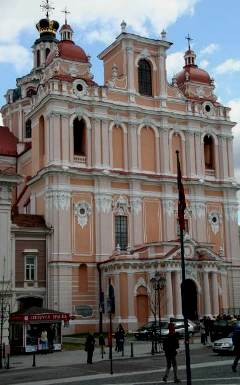
17. THE GATES OF DAWN
|
|
|
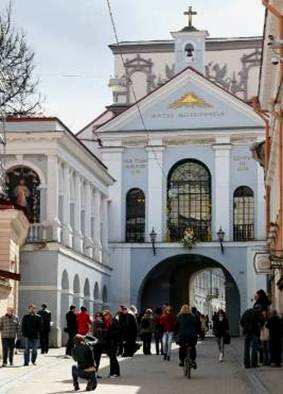
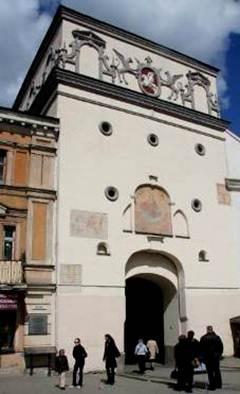
The Aušros vartai (Gates of Dawn) are one of the main symbols of Vilnius. Pilgrims from the entire world come here to see the dark face of the Vilnius Madonna, hoping for consolation from the Mother of Compassion. The painting is the only one of miraculous images in Lithuania that is so widely renowned for its healing power. The Holy Virgin is considered the patron of Lithuania and a symbol of harmony. People of four nationalities and two religions worship her – Lithuanians, Poles, Byelorussians, Russians, Catholics and Orthodox. Residents of Vilnius began to worship the painting in 17th century during the war with the Russians. The saying is that an image of God’s Mother from the Gates of Dawn would appear in the sky at night.
The chapel is located above the former gate. St Teresa’s Church and the Holy Spirit Orthodox Monastery are nearby.
18. UŽUPIS
|
Užupis is one of the oldest districts of Vilnius, mentioned in historical sources as far back as the 16th century. Once it was called the “salt road” to Polock. In olden times it was the suburb where the poor and mainly craftsmen, lived. There were many mills and at one time it was even known as a brothel district. The district contains the Bernadine Cemetery, one of the oldest in Vilnius. Most of the district's Jewish population vanished during the Holocaust, and later even the old Jewish Cemetery would be destroyed by the Soviets. The houses left empty by the Holocaust were occupied by marginal elements of society, the homeless, and prostitutes. Until Lithuania's declaration of independence in 1990, it was one of the most neglected areas in the city, containing many run-down houses, many without utilities. Today the district houses art galleries, artists' workshops, and popular cafés. On April Fools Day in 1997, the district declared itself an independent republic (The Republic of Užupis), replete with an army of 12 personnel. Užupis is a unique republic. A colourful and alive island, separated from the city by the Vilnia River that once gave name to the city itself. Užupis is a recognised district for artists and has won the name of the most mysterious and romantic district of Vilnius. Užupis is the artists’ republic, which has its own constitution, national anthem, calendar and map. The district is often compared to Montmartre in Paris due to its bohemian atmosphere. |
|
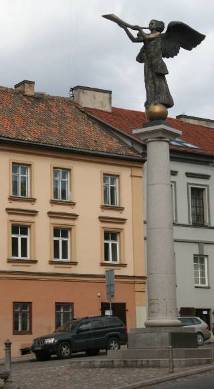
19. ST. ANNE’S CHURCH – THE BERNARDINE CHURCH
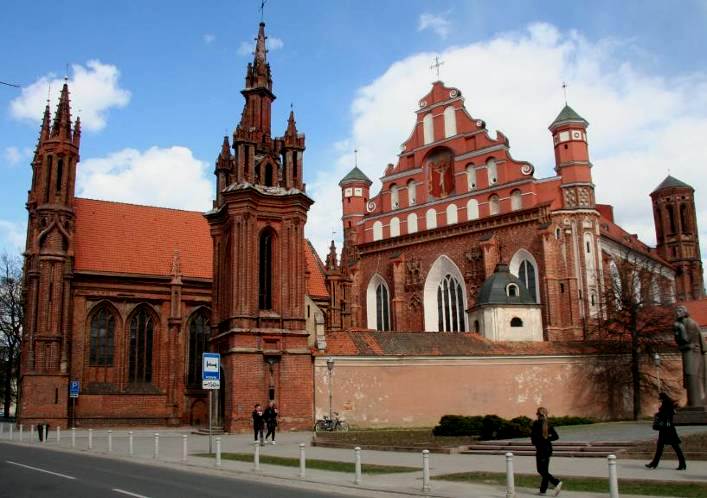
The Church of St. Francis and St. Bernardine (right) is one of the largest gothic sacral buildings in Vilnius.
It composes a unique architectural ensemble with St. Anne's Church (left).
|
One of the most impressive architectural masterpieces of the Vilnius Old Town is Saint Anne’s Church, built in the late 15th – early 16th centuries. This is the most outstanding and enchanting Late Gothic building in Lithuania. The Saints Francis and Bernardine Church, next door, commonly referred to as the Bernardine Church, was built at the end of the 15th century. It is one of the largest Gothic sacred buildings in Lithuania.
|
|
In 1469, the Bernardine monks that had recently settled in Vilnius built a wooden church that was later replaced by the brick one. At the beginning of the 16th century, the church was totally reconstructed. Originally, the church was a part of the city's defensive wall, and this, in fact, explains its modest decor. Since then the loopholes under the roof in the northern facade have remained. After numerous renovations in the 16-17th centuries the church acquired renaissance and baroque style elements. The baroque decor of the altars, pulpit, organ choir and tombstones softens the strictness of the gothic lines. During the Soviet occupation the church was handed over to the Art Institute. In 1994, it was returned to the brethren of St. Francis.
Now the Bernardine Church is being restored and soon it will acquire its former beauty. But even now the splendour interior of the church enchants the visitors. The dominants of the interior are fourteen rococo style altars decorated with beautiful wooden sculptures. The church features the oldest known crucifix in Lithuania, which dates back to the 15th century. The unique mural painting decorating the walls of the naves dates back to the 16th century and combines renaissance and gothic elements. The scenes on biblical themes are decorated with inscriptions in gothic character and floral ornaments. The church is famous for the plenty of the ornate tombstones. Among them one should mention marble tombstones of Stanislaus Radziwill in the north nave (1618-1623) and Piotr Wiesiolowski in the south nave (1634).
The Bernardine monastery that is situated near the church is the oldest brick building of the entire complex. It was constructed at the end of the 15th century. The monastery soon became one of the cultural centres of the medieval Lithuania. It was famous for its rich library, containing unique manuscripts and books. In 1864, the monastery was closed and the building was reequipped to soldier's barracks. In 1919, it was handed over to the art faculty of the university, later - to the Art Institute. Now the cloister houses the Vilnius Academy of Art.
St. Anne’s Church is constructed from 33 different kinds of clay bricks presented an astounding example of the inventiveness and boldness of the master masons of the time. Legend has it that Napoleon Bonaparte was enchanted by the church’s beauty, and he wished that he could magically transport it to Paris in the palm of his hand.
20. PILIES GATVĖ (CASTLE STREET)
|
|
Pilies gatvė (literally, "Castle Street") is the main street in the Old Town of Vilnius, running from Cathedral Square to the Town Hall Square. Out of several locations across Vilnius used by market traders to sell the wares of folk artists, Pilies Street is the most popular. It has a natural advantage over the Town Hall Square as the street is generally busy and less likely to be interrupted by the political or cultural events commonly held at the Town Hall. Many people visit the street to buy gifts at Christmas or before going abroad to visit friends. The market is also popular with souvenir hunters. Souvenir shops offer amberware and amber jewellery as well as linen clothes. The street is also known for the Kaziukas Fair, when folk artists from all four corners of Lithuania gather here to display and sell their latest merchandise. Speaking of festivals, if something is being celebrated in Vilnius, Pilies Street is usually an excellent vantage point – most processions will make their way through here at some point. This is true whatever the festival – be it Christmas, Easter, the day of Restoration of Independence, or just a spontaneous celebration following a major win for the Lithuanian basketball team. The headquarters of Vilnius University are located between Pilies Street and University Street, (Lithuanian: Universiteto gatvė). The House of the Signatories where the Declaration of Independence was signed on 16 February 1918 is also located on this street.
|
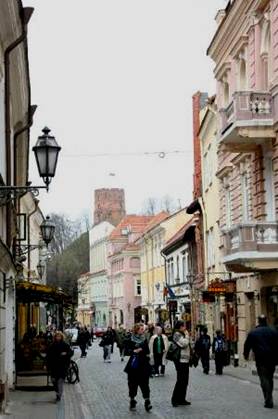
21. STS. PETER AND PAUL’S CHURCH
|
|
St. Peter and St. Paul's Church (Lithuanian: Šv. apaštalų Petro ir Povilo bažnyčia) is a Roman Catholic church located in the Antakalnis neighbourhood of the city. Its interior has masterful compositions of stucco mouldings by Giovanni Pietro Perti and ornamentation by Giovanni Maria Galli of Milan, and is considered a Lithuanian Baroque masterpiece. The church is a basilica built on a traditional cross plan with a lantern dome allowing extra light into its white interior. The freestanding columns of the main facade were used for the first time in Lithuanian ecclesiastical architecture. The inscription surrounding the base of the dome (Tu es Petrus et supra hanc petram edificabo ecclesiam meam et portae inferi non praevale buntadversus eam) is the same as that of St. Peter's Basilica in the Vatican. The church is decorated with over 2000 religious depictions. The frescos are attributed to Johann Gotthard Berchhoff. The female heads opposite the St. Augustine Chapel represent two sister nations: Poland and Lithuania. The church was commissioned in 1668 by Michael Casimir Pac, Grand hetman of the Lithuanian armies. |
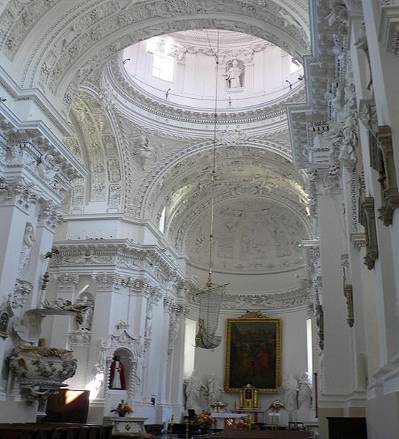
Well, dear VilNews readers,
I hope you have been able to follow me on this rather long stroll through
the Vilnius architecture. If not, you have at least a text to lean back on
the day when you yourself will be visited by people who want to know
more about the irresistible architecture here in Vilnius.
Warm Regards,
Aage Myhre
Editor-in-Chief
M.Sc. of Architecture
- Bookmark :
- Digg
- del.icio.us
- Stumbleupon
- Redit it
- Posted by - (0) Comment
“DOUBLE GENOCIDE”
Three major flaws mar
Mr. Cohen’s attempt
Boris Bakunas
By: Dr. Boris Vytautas Bakunas, Ph.D.
"Mr. Cohen may appear to make a sincere effort to present a balanced view in his article; however, three major flaws mar his attempt. First, the article is based on the logical fallacy of false dichotomy, also known as the either-or fallacy. Second, the scales of balance in Mr. Cohen’s presentation waver as a result of his failure to present all the relevant facts related to the establishment of The Museum of Genocide Victims in Vilnius. Finally, Mr. Cohen obfuscates two crucial terms: Holocaust and genocide.
- Bookmark :
- Digg
- del.icio.us
- Stumbleupon
- Redit it
Vilnius catches and changes your soul!
- Posted by - (4) Comment
- Daniil Granin, Russian writer |
|
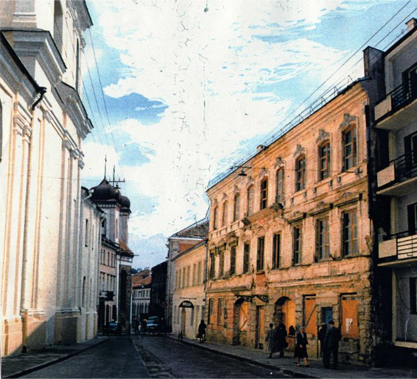 |
|
|
1993 |
1995 |
|
ABOVE: My first project in Vilnius Old Town was to transform an old building that was one of the most dilapidated ones, almost in ruins, into a modern office building. Lithuanian building products were then still of Soviet quality, so I had to import windows, doors and most other products from Norway. Still I believe this building came to play an important role as an example for later renovation projects by local architects, developers and construction companies. But the building also taught me something about Vilnius and Lithuania, i.e. through the fragments of ancient paint we found on the building façades; layer upon layer of colour and treatment materials applied over hundreds of years. For me this was concrete evidences that gave me a deeper impression and understanding of the multifaceted history this country has been through. It was as if the paint layers spoke to me from Lithuania's past centuries of successes and failures. |
|
|
Dear VilNews readers, I am very pleased with the good response and comments we have received from many of you, and I hope you all will continue to comment and engage in the Lithuanian related topics we are bringing up! Many of you reading this today are new readers of VilNews. You are all warmly welcome to our group of readers, and I am happy to see that we are getting new subscribers every day now! I started to work as a journalist 35 years ago, when I began writing for one of Norway's leading newspapers, and I have since covered quite a few different fields such as politics, foreign affairs and architecture. But an architect I really am, educated at the Norwegian Technical University and with additional education in 'architectural psychology' in Strasbourg, France. One of my main interests has been the preservation of older buildings and urban environments, and I am particularly focusing on a holistic approach to architecture, this that the space between the buildings, the streets and squares, is emphasized and thoroughly planned as much as the buildings themselves. And I am always concerned about the human dimension; that there should be created and maintained environments in which humans and human activities are given priority over cars and asphalt. It was therefore no wonder that I fell in love with Vilnius Old Town immediately when I first came here in 1990, and I give Russian writer Daniil Granin absolutely right when he claims that Vilnius 'catches and changes your soul'. This city has soul and a completely unique atmosphere that few other places I've been to in my life can compete with. Vilnius has been given many nicknames over the centuries, such as ' The world's most Italian town outside Italy' and 'The world's most Baroque city north of the Alps'. When Napoleon Bonaparte in June 1812 came here on route to Moscow, he experienced a vibrant urban environment where he saw something he had never seen in mainstream Europe; a city where Jews and people of other nationalities lived side by side in peaceful coexistence. He soon also became aware that this city was in many respects the world centre of Jewish intellectualism, and it was him who from then of began to refer to Vilnius as 'Jerusalem of the North'.
Capitals around our world have their special characteristics that are often the main symbols of the countries they represent. Paris has its Eiffel Tower. London has its bridges. Rome has the Colosseum. Washington has the White House, and Berlin its Brandenburg Gate. Vilnius has its wonderful Old Town that once was among the world's greatest symbol of tolerance and peaceful coexistence for and between many different nationalities and cultures. This is the identity our dear Lithuania again should develp. Vilnius Old Town is ready and renovated to show the path. Aage Myhre |
|
|
|
|
|
When Napoleon Bonaparte in June 1812 came to Vilnius on his way to Moscow, he experienced a vibrant urban environment where he saw something he had never seen in mainstream Europe; a city where Jews and people of other nationalities lived side by side in peaceful coexistence.
|
|
|
|
|
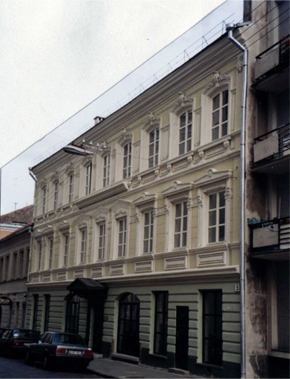


- Bookmark :
- Digg
- del.icio.us
- Stumbleupon
- Redit it

OPINIONS
Have your say. Send to:
editor@VilNews.com
Ph. D., Chicago
A wave of unity sweeps the international Lithuanian community on March 11th every year as Lithuanians celebrated the anniversary of the Lithuanian Parliament's declaration of independence from the Soviet Union in 1990. However, the sense of national unity engendered by the celebration could be short-lived.
Human beings have a strong tendency to overgeneralize and succumb to stereotypical us-them distinctions that can shatter even the strongest bonds. We need only search the internet to find examples of divisive thinking at work:
- "Those who fled Lithuania during World II were cowards -- and now they come back, flaunt their wealth, and tell us 'true Lithuanians' how to live."
- "Lithuanians who work abroad have abandoned their homeland and should be deprived of their Lithuanian citizenship."


In Lithuania Christmas Eve is a family event and the New Year's Eve a great party with friends!
Lithuanian say "Kaip sutiksi naujus metus, taip juos ir praleisi" (the way you'll meet the new year is the way you will spend it). So everyone is trying to spend New Year's Eve with friend and have as much fun as possible.
Lithuanian New Year's traditions are very similar to those in other countries, and actually were similar since many years ago. Also, the traditional Lithuanian New Years Eve party was very similar to other big celebrations throughout the year.
The New Year's Eve table is quite similar to the Christmas Eve table, but without straws under the tablecloth, and now including meat dishes. A tradition that definitely hasn't changes is that everybody is trying not to fell asleep before midnight. It was said that if you oversleep the midnight point you will be lazy all the upcoming year. People were also trying to get up early on the first day of the new year, because waking up late also meant a very lazy and unfortunate year.
During the New Year celebration people were dancing, singing, playing games and doing magic to guess the future. People didn't drink much of alcohol, especially was that the case for women.
Here are some advices from elders:
- During the New Year, be very nice and listen to relatives - what you are during New Year Eve, you will be throughout the year.
- During to the New Year Eve, try not to fall, because if this happens, next year you will be unhappy.
- If in the start of the New Year, the first news are good - then the year will be successful. If not - the year will be problematic.
* If New Year's night is cold and starry - look forward to a good summer!
* If the during New Year Eve trees are covered with frost - then it will be a good year. If it is wet weather on New Year's Eve, one can expect a year where many will die and dangerous epidemics occur.
* If the first day of the new year is snowy - the upcoming year will see many young people die. If the night is snowy - mostly old people will die.
* If the New Year time is cold - then Easter will be warm.
* If during New Year there are a lot of birds in your homestead - then all year around there will be many guests and the year will be fun.
Christmas greetings
from Vilnius
and epic battle for the
future
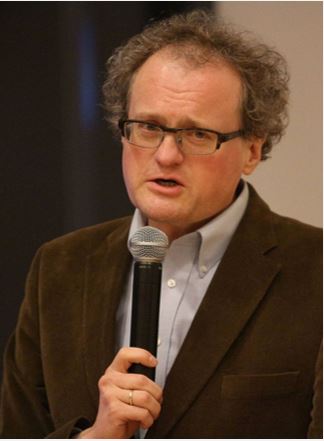
Philosopher, political theorist, historian of
ideas, social analyst, and political
commentator
Ukraine was and continues to be perceived by the EU political class as a sort of grey zone with its immense potential and possibilities for the future, yet deeply embedded and trapped in No Man's Land with all of its troubled past, post-Soviet traumas, ambiguities, insecurities, corruption, social divisions, and despair. Why worry for what has yet to emerge as a new actor of world history in terms of nation-building, European identity, and deeper commitments to transparency and free market economy?
Right? Wrong. No matter how troubled Ukraine's economic and political reality could be, the country has already passed the point of no return. Even if Vladimir Putin retains his leverage of power to blackmail Ukraine and the West in terms of Ukraine's zero chances to accede to NATO due to the problems of territorial integrity, occupation and annexation of Crimea, and mayhem or a frozen conflict in the Donbas region, Ukraine will never return to Russia's zone of influence. It could be deprived of the chances to join NATO or the EU in the coming years or decades, yet there are no forces on earth to make present Ukraine part of the Eurasia project fostered by Putin.
want to learn about the
new, scary propaganda
war between Russia,
The West and the
Baltic States!
believe their government
is corrupt
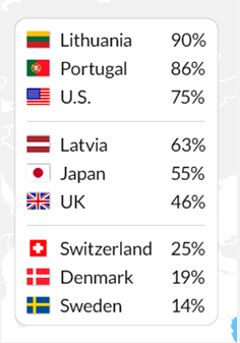
students say no to
bribes for doctors
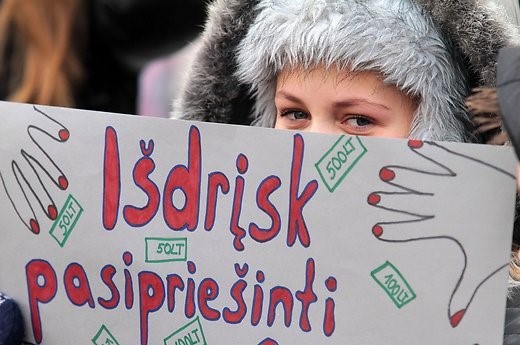
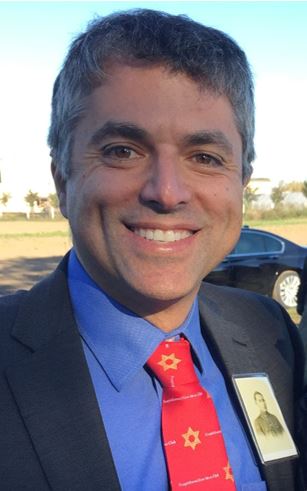
During Soviet times, government was administered for the people in control, not for the local population, court decisions were decreed, they were not the administration of justice, and academia was the domain of ideologues. 25 years of freedom and openness should have put those bad experiences behind Lithuania, but that is not so.
Today, it is a matter of expectation that court pronouncements will be governed by ideological dictates. Few, if any Lithuanians expect real justice to be effected. For foreign companies, doing business in Lithuania is almost impossible in a situation where business people do not expect rule of law, so, surely Government would be a refuge of competence?
Lithuanian Government has not emerged from Soviet styles. In an attempt to devolve power, Lithuania has created a myriad of fiefdoms of power, each speaking in the name of the Government, each its own centralized power base of ideology.

Chepstow, Wales
Doesn't that sound suspiciously like Lithuania? Ah, but I didn't mention the mountains of Snowdonia, which would give the game away.
I'm talking about Wales, that part of the UK which Lithuanians used to call "Valija", but later named "Velsas" (why?). Wales, the nation which has welcomed two Lithuanian heads of state to its shores - firstly Professor Vytautas Landsbergis, who has paid several visits and, more recently, President Dalia Grybauskaitė who attended the 2014 NATO summit which was held in Newport, South Wales.
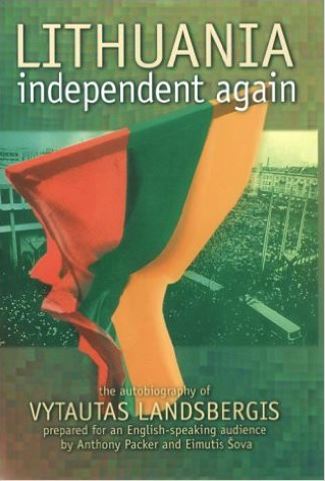
ENGLISH VERSION OF THE
AUTOBIOGRAPHY OF VYTAUTAS LANDSBERGIS.
Although Lithuanian activities have thinned over the decades as that postwar generation died out, the Lithuanian Martyrs' parish hall is crowded with many, many hundreds of visitors who come to the Lithuanian cemetery for All Souls' Day. Similarly, the Franciscan parish has standing room only for Christmas Eve mass.
Although I am firmly embedded in the literary culture of Canada, my themes are usually Lithuanian, and I'll be in Kaunas and Vilnius in mid-November 2015 to give talks about the Lithuanian translations of my novels and short stories, which I write in English.
If you have the Lithuanian language, come by to one of the talks listed in the links below. And if you don't, you can read more about my work at
www.anatanassileika.com
http://www.vdu.lt/lt/rasytojas-antanas-sileika-pristatys-savo-kuryba/ https://leu.lt/lt/lf/lf_naujienos/kvieciame-i-rasytojo-59hc.html
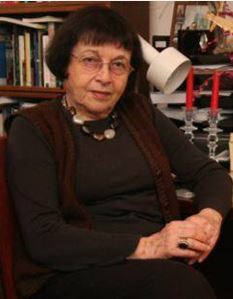
"My love and best wishes to all. As long as VilNews exists, there is hope for the future,"" she writes.
Irena Veisaite means very much for our publication, and we do hereby thank her for the support and wise commitment she always shows.
You can read our interview with her
Facing a new reality
Dear readers of VilNews,
For a number of years, the EU and Russia had assumed the existence of a strategic partnership, based on the convergence of values, economic integration and increasingly open markets and a modernisation agenda for society.
Our agenda was positive and ambitious. We looked at Russia as a country ready to converge with "European values", a country likely to embrace both the basic principles of democratic government and a liberal concept of the world order. It was believed this would bring our relations to a new level, covering the whole spectrum of the EU's strategic relationship with Russia.
The likelihood of Putin
invading Lithuania
.jpg "lithuania today")
Founding Director at Summer Literary Seminars
Are all Lithuanian energy
problems now resolved?
Lithuania as a country does not have significant energy resources. Energy consuming infrastructure after WWII was small and totally supported by energy imports from Russia.
First nuclear reactor begins power generation at Ignalina in 1983, the second reactor in 1987. Iganlina generates enough electricity to cover Lithuania's needs and about 50%.for export. As, prerequisite for membership in EU, Ignalina ceases all nuclear power generation in 2009
The Klaipėda Sea terminal begins Russia's oil export operations in 1959 and imports in 1994.
Mazeikiu Nafta (current ORLEAN Lietuva) begins operation of oil refinery in 1980.
Have Lithuanian ties across
the Baltic Sea become
stronger in recent years?
The two decades that have passed since regaining Lithuania's independence can be described as a "building boom". From the wreckage of a captive Soviet republic, a generation of Lithuanians have built a modern European state, and are now helping construct a Nordic-Baltic community replete with institutions intended to promote political coordination and foster a trans-Baltic regional identity. Indeed, a "Nordic-Baltic community" - I will explain later in my text the meaning of this catch-phrase.
Since the restoration of Lithuania's independence 25 years ago, we have continuously felt a strong support from Nordic countries. Nordics in particular were among the countries supporting Lithuania's and Baltic States' striving towards independence. Take example of Iceland, country which recognized Lithuania in February of 1991, well in advance of other countries. Yet another example - Swedish Ambassador was the first ambassador accredited to Lithuania in 1991. The other countries followed suit. When we restored our statehood, Nordic Countries became champions in promoting Baltic integration into Euro-Atlantic institutions. To large degree thanks Nordic Countries, massive transformations occurred in Lithuania since then, Lithuania became fully-fledged member of the EU and NATO, and we joined the Eurozone on 1 January 2015.
Have you heard about the
South African "Pencil Test"?
But that is exactly what happened to me when I came back from South Africa. I will tell you how.
VilNews e-magazine is published in Vilnius, Lithuania. Editor-in-Chief: Mr. Aage Myhre. Inquires to the editors: editor@VilNews.com.
Code of Ethics: See Section 2 – about VilNews. VilNews is not responsible for content on external links/web pages.
HOW TO ADVERTISE IN VILNEWS.
All content is copyrighted © 2011. UAB ‘VilNews’.